Chapter 12 The Eukaryotes
0.0(0)
Studied by 2 people Call Kai
 Learn
Learn Practice Test
 Spaced Repetition
 Match
Match Flashcards
 Knowt Play
Card Sorting
1/24

Earn XP
Description and Tags
Last updated 4:23 AM on 2/6/23
Name | Mastery | Learn | Test | Matching | Spaced | Call with Kai | Chat |
|---|
No analytics yet
Send a link to your students to track their progress
25 Terms
1
New cards
Types
* Mold
* Yeast
* Algae
* Helmets
* Protoza
* Yeast
* Algae
* Helmets
* Protoza
2
New cards
Fungi
* Soil
* Decomposers
* Heterotrophic
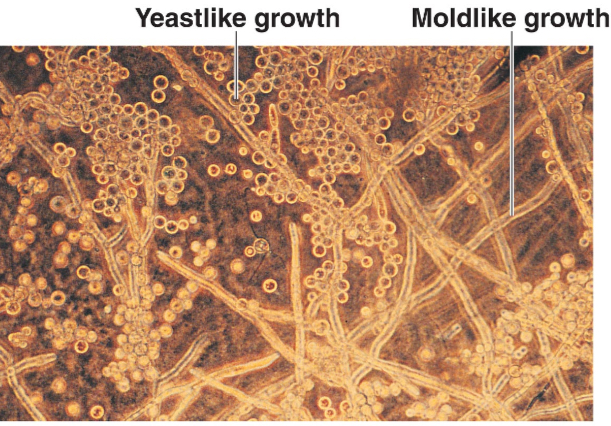
* Unicellular or Multicellular
* Asexual and sexual reproduction
* Mushrooms, Yeast, and Molds
* Decomposers
* Heterotrophic
* Unicellular or Multicellular
* Asexual and sexual reproduction
* Mushrooms, Yeast, and Molds
3
New cards
Yeast
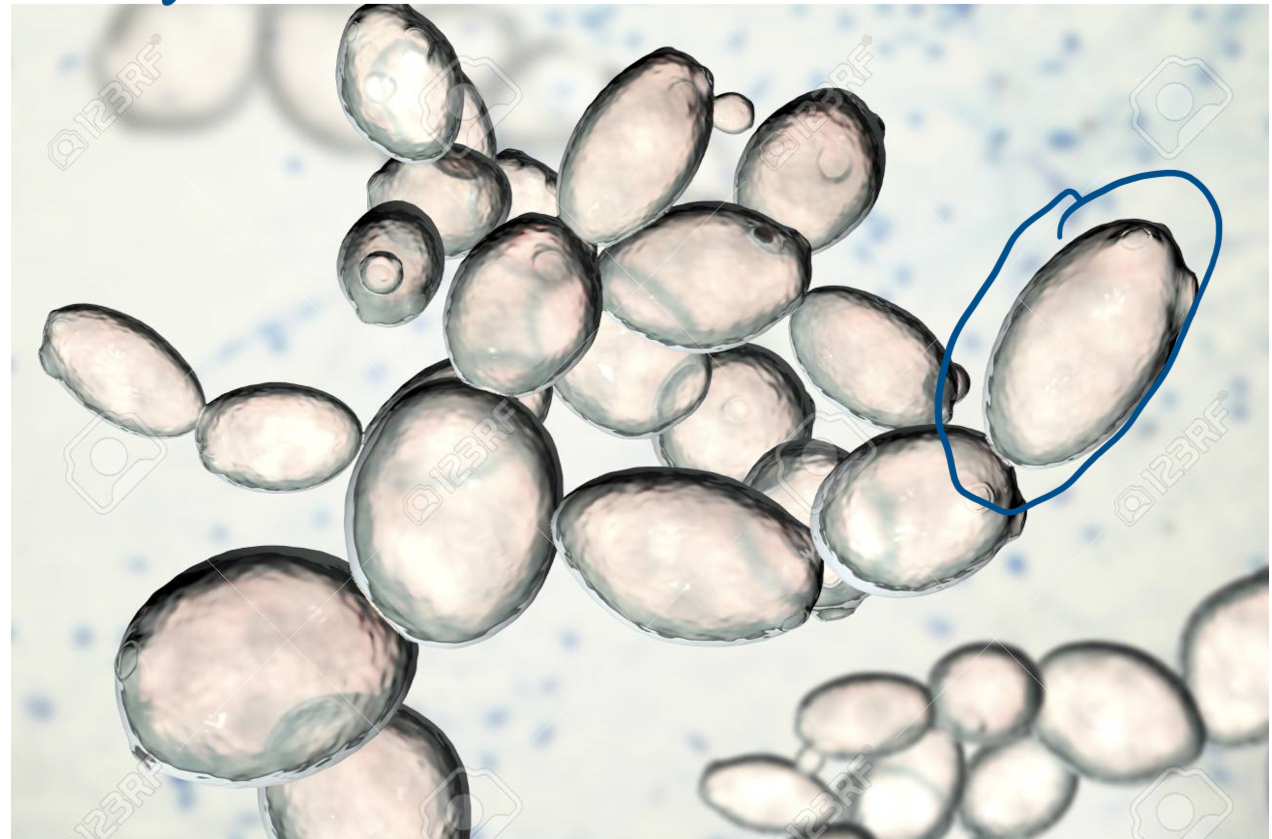
\-Unicellular
\-To identify _____ need Biochemical reactions(tests) to determine enzyme profile, biochemical reaction they catalyze.
\-To identify _____ need Biochemical reactions(tests) to determine enzyme profile, biochemical reaction they catalyze.
4
New cards
Mold
\-Multicellular
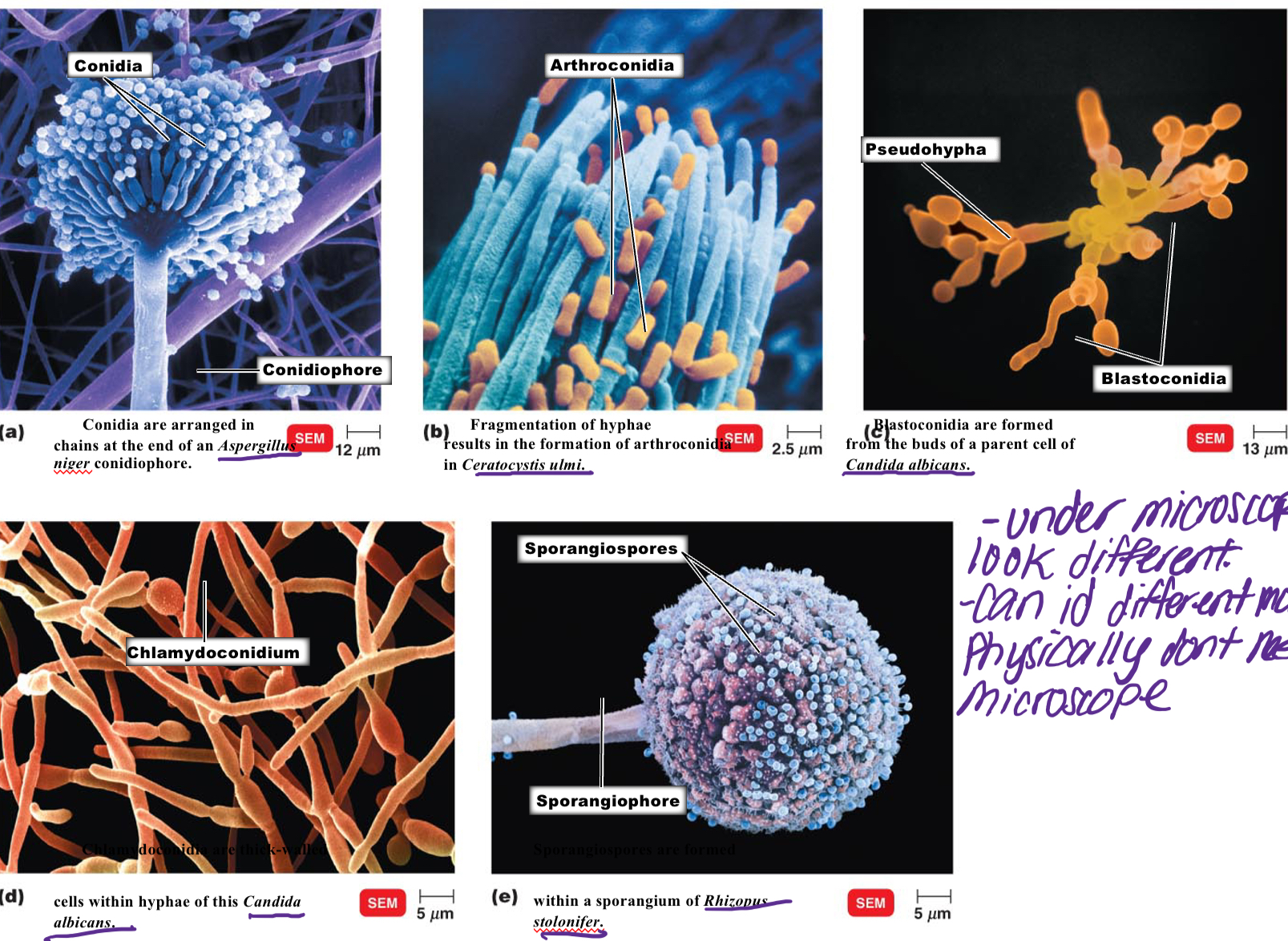
\-Macroscopic, different morphologies
\-Under microscope look different
\-Can identify different ____ physically don’t need microscope.
\-Make Hyphae
\-Macroscopic, different morphologies
\-Under microscope look different
\-Can identify different ____ physically don’t need microscope.
\-Make Hyphae
5
New cards
Hyphae
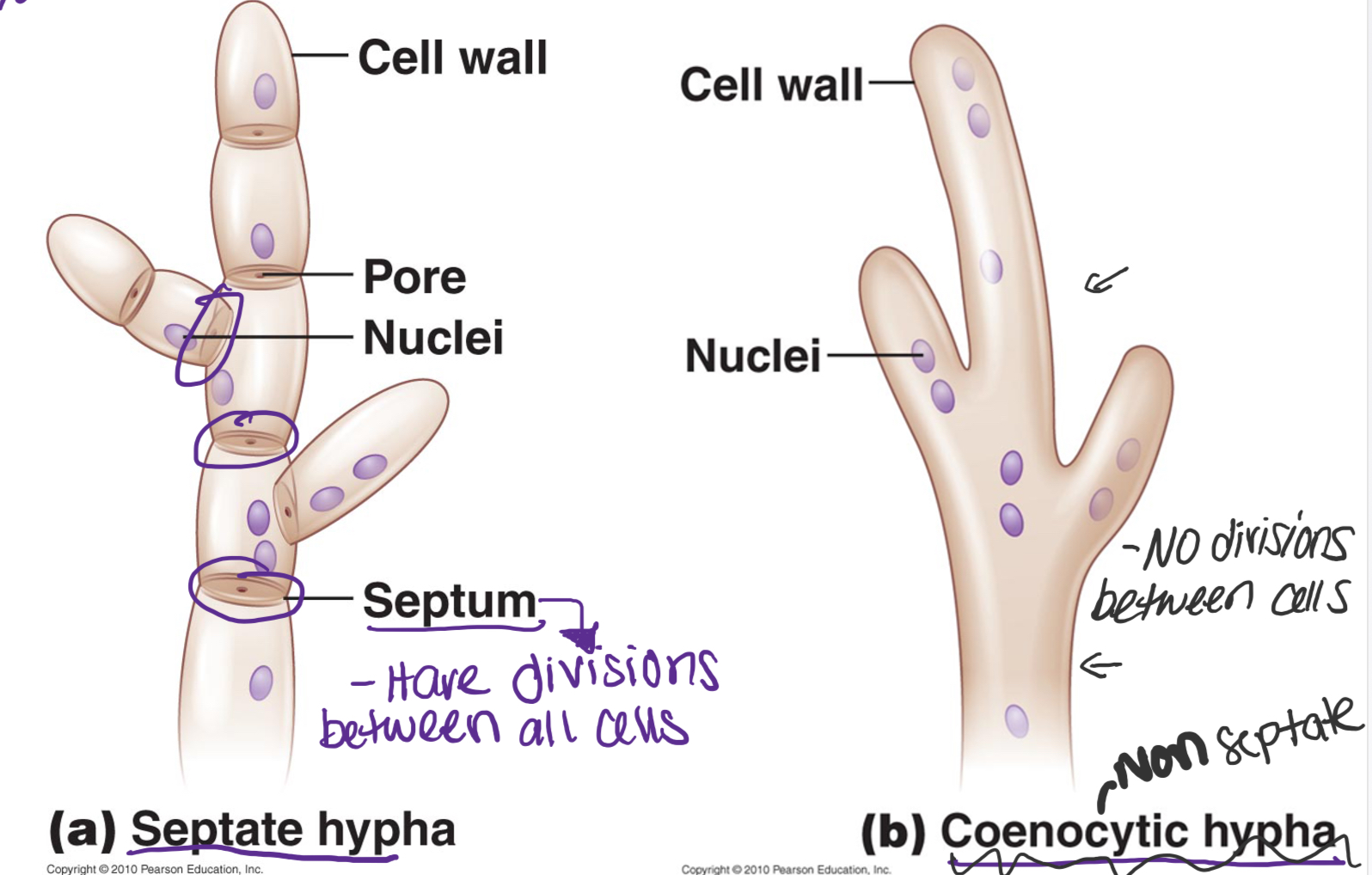
Mold are made of 2 types, long filaments
1. Septate _____= Have Septum, divisions between all cells
2. Coenocytic ____= no divisions between cells
1. Septate _____= Have Septum, divisions between all cells
2. Coenocytic ____= no divisions between cells
6
New cards
Growth of Hypha from spore….
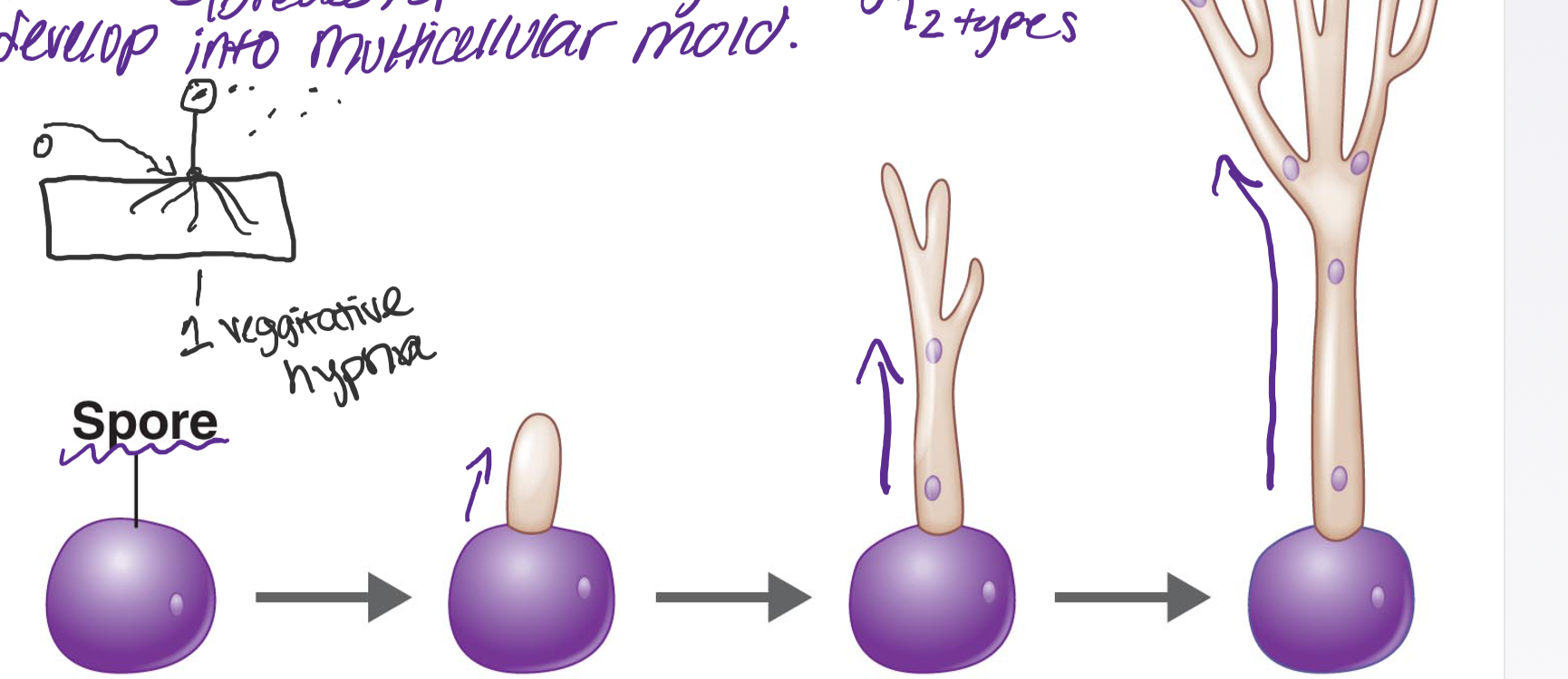
* When molds reproduce, they produce a spore.
* When a spore lands on a substance that contains nutrients(bread), the spore will grow hypha(2 types= Aerial and Vegetative), and will develop into a multicellular mold.
* When a spore lands on a substance that contains nutrients(bread), the spore will grow hypha(2 types= Aerial and Vegetative), and will develop into a multicellular mold.
7
New cards
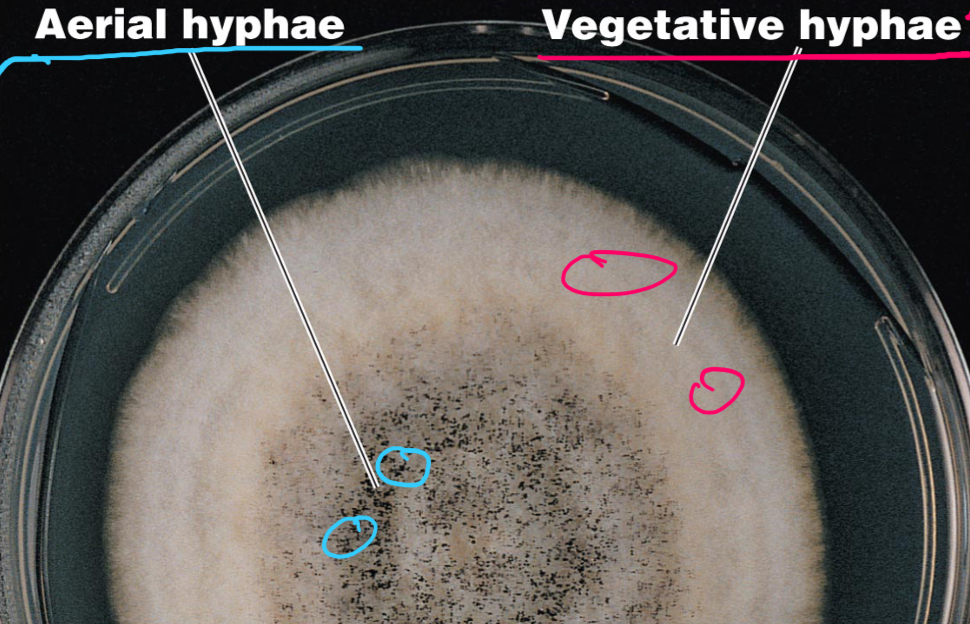
Aerial hyphae
“Reproductive hyphae” produce the reproductive spores
\-Color
\-Color
8
New cards
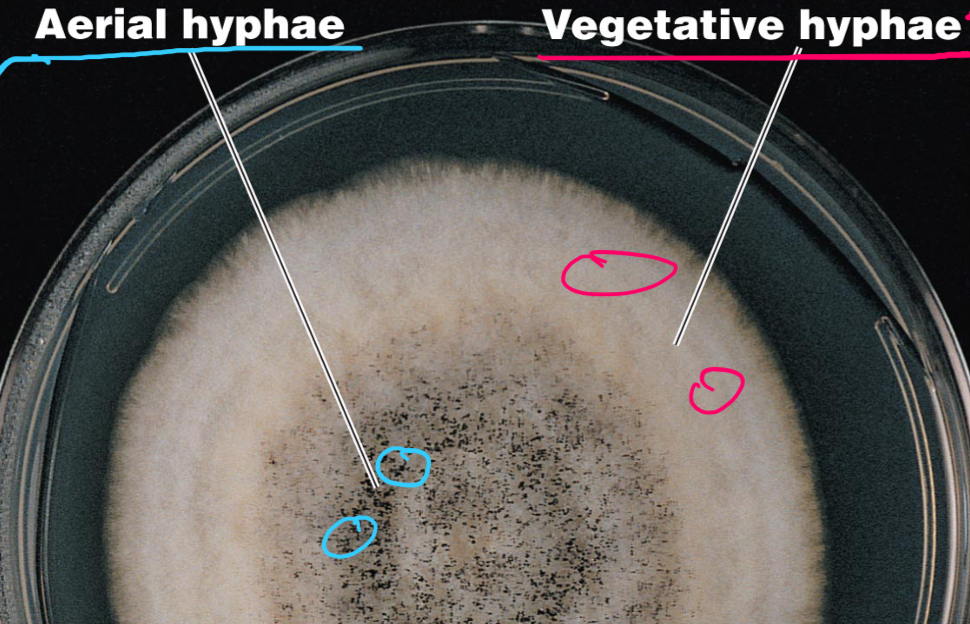
Vegetative hyphae
That grows into the substance and absorbs nutrients
\-Different colors, different fungi
\-Different colors, different fungi
9
New cards
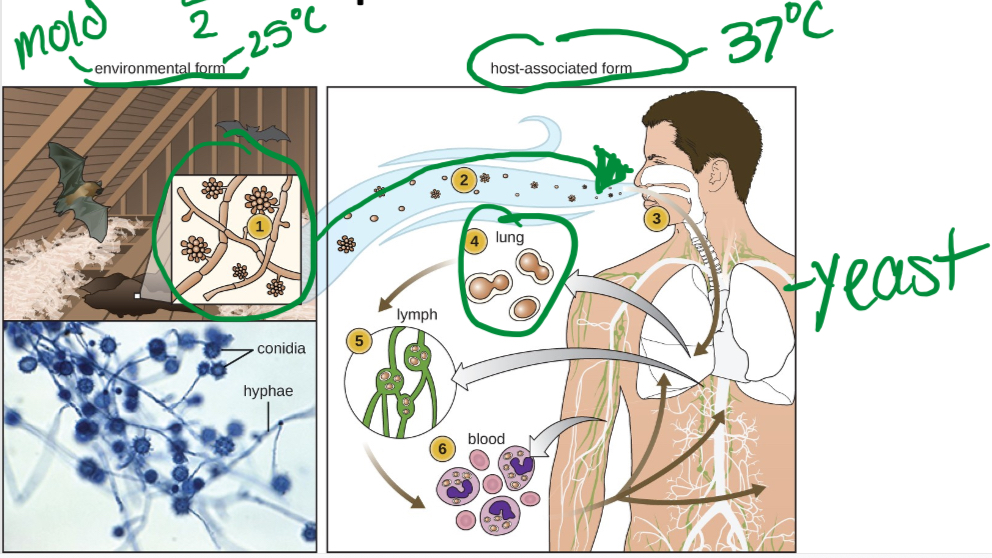
Mycosis
Disease caused by fungus
* Opportunistic pathogens= majority
* Obligate pathogens= few
* Chronic= last long time
* Dimorphic= found in yeast and mold
* Opportunistic pathogens= majority
* Obligate pathogens= few
* Chronic= last long time
* Dimorphic= found in yeast and mold
10
New cards
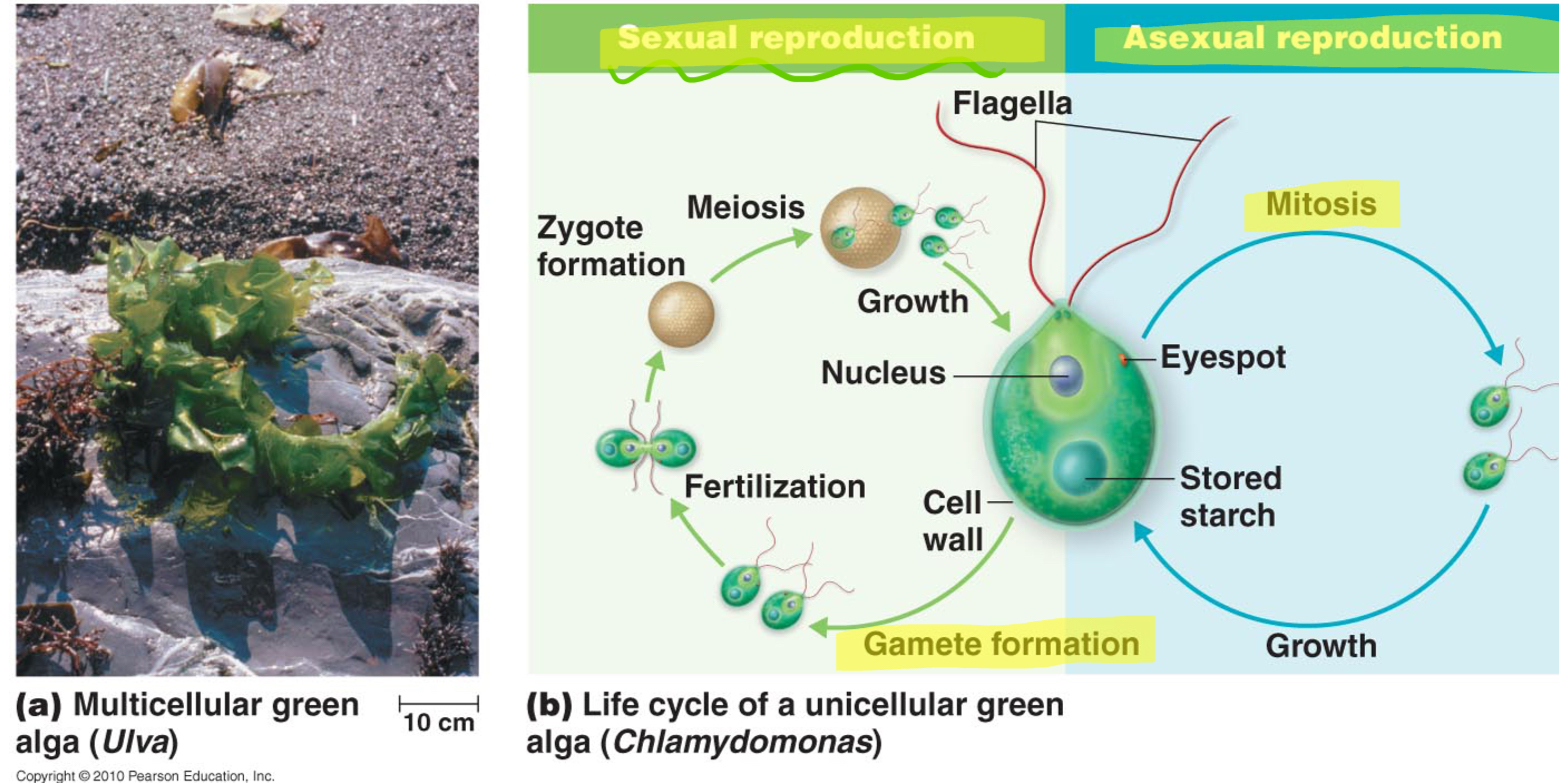
Algae
* Water
* Autotrophic
* Unicellular or Multicellular
* Asexual and Sexual reproduction
* Plankton= unicellular
* Seaweed= multicellular
* Autotrophic
* Unicellular or Multicellular
* Asexual and Sexual reproduction
* Plankton= unicellular
* Seaweed= multicellular
11
New cards
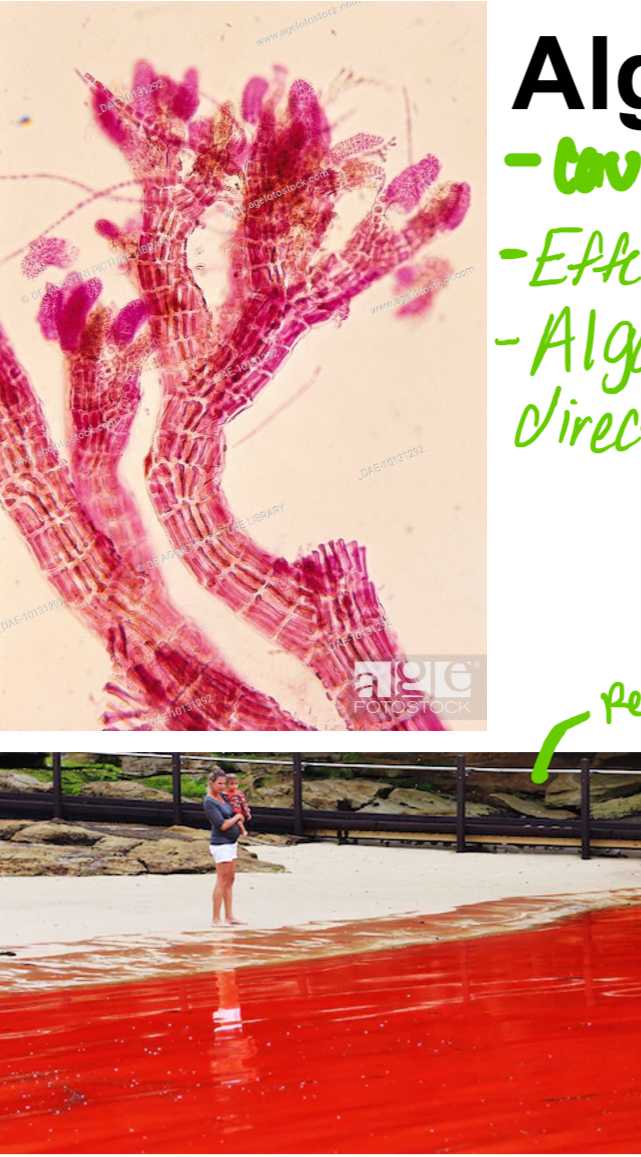
Algal Bloom
\-Caused by red algae
\-Effect human when they eat shellfish
\-Algae can indirectly cause disease, never directly cause disease
\-Effect human when they eat shellfish
\-Algae can indirectly cause disease, never directly cause disease
12
New cards
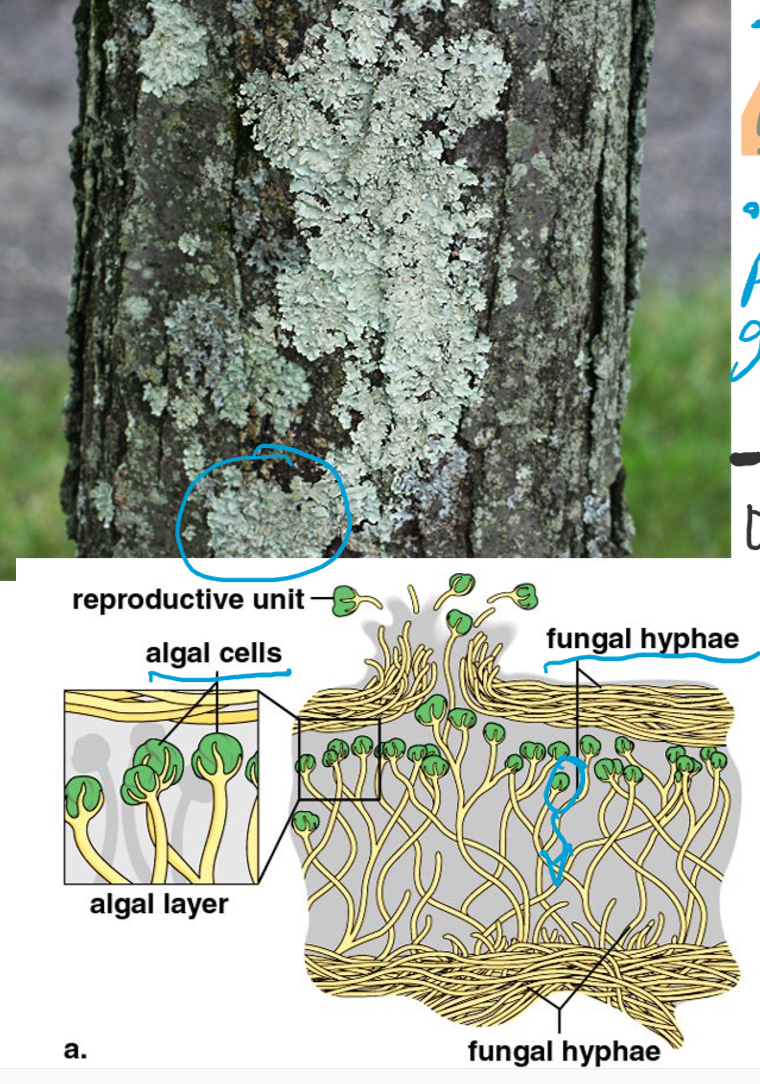
Lichens
\-Symbiotic **relationship between Algae and Fungi**
\-Algae performs photosynthesis, and produce glucose is used by fungus
\-Not parasite on tree, just grow on top of tree
\-Algae performs photosynthesis, and produce glucose is used by fungus
\-Not parasite on tree, just grow on top of tree
13
New cards
Protozoa
* Water and soil
* Heterotrophic and Autotrophic
* Unicellular
* Asexual and sexual reproduction
* Trophozoites= active form, moving around, reproducing
* Cysts= protective form forms cysts when it wants to protect itself
* Heterotrophic and Autotrophic
* Unicellular
* Asexual and sexual reproduction
* Trophozoites= active form, moving around, reproducing
* Cysts= protective form forms cysts when it wants to protect itself
14
New cards
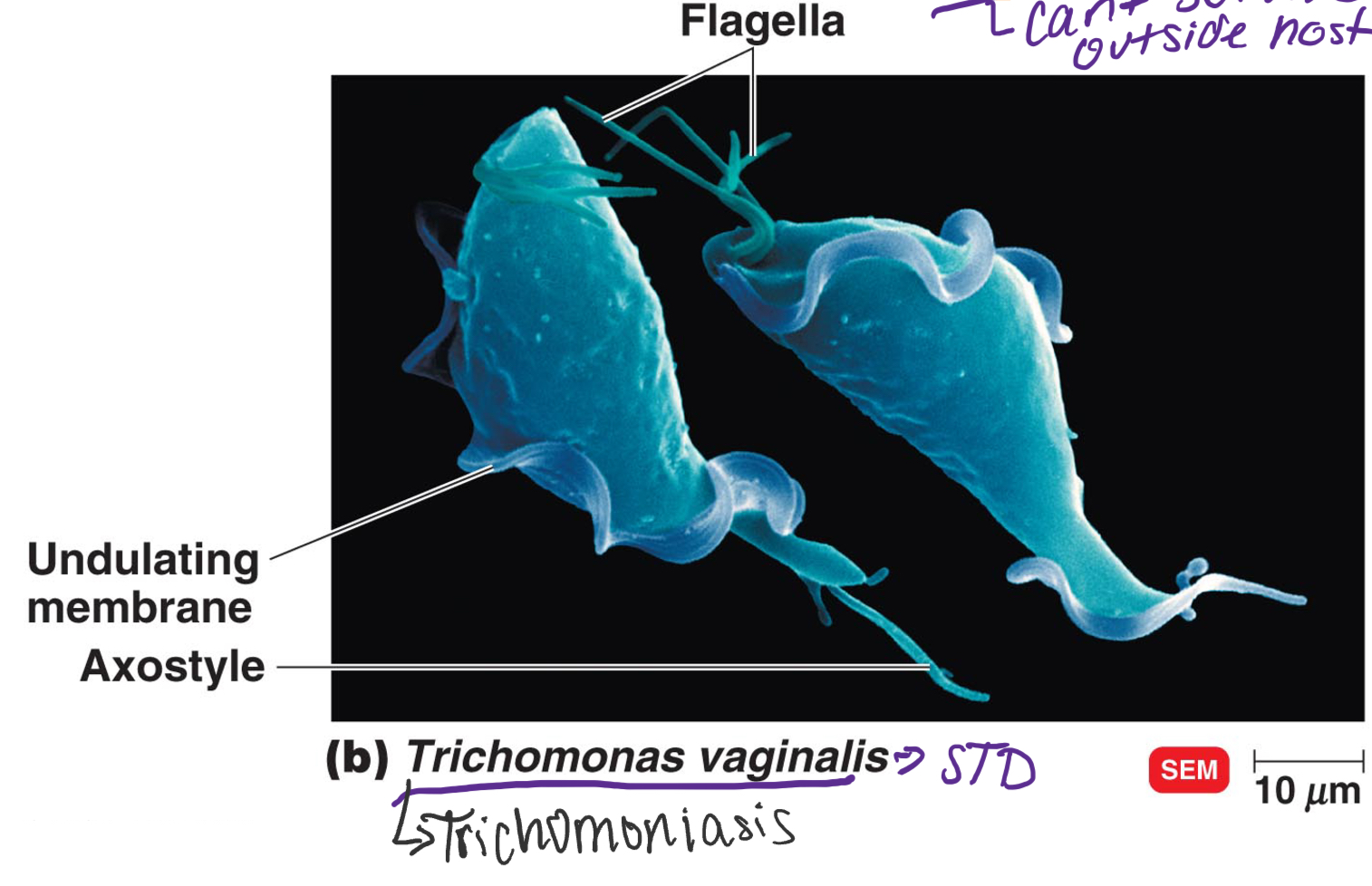
Excavata/Archaezoa
\-Have flagella
\-No mitochondria, No cyst form= can’t survive outside host
\-No mitochondria, No cyst form= can’t survive outside host
15
New cards
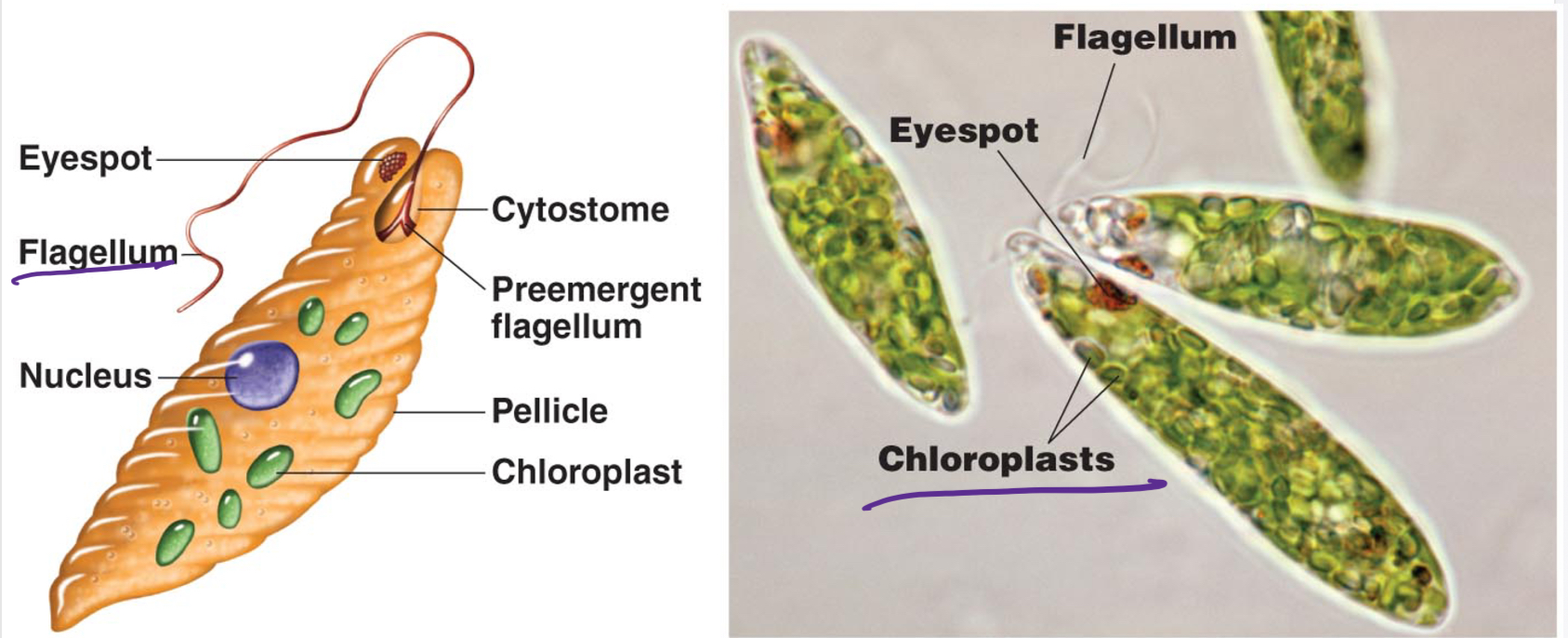
Euglenozoa
\-Use flagella, have mitochondria, have chloroplast, have autotrophs, performs photosynthesis
\-Obligatie pathogens
\-Hemoflagellates
\-Obligatie pathogens
\-Hemoflagellates
16
New cards
Hemoflagellates
\-Parasitic obligate pathogens, infect mammals, get nutrients from red blood cells, Euglenozoa
* Transmitted to host by an insect bite
* Ex: Trypanosoma brucei=aftrian sleeping sickness
* Ex: Trypanosoma cruzi= Chagas disease
* Transmitted to host by an insect bite
* Ex: Trypanosoma brucei=aftrian sleeping sickness
* Ex: Trypanosoma cruzi= Chagas disease
17
New cards
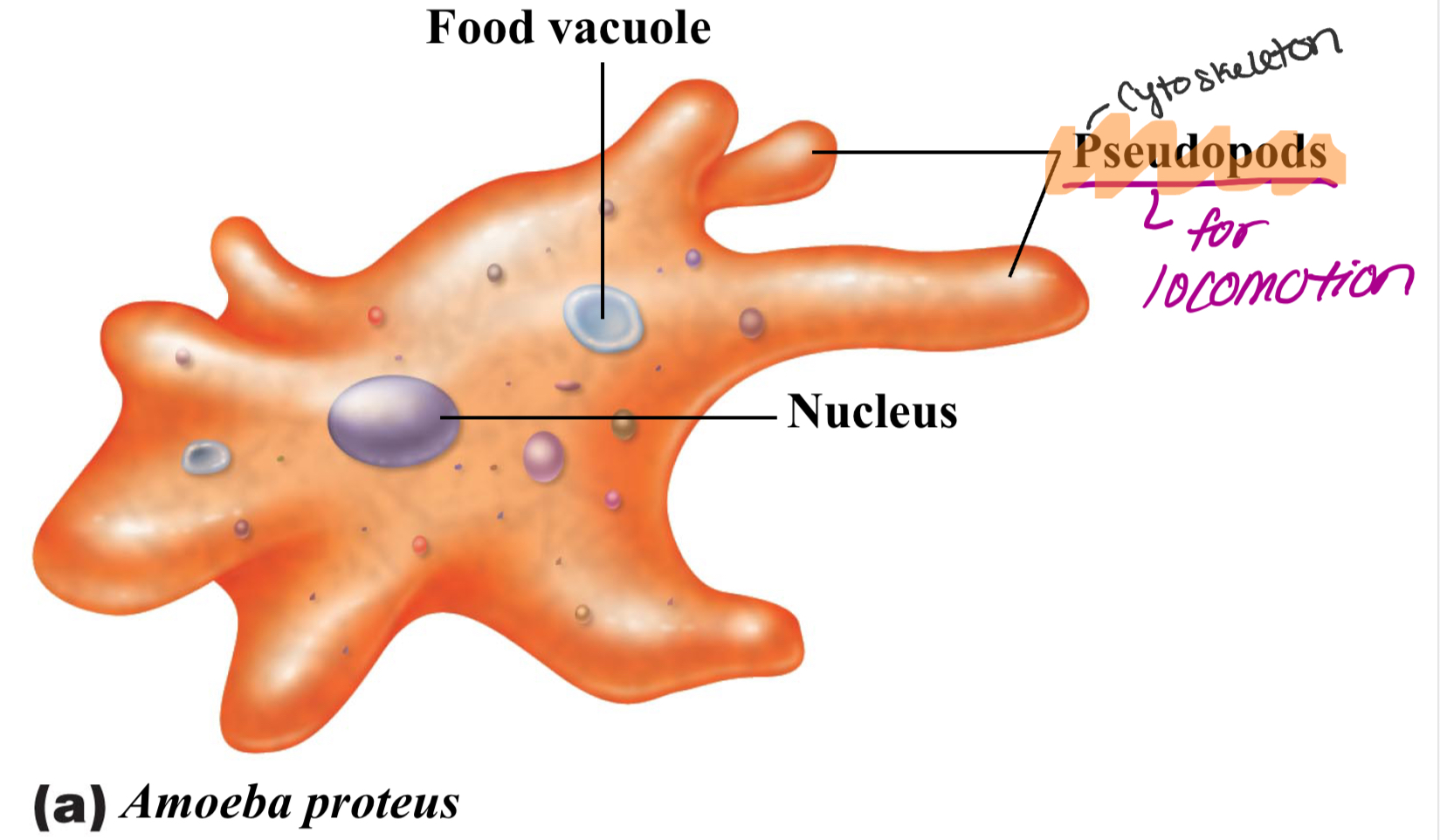
Amebae
Amoebas
\-Have Pseudopods= for locomotion
* Ex= Entamoeba histolytica= amoebic dysentery
\-Have Pseudopods= for locomotion
* Ex= Entamoeba histolytica= amoebic dysentery
18
New cards
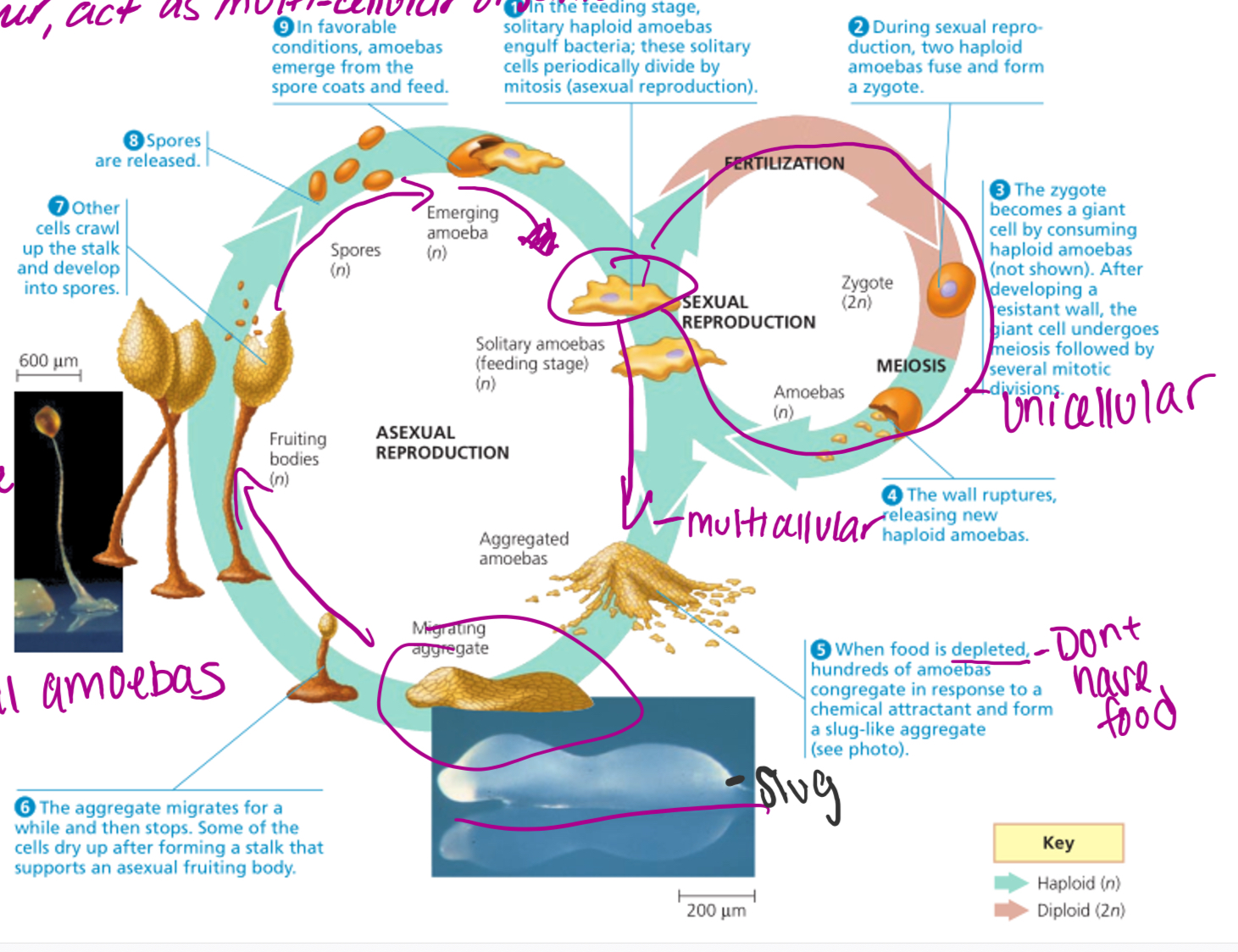
Cellular Slime Mold
\-Organism related to amoebas
\-Period of time amoebas come together, act as multicellular organism.
* After get food and reproduce they disassociate and go back to individual amoebas
\-Period of time amoebas come together, act as multicellular organism.
* After get food and reproduce they disassociate and go back to individual amoebas
19
New cards
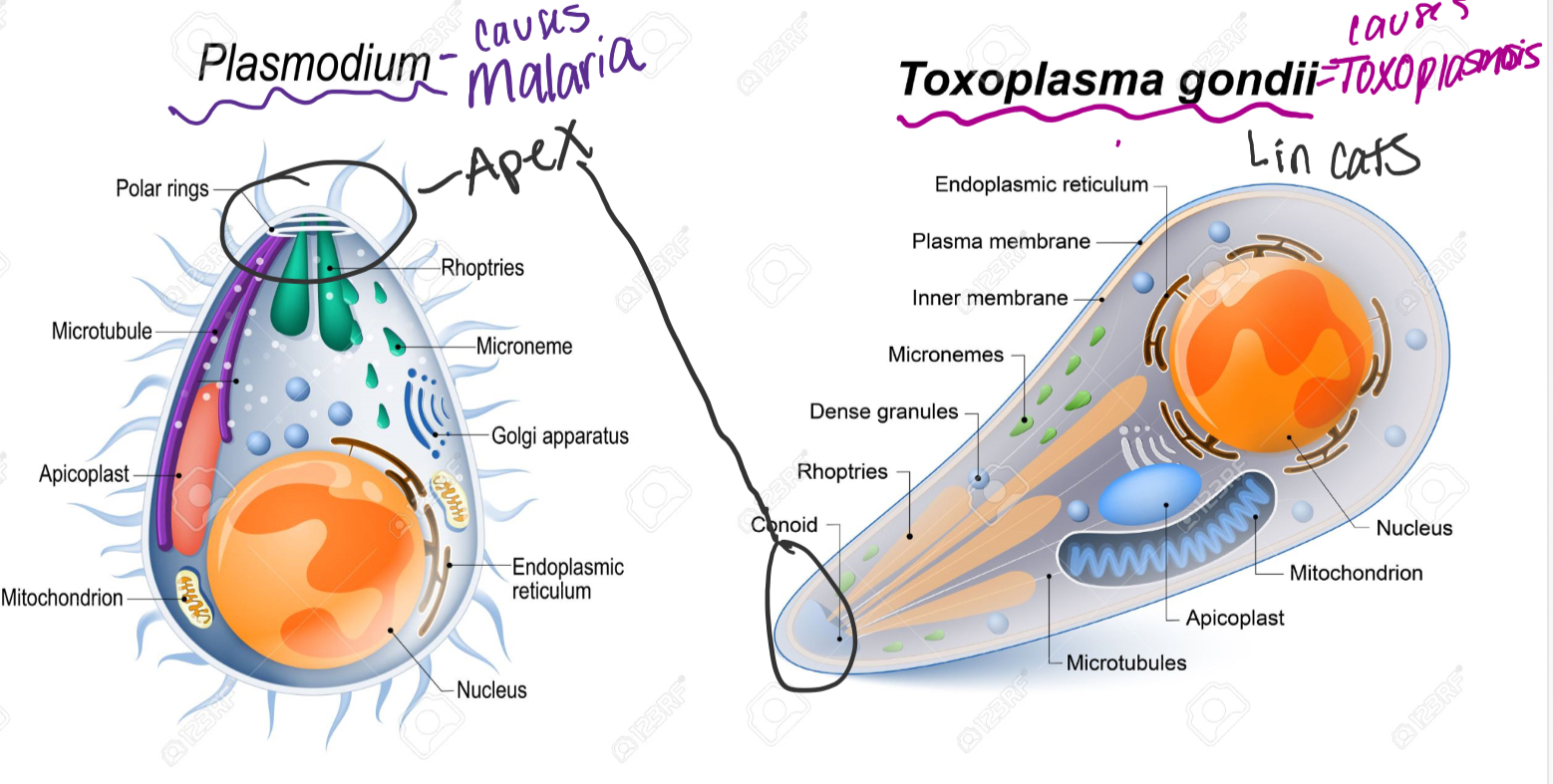
Apicomplexa
\-Pointed end, No mode of Locomotion, 2 types;
* Plasmodium= causes malaria, requires mosquito and human(intermediate host)
* Toxoplasma gondii= causes toxoplasmids in feces
* Plasmodium= causes malaria, requires mosquito and human(intermediate host)
* Toxoplasma gondii= causes toxoplasmids in feces
20
New cards
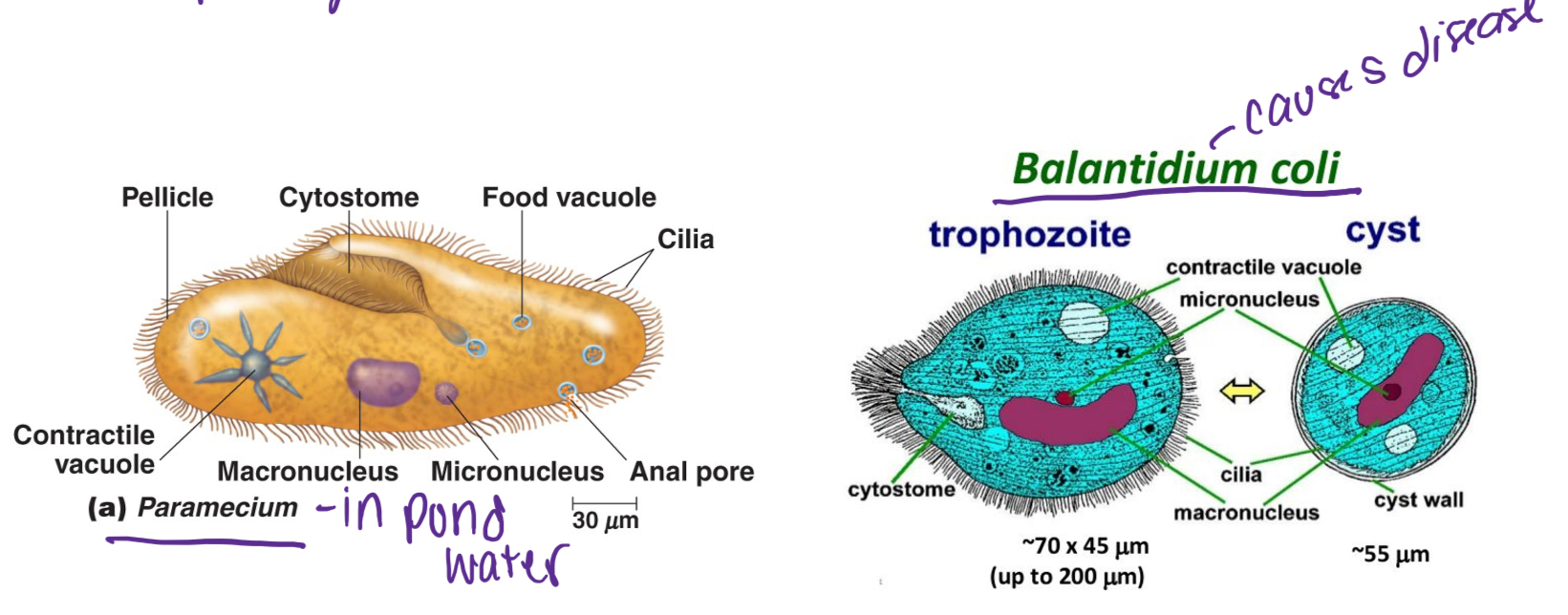
Cilliates
Use cilia as locomotion
\-non-pathogenic
\-non-pathogenic
21
New cards
Helminths
* Water
* Multicellular= Body systems
* Heterotrophic
* Sexual reproduction
* Monoecious and Dioecious
* Trematodes, Cestodes, and Nematodes
* Multicellular= Body systems
* Heterotrophic
* Sexual reproduction
* Monoecious and Dioecious
* Trematodes, Cestodes, and Nematodes
22
New cards
Trematodes
Flukes, All Monoecious
* Ex: Schistosoma= blood fluke
* Ex: Schistosoma= blood fluke
23
New cards
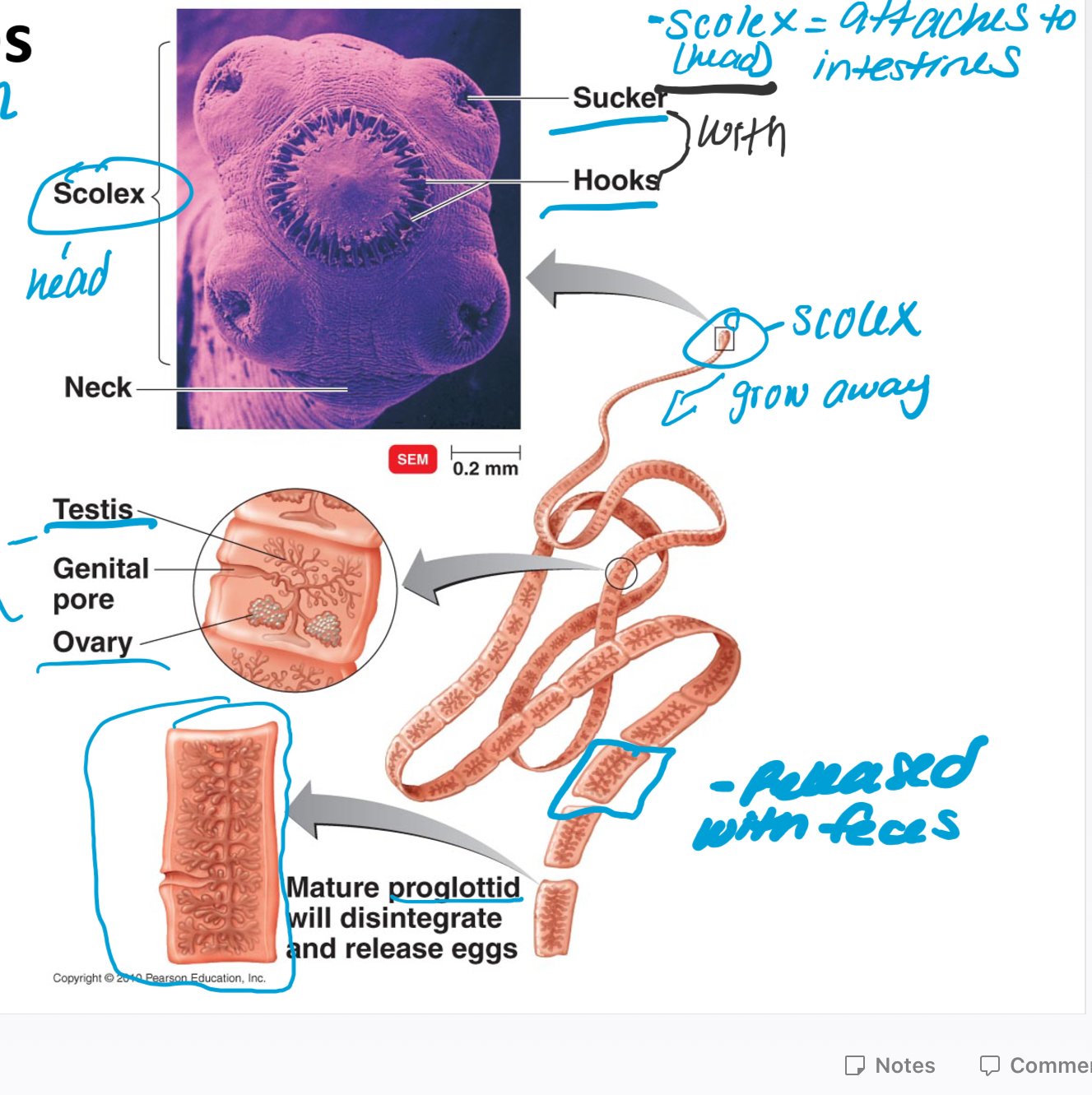
Cestodes
\-Monoicious, can have proglottids
\-Scolex(head)= attaches to intestines
\-Sucker, Scolex, and Hooks
\-Ex: Tapeworm, Taenia saginata= beef tapeworm, don’t have proglottids
* Released with feces
\-Scolex(head)= attaches to intestines
\-Sucker, Scolex, and Hooks
\-Ex: Tapeworm, Taenia saginata= beef tapeworm, don’t have proglottids
* Released with feces
24
New cards
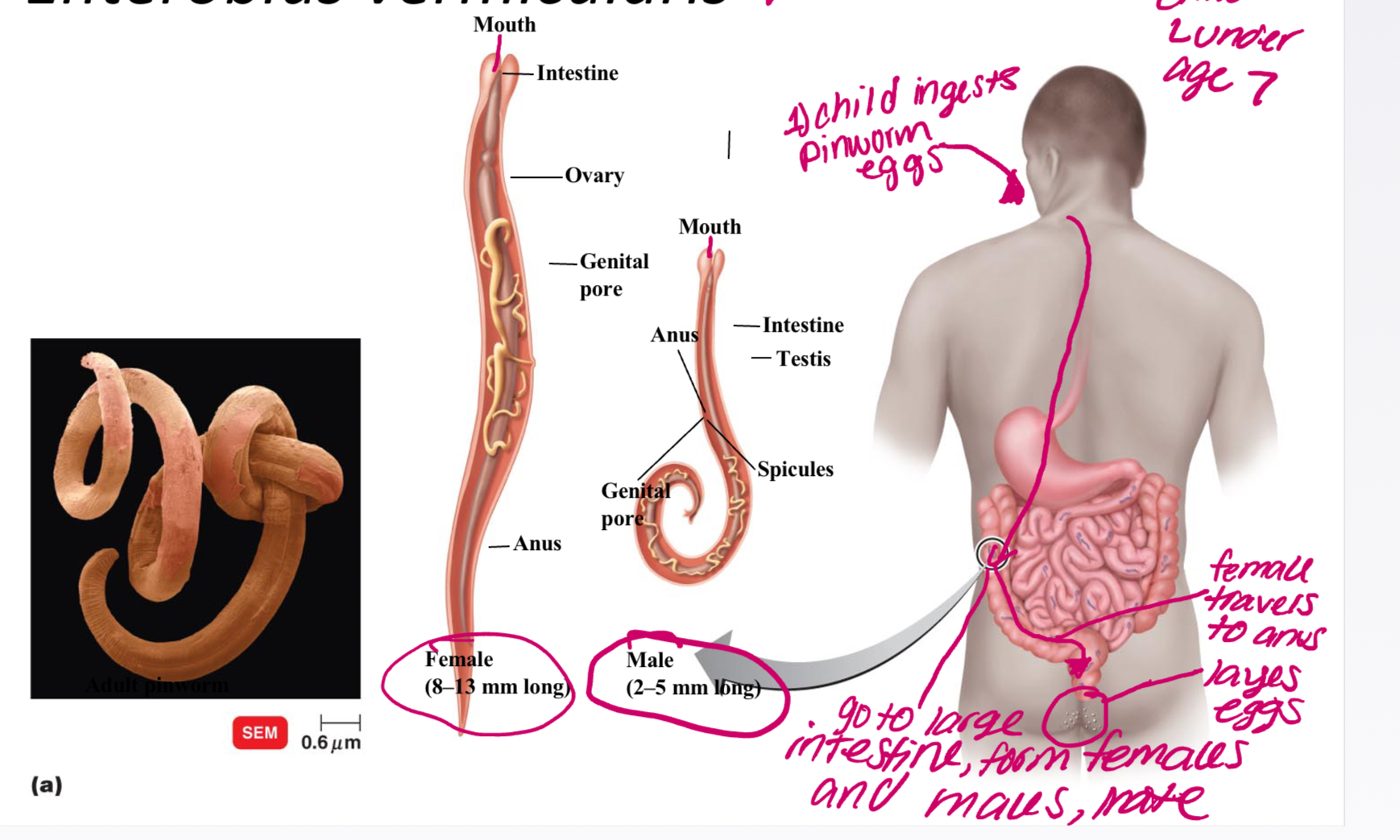
Nematodes
Round worms, Dioecious
* Ex: Enterobius vermicularis= pinworm, usually infects children, lays eggs on anus
* Ex: Necator americanus= Hookworm, burrow through skin, enter circulatory and respiratory system, poor sanitation
* Ex: Enterobius vermicularis= pinworm, usually infects children, lays eggs on anus
* Ex: Necator americanus= Hookworm, burrow through skin, enter circulatory and respiratory system, poor sanitation
25
New cards
Hygiene Hypothesis
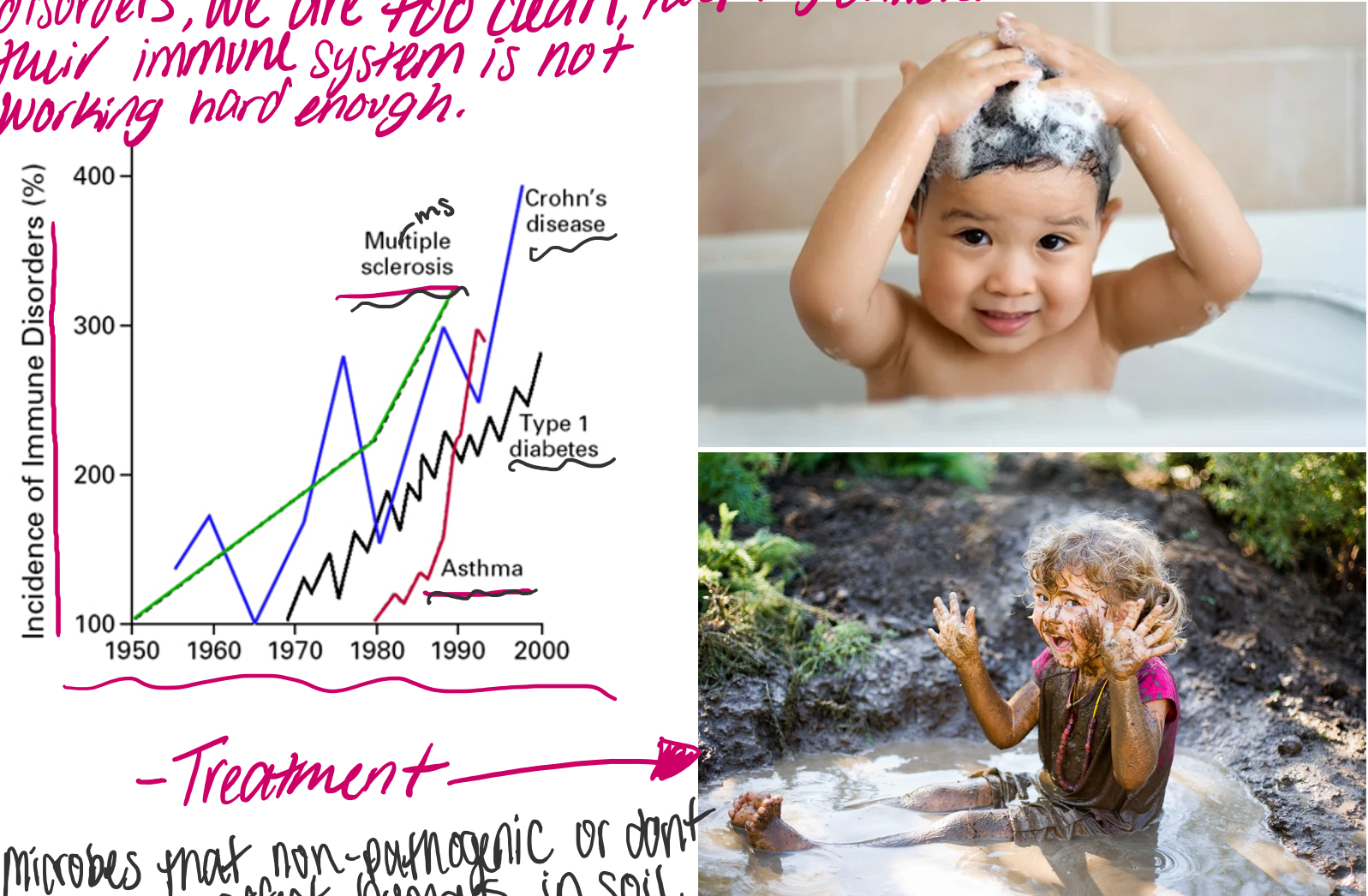
To explain why over time in developed countries we have increases immune disorders, we are too clean, keeping children too clean so their immune system is not working hard enough
\-Treatment= microbe that are non-pathogenic or don’t effect humans in soil
\-Treatment= microbe that are non-pathogenic or don’t effect humans in soil