D. Metabolism
 Call Kai
 Learn
Learn Practice Test
 Spaced Repetition
 Match
Match Flashcards
 Knowt Play
1/74

Earn XP
Description and Tags
Proverbs 16:3
Name | Mastery | Learn | Test | Matching | Spaced | Call with Kai | Chat |
|---|
No analytics yet
Send a link to your students to track their progress
75 Terms
c. Metabolism (Biotransformation)
The initial pathway for drug elimination in which drugs become more hydrophilic, ionized (charged), polar, detoxified, and nontoxic is known as:
a. Distribution
b. Elimination
c. Metabolism (Biotransformation)
d. Excretion
b. Prodrug
An inactive drug that requires metabolic conversion to become pharmacologically active is called a:
a. Active metabolite
b. Prodrug
c. Xenobiotic
d. Conjugate
a. Clopidogrel
Which drug is a prodrug that requires metabolic activation?
a. Clopidogrel
b. Lisinopril
c. Captopril
d. Morphine
c. Lisinopril
Captopril
Enalaprilat
Lisinopril
“CEL-active”
Which angiotensin-converting enzyme (ACE) inhibitor is active without metabolic conversion?
a. Enalapril
b. Clopidogrel
c. Lisinopril
d. Diazepam
a. Enalaprilat
Which is the active metabolite formed from enalapril?
a. Enalaprilat
b. Lisinopril
c. Captopril
d. NAPQI
b. Diazepam
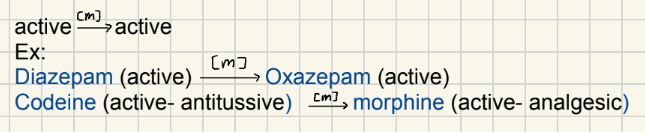
Which active drug is metabolized into another active metabolite, oxazepam?
a. Codeine
b. Diazepam
c. Clopidogrel
d. Aspirin
c. Codeine
Which active antitussive drug is metabolized into the active analgesic morphine?
a. Diazepam
b. Clopidogrel
c. Codeine
d. Acetaminophen
c. NAPQI (N-acetyl-p-benzoquinoneimine)
Which toxic metabolite is produced from acetaminophen (APAP)?
a. Morphine
b. Oxazepam
c. NAPQI
d. Salicylic acid
b. N-acetylcysteine (NAC)
Which antidote is used in acetaminophen toxicity?
a. Atropine
b. N-acetylcysteine (NAC)
c. Flumazenil
d. Naloxone
c. Liver
other sites: brain, lungs, intestines, kidneys
The primary site of drug metabolism is the:
a. Kidney
b. Lung
c. Liver
d. Intestine
Brain
Lungs
Intestines
Kidneys
Other sites of drug metabolism [4]
d. Kidney
Which organ is an extrahepatic site of drug metabolism?
a. Heart
b. Liver
c. Brain
d. Kidney
b. Renal dehydropeptidase
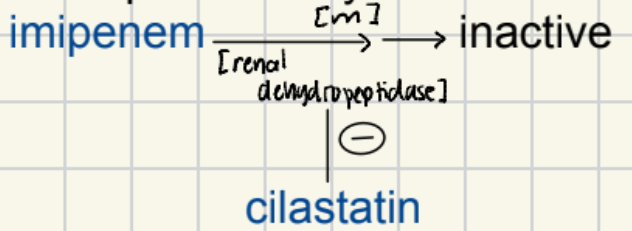
Imipenem is inactivated by this enzyme , and is protected from degradation by cilastatin?
a. Beta-lactamase
b. Renal dehydropeptidase
c. Cytochrome P450
d. Glucuronosyl transferase
a. Cilastatin
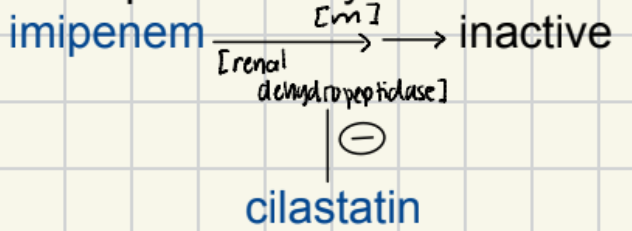
This drug inhibits renal dehydropeptidase, preventing the inactivation of Imipenem
a. Cilastatin
b. Clavulanic acid
c. Sulbactam
d. Tazobactam
c. First-pass effect
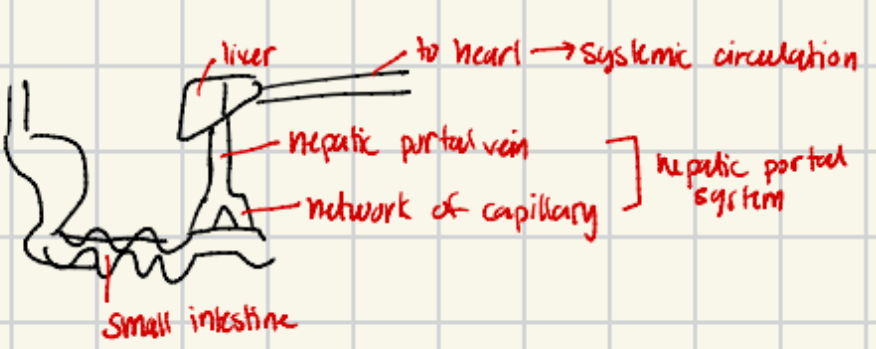
The initial metabolism of a drug before reaching the systemic circulation is known as:
a. Zero-order metabolism
b. Enterohepatic recycling
c. First-pass effect
d. Renal clearance
Opioids
Catecholamines (Epinephrine , Norepinephrine, Dopamine)
Example of Drugs with high first pass effect [2]
c. Phase I metabolism
The phase of metabolism also known as the functionalization:
a. Phase II metabolism
b. Phase III metabolism
c. Phase I metabolism
d. Enterohepatic circulation
c. Phase I metabolism
The phase of metabolism also known as the asynthetic phase is:
a. Phase II metabolism
b. Phase III metabolism
c. Phase I metabolism
d. Enterohepatic circulation
b. Phase II metabolism
The phase of metabolism also known as the conjugation:
a. Phase I metabolism
b. Phase II metabolism
c. Phase III metabolism
d. Phase IV metabolism
b. Phase II metabolism
The phase of metabolism also known as synthetic phase is:
a. Phase I metabolism
b. Phase II metabolism
c. Phase III metabolism
d. Phase IV metabolism
b. Unmask polar functional groups
The goal of Phase I metabolism is:
a. Increase protein binding
b. Unmask polar functional groups
c. Increase lipid solubility
d. Produce inactive conjugates
Hydrolysis
Oxidation
Reduction
📌Mnemonic: “HOR”
Phase I metabolic reaction [3]
a. Acetic acid (vinegar) and salicylic acid

Hydrolysis of aspirin produces:
a. Acetic acid (vinegar) and salicylic acid
b. Morphine and codeine
c. Acetaldehyde and acetic acid
d. Oxazepam and diazepam
d. Salicylic acid
dry granulation kasi prone sa hydrolysis
if ma hydrolyze → acetic acid → vinegar odor
Hydrolysis of aspirin, from dry granulation process produces:
a. Acetic acid
b. Morphine
c. Acetaldehyde
d. Salicylic acid
b. Esters
aspirin is also an ester
Which class of local anesthetics is more prone to hydrolysis?
a. Amides
b. Esters
c. Opioids
d. Barbiturates
b. Procaine, benzocaine, and cocaine

The local anesthetics that are esters and more prone to hydrolysis
a. Lidocaine, bupivacaine
b. Procaine, benzocaine, and cocaine
c. Xylocaine
d. Lidocaine
Lidocaine
Xylocaine
Bupivacaine
The local anesthetics that are amides
[Multiple answer]
a. Lidocaine, bupivacaine
b. Procaine, and cocaine
c. Xylocaine
d. Benzocaine
a. oxidation
Remove H, add O
a. oxidation
b. reduction
d. CYP2E1
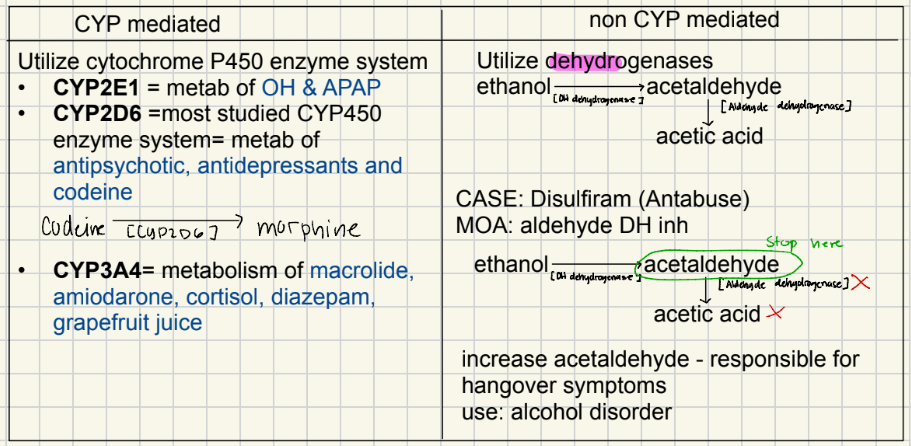
The CYP450 enzyme responsible for metabolism of:
OH
APAP
a. CYP3A4
b. CYP1A2
c. CYP2D6
d. CYP2E1
d. CYP2D6
The most studied CYP450 enzyme system
a. CYP2E1
b. CYP3A4
c. CYP1A2
d. CYP2D6
d. CYP2D6
Enzyme system responsible for metabolism of:
Antipsychotics
Antidepressants
Codeine
a. CYP2E1
b. CYP3A4
c. CYP1A2
d. CYP2D6
a. CYP2D6
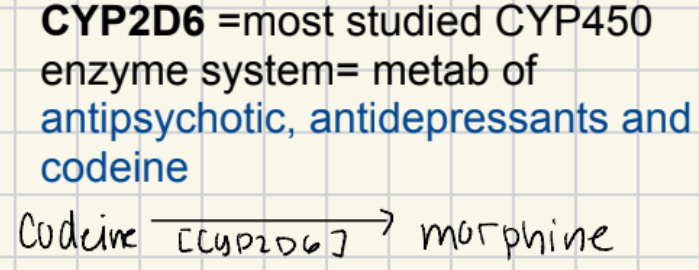
The CYP450 enzyme responsible for metabolism of:
Codeine → Morphine
a. CYP2D6
b. CYP1A2
c. CYP2E1
d. CYP3A4
d. CYP3A4
The CYP450 enzyme responsible for metabolism of:
Macrolide
Amiodarone
Cortisol
Diazepam
Grapefruit juice
a. CYP2D6
b. CYP1A2
c. CYP2E1
d. CYP3A4
a. Dehydrogenase
Non CYP mediated utilize this enzyme to induce metabolism reaction
a. Dehydrogenase
b. CYP450
c. Amylase
d. Dehydropeptidase
b. Alcohol dehydrogenase
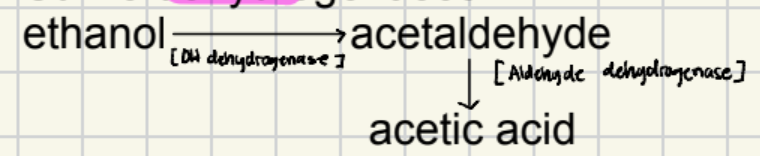
[Alcohol metabolism]
Ethanol is converted to acetaldehyde by this enzyme
a. Aldehyde dehydrogenase
b. Alcohol dehydrogenase
c. Alcohol oxidase
d. Cytochrome P450
b. Aldehyde dehydrogenase
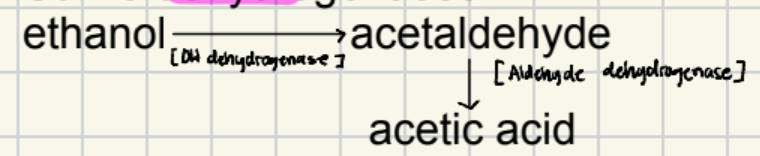
[Alcohol metabolism]
Acetaldehyde is converted to acetic acid by this enzyme
a. Alcohol dehydrogenase
b. Aldehyde dehydrogenase
c. Alcohol oxidase
d. Cytochrome P450
b. Aldehyde dehydrogenase inhibition
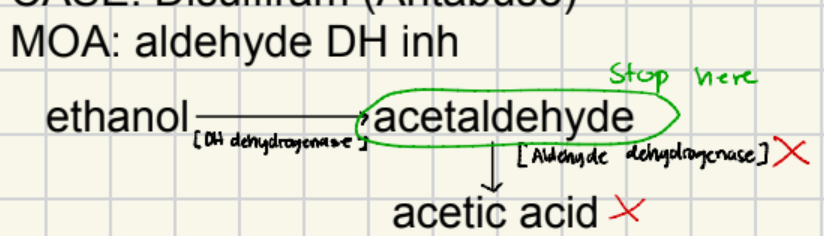
The mechanism of action of Disulfiram (Antabuse) is
a. Alcohol dehydrogenase inhibition
b. Aldehyde dehydrogenase inhibition
c. Alcohol oxidase inhibition
d. Cytochrome P450 inhibition
b. Acetaldehyde
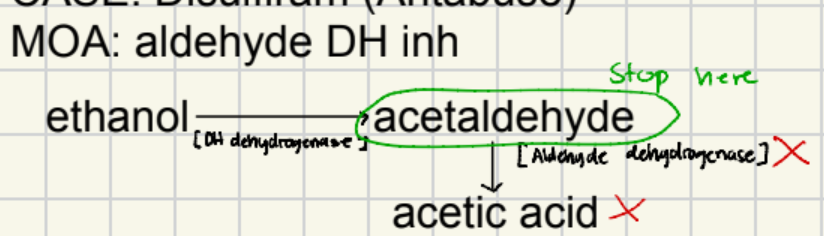
Disulfiram inhibits aldehyde dehydrogenase, causing accumulation of
a. Ethanol
b. Acetaldehyde
c. Acetic acid
d. Methanol
b. Hangover symptoms
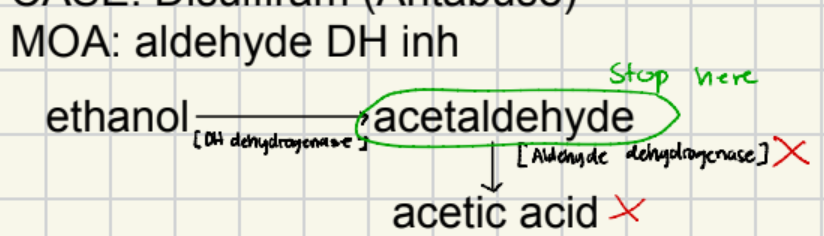
Increased acetaldehyde is responsible for
a. Improved mood
b. Hangover symptoms
c. Sedation
d. Analgesia
b. Alcohol use disorder
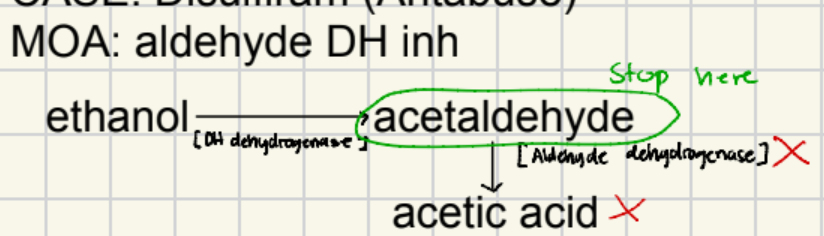
Disulfiram is used for
a. Opioid use disorder
b. Alcohol use disorder
c. Nicotine use disorder
d. Benzodiazepine use disorder
c. Prontosil
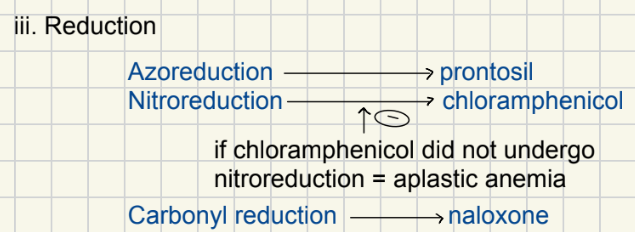
The drug converted from azoreduction
a. Chloramphenicol
b. Naloxone
c. Prontosil
d. Morphine
d. Chloramphenicol
The drug converted by nitroreduction
a. Naloxone
b. Prontosil
c. Morphine
d. Chloramphenicol
b. Aplastic anemia
If Chloramphenicol did not undergo nitroreduction, it will cause
a. Gray baby syndrome
b. Aplastic anemia
c. Hemolytic anemia
d. Agranulocytosis
d. Naloxone
The drug converted by carbonyl reduction
a. Prontosil
b. Chloramphenicol
c. Morphine
d. Naloxone
Glucuronidation
Glycine conjugation
Glutathionylation
Acetylation
Sulfation
Methylation
📌Mnemonic: GGGASM
Phase II Conjugation reactions [6]
a. Phase II
Addition of functional group/ conjugating moiety
a. Phase II
b, Phase I
d. Glucuronidation
The most common Phase II reaction with enzyme glucuronosyl transferase
a. Acetylation
b. Methylation
c. Sulfation
d. Glucuronidation
b. Glucuronosyl transferase
Enzyme in Glucuronidation Phase II reaction
a. Sulfotransferase
b. Glucuronosyl transferase
c. N-acetyltransferase
d. Glutathione S-transferase
b. Underdeveloped glucuronidation
Gray baby syndrome with Chloramphenicol occurs in neonates less than 1 month old due to
a. Underdeveloped renal excretion
b. Underdeveloped glucuronidation
c. Underdeveloped acetylation
d. Underdeveloped oxidation
c. Jaundice and kernicterus
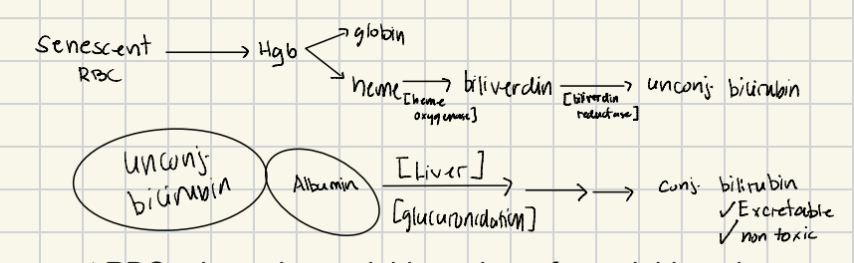
The consequence of blocking glucuronidation leading to increased unconjugated bilirubin
a. Gray baby syndrome
b. Aplastic anemia
c. Jaundice and kernicterus
d. Lupus-like rashes
a. Gray baby syndrome
Phase I nitroreduction: aplastic anemia
Phase II glucuronidation: gray baby syndrome
The consequence of blocking glucuronidation associated with the use of Chloramphenicol
a. Gray baby syndrome
b. Aplastic anemia
c. Megaloblastic anemia
d. Lupus-like rashes
b. Aplastic anemia
Phase I nitroreduction: aplastic anemia
Phase II glucuronidation: gray baby syndrome
The consequence of blocking nitroreduction associated with the use of Chloramphenicol
a. Gray baby syndrome
b. Aplastic anemia
c. Megaloblastic anemia
d. Lupus-like rashes
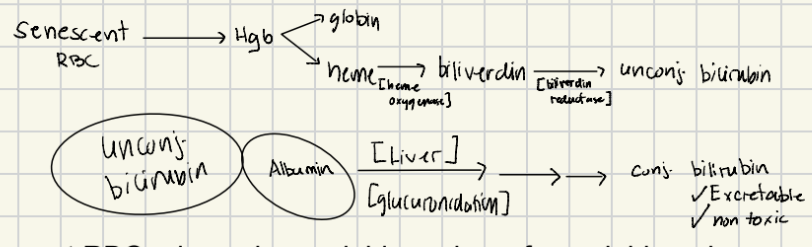
The senescent RBC release hemoglobin and can form globin or heme
Heme become bilirubin and form unconjugated bilirubin (uncj bilirubin + albumin)
In the liver, the uncj bilirubin + albumin undergo glucuronidation, forming conjugated bilirubin (non toxic)
Blocking glucuronidation, increases unconjugated bilirubin= jaundice, kernicterus
Explain
d. N-acetyl transferase (NAT)
The enzyme responsible for Acetylation as a Phase II reaction
a. Glucuronosyl transferase
b. Glutathione transferase
c. Catechol-O-methyltransferase
d. N-acetyl transferase (NAT)
Hydralazine
Isoniazid
Procainamide
Sulfonamide
📌Mnemonic: “HIPS”
Drugs metabolized by acetylation include _____
a. Hydralazine, isoniazid, procainamide, sulfonamide
b. Heparin, insulin, penicillin, sulfonamide
c. Haloperidol, ibuprofen, propranolol, streptomycin
d. Hydralazine, ibuprofen, phenytoin, sulfonamide
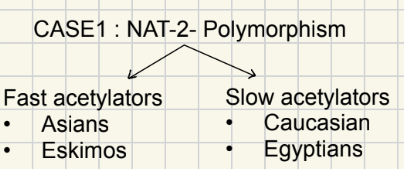
d. Asians and Eskimos
Fast acetylators in NAT-2 polymorphism include ______ [2]
a. Caucasians and Egyptians
b. Caucasians and Eskimos
c. Asians and Caucasians
d. Asians and Eskimos
a. Caucasians and Egyptians
Slow acetylators in NAT-2 polymorphism include ______ [2]
a. Caucasians and Egyptians
b. Caucasians and Eskimos
c. Asians and Caucasians
d. Asians and Eskimos
Genetic polymorphism — occurs in >1% of the population
Genetic mutation — occurs in <1% of the population
Example:
Genetic polymorphism vs Genetic mutation
b. Increased risk of lupus-like rashes
The significance of NAT-2 polymorphism for Hydralazine in slow acetylators
a. Increased risk of aplastic anemia
b. Increased risk of lupus-like rashes
c. Increased risk of gray baby syndrome
d. Increased risk of kernicterus
b. Slow acetylators
Lupus-like rashes common in ______ acetylators of enzyme N-acetyl transferase
a. Fast acetylators
b. Slow acetylators
c. APAP

The drug metabolized by Glutathione conjugation
a. Catecholamines
b. Benzoic acid
c. APAP
d. Bilirubin
d. Catecholamines
The drug metabolized by methylation
a. APAP
b. Benzoic acid
c. Bilirubin
d. Catecholamines
c. Benzoic acid
The drug metabolized by glycine conjugation forming hippuric acid
a. Catecholamines
b. APAP
c. Benzoic acid
d. Bilirubin
a. Enzyme inducer
Cause under dosing (subtherapeutic)
a. Enzyme inducer
b. Enzyme inhibitor
b. Enzyme inhibitor
Cause overdosing (toxicity)
a. Enzyme inducer
b. Enzyme inhibitor
c. Rifampicin
The only antibiotic that is a CYP450 enzyme inducer
a. Chloramphenicol
b. Macrolides
c. Rifampicin
d. Fluoroquinolone
c. Azithromycin
The macrolide that is NOT a CYP450 enzyme inhibitor
a. Clarithromycin
b. Erythromycin
c. Azithromycin
d. Roxithromycin
b. CYP2C19

Clopidogrel is a prodrug activated by this enzyme into an active ADP inhibitor
a. CYP3A4
b. CYP2C19
c. CYP2D6
d. CYP1A2
b. Decreased active clopidogrel, increased inactive clopidogrel

Omeprazole inhibits CYP2C19, resulting in this effect on Clopidogrel
a. Increased active clopidogrel, decreased inactive clopidogrel
b. Decreased active clopidogrel, increased inactive clopidogrel
c. No effect on clopidogrel activation
d. Increased clopidogrel absorption only
b. Blood clot

The clinical consequence of Clopidogrel + omeprazole interaction, due to decreased active clopidogrel, is
a. Increased bleeding risk
b. Blood clot
c. Hypotension
d. Hyperkalemia
Pantoprazole
Rabeprazole
The alternative PPI to use instead of Omeprazole when a patient is on Clopidogrel
a. Esomeprazole and Lansoprazole
b. Pantoprazole and Rabeprazole
c. Omeprazole and Esomeprazole
d. Lansoprazole and Omeprazole
a. Omeprazole
induce CYP1A
inhibit CYP2C
This drug can be enzyme inhibitor or inducer
a. Omeprazole
b. Erythromycin
c. Azithromycin
d. Cimetidine
a. Valproic acid
The only anti-convulsant enzyme inhibitor
a. Valproic acid
b. Lithium
c. Clozapine
d. Carbamazepine
d. Carbamazepine
The enzyme inducer capable of inducing its own metabolism
a. Valproic acid
b. Lithium
c. Clozapine
d. Carbamazepine
b. Enzyme inhibitor
Protease inhibitors
Antivirals for HIV (“-navir”) are __________
a. Enzyme inducer
b. Enzyme inhibitor