Midterm
0.0(0)
Studied by 0 people Call Kai
 Learn
Learn Practice Test
 Spaced Repetition
 Match
Match Flashcards
 Knowt Play
Card Sorting
1/124

Earn XP
Description and Tags
Last updated 3:38 PM on 10/25/22
Name | Mastery | Learn | Test | Matching | Spaced | Call with Kai | Chat |
|---|
No analytics yet
Send a link to your students to track their progress
125 Terms
1
New cards
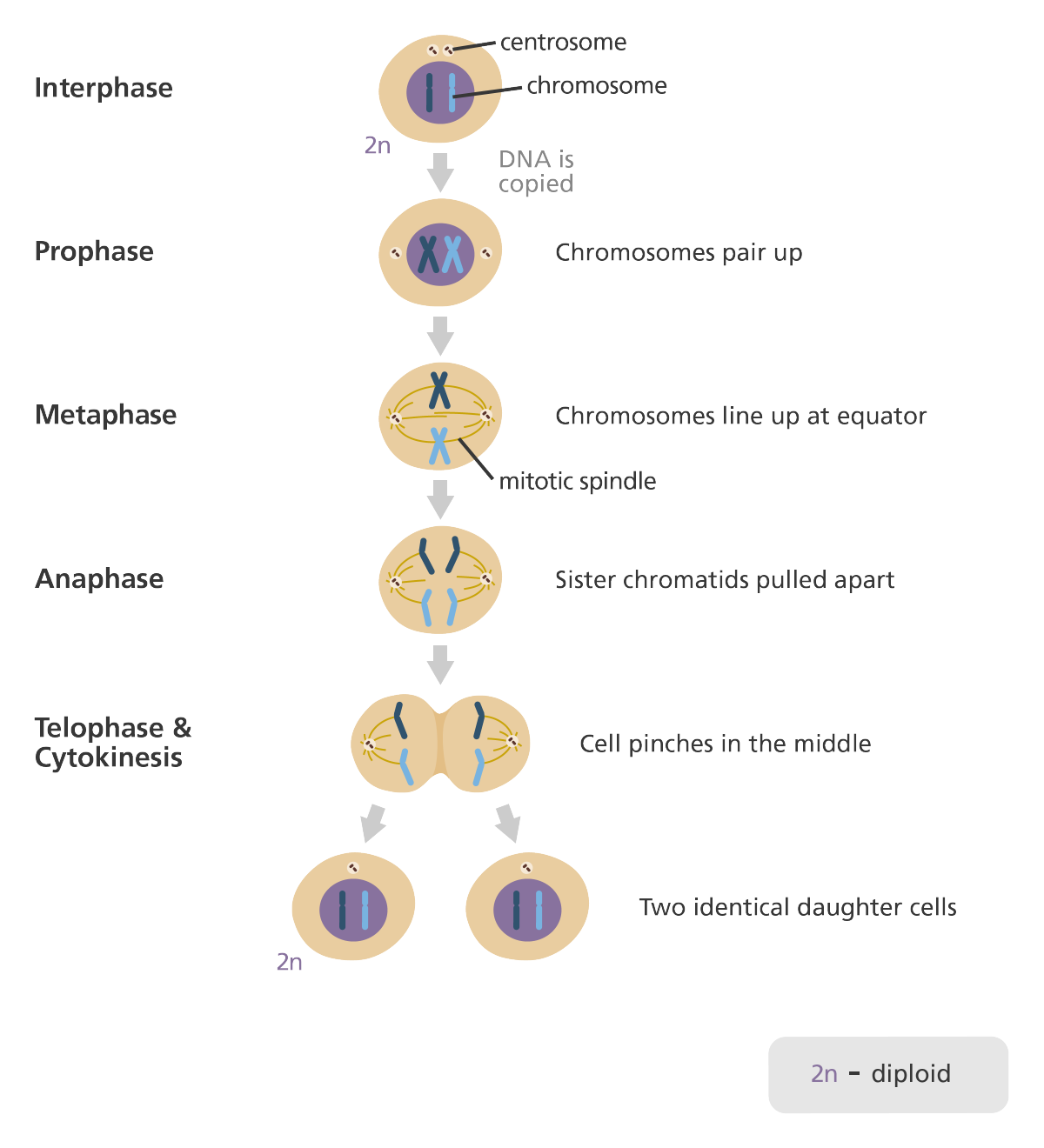
Cell cycle
M-phase
-Prophase
-Prometaphase
-Metaphase
-Anaphase
-Telophase
Interphase
-G1
-S, synthesis (2n)
-G2
-G0, no cell division
-Prophase
-Prometaphase
-Metaphase
-Anaphase
-Telophase
Interphase
-G1
-S, synthesis (2n)
-G2
-G0, no cell division
2
New cards
G1 phase
Gap 1
high gene expression (2n)
high gene expression (2n)
3
New cards
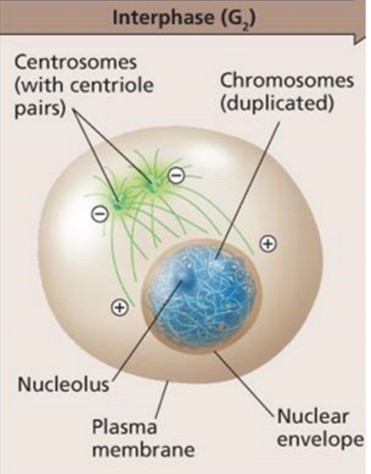
G2 phase
Gap 2 (Interphase)
prepares to divide (4n)
prepares to divide (4n)
4
New cards
M phase
Mitosis
-cell division (2n)
-cell division (2n)
5
New cards
Interphase
Gene expression
6
New cards
S phase
Synthesis
DNA replication occurs (4n)
DNA replication occurs (4n)
7
New cards
Mitosis
-somatic cells (body)
2 identical daughter cells
2 identical daughter cells
8
New cards
Meiosis
-germ line cells (sex)
4 haploid cells
Meiosis I -homologous chromosomes separate 2n -> n
Meiosis II -sister chromatids separate n -> 1/2n
4 haploid cells
Meiosis I -homologous chromosomes separate 2n -> n
Meiosis II -sister chromatids separate n -> 1/2n
9
New cards
Meiosis I
Homologous chromosome pairing
Crossing over
Segregation
Crossing over
Segregation
10
New cards
Meiosis II
Sister chromatid seperation
11
New cards
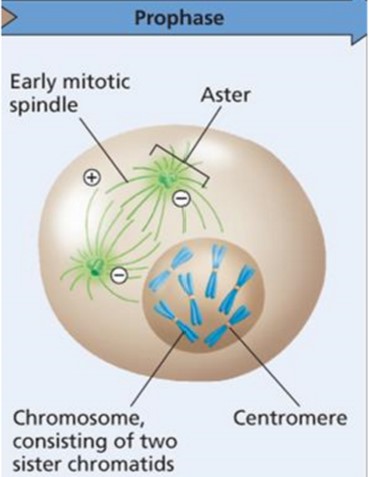
Prophase
Chromosome condense
Microtubules extend
Nucleolus dissolving
Microtubules extend
Nucleolus dissolving
12
New cards
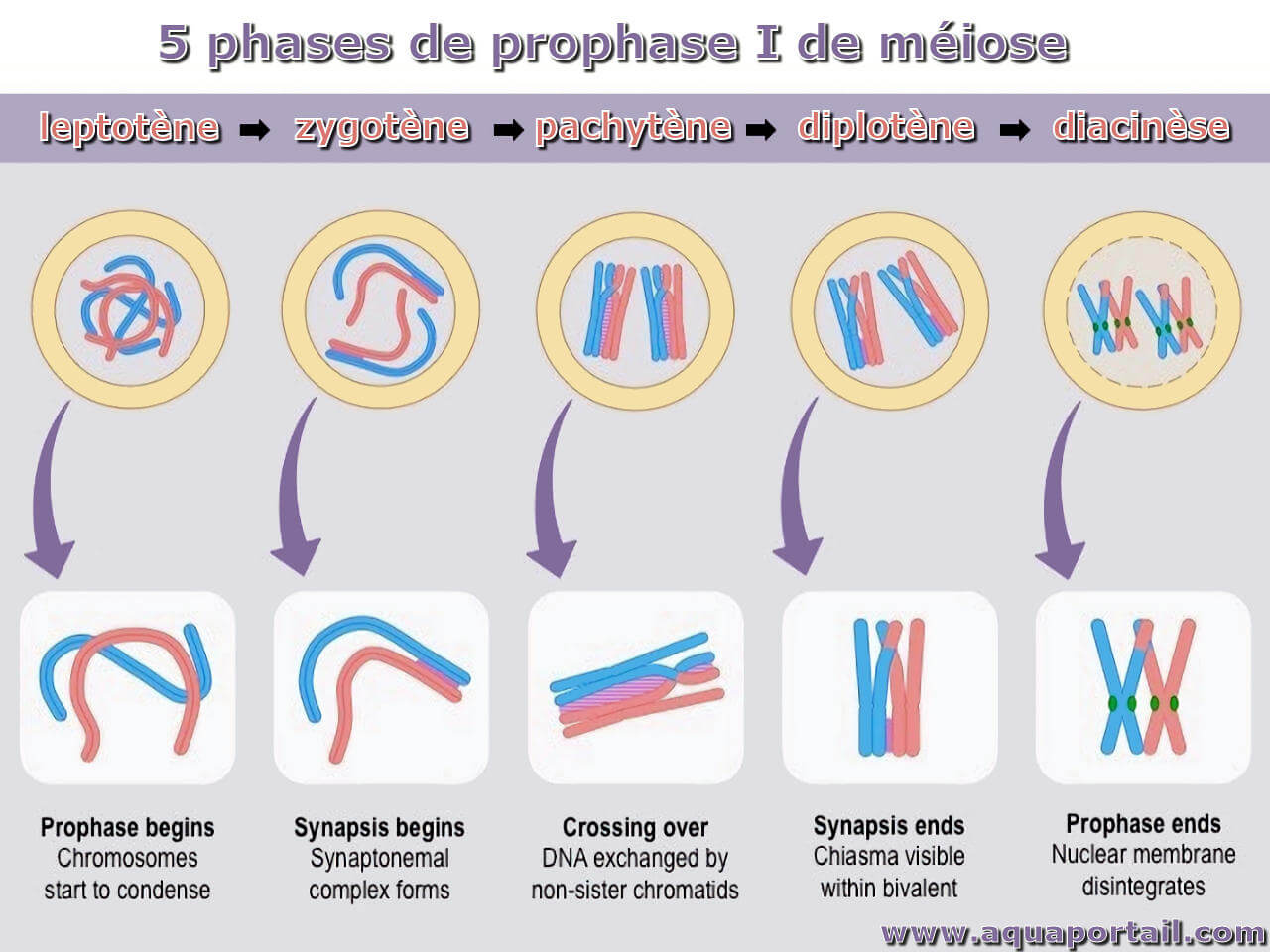
Prophase I
Leptotene -spindle fibers produced
Zygotene -synaptonemal complex
Pachytene -crossing over
Diplotene -tetrads
Diakinesis -moving to metaphase
Zygotene -synaptonemal complex
Pachytene -crossing over
Diplotene -tetrads
Diakinesis -moving to metaphase
13
New cards
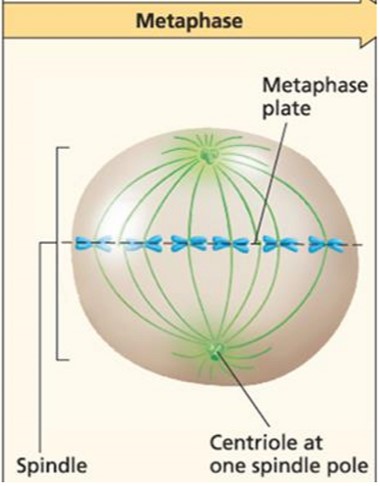
Metaphase
Chromosome align to metaphase plate
Microtubules connect to kinetochore
Microtubules connect to kinetochore
14
New cards
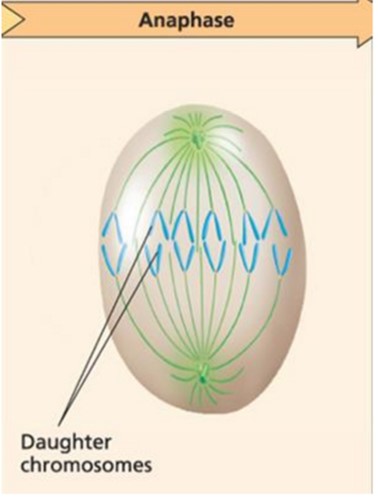
Anaphase
Chromosome pull apart
Kinetochore microtubules retract
Kinetochore microtubules retract
15
New cards
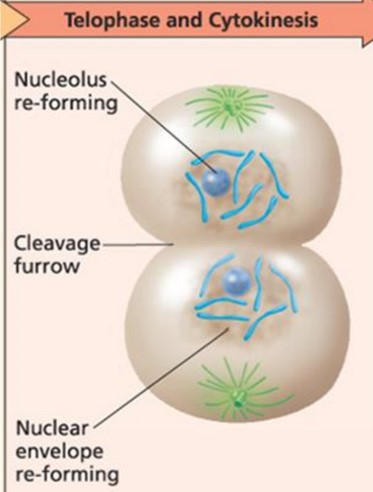
Telophase
Chromosome condense
Nonkinetochore microtubules elongate cell
Nuclear envelope reforms
Nonkinetochore microtubules elongate cell
Nuclear envelope reforms
16
New cards
Cytokinesis
Nucleolus reforms
plants -cell plate
animal -ring and cleavage furrow
plants -cell plate
animal -ring and cleavage furrow
17
New cards
Diploid
products of mitosis
2n
2n
18
New cards
Haploid
products of meiosis
n
n
19
New cards
Homologous chromosome
2 chromosomes which contain the same genes
-mother
-father
-mother
-father
20
New cards
Sister chromatids
copies of the chromosomes made during replication
connected at the kinetochore
connected at the kinetochore
21
New cards
Recombination
chromatids are broken and recombined to form a new combination of alleles
22
New cards
Crossing over
homologous chromosomes are recombined to form a new combination of alleles
23
New cards
Independent assortment
alleles get separated and inherited independently of one another
24
New cards
Germ cell
sex cell
-sperm
-ovum
-sperm
-ovum
25
New cards
Somatic cell
body cells
26
New cards
Telomere
repetitive DNA sequences at the end of a chromosome
-provide a "cushion" for replication
-provide a "cushion" for replication
27
New cards
Disjunction
chromosome seperation
28
New cards
Nondisjunction
failed chromosome separation
-leads to aneuploidy
-leads to aneuploidy
29
New cards
Aneuploidy
missing or extra chromosomes
-cohesion of chromatids
-connection of homologous
-recombination
-cohesion of chromatids
-connection of homologous
-recombination
30
New cards
Define the study of genetics & explain its significance for applied and curiosity-driven science.
Study of inheritance
-explains the script of life for an organism
-helps us connect evolution within organisms
-explains the script of life for an organism
-helps us connect evolution within organisms
31
New cards
Relate the sub-disciplines of genetics considered in this course to levels of biological organization.
Transmission Genetics -mendelian genetics, between generations
Evolutionary genetics -genetic relationship of evolution
Molecular genetics -studies DNA and RNA and connects to organisms
Evolutionary genetics -genetic relationship of evolution
Molecular genetics -studies DNA and RNA and connects to organisms
32
New cards
Outline the significance and timing of mitosis and meiosis within animal and plant life cycles.
Meiosis -cells for sexual reproduction
Mitosis -replicates non-sex cells, growth and development
Mitosis -replicates non-sex cells, growth and development
33
New cards
Describe the major phases of the cell cycle including those of mitosis and meiosis.
M-phase (I, II)
-Prophase
-Prometaphase
-Metaphase
-Anaphase
-Telophase
Interphase
-G1
-S, synthesis (2n)
-G2
-G0, no cell division
-Prophase
-Prometaphase
-Metaphase
-Anaphase
-Telophase
Interphase
-G1
-S, synthesis (2n)
-G2
-G0, no cell division
34
New cards
Describe the general structure and normal movement of eukaryotic chromosomes during the cell cycle.
Prophase -condense
Metaphase -middle
Anaphase -separated
Metaphase -middle
Anaphase -separated
35
New cards
List similarities and differences between mitosis, meiosis I and meiosis II.
Mitosis
-2 identical cells (2n)
-somatic cells
-separating sister chromatids
Meiosis I
-2 identical cells (2n)
-germ line cells
-separating homologous pairs
-crossing over
Meiosis II
-4 haploid cells (n)
-germ line cells
-separating sister chromatids
-2 identical cells (2n)
-somatic cells
-separating sister chromatids
Meiosis I
-2 identical cells (2n)
-germ line cells
-separating homologous pairs
-crossing over
Meiosis II
-4 haploid cells (n)
-germ line cells
-separating sister chromatids
36
New cards
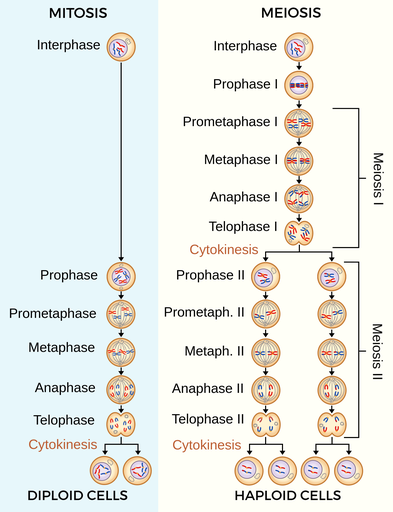
Recognize and draw phases of mitosis, meiosis I, meiosis II, as well as their products.
37
New cards
Describe the consequences and some causes of abnormal chromosome movement during cell division
trisomy 21 -down syndrom
38
New cards
Nucleotide
nucleoside (sugar + base)
phosphate group
phosphate group
39
New cards
DNA
nucleotide (A, T, G, C)
deoxyribose sugar-phosphate backbone
deoxyribose sugar-phosphate backbone
40
New cards
RNA
nucleotide (A, U, G, C)
ribose sugar-phosphate backbone
ribose sugar-phosphate backbone
41
New cards
Purine
A, G
2 ring structure
2 ring structure
42
New cards
Pyrimidine
C, T (U)
1 ring structure
1 ring structure
43
New cards
DNA replication (including enzymes)
helicase -unwinds helix (breaks H bonds)
DNA topoisomerase -relaxes supercoiling (cutting strand)
SSB -prevents re-annealing
Primase -synthesizes RNA primers
DNA polymerase III -synthesizes DNA (reads 3'-5')
DNA polymerase I -replaces RNA primer with DNA (removes 5'-3')
DNA ligase -joins DNA segments
DNA topoisomerase -relaxes supercoiling (cutting strand)
SSB -prevents re-annealing
Primase -synthesizes RNA primers
DNA polymerase III -synthesizes DNA (reads 3'-5')
DNA polymerase I -replaces RNA primer with DNA (removes 5'-3')
DNA ligase -joins DNA segments
44
New cards
Leading strand
makes 5'-3'
DNA synthesis continuous
DNA synthesis continuous
45
New cards
Lagging strand
makes 5'-3'
DNA synthesis discontinuous
-Okazaki fragments
DNA synthesis discontinuous
-Okazaki fragments
46
New cards
Bacterial Transcription (including enzymes)
Initiation
-RNA polymerase -binds to promoter
Elongation
-core enzyme -syntheiszes RNA
Termination
-intrinsic: hairpin loops (GC), polyU tail slows polymerase
-Rho-dependant: stem-loop, protein binds to RNA (disassociates from polymerase)
-RNA polymerase -binds to promoter
Elongation
-core enzyme -syntheiszes RNA
Termination
-intrinsic: hairpin loops (GC), polyU tail slows polymerase
-Rho-dependant: stem-loop, protein binds to RNA (disassociates from polymerase)
47
New cards
Eukaryotic Transcription (including enzymes)
Initiation
-Initial committed complex -TFIID & TATA box
-Preintitaion compex -TFIIE & TFIIH
-RNA Polymerase I -ribosomes
-RNA Polymerase II -mRNA
-RNA Polymerase III -tRNA
Elongation
Termination
-polyA tail -dissociates RNA polymerase from template
-RNase -cuts pre-mRNA off
-Initial committed complex -TFIID & TATA box
-Preintitaion compex -TFIIE & TFIIH
-RNA Polymerase I -ribosomes
-RNA Polymerase II -mRNA
-RNA Polymerase III -tRNA
Elongation
Termination
-polyA tail -dissociates RNA polymerase from template
-RNase -cuts pre-mRNA off
48
New cards
mRNA
5'-3'
transcription, carries genetic code
(same as coding)
codons for tRNA
transcription, carries genetic code
(same as coding)
codons for tRNA
49
New cards
Coding strand
5'-3'
Same as mRNA
Same as mRNA
50
New cards
Template strand
3'-5'
anti-codons for tRNA
anti-codons for tRNA
51
New cards
5’ cap
added after transcription
protects mRNA from degradation
protects mRNA from degradation
52
New cards
polyA tail
facilitates transport
protects from degradation
enhances translation by recognition
protects from degradation
enhances translation by recognition
53
New cards
Intron
do not code for proteins
-removed
-removed
54
New cards
Exon
do code for proteins
-remain
-remain
55
New cards
Promoter
10 Pribnow box 5'-TATAAT-3'
35 Consensus sequence 5'-TTGACA-3'
35 Consensus sequence 5'-TTGACA-3'
56
New cards
RNA coding region
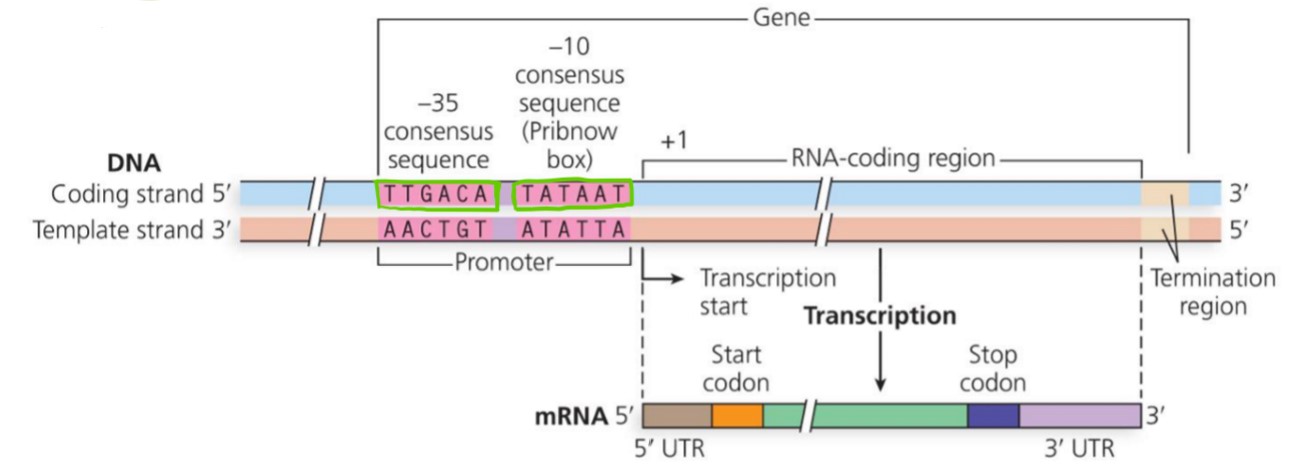
57
New cards
Terminator
Bacteria
-Intrinsic: hairpin, polyU, destabilize
-Rho-dependent: stem-loop, dissociate
Eukaryote
-polyA tail: dissociates
-Intrinsic: hairpin, polyU, destabilize
-Rho-dependent: stem-loop, dissociate
Eukaryote
-polyA tail: dissociates
58
New cards
Enhancer
increase gene transcription
-bind to proteins on promoter regions
-bind to proteins on promoter regions
59
New cards
Silencer
repress transcription
-bind to proteins that bend DNA
-bind to proteins that bend DNA
60
New cards
Activator
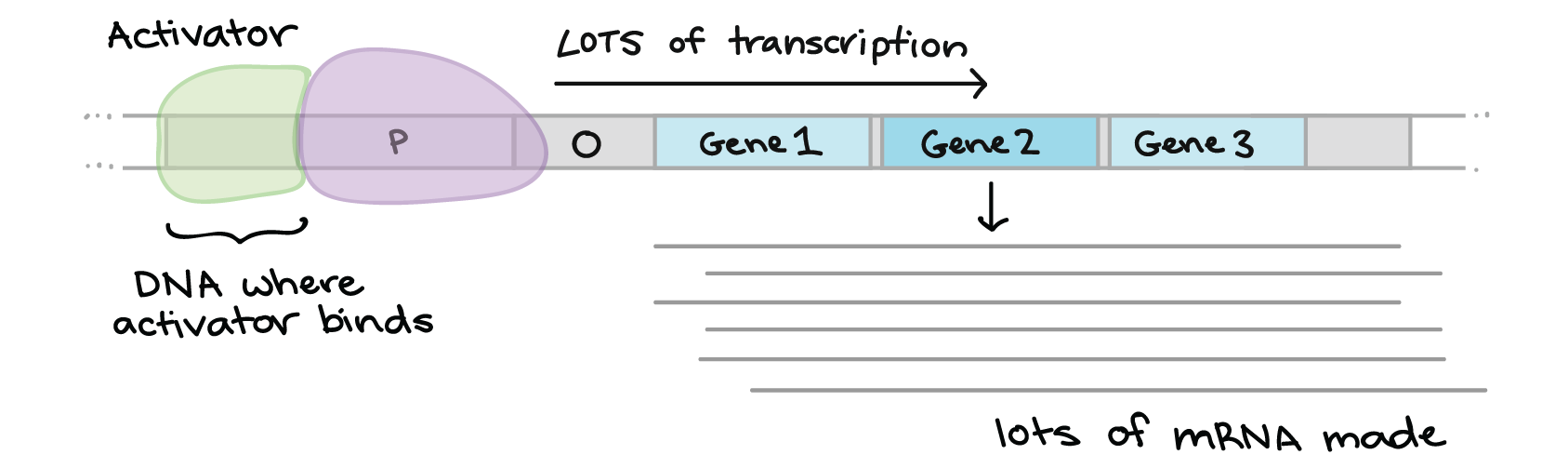
61
New cards
Repressor
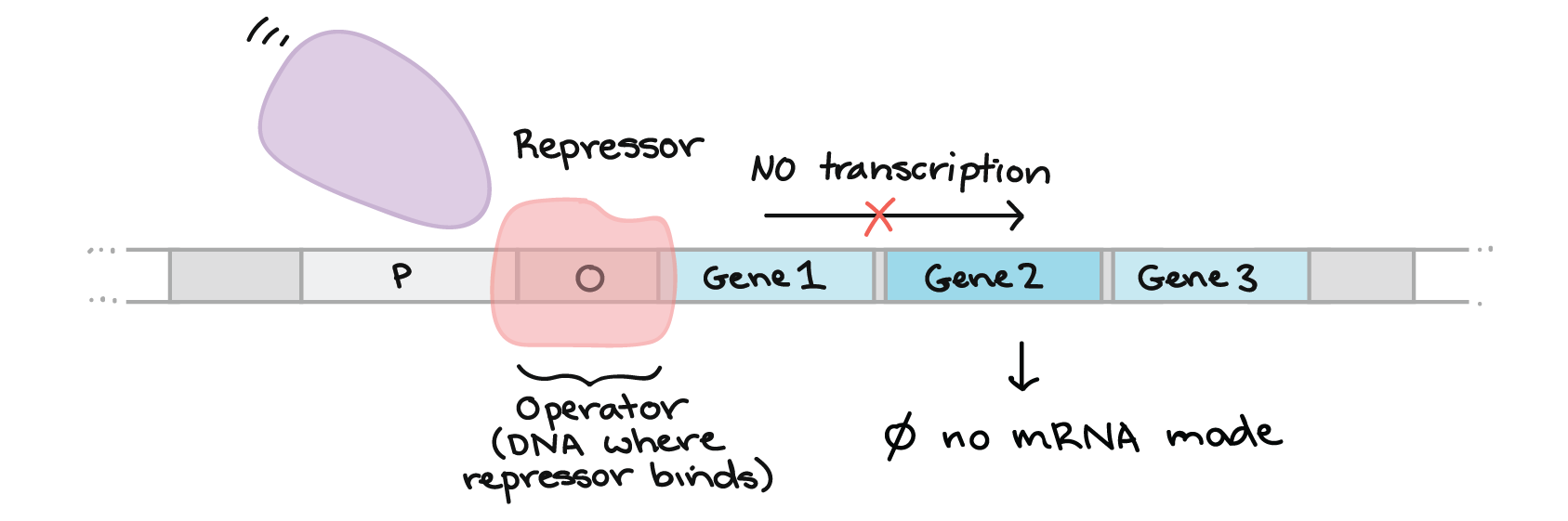
62
New cards
List the components of nucleotides and the features of DNA.
nucleotide
-nucleoside, sugar and base (A, U, G, C)
-phosphate group
deoxyribose sugar-phosphate backbone
-phosphodiester bonds (5' phosphate and 3' OH)
-nucleoside, sugar and base (A, U, G, C)
-phosphate group
deoxyribose sugar-phosphate backbone
-phosphodiester bonds (5' phosphate and 3' OH)
63
New cards
Use information on base occurrence to predict overall nucleotide composition.
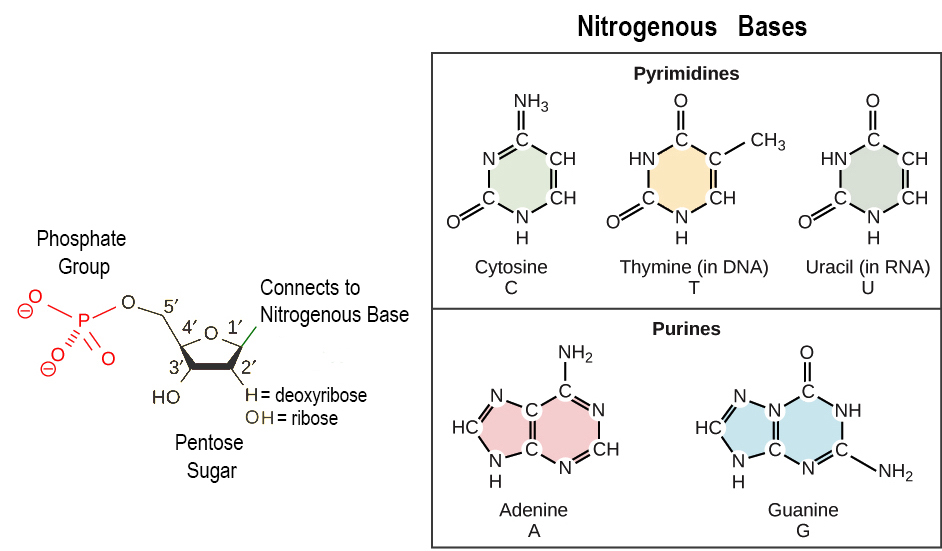
64
New cards
Compare and contrast transcription in bacteria and eukaryotes.
Bacteria
-cytoplasm
-terminator sequence
-RNA Polymerase
Eukaryote
-nucleus
-posttranscriptional modifications
-RNA Polymerase (I,II,III)
-cytoplasm
-terminator sequence
-RNA Polymerase
Eukaryote
-nucleus
-posttranscriptional modifications
-RNA Polymerase (I,II,III)
65
New cards
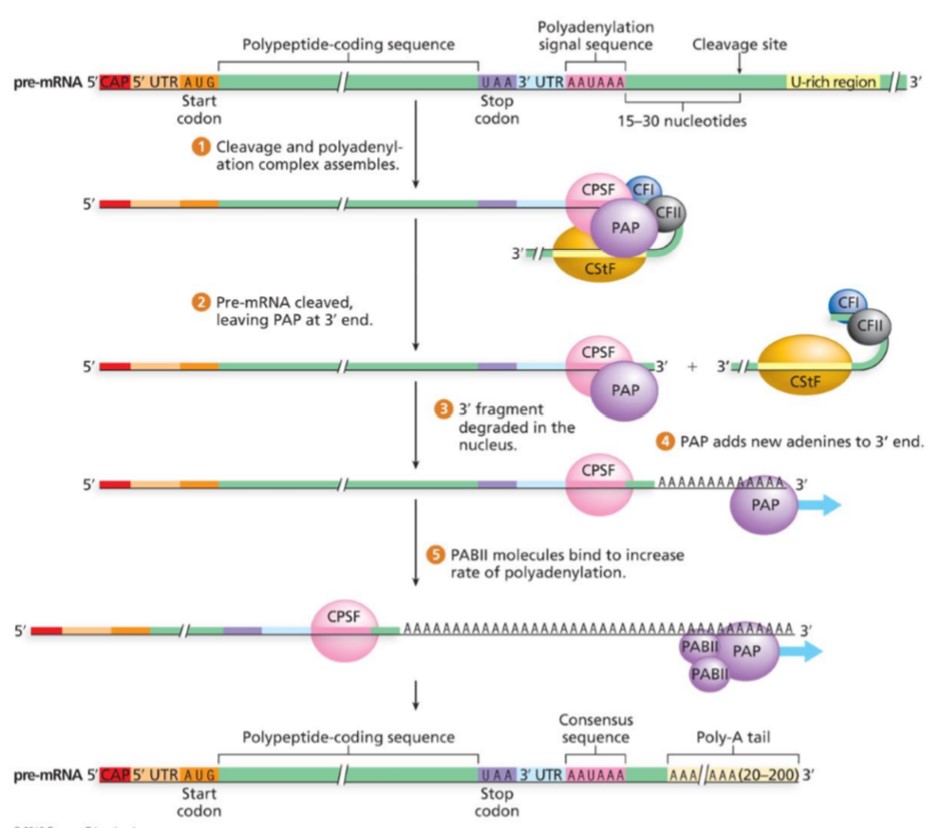
Describe RNA processing in eukaryotes.
splicing and addition of 5' cap and poly-A tail
66
New cards
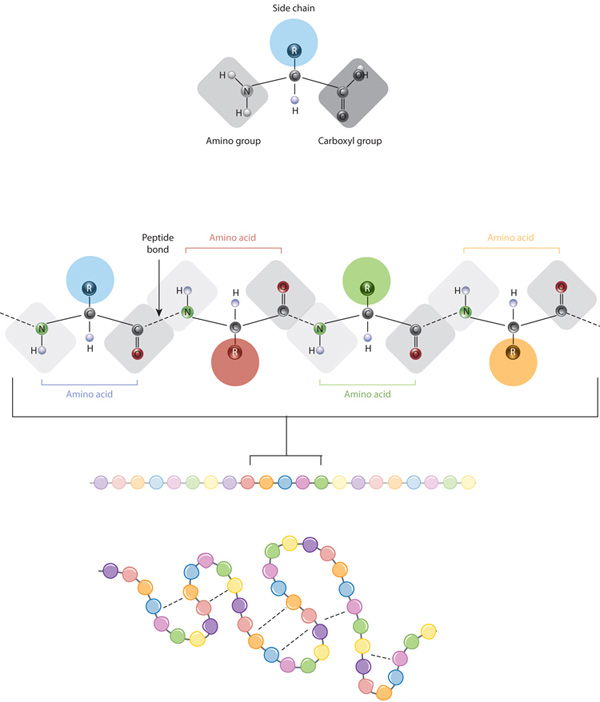
Amino acid
central a carbon
amino group
carboxyl group
R-group
-peptide bonds
amino group
carboxyl group
R-group
-peptide bonds
67
New cards
polypeptide
assembled in ribosomes
N5' - C3'
N5' - C3'
68
New cards
N-terminus
NH3+
start
start
69
New cards
C-terminus
COOH-
end
end
70
New cards
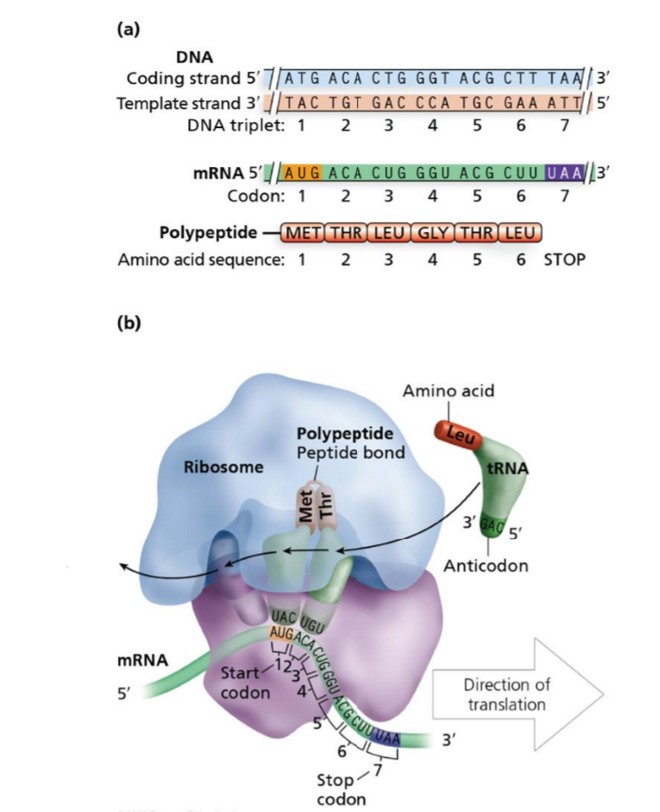
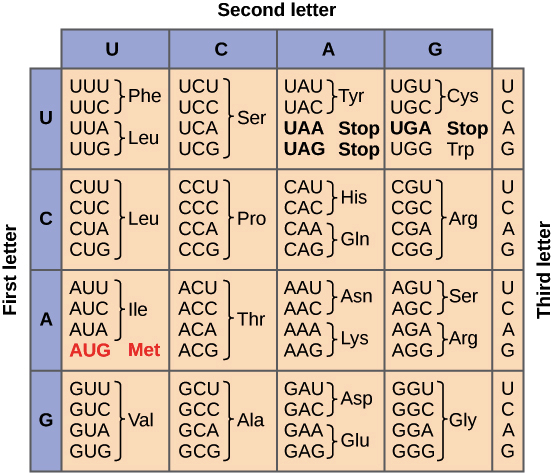
Genetic code
3 nucleotides make up the codon
tRNA anticodon matches and brings aa
aa binds with peptide bonds to growing chain
tRNA anticodon matches and brings aa
aa binds with peptide bonds to growing chain
71
New cards
Codon
5'-3'
mRNA
mRNA
72
New cards
Anti-codon
3'-5'
tRNA
tRNA
73
New cards
Wobble
3rd base wobble in tRNA
most 3' nucleotides code for the same aa
most 3' nucleotides code for the same aa
74
New cards
tRNA
anticodon
brings amino acids to the ribosome
brings amino acids to the ribosome
75
New cards
Ribosome
where translation occurs
small subunit -mRNA
P site -holds tRNA
A site -binds molecule
E site -tRNA leave
large subunit -polypeptide chain
small subunit -mRNA
P site -holds tRNA
A site -binds molecule
E site -tRNA leave
large subunit -polypeptide chain
76
New cards
Consensus sequence
-35 TTGACA
-10 TATAAT
-10 TATAAT
77
New cards
Start codon
AUG, Met
78
New cards
Stop codon
UAG, UAA, UGA
you are going
you go away
you are away
you are going
you go away
you are away
79
New cards
Open reading frame
no stop codons
between START and STOP
between START and STOP
80
New cards
Translation
81
New cards
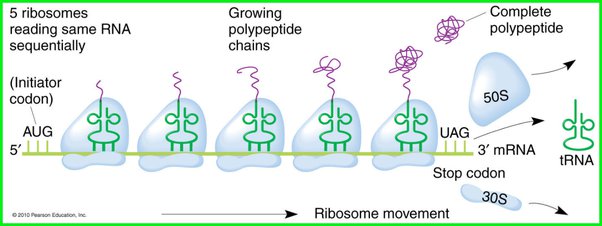
Polyribosome
82
New cards
Mutation
random
germ-line -passed
somatic -personal
germ-line -passed
somatic -personal
83
New cards
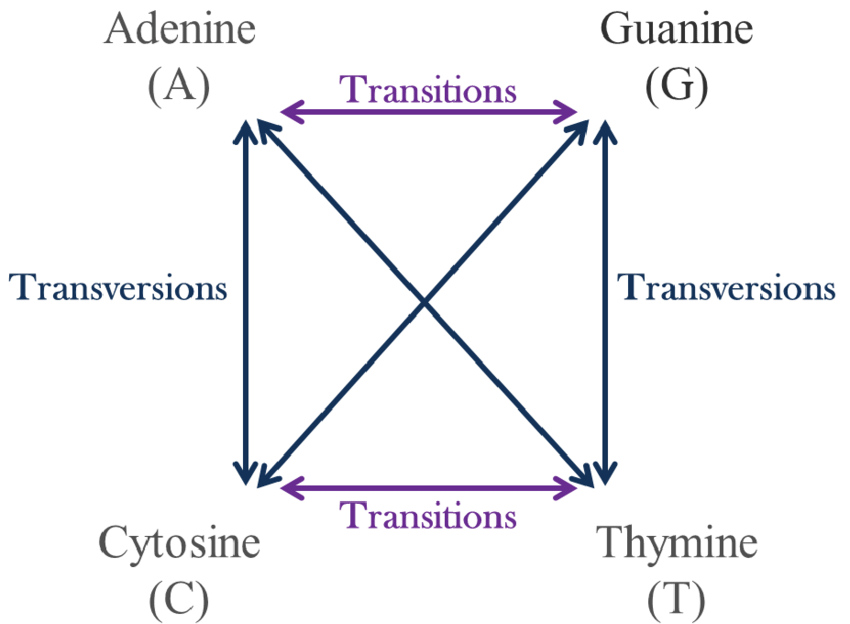
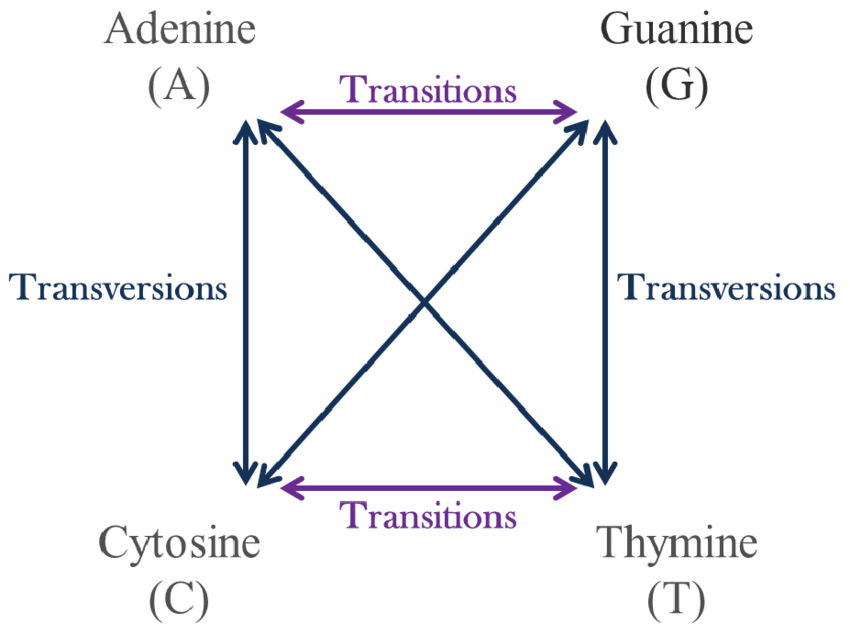
Transition
purine to pyrimidine
A->G
C->T
A->G
C->T
84
New cards
Transversion
A->C
A->T
G->C
G->T
A->T
G->C
G->T
85
New cards
Mutation levels
Amino Acid -aa
-Synonymous: Leu -> Leu
-Nonsynonymous: Leu -> Gly
RNA level -codons
-Missense: CAA -> AAA
-Silent: CAA -> CAG (same aa)
-Nonsense: UAU -> UAG (aa to stop)
-Nonstop: UAG -> UAU (stop to aa)
DNA level -nucleotides
-Substitutions: transition, transversion
-Frameshift: insertion, deletion
-Synonymous: Leu -> Leu
-Nonsynonymous: Leu -> Gly
RNA level -codons
-Missense: CAA -> AAA
-Silent: CAA -> CAG (same aa)
-Nonsense: UAU -> UAG (aa to stop)
-Nonstop: UAG -> UAU (stop to aa)
DNA level -nucleotides
-Substitutions: transition, transversion
-Frameshift: insertion, deletion
86
New cards
Heritable mutation
germ-line
87
New cards
Non-heritable mutation
somatic
88
New cards
Describe the general structure of amino acids and polypeptides.
89
New cards
Use the genetic code to predict amino acid sequence of polypeptides and amino acid changes resulting from mutation.
90
New cards
Describe the general significance of mutations.
increase variation
affect phenotypes
affect phenotypes
91
New cards
Describe the translation process including ribosome assembly and role of tRNA’s.
initiator tRNA carries Met to codon
ribosome forms
-IFs control formation and binding of tRNA
small subunit -mRNA
P site -holds tRNA
A site -binds molecule
E site -tRNA leave
large subunit -polypeptide chai
ribosome forms
-IFs control formation and binding of tRNA
small subunit -mRNA
P site -holds tRNA
A site -binds molecule
E site -tRNA leave
large subunit -polypeptide chai
92
New cards
Oogenesis
development of the ovum
93
New cards
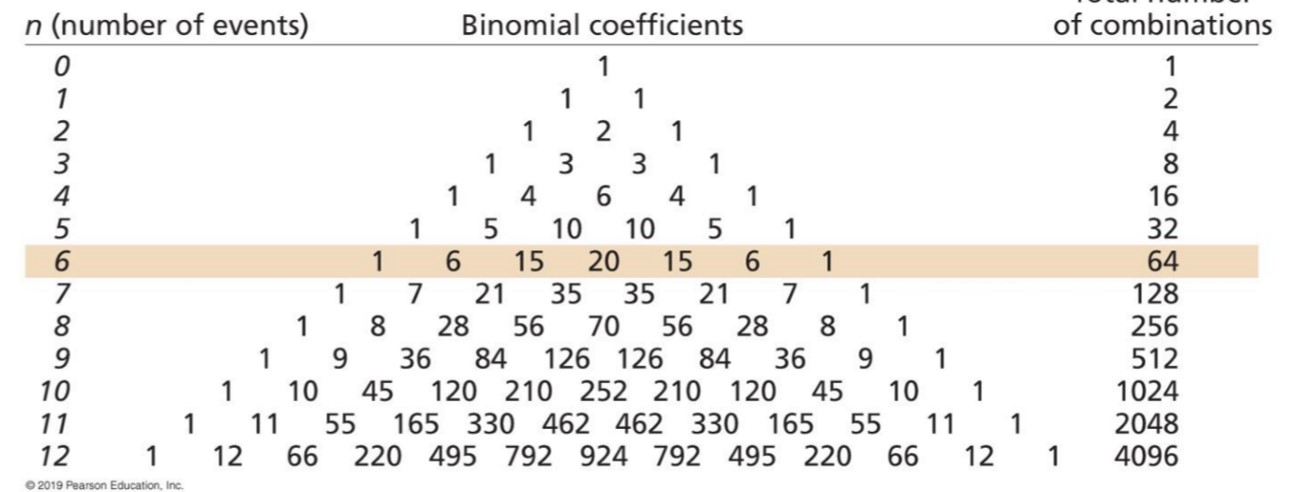
Binomial expansion
n = number of events (offspring)
-determine ratio
-divide by total
6 - 6:0, 5:1, 4:2, 3:3, 2:4, 1:5, 0:6
-determine ratio
-divide by total
6 - 6:0, 5:1, 4:2, 3:3, 2:4, 1:5, 0:6
94
New cards
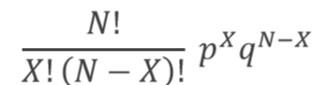
Binomial equation
order doesn't matter
N -number of offspring
X -dominant happens
p -probability dominant happens (<1)
q -probability it doesn't happen (<1)
N -number of offspring
X -dominant happens
p -probability dominant happens (<1)
q -probability it doesn't happen (<1)
95
New cards
Chi-square analysis
observed
expected
o-e
(o-e)^2
(o-e)^2/e
DF = phenotypes-1
p > a (0.05) -fail to reject
p < a -rejec
expected
o-e
(o-e)^2
(o-e)^2/e
DF = phenotypes-1
p > a (0.05) -fail to reject
p < a -rejec
96
New cards
Dominant vs Recessive
r -skips generation
D -doesn't skip
-affected kids always have at least one parent
D -doesn't skip
-affected kids always have at least one parent
97
New cards
Autosomal vs Sex-linked
AA -even in sexes
Xr -more males
XD -more females
-all daughters of affected dad
Y -only males
Xr -more males
XD -more females
-all daughters of affected dad
Y -only males
98
New cards
Autosomal recessive
skips generations
both parents have: all kids have
sexes equal
cystic fibrosis
PKU
Sickle-cell anemia
both parents have: all kids have
sexes equal
cystic fibrosis
PKU
Sickle-cell anemia
99
New cards
Autosomal dominant
no parent: no kids
affected kid: at least one parent
sexes equal
achondroplasia (dwarfism)
Huntington disease
Marfan syndrome
affected kid: at least one parent
sexes equal
achondroplasia (dwarfism)
Huntington disease
Marfan syndrome
100
New cards
X-linked recessive
skips generations
affected mom: all sons
affected dad: all daughter, no sons
more males
colour blindness
hemophilia
fragile X syndrome
affected mom: all sons
affected dad: all daughter, no sons
more males
colour blindness
hemophilia
fragile X syndrome