LAB EXAM LFG
 Call Kai
 Learn
Learn Practice Test
 Spaced Repetition
 Match
Match Flashcards
 Knowt Play
1/188

There's no tags or description
Looks like no tags are added yet.
Name | Mastery | Learn | Test | Matching | Spaced | Call with Kai | Chat |
|---|
No analytics yet
Send a link to your students to track their progress
189 Terms
opisthonkota
eukarya→ unikonta; single flagellum
fungi
sister to animal; eukarya→ unikonta → opisthonkota; most are multicellular; chitin in cell walls; no plastids, not photosynthetic; heterotroph (mostly saprophytic); glucose stored as glycogen; have hyphae; symbiotic
animal
sister to fungi; eukarya→ unikonta → opisthonkota; all are multicellular; chitin for exoskeletons in arthropods; no plastids, not photosynthetic; heterotroph; glucose stored as glycogen; haploid dominant life cycle
why are fungi important
decompose inorganic material; pest control; bioremediation (removes pollutants from environment); improve agricultural yields; antibiotics; food/cooking
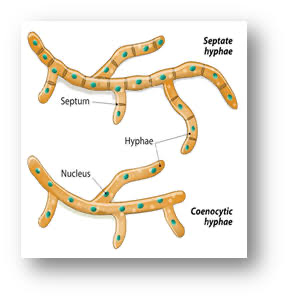
hyphae and the 2 types
cytoplasmic filaments that make up the main body of most fungi; aseptate (multinucleate- lacking walls within cells) and septate (separate cells with walls, can be mono or di karyotic 1 or 2 nuclei)
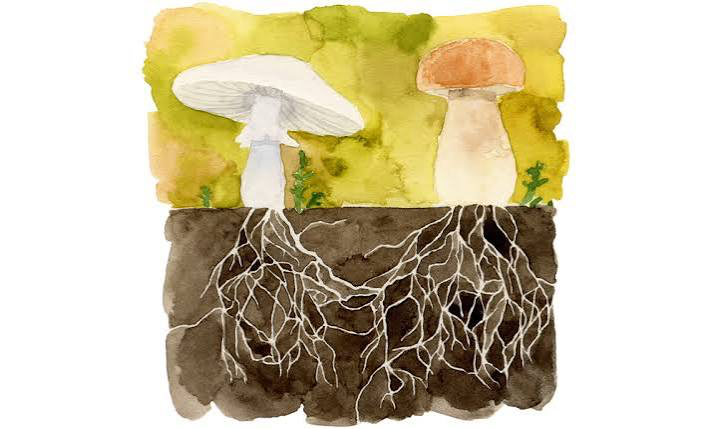
mycelium
mass of underground hyphae; used as feeding structure in fungi
saprophytic
type of heterotrophic pathway; most fungi are like this; dissolve organic material for food
mutualism
both organisms benefit
commensalism
one organism benefits, the other is unaffected
parasitism
one organism benefits, the other is harmed
fungal reproduction
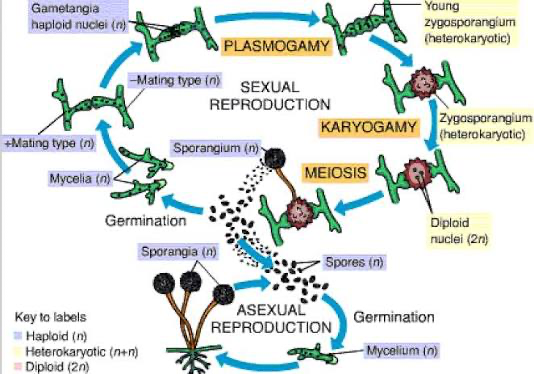
haploid dominant; only diploid cell is the zygote; haploid spores produced via meiosis and/or mitosis (asexual and sexual); sexual: plasmogamy (fusion of cytoplasm), where cells merge but the nuclei dont fuse - delayed karyogamy (fusion of nuclei)
5 major phyla of fungi
sister to animal; eukarya→ unikonta → opisthonkota→ fungi; chytridiomycota, zygomycota, glomeromycota, asomycota, basidiomycota
chytridiomycota- not life cycle
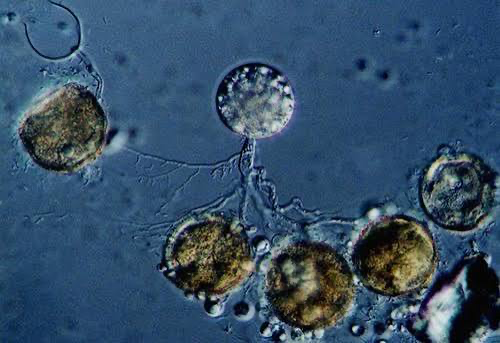
water mold; phyla of fungi; only phylum with: isogamous reproduction (gametes are morphologically same), flagellated spores, isogametes, alternation of generations (sporophyte dominant- 2n); mostly saprophytic, some parasitic; inhabit moist/aquatic habitats
saprophytic
fungi that feeds on decaying or dead matter
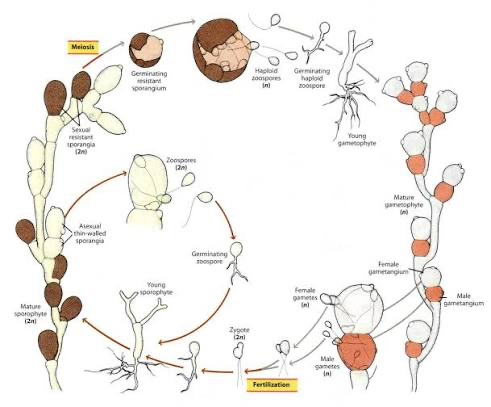
chytridiomycota life cycle
zygotę produces young sporophyte → mature thin walled sporophyte produce diploid zoospores (asexual) → thick walled sporangium produces haploid zoospores→ young gametophyte→ thin walled mature gametophyte→ thin walled gametangia produce haploid isogametes
zoospores
swimming reproductive cell. It moves using a tail called a flagellum and is found in algae, fungi, and protists; asexual- grow without needing to fuse to another cell
isogamete
reproductive cells that are identical in size, shape, and structure, meaning they cannot be classed as male or female.
Mean arterial pressure
(2(diastolic) + systolic) / 2
zygomycota- not life cycle
bread mold; phyla of fungi; aseptate hyphae; asexual reproduction with sporangium on sporangiophore; also has sexual; characterized by zygospores (diploid zygote and protective wall); mostly saprophytic; capable of surviving harsh environment conditions; forms haploid spores via meiosis when conditions become favorable; rhizomes
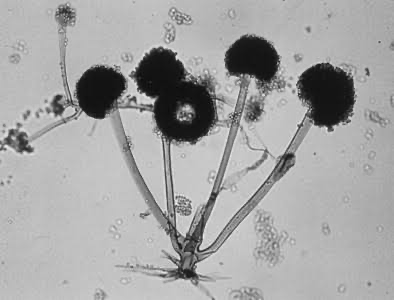
zygospore
diploid zygotę + protective wall; zygomycota spore
zygosporangnum
product of 2 haploid gametangia (specialized hyphae) merging; houses the zygospore; heterokaryotic; capable of surviving harsh environmental conditions, forms haploid spores via meiosis when conditions become favorable
zygomycota life cycle
asexual (more common): sporangia form at end of mycelium (n), produces haploid spores, spore bursts
glomeromycota
aseptate hyphae; phyla of fungi; mutualistic; arbuscular mycorrhizae(inside root cells); lack of sexual and asexual reproductive structures (has genes for them but structures have never been observed)
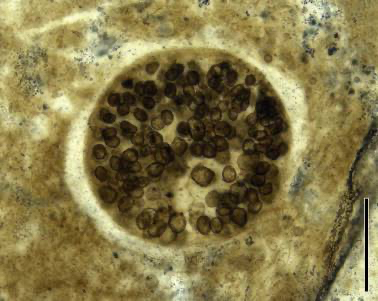
arbuscular mycorrhizae
mass of mycelium found inside root cells of a plant; also called endomorphic ___; hyphae enter root cells of plants and form arbuscles; most common type of ____
ascomycota
sac fungi; phyla of fungi; 30,000 species (morels, truffles, yeasts); septate hyphae; conidiophores w/ conidia spores- asexual; ascocarp- sexual (dikaryotic hyphae are reproductively active- produce a diploid zygote then meiosis and mitosis it to produce 8 haploid ascospores); penicillium
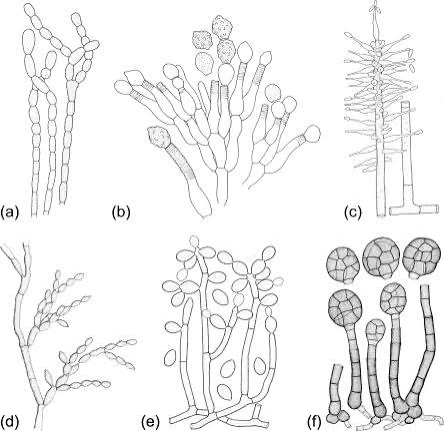
conidiophores
found in ascomycota; branching structure used for asexual reproduction; conidia spores at tips
ascocarp
found in ascomycota; fruiting body used for sexual reproduction; made of intertwined eukaryotic and monokaryotic hyphae
basidiomycota
club fungi; phyla of fungi; 25,000 species (yeasts, mushrooms, puffballs, rusts, smuts); septate hyphae; lack of asexual reproduction; fruiting body known as basidiocarp (mushroom) formed from intertwined eukaryotic hyphae; basidia line the fruiting body (produce the diploid zygote that produces haploid basidiospore)
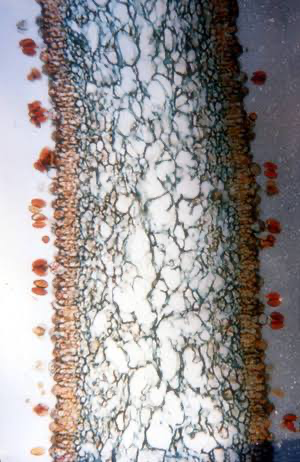
yeasts
within the polyphyletic taxonomy; derived from unicellular ascomycota and basidiomycota; cannot form hyphae or multicellular structures; asexual budding; saccharomyces cervisiae;
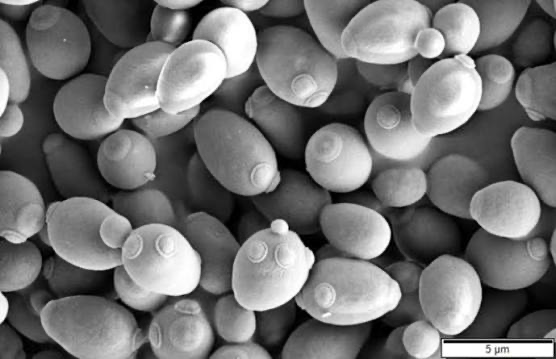
lichens
mutualistic association of fungi and photosynthetic ; 40% of ascomycota and 1% of basidiomycota participate in this; capable of surviving harsh conditions; independent reproduction; environmental indicator; 3 major morphologies make of 99% of this
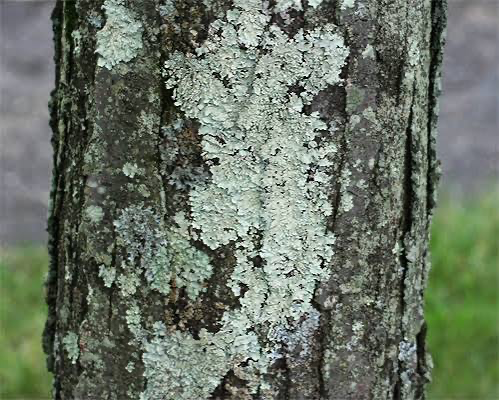
lichen: ascomycota +
cyanobacteria
lichen: green algae (chlorophyta) +
basidiomycota yeast
kingdom Animalia characteristics
heterotrophs; multicellular with no walls; unique, differentiated tissues; mostly diploid and sexual (sperm flagellated and eggs stationary); majority are aquatic;
how are kingdom animalia classified (body)
symmetry, tissues and organs, body cavity, embryonic developmental features, DNA
asymmetrical- kingdom animalia
no symmetry; found in highly primitive animals; phyla Porifera and placozoa
radial symmetry- kingdom animalia
parts radiate from center, no left or right sides; cut through central axis always results in identical halves; phyla cnidaria, Ctenophora, and echinoderms
bilateral symmetry- kingdom animalia
has left/right side if cut down the center ; all other phyla (all photo and deuterostomes)
germ layers
primary layer of cells that forms during embryonic development; ectoderm (epidermis and nervous system), mesoderm (muscles, skeletal tissue, heart, kidney, blood), endoderm (gut, liver, lungs); can have 1, 2, or 3 germ layers
1 germ layer
no true tissues; sponges and placozoa
2 germ layers
diploblastic (endo and ecto derm); cnidarians and ctenophores
3 germ layers
triploblastic; everything else
kingdom animalia classification
sister to fungi; eukarya→ unikonta → opisthonkota→ animals; 5 phyla: Porifera, cnidarians, ecdysozoa, lophotrochozoa, deuterostomes
closest living relatives of animals
choanoflagellate
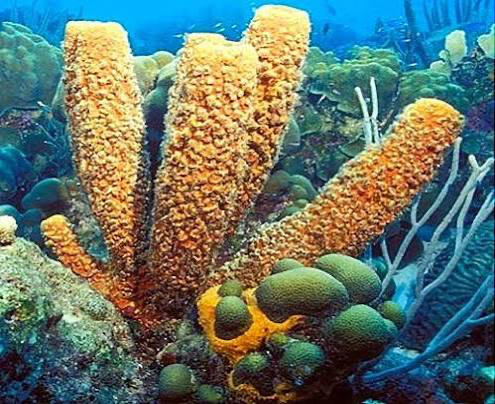
porifera
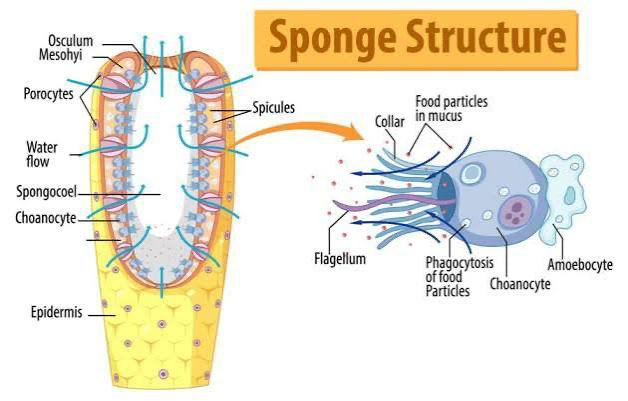
sponges, parazoa; phylum of kingdom animalia; asymmetrical, no tissues, no organs (most cells are totipotent, embedded in mesohyl); adults are immobile and larvae are free swimming; hermaphroditic but can also reproduce asexually by budding or fragmentation
mesohyl
gelatinous matrix; that contains support fibers, skeletal spicules, and moving cells. It sits right between the outer cell layer and the inner feeding layer; found in Porifera;
hermaphroditic
male and female at different parts of life cycle; contains both m and f sexual parts, allowing it to produce both m and f gametes
porifera sponge anatomy
LABEL; ostia (pores where water is drawn in through), spongocoel (cavity within sponge), osculum (opening that water exits through), choanocytes/collar cells (filter feeding cells that line the interior of the sponge w flagella, resemble choanoflagellates), amoebocytes (move around mesohyl by amoeboid movement to collect food, secrete calcium carbonate, and silicon dioxide spicules), spicules (spikes structure that forms the skeleton)
cnidaria
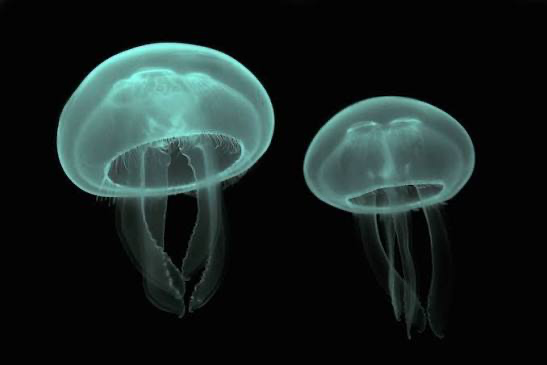
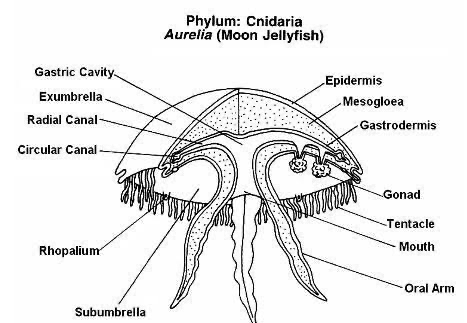
radiata; within phyla of kingdom animalia; coral or jellyfish like; radial symmetry; invertebrates; marine; diploblastic (outer epidermis and inner gastrodermis separated by mesoglea); cnidocytes (specialized cells that sting prey for food or defense); hydrostatic skeleton; gastrovascular cavity; primitive nervous system; 2 major subphyla are distinguished by dominant body forms: anthozoa (like anemone) and medusozoa (like jellyfish); coral, obelia, hydra
mesoglea
gelatinous non cellular matrix; sandwiched between outer epidermis and inner gastrodermis; found in cnidaria
gastrovascular cavity
single opening for feeding and expelling waste
cnidaria anatomy
radian canals that extend from gastric system; mouth surrounded by tentacles; statocysts (primitive sense organs in tentacles), cnidocytes (specialized cells that sting prey for food or sting in defense, contain nematocyst which are the stinging organelles)
anthozoa
subphyla of cnidarians; sea anemones/coral; polyp form; mostly sessile; sexual or asexual by budding/dividing; marine; colonialism; some make exoskeletons of CaCO3; corals
medusozoa
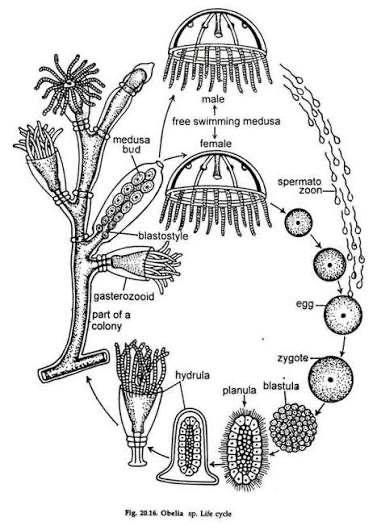
subphyla of cnidarians; medusa life stage; eukarya→ unikonta → opisthonkota → medusozoa → cnidaria; obelia and hydra; 3 classes: Hydrozoa, Scyphozoa, cubozoa
Hydrozoa
class of medusozoa which is subphyla of cnidarians; usually polyp dominant and colonial; just like jellyfish but not
Scyphozoa
class of medusozoa which is subphyla of cnidarians; jellyfish; segmented polyps asexually reproduce, and adult medusa only reproduce sexually
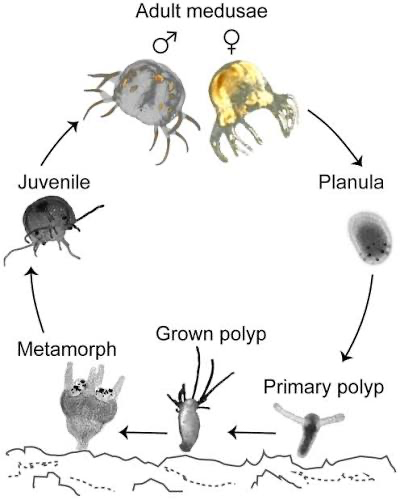
cubozoa
class of medusozoa which is a subphyla of cnidarians; box jellies/sea wasps; box shaped medusa (no polyp); sexual reproduction only; can hunt fish by sight; venomous
embryonic development stages
fertilization, cleavage, blastulation, gastrulation
gastrulation
process by which the single-layered blastula is reorganized into a multilayered structure called the gastrula; blastocoel (inner cavity) becomes coelom and the new inner cavity is the archenteron (GI tract)
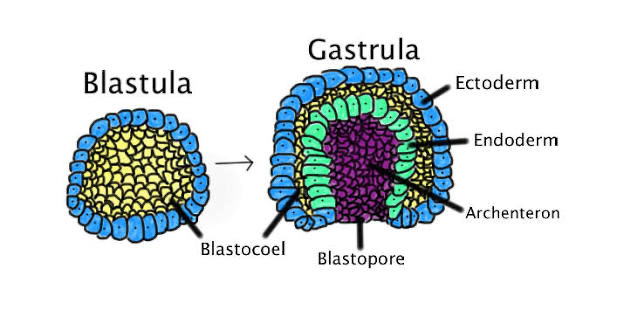
blastopore
opening in the gastrula during gastrulation; determines the future orientation of the body axis in many animals
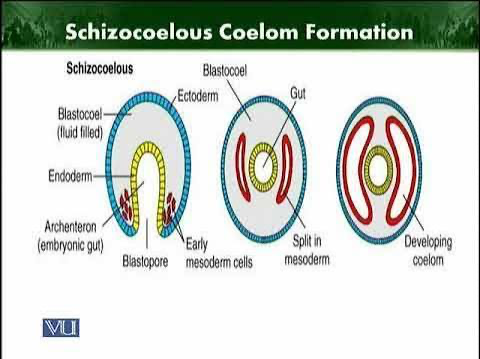
schizocoelous body cavity
in animals- triploblastic; forms when mesodermal tissue splits and becomes the coelom (body cavity)
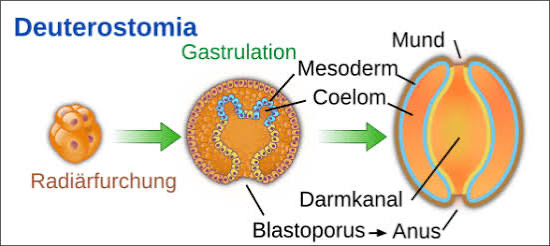
enterocoelous body cavity
in animals- triploblastic; body cavity forms when pockets of primitive gut (archenteron) bud off and becomes the coelom
coelom
body cavity within triploblastic animals; main body cavity between the intestinal canal and body wall; retains fluid within body cavity to suspend cushions; allows internal organs to grow and move independently of outer body wall
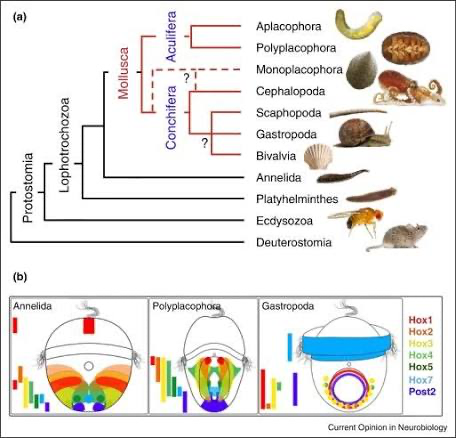
protostomes
1 main group of bilateral symmetrical animals; eukarya → unikonta → opisthonkota → animalia → ecdysozoa/lophotrochozoa ; contains ecdysozoa and lophotrochozoa; schizocoelous fomation; blastopore becomes mouth; cells are determinate
ecdysozoa
phyla of animalia; eukarya → unikonta → opisthonkota → animalia; type of protostome; first of the 2 major branches (super phyla) of the protostomes; ecdysis (molting)- all members of clade shed their outer body covering; more of these species than all other animals combined; contains a deeper phylum called nematoda
nematoda
phyla of ecdysozoa; nemata/roundworms; eukarya → unikonta → opisthonkota → animalia → ecdysozoa; pseudocoelom, complete digestive tract, longitudinal muscles only (whiplike movement), dioecious; ascaris, trichinella, vinegar eel
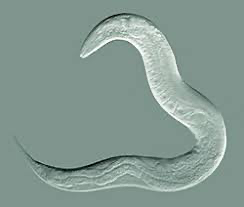
vinegar eel
part of phylum Nematoda which is inside ecdysozoa; free living, feeds on bacteria and yeast
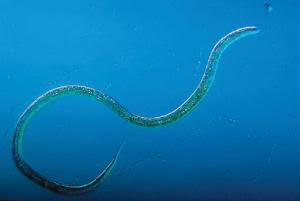
arthropoda
part of phylum Nematoda which is inside ecdysozoa; eukarya → unikonta → opisthonkota → animalia → ecdysozoa; spiders, insects, centipedes, millipedes, crustaceans; most diverse group of animals; greek arthropods (joint) + podos (foot); jointed appendages, segmented body, exoskeleton composed of chitin; coelom- open circulatory; dioecious, cephalized ganglia; 3 major groups within this taxonomy: myriapoda, chelicerata, pancrustacea
myriapoda
belong to arthropoda which is inside ecdysozoa; contains centipedes and millipedes
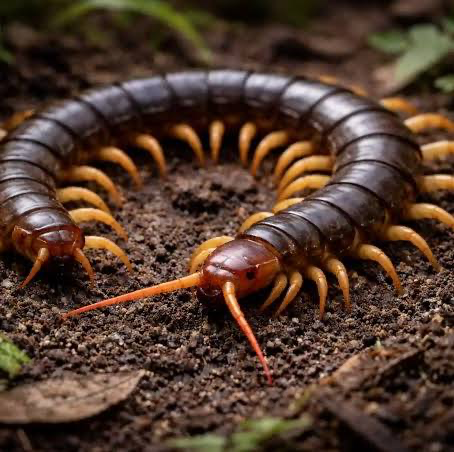
centipedes
belong to myriapods; eukarya → unikonta → opisthonkota → animalia → ecdysozoa → arthropoda→ myriapoda ; carnivorous, 1 pair of legs per segment
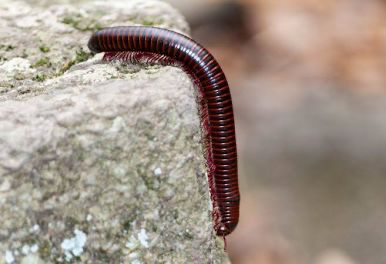
millipedes
belong to myriapods; eukarya → unikonta → opisthonkota → animalia → ecdysozoa → arthropoda → myriapoda; herbivorous; 2 pairs of legs per segment
chelicerata
belong to arthropoda which is inside ecdysozoa; have pincers/fangs (chelicerae), mouth appendages (pedipalps), 6 pairs of appendages (4 pairs of legs, 1 chelicerae, 1 pedipalps); contains horseshoe crab, sea spiders, spiders, mites, ticks, scorpions
pancrustacea
belong to arthropoda which is inside ecdysozoa; hexapods (insects) + crustaceans; heavily segmented, compound eyes, head, thorax, abdomen
lophotrochozoa
phyla of animalia; eukarya → unikonta → opisthonkota → animalia; type of protostome; second of the 2 major branches (super phyla) of the protostomes; 3 defining features found in many but not all: spiral cell division in embryos, lophophore, trochophore (annelids and mollusks); flatworms (Platyhelminthes)
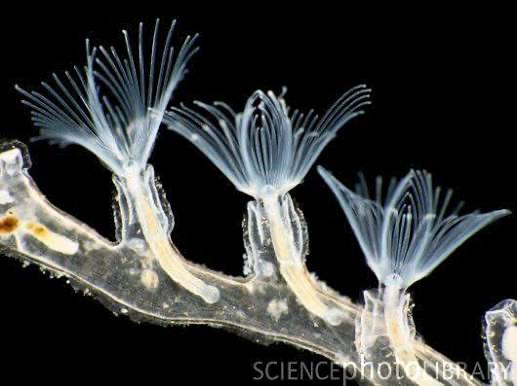
lophophore
crown of ciliated tentacles that surround the mouth used for feeding; aquatic invertebrates (lophotrochozoa)
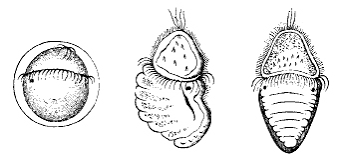
trochophore
small and pear shaped; ciliated larval stage of annelids (snails and clams) and mollusks (marine worms) and some sothers
Platyhelminthes
flatworms; phyla belonging to lophtrochozoa; eukarya → unikonta → opisthonkota → animalia → lophotrochozoa; flat bodies; acoelomate; hermaphroditic; vermiform (worm-like); simple nervous system- primitive organ systems; first example of cephalization; example classes: Turbellaria, Trematoda, Cestoda
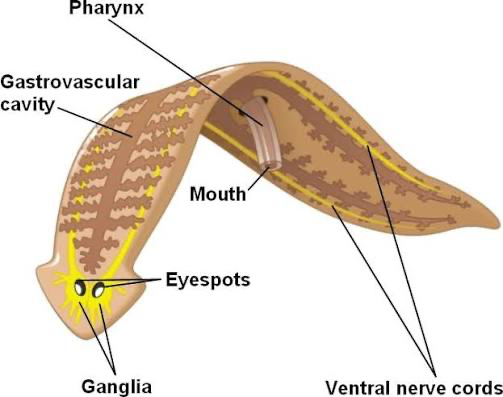
Turbellaria
planarians; type of flatworm; class of Platyhelminthes which is inside lophotrochozoa; predators and scavengers, photosensitive eyespots, fragmentation
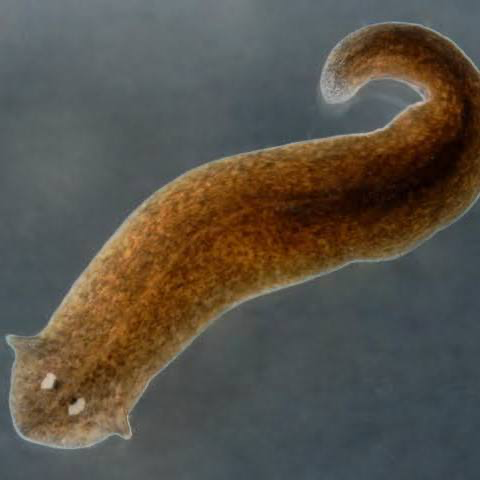
LABEL PLANARIA
on iPad
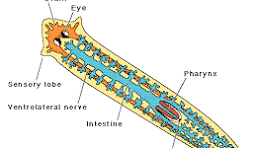
Cestoda
tapeworm; type of flatworm; class of Platyhelminthes which is inside lophotrochozoa; internal parasites, no digestive system, scolex (attachment organ)
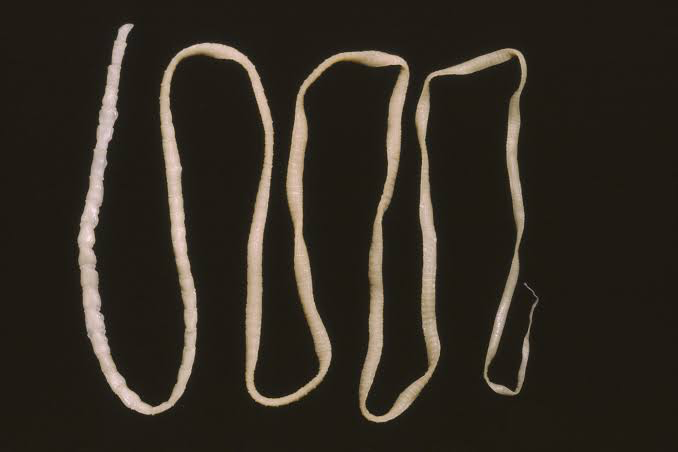
brachiopoda
phyla belonging to lophtrochozoa; lophophorates; eukarya → unikonta → opisthonkota → animalia → lophotrochozoa; sessile, coelomate and lophophores, very abundant in paleozoic era, but now only 350 species remain; not mollusks; valves; shells are made of calcite and proteins; 2 classes: inarticulata, articulata
valves
found in brachiopoda; two shells unequal in size, top is smaller and fits inside bottom shell
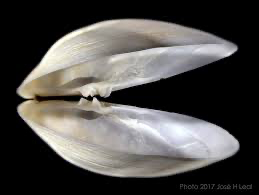
inarticulata
class of brachiopoda which is inside lophotrochozoa; still a type of lophophorate; more primitive, anchor to soft sediment, hinge mechanism- no teeth on valves, soft and flexible bales, setae (bristles around shell/valve)
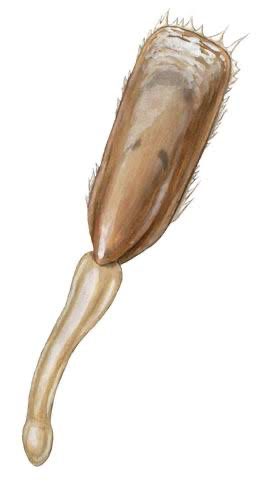
articulata
class of brachiopoda which is inside lophotrochozoa; still a type of lophophorate; articulated valves (teeth to lock shells closed), complex hinge, no setae, anchor to rocks
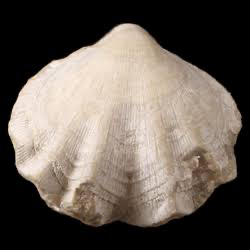
Mollusca
phyla belonging to lophtrochozoa; lophophorates; eukarya → unikonta → opisthonkota → animalia → lophotrochozoa; mostly marine, trochophore larval stage, 4 major clades: polyplacophora, Gastropoda, Cephalopoda, bivalvia; foot (for movement and food capture), visceral mass (containing organs), mantle (secretes shell), radula (tongue with teeth), open circulatory system (no blood vessels except heart)
polypacophora
chiton; clade of mollusca which is inside lophotrochozoa; still a type of mollusk; segmented shell (8 plates) but isnt true segmentation, scrapes algae off rocks with radula
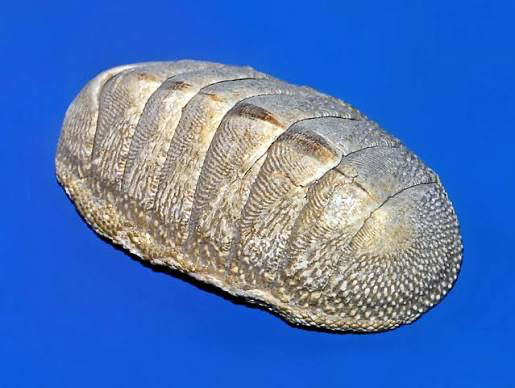
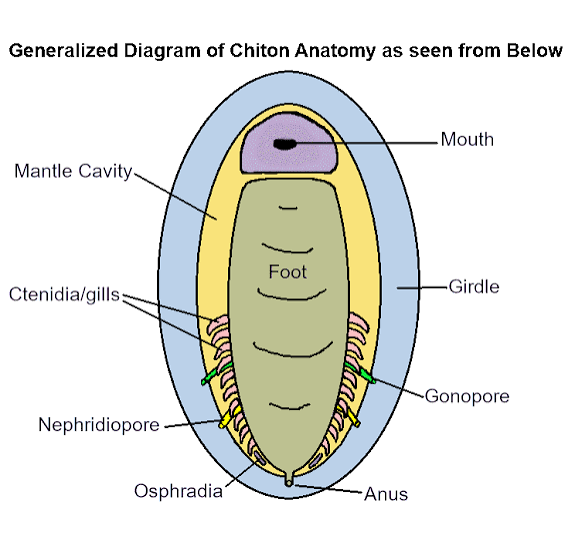
label chiton
mouth, foot, mantle (blue)
gastropoda
slugs/snails; clade of mollusca which is inside lophotrochozoa; still a type of mollusk; torsion (180 degree rotation of the visceral mass); 2 or 4 sensory tentacles with eyes on head; many have shells and radula
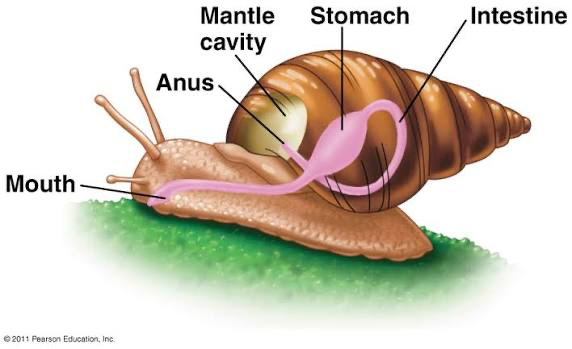
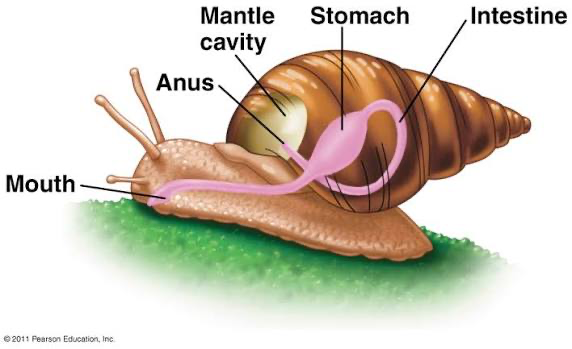
label gastropoda
mantle cavity, anus, stomach, intestine, mouth
Cephalopoda
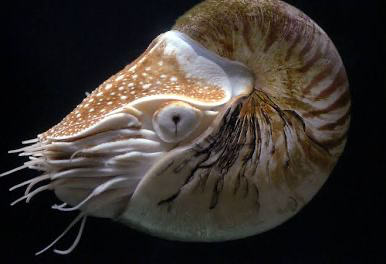
chambered nautilus (shown), squid, and octopus; clade of mollusca which is inside lophotrochozoa; still a type of mollusk; predators, most advanced invertebrates, well developed eyes, intelligent, 3 hearts, dioecious, pen (remnant of shell is internal- in squid), chromatophores (pigmented cells that help them change color)
bivalvia
clams, oysters, scallops, and mussels; clade of mollusca which is inside lophotrochozoa; still a type of mollusk; 2 hinged valves (left and right), no radula, siphons instead, 4 oversized gills (ctenidia) for respiration and filter feeding
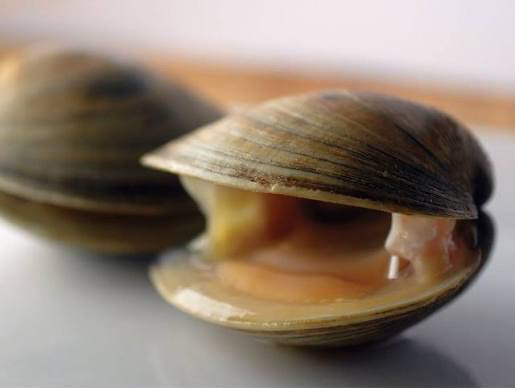
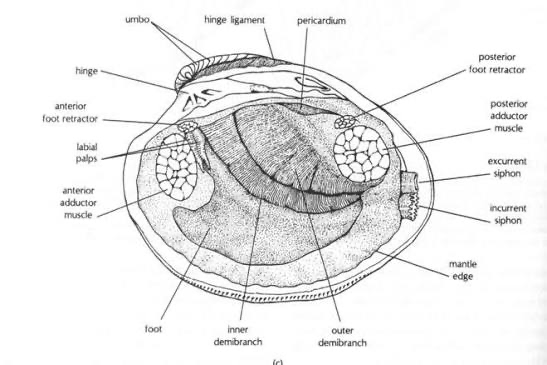
label bivalvia
not sure yet if you have to
annelida
segmented worms; phyla belonging to lophtrochozoa; eukarya → unikonta → opisthonkota → animalia → lophotrochozoa; truly segmented, closed circulatory system, convergent evolution with vertebrates and cephalopods; trochophore larval stage (shared with mollusks), 2 major clades: errantia, sedentaria
errantia
clade of annelida which is inside lophotrochozoa; still a type of segmented worm; free living mobile marine worms, fleshy parapodia with tiny chitinous setae on each segment, posses well developed sense organs- antennae and eyes
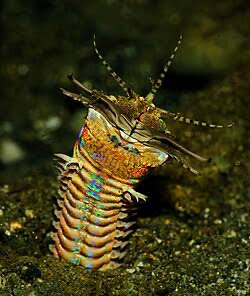
sedentaria
clade of annelida which is inside lophotrochozoa; still a type of segmented worm; tube worms, earthworms, leeches; few to no setae, often a clitellum (reproductive organs)
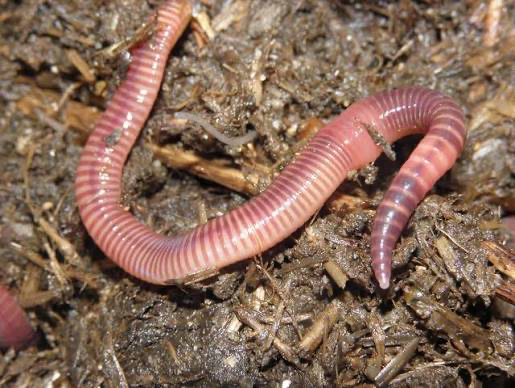
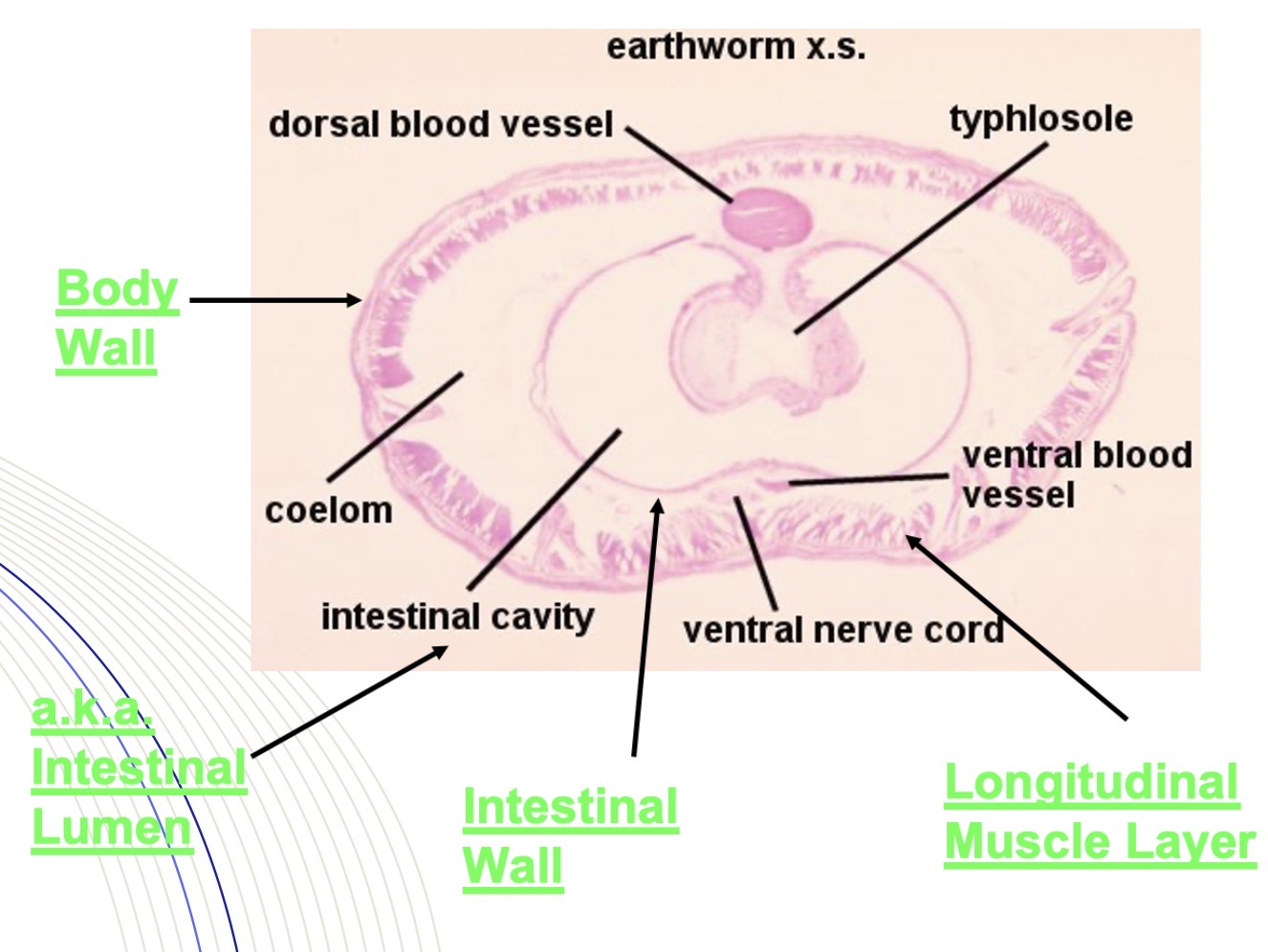
label sedentaria
dorsal blood vessel, body wall, coelom, intestinal cavity/lumen, intestinal wall, longitudinal muscle layer, typhosole, ventral nerve cord and blood vessel
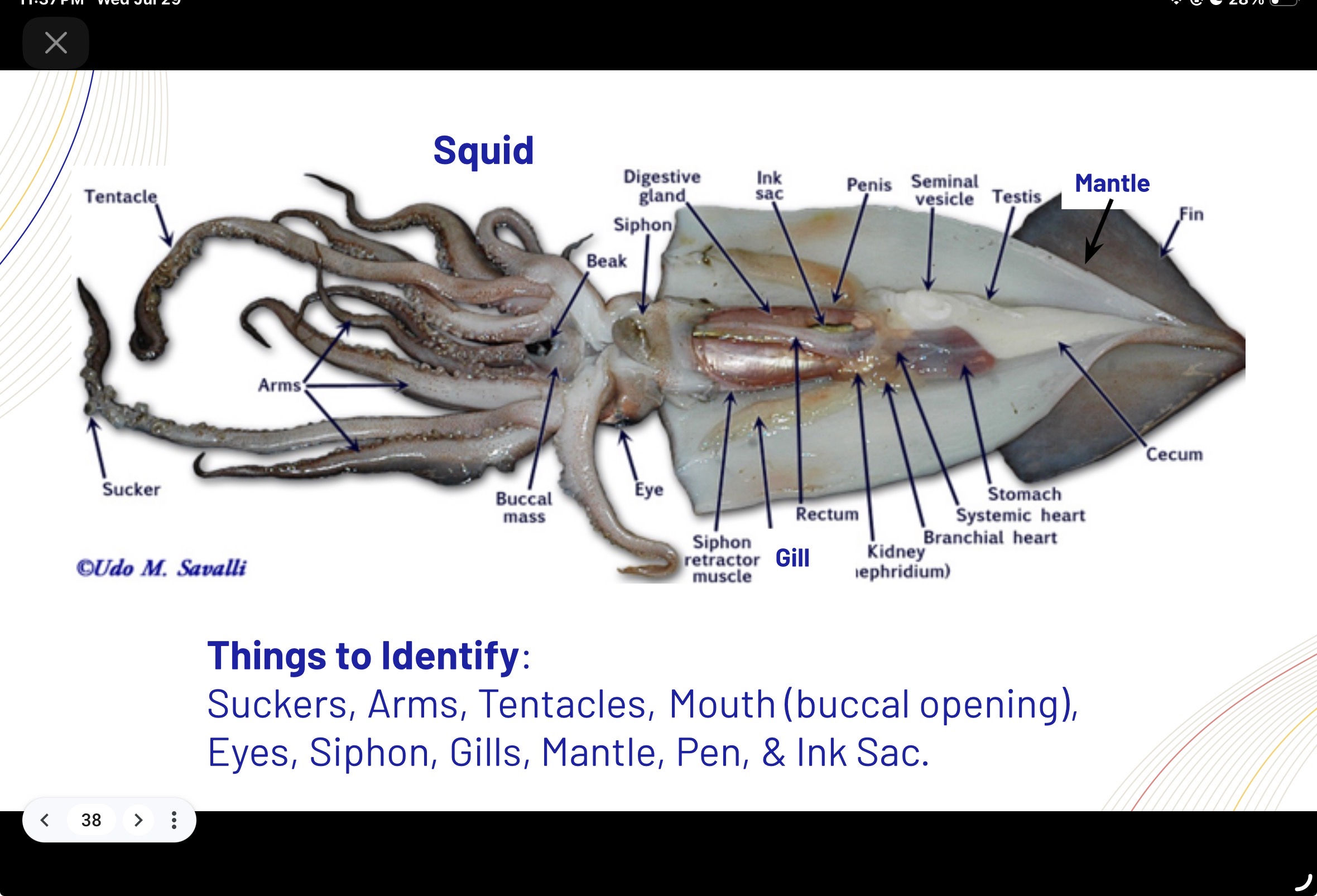
squid labeling
suckers, arms, tentacles, mouth, eyes, siphon, gills, mantle, pen and ink sac
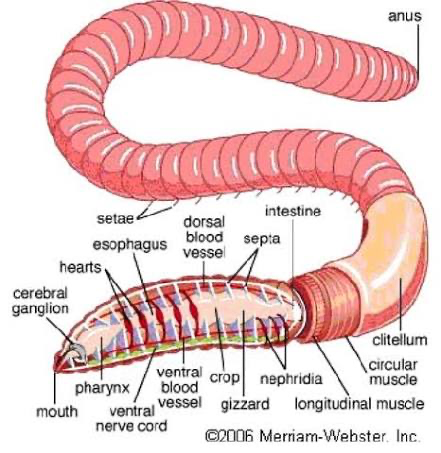
earthworm labeling
pharynx, gizzard, crop, intestine
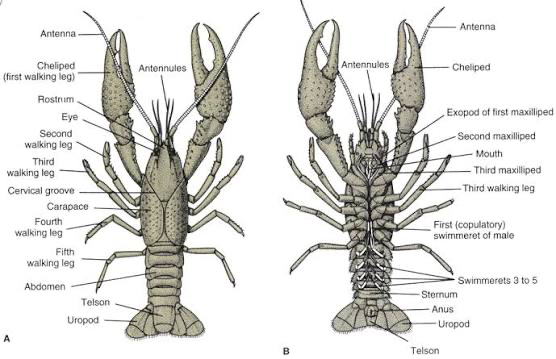
crawfish labeling
know some
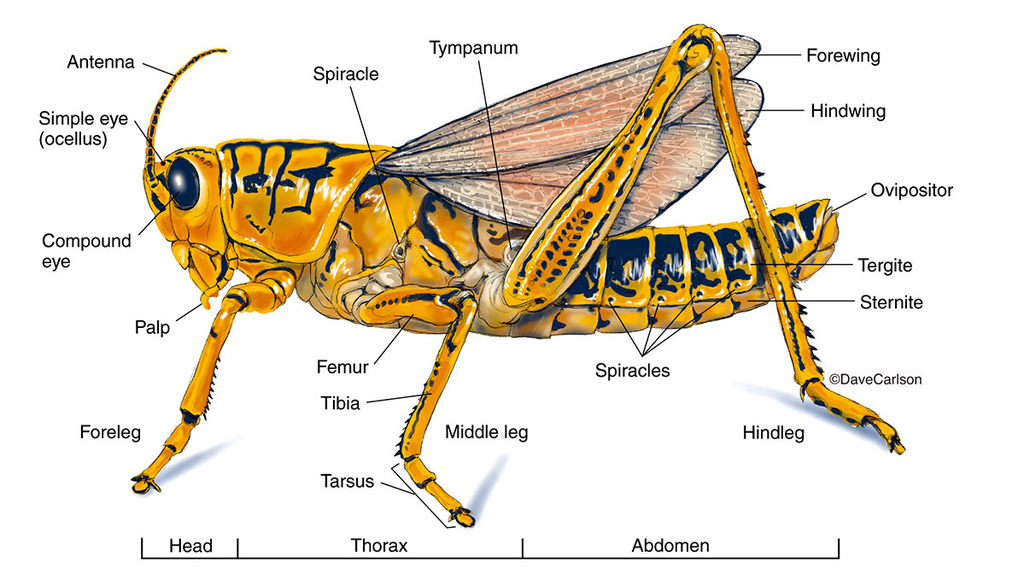
grasshopper labeling
antenna, eye, mandible, tympanum, spiracle, hind leg, wing
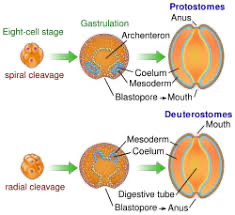
deuterostomes: phyla, early cell division, fate of blastopore, cell fate, # of germ layers, body cavity types, coelom formation, added phyla
echinodermata and chordata phyla; radial cleavage; embyryonic blastopore becomes anus; indeterminate- cells are stem cells; triploblastic; coelomate; entrocoelous; has 3 phyla: echinoderms, hemichordates, chordates