A&P lab chapter 2
 Call Kai
 Learn
Learn Practice Test
 Spaced Repetition
 Match
Match Flashcards
 Knowt Play
1/49

There's no tags or description
Looks like no tags are added yet.
Name | Mastery | Learn | Test | Matching | Spaced | Call with Kai | Chat |
|---|
No analytics yet
Send a link to your students to track their progress
50 Terms
Composes 60% of our body
Water
composes 40% of our body
Organic molecules like protein, fats, carbs, nucleic acids
all organic molecules contain
Carbon and hydrogen
monomer of carbohydrates
glucose
monomer of lipids
fatty acids
monomer of protiens
amino acids
monomer of nucleic acids
nucleotides

enzymes repeat this cycle
building and breaking of polymers
how the body stores glucose
links units of sugar together into glycogen
monosaccharides of Cabrohydrates
glucose, fructose, galactose, deoxyribose, ribose
Disaccharides of carbohydrates
Sucrose, lactose, (simple sugars)
polysaccharides of carbohydrates
glycogen, starch, cellulose
triglycerides of lipids
three fatty acids attached to glycerol, stores fat
phospholipids
major component of plasma membrane
monomers of DNA
adenine and thymine, cytosine and guanine
polar covalent bonds
unequal sharing of electrons between oxygen and hydrogen
adhesion
water molecules attracted to another charged molecule
cohesion
water molecules attracted to each other
surface tension
attraction of water molecules at the water-air interface
how hydrogen bonds form
slight positive charge on the hydrogen and slight negative charge on the oxygen
water dissolving other charged substances
hydrophilic
water dissolving salts
ionic bonds
hydrophobic
nonpolar/uncharged molecules that don’t dissolve in water

this is an example of
polar covalent bond
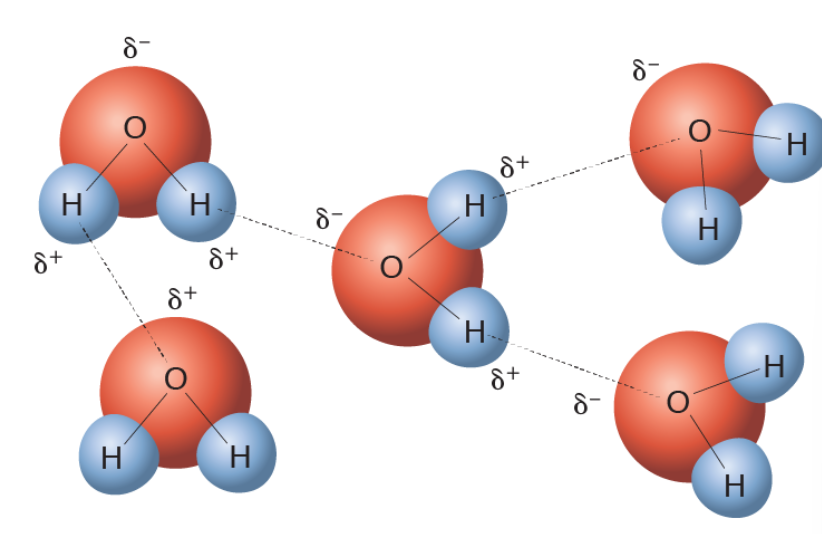
this is an example of
hydrogen bond
pH stands for
power of hydrogen
neutral pH
7
why organisms keep their bodies at 6-7 ph
because proteins only work within that range
proteins unfolding due to abnormal pH or temp greater than 41 C
denature
all carbohydrates contain
carbon, hydrogen, and oxygen
disaccharide are formed by
dehydration synthesis of two monosaccharides

A
Carbon

B
oxygen

C
hydrogen
3 forms of fatty acids
saturated, unsaturated, polyunsaturated
how phospholipids are formed
replacing one triglyceride with a phosphate group
cholesterol
membrane lipid, precursor for steroid hormones and bile acids
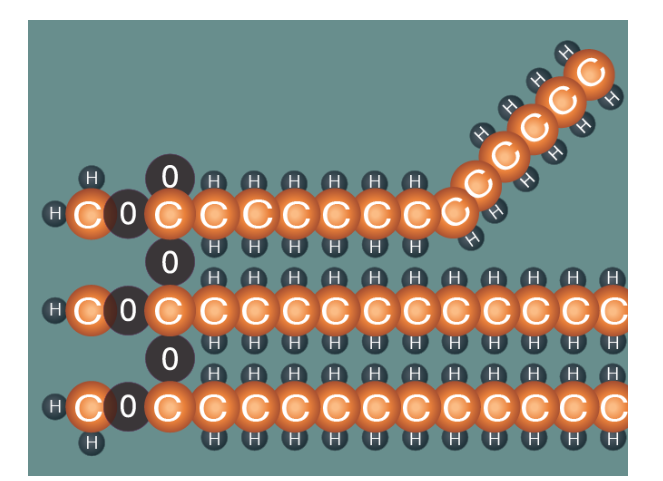
triglyceride

phospholipid bilayer
Proteins are responsible for these actions
intracellular movement, enzyme catalysis, transport channels, muscle contraction
20 unique amino acids have what?
CNN backbone
dehydration synthesis
joins two amino acids, resulting in a covalent peptide bond that begins protein synthesis
ribosome
reads 3 nucleotides on mRNA that codes for one amino acid
primary structure of protein
simple sequence of amino acids
secondary structure of proteins
alpha helix or beta pleated sheet

tertiary structure
3D shape resulting in globular protein
quarternary structure
two or more tertiary proteins bound together
DNA means
deoxyribonucleic acid
4 nucleotides of DNA
adenine with thymine, cytosine with guanine
each gene is transcribed into ____ which is read by ____
mRNA, ribosomes