BIO 1130: Chapter 6
 Call Kai
 Learn
Learn Practice Test
 Spaced Repetition
 Match
Match Flashcards
1/91

There's no tags or description
Looks like no tags are added yet.
Name | Mastery | Learn | Test | Matching | Spaced | Call with Kai | Chat |
|---|
92 Terms
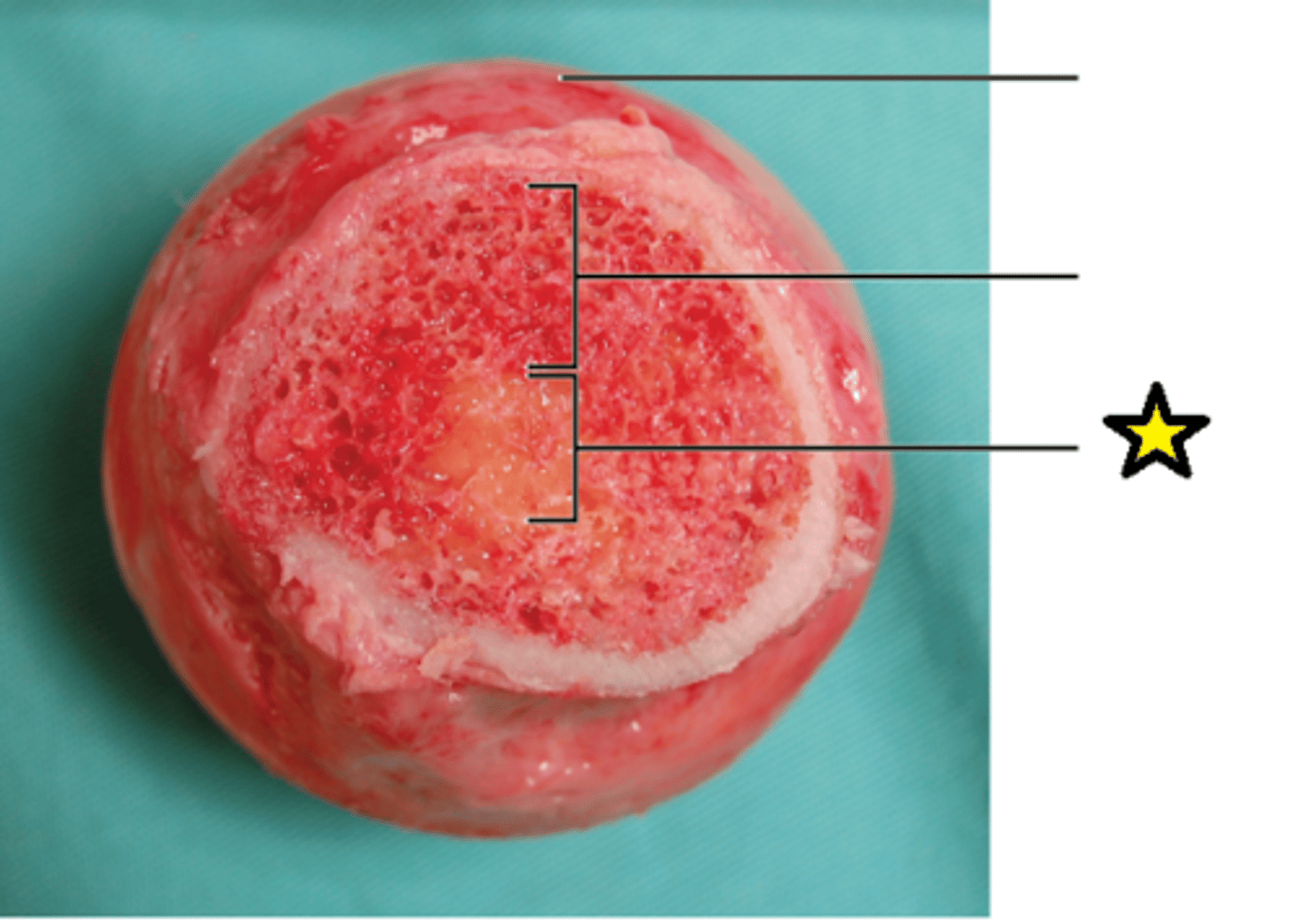
Yellow marrow
Soft, fatty material found in the medullary cavity of long bones.
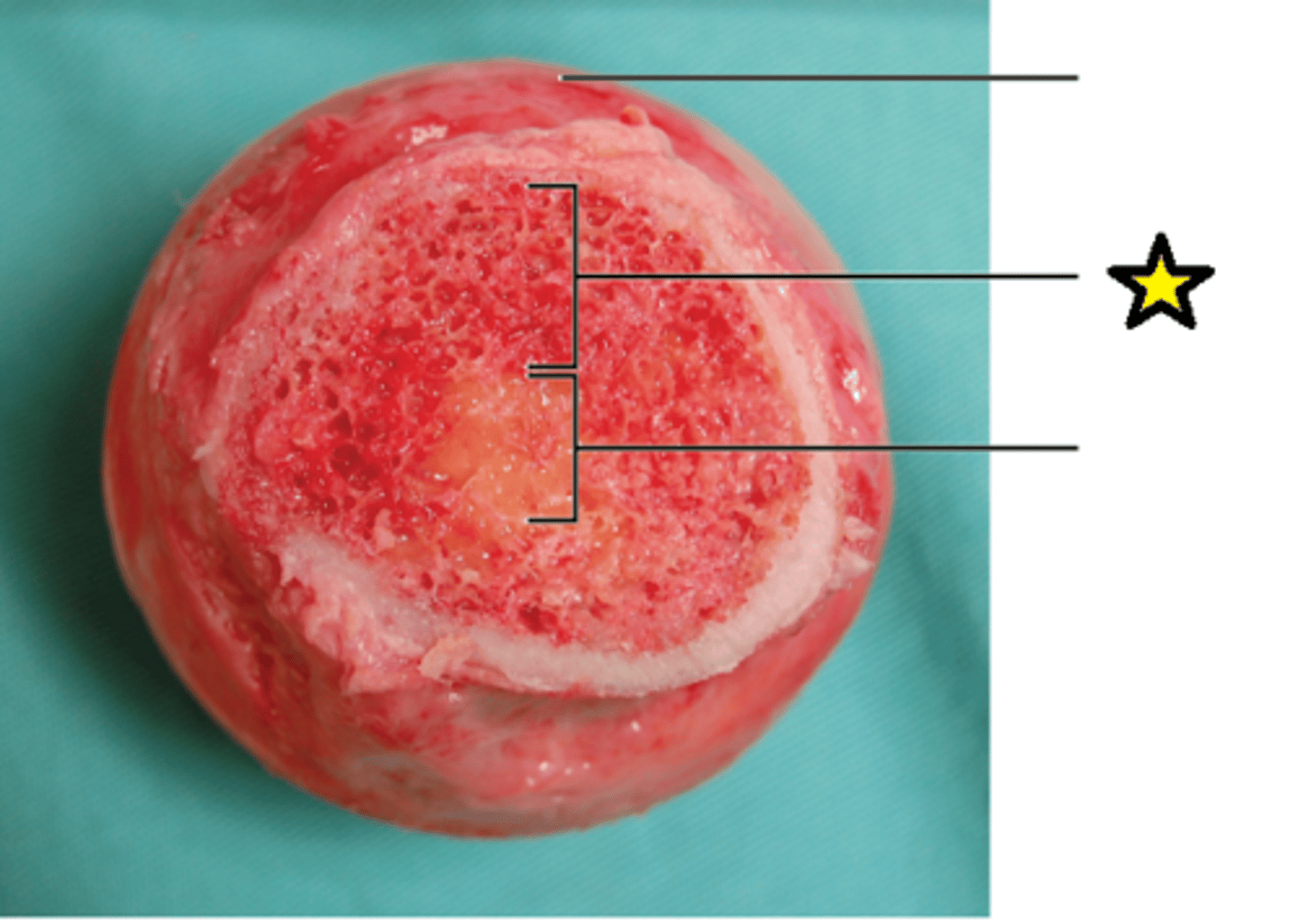
Red marrow
Produces red blood cells.
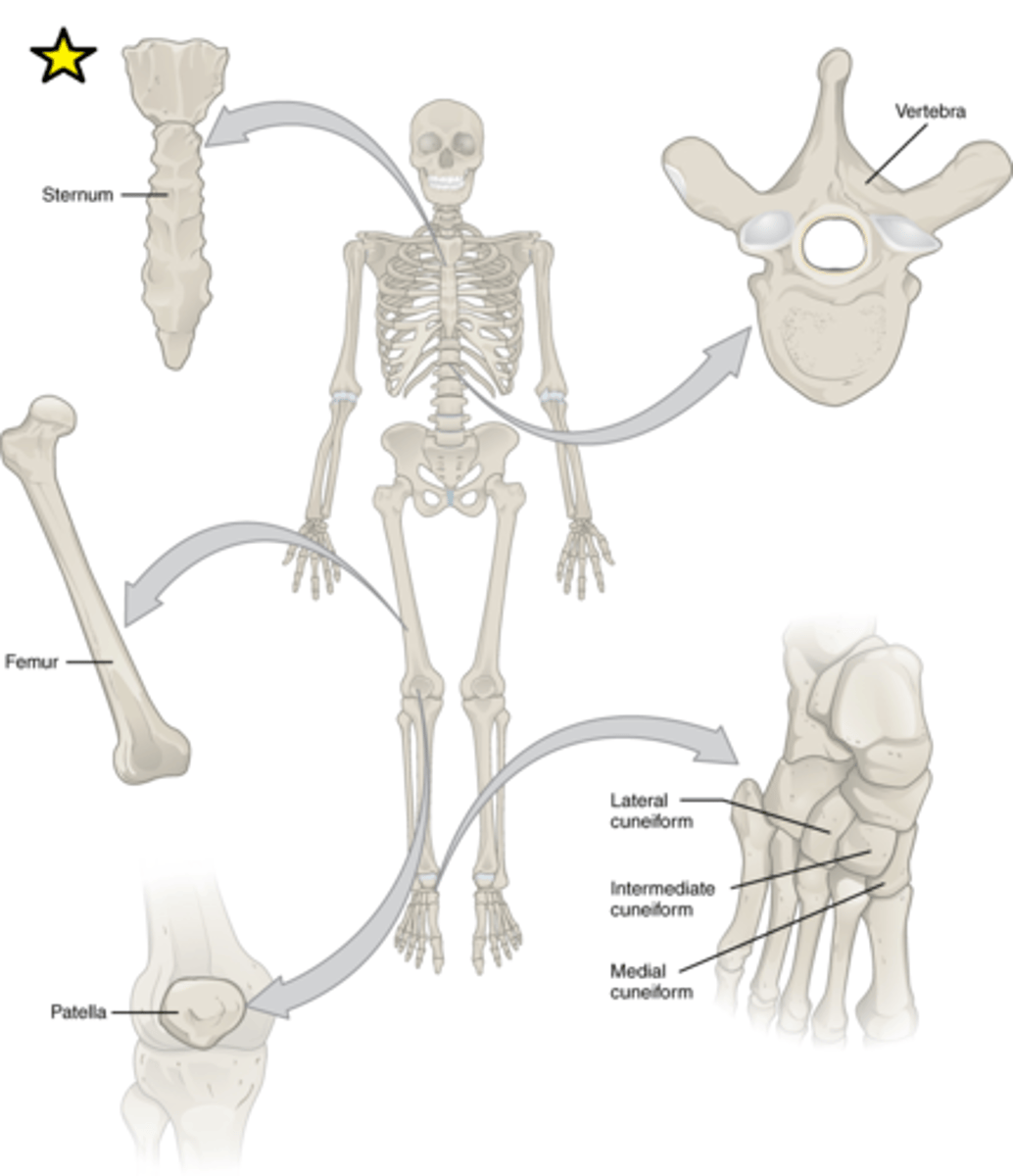
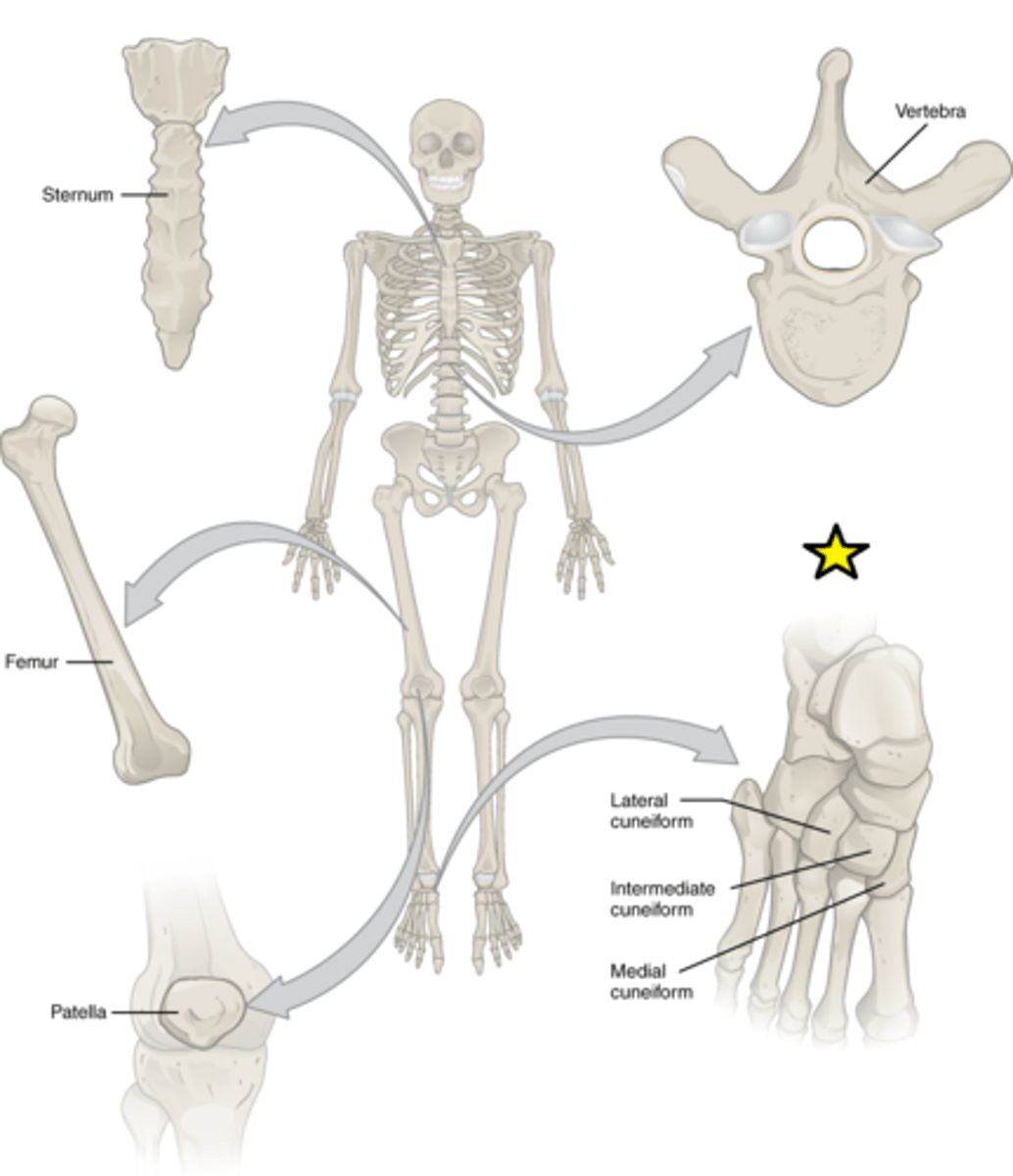
Flat bone
Features: Thin and curved
Functions: Points of attachment for muscles; protectors of internal organs
Examples: Sternum, ribs, scapulae, cranial bones
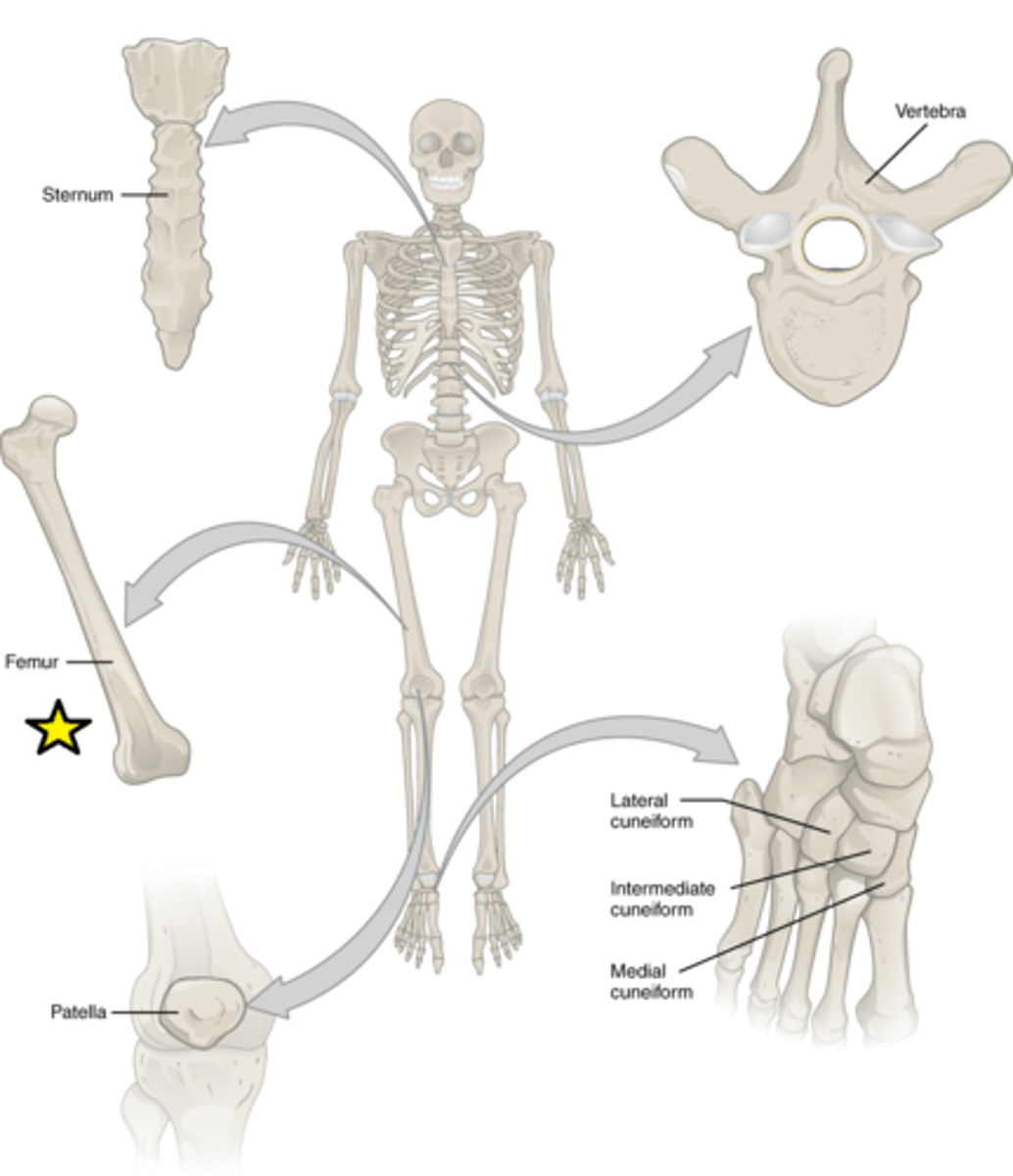
Long bone
Features: Cylinder-like shape, longer than it is wide
Functions: Leverage
Examples: Femur, tibia, fibula, metatarsals, humerus, ulna, radius, metacarpals, phalanges
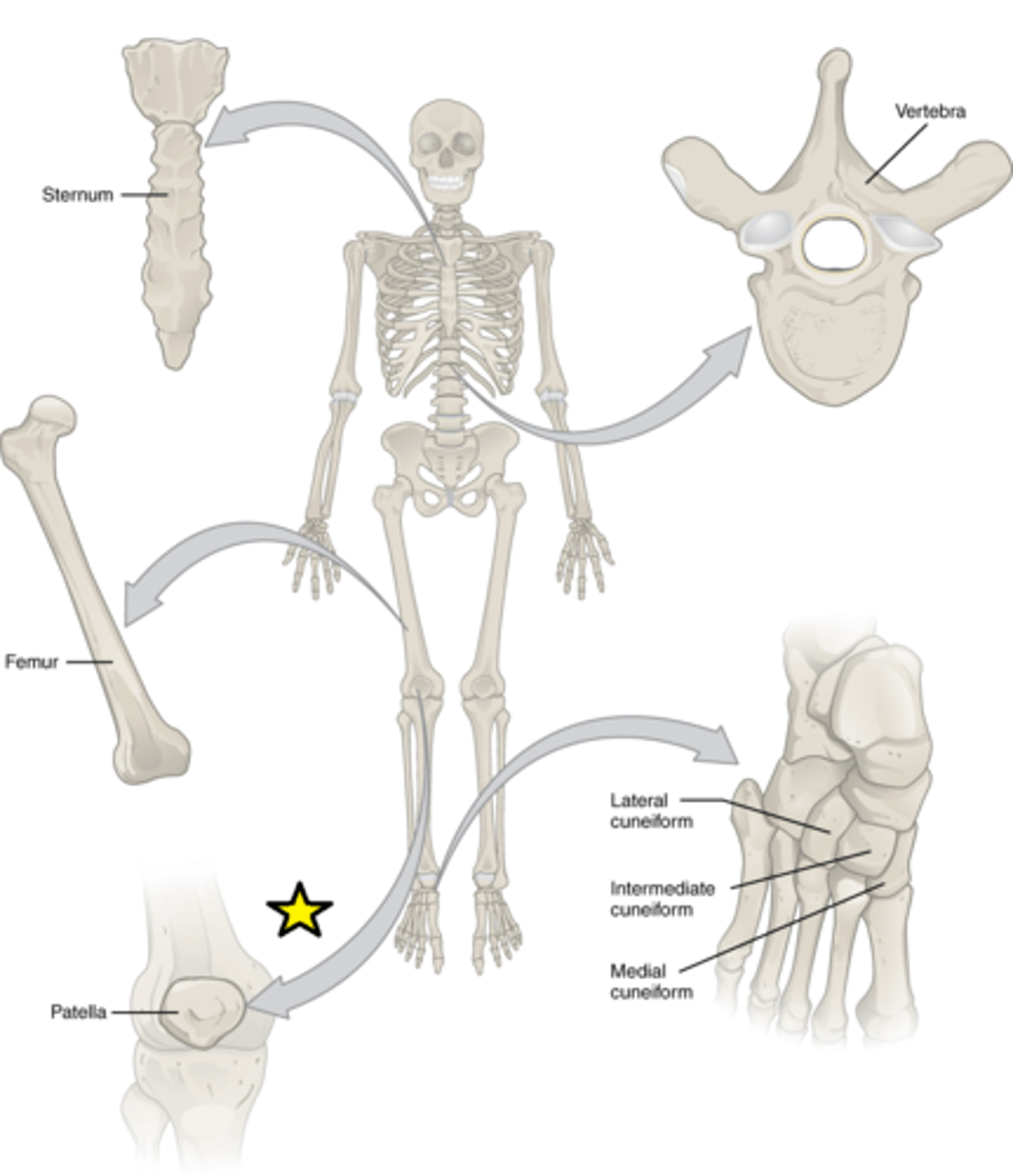
Sesamoid bone
Features: Small and round; embedded in tendons
Functions: Protect tendons from compressive forces
Examples: Patellae
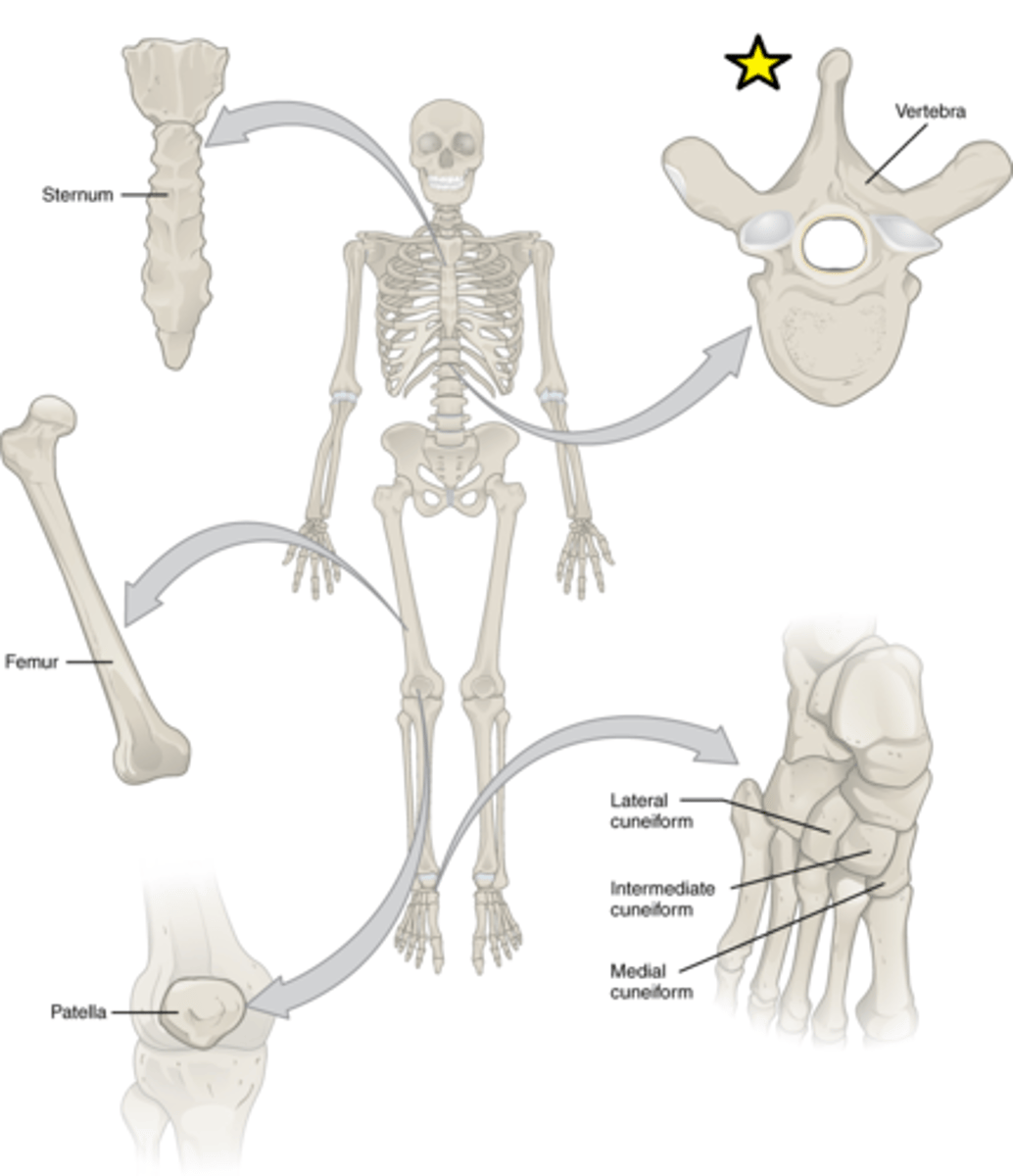
Irregular bone
Features: Complex shape
Functions: Protect internal organs
Examples: Vertebrae, facial bones
Short bone
Features: Cube-like shape, approximately equal in length, width, and thickness
Functions: Provide stability, support, while allowing for some motion
Examples: Carpals, tarsals
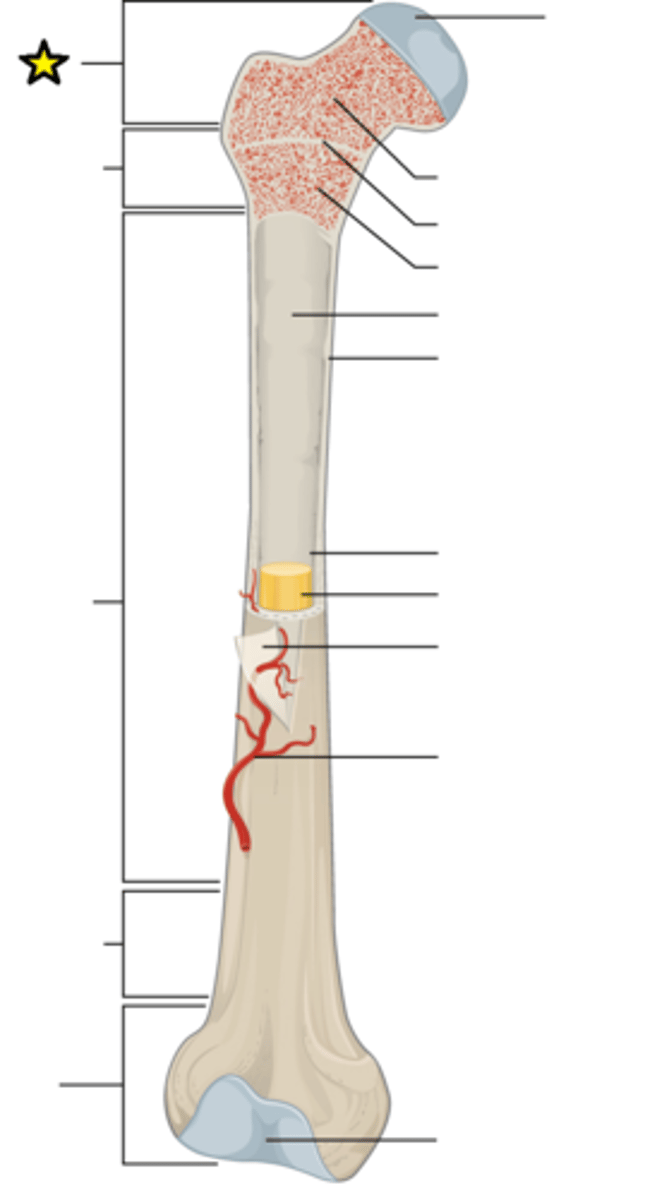
Proximal epiphysis
End of the bone closest to the body trunk
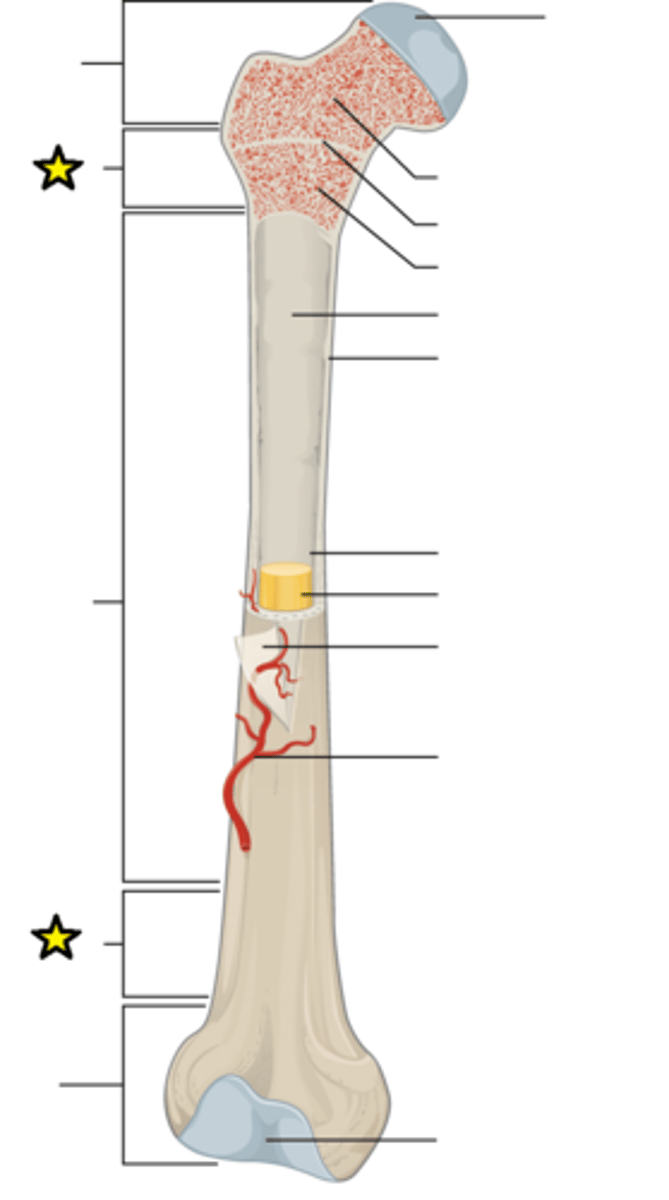
Metaphysis
Where diaphysis and epiphysis meet
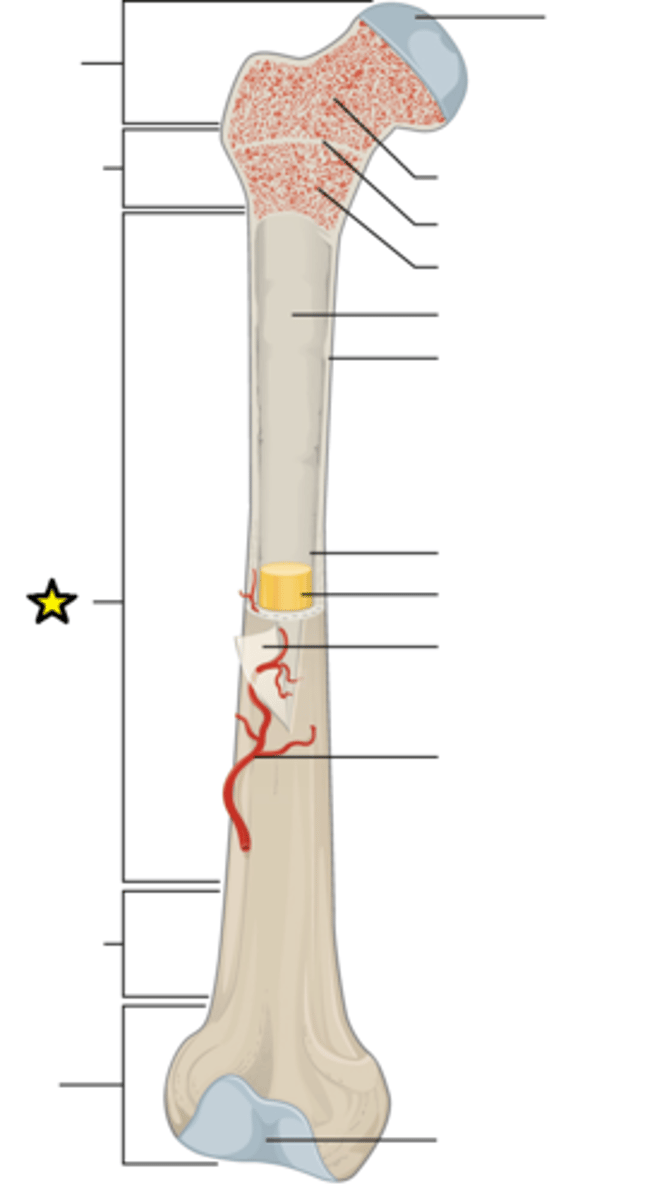
Diaphysis
Shaft of a long bone
Distal epiphysis
End of the bone farthest from the body trunk
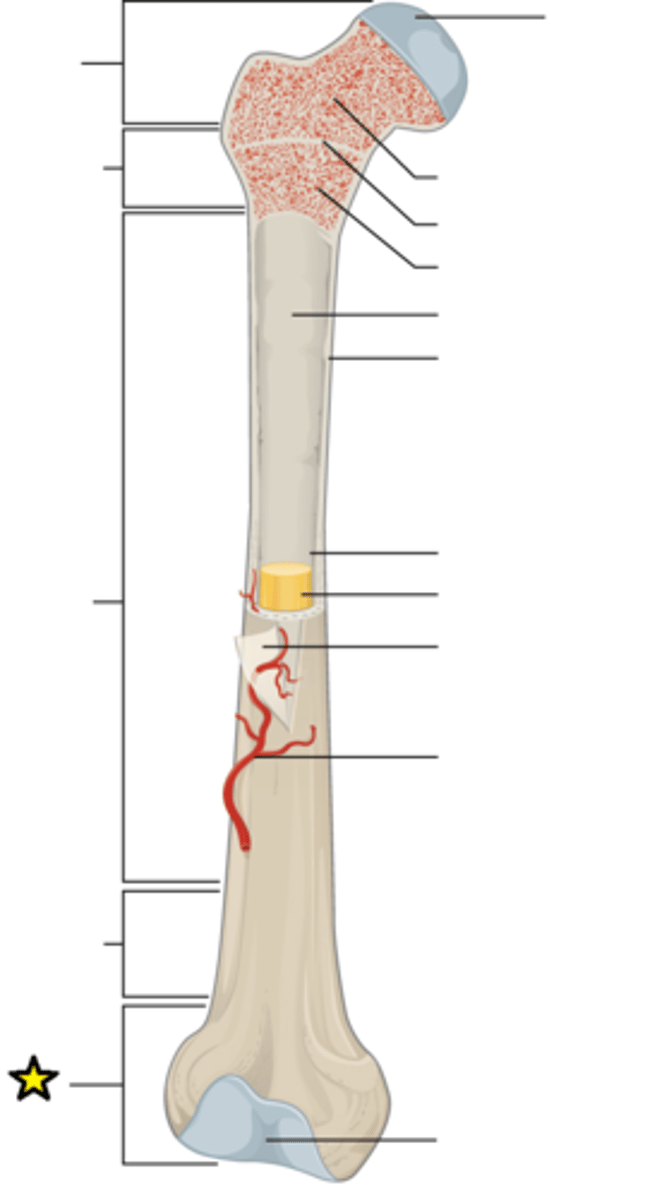
Articular cartilage
Covers the surfaces of bones where they come together to form joints
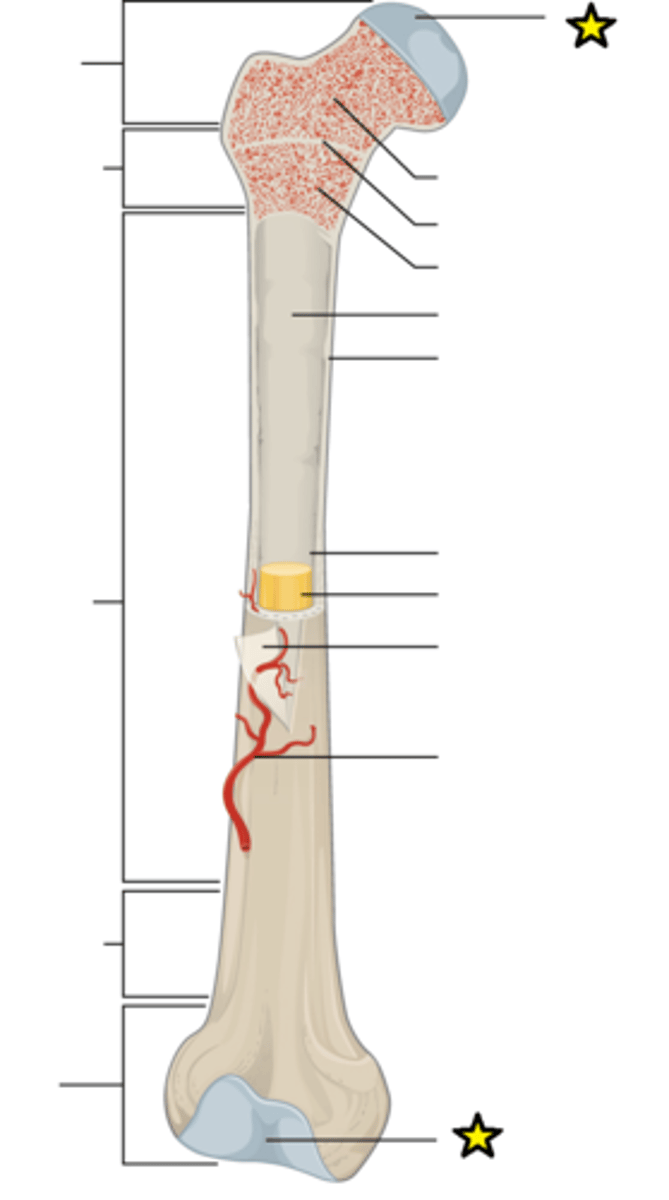
Spongy bone
Composed of small needle-like pieces of bone and lots of open space
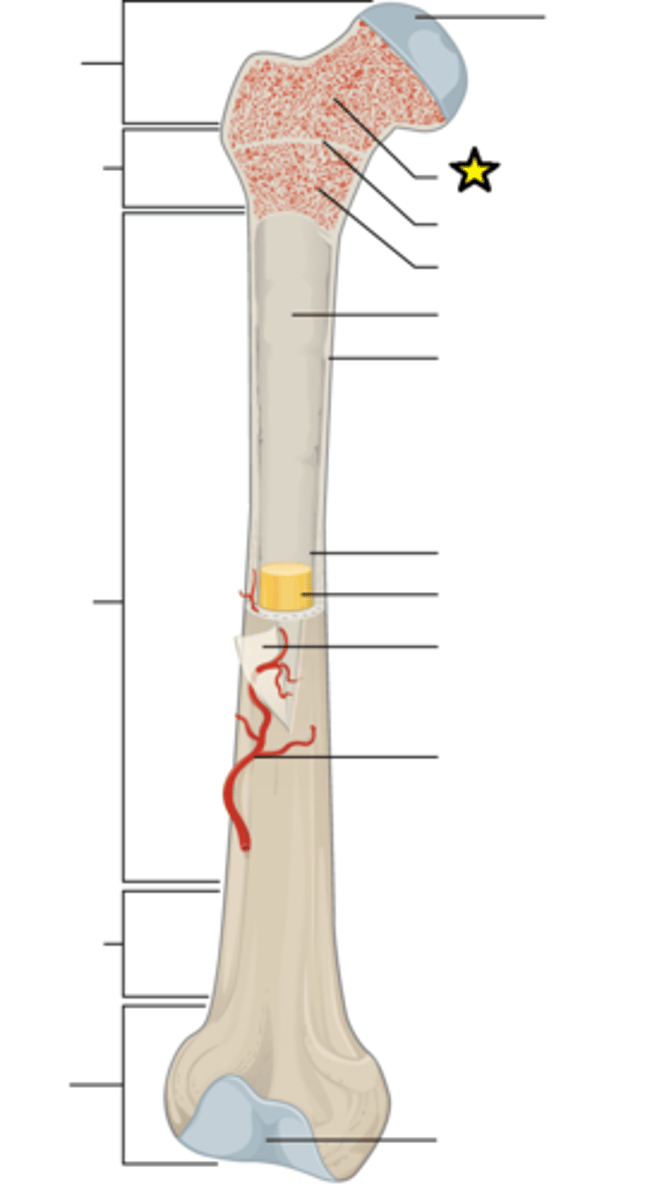
Epiphyseal line
Remnant of the epiphyseal plate, seen in adult bones
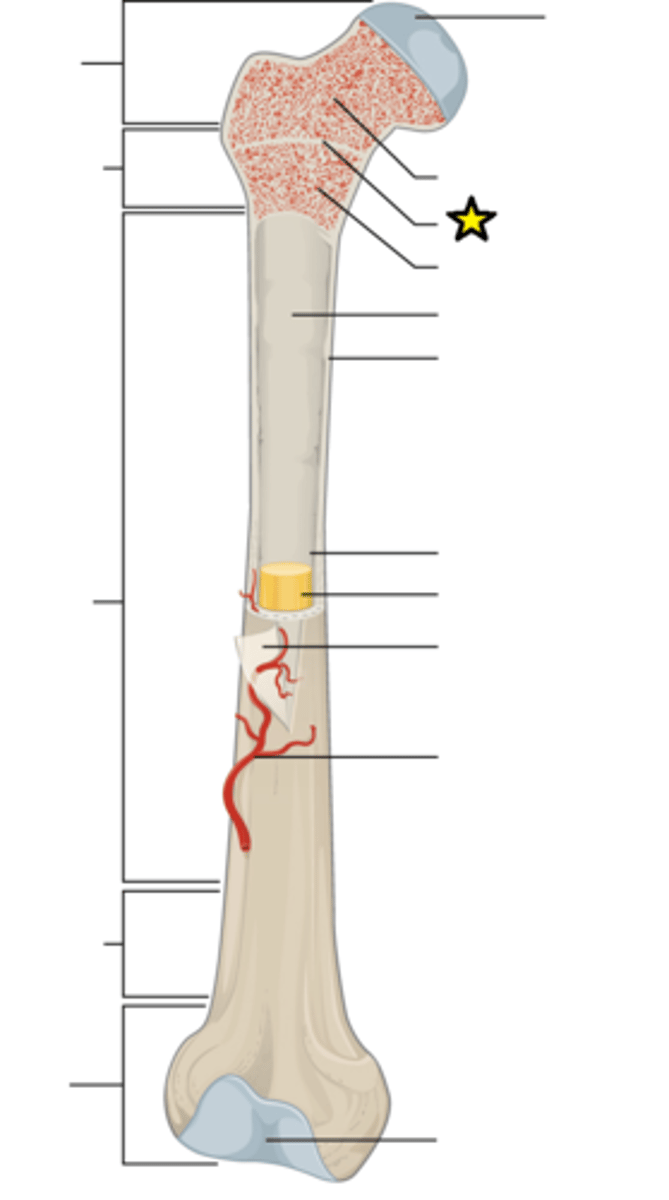
Red bone marrow
Found in cancellous bone; site of hematopoiesis
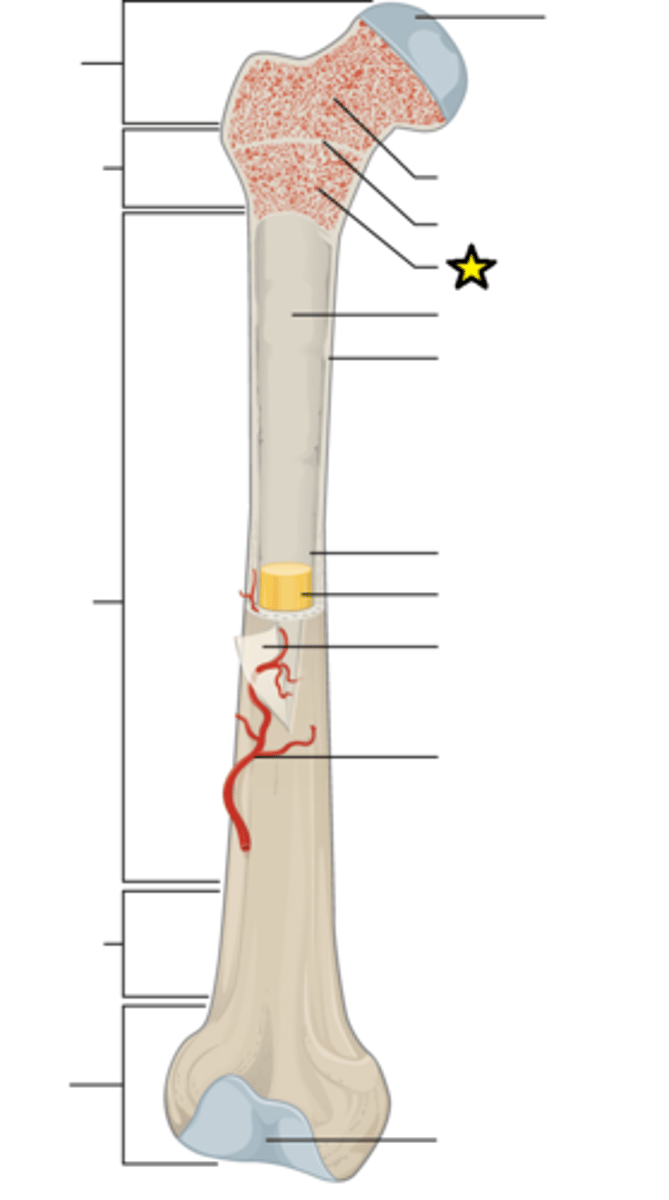
Endosteum
Membranous lining of the hollow cavity of the bone
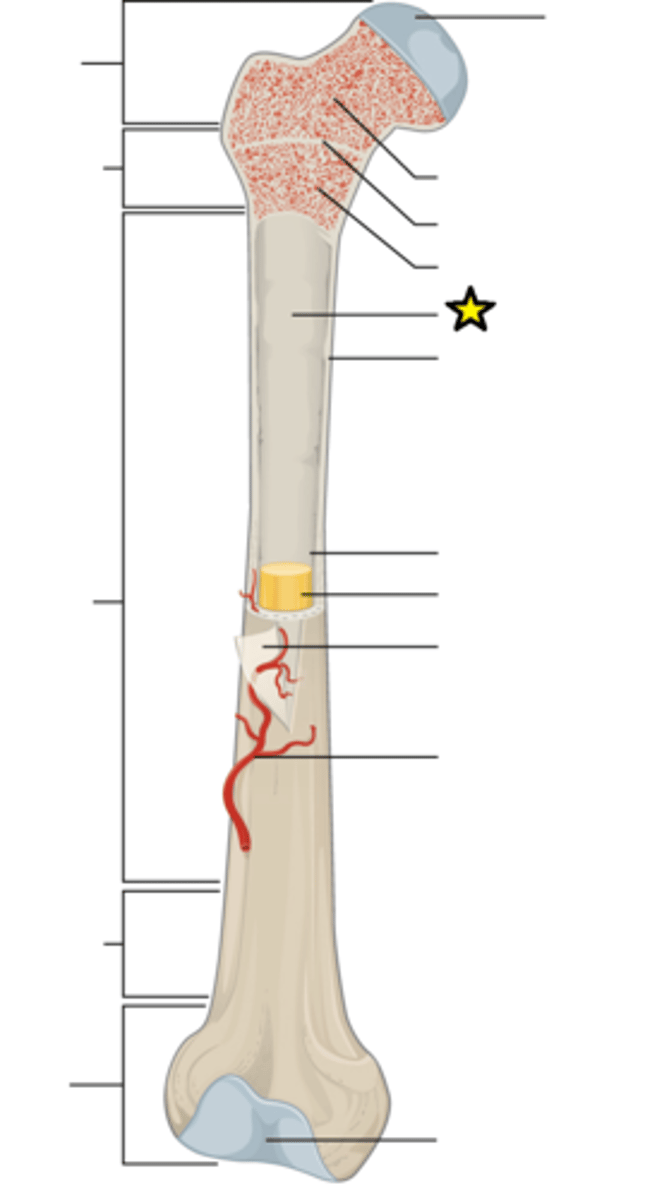
Compact bone
Hard, dense bone tissue that is beneath the outer membrane of a bone
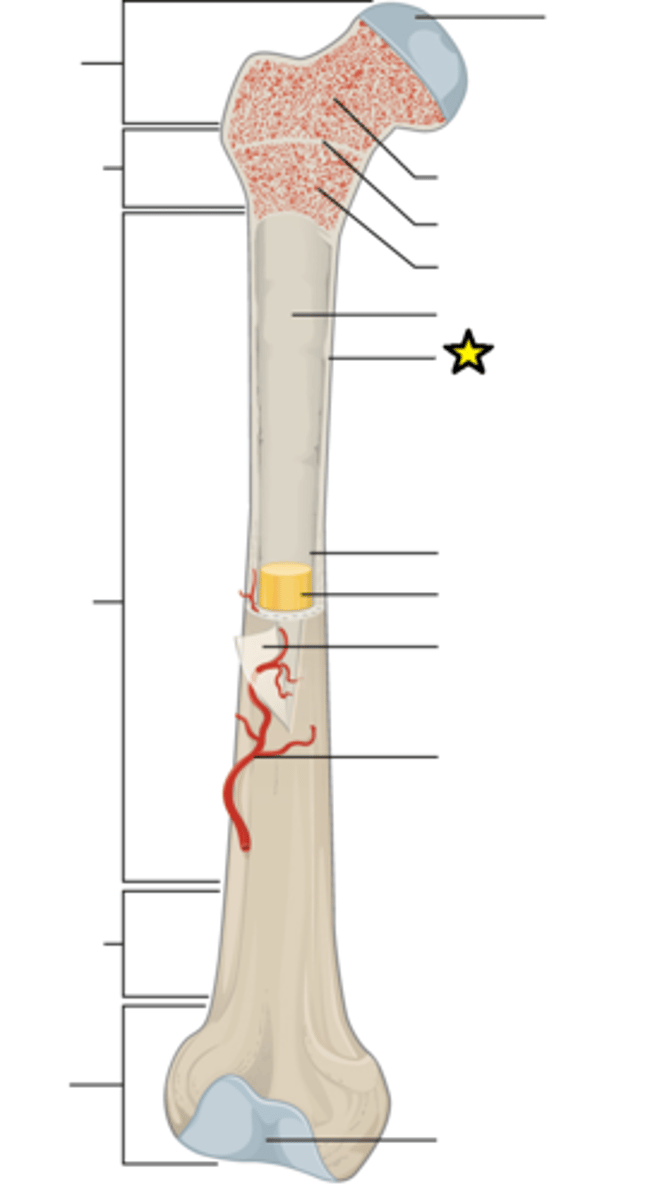
Medullary cavity
Cavity within the shaft of the long bones filled with bone marrow
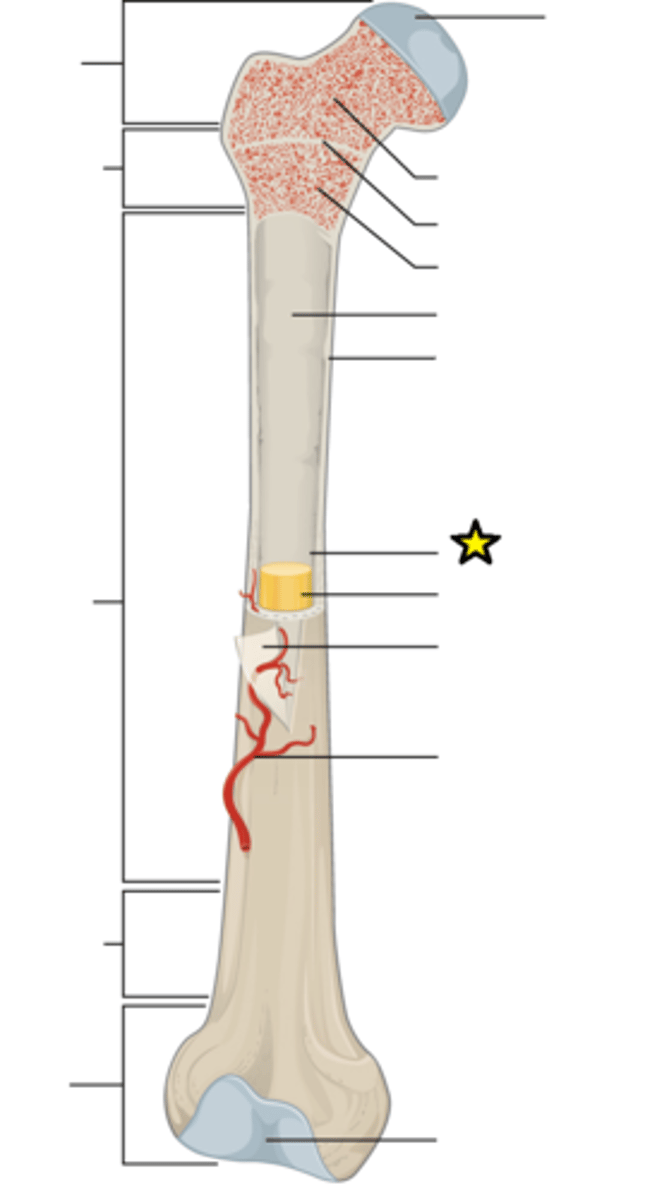
Yellow bone marrow
Gradually replaces red bone marrow in adult bones; functions as storage for fat tissue and is inactive in the formation of blood cells
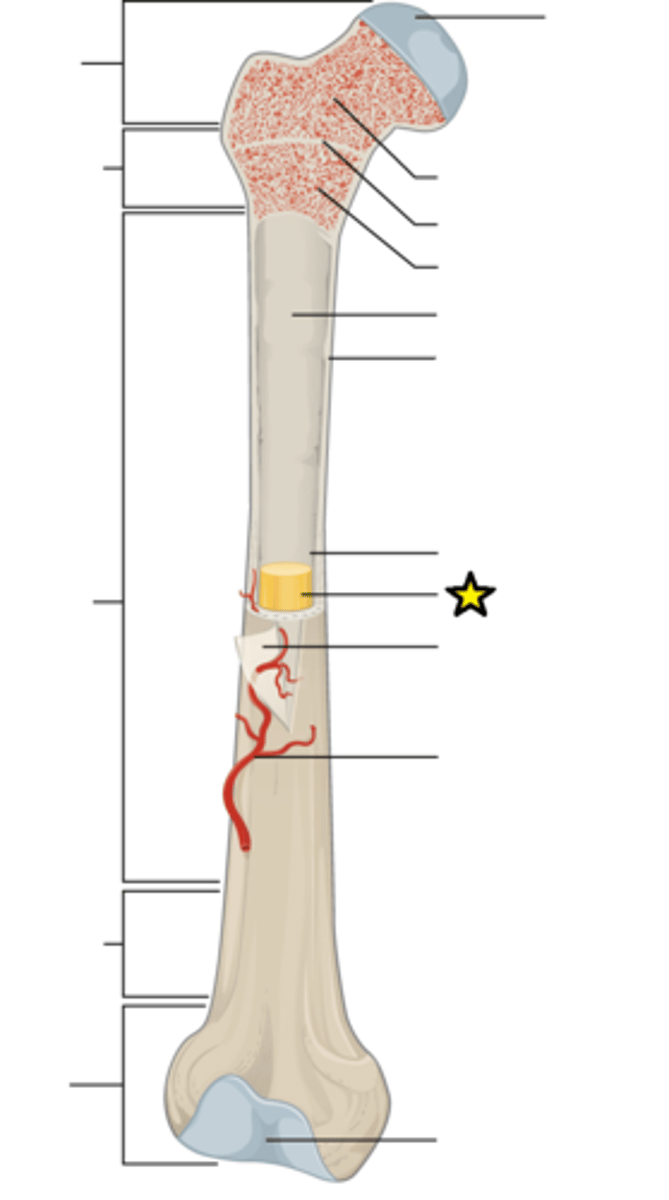
Periosteum
A dense fibrous membrane covering the surface of bones and serving as an attachment for tendons and muscles
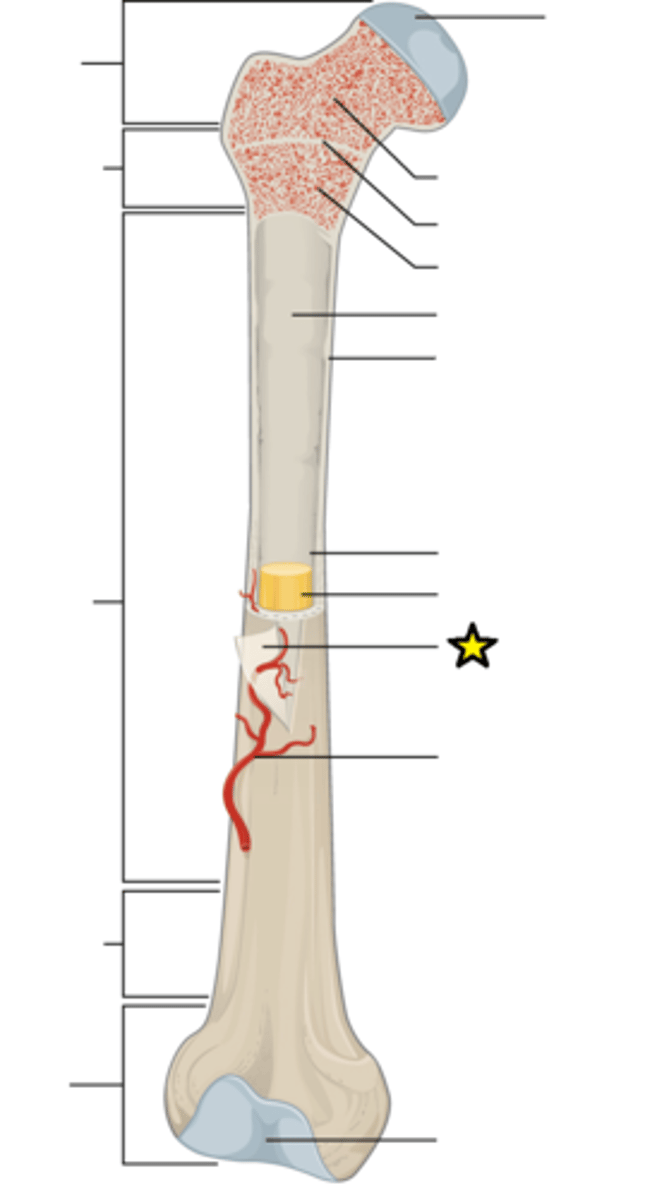
Nutrient artery
Large artery that enters compact bone near the middle of the diaphysis
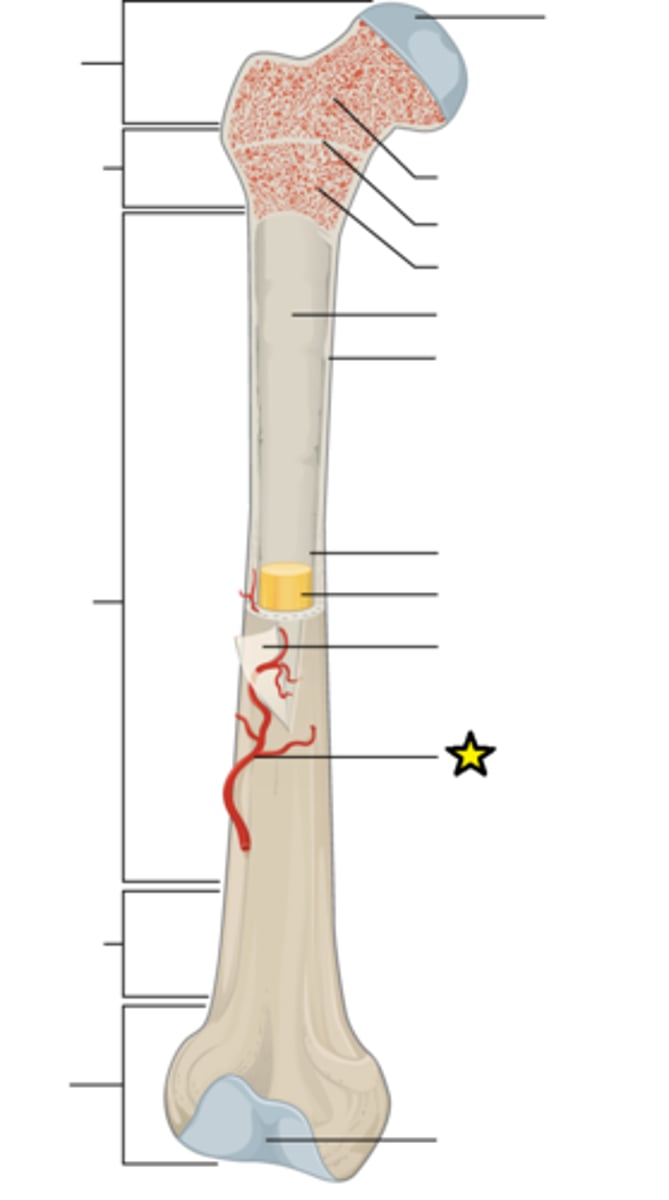
Periosteum (fibrous layer)
Outer layer consisting of dense irregular connective tissue consisting of Sharpey's fibers that secure to bone matrix
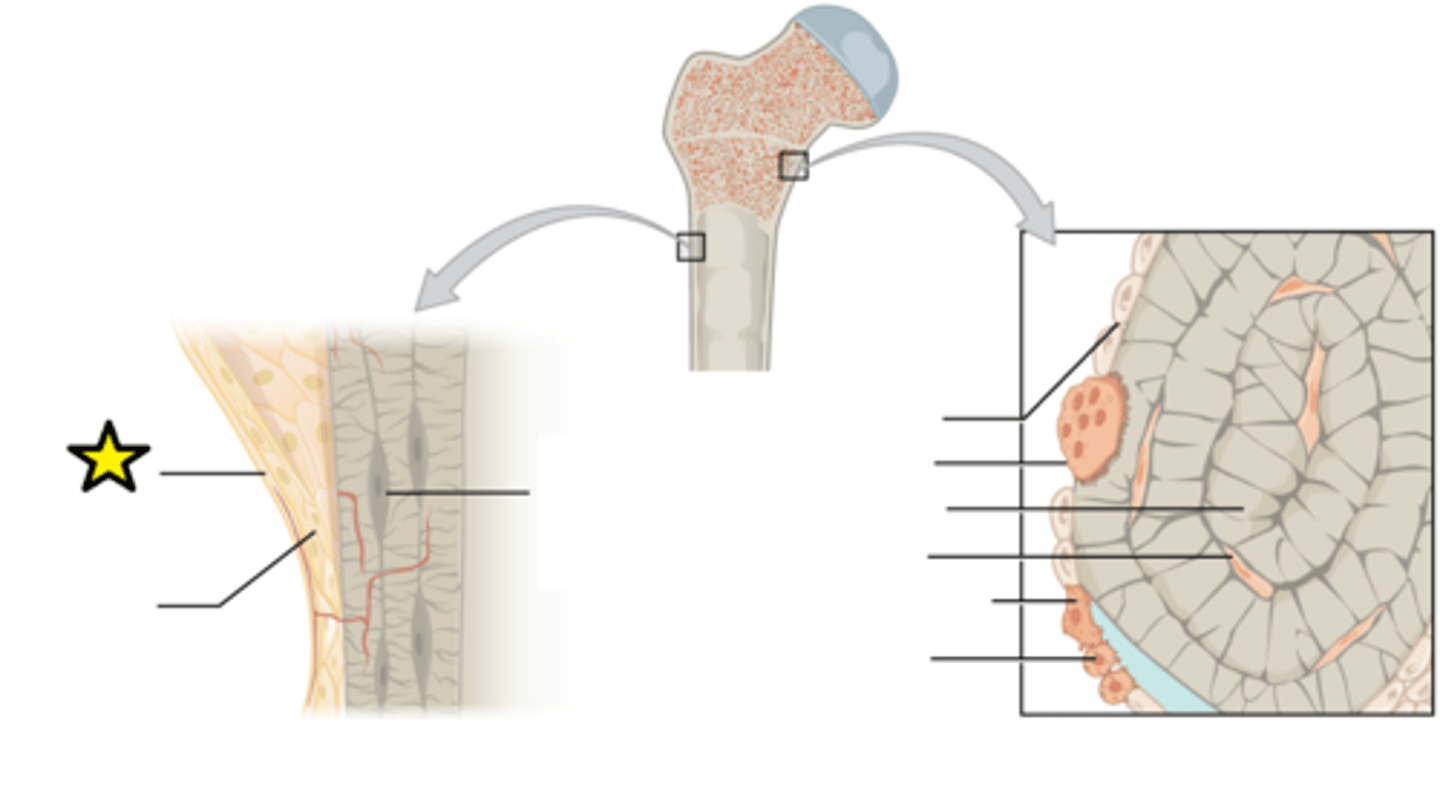
Periosteum (cellular layer)
Includes osteoprogenitor cells, osteoblasts, and osteoclasts
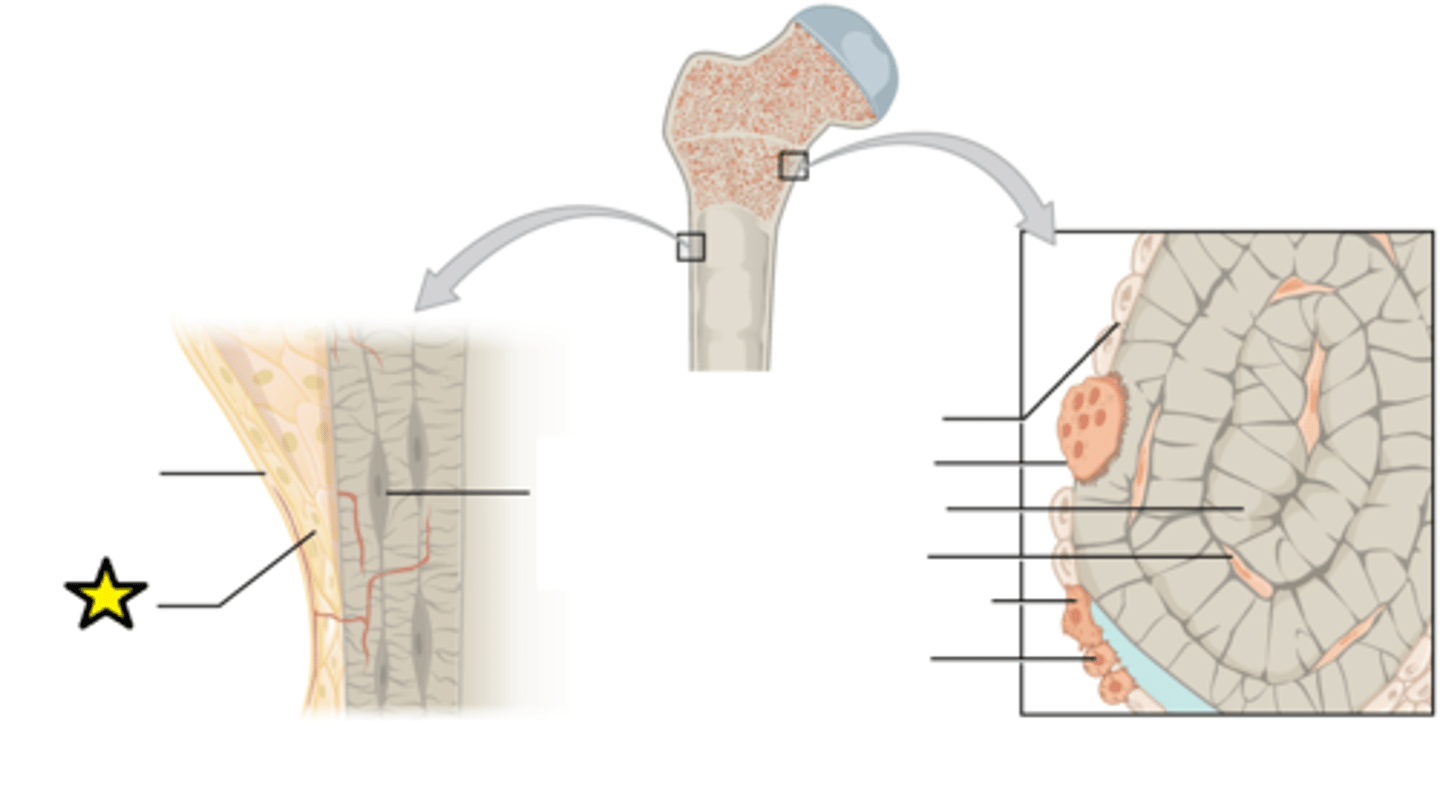
Osteocytes in lacuna
Bone cells in cavities between lamella rings
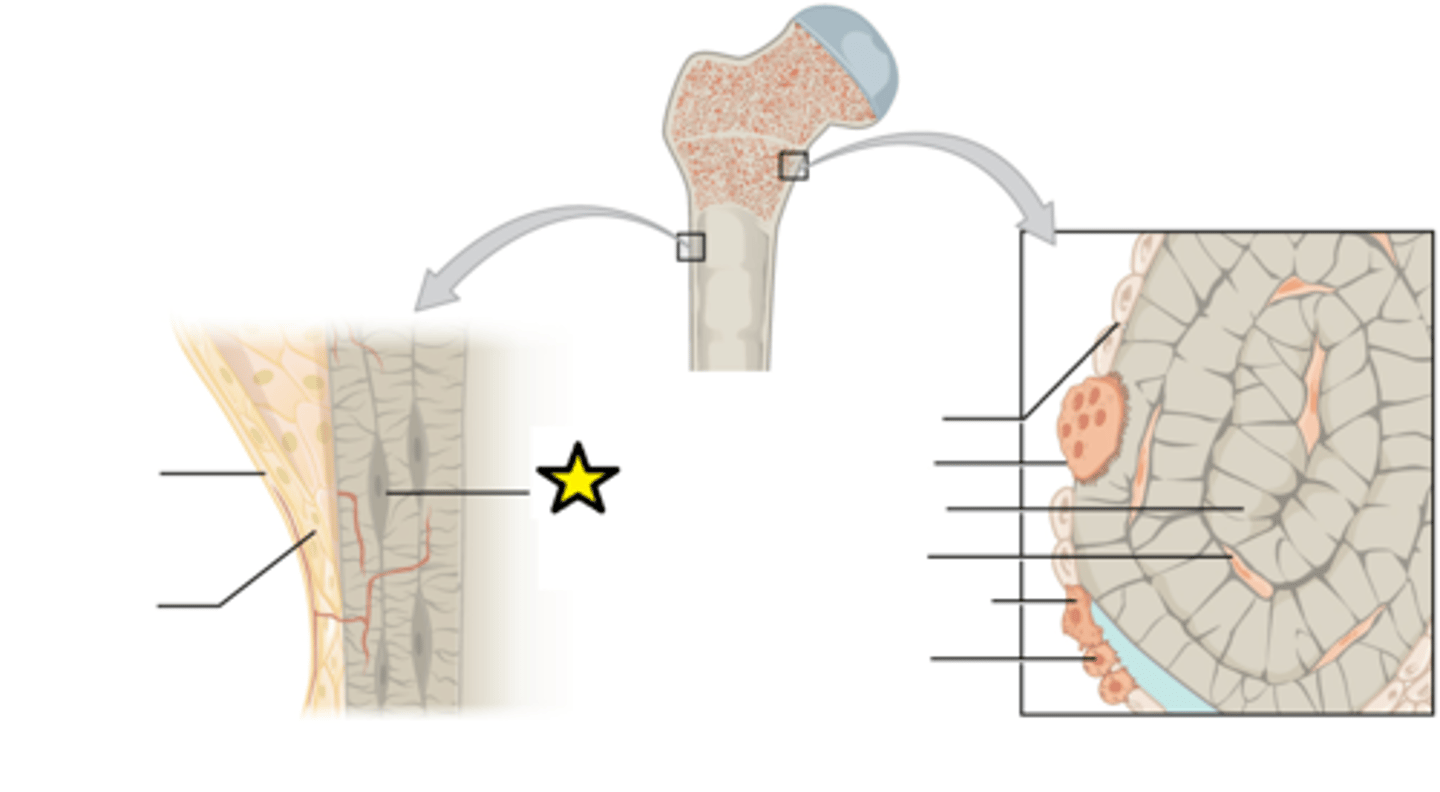
Endosteum
Membranous lining of the hollow cavity of the bone
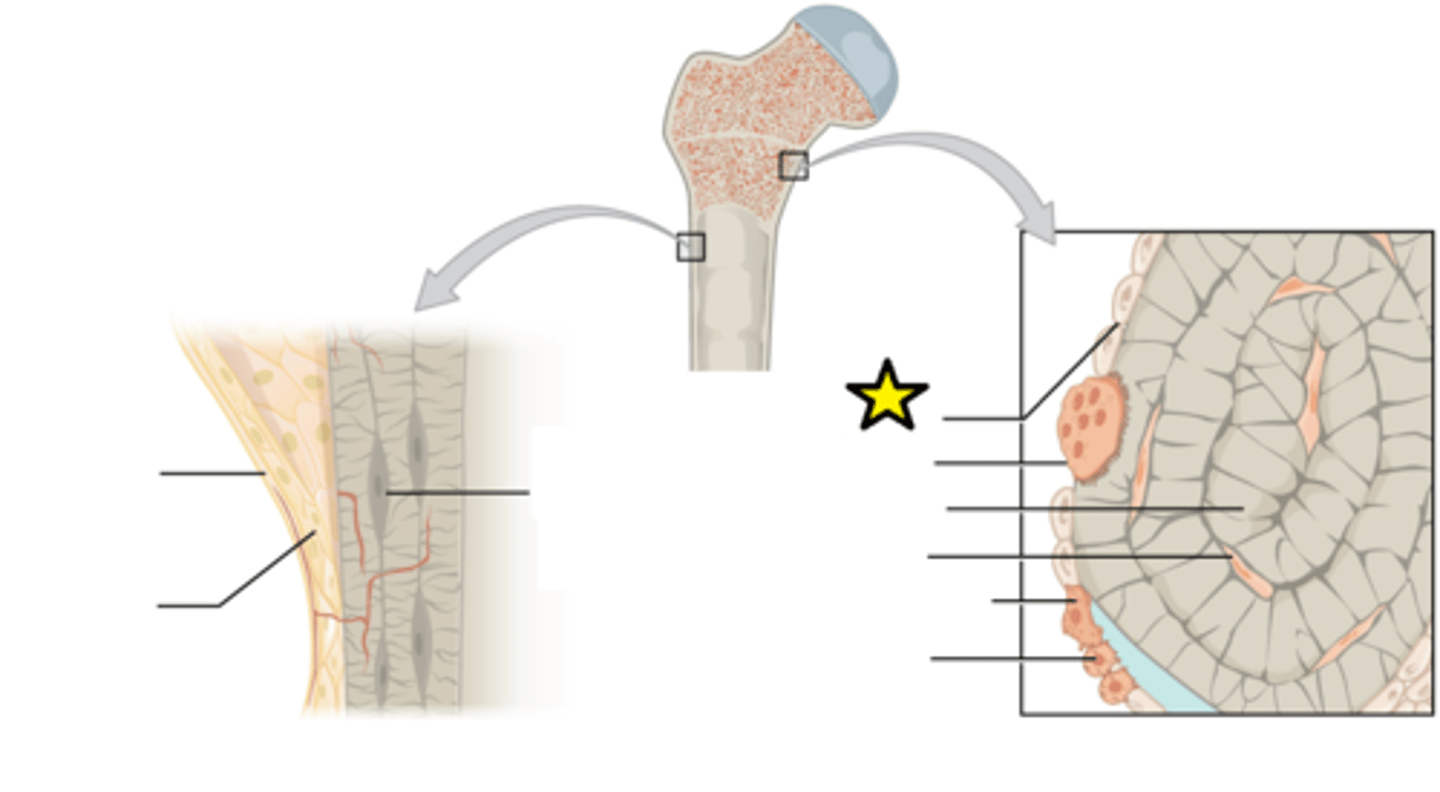
Osteoclast
Bone-destroying (cleaning) cells
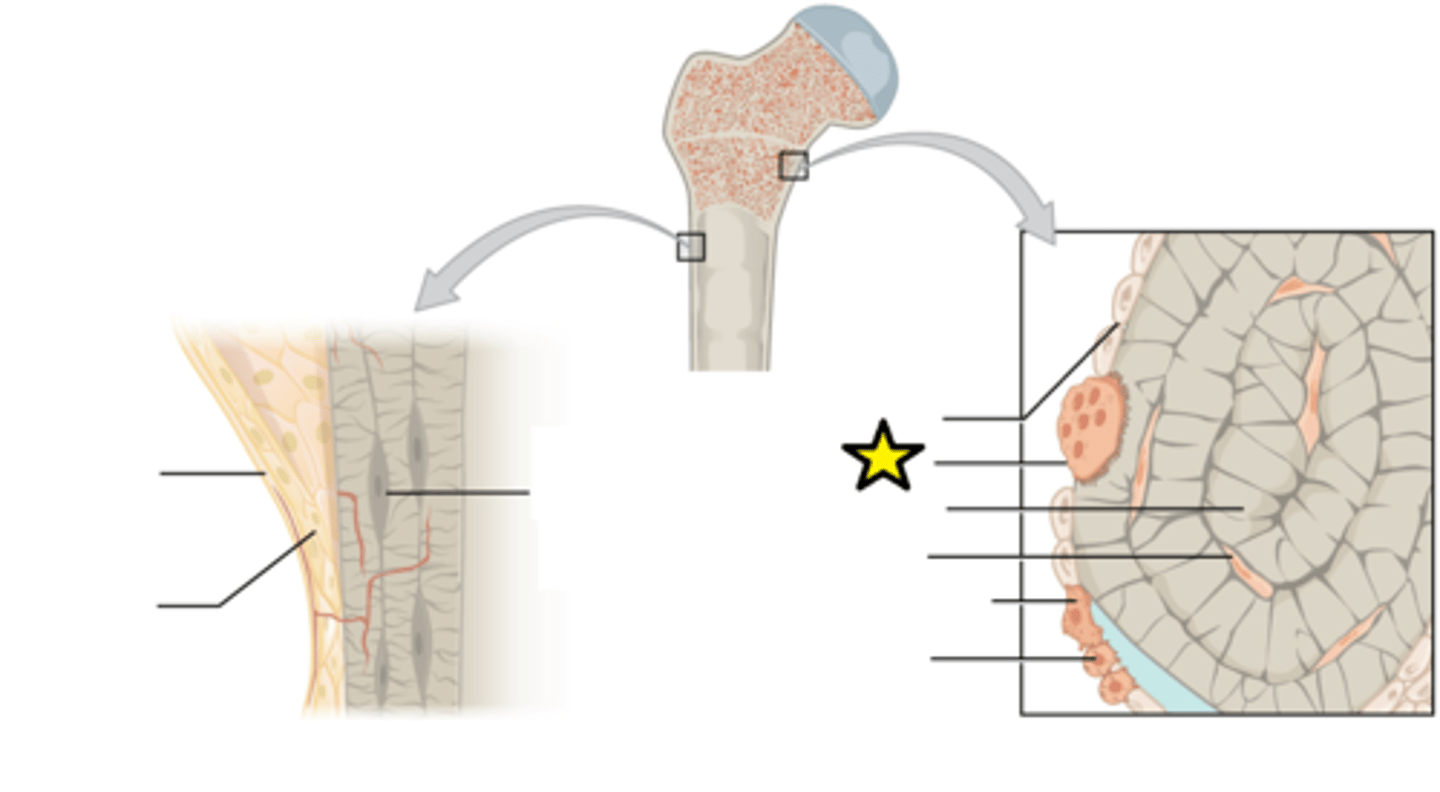
Bone matrix
Nonliving, structural part of bone
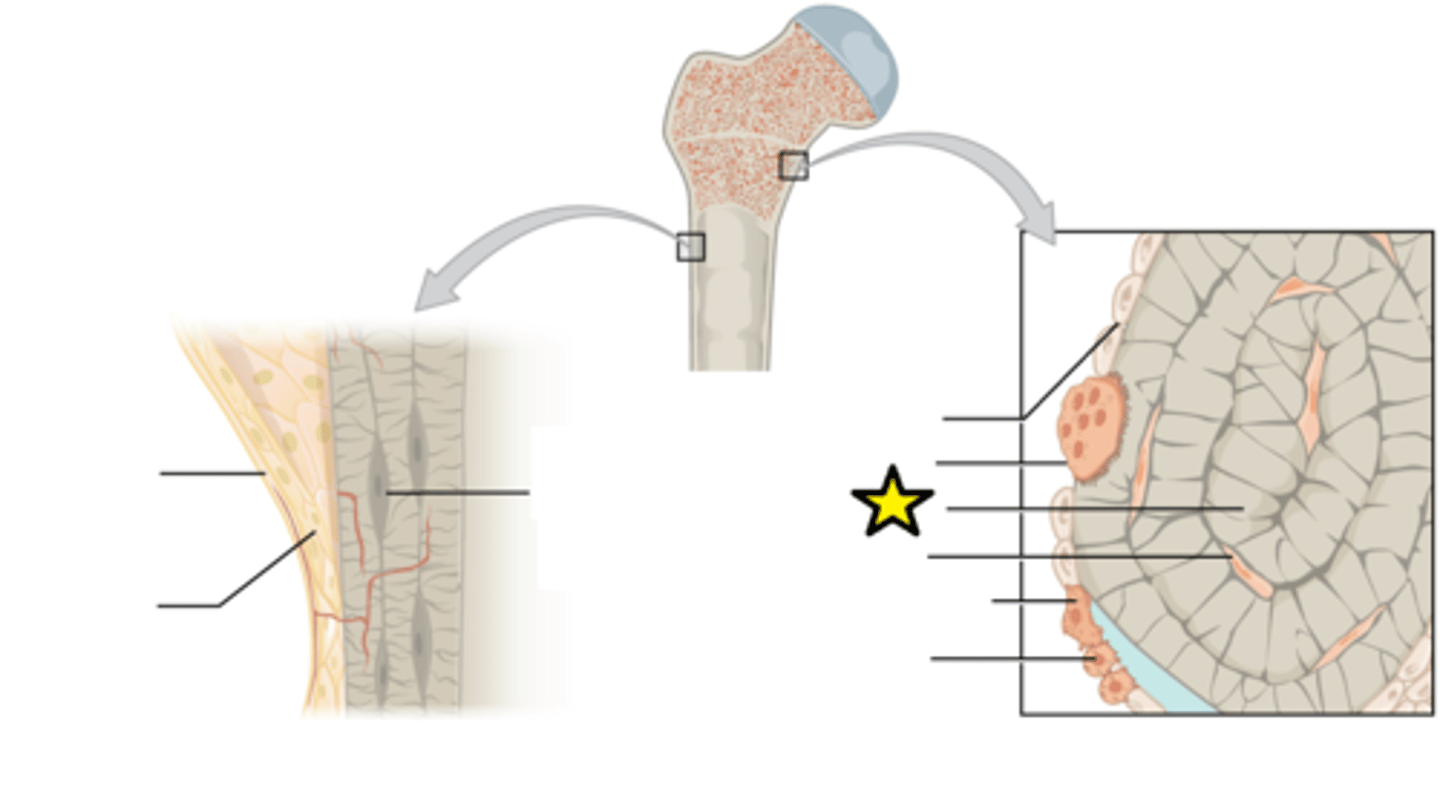
Osteocyte
A mature bone cell, formed when an osteoblast becomes embedded in the matrix it has secreted
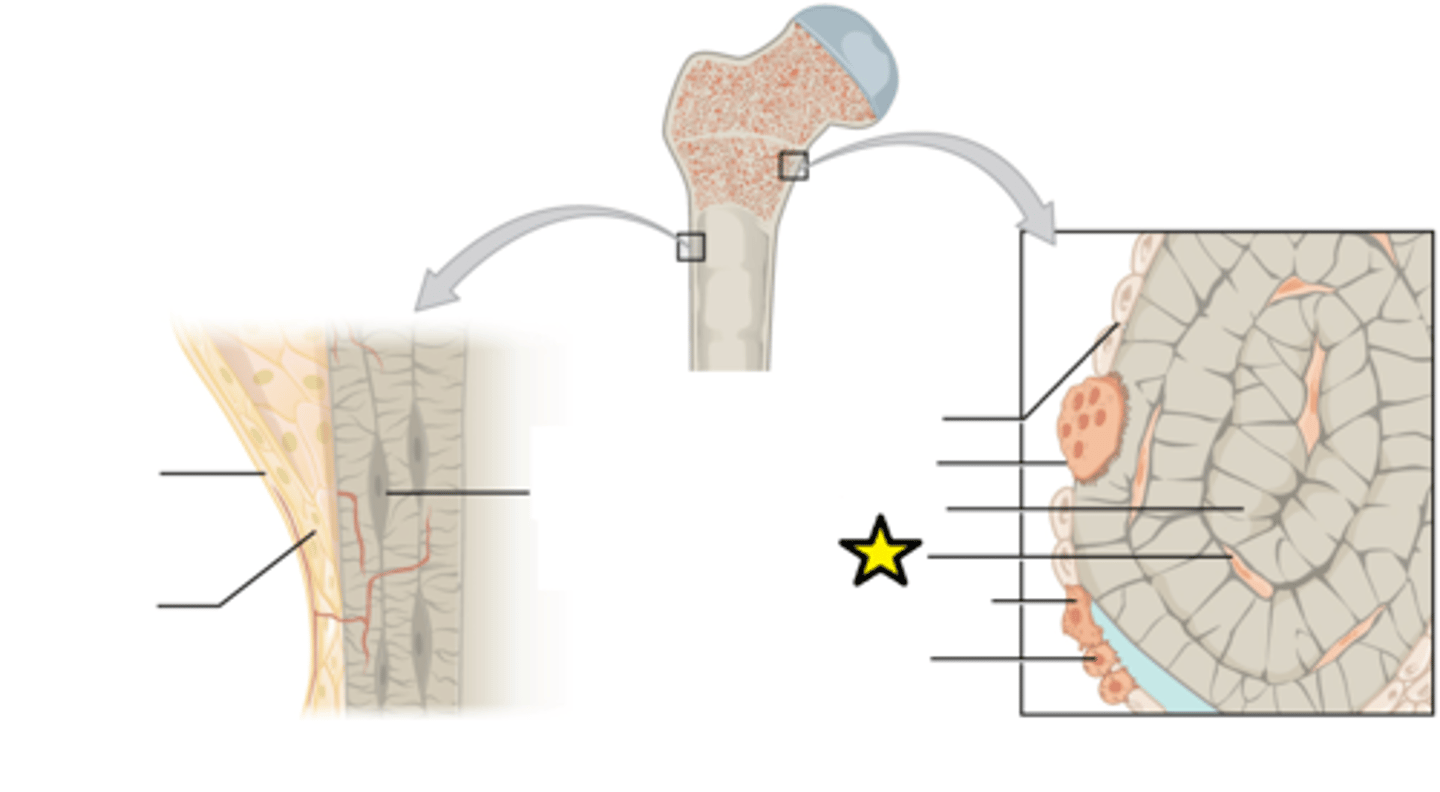
Osteogenic cell
Undifferentiated cell with high mitotic activity; the only bone cells that divide; they differentiate and develop into osteoblasts
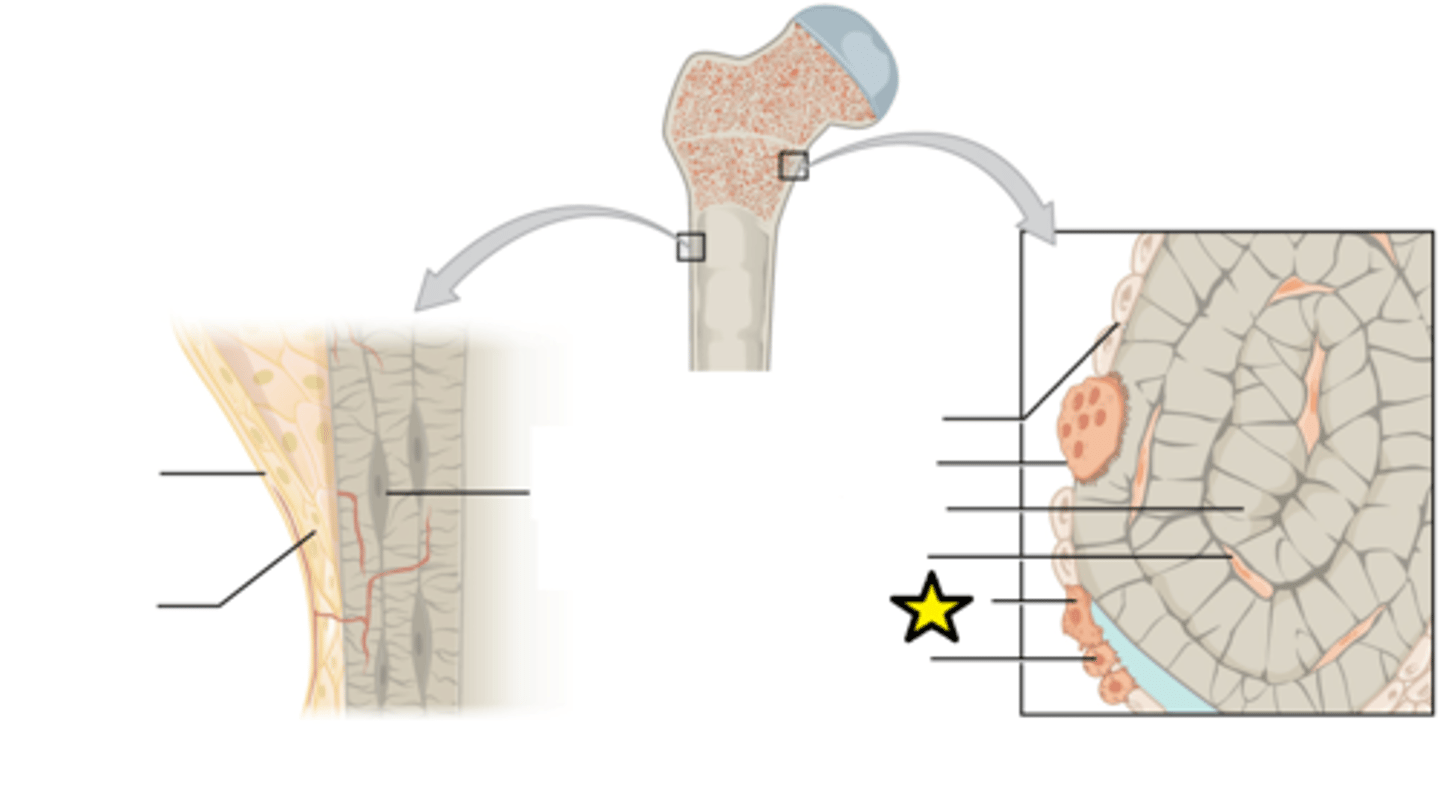
Osteoblast
Developing (baby) bone cell
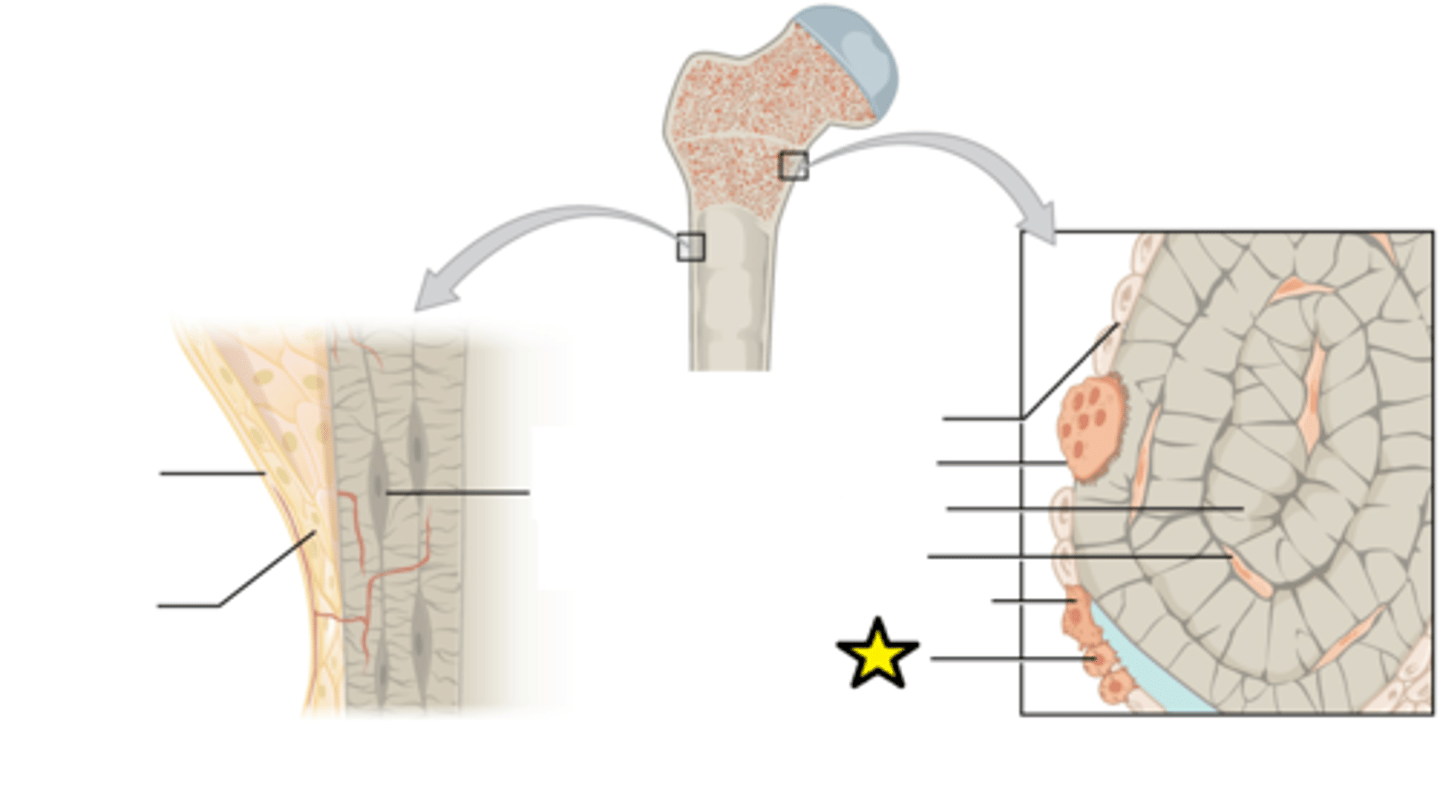
Fovea capitis
Pit in the head of a femur
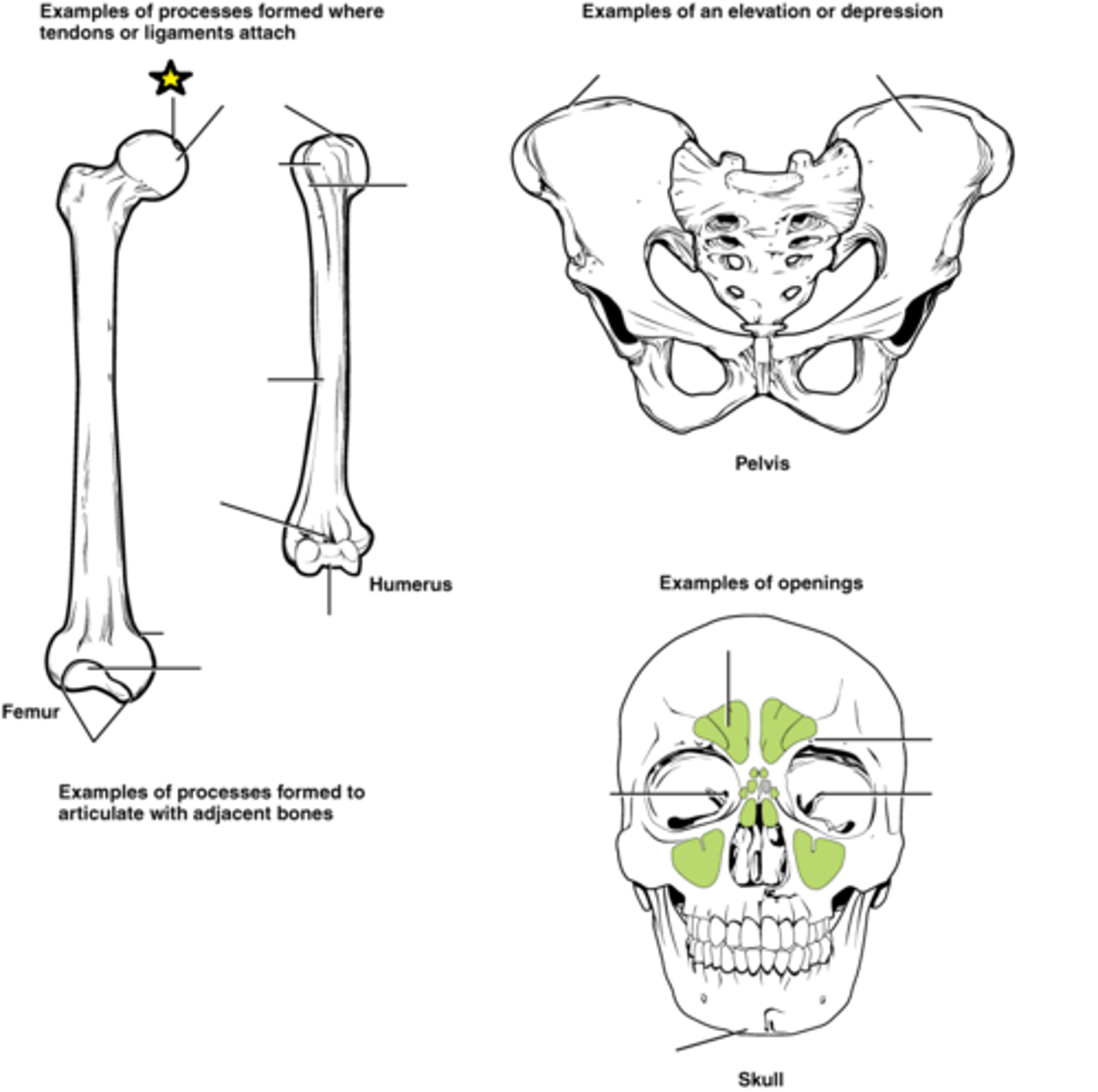
Head
Prominent, rounded, articulating end of a bone
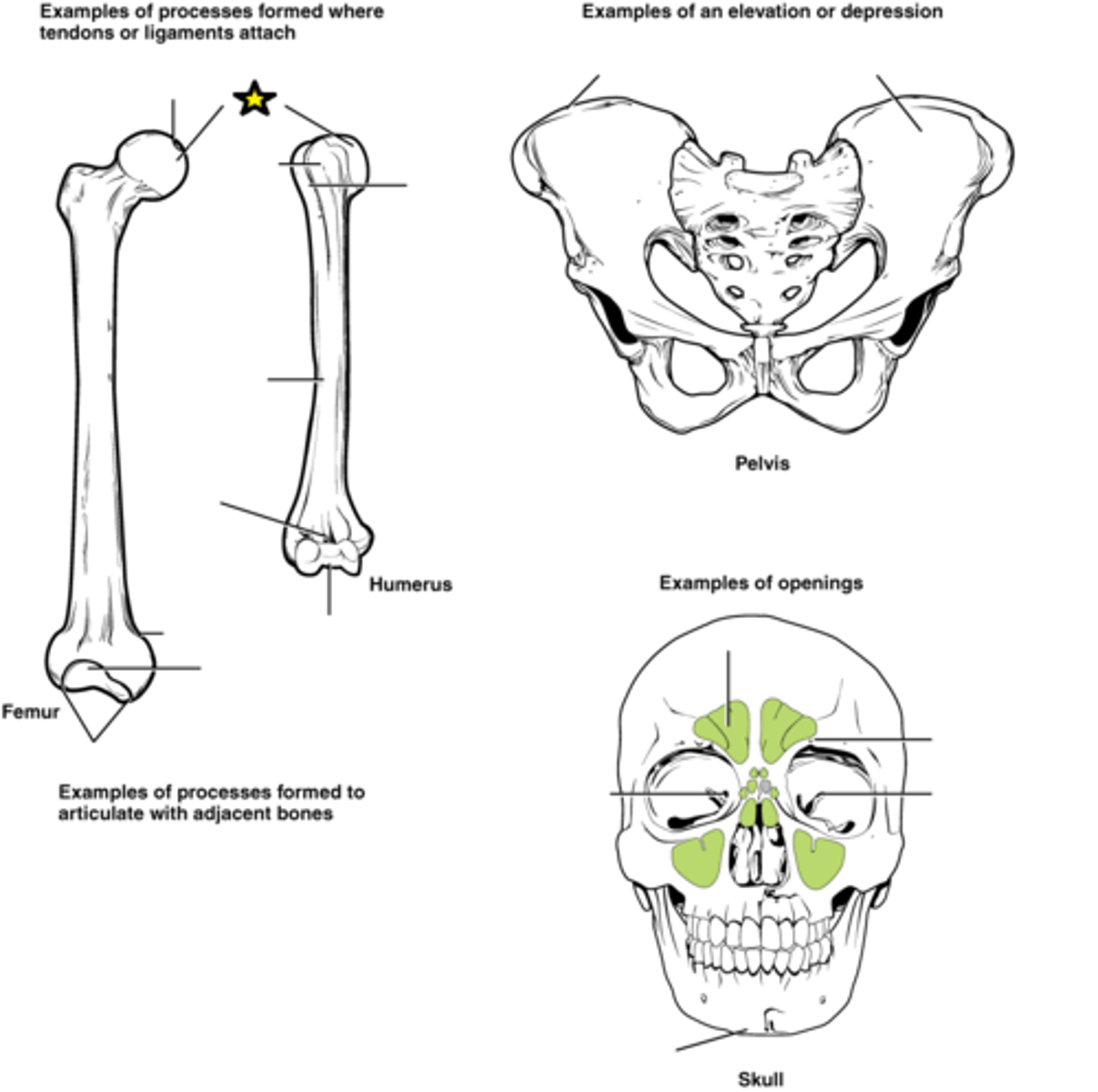
Tubercle
Small rounded projection or process
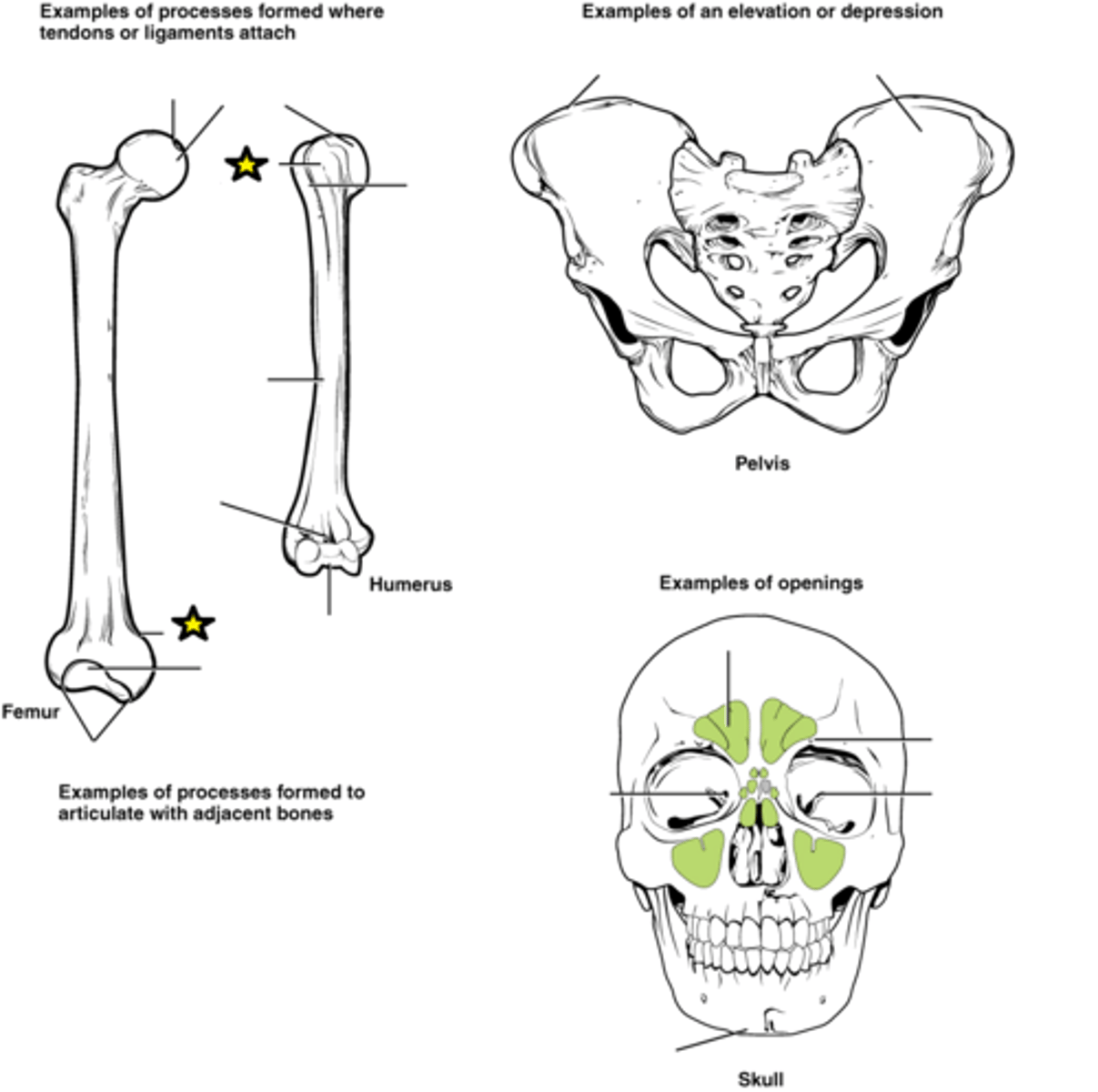
Sulcus
Narrow groove
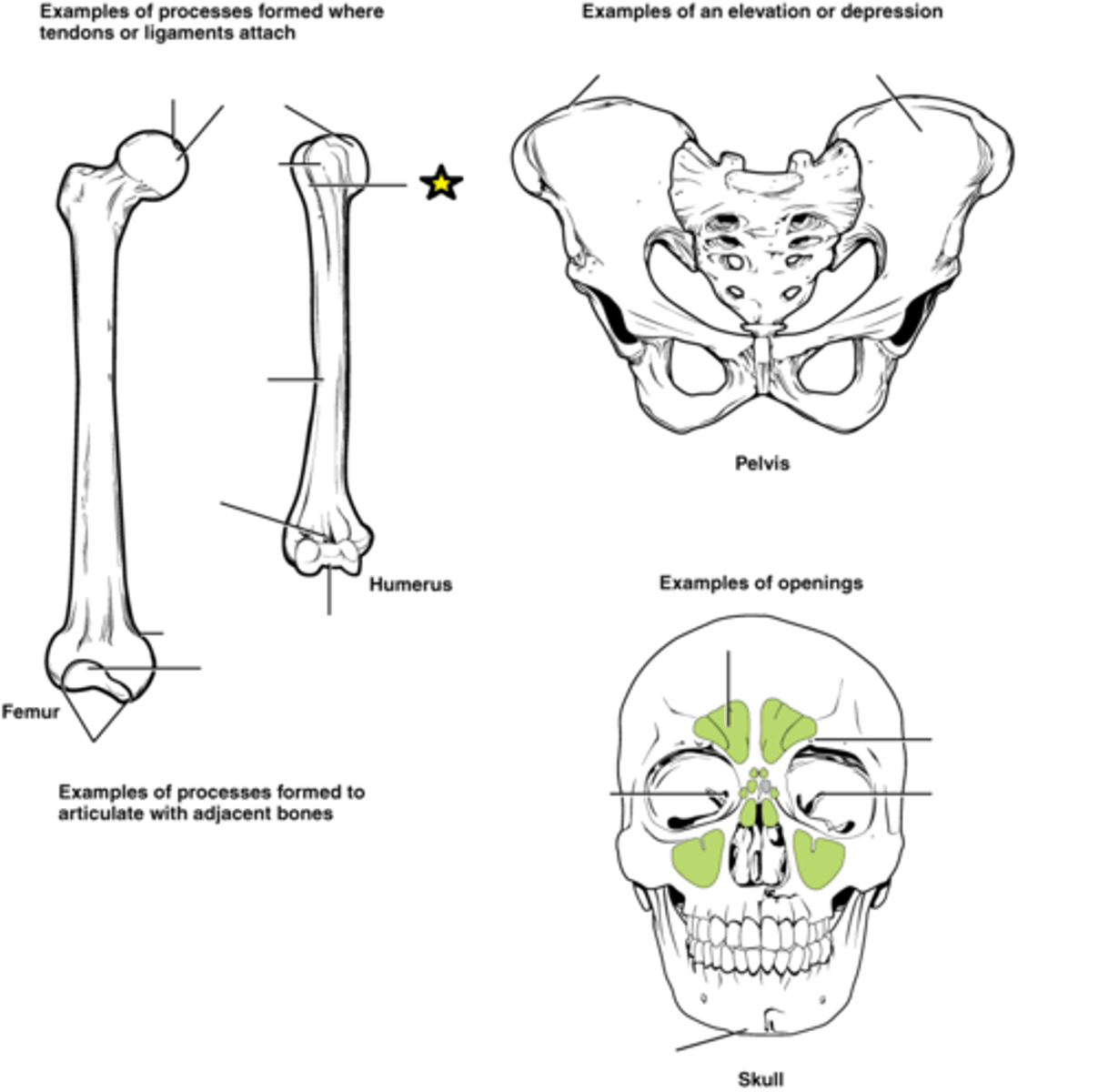
Tuberosity
Large rounded projection; may be roughened
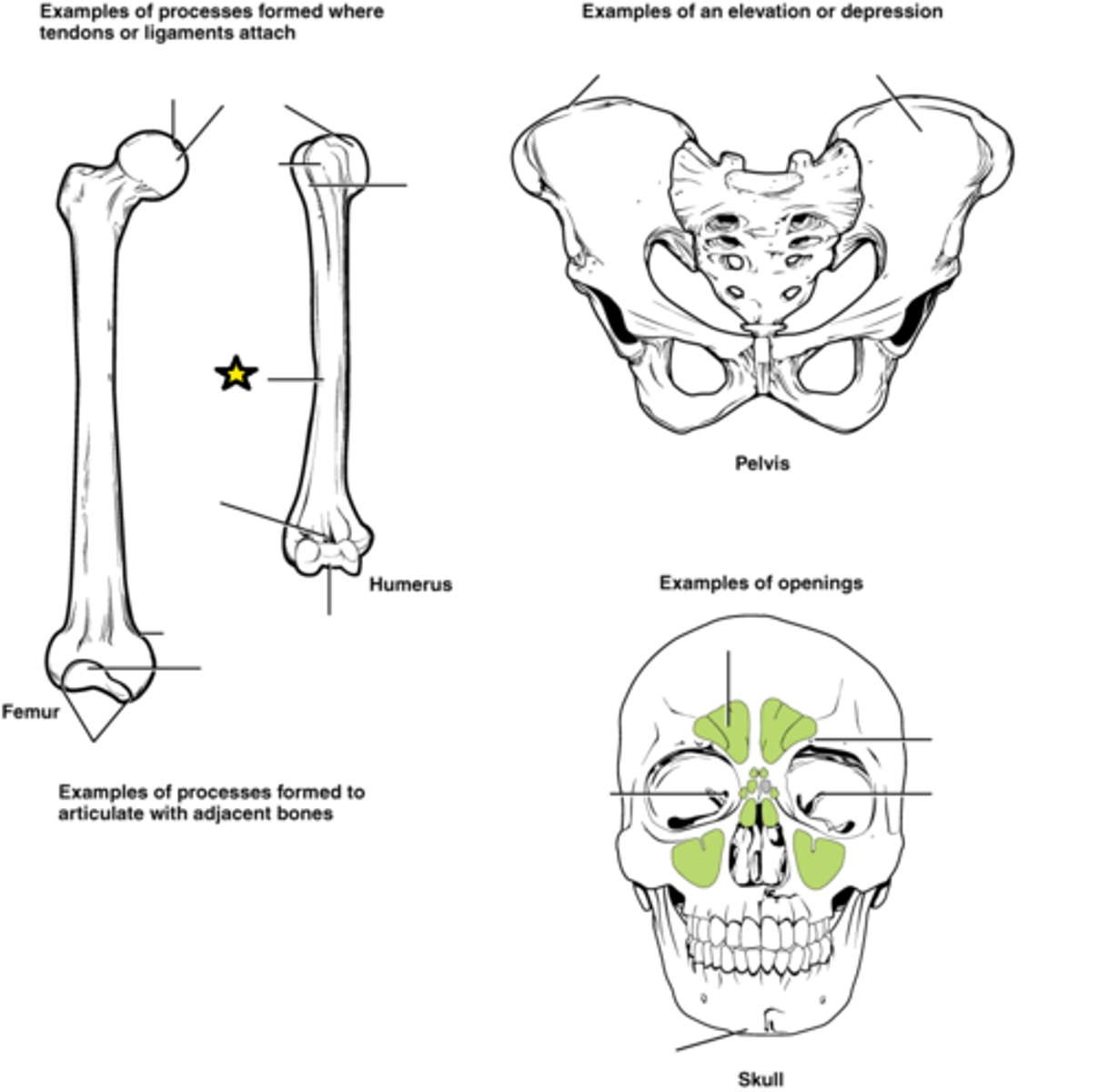
Fossa
Shallow depression
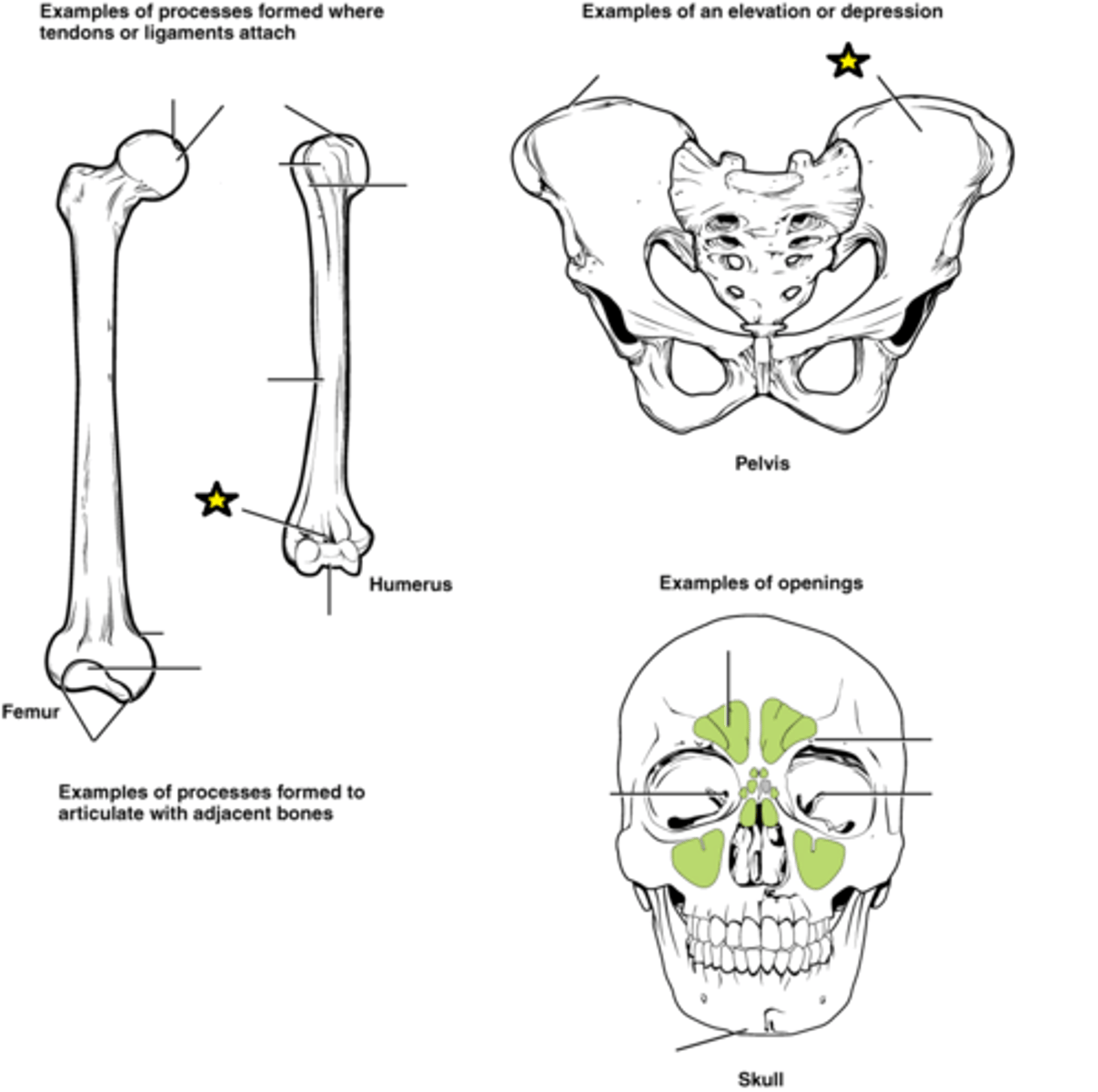
Facet
Smooth, nearly flat articular surface
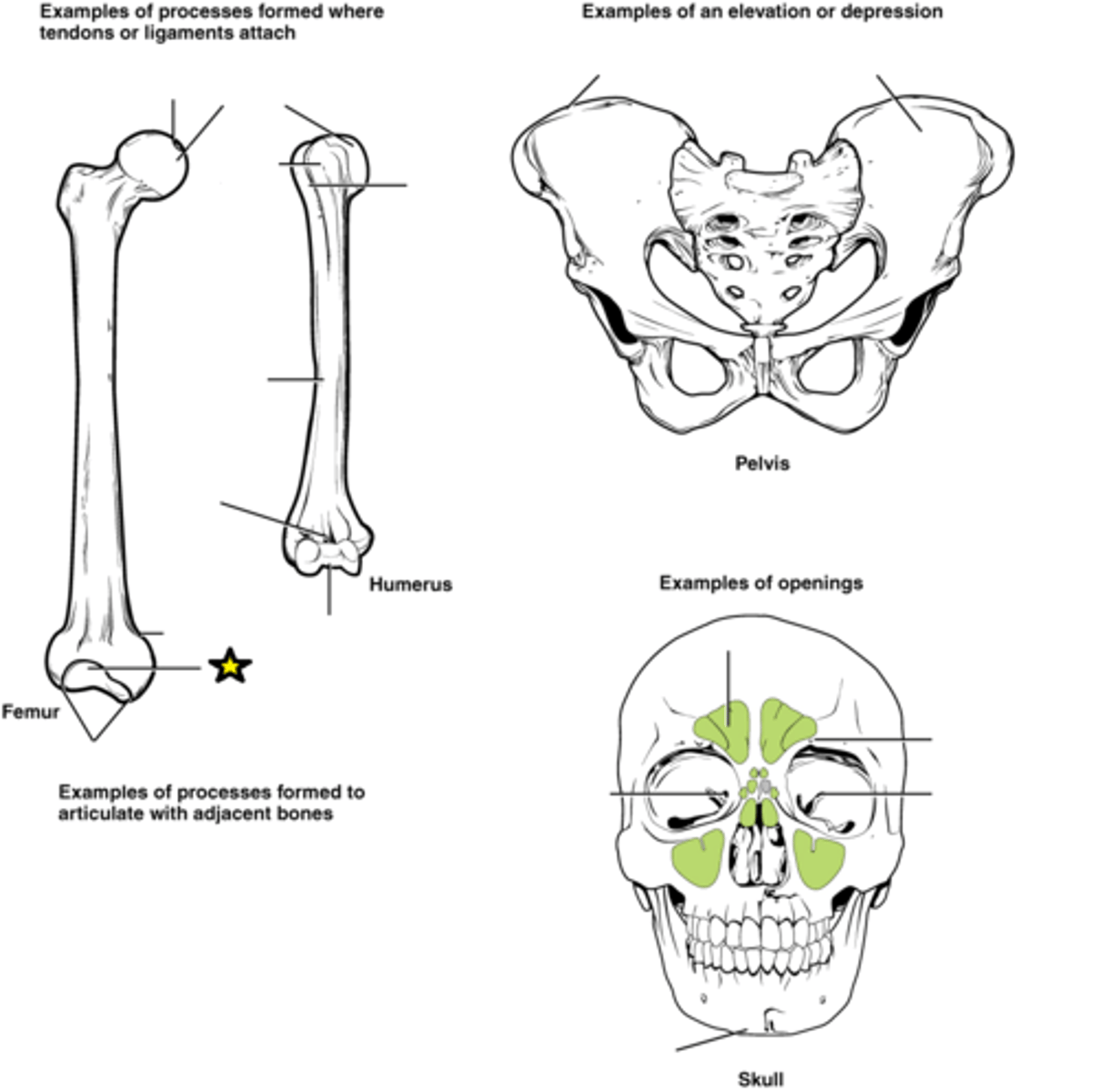
Condyle
A smooth, rounded articular process
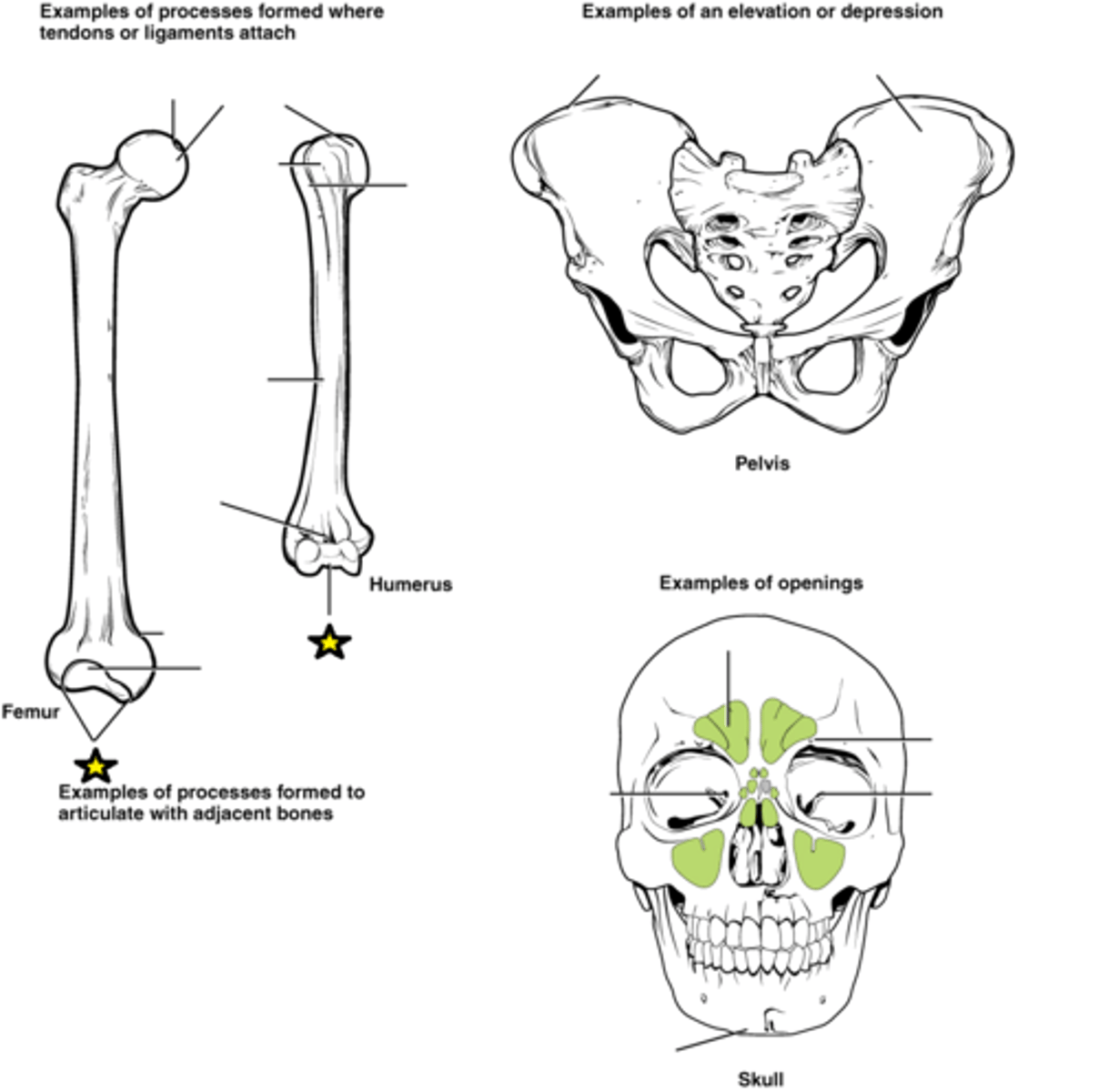
Crest
Narrow ridge of bone; usually prominent
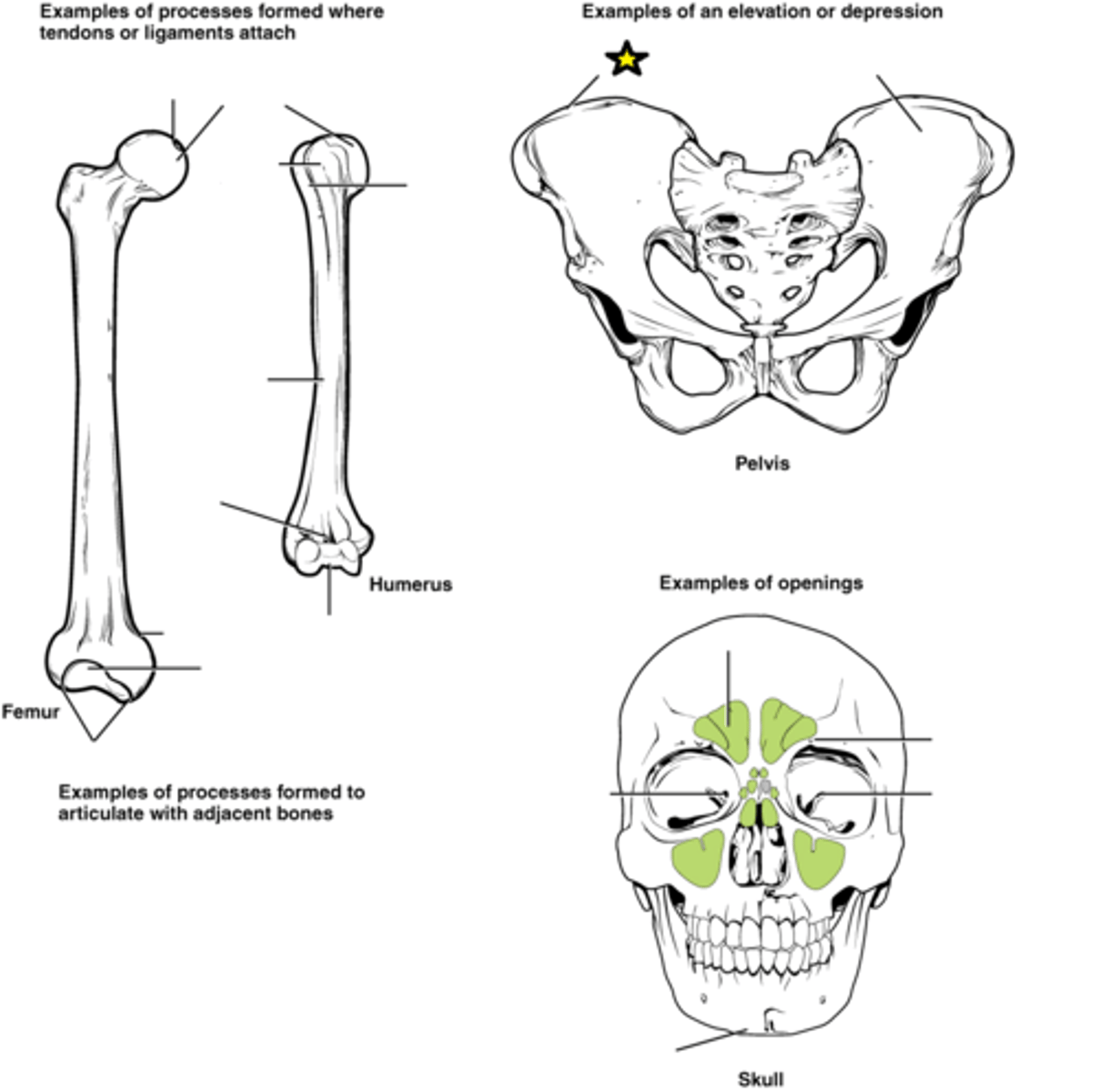
Sinus
Cavity within a bone
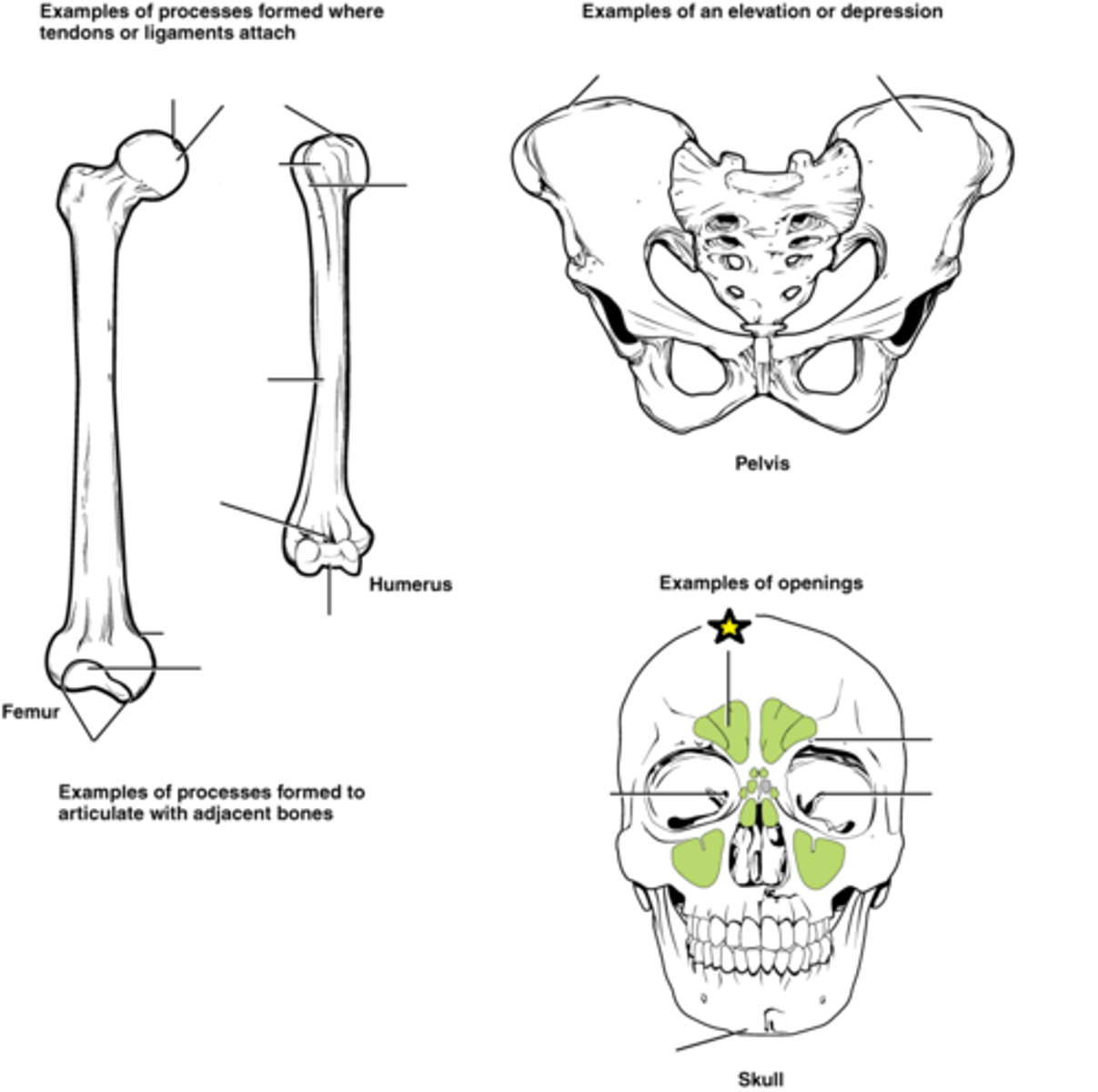
Foramen
Round or oval opening through a bone
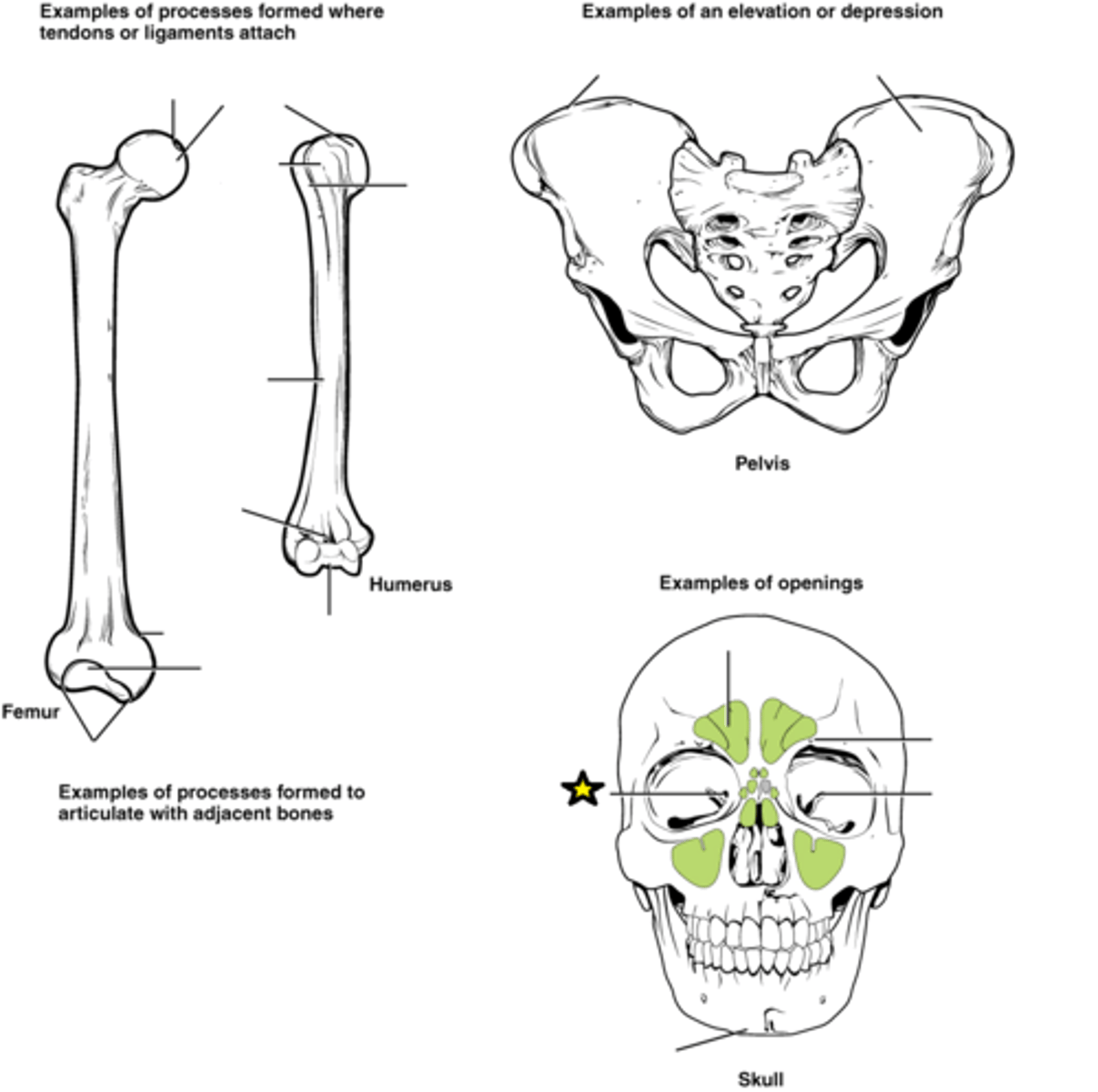
Canal
Tubular Passage/Tunnel (Optic Canal)
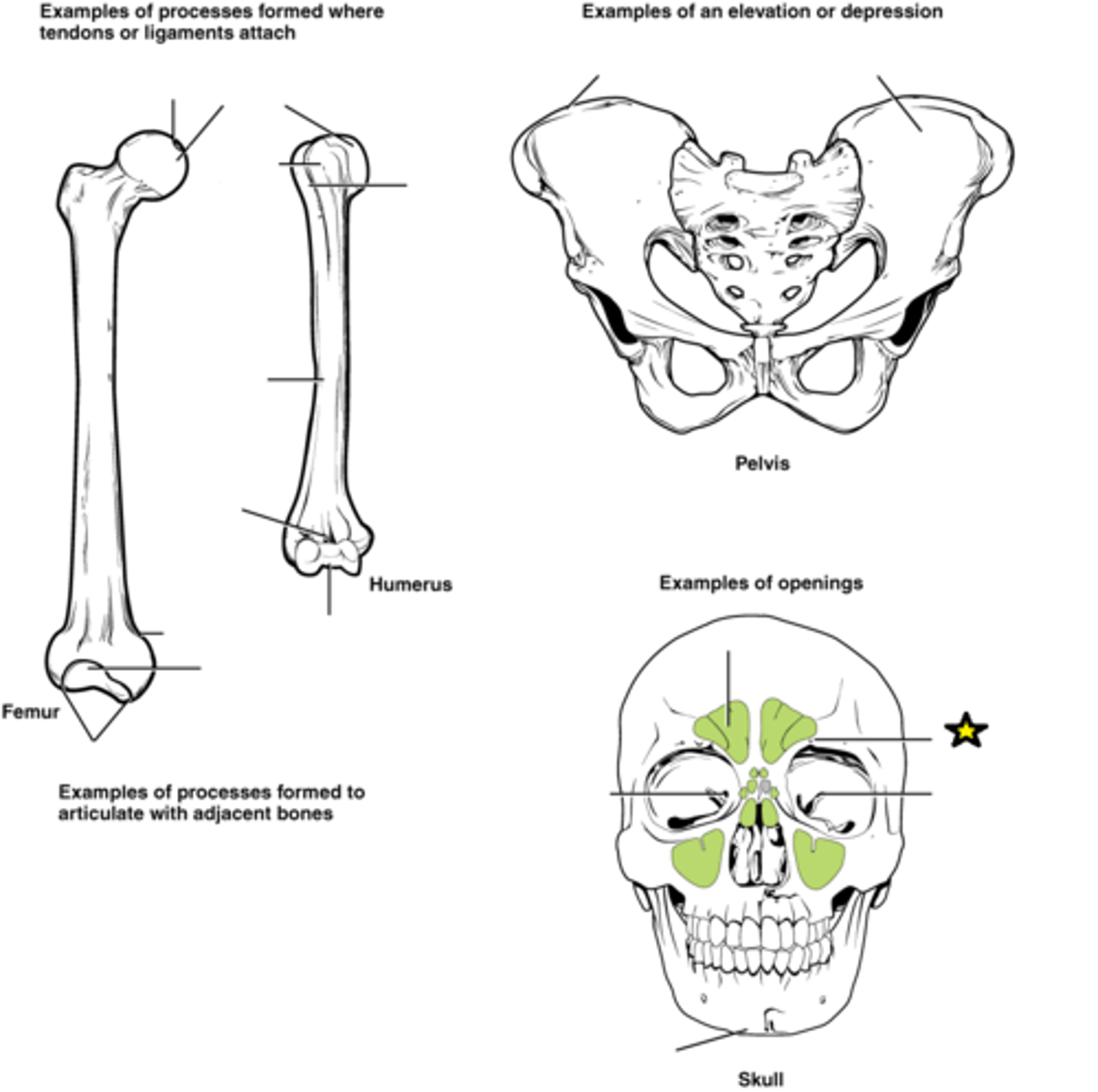
Fissure
Narrow, slit-like opening
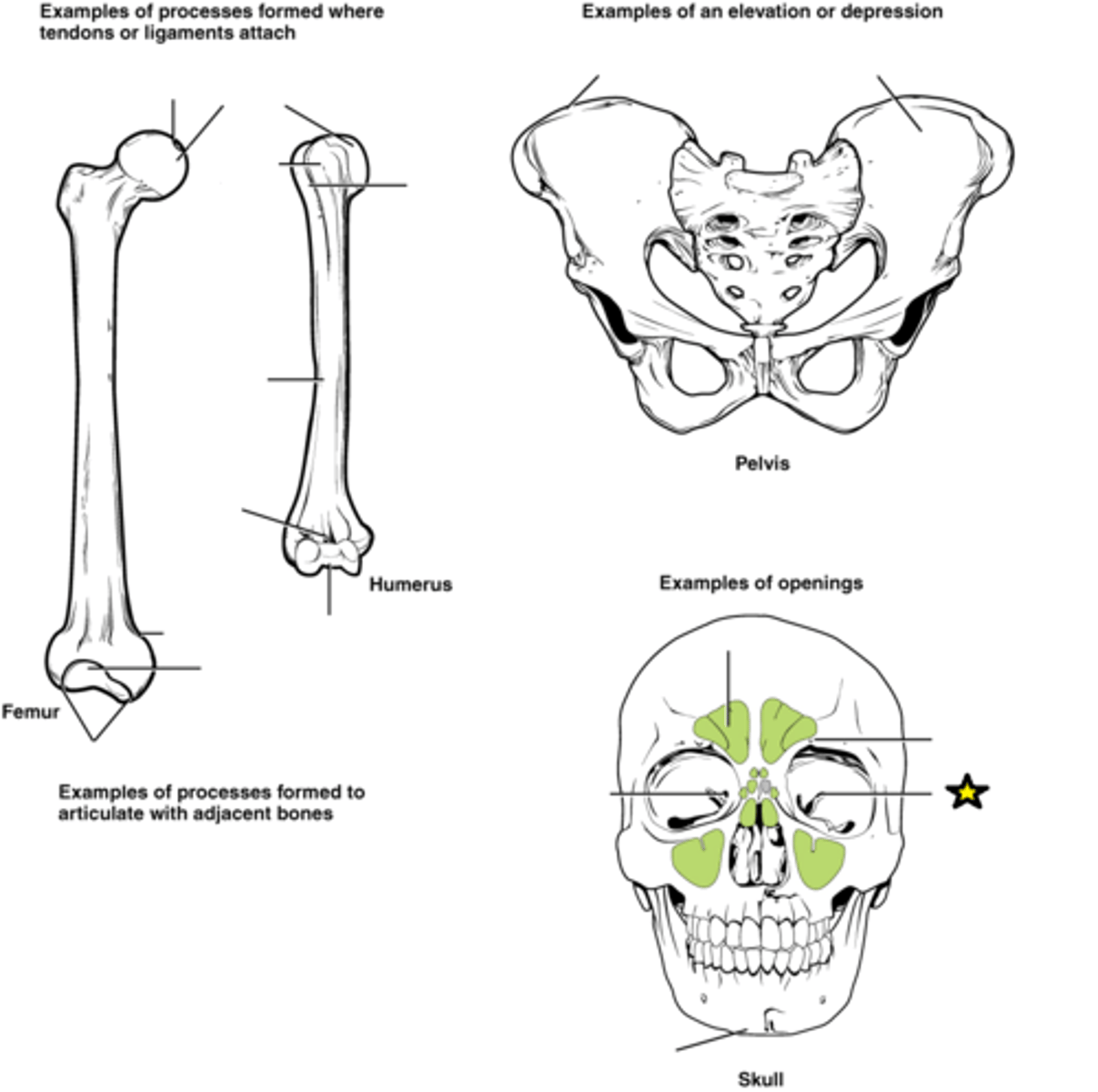
Protuberance
A bony outgrowth or protruding part
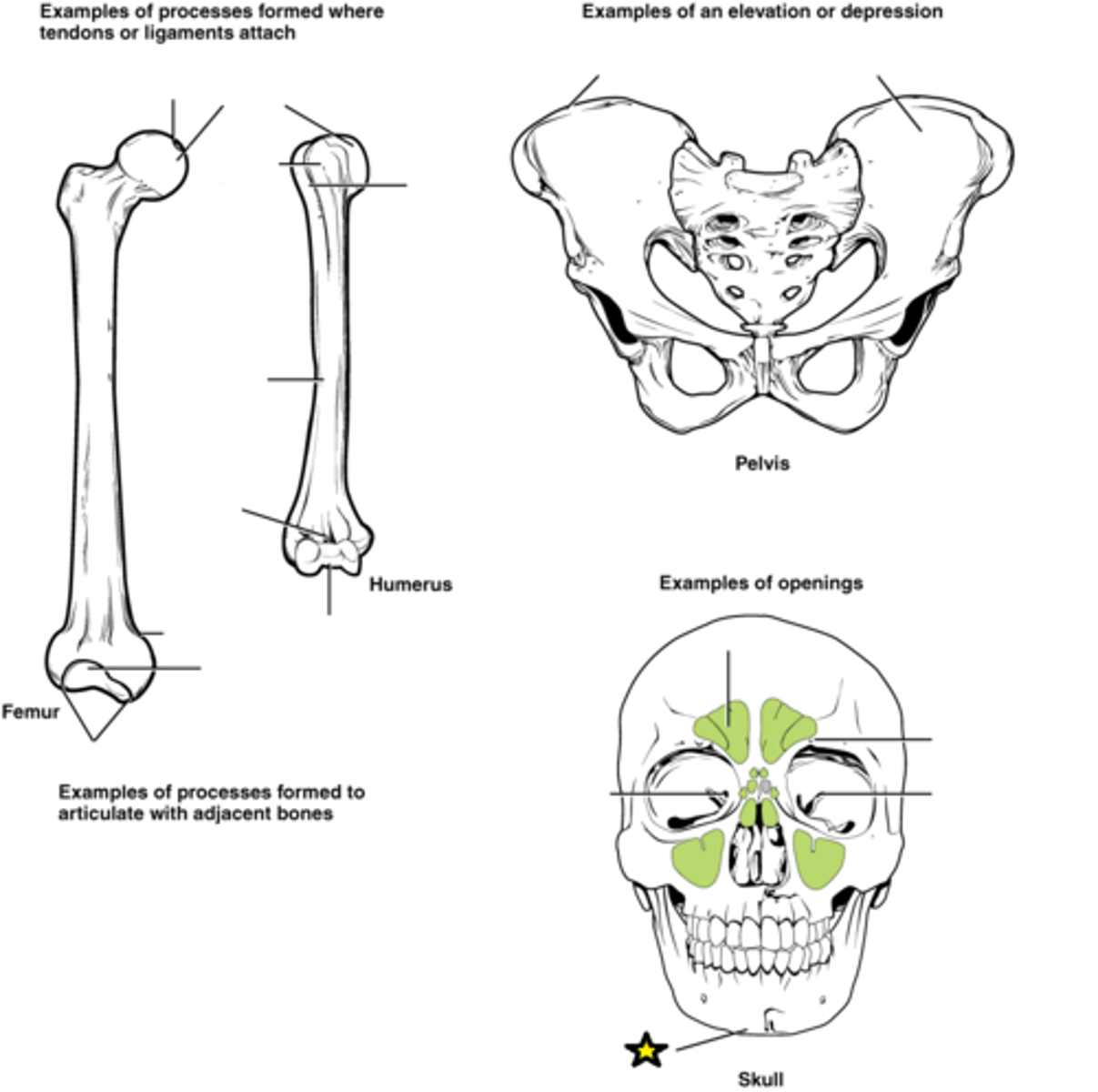
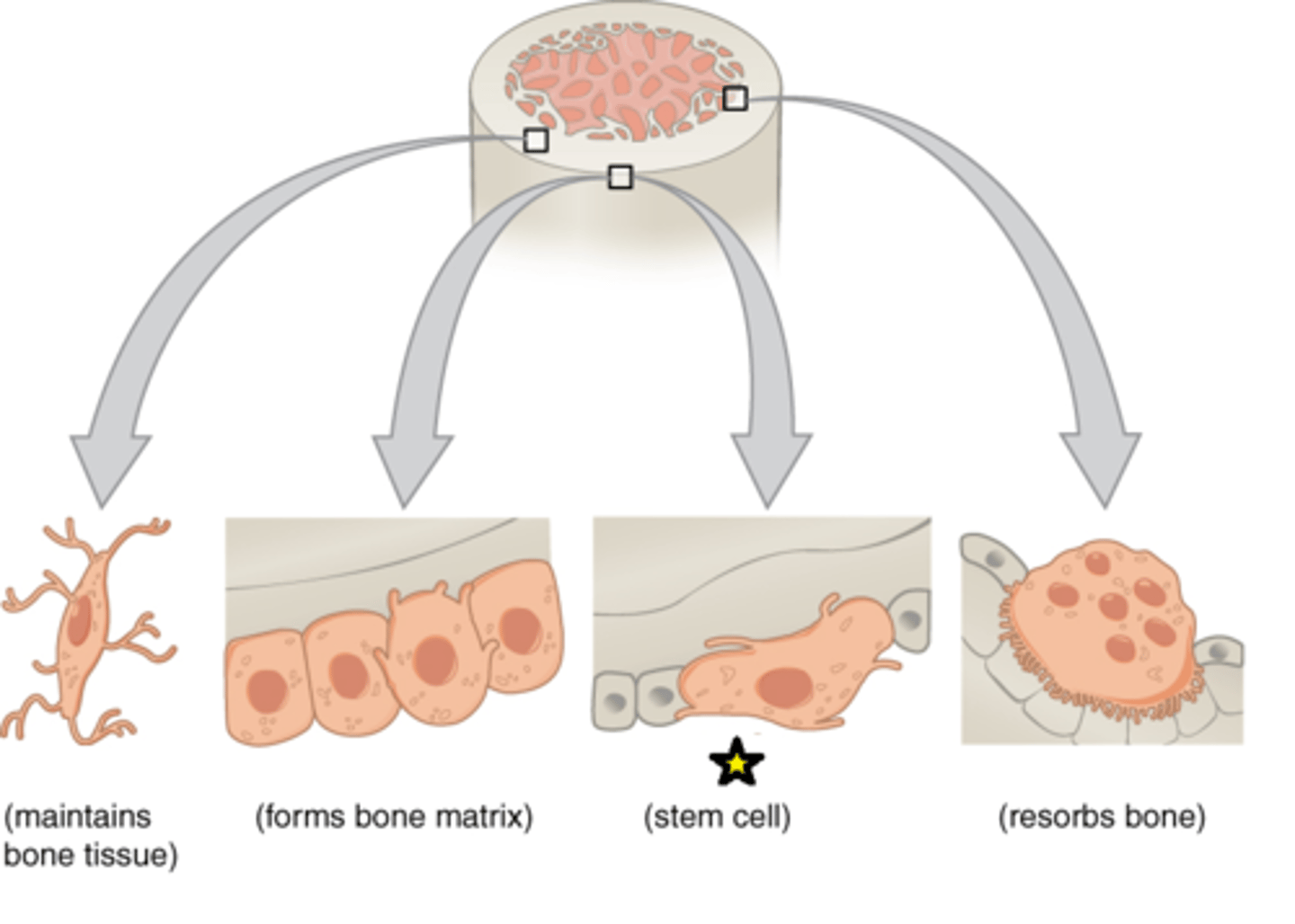
Osteocyte
A mature bone cell, formed when an osteoblast becomes embedded in the matrix it has secreted
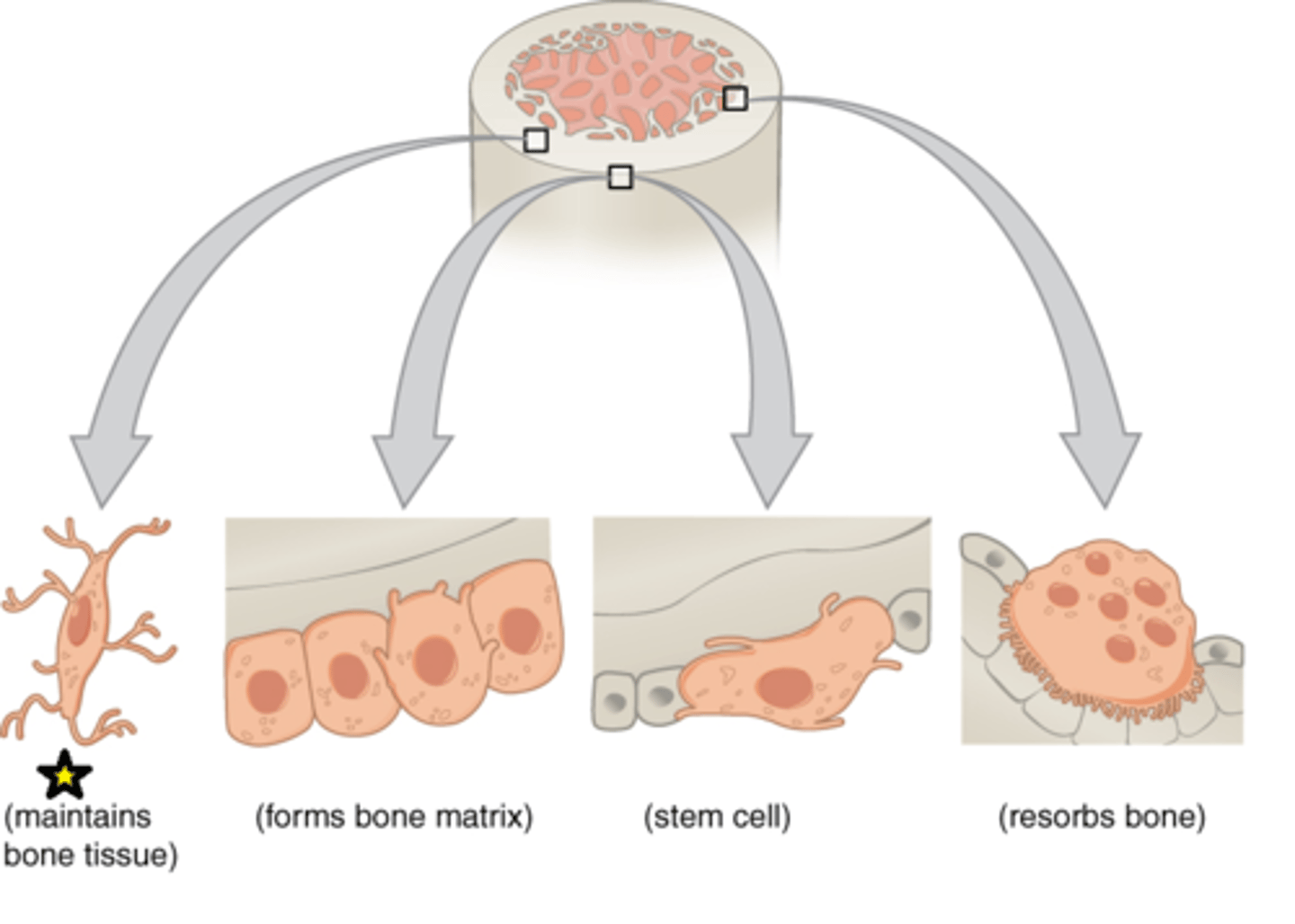
Osteoblast
Developing (baby) bone cell
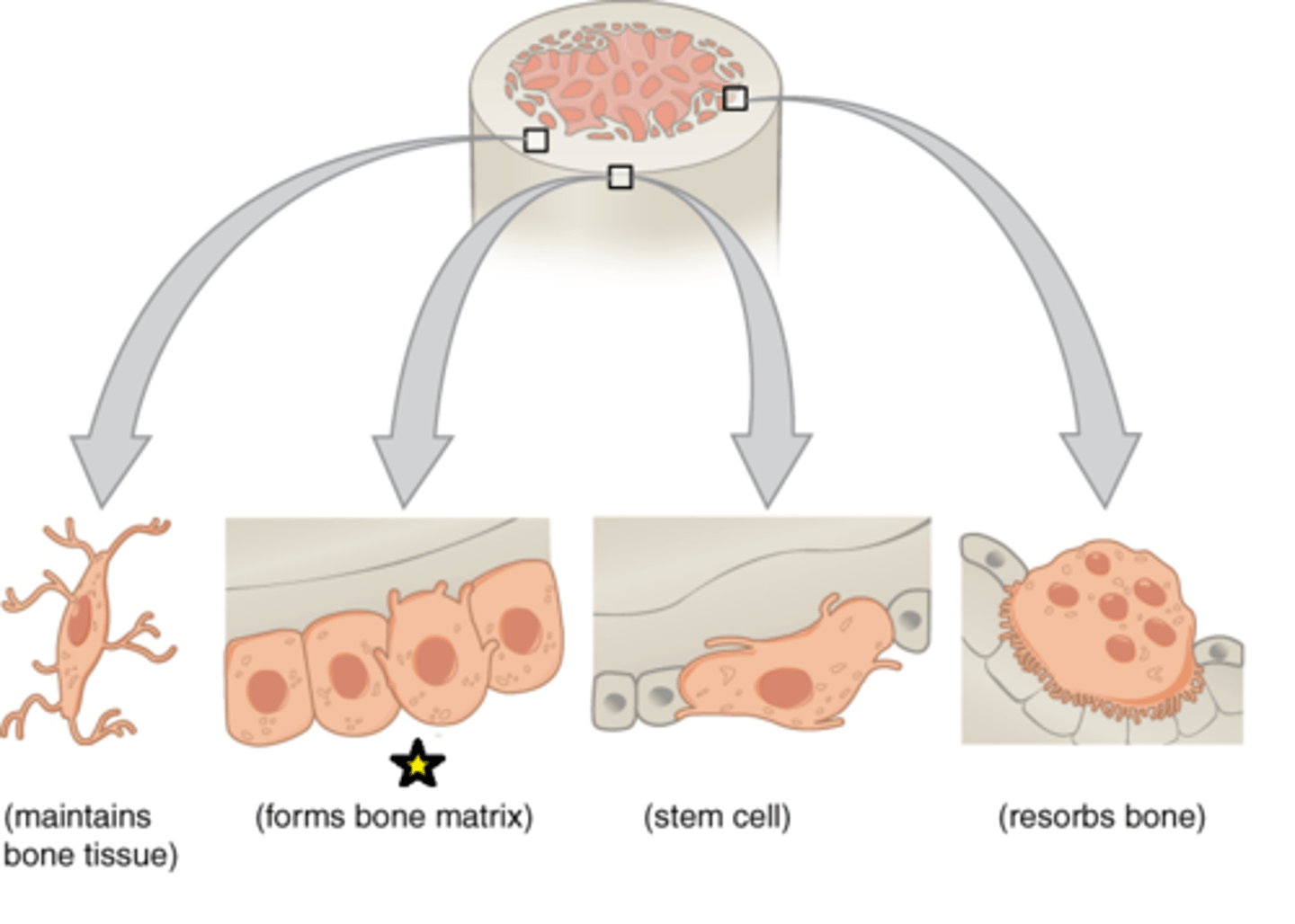
Osteogenic cell
Undifferentiated cell with high mitotic activity; the only bone cells that divide; they differentiate and develop into osteoblasts
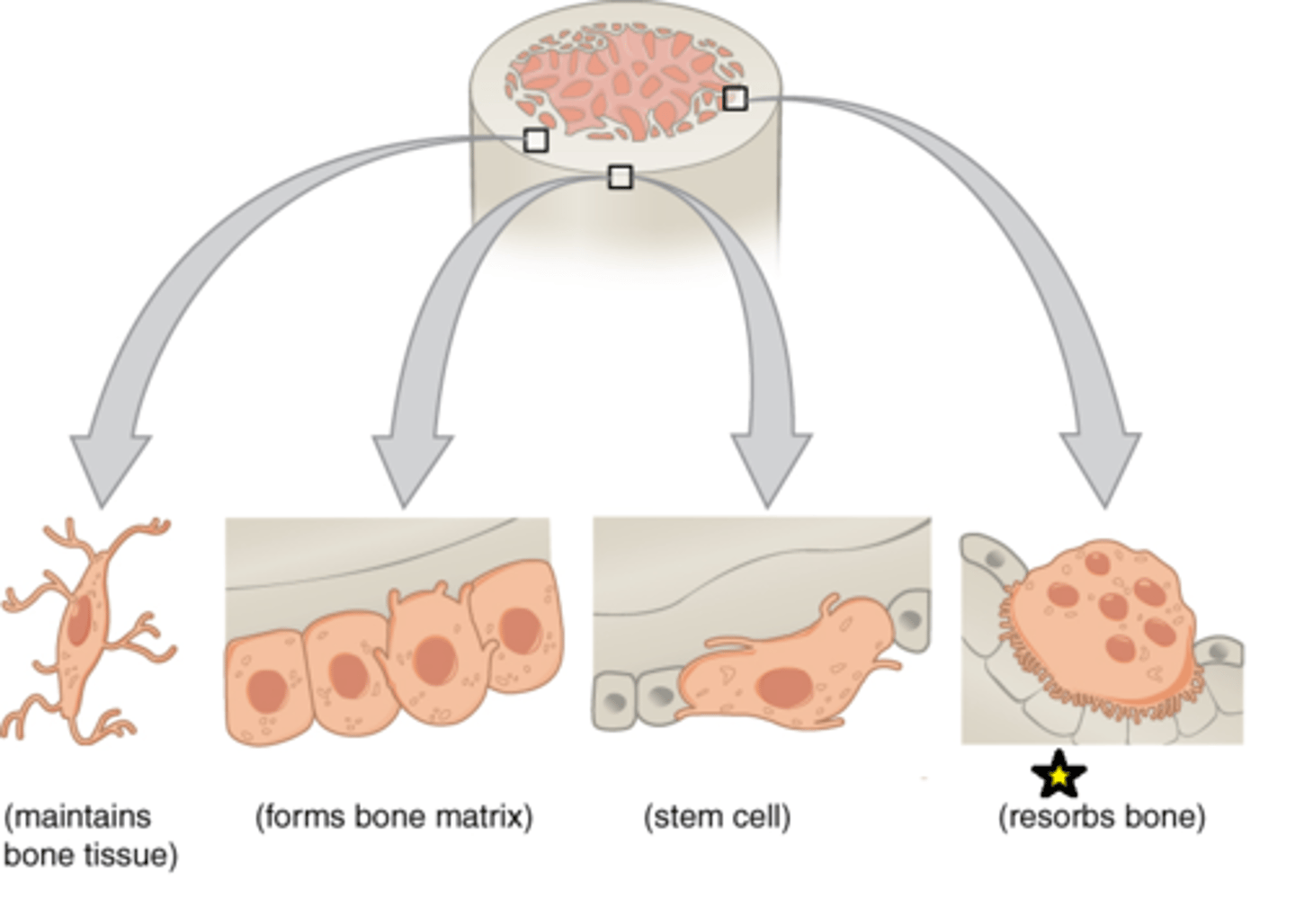
Osteoclast
Bone-destroying (cleaning) cells
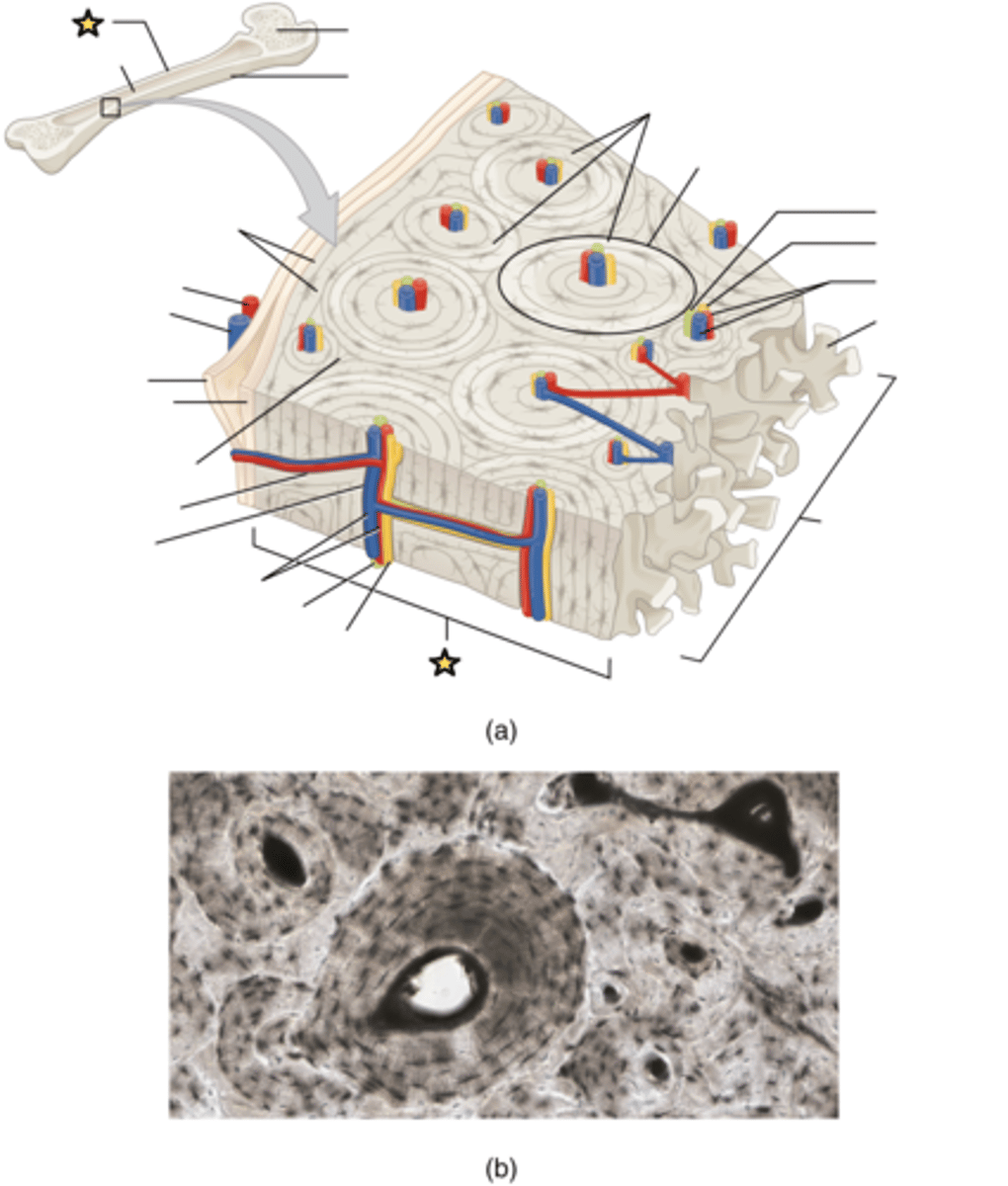
Compact bone
Hard, dense bone tissue that is beneath the outer membrane of a bone
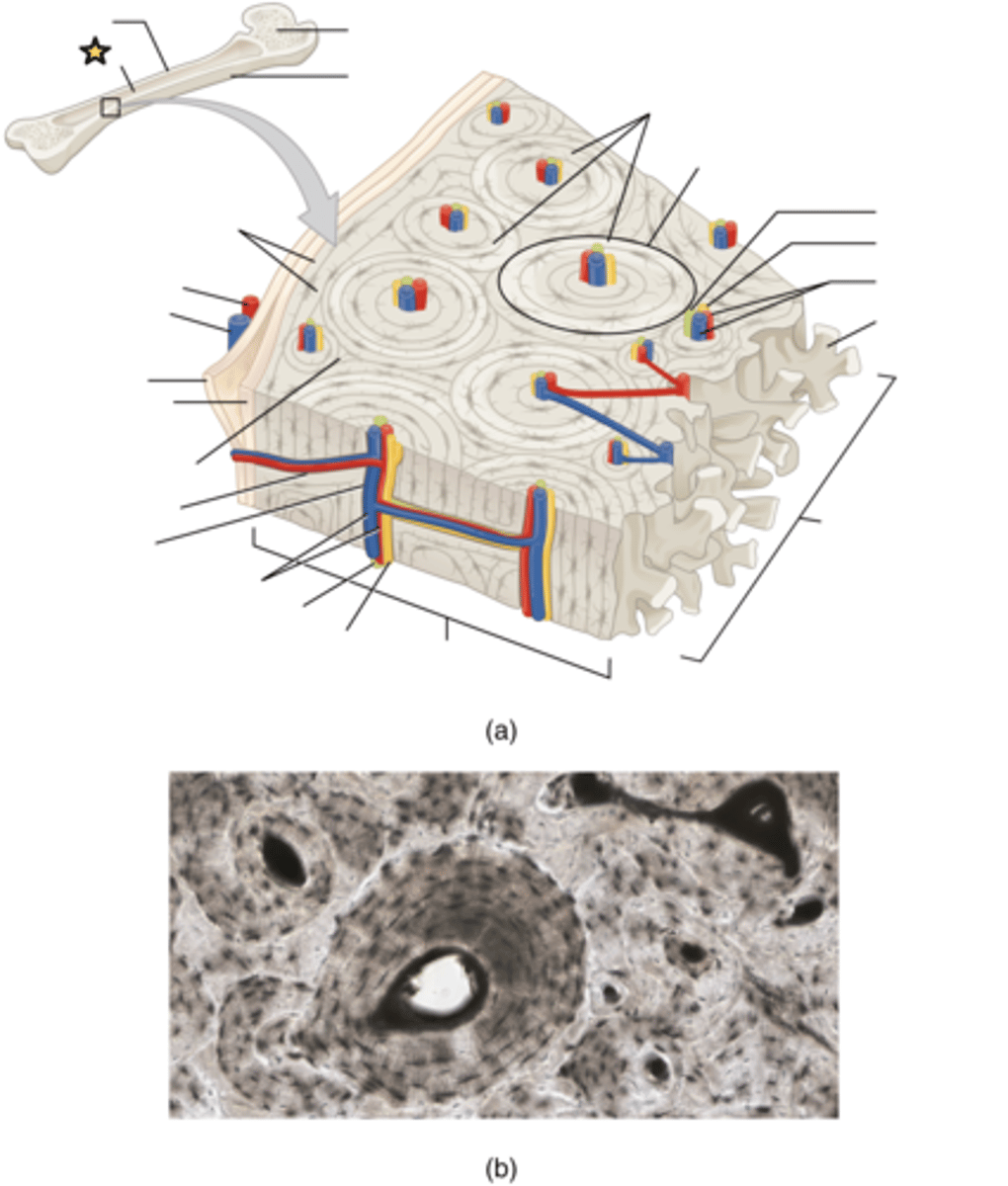
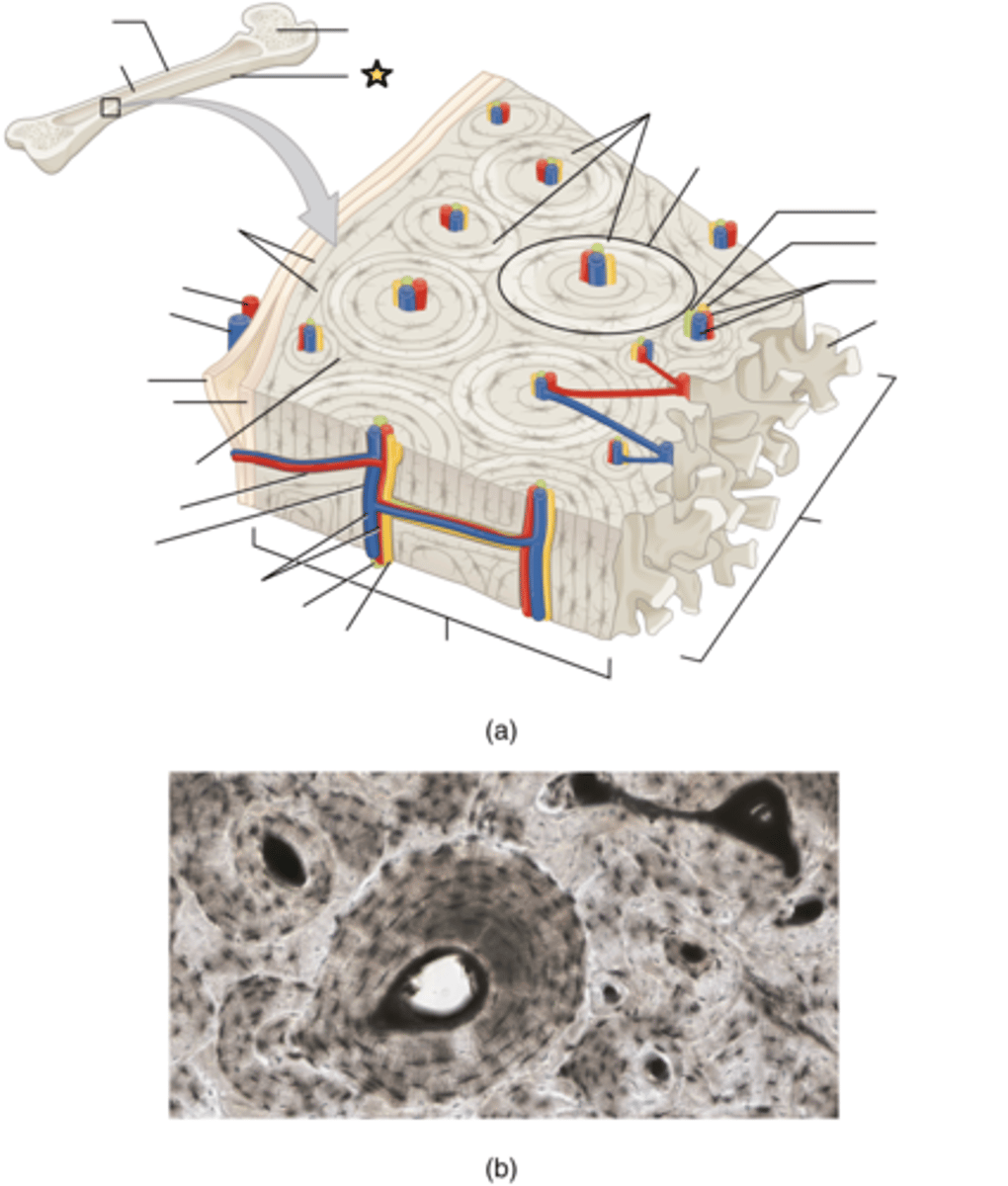
Medullary cavity
Cavity within the shaft of the long bones filled with bone marrow
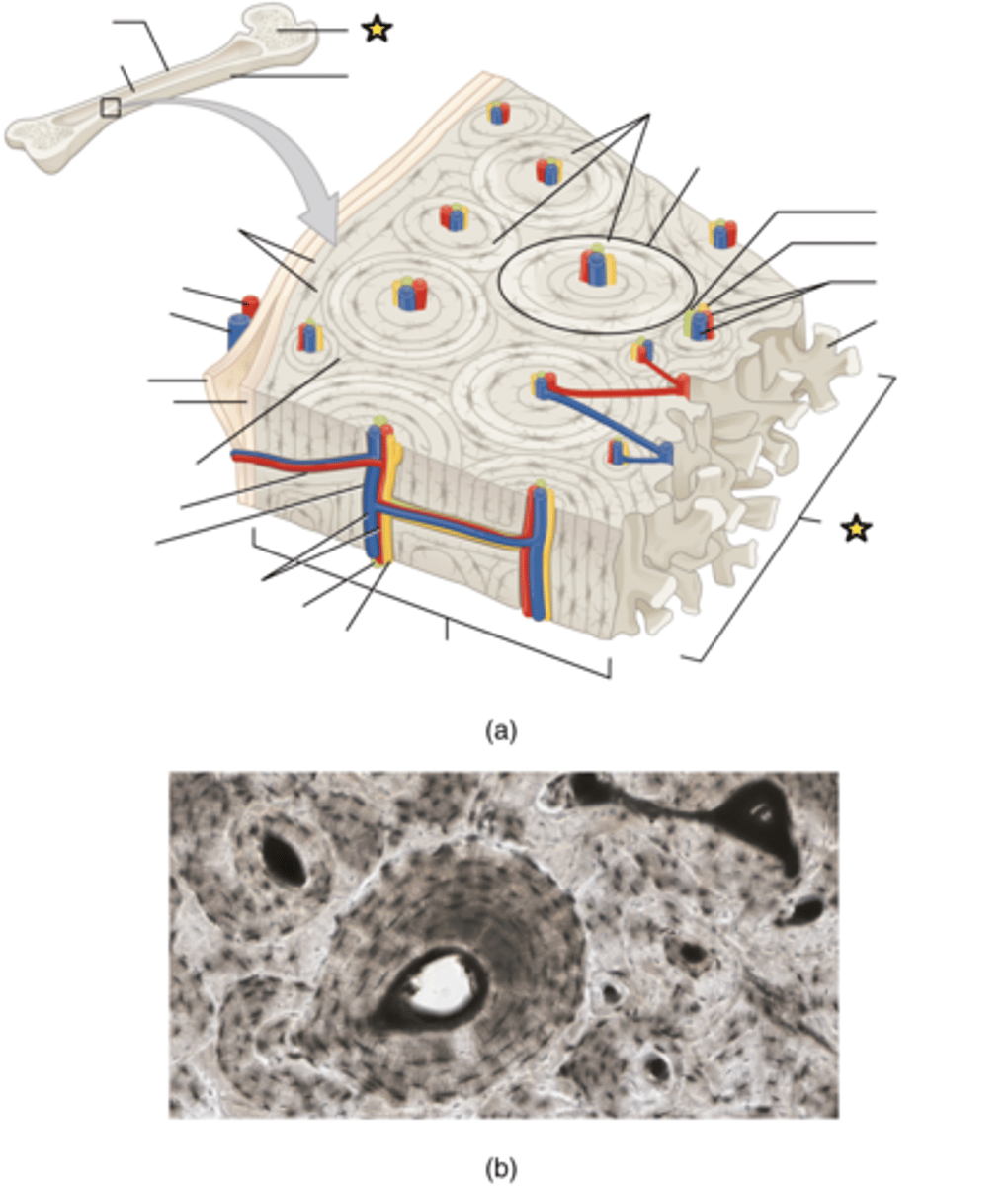
Spongy bone
Layer of bone tissue having many small spaces and found just inside the layer of compact bone
Periosteum
A dense fibrous membrane covering the surface of bones and serving as an attachment for tendons and muscles
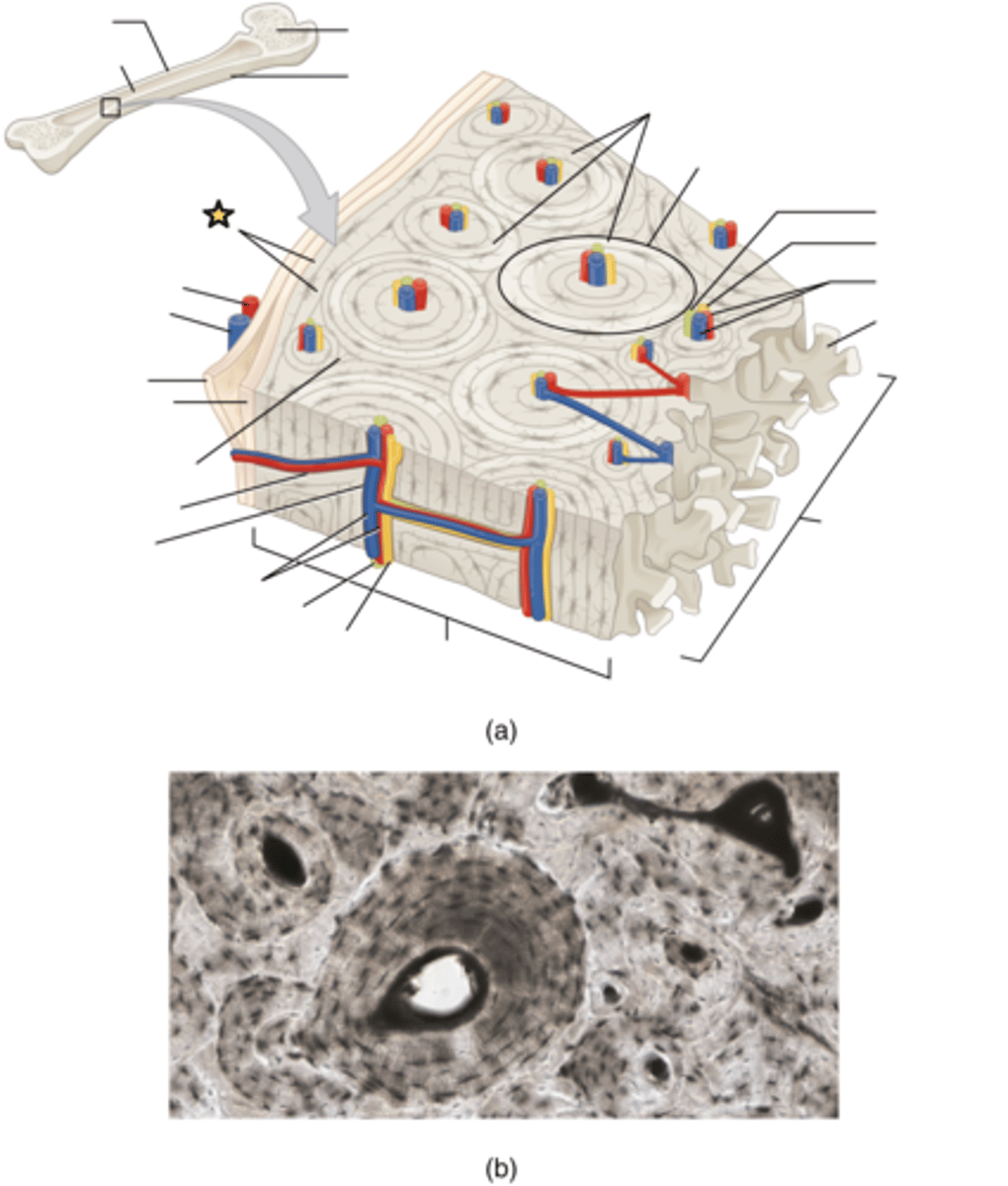
Circumferential lamellae
Located deep to periosteum and superficial to endosteum and extend around entire circumference of the diaphysis and resist twisting of long bone
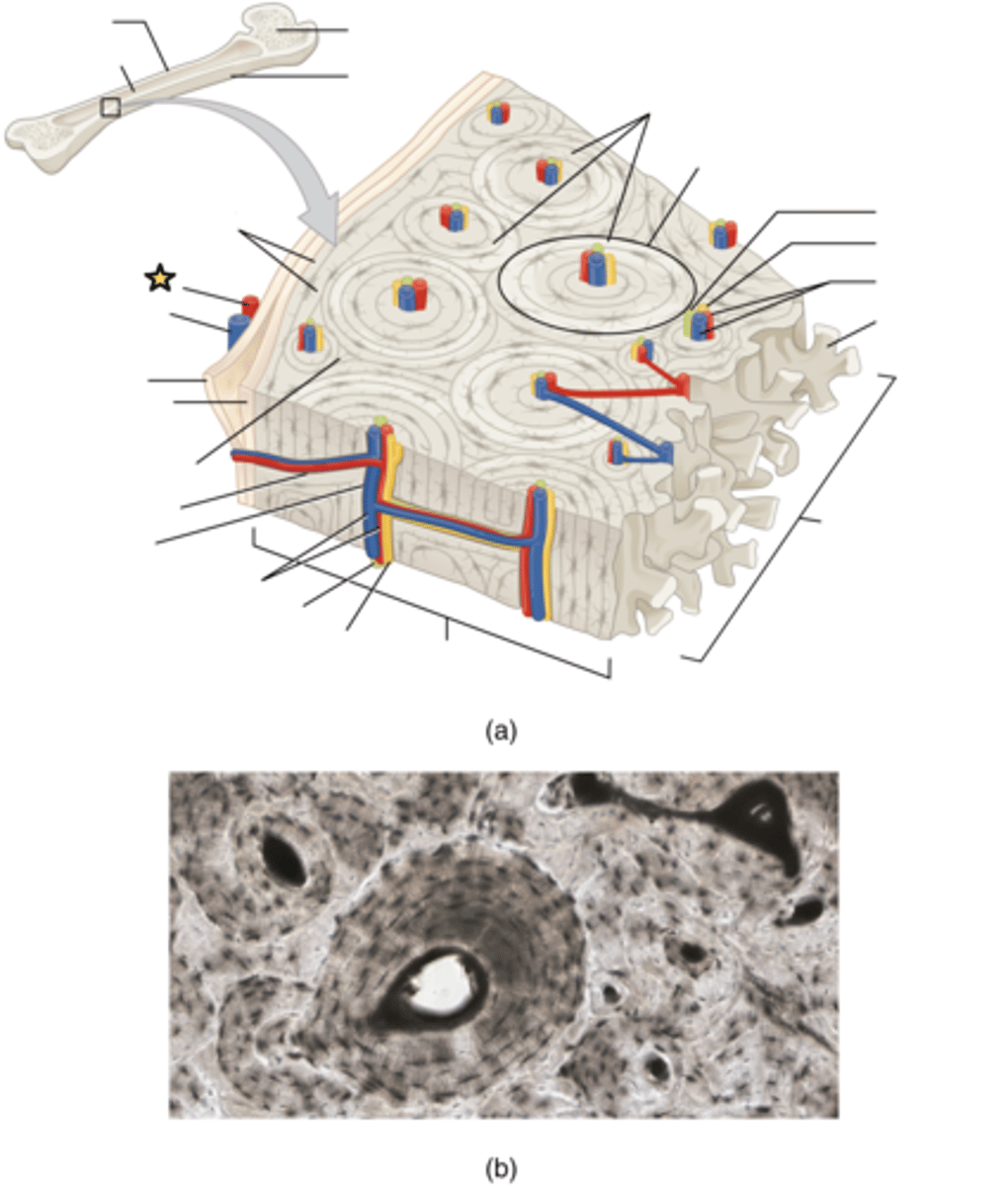
Periosteal artery
Enters the diaphysis of a bone through a perforating (Volkmann's) canal and delivers blood to the periosteum and outer part of compact bone tissue
Periosteal vein
Found in the periosteum; carries blood away from periosteum and outer layers of the bone
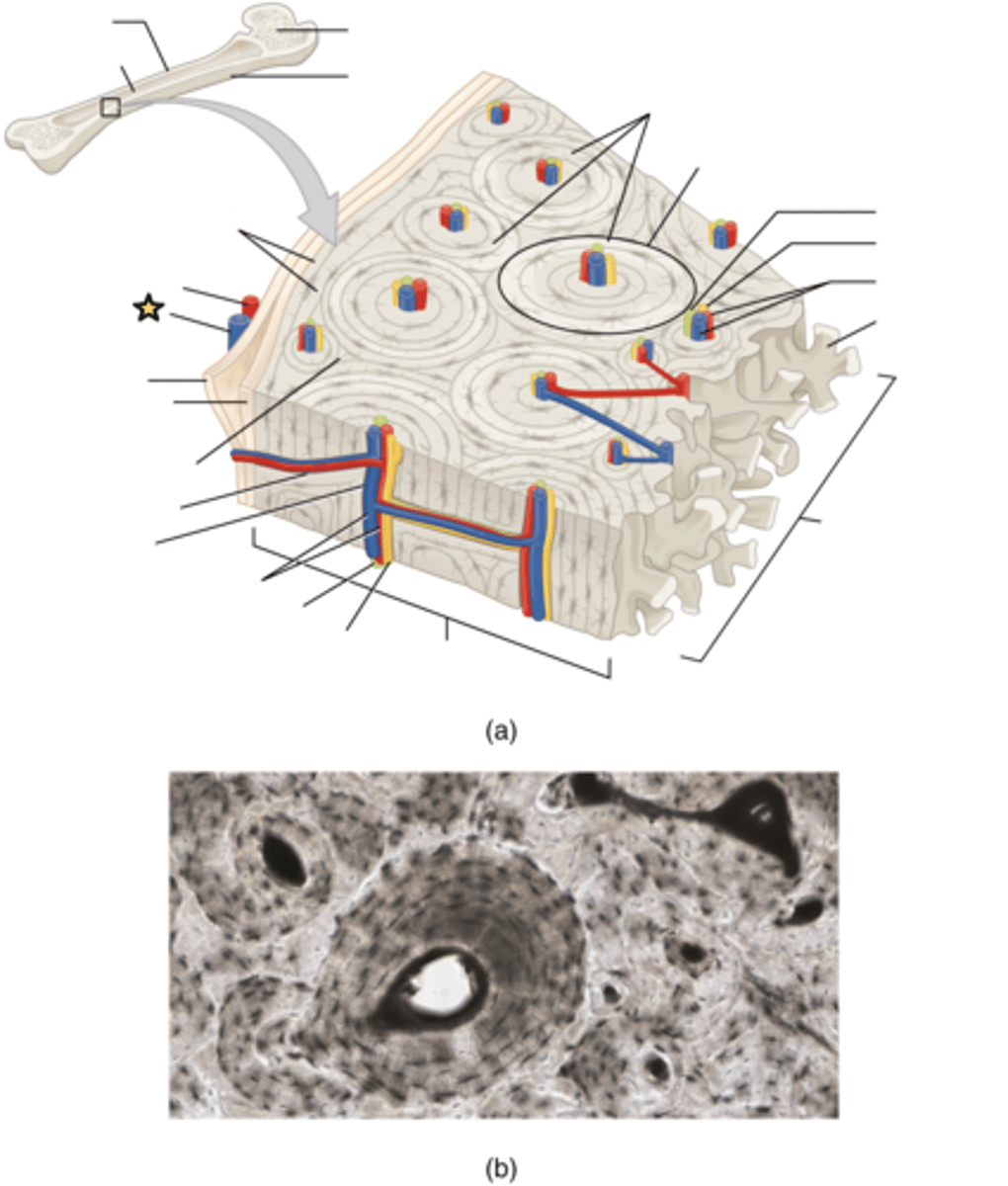
Outer fibrous layer of periosteum
Dense irregular connective tissue
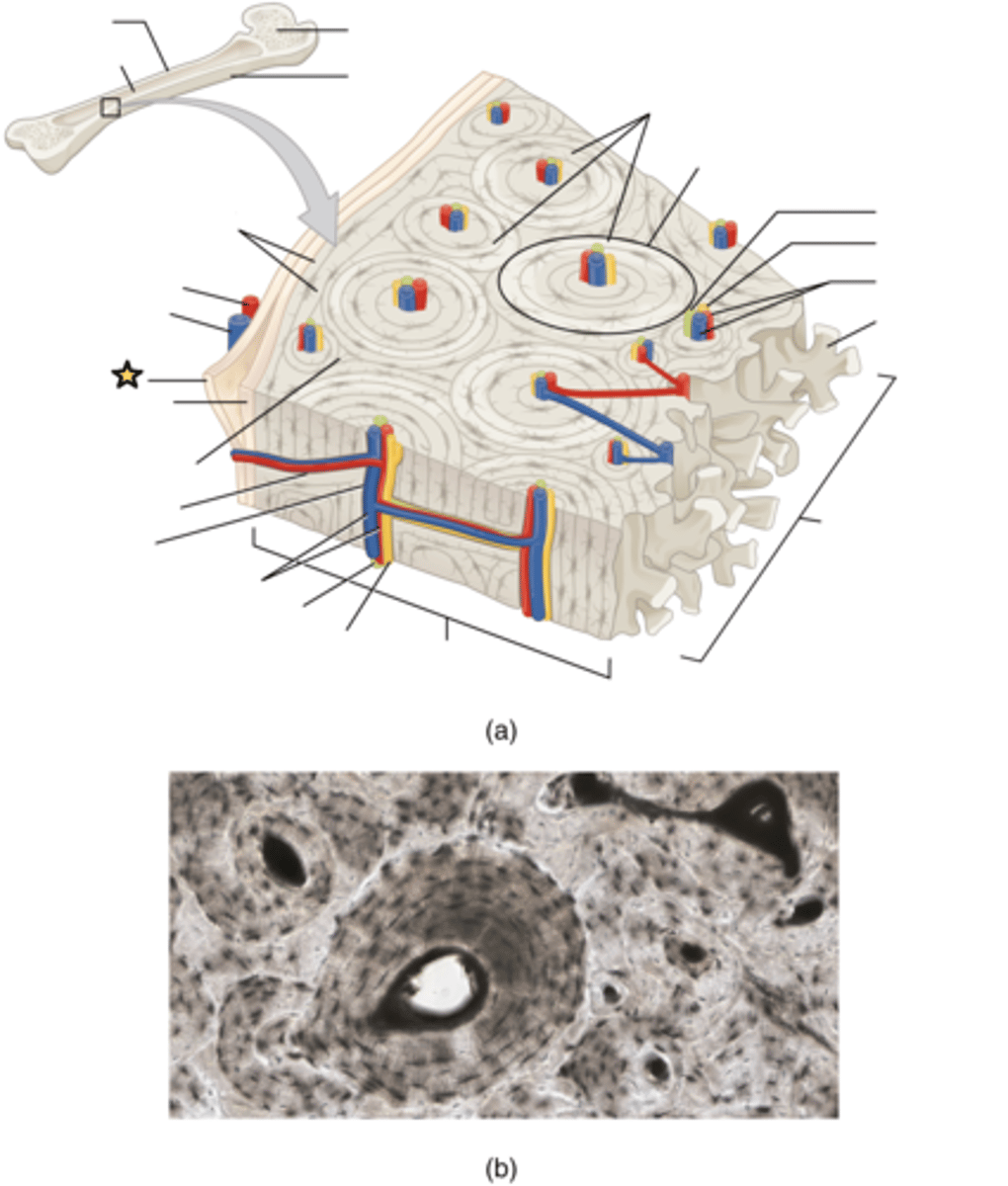
Inner osteogenic layer of periosteum
Composed of osteoblasts and osteoclasts
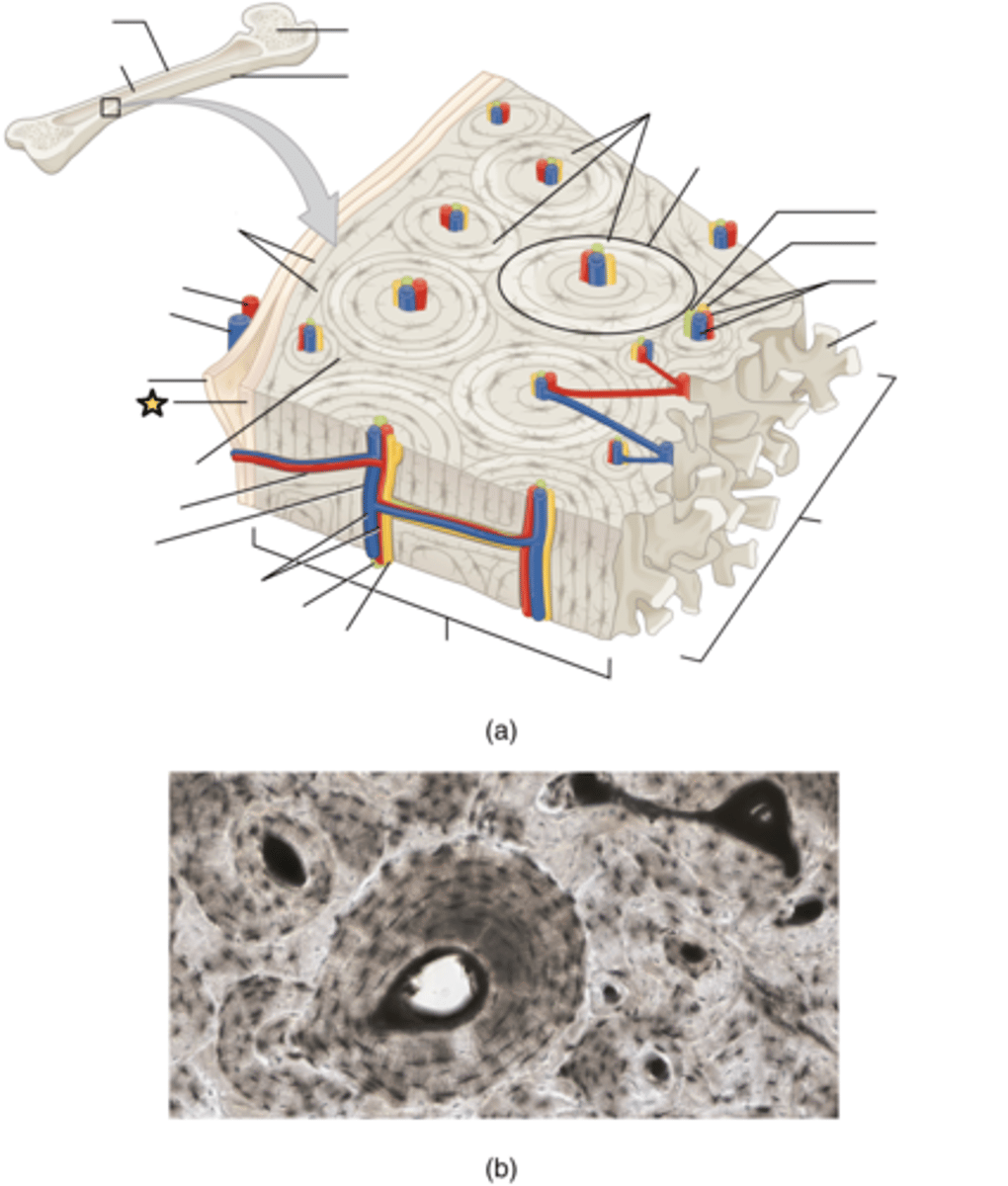
Interstitial lamellae
Fill in the spaces between osteons in compact bone, remnants of osteons whose matrix components have been almost completely recycled by osteoclasts
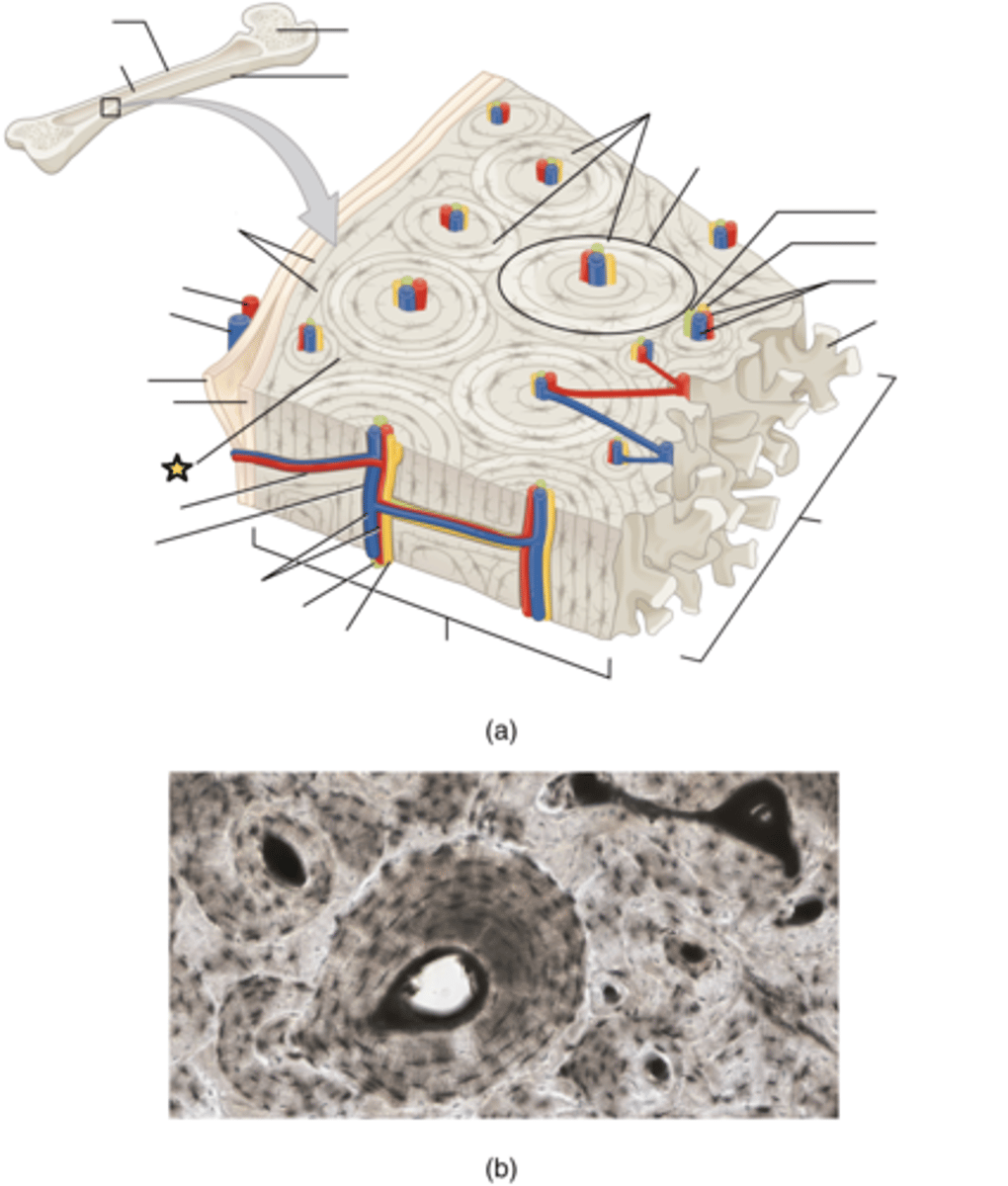
Perforating canal
Canal perpendicular to the central canal, carries blood vessels and nerves
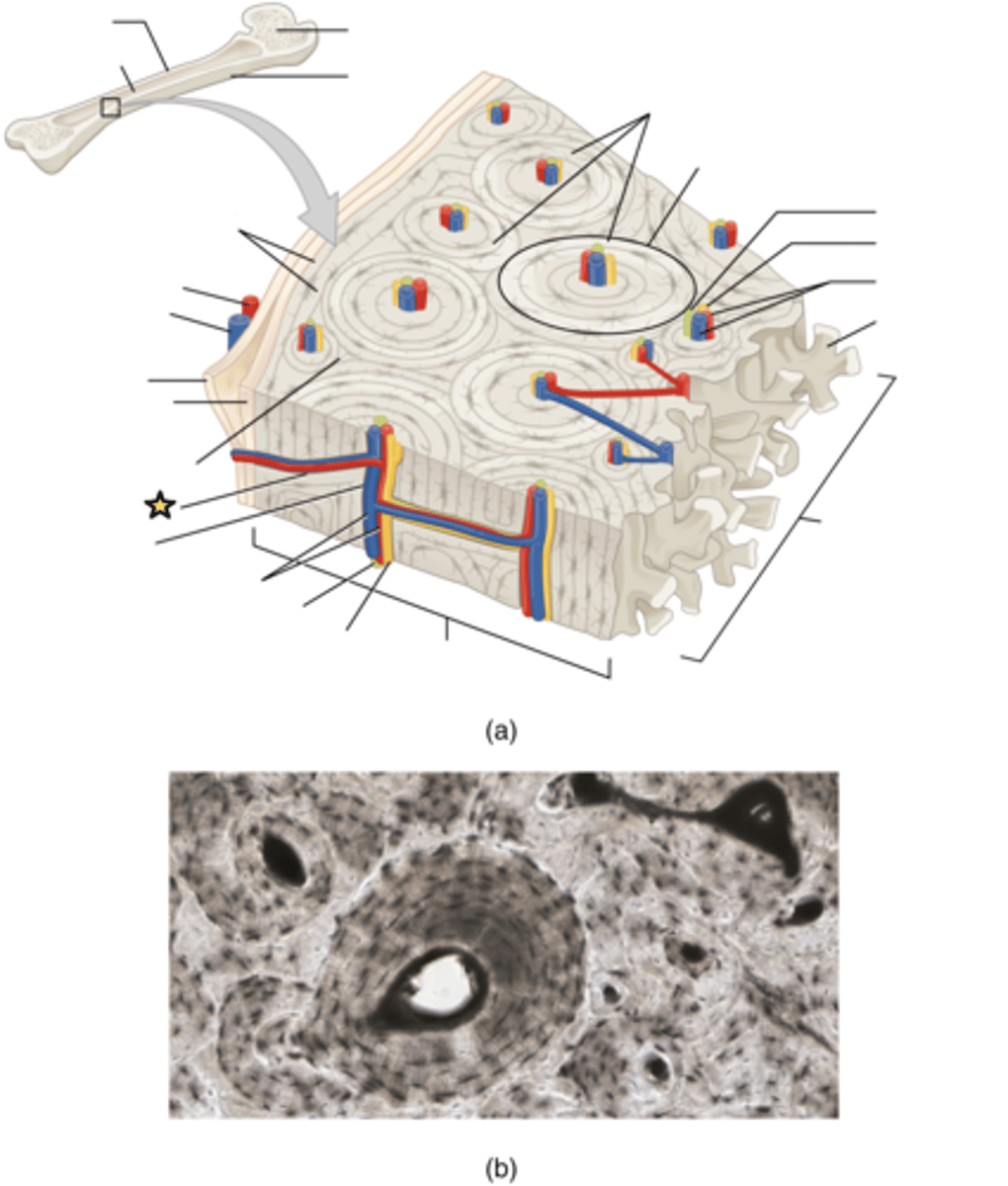
Central canal
Contains blood vessels and nerves (haversian canal)
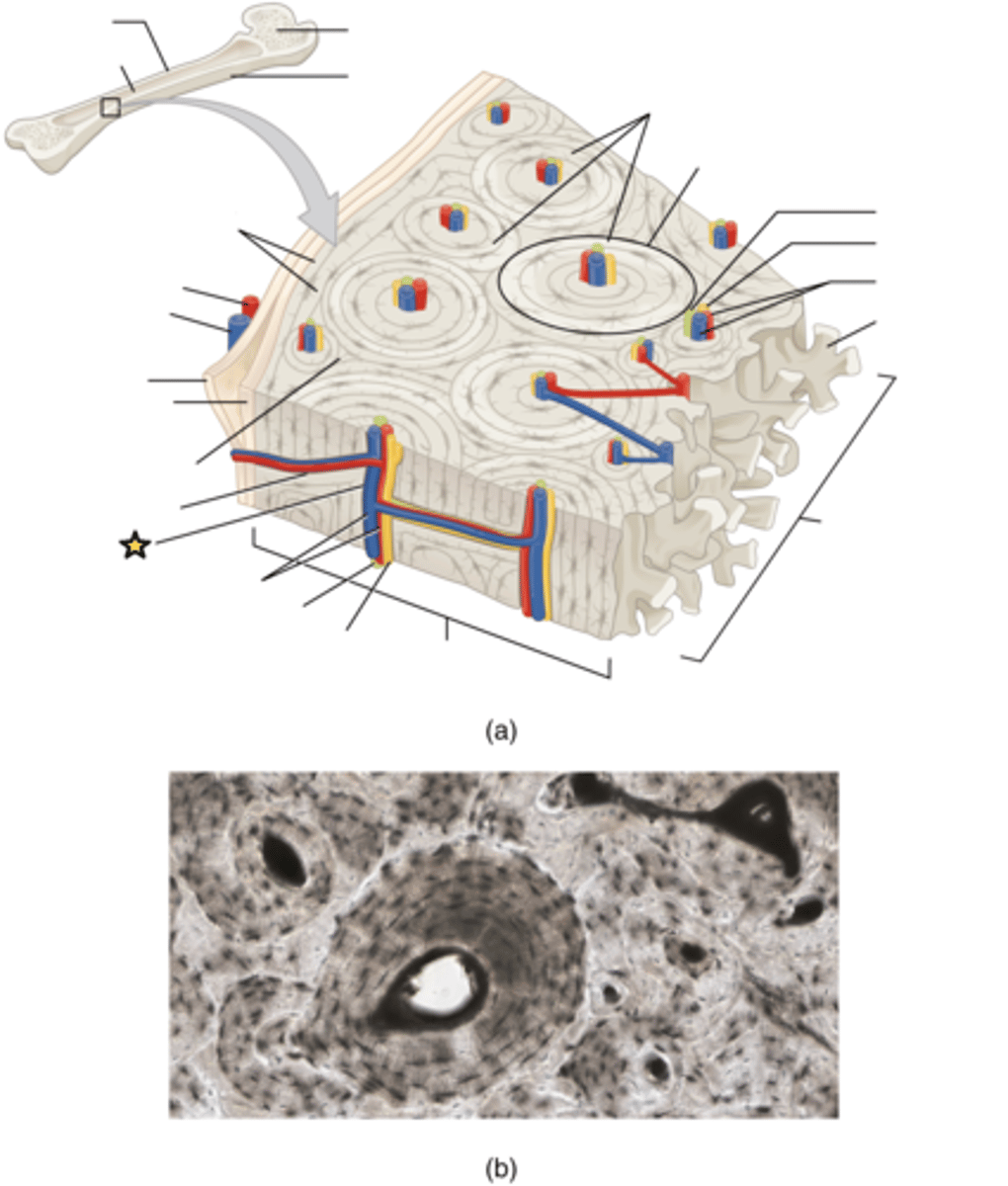
Blood vessels
Tubelike structures that carry blood to and from the bone
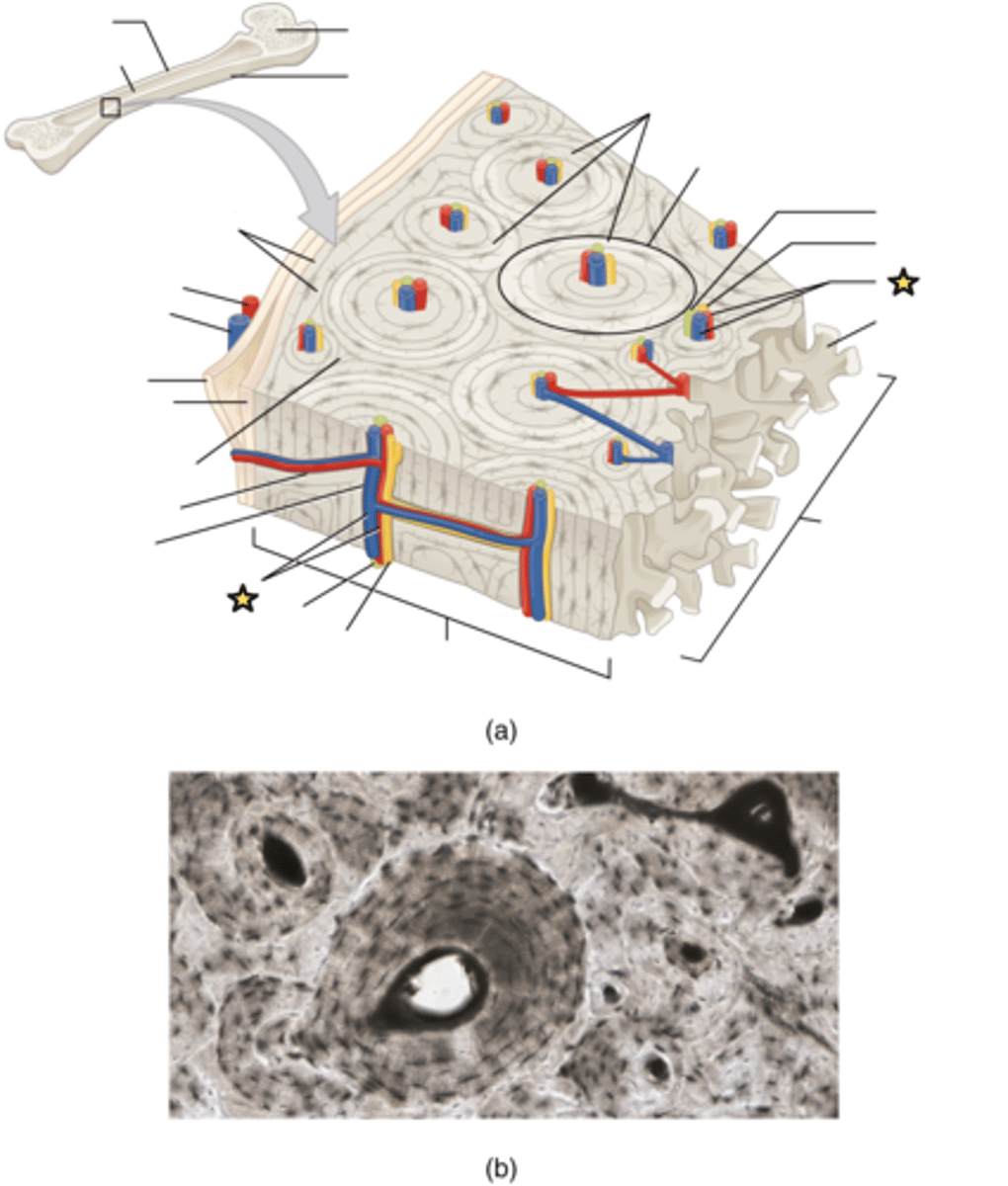
Lymphatic vessel
A vascular duct that carries lymph which is eventually added to the venous blood circulation
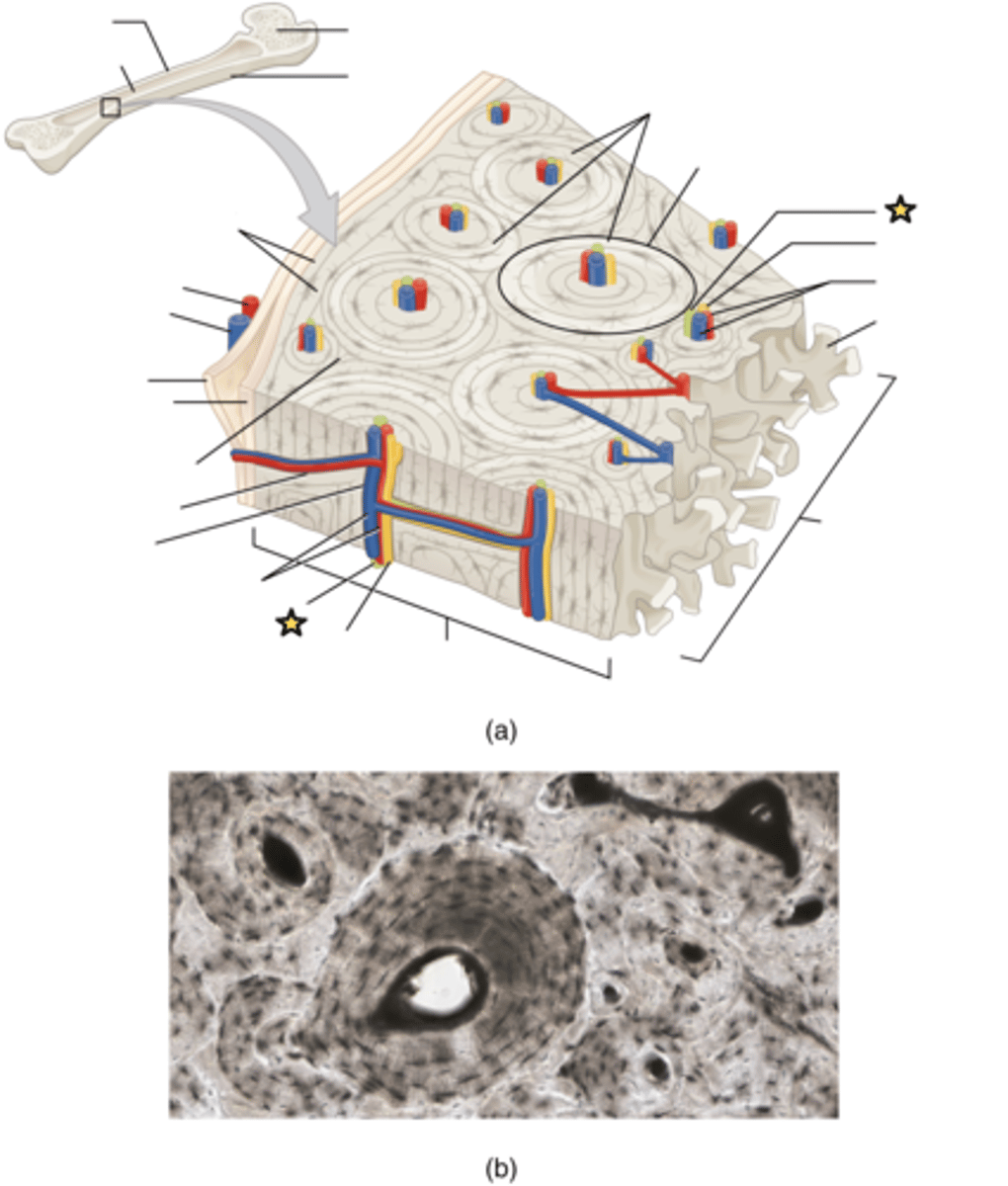
Nerve
A bundle of nerve fibers that runs through the bone
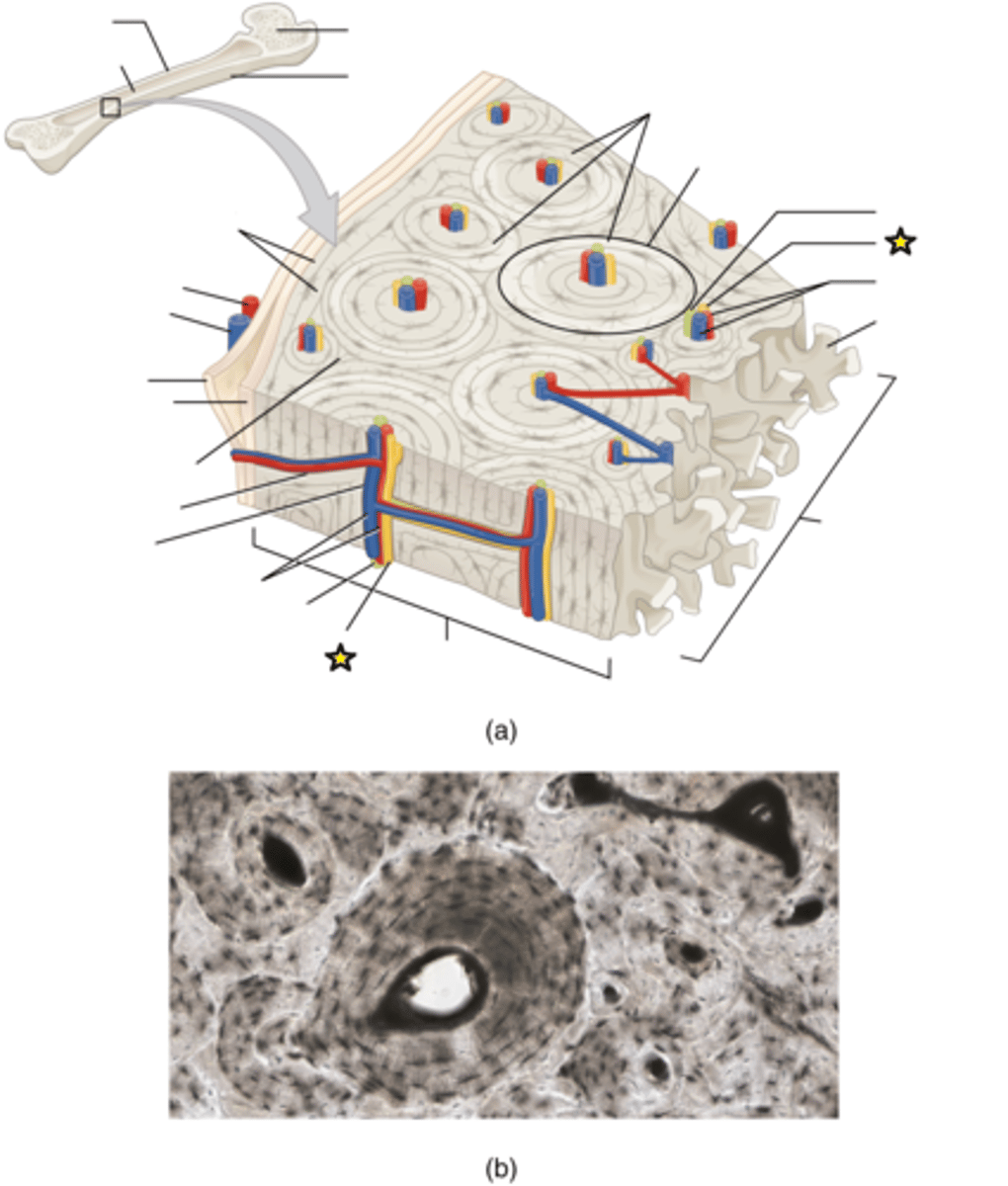
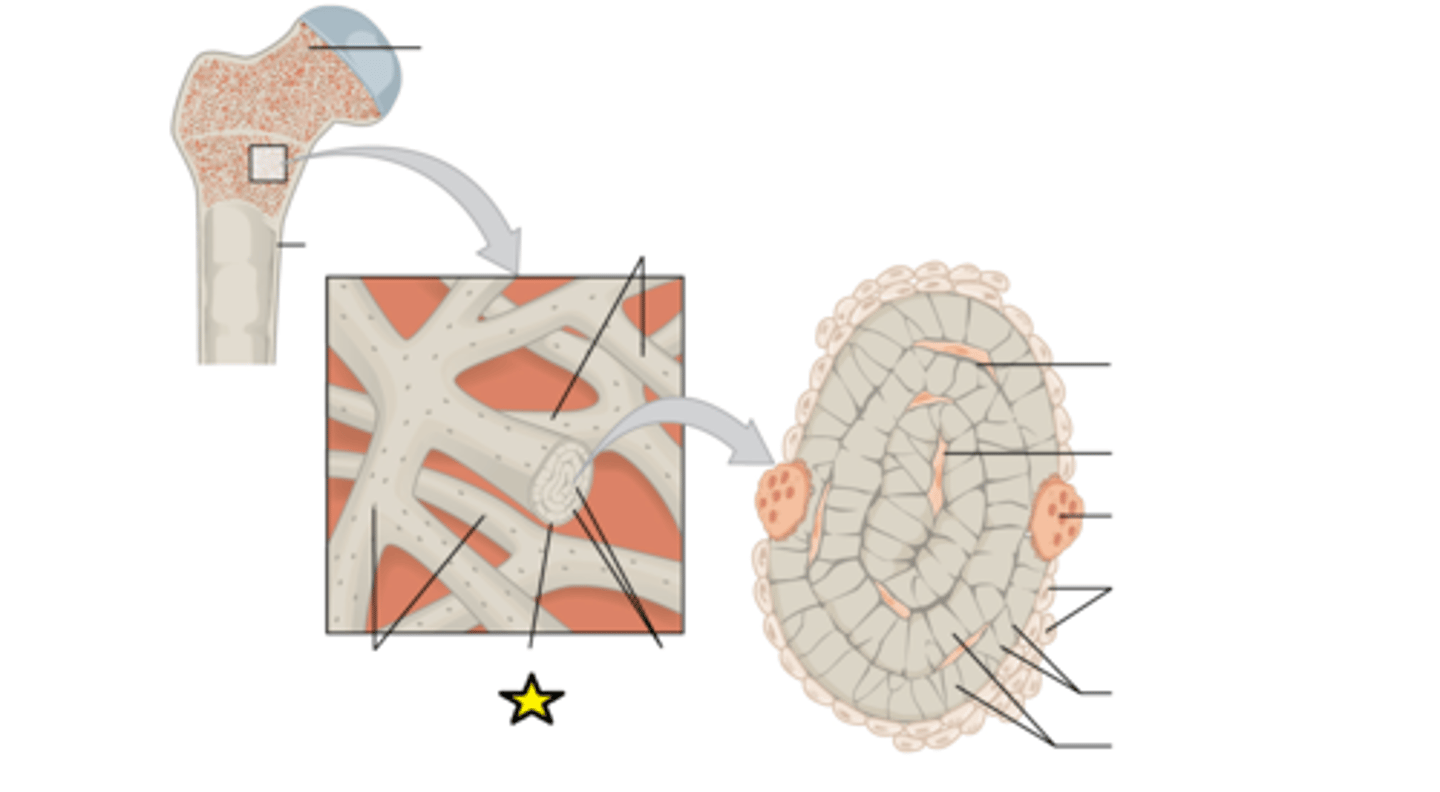
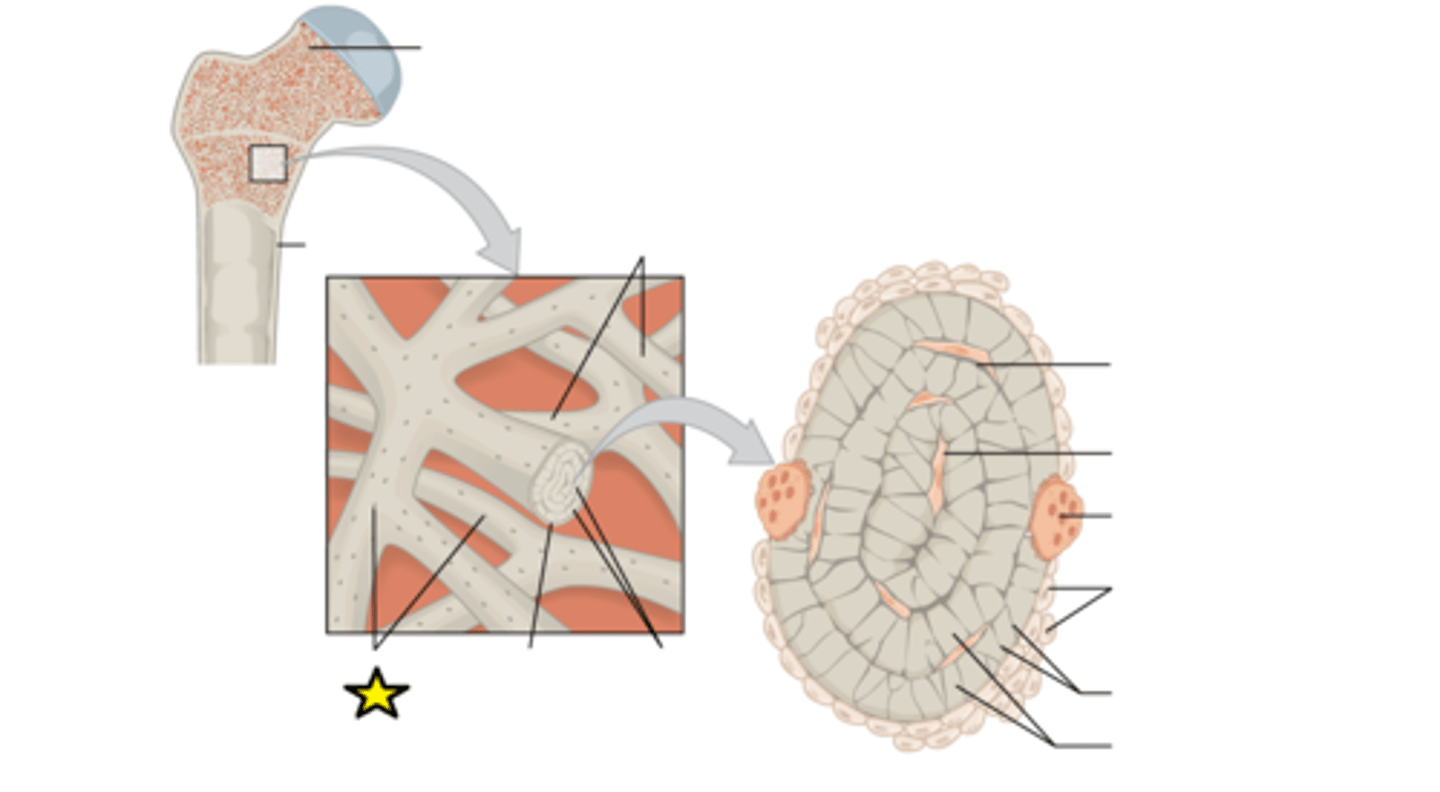
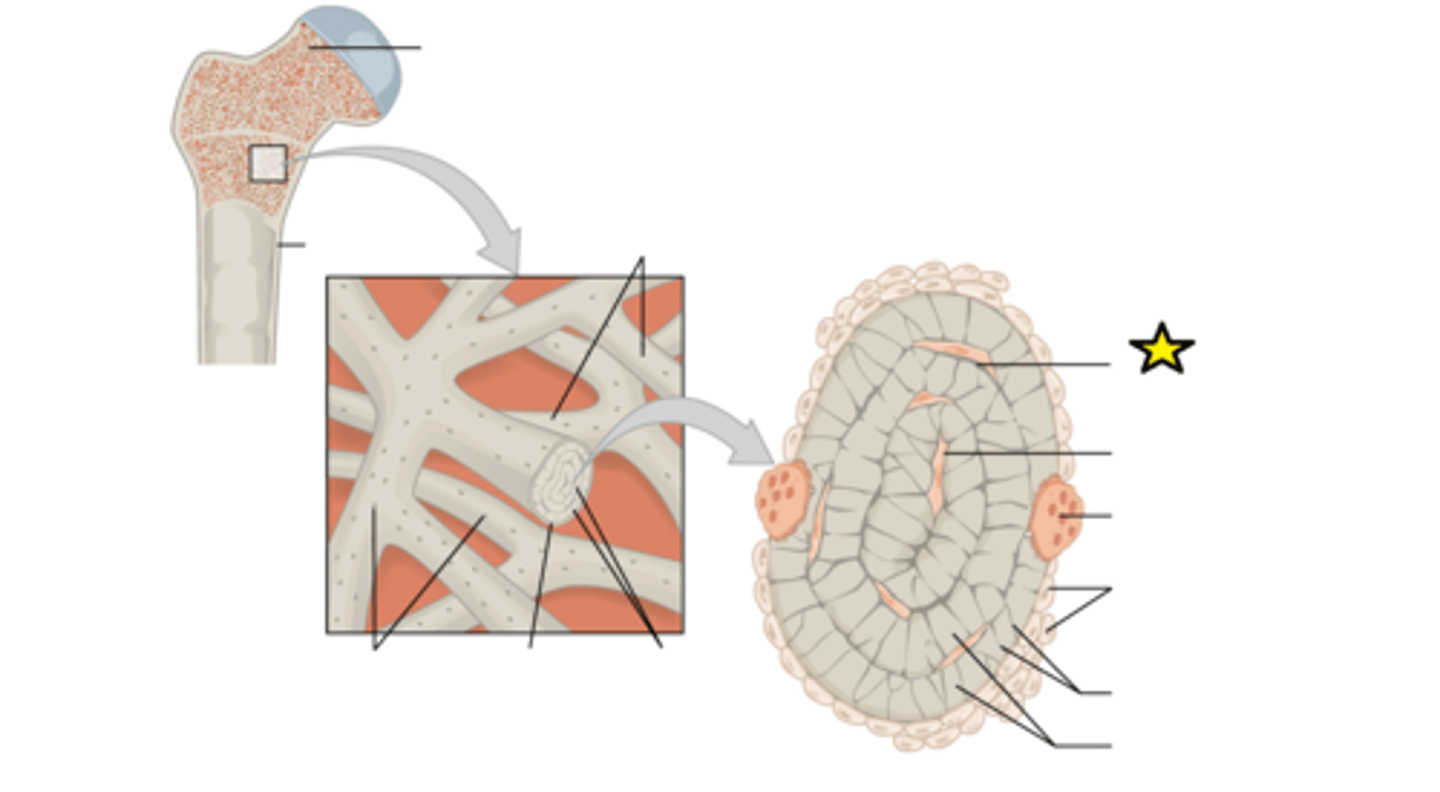
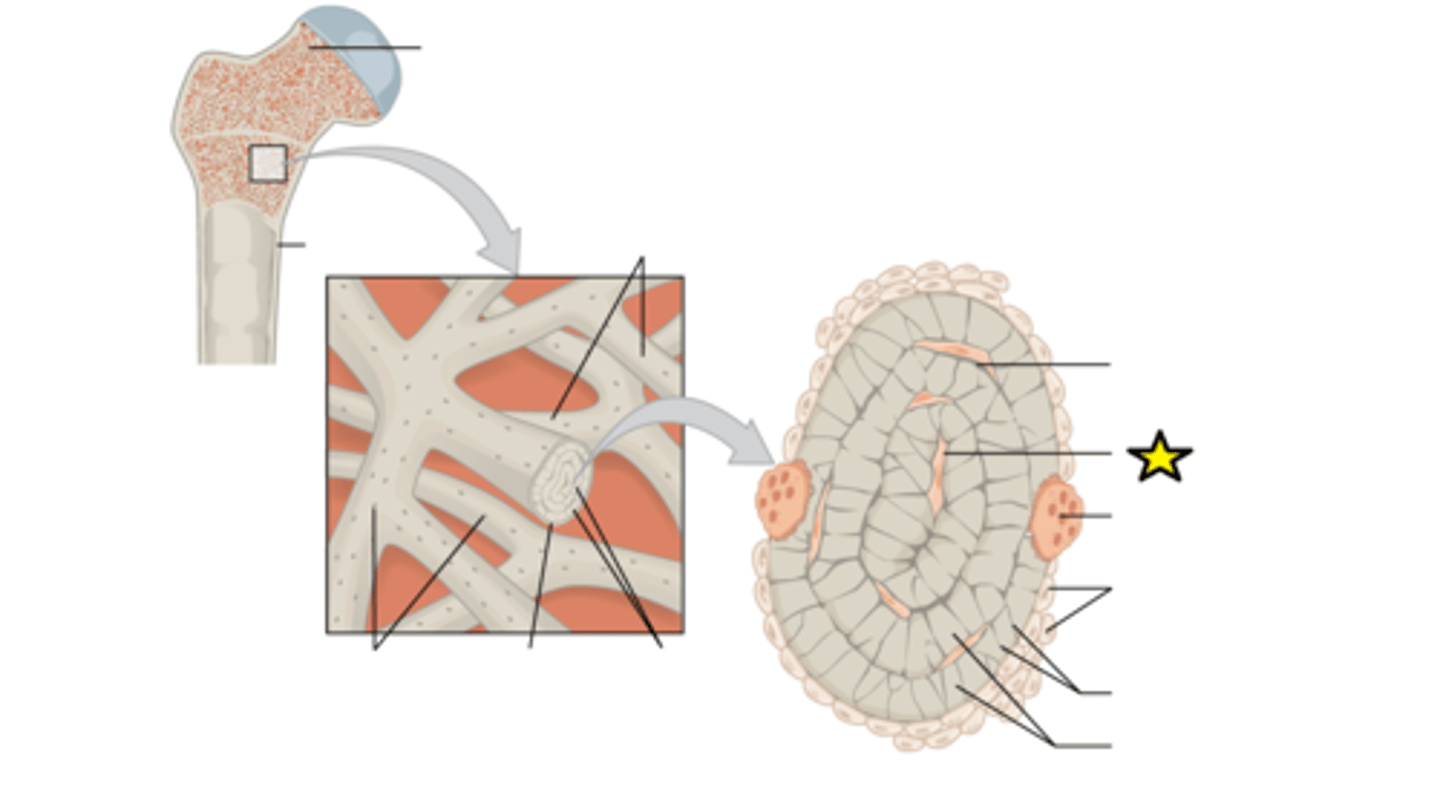
Trabeculae
Supporting bundles of bony fibers in cancellous (spongy) bone
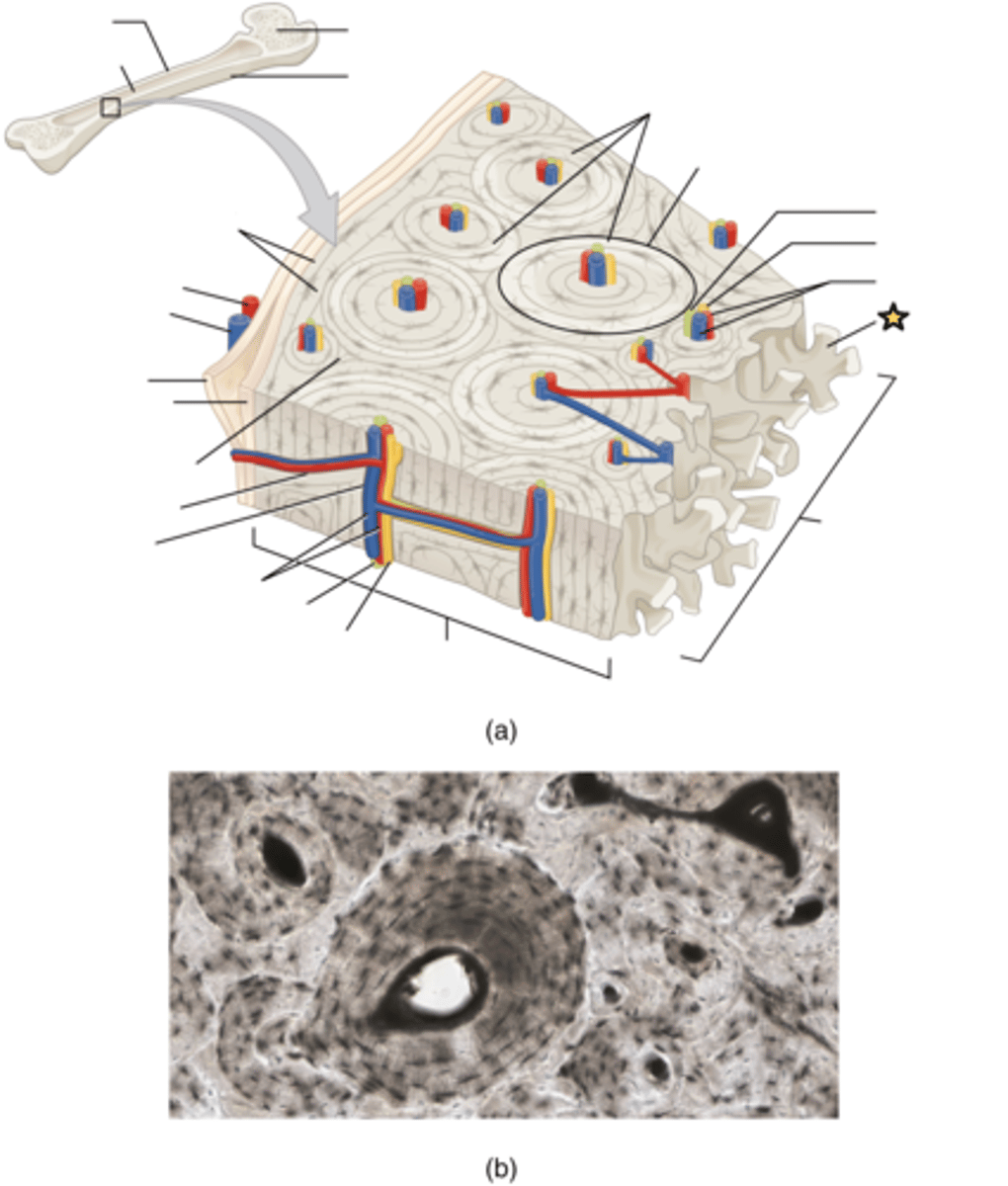
Osteon
Structural unit of compact bone
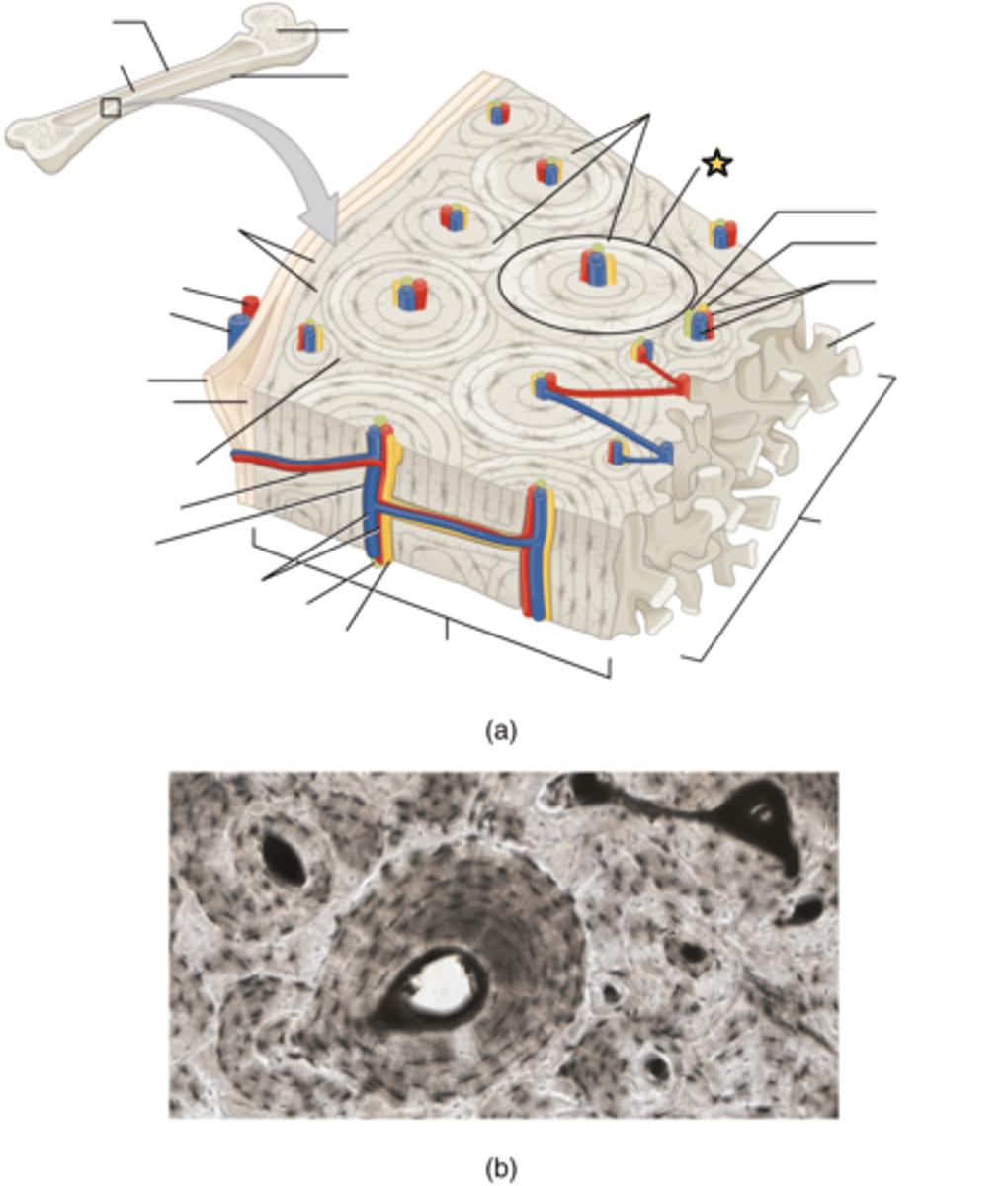
Concentric lamellae
Layers of bony matrix around a central canal
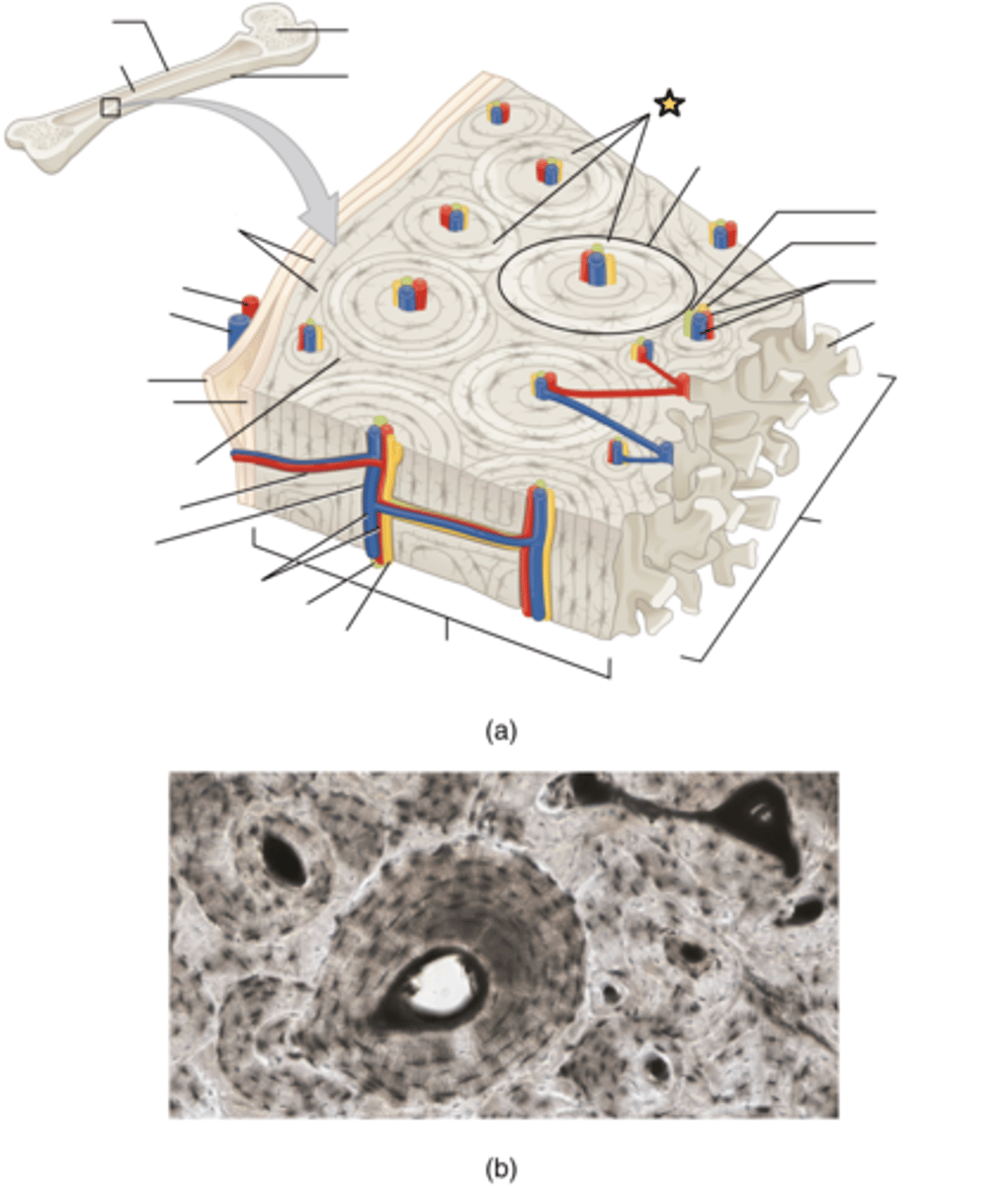
Spongy bone
Layer of bone tissue having many small spaces and found just inside the layer of compact bone
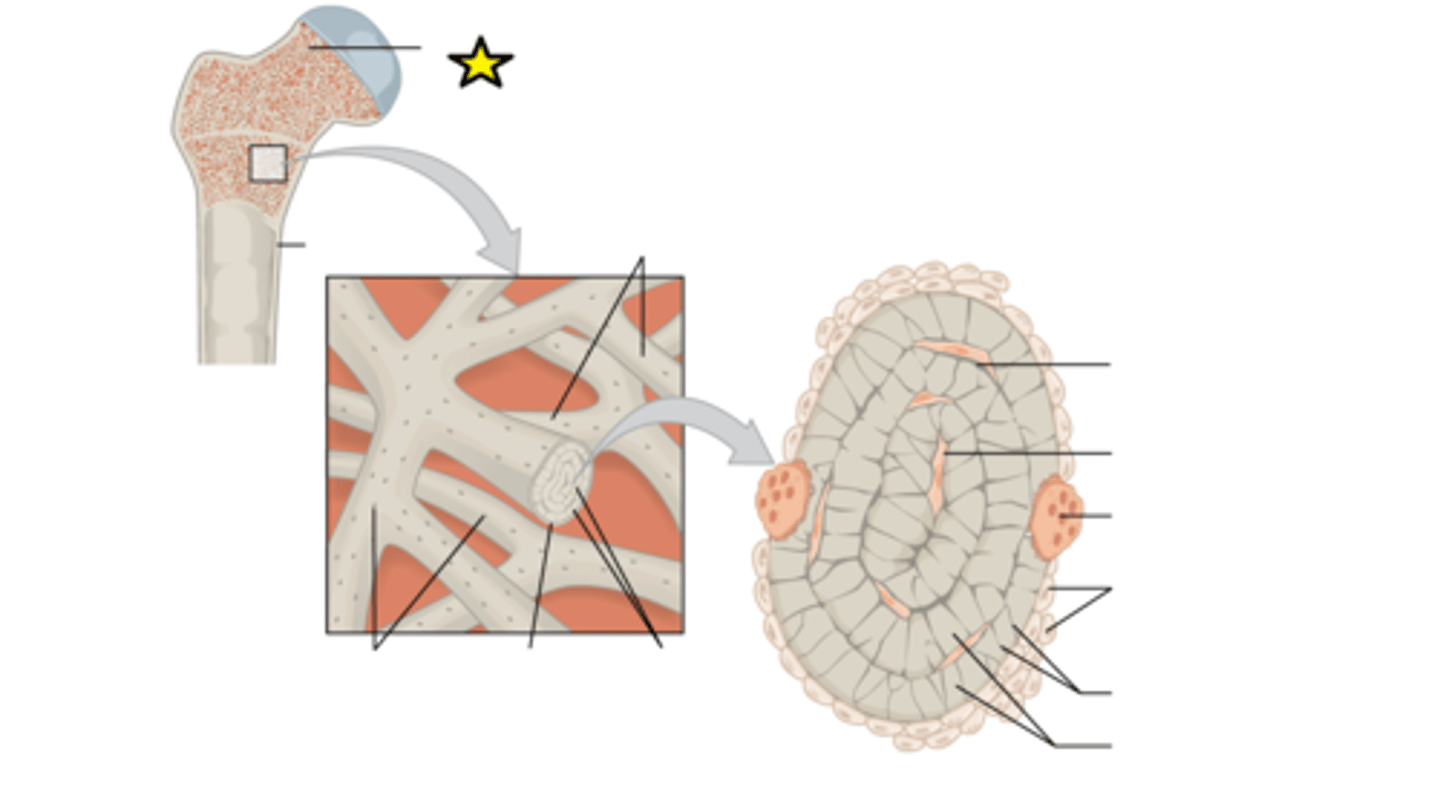
Compact bone
Hard, dense bone tissue that is beneath the outer membrane of a bone
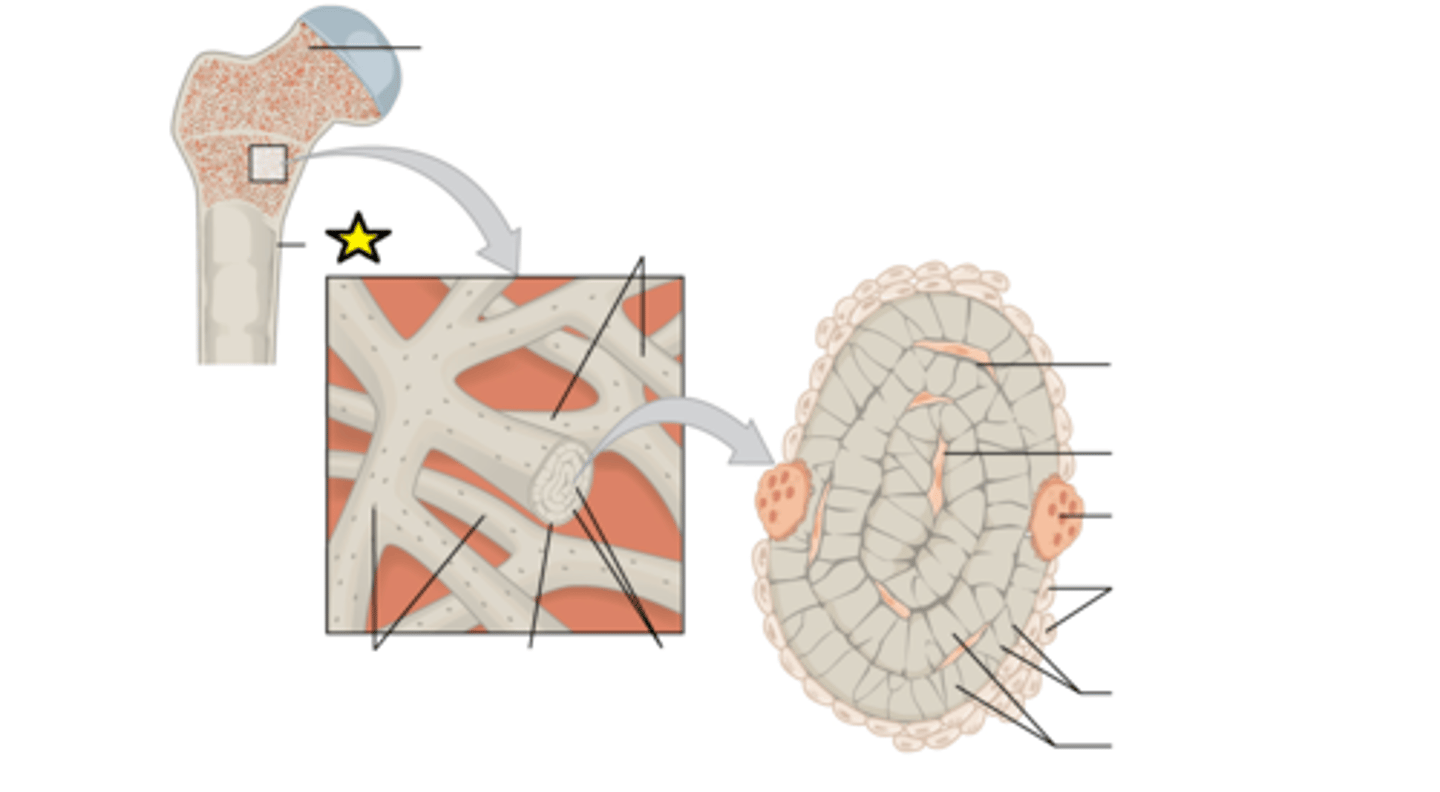
Trabeculae
Supporting bundles of bony fibers in cancellous (spongy) bone
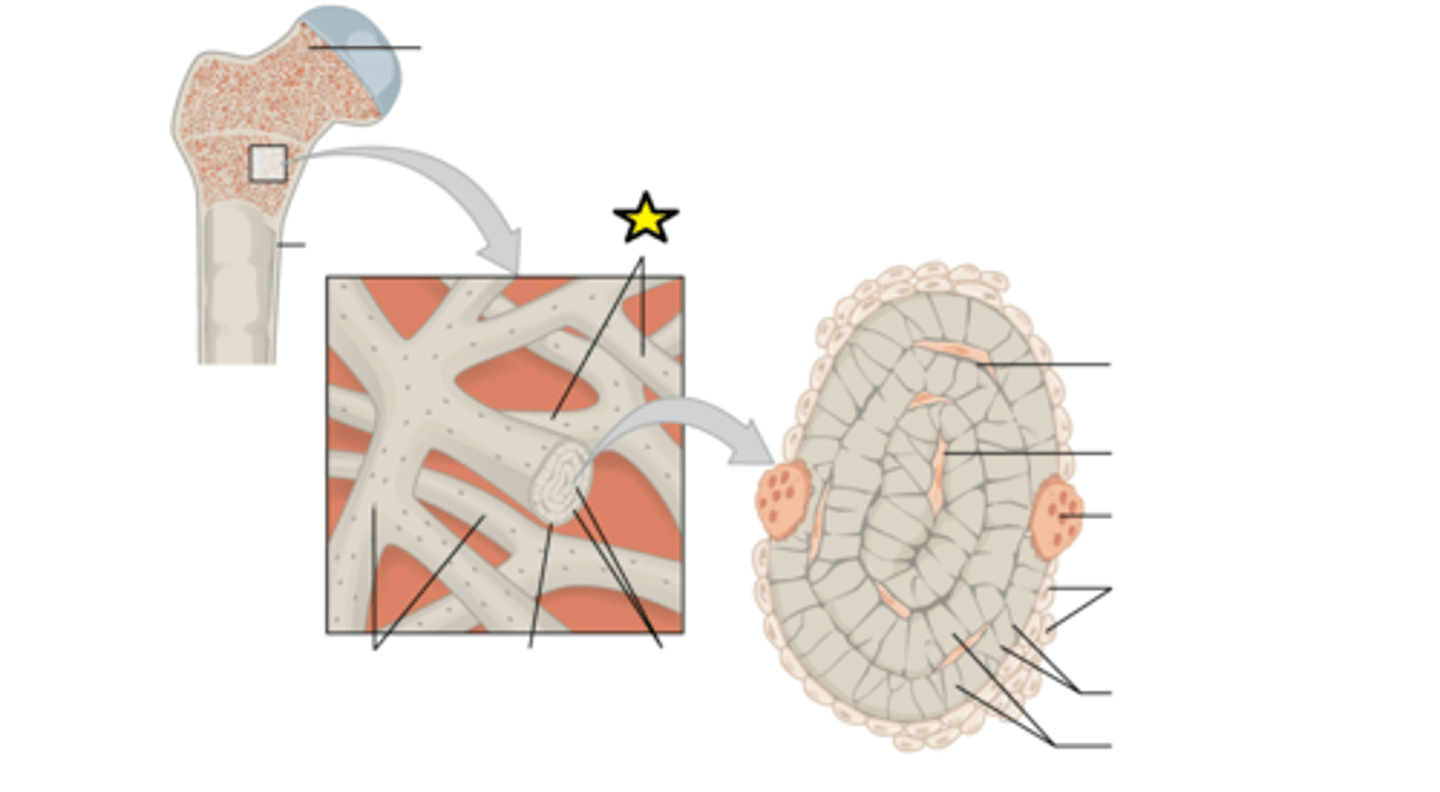
Lamellae
Concentric rings made up of groups of hollow tubes of bone matrix
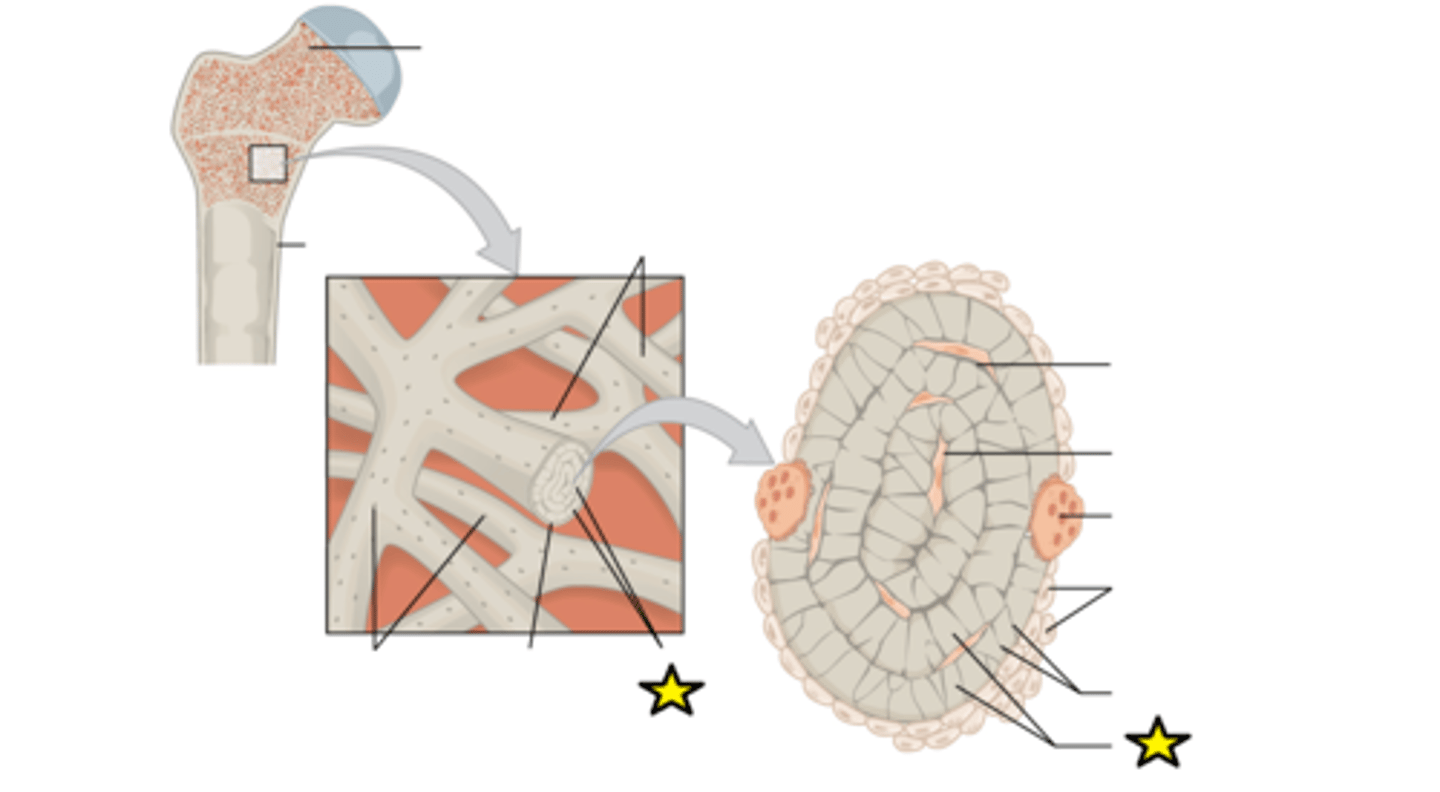
Endosteum
Membranous lining of the hollow cavity of the bone
Canaliculi openings on surface
Openings to canaliculi
Lacunae
Small cavities in bone that contain osteocytes
Osteocyte
Mature bone cell
Osteoclast
Bone-destroying (cleaning) cells
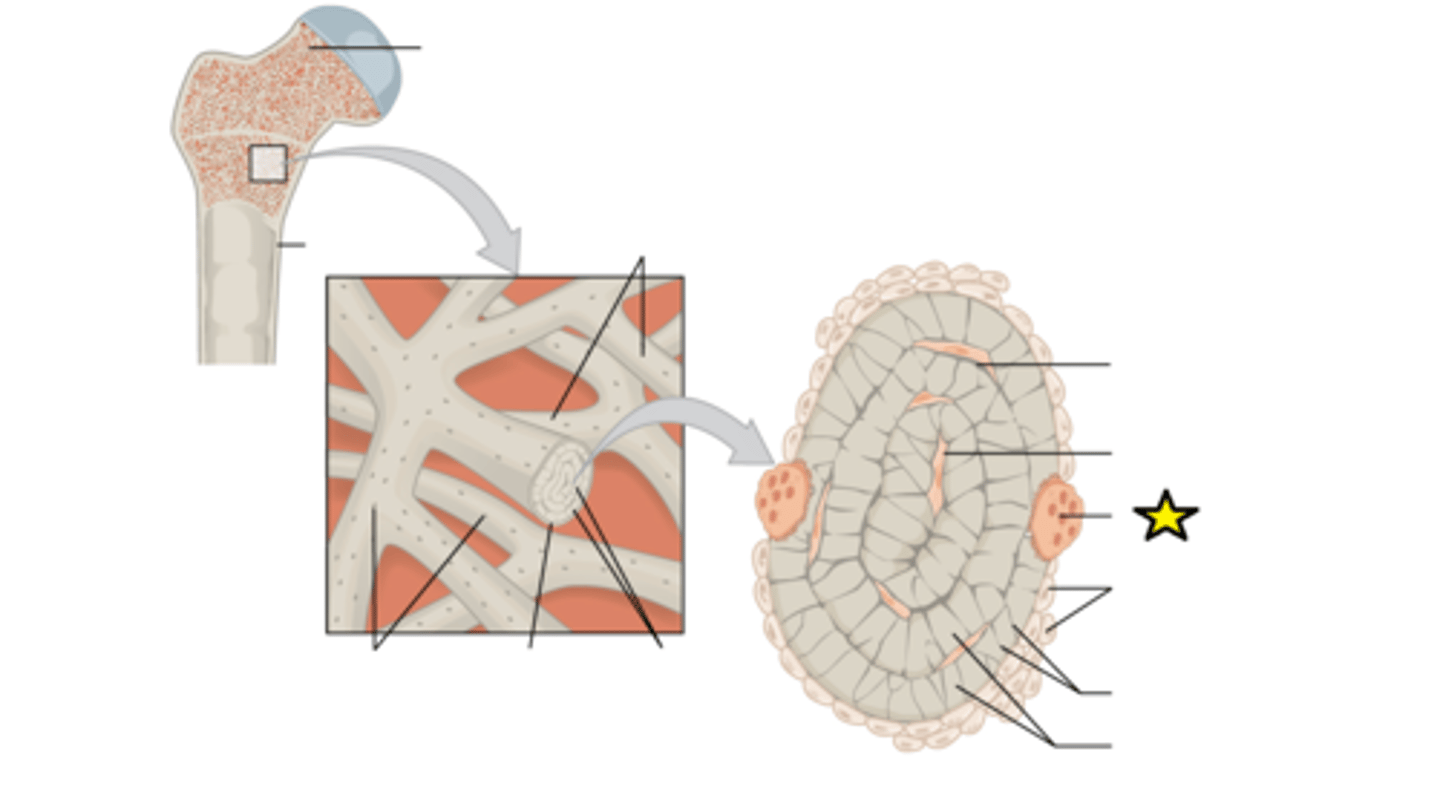
Canaliculi
Hairlike canals that connect lacunae to each other and the central canal
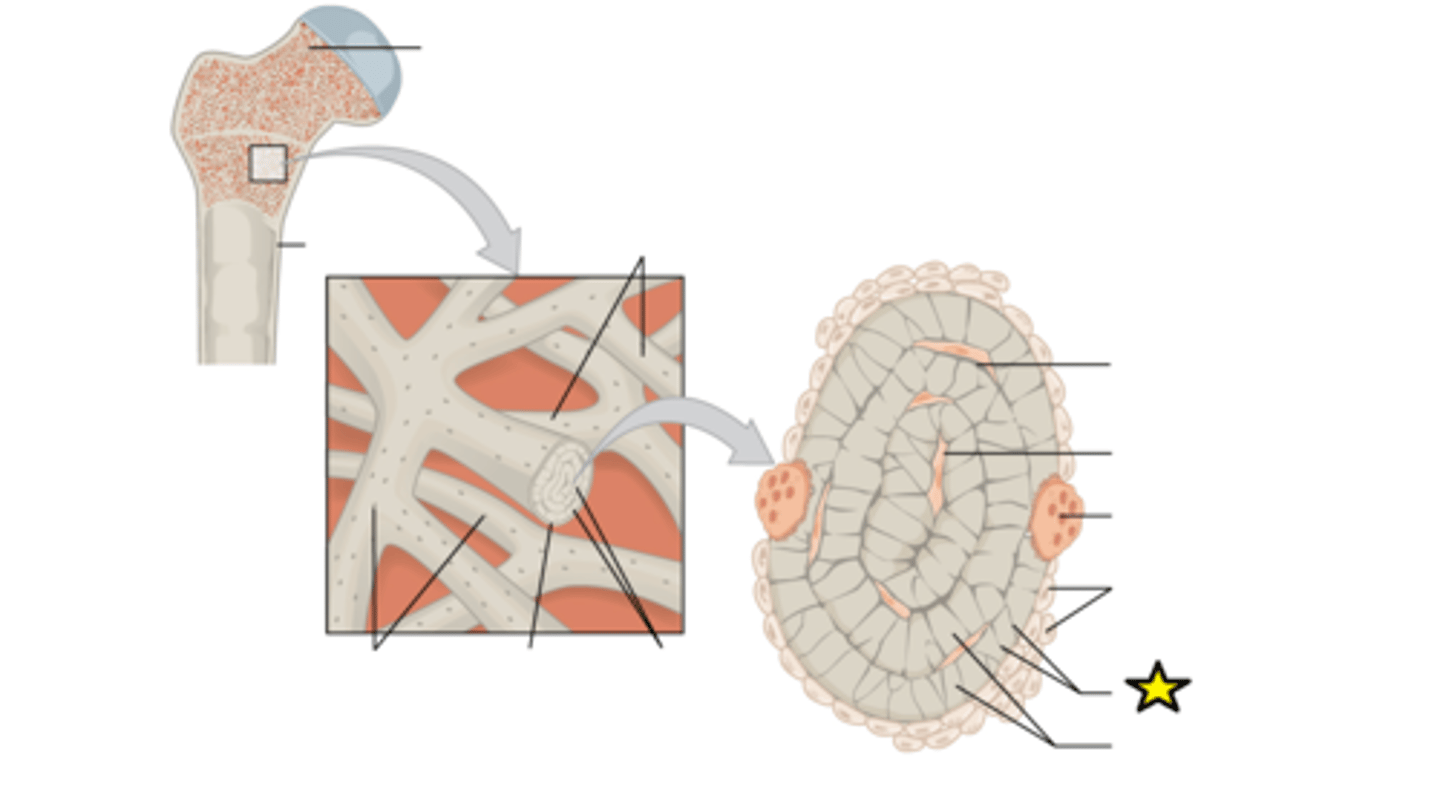
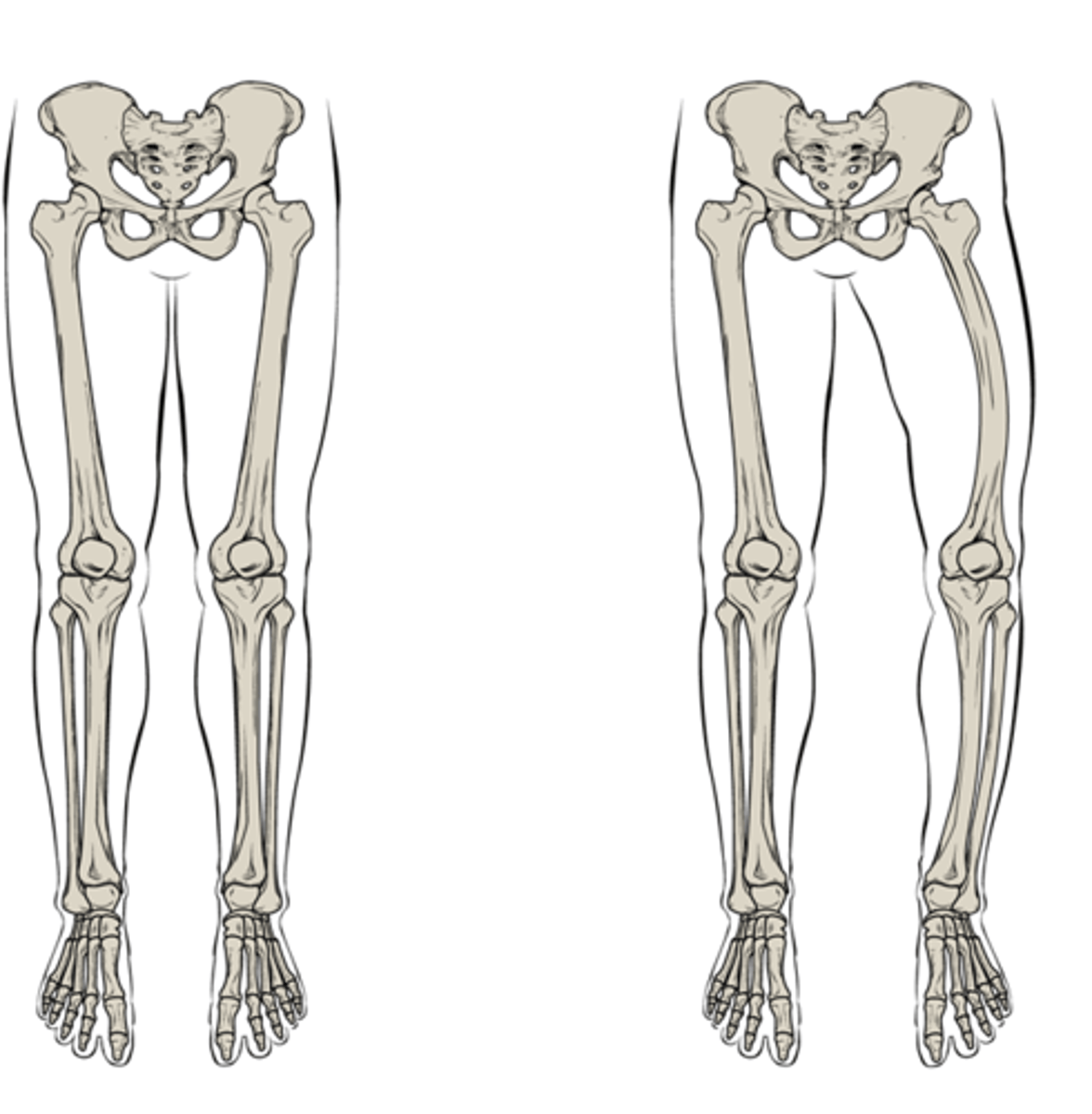
Paget's disease
A disease of unknown origin that is characterized by extensive breakdown of bone tissue followed by abnormal bone formation
Intramembranous ossification
Process by which bone forms directly from mesenchymal tissue
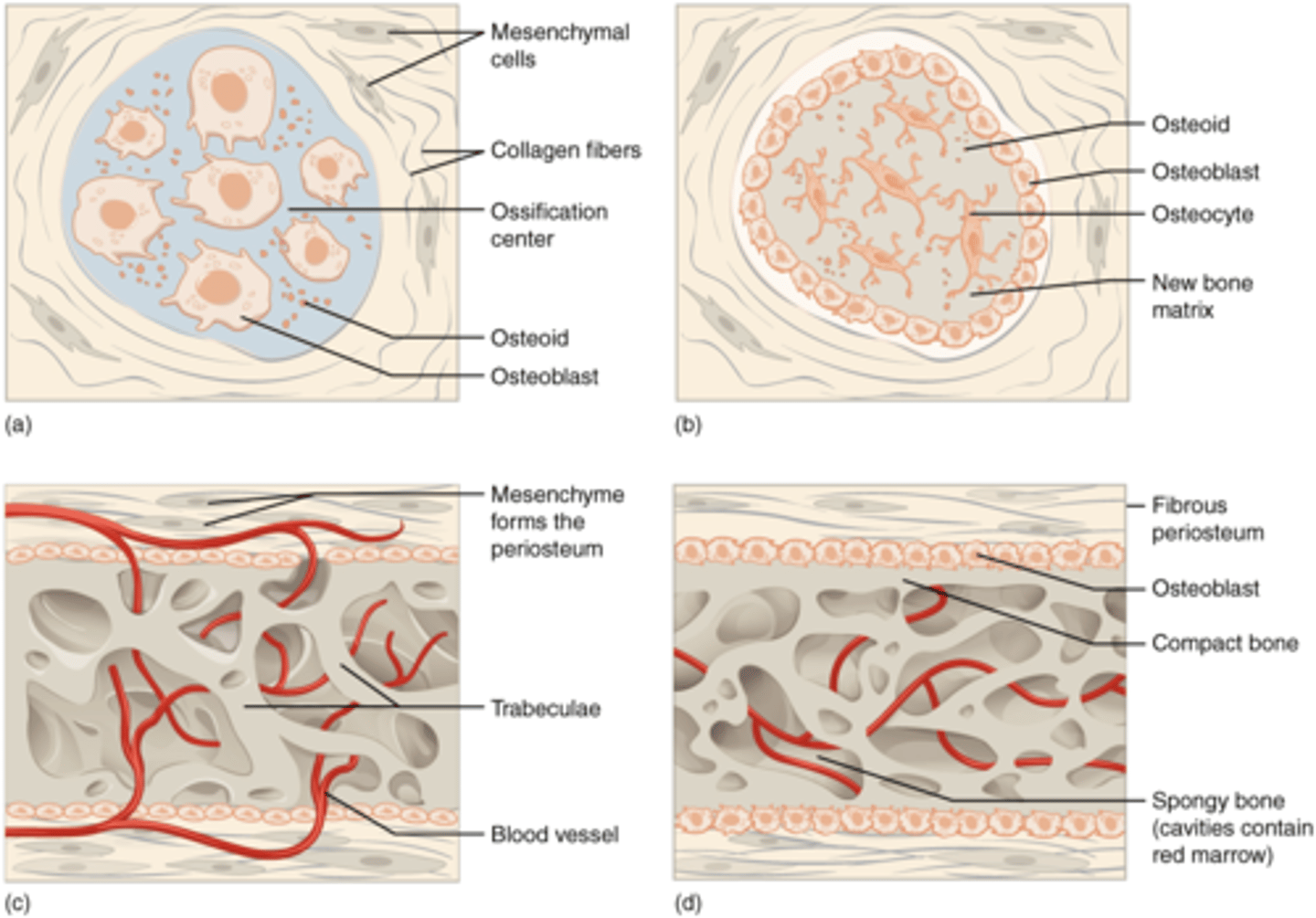
Endochondral ossification
Process in which bone forms by replacing hyaline cartilage
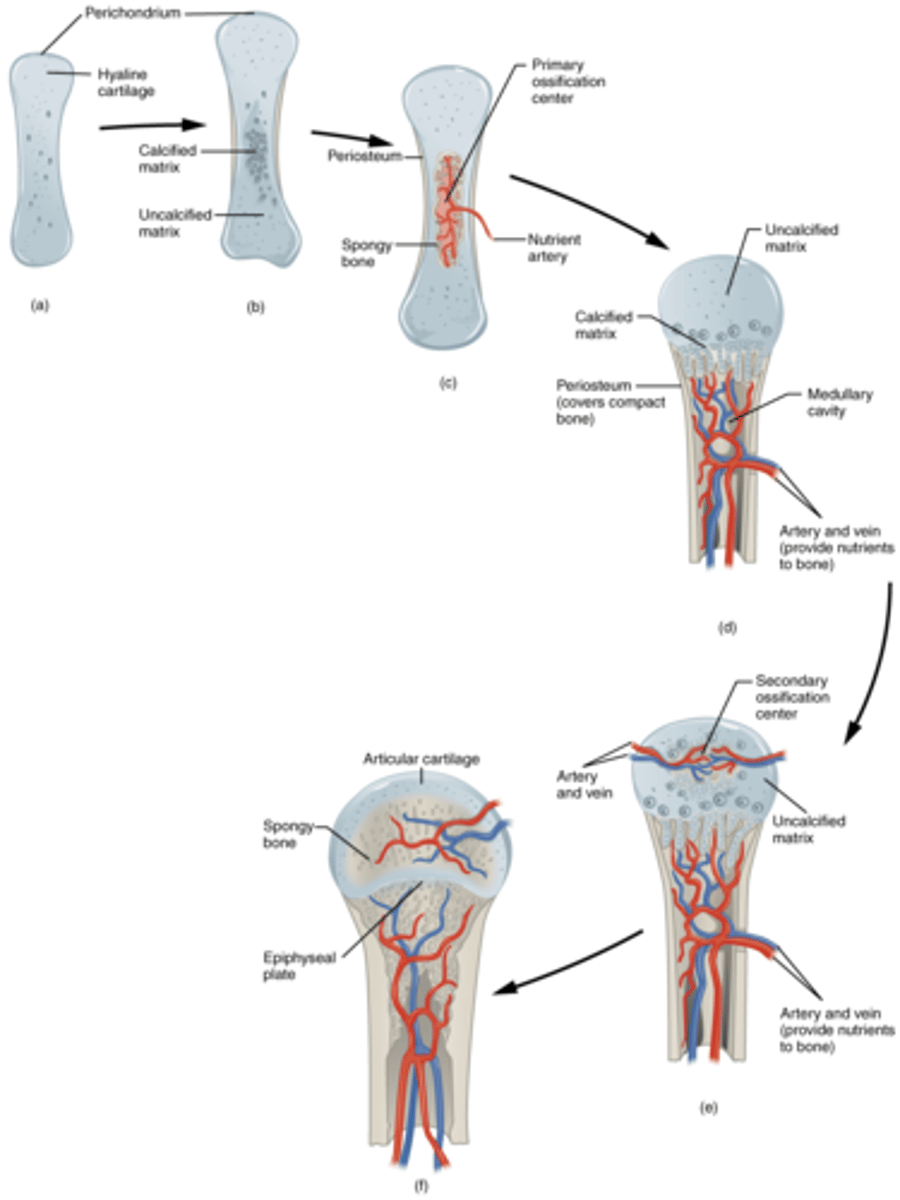
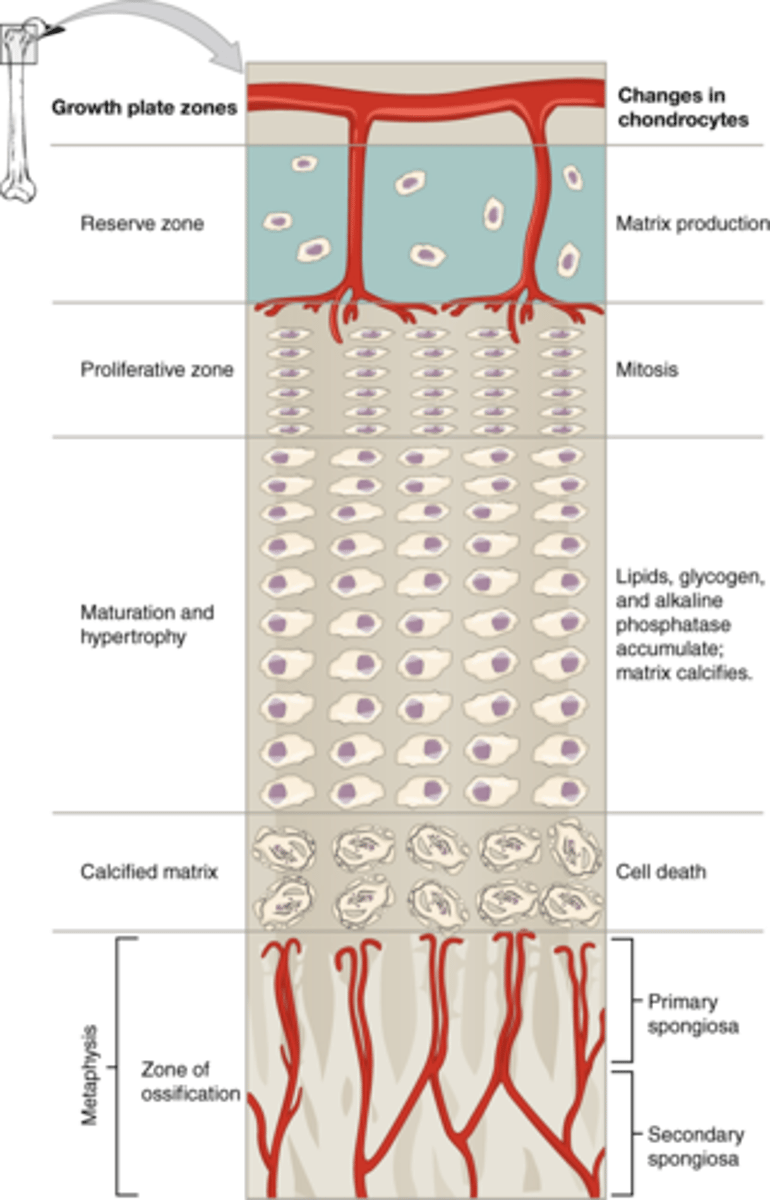
Longitudinal bone growth
Cartilage cells on the epiphysis side of the epiphyseal plate undergoes mitosis while the diaphysis side calcifies
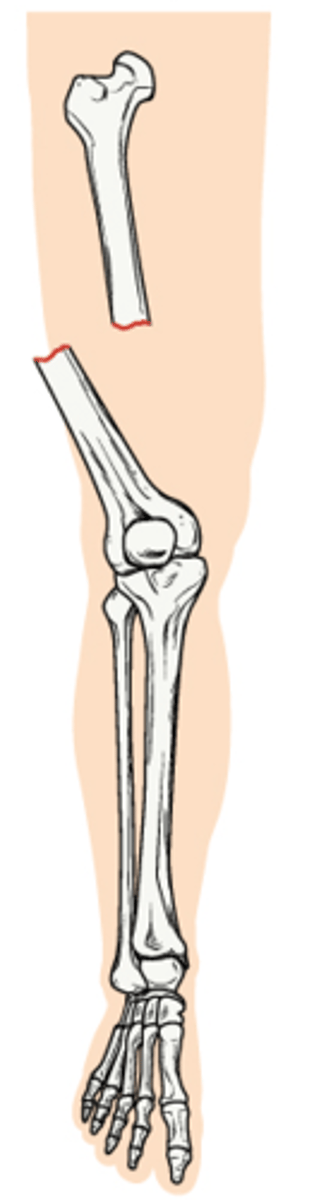
Open fracture
Compound fracture; broken bone with an open wound
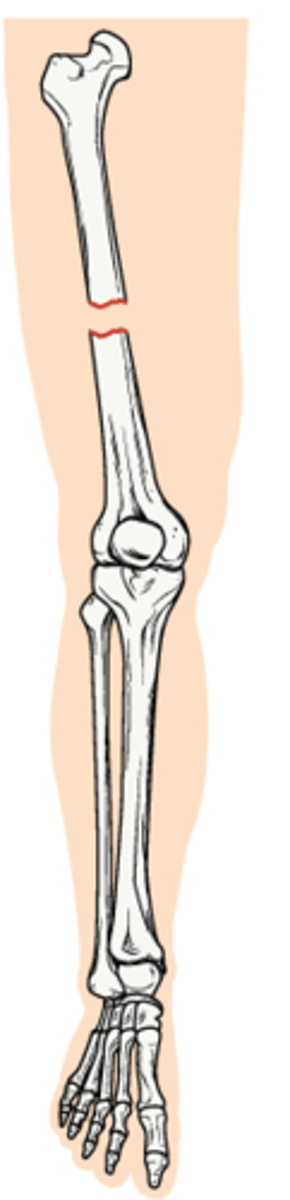
Closed fracture
One in which the bone is broken, but there is no open wound in the skin
Spiral fracture
A fracture in which the bone has been twisted apart
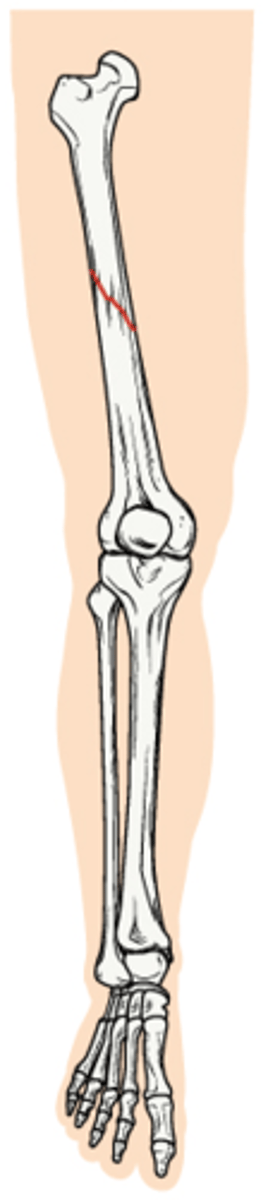
Transverse fracture
Complete fracture that is straight across the bone at right angles to the long axis of the bone
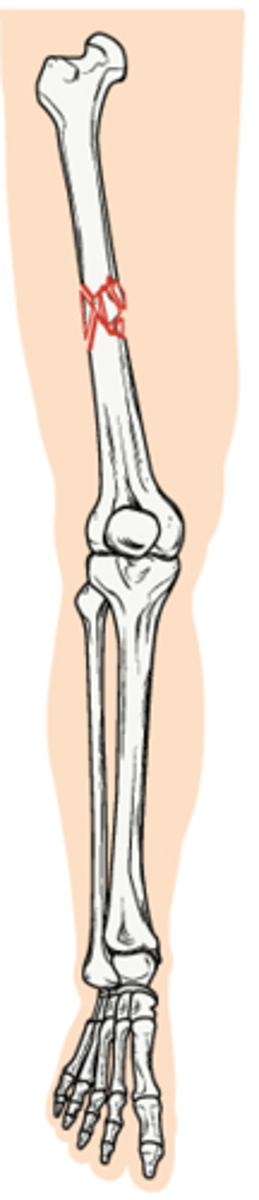
Comminuted fracture
Fracture in which the bone is splintered or crushed
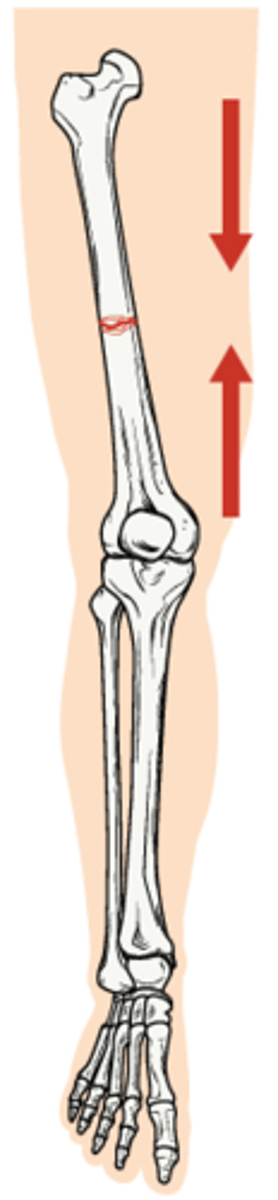
Impacted fracture
Broken bone ends are forced into each other
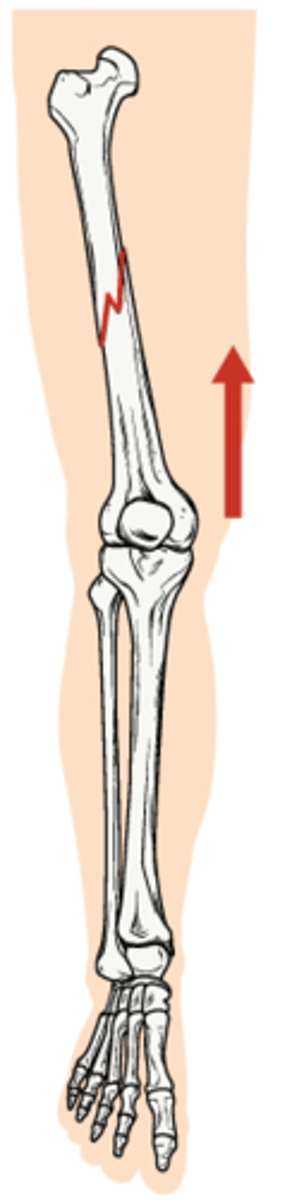
Greenstick fracture
Bending and incomplete break of a bone; most often seen in children
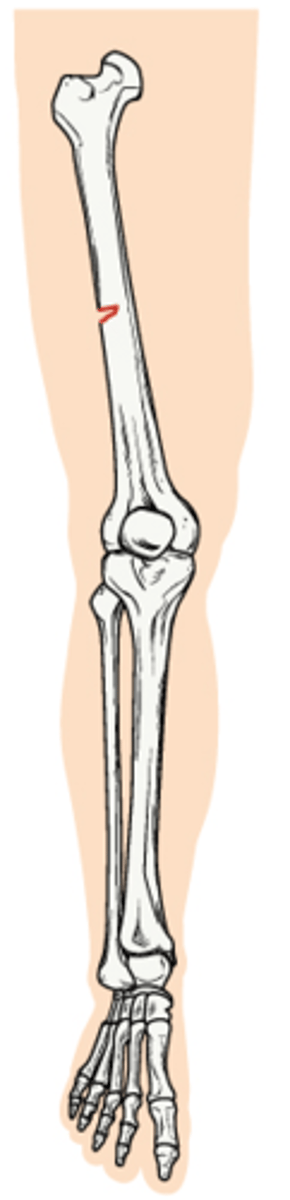
Oblique fracture
Occurs at an angle across the bone
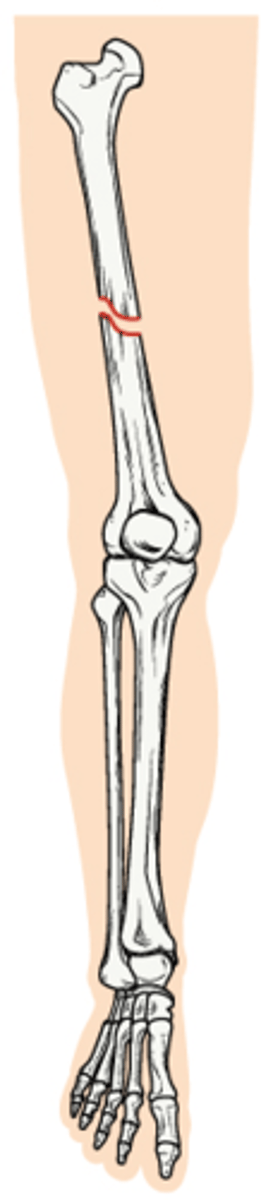
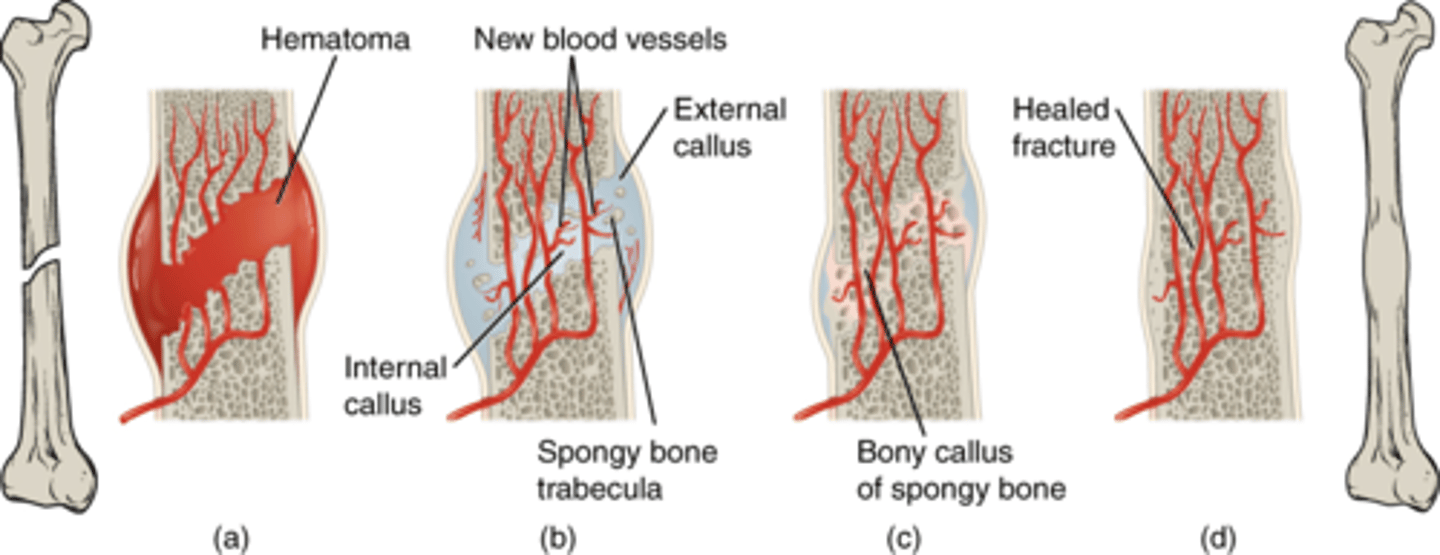
Step 1 bone repair (a)
Hematoma formation
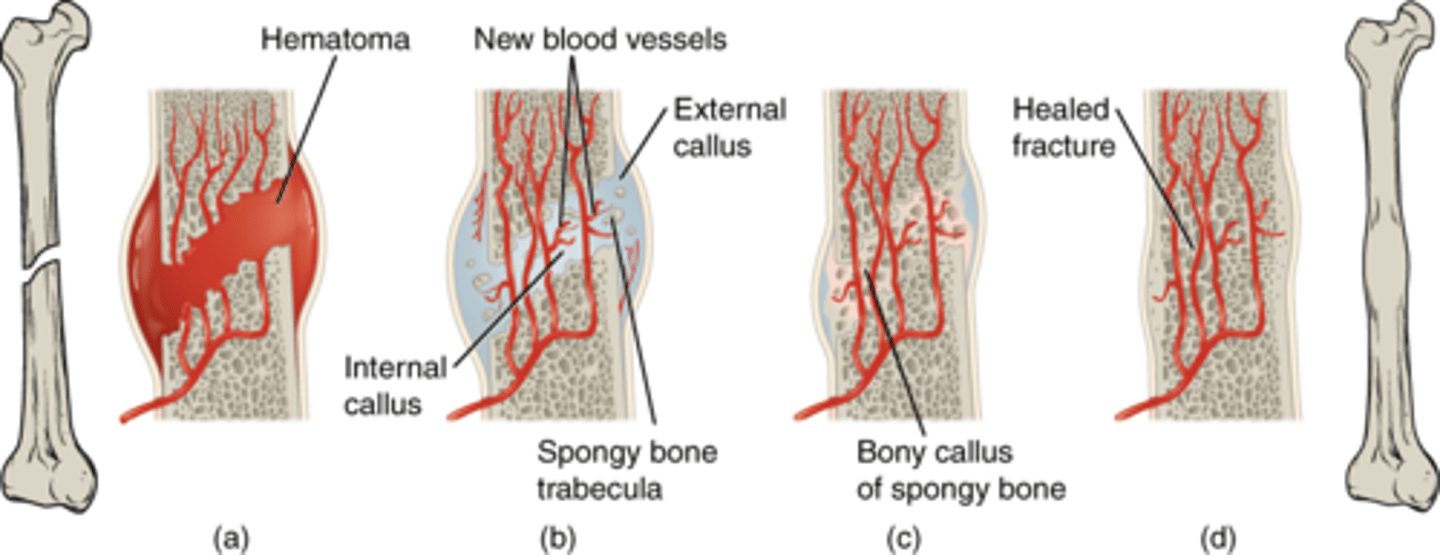
Step 2 bone repair (b)
Callus formation
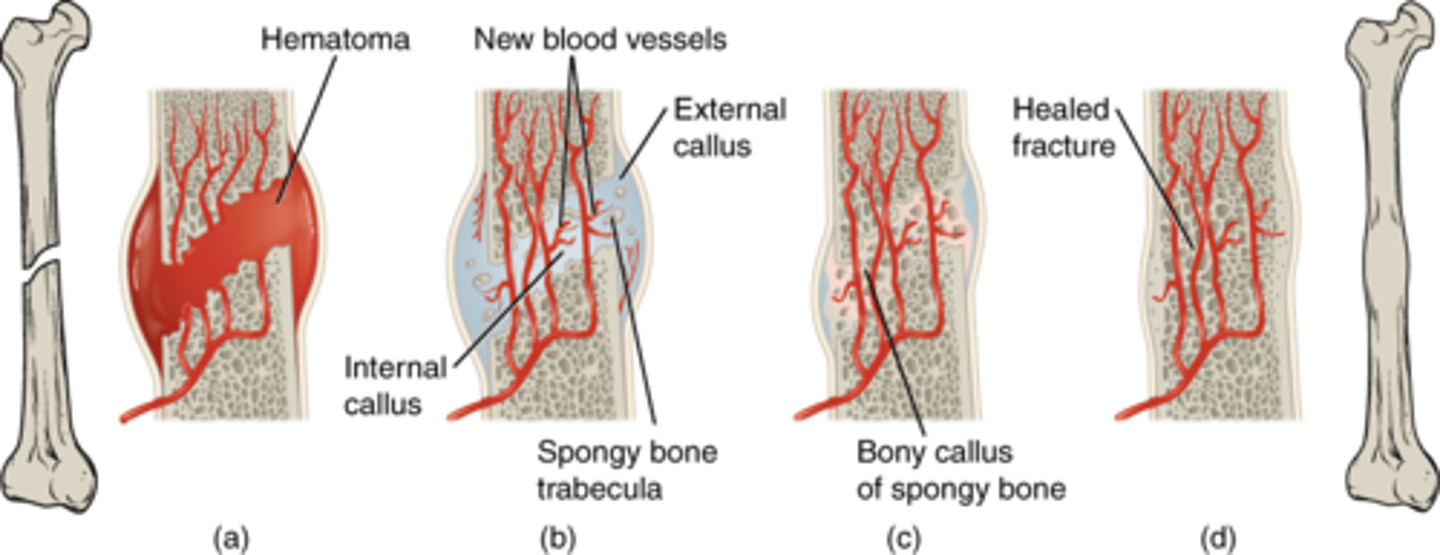
Step 3 bone repair (c)
Bony callus formation
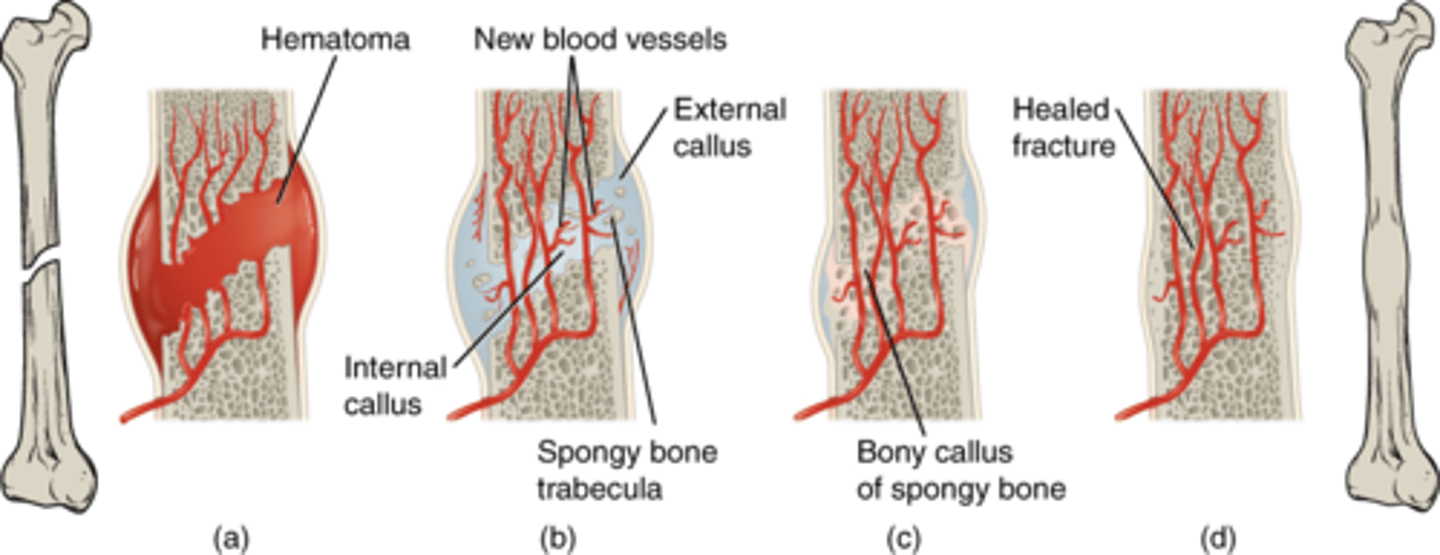
Step 4 bone repair (d)
Healed fracture