Lesson 3 Chem
 Call Kai
 Learn
Learn Practice Test
 Spaced Repetition
 Match
Match Flashcards
 Knowt Play
1/49

There's no tags or description
Looks like no tags are added yet.
Name | Mastery | Learn | Test | Matching | Spaced | Call with Kai | Chat |
|---|
No analytics yet
Send a link to your students to track their progress
50 Terms
Atomos - Indivisible
Cut a substance over and over where it is no longer dividable. But you still keep the same substance
Antoine Lavoiseier - Law of Conservation of mass
In chemical reactions, Matter is neither created or destroyed
Ex-
4.0 G of Hydrogen + 34.0 G of Oxygen = 36.0 G of Water
Atomic Theory
Elements are made of tiny, Invisible particles called atoms
Atoms of each element are unique
Atoms can join-together in whole number ratios to create compounds
They remain unchanged in chemical reaction
Three Foundational Ideas
All matter is composed of atoms
Atoms of each element have a unique characteristics and properties
In chemical reactions, atoms are not changed, but combine in whole number ratios to form compounds
1860 - Mendeleev
Arranged elements into collumns
Flourine
Chlorine
Bromine
Iodine
Discovered
Gallium
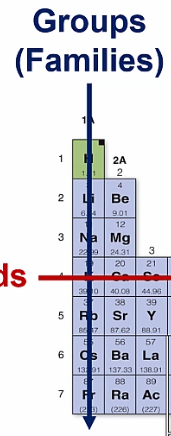
Rows of a periodic table are called
Periods

Columns of a periodic table are called
Groups (Families)
Periodic table uses what form of elements to label
One to Two letter abbreviations
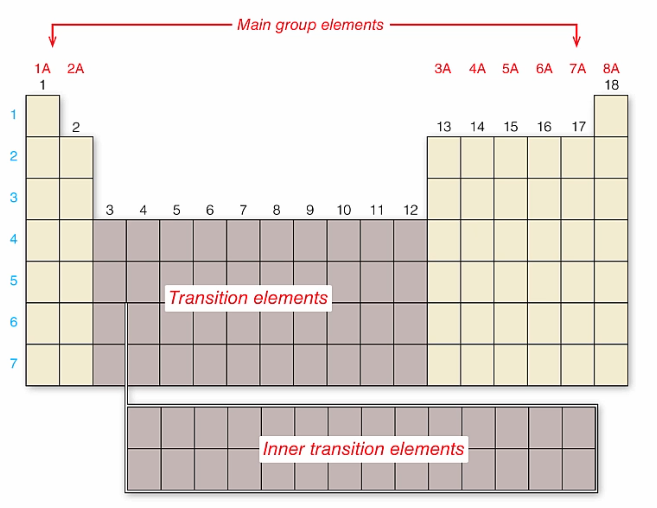
Main group columns
1A - 8A

Transition Metals
3 → 12
Are Hard and less reactive
Usually are seen as common building materials

Inner Transition
Lanthanide - Heavier naturally occurring metals called rare earth metals
Actinide - Common naturally occurring elements before uranium

Non-Metals are located at the
Top right and Top left of the periodic table
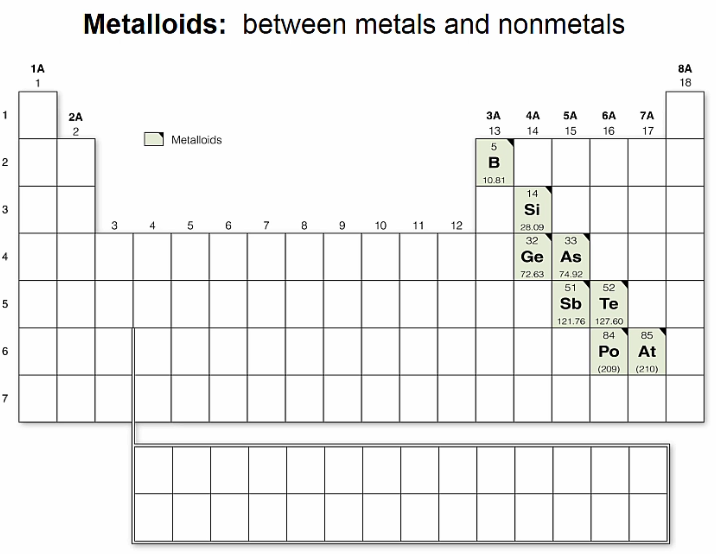
Metalloids
Between metals and non-metals
Stair-step pattern
Silicone - Seen and used in modern electronics
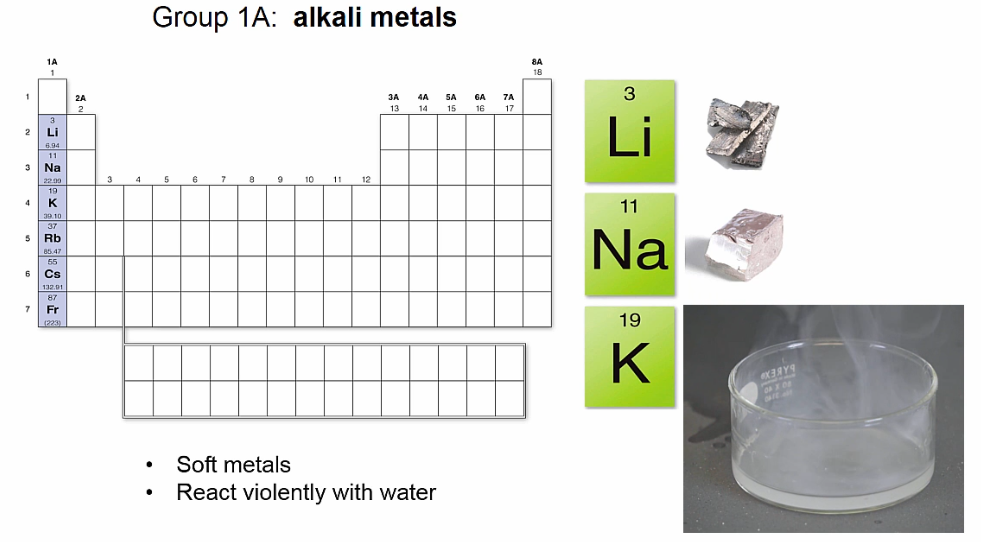
Alkali Metals
Soft Metals
React violently to water or melt
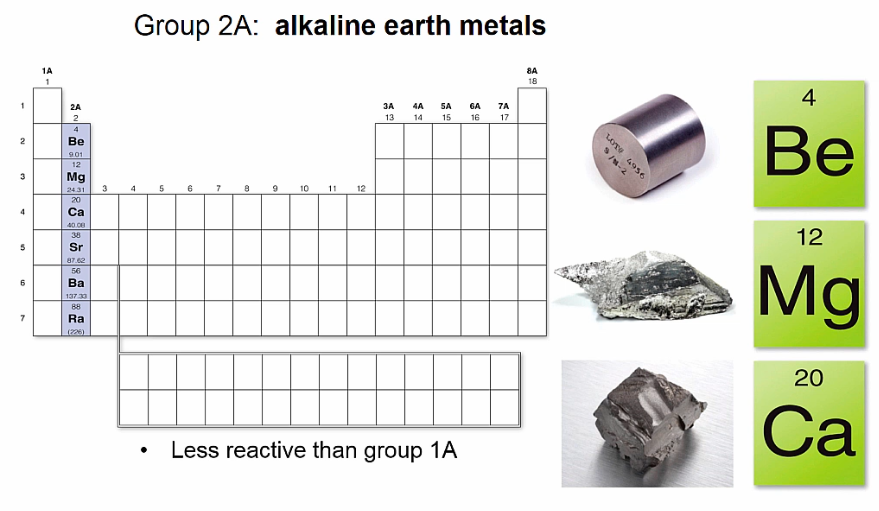
Alkaline Earth Metals
React slowly with water
Burn brighter (combined with oxygens)
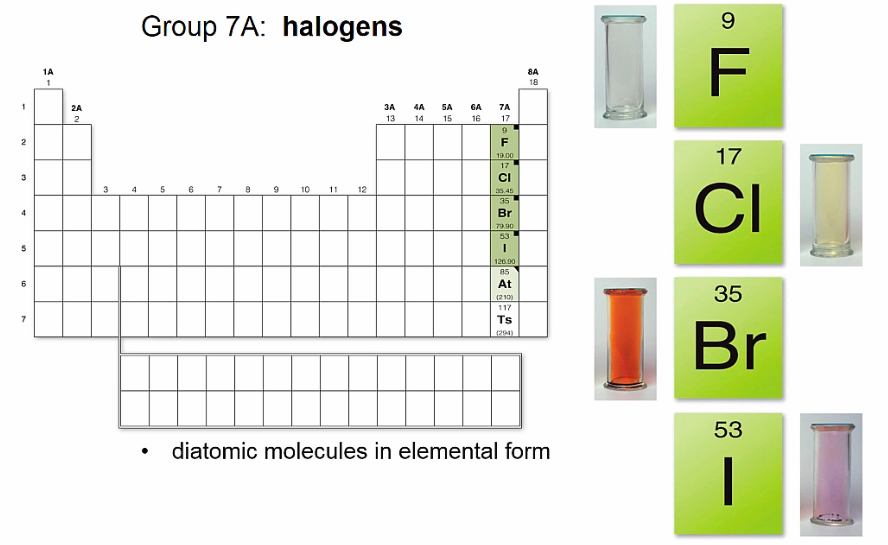
Halogens
Diatomic molecules in elemental form
React quickly with metals and non metals
Form many different compounds

Group 8A - Noble Gasses
Generally don’t form compounds
Gases at room temperature

Early 1800s John Dalton
Stated:
Atoms of each element are unique
Atoms combine in whole-number ratios to form compounds
Atoms are not created or destroyed in chemical reactions
Subatomic particles - Define identity and behavior of atoms

Subatomic particles use two distinct categories to describe particles
Mass & Charge
Atomic mass unit (u)
1 u = 1.66 × 10^-27 kg
Ex. Hydrogen atom = 1.0 u
Charge -
Opposite charges attract to each other
Like charges repel

(Year chemistry changed) 1800s Scientist Alessandra Volta invents an
Electrochemical Cell (battery) - Device capable of moving electrically charged particles
Many scientist used it to discover new elements - especially Mendeleev
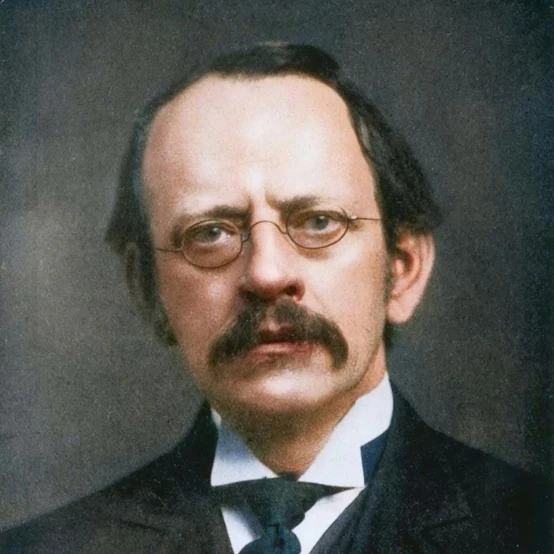
1897 Scientist JJ Thomson discovers
The electron - A tiny negatively charged particle
Plum pudding model:
Envisioned negative electrons spread throughout a positively charged material
-Blue berry through a muffin


Ernest Rutherford 1909
Named the Bohr Model - ElectronsOrbit 1913
Tested positvely charged particles called alpha particles
Concludes atoms are mostly empty space, with a dense nucleus at the center (plum pudding model becomes obsolete)
Because of the particle test some particles are pictured to have bounced or reflect off of the atom’s nucleus


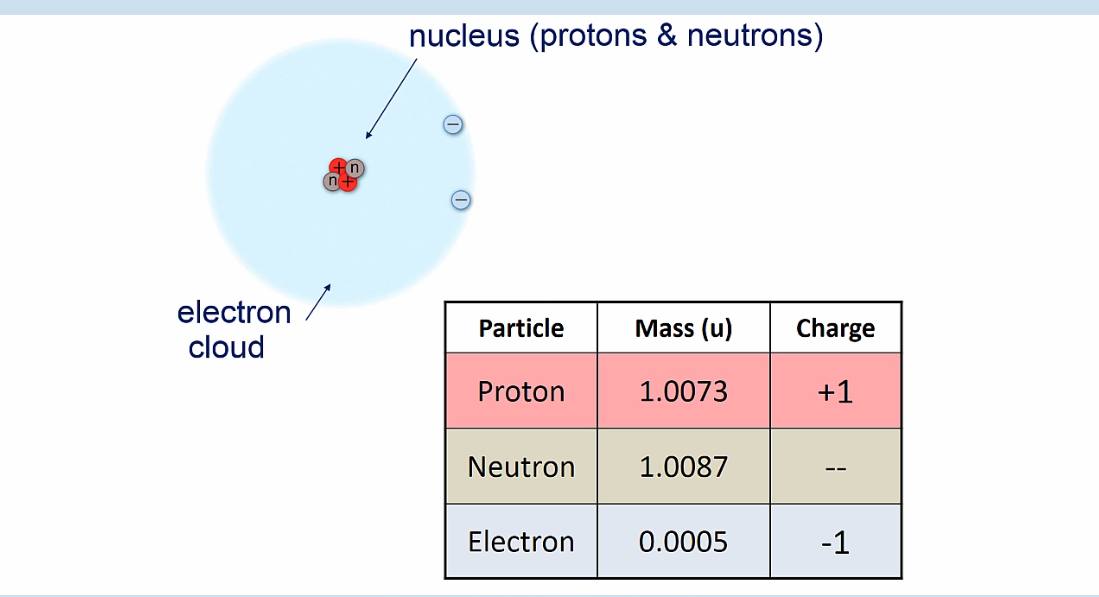
The Atom diagram will disclose that all Proton, Neutron, and Electron are a charge and mass of?
Proton | Mass - 1.0073 u | +1
Neutron | Mass - 1.0087 u | 0 or —
Electron | Mass - 0.0005 u | -1
Number of protons determine
The identity of an atom


Atomic Number
Integer value of the number of protons in an atom.
Also tells the number of electrons in a neutral atom
Mass Number
Number of protons + Neutrons
Isotopes
Have the same atomic number, but a different mass number

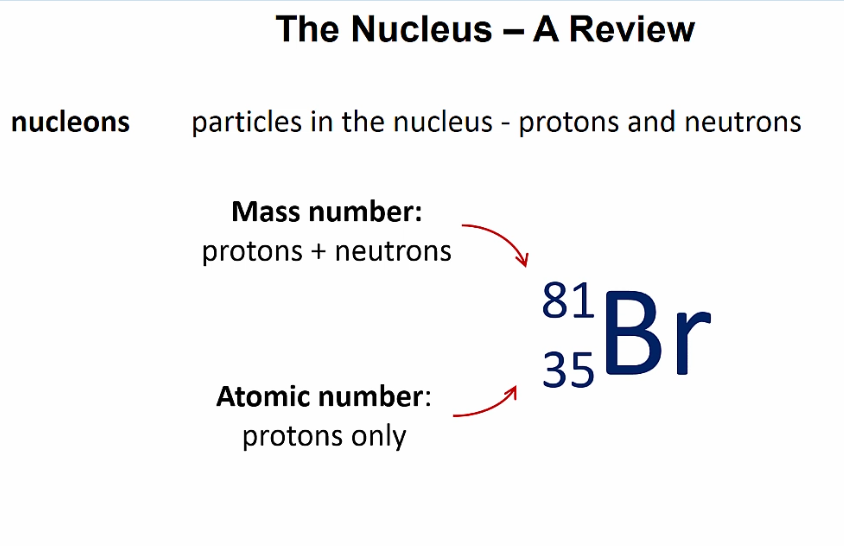
Writing Atomic Symbol
Mass number is = Proton + Neutron
Atomic number = Protons
Mass # is top left while Atomic # is bottom left

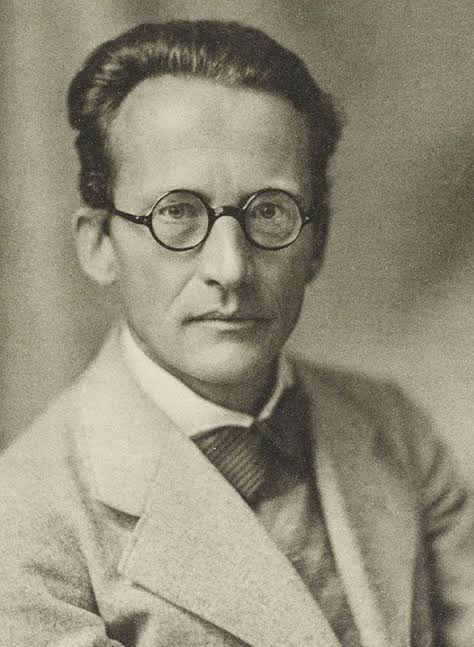
Quantum Model 1920s by Erwin Schrodinger
Electrons behave both as particle and waves
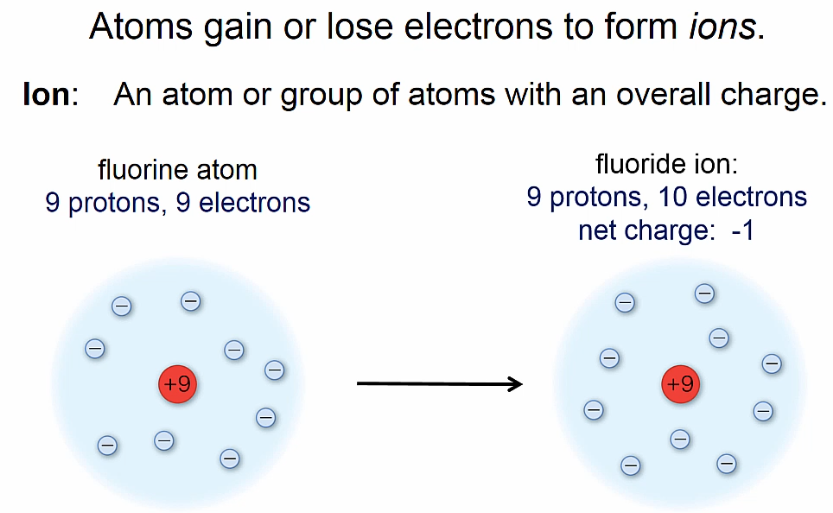
Ion
An atom or overall atom with an overall charge

Nuclear Chemistry
Describe changes that involve nucleus of an atom
Nucleons
Particles in a nucleus - protons and neutrons
Nuclide
An atom or nucleus containing a particular number of protons and neutron
Isotopes
Have the same atomic numbers but different mass number
Nuclear Reaction
Changes in structure of nucleus
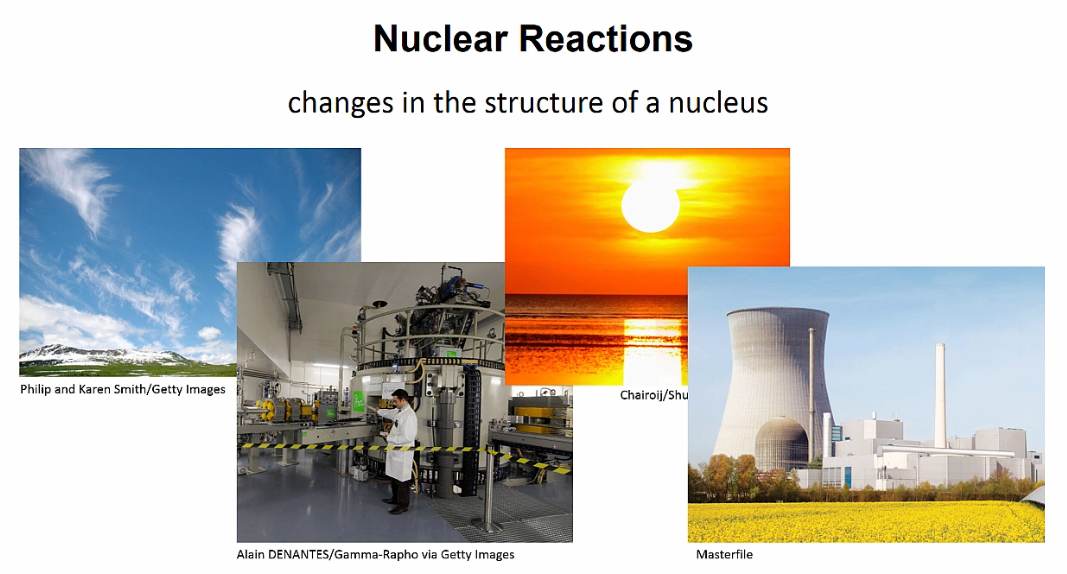
Nuclear Equations
Show nuclear changes
(Gains or loses and atomic particle)
Colliding a-
proton into 1v1P (Proton) + 111v48Cd → 111v49 Id + 1v0n (Neutron)

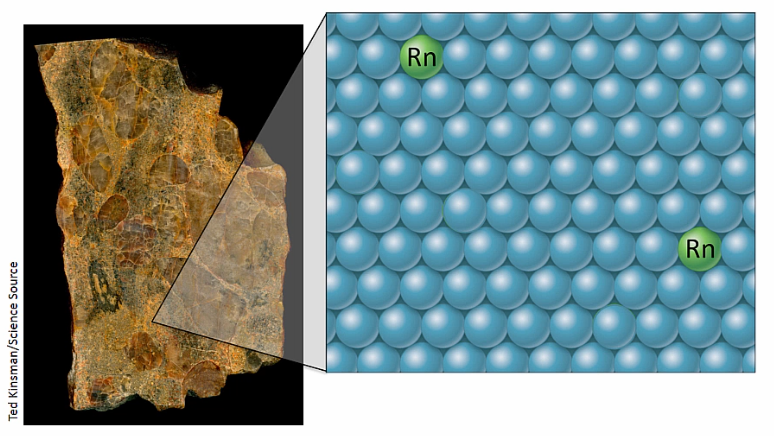
Radioactivity
Spontaneously release of particles and /or energy (radiation) from nucleus
Energy released by this is called radiation
1897 Antoine Becquerel
Initially discovered radiation when placing uranium near substances like sulfide. It would glow
1902 Marie and Pierre Curie
Isolated many radioactive substances
Discover - Radium and Polonium
Identified 3 radioactive decays
Alpha
Beta
Gamma
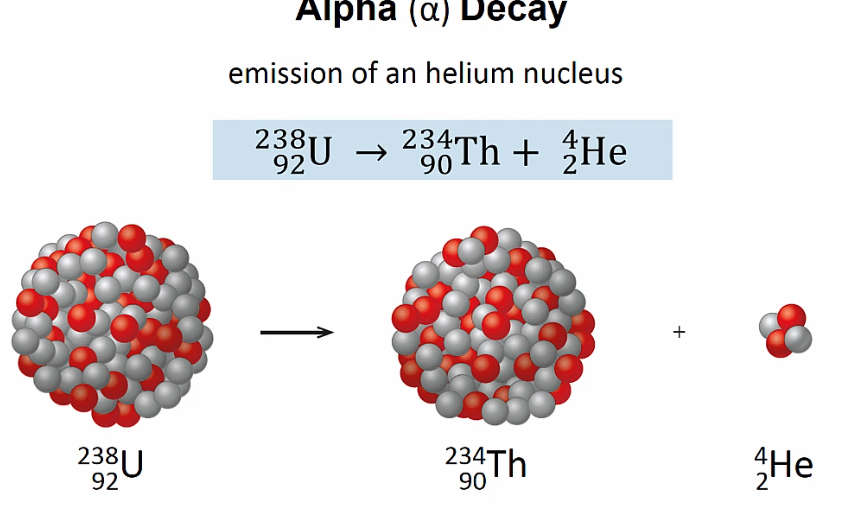
Alpha Decay
Nucleus ejects an alpha particle - 2 protons and 2 neutrons
Mass number is decreased by 4
Atomic number decrease by 2
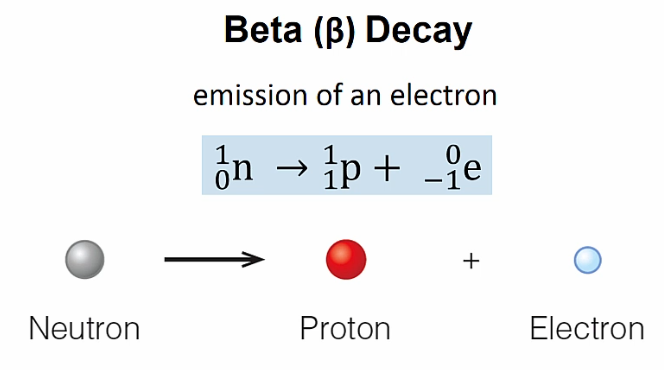
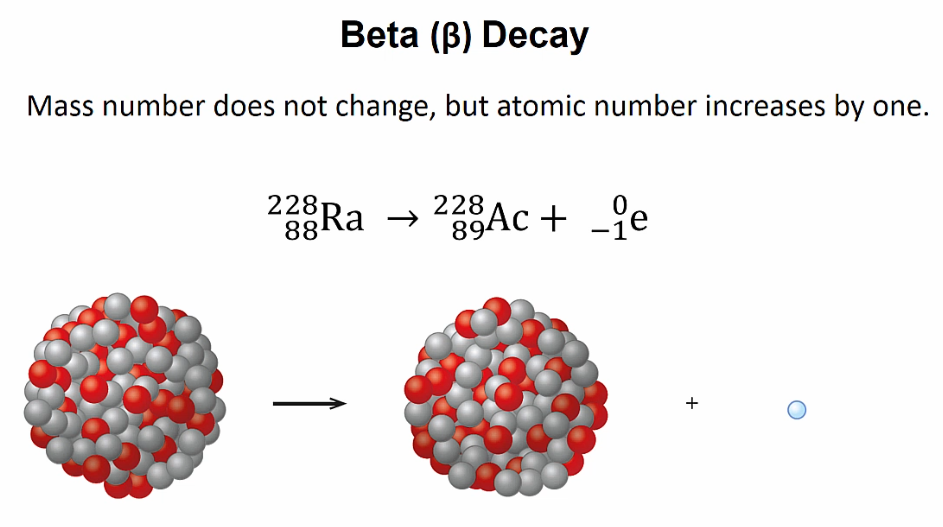
Beta Decay (
Neutron decays into two particles - 1 proton 1 electron
Electron is ejected
When larger nucleus exhibit a beta decay the electron exits the nucleus yet proton remains
Atomic number increases by 1 but mass number remains the same
Gamma Decay
Nucleus Releases energy in waves called Gamma Rays
Neither atomic or mass number changes
Nuclear particle adjusting arrangement for stable isotope
Decays happen through a series aka (Decay chain or series)

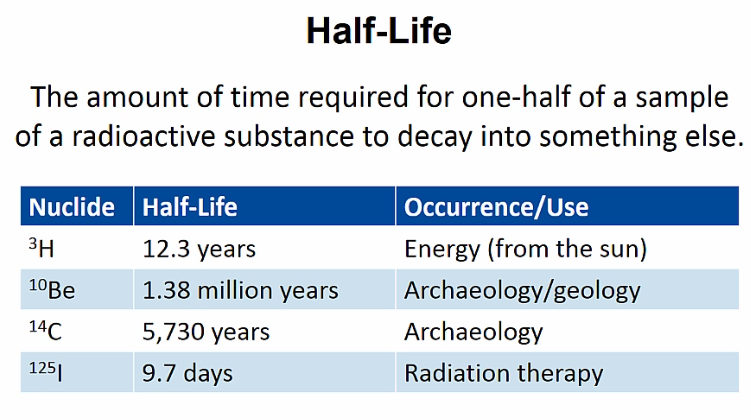
Half Life
The amount of time required for one-half of a sample of radioactive substance to decay into something else or other substance
Health and Effects of radiation exposure
The three types of radiation have different means of protection against:
Alpha - Can damage body tissue but can be blocked with Clothes, Sheet of paper
Beta - Fast moving electrons that can penetrate through clothes Thing sheet metal, and or hard substance can block beta
Gamma - hardest to block - Heavy lead shield block it

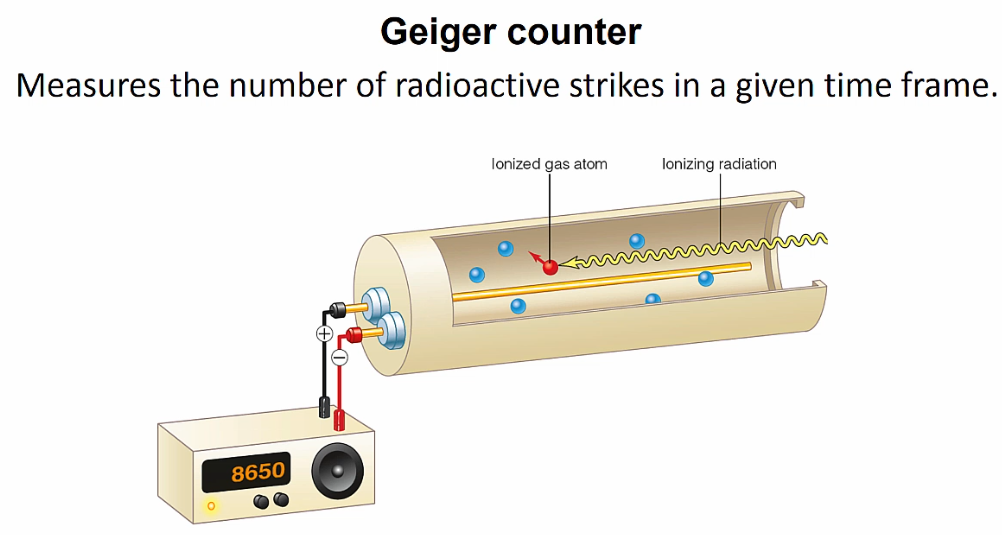
Geiger Counter
Measure the number of radioactive strikes in a given time frame
Measuring Radiation
Geiger Counter
Scintillation Counter - Uses material that produces a tiny flash of light when exposed to radiation strike
Semiconductor Counter - measure different energies from radiation absorbed
Dosimeter - Measures human exposure to radiation
Common Exposure Levels
becquerel (Bq) - the number of decays that occur each second - doesnt indicate effects on humans
Sievert (Sv) - Used to measure impact of radiation on animal tissue - 1Sv = 1 J/kg
rem - 1 Sv = 100 rem (similar to Sievert)
Depends on biological tissue exposed to determine total effective dose
Radiation Imaging
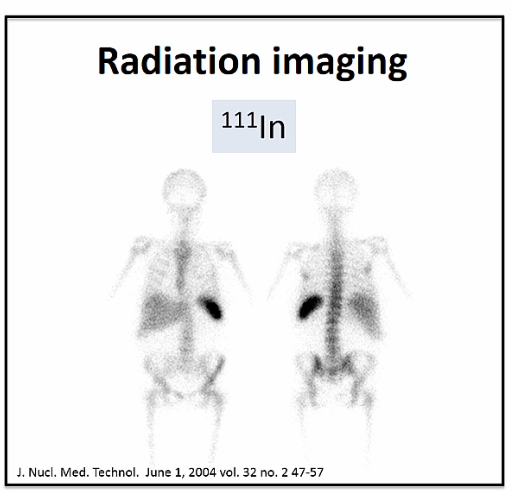
Patient is admistered a dosage of a compound containing a radioactive nuclide.
Emits gamma radiation when in body
Used to locate internal infections
(White blood cells tagged an produce a gamma ray beacon to locate or signal the location of infection)
Radiation Therapy
Commonly used to treat cancer
Used destructive property of rads to destroy cancer cells
Battle rad sickness through process

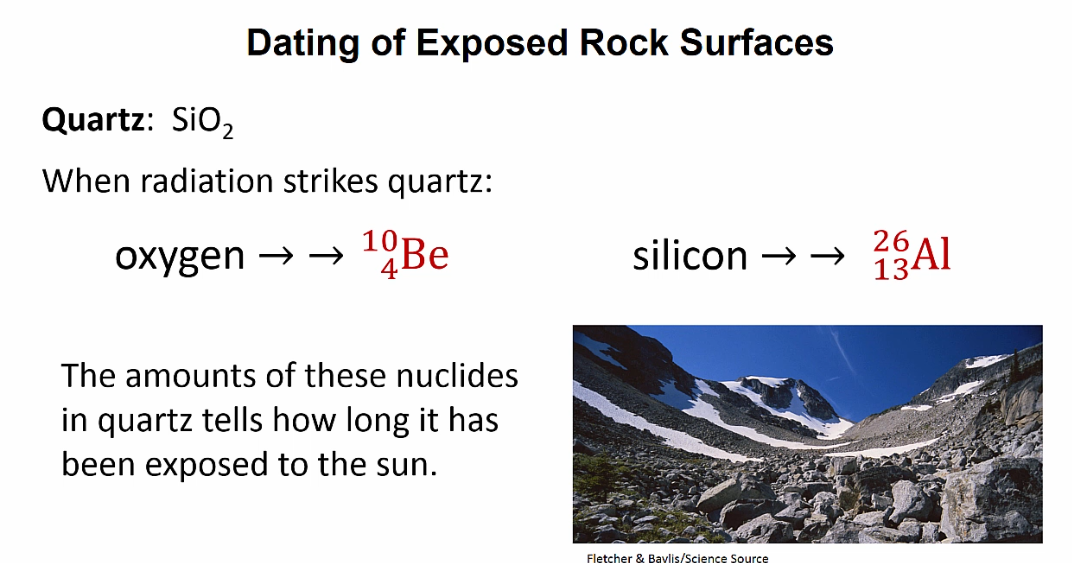
Use of Geology and Archaeology are a
Clock defining radioactive nuclei and for understanding Earth’s history