EXAM 8
 Call Kai
 Learn
Learn Practice Test
 Spaced Repetition
 Match
Match Flashcards
 Knowt Play
1/207

There's no tags or description
Looks like no tags are added yet.
Name | Mastery | Learn | Test | Matching | Spaced | Call with Kai | Chat |
|---|
No analytics yet
Send a link to your students to track their progress
208 Terms
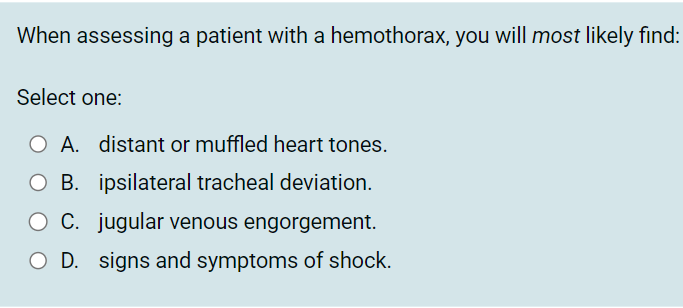
Signs and Symptoms of Shock
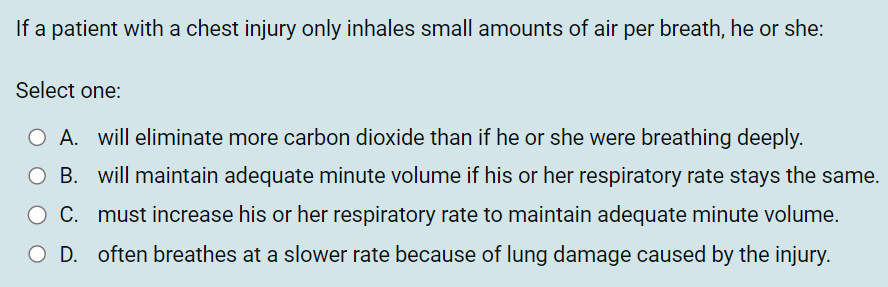
Must increase his or her respiratory rate to maintain adequate minute volume
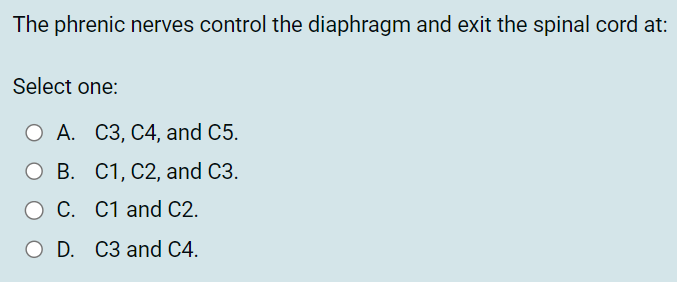
C3, C4, and C5
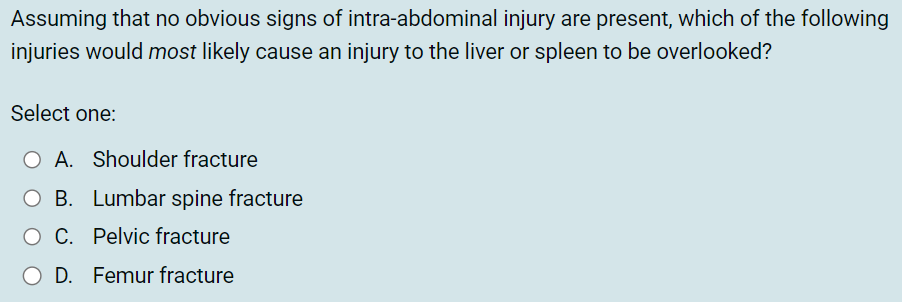
Shoulder fracture
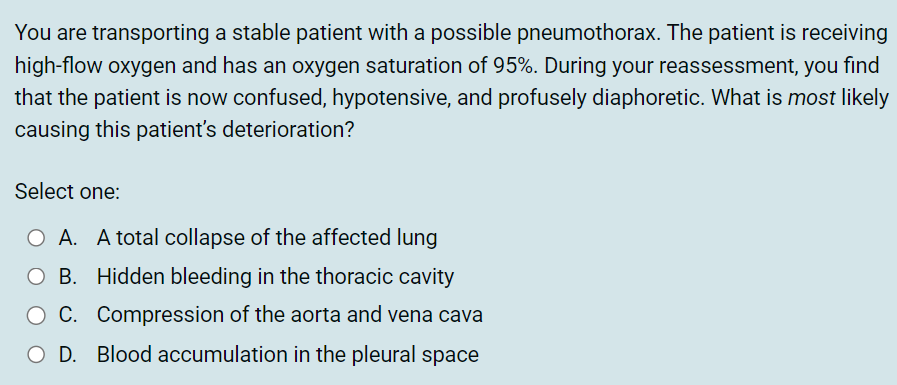
Compression of the aorta and vena cava
Poorly placed lap belt
Bones and voluntary muscles of the body
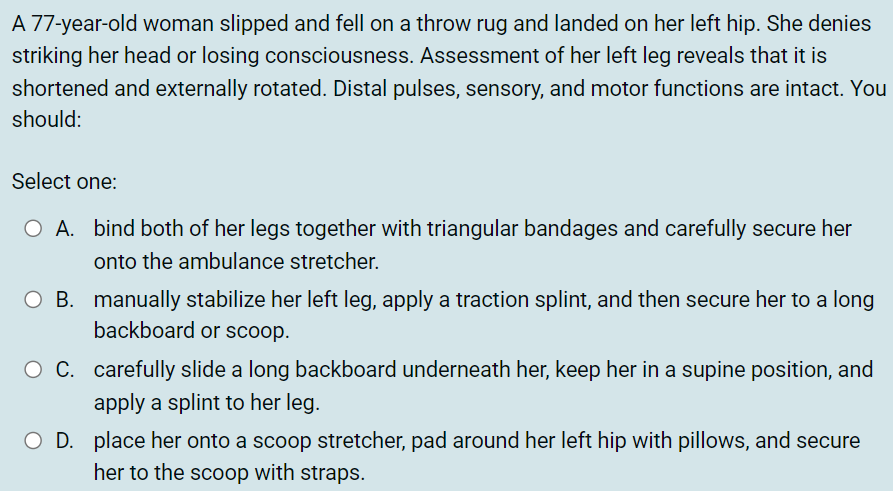
Place her onto a scoop stretcher, pad around her left hip with pillows, and secure her to the scoop with straps
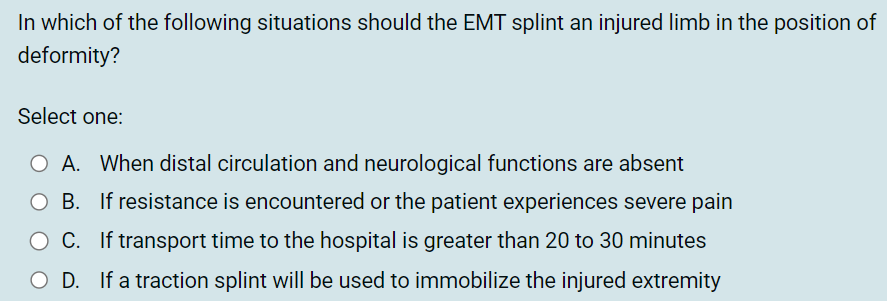
If resistance is encountered or the patient experiences severe pain
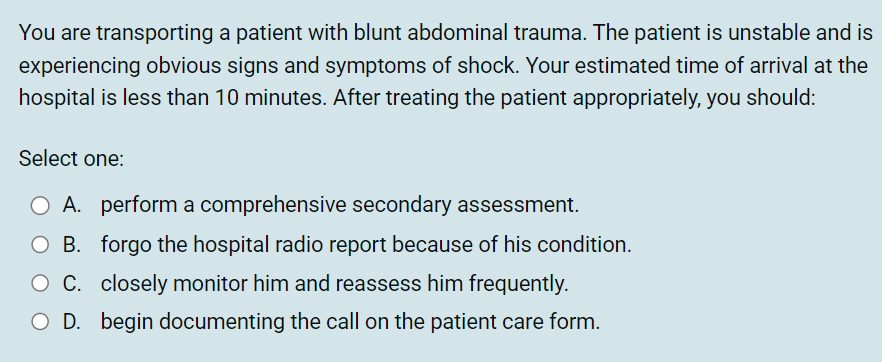
Closely monitor him and reassess him frequently
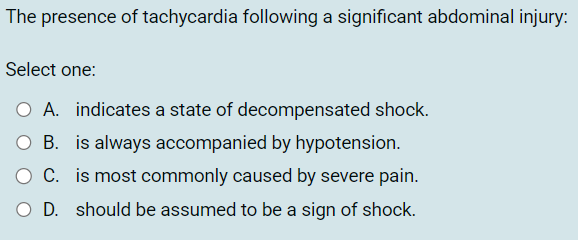
Should be assumed to be a sign of shock
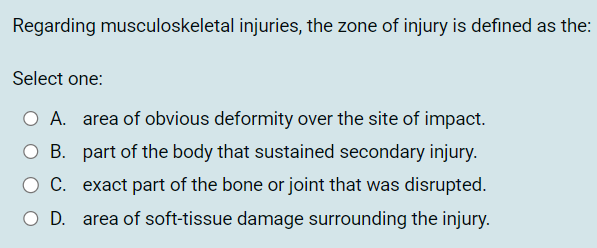
Area of soft-tissue damage surrounding the injury
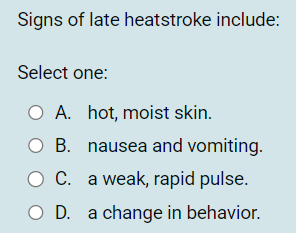
A weak, rapid pulse
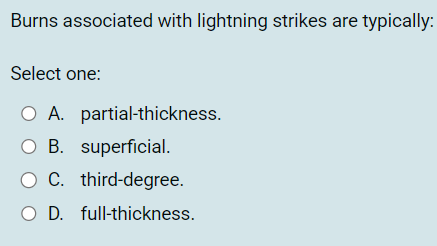
Superficial
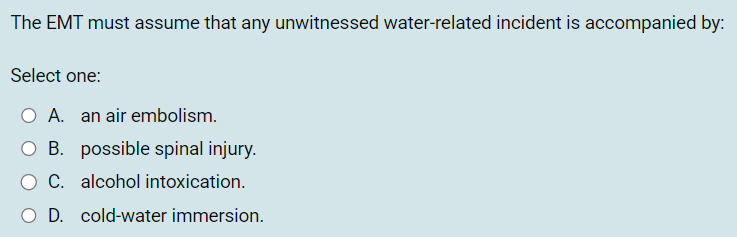
Possible spinal injury
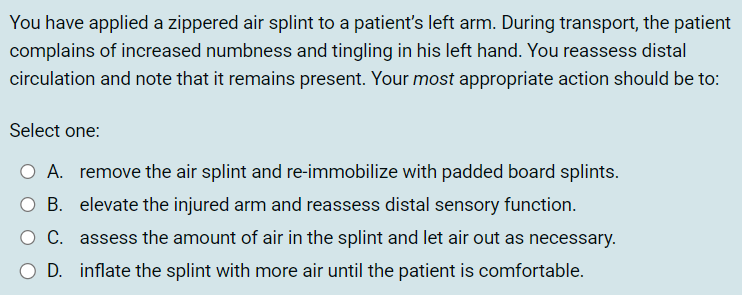
Assess the amount of air in the splint and let air out as necessary.
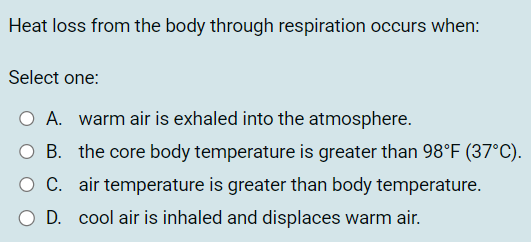
Warm air is exhaled into the atmosphere
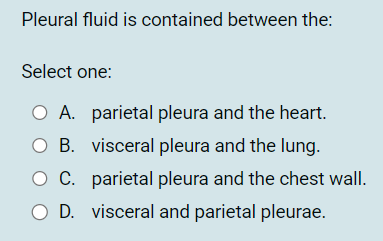
Visceral and parietal pleurae
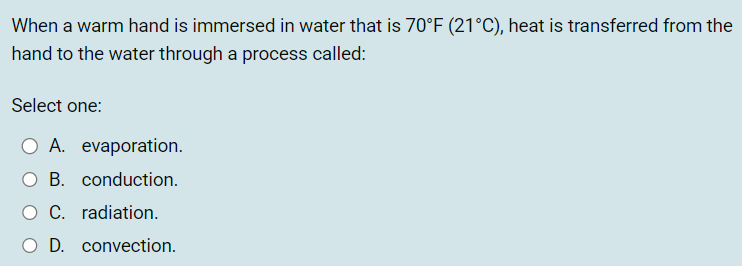
Conduction
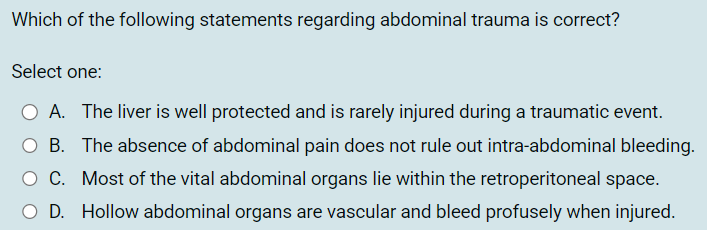
The absence of abdominal pain does not rule out intra-abdominal bleeding
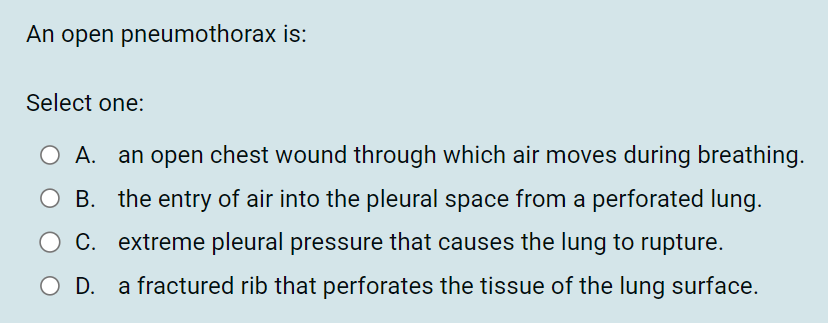
An open chest wound through which air moves during breathing
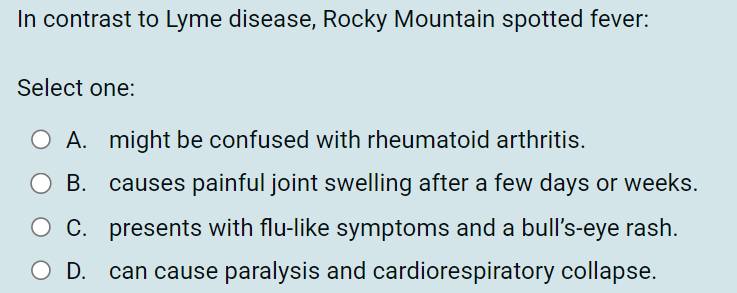
Can cause paralysis and cardiorespiratory collapse
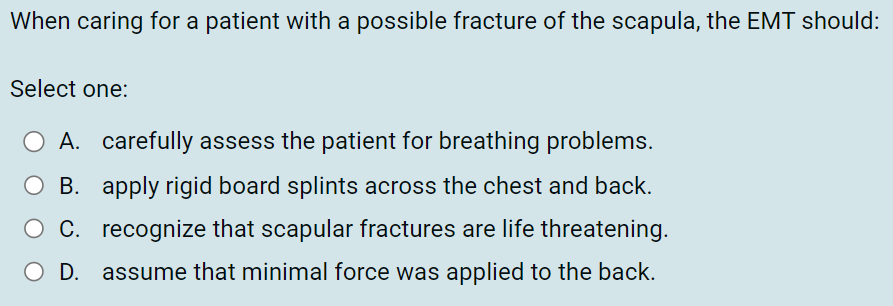
Carefully assess the patient for breathing problems
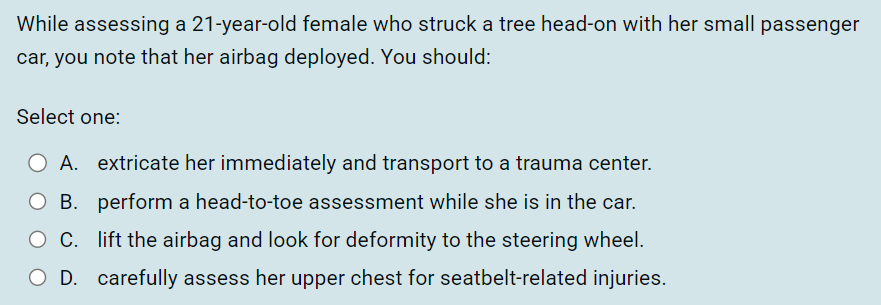
Lift the airbag and look for deformity to the steering wheel
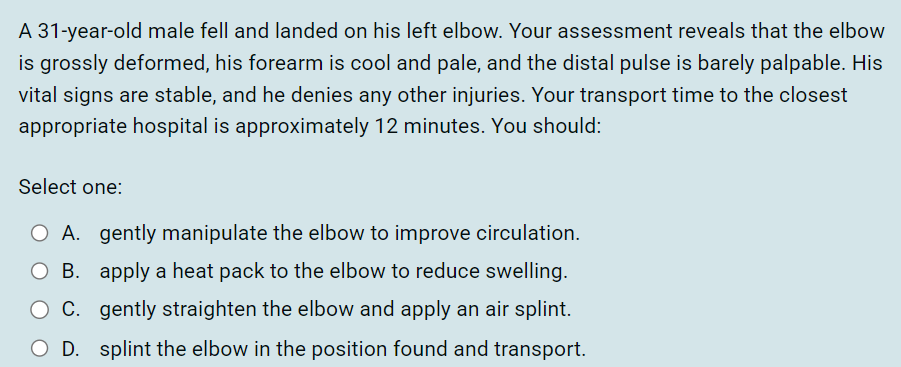
Splint the elbow in the position found and transport
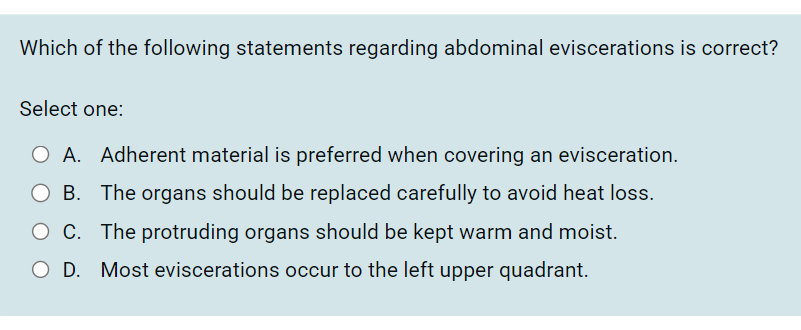
The protruding organs should be kept warm and moist
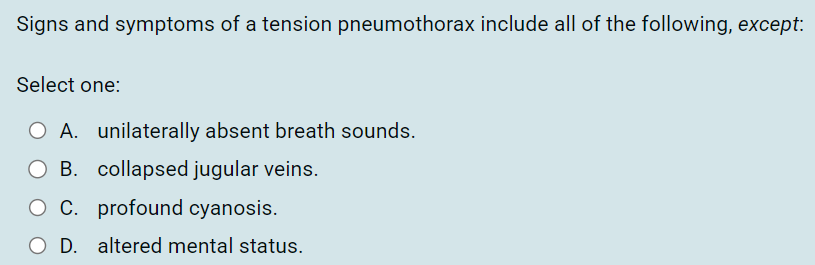
Collapsed jugular veins
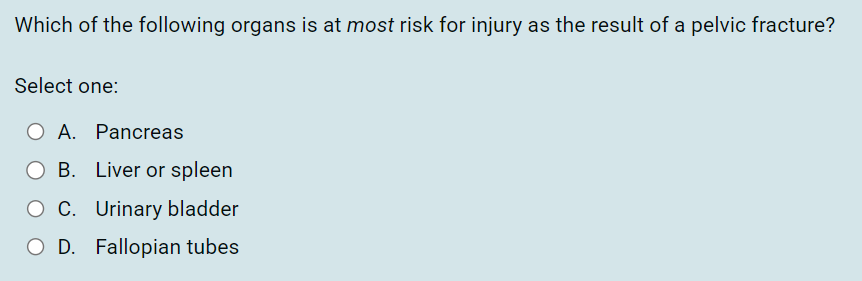
Urinary bladder
Ligaments
Traction
Pleurisy
Into the patient's rectum
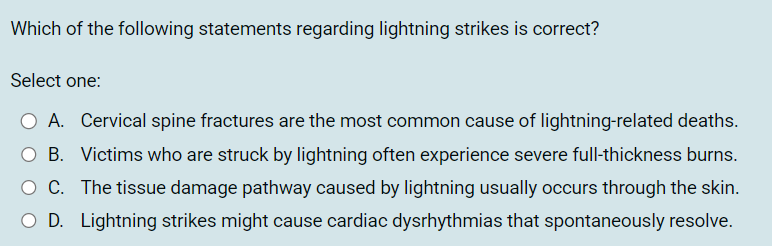
Lightning strikes might cause cardiac dysrhythmias that spontaneously resolve
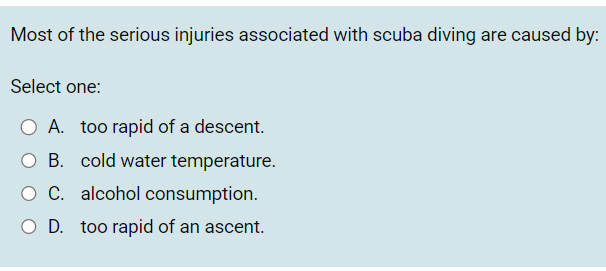
Too rapid of an ascent
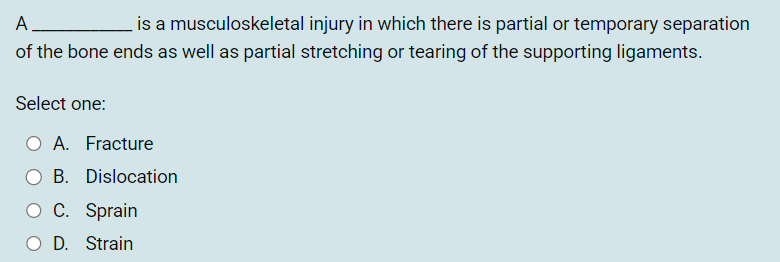
Sprain
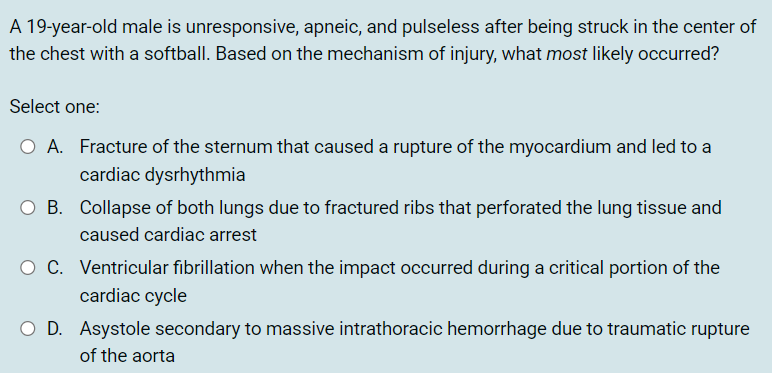
Ventricular fibrillation when the impact occurred during a critical portion of the cardiac cycle
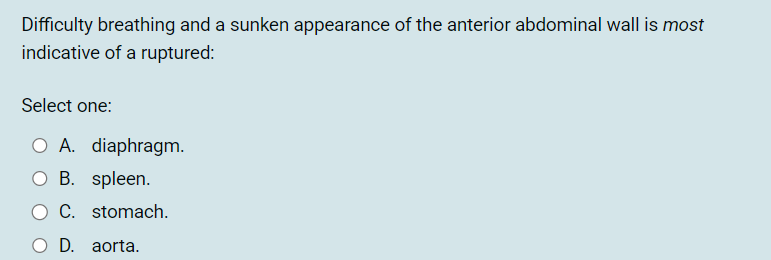
Diaphragm
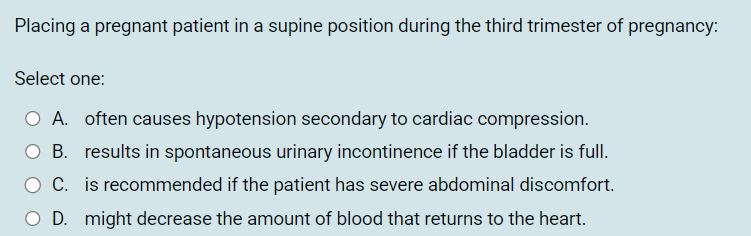
Might decrease the amount of blood that returns to the heart
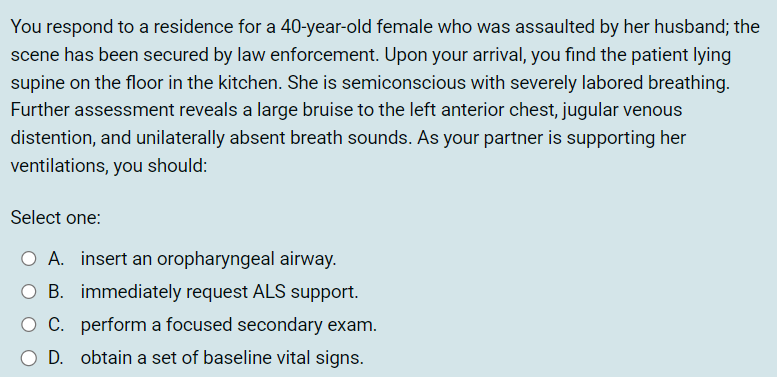
Immediately request ALS support
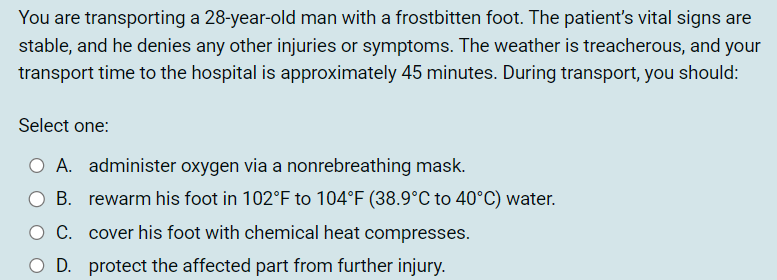
Protect the affected part from further injury.
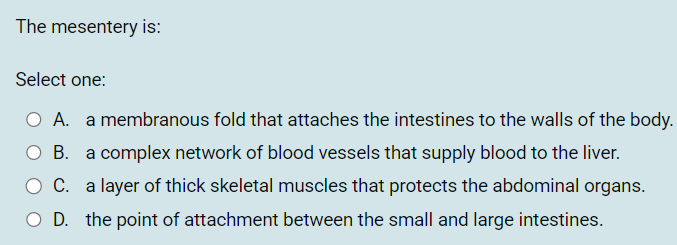
A membranous fold that attaches the intestines to the walls of the body
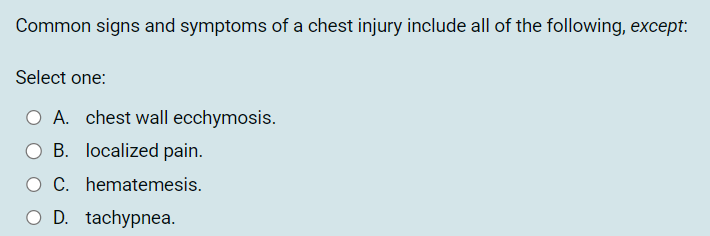
Hematemesis
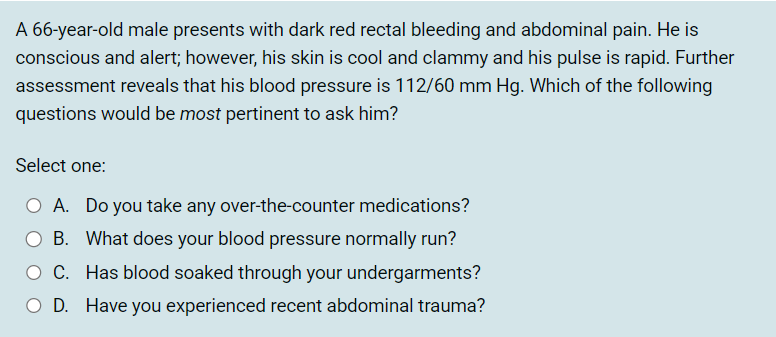
Have you experienced recent abdominal trauma?
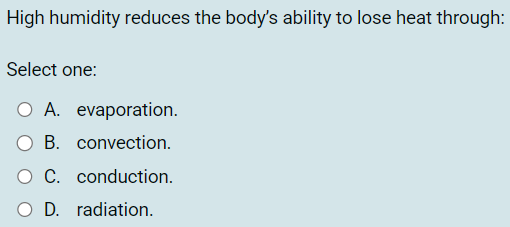
Evaporation
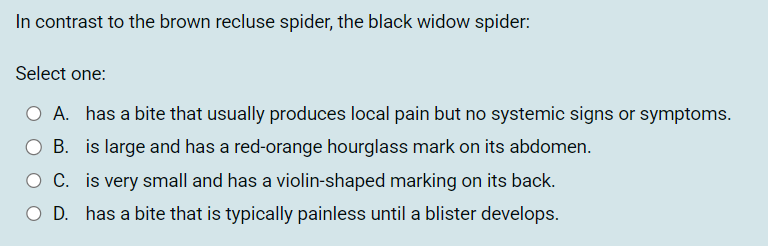
Is large and has a red-orange hourglass mark on its abdomen
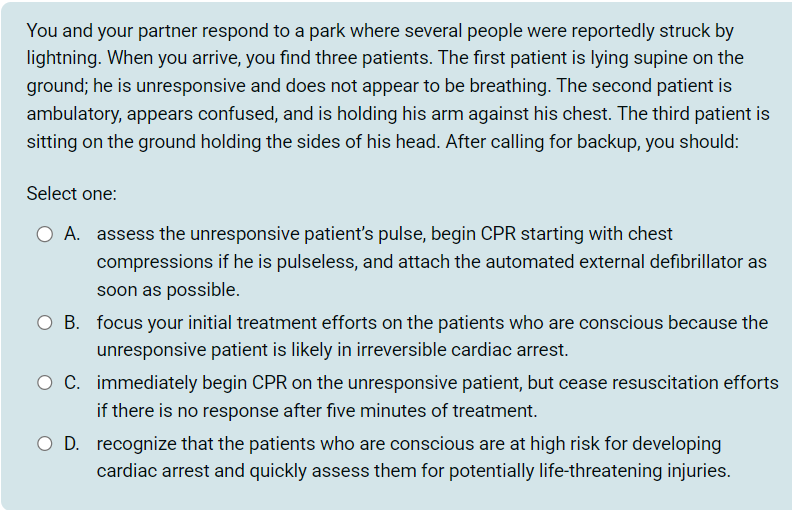
Assess the unresponsive patient's pulse, begin CPR starting with chest compressions if he is pulseless, and attach the automated external defibrillator as soon as possible.
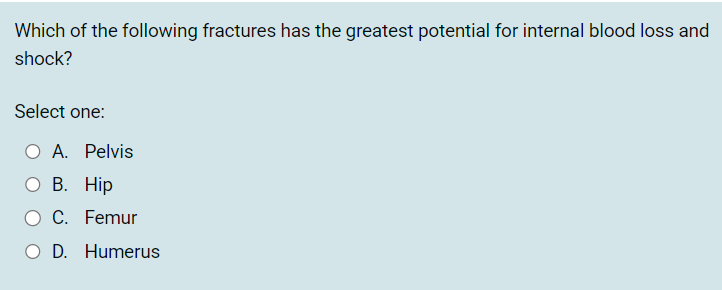
Pelvis
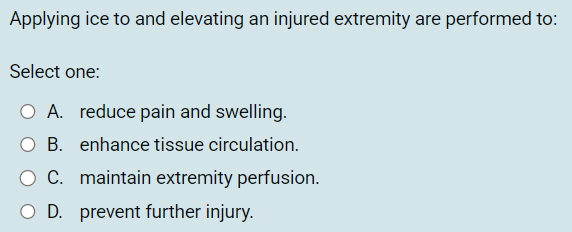
Reduce pain and swelling
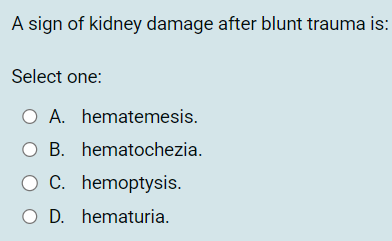
Hematuria
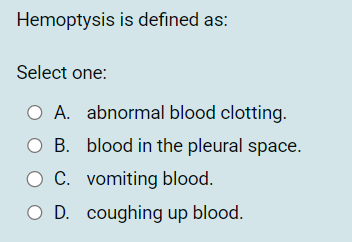
Coughing up blood
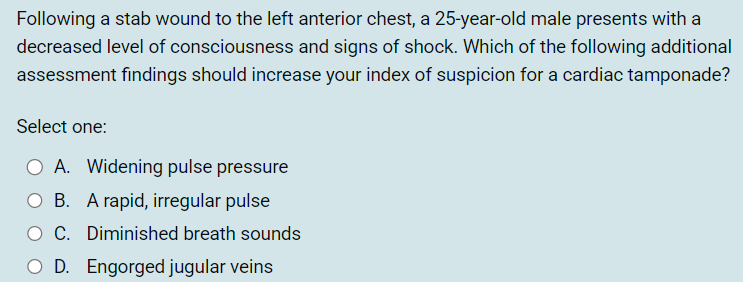
Engorged jugular veins
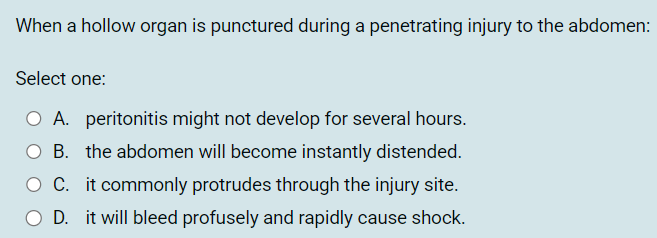
Peritonitis might not develop for several hours
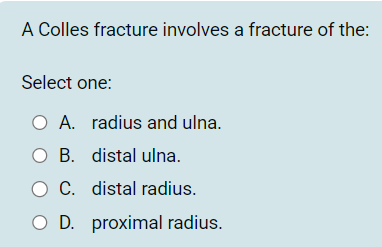
Distal radius
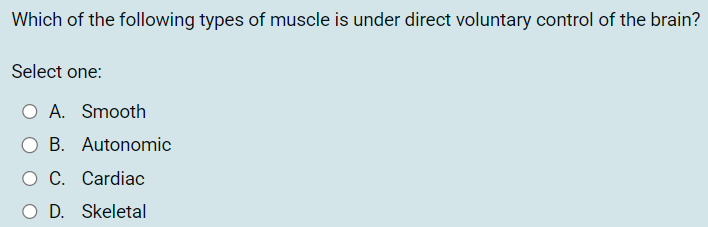
Skeletal
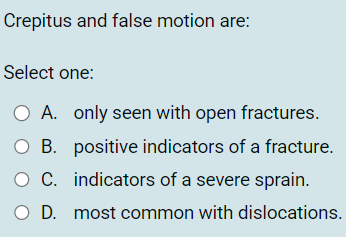
Positive indicators of a fracture
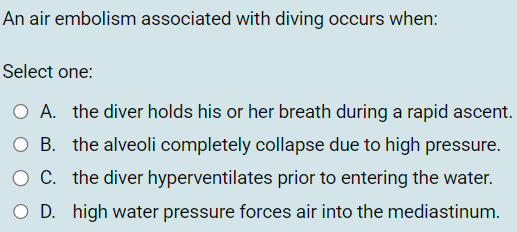
The diver holds his or her breath during a rapid ascent
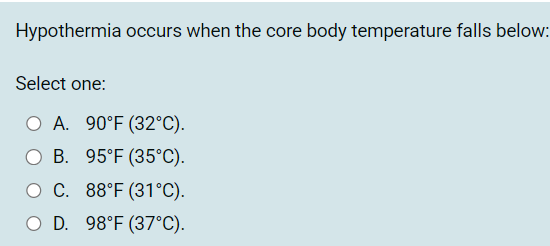
95°F (35°C)
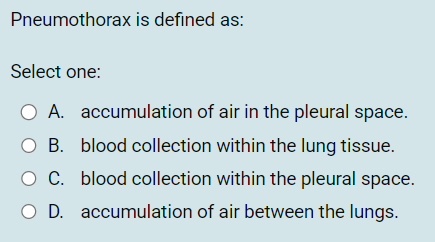
Accumulation of air in the pleural space.
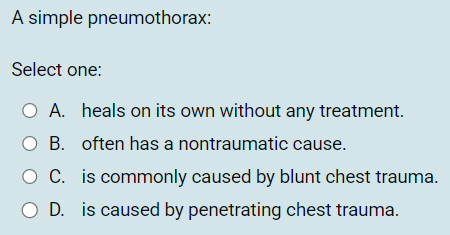
Is commonly caused by blunt chest trauma
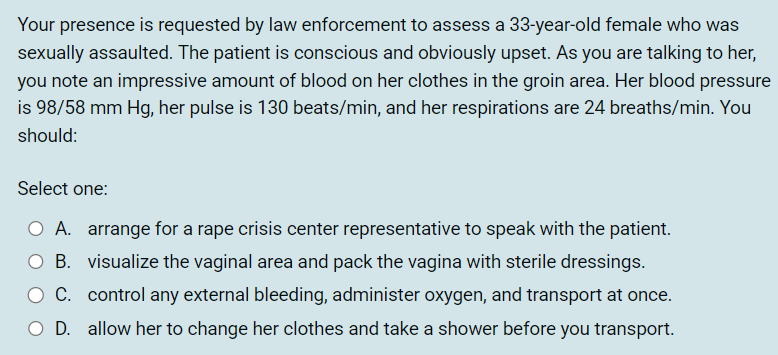
Control any external bleeding, administer oxygen, and transport at once
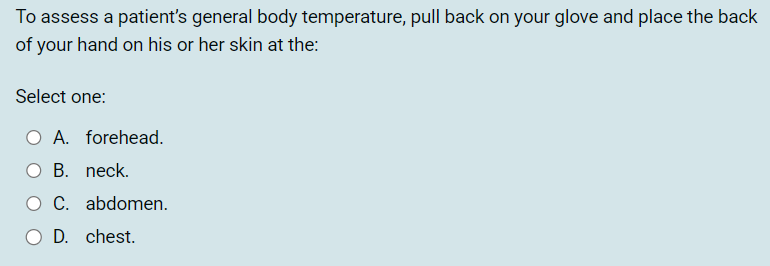
Abdomen
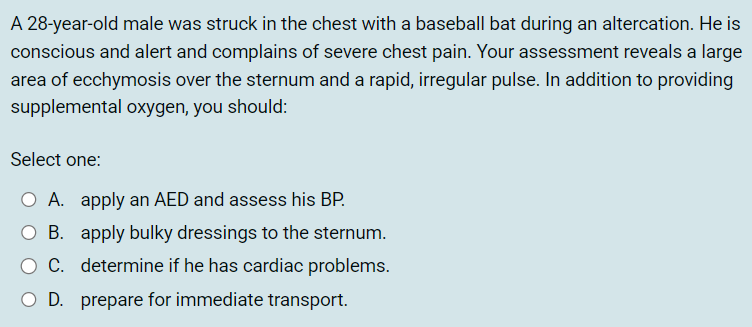
Prepare for immediate transport
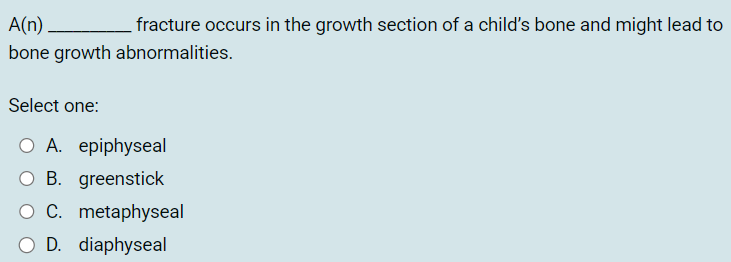
Epiphyseal
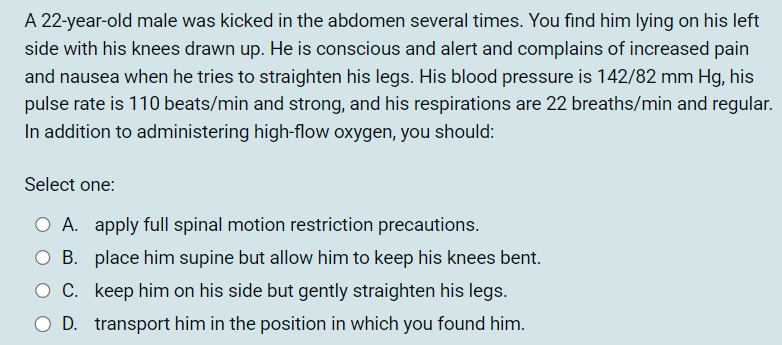
Transport him in the position in which you found him
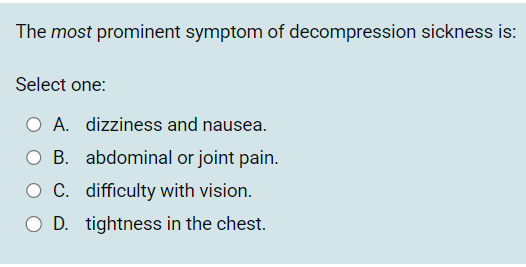
Abdominal or joint pain
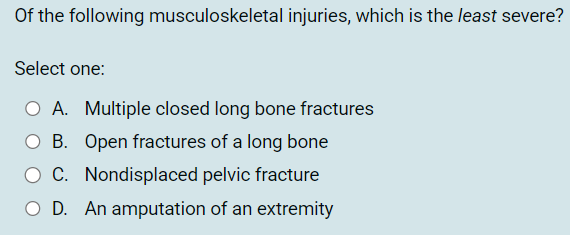
Nondisplaced pelvic fracture
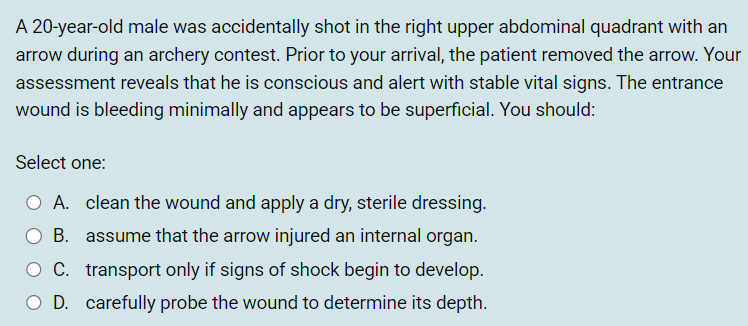
Assume that the arrow injured an internal organ
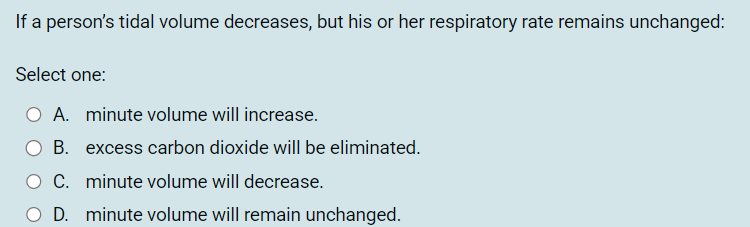
Minute volume will decrease
Liver
It is often discovered when the patient is jarred or moved suddenly
Load him into the ambulance and begin rapid cooling interventions
Might rise as high as the nipple line
inserting a needle through the rib cage into the pleural space
Dislocation
The intercostal muscles contract
Control the bleeding and cover the wound with a sterile dressing
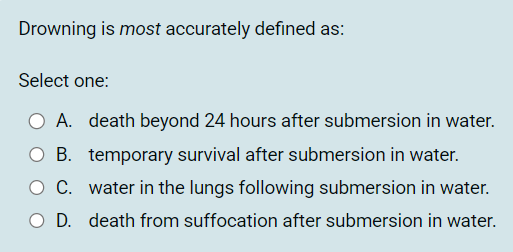
Death from suffocation after submersion in water
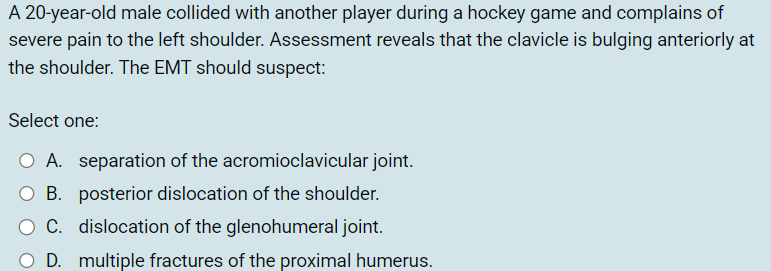
Separation of the acromioclavicular joint
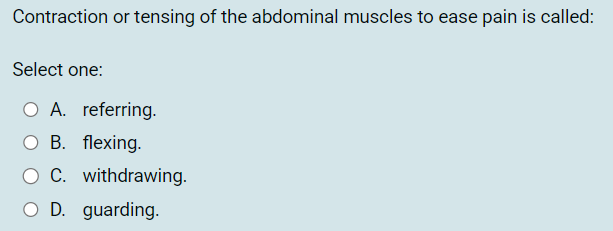
Guarding
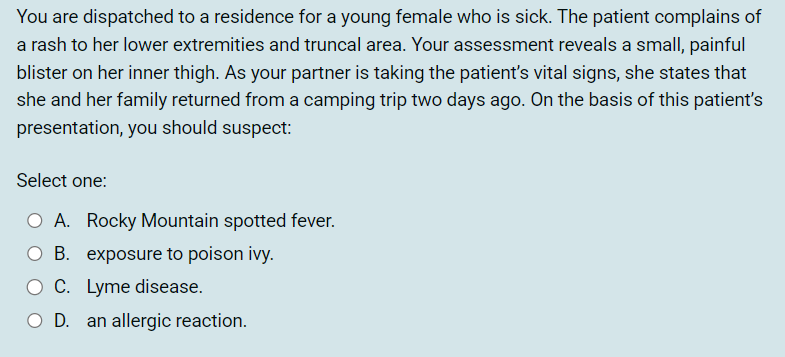
Lyme disease
Their intercostal muscles are not fully developed
Articular cartilage
Suction his mouth and nose, apply high-flow oxygen, monitor the patient's breath sounds for a pneumothorax, and contact medical control regarding transport to a recompression facility
Radiation
Aggressively manage his airway
Red areas of skin
Spleen
A passenger fractures her patella after it strikes the dashboard
Head
In a functional position
Muscle decreases in size and function because of disease or trauma
Applying direct pressure with a dry, sterile dressing
Avoid speculation and document only factual data.
Mottling and blister
Air is escaping into the chest wall from a damaged lung
Requires prompt ventilation and oxygenation
Below the anterior superior iliac spines of the pelvis and against the hip joints
Blood cells
A relatively small surface area
Myocardial contusion