Skin and soft tissue infections
 Call Kai
 Learn
Learn Practice Test
 Spaced Repetition
 Match
Match Flashcards
 Knowt Play
1/29

Earn XP
Description and Tags
PEBC
Name | Mastery | Learn | Test | Matching | Spaced | Call with Kai | Chat |
|---|
No analytics yet
Send a link to your students to track their progress
30 Terms
uncomplicated infections
folliculitis
impetigo
carbuncles
furuncles
cellulitis
small skin abscess
complicated infections
large abscesses
ulcers
necrotizing fasciitis
bites
burns
involve deep skin structures (fascia, muscle layer)
need surgical intervention
can include foot infection in diabetics
coexisting disease = diabetes, immunocompromised, obesity
cellulitis (definition)
acute bacterial infection involving the dermis & subcutaneous tissue
presentation
diffuse, poorly defined areas of erythema + warmth, swelling & tenderness
can be purulent or non-purulent
erysipelas (definition)
acute infection affecting the upper epidermis & superficial lymphatic vessels
mostly on face or lower limbs
folliculitis (definition)
inflammation or infection involving superficial or deep hair follicles, resulting in formation of papules or pustules
impetigo (definition)
superficial bacterial skin infection that occurs in 2 clincal forms:
Non-bollus = presents w/ papules, vesicles & pustules that rupture & develop honey-coloured crusts
Bullous = presence of fluid-filled blisters (bullae or vesicles)
common pathogens (SSTI)
staphylococcus aureus (gram positive)
B-hemolytic streptococci (groups A,B,C,G) (gram positive)
goals of therapy (SSTI)
cure the infection
minimize smx
prevent recurrence & progression of infection
prevent recurrence of skin infection by modifying contributing factors
prevent/ minimize s/e associated with medications
risk factors
CA-MRSA (S. aureus):
Health care exposures (prior 12 months)
recently hospitalization or surgery
residence in long term care facility
hemodialysis
Patient specific factors
known MRSA colonization or past infection w/ MRSA
HIV
injection drug use
homeless
MSM (men who have sex with men)
Environmental exposures
incarceration or working as prison guard, military service
living in crowded conditions
attending or working in childcare centers
playing contact sports or sharing sporting equipment
**MRSA = purulent (pus)
factors contributing in SSTI include:
vascular insufficiency (diabetes, peripheral vascular disease)
indwelling devices (catheters)
immunocompromised patients (transplants, Cancer, AIDS, critically ill, elderly)
socioeconomic status
Epidermal skin break (edema, trauma, surgery)
Obesity
Prior skin & soft tissue infection
assessment of severity (of infection)
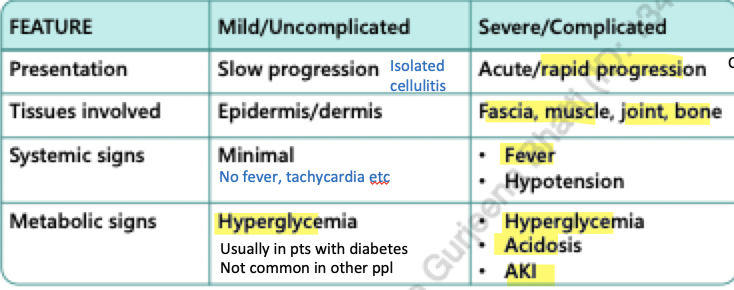
uncomplicated SSTI
non-purulent infections:
Erysipelas = epidermal cellulitis; classic signs = fire engine red and very clear line of demarkation
Cellulitis = deeper infection
Purulent infections:
cellulitis (w abscess)
impetigo
folliculitis
furuncles
carbuncles
small skin abscess
severity of non-purulent infections
Mild infection
Cellulitis/ erisipelas w/ no focus on purulence /systemic signs or smx
Moderate infection
typical cellulitis/erysipelas w/ SYSTEMIC signs of infection temp (>38), tachycardia (HR >90), tachypnea (RR>24), abnormal white cell count (>12,000 or <400)
Severe infection
pts who FAILED oral antibiotic treatment or those w/ systemic signs of infection, are immunocompromised or have clinical signs of deeper infections like bullae, skin sloughing, hypotension or evidence of organ dysfunction
uncomplicated SSTI non purulent infections
Erysipelas = infection of epidermal layer = all group A strep
Cellulitis = infection of dermis, subdermal tissue = mostly Group A strep
pathogens:
normal host = strep sp. (Groups A,B,C,G) > > > S. aureus (including CA-MRSA)
immunocompromised, diabetics = Polymicrobial
post-operative wound infections = streptococcus pyogenes
clinical sx:
hallmark signs = Erythema, warmth, swelling, tenderness
Lymphadenopathy
can have abscess formation
diagnosis
when pts lack hallmark clinical features of infection or have bilateral or atypical findings: rule out other dx (gout, DVT, Venous stasis dermatitis)
risk factors (cellulitis)
tinea pedis
diabetes
peripheral vascular disease
peripheral edema
obesity
history of cellulitis
treatment non purulent cellulitis (erysipelas)
non pharm = evaluation for skin abscess, drainage if present
pharmacological = 5 days, longer in severe/ complicated)
mild = penicillin VK, cephalexin, cefadroxil, clindamycin
*clinda - reserved for pts who cant take B-lactams (anaphylactic allergy)
moderate = IV Penicillin, Cefazolin, Ceftriaxone, Clindamycin
severe = [Piperacillin/ tazobactam or Imipenem/Meropenem ] + vancomycin (MRSA)
treat empirically for CA-MRSA if
non-response to anti-MSSA, anti-streptococcal coverage
concern for severe/ necrotizing infection
CA-MRSA risk factors (military, failed oral abx therapy etc)
severity of purulent infections
MILD infection:
impetigo, furuncle, carbuncle, abcess — no systemic signs or smx
MODERATE infection:
systemic signs of infection: temp (>38), tachycardia (HR >90), tachypnea (RR>24), abnormal white cell count (>12,000 or <400)
SEVERE infection:
failed incision + drainage & oral antibiotics or those w/ severe systemic signs of infection or immunocompromised pts
impetigo
purulent infection
superficial, nonfollicular pustules
usually on the face and extremities
common pathogens = Staphylococcus aureus, B-hemolytic streptococcus sp, MSSA
risk factors:
children (peak = 2-5)
equal in male and female
tropical regions, warmer months
poor hygiene
minor skin trauma (insect bites)
may be highly contagious, patients often colonized prior to infection
clinical presentation:
honey crusted lesions
pustules that rupture —> then form thick crust
impetigo treatment
Mild = topical:
Mupirocin ointment x 5 days (preferred)
Fusidic acid x 5 days
Moderate/ Severe = Oral:
(Penicillin? ) Cephalexin, Cloxacilin x 7 days
clindamycin x 7 days if severe penicillin allergy
multiple sites of lesions or failed therapy
consider CA-MRSA if rapidly progressing
TMP/SMX
Doxycycline
Clindamycin
folliculitis
superficial purulent skin infection localized at hair follicles
pathogens: Polymicrobial
Strep
Staph (always think this if exposure to water)
Candida spp
occasionally: Pseudomonas aeruginosa
risk factors:
Nasal carriage of S. aureus
Pools, Hot tubs (pseudomonas)
clinical sx:
multiple clustered lesions <5mm
erythematous
pruritic
pus
treatment:
lesions may spontaneously drain and resolve
topical treatment:
warm compress & antimicrobial cleanser (e.g. benzoyl peroxide)
topical abx =
Mupirocin ointment x 5-7 days
Clindamycin gel/solution x 7-10 days OR fusidic acid ( ⬆ resistance of S.aureus)
oral or parenteral antimicrobials if systemic infection (rare) x 7-10 days
persistent s&s after 2-3 weeks of therapy
MRSA not suspected = Cephalexin
MRSA suspected =
Doxycycline
TMP/SMX
Clindamycin
furuncles/ carbuncles (and skin abscesses)
purulent infections
furuncle = infection of hair follicle (boil)
small skin abscess extending through dermis into subcut tissue
painful, tender and pus-filled —> drains spontaneously
carbuncle = coalescence of several inflamed hair follicles/ boils
may present w fever (mostly in diabetics)
pathogens = S. aureus
treatment:
mild = incision & drainage of abscess, warm water or saline compresses for 20-30 mins QID
may consider antimicrobials for small abscesses to ⬇ recurrence
antimicrobials for moderate to severe
moderate = incision & drainage
Empiric =
SMX/TMP or
Doxycycline
defined MRSA = SMX/TMP
Defined MSSA = Cephalexin
Severe = incision & drainage
Empiric or defined MRSA =
Vancomycin
Linezolid
Daptomycin
MSSA =
Cefazolin
Clindamycin (documented b-lactam allergy)
necrotizing SSTIs
polymicrobial
monomicrobial = Group A strep (flesh eating bacteria). s. aureus, CA-MRSA, Clostridium perfringens
risk factors:
IVDU
Immunosuppression
DM
Obesity
Elderly
Alcohol
Peripheral vascular disease
AIDS
Cancer
Treatment:
aggressive debridement, supportive care and IV antibiotic therapy
Empiric therapy:
Broad spectrum = Carbapenems, Pip/Tazo
MRSA = Vancomycin, Daptomycin, Linezolid
Inhibit toxin production = Clindamycin (added onto above therapy)
animal bites
pathogens
S. aureus (gram positive)
strep (gram positive)
mouth anaerobic pathogens (Pasteurella spp, Elkenella spp)
treatment (5-14 days):
5-14 days = Amox/clav (po)
goal = target aerobes AND anaerobes
if allergy = Moxifloxacin + Clindamycin ?? (old notes)
alternatives =
Cefuroxime,
Doxycycline,
SMX/TMP,
Levofloxacin, Moxifloxacin or Carbapenems (With Metronidazole or Clindamycin as needed for anaerobic coverage)
tetanus toxoid, rabies post-exposure prophylaxis (PEP)
human bites
deep wounds
pathogens:
S. aureus
S. epidermitis
Streptocci
Mouth Anaerobes (Peptostreptococci)
S. viridans
Eikenella spp
empiric treatment
5 - 14 days
up to 14 days = if later presentation/ more complicated wound
Amox/clav po will target most pathogens
alternatives =
FQ
Doxy or
Carbapenems
w/ Metronidazole as needed for anaerobic coverage
or moxifloxacin monotherapy
tetanus toxoid
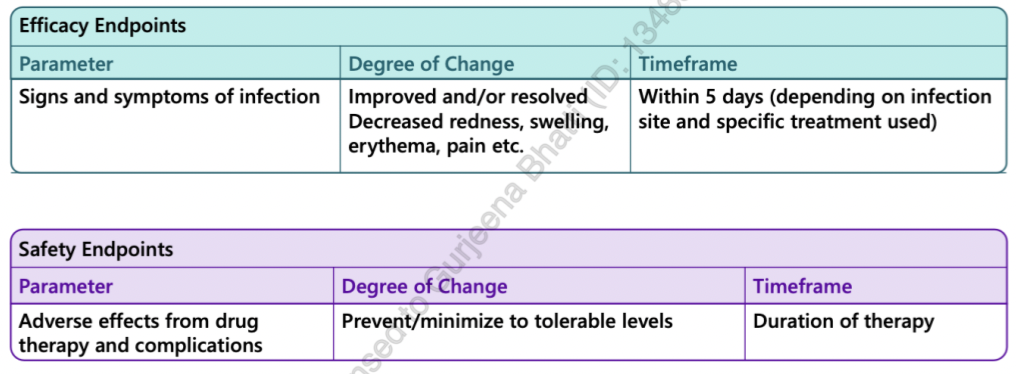
monitoring SSTI
trauma wound (/ compound fractures)
classified as contaminated &/or dirty wounds
antimicrobials = therapeutic not prophylactic
Empiric abx:
depend on trauma location & extent
visceral & mucosal sites = need broad-spectrum agents (cover for pseudomonas if water related wound, metronidaole for soil contaminated wound)
ciprofloxacin + metronidazole
carbapenem
cefazolin + AMG
pip-tazo
the bigger the skin break the broad the therapy
carbapenems
Meropenem, Imipenem
associated w/ ⬇ seziure threshold
Risk of seizures increased in the presence of poor renal function; caution is advised.
s/e = C.diff, Hypersensitivity reactions (ranging from minor rashes to anaphylactic shock). Nausea, vomiting, diarrhea.
useful for difficult to treat organisms w/ multi-resistance (SPACE/SPICE, ESBLs)
good for mixed infections (gram positive/negative, Pseudomonas)
do not use ertapenem for pseudomonas spp or Acinetobacter
DDI = Probenecid ⬆ serum levels.
Meropenem may decrease valproic acid levels.
ceftriaxone
very good coverage against S.penumo
Bactericidal, time-dependent killing
3rd gen with +++ gram negative coverage (E.coli, klebsiella, serratia, proteus, morganella)
all cephalosporins lack coverage against listeria, atypicals and enterococci
s/e = rash, nausea, diarrhea
rare s/e = Neurotoxicity/ seizure (older age, renal dysfunction, IV admin, underlying CNS disorder)
vancomycin
inhibits cell wall formation; time-dependent killing
s/e = vancomycin infusion reaction: flushing, hypotension (with fast infusion), vancomycin-induced thrombocytopenia
May cause ototoxicity, nephrotoxicity if receiving other drugs with these effects.
target trough = 10-20 mg/dL (for severe deep seated infections: 15-20)
target AUC = 400-600
SMX/TMP
s/e = Rash, pruritus. May cause hyperkalemia; risk is increased in elderly and renal impaired patients. Hypersensitivity reactions, nausea, vomiting, diarrhea, rash, false↑in serum creatinine, renal impairment, neutropenia, thrombocytopenia, anemia, agranulocytosis, hypoglycemia (in malnourished pt or pts with renal or hepatic impairment), photosensitivity
CI = severe liver disease
caution: G6PD deficiency
covers gram positive & negative
Hyperkalemia with ACE inhibitors and ARBs
Administer with at least 8 ounces of water
DDI: 2C9 inhibitor, 3A4 substrate: ⬆levels of carvedilol, digoxin, phenytoin, INR
levels ⬇w/ 3A4 inducers (carbamazepine, phenobarb, phenytoin, rifampin)
Fluroquinolones (FQ)
Ciprofloxacin, Levofloxacin, Moxifloxacin
resp: Levo & moxi
Bactericidal
S/e: GI (N/V/D), HA, dizziness, ⬆QTc prolongation (highest = moxi), Tendonopathy/ tendon rupture (↑ risk if concomitant CS, ≥60 years & women) ⬆/ ⬇blood glucose, ⬆ C.diff infection, seizures, articular damage in kids. Peripheral neuropathy
DI: CYP1A2 inhibition —> ⬆ levels of clozapine, duloxetine, MTX, rasagiline, vareniciline
increase INR by displacing warfarin
Caution: ≥60 years, renal impairment (dose adjust), solid organ transplant, <18 y/o
monitor: joint pain, blood glucose (if DM)