nicotine, caffeine, and karatom pt 2
 Call Kai
 Learn
Learn Practice Test
 Spaced Repetition
 Match
Match Flashcards
 Knowt Play
1/31

There's no tags or description
Looks like no tags are added yet.
Name | Mastery | Learn | Test | Matching | Spaced | Call with Kai | Chat |
|---|
No analytics yet
Send a link to your students to track their progress
32 Terms
acute tolerance to nicotine
cigarette smokers undergo acute tolerance over the course of the day
due to desentization of nictoine receptors
over the course of a day a smoker undergoes
repeated elevated and drops in plasma membrane levels
early in the day mood may be elevated above baseline level
later peaks in nicotine may be only enough to maintain neutral mood and avoid withdrawal symptoms
nachrs re-sensitize significantly overnight» allows cycle to repeat
increase in nicotine is evident of less pleasure
when do withdrawal symptoms in nicotine occur
pump in experiment runs out of nicotine or if receptor antagonist, mecamylamine is given
brain reward function in chronic nicotine use
reduced during withdrawal
increased threshold for ICSS
withdrawal symptoms are mediated by what
are mediated by reduced DA actvitiy in NACC and increased CRF in amygdala
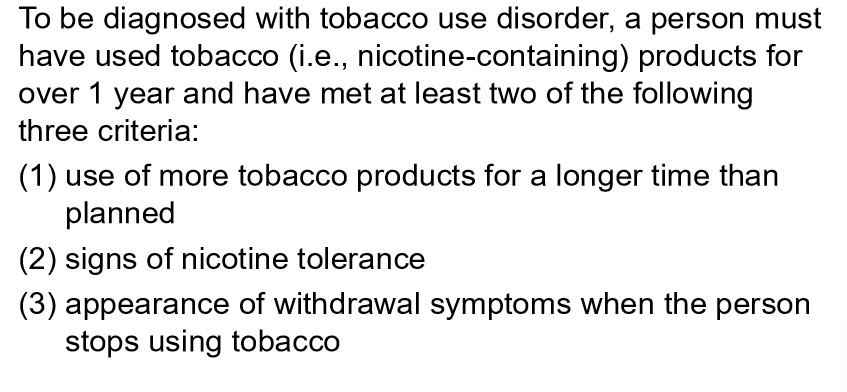
DMS5 definition of tobacco use disorder
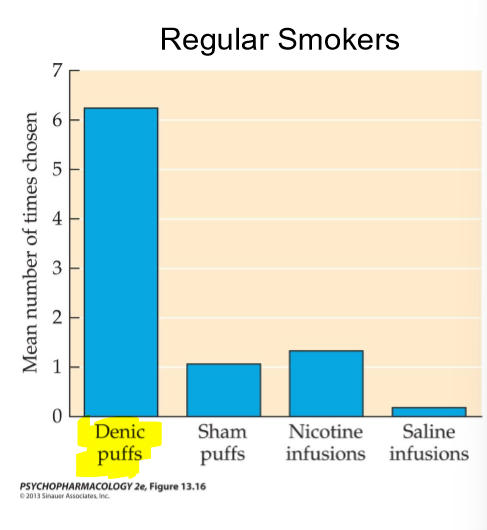
nictoine abuse disorder is also dictated by what other factors
sensory stimuli associated with the act of smoking
i.e. actually holding the cigarette etc
denic puffs had the highest
nicotine replacement therapy (NRT)
relieves withdrawal symptoms
delivered in a safer way than smoking
NRT helps smokers quit 50%- 60% compared to placebo or no intervention
bupropion
antidepressant
dopamine and NE reuptake inhibtor
similar structure to stimulants
reduces cravings and withdrawal symptoms
chantix or varnicline
partial agonist of alpha 4 beta 2 nicotinic receptors
produces a moderate amount of receptor activation
reduces nicotine cravings and adverse withdrawal symptoms
more effective than buproprion
caffeine
from coffee means, consumed orally, converted to metabolites by CYP1A2
fours hour half life
paraxantine
metabolite of caffeine
cns stimulant
further breakdown leads to metabolites that are secreted in the urine 95% are eliminated trough the urine
lab animals bisphaic effects low
stimulant effects
lab animals bisphasic effects
show reduced activity
low doses in humans of caffeine
positive subjective effects
feeling of well being, increased energy, increased alertness, enhanced sociability
high doses humans of caffeine
anxiogenic
people with panic disorder are hypersensitive to caffeine’’s anxiogenic effects
cognitive effects of nicotine
increased blood pressure, heart rate, increased urine output
chronic caffeine use leads to
tolerance
caffeine withdrawal
sleepiness, headache, and irritability
intense craving
acute caffeine intake physiological effects
increase BP
increased respiration rate
enhance water excretion
caffeine intoxication
restlessness nervousness, insomia, tachycardia, muscle twitching, GI upset
hard to distinguish to generalized anxiety disorder
3 to 5 g cause death
therapeutic uses of caffeine
potentiates analgesic properties of aspirin and acetaminophen
included in some OTC pain medications (Anacin and Excedrin)
effective in treatment of apnea in premature newborns because it regularizes breathing
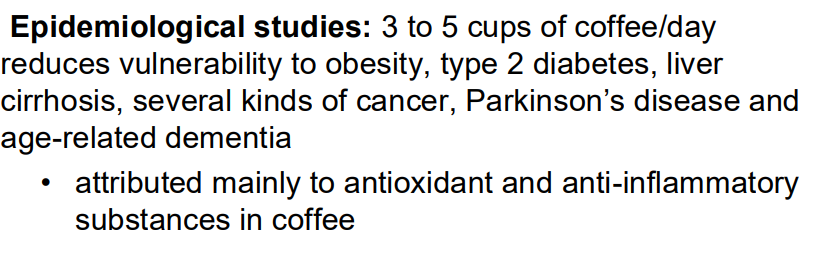
epidemological studies of caffeine
caffeine biochemical effects
Inhibition of cAMP phosphodiesterase (PDE)
Blocks GABAA receptors
Stimulates Ca2+ release within cells
Blockade of A1 and A2A adenosine receptors
toxic doses effects of caffeine
Dose-dependent inhibition of cAMP phosphodiesterase, blockade of GABAA receptors
stimulation of Ca2+ release in cells
complete blockade of A1 and A2A receptors and operate at doses
acute does a partial blockage of A1 and A2A receptors
adenosine
NT that promotes sleep
caffeine and adenosine
caffeine antagonizes adenosine
caffeine and DA
caffeine removes break on DA signaling
adenosine and DA
adenosine receptors A2A receptors are coexpressed with post synaptic D2A receptors to form heterotetramers
adenosine allosterically inhibits D2R receptors signaling
evidence of caffeine and DA
In striatal neurons, A2AR agonists decrease D2R agonist binding>>decrease affinity of DA for its receptor • caffeine-induced increases in locomotor activity and arousal are absent in A2AR KO mice
Kratom
tree found in Southeast Asia
low doses act like stimulant
high doses act like narcotic or sedative
used to self-treat conditions such as pain, coughing, diarrhea, anxiety and depression, opioid use disorder, and opioid withdrawal
kratom
does not resemble typical opioids and isn’t scheduled