Exam 3 AEP
 Call Kai
 Learn
Learn Practice Test
 Spaced Repetition
 Match
Match Flashcards
 Knowt Play
1/63

There's no tags or description
Looks like no tags are added yet.
Name | Mastery | Learn | Test | Matching | Spaced | Call with Kai | Chat |
|---|
No analytics yet
Send a link to your students to track their progress
64 Terms
normal sinus rhythm
normal rhythm that originates from the SA node with a heart rate of 60-100 BPM
what is the normal heart rate
60-100 bpm
what is the normal PR interval
0.12-0.20 sec
Normal QRS duration
0.06-0.10sec
what does the P wave represent
Atrial depolarization
what does the QRS represent
ventricular depolarization
what does the T wave represent
ventricular repolarization
what rhythm originates from the SA nide
normal sinus rhythm
normal sinus rhythm rate.
60-100 bpm.
normal sinus rhythm
regular
normal sinus rhythm p wave
present, uniform, one P for every QRS
normal sinus rhythm PR interval
0.12 - 0.20sec
normal sinus rhythm QRS
0.06 - 0.10
The PR interval is
0.12-0.20 sec
The QRS duration should be
0.06-0.10 seconds
the normal sinus rhythm originates from the
SA node
One P wave should occur before every
QRS
Rhythm analysis steps
heart rate, rhythm regularity, p waves, pr interval, qrs duration, overall interpretation
Rhythm analysis steps easy
rate, rhythm, p waves, PR, QRS, diagnosis
why is it called “sinus” rhythm
becuase the electrical impulse begins in the SA node, also called the sinus node.
ecg small box
0.04 sec
ecg large box
0.20 sec
what interval represents AV conduction
PR interval
what is an arrhythmia
any abnormality in heart rate, rhythm, or conduction
causes of arrhythmias
coronary artery disease, myocardial ischemia, electrolyte imbalances, hypoxia, certain medications, increased sympathetic stimulation, structural heart disease
what are the two main mechanisms that produce arrhythmias
abnormal impulse formation, abnormal impulse condition
causes of bradycardia
athletes, sleep, increased vagal tone, beta blockers, hypothyroidism
tachycardia causes
exercise, stress, pain, fever, anxiety
sinus arrhythmia
normal sinus rhythm but HR changes with respiration
premature atrial contraction (PAC)
an ectopic focus in the atria fires before the SA node
ECG characteristics of premature atrial contraction
early beat, abnormal p wave, narrow QRS
premature ventricular contraction (PVC)
an ectopic ventricular beat occurs before the next normal beat
ECG characteristics of premature ventricular contraction (PVC)
wide QRS, no preceding P wave, premature beat, usually followed by compensatory pause
how to recognize PVS
is there a p wave? no → is the QRS wide? yes then PVC
Atrial flutter
rapid atrial rhythm usually around 250-350 BPM
ECG apperance for atrial flutter
saw-tooth flutter waves, no distinct p waves, regular ventricular rhythm (looks like ^^^^^^^ instead of normal p waves)
atrial fibrillation (most common tested arrhythmia)
chaotic atrial electrical activity
ecg characteristics of atrial fibrillation
no p wave, irregularly irregular rhythm, variable r-r intervals
easy memory of atrial fibrillation
Everything is irregular. no organized atrial contraction
ex. (QRS~~~~~QRS~~~~~~~~~~~~QRS~~~~QRS)
Difference between flutter and fib
Flutter= saw-tooth waves, usually regular ventricular rhythm, organized atrial activity
Fib= no p waves, irregularly irregular rhythm, chaotic atrial activity
ventricular tacycardia
rapid rhythm, originates in ventricles
ecg characteristics ventricular tacycardia
HR more than 100 bpm, wide qrs, no normal p waves, regular rhythm
ventricular fibrillation
medical emergency
ecg characteristics of ventricular fibrillation
medical emergency
ECG characteristics of ventricular fibrillation
no identifiable p, QRS, or T waves just chaotic waves
ex. (~~~~~~~~~~~~~) random squiggles
asystole
no electrical activity
ECG characteristics of asytole
flat line (_________)
PVCs originate from the
ventricles
Atrial fibrillation has __ P waves
No
ventricular tachycardia usually has __ QRS complexes
wide
Atrial flutter has __ waves
saw-tooth
ventricular fibrillation has __ identifiable QRS compex
no
explain why atrial fibrillation increases stroke risk
in atrial fibrillation, the atria do not contract effectively, they quivers instead. Blood can pool in the atria, allowing clots to form. If a clot travels to the brain, it can cause a stroke
explain why PVCs have wide QRS complexes
PVCs start in the ventricles instead of following the normal conduction pathway. Because the impulses spread slowly through the ventricular muscle rather than rapidly through the purkinje fibers, the QRS complex becomes wide.
look
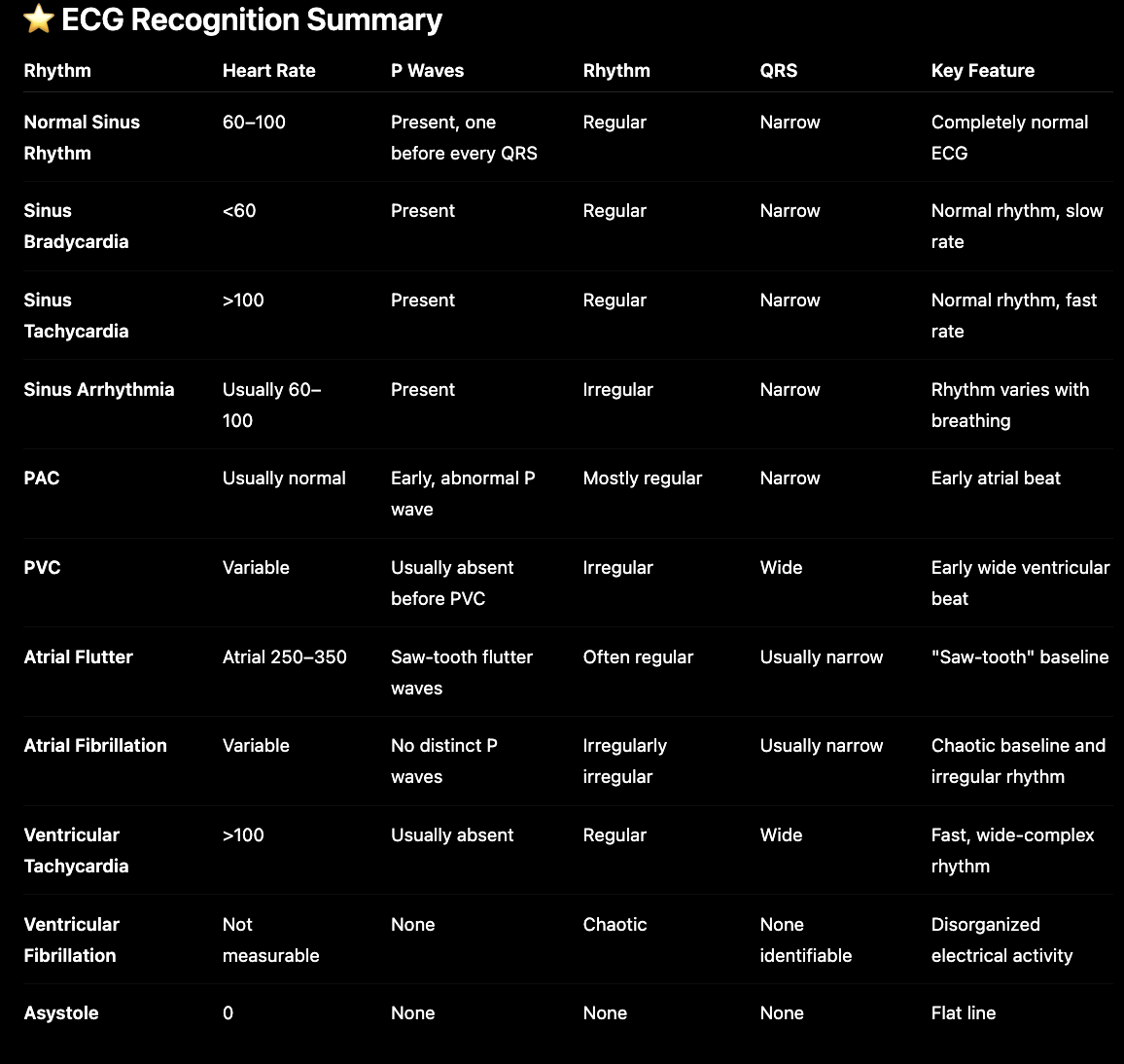
What is a junctional rhythm
occurs when the AV junction (av node/bundle of his region) takes over instead of the SA node
pacemaker rates
SA node= 60-100 BPM
AV junction= 40-60 BPM
Ventricles 20-40 BPM
where do junctional rhythms originate from
the av junction (av node/bundle of his region)
what is the intrinsic firing rate of the AV junction
40-60 BPM
why do junctional rhythms occur?
becuase the SA node fails to fire, fires too slowly, or the impulse is blocked, allowing the AV junction to become the pacemaker
Junctional rhythm ECG charateristics
rate: 40-60
rhythm: regular
QRS: (normal)narrow
P wave (may be): absent, inverted hidden.
why is the p wave inverted
in a junctional rhythm, the impulse starts in the AV junction and travels backwards (retrograde) through the atria. Becuase the atria are activated in the opposite direction, the P wave becomes inverted
p waves
Normal = impulse travels downward
Junctional = impulse travels backward
Backward activation = inverted P wave