S1- Infection Control
 Call Kai
 Learn
Learn Practice Test
 Spaced Repetition
 Match
Match Flashcards
 Knowt Play
1/185

There's no tags or description
Looks like no tags are added yet.
Name | Mastery | Learn | Test | Matching | Spaced | Call with Kai | Chat |
|---|
No analytics yet
Send a link to your students to track their progress
186 Terms
A disease-producing organism is a___.
Pathogen
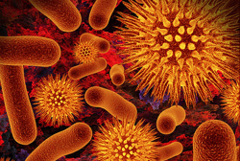
A ___ may replicate only within a living cell, surrounded by a coat of antigenic protein.
Virus
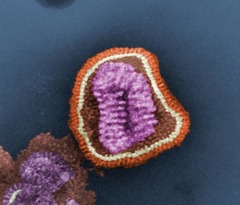
A unicellular microorganism
Bacteria
Mushroom, yeast, and mold are examples of this spore that can invade living organisms.
Fungi
A condition in which disease-producing microorganisms are present.
Sepsis
A condition in which living, pathogenic microorganisms are absent.
Asepsis
The presence of microorganisms on a body surface or on inanimate objects or substances.
Contamination
Organisms can spread from a patient's mouth to us, office personnel, or another patient either directly or indirectly.
Cross-contamination
- Infection control and safety procedures to protect against bloodborne disease transmission.
- Assume that all blood and any body fluid that might be contaminated with blood (such as saliva), is infectious.
Universal Precautions
What expanded the concept of universal precautions beyond exposure to blood and represents a standard of care designed to protect DHCP and patients from pathogens that can be spread by: blood, all body fluids, secretions, and excretions (except sweat), non-intact skin, and mucous membranes.
Standard Precautions
Examples of Standard Precautions:
- Hand hygiene.
- Use of PPE.
- Cleaning and disinfecting environmental surfaces.
- Safe injection practices and sharps safety.
- Sterilization of instruments and devices.
- Respiratory hygiene/cough etiquette.
- A pathogen in sufficient numbers to cause infection: infection, bacteria, viruses, fungi, rickettsia, protozoa or parasites.
Infectious Agent
Interventions to break the chain for Infectious Agents:
Clinical Identification of Lesions and Standard Precautions.
- A place for the pathogen to reside and multiply.
Reservoir
Interventions to break the chain for a Reservoir:
Immunization and Standard Precautions
People, blood, body fluids, water, surfaces, equipment, instruments are locations of ___.
Location of Reservoir
Immunization and standard precautions.
Reservoir - Interventions to Break the Chain
A way for pathogens to leave the reservoir and reach a new host.
Portal of Exit
Interventions to break the chain for the Portal of Exit:
Standard Precautions and Waste Disposal (biohazard, needles in sharps container)
Name ways pathogens can leave the reservoir
Via nose, mouth, sneeze, cough, blood.
Organisms move from one place to another via?
Mode of Transmission
Name ways to minimize aerosols in an operatory?
HVE minimizes aerosols from spreading, and an air purifier.
Via Mode of Transformation, organisms can move to a different location via hands, instruments, etc. This porcess can be ___ contact and ___ contact.
Direct/Indirect
The opening that allows the organisms to enter the host.
Portal of Entry
Interventions to Break the Chain for Portal of Entry:
Standard Precautions and Immunizations
A person lacking immunity or physical resistance to overcome invasion by a pathogen.
Susceptible Host
Factors that Influence the Development of Infection:
Number of organisms, duration of exposure, virulence of organisms, immune status of host, and general health of host.
Factors that Alter Normal Defenses include:
Abnormal physical conditions, systemic diseases, drug therapy, prosthesis, and transplants.
- An infection that develops or originates within a person when the normal defense mechanisms are modified.
- The individual is the source of the organisms.
Example: Organisms from the oral cavity are forced into the tissues during instrumentation.
Autogenous Infection
What are examples of cross-contamination?
Direct = sneezing
Indirect = Door handles
Infection that occurs when the organisms are transmitted from 1 person to another, either direct or indirect transmission.
Cross-infection
An autogeneous infection is caused by ___
Bacteremia
Presence of bacteria in the bloodstream.
Bacteremia
How can you prevent an autogenous infection?
- Lower surface microbial count by oral hygiene measures to remove biofilm. (Mouthwash/Prerinse)
- Enhance the defense mechanism. (Antibiotics before Treatment)
5 Ways Transmission of Microorganisms Takes Place
Direct contact, indirect contact, airborne, dust-borne, waterborne.
The transmission of microorganisms from an infected person to person (host) via blood, saliva or other oral secretions. (Person to Person)
Direct Contact
The transmission of microorganisms through contaminated instruments, operatory equipment, or enviromental surfaces. (Person > Inanimate Object > Person)
Indirect Contact
What are two examples of airborne particles that may cause an airborne infection?
Aerosols and spatter
Artificially generated collection of particles suspensed in air and capable of causing an airborne infection.
Aerosol
Heavier, larger airborne partices that remain airborne only a short period of time.
Spatter
Origin of Aerosol Production is produced during all ___ procedures, via a/w spray, hand piece activity, and ultrsonic scaling.
Intraoral
Microorganism can be a single organism or a cluster of organisms that can adhere to dust or debris particles.
Dust-borne Organism
- Transfer of microorganisms through contaminated dental unit waterlines.
Waterborne Organisms
What are ways to avoid the transfer of microorganisms in water in the operatory?
- Run water through the tubing for at least 2 minutes at the start of the day.
- Run for 20-30 seconds in between each patient.
When preventing the transmission of microorganisms, what should you do that may cause you to postpone treatment if the patient is in the acute phase of infection?
Get their medical history
What may a patient's medical history reveal?
- The patient has a condition that makes one more susceptible to autogenous infections.
- Certain pathogens that may be present in the oral cavity.
A negative health history does not mean that the patient is disease or pathogen-free, so you should...
Treat every patient as if pathogens are present.
What are some pre-procedural oral health measures?
Toothbrushing and mouthwash
Name some ways to interrupt transmission.
Rubber dam, HVE, manual instrumentation, vacuum cleaning, clean water, PPE, patient eyewear, and air control methods.
HIV, Hepatitis, STI, Syphilis, Herpes, Varicella, Rubella, Flu, Staph Infections, Covid, and TB are examples of ___ ___.
Transmissible pathogens
What are the three modes of transformation?
Inhalation, deposition, and touching.
Inhalation of ______ are modes of transformation.
Aerosol particles
Deposition of respiratory particles on exposed ___ (eye, mouth, nose) is a mode of transformation
Mucous
Bloodborne pathogen examples include...
Hep B, Hep C, and HIV
Contact pathogen examples include...
Chickenpox, Hep A, Herpes Simplex, and SARS-CoV-2.
Droplet pathogen examples include...
Mumps, Rubella, Influenza, and SARS-CoV-2.
Airborne pathogens include...
Chickenpox, Measles, Tuberculosis, and SARS-CoV-2.
Name recommendations to reduce the risk of exposure to pathogens.
- Immunizations and testing.
- Restrict the duties of employees who are ill with an infectious disease.
What is the hair protocol during operation?
- Hair should be clean and kept out of the field of operation.
- Protective hair coverings should be worn.
In what order do you don PPE?
Gown > Mask > Eyewear, Exam Gloves
T or F: Clinic attire should not be worn outside of the clinic?
True
What should be put on prior to hand-washing and donning new gloves?
New face mask and eyewear
What should be changed for each patient?
Mask, gloves, and gown.
A face mask is no longer effective if it becomes ___.
Wet
What is the time limit on face masks and exam gloves for long procedures? For high aerosol procedures?
1 hour. 20 minutes for high areosols.
After high aerosol procedures, what should you do with your mask for several minutes to prevent direct exposure to airborne organisms?
Keep the mask on.
Which mask do you wear when entering the clinic?
Level 2
When do you change from a level 2 mask to a level 3 mask?
When you put on your gown.
Which mask should you use when treating patients with airborne diseases?
N95 Respirator
Which mask is ideal for procedures where heavy to moderate amounts of fluid, spray, and aerosols are produced?
Level 3
Which mask is ideal for procedures where light to moderate amounts of fluid, spray, and aerosols are produced?
Level 2
Eyewear should be washed with what?
Soap and water
What PPE do patients wear?
Eyewear
When should you wash your hands in the clinic?
- Before and after patient treatment.
- Before gloving and after degloving.
- After touching a contaminated object with bare hands.
- When hands are visibly soiled.
- Before leaving the treatment area.
What bacteria reflect continuous contamination by routine contacts
Transient Bacteria
What bacteria inhabit the skin normally and attach to deeper layers?
Resident Bacteria
The purpose of ___ is to remove surface dirt and transient bacteria, dissolvegreasy film on the skin, rinse and remove loosened debris, and provide disinfection with a long -acting antiseptic.
Handwashing
What is the nail-care protocol?
Keep fingernails short and clean with no nail polish or acrylics.
T/F: Jewelry is allowed in the clinic.
False.
Antiseptic hand gel is __ based and is used to decontaminate hands.
Alcohol
When should you utilize antiseptic gel?
In between glove changes on the same patient.
Don means __.
Put on
Doff means ___.
Take off
Where should gloves be put on?
In front of the patient.
How should gloves be paired with long sleeves of protective clothing?
Gloves go over the sleeves. (Sleeves tucked into gloves)
What is the term for the enhanced penetration of liquids through undetected holes in gloves?
Wicking
T/F: You can leave the operatory with gloves on.
False. Never walk around the clinic with exam gloves on
If it is necessary to touch other items in the operatory during patient care you can use an ___ or remove gloves and use clean hands.
Overglove
The ___ of an overglove is contamiinated and cannot be touched without gloves.
Inside
What do you wear when handling contaminated instruments and when breaking down the operatory?
Nitrile utility gloves
What do you do with your utility gloves when you're done using them?
Wash them with soap and water and then with gel. Leave them on the sink to dry.
What is the process by which the number of organisms is reduced to a safe level, and is basically dusting.
Sanitization
What is the use of a physical or chemical means to remove, inactivate, or destroy pathogenic organisms on a surface or item?
Disinfection or Deccontamination
What is the term for the disinfectant that is capable of killing bacteria?
Bactericidal disinfectant
What is the term for the disinfectant that is capable of inhibiting the growth of bacteria?
Bacteriostatic
What are the three levels of disinfection?
Low level, intermediate level, and high level.
Which level of disinfection kills bacteria but not spores, tubercle bacilli, or viruses? It is not EPA-registered and is only good for cleaning. Example: Clorox Wipe
Low Level
Which level of disinfection inactivates all organisms except spores and kills most bacteria and viruses?
Intermediate Level
Which level of disinfection is capable of inactivating spores with adequate exposure time and kills all forms of bacteria, fungi, and viruses?
High Level
What color high-level wipes should be used in the operatory
Purple