Chapter 14: The Revenue Cycle: Sales to Cash Collections
 Call Kai
 Learn
Learn Practice Test
 Spaced Repetition
 Match
Match Flashcards
 Knowt Play
1/79

There's no tags or description
Looks like no tags are added yet.
Name | Mastery | Learn | Test | Matching | Spaced | Call with Kai | Chat |
|---|
No analytics yet
Send a link to your students to track their progress
80 Terms
What is the Revenue Cycle?
-A recurring set of business activities and related information processing operations associated with providing goods and services to customers and collecting cash in payments for those sales
-The primary external exchange of information is with customers
-Information about revenue cycle activities also flows to other accounting cycles (i.e. expenditure and production cycle, HR mgmt/payroll cycle, general ledger and reporting function)
What is the primary objective of the Revenue Cycle?
Provide the right product in the right place at the right time for the right price
What are the key decisions mgmt must make in order to accomplish the primary objective?
-To what extent can and should products be customized to individual customers' needs and desires
-How much inventory should be carried, and where should that inventory be located?
-How should merchandise be delivered to customers? Should the company perform the shipping function itself or outsource it to a third party that specializes in logistics?
-What are the optimal prices for each product or service?
-Should credit be extended to customers? If so, what credit terms should be offered? How much credit should be extended to individual customers?
-How can customer payments be processed to optimize cash flow?
What are the 5 activities of the Revenue Cycle?
1. Sales Order Entry
2. Shipping
3. Billing
4. Cash Collections
5. Sales Returns (if applicable)
The Context Diagram of the Revenue Cycle:

Level 0 Data Flow Diagram: Revenue Cyclex:

Overview of ERP System Design to Support the Revenue Cycle:

Point of Sale (POS)
In the Revenue Cycle, what are the main threats and corresponding controls for General issues throughout entire cycle?
-Inaccurate or invalid master data --> (data processing integrity controls, restriction of access to master data, and review of all changes to master data)
-Unauthorized disclosure of sensitive information --> (Access controls, encryption, tokenization of customer personal information)
-Loss or destruction of data --> (Backup and disaster recovery procedures)
-Poor performance --> (managerial reports)
Business Process Diagram of Revenue Cycle Activities Depicting Segregation of Duties:

What is the FIRST activity of the Revenue Cycle?
1. Sales Order Entry
-Rev cycle begins with receipt of orders from customers --> sales department performs sales order entry process
What are the 4 steps of the Sales Order Entry process?
1. Taking customer's order
2. Checking and approving customer credit
3. Checking inventory availability
4. Responding to customer inquiries
Level 1 Data Flow Diagram: Sales Order Entry:

What takes place in Taking Customer Orders step?
-Customer order data are recorded on a sales order document
-The vendor then completes a sales order
What is a sales order?
-The document created during sales order entry listing the item numbers, quantities, prices, and terms of the sale

What takes place in Credit Approval step?
-Checking the customer master file to verify the account exists, identifying the customer's credit limit, and verifying tat the amount of the order plus any current account balance does not exceed this limit
-Can be done automatically by the system
-Done before the goods are released from inventory and shipped to customer
-Someone other than the sales representative should approve extension of credit
-Monitoring A/R aging report is useful

What is a Credit Limit?
-The maximum allowable credit account balance for each customer, based on past credit history and ability to pay
What takes place in Checking Inventory Availability step?
-Salespeople determine whether sufficient inventory is available to fill the order --> in order to inform customer expected delivery date
-If sufficient inventory remains --> picking ticket
-If insufficient inventory remains --> back order
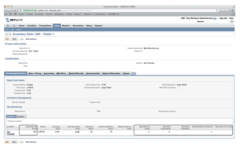
What is a back order?
-A document authorizing the purchase or production of items that is created when there is insufficient inventory to meet customer orders
What is a picking ticket?
-A document that lists the items and quantities ordered and authorizing the inventory control function to release that merchandise to the shipping department
What takes place in Responding to Customer Inquires step?
-Responding to customers inquires
-Sometimes precede an order or occur before orders placed
-Responding promptly and accurately is extremely important to a company's long-run success
-Objective is to retain customers (i.e. create loyalty)
What is Customer Relationship Management Systems (CRM)?
-Software that organizes information about customers in a manner that facilitates efficient and personalized service
How does IT play a role in responding to customer inquires?
-Used to automate the response to common requests, such as questions about account balances and order status
-Allows for customer service representatives to focus their time and effort on handling the more complex, non-routine inquires
-Websites, FAQs, personalized/secure accounts with order status
-Chats
-Self-service
-Emails with order and shipping status
In the Revenue Cycle, what are the main threats and corresponding controls for Sales Order Entry?
-Incomplete/inaccurate orders --> (data entry edit controls, restriction of access to master data)
-Invalid orders --> (Digital signatures or written signatures)
-Uncollectible accounts --> (Credit limits, specific authorization to approve sales to new customers or sales that exceed a customer's credit limit, aging of A/R)
-Stockouts or excess inventory --> (perpetual inventory control system, use of bar codes or RFID, training, periodic physical counts of inventory, sales forecasts and activity reports)
-Loss of customers --> (CRM systems, self-help websites, and proper evaluation of customer service ratings)
Which document is used to record the items and quantities ordered by a customer?
A. Bill of lading
B. Remittance advice
C. Packing slip
D. Sales order
D
Which of the following is helpful in reducing the risk of customers failing to pay for their purchases? (Check all that apply.)
A. Credit memos
B. Accounts receivable aging report
C. Separating the duties of cash collections and accounts receivable
D. Credit limits
B, D
Which document is used to authorize the release of inventory from the warehouse?
A. Packing list
B. Picking ticket
C. Customer order
D. Bill of lading
B
Which of the following are threats in the sales order entry process? (Check all that apply)
A. Loss of customers
B. Theft of inventory
C. Incomplete or inaccurate orders
D. Stockouts
A, C, D
Requiring the use of digital signatures on an electronic order by a customer is a control that is designed to reduce the risk of which threat?
A. Incomplete or inaccurate orders B. Stockouts
C. Loss of customers
D. Invalid orders
D
What is the SECOND activity of the Revenue Cycle?
2. Shipping
-Filing customer orders and shipping the desired merchandise
-Involves warehouse and shipping departments
What are the 2 steps of the Shipping process?
1. Picking and packing the order
2. Shipping the order
Level 1 Data Flow Diagram: Shipping

What takes place in Picking and Packing the Order step?
-Removing the correct items from inventory and packing them for delivery
-Picking ticket triggers the pick and pack process
-Picking ticket used to identify which products, and the quantity of each, to remove from inventory
-Record the quantities of each items actually picked
-Inventory is then transferred to shipping department
Picking Technology:
-Computers, bar-codes, conveyer belts, communications technology
-Radio Frequency Data Communications (RFDC)
-RDIF tags (Radio Frequency IDentification)
-Drones (count inventory, security)
-Kiva robots
What is a packing slip?
-A document listing the quantity and description of each item included in a shipment

What takes place in Shipping the Order step?
-Merchandise removed from warehouse --> shipped to customer
-Physical count of inventory compared with quantities indicated on picking ticket
-Shipping clerk enters sales order number, item number(s), and quantities in the system --> produces packing slip
-Bill of lading placed with package
-Delivery method chosen
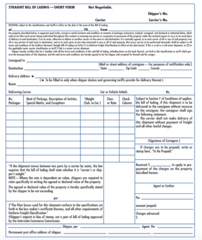
What is a bill of lading?
-A legal contract that defines responsibility for goods while they are in transit. It identifies the carrier, source, destination, and any special shipping instructions, and it indicates who (customer or vendor) must pay the carrier
In the Revenue Cycle, what are the main threats and corresponding controls for Shipping?
-Picking the wrong items or wrong quantity --> (Bar-code and RFID technology, Reconciliation of picking lists to sales order details)
-Theft of inventory --> (restriction of physical access to inventory, documentation of all inventory transfers, RFID and bar-code technology, Control creation of and shipments to "one-time" customers, Periodic physical counts of inventory and reconciliation to recorded quantities)
-Shipping errors --> (Reconciliation of shipping documents with sales orders, picking lists, and packing slips, Use RFID systems to identify delays, Data entry via bar-code scanners and RFID, Data entry edit controls, Configuration of ERP system to prevent duplicate shipments)
What is the THIRD activity of the Revenue Cycle?
3. Billing
-billing customers
What are the 2 steps of the Billing process?
1. Invoicing A/R
2. Maintaining A/R
Level 1 Data Flow Diagram: Billing Process:

What takes place in Invoicing A/R step?
-Once goods are shipped, invoice the customer --> billing department is notified by the shipping department
-Prepare the invoice
-Other functions: record sales in sales journal, update GL, update the A/R subsidiary ledger, update inventory (if not yet completed)
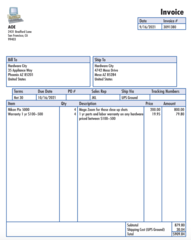
What is a sales invoice?
-A document notifying customers of the amount of a sale and where to send payment
What takes place in Maintaining A/R step?
-Use the information on the sales invoice to debit customer accounts and subsequently credit those accounts when pmts are receieved
What is the open-invoice method?
-Method for maintaining accounts receivable in which customers typically pay according to each invoice
What is a remittance advice?
-A copy of the sales invoice returned with a customer's payment that indicates the invoices, statements, or other items being paid
What is the balance-forward method?
-Method of maintaining A/R in which customers typically pay according to the amount shown on a monthly statement, rather than by individual invoices
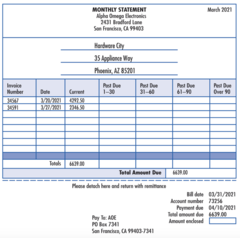
What is a monthly statement?
-A document listing all transactions that occurred during the past month and informing customers of their current account balance
What is cycle billing?
-Producing monthly statements for subsets of customers at different times
Ex: each week monthly statements would be prepared for 1/4 of the customers
What is a credit memo?
-A document, approved by the credit manager, authorizing the billing department to credit a customer's account
-Usually issued for sales goods kept by the customer, or tow rite off uncollectible accounts

In the Revenue Cycle, what are the main threats and corresponding controls for Billing?
-Failure to bill --> (Separation of billing and shipping functions, Periodic reconciliation of invoices with sales orders, picking tickets, and shipping documents)
-Billing errors --> (Configuration of system to automatically enter pricing data, Restriction of access to pricing master data, Data entry edit controls, Reconciliation of shipping documents (picking tickets, bills of lading, and packing list) to sales orders)
-Positing errors in accounts receivable --> (Data entry controls, Reconciliation of batch totals, Mailing of monthly statements to customers, Reconciliation of subsidiary accounts to general ledger)
-Inaccurate or invalid credit memos --> (Segregation of duties of credit memo authorization from both sales order entry and customer account maintenance, Configuration of system to block credit memos unless there is either corresponding documentation of return of damaged goods or specific authorization by mgmt)
What is the FOURTH activity of the Revenue Cycle?
4. Cash Collections
-collecting and processing pmts from customers
What is a remittance list?
-A document listing names and amounts of all customer payments received in the mail
What is a lockbox?
-A postal address to which customers send their remittances
What is an electronic funds transfer (EFT)?
-The transfer of funds through use of online banking software
EFT and FEDI:

What is a Financial electronic data interchange (FEDI)?
-The combination of EFT and EDI that enables both remittance data and funds transfer instructions to be included in one electronic package
In the Revenue Cycle, what are the main threats and corresponding controls for Cash Collections?
-Theft of cash --> (Segregation of duties-the person who handles (deposits) payments from customers should not also: a. Post remittances to customer accounts b. Create or authorize credit memos . Reconcile the bank account 17.2 Use of EFT , FEDI, and lockboxes to minimize handling of customer payments by employees 17.3 Obtain and use a UPIC to receive EFT and FEDI payments from customers 17.4 Immediately upon opening mail, create list of all customer payments received 17.5 Prompt , restrictive endorsement of all customer checks 17.6 Having two people open all mail likely to contain customer payments 17.7 Use of cash registers
17.8 Daily deposit of all cash receipts)
-Cash flow problems --> (Lockbox arrangements, EFT, or credit cards 18.2 Discounts for prompt payment by customers 18.3 Cash flow budgets)
What is the FIFTH activity of the Revenue Cycle?
5. Sales Returns
-When a return is needed, the buyer requests credit or refund
What takes place in Sales Returns activity?
-Previous transactions must be reveresed
-Well-designed return slip
-Controls over who processes sales returns
-Preparation and approval of 'credit memo'
-Update sales journal, inventory, A/R sub-ledger and GL
Which activity is part of the sales order entry process?
a. preparing a bill of lading
b. checking customer credit
c. approving sales returns
d. setting customer credit limits
B
Which document often accompanies merchandise shipped to a customer?
a. picking ticket
b. packing slip
c. sales order
d. credit memo
B
Which method is most likely used when a company offers customers discounts for prompt payment?
a. accounts receivable aging method
b. cycle billing method
c. open-invoice method
d. balance-forward method
C
Which of the following techniques is the most efficient way to process customer payments and update accounts receivable?
a. EFT
b. ACH
c. FEDI
d. UPIC
C
Which of the following revenue cycle activities can potentially be eliminated by technology?
a. cash collections
b. shipping
c. billing
d. sales order entry
C
The integrated database underlying an ERP system results in which of the following general threats to the revenue cycle?
a. inaccurate or invalid master data
b. unauthorized disclosure of sensitive information
c. loss or destruction of data
d. all of the above
D
Which document is used to authorize the release of merchandise from the inventory control [warehouse] to shipping?
a. picking ticket
b. sales invoice
c. packing slip
d. shipping order
A
Which of the following provides a means to both improve the efficiency of processing customer payments and also enhance control over those payments?
a. lockboxes
b. aging accounts receivable
c. EDI
d. CRM
A
For good internal control, who should approve credit memos?
a. sales manager
b. credit manager
c. controller
d. billing manager
B
For good internal control over customer remittances , the mailroom clerk should separate the checks from the remittance advices and send the customer payments to which department?
a. cashier
b. billing
c. sales
d. accounts receivable
A
To minimize the risk of theft of consumer remittances, the person who handles and deposits customer payments can also
A. post adjustments to accounts receivable.
B. None of these activities can be performed by the person who handles and deposits customer payments
C. authorize credit memos.
D. reconcile the bank statements .
B
Which of the following controls could be used to mitigate the threat of uncollectible accounts?
A. Restriction of physical access to inventory
B. Restriction of access to pricing master data
C. Encryption
D. Credit limits
D
Restricting physical access to inventory is designed to minimize the threat of
A. theft of inventory
B. shipping errors
C. picking the wrong items or the wrong quantity
D. failure to bill .
A
Which control procedure is designed to minimize the threat of posting errors to accounts receivable?
A. All of these controls minimize the threat of posting errors to accounts receivable
B. Mailing of monthly statements to customers
C. Aging of accounts receivable
D. Separation of the shipping and billing functions
E. Approval of credit memos by the credit manager
B
A legal contract that defines responsibility for goods while they are in transit is called
A. a picking ticket
B. a packing slip
C. a bill of lading
D. an invoice
C
Which of the following is a threat to the shipping process?
A. Picking the wrong items or the wrong quantity
B. Incomplete /inaccurate orders
C. Stockouts or excess inventory
D. Inaccurate or invalid credit memos
A
Which of the following is used to change a customer's accounts receivable balance?
A. Picking list
B. Packing slip
C. Sales invoice
D. Bill of lading
E. Sales order
C
Which control would help reduce the threat of cash flow problems ?
A. None of these controls reduce the threat of cash flow problems
B. Prompt, restrictive endorsement of all customer checks
C. Having the person who opens the mail immediately create a list of all customer payments received
D. Lockbox arrangements
E. All of these controls reduce the threat of cash flow problems
D
What is financial electronic data interchange (FEDI)?
A. It is the combination of EFT and EDI that enables both remittance data and funds transfer instructions to be included in one electronic package.
B. It is the transfer of funds through use of online banking software
C. It is a document listing names and amounts of all customer payments received in the mail.
D. It is a lockbox arrangement in which the bank electronically sends the company information about the customer account number and the amount remitted as soon as it receives payments
A
Which control would help reduce the threat of theft of cash?
A. Cash flow budgets
B. None of these controls reduce the threat of theft of cash
C. All of these controls reduce the threat of theft of cash
D. Lockbox arrangements
E. Discounts for prompt payment by customers
D