[ CHEM1011 ] 0 .2 - Lab Skills and Techniques
 Call Kai
 Learn
Learn Practice Test
 Spaced Repetition
 Match
Match Flashcards
 Knowt Play
1/29

There's no tags or description
Looks like no tags are added yet.
Name | Mastery | Learn | Test | Matching | Spaced | Call with Kai | Chat |
|---|
No analytics yet
Send a link to your students to track their progress
30 Terms
Provide you with an overview of the essential laboratory skills and techniques necessary for conducting experiments in chemistry.
Perform accurate measurement of masses and volumes
Get familiar with the common lab equipment such as balances, pipettes, burettes, and flasks.
What are the objectives of the lab?
Graduated Cylinder
This is used to measure the volume of liquid in milliliters (ml).
Beaker
This is commonly used to estimate and pour liquid quantities in milliliters (ml). It is not as precise as a graduated cylinder, but it is suitable for approximate measurements.
Volumetric Flask
This is specifically designed to measure and hold a precise volume of liquid. It has a narrow neck and a flat bottom, with a single calibration mark indicating the exact volume it can hold when filled to that mark.
Burette
This is used in titrations to deliver precise volumes of a reagent. The liquid is dispensed drop by drop, and the volume is measured by reading the scale on this.
Pipette
A type of laboratory tool commonly used in chemistry and biology to transport a measured volume of liquid, often as a media dispenser.
Top Loading Balance
It measures up to 2 decimal places
Precision: ±0.01 g
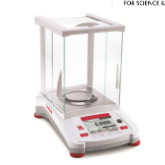
Analytical Balance
It measures up to 4 decimal places
Precision: ±0.0001 g
Top Loading Balance

Analytical Balance
Beakers
These are useful as a reaction container or to hold liquid or solid samples. They are also used to catch liquids from titrations and filtrates from filtering operations
Bunsen Burners
These are sources of heat.
Burets
These are for addition of a precise volume of liquid. The volume of liquid added can be determined to the nearest 0.01 mL with practice.
Clay Triangles
These are placed on a ring attached to a ring stand as a support for a funnel, crucible, or evaporating dish
Droppers
These are for addition of liquids drop by drop
Erlenmeyer Flasks
These are useful to contain reactions or to hold liquid samples. They are also useful to catch filtrates
Glass Funnels
These are for funneling liquids from one container to another or for filtering when equipped with filter paper.
Graduated Cylinders
These are for measurement of an amount of liquid. The volume of liquid can be estimated to the nearest 0.1 mL with practice
Hot Plates
These can also be used as sources of heat when an open flame is not desirable
Droper
These are used to dispense small quantities of liquids
Ring Stand with Rings
These are for holding pieces of glassware in place
Test Tubes
These are for holding small samples
Test Tube Holders
These are for holding test tubes when tubes should not be touched
Tongs
These are similar in function to forceps but are useful for larger items
Volumetric Flasks
These are used to measure precise volumes or to make precise dilutions.
Wash Bottles
These are used for dispensing small quantities of distilled water.
Watch Glasses
These are for holding small samples or for covering beakers or evaporating dishes
Wire Gauze
These on a ring supports beakers to be heated by Bunsen burners
Balances
These are used to determine the mass of a reagent or object.
Fume Hoods
These are used to ventilate noxious or harmful gases.