6) Lens Insertion + Fresnels
 Call Kai
 Learn
Learn Practice Test
 Spaced Repetition
 Match
Match Flashcards
 Knowt Play
1/31

There's no tags or description
Looks like no tags are added yet.
Name | Mastery | Learn | Test | Matching | Spaced | Call with Kai | Chat |
|---|
No analytics yet
Send a link to your students to track their progress
32 Terms
What is the technique for inserting lens?
place thickest part of the lens first from the front
What is the technique for removing lens?
apply pressure at the nasal side of the lens from the back
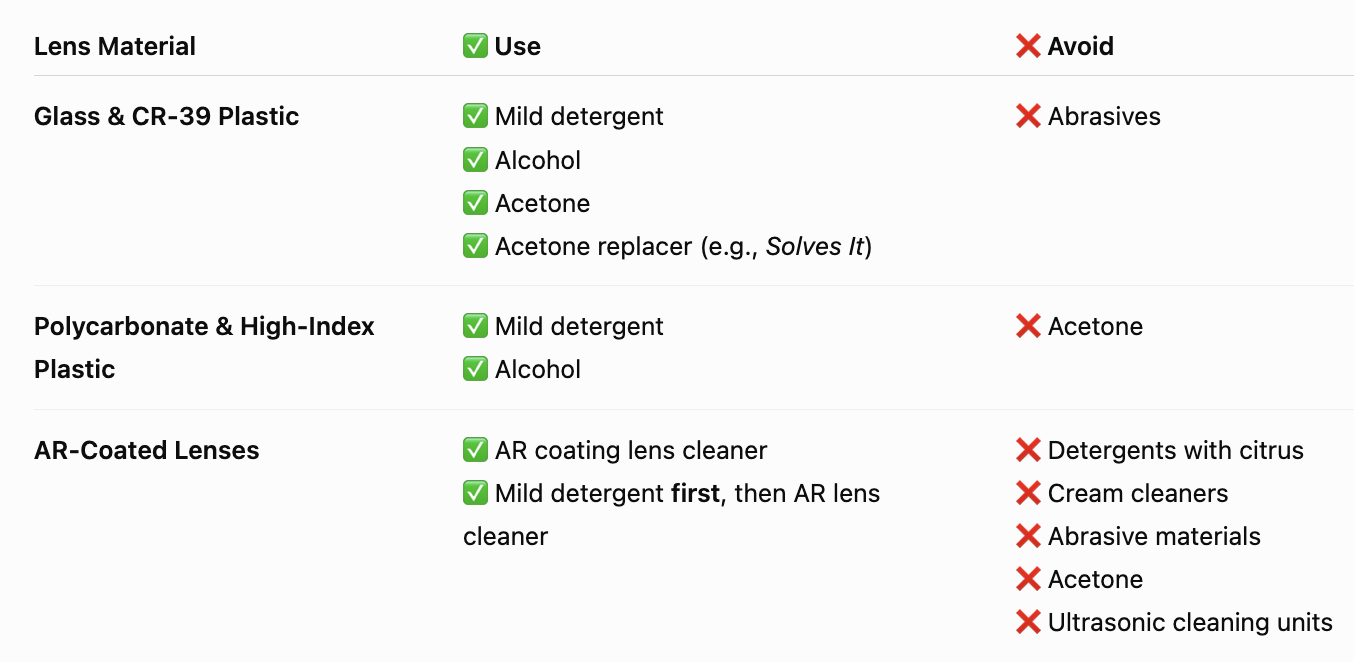
What cleaning products should be used and avoided for different ophthalmic lens materials?
What is bench alignment (“true to frame”), and when should it be performed?
process of adjusting a frame to its standard shape before placing it on a patient
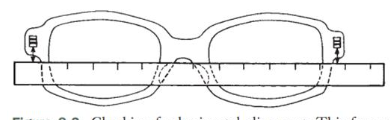
What is horizontal bridge alignment, and how is a misaligned bridge corrected?
endpieces and bridge should be horizontally aligned when viewed from the front (a ruler can help check alignment)
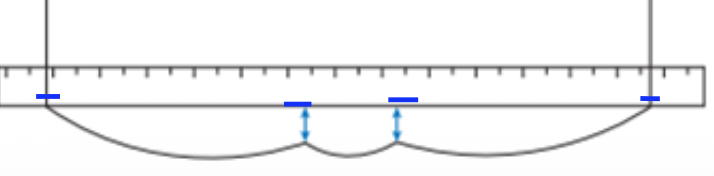
What is Vertical Bridge Alignment?
There should be either:
4-point touch should occur between the frame and the ruler
2 bridge contact points should be equidistant from the ruler
What is this?
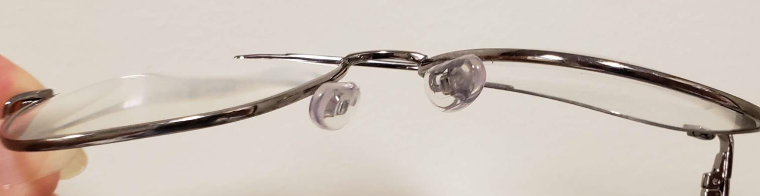
X-ing of the eyewires - occurs when eyewires aren’t in the same plane
What is wrong with this?
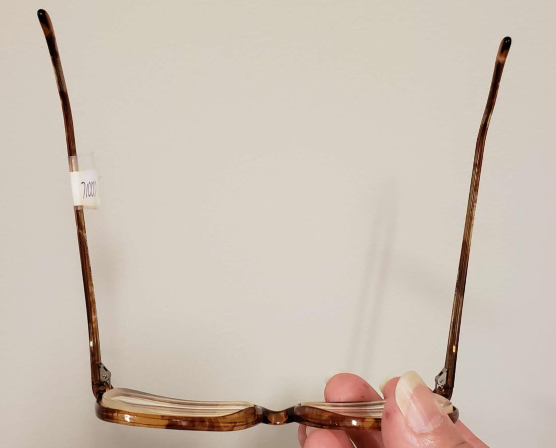
Temples should be perpendicular to the frame + front and not spread wider than the front
What is Temple Parallelism?
When you place a frame down with the top against a flat surface, both ear pieces and the top of both eyewiresshould touch the table with NO rocking movement
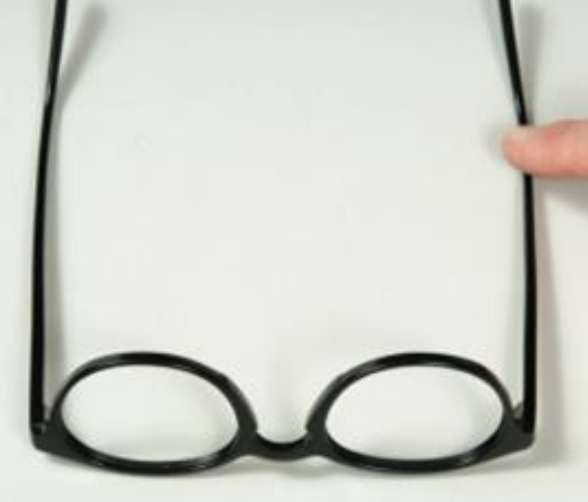
What is Temple End Angle?
When you place a frame on a flat surface oriented as if a patient were wearing the frames, the ear pieces should have the same downward & inward bend
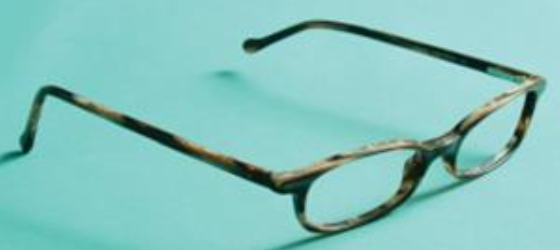
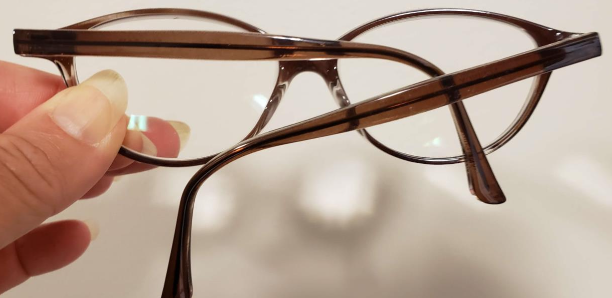
What is Temple Closing Angle?
→ when temples are closed, they should cross in the middle
can fix this while the glasses are closed + it will not alter the adjustment of the temples when they’re open
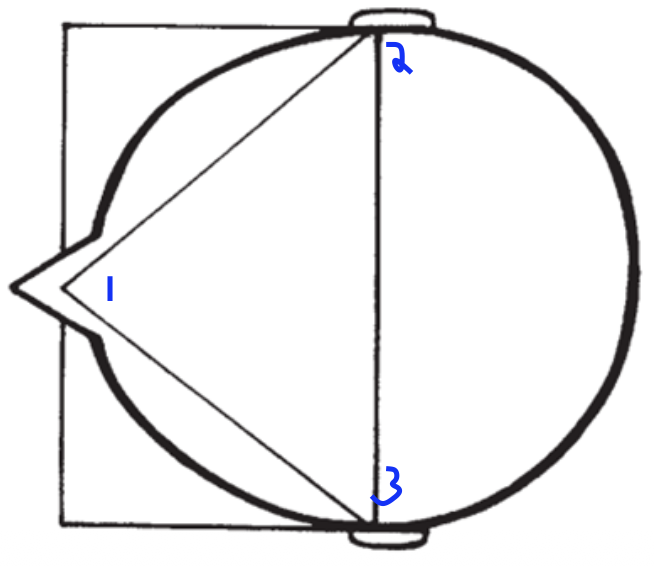
What is the fitting triangle made up of?
3 points where the glasses touch the patient
Bridge
Above ear #1
Above ear #2
What should you do here?
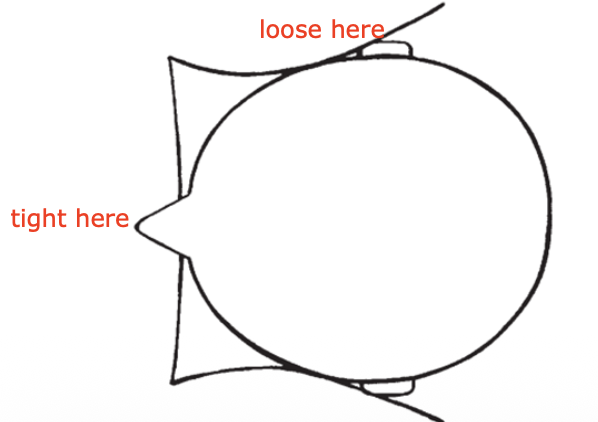
Widen the temples
What should you do here?
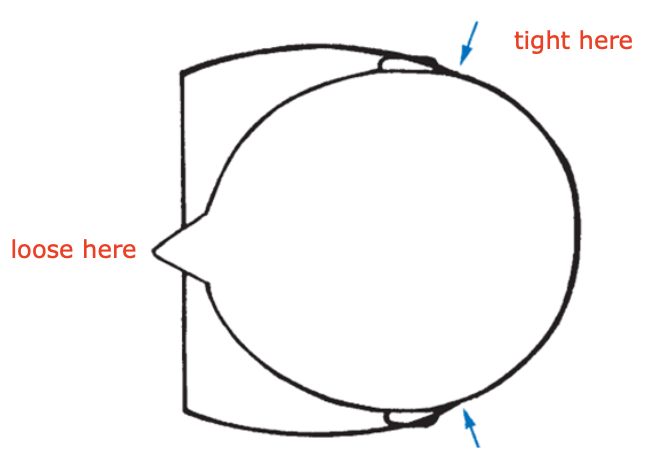
Tighten the temples, DON’T overbend the earpieces
What do you do under the following scenarios:
Left lens is IN
Right lens is OUT
Right lens is IN
Left lens is OUT
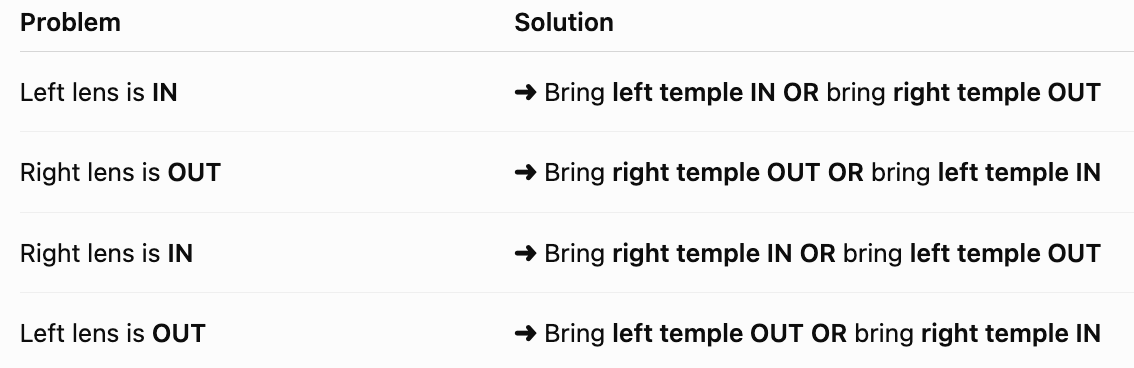
What do you do under the following scenarios:
Left lens is UP
Right lens is DOWN
Right lens is UP
Left lens is DOWN
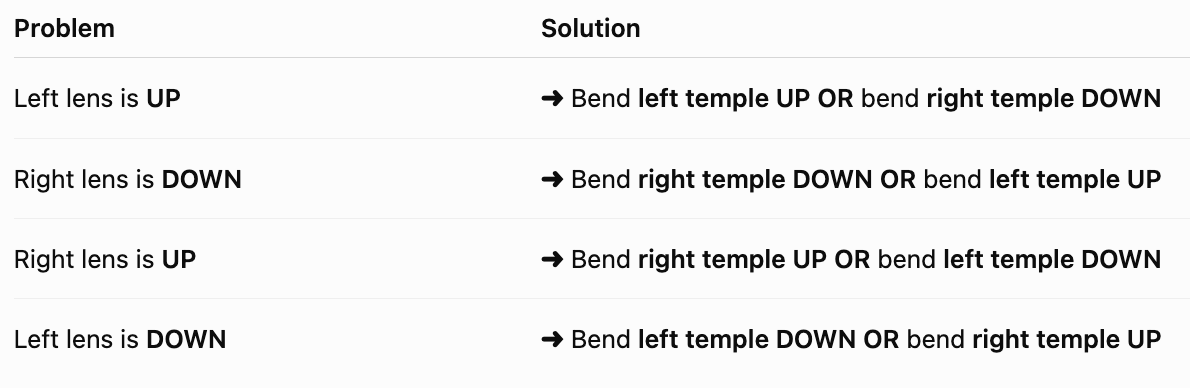
How can you adjust the height of the glasses using nosepads?
Push nosepads closer = higher the glasses
Spread nosepads apart = lower the glasses
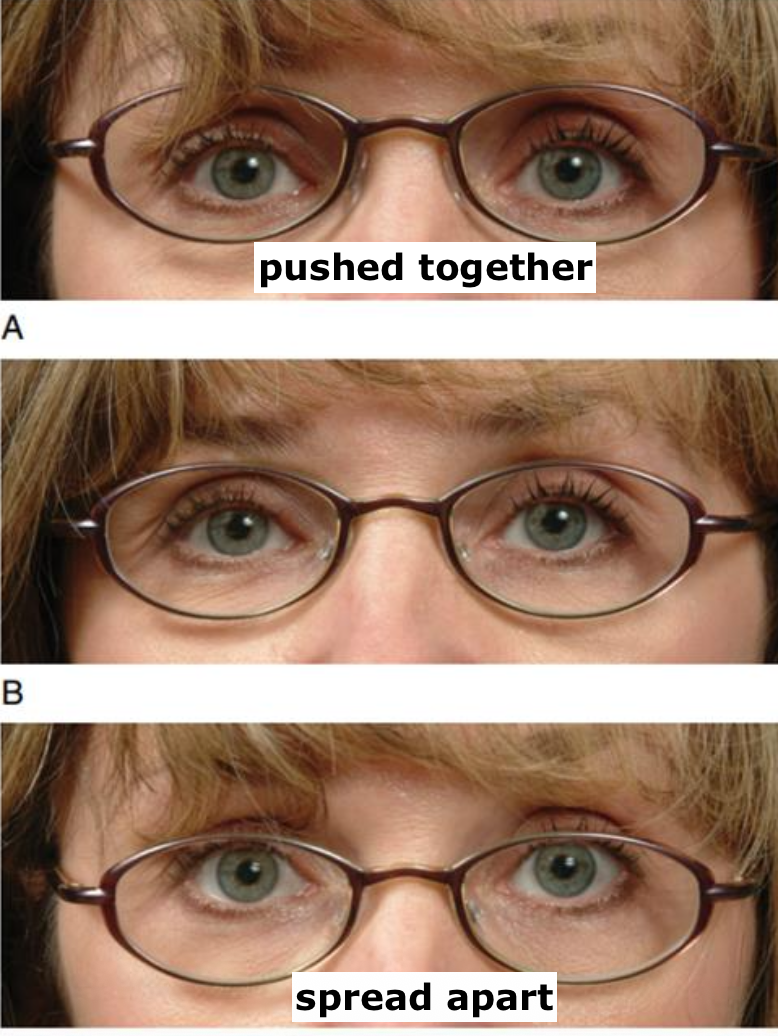
Under what cases will you widen the nose bridge area/spread nosepads?
Frame too high
Bifocal or trifocal seg are too high
PAL fitting cross heights are too high
Bridge is too small
Lens is too far from eyes (↑ vertex distance)
Under what cases will you narrow the nose bridge area/push nosepads?
Frame sits too low
Bifocal or trifocal segments are too low.
PAL fitting cross heights are too low
Bridge is too large for the nose
Lashes rub the back surface of the lenses
What is the problem with this?
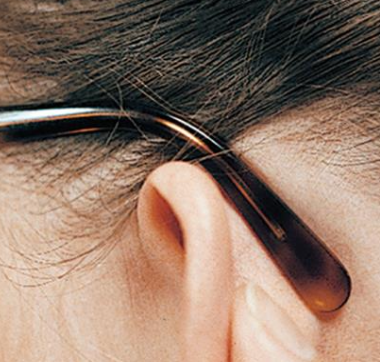
Temple too short
What is the problem with this?
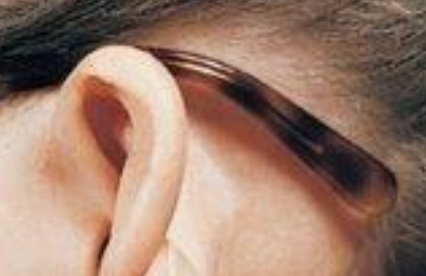
Temple too long
How do you move a frame away from the face?
Narrow adjustable pads (also raises frame)
Narrow the bridge of a plastic frame (also raises frame)
↑ effective length of pad arms
↓ face form (make the front straighter)
How do you move a frame closer to the face?
Spread adjustable pads apart (also lowers frame)
Stretch (widen) bridge of plastic frame (also lowers front)
↓ effective length of pad arms
↑ face form (make front more curved)
How do you move a frame away from cheeks?
↓ pantoscopic tilt
Raise the frame by narrowing bridge/pads or bending pad arms down
↑ vertex distance by narrowing bridge/pads or extending pad arms
How do you move a frame away from brows?
↑ pantoscopic tilt
Lower the frame by narrowing bridge/pads or bending pad arms down
↑ vertex distance by narrowing bridge/pads or extending pad arms
How do you move a frame higher on the face?
Shrink or narrow the bridge (plastic)
Add pads to plastic bridge
Narrow distance between adjustable pads
Lower vertical position of adjustable pads
How do you move a frame lower on the face?
Stretch or widen the bridge (plastic)
Spread adjustable pads apart
Raise vertical position of adjustable pads
What are Fresnel Lenses?
tiny prisms are of varying power that are lined up on top of each other
each prism has the same apical angle
rays bend by increasing amounts as they enter the lens further in the periphery
made of a soft, flexible material that can be cut with scissors or a razor blade
smooth side is stuck to the glasses
stamped with the prism amount and base location
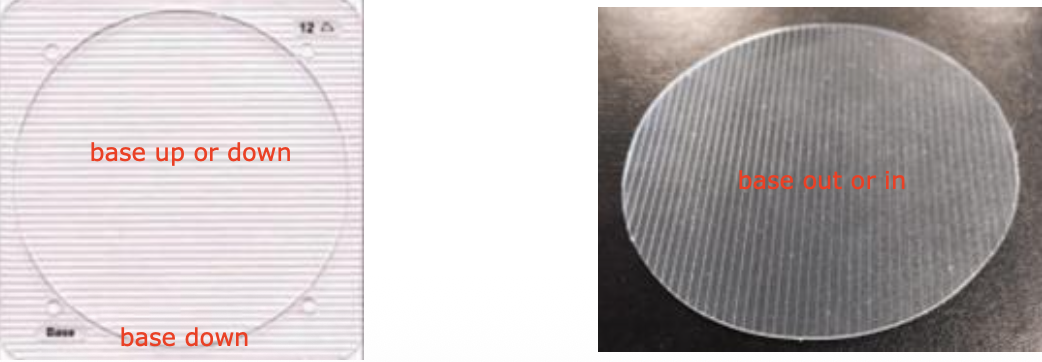
What are the benefits of Fresnel Prisms?
used as temporary prisms
esp for recent onset diplopia that’s expect to change with time
used as a trial of prism before permanently adding prism to the rx
useful if you only want prism in a portion of the glasses
can be used to correct high amounts of prism (b/c it’s thin)
How can Fresnel Prisms be used in Visual Field Defects?
→ prism can be applied to bring the lost VF into the patient's line of sight
Base = direction of field loss (Bilateral right VF loss = BO)
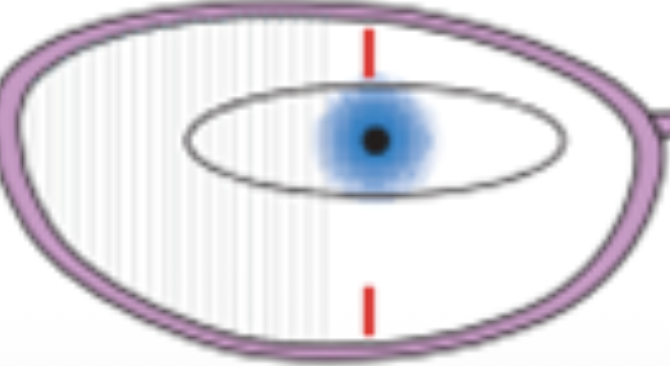
What are Peli Prisms?
→ applied above and below the pupil
Arrow = Base direction = direction of VF defect
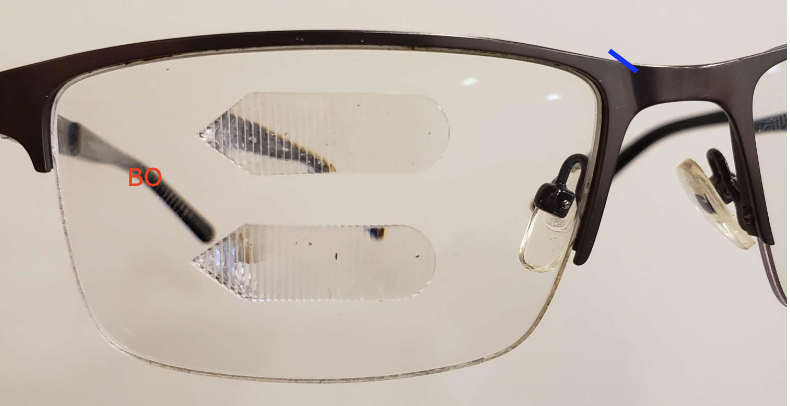
How can Frensel prisms be used to correct slowing nystagmus?
Some pt with nystagmus have a "null point"
Null point: position of gaze that slows the nystagmus, and is accompanied by a head tilt
Prism can move the image to the null point to allow the pt to keep their head straight
Base direction = direction of head tilt = opposite of direction of gaze/nullpoint