NASM Chapter 5- Nervous System
 Call Kai
 Learn
Learn Practice Test
 Spaced Repetition
 Match
Match Flashcards
 Knowt Play
1/75

There's no tags or description
Looks like no tags are added yet.
Name | Mastery | Learn | Test | Matching | Spaced | Call with Kai | Chat |
|---|
No analytics yet
Send a link to your students to track their progress
76 Terms
human movement system
The collective components and structures that work together to move the body: muscular, skeletal, and nervous systems.
kinetic chain
A concept that describes the human body as a chain of interdependent links that work together to perform movement.
nervous system
A network of specialized cells called neurons that transmit and coordinate signals, providing a communication network within the human body.
neurons
Specialized cell that is the functional unit of the nervous system.
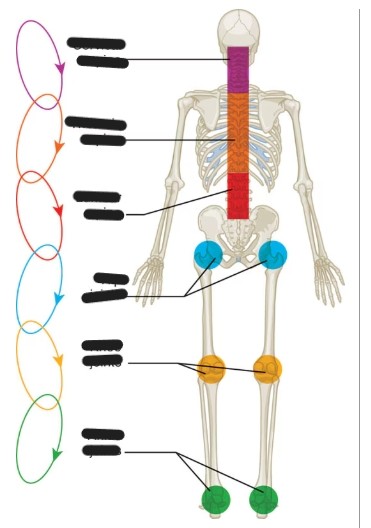
cervical spine
purple
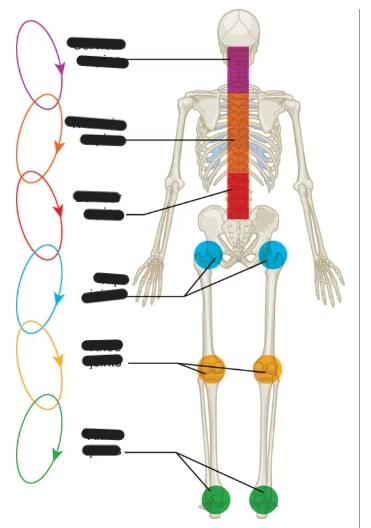
thoracic spine
orange
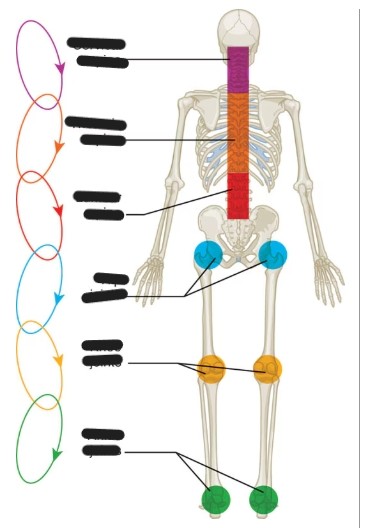
lumbar spine
red
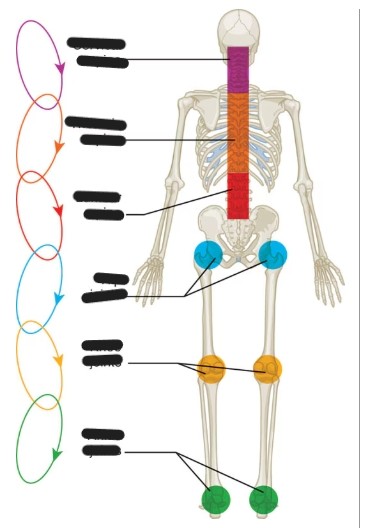
hip joints
blue
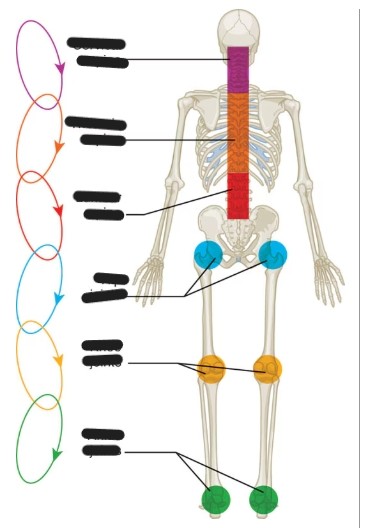
knee joints
yellow
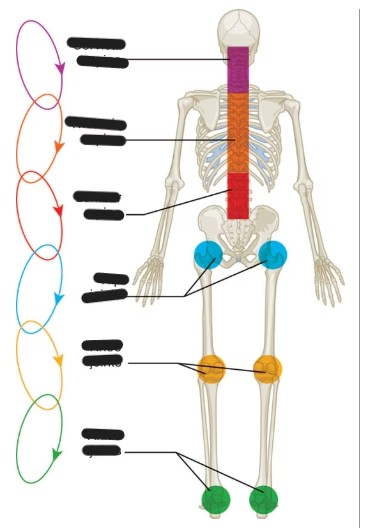
ankle joints
green
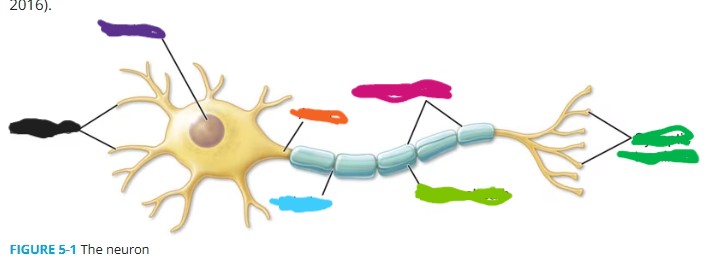
nucleus
purple (neuron)
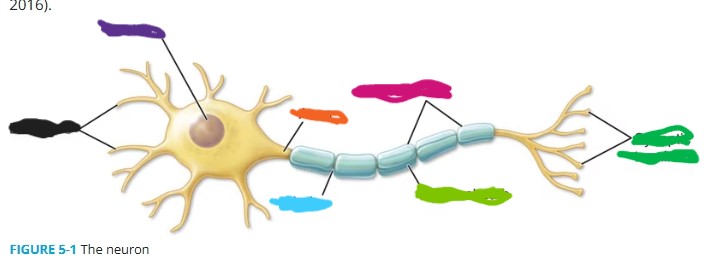
dendrites
black (neuron)
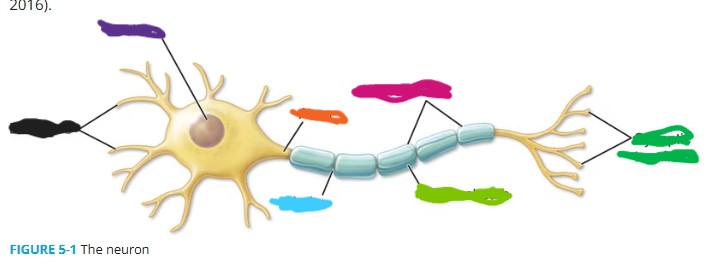
axon
orange (neuron)
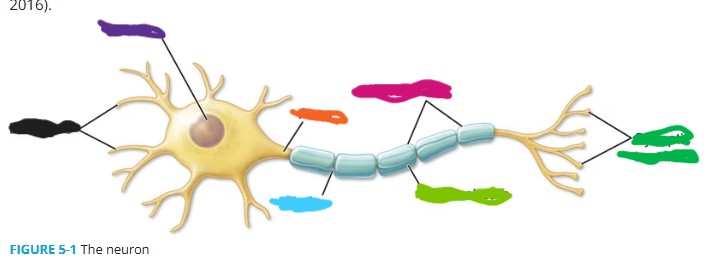
node
blue (neurson)
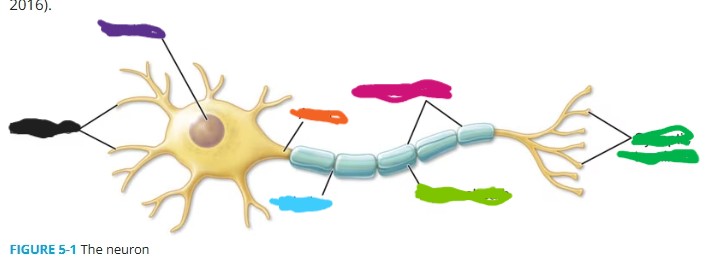
neurolemma
pink (neuron)
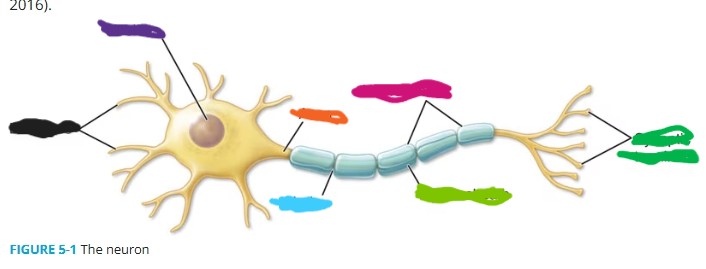
myelin sheath
light green (neuron)
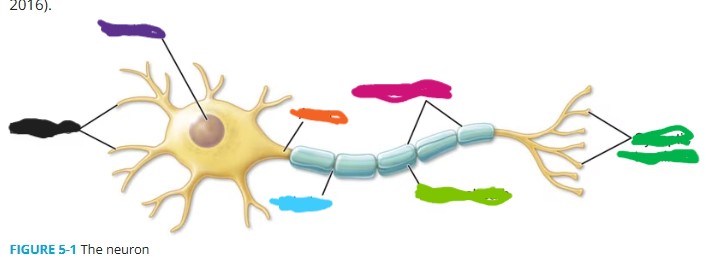
synaptic terminals
dark green (neuron)
enlargements
area that becomes wider because there are more neurons and nerve fibers there
cervical enlargement
supplies the arms and hands
lumbar enlargement
supplies the legs and feet
sensory, motor, and interneurons
three types of neurons
nucleus
Cellular structure or organelle that contains the majority of the cell’s genetic material in the form of chromosomes.
organelles
Tiny cellular structures that perform specific functions within a cell. Examples include nuclei, mitochondria, lysosomes, ribosomes, and the endoplasmic reticulum.
mitochondria
The parts of the cell that use nutrients to create energy for the cell; commonly known as the powerhouses of the cell.
effector sites
A part of the body, such as a muscle or organ, that receives a signal from a neuron to produce a physiological response.
electrolytes
Minerals that have an electrical charge to help transmit nerve impulses throughout the body, such as sodium, potassium, and magnesium.
magnesium, sodium, potassium, and water
4 types of electrolytes
central nervous system
A division of the nervous system that includes the brain and spinal cord.
peripheral nervous system
Nerves that connect the rest of the body to the central nervous system.
afferent pathway
Sensory pathway that relays information to the central nervous system.
cell body, axon, and dendrites
3 parts of neuron
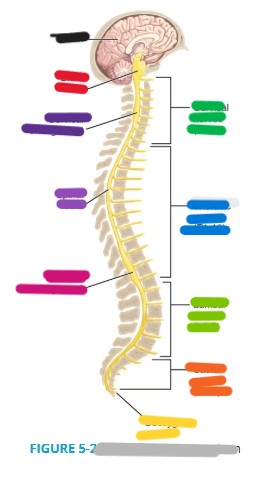
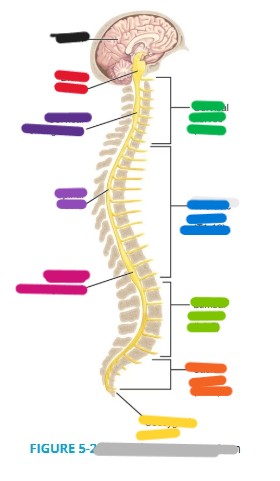
brain
black
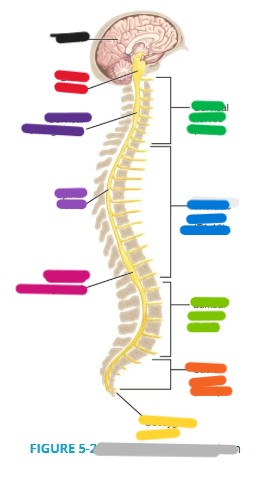
brain stem
red
cervical nerves (c1-8)
dark green
cervical enlargement
dark purple
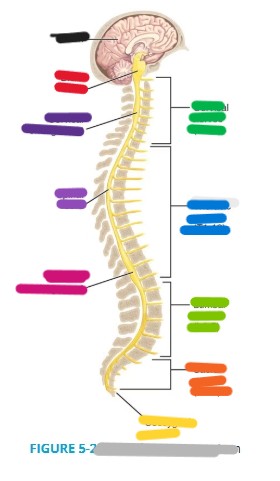
spinal cord
light purple
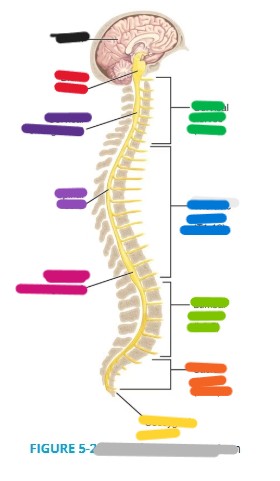
thoracic nerves (t1-12)
blue
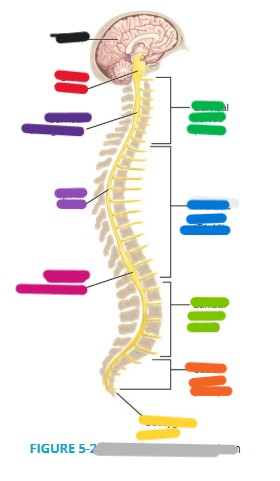
lumbar enlargement
pink
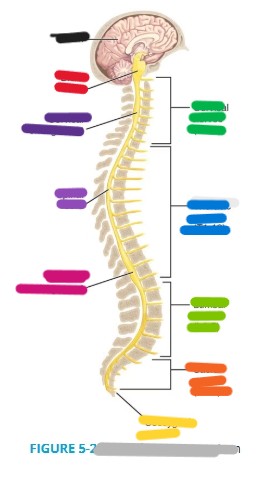
lumbar nerves (L1-5)
light green
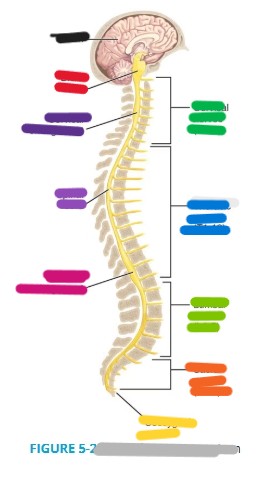
sacral nerves (S1-5)
orange
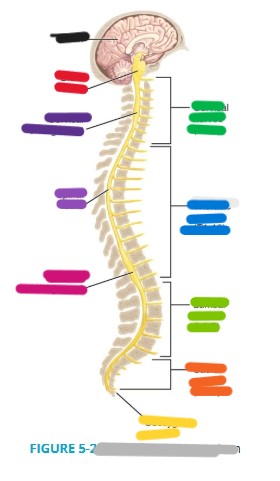
coccygeal nerve
yellow
CNS
gray
brain
black
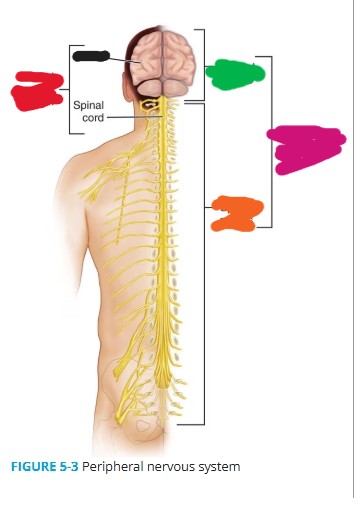
central nervous system
red
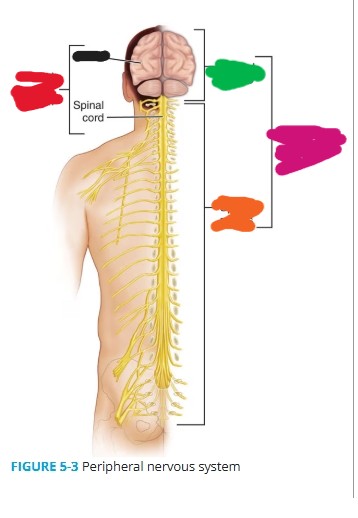
spinal nerves
orange
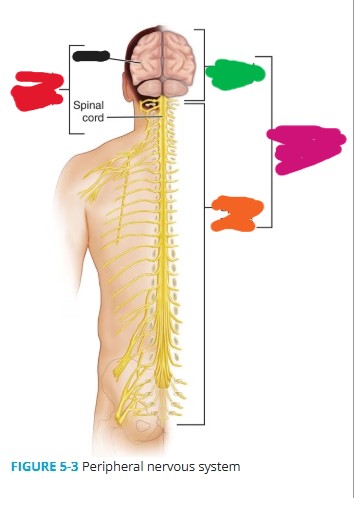
cranial nerves
green
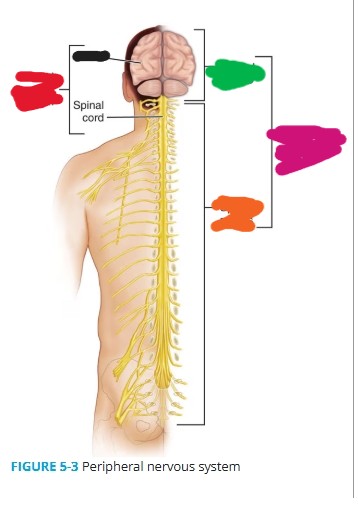
peripheral nervous system
pink
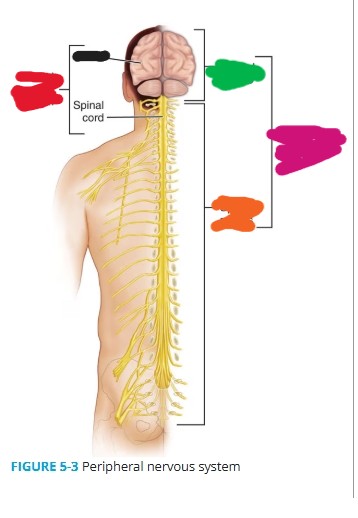
efferent pathway
A motor pathway that relays information from the central nervous system to the rest of the body.
interneurons
Neurons located within the spinal cord and brain that transmit impulses between afferent and efferent neurons.
mechanoreceptors
Specialized structures that respond to mechanical forces (touch and pressure) within tissues and then transmit signals through sensory nerves.
somatic nervous system
Nerves that serve the outer areas of the body and skeletal muscle and are largely responsible for the voluntary control of movement.
receptor
one
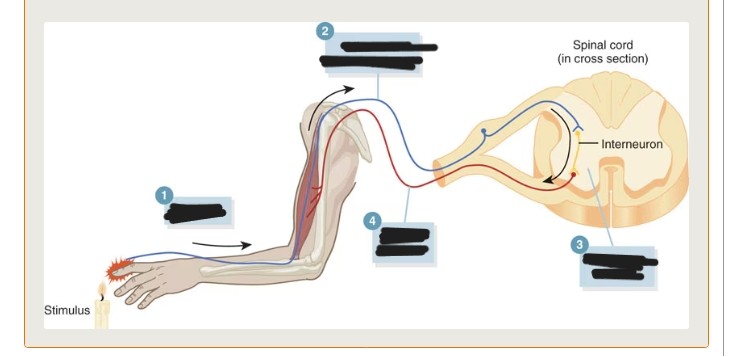
afferent or sensory nerve
two
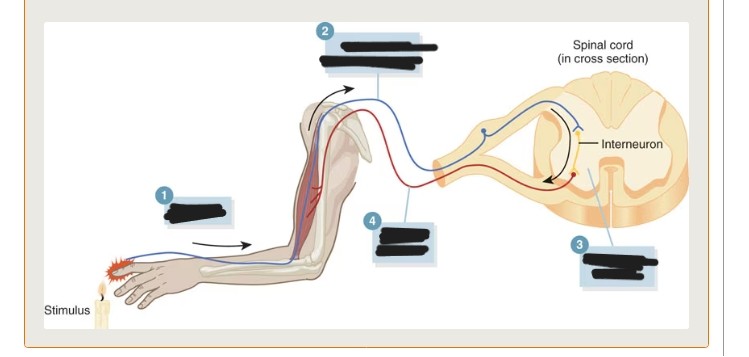
integration center
three
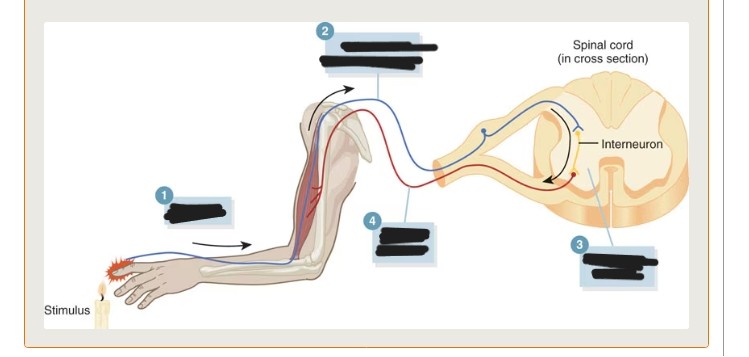
efferent or motor nerve
four
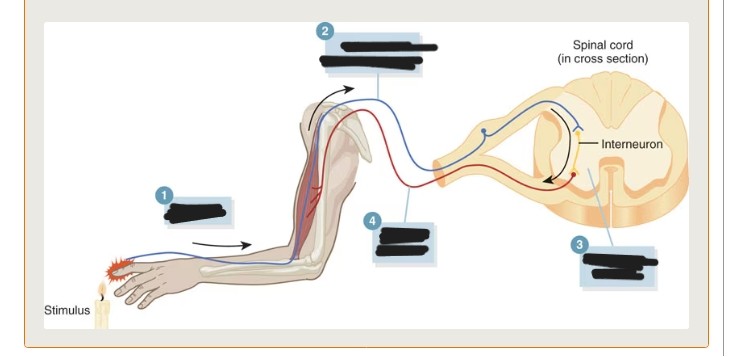
autonomic nervous system
A division of the peripheral nervous system that supplies neural input to organs that run the involuntary processes of the body (e.g., circulating blood, digesting food, producing hormones).
sympathetic nervous system
Subdivision of the autonomic nervous system that works to increase neural activity and put the body in a heightened state.
parasympathetic nervous system
Subdivision of the autonomic nervous system that works to decrease neural activity and put the body in a more relaxed state.
sensory function
Ability of the nervous system to sense changes in either the internal or external environment.
proprioception
The body’s ability to naturally sense its general orientation and relative position of its parts.
integrative function
The ability of the nervous system to analyze and interpret the sensory information to allow for proper decision-making, which produces an appropriate response.
motor function
The neuromuscular (or nervous and muscular systems) response to the integrated sensory information.
muscle spindles
Sensory receptors sensitive to change in length of the muscle and the rate of that change.
stretch reflex
Neurological signal from the muscle spindle that causes a muscle to contract to prevent excessive lengthening.
spinal cord
green
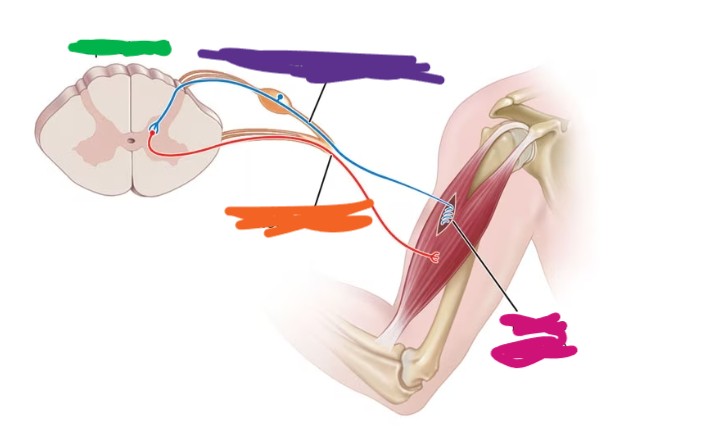
sensory nerve
purple
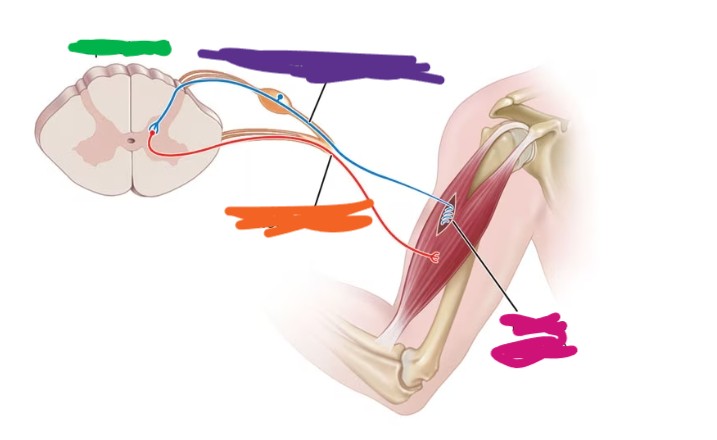
muscle spindle
pink
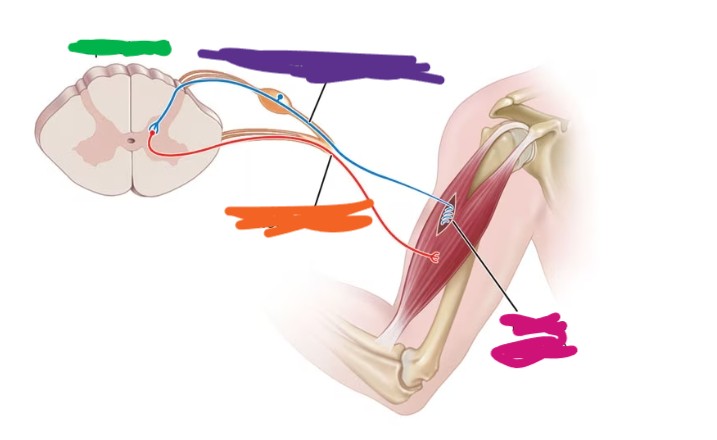
motor nerve
orange
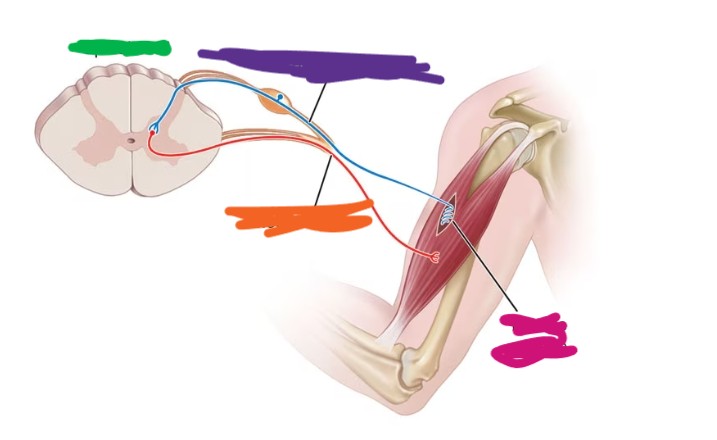
golgi tendon organ (GTO)
A specialized sensory receptor located at the point where skeletal muscle fibers insert into the tendons of skeletal muscle; sensitive to changes in muscular tension and rate of tension change.
joint receptors
Receptors located in and around the joint capsule that respond to pressure, acceleration, and deceleration of the joint.
neuroplasticity
The concept that the brain will continually change or grow, reforming neural pathways throughout an individual’s entire life span.
neurocircuitry
The interconnection of neurons in the brain and spinal cord.
motor skills
Specific movements through the coordinated effort of the sensory and motor subsystems.
brain stem
what structure regulates breathing?
brain
which structure is center or coordination and nervous system activity?
spinal cord
which structure connects the brain to all other parts of the body?