Human Metabolism & Nutrition: Key Concepts and Processes
 Call Kai
 Learn
Learn Practice Test
 Spaced Repetition
 Match
Match Flashcards
 Knowt Play
1/50

There's no tags or description
Looks like no tags are added yet.
Name | Mastery | Learn | Test | Matching | Spaced | Call with Kai | Chat |
|---|
No analytics yet
Send a link to your students to track their progress
51 Terms
What is metabolism?
The set of life-sustaining chemical reactions in organisms that convert food into energy.
What role does nutrition play in metabolism?
Nutrition provides the necessary nutrients that fuel metabolic processes and support bodily functions.
What are the two main types of metabolism?
Catabolism (breaking down molecules for energy) and anabolism (building up molecules for growth and repair).
What is the primary source of energy for human metabolism?
Glucose, which is derived from carbohydrates.
How do vitamins and minerals contribute to metabolism?
They act as coenzymes and cofactors in metabolic reactions, facilitating various biochemical processes.
What does catabolism involve?
The breakdown of substances into smaller building blocks, releasing energy.
What is anabolism?
The synthesis of large molecules from smaller ones, requiring energy.
What factors influence metabolism?
Age, sex, activity level, fuel consumption, and lean body mass.
What is the primary energy currency of the cell?
Adenosine triphosphate (ATP).
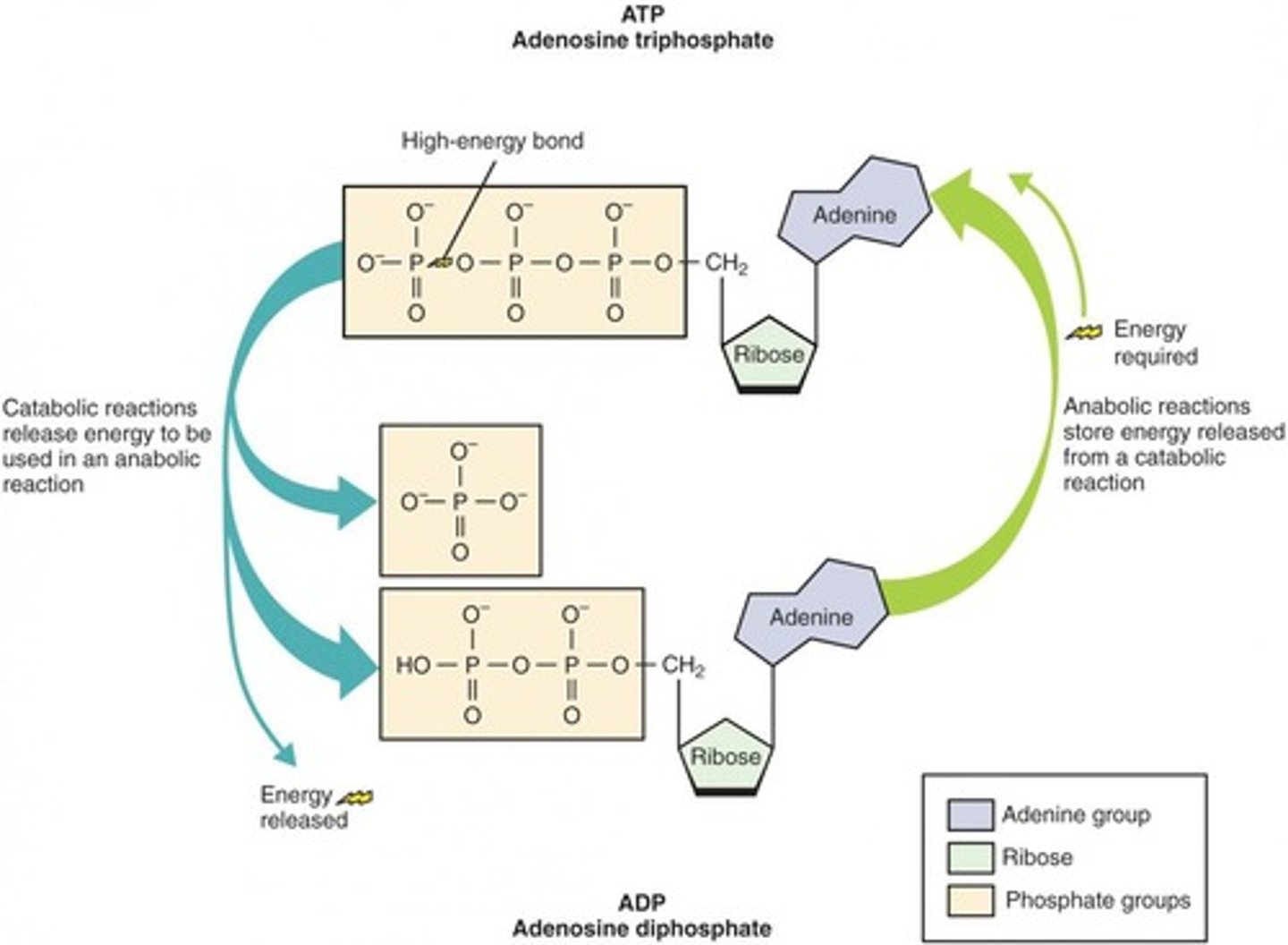
What percentage of energy from catabolic reactions is used to power cells?
About 40%.
What are catabolic hormones?
Hormones that stimulate catabolism and energy production, such as cortisol and glucagon.
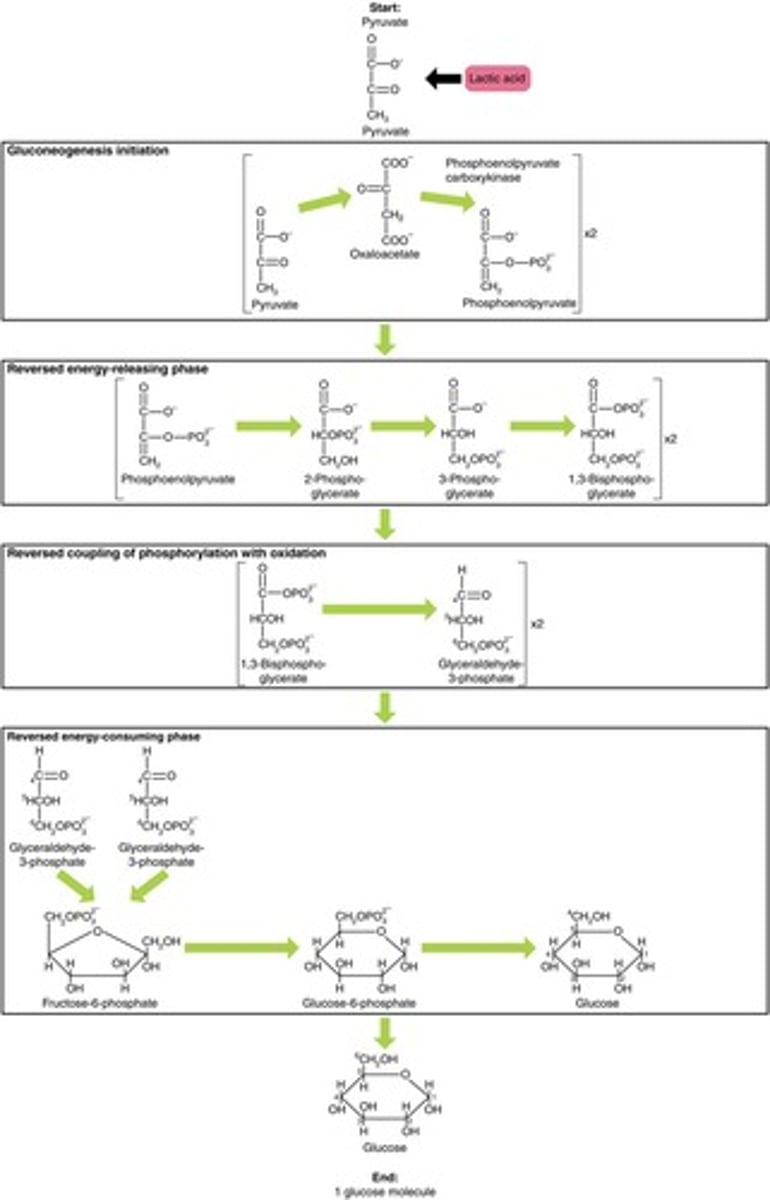
What is gluconeogenesis?
The synthesis of glucose from non-carbohydrate sources, primarily occurring in the liver.
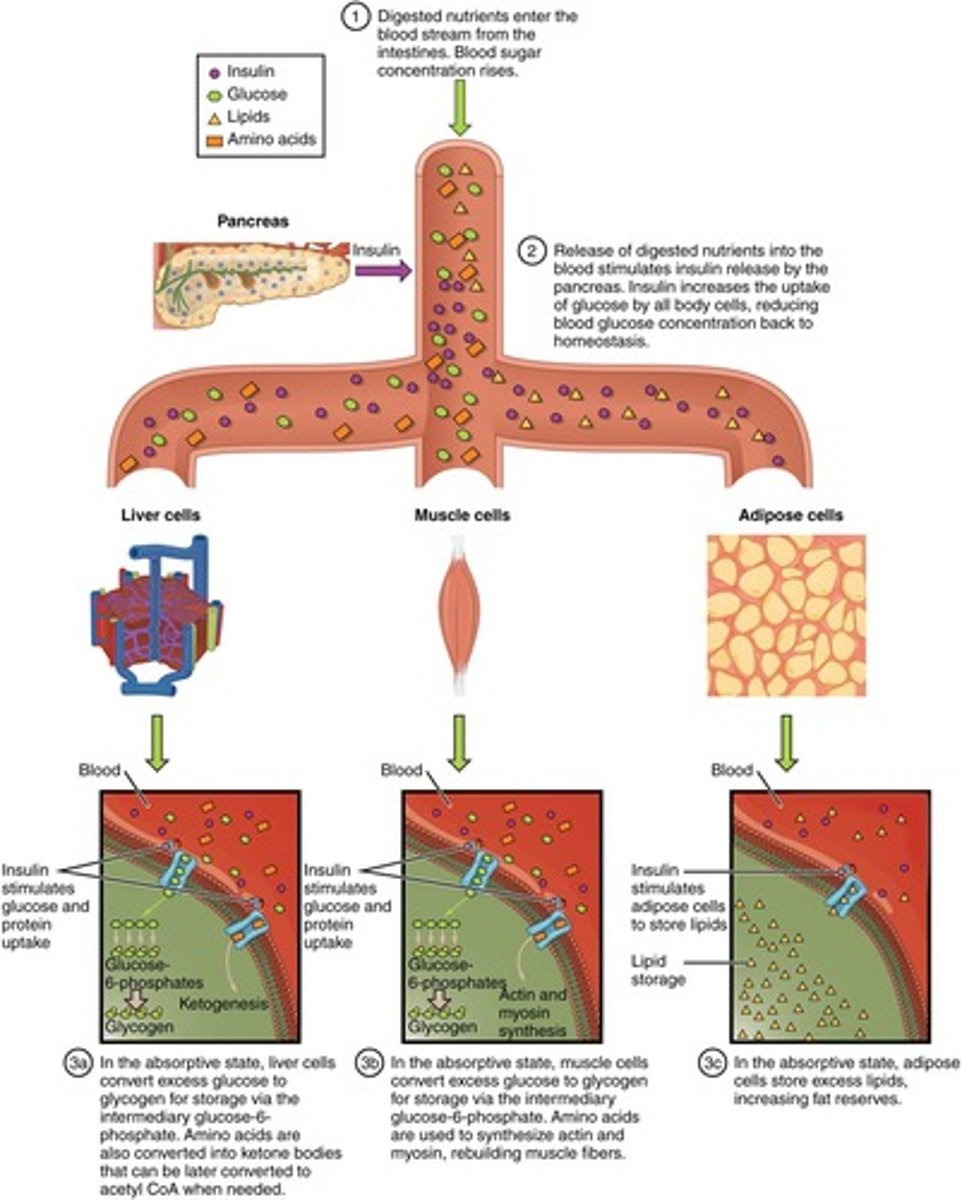
What is the role of insulin in metabolism?
It stimulates the uptake of glucose by cells, decreasing blood glucose levels.
What are monosaccharides?
Simple sugars that are the building blocks for complex sugars.
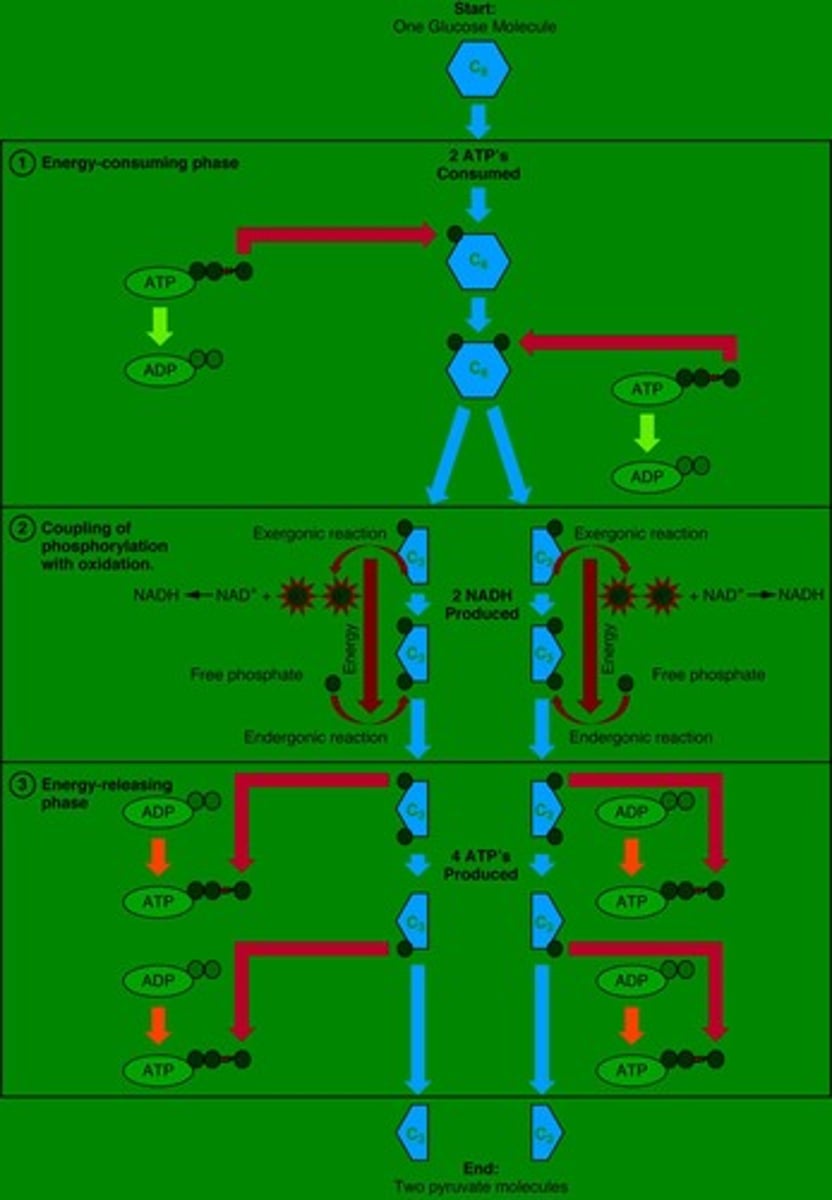
What is glycolysis?
The process of breaking down glucose to form ATP, resulting in a net gain of 2 ATP molecules.
What initiates the Kreb's cycle?
Acetyl coenzyme-A (acetyl CoA).
What is the electron transport chain?
A series of reactions where NADH and FADH2 shuttle high-energy electrons to produce ATP.
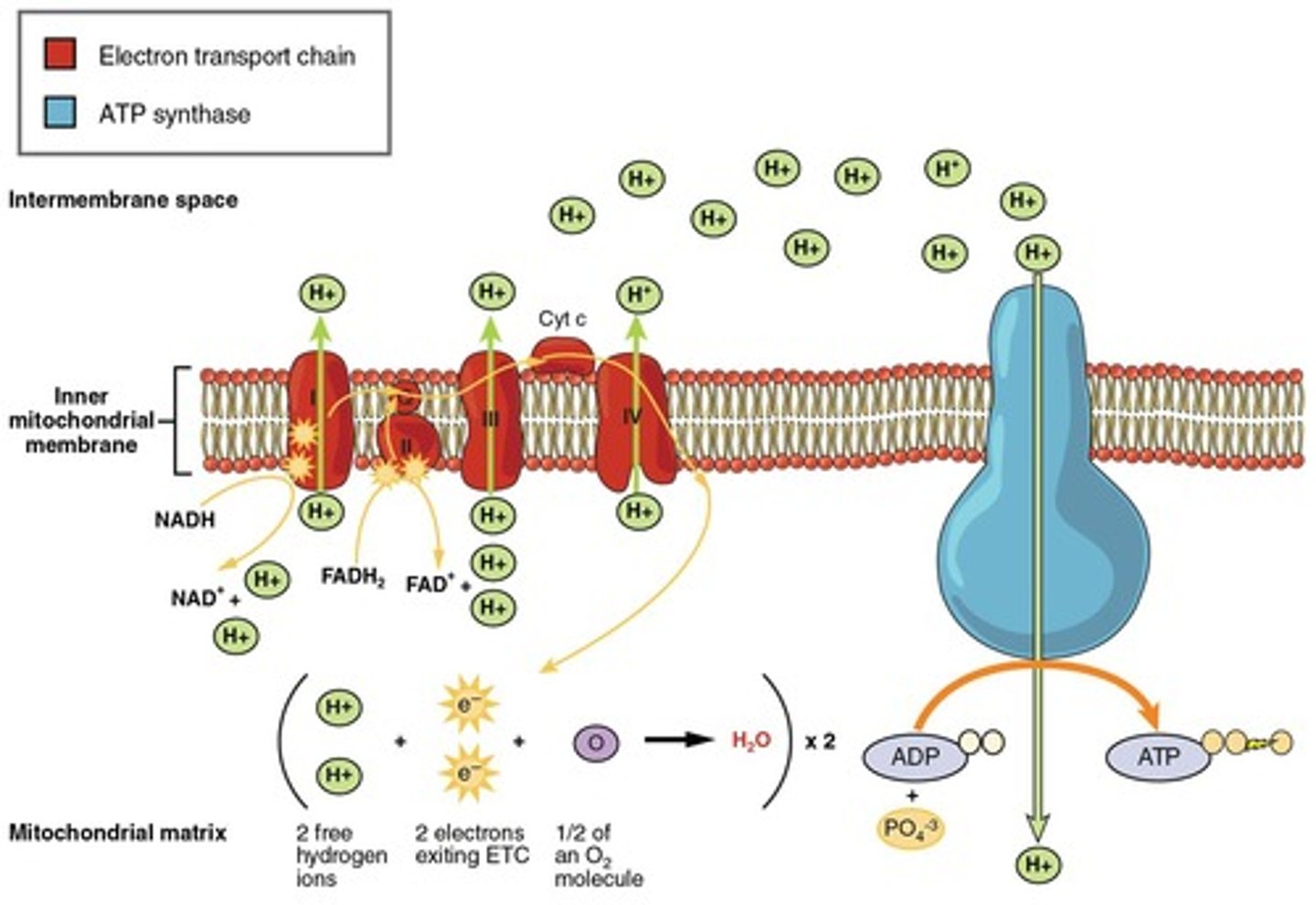
What is lipolysis?
The breakdown of triglycerides into free fatty acids and glycerol.
What is lipogenesis?
The creation of lipids from other molecules, such as acetyl-CoA and glucose.
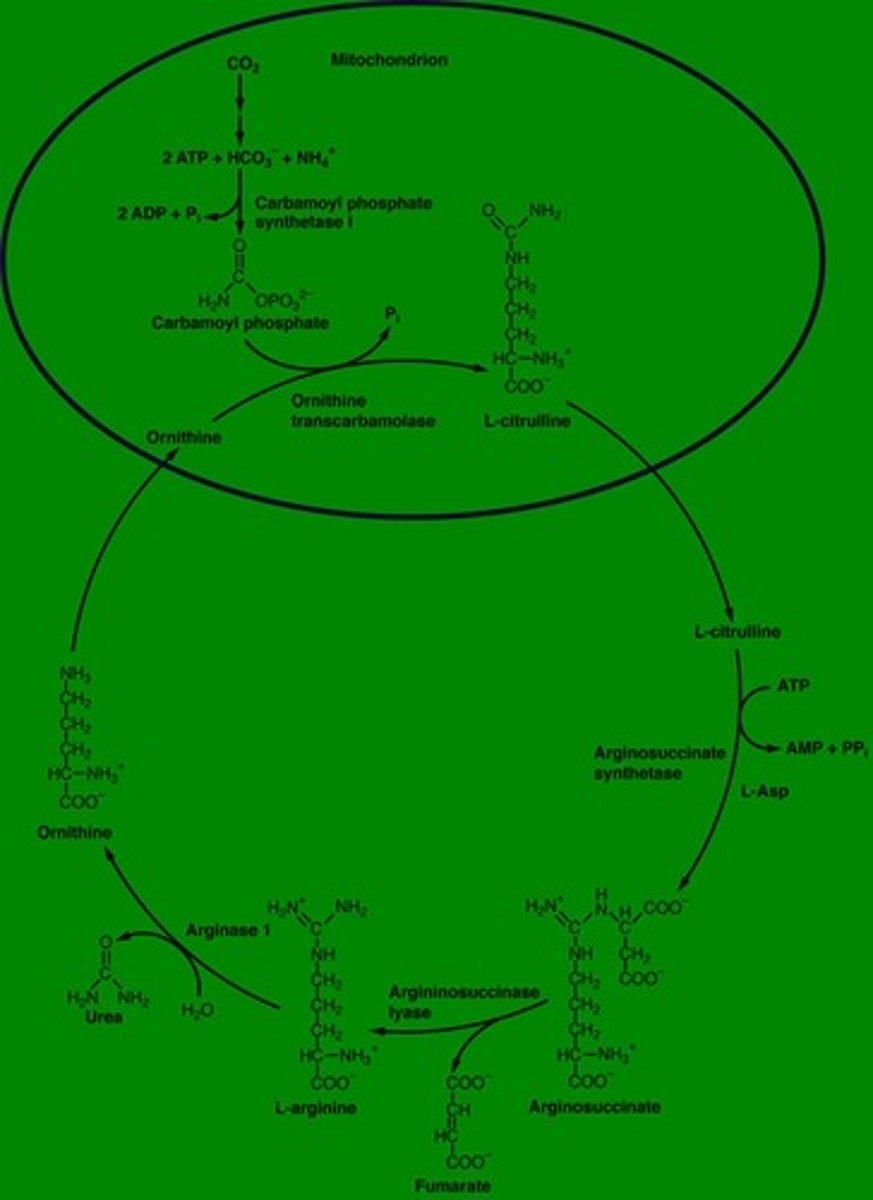
What is the urea cycle?
A process that converts nitrogenous wastes into urea for excretion.
What occurs during the absorptive state?
Anabolism exceeds catabolism, and insulin secretion is heightened.
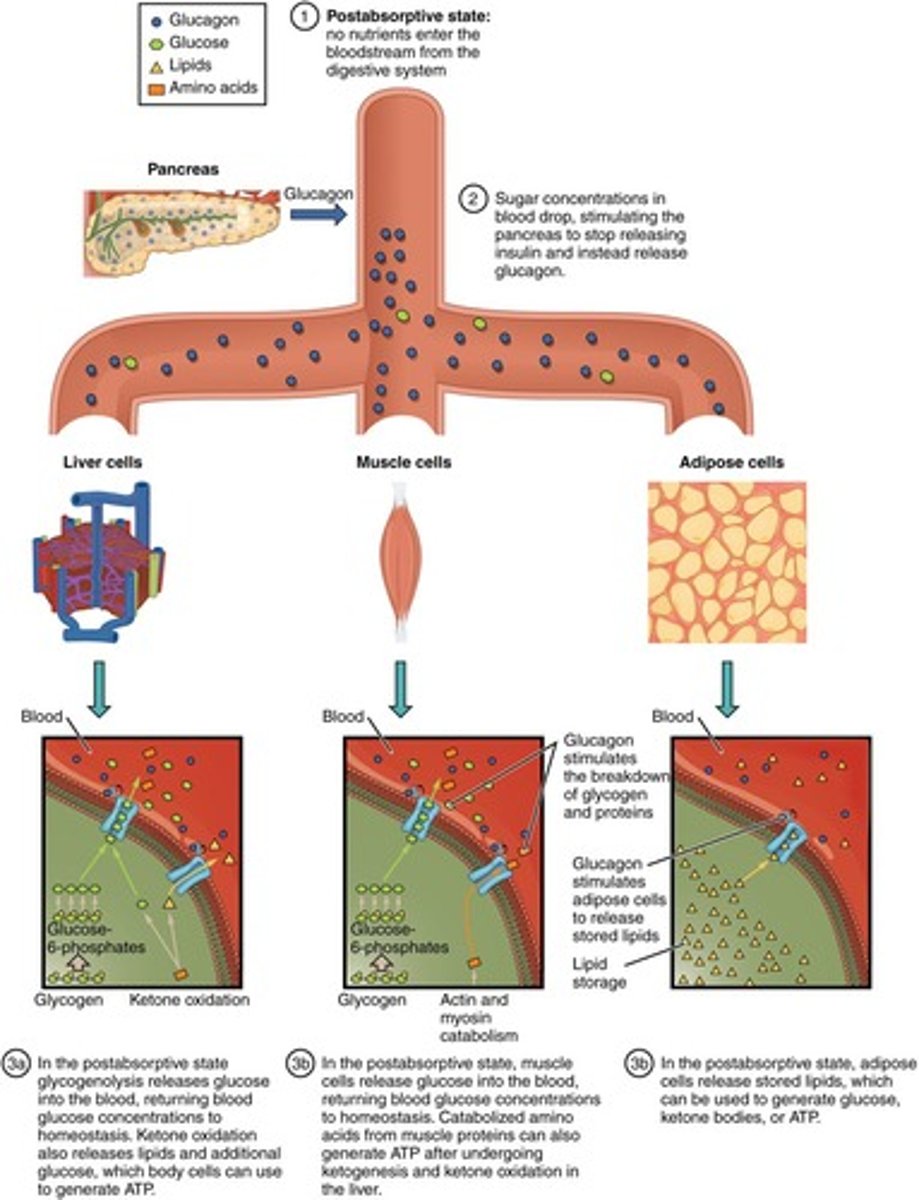
What happens during the postabsorptive state?
The body relies on stored glycogen for energy and gluconeogenesis occurs.
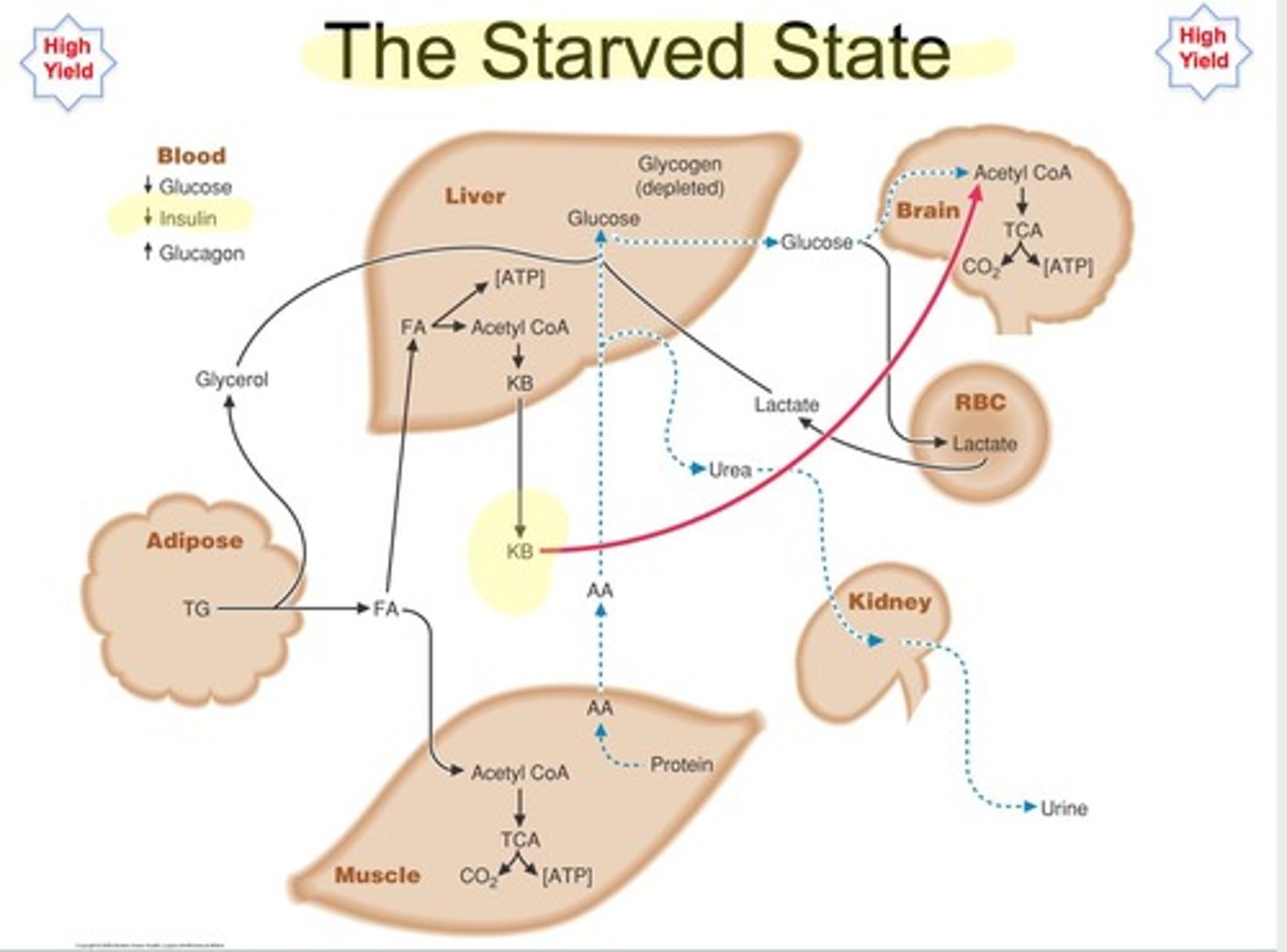
What is the starvation state?
A condition where the body uses ketones for energy and conserves glucose and proteins.
What is thermoregulation?
The process of maintaining body temperature within a specific range.
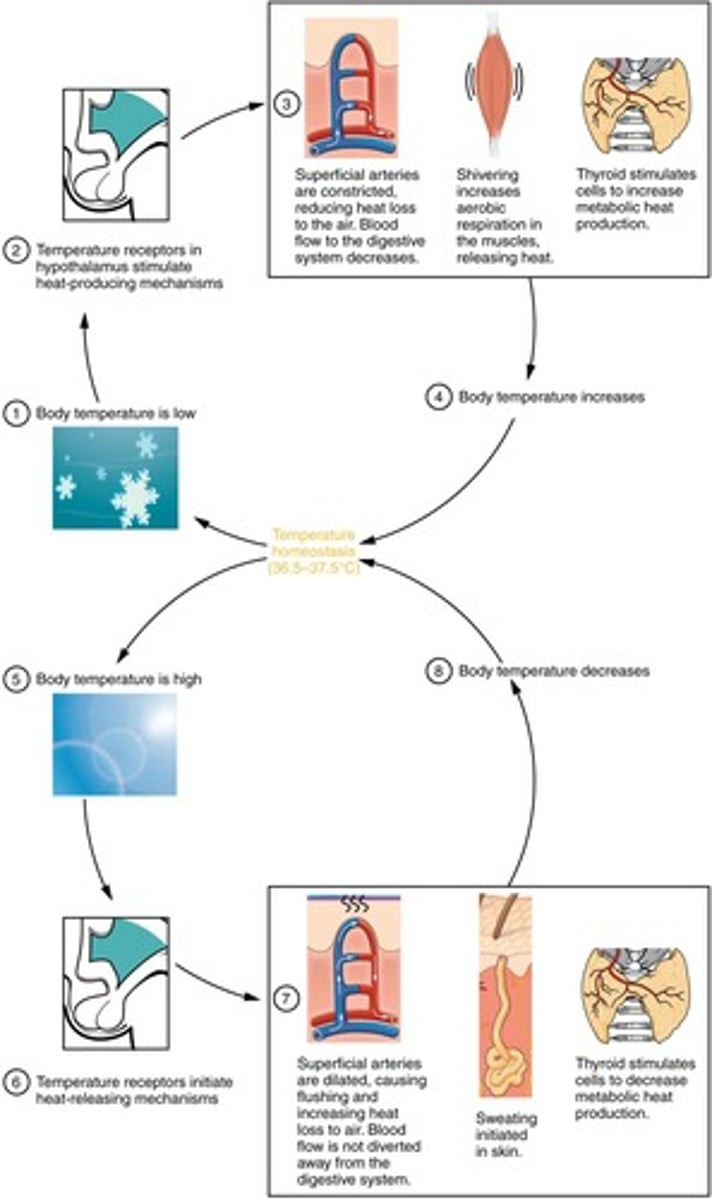
What are the four mechanisms of heat exchange?
Conduction, convection, radiation, and evaporation.
What is basal metabolic rate (BMR)?
The total amount of energy expended during rest in a thermoneutral environment.
What is the difference between a Calorie (big C) and a calorie (little c)?
A Calorie represents kilocalories (kCal) used for nutritional needs, while a calorie is a measure of heat exchange in physics.
What is the role of vitamins in metabolism?
They are necessary for many biochemical reactions in the body.
What are fat-soluble vitamins?
Vitamins A, D, E, and K that can accumulate in the body.
What are water-soluble vitamins?
Vitamins C and B that are not stored in the body and are excreted in urine.
What are major minerals?
Inorganic compounds required in larger quantities within the body.
What are trace minerals?
Inorganic compounds required in much smaller quantities.
How can metabolism be altered?
Through changes in diet, exercise, hormonal levels, and overall health.
What is the primary storage form of carbohydrates in the body?
Glycogen, stored in the liver and muscles.
What is the net gain of ATP from glycolysis?
2 ATP molecules from one glucose molecule.
What is the function of chylomicrons?
To transport lipids through circulation.
What happens to excess acetyl-CoA from fatty acids?
It can create ketone bodies for fuel during low blood glucose levels.
What is the role of growth hormone (GH) in metabolism?
Stimulates the growth of cells and tissues.
What happens to energy released during catabolic reactions?
About 40% is used to power cells, while 60% is released as heat.
What role does cortisol play in metabolism?
Stimulates gluconeogenesis to increase blood glucose levels.
Which hormone is released in response to low blood glucose levels?
Glucagon.
What is the function of insulin?
Stimulates the uptake of glucose by cells, decreasing blood glucose levels.
What are the two phases of glycolysis?
Energy investment phase and energy yielding phase.
What is produced at the end of glycolysis?
2 pyruvate molecules, 2 ATP molecules, and 2 NADH molecules.
What is the role of NADH and FADH2 in cellular respiration?
They shuttle high-energy electrons to the electron transport chain.
What is the postabsorptive state?
The state after nutrients have been digested and absorbed, relying on stored glycogen.
What happens during starvation?
The body enters survival mode, using ketones for energy and conserving glucose.
How do carbohydrates affect metabolic rate?
They require the least amount of energy to process compared to proteins.
What is the significance of the MyPlate guidelines?
They help maintain adequate caloric input while meeting nutritional demands.
What is the average caloric requirement for an adult?
Approximately 1500-2500 kCals/day, depending on various factors.
How does excess amino acid processing occur?
Excess amino acids are converted into nitrogenous waste and glucose or ketones.