CMS100 - Week 1 Intro Lec
 Call Kai
 Learn
Learn Practice Test
 Spaced Repetition
 Match
Match Flashcards
 Knowt Play
1/11

There's no tags or description
Looks like no tags are added yet.
Name | Mastery | Learn | Test | Matching | Spaced | Call with Kai | Chat |
|---|
No analytics yet
Send a link to your students to track their progress
12 Terms
what are the three broad parts of the diagnostic process
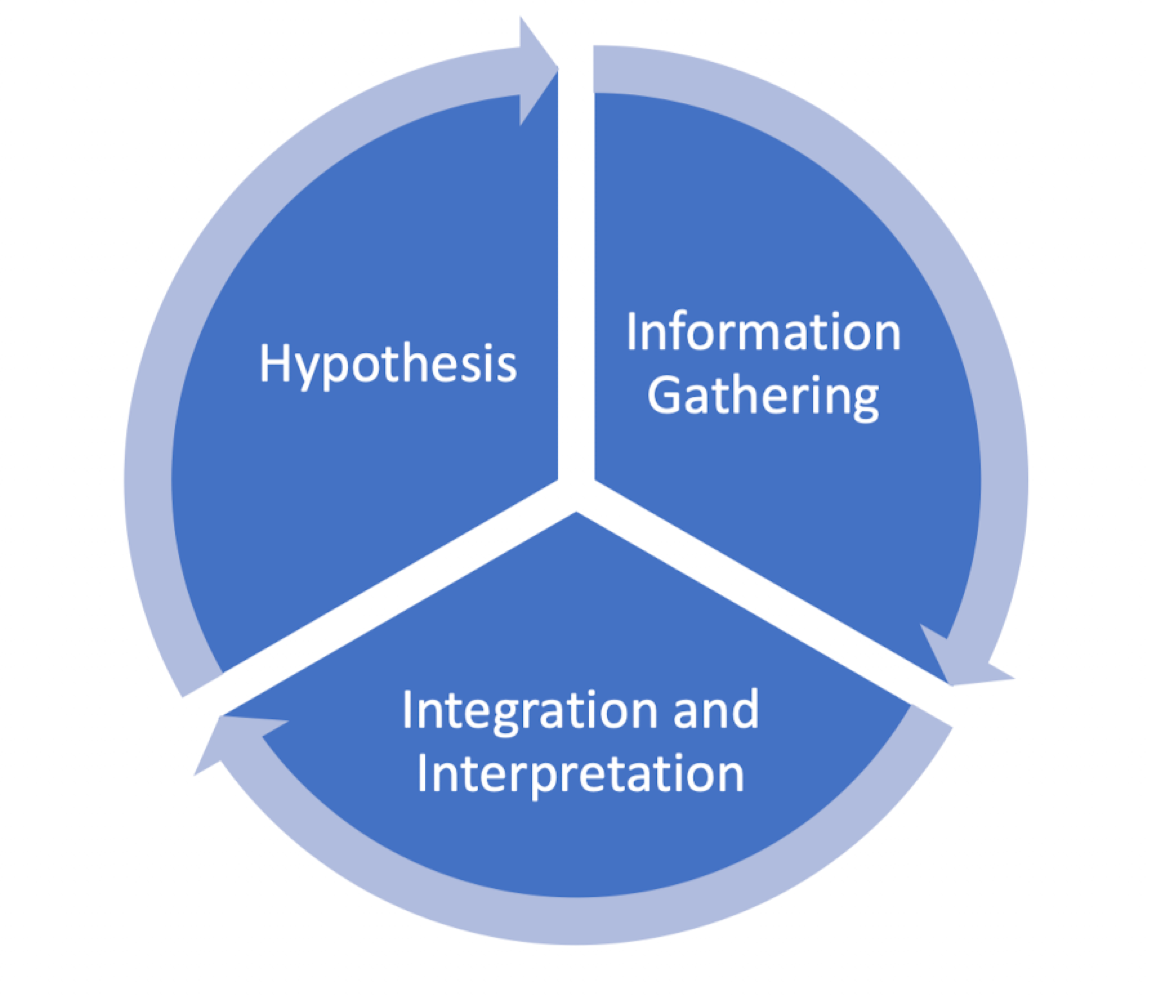
what are the more detailed steps of the diagnostic process? what are the components within each step?
obtain info from patient
history taking + patient-centred interviewing
consider what may be going in and what info is still needed to take action
illness scripts
differential diagnosis
probability
evidence
testing thresholds
treatment thresholds
get this info
history taking + patient-centred interviewing + physical exams
take appropriate action
testing thresholds
treatment thresholds
probability
evidence
what is history-taking? what does it include? what is the relevant vocabulary
questions asked of a patient - high diagnostic value
includes items like different aspects of pt’s concerns + their meds + past medical history + family history + social history
relevant vocab - symptom: a disease manifestation reported by the patient, this info is often charted as subjective notes (i.e. sore throat, muscle pain)
what is patient-centred interviewing? why is it important?
Focuses on:
Patient’s ideas
Feelings/fears
Impact on functioning
Expectations
Why important?
Illness ≠ just symptoms (context matters)
Understanding emotional/personal factors → better clinician
Letting patient express concerns is therapeutic
what are physical exams? what does it include? what is the relevant vocabulary
inspection, auscultation (listening), percussion (tapping body parts), palpation and other maneuvers to gather further info
relevant vocab - sign: a manifestation of a disease that the clinician perceives, often charted as objective notes (i.e. high temp, skin rash)
what is a differential diagnosis? why is it so important? what is the relevant vocabulary?
a list of conditions that are candidates for explaining a pt’s concerns
one’s first though about what condition the pt has is subject to bias and especially for beginners, too often wrong
relevant vocab - premature closure: failing to consider reasonable alternatives after initial diagnosis
what are illness scripts?
in expert clinicians, clinically-relevant memory is accessed in patterns termed “illness scripts”
this knowledge has a relatively consistent structure, which includes predisposing conditions, clinical features, and mechanism of illness
how is it encouraged that illness scripts explicitly be created?
create disease illness scripts to learn + to compare and contrast conditions - building a standard template for each disease
create patient illness scripts to match against disease patterns and generate a differential diagnosis
what is probability from a clinical standpoint?
how likely different conditions are - helps to make decisions about what to do
we must constantly update probability estimates as more information is obtained
what is evidence from a clinical standpoint?
information that helps us update our estimates of probabilities
gathered from the pt history, physical exam, and further testing
what well-represents the value of a piece of evidence?
likelihood ratio
calculating this tells you how to update estimations of probability; rarely done in practice
what are testing and treatment thresholds? why do we need them?
thresholds are probability cutoffs beyond which a clinician takes action or stops gathering information
becuase we will never achieve 100% certainty that a patient does or does not have a condition