Evolution
 Call Kai
 Learn
Learn Practice Test
 Spaced Repetition
 Match
Match Flashcards
 Knowt Play
1/112

There's no tags or description
Looks like no tags are added yet.
Name | Mastery | Learn | Test | Matching | Spaced | Call with Kai | Chat |
|---|
No analytics yet
Send a link to your students to track their progress
113 Terms
how and when the earth formed
4.5 billion years ago
as mass of developing planet increased, heat generated by force of gravity and radioactive decay caused interior to melt
produced dense metallic core surrounded by cooler, semi-solid mantle
outside of that was crust - solidified to form continents and seafloor

conditions of early earth (and how it was formed)
cooling of the crust caused gases from the hot interior to escape through volcanoes
atmosphere contained hydrogen, water vapour, methane, ammonia, hydrogen sulfide
lacked oxygen

cyanobacteria/stromatolite importance and overview
cyanobacteria in rocks - oldest widely accepted fossils
formed stromatolites - layers produced as CaCO3 precipitated over growing bacterial filaments
released oxygen into the atmosphere by photosynthesis

processes necessary for life to begin on earth
synthesis of simple organic molecules (e.g. amino acids) and ultimately synthesis of larger organic polymers (e.g. proteins)
origin of molecules that can self-replicate
only molecules known to do this are RNA and DNA
packaging of self-replicating molecules into membranes with internal environment different in composition from their surroundings. closed membrane vesicles form spontaneosuly from lipids, can maintian diff chemical compositions between intrace and extracellular environments
primordial soup theory
life on earth started in ancient ocean/pond from mixture of simple chemicals
lightning hit chemicals to form amino acids
miller-urey experiment used to see if possible for simple inorganic substances to react and form complex organic molecules
used water, methane, ammonia, hydrogen
found 13/20 amino acids formed, high conc of adenine, 15% of carbon compounds were organic
meteor theory
earth subjected to lengthy barrage of meteor showers and emissions from volcanoes
caused atmosphere to contain precursors needed to make organic molecules

deep sea/hydrothermal vent theory
vents warmed ocean water to temperatures conducive to life processes
released hydrogen rich molecules and minerals to the water that early organisms could use for energy

to be considered living, an organism must…
consist of cells
control internal environment
control exchange of materials
remove waste
respond to stimuli
use energy
grow and reproduce
ribozyme
RNA molecule that can speed up specific chemical reactions in body
self replicating
catalyse range of reactions
ability of RNA to be double helix or single strand allow them to self replicate and replicate other RNA molecules
RNA world hypothesis
theory began due to discovery of ribozymes
early life used RNA not DNA - first cells consisted of RNA molecule enclosed in vesicle (protocells)
theorised because ribozymes self replicated and performed current role of proteins cayalyzing reactions

assumptions made in RNA world hypothesis
genetic information was transmitted and stored by RNA in first cells
same replication of RNA in first cells as modern
metabolic reactions catalysed by RNA rather than enzymes in first cells
RNA molecules with ability to catalyse reactions under certain circumstances - ribozymes
assumptions against primordial soup theory
geochemists now believe that early atmosphere did not contain same proportions of gases as in miller-urey
water breaks down protein chaincs in amino acids (or other constituents) - makes it v difficult to produce proteins/other polymers in soup
amount of energy required is greater than likely energy generated by electrical storms
LUCA
Last Universal Common Ancestor
not a ref for first life on earth but ref to population from which all existing life derived from

prokaryotes existed before eukaryotes evidence - fossil record
first cells existed 3.5 billion yrs ago - prokaryotes that didnt need O2 - cyanobacteria in stromatolites
2.3 billion yrs ago - photosynthetic prokaryotes - changed atmopsheric conditions by adding 02
oldest eukaryotic fossil found 2.3 billion yrs ago - unicellular algae
earliest multicellular eukaryotic fossil 1.6 billion yrs ago - red algae
prokaryotes existed before eukaryotes evidence - structural features
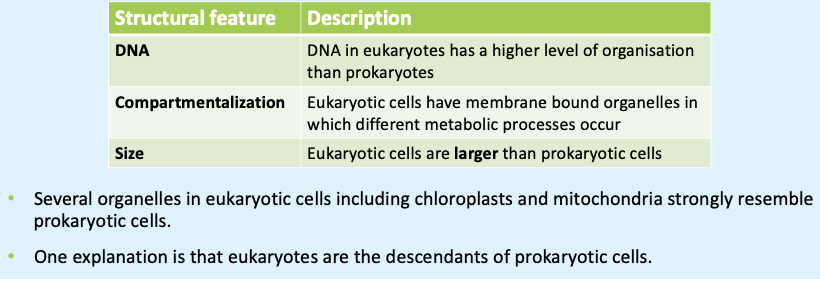
endosymbiotic theory
proposes chloroplasts and mitochondria were once ‘free-living’ prokaryotic organisms that were engulfed by another cells by endocytosis
they evolved within host cell in symbiotic relationship
host took prokaryotic cell that may have capacity to photosynthesise (hence supply organic molecules) or perform aerobic respiration (provide energy for cells)
engulfed prokaryotes benefited by obtaining shelter and protection from predators
other endosymbiotic events occured during evolution of eukaryotes (e.g. infolding of cell membrane to make ER and nucleus)

evidence for endosymbiotic theory
facts that both mitochondria and chloroplasts:
have inner membranes resembling cell memrbranes of prokaryotes more than cell membrane of eukaryote they are found in
divide by binary fission - new cant be produced as directed by genes in nucleus
however rely on nuclear proteins for division
have circular DNA
have own protein synthesis system (inc. ribosomes that are incidentally more similar in size and structure to prokaryotic than eukaryotic)
evidence for common ancestry of all living things
universal presence of DNA
suggests that early prokaryotes evolved on their own first, then eukaryotes appeared biollions of yrs later (approx 2.7)
mutations (general) - inhertiance, define, types
permanent change in sequence of nucleotides of DNA
random changes to DNA sequence of an organism - can be beneficial, harmful, or no effect
sources of new forms of particular gene s(alleles) in population of species
somatic cell mutations are not inherited, mutations in gametes or germline cells are
are generally pt mutation to single gene, may or may not affect one protein only
mutations - evolution
ultimate source of genetic variation in species
if beneficial → adaptation, if harmful → genetic disease
driving force of evolution - phenotypical features arise from them; beneficial mutations provide individuals with a greater survival chance and are passed through generations and become more abundant
sources of new forms of particular gene s(alleles) in population of species
accumulation of pt mutations to diff genes in diff populations, over long time period, contributes to array of differences between species
affect of population seperation on mutations
If separated for long time, accumulate different mutations in DNA
larger time separated, the more likely there is a greater difference
molecular clocks
compares evolution of biological molecules (e.g., DNA and proteins) to estimate time in history when species diverged from a common ancestor
differences in aa sequences for specific proteins in species are proportional to time since species diverged from CA
all proteins have diff rates of change but occur at constant rate
if constant rate is true for all species, diff in aa sequence between 2 species can be used to determine approx time of divergence
molecular clock must be calibrated properly
generally use fossil record, geological evidence and species samples
more samples for clock, more precise calibration

phylogenics - definition and principle behind analysis
phylogenics - finding evolutionary relationships among organisms
DNA, RNA, and protein sequences analysed - greater similarity, fewer mutations required to convert one sequence to other ∴ more recently share common ancestor
phylogenetic tree
common ancestor occurs at the ‘root’ of the tree
each branching pt (node) indicates where species diverged
longest separation means more differences through mutation (more time that mutations have to accumulate in DNA sequence

comparative genomics
comparing complete genomes, genes or aa sequences of different species using a variety of tools
requires use of computer-based analysis to locate differences in sequences and regions of similarity
e.g. of program ‘Clustal Omega’ - global multiple sequence alignment program for DNA, RNA, proteins
benefits of comparative genomics
major contributor to understanding organisms (inc. the human genome)
Important in identifying genes that are essential to life and contributing to understanding of how gene signals control gene function across a range of species
powerful tool for studying evolution and evolutionary relatedness between organisms and humans
wide range of applications in agriculture and biology
DNA sequencing
used to work out the sequence of bases in a specific gene/genome
sample of DNA from species can be sequenced to compare evolutionary relationships
more similar genetic code, more closely related species - less time for mutations to accumulate
similarity therefore also indicates recent separation from common ancestor between species
feasible using comparative genomics software
construct phylogenetic tree using DNA sequences
Clustal Omega produces multiple sequence alignments of divergent sequences, calculates best match for selected sequences

rRNA sequencing fixxx
rRNA is component of ribosomes - found in all liing organisms
prokaryotes - 16s rRNA gene codes for small ribosomal subunit
eukaryotes - 18s rRNA gene codes for small ribosomal subunit
cloesly related species (same genus) have similar rRNA sequences
info can be used to make phylogenetic trees using computer-based software
can also be used as qualititative method to determine unknown species and diff types in sample
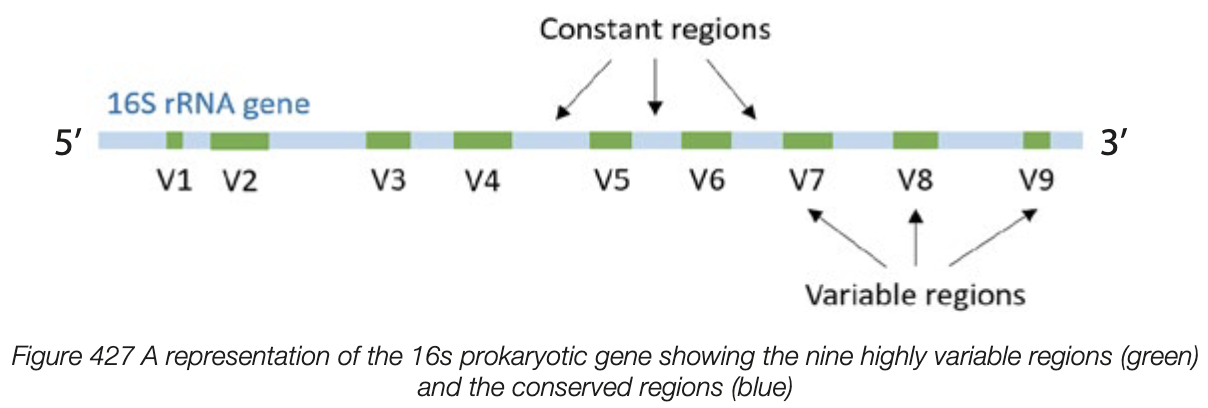
advantages of sequencing rRNA
all living organisms need ribosomes to make proteins hence rRNA gene is in all species
rRNA gene has highly conserved regions where few mutations occur - researchers can synthesise primers that will bind in complementary fashion so PCR can be done
also consists of multiple highly variable regions where mutations occur more readily - researchers can distinguish between diff species
can detect many species at once in comparison to DNA sequencing of individual species - useful since theres >billion prokaryote species
DNA sequencing requires prokaryote species to be isolated and some cant be cultured and hence isolated easily
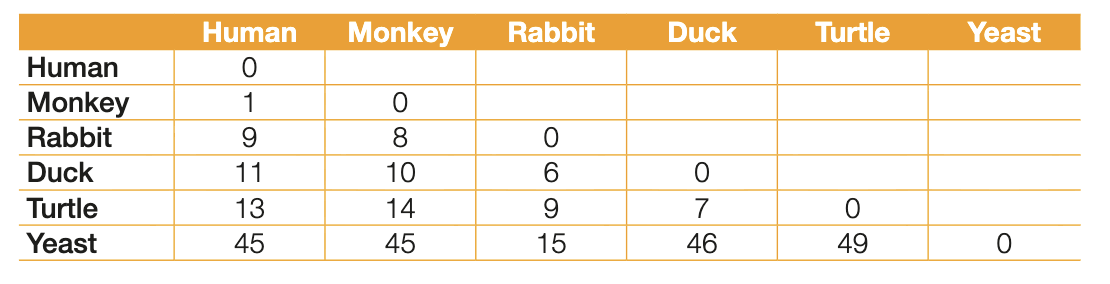
protein sequencng'/aa seuquncint
if diff species produce proteins w/ v similar aa sequences, DNA is v similar, inherited from recent common ancestor
proteins maintained through evolutionary history are identified (those crucial to survival)
e.g. cytochrome c - needed for aerobic respiration
protein varies from species to another - degree of similarity indicates closeness of evolutionary relationship
assumed that 1st organism had cytrochrome c, over billions of yrs mutations changed sequence of bases in gene coding for protein
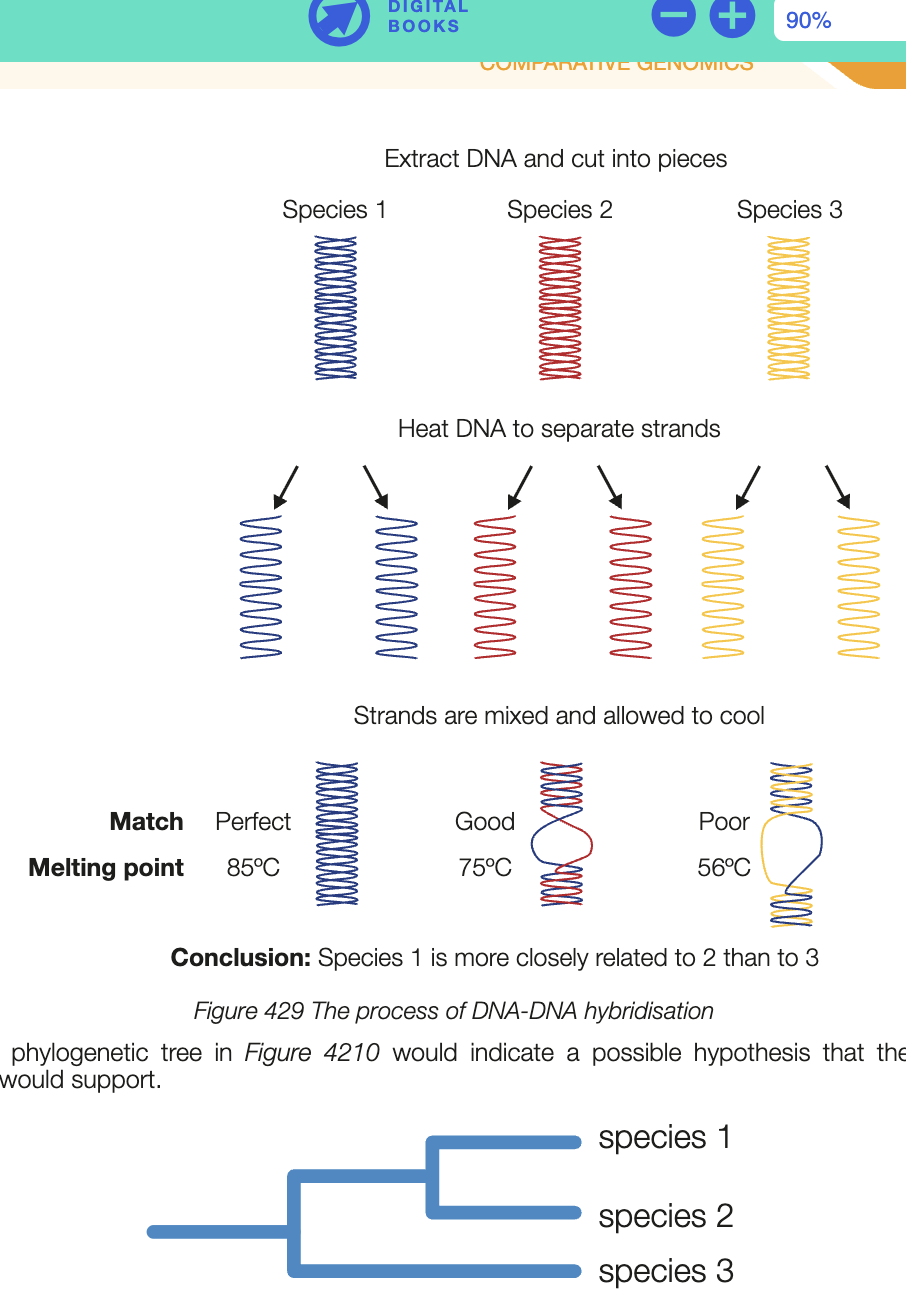
DNA-DNA hybridisation process
particular gene sequence to be compared between species is isolated using gene probe and enzymes
DNA of 2 species is heated to 95 to seperate strands
strands are mixed togehter and allowed to cool - enables formation of hydrid DNA
strands are reheated to work out ‘melting pt’ of hybrid DNA. melting pt is defined as temp where 50% of DNA is single stranded, other half is double. higher melting pt, more bonding between DNA molecules, more in common 2 DNA sequences are
higher the melting point, the greater similarity between the DNA sequences and the more likely it is that they shared a more recent common ancestor
DNA DNA hybridisation general info
heating solution containing DNA disrupts H bonding between 2 complementary strands (measured as boiling pt)
when mixture is cooled, they recombine to form double helix again
solutoin of DNA is heated from diff species is heated, allows hybrid DNA to form
degree of H bonding between one species DNA and another gives measure of similarity of sequence of nucleotides, indicator of how closely related species are
principal groups for classifying organisms:
domain
kingdom
phylum
class
order
family
genus
species
naming species
binomial nomenclature - first name of species is genus, second is species name
genus name is capitalised
both written in italics on typing, if handwritten underlined
biochemical similarities
DNA is universal
biochemical similarities of DNA and proteins can be used to determine between asequally reproducing species
also other biochemical molecules that are v similar between soecies
cellular respiration, photosynthesis, transcription, translation are essential processes in organisms ∴ biomolecules involved in processes are similar
e.g. cytochrome c (cellular respiration)
similarity can be compared to determine evolutaionry relationships
population definition
group of individuals of the same species occupying the same space and interbreeding
gene pool
sum of all genes (alleles) of all individuals in a population - form which guture generations of individuals will be created
populations with large gene pools (large diersity of alleles) will be more robust, more likely to survive changing or harsh environmental conditions
reduced genetic diversity means greater extinction risk
biological species concept
most widely used, based on reproductive isolation
members of one species are a population where members have similar characteristics (biochemical, morphological, and genetic) and capacity to interbreed and produce fertile offspring
species consist of several populations that are geographically isolated
even though physically isolated, still considered one species if contribute to gene pool by producing fertile offspring
limitations of biological species concept - asexually reproducing species
doesnt apply to them (e.g. bacteria, hydra, sea stars)
biochemical comparisons of DNA and proteins help establish relatedness in this circumstance
limitations of biological species concept - lack of data on breeding behaviour
many speciies dont have extensive research conducted on breeding patterns and ability to produce fertile offspring w/other groups of organisms
limitations of biological species concept - fossils
DNA of fossils has generally degraded for species that are long extinct - rules out ability to compare breeding behaviours and comparative genomics.
also no evidence regarding interbreeding and behaviour of fossilised organisms.
can still show structural (morphological) featers, which can be compared
limitations of biological species concept - overlap of populations and hybrids
difficult yo examine extent of interbreeding
overlap in distribution areas and presence of hybrids exists
if diff give rise to intermediate forms, considered one species
may classify into seperate subspecies
morphological species concept
groups species according to structural features that are unique to particualr group of organisms
can be applied to any group, mainly useful for fossils
limiation of morphological species concept
different species have similar structural features
thus, only used when biological species concept cant be used
species w/ similar features due to convergent evolution is example of the limit
fossils
DNA in fossils generally degraded for species that are extinct for long time - cant compare breeding or comparative genomics, no evidence of interbreeding
can still show structural features - thus morphological species concept used
reproductive isolation
members of separate species cannot interbreed and have fertile offspring
achieved through pre and post zygotic mechanisms
pre - occur before zygote formed (before fertilisation)
post - occur after zygote formed, prevent from developing into viable, fertile adult hybrid
pre-zygotic mechanism - temporal (time) isolation
breeding cycles/time of fertility differs between one population of species to the next
e.g. plants flower at different seasons, some animals are nocturnal and others arent
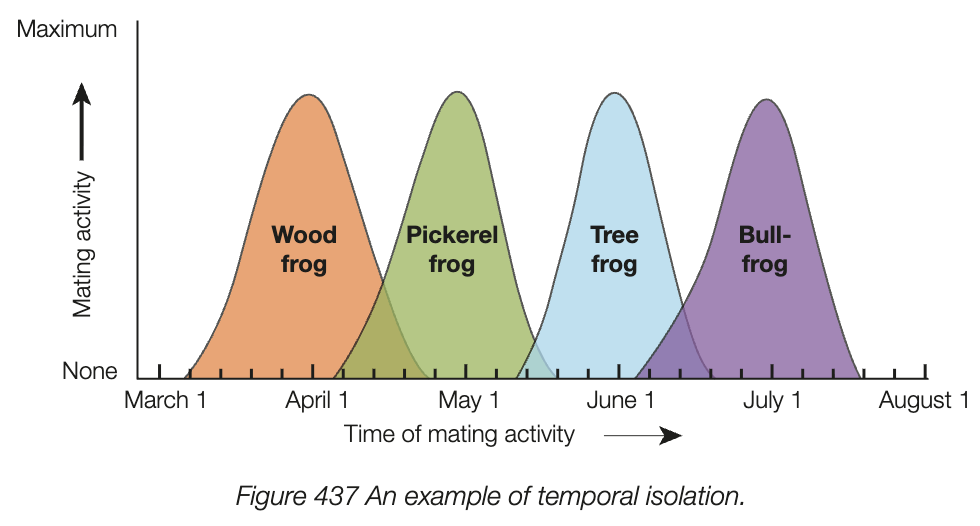
pre-zygotic mechanism - behavioural isolation
development in populations of highly specific calls or rituals detected and responded only by other members of particular populatoin
e.g. mating calls, mating dances
pre-zygotic mechanism - mechanical (morphological) isolation
incompatible sexual organs, whereby significant anatomical differences act as powerful mecahnism to ensure different populations remain reproductively isolated
eg. of plants - use different populations
pre-zygotic mechanism - gamete isolation
incompatibility of sperm and eggs from populations of different species
range of mechanisms and chemicals in species ensuring sperm can fertilise and fuse with egg from member of same species only
isolating mechanisms operating here include:
sperm does not respond to chemical signals from egg
sperm cannot penetrate egg
post-zygotic mechanisms - hybrid inviability
hybrid is weak and compete poorly for resoruces
unlikely to reach reproductive age and contribute to gene pool
post-zygotic mechanisms - hybrid sterility
extension of hybrid inviability
hybrid formed is sterise, hence cannot contribute to gene pool
chromosome number of 2 parents differs, hence do not have complete set of homologous pairs and meitoci division cannot occur in normal fashion
dominant and recessive, hetero and homozygous explained
zygote inherits ½ genetic material from each parent
genes act in various ways - some according to dominant and recessive patern of inheritence
homozygous (2 dominant or 2 recessible
heterozygous (1 dominant 1 recessive)
dominant - alleles that are expressed when at least one dominant gene is in genotype
recessive - 2 copies required to be expressed
cystic fibrosis and type of mutation
caused by faulty recessive allele of a gene
normal (C) is dominant over recessive mutant allele ©
CC - normal, does not carry CF allele
Cc - normal, carries one CF ellele
cc - CF sufferer, has 2 CF alleles
lethal mutation
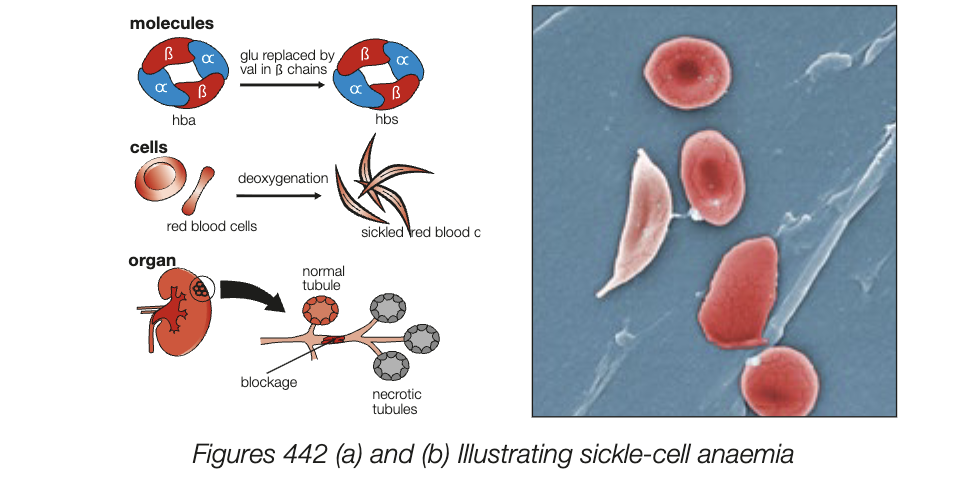
sickle-cell anaemia caused how and homo and heterozygous
change in one base, leads to protein with one aa changed
A is changed to T in substitution mutation in codon for 2th aa in beta chain; codon changes from GAG to GTG
causes glutamic acid to be replaced by valine
normal haemoglobin HbA and mutatn HbS alelles therefore:
homozygous can be HbA HbA or HbS HbS
heterozygous is HbA HbS

sickle cell anaemia sufferers how does it work (and codominance)
HbA and HbS exhibit form of co-dominance (or incomplete dominance) - heterzygous form exhibits features from both alleles (normal and abnormal haemoglobin made)
people with mutant gene and mutant heamoglobin dont have normal bi-concave TBC - become sickle-shaped
often causes death in homoxygous individiuals
types of mutations:
lethal
disadvantageous
neutral
beneficial
disadvantageous mutation e.g. osteoporosis
cause disease in those with mutant gene but is not fatal
e.g. osteoporosis
sufferers have brittle bones
low-density lipoprotein receptor related protein 5 (LRP5) involved in bone density and mutations in gene can cause osteoporosis
bones of affected individuals lose/’leak’ minerals (e.g. calcium) into blood
neutral mutations
no affect on either appearence (phenotype) or its function
majority of mutations are neutral
some scientists argue they are still mutations - change genotype and will be passed to guture generations (if germline cells)
changes to introns of DNA, may cause unknown changes to function
sickle cell anaemia
homozygous individuals have LETHAL mutation
heterozygous individuals (HbA, HbS) have some HbS-derived haemoglobin but more normal haemoglobin - suffer form mild anaebia
if in malaria infested area, protists that cause disease cannot reproduce in RBC with haemoglobin made from HbS allele
have reduced chance of getting malaria
sexual reproduction on evolution (and evolution in asexually reproducing)
introduces variety into offspring so they dont look the same as parents
variation expresses itself as diff genotypes (pairs of alleles of genes) and thus different phenotypes (appearance)
mutations are only source of new alleles in genes, sexual reproduction reshuffles alleles of genes in parents to give new combos
popultions of sexually reproducing species show variation between individual members of population
asexual - reproduction happens quickly if there is a favourable mutation
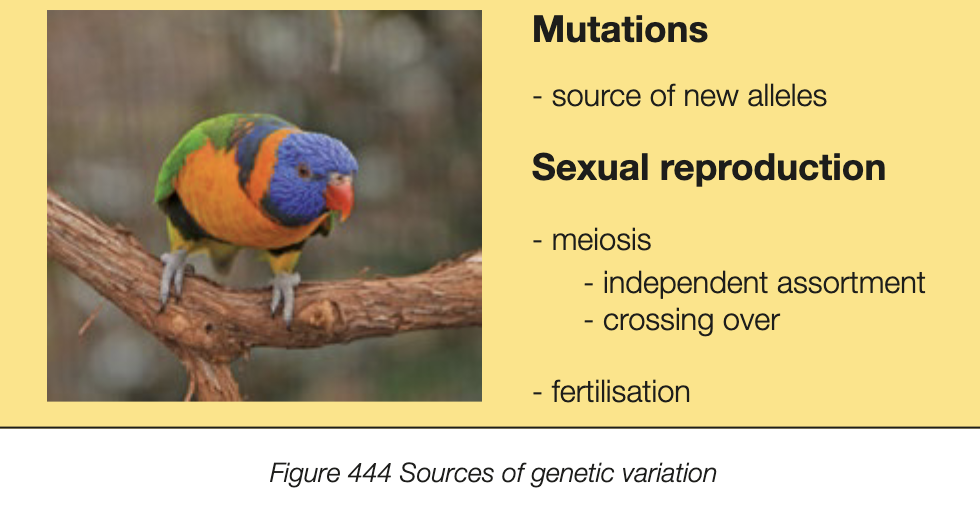
how variation introduced in meiosis
crossing over - introduces new combo of alleles of maternal and paternal genes
independent assortment of chromosomes - gives rise to new combos of maternal and paternal chromosomes in gamets through random alignment of homologous chromosomes on opposite side of equator of cell (meiosis 1)
how variation introduced in fertilisation
random fusion of an ovum and sperm, each w/ unique collection of chromosomes and alleles
allele frequency
relative proportion of particular allele in population
usually expressed as fraction or percentage
changes in gene pool bought on by:
mutations
gene flow
genetic drift
changes in gene pool - gene flow
movement of alleles between diff populations of same species
occur when individuals move in and out of populations, or migrate - change frequency of alleles found in gene pool
inc. flow of alleles of genes between populations reduces diff between populations
limited gene flow leads to populations evolving and developing in own environment

changes in gene pool - genetic drift
random changes in frequency of alleles, more pronounced effects on small populations
if any individuals dont contribute their alleles to next gen, major impact of gene pool
seen in populations where effects (e.g. bottlneck) occur
reduced population size reduces variation in gene pool → reduced genetic biodiversity
bottleneck affect
impact of random factors (e.g. bushfires) on population
changes allele frequency - removes certain alleles due to random cahnce
natural selection and darwins hypothesis
for each population, more individuals were born and survived to reproduce, and environmental factors hold all populations in check
natural selection - nature/the environment selected individuals who were best adapted -
variation between individuals gave reproductive advantages, enable organisms to have more offfspring to survive next gen
life evolved from common acnester, and due to natural slection, populations were modifed over time according to diff environments and diff selective pressures they were exposed to
darwins finches
have diff beak shapes - provide unique adaptation for type of food predominantly found in particular environment of diff islands

natural selection def and selective pressures
natural selection - nature/the environment selected individuals who were best adapted
selective pressures act on phenotypes of individuals in the population, leading to changes in in allele frequency
certain alleles are favoured, otehrs are selected against
‘survival of the fittest’ - alleles of favoured traits in population of gene pool inc in frequency over time
diff selection pressures can lead to divergent evolution or adaptive radiation
biotic selection factors
predators
disease-causing organisms
competition from members of the same or different species
symbiotic relationships with other organisms
human activities
abiotic selection factors
rainfall
temperature
nutrient levels
light intensity
medical drugs (e.g. antibiotics)
chemicals (e.g. pesticides)
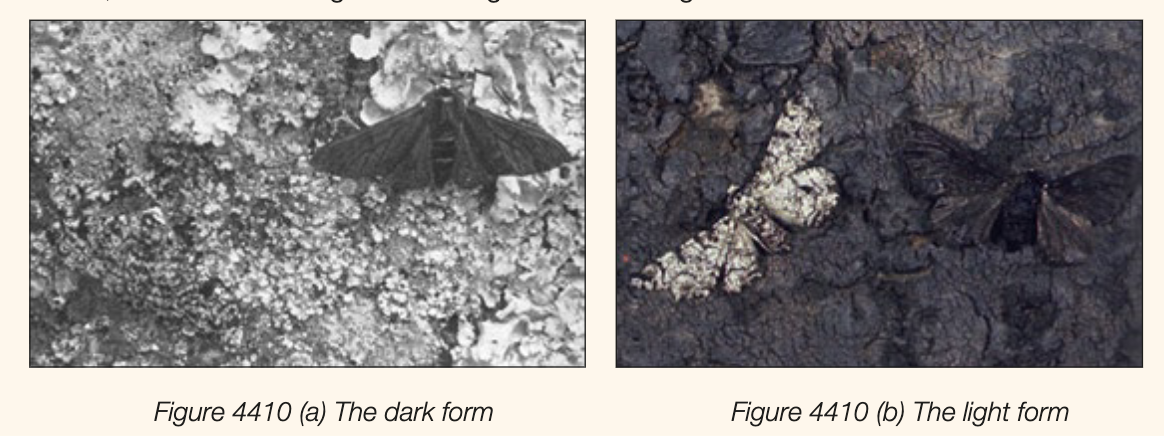
industrial melanism in peppered moths
before industrial revolution, trees moths lived in were covered in offwhite lichen
moths were light (light work) and speckled - camouflaged from predation by birds
occasionally black (dark form) would grow - high visibility, high chance of being eaten before reproducing
due to coal based industry, trees covered in black soot - white moths were easily spotten and eaten
black (melanic) variant became predominant by 1850 - phenomenon called industrial melanism
reduction of coal use in later 20th century made trees green (algae) - now both moth forms are common - balanced polymorphism
summary of evolution by natural selection
individuals in populations show phenotypic variation - result of environment and differences in genotype (inherited by next gen)
struggle for suvial between individuals of population due to biotic or abiotic selection pressures
organisms best adapted to environmental conditions are more likely to survive to reproductive age and pass favourable alleles of genes to next gen
over many gens, populations may evolve (showing changes in gene pool)
effects of natural selection can be measured by changes in frequency of alleles in gene pool - evidence of evolution occuring
populations/species that evolve, not individual organismsm
environmental elective pressures determine reproductive success of population, population does not adapt to conditions
process of evolutino suggests
all life forms evolved from single, simple common ancestor (LUCA)
species change through time
evolution in a species can be recognised by changing frequency of alleles in population
founder effect
small group of individuals separate/move away from original population
founding populations have a very different genotype from the original
changes allele frequency in populations

speciation
process that gives rise to new species
gene flow between 2 populations has stopped and reproductive isolation occurs
causes change in allele frequency in each population at differen rates
cumulative change in allele frequency over time means populations cant meet biological species def
2 types: allopatric and sympatric
allopatric speciation
Members of the original population are separated by a geographical barrier - gene flow between them is prevented
each population is subjected to different biotic and abiotic factors - selective factors and natural selection acts diff in each new location
genetic diff accumulate in isolated populations
if gene pools are separated and no gene flow occurs for long enough, geographical isolation evolves to reproductive isolation
speciation has occurred by divergent evolution
adaptive radiation can occur
adaptive radiation
A single ancestral species rapidly diversifies into new forms to fill different ecological niches
divergent evolutoin of related species from common ancestor
sympatric speciation
one population gives rise to two or more new species while inhabiting the same region (no geographical isolation)
gene flow must be prevented/reduced - reproductive isolatino must ultimately arise
occurs via:
occupying different microhabitats
polyploidy
sympatric speciation - occupying different microhabitats
particular members of one population occupy specific niche or microhabitat
creates ecological isolation within same geographical area
diff microhabitats impose contrasting environmental pressures - favour traits for each speficic niche
habitat based mating
causes gene flow restriction into the subpopulations
sympatric speciation - polyploidy
organisms possess more than two sets of chromosomes
occurs commonly in plants and certain groups of fish and amphibians
result of malfunction during meiosis - chromosomes fail to separate properly (nondisjunction)
example of instantaneous speciation - polyploid organism can’t interbreed with organism with a normal diploid number; gene flow is stopped
major role in flowering plant evolution
convergent evolution
different species of roganisms develop similar (analogous) features with similar functions
different groups of organisms (often in similar habitats w/similar selective pressure) have v similar structures/behavoiurs
occurs when analogous features evolve independently in unrelated groups or seperate species
analogous features
evolved separately in different lines of evolution
similar functoins, different anatomy
formed by convergent evolution
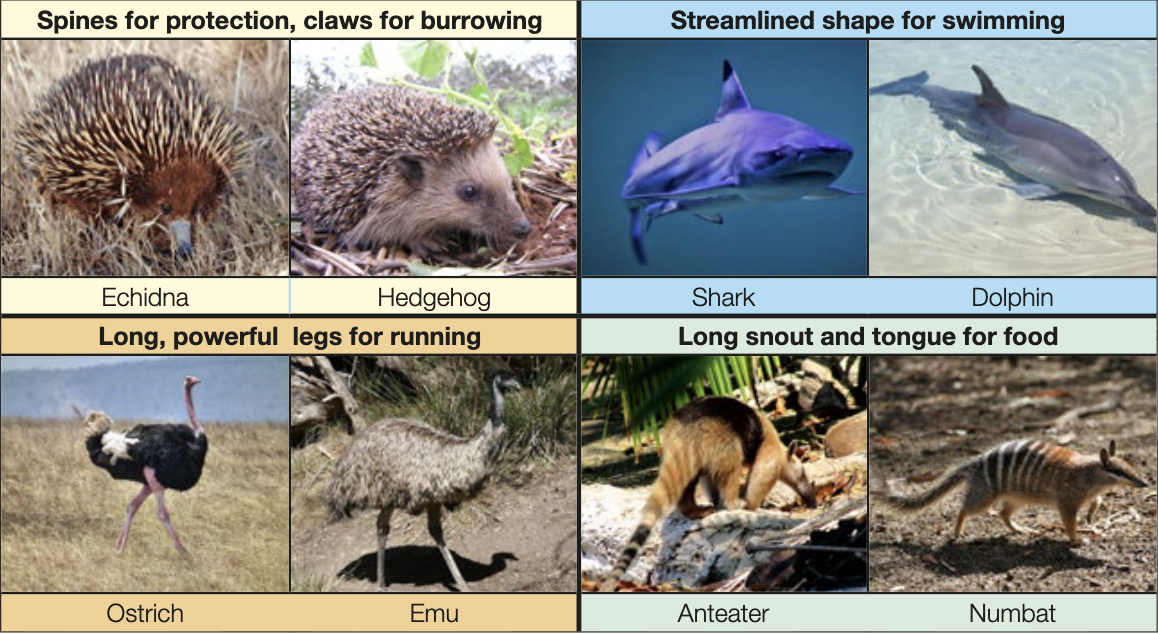
convergent evolution - wings and eyes
wings:
birds, bats, and butterflies (unrelated) all have wings for flight - invovled independently of each other
eyes:
an ancestral master gene ‘Pax6’ - og gene responsible for development of collections of simple light-sensitive cells
found across diverse set of organimss
probably part of genome of very early comon ancestor lived approx 500mil yrs ago
cephalopods and vertebrate have camera eye
divergent evolution
evolution of species from common ancestor
groups separate by speciation - accumulation of diff in geome by mutation
subjected to diff selective pressures therefore no gene flow - reproductively isolated
have homologous features
homologous features
share a common ancestor, have physical features with common evolution that have different functions
e.g., pentadactyl limb

divergent vs convergent evolution comparison

succession
gradual process where the species composition of a community changes and is brought about by the modification of the habitat caused by organisms that live there
leads to significant change that whole ecosystem changes to favour new mix of species - caused by long term change due to colonisation or natural disasters
ways organisms modify ecosystems
provide food or shelter for others
changing soil structure, causing breakdown of rock or increasing organic matter in soil
decomposing dead organic material, making nutrients available to other organisms
primary succession
unidirectional process - lifeless ecosystems are colonised by progressively more stable communities of living things
1st stage - colonisation of bare land by pioneer species
carry out life processes (inc chemical reactions weathering rock over time)
transform material to soil
death and decay, increasing nutrient content in soil
intermediate species sprout from seeds blown from nearby areas or insects and birds
area is colonised by plants that become communities dominant vegetation - climax community produce

adaptations that improve survival of pioneer species
autotrophic nutrition
ability to reproduce quickly
ability to tolerate harsh environmetal conditions
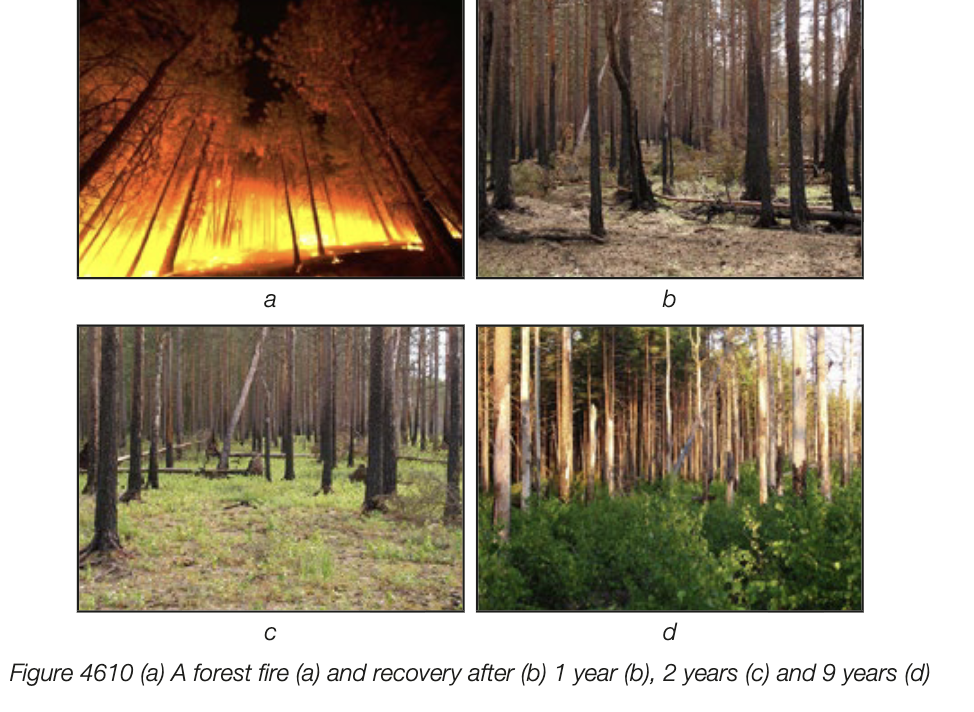
secondary succession
occur in mature ecosystems following natural disaster or major human impact (e.g. forest clearing)
e.g. woodland ecosystems destroyed by wildfires
fire stimulates germination of seeds; growth is more rapid than with primary succession - soils are warm, high nutrient content, can retain water better
new mix of plants and animal populations is quickly established
competition between colonising species populations and returning and new species influences new community and how it compares to og
different selective pressures can lead to divergent evolutoin or adaptive radiation as species exploit new niches
characterisits of mature or late sucession in communities and ecosystems
usually more species
number of heterotrophs increases more than number of autotrophs
recycling of nutrients is more efficient
organisms are more specialised
importance of species diveristy
species w/ reduced gene pool have higher risk of extinction - greater risk of becoming extinct due to greater susceptibility to environmental pressures
affect of human population growht on biodiversity
exponential growth of global human population
unsustainable - huge demands on resources needed by humans - jeopardises biodiversity
introduced/invasive/exotic species
foreign species brought to australia from other countries - move intentionally or accidentallyform native location to new geographic area
those who cause harm are invasive
compete with native species for habitat or resources or directly feed on them
if they have virtually no natural predators, spread across huge areas and reduce biodiversity
introduced species eg. - cane toads and rabbits
cane toads:
native to Central and south america
introduced to QLD to act is biological control agents of cane beetles
have virtually no natural predators - spread over huge area of Australia
Predators die after ingesting the toad due to poison glands on their backs - reduce biodiversity
rabbits:
destroy native vegetation, compete with native animals for resources
take over burrows from burrowing Australian species (eg. bandicoots, bilby)
serious threats of pollution
chemical pesticides affect higher order consumers through biomagnification (DDT, insecticides)
oil spills from ships at sea
accumulation of plastic waste in waterways and oceans
kills animals
degradation into microplastics - enter food chain through biomagnification
acid rain and photochemical smog - product of emission of SO2 and NOx into atmosphere from fossil fuel combustion
ineffective or insufficient sewage treating and disposal
production, transport, and storage of radioactive waste
impact of chlorofluorocarbons (CFCs) used in aerosols and fridges - destroys ozone layer