HYPOTHALAMUS AND PITUITARY GLAND
 Call Kai
 Learn
Learn Practice Test
 Spaced Repetition
 Match
Match Flashcards
 Knowt Play
1/24

There's no tags or description
Looks like no tags are added yet.
Name | Mastery | Learn | Test | Matching | Spaced | Call with Kai | Chat |
|---|
No analytics yet
Send a link to your students to track their progress
25 Terms
A cell, a tissue, or an organ which secretes useful chemical compounds required for a particular function.
Memory Hook: Gland = Giver of Secrets (Secretes chemicals).
What is the biological definition of a gland?
Endocrine: Lack ducts; pass secretions (called hormones) directly into the blood for transport to a site of action.
Exocrine: Have ducts for discharging their secretions.
Memory Hook: En- = Internal (Ductless > Blood); Ex- = Exit route (Ducts present).
Contrast the structural and secretional delivery differences between Endocrine and Exocrine glands.
Endocrine Examples: Pituitary, Thyroid, Adrenal, Parathyroid.
Exocrine Examples: Sweat, Salivary, Gastric gland, Liver.
Memory Hook: P.T.A.P. (Endocrine) vs. S.S.G.L. (Exocrine).
List four examples of Endocrine glands and four examples of Exocrine glands.
Minute chemical messengers thrown into the blood to act on target organs; they can be steroids, proteins, peptides, or amino acid derivatives.
Memory Hook: S.P.P.A. = Steroid, Protein, Peptide, Amino acid.
What are hormones defined as in the endocrine slide context, and what four chemical categories can they belong to?
On its surface or within its cytoplasm.
Memory Hook: Receptors = Outer surface or Inner cytoplasm.
Where must a target cell express its specific protein receptor to pick up a circulating hormone?
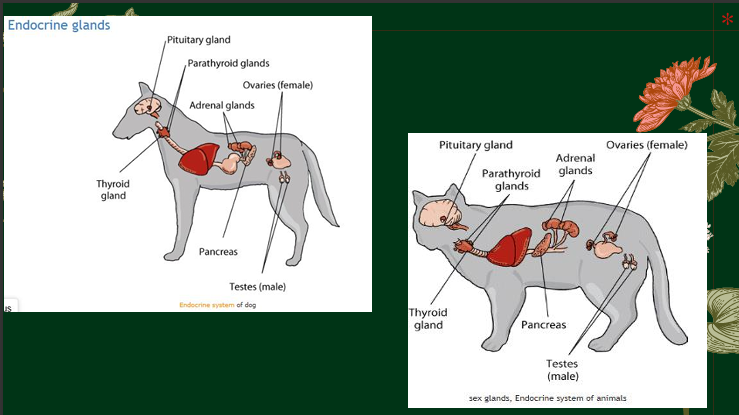
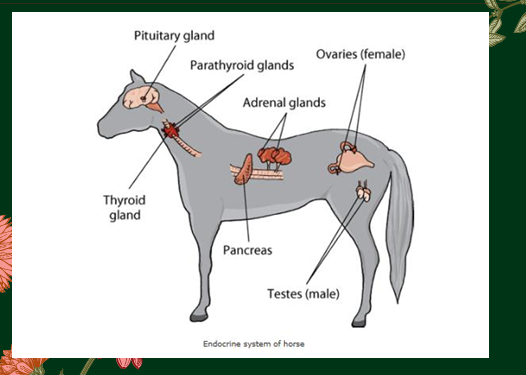
It is the command center of the endocrine system; a structure of the diencephalon of the brain located anterior and inferior to the thalamus.
Memory Hook: Hypo- = Below the Thalamus in the Diencephalon.
What is the primary role and anatomical origin of the Hypothalamus?
Several groups of neuro-secretory cells called nuclei.
Memory Hook: Nuclei = Neuro-secretory Nests.
What specific cell groups reside in the hypothalamus to generate hormones, and what do they form?
Releasing Hormones: Stimulate the secretion of pituitary hormones (e.g., GnRH stimulates FSH & LH synthesis/release).
Inhibiting Hormones: Inhibit secretions of pituitary hormones (e.g., somatostatin inhibits growth hormone release).
Memory Hook: GnRH Goes (Stimulates) vs. Somatostatin Stops (Inhibits).
Contrast the physiological actions of hypothalamic Releasing Hormones vs. Inhibiting Hormones.
The pituitary gland (or hypophysis); suspended by a stem called the infundibulum (or pituitary stalk).
Memory Hook: Infundibulum = Interconnecting stalk.
What bean-sized organ is suspended from the hypothalamus, and what is the name of its connecting stem?
The adenohypophysis and the neurohypophysis.
Memory Hook: A.N. = Adeno (Glandular Front) + Neuro (Neural Back).
Into what two primary lobes is the Pituitary Gland structurally divided?
Pars distalis (Anterior Pituitary): Produces GH, Prolactin (PRL), TSH, ACTH, LH, and FSH.
Pars intermedia: Produces melanocyte stimulating hormone (MSH) (almost merged with pars distalis in humans).
Memory Hook: MSH comes from the Middle (Intermedia).
What are the two subdivisions of the Adenohypophysis, and what hormones do they produce?
Pars nervosa (Posterior Pituitary); it does not produce hormones, but rather stores and releases oxytocin and vasopressin (ADH) produced by the hypothalamus.
Memory Hook: Posterior = Only a Post-office (Stores & ships, does not manufacture).
What is the subdivision name of the Neurohypophysis, its common name, and its exact physiological source limitation?
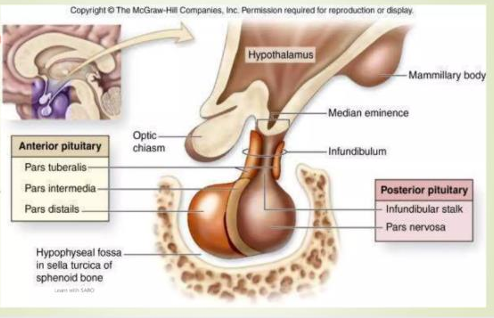
Anterior region: Pars tuberalis, Pars intermedia, Pars distalis.
Posterior region: Infundibular stalk, Pars nervosa.
Bony housing: Hypophyseal fossa in sella turcica of the sphenoid bone. Memory Hook: Pituitary sits snugly inside the Sella Turcica
Identify the specific parts of the anterior and posterior pituitary
paraventricular nuclei produce oxytocin; supraoptic nuclei produce ADH; they travel along axons into storage sites in the axon terminals of the posterior pituitary.
Memory Hook: P.O. / S.A. = Paraventricular Oxytocin / Supraoptic ADH.
Which specific hypothalamic nuclei synthesize Oxytocin vs. ADH, and how do they transit to the posterior pituitary?
It stimulates uterine contractions and dilation of the cervix.
Memory Hook: Oxytocin Opens & Outlaws stagnation (Dilation + Contraction).
What are the primary mechanical responses triggered by Oxytocin during labor?
End of pregnancy > Uterine oxytocin receptors increase > Smooth muscle becomes more sensitive > Oxytocin prompts contractions > Fetal head pushes toward cervix > Cervical stretching signals hypothalamus > Stimulates additional oxytocin synthesis/release > Intensity of contractions increases > Prompts more cervical dilation > Loop continues until birth.
Memory Hook: Stretch > Signal Hypothalamus > More Oxytocin > More Squeeze > Birth.
Track the positive feedback mechanism of oxytocin during childbirth.
Levels begin to decrease immediately following birth; it continues to play a role in:
The milk ejection reflex ("let-down").
Parent–newborn bonding (attachment).
Feelings of love, closeness, and the sexual response.
Memory Hook: B.E.L. = Bonding, Ejection of milk, Love/closeness.
What occurs to the maternal blood levels of oxytocin immediately following birth, and what three ongoing health roles does it play?
Osmoreceptors; specialized cells within the hypothalamus that are highly sensitive to the concentration of sodium ions and other solutes.
Memory Hook: Osmoreceptors = Solute Scanners.
What cells constantly monitor blood osmolarity, where are they located, and what are they sensitive to?
high blood osmolarity (dehydration or a very salty meal) > Osmoreceptors signal posterior pituitary > Releases ADH > Target cells in the tubular cells of the kidneys increase epithelial permeability to water > Increased water reabsorption from filtrate back into blood.
Memory Hook: High Salt > ADH Spill > Kidney Permeability Up > Save Water.
What triggers the release of ADH, and what are its direct actions on target cells?
blood osmolarity decreases > Hypothalamic osmoreceptors sense change > Prompt a corresponding decrease in ADH secretion > Less water is reabsorbed from the urine filtrate.
Memory Hook: Solutes Drop > ADH Drops > Water Reabsorption Slows.
Track the negative feedback control of ADH when blood solute levels normalize.
Alcohol consumption inhibits the release of ADH > Results in increased urine production > Can eventually lead to dehydration and a hangover.
Memory Hook: Alcohol = ADH Arrest = Dry & Dehydrated.
How does alcohol consumption alter urine outputs and cause post-ingestion distress?
Characterized by chronic underproduction of ADH causing chronic dehydration; little ADH is produced/secreted, so not enough water is reabsorbed by the kidneys.
Memory Hook: Insipidus = Insufficient ADH.
What pathology defines Diabetes Insipidus, and what are its physical hallmarks?
Because ADH levels are not high enough to trigger water reabsorption in the kidneys, the ingested water is excreted instead of being retained to dilute blood solutes; electrolyte imbalances can occur in severe cases.
Memory Hook: No ADH = Fluid in, Fluid out > Electrolyte Imbalance.
Why does increasing fluid consumption fail to effectively treat the blood solute concentration in severe Diabetes Insipidus patients, and what complication can arise?