Chapter 2.4: Chemical Reactions Transform Substances
 Call Kai
 Learn
Learn Practice Test
 Spaced Repetition
 Match
Match Flashcards
 Knowt Play
1/5

Name | Mastery | Learn | Test | Matching | Spaced | Call with Kai | Chat |
|---|
No analytics yet
Send a link to your students to track their progress
6 Terms
Chemical reaction
An interaction between different groups of atoms, divided into reactants (inputs) and products (outputs)
These conserve energy but result in differences in entropy, properties, and bond energy
Hydrolysis
An exergonic, reversible chemical reaction that releases energy through the use of water; this is naturally more favored
Condensation reaction
An endergonic chemical reaction resulting in the combination of two substances, it results in water as a byproduct and stores free energy in its products
This requires an input of energy and is less favored
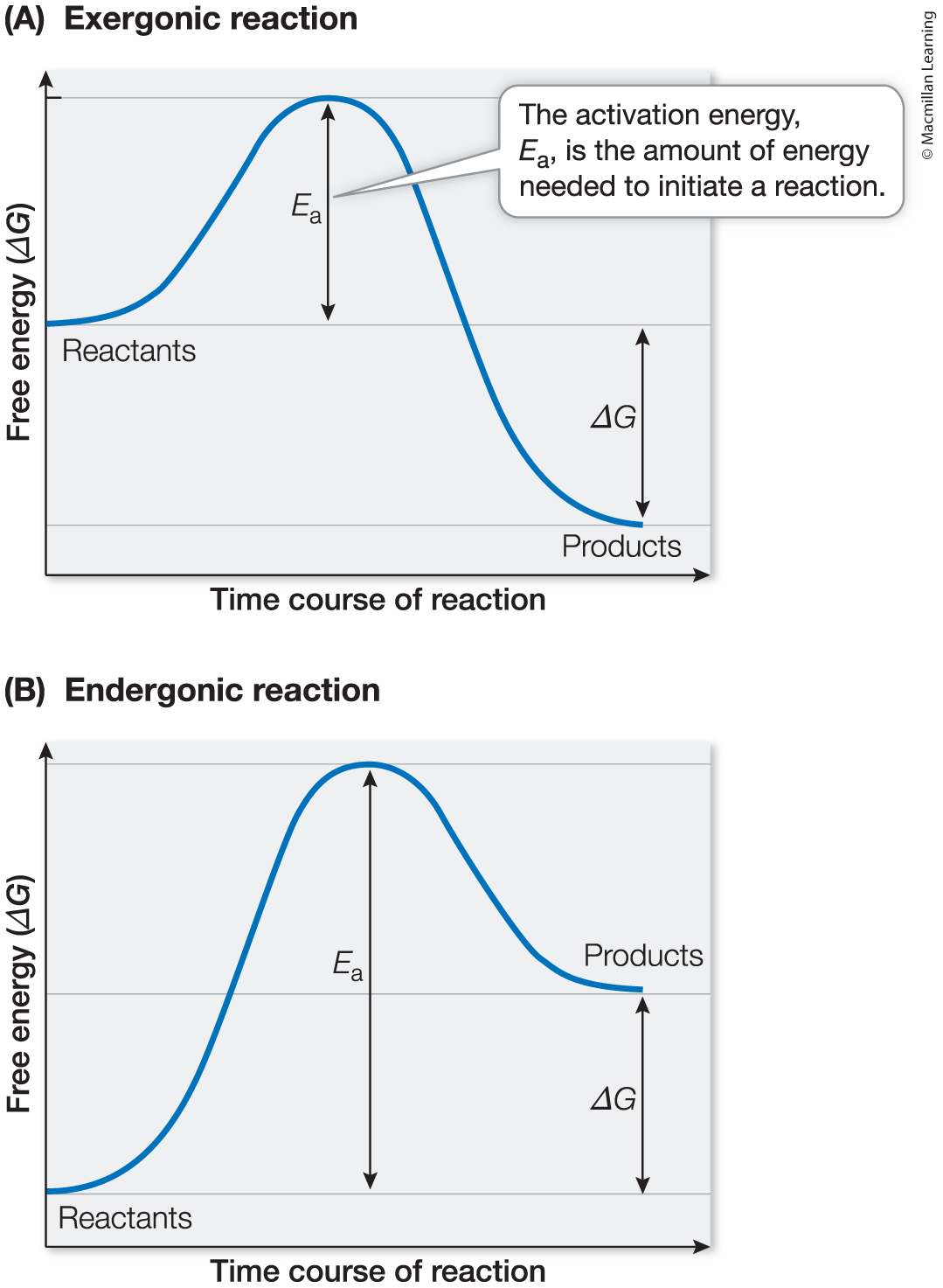
Free energy
A change in the total usable energy between reactions and products, often represented as delta G; this divides exergonic (releasing) and endergonic (absorbing) reactions
Reaction rate
In a chemical reaction, how much of a product is formed over time; this is limited by the required activation energy of the reaction, temperature, and concentration (as these affect collisions)
Equilibrium
The state that occurs when endergonic and exergonic reactions settle into the same reaction rates with no change in relative concentration