AP Biology Unit 1-3 Midterm Review
 Call Kai
 Learn
Learn Practice Test
 Spaced Repetition
 Match
Match Flashcards
 Knowt Play
1/265

There's no tags or description
Looks like no tags are added yet.
Name | Mastery | Learn | Test | Matching | Spaced | Call with Kai |
|---|
No analytics yet
Send a link to your students to track their progress
266 Terms
Energy
the capacity to do work
Enzymes
proteins that act as biological catalysts

potential energy
stored energy that results from the position or shape of an object

chemical energy
A form of potential energy that is stored in chemical bonds between atoms.
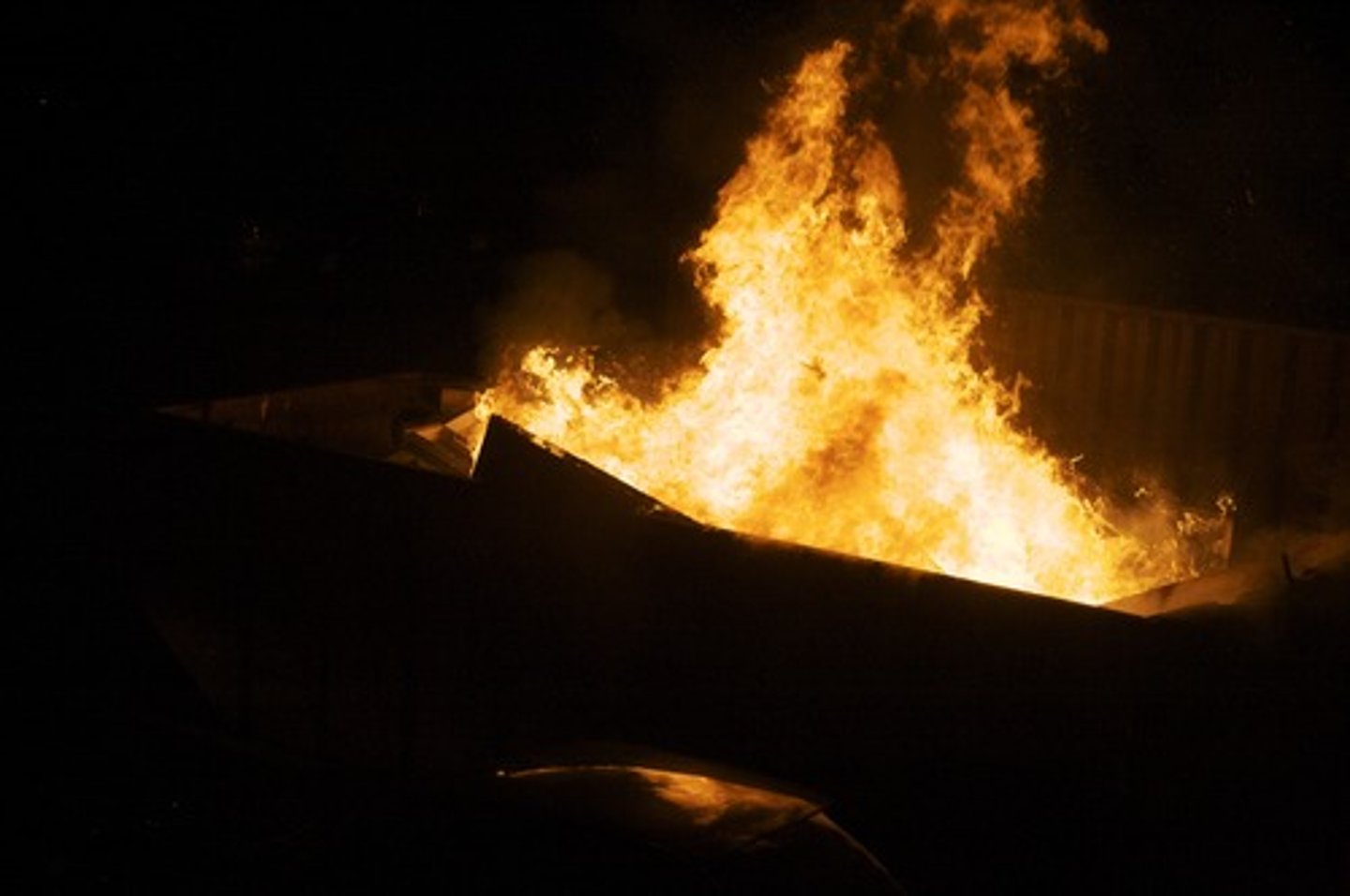
kinetic energy
the energy an object has due to its motion

thermal energy
The total energy of motion in the particles of a substance

heat
thermal energy in transfer from one body of matter to another

light
a form of energy that travels in waves and can move through empty space where there is no air

first law of thermodynamics
Energy can be transferred and transformed, but it cannot be created or destroyed.

second law of thermodynamics
when energy is changed from one form to another, some useful energy is always degraded into lower quality energy (usually heat) entropy

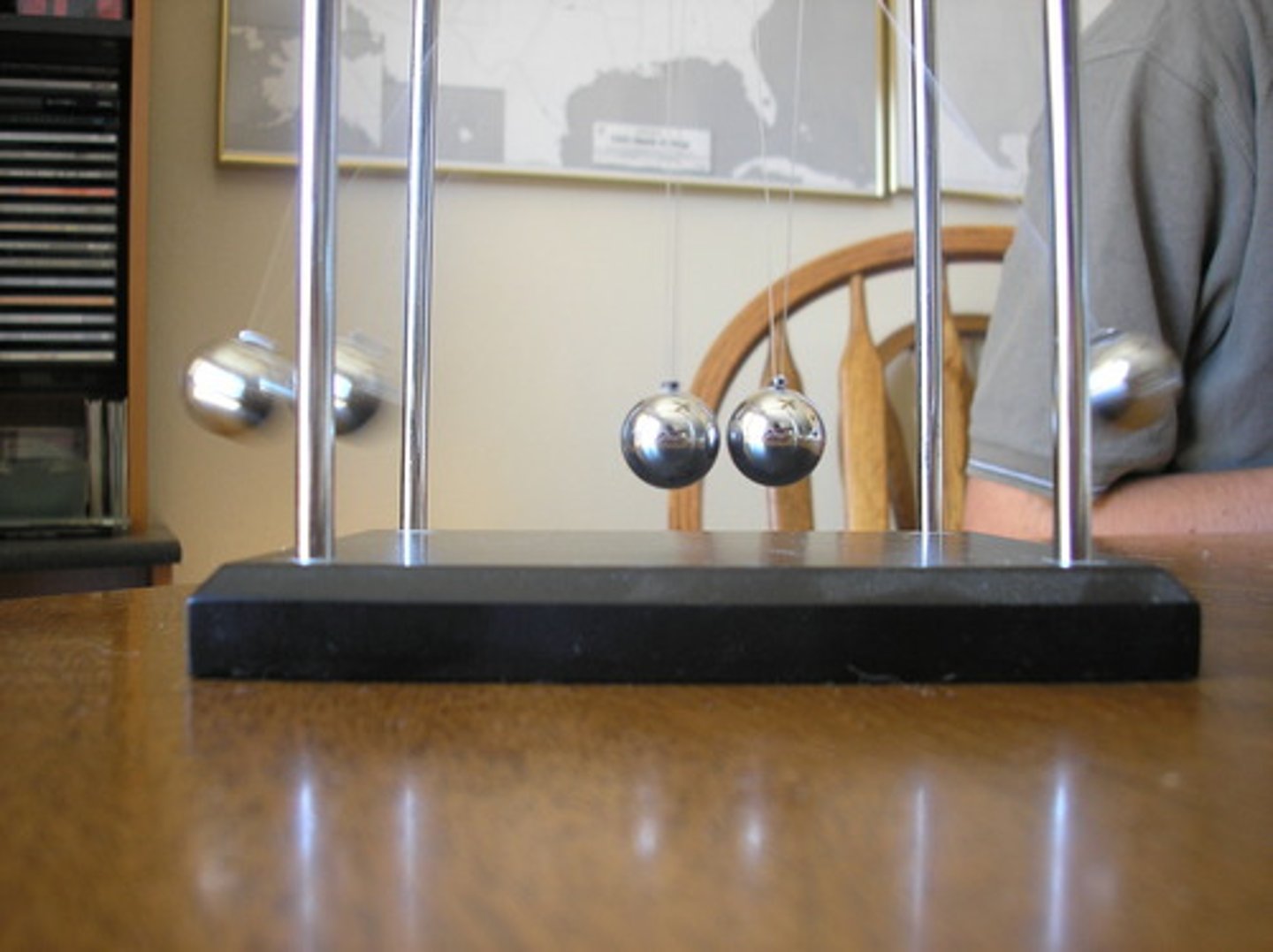
Law of Conservation of Energy
the law that states that energy cannot be created or destroyed but can be changed from one form to another
Gibbs free energy
the energy of a system that is available to do work at a constant temperature and pressure

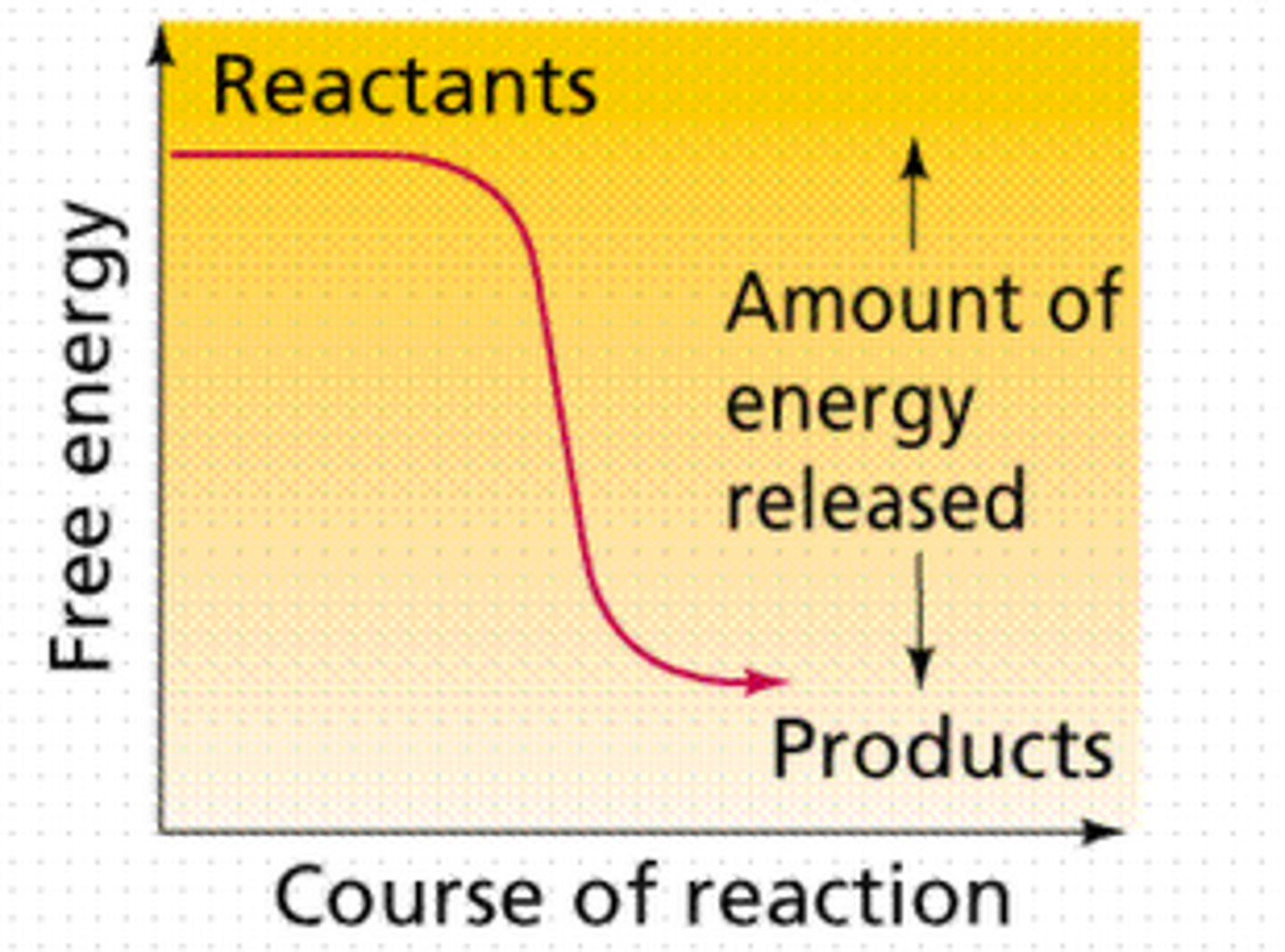
Exergonic
Chemical reactions that release energy
Endergonic
A chemical reaction that requires the input of energy in order to proceed.

Metabolism
the combination of chemical reactions through which an organism builds up or breaks down materials
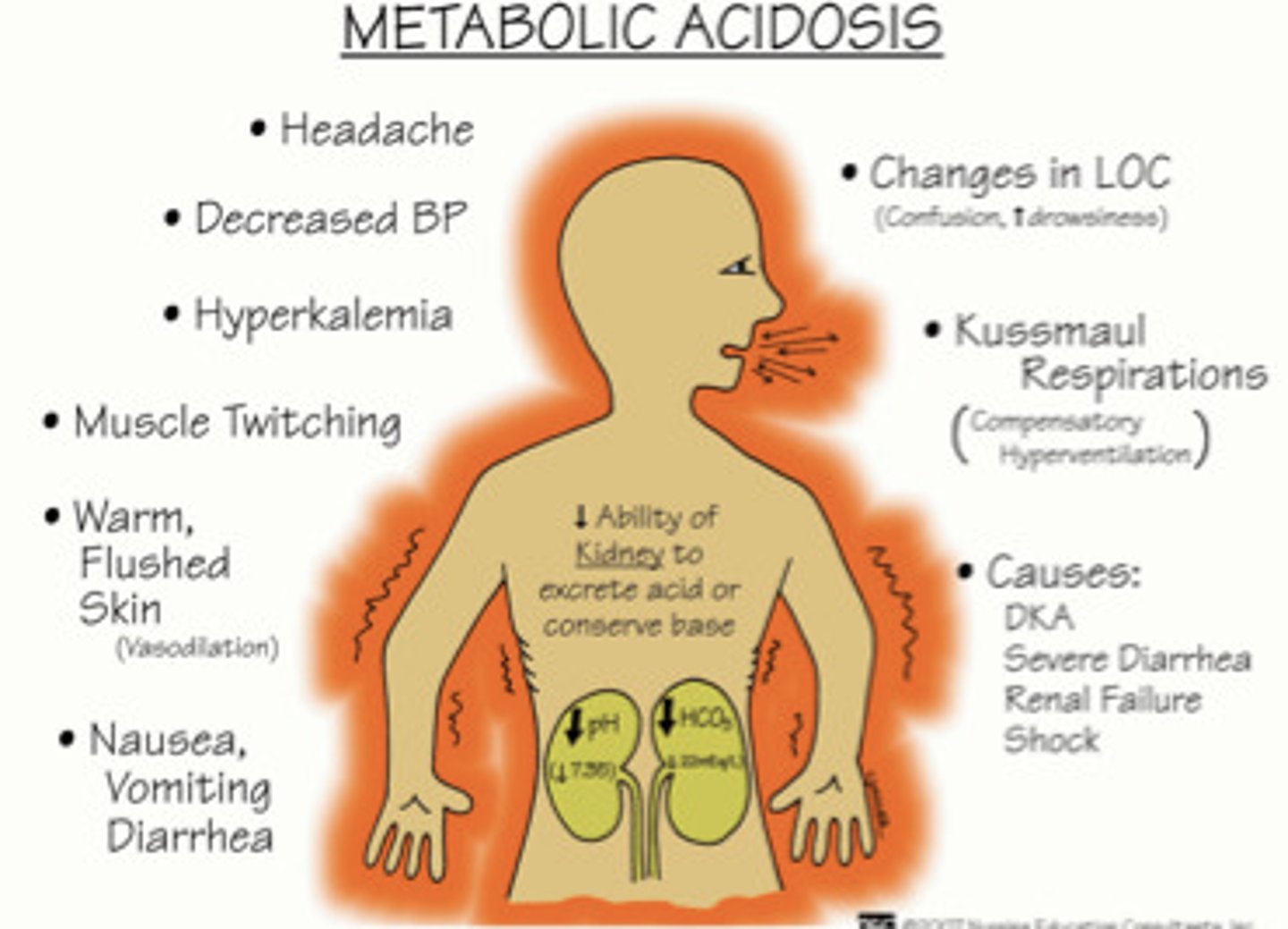
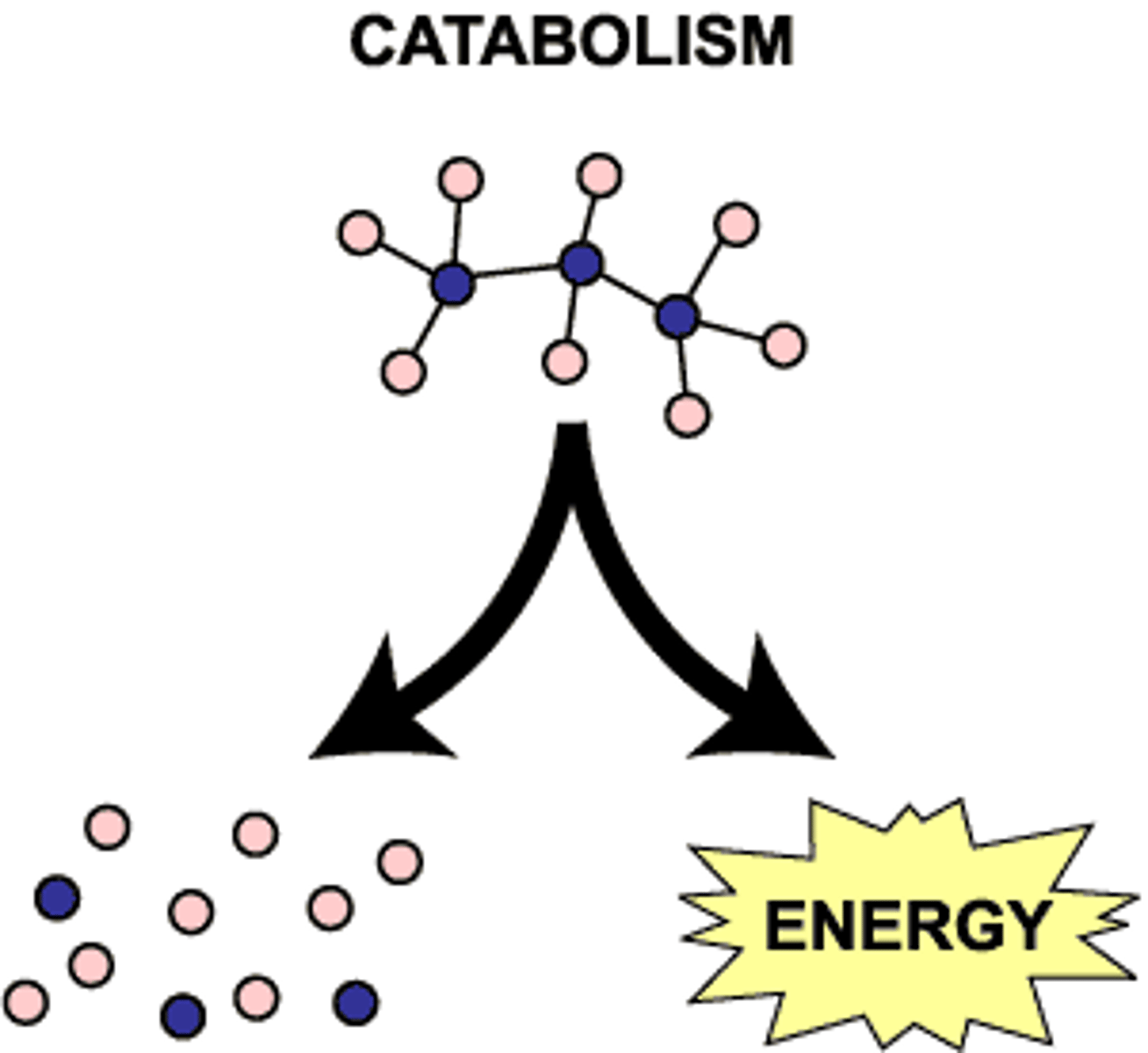
Catabolism
Metabolic pathways that break down molecules, releasing energy.
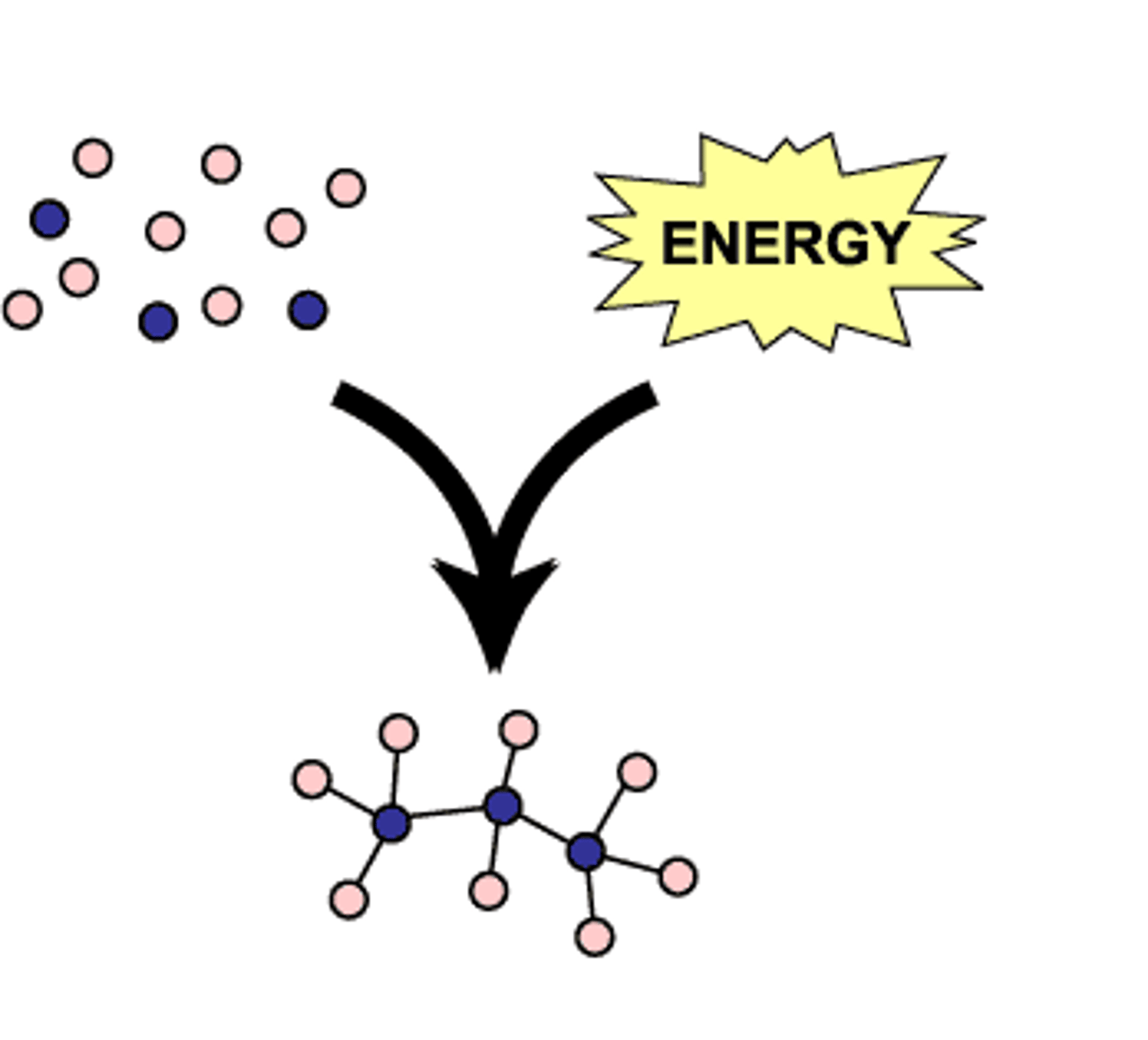
Anabolism
Metabolic pathways that construct molecules, requiring energy.
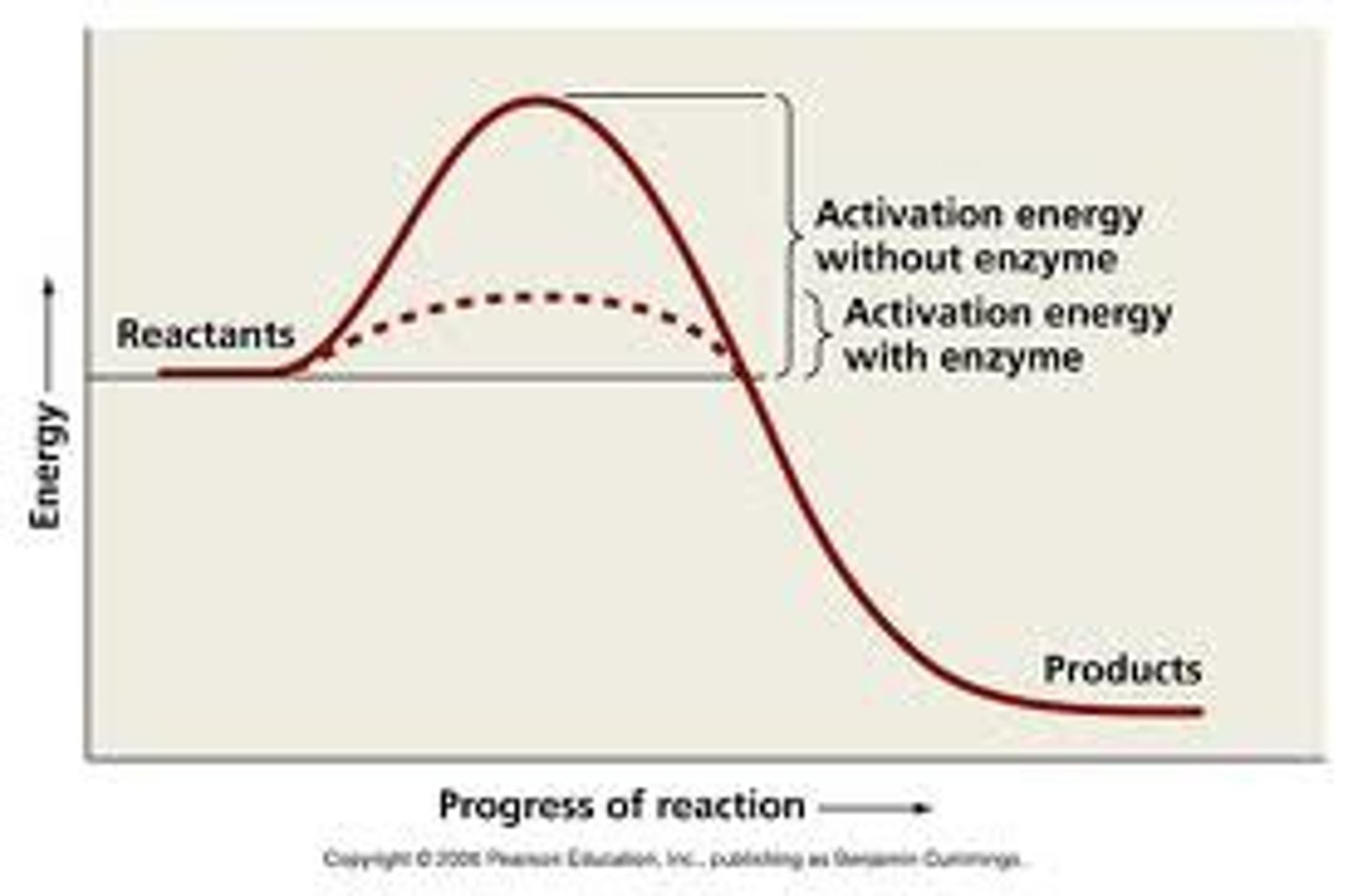
Catalytic proteins (enzymes)
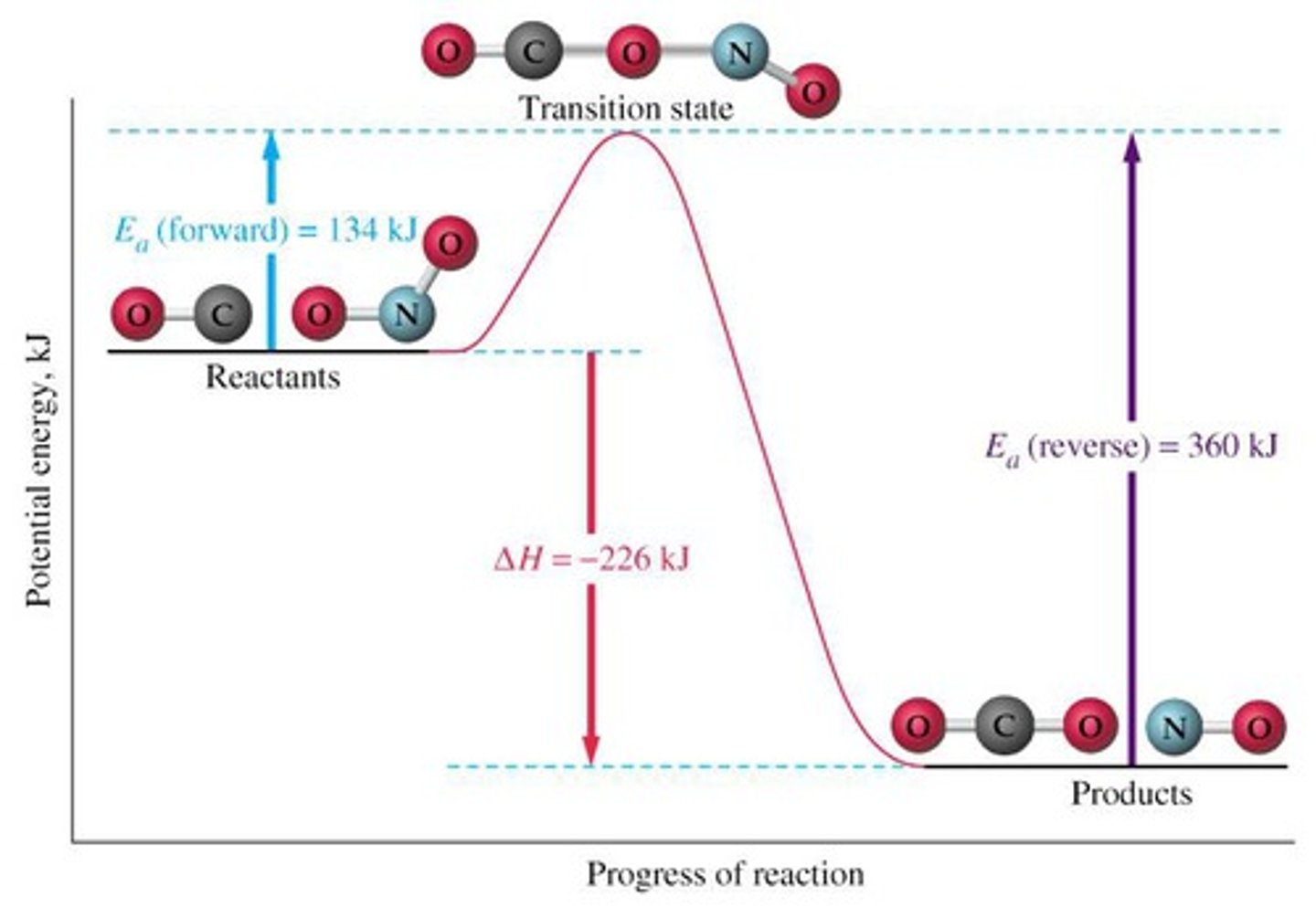
speed up chemical reactions without being consumed themselves. work by decreasing the activation energy required.
energy of activation
The amount of energy that reactants must absorb before a chemical reaction will start
transition state
a high-energy intermediate state of the reactants during a chemical reaction that must be achieved for the reaction to proceed
globular proteins
spherical, water-soluble proteins.

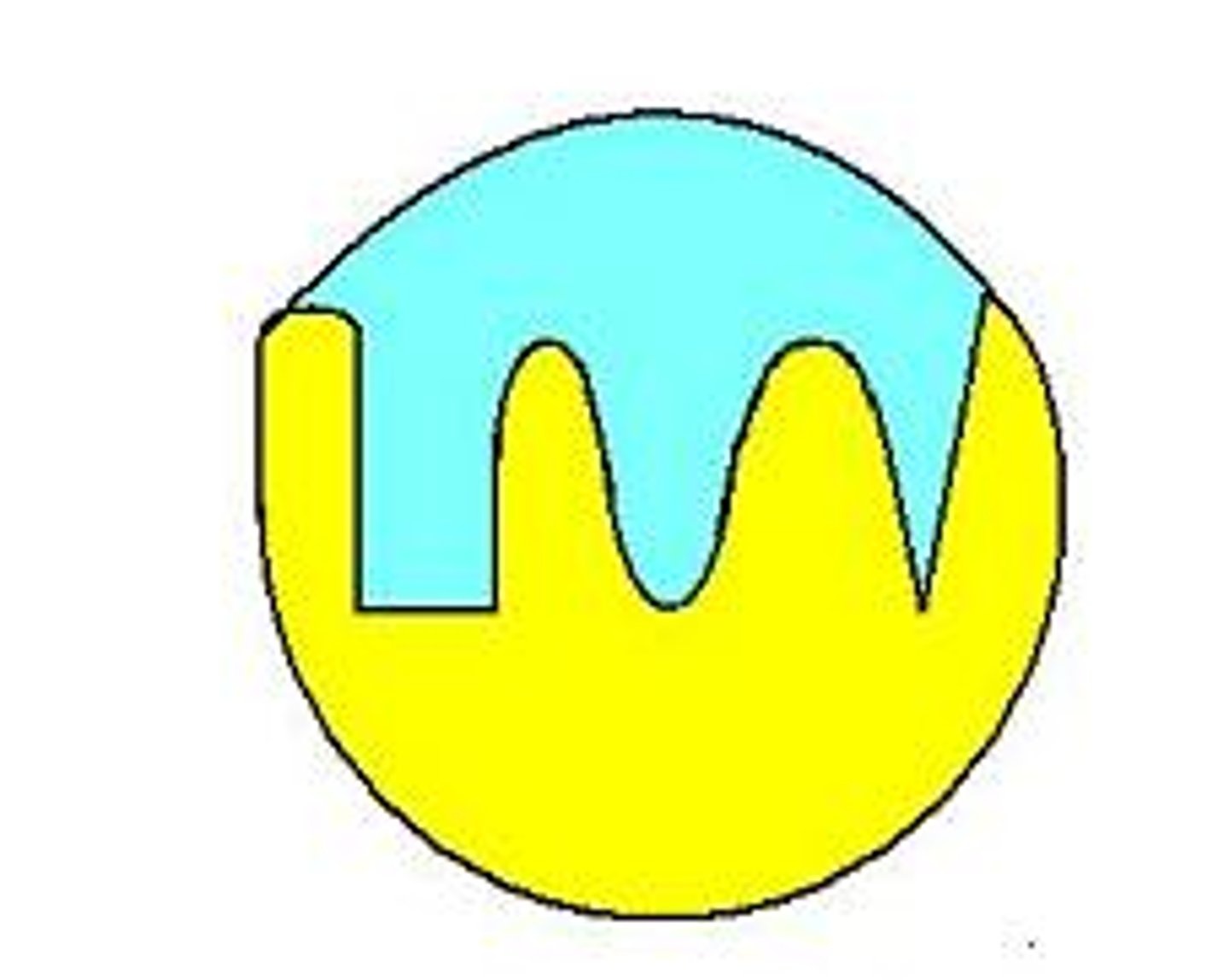
induced-fit model
Change in the shape of an enzyme's active site that enhances the fit between the active site and its substrate(s)

enzyme-substrate complex
A temporary complex formed when an enzyme binds to its substrate molecule(s).
-ase
suffix of enzymes
cofactors and coenzymes
-non protein, small molecules that can bind to the active site of an enzyme and participate in catalyzing the reaction (use ionization, protonation, deprotonation)
-cofactors: usually inorganic molecules or metal ions
-coenzymes: small organic groups such as vitamins or NAD, FAD, CoA

competitive inhibition
substance that resembles the normal substrate competes with the substrate for the active site

noncompetitive inhibitors or allosteric regulators
A substance that reduces the activity of an enzyme by binding to a location remote from the active site, changing its conformation so that it no longer binds to the substrate.
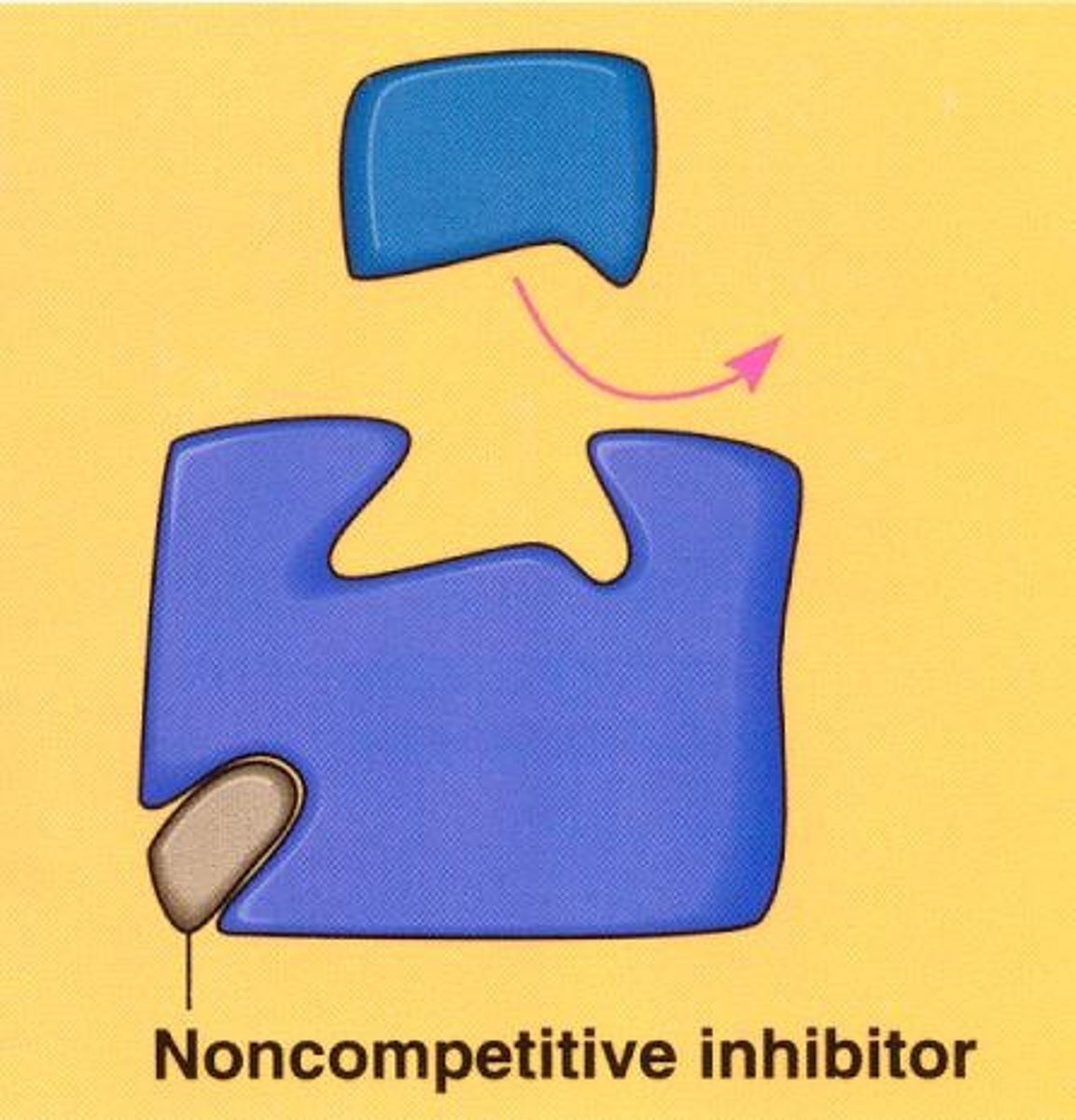
allosteric
describes a region of an enzyme that can bind a regulatory molecule and is not the active site

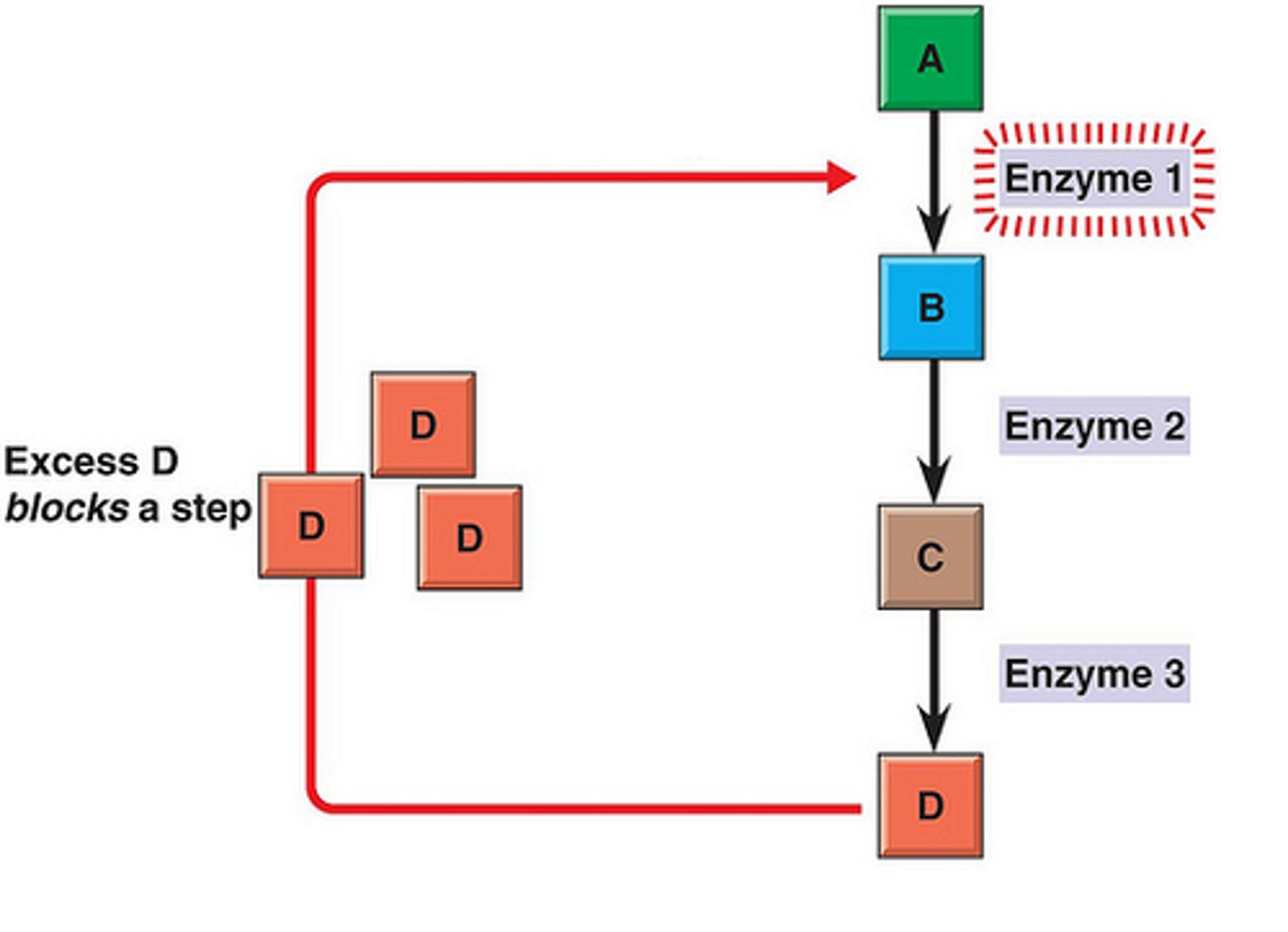
feedback inhibition (negative feedback)
A metabolic pathway is switched off by the inhibitory binding of its end product to an enzyme that acts early in the pathway.
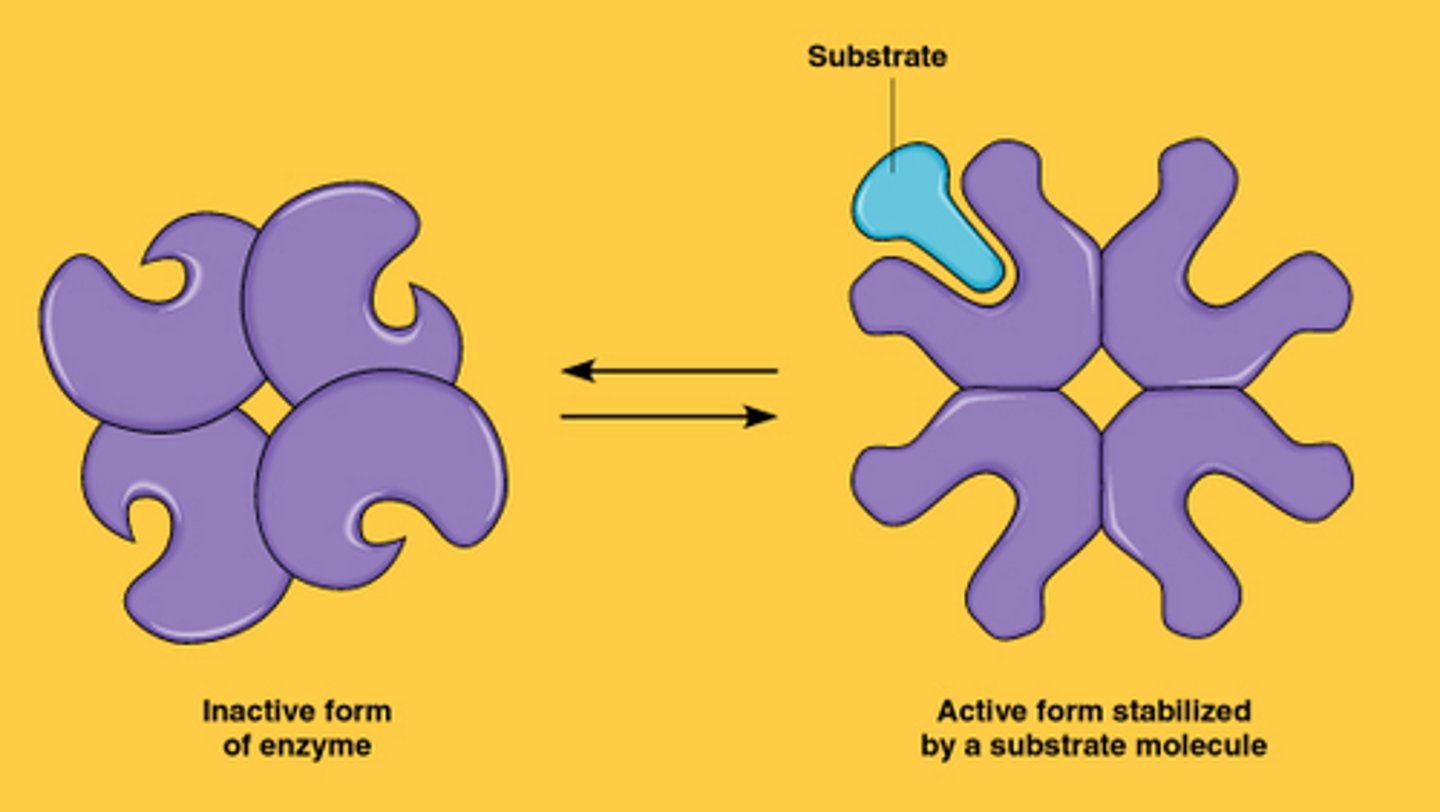
cooperativity & allosteric activation
A kind of allosteric regulation whereby a shape change in one subunit of a protein caused by substrate binding is transmitted to all the other subunits, facilitating binding of additional substrate molecules to those subunits.
ATP
(adenosine triphosphate) main energy source that cells use for most of their work

Glycolysis
A metabolic process that breaks down carbohydrates and sugars through a series of reactions to either pyruvic acid or lactic acid and release energy for the body in the form of ATP the first major stage of cellular respiration.

alcoholic fermentation
anaerobic process in which cells convert pyruvic acid into carbon dioxide and ethyl alcohol; carried out by many bacteria and fungi such as yeasts

lactic acid fermentation
A series of anaerobic chemical reactions using pyruvic acid that supplies energy when oxygen is scarce

Citric Acid Cycle (Krebs Cycle)
A chemical cycle involving eight steps that completes the metabolic breakdown of glucose molecules begun in glycolysis. The second major stage in cellular respiration. - 2 Pyruvates enter the mitochondrion
- releases 2 ATP, 6NADH, and 2 FADH2 for each glucose

electron transport chain
A sequence of electron carrier molecules (membrane proteins) that shuttle electrons during the redox reactions that release energy used to make ATP. The third major stage of cellular respiration

oxidative phosphorylation
The production of ATP using energy derived from the redox reactions of an electron transport chain; the final major stage of cellular respiration.
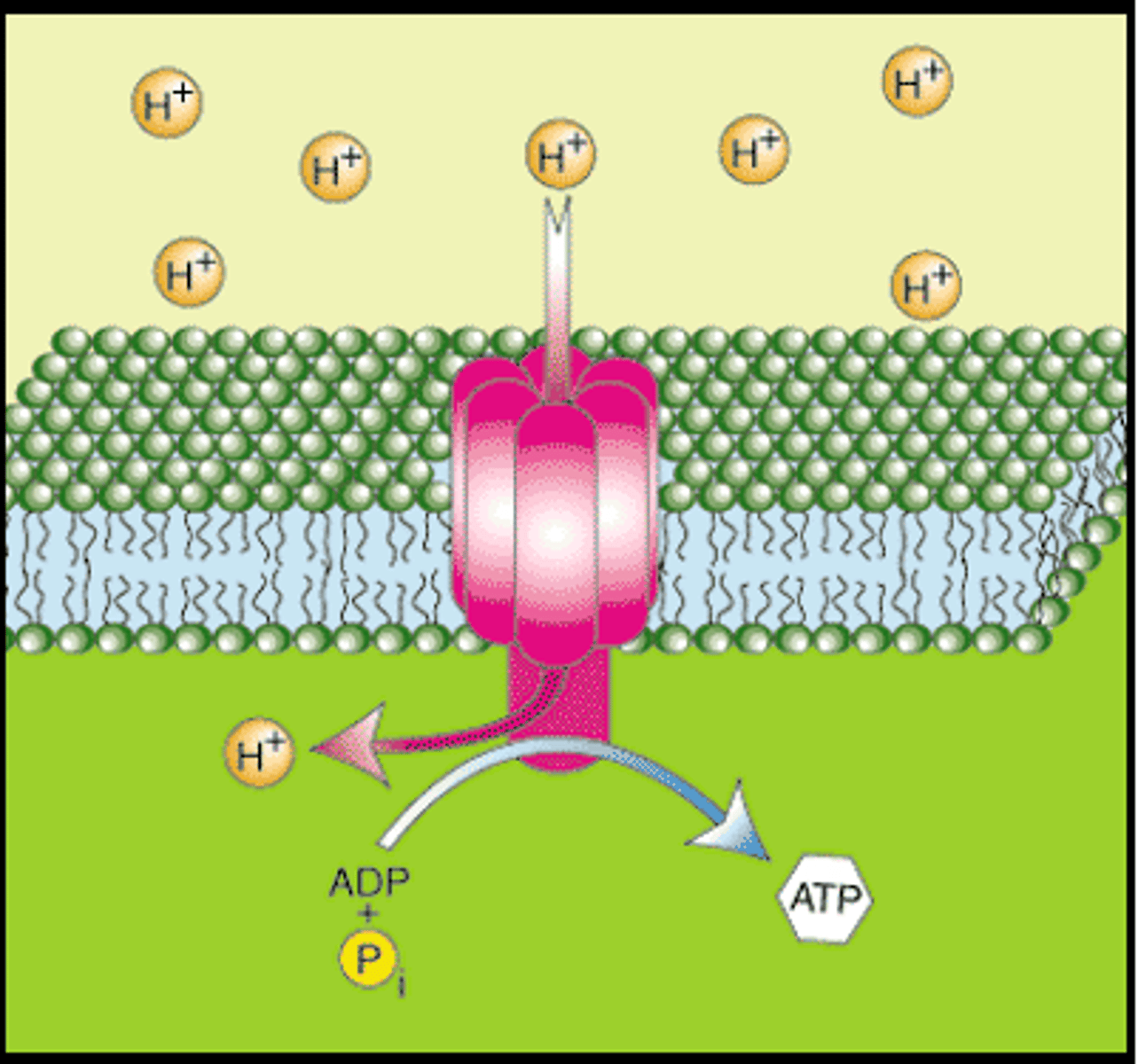
reduction reaction
A reaction in which a substance gains at least one electron; becoming more negative in charge
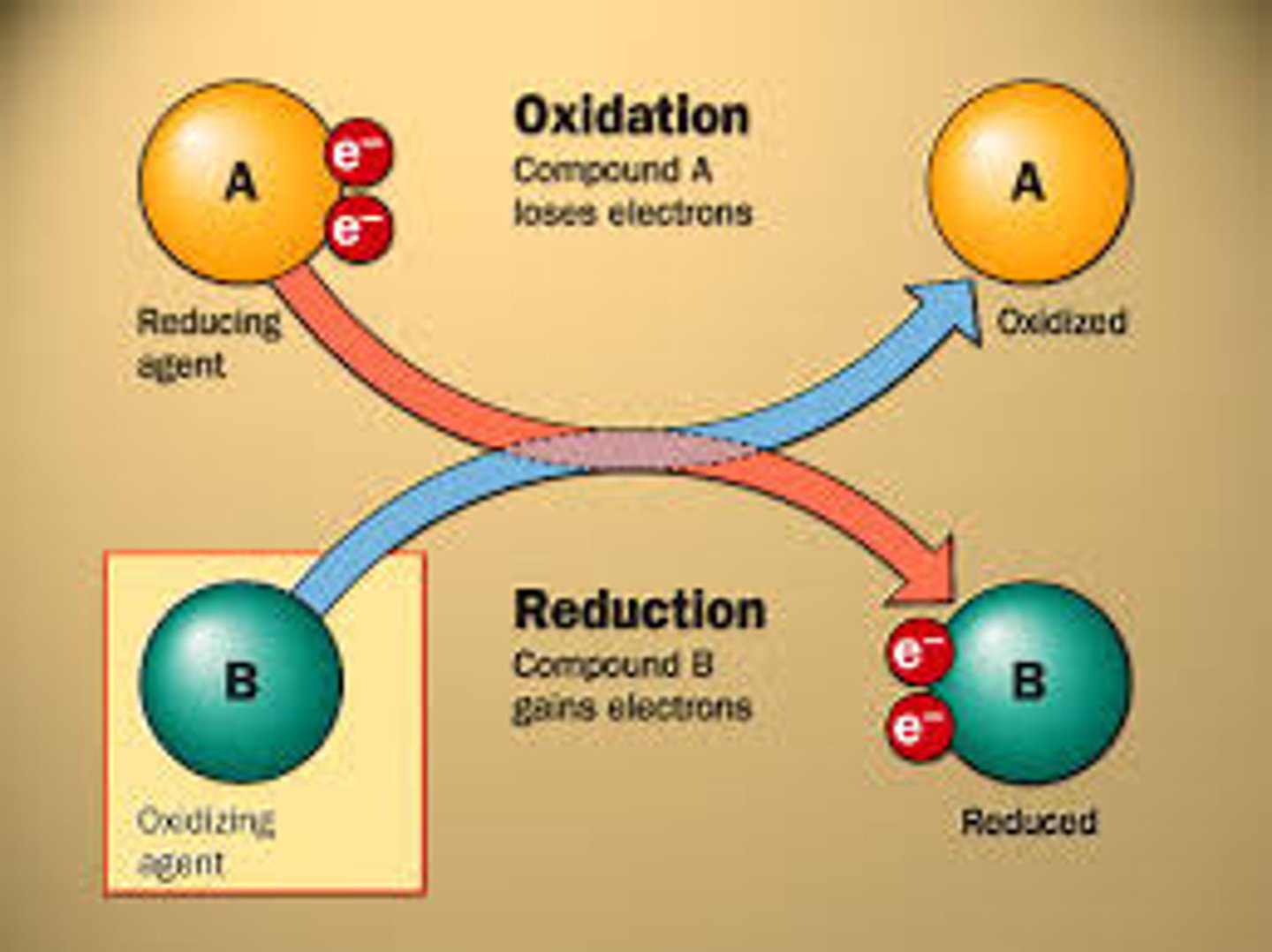
Oxidation reaction
a chemical reaction in which a reactant loses one or more electrons such that the reactant becomes more positive in charge

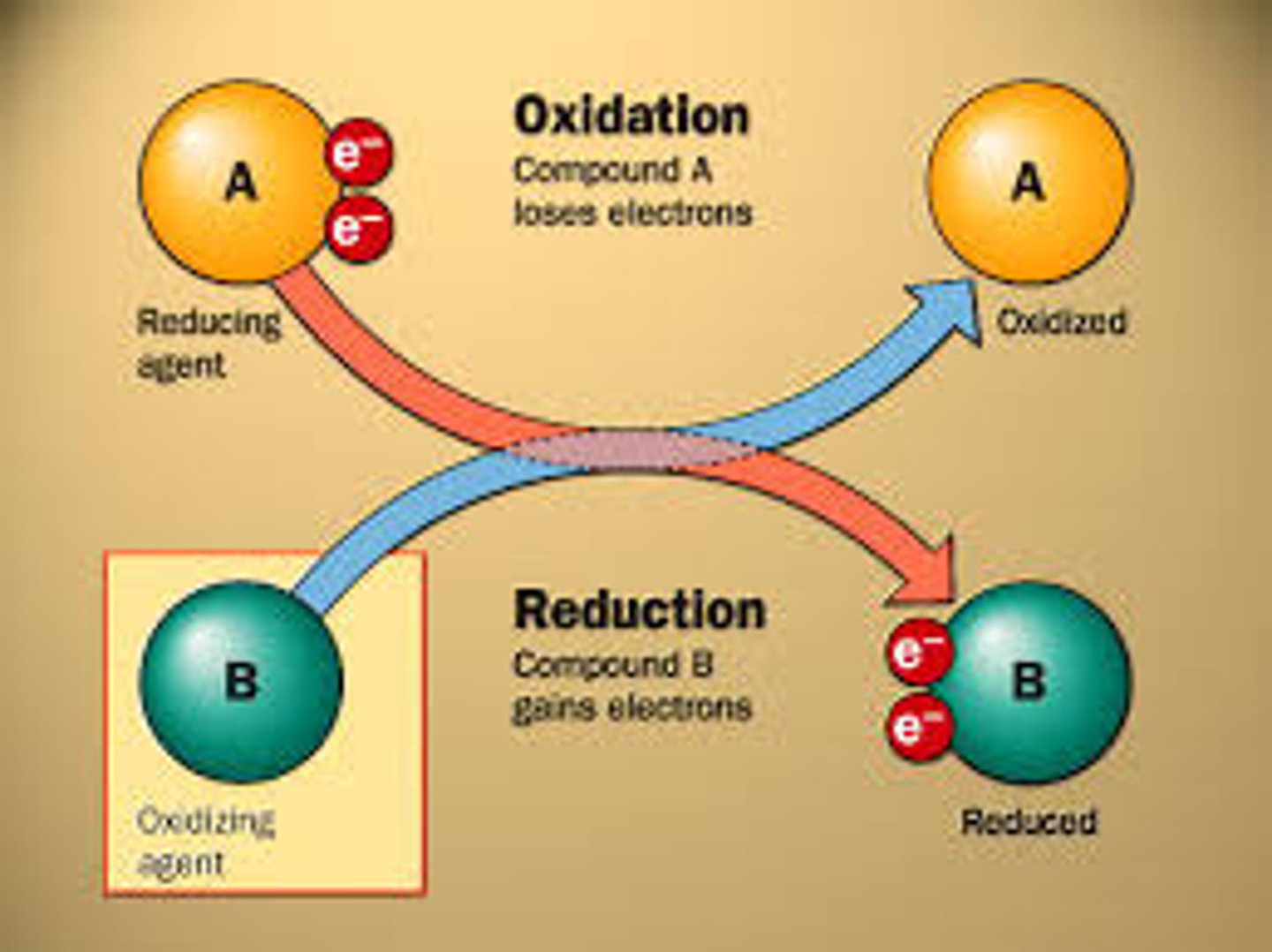
redox reaction
A chemical reaction involving the transfer of one or more electrons from one reactant to another; also called oxidation-reduction reaction.
Adenosine
a nucleoside; a combination of ribose and adenine

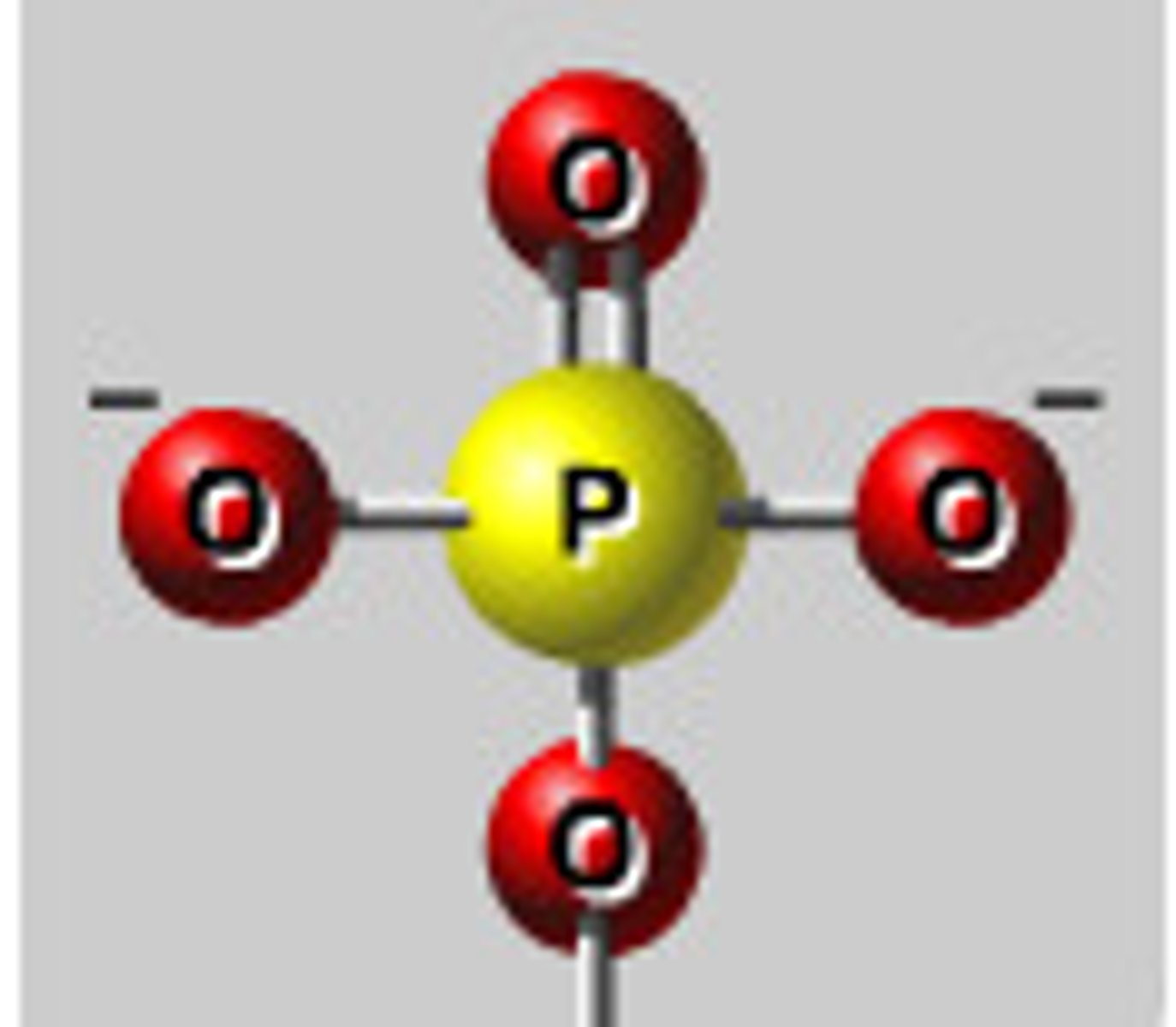
phosphate group
A chemical group consisting of a phosphorus atom bonded to four oxygen atoms; important in energy transfer.
Pyruvate (pyruvic acid)
An end product of glycolysis; in aerobic metabolism, pyruvate is sent to the Krebs cycle to aid in the production of ATP; in anaerobic metabolism, pyruvate is converted to lactic acid.

substrate-level phosphorylation
The enzyme-catalyzed formation of ATP by direct transfer of a phosphate group to ADP from an intermediate substrate in catabolism.

Phosphofructokinase (PFK)
An allosteric enzyme important in glycolysis. Inhibits rate of glycolysis when ATP is present in the cell

Mitochondrion (Mitochondria)
Cell organelle that converts the chemical energy stored in food (glucose) into compounds that are more convenient for the cell to use (ATP)

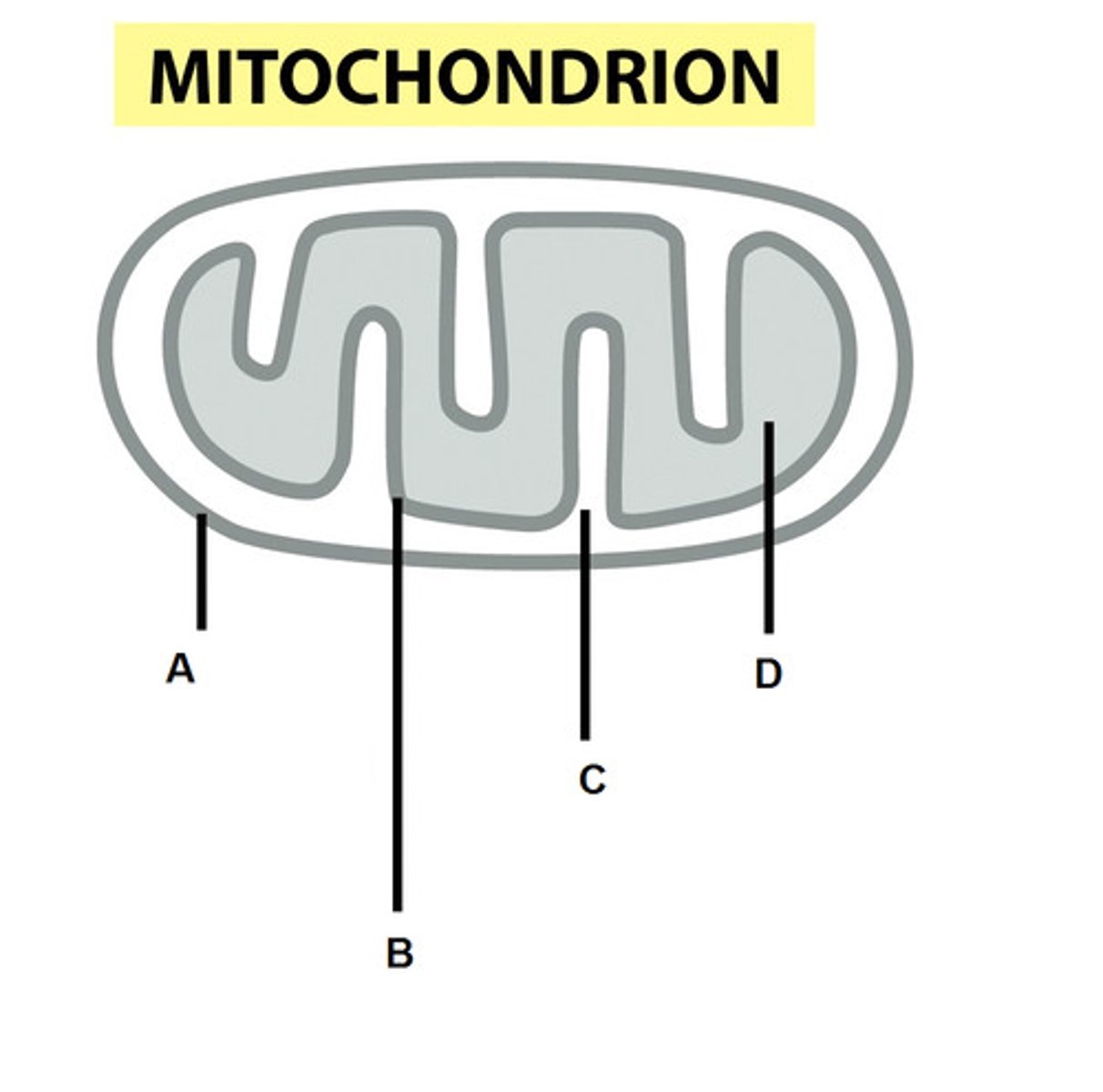
cristae membrane
site of ETC and ATP synthase complex
- contains thousands of copies of the ETC
- impermeable to protons (H+)
- folds of the mitochondrial inner membrane
- labelled B in picture
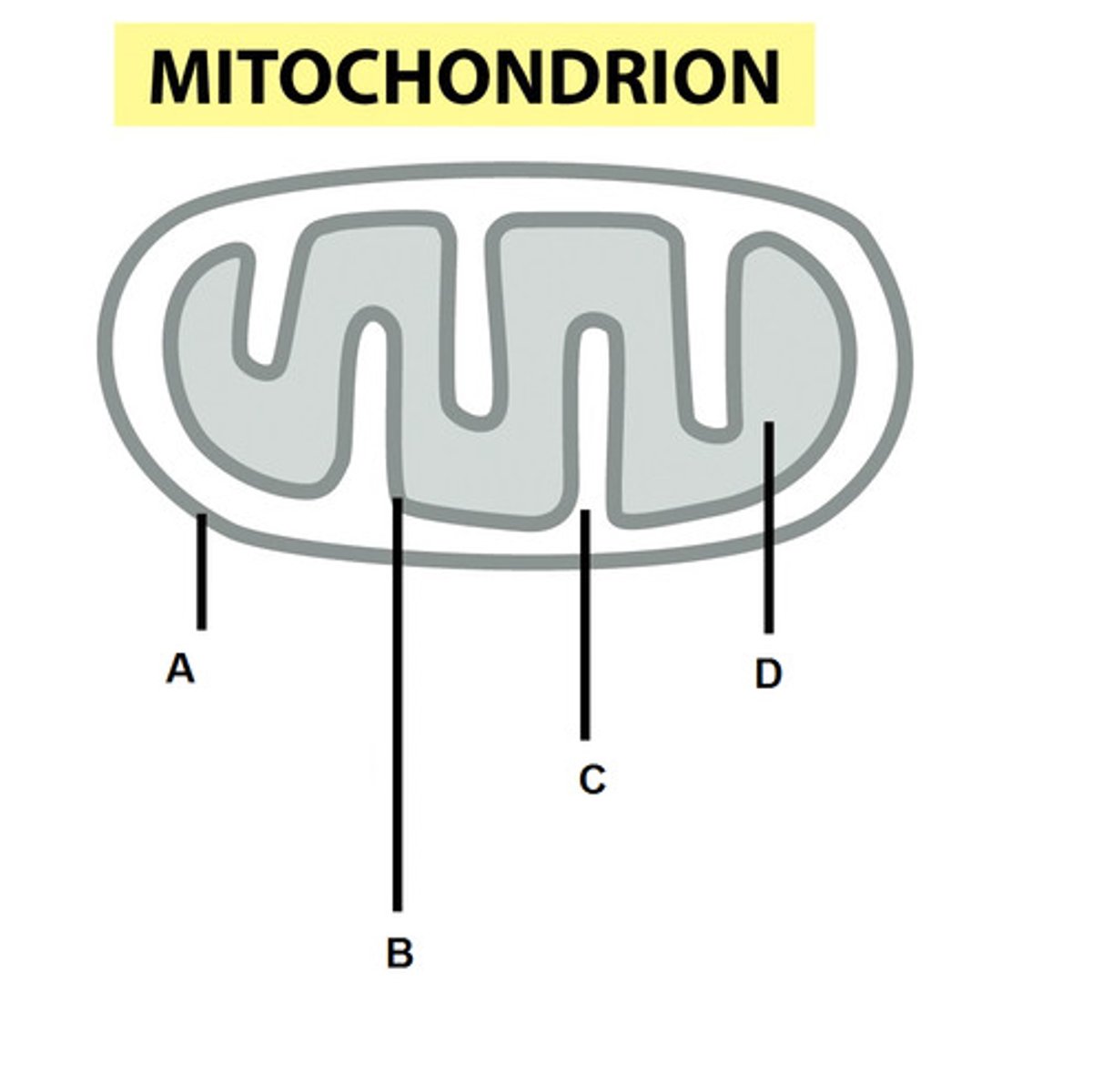
Outer Compartment (Mitochondria)
space outside the cristae membrane. Where H ions set up a concentration gradient. Labelled C in picture
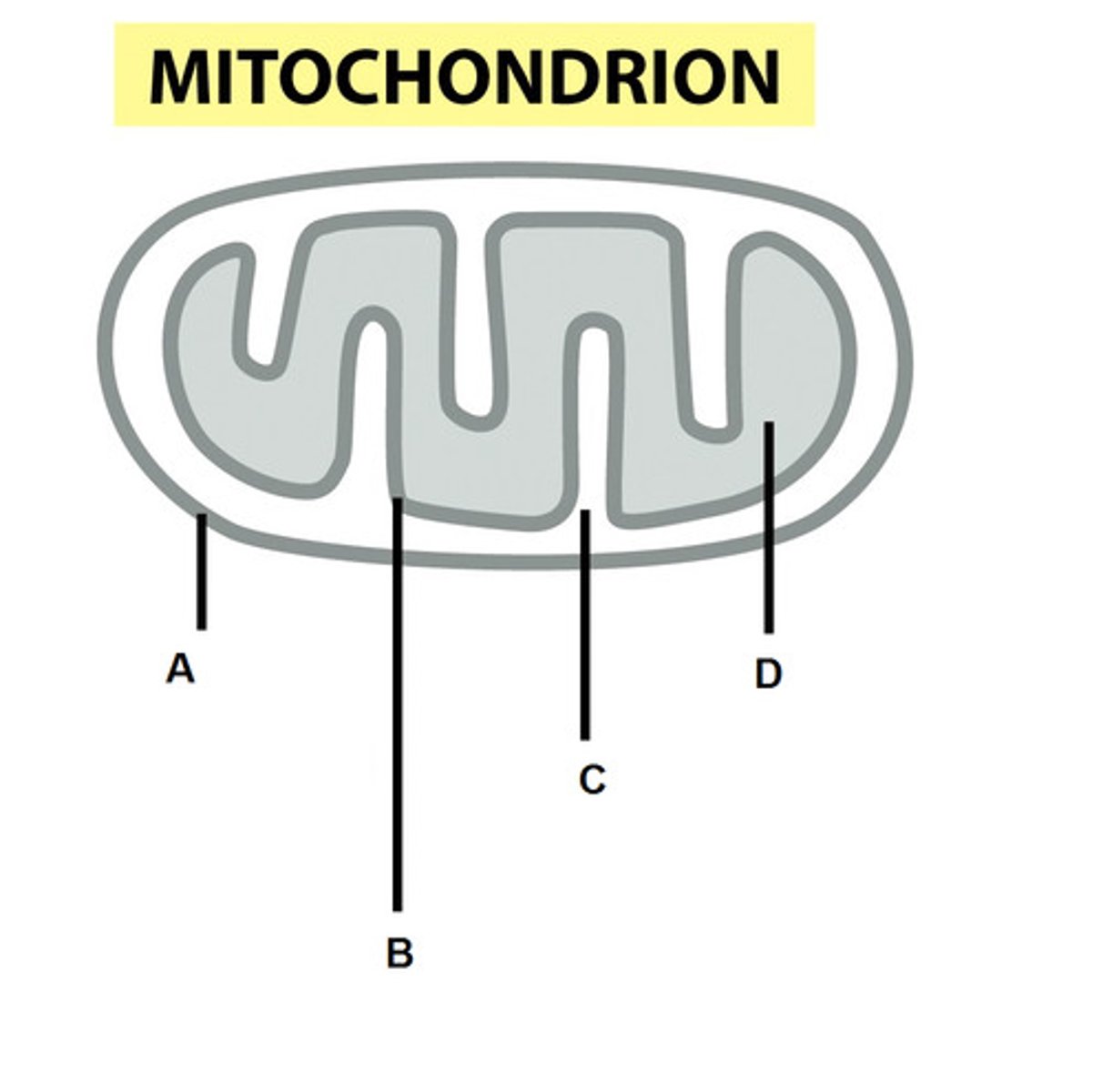
Matrix (mitochondria)
Innermost compartment of the mitochondrion. Labelled D in picture
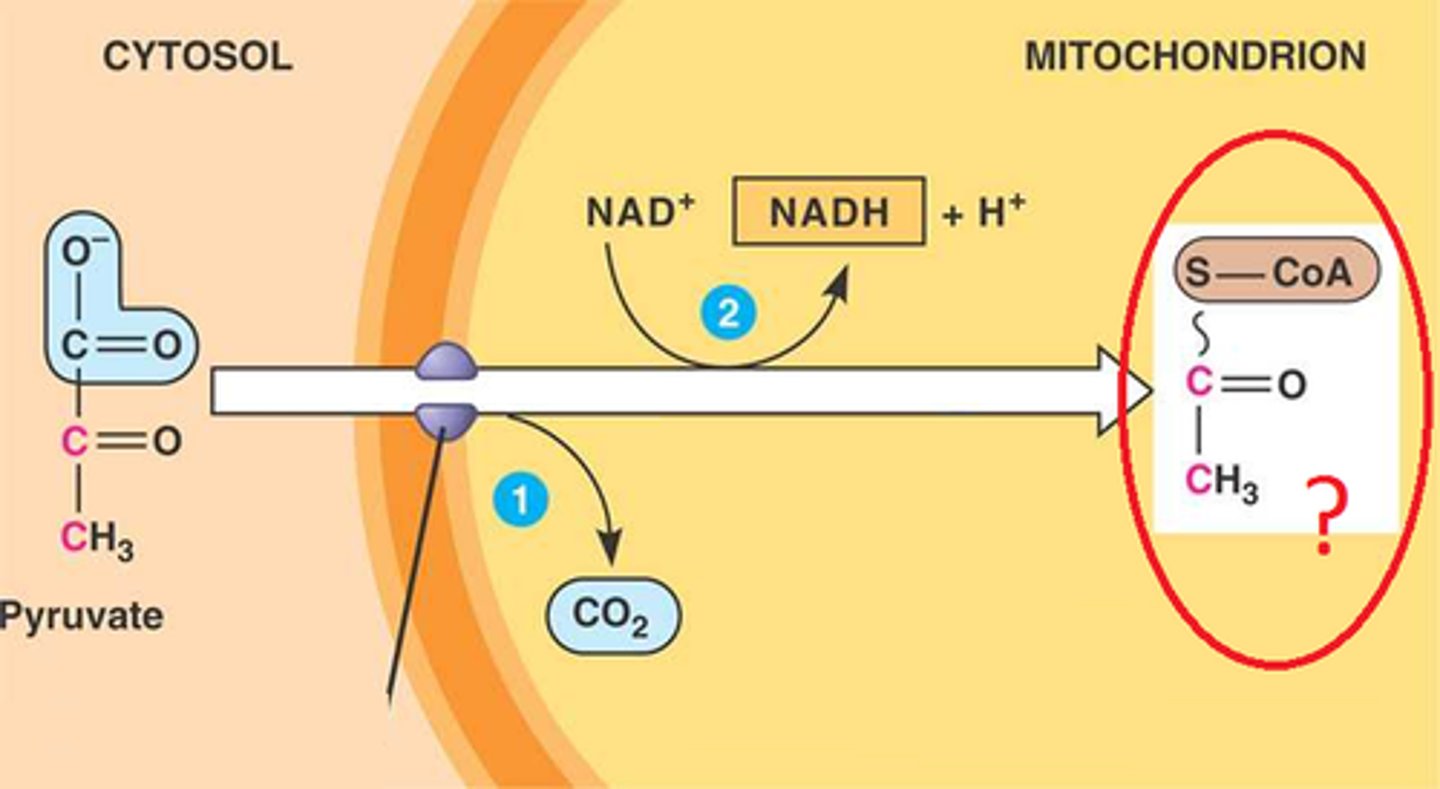
Acetyl-CoA
the entry compound for the citric acid cycle in cellular respiration, formed from a fragment of pyruvate (from glycolysis) attached to coenzyme A (a vitamin)
NADH
the reduced form of the coenzyme NAD+ (nicotinamide adenine dinucleotide); an electron-carrying molecule that functions in cellular respiration. A molecule that stores energy for harvest by the electron transport chain.

FADH2
the reduced form of the coenzyme FAD (flavin adenine dinucleotide); an electron-carrying molecule that functions in cellular respiration. A molecule that stores energy for harvest by the electron transport chain.
Electron Transport Chain (ETC)
uses the high-energy electrons from the Krebs cycle to convert ADP into ATP in the cristae of the mitochondria

proton pump
An active transport protein in a cell membrane that uses ATP to transport hydrogen ions out of a cell against their concentration gradient, generating a membrane potential in the process.

Chemiosmosis
A process for synthesizing ATP using the energy of an electrochemical gradient and the ATP synthase enzyme. Also known as oxidative phosphorylation

Oxygen
Final electron acceptor in the ETC
redox reaction
an oxidation reaction paired with a reduction reaction

electronegative
the tendency to attract electrons to form a chemical bond

NADH
An energy-carrying coenzyme produced by glycolysis and the Krebs cycle. NADH carries energy to the electron transport chain, where it is stored in ATP.

FADH2
A molecule that stores energy for harvest by the electron transport chain.

Cytochromes
An iron-containing protein that is a component of electron transport chains in the mitochondria and chloroplasts of eukaryotic cells and the plasma membranes of prokaryotic cells

Ubiquinone (coenzyme Q)
A nonprotein molecule that shuttles electrons between membrane-bound complexes in the mitochondrial electron transport chain.
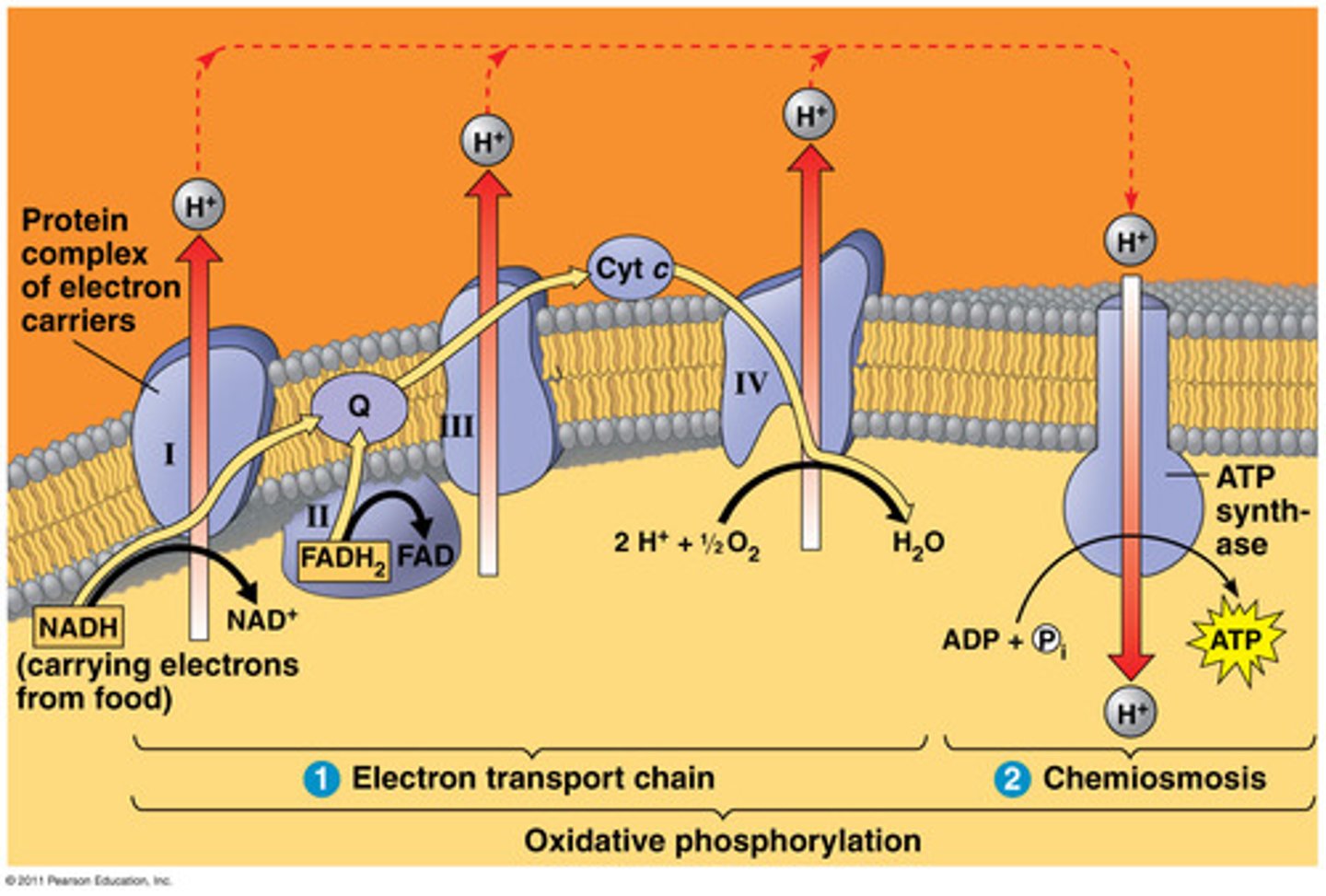
mobile electron carriers
Coenzyme Q and Cytochrome C are examples of these that can move through the fluid membrane and carry electrons through ETC

exergonic flow
movement of electrons towards oxygen that provides energy for endergonic flow
endergonic flow
takes in energy to pump protons against their concentration gradient into the outer compartment of the mitochondria
oxidative phosphorylation
The production of ATP using energy derived from the redox reactions of an electron transport chain; the last stage of cellular respiration. also known as chemiosmosis.
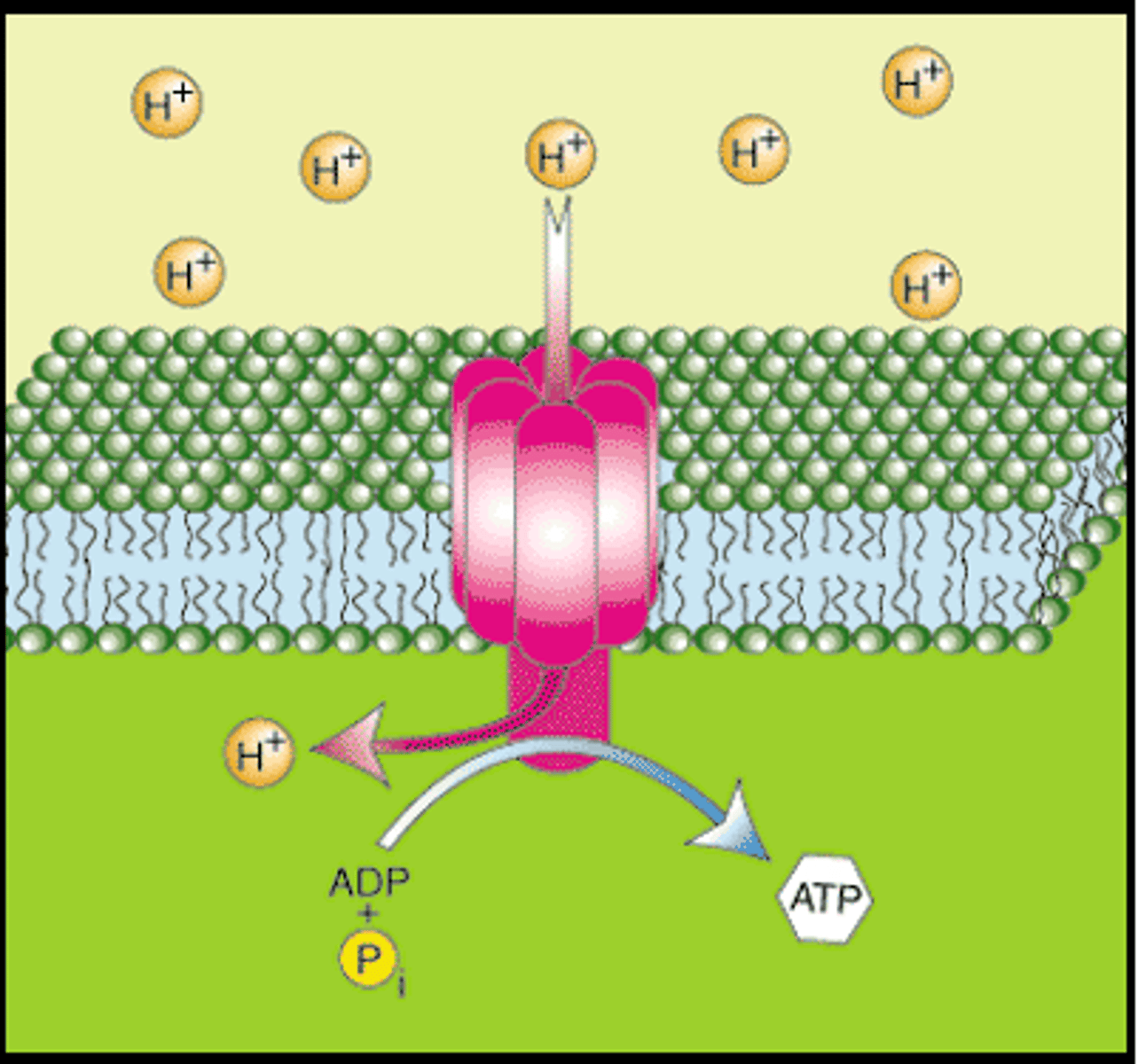
proton gradient
The product of the electron transport chain. A higher concentration of protons outside the inner membrane of the mitochondria than inside the membrane is the driving force behind ATP synthesis.

mitochondrial matrix
The compartment of the mitochondrion enclosed by the inner membrane and containing enzymes and substrates for the Krebs cycle.
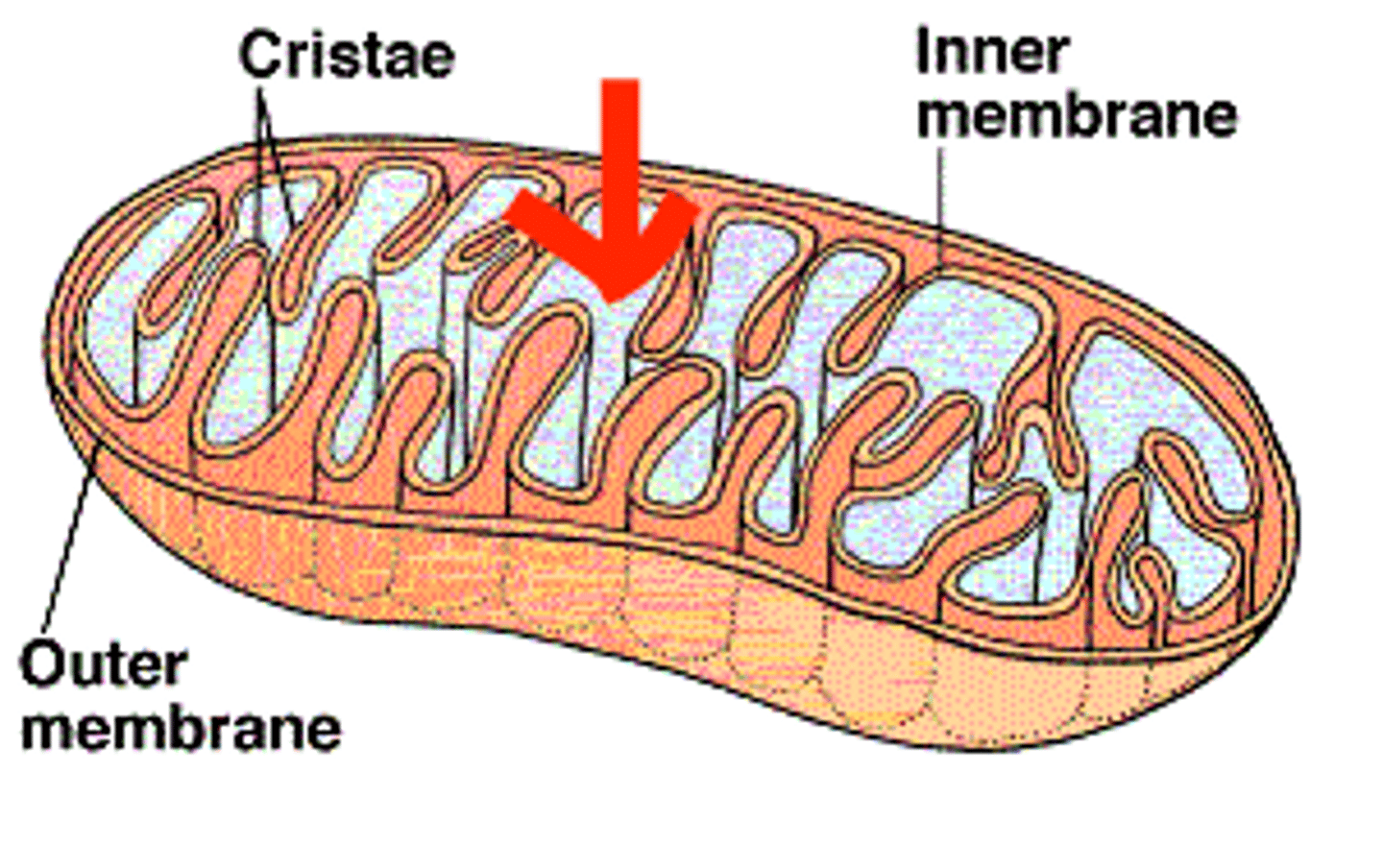
Outer Compartment (Mitochondria)
where H ions set up a concentration gradient. Labelled C in picture

ATP synthase
enzyme that catalyzes the reaction that adds a high-energy phosphate group to ADP to form ATP

Water
waste product created when oxygen picks up spent electrons and protons in ETC
substrate-level phosphorylation
The enzyme-catalyzed formation of ATP by direct transfer of a phosphate group to ADP

Kinase
An enzyme that transfers phosphate ions from one molecule to another. In this case, a phosphate group to ADP
36-38 ATP
Total number of ATP produced per glucose molecule during cellular respiration
32-34 ATP
Total Number of ATP made by E.T.C. & Oxidative Phosphorylation
anaerobic respiration
Respiration that does not require oxygen

Fermentation
A catabolic process that makes a limited amount of ATP from glucose without an electron transport chain and that produces a characteristic end product, such as ethyl alcohol or lactic acid.

facultative anaerobes
Bacteria that can live with or without oxygen
obligate anaerobes
carry out fermentation or anaerobic respiration and cannot survive in the presence of O2
alcoholic fermentation
anaerobic process in which cells convert pyruvic acid into carbon dioxide, ethyl alcohol and NAD+; carried out by many bacteria and fungi such as yeasts
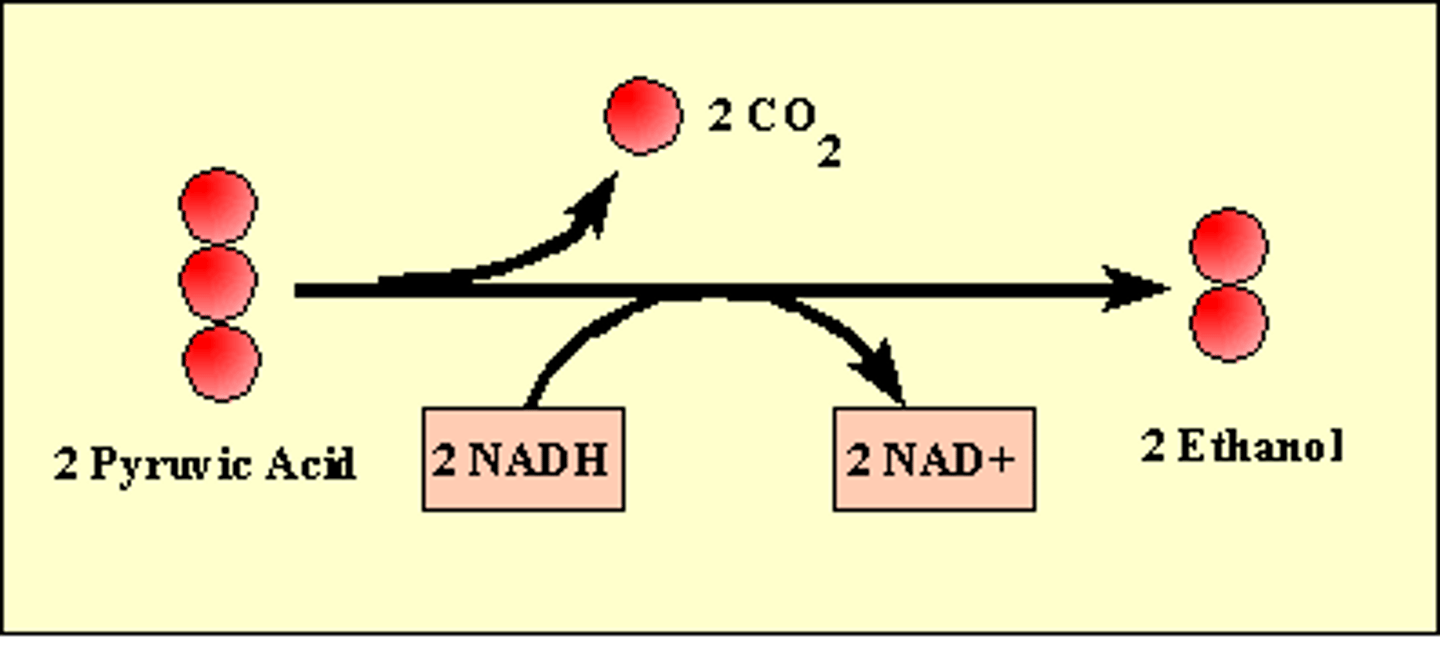
lactic acid fermentation
anaerobic process of glucose breakdown that produces lactic acid and NAD+; carried out by bacteria, yeasts and ourselves
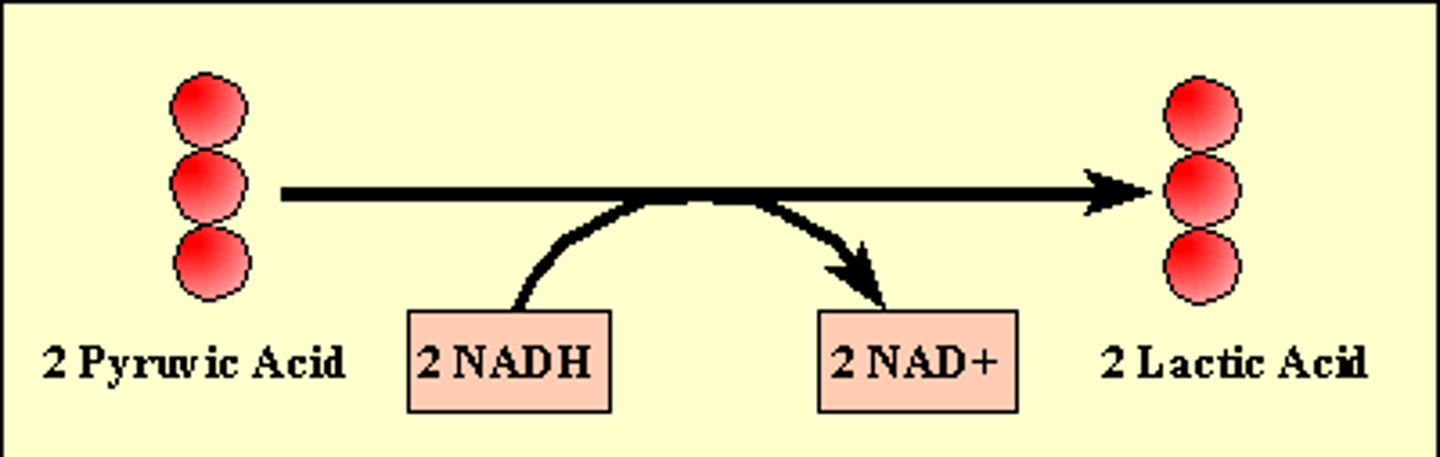
light-dependent reactions
reactions of photosynthesis that use energy from light to produce ATP and NADPH

Light Independent Reactions (Calvin Cycle)
set of reactions in photosynthesis that do not require light; energy from ATP and NADPH is used to build high-energy compounds such as sugar; also called the Calvin cycle

photosynthetic pigments
Chemicals that absorb light energy and use it to carry out photosynthesis. Contained in thylakoid membranes in chloroplast. Examples are chlorophyll a, chlorophyll b, carotenoids, xanthophylls, and phycobilins.

chlorophyll a and chlorophyll b
A green pigment found in the chloroplasts of plants, algae, and some bacteria. Absorbs light energy

Caretenoids
yellow, orange, or red pigments that absorbs blue and green parts of visible spectrum
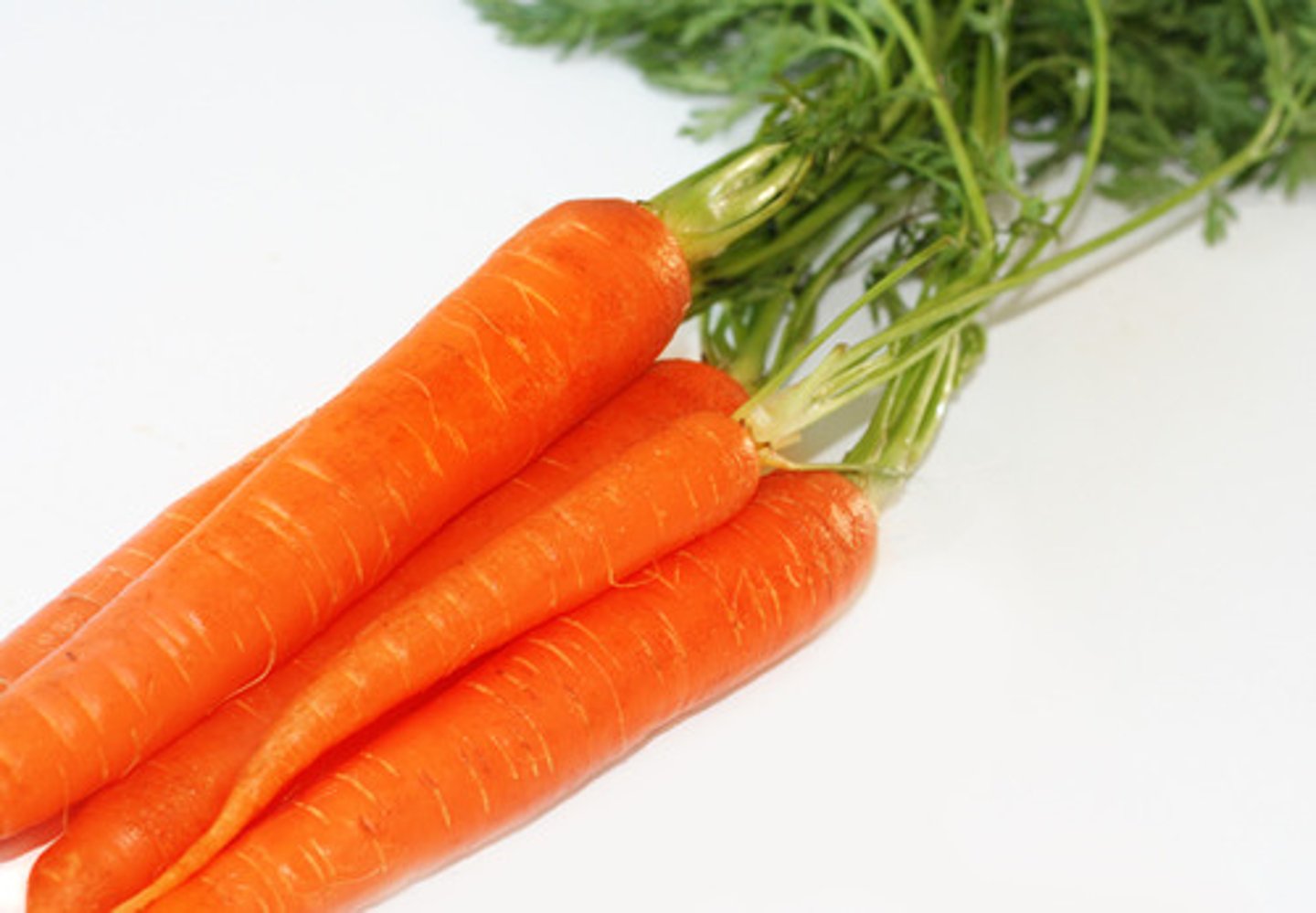
Xanthophyll
A photosynthetic antenna yellow pigment common in algae that is a structural variant of a carotenoid

phycobilins
Accessory pigment that absorbs blue light, found in red algae

antenna pigments
all other pigments in photosystem that capture photon energy and funnel it to chlorophyll a for photosynthesis
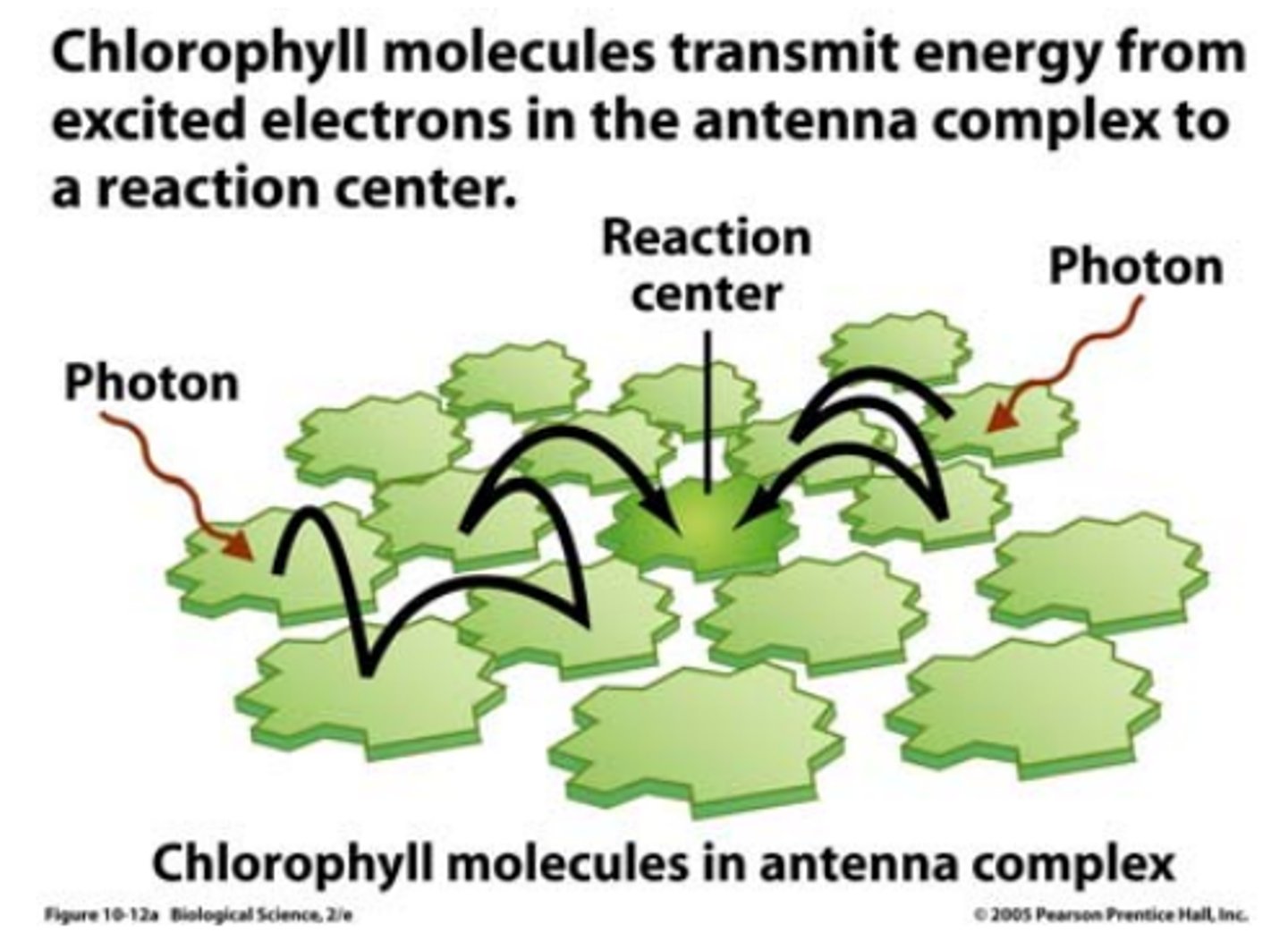
action spectrum
A graph that profiles the relative effectiveness of different wavelengths of radiation in driving a particular process.

Magnesium
central element in the light absorbing head of chlorophyll a
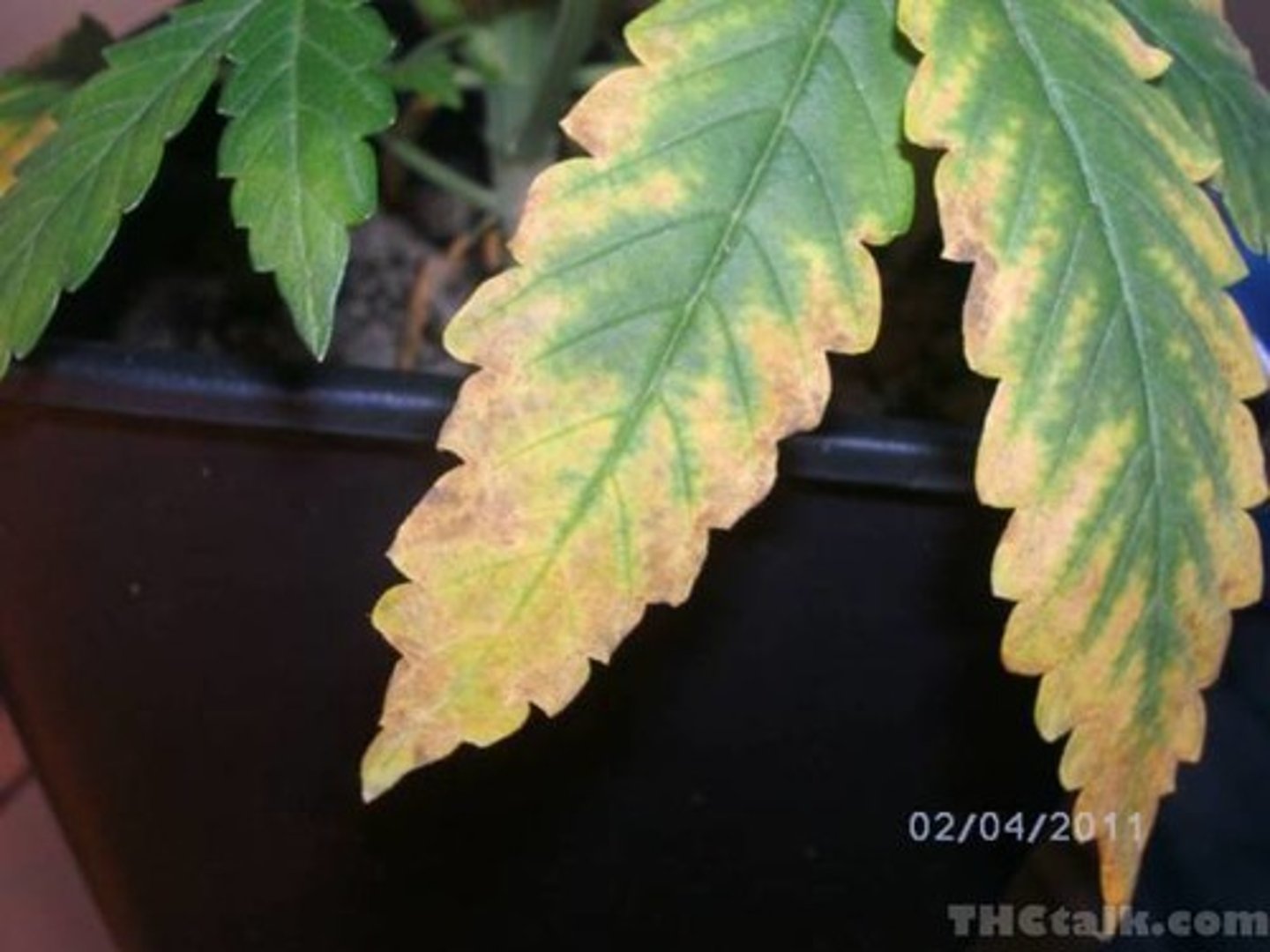
Chloroplast
An organelle found in plant and algae cells where photosynthesis occurs

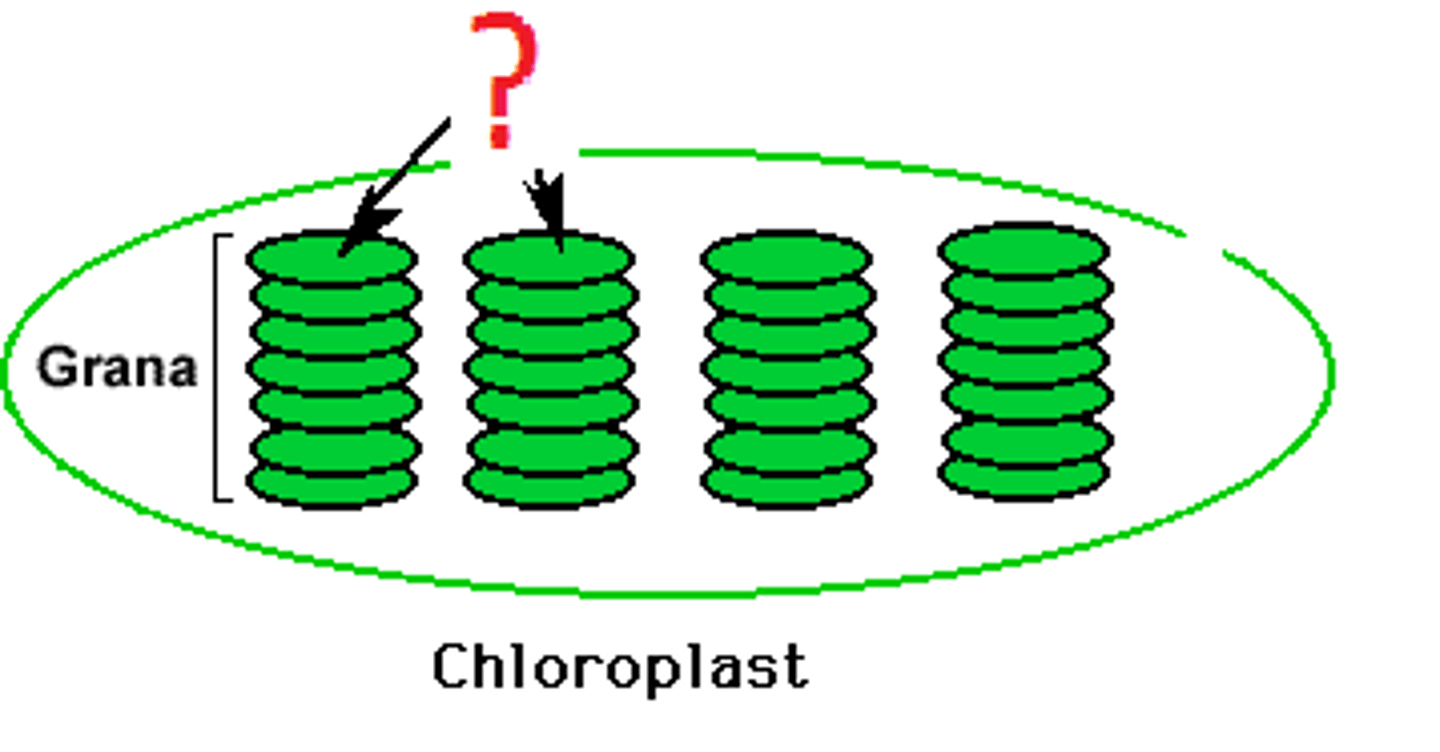
grana (granum)
Stacks of thalylakoids embedded in the stroma of a chloroplast
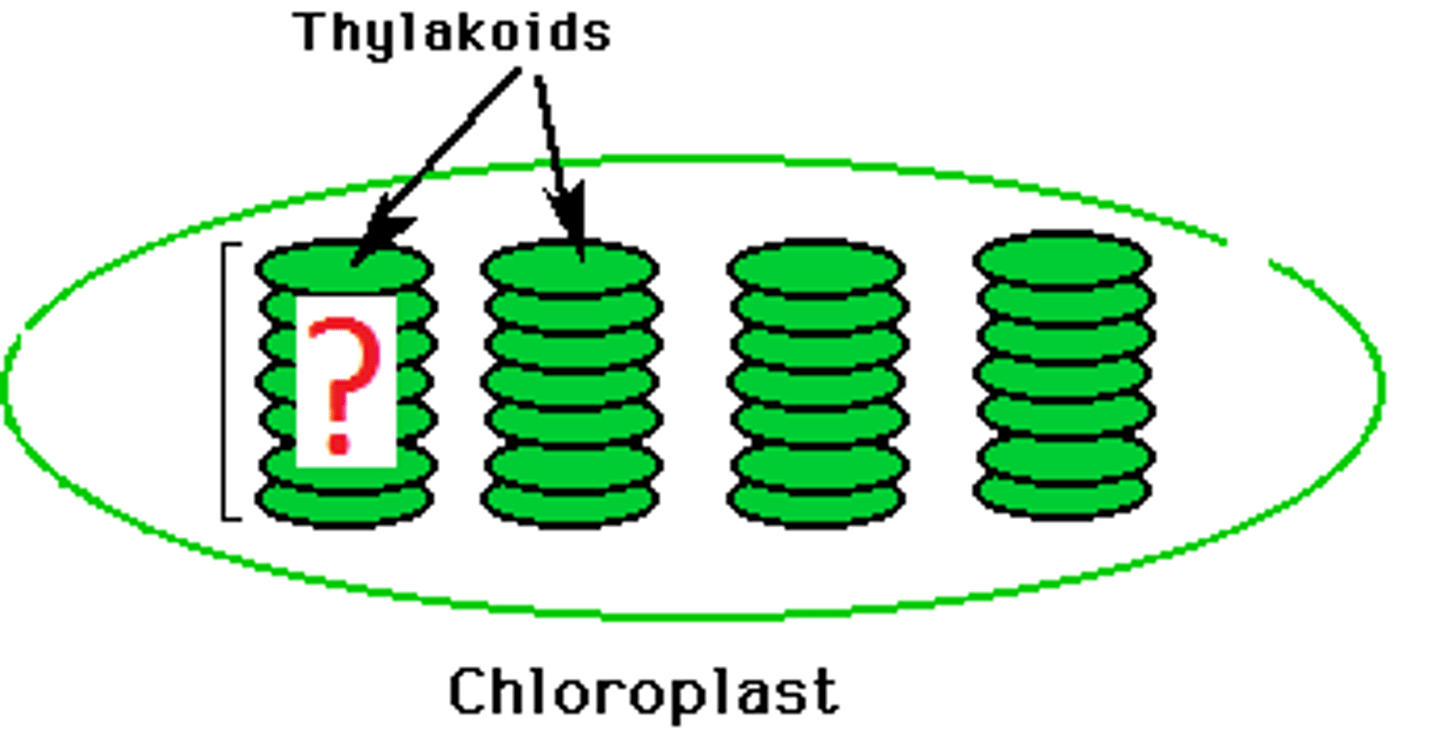
Thylakoid
A flattened membrane sac inside the chloroplast, used to convert light energy into chemical energy.
Stroma
fluid portion of the chloroplast; outside of the thylakoids

Photosystem
light-collecting units of the chloroplast

reaction-center complex
A complex of proteins associated with a special pair of chlorophyll a molecules and a primary electron acceptor. Located centrally in a photosystem, this complex triggers the light reactions of photosynthesis. Excited by light energy, the pair of chlorophylls donates an electron to the primary electron acceptor, which passes an electron to an electron transport chain.

photosystem I (PS1)
One of two light-harvesting units of a chloroplast's thylakoid membrane; it uses the P700 reaction-center chlorophyll.

Photosystem II (PS2)
One of two light-harvesting units of a chloroplast's thylakoid membrane; it uses the P680 reaction-center chlorophyll.

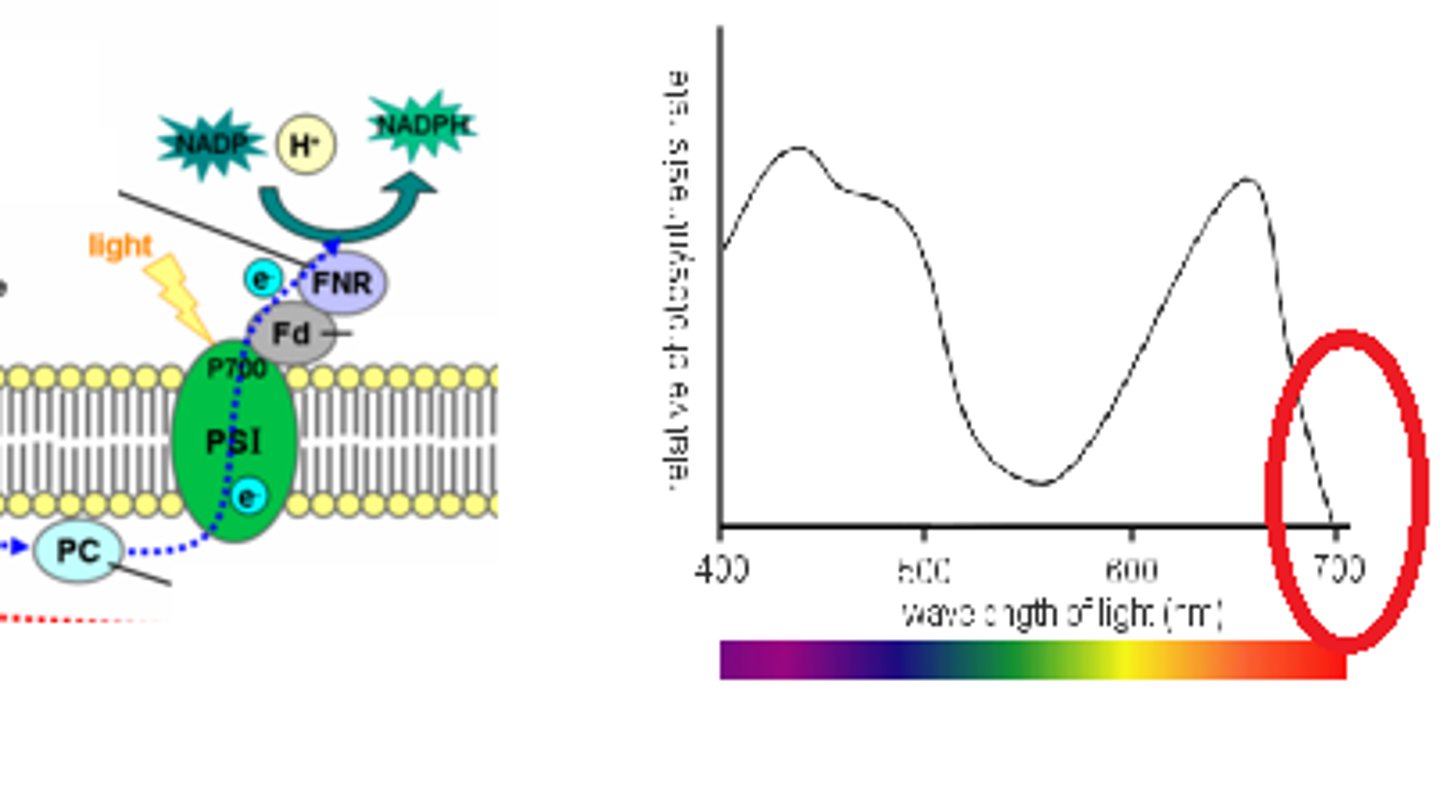
P700
Another name for PS1 since it absorbs wavelengths of 700nm best.
Explore top notes

Explore top flashcards
