AP Art History - Ch 8/9/10/11/12 Test (v. 2)
 Studied by 0 people
 Call Kai
 Learn
Learn Practice Test
 Spaced Repetition
 Match
Match Flashcards
 Knowt Play
1/209

There's no tags or description
Looks like no tags are added yet.
Name | Mastery | Learn | Test | Matching | Spaced |
|---|
No study sessions yet.
210 Terms
(Unit 3 Chapter 8: Late Antiquity (c. 250 CE - 800 CE)) This era bridges the classical _____ world and the early _________/________ world, marked by the decline of _____-_____ _________ and the rise of ___________, __________, and ______ __________.
c. 25-313 CE - Christian art develops underground (catacombs) due to persecution
313 CE - Edict of Milan: Christianity legalized under Constantine
330 CE - Constantinople established as the new Roman capital
380 CE - Christianity becomes the state religion of the Roman Empire
476 CE - Fall of Western Roman Empire
527-565 CE - Emperor Justinian’s reign (Byzantine glory: San Vitale, Hagia Sophia)
c. 600-800 CE - Early Byzantine and Islamic artistic development
Roman
Christian/medieval
Greco-Roman traditions
Christianity
Byzantium
Islamic influences
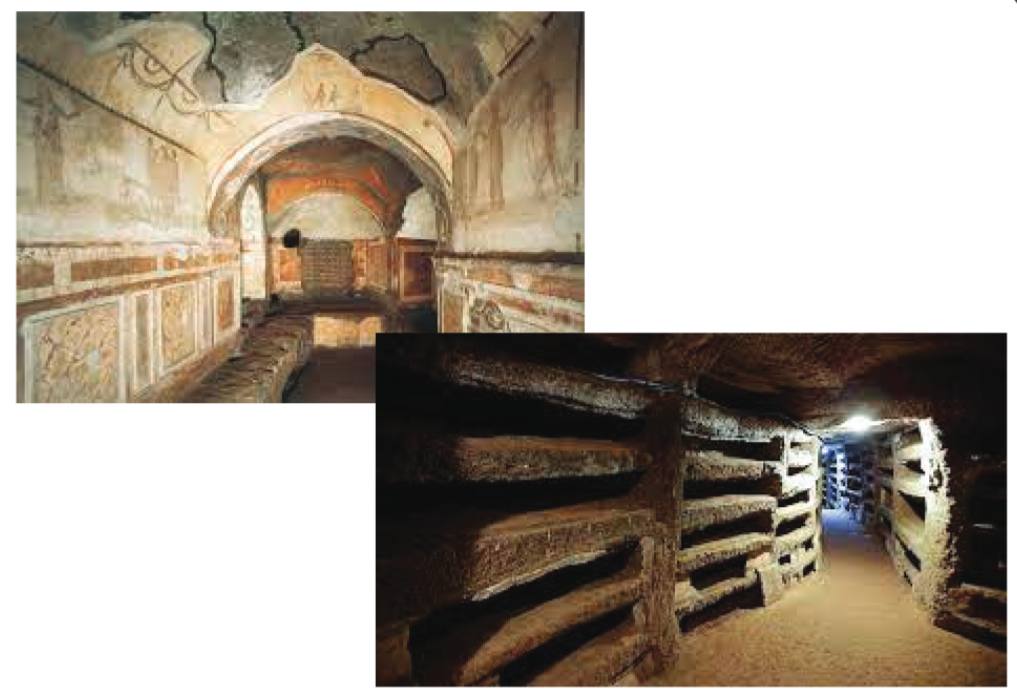
(Unit 3 Chapter 8: Late Antiquity (c. 250 CE - 800 CE)) Name this piece!
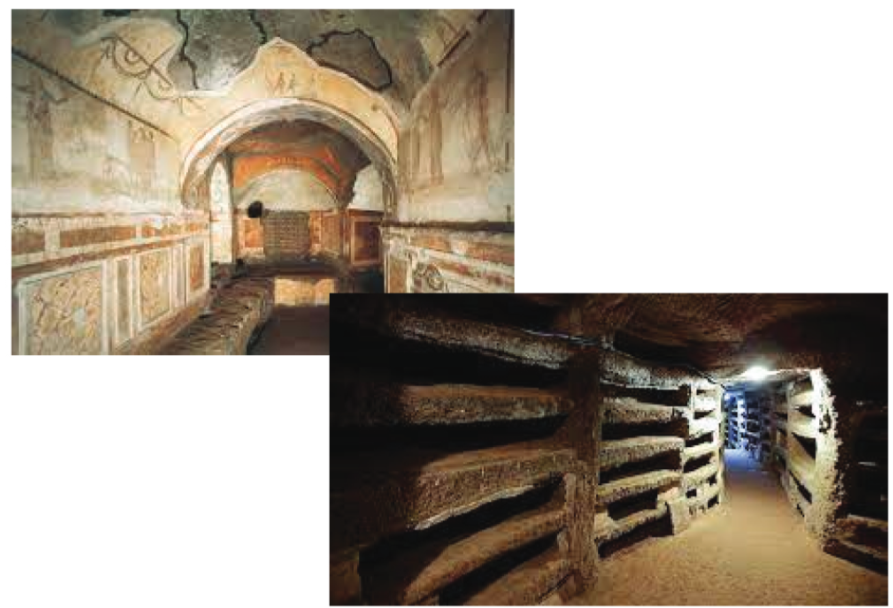
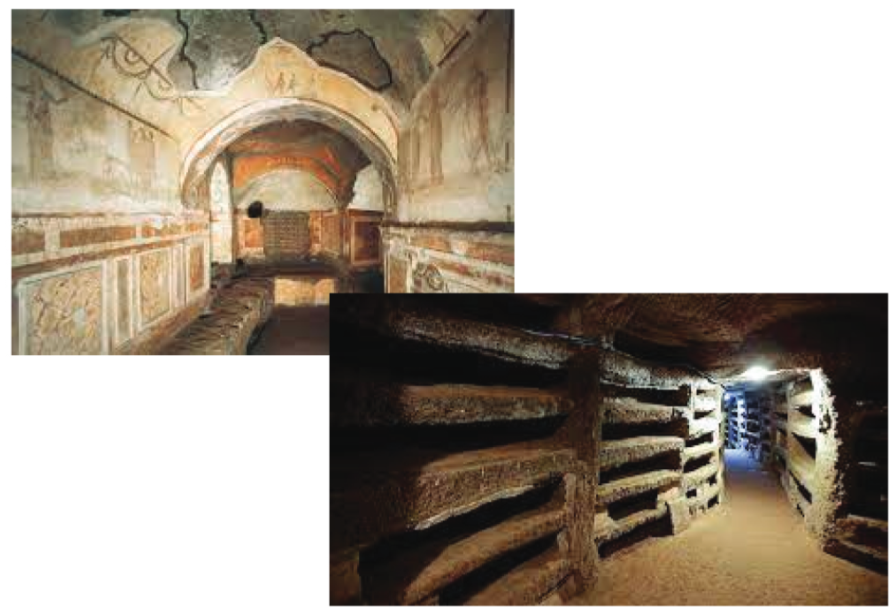
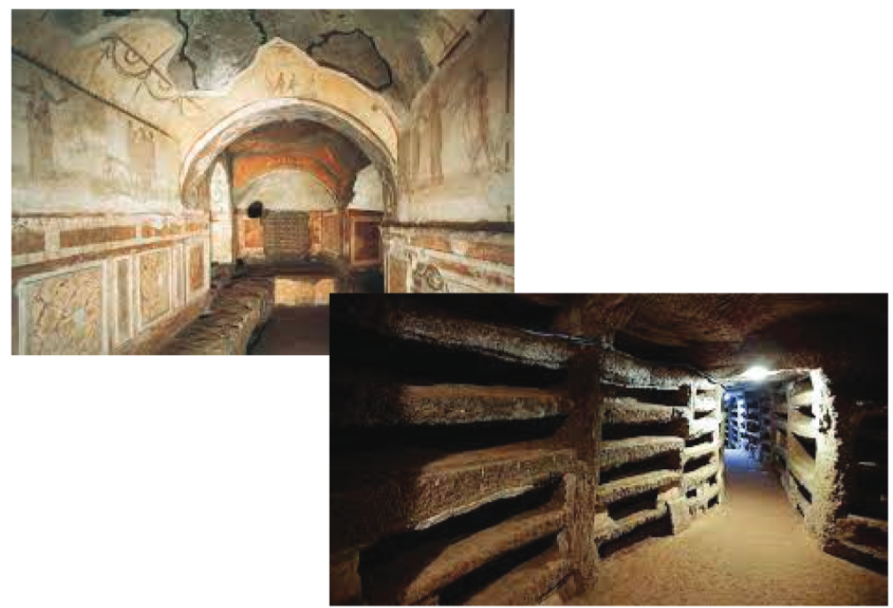
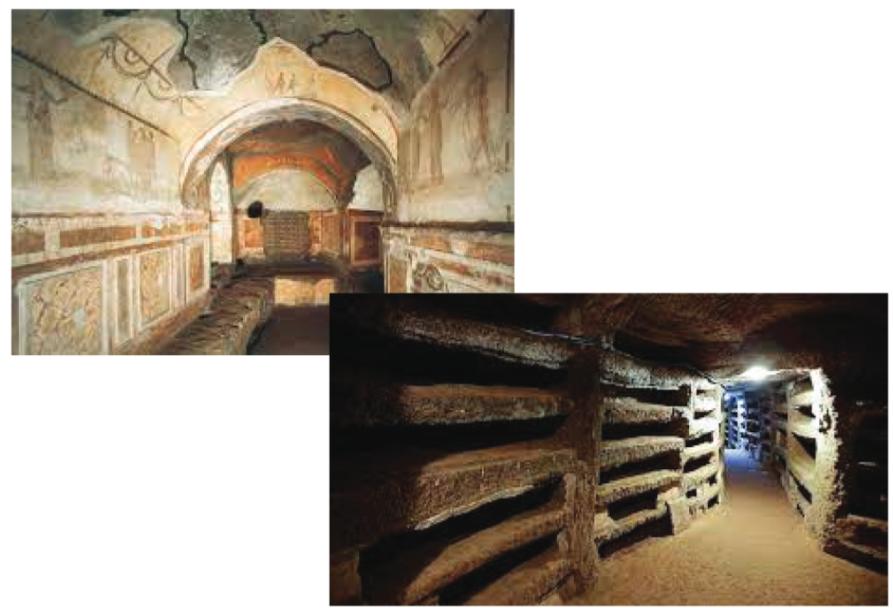
Catacombs of Priscilla!
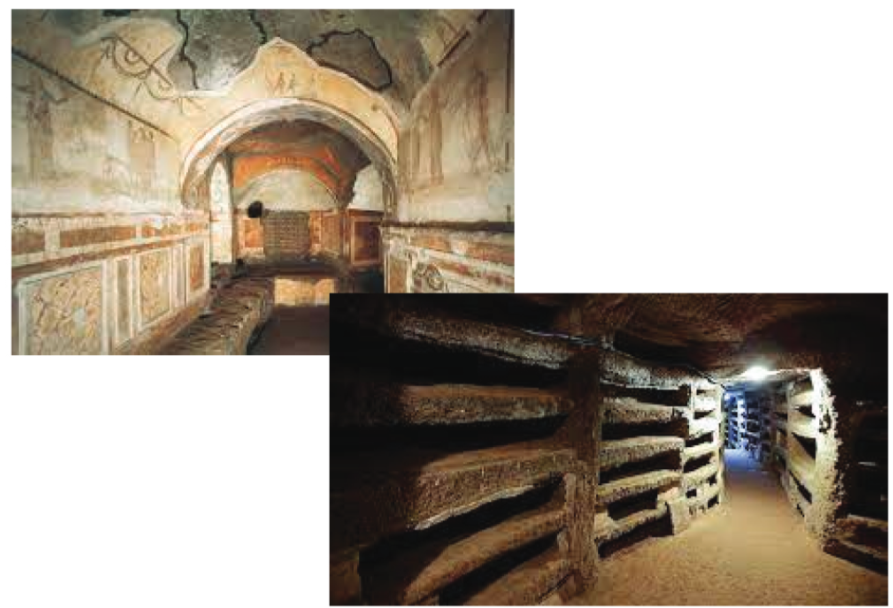
(Unit 3 Chapter 8: Late Antiquity (c. 250 CE - 800 CE)) #48: Catacombs of Priscilla
Location
Rome, Italy
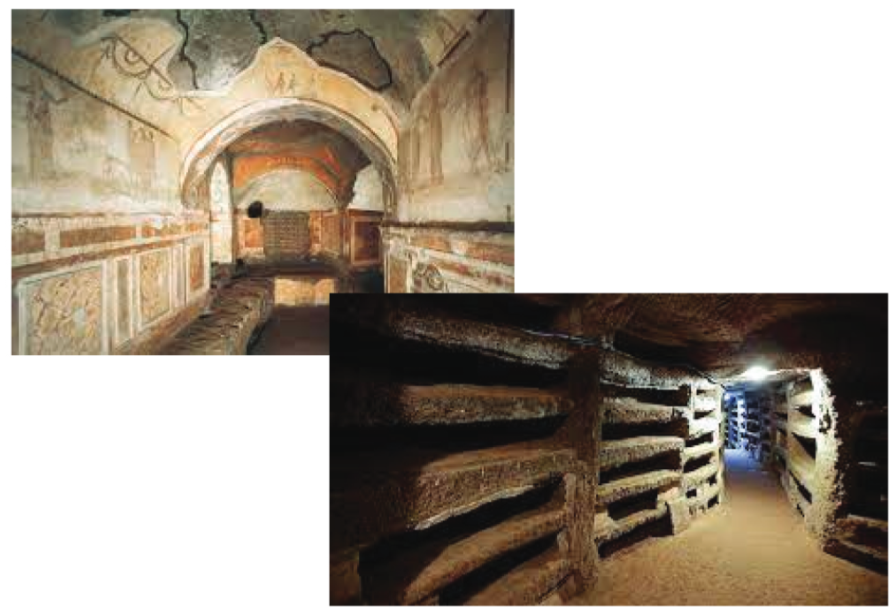
(Unit 3 Chapter 8: Late Antiquity (c. 250 CE - 800 CE)) #48: Catacombs of Priscilla
Era
Late Antiquity

(Unit 3 Chapter 8: Late Antiquity (c. 250 CE - 800 CE)) #48: Catacombs of Priscilla
Artist
Unknown
(Unit 3 Chapter 8: Late Antiquity (c. 250 CE - 800 CE)) #48: Catacombs of Priscilla
Form
tufa & fresco
loculi = (marble & terracotta)
(Unit 3 Chapter 8: Late Antiquity (c. 250 CE - 800 CE)) #48: Catacombs of Priscilla
Patron
Priscilla
(Unit 3 Chapter 8: Late Antiquity (c. 250 CE - 800 CE)) #48: Catacombs of Priscilla
Date
200-400 CE
(Unit 3 Chapter 8: Late Antiquity (c. 250 CE - 800 CE)) #48: Catacombs of Priscilla
Function
Subterranean burial space for early Christians
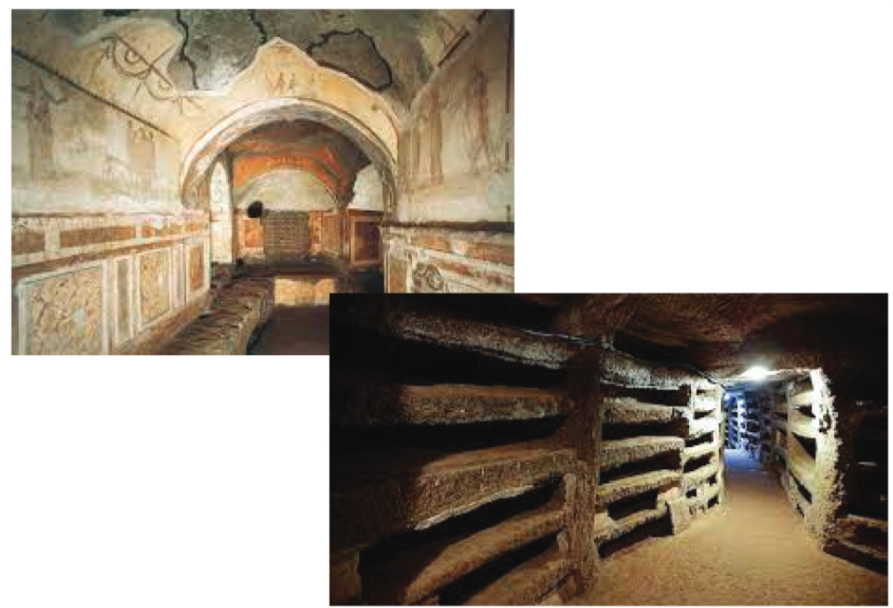
(Unit 3 Chapter 8: Late Antiquity (c. 250 CE - 800 CE)) #48: Catacombs of Priscilla
Vocabulary: CATACOMB
underground passageway for burial
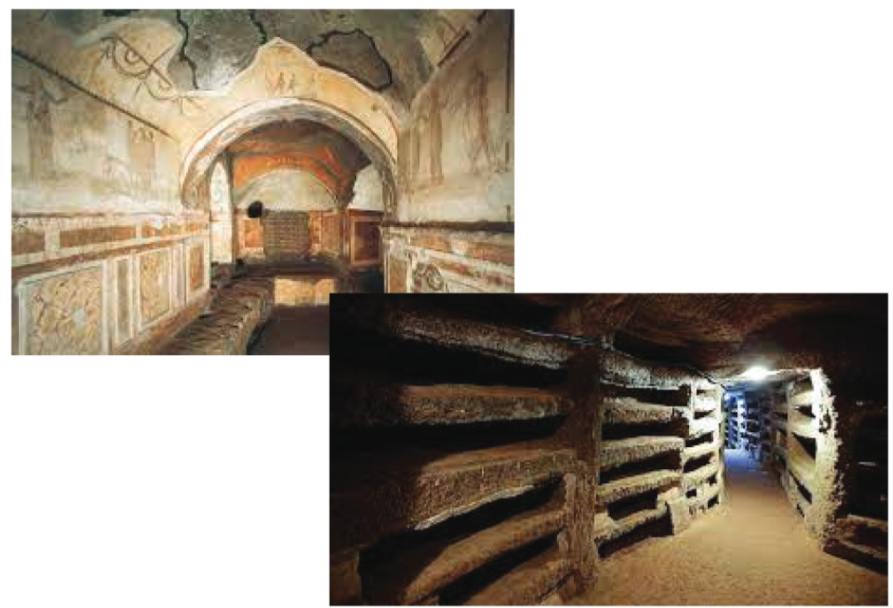
(Unit 3 Chapter 8: Late Antiquity (c. 250 CE - 800 CE)) #48: Catacombs of Priscilla
Vocabulary: CUBICULA
small room in a catacomb used for mortuary chambers
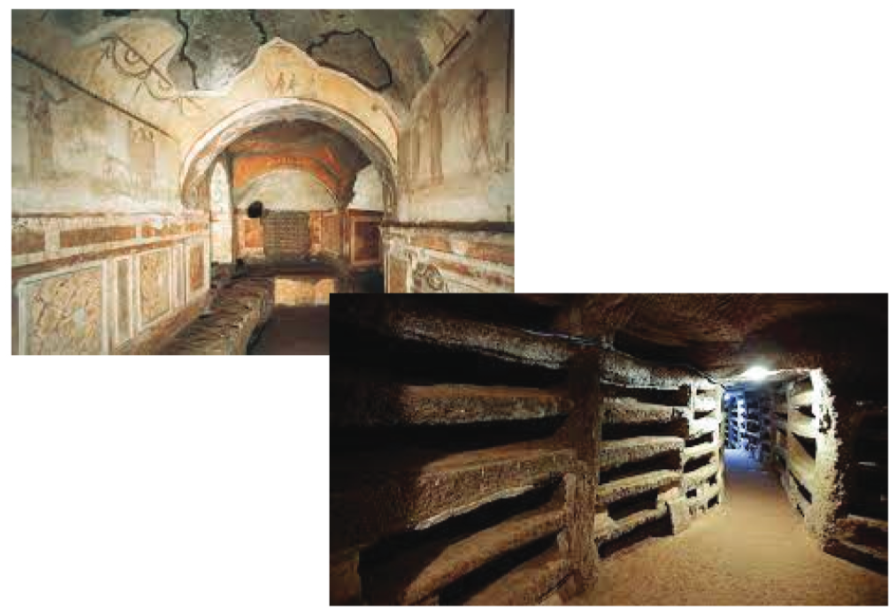
(Unit 3 Chapter 8: Late Antiquity (c. 250 CE - 800 CE)) #48: Catacombs of Priscilla
Vocabulary: LOCULI
openings (like shelves) in walls to serve for burials
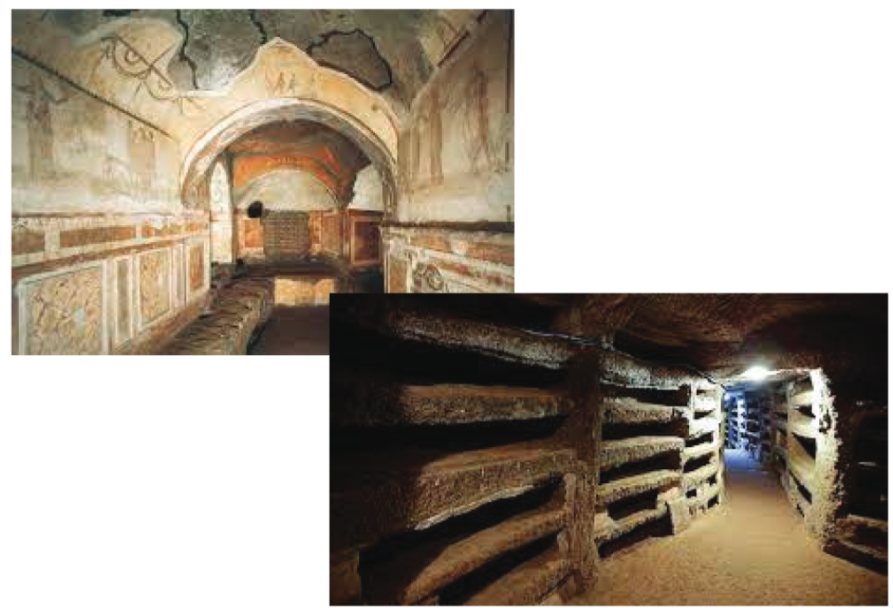
(Unit 3 Chapter 8: Late Antiquity (c. 250 CE - 800 CE)) #48: Catacombs of Priscilla
Vocabulary: ORANT FIGURE
figure with both hands raised in prayer
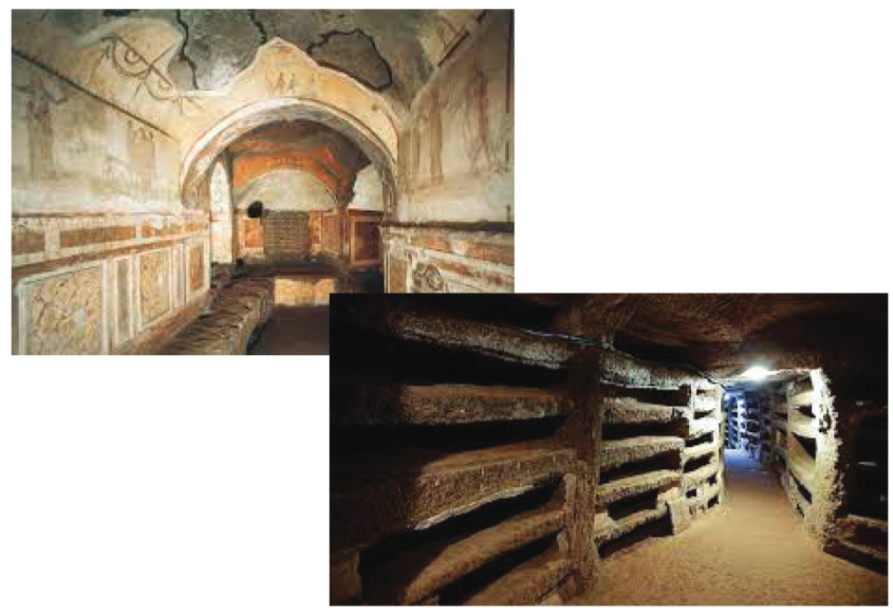
(Unit 3 Chapter 8: Late Antiquity (c. 250 CE - 800 CE)) #48: Catacombs of Priscilla
Content (visual evidence)
Loculi →
wealthy: sealed with marble & fresco
others: terracotta & fresco
about 40,000 people buried
87 miles of tunnels & burials
The Greek Chapel (cubicula)
(named for 2 Greek inscriptions)
orant figure
JC as the Good Shepherd (Christians = flock of sheep)
earliest iconograph!
maaaaybe… earliest
Last Supper
Virgin Mary & wee baby Jesus
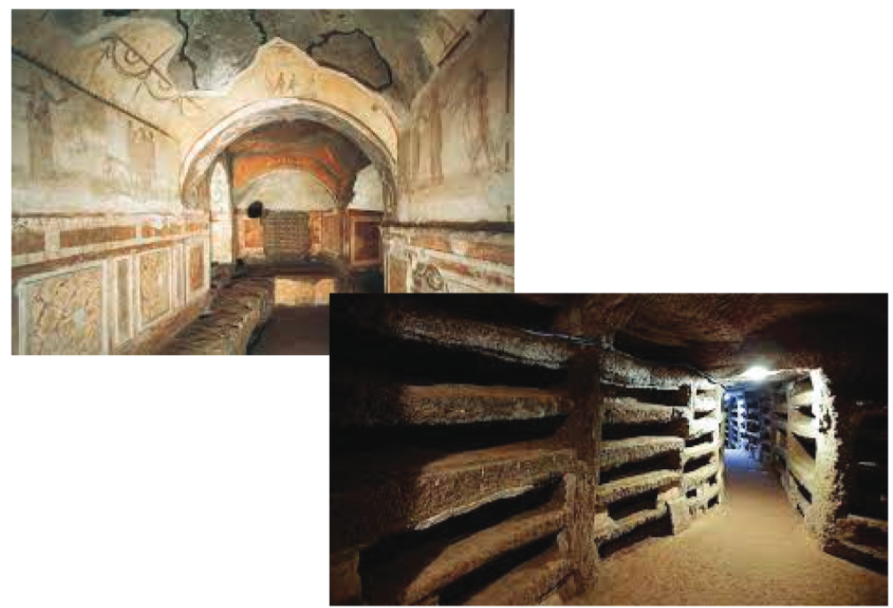
(Unit 3 Chapter 8: Late Antiquity (c. 250 CE - 800 CE)) #48: Catacombs of Priscilla
Context (what is happening historically)
Priscilla: the wife of a consul who was killed by Roman Emperor Domitian for converting to & practicing Christianity
Burial for popes (leaders of the Catholic church) & martyrs (people put to death for their faith)
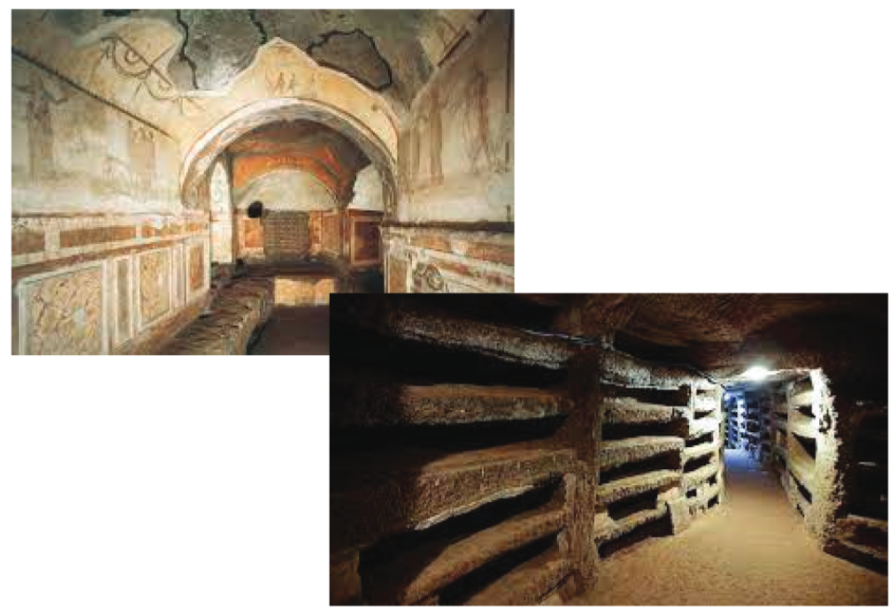
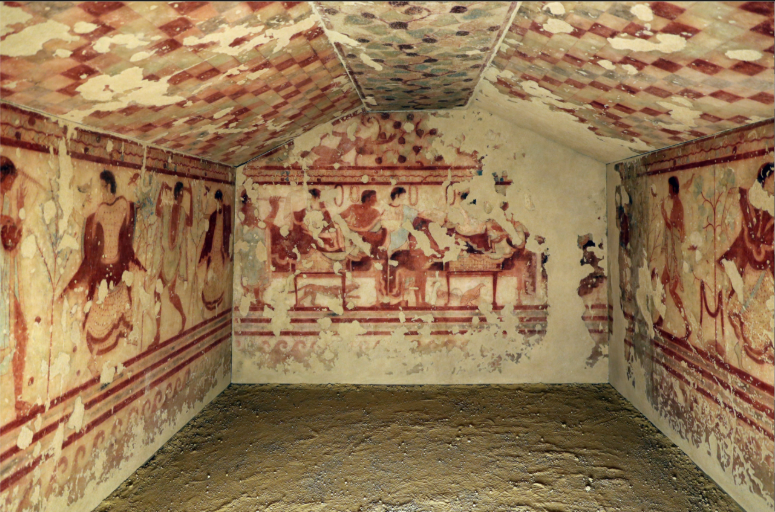
(Unit 3 Chapter 8: Late Antiquity (c. 250 CE - 800 CE)) #48: Catacombs of Priscilla
Other Art Connections
Tomb of the Triclinium (subterranean burials)
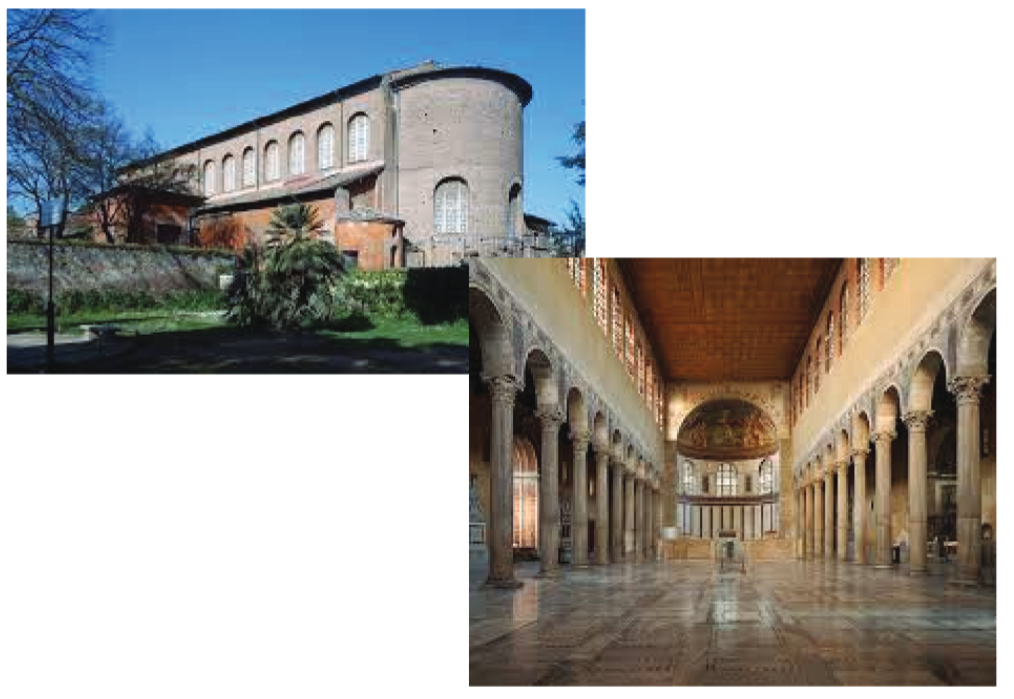
(Unit 3 Chapter 8: Late Antiquity (c. 250 CE - 800 CE)) Name this piece!
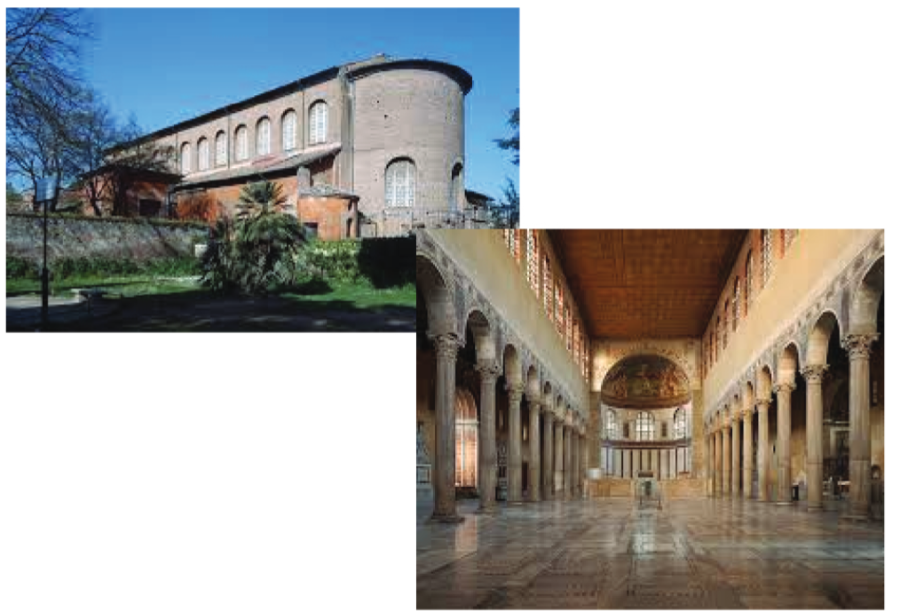
Santa Sabina!
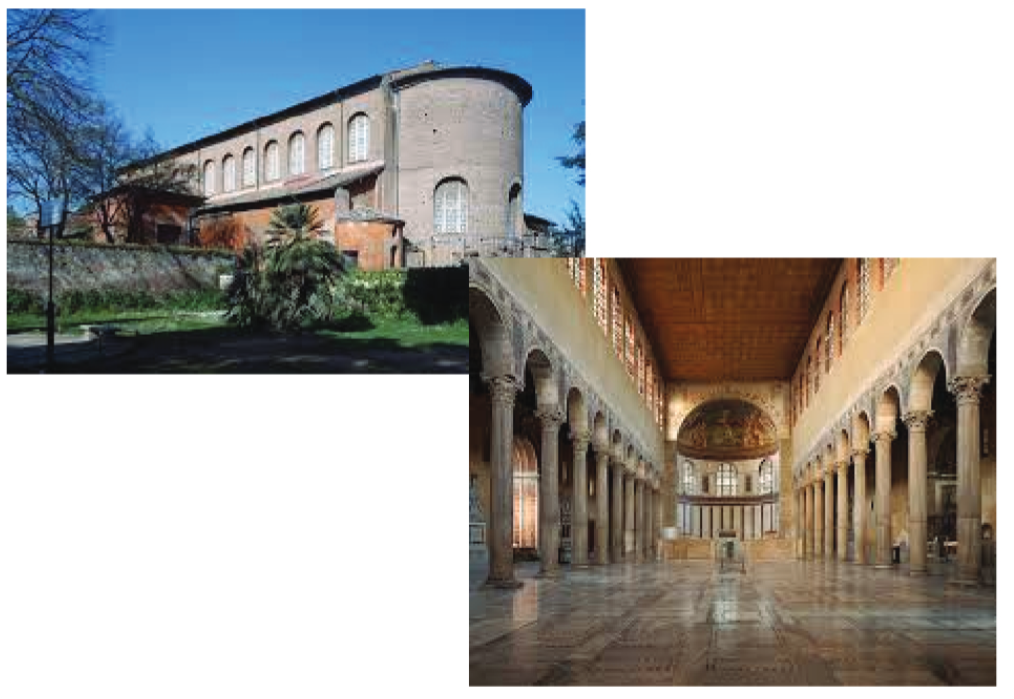
(Unit 3 Chapter 8: Late Antiquity (c. 250 CE - 800 CE)) #49: Santa Sabina
Location
Rome, Italy
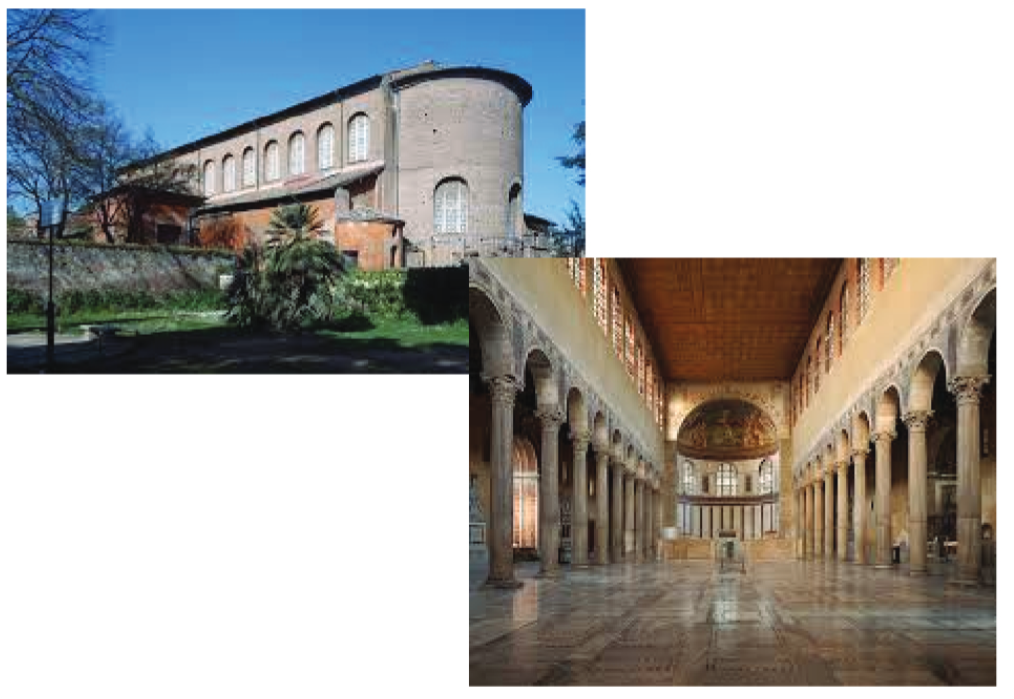
(Unit 3 Chapter 8: Late Antiquity (c. 250 CE - 800 CE)) #49: Santa Sabina
Era
Late Antiquity
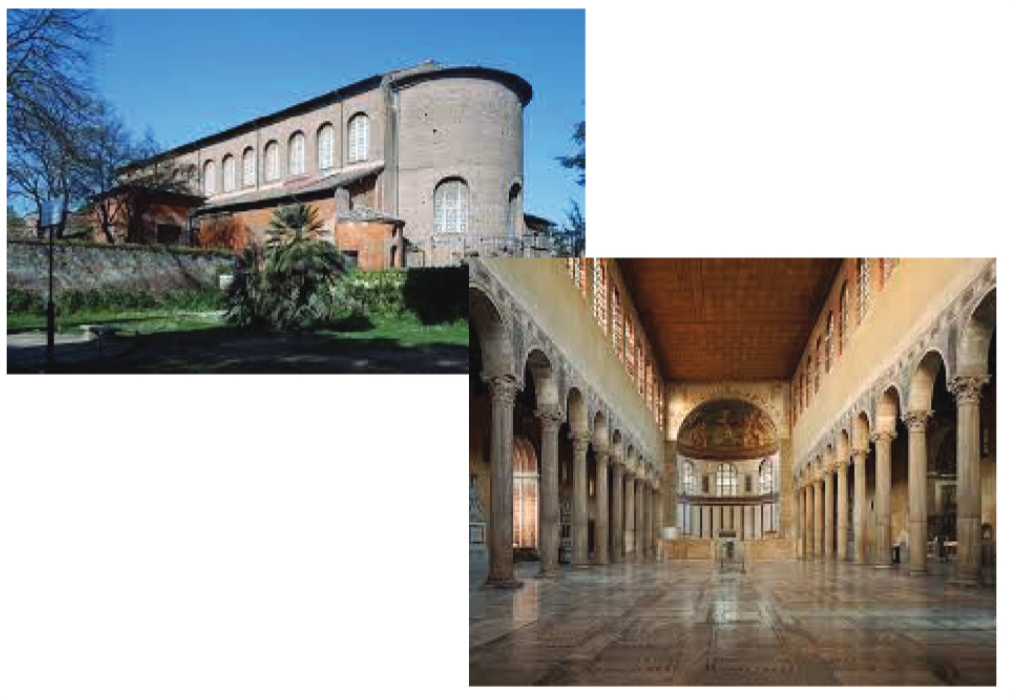
(Unit 3 Chapter 8: Late Antiquity (c. 250 CE - 800 CE)) #49: Santa Sabina
Artist
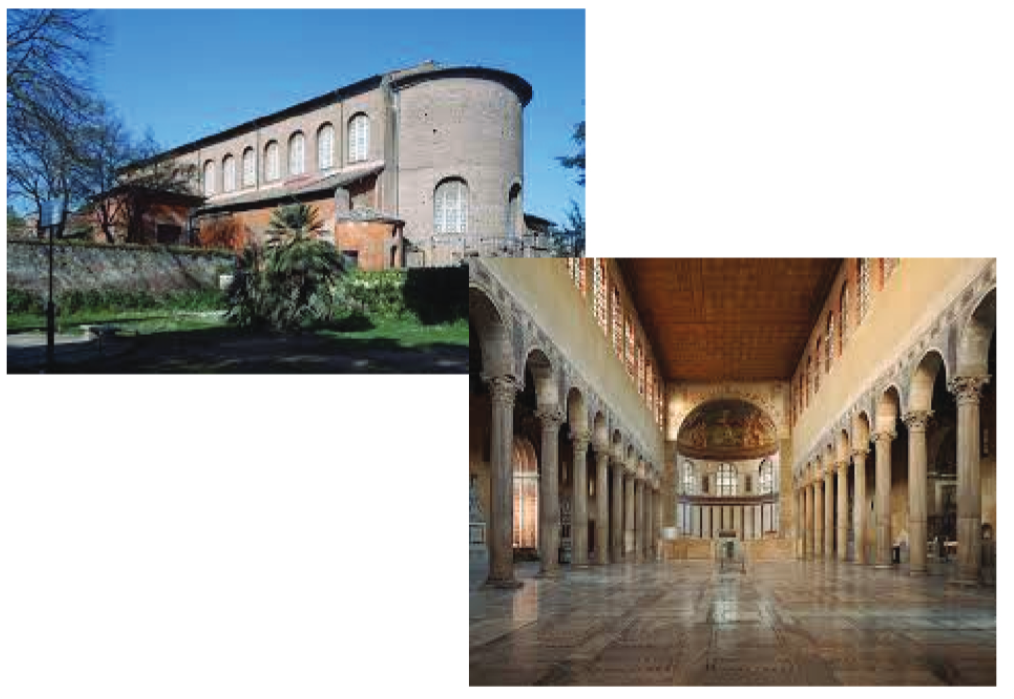
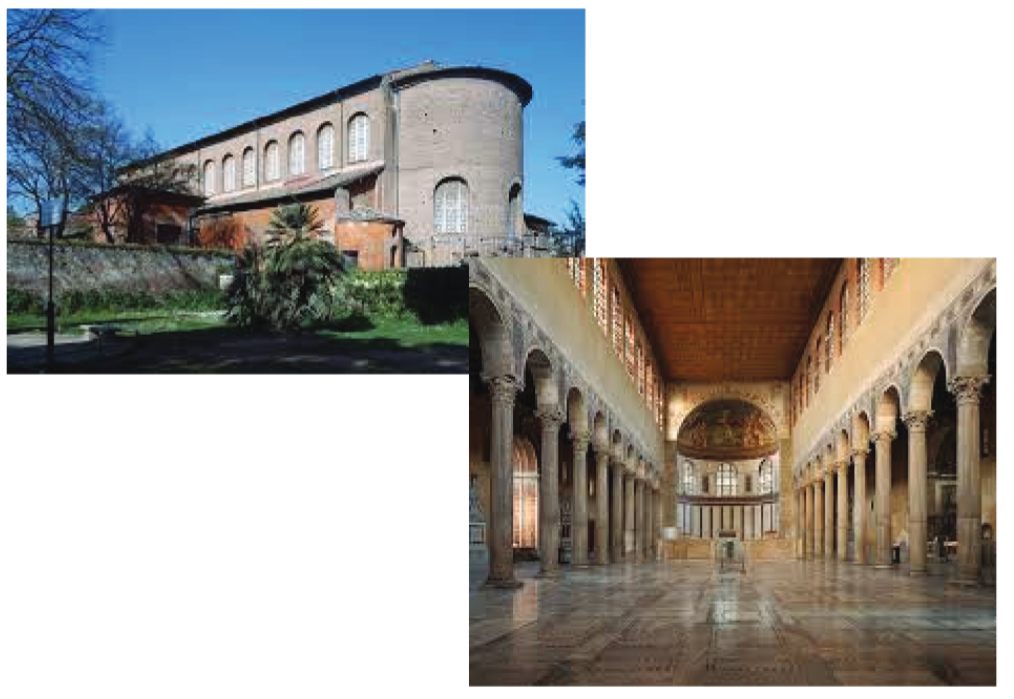
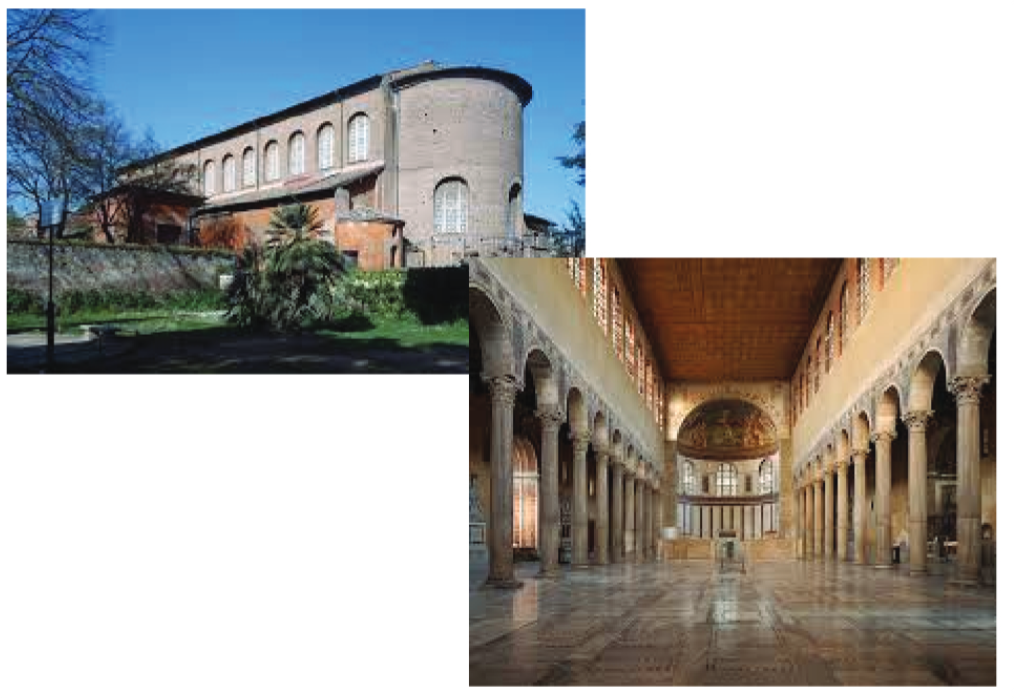
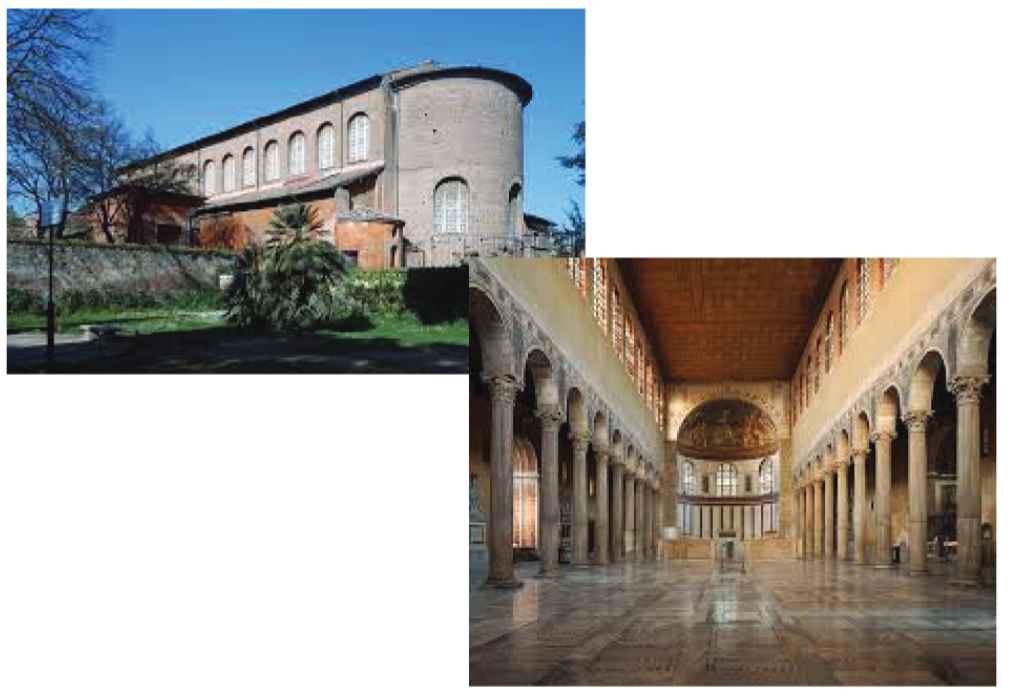
Peter of Illyria
(Unit 3 Chapter 8: Late Antiquity (c. 250 CE - 800 CE)) #49: Santa Sabina
Form
Brick & stone (wooden roof)
(Unit 3 Chapter 8: Late Antiquity (c. 250 CE - 800 CE)) #49: Santa Sabina
Patron
Dominican Christians

(Unit 3 Chapter 8: Late Antiquity (c. 250 CE - 800 CE)) #49: Santa Sabina
Date
422-432 CE
(Unit 3 Chapter 8: Late Antiquity (c. 250 CE - 800 CE)) #49: Santa Sabina
Function
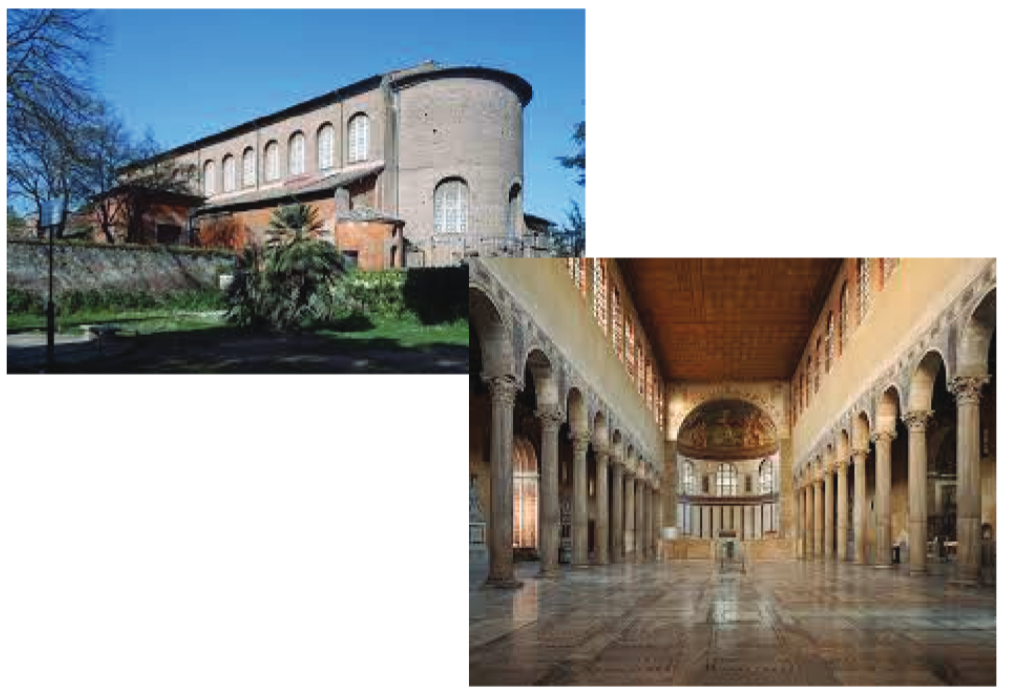
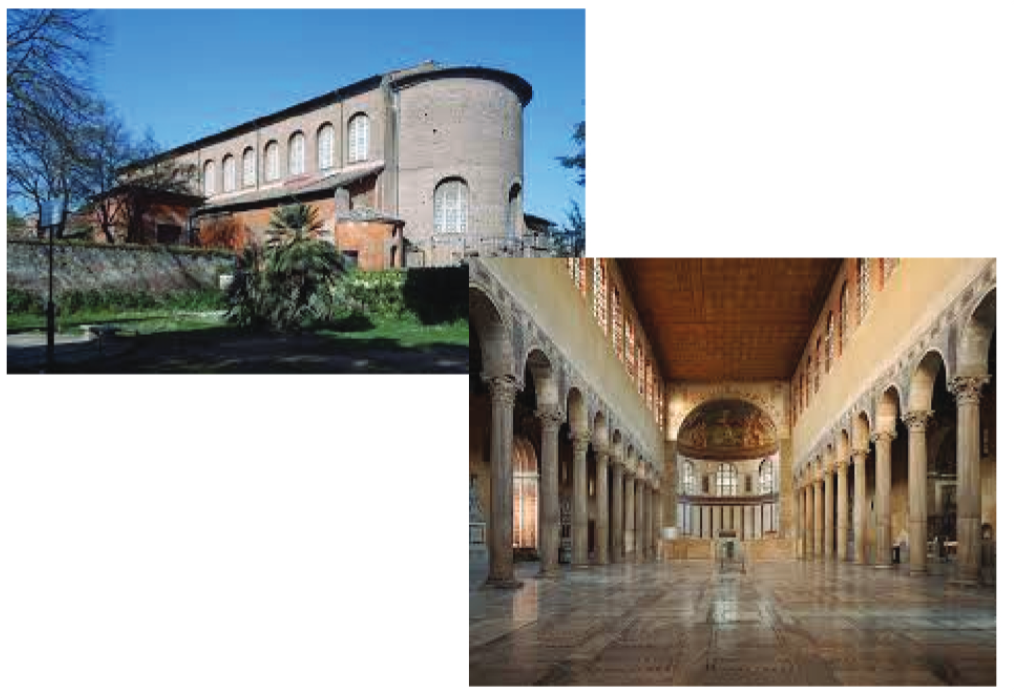
Oldest basilica-plan Church & mother church of the Dominican Order
(Unit 3 Chapter 8: Late Antiquity (c. 250 CE - 800 CE)) #49: Santa Sabina
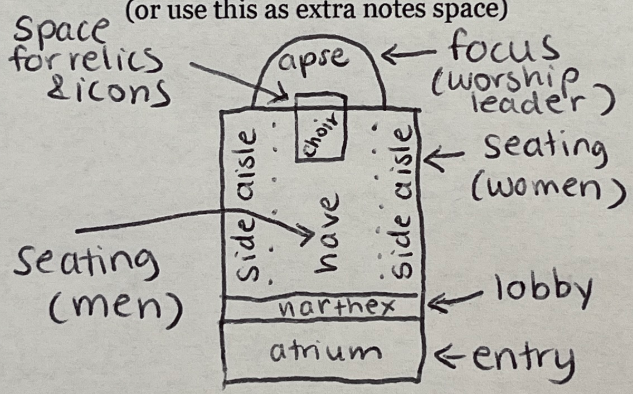
Vocabulary: AXIAL/BASILICA PLAN
based on Roman courts of law, a structure organized along a central line (axis)
(Unit 3 Chapter 8: Late Antiquity (c. 250 CE - 800 CE)) #49: Santa Sabina
Vocabulary: SPOLIA
piece of architecture taken from a structure & re-purposed in a new one
(Unit 3 Chapter 8: Late Antiquity (c. 250 CE - 800 CE)) #49: Santa Sabina
Content (visual evidence)
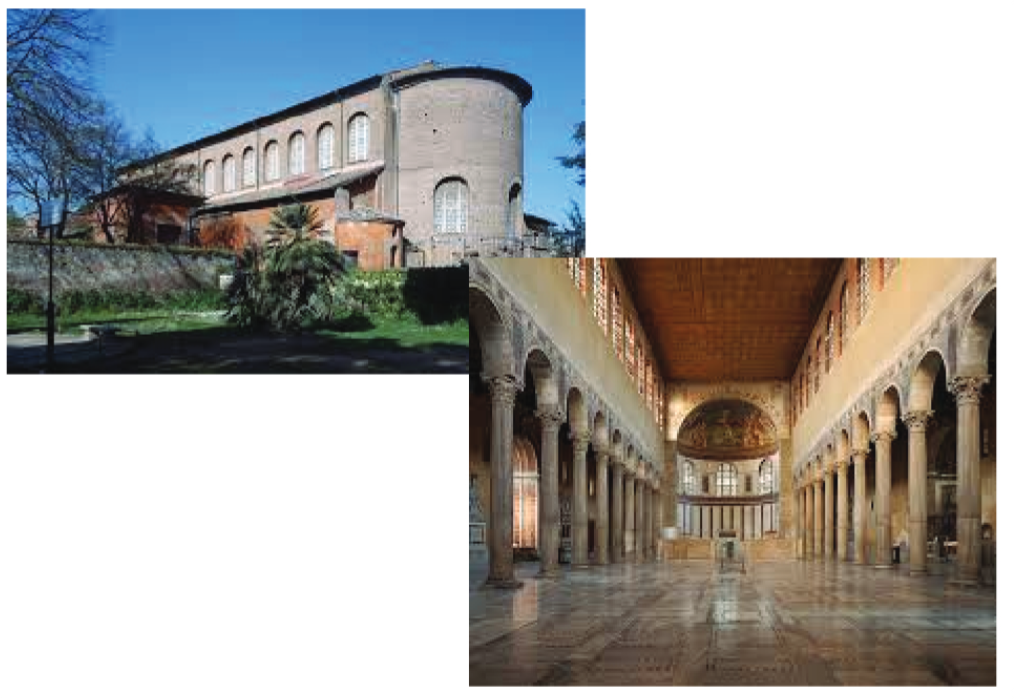
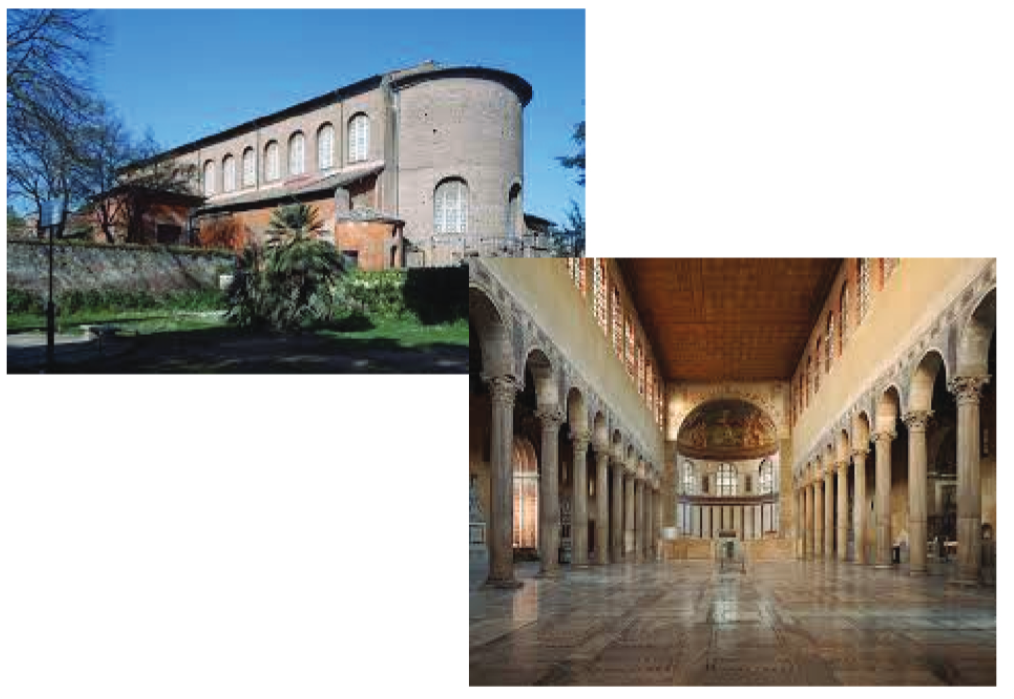
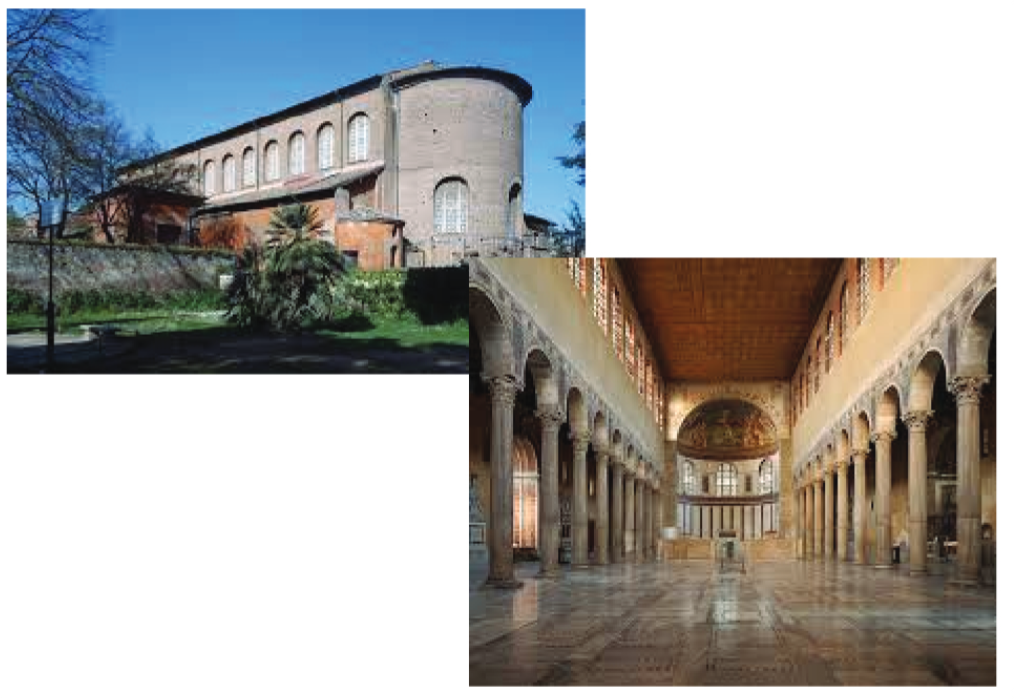
simple brick exterior
colonnades line the nave (corinthian columns)
terminating apse
clerestory windows
gypsum windows (early mineral used for glass)
lighter walls
rich interior decoration
coffered ceiling
(Unit 3 Chapter 8: Late Antiquity (c. 250 CE - 800 CE)) #49: Santa Sabina
Context (what is happening historically)
site used to be of an imperial roman home & the Temple of Juno Regina
on the Aventine Hill (symbolizes Christianity’s rise of popularity)
Sabina: martyr, beheaded by Hadrian in 126 CE (later made a saint)
(Unit 3 Chapter 8: Late Antiquity (c. 250 CE - 800 CE)) #49: Santa Sabina
Draw the Art!
(Unit 3 Chapter 8: Late Antiquity (c. 250 CE - 800 CE)) #49: Santa Sabina
Other Art Connections
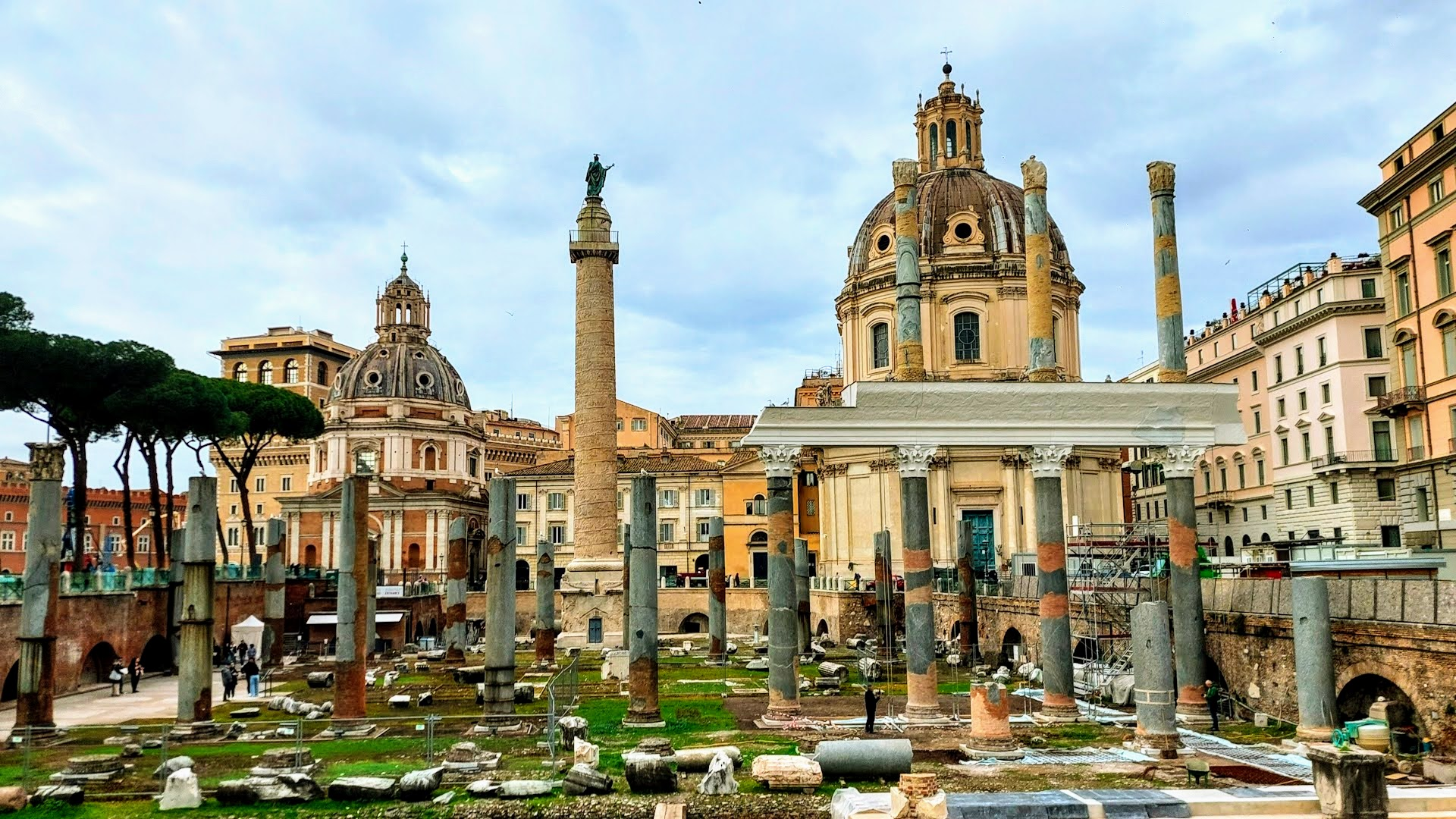
Basilica Ulpia (Trajan’s Forum)
direct copy
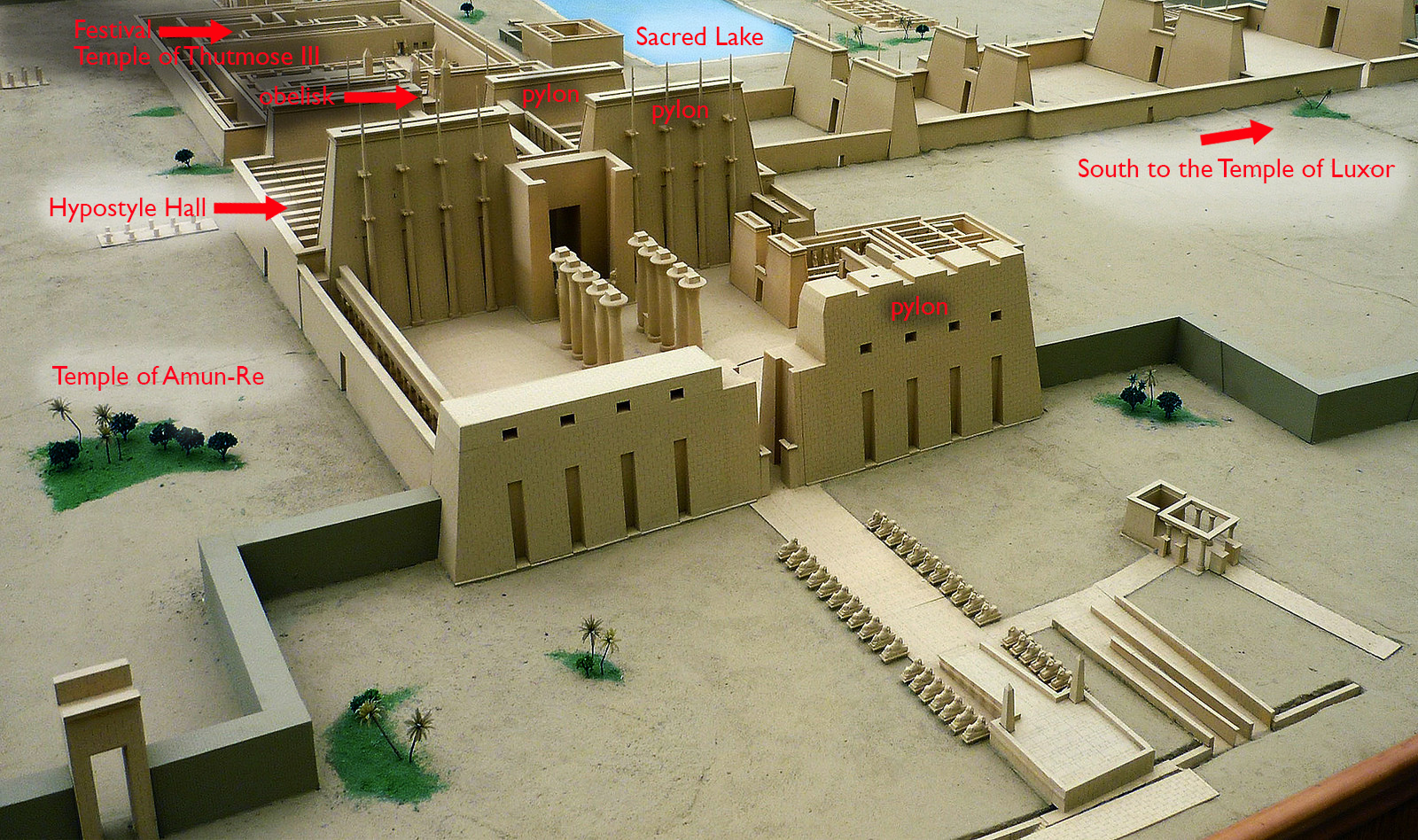
Clerestory…
Temple of Amun-Re
(Unit 3 Chapter 9: Byzantine (c. 330 CE - 1453 CE))
Early Byzantine Period (330-726 CE)
Begins with the founding of ______________ by Emperor Constantine.
Middle Byzantine Period (843-1204 CE)
Follows the end of Iconoclasm (726-843 CE), when the veneration of icons was banned and then restored. Flourishing of ____ ________, cross-in-square ________, and _______. Emphasis on more _________, formalized images of Christ, Mary, and saints.
Late Byzantine Period (1261-1453 CE)
Begins with the recapture of Constantinople from Crusaders. Art becomes more _________ and __________, with rich color and gold backgrounds. Ends with the fall of Constantinople to the Ottoman Turks in 1453.
Constantinople
icon painting
churches
mosaics
spiritual
emotional
expressive
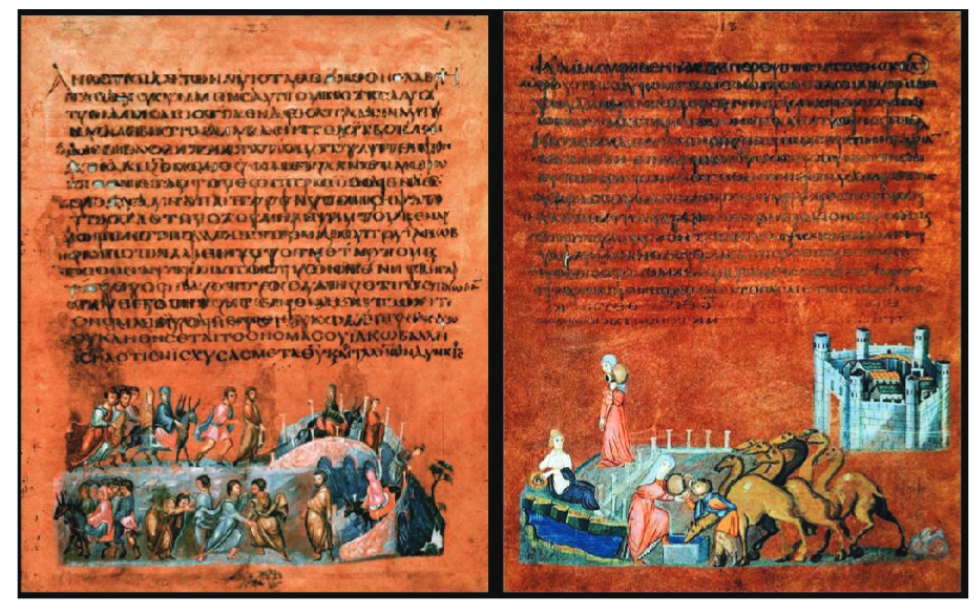
(Unit 3 Chapter 9: Byzantine (c. 330 CE - 1453 CE)) Name this piece!
Vienna Genesis!
(Unit 3 Chapter 9: Byzantine (c. 330 CE - 1453 CE)) #50: Vienna Genesis
Location
Vienna, Austria
(Unit 3 Chapter 9: Byzantine (c. 330 CE - 1453 CE)) #50: Vienna Genesis
Era
early byzantine art
(Unit 3 Chapter 9: Byzantine (c. 330 CE - 1453 CE)) #50: Vienna Genesis
Artist
unknown
(Unit 3 Chapter 9: Byzantine (c. 330 CE - 1453 CE)) #50: Vienna Genesis
Form
tempera, gold, silver on velum
(Unit 3 Chapter 9: Byzantine (c. 330 CE - 1453 CE)) #50: Vienna Genesis
Patron
unknown
(Unit 3 Chapter 9: Byzantine (c. 330 CE - 1453 CE)) #50: Vienna Genesis
Date
500-550 BCE
(Unit 3 Chapter 9: Byzantine (c. 330 CE - 1453 CE)) #50: Vienna Genesis
Function
earliest first surviving chapter of the Bible
(Unit 3 Chapter 9: Byzantine (c. 330 CE - 1453 CE)) #50: Vienna Genesis
Vocabulary: VELLUM
fine parchment made originally from the skin of a calf
(Unit 3 Chapter 9: Byzantine (c. 330 CE - 1453 CE)) #50: Vienna Genesis
Content (visual evidence)
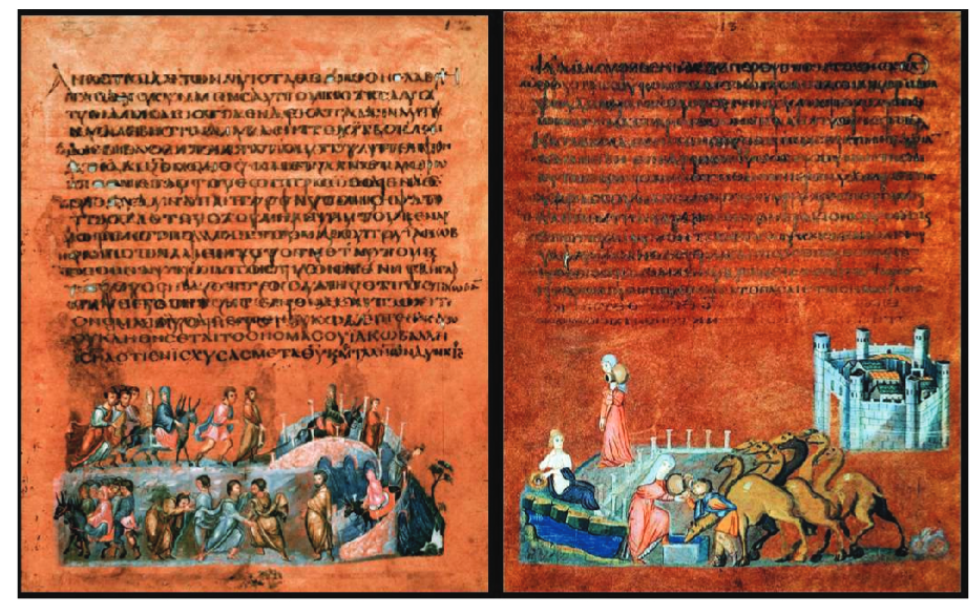
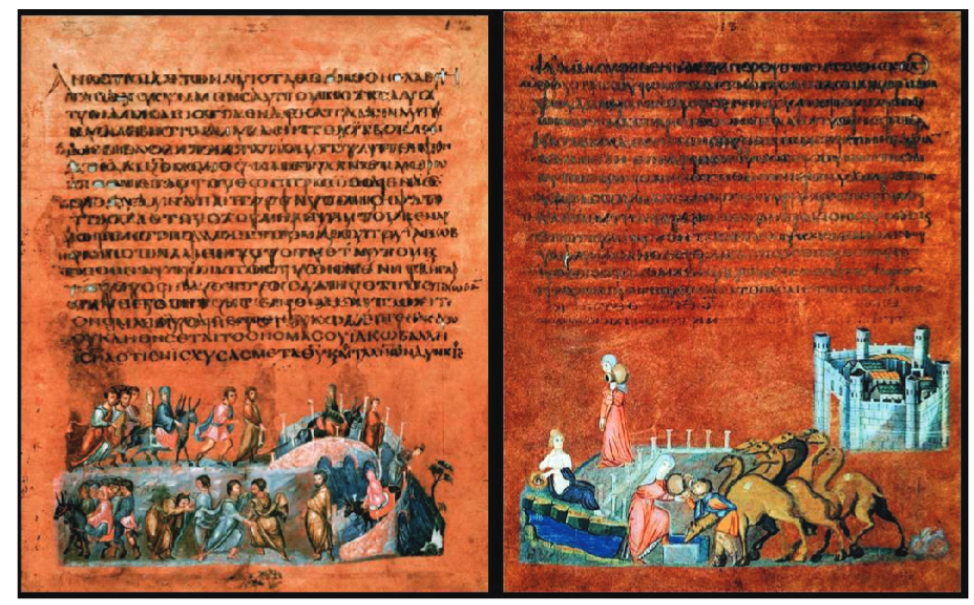
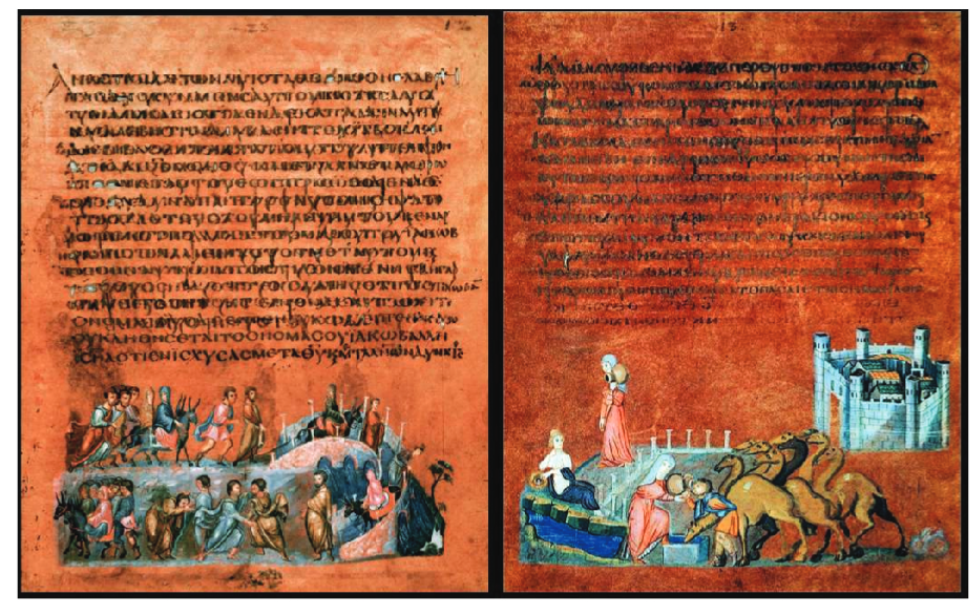
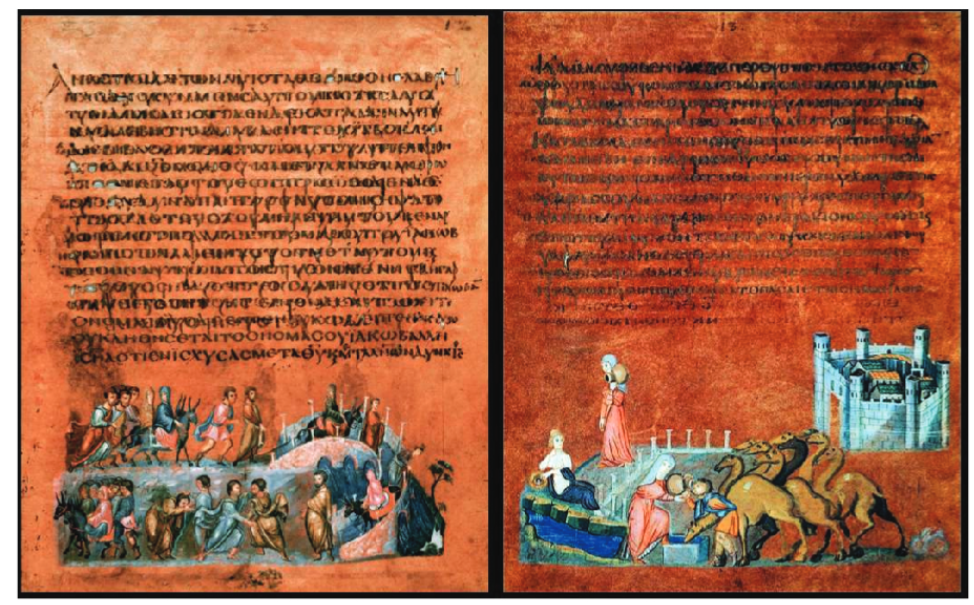
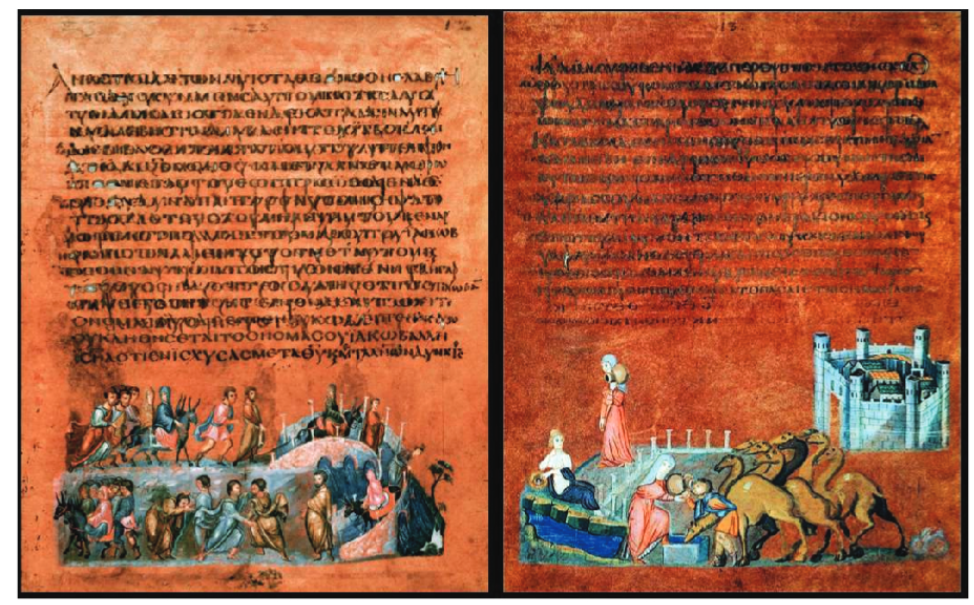
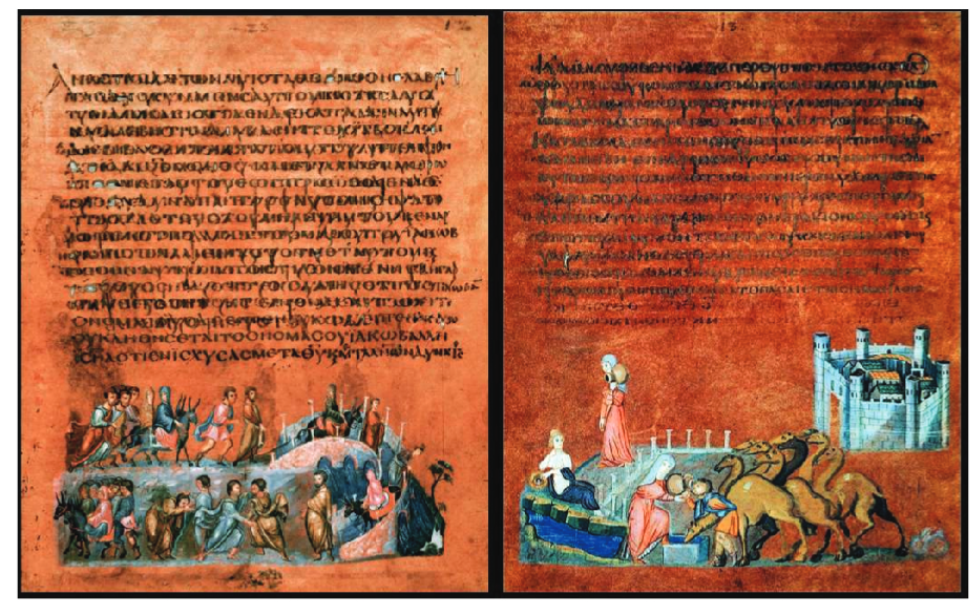
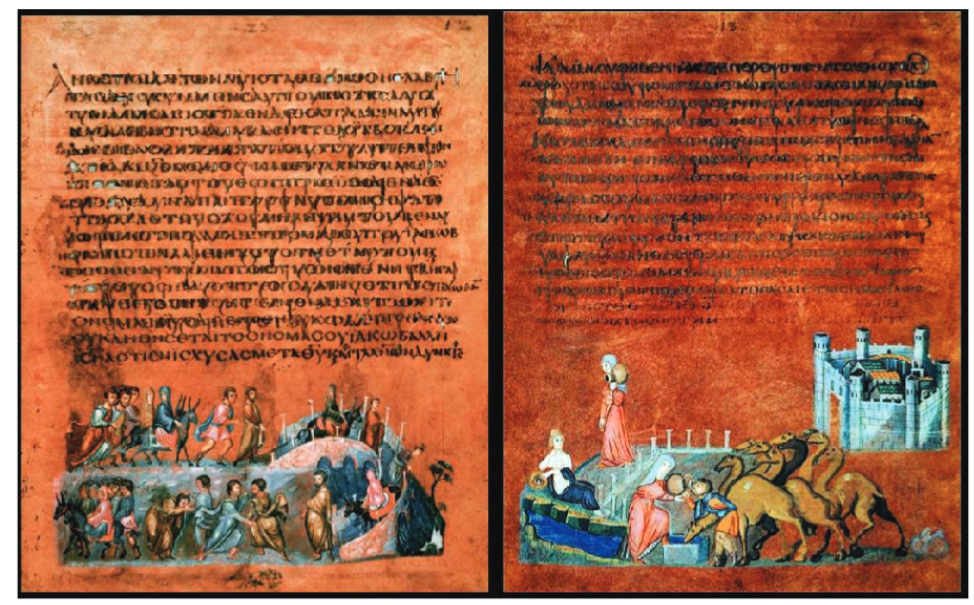
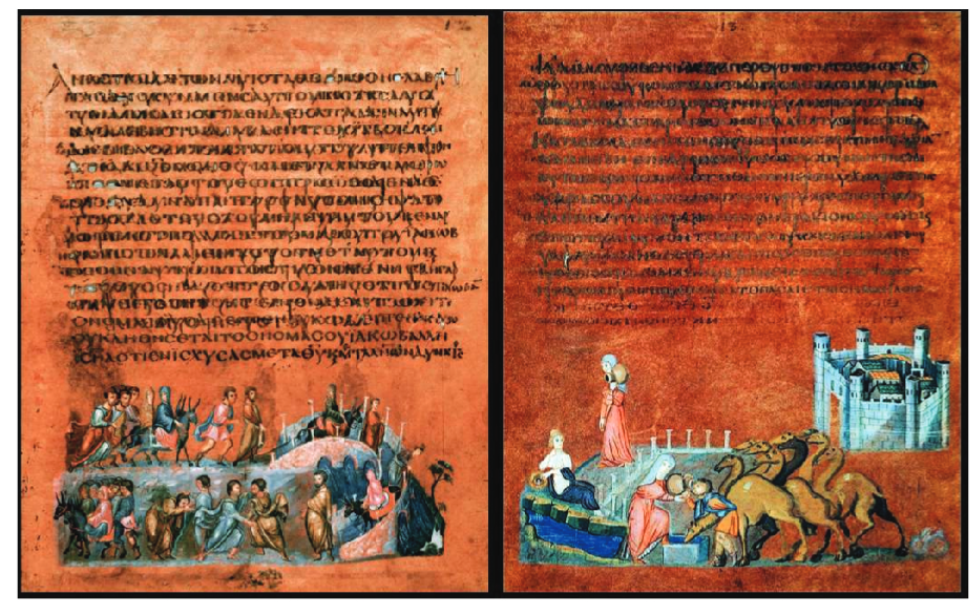
Rebecca & Eliezer at the well
Jacob wrestling the Angel
illuminated manuscript
flat 2D, little perspective
Rebecca offers water to Abraham’s servant and his camels, signaling that she is the divinely chosen wife for Isaac as God guides the encounter
Jacob wrestles through the night with a mysterious angel figure who blesses him and renames him Israel, marking his spiritual transformation & covenant w/ God
(Unit 3 Chapter 9: Byzantine (c. 330 CE - 1453 CE)) #50: Vienna Genesis
Context (what is happening historically)
earliest surviving chapter of Bible → Genesis
upper-class luxury item
(Unit 3 Chapter 9: Byzantine (c. 330 CE - 1453 CE)) #50: Vienna Genesis
Other Art Connections
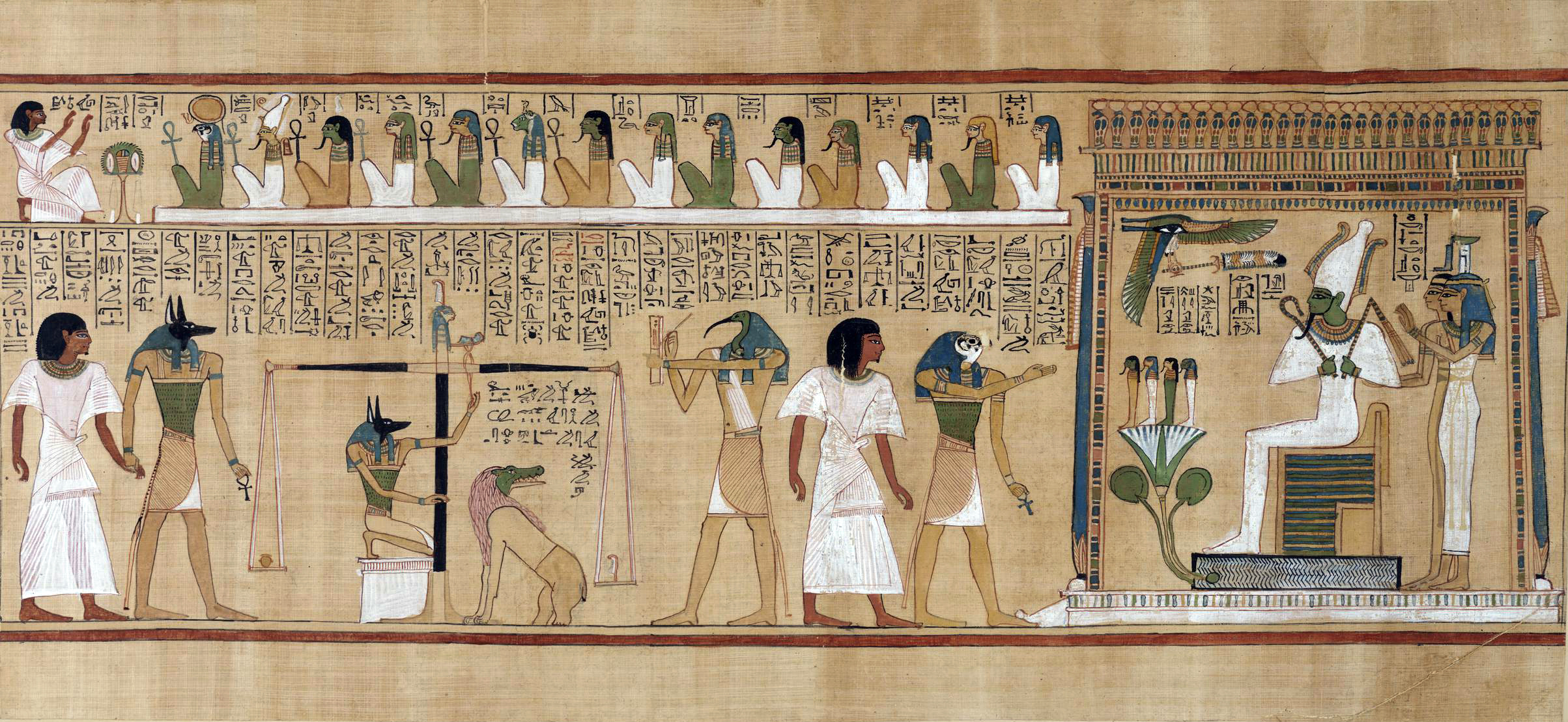
passage of time → Judgement of Hu-Nefer
(Unit 3 Chapter 9: Byzantine (c. 330 CE - 1453 CE)) Name this piece!
San Vitale!
(Unit 3 Chapter 9: Byzantine (c. 330 CE - 1453 CE)) #51: San Vitale
Location
Ravenna, Italy
(Unit 3 Chapter 9: Byzantine (c. 330 CE - 1453 CE)) #51: San Vitale
Era
Byzantine Art
(Unit 3 Chapter 9: Byzantine (c. 330 CE - 1453 CE)) #51: San Vitale
Artist
unknown
(Unit 3 Chapter 9: Byzantine (c. 330 CE - 1453 CE)) #51: San Vitale
Form
brick, marble, & stone
(Unit 3 Chapter 9: Byzantine (c. 330 CE - 1453 CE)) #51: San Vitale
Patron
Julianus Argentarius (rich banker helped finance)
(Unit 3 Chapter 9: Byzantine (c. 330 CE - 1453 CE)) #51: San Vitale
Date
547 C.E.
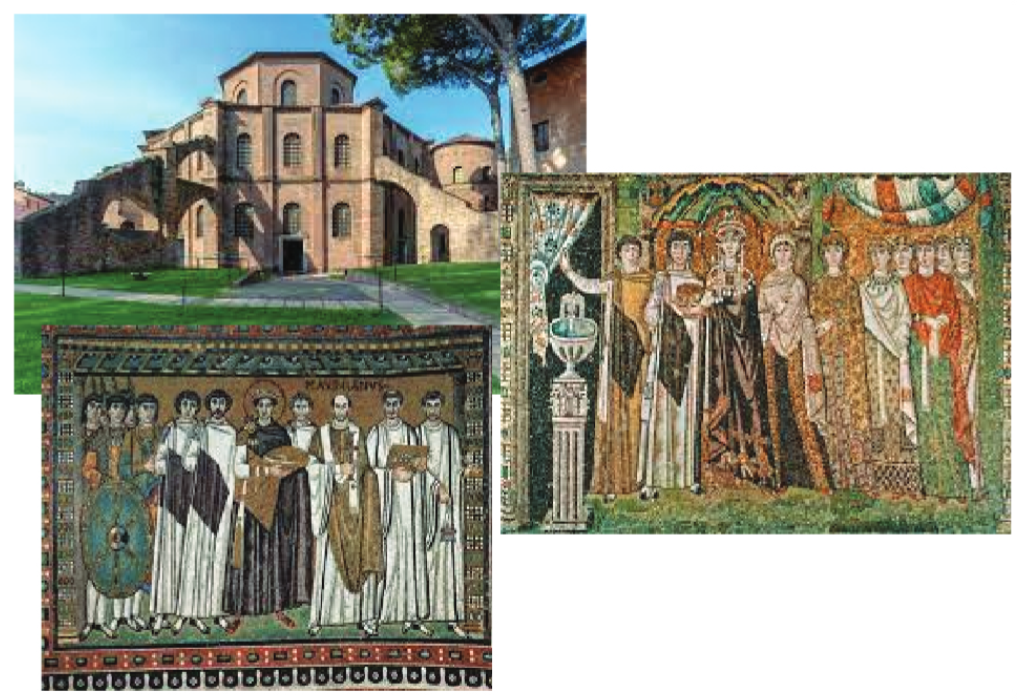
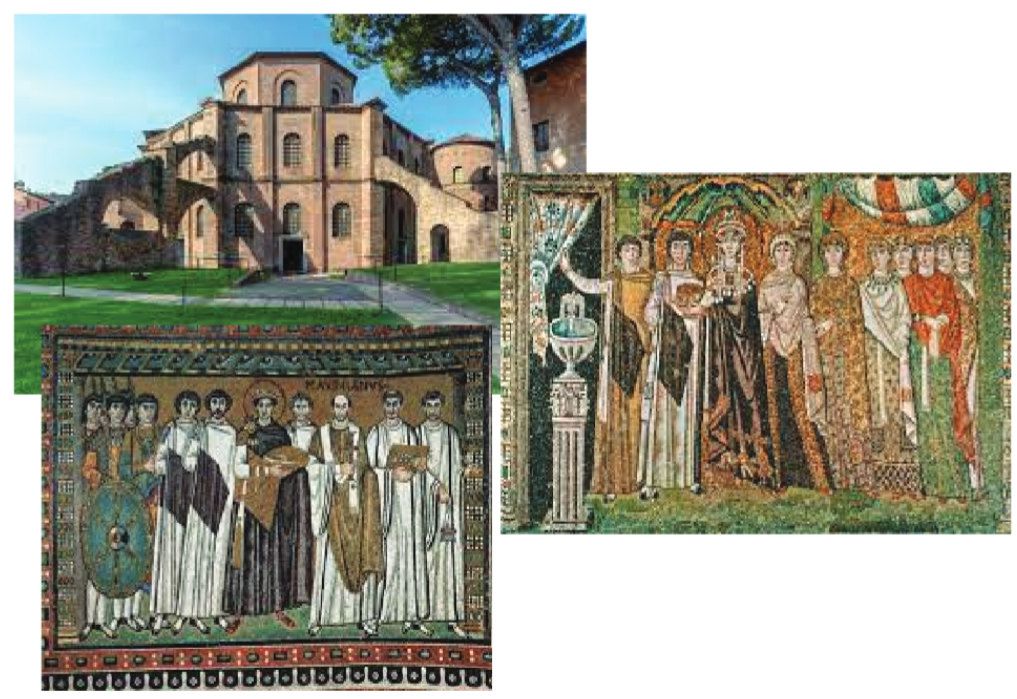
(Unit 3 Chapter 9: Byzantine (c. 330 CE - 1453 CE)) #51: San Vitale
Function
central-planned church for Saint Vitalis, Ravenna’s patron saint
(Unit 3 Chapter 9: Byzantine (c. 330 CE - 1453 CE)) #51: San Vitale
Vocabulary: CENTRAL PLANNED
church having a circular plan w/ the altar in the middle
(Unit 3 Chapter 9: Byzantine (c. 330 CE - 1453 CE)) #51: San Vitale
Vocabulary: PATEN
a plate, dish, or bowl used to hold the Eucharist at a Christian ceremony
(Unit 3 Chapter 9: Byzantine (c. 330 CE - 1453 CE)) #51: San Vitale
Vocabulary: XP
a monogram of the Greek CHI & PHO for KHRISTOS (JC)
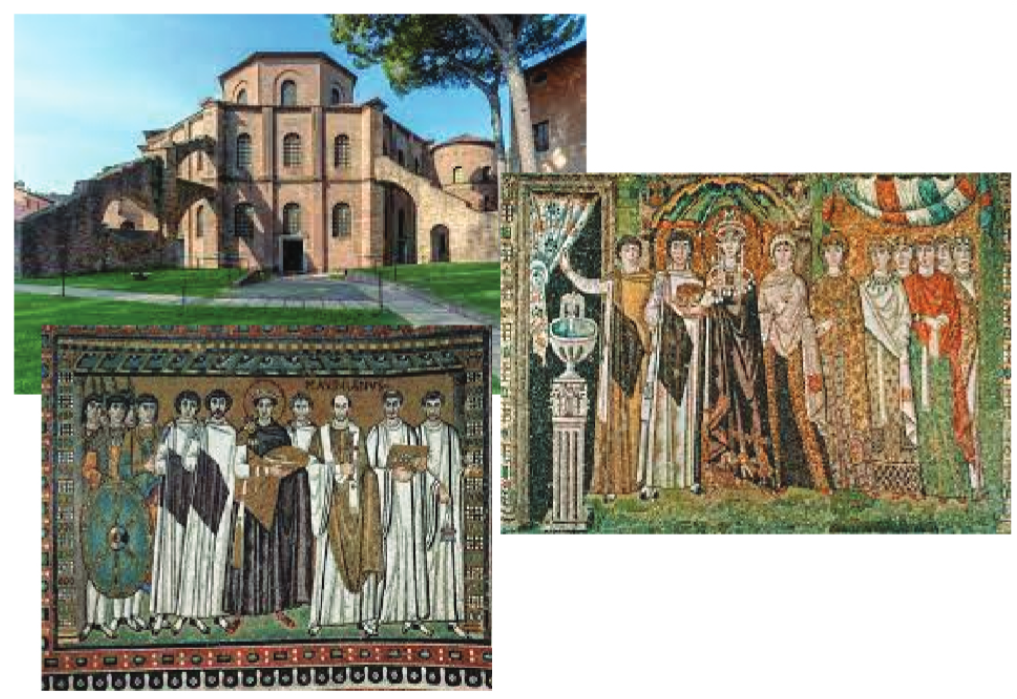
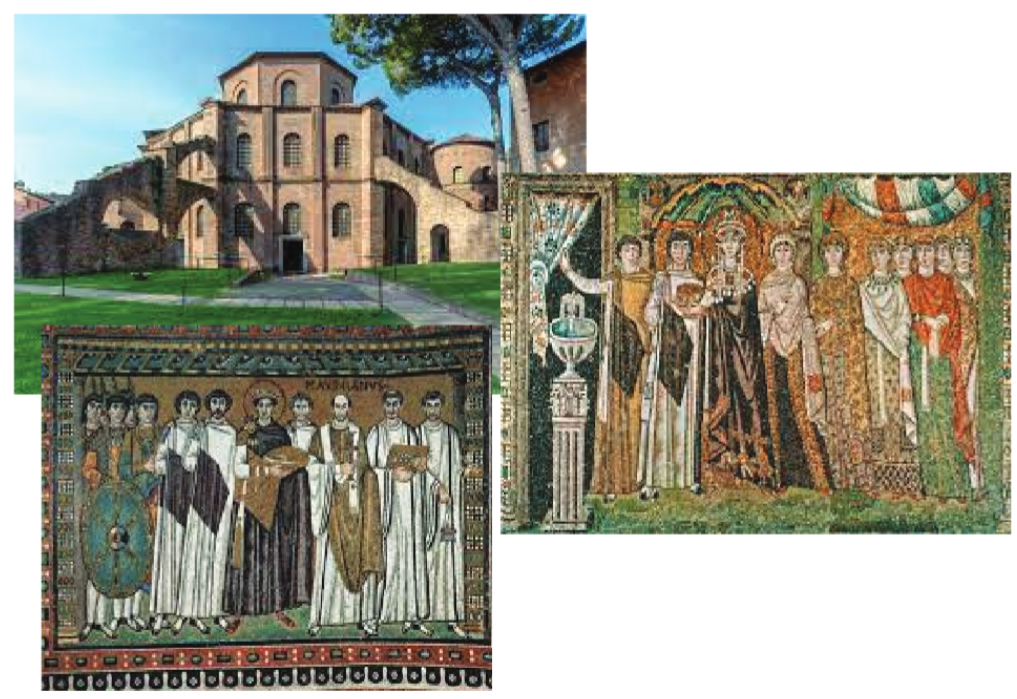
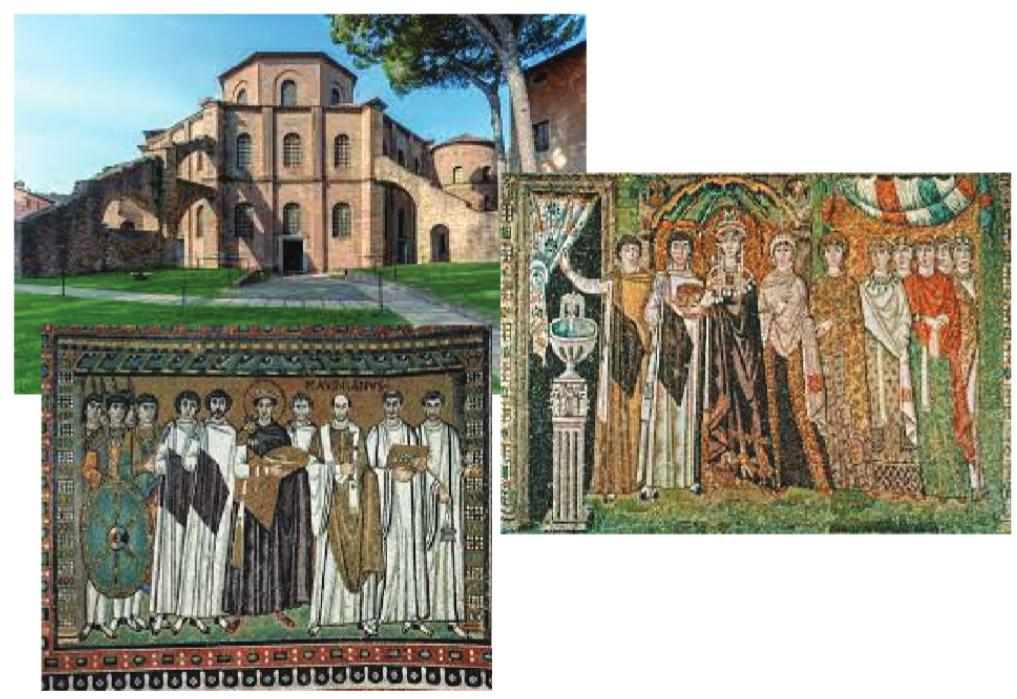
(Unit 3 Chapter 9: Byzantine (c. 330 CE - 1453 CE)) #51: San Vitale
Vocabulary: AMBULATORY
a rounded hallway that encircles entire interior of a church with an apse at the back

(Unit 3 Chapter 9: Byzantine (c. 330 CE - 1453 CE)) #51: San Vitale
Vocabulary: NARTHEX
entry-lobby
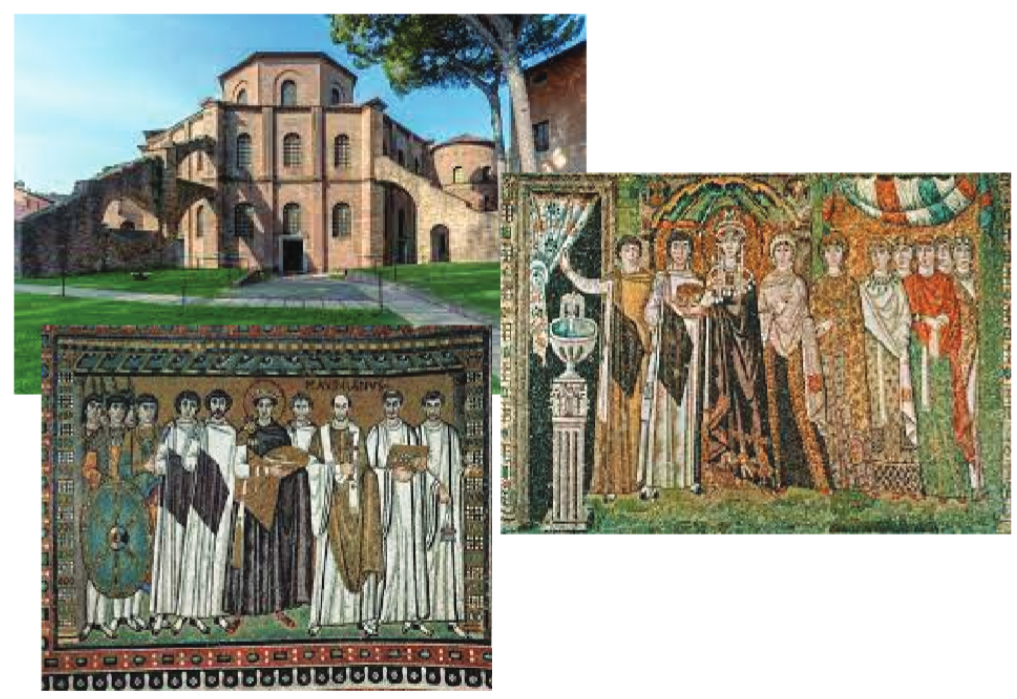
(Unit 3 Chapter 9: Byzantine (c. 330 CE - 1453 CE)) #51: San Vitale
Content (visual evidence)
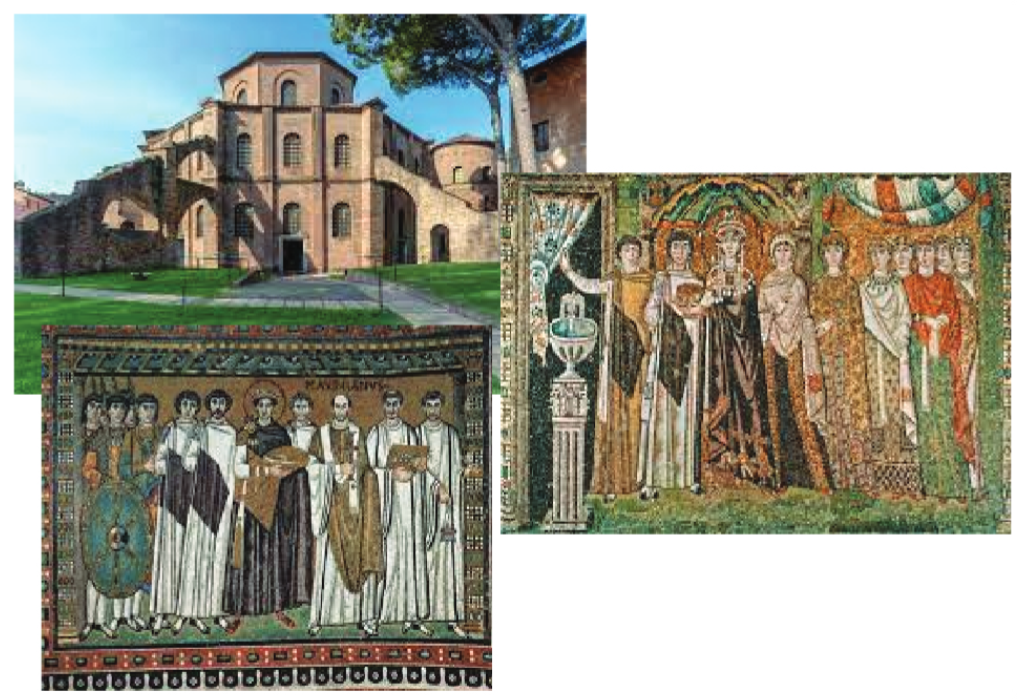
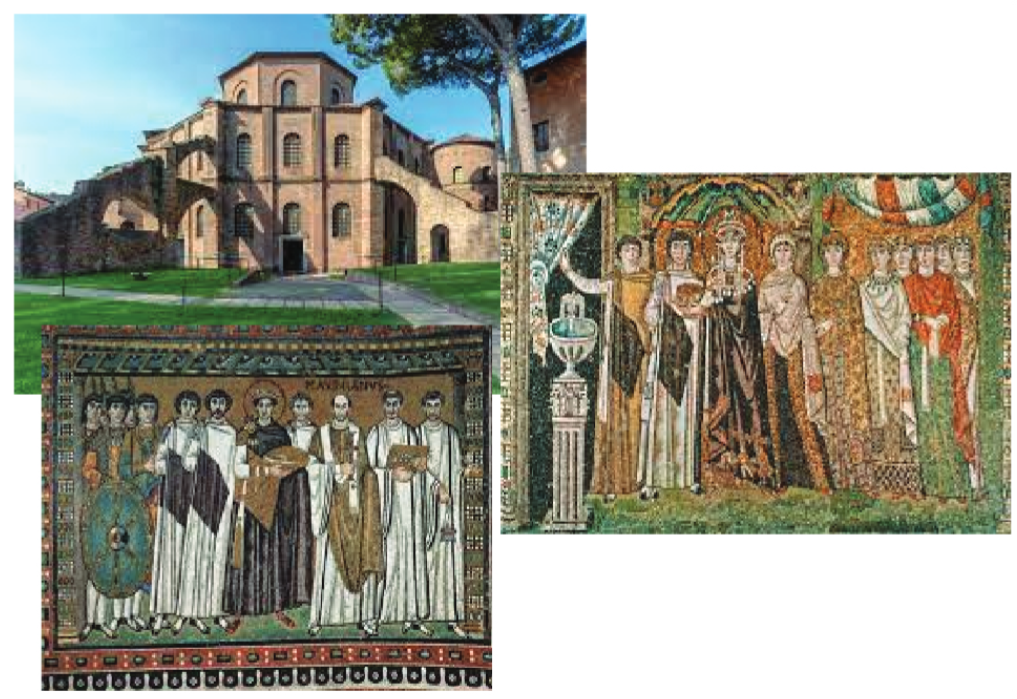
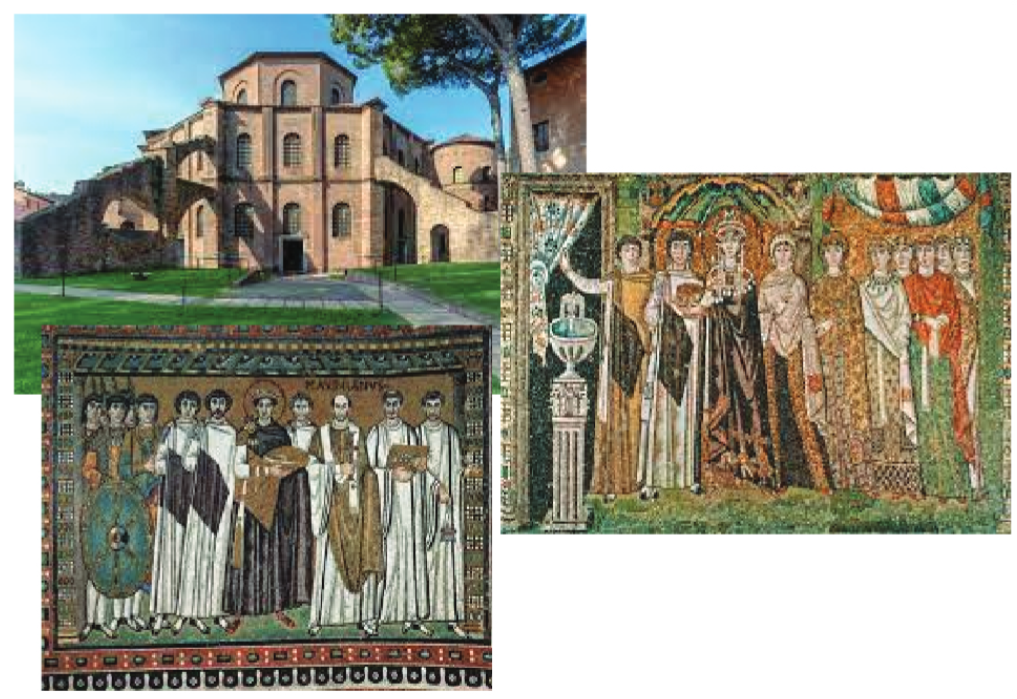
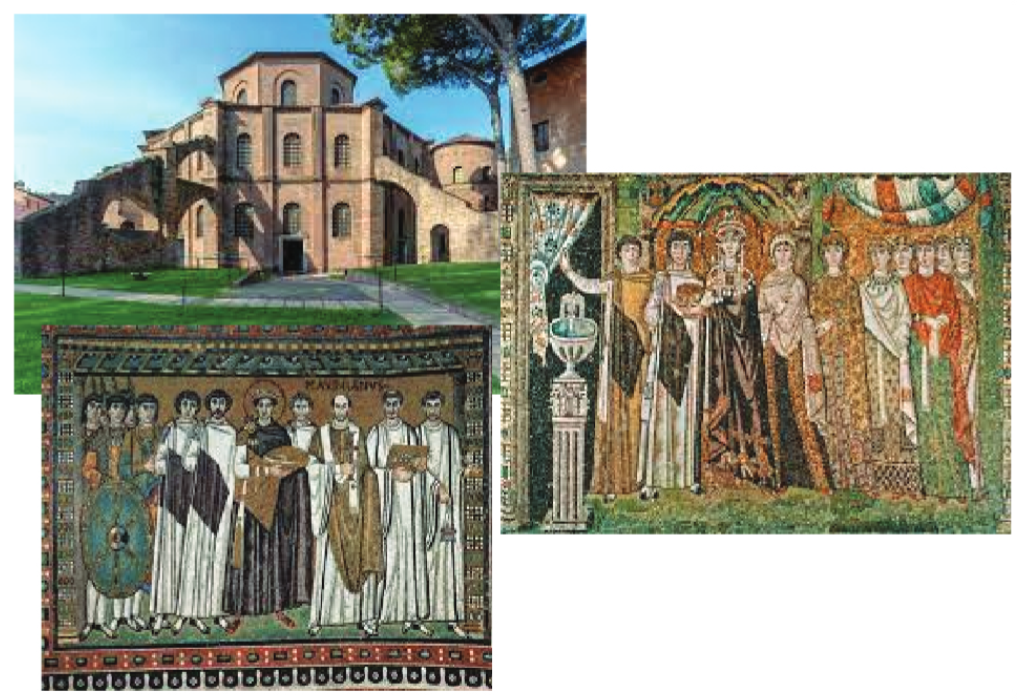
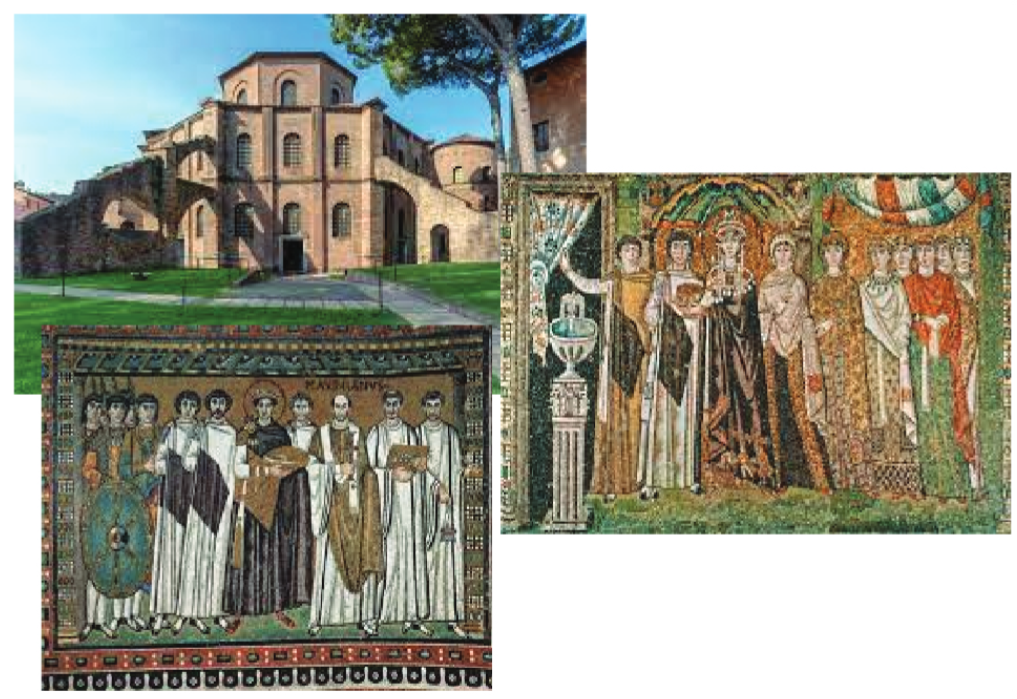
octagon shape & clerestory windows
brick exterior = spolia (re-used architecture)
Apse Mosaic: Saint Vitalis & angel on right, JC in the middle (mandorla), Bishop & angel on left
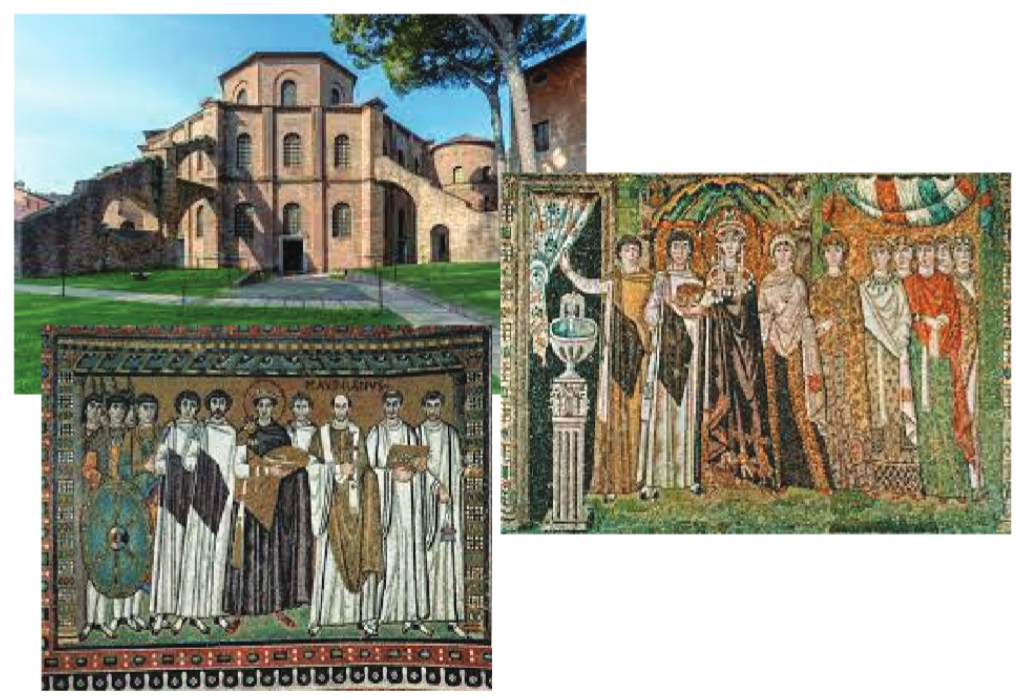
Justinian: right-hand side (North wearing purple color of royalty wall)
court surrounds him (religious and military figures), Eucharist Paten, frontal & floating, less naturalism, lengthening of figures for accuracy when seen below
centrally-planned → San Vitale = 2 apses mirroring each other
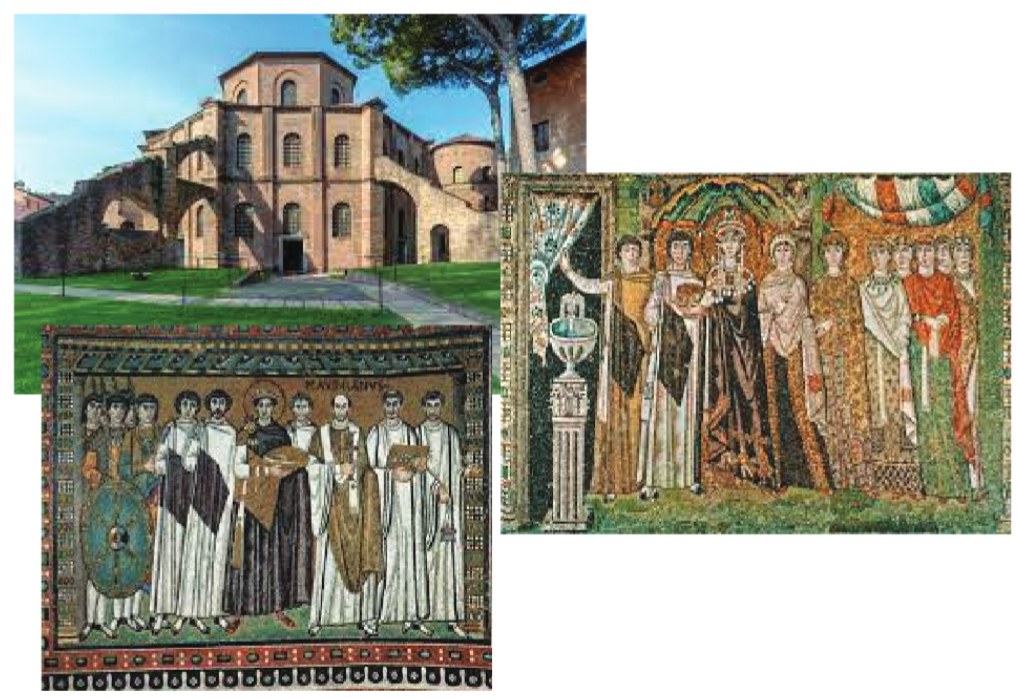
Theodora (South wall): equal to Justinian (but not quite…) on left of JC
Halos show divinity, outside the inner sanctuary, Eucharist chalice, more color/disaster, still floating, frontal
(Unit 3 Chapter 9: Byzantine (c. 330 CE - 1453 CE)) #51: San Vitale
Context (what is happening historically)
originally created under the rule of the Goths, later dedicated to Byzantine rulers
narthex is off-center because it had to accommodate for other buildings
(Unit 3 Chapter 9: Byzantine (c. 330 CE - 1453 CE)) #51: San Vitale
Other Art Connections
San Sabina - basilica-planned church
(Unit 3 Chapter 9: Byzantine (c. 330 CE - 1453 CE)) Name this piece!
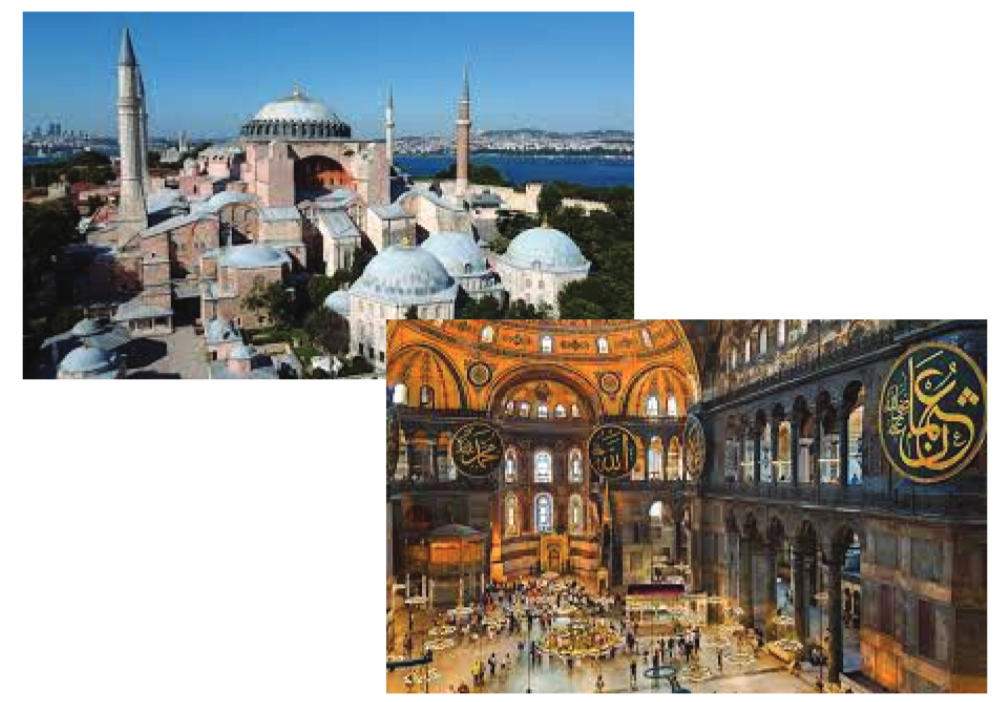
Hagia Sophia!
(Unit 3 Chapter 9: Byzantine (c. 330 CE - 1453 CE)) #52: Hagia Sophia!
Location
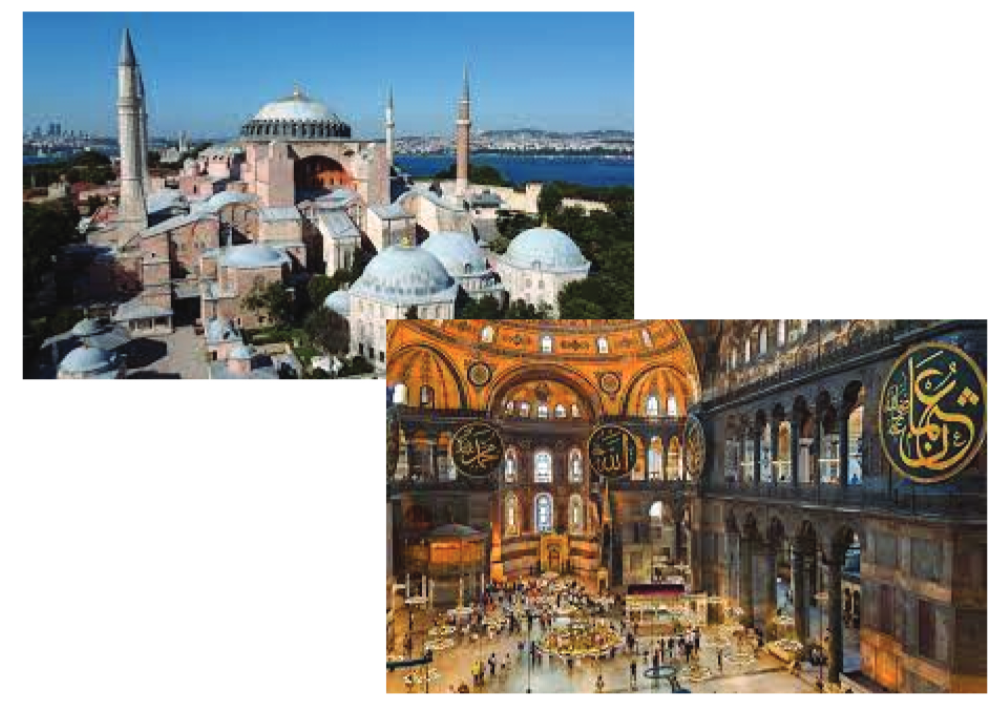
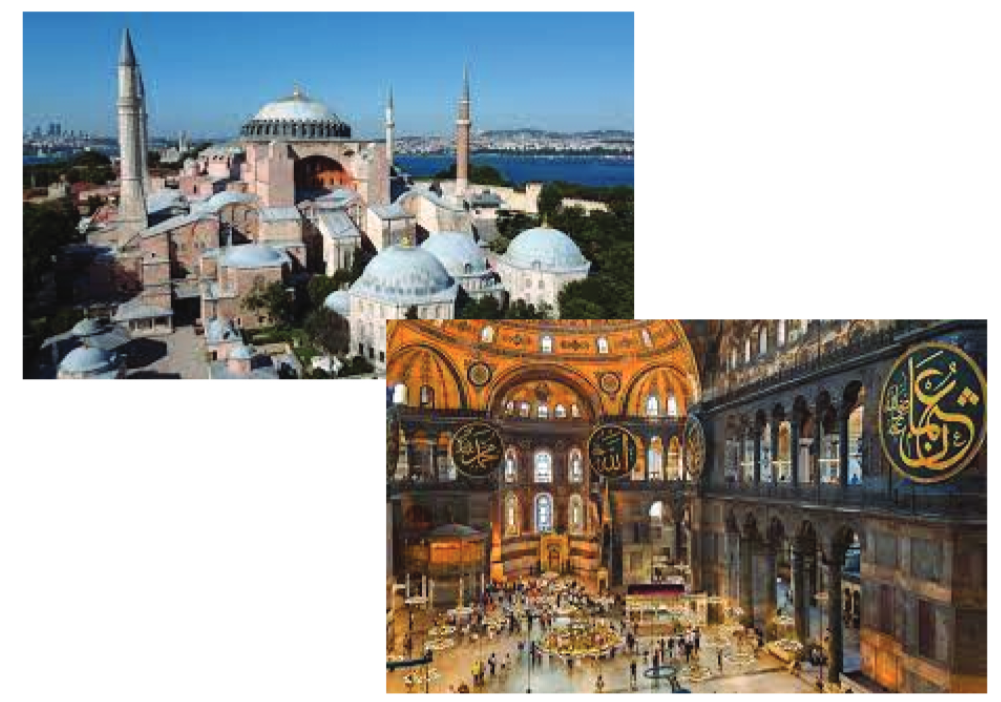
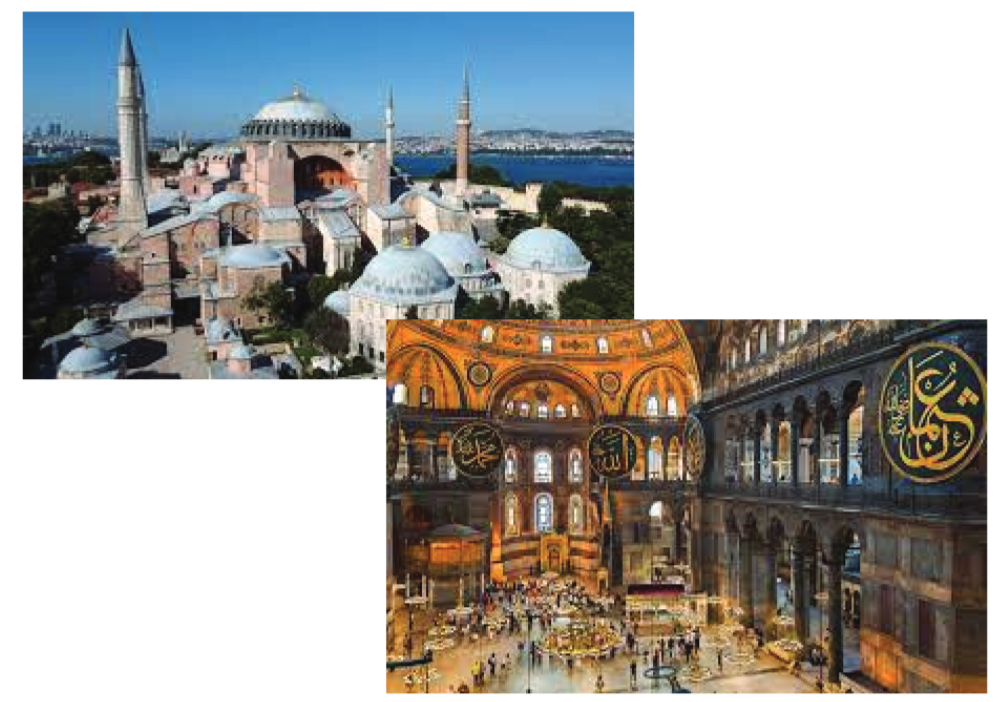
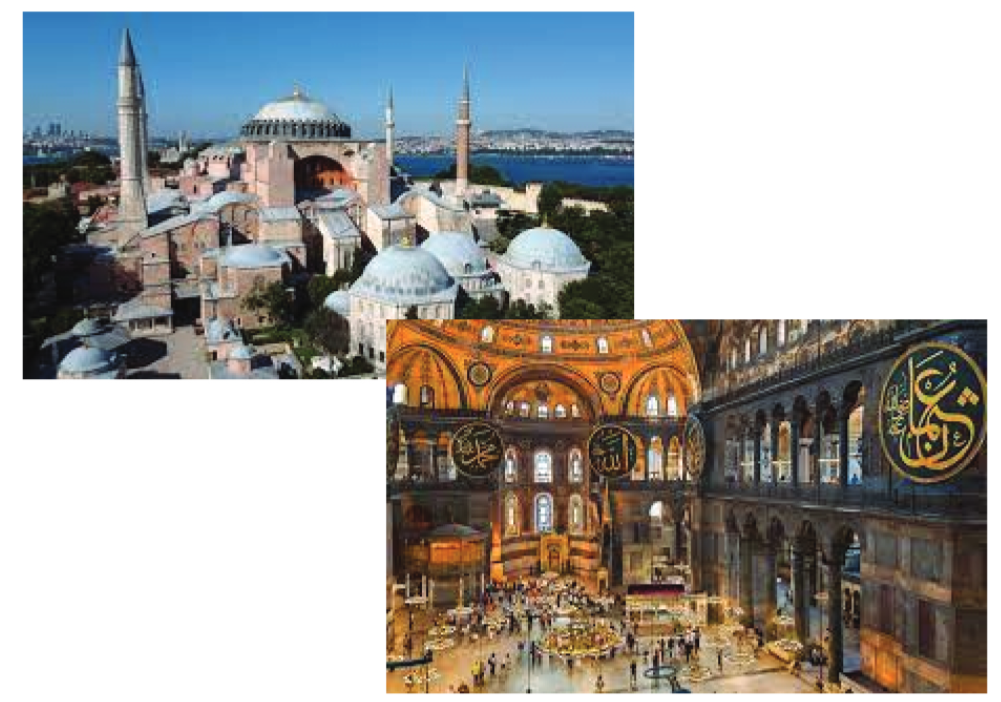
Istanbul, Turkey (Constantinople)
(Unit 3 Chapter 9: Byzantine (c. 330 CE - 1453 CE)) #52: Hagia Sophia!
Era
Byzantine Art
(Unit 3 Chapter 9: Byzantine (c. 330 CE - 1453 CE)) #52: Hagia Sophia!
Artist
Anthemius of Tralles & Isidorus of Miletus
(Unit 3 Chapter 9: Byzantine (c. 330 CE - 1453 CE)) #52: Hagia Sophia!
Form
ceramic, stone, mosaic
(Unit 3 Chapter 9: Byzantine (c. 330 CE - 1453 CE)) #52: Hagia Sophia!
Patron
Justinian & The odora
(Unit 3 Chapter 9: Byzantine (c. 330 CE - 1453 CE)) #52: Hagia Sophia!
Date
532-537 C.E.
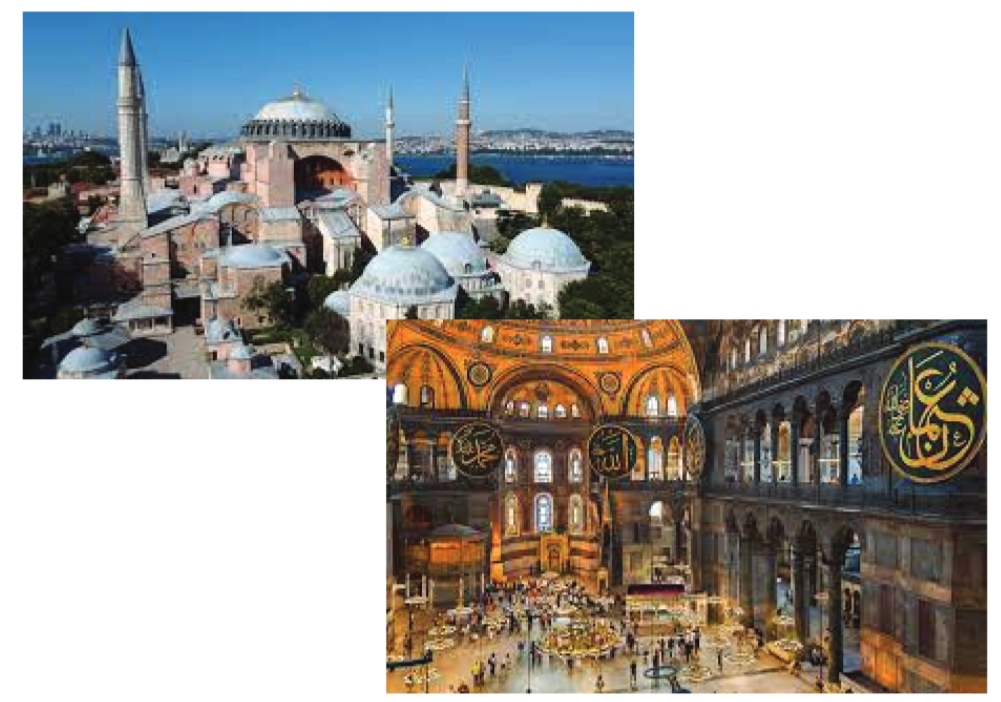
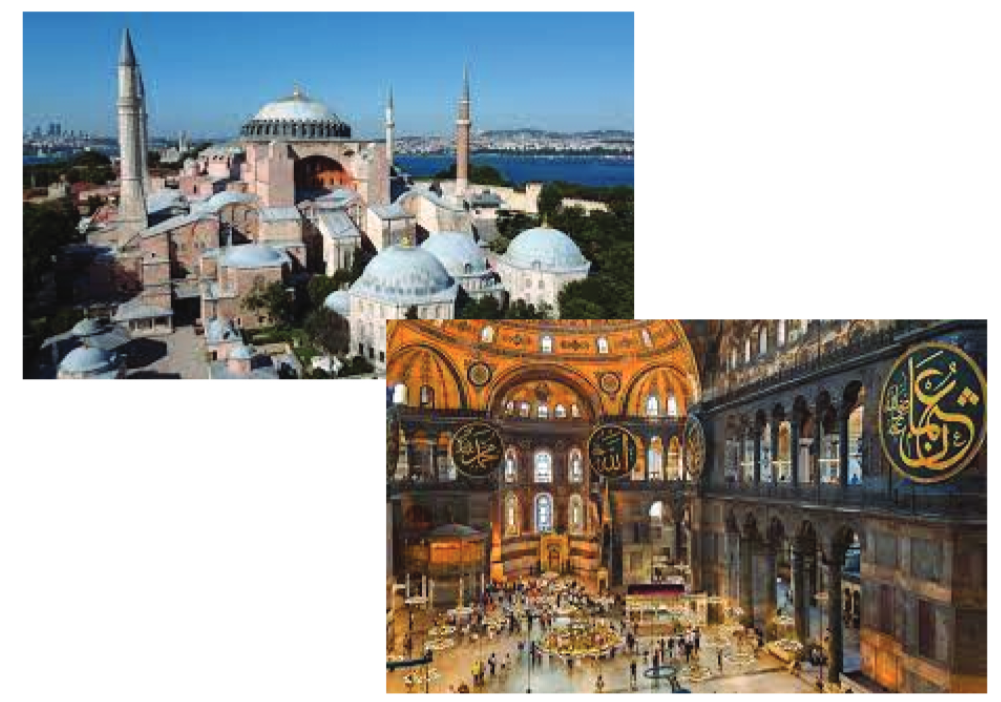
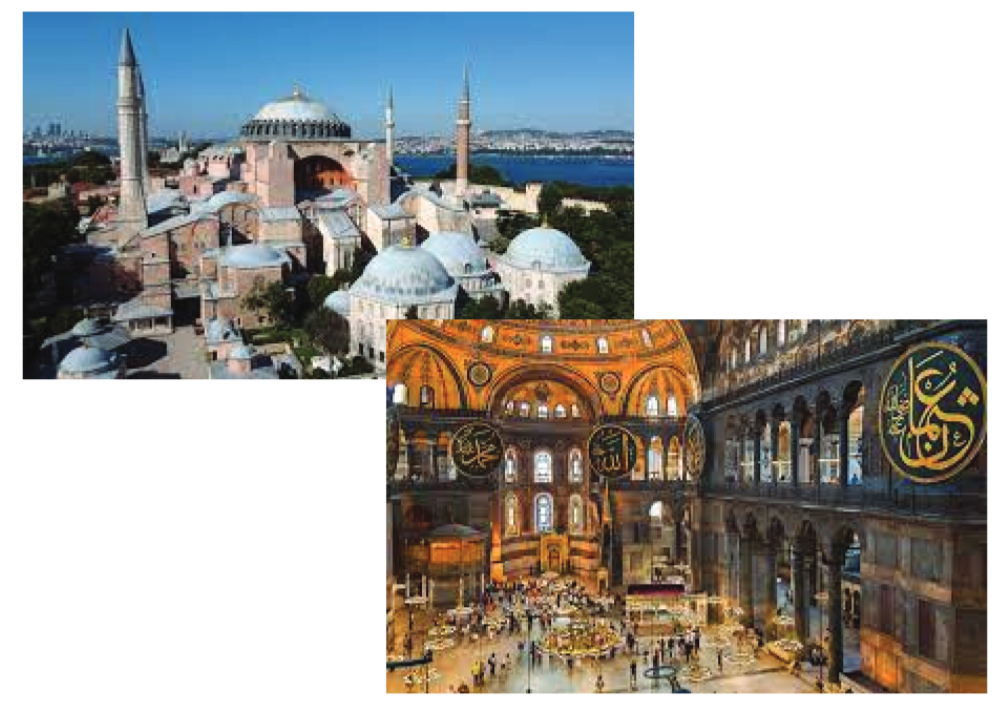
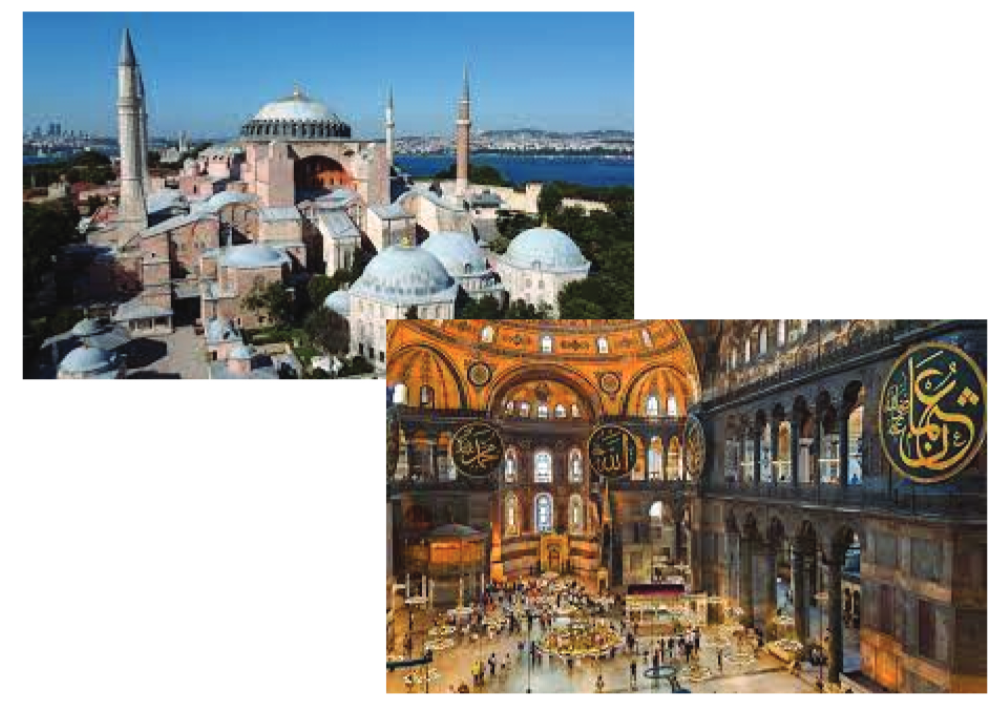
(Unit 3 Chapter 9: Byzantine (c. 330 CE - 1453 CE)) #52: Hagia Sophia!
Function
central & basilica planned church
later a mosque (Sultan Mehmed II) to symbolize triumph of Islam over West & Christianity
(Unit 3 Chapter 9: Byzantine (c. 330 CE - 1453 CE)) #52: Hagia Sophia!
Vocabulary: PIER
a vertical support for a pendentive that holds up an arch or vault
(Unit 3 Chapter 9: Byzantine (c. 330 CE - 1453 CE)) #52: Hagia Sophia!
Vocabulary: PENDENTIVE
a triangle shaped transition b/w flat walls & the base of a round dome
(Unit 3 Chapter 9: Byzantine (c. 330 CE - 1453 CE)) #52: Hagia Sophia!
Vocabulary: MIHRAB
indicates direction of prayer/Mecca
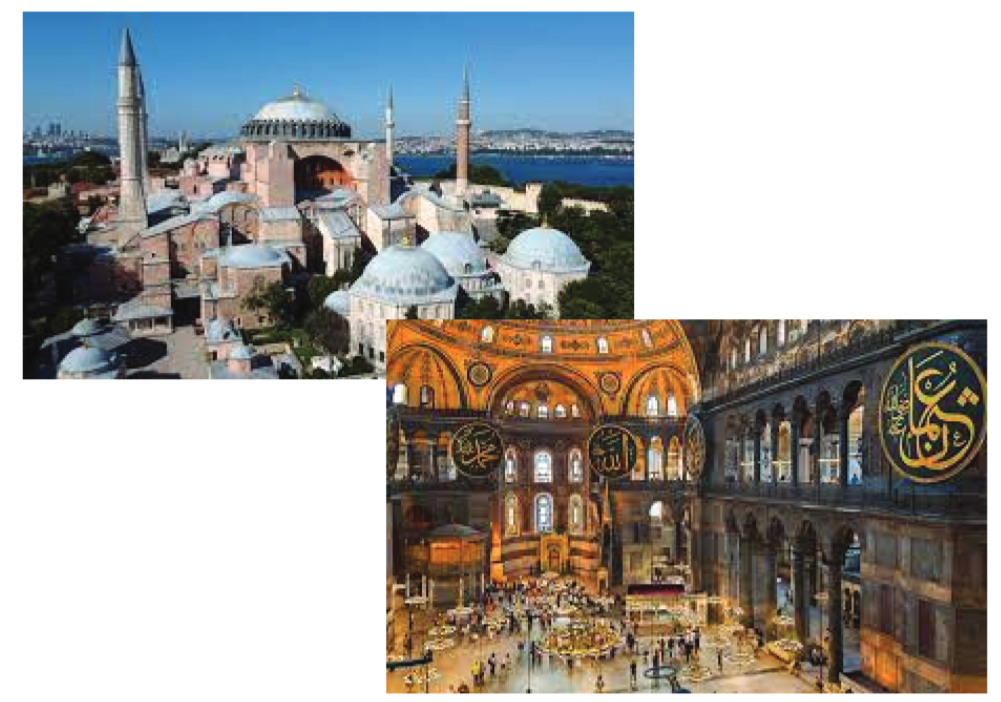
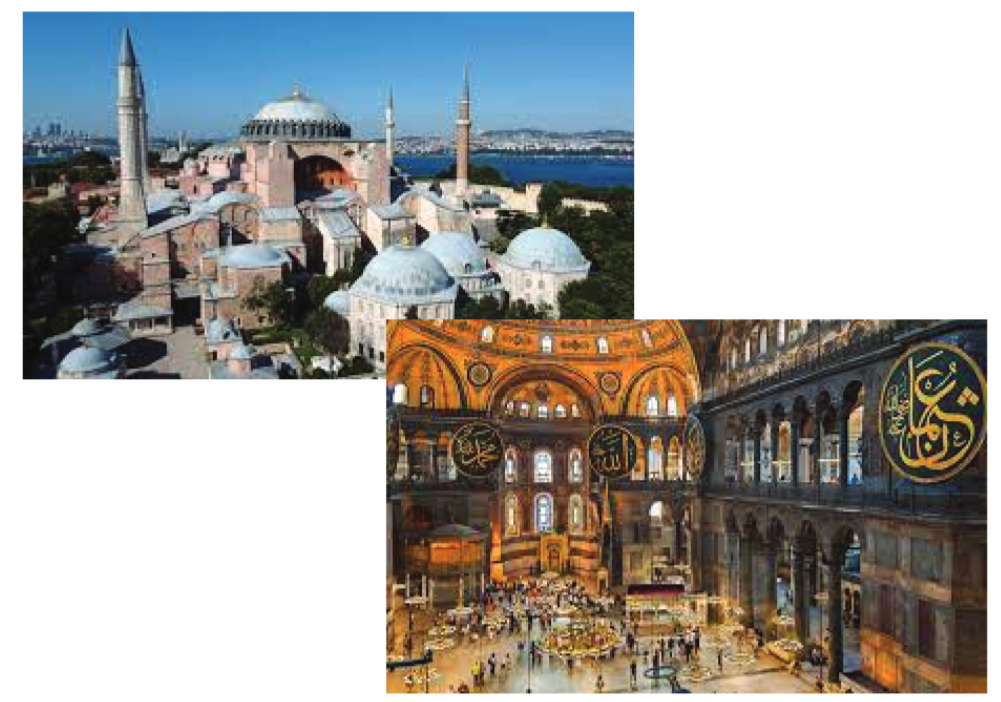
(Unit 3 Chapter 9: Byzantine (c. 330 CE - 1453 CE)) #52: Hagia Sophia!
Vocabulary: MINARETS
towers to call people to worship (Islam)
(Unit 3 Chapter 9: Byzantine (c. 330 CE - 1453 CE)) #52: Hagia Sophia!
Vocabulary: DEESIS
prayer
(Unit 3 Chapter 9: Byzantine (c. 330 CE - 1453 CE)) #52: Hagia Sophia!
Vocabulary: PANTOKRATER
ruler of the world (Christ in Majesty)
(Unit 3 Chapter 9: Byzantine (c. 330 CE - 1453 CE)) #52: Hagia Sophia!
Content (visual evidence)
windows & light (power & faith)
layers of colonnades & arcades for height
iconographical mosaics
grand display of power by Justinian… shows he is the Emperor and head of church (under God)
Theotokos Mosaic:
Theotokos: one who gives birth to Christ located in the APSE
Madonna & Child: Virgin Mary & baby JC on lap
4 minarets
Deesis Mosaic, located in the South gallery
Pantokrater enthroned, carrying a book, with Mary & Saint J.C.
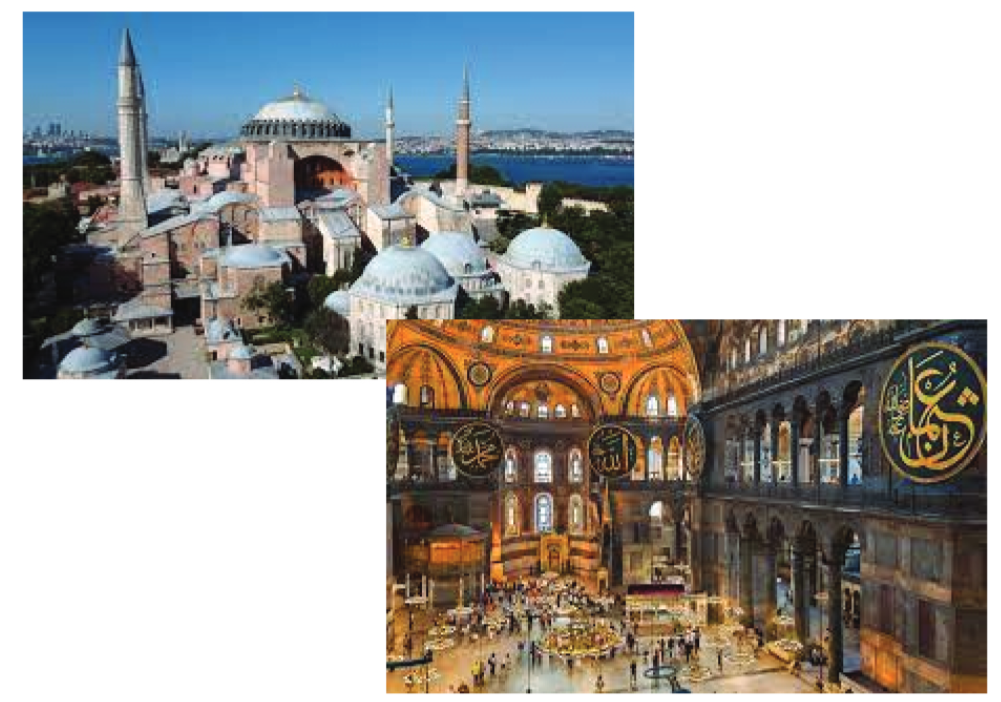
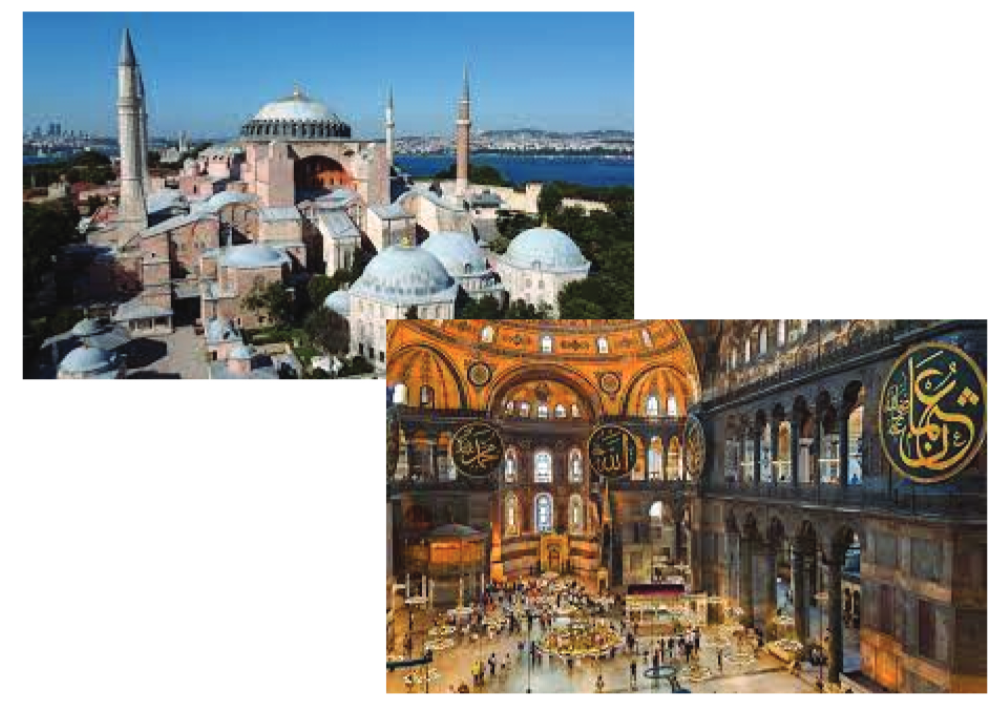
encouraging prayer calligraphy medallions (Allah, Muhammad)
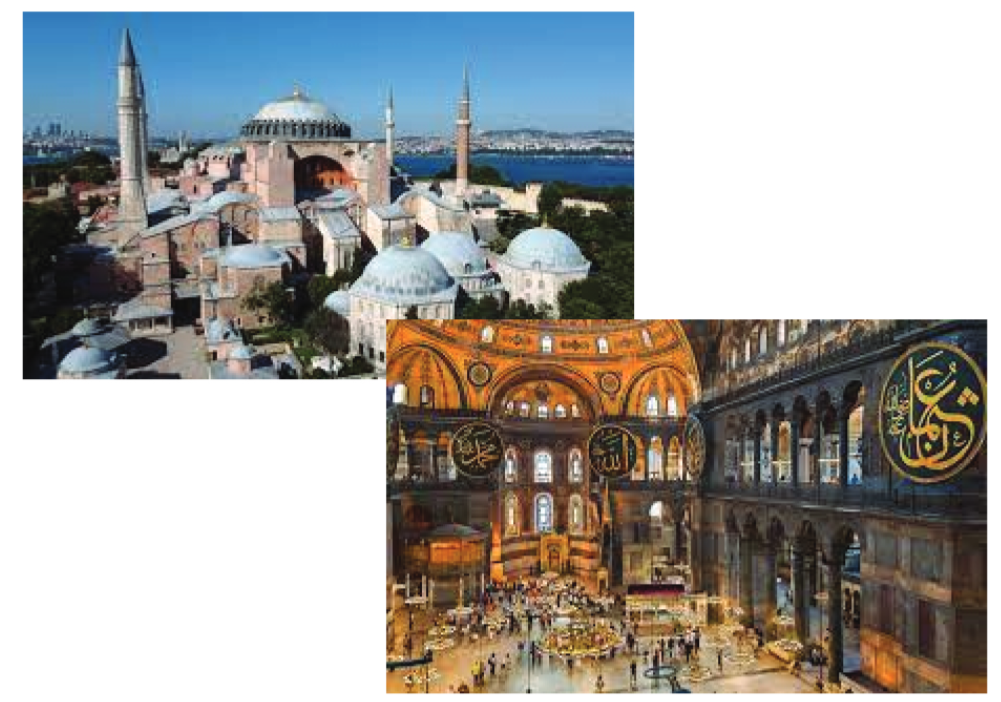
(Unit 3 Chapter 9: Byzantine (c. 330 CE - 1453 CE)) #52: Hagia Sophia!
Context (what is happening historically)
burned down twice (riots against Justinian) so this is the 3rd version
largest dome of the time
Deesis Mosaic covered when became a mosque
why a bunch is missing
(Unit 3 Chapter 9: Byzantine (c. 330 CE - 1453 CE)) Name this piece!
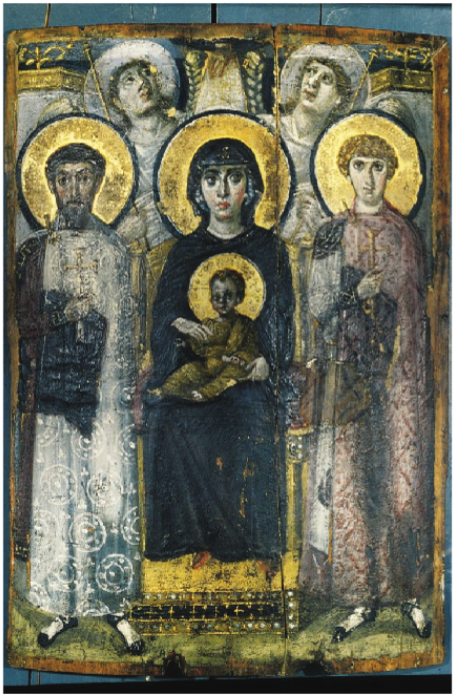
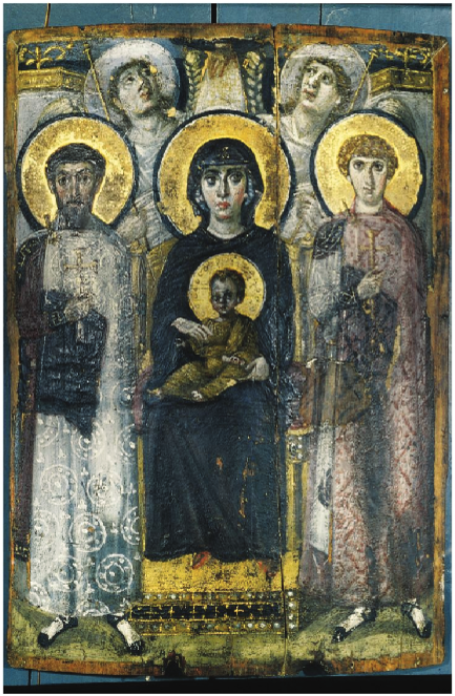
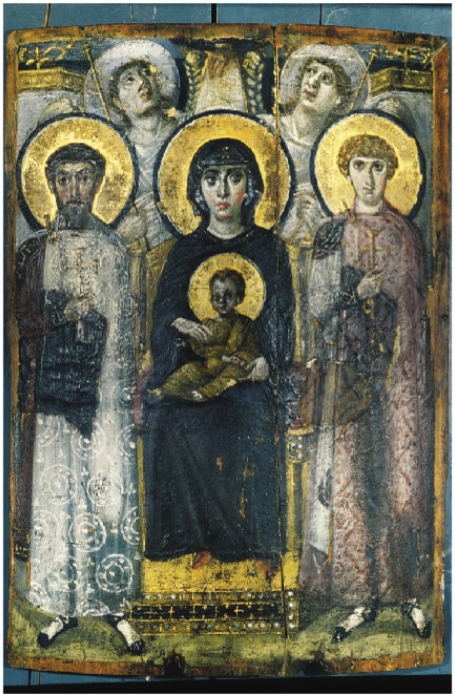
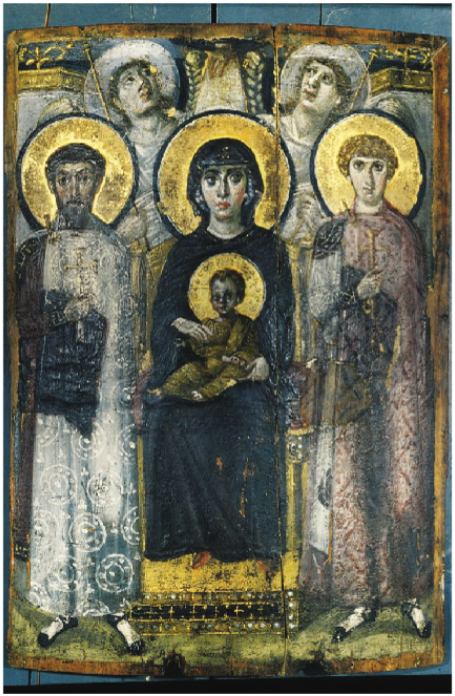
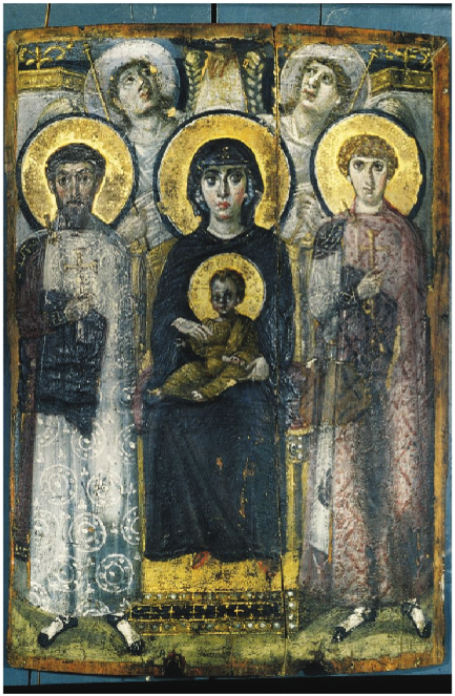
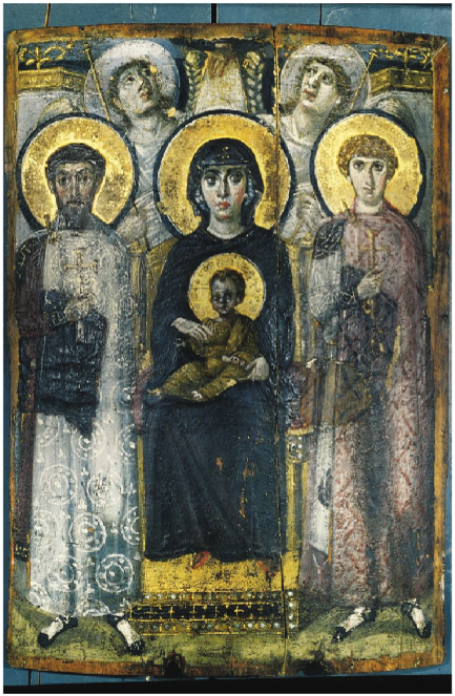
Virgin Theotokos & Child b/w Saints Theodore & George!
(Unit 3 Chapter 9: Byzantine (c. 330 CE - 1453 CE)) #54: Virgin Theotokos & Child b/w Saints Theodore & George!
Location
monastery of St. Catherine
Mount Sinai, Egypt
(Unit 3 Chapter 9: Byzantine (c. 330 CE - 1453 CE)) #54: Virgin Theotokos & Child b/w Saints Theodore & George!
Era
Byzantine Art
(Unit 3 Chapter 9: Byzantine (c. 330 CE - 1453 CE)) #54: Virgin Theotokos & Child b/w Saints Theodore & George!
Artist
unknown
(Unit 3 Chapter 9: Byzantine (c. 330 CE - 1453 CE)) #54: Virgin Theotokos & Child b/w Saints Theodore & George!
Form
Encaustic on wood
(Unit 3 Chapter 9: Byzantine (c. 330 CE - 1453 CE)) #54: Virgin Theotokos & Child b/w Saints Theodore & George!
Patron
unknown

(Unit 3 Chapter 9: Byzantine (c. 330 CE - 1453 CE)) #54: Virgin Theotokos & Child b/w Saints Theodore & George!
Date
Early 7th century
(Unit 3 Chapter 9: Byzantine (c. 330 CE - 1453 CE)) #54: Virgin Theotokos & Child b/w Saints Theodore & George!
Function
Devotional object for an altar
(Unit 3 Chapter 9: Byzantine (c. 330 CE - 1453 CE)) #54: Virgin Theotokos & Child b/w Saints Theodore & George!
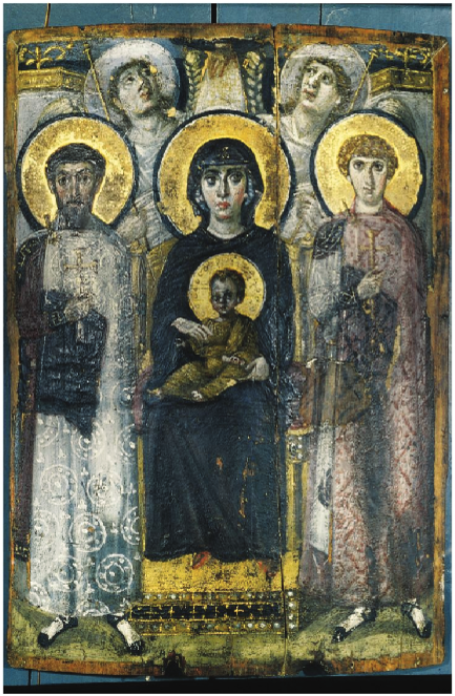
Vocabulary: ENCAUSTIC
type of painting where pigments are added to wax & affixed on a surface
(Unit 3 Chapter 9: Byzantine (c. 330 CE - 1453 CE)) #54: Virgin Theotokos & Child b/w Saints Theodore & George!
Content (visual evidence)
Halos & gold show DIVINITY
Theotokos = Throne of Wisdom (JC = wisdom of salvation)
Frontal/balanced/symbolic (no naturalism)
compositional movement (In & Up)
T = left, G = right
angels of hand of God above

(Unit 3 Chapter 9: Byzantine (c. 330 CE - 1453 CE)) #54: Virgin Theotokos & Child b/w Saints Theodore & George!
Context (what is happening historically)
T & G are soldier saints
monasteries are sites of artistic production (books & more!)
3 “Sections” (maybe 3 diff artists??)
Mary & JC
T & G
Angels & God’s Hand
(Unit 3 Chapter 10: Early Medieval (c. 500 CE - 1000 CE))
c. 400-800 CE
________, _________ _________ by tribes, like the Visigoths, Lombards, Anglo-Saxons
Hiberno-Saxon / Insular Art (c. 600-900 CE)
________ _______ in British Isles (Ireland, England). Famous for ___________ ___________ with _________ ________ and _________ _________
Carolingian Renaissance (c. 768-877 CE)
(under Charlemagne and successors) Revival of _________ ______ ______ in architecture and manuscripts
Ottonian Art (c. 919-1024 CE)
Germanic empire that continued Carolingian traditions. Emphasis on __________ _________ and __________ __________ ________.
Portable, intricate, metalwork
Monastic culture
illuminated manuscripts
interlace patterns
Christian iconography
classical Roman forms
monumental sculpture
expressive religious imagery
(Unit 3 Chapter 10: Early Medieval (c. 500 CE - 1000 CE)) Name this piece!
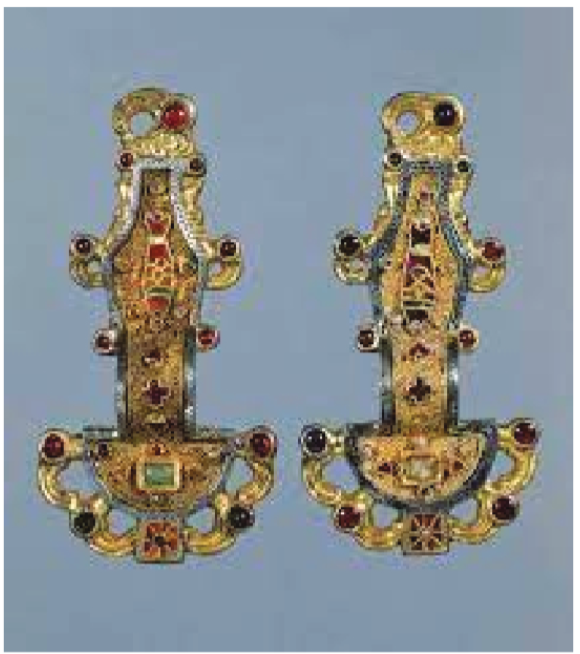
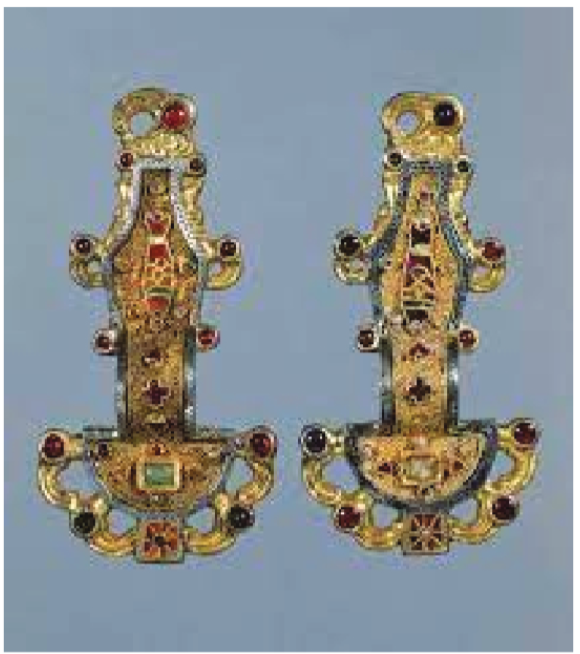
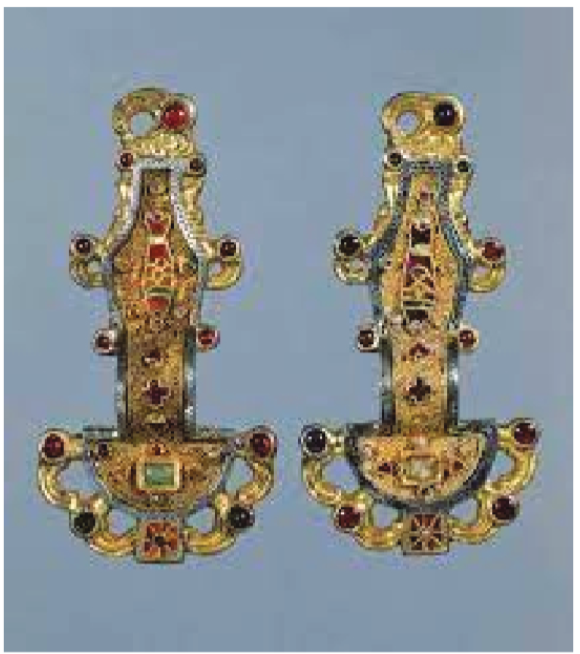
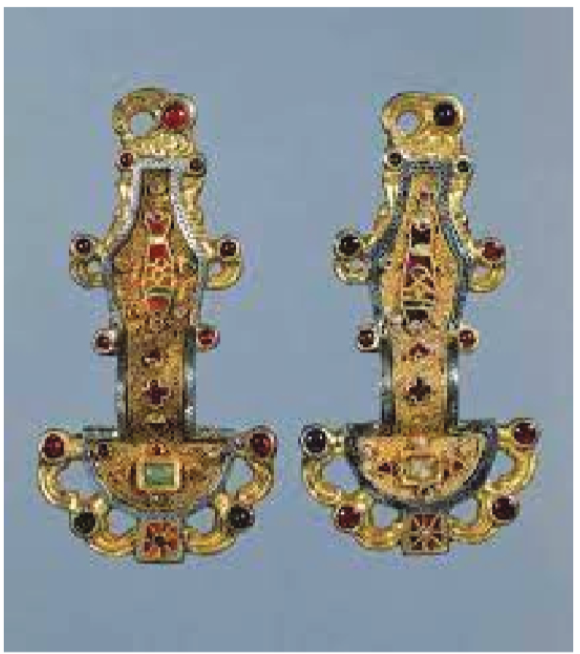
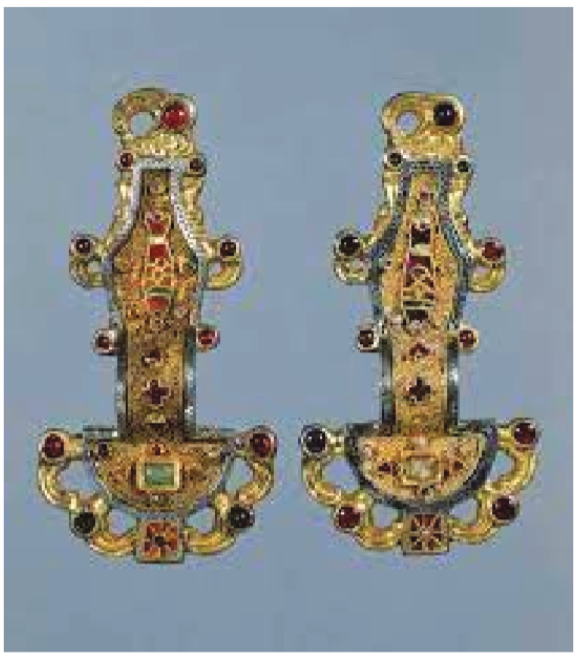
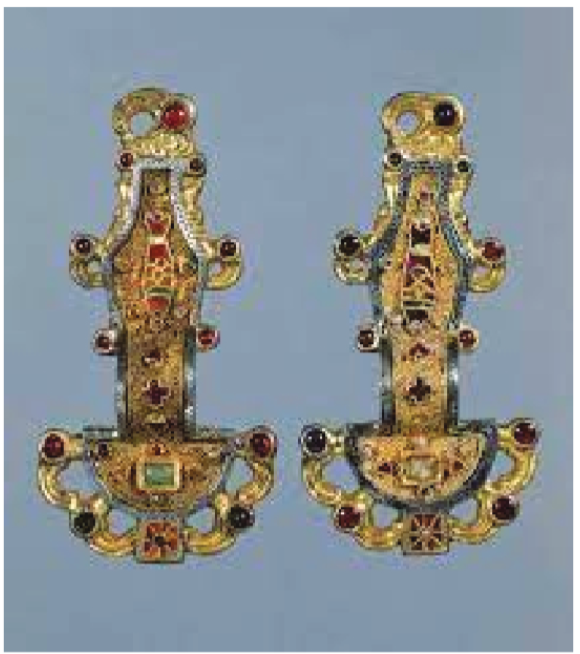
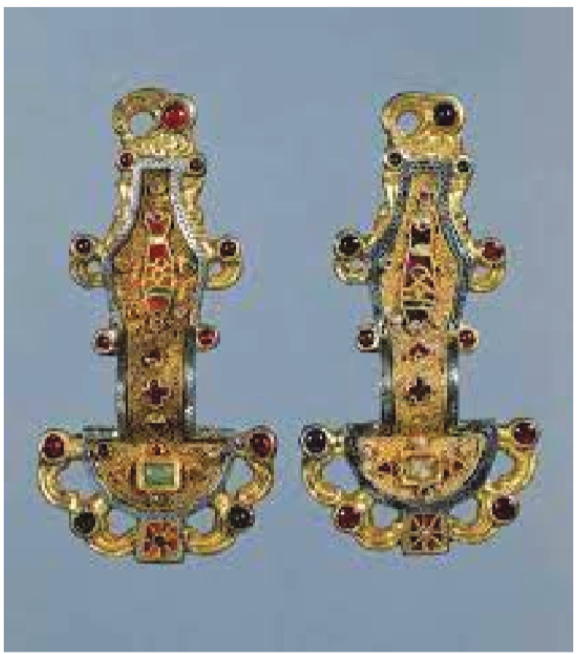
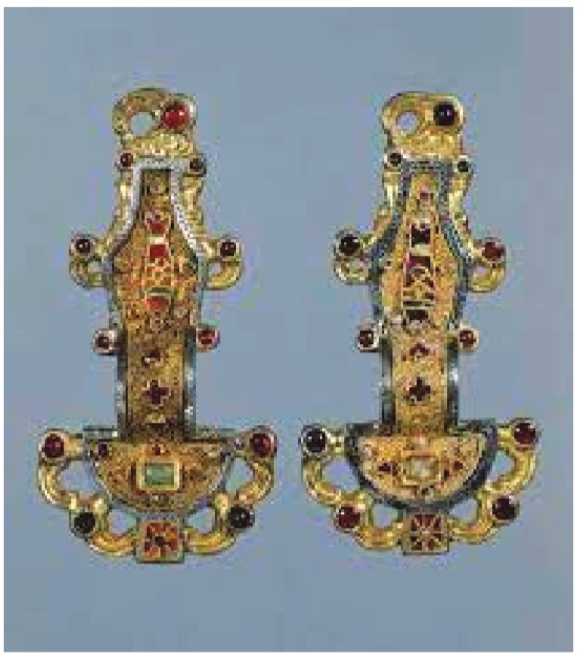
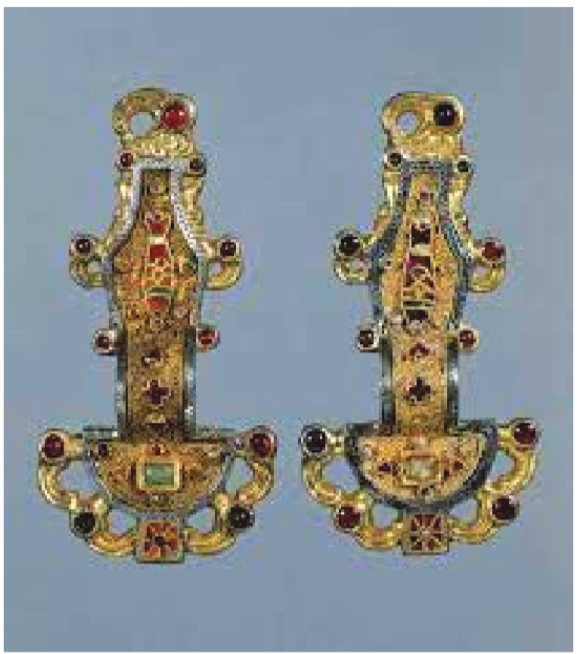
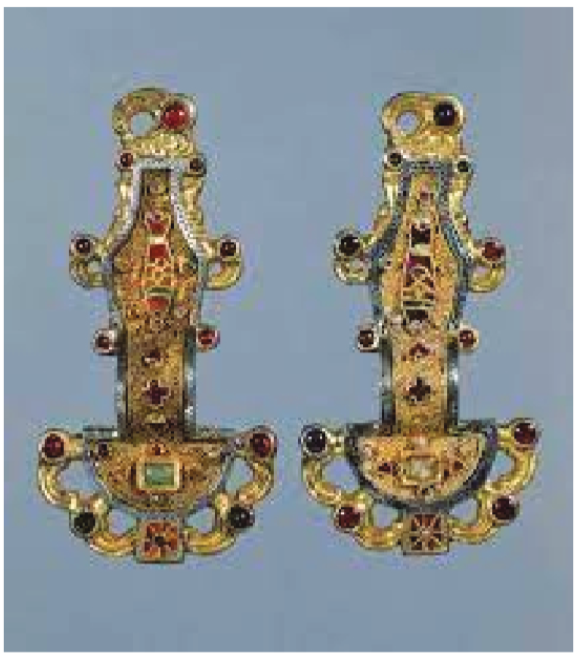
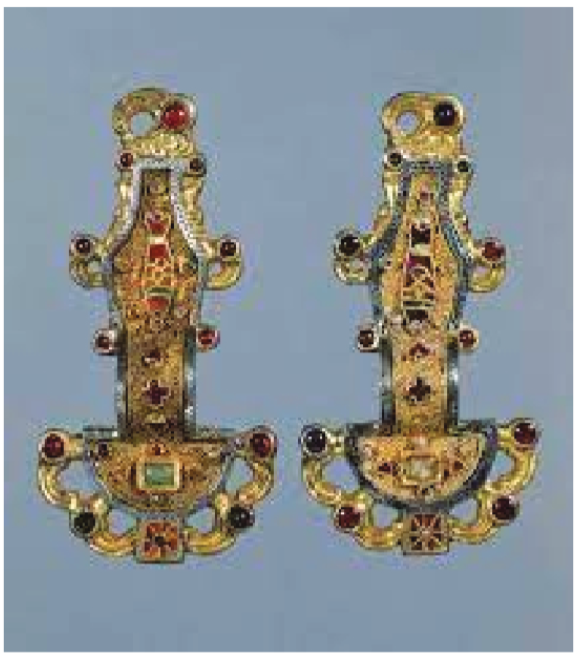
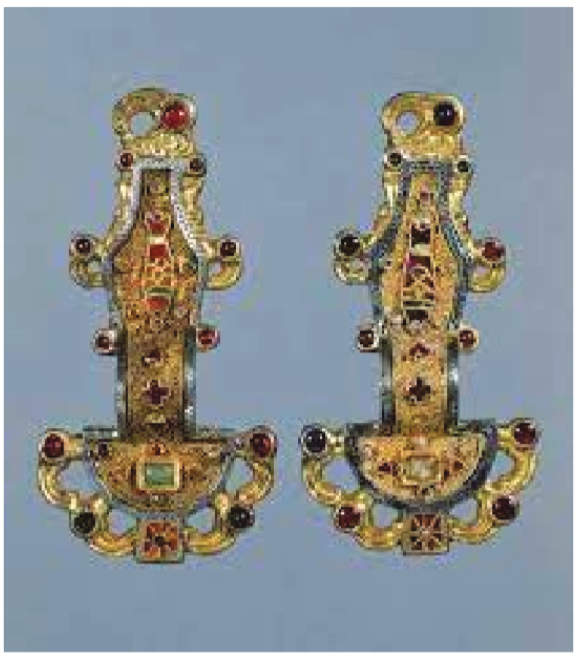
(Frankish) Merovingian Looped Fibula!
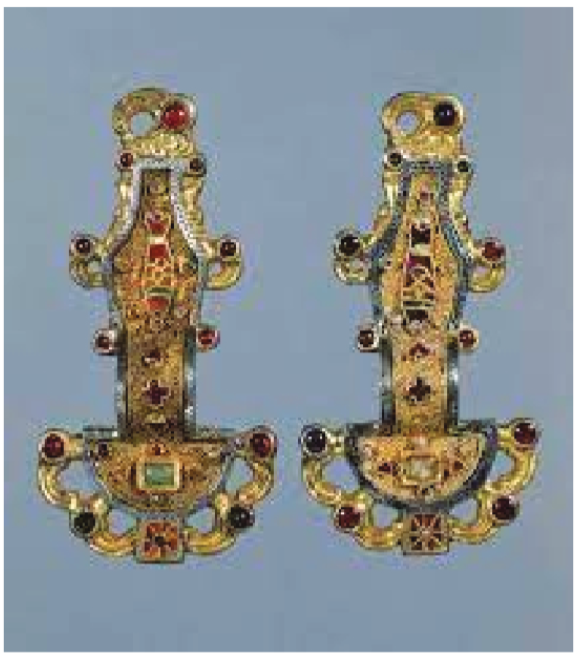
(Unit 3 Chapter 10: Early Medieval (c. 500 CE - 1000 CE)) #53: (Frankish) Merovingian Looped Fibula
Location
Arles, France
(Unit 3 Chapter 10: Early Medieval (c. 500 CE - 1000 CE)) #53: (Frankish) Merovingian Looped Fibula
Era
Early Medieval Art
(Unit 3 Chapter 10: Early Medieval (c. 500 CE - 1000 CE)) #53: (Frankish) Merovingian Looped Fibula
Artist
unknown
(Unit 3 Chapter 10: Early Medieval (c. 500 CE - 1000 CE)) #53: (Frankish) Merovingian Looped Fibula
Form
silver (base)
gilt (covered in gold) w/ garnet & stone inlay
(Unit 3 Chapter 10: Early Medieval (c. 500 CE - 1000 CE)) #53: (Frankish) Merovingian Looped Fibula
Patron
unknown
(Unit 3 Chapter 10: Early Medieval (c. 500 CE - 1000 CE)) #53: (Frankish) Merovingian Looped Fibula
Date
550 C.E.
(Unit 3 Chapter 10: Early Medieval (c. 500 CE - 1000 CE)) #53: (Frankish) Merovingian Looped Fibula
Function
clasp used to fasten a garment (at the shoulder)
(Unit 3 Chapter 10: Early Medieval (c. 500 CE - 1000 CE)) #53: (Frankish) Merovingian Looped Fibula
Vocabulary: MEROVINGIAN
related to the Frankish dynasty, founded by ruler Clovis, & occupying Gaul & Germany
(Unit 3 Chapter 10: Early Medieval (c. 500 CE - 1000 CE)) #53: (Frankish) Merovingian Looped Fibula
Vocabulary: CLOISONNE
color enamel/stone separated by thin bands of metal
(Unit 3 Chapter 10: Early Medieval (c. 500 CE - 1000 CE)) #53: (Frankish) Merovingian Looped Fibula
Content (visual evidence)
Chasing technique
ornamenting metal by indenting in to the surface (similar to incising in stone)
zoomorphic imagery
eagle (OG → pagan symbol… now for St. John)
fish (JC story!)
(Unit 3 Chapter 10: Early Medieval (c. 500 CE - 1000 CE)) #53: (Frankish) Merovingian Looped Fibula
Context (what is happening historically)
Luxury item
found in a grave… but connected to daily life (practice & functional)
& less funerary
reveals more about real people & the way they dressed at this time!
(Unit 3 Chapter 10: Early Medieval (c. 500 CE - 1000 CE)) #53: (Frankish) Merovingian Looped Fibula
Draw the Art!