Environmental Science and Engineering
 Call Kai
 Learn
Learn Practice Test
 Spaced Repetition
 Match
Match Flashcards
 Knowt Play
1/113

There's no tags or description
Looks like no tags are added yet.
Name | Mastery | Learn | Test | Matching | Spaced | Call with Kai | Chat |
|---|
No analytics yet
Send a link to your students to track their progress
114 Terms

Branch of science that deals with the relations of organisms to one another and to their physical surroundings
Biotic Factors
Living Factors
Abiotic Factors
Non-living factors
Biotic Factors include
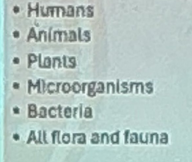
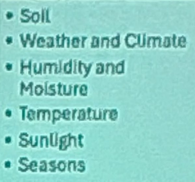
Abiotic Factors include
Population
same species living together
Community
Different species living together
Food chain
Linear simplified model showing a single path of energy flow through an ecosystem
Food web
More complex and realistic representation of interconnected food chains, showing multiple pathways of energy flow within an ecosystem
Ecosystem includes
Abiotic and Biotic Factors
Biosphere subtypes
Lithosphere
Hydrosphere
Atmosphere
Living Things
10%
Energy consumed per level of consumers
APEX Predators
Mga hindi nagiging prey
Autotrophs
Other name for producers
Herbivores
Primary Consumers
Omnivors
Secondary Consumers
Carnivores
Tertiary Consumers
Black body
perfect absrober
Community purpose
This is where predator-prey dynamics and resource competition are occuring
First
Trophic level that supports all subsequent feeding levels
Hydrologic / Water Cycle
Involves the continuous movement of water between the atmosphere, land, and bodies of water
Evaporation, Condensation, Precipitation, Collection
Processes in the Water Cycle
Rain, snow, hail, sleet
forms of precipitate
forms of collection in water cycler
runoff, infiltration, percolation
Carbon Cycle
Helps regulate the Earth’s climate by balancing the levels of carbon dioxide in the atmosphere
Sources of Carbon
Animals, Plants, Atmosphere, Fossil Fuels
Processes in the Carbon Cycle
Photosynthesis, Respiration, Decomposition, Combustion
Nitrogen cycle
Crucial for the availability of nitrogen, and essential nutrient for living organisms
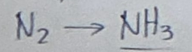
Nitrogen Fixation reaction
Nitrification reaction
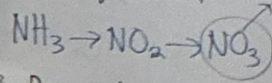
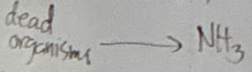
Ammonification reaction
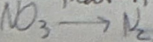
Denitrification reaction
Oxygen Cycle
Occurs in plants and algae where they release oxygen as a byproduct
Photosynthesis reaction

Respiration reaction

Evaporation
Solar radiation directly drives this massive oceanic phase change
Forms of Condensation
Fog, dew, cloud
Percolation
Downward absorption of surface moisture into deep underground aquifiers
Nitrogen fixation by bacteria
Primary way nitrogen is made available to plants
Lighting strikes
Extreme atmospheric event possesses enough energy to naturally split N2 molecules
Roles of decomposers in nitrogen cycle
Return nitrogen to the soil from dead organism
Specific pathway that converts nitrogenous compounds into simpler ammonia
Ammonification
Composition of the nitrogen in the atmosphere
78%
Composition of the oxygen in the atmosphere
21%
Composition of argon in the atmosphere
0.93%
Composition of the carbon dioxide in the atmosphere
0.04%
Troposphere distance
0-7 miles (0.11km) above surface
Troposphere
This is the layer where 75% of the atmosphere’s mass is measured
Altitude and temperature relationship troposphere
As altitude increases, temperature decreases
Maximum temperature at the top of the troposphere
-76°F (-60°C)
Troposphere includes
Where weather / meteorological phenomena occurs
Altitude and temperature relationship in the stratosphere
As altitude increases, temperature increases due to the absorption of UV radiation by ozone
Stratosphere includes
Ozone is present in this layer.
Ozone
Produces by UV radiation and lightning
Altitude and temperature relationship in the Mesosphere
As altitude increases, the temperature decreases
Mesosphere includes
Coldest layer (mesopause) where ice clouds occur and this is where meteors burn up
Altitude and temperature relationship in the Thermosphere (Ionosphere)
As the altitude increases, the temperature increases due to gamma rays, X-rays, UV radiation.
Thermosphere includes
Molecules converted into ions which results in the Aurora Borealis in the Northern Hemisphere and Aurora Australis in the Southern Hemisphere.
This is also where we are protected from extreme UV radiation and reflects radio waves
As elevation rises, air pressure ___
continuous to drop
Infrared radiation
Energy emitted by the earth and trapped by the GHGs
Greenhouse Gases
Gases in the atmosphere that trap heat.
They let sunlight pass but prevent heat from the sunlight from leaving the atmosphere.
Natural GHG
Water Vapor, Carbon Dioxide
Anthropogenic (Man-made) GHG
Methane, Nitrous Oxide (N2O), Ozone, CFCs
Most abundant natural GHG
Water Vapor
Most abundant anthropogenic (man-made) GHG
Methane GHG
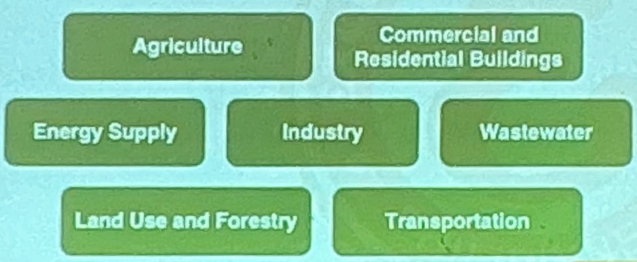
Sources of GHG
Methane
GHG emitted during the production and transport of coal, oil and natural gas
Byproduct of livestock farming, rice cultivation, and decomposition of organic waste in landfills
Eutrophication
Ecological process where the body of water becomes overly enriched with minerals and nutrients that results in the excessive growth of algae and ultimately leading to hypoxia
Hypoxia
condition in which the dissolved oxygen (DO) concentration in a body of water is too low to support most aquatic life.
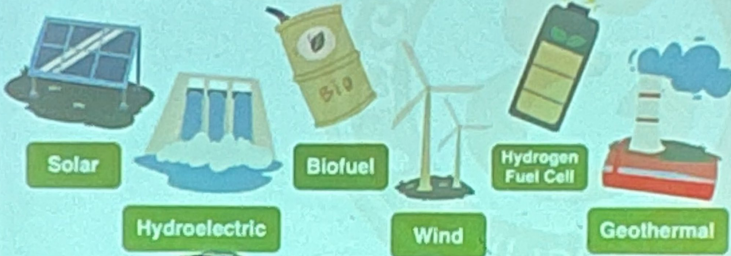
Forms of renewable energy sources



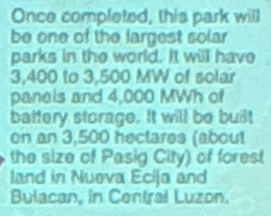

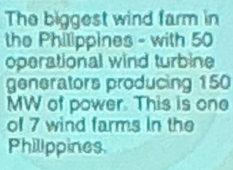
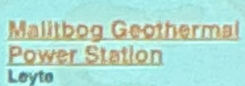
Forms of Non-renewable energy sources
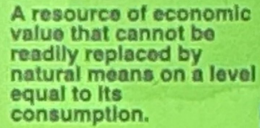
Fossil fuels: Oil, natural gas, and coal since they take billions of years to form
Solid fossil fuel
Coal
Liquid fossil fuel
Oil
Gas fossil fuel
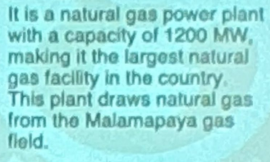
Natural Gas, Hydrocarbons
CH4
Methane
C2H6
Ethane
C3H8
Propane
C4H10
Butane

Nuclear fission
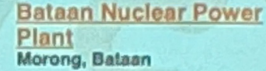
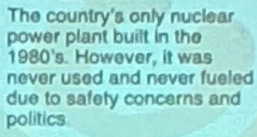
An atom splits into 2 or more smaller nuclei along with by-product particles (neutrons, photons, gamma rays, and alpha and beta particles)
Type of source of nuclear fission
Non-renewable, The heat produces is used to produce steam that turns generators that then produce electricity
Type of heat process is nuclear fission
Exothermic
Type of source of nuclear fusion
Renewable
Nuclear fusion
Occur when extremely high temperatures are used to force nuclei of isotopes of lightweight atoms to fuse together, which causes large amounts of energy to be released.
Advantage of nuclear fusion
Abundant fuel supply, no air pollution, no high-level nuclear waste
Mass Defect
Difference between the mass of an atomic nucleus and the sum of the masses of its constituent protons and neutrons where the missing mass is converted into Energy
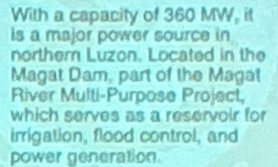
Advantage of hydroelectric power pant
Low pollution, control flooding, relatively low operating cost
Methane Hydro Carbon
Dominant, lightest hydrocarbon molecule found in naturally occurring gas reserve
Nuclear energy
Major electricity generating source where there is a low environmental impact, high performance, no greenhouse gas emissions, can supply power anytime
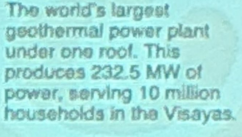
Renewable energy source independent of the sun and has ultimate sourvce within earth
Geothermal energy
Biomass
Energy derived from organic matter: agricultural crops, forestry residues, and organic waste.
Used to produce heat, electricity or biofuels
EIA Environmental Impact Assessment
Process used to predict and evaluate the potential environmental impacts of a proposed project
Environmentally Critical Areas (ECAs)