Lecture 4: Introduction to Equine Farriery & Shoeing
 Call Kai
 Learn
Learn Practice Test
 Spaced Repetition
 Match
Match Flashcards
 Knowt Play
1/44

There's no tags or description
Looks like no tags are added yet.
Name | Mastery | Learn | Test | Matching | Spaced | Call with Kai | Chat |
|---|
No analytics yet
Send a link to your students to track their progress
45 Terms
What is the hoof wall?
the outer layer of the hoof made of keratin that functions as the weight bearing structure and grows about 6-9mm per month
What is the periople?
top protective layer for coronary band (part of the hoof wall)
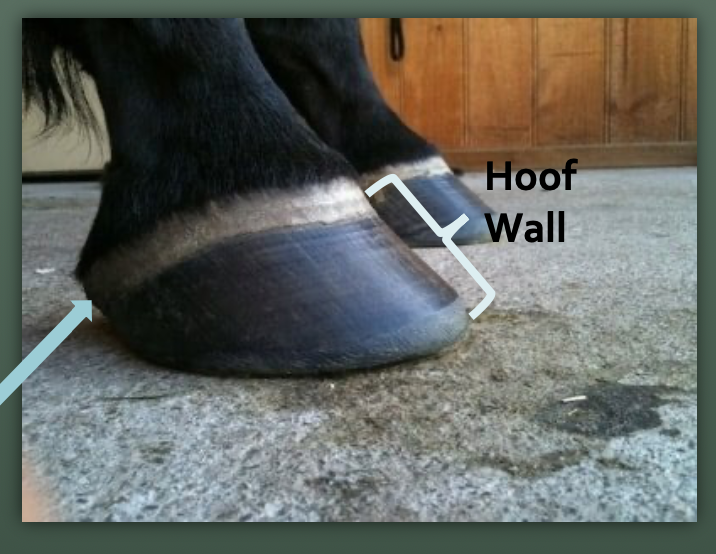
What is the junction of hair and keratinized tissue of the hoof?
coronary band
What is the area where the hoof “breaks over?
toe
Which area of the hoof is a common source of cracking with imbalanced trimming?
quarter
Which part of the hoof expands and contracts with weight bearing for shock absorption?
heel
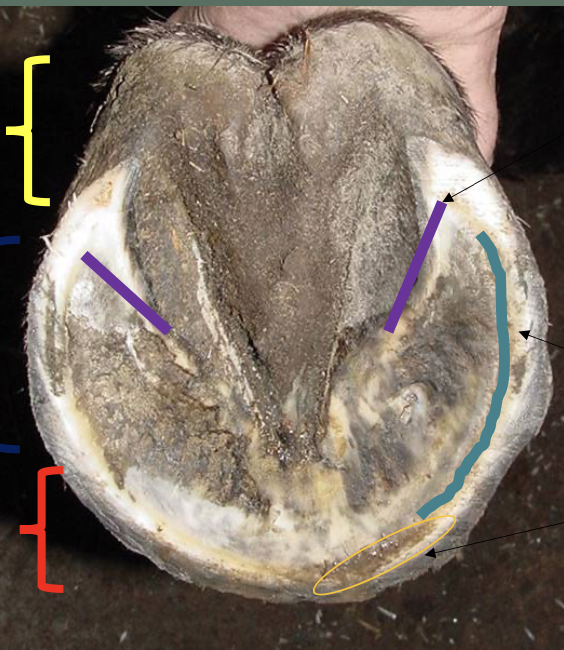
What are the three black arrows indicating?
top: bars - prevent heel from spreading too much
middle: white line
bottom: white line separation → site for bacteria to enter and can set up an infection (white line disease)
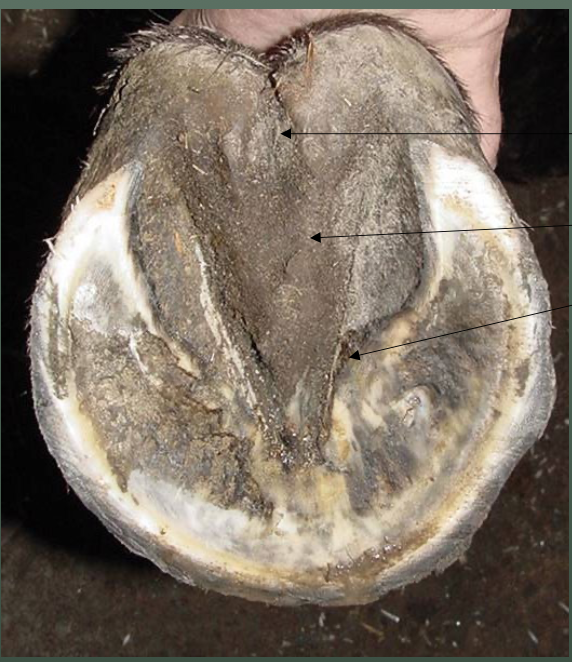
What are these three areas of the hoof?
top arrow: central sulcus
middle: frog
bottom: collateral sulci
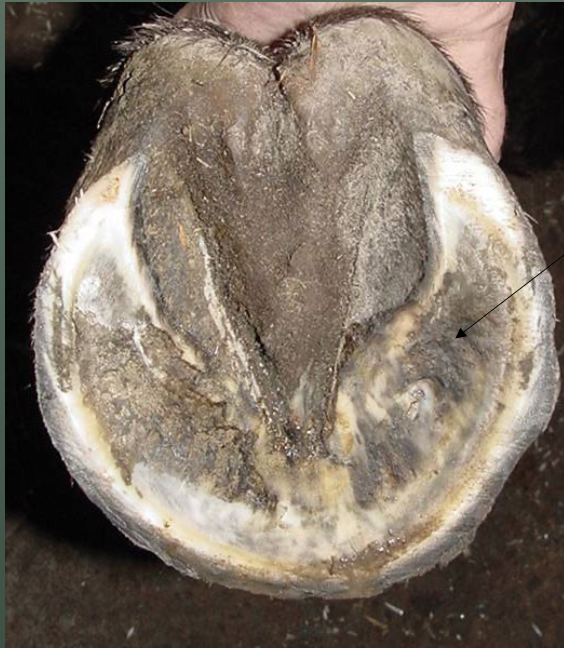
What is this area of the hoof?
sole
What is the weight bearing portion of the hoof?
hoof wall
What are the function of the collateral cartilages?
structural support for the heel bulbs
shock absorption
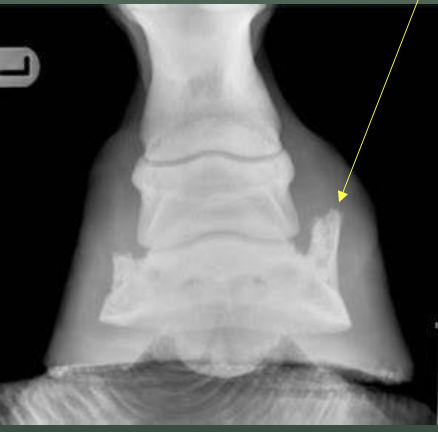
What is shown in this radiograph?
ossification of the collateral cartilage
What is the function of the insensitive and sensitive lamina?
suspend P3 in the hoof capsule
What areas of the hoof are responsible for traction?
frog
shape of hoof (concave
wall
What areas of the hoof are responsible for shock absorption?
digital cushion
ability to expand at heels
What are the major functions of the hoof?
traction
shock absorption
support of skeletal column
protection of inner structures
venous return (peripheral pump)
What part of the hoof protects from moisture evaporation?
periople
What is the typical trimming interval of an equine hoof?
6 weeks ± 2 weeks
What is assessed when trimming an equine hoof?
natural hoof wear, quality, and shape:
difference between feet
lateral imbalance
toe wear
flare vs upright side (rear feet naturally have lateral flare)
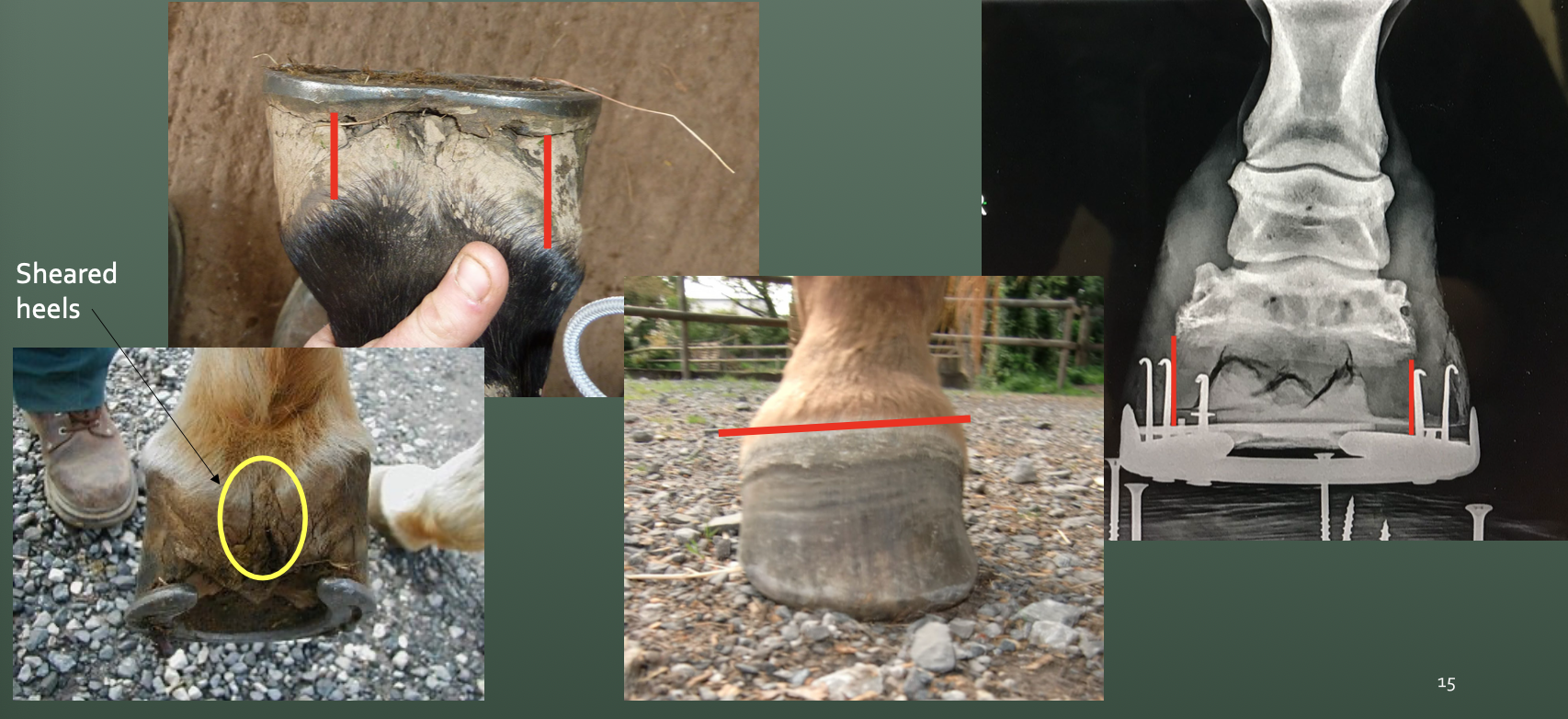
What abnormality is being shown here?
medio-lateral imbalance
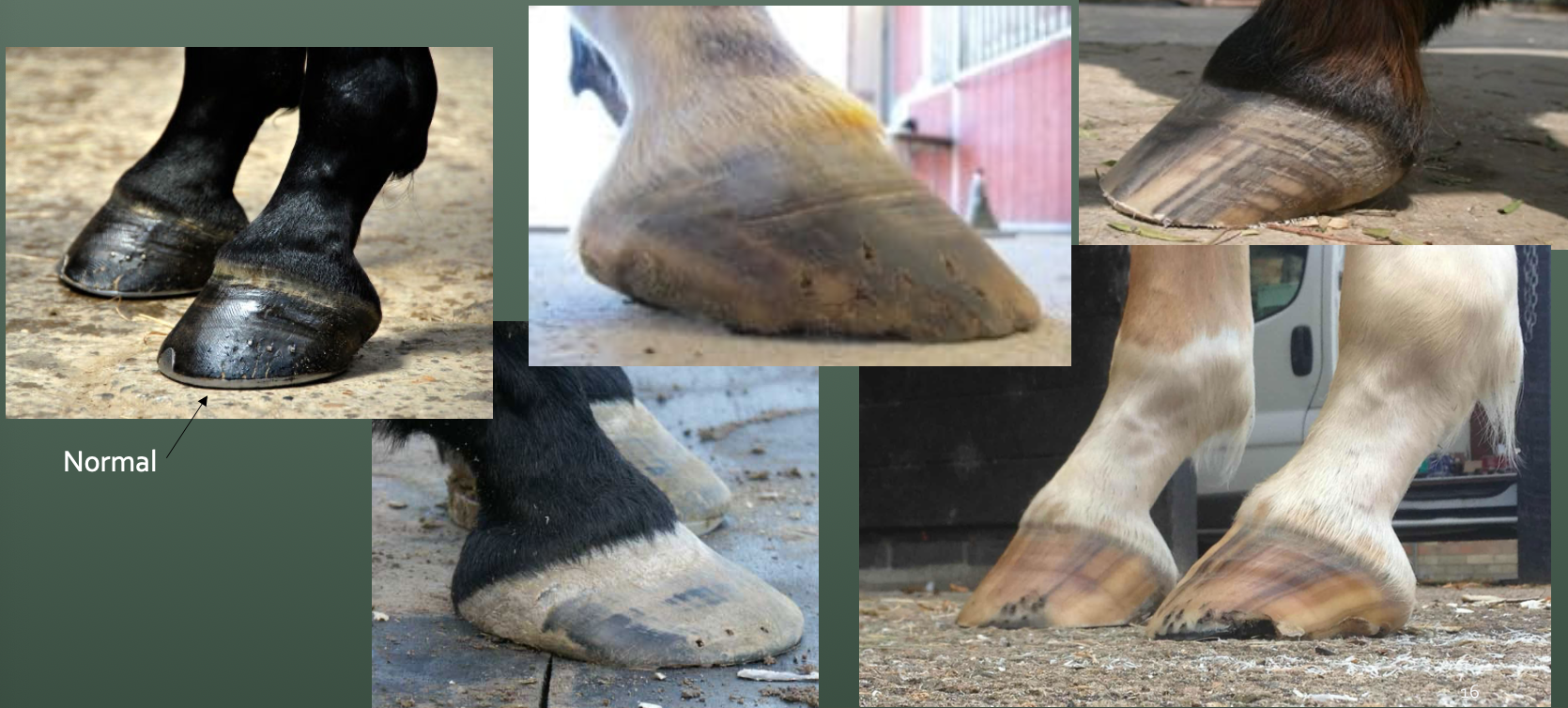
What abnormality is being shown here?
underrun heels
What can toe dragging indicate?
lameness in that limb
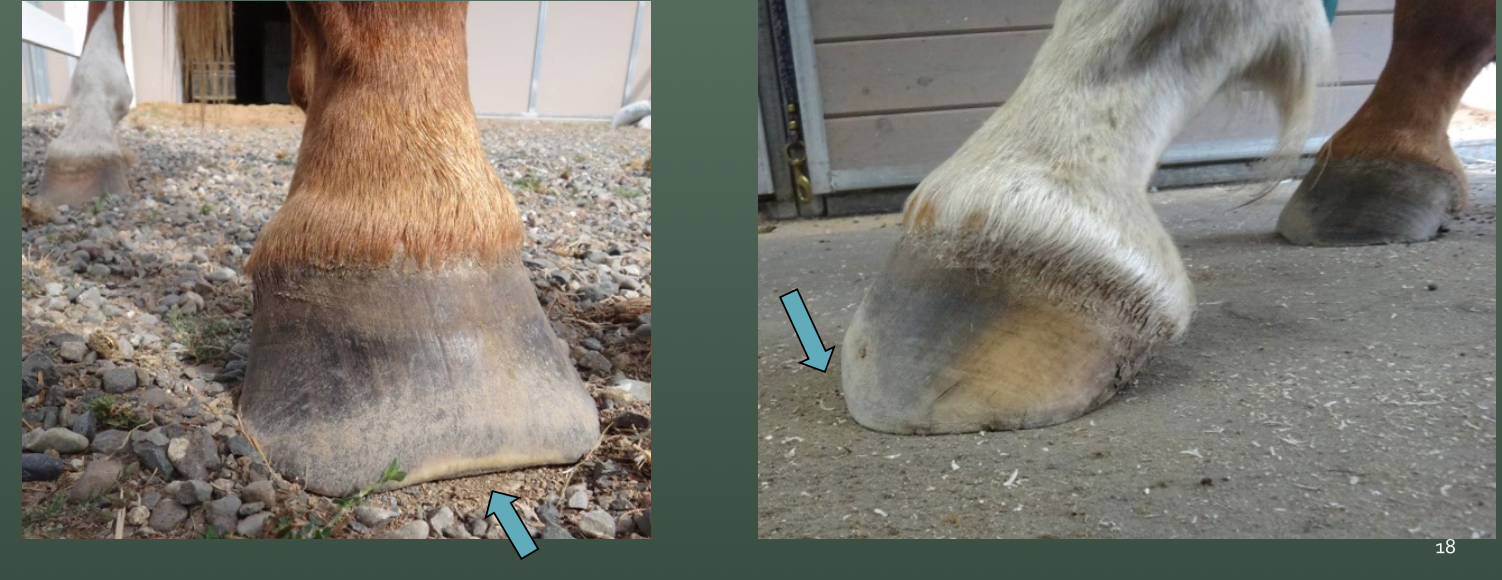
What abnormality is being shown here?
toe dragging
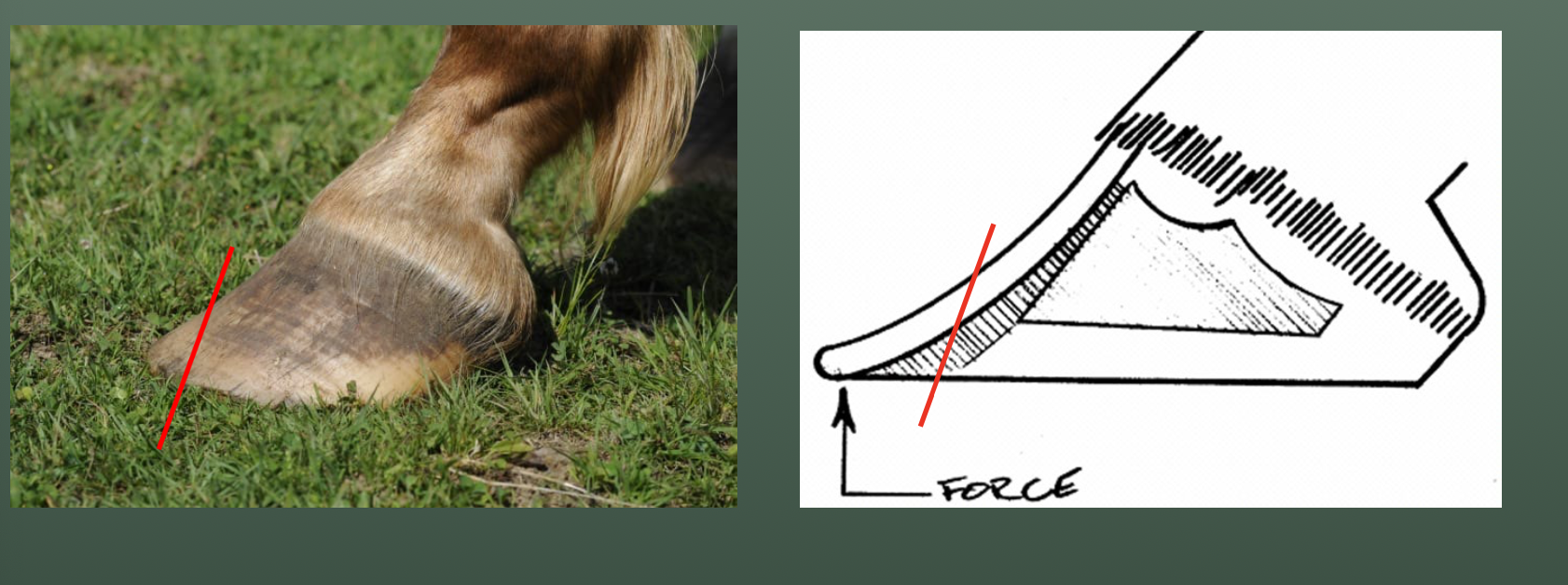
What abnormality is being shown here?
long toe
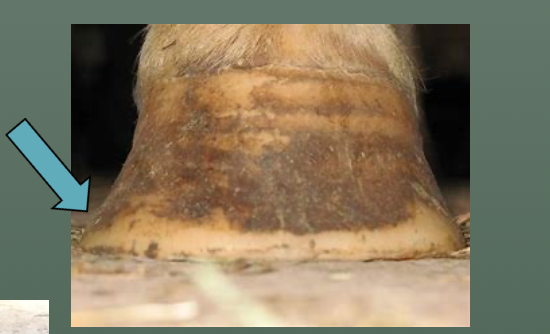
What abnormality is being shown here? What does it indicate?
flares - side that bears more weight
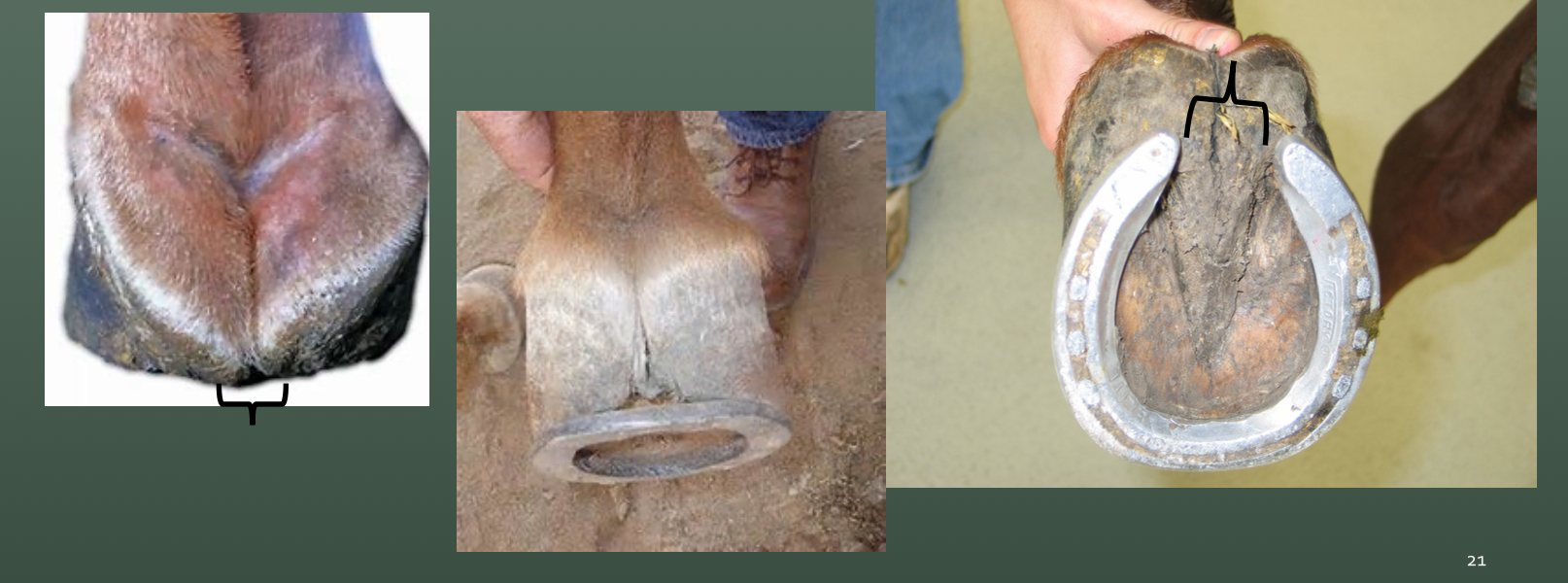
What abnormality is being shown here? What is it often indicative of?
contracted heels - another problem, often navicular disease
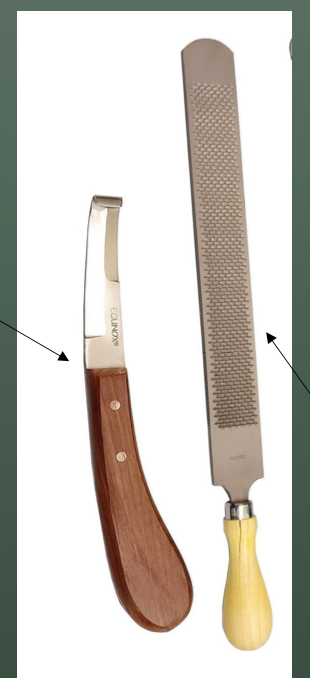
left: hook knife
right: rasp
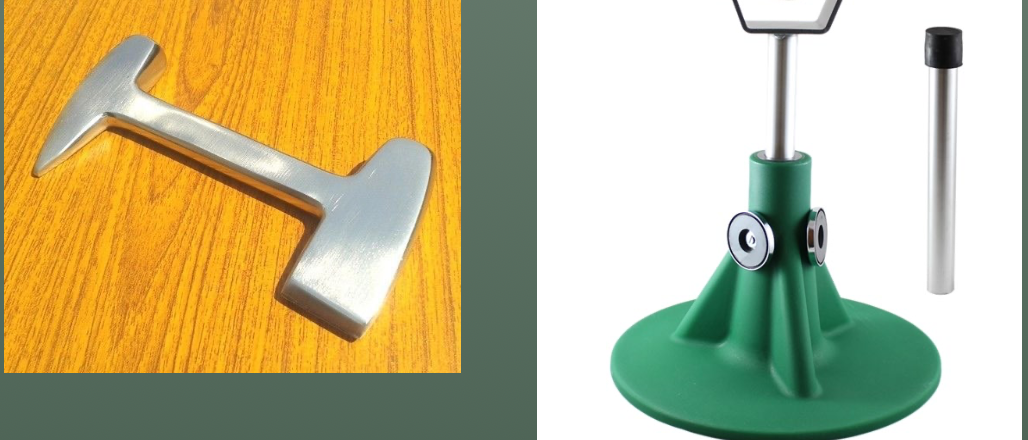
left: clinch cutters
right: hoof stand
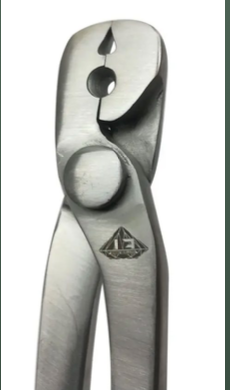
crease nail pullers
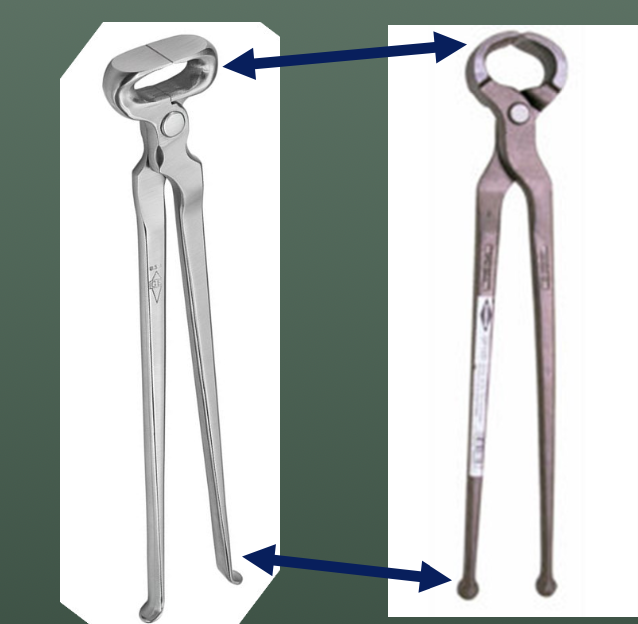
left: nippers = flat top and smooth end
right: shoe pullers = rounded top, ball on end
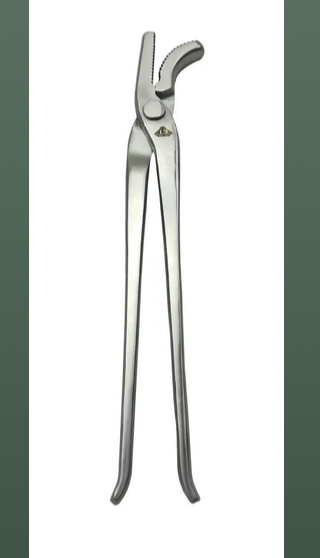
clincher
What is the basic method to hoof trimming?
clean up frog and remove sole with hoof knife (remove too much and horse becomes sore)
nip hoof wall to remove length
rasp to remove flares, level weight bearing surface, and shape hoof → check foot balance
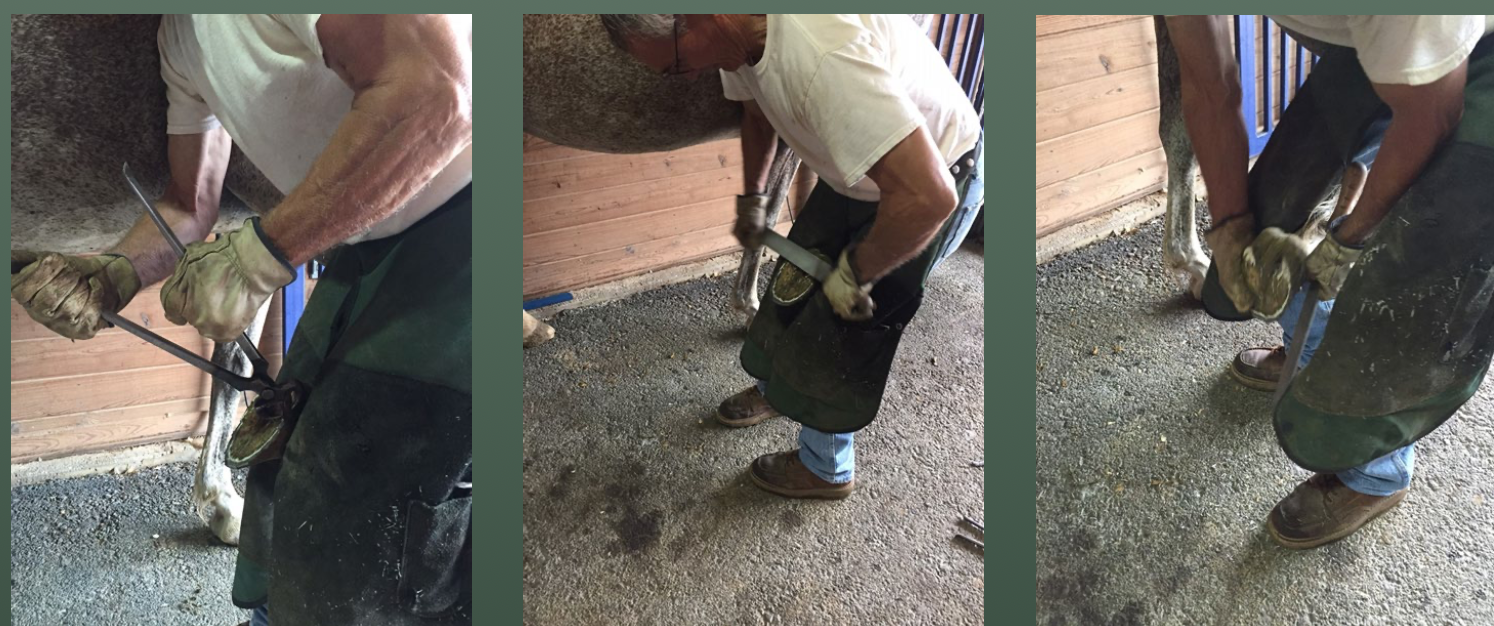
What are these stages of hoof trimming?
nipping
rasping
checking balance
What are the goals for hoof trimming?
balance
align the boney column
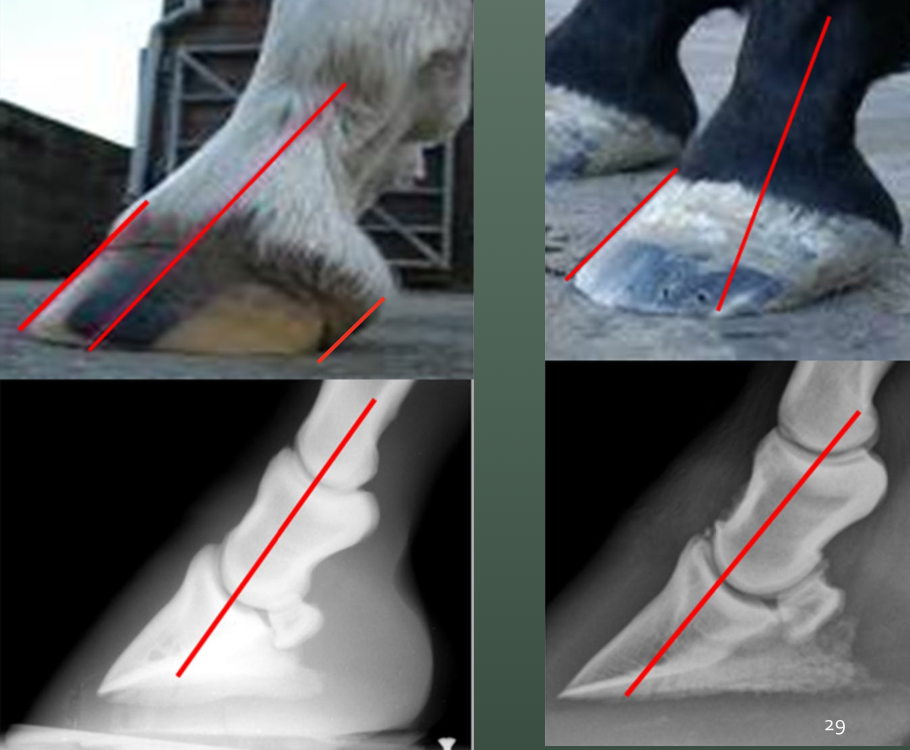
Poor shoeing = ____ horses.
lame
True or false: you can fix conformation with shoeing.
false
What are the signs a horse needs to be re-shod?
foot not balanced
nail clinches raised
shoe loose or twisted
shoe &/or nail heads worn
hoof wall grown over shoe
What are the typical horse shoe materials?
steel: most common, durable, heavy, can make from scratch
aluminum: less durable, lighter, cannot be hot shod, must be fabricated
What are the steps of shoeing?
remove shoe
trim hoof
shape shoe
nail shoe on
set nails
cut clinches
crimp clinches
finish clinches
finish hoof
What is cold shoeing vs hot shoeing?
cold: shoe shaped without heat before nailing on hoof
hot: shoe momentarily applied to horses hoof to “shape” hoof to shoe
What are the advantages and disadvantages of cold shoeing?
advantage:
farrier doesn’t need forge
requires less skill
cheaper
disadvantage:
shoe will not perfectly fit against hoof
harder for farrier to perfectly shape shoe
What are the advantages and disadvantages of hot shoeing?
advantage:
best fit of shoe to foot
heat allow farrier to shape shoe better
custom shoeing possible
disadvantage:
farrier must carry forge
more expensive?
can injure sensitive tissues if shoe held too long
takes longer
What are the characteristics of a good quality shoeing job?
support at heel
promotes break over
bony column aligned with dorsal hoof wall
What are the risks of removing a shoe?
can damage hoof wall
can be painful in horses with painful hooves (ex. laminitis)
What are the steps to removing a shoe?
raise, cut, or rasp off clinches
pull out nails with a crease nail puller if painful feet
pull shoe off → start from heal and work to toe, leverage toward center and toe of foot