Lecture 19- PART 3: THE SPREAD OF RELIGIONS -- Early Medieval Art (c. 500-1000 CE)
 Studied by 3 people
 Call with Kai
 Learn
Learn Practice Test
 Spaced Repetition
 Match
Match Flashcards
 Knowt Play
1/21

There's no tags or description
Looks like no tags are added yet.
Name | Mastery | Learn | Test | Matching | Spaced | Call with Kai |
|---|
No study sessions yet.
22 Terms
Intro to the Middle Ages
The period from the fall of the western roman empire in the 5th century CE to c. 1500 CE (the date at which "the Renaissance” had more or less taken hold in all of Western Europe)
divided into 3 periods
early middle ages, c. 500-1000 CE
high middle ages, c. 1000-1300 CE
late middle ages, c. 1300-1500 CE
Early Middle Ages, c. 500-1000 CE
Europe transitioned from centralized roman government to individual hereditary kingdoms ruled by germanic and celtic tribes
lombards in italy
visigoths in iberia (spain)
franks and burgundians in gaul (france)
celtic and germanic tribes in britain
new kingdoms lived directly from the produce of the land and the labor of the group of the peasant population
there wasn’t a finely defined social hierarchy/rules/order
all were catholic christians
new european cultures were born from the blending of local roman populations and germanic immigrants
Beginning of the distinctive european cultures
Art of the Early Middle Ages General Facts (celtic and germanic focus)
These germanic ppl known as barbarians bc they were “non-roman”
groups of farmers and shepherds who were looking for some place to live
pursued pottery, textiles, woodworking, but strong tradition in metalworking: armor, tools, and jewelry
Germanic/Celtic art used abstraction, patterns that were inspired by their polytheistic religious beliefs
didn’t forget their own beliefs after acceping christianity
Saw earth has the mother goddess
What was early celtic and germanic art characterized by?
abstraction and patterns that were inspired by their polyistic or pantheistic religious beliefs
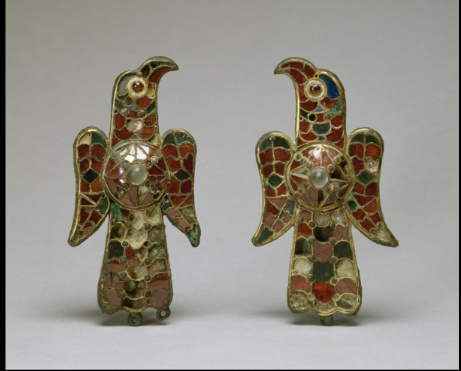
Eagle-shaped Fibulae, Iberian Peninsula, Visigothic, 6th Century CE
produced by visigoth artists after fall of roman empire and new kingdoms are established
2 eagles that are shown in flight
Ancient symbol of the sun
body shaped like a disk
eagle’s upturned head and side profile
even tho tribes were christian, they kept some of the iconography from the visual cultures of their pagan past
eagles= popular motif in western art
Eagle = imperial rome
eagle became iconographic symbol of evangelist John
Mixture of different visual cultural elements
Kept the same style but put the fibulae/art in a christian context
mixed of northern and mediterranean styles that become known as medieval art
6th century iberia
christian visigothic rulers who are looking back to imperial roman traditions as inspo for their own christian art
wanted to present themselves as thoroughly christian kings
got inspo from the great roman and byzantine leaders of the not so distant past like Emperor Justinian
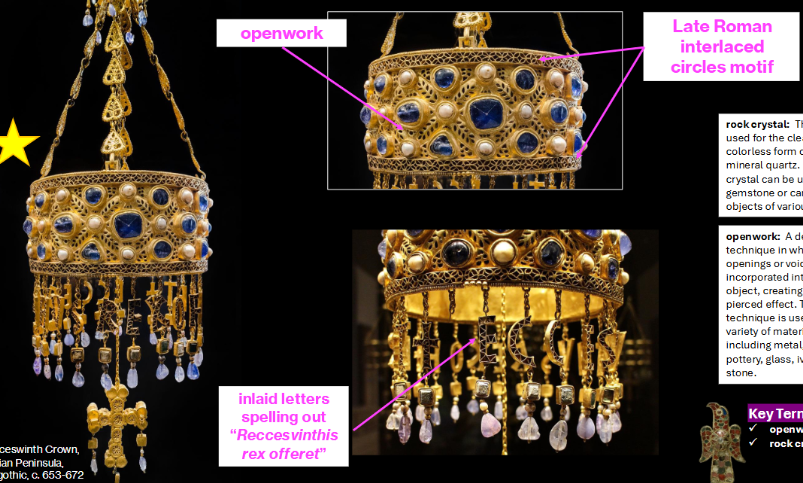
Reccesvinth Crown, Iberian Peninsula, Visigothic, c. 653-672 CE
Votive object = offerings to gods and the church
Hung above the haltar
Symbols of emperor justinian piety and his ecclesiastical authority
Palm leaf like motifs in the openwork
Base on the crown says: “Reccesvinthis rex offeret”
in latin
translates to offered by King Reccesvinthis
from each letter hangs a sapphire and a pearl
Rock crystal
this particular crown was given by a King named Reccesvinth
recessvinth ruled the visigothic kingdom in iberia from 649 to 672
composed of Wide band of gold with 30 large sapphires alternating with pearls
narrow strips that are at the top and bottom of that wide openwokr band = decorated with interlaced tangent circles, a motif common to the late roman empire
at the top of the crown = 4 golden chains that have heart-shaped palmets suspended
chains connect to a floral shaped terminal that’s made of gold and rock crystal and has sapphires hanging down from it
the palmets making up the chain has granulation
tiny golden balls fused to the surface
the nature of the formal setting of the stones and pearls within the gold frame = visual characteristic of byzantine design
intricate craftsmanship in this piece connects it to the long tradition of metalworking among the visigoths and other germanic tribes
art of early medieval germanic kingdoms = fusion of both classical roman and byzantine elements and germanic visual traditions
openwork
Decorative techinque in which openings or voids are incorporated into an object, creating a lattice or pierced effect. Used in a variety of materials like glass, metal, wood, ivory, and stone
surface isn’t solid and is punched w diff shapes that enable you to see thru it
Lombard Kingdom ruled by who?
ruled by a queen named Theodolinda
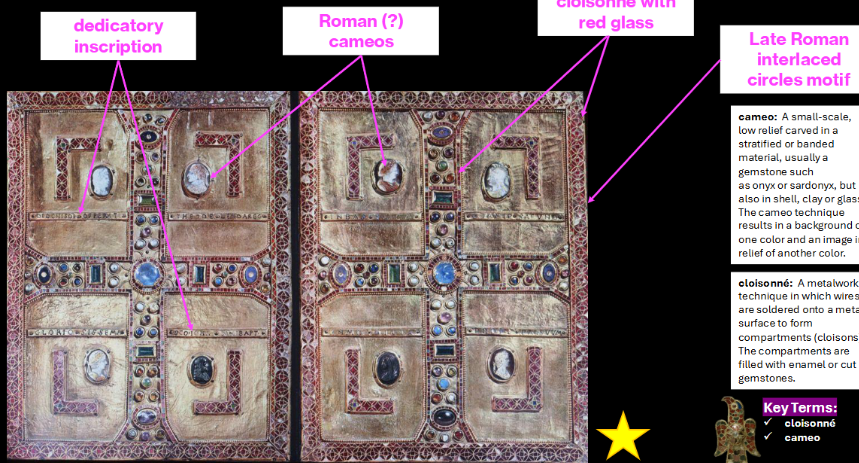
Cover of the Gospels of Queen Theodolinda, Italy, Lombard, early 7th century
queen theodolinda of lombard = devoted follower of the orthodox roman church
founded a church that was dedicated to St. John the Baptist
as a gift to the church, she commissioned a manuscript copy of the 4 gospels
the book covers are made of gold
Oldest known metalwork book covers in the west
Each cover is divided into 4 equal quadrants via a large cross that’s inlaid with jewels
borders of the crosses are lined with strips of red glass cloisonne
book covers have an outer border that’s also cloisonne and inlaid with red glass
outer borders have the same interlaced circle motif found on the reccesvinth crown
across the covers in 2 bands is a latin inscription that indicates that this object was a donation from queen theodolinda to the basilica of saint john the baptist
bracket like strips of cloisonne in each quadrant that adds to the sense of symmetry but they each also have these cameos
reused classical roman cameos, repurposed to ornament the gospel book cover
reusing classical objects, esp cameos, is prevalent in medieval art
connects this art to the traditions of the classical roman empire
Cloisonne
a metalwork technique where wires are soldered onto a metal surface to form compartments (cloisons)
compartments are filled either w enamel or with cut gemstones
widespread across europe in the late 6th and early 7th centuries
rock crystal
clear, colorless form of the mineral quartz. Rock crystal can be used as a gemstone or carved into objects of various kinds.
cameo
a small scale low relief carved in a stratified or banded material, usually a gemstone like onyx or sardonyx, but also in shell, clay or glass
Results in a background of one color and an image in relief of another color
Connects art to classical roman art
Anglo Saxon England
43 BCE - 410 CE: roman britain
5th century CE 1006 CE: angle saxon england
Anglo-saxon kingdoms were originally pagan but gradually converted to christianity
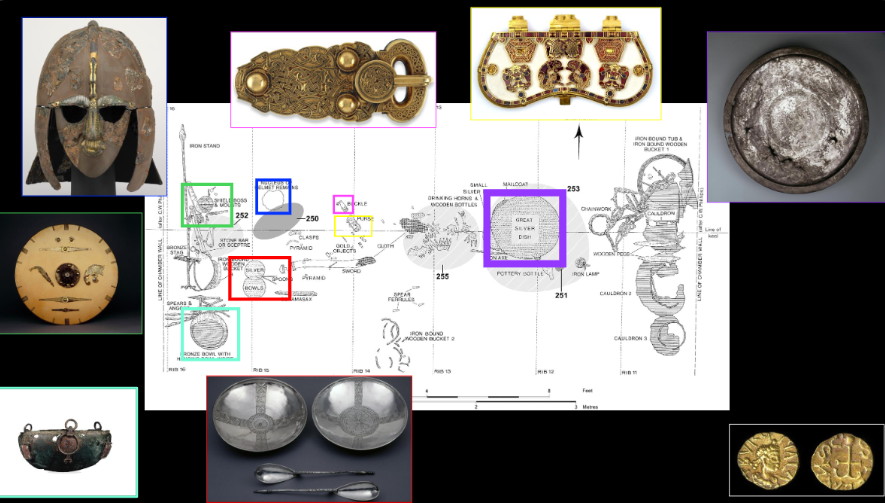
Sutton Hoo Ship Burial- Anglo-Saxon
located in anglo-saxon kingdom of East Anglia
location of 2 anglo-saxon cemeteries dating from the 6th and 7th centuries
mount 1 = burial of a wealthy and prestigious individual, possibly king raedwald of east anglia
anglo-saxon rulers were being pressured to convert to christianity by the merovingian frankish rulers on the continent during this time
luxurious treasures found in mound 1: Silver helmet, a great shield with metal fittings in the shape of an eagle and a dragon, and a stack of nesting silver bowls
Silver spoons were commonly collected as luxury items by elite anglo saxons bc they were unique and displayed status
Bronze hanging bowl
celtic-style
now yet associated w anglo saxon ppl, but found in a number of germanic graves
stack of nesting silver bowls decorated with medallions and 2 perpendicular lines that are crosses
fluted bowl: silver with a classical female head and profile
silver ladel and silver spoons
collected as luxurious oddities
kept as unique grave goods
gold coins found
evidence of the centrality btwn merovingian francia and sutton
Scabbard slides from mound 1
Sword pommel fittings from Mound 1
Gold buckle from Mound 1
the pieces found at mound 1 shows that the focus of artwork was creating a number of small and extremely elaborate items, created often with novel techniques and styles that was characteristic of this period of early Anglo-Saxon england
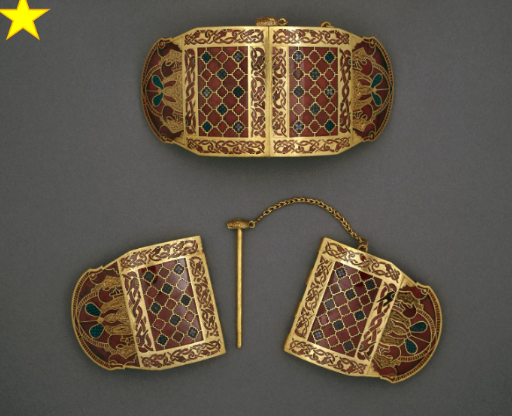
Pair of hinged shoulder clasps from Mound 1
True function is unknown
suggested that the person who was buried in this mound is trying to draw a connection btwn himself and imperial roman traditions
Size and shape= best worn as shoulder clasps
larger diamond shapes = filled w cut red garnet
small diamond shapes = filled w a pattern of blue, red, and white millifiori glass
checkerboard arrangement of the large and the small diamond shapes creates a cross pattern that ‘s suggestive of christian symbolism
ground
Border around the rectangular field
Interlaced biting zoomorphic forms
common in early germanic and celtic artwork
The red is made of cells and the remainder of the cells are filled with gold sheets to make it look like it was carved, but it isn’t
Ambiguity in the visual culture
Viewers would see same effects as traditional quasinai figures that had fragmented textures
viewers would expect to see a clear difference btwn the wires that create the cloison and the ground
Unified smooth and flattened surface, different from the traditional quasinai figures
because of the gold sheets that are placed over the empty cloisonne cells
End piece of the shoulder clasps
Plate garnet
Garnets were individually shaped to fit into the tiny space created by the gold wires
Developed as a way to enhance the luxurious effect of the shoulder clasp
2 boars locked together in combat
Boars’ heads, hindquarters, backs, forelegs, tail
artist uses plate garnets to help viewer decipher the scene
covers the lower corners w thin sheets of gold
Twisted filigree made into snake shapes to help orient the bodies of the boars
Millefiori
A glassmaking technique that produces complex decorative patterns. The technique begins with production of a glass cane with multicolored patterns viewable only at the cut ends of the cane. The cane is heated and pulled, then cooled and cut into discs. The discs are then re-heated and fused in a mold.
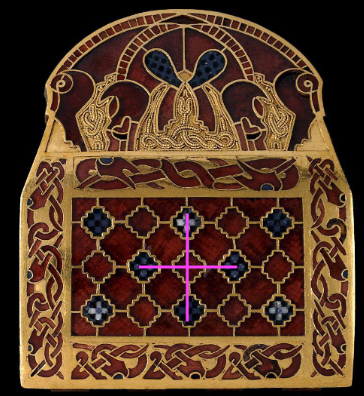
Millifiori Glass in the Pair of hinged shoulder clasps from Mound 1
2 technical innovations
glass includes a transparent red
meant to emulate the effect of actual garnets
usually the celtic artistic traditions display opaque red glass
milli-fiorite panels aren’t set in a glass enamel substrate
the milli-fiorite panels are isntead cut and set within cloisonne cells
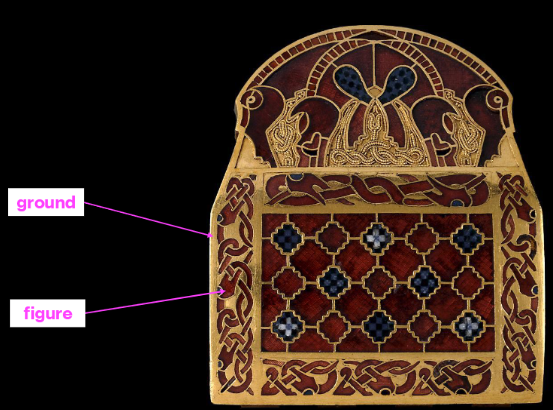
ground
the surface or background on which the work of art is created that serves as a foundational layer supporting the main elements of the artwork, influencing its overall appearance and texture ground figure
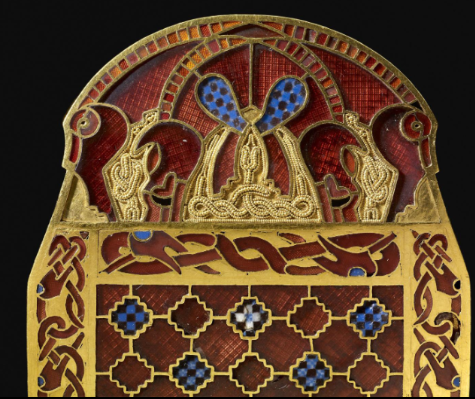
plate garnet
Thin, flat pieces of cut garnet that were precisely shaped to fit into the small metal compartments (cloisons) of a cloisonne design
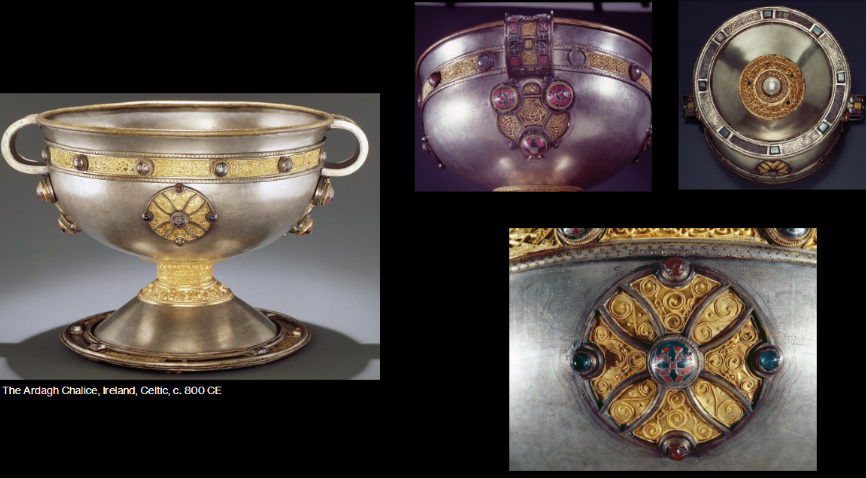
The Ardagh Chalice, Ireland, Celtic, c. 800 CE
liturgical vessel used for holding wine that would be used in the eucharistic ceremony
form of the chalice refers to the shape of late roman tableware
methods and construction and decoration = characteristically irish, AKA celtic
Bowl and foot of the chalice made of silver
outer side of bowl
Applied gold, silver, enamel ornaments
Added to the luxurious feel
also on the underside of the foot
the bowl and foot are 2 separate parts attached by a bronze pin
Names of the apostles inscribed on the outside of the chalice in this subtle pattern
band of filigree gold around the rim on the chalice
stippling
filigree designs
stippling
engraving of little dots