functional anatomy
 Call Kai
 Learn
Learn Practice Test
 Spaced Repetition
 Match
Match Flashcards
 Knowt Play
1/110

There's no tags or description
Looks like no tags are added yet.
Name | Mastery | Learn | Test | Matching | Spaced | Call with Kai | Chat |
|---|
No analytics yet
Send a link to your students to track their progress
111 Terms
What movements primarily occur in the sagittal plane?
Flexion and extension.
What is a force couple?
Two or more muscles working together to produce or control a movement.
What is an open kinetic chain exercise?
An exercise where the distal segment is free to move.
Give an example of an open kinetic chain exercise.
Leg extension or biceps curl.
What is a closed kinetic chain exercise?
An exercise where the distal segment is fixed or in contact with a surface.
Give examples of closed kinetic chain exercises.
Squats, push-ups, and pull-ups.
What are the two major joints involved in shoulder movement covered in your study guide?
The glenohumeral joint and scapulothoracic articulation.
What movement occurs at the scapula during shoulder abduction?
Upward rotation.
What movement occurs at the scapula during shoulder adduction?
Downward rotation
What scapular movements typically accompany shoulder flexion?
Elevation and upward rotation.
What scapular movements typically accompany shoulder extension?
Depression and downward rotation.
What scapular movement accompanies shoulder internal rotation?
Protraction.
What scapular movement accompanies shoulder external rotation?
Retraction.
What scapular movement accompanies horizontal shoulder adduction?
Protraction.
What scapular movement accompanies horizontal shoulder abduction?
Retraction.
What are the four rotator cuff muscles?
Supraspinatus, infraspinatus, teres minor, and subscapularis.
What is the primary function of the rotator cuff?
Stabilizing the humeral head in the glenoid cavity.
Which rotator cuff muscle primarily assists with shoulder abduction?
Supraspinatus.
Which rotator cuff muscles primarily perform external rotation?
Infraspinatus and teres minor.
Which rotator cuff muscle primarily performs internal rotation?
Subscapularis.
What muscles act on the scapulothoracic joint?
Trapezius, rhomboid major, rhomboid minor, levator scapulae,
What muscles act on the scapulothoracic joint?
serratus anterior, pectoralis minor, pectoralis major, and subclavius.
what muscles act on the glenohumeral joint?
supraspinatus, infraspinatus, teres minor, subscapularis
what muscles act on the glenohumeral joint?
deltoid, pectoralis major, latissimus dorsi, teres major
actions of glenohumeral joint
flexion, extension, internal rotation, external rotation, adduction, abduction
actions of glenohumeral joint
horizontal abduction, horizontal adduction, diagonal abduction, diagonal adduction
actions of scapulothoracic joint
protraction, retraction, upward rotation, downward rotation

latissimus dorsi

latissimus dorsi origin
T5-T12, inferior angle of scapula, ilialic crest
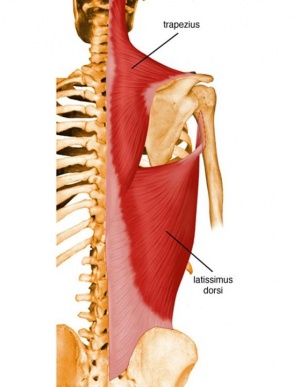
latissimus dorsi insertion
anterior of upper humerus
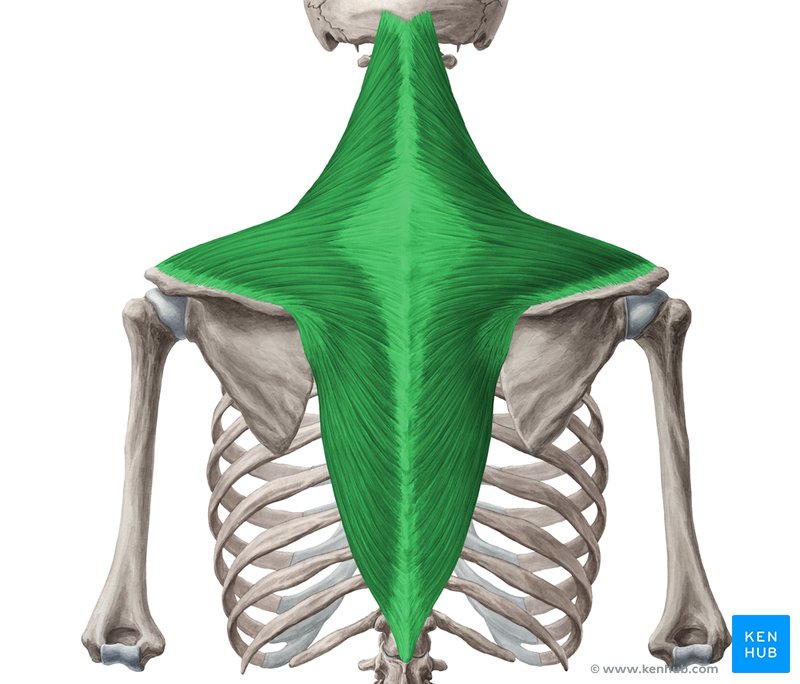
trapezius muscle

Trapezius — Origin?
Occipital bone, nuchal ligament, and C7–T12 spinous processes.

Trapezius — Insertion?
lateral clavicle, acromion, and spine of scapula.

Rhomboid major

Rhomboid major — Origin?
T2–T5 spinous processes.

Rhomboid major — Insertion?
Medial border of scapula, inferior to the spine.

Rhomboid Minor
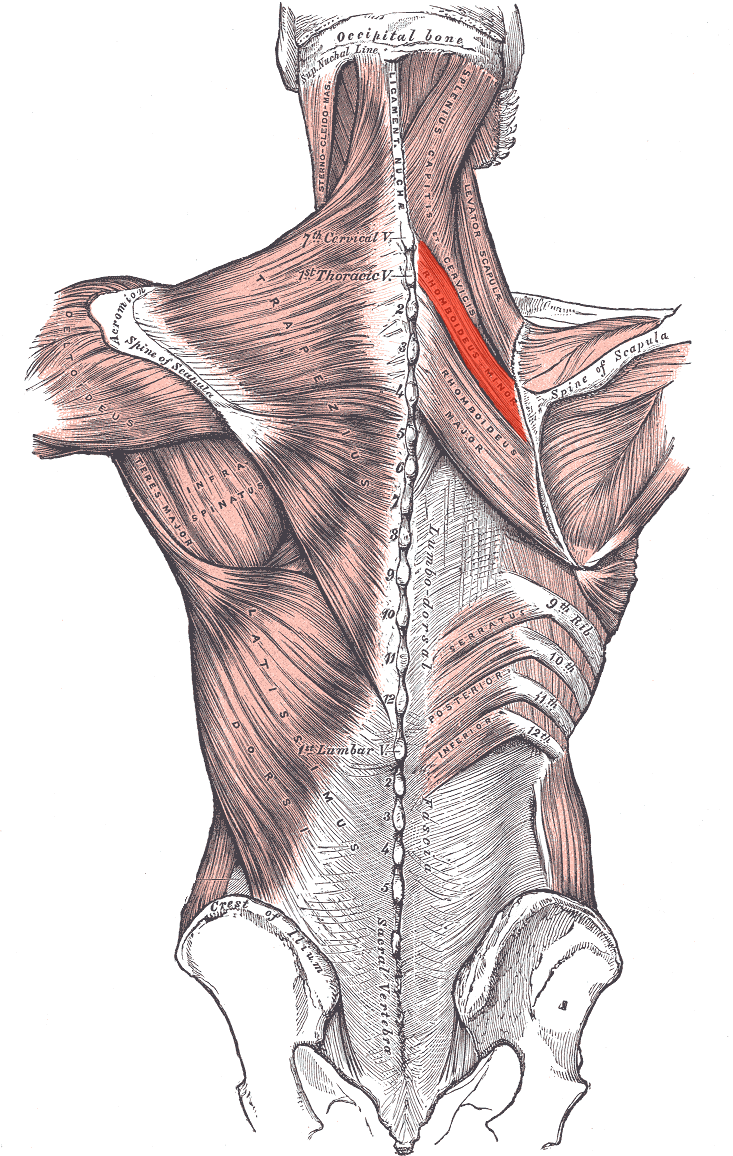
Rhomboid minor — Origin?
C7–T1 spinous processes.

Rhomboid minor — Insertion?
Medial border of scapula .

Levator Scapulae

Levator scapulae — Origin?
Transverse processes of C1–C4.

Levator scapulae — Insertion?
Superior medial border of scapula.

serratus anterior

Serratus anterior — Origin?
Ribs 1–8/9.

Serratus anterior — Insertion?
Anterior surface of the medial border of the scapula.
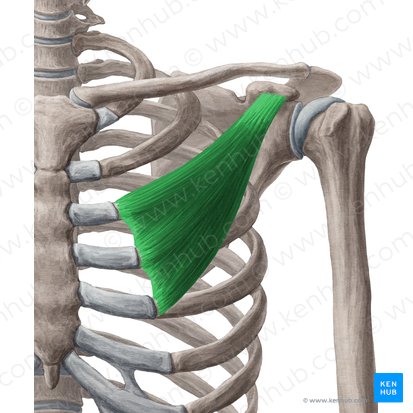
Pectoralis Minor

Pectoralis minor — Origin?
Ribs 3–5.

Pectoralis minor — Insertion?
Coracoid process of scapula.
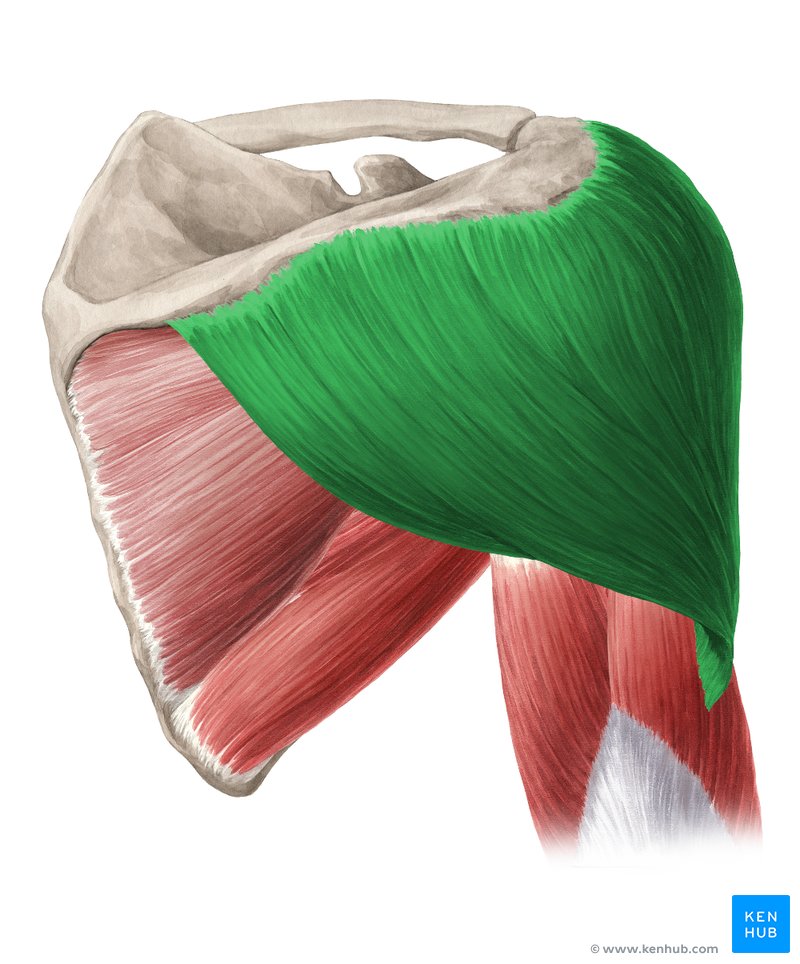
Deltoid

Deltoid — Origin?
Lateral clavicle, acromion, and spine of scapula.

Deltoid — Insertion?
Deltoid tuberosity of humerus.

Anterior Deltoid

Middle Deltoid

Posterior Deltoid

coracobrachialis

pectoralis major
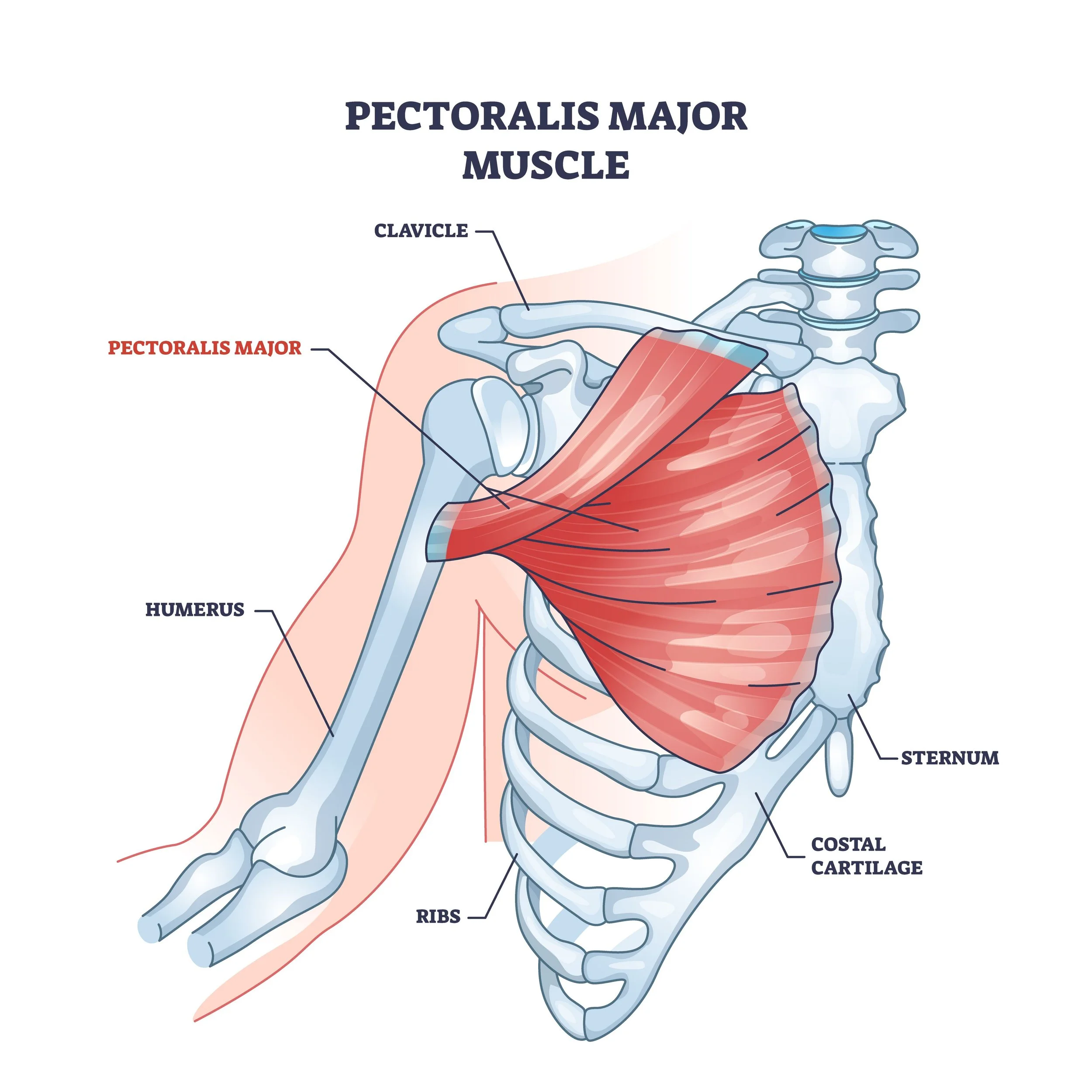
pectoralis major origin
clavicular head, sternocostal head

pectoralis major insertion
upper humerus
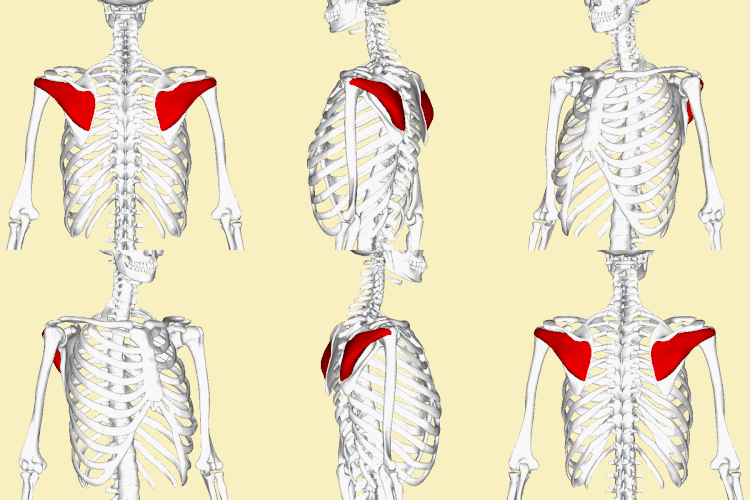
infraspinatus

infraspinatus origin
posterior of scapula
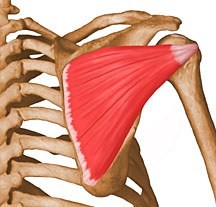
infraspinatus insertion
greater tubercle of humerus
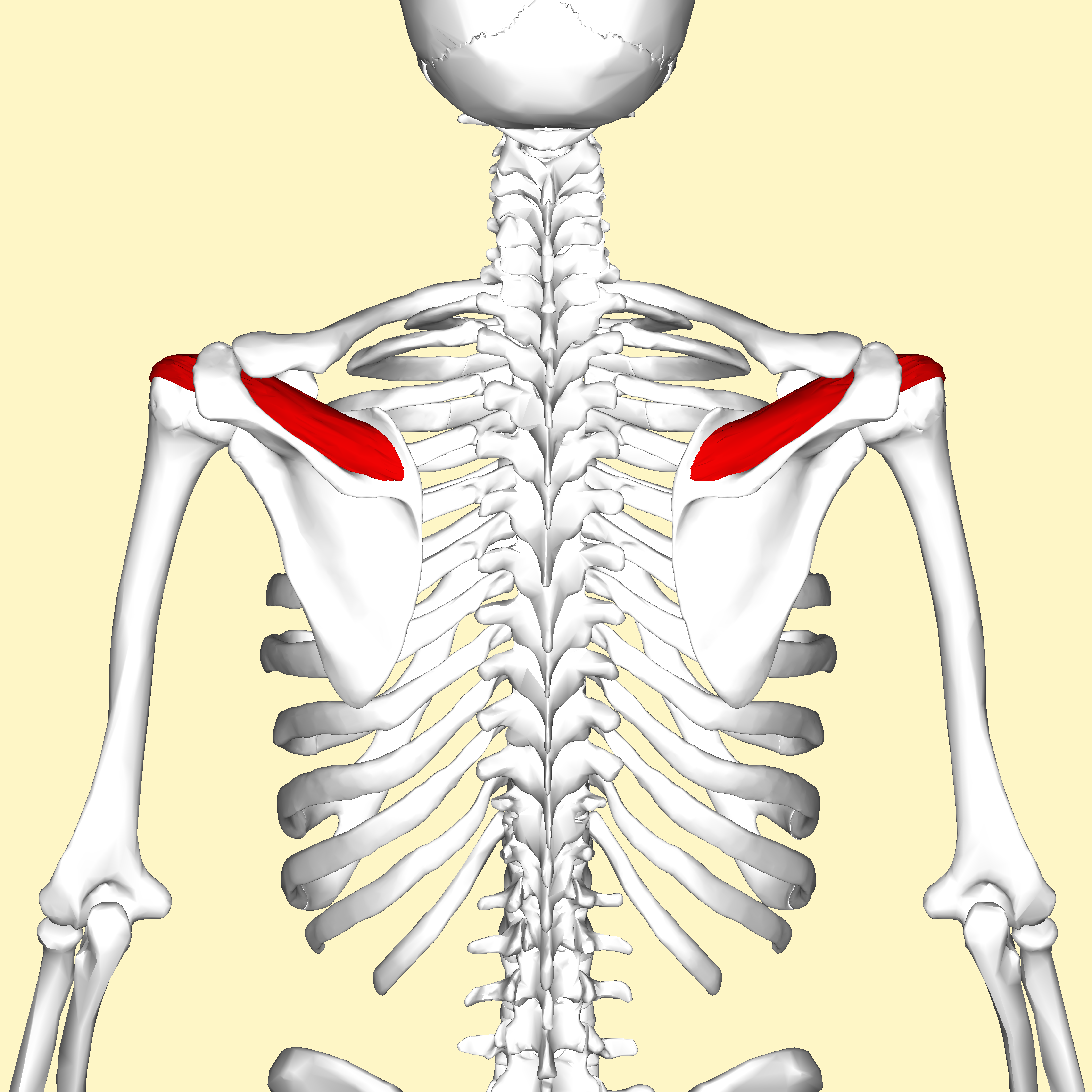
supraspinatus

supraspinatus origin
supraspinous fossa of scapula

supraspinatus insertion
greater tubercle of humerus

teres major
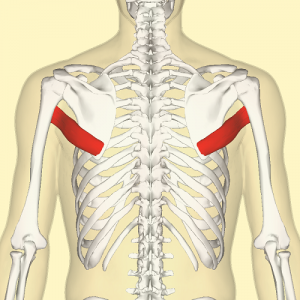
teres major origin
lower border of scapula

teres major insertion
intertubercular groove of humerus

teres minor
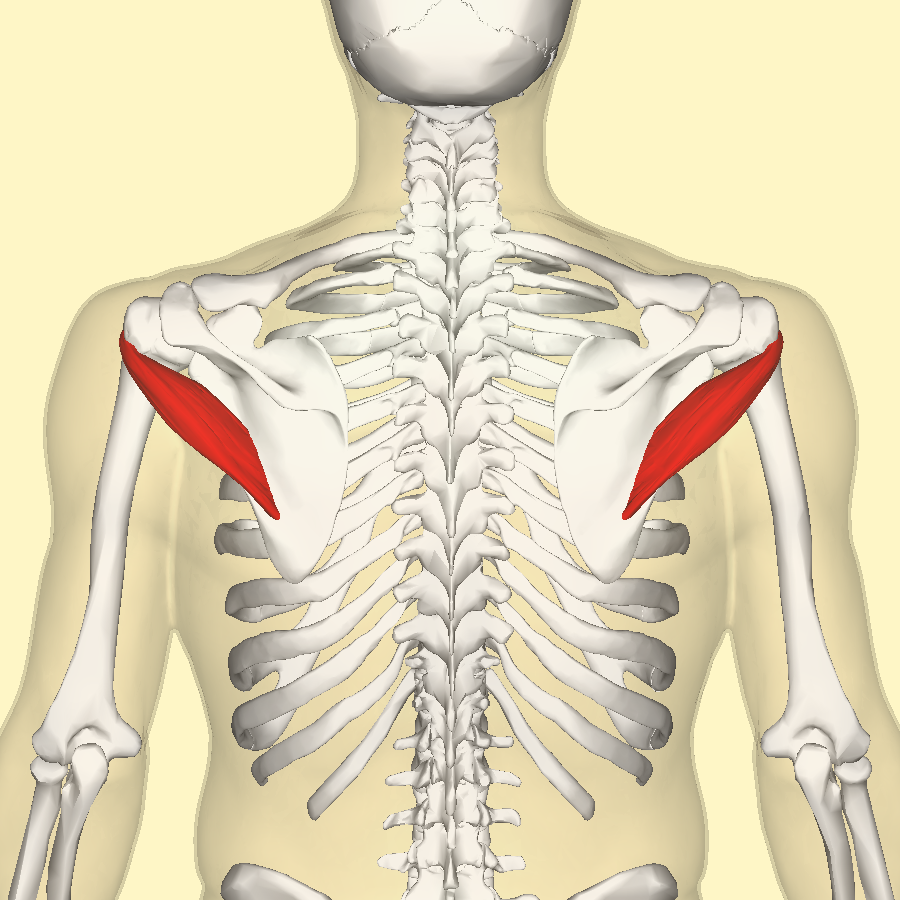
teres minor origin
lateral border of scapula

teres minor insertion
Greater tubercle of the humerus

subscapularis
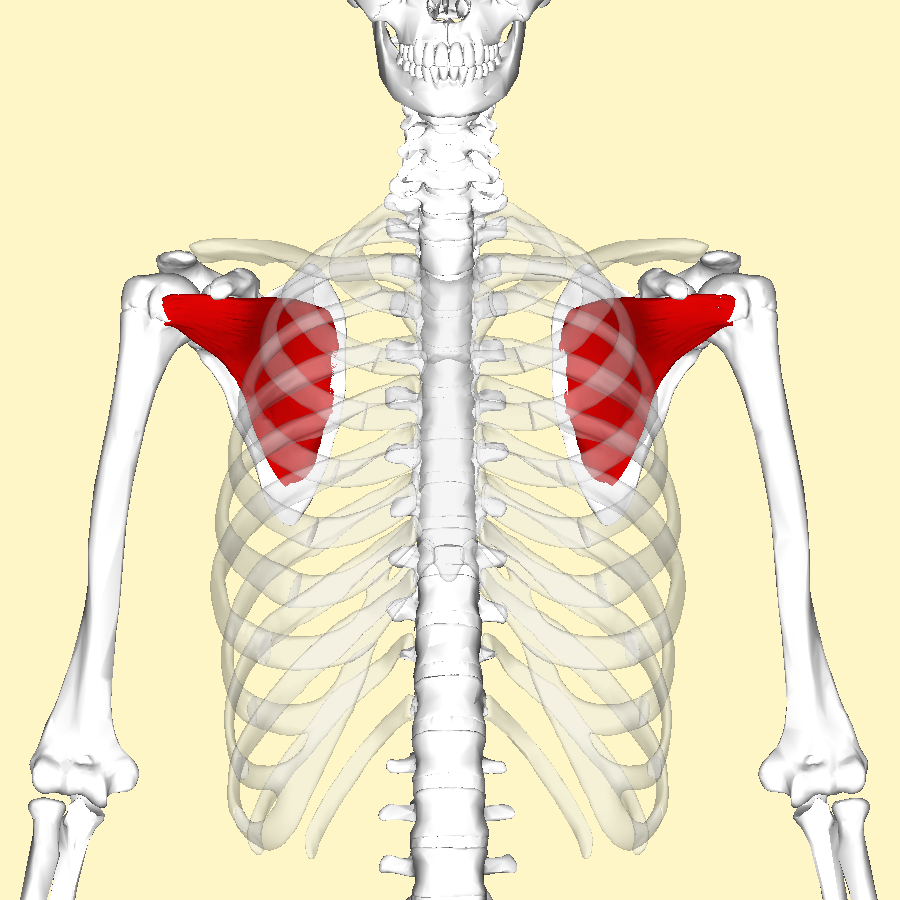
subscapularis origin
subscapular fossa of scapula

subscapularis insertion
lesser tubercle of humerus
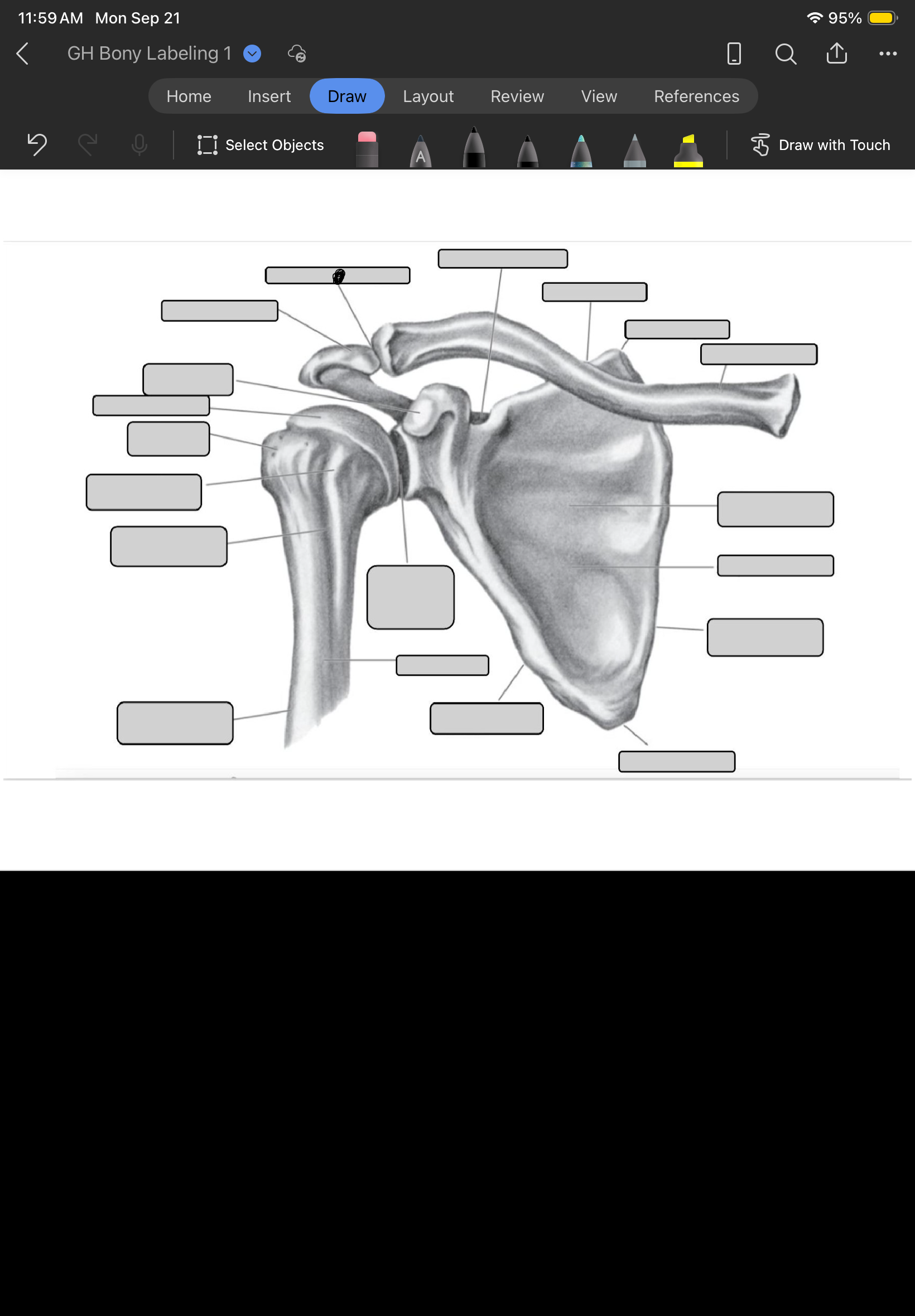
Acromioclavicular joint

acromion process
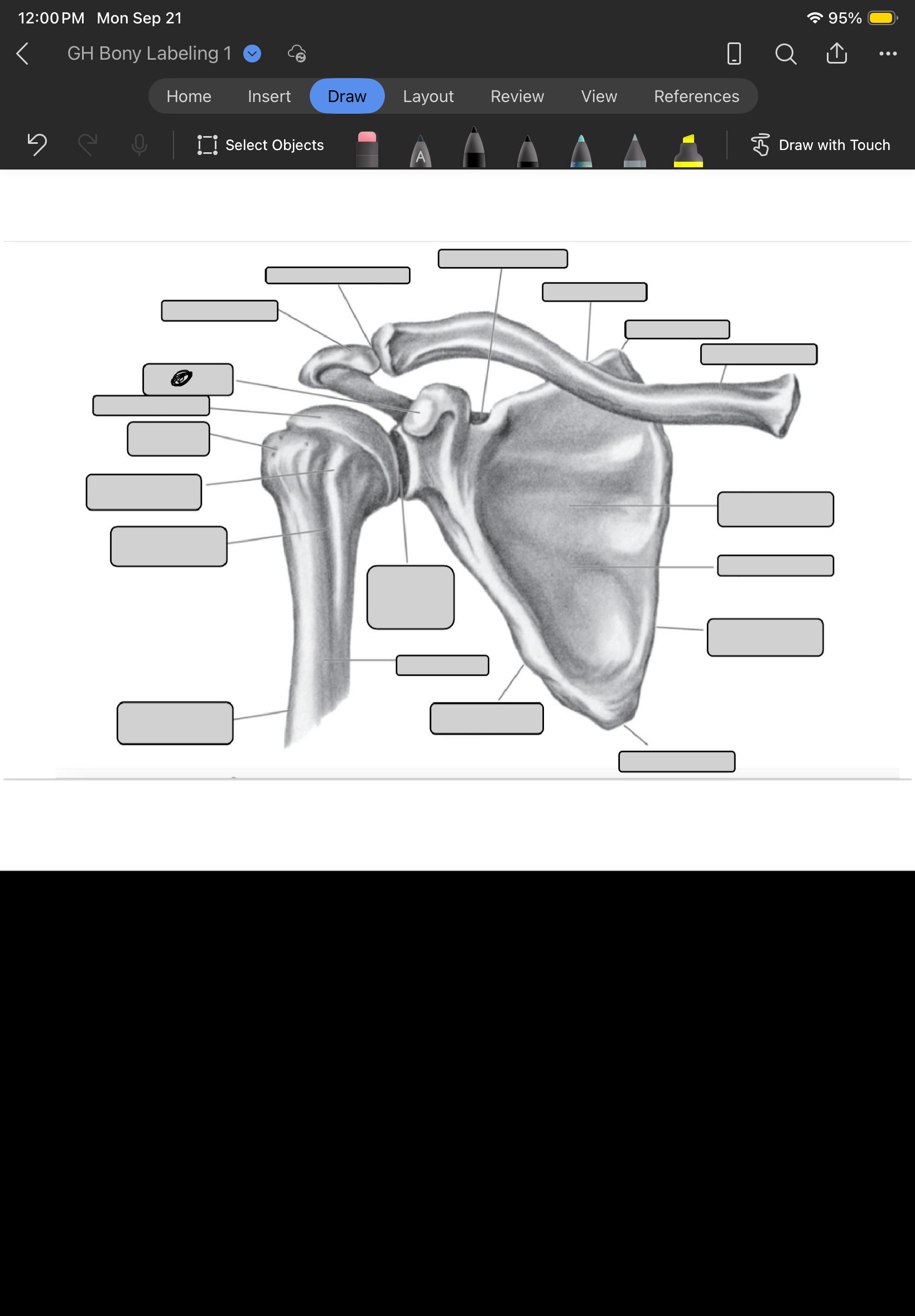
Coracoid process

humeral head
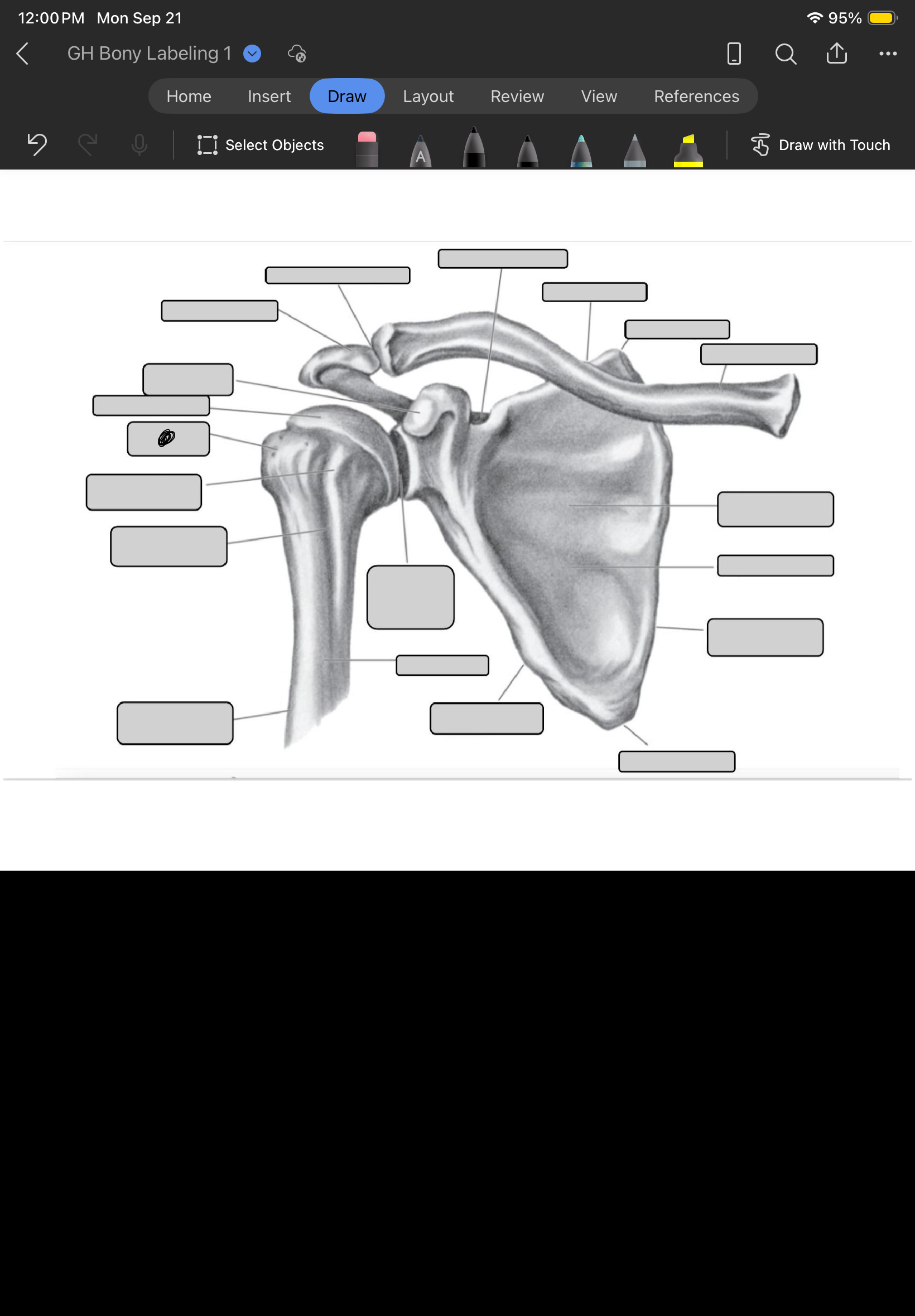
greater tubercle

lesser tubercle

intertubercular groove

deltoid tuberosity

glenoid cavity

humerus
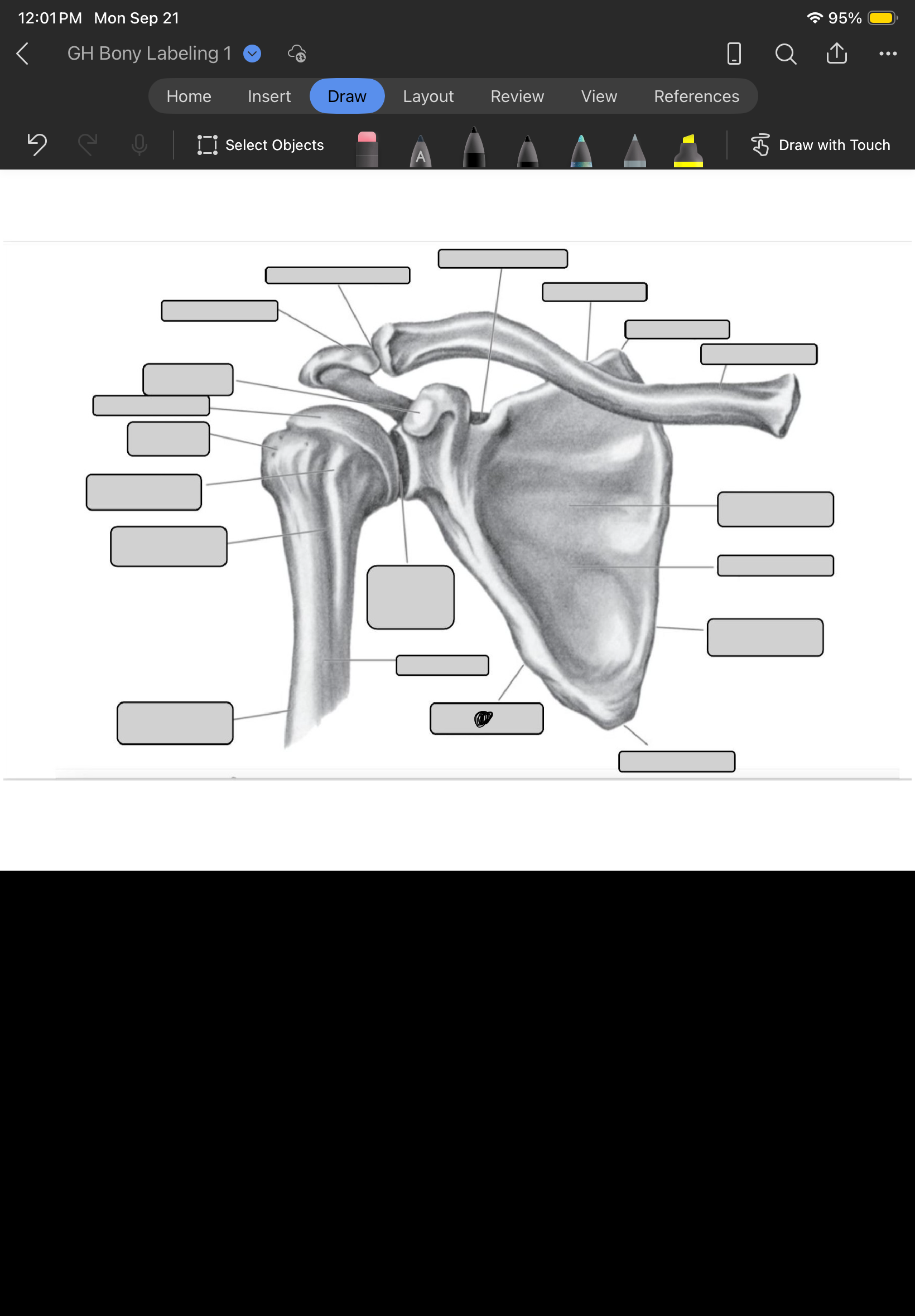
lateral border
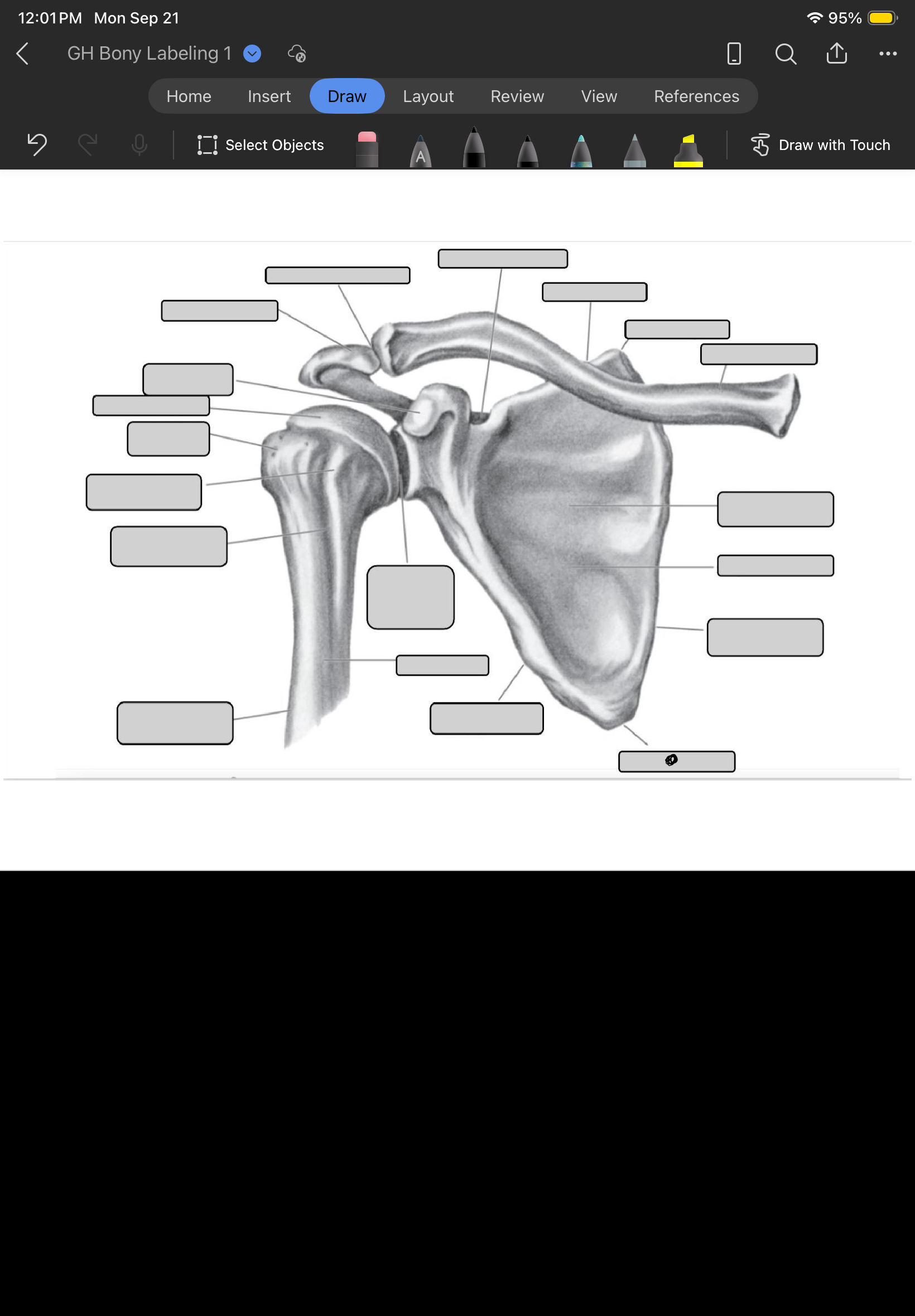
inferior angle
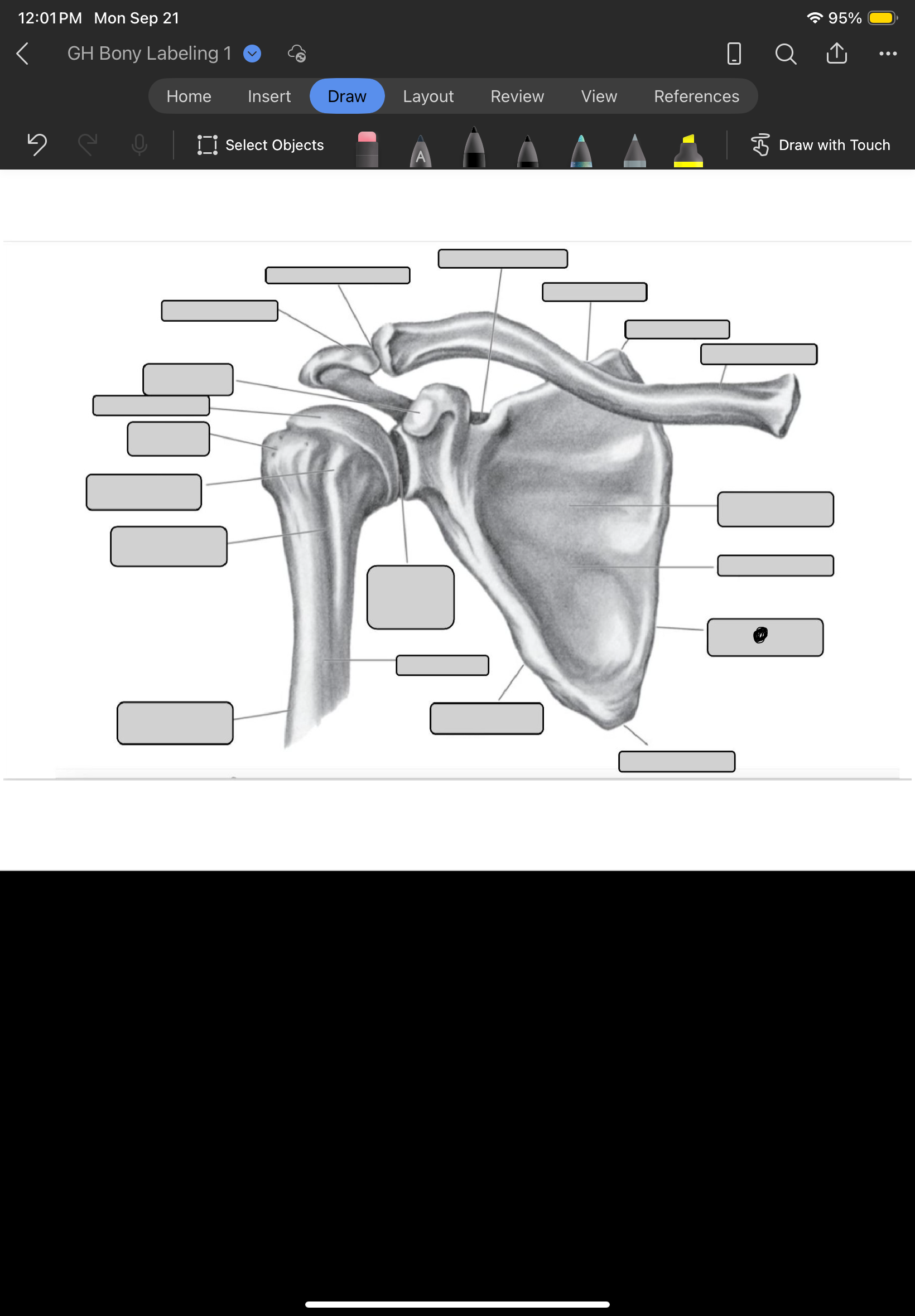
medial border
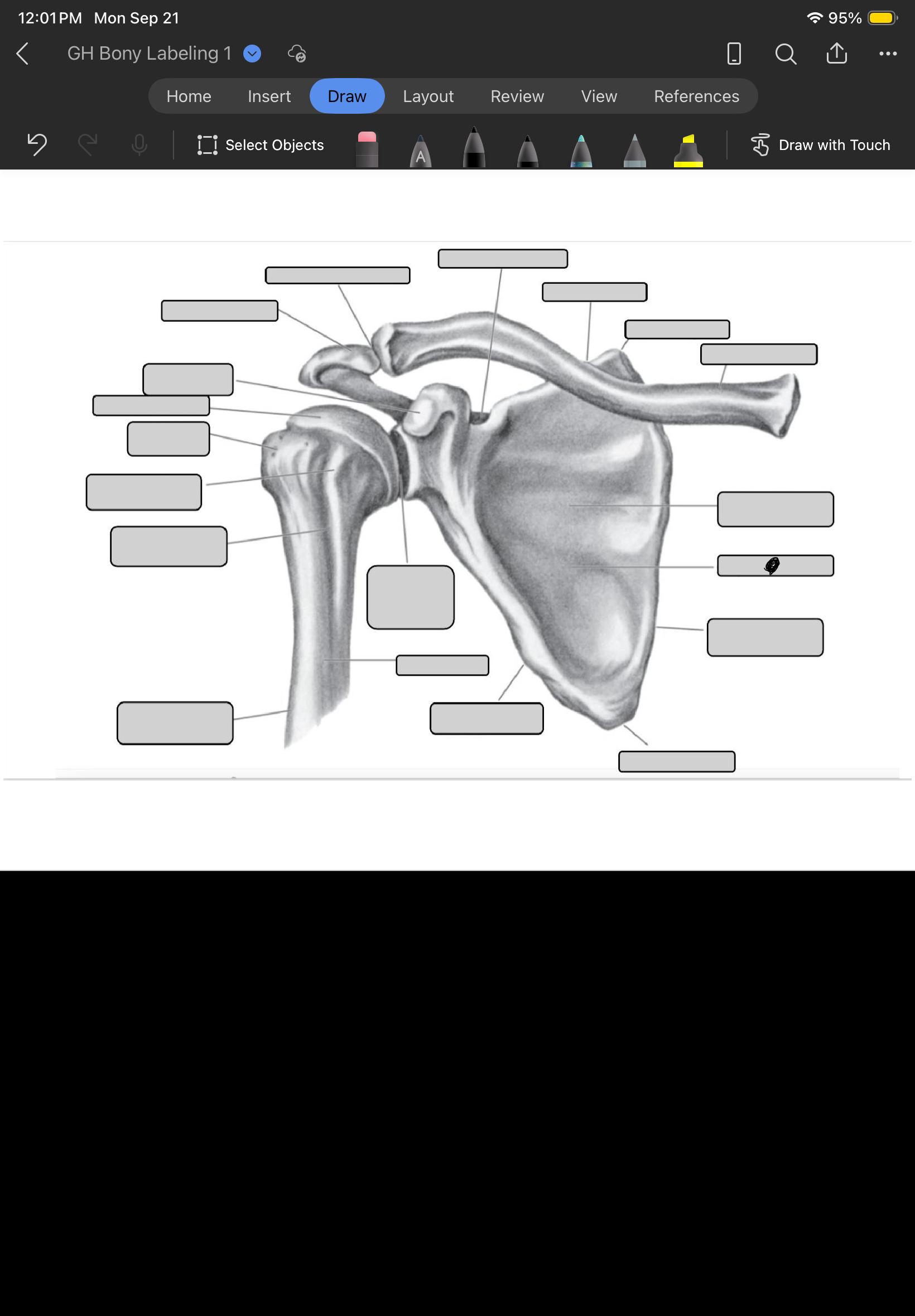
scapula
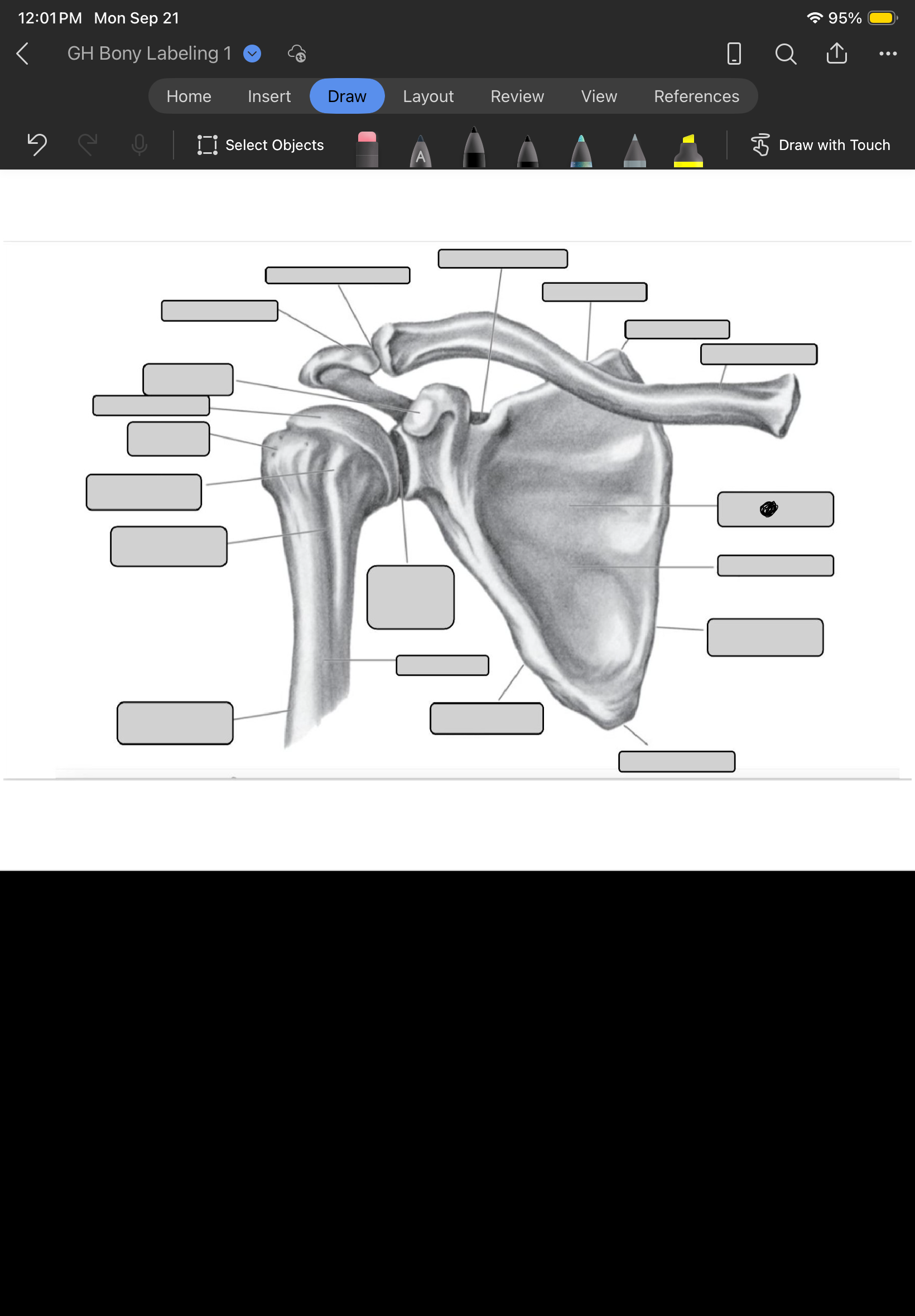
subscapular fossa

clavicle
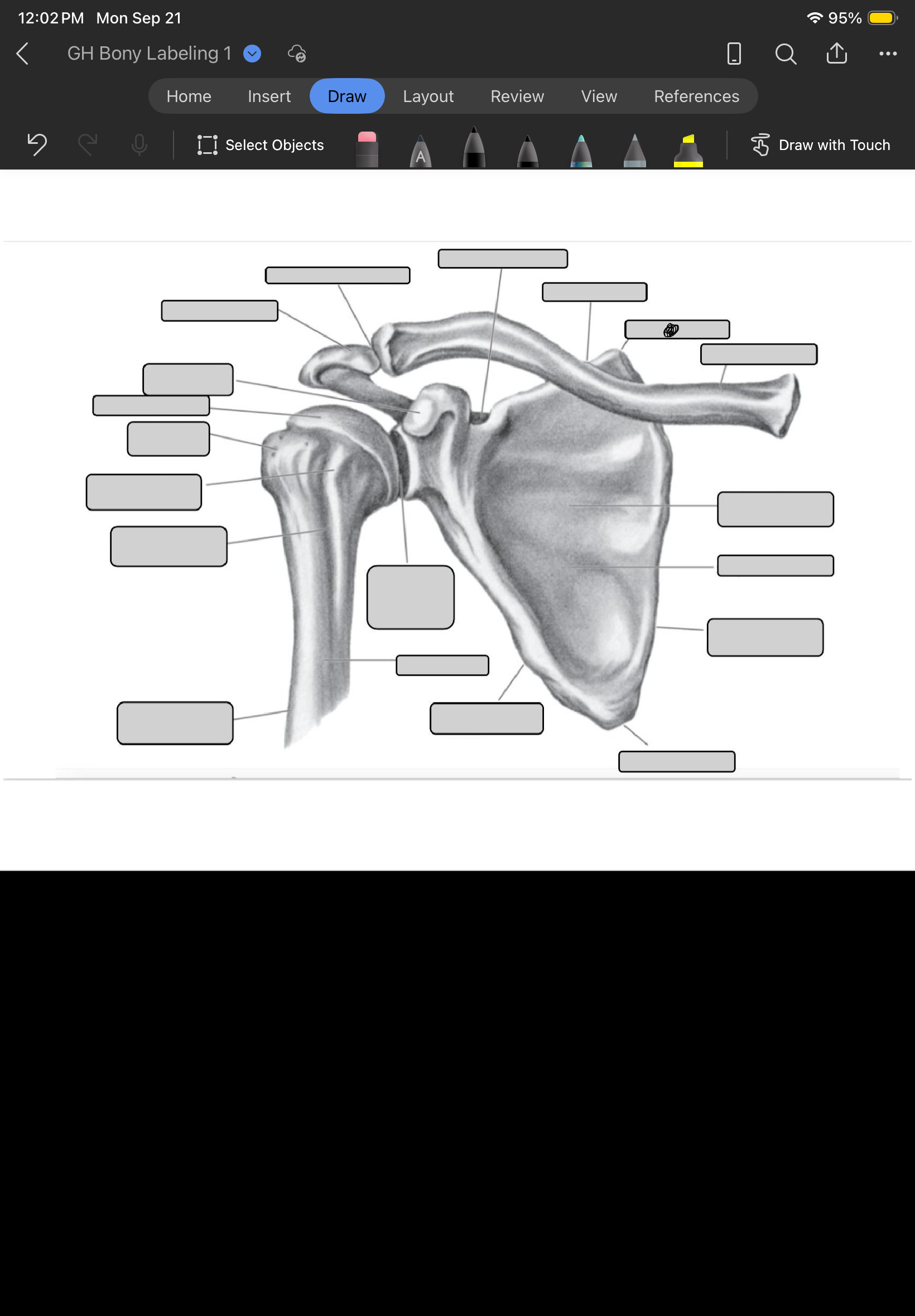
superior angle

superior border

suprascapular notch

frontal plane, sagittal axis

transverse plane, Vertical axis

sagittal plane, frontal axis
Flexors
Anterior deltoid
Pectoralis major (upper fibers)
Coracobrachialis
Extensors
Subscapularis
Latissimus Dorsi
Teres Major
Teres Minor
Infraspinatus
Posterior Deltoid
Abductors
Deltoid (anterior, middle, posterior)
Supraspinatus
Pectoralis Major – upper fibers
Adduction
Pectoralis major - lower fibers
Latissimus dorsi
Teres major
Subscapularis
Coracobrachialis
External Rotation
Infraspinatus
Teres minor
Posterior deltoid