Exam 7 EMT
 Call Kai
 Learn
Learn Practice Test
 Spaced Repetition
 Match
Match Flashcards
 Knowt Play
1/203

There's no tags or description
Looks like no tags are added yet.
Name | Mastery | Learn | Test | Matching | Spaced | Call with Kai | Chat |
|---|
No analytics yet
Send a link to your students to track their progress
204 Terms
they might need to call a specialist to see the patient.
transport to a trauma center.
infection
Rotational and rollover
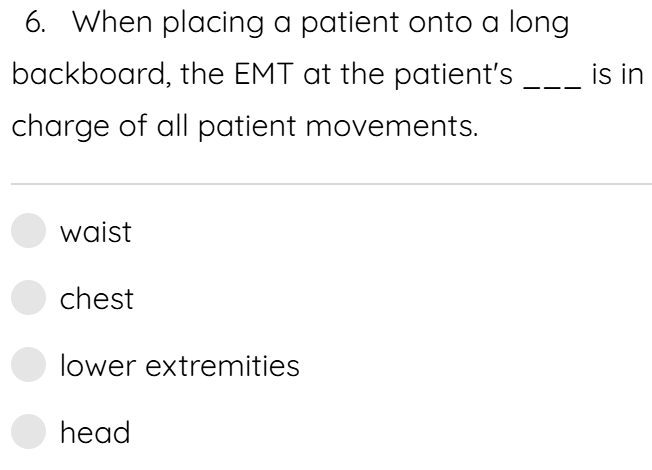
head
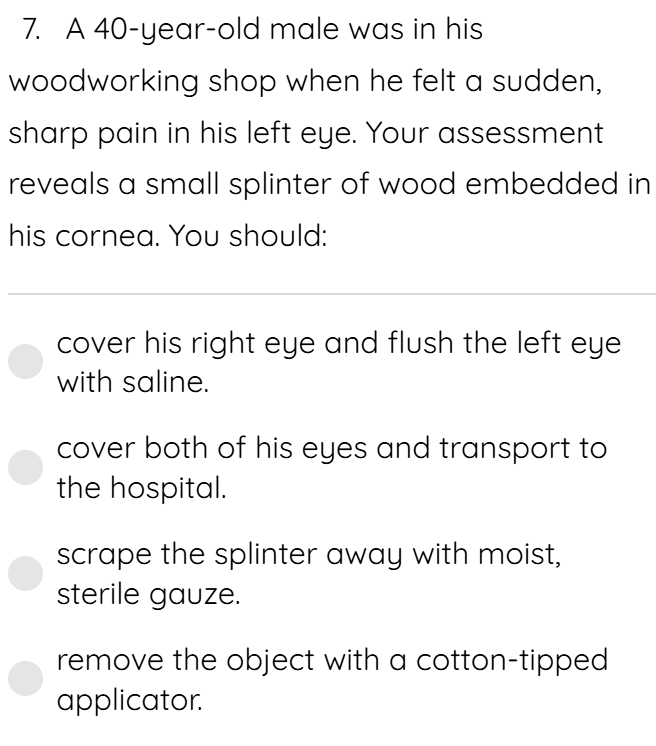
cover both of his eyes and transport to the hospital.
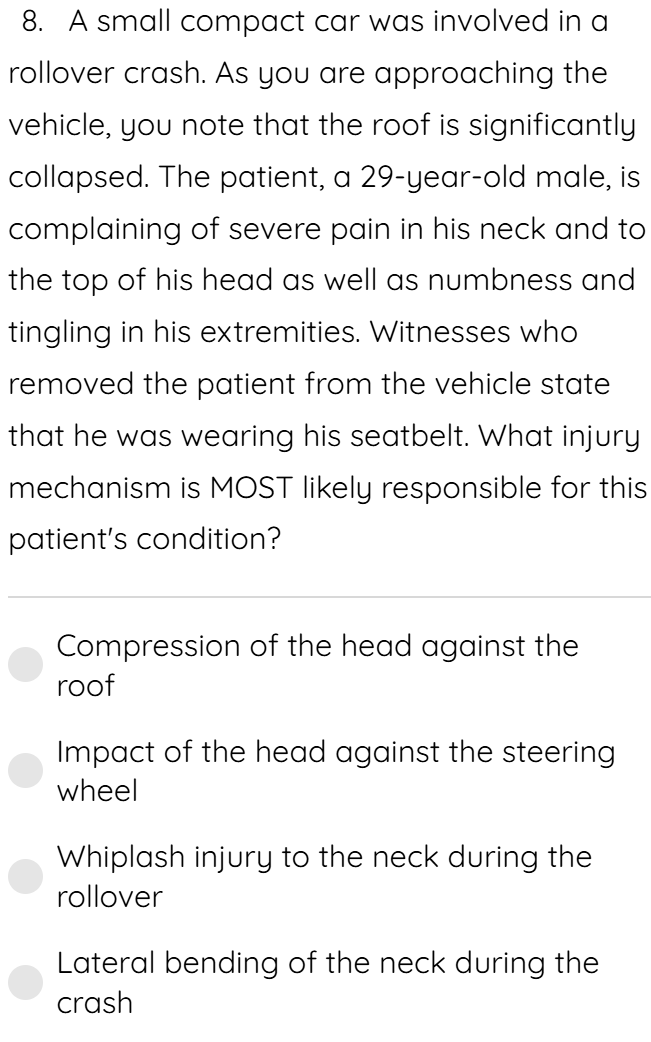
Compression of the head against the roof
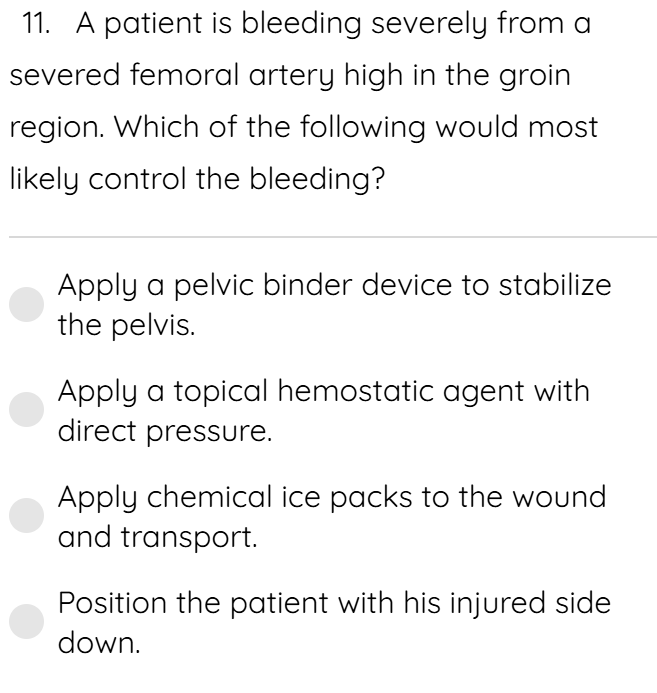
Apply a topical hemostatic agent with direct pressure.
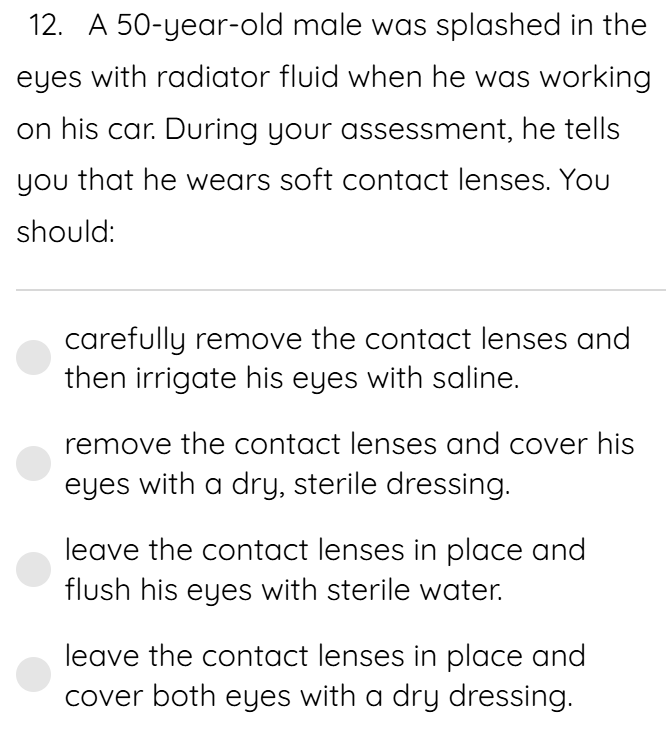
carefully remove the contact lenses and then irrigate his eyes with saline.
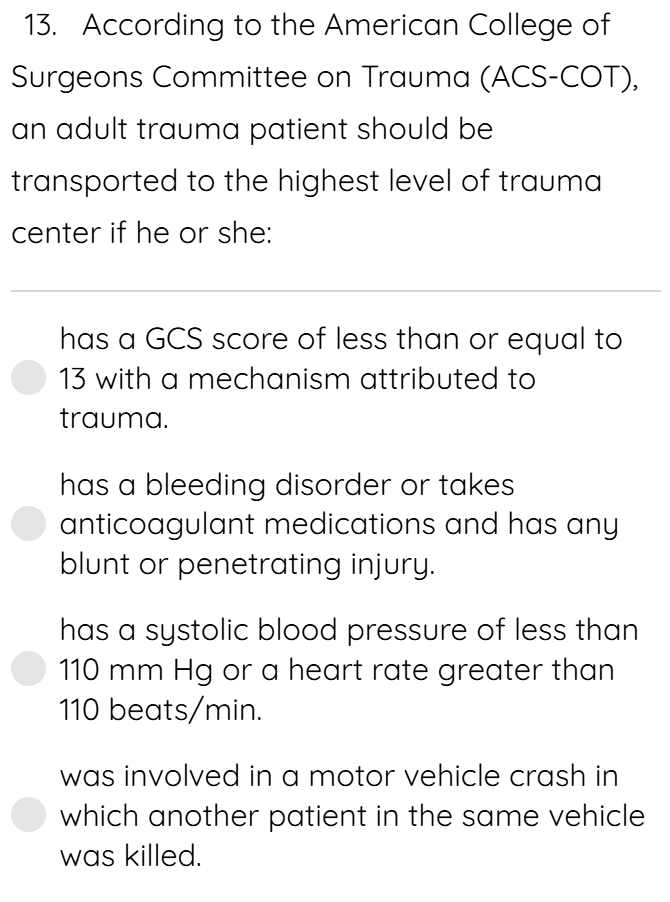
has a GCS score of less than or equal to 13 with a mechanism attributed to trauma.
globe.
tragus.
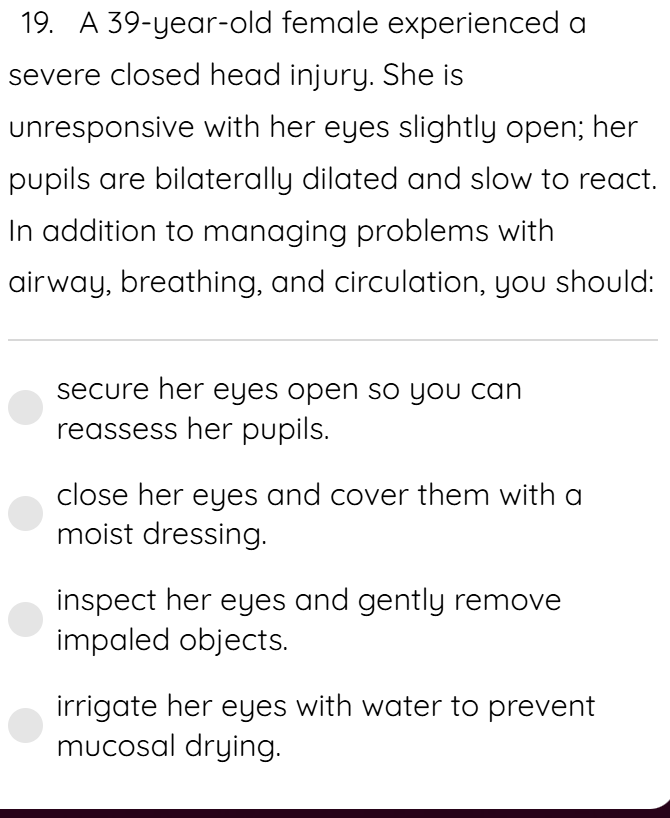
close her eyes and cover them with a moist dressing.
spinal column injury.
turn the backboard onto its side.
axial loading.
The 39-year-old female is at high risk for an infection.
bleeding between the skull and dura mater.
the fact that her clinical signs could indicate that she is bleeding internally.
apply direct pressure above and below the wound
jaw-thrust maneuver.
Apply a cervical collar and place the patient on a long backboard.
Head injury
Aortic rupture
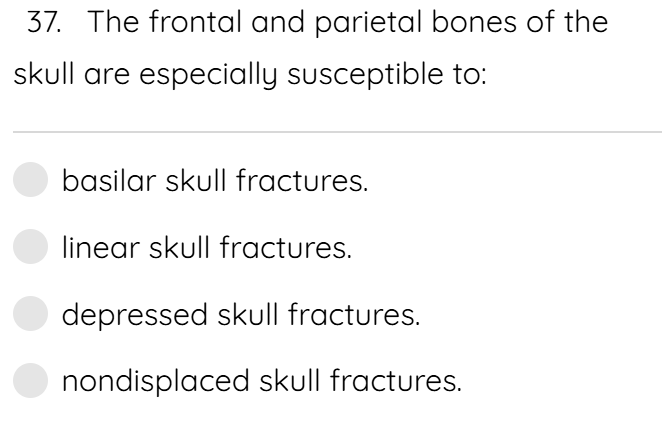
depressed skull fractures.
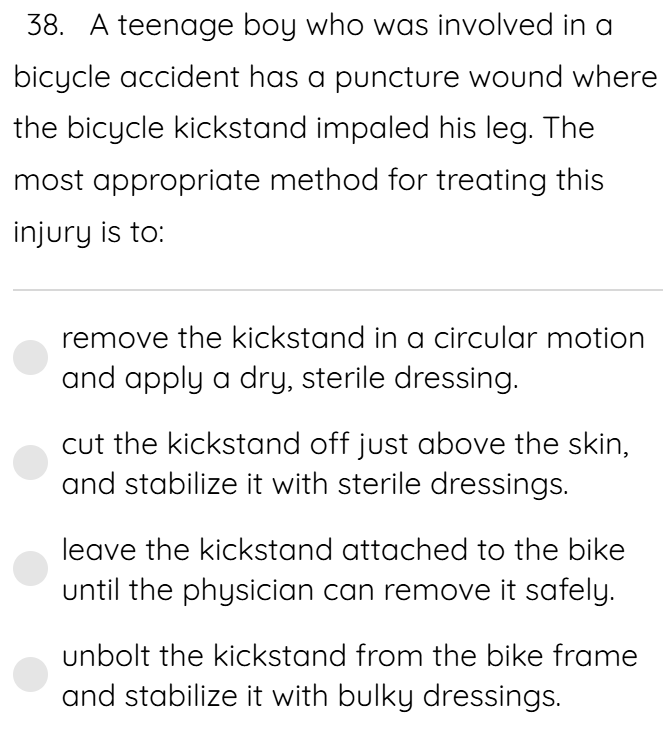
unbolt the kickstand from the bike frame and stabilize it with bulky dressings.
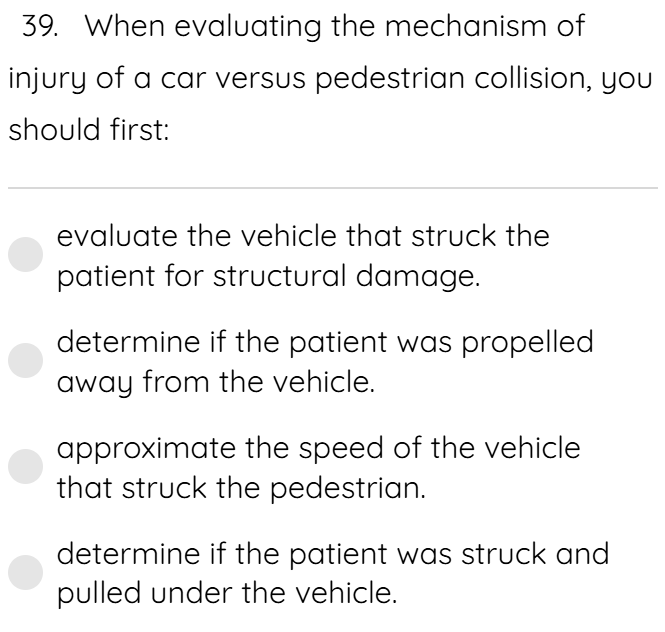
approximate the speed of the vehicle that struck the pedestrian.
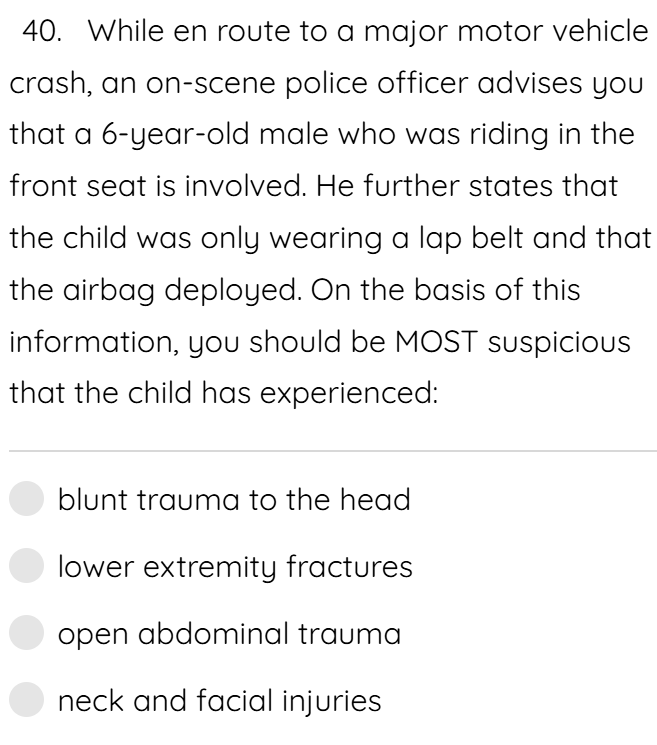
neck and facial injuries
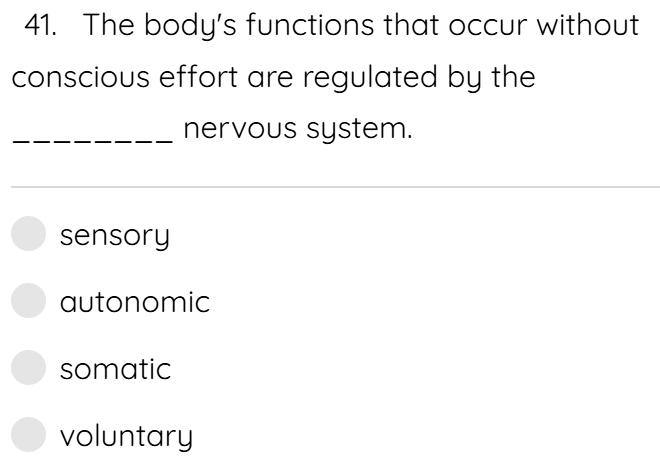
autonomic
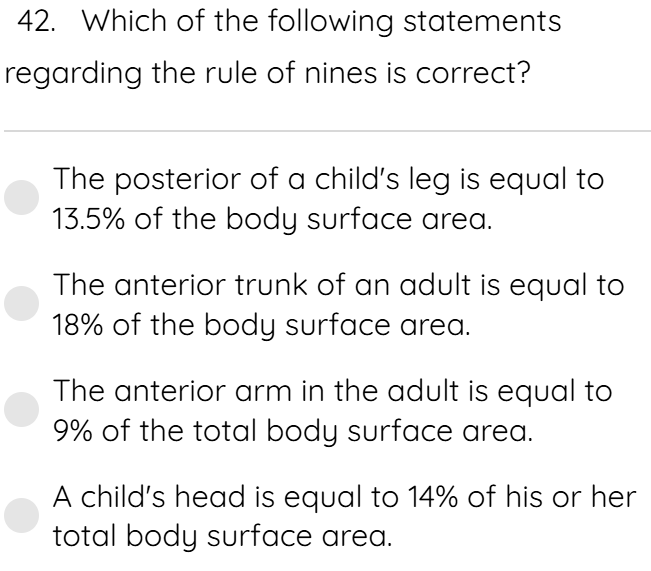
The anterior trunk of an adult is equal to 18% of the body surface area.
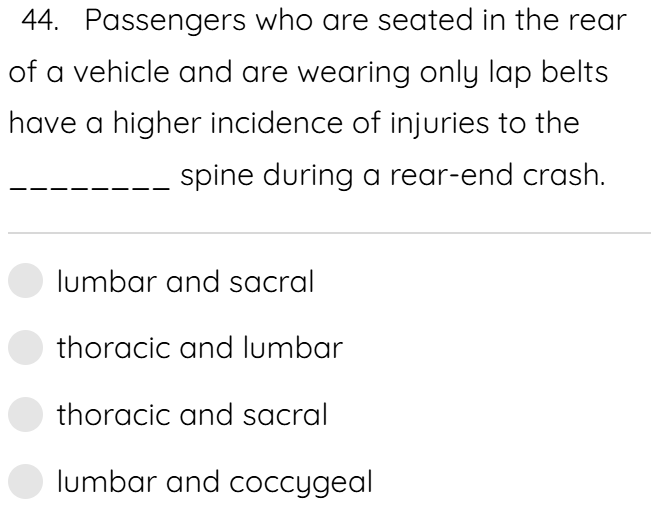
thoracic and lumbar
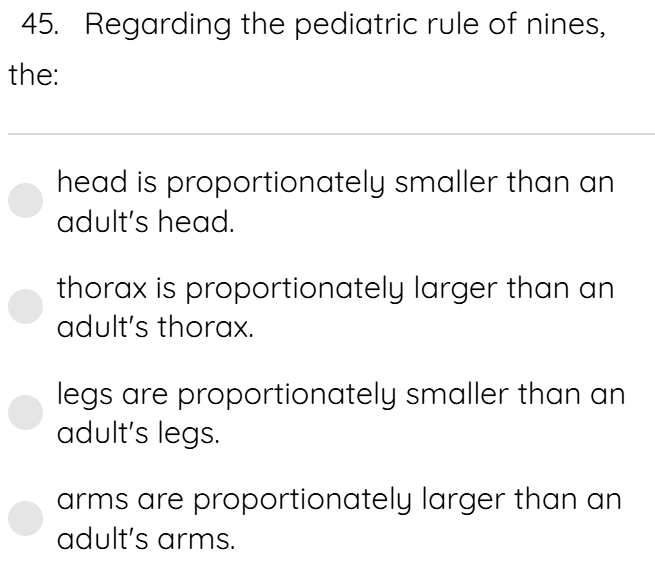
legs are proportionately smaller than an adult's legs.
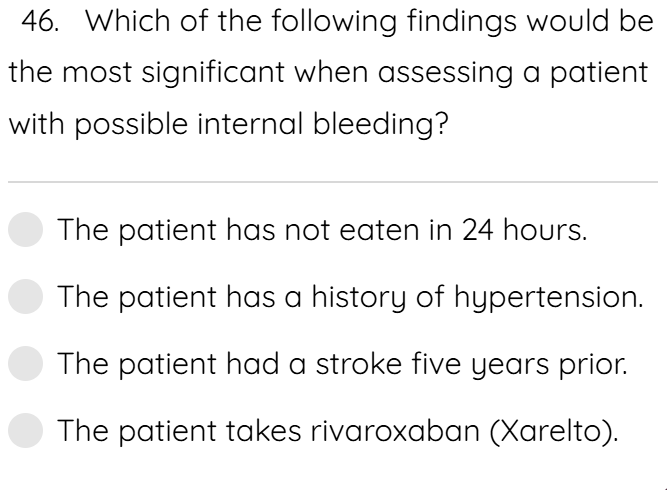
The patient takes rivaroxaban (Xarelto).
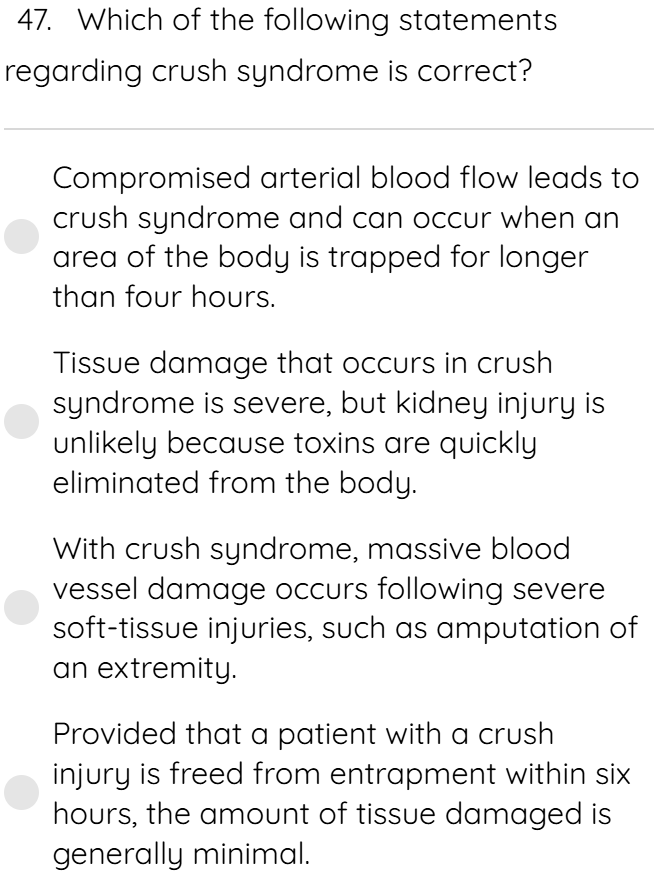
Compromised arterial blood flow leads to crush syndrome and can occur when an area of the body is trapped for longer than four hours.
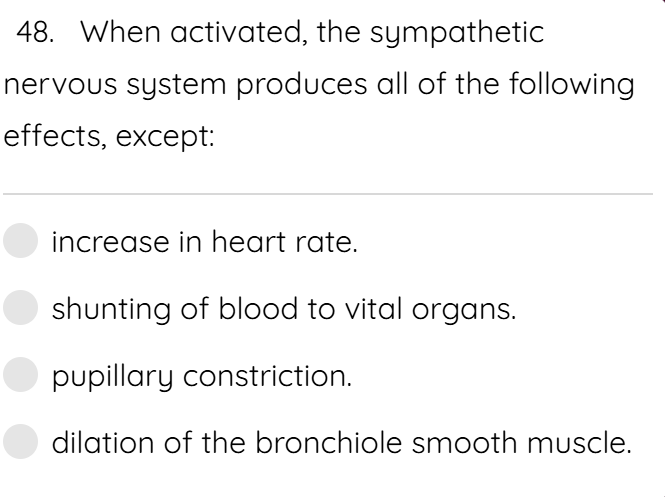
pupillary constriction.
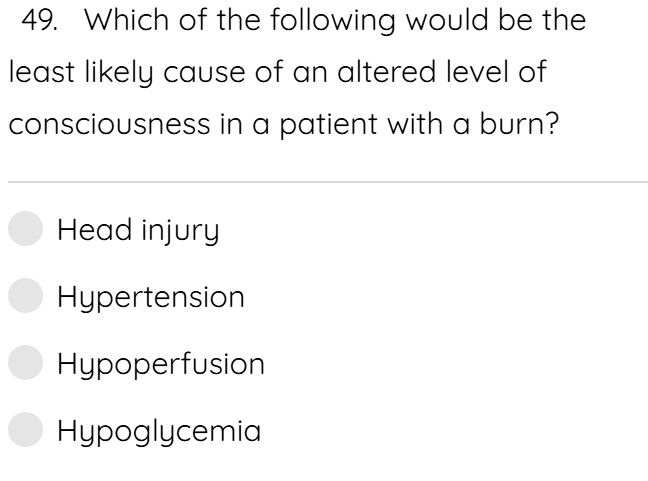
Hypertension
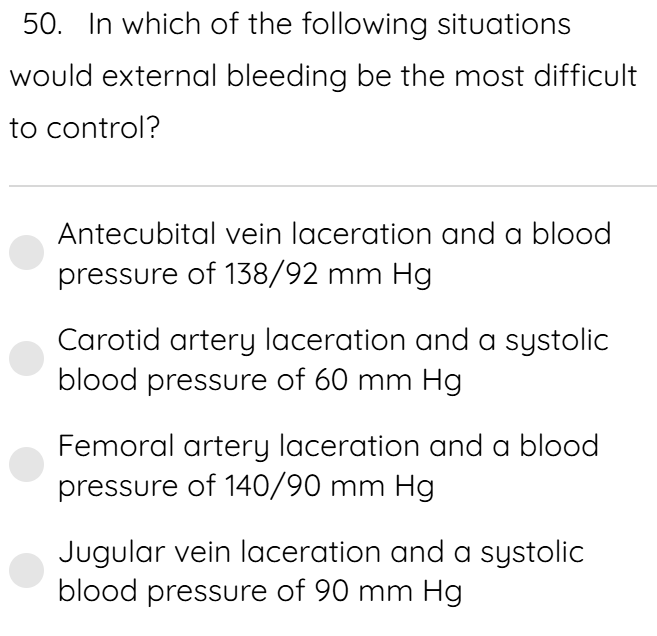
Femoral artery laceration and a blood pressure of 140/90 mm Hg
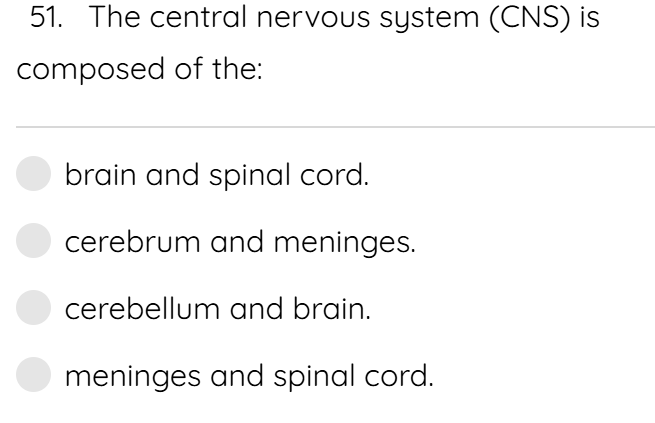
brain and spinal cord.
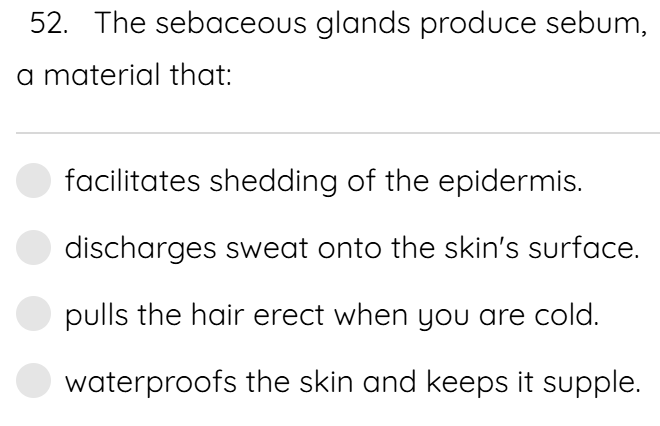
waterproofs the skin and keeps it supple.
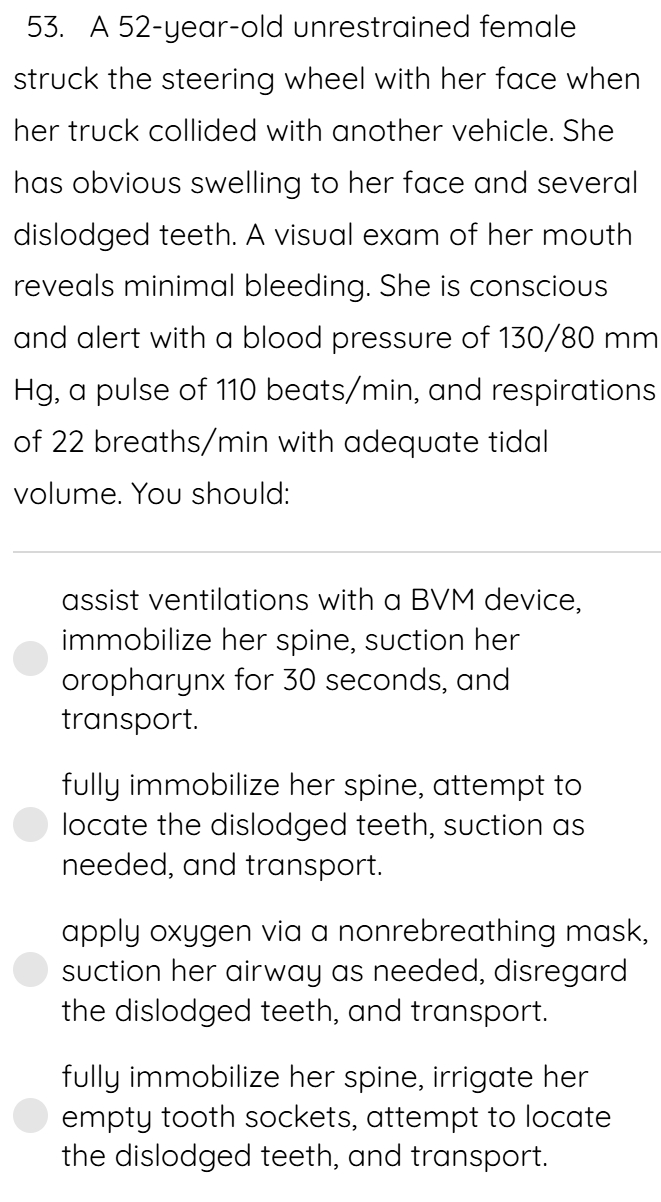
fully immobilize her spine, attempt to locate the dislodged teeth, suction as needed, and transport.
it interferes with your assessment of the airway.
brush away the chemical before flushing with water.
remember that it could still deploy and seriously injure you.
traffic conditions hamper the ability to get the patient to a trauma center by ground within the ideal time frame for the best clinical outcome.
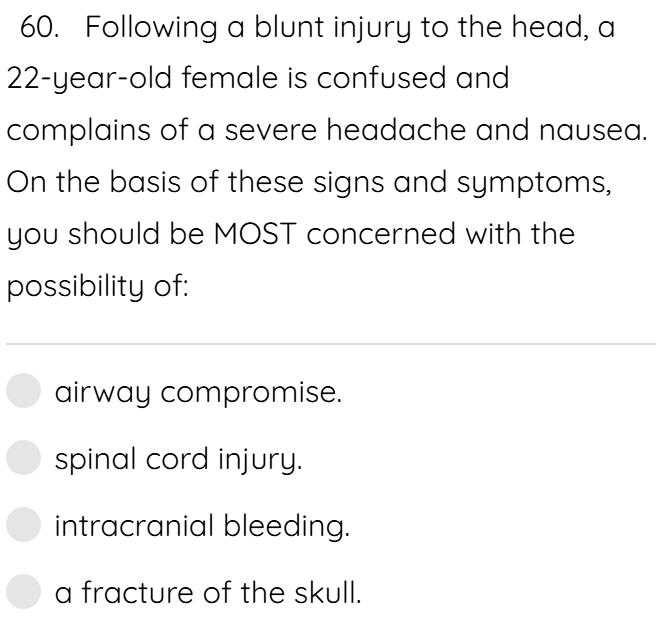
intracranial bleeding.
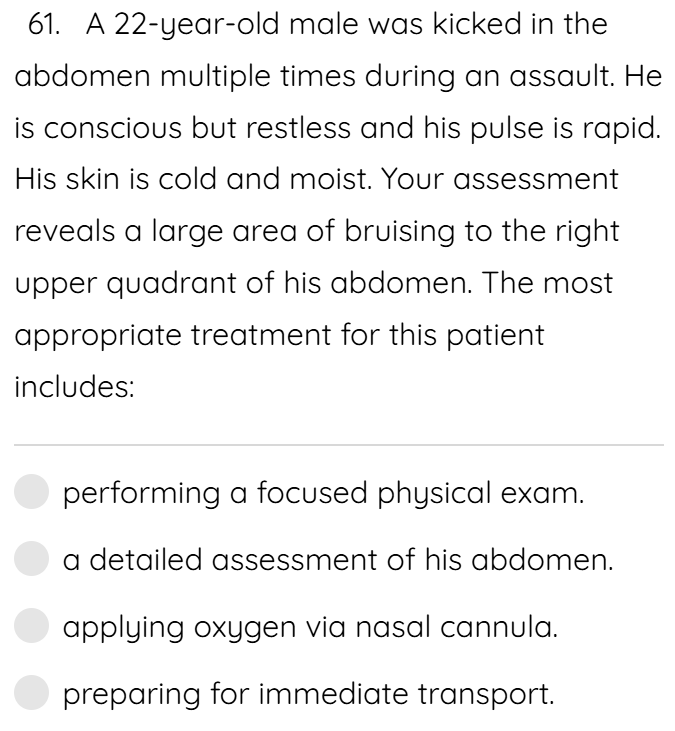
preparing for immediate transport.
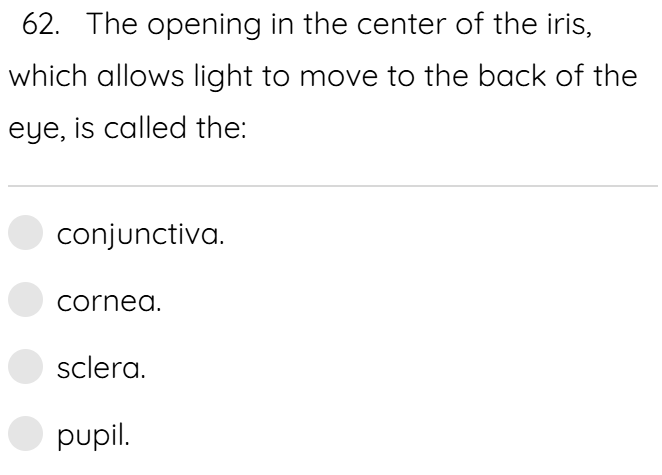
pupil.
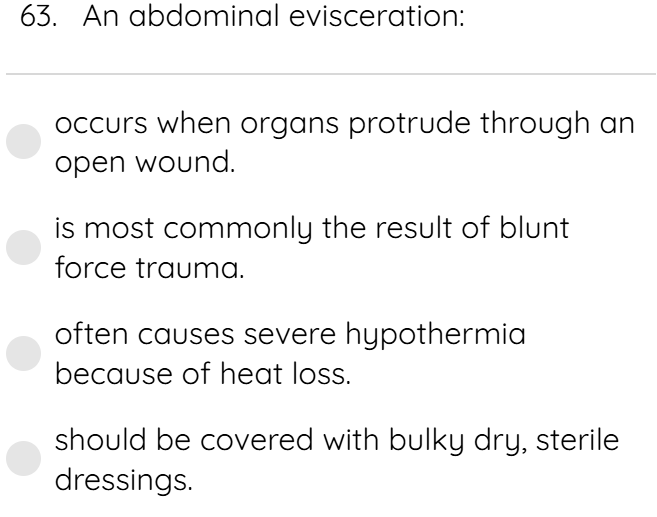
occurs when organs protrude through an open wound.
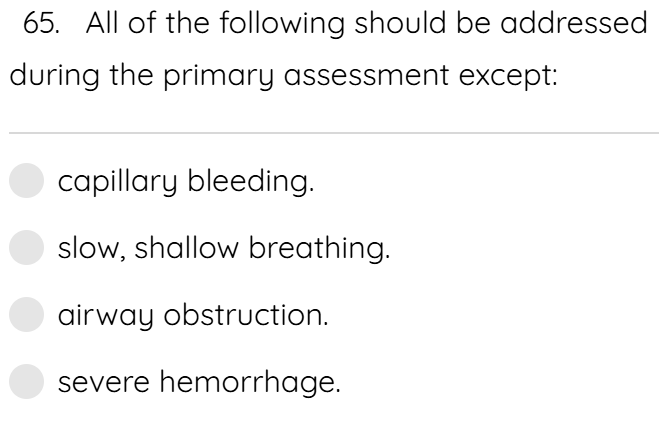
capillary bleeding.
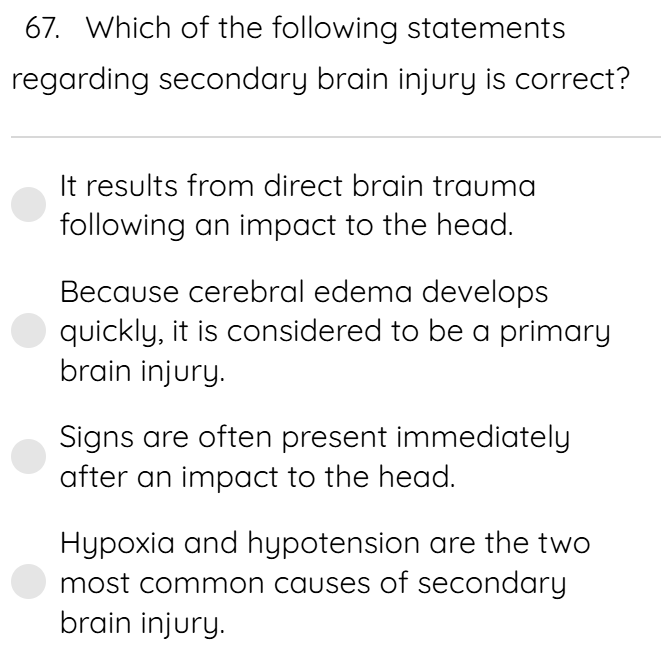
Hypoxia and hypotension are the two most common causes of secondary brain injury.
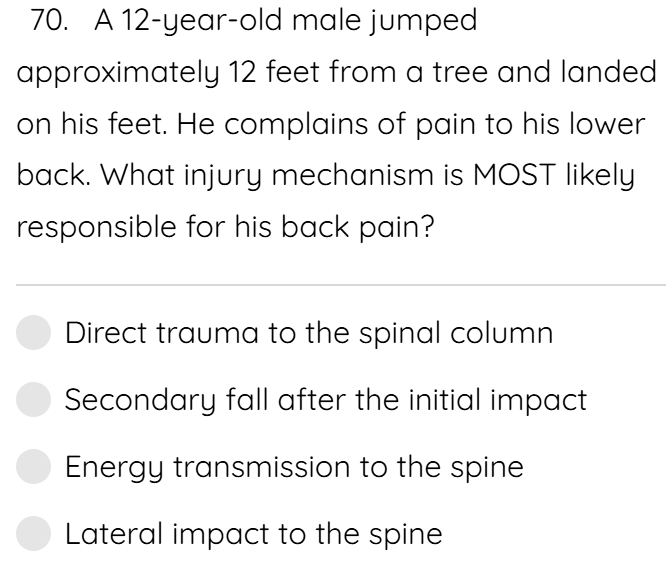
Energy transmission to the spine
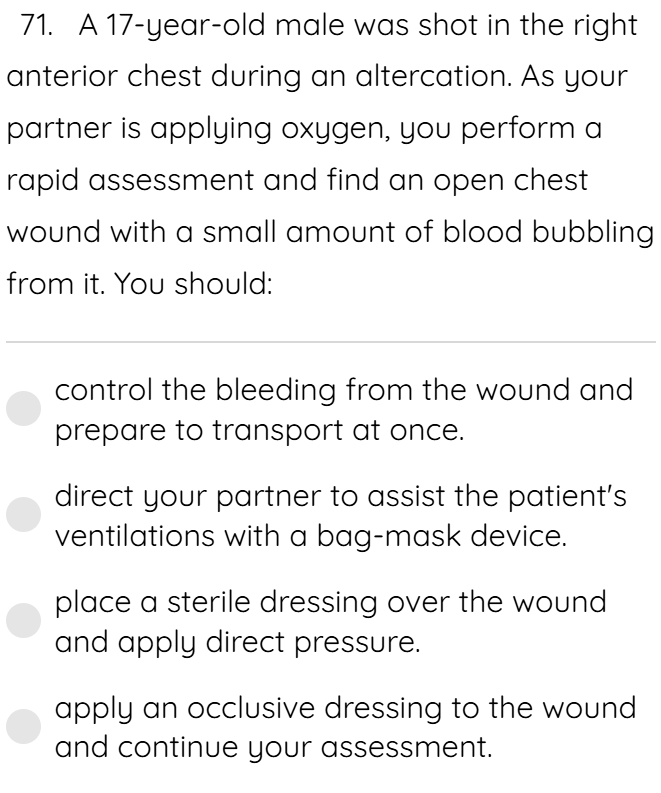
apply an occlusive dressing to the wound and continue your assessment.
place additional dressings over the wound.
osteoporosis can cause a fracture as a result of a fall from a standing position.
intracerebral hematoma.
a detached retina.
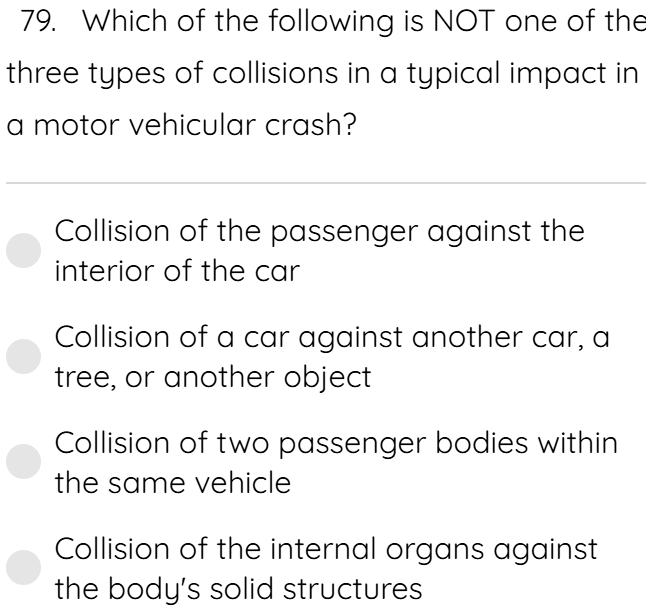
Collision of two passenger bodies within the same vehicle
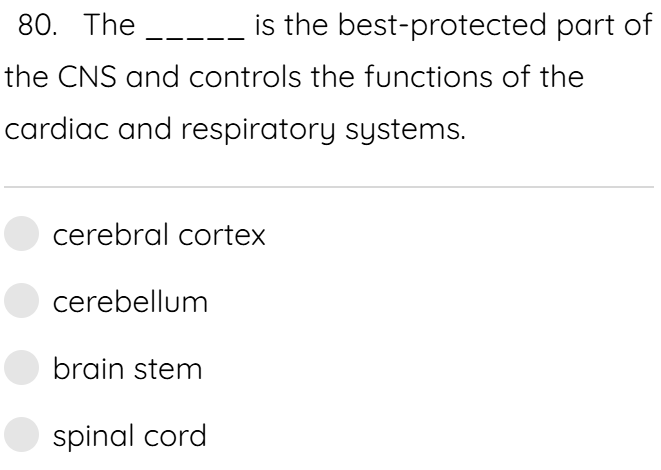
brain stem
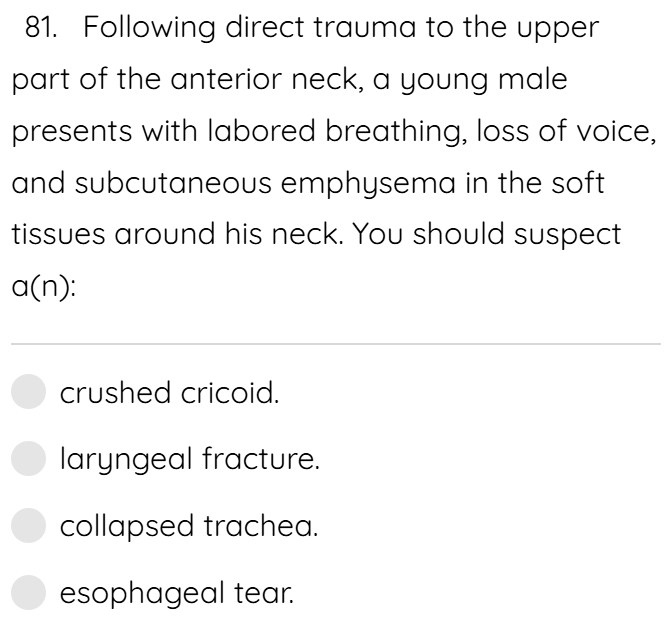
laryngeal fracture.
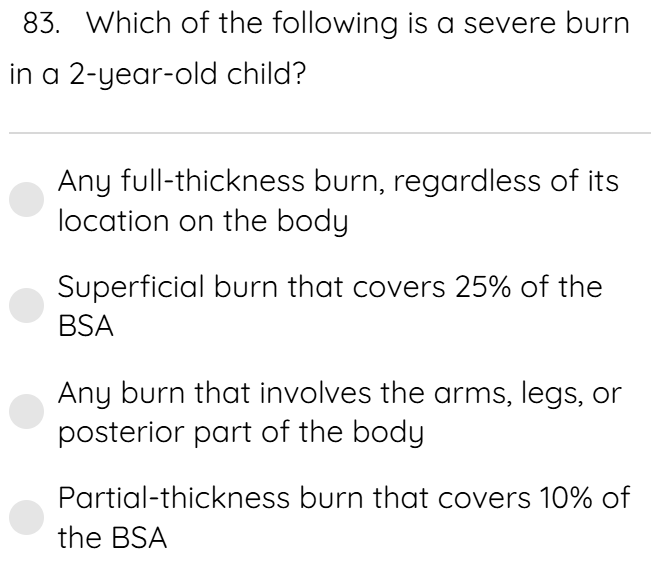
Any full-thickness burn, regardless of its location on the body
spinal canal.
mandible
systolic blood pressure.
immediate reassessment after the intervention.
rapid deterioration of neurologic signs.
cerebellum.
padding between the ear and the scalp.
assess distal circulation and readjust the bandage as needed.
cavitation
the nerve endings have been destroyed
falls and motor vehicle collisions.
retrograde amnesia.
lateral collisions.
Severe burns are typically a combination of all degrees of burns.
low fluid volume leads to inadequate perfusion.
apply a compression device around his pelvis.
They usually originate from the septum area and bleed slowly.
apply direct pressure to her arm wound.
thoracic and lumbar
conjunctiva.
The filtering of blood cells in the spleen
administer oxygen and prepare for rapid transport.
Blood pressure, 190/110 mm Hg; pulse, 55 beats/min; respirations, 30 breaths/min
transport her to the emergency department.
suspect that all living occupants experienced the same serious trauma.
nausea and ringing in the ears.
the tourniquet should only be removed at the hospital because bleeding might return if the tourniquet is released.
a tourniquet proximal to the injury.
report the incident to the appropriate authorities.
Irregular rate, pattern, and volume of breathing with intermittent periods of apnea
Pain upon passive movement of the injury site
stabilize her entire spine.
High blood pressure
begin CPR and apply the AED.
arterioles.
assist the patient's ventilations.
color.
cerebrum
your awareness and concern for potentially serious underlying injuries.
Partial-thickness burn to 20% of the body surface area