Art History- Paleolithic Art
 Call Kai
 Learn
Learn Practice Test
 Spaced Repetition
 Match
Match Flashcards
 Knowt Play
1/14

There's no tags or description
Looks like no tags are added yet.
Name | Mastery | Learn | Test | Matching | Spaced | Call with Kai | Chat |
|---|
No analytics yet
Send a link to your students to track their progress
15 Terms

Nude Woman (“Venus of Willendorf”)
found in Willendorf, Austria, 25,000 BCE, made of limestone from Italy (has been taken around in travels), only 4” tall
might have been able to be worn because of small size
fertility figure (seen in exaggagerated reproductive features)
likely an idea or concept
intentional beaded pattern around the head and no face (could be a symbol for abundance or a powerful figure)

Lion Man Statue
found in Hohlstein-Steidel Germany, 38,000 BCE, made made of mammoth ivory
is a therianthrope so it must be some sort of suymbolism as it depicts a predator
not meant to be worn or shown off, but to be held and passed around

Bull and Bison Clay Reliefs
found in Le Tuc d’ Audoubert Cave, France, 15,000 BCE, made from clay collected from different parts of the cave and created a permanent sculpture in the rock only 2” long
seen from the footprints throughout the cave- grabbing clay from different parts to shape the bull and bison
found deep in a cave which proves that people were making art for the sake of making art

Negative Hand Stencils
found in various different places in South Sulawesi Caves, Indonesia, 67,800 BCE
intentionally elongated fingers in cave painting to maybe look like animals, or it could just be hands slipping or moving when painting
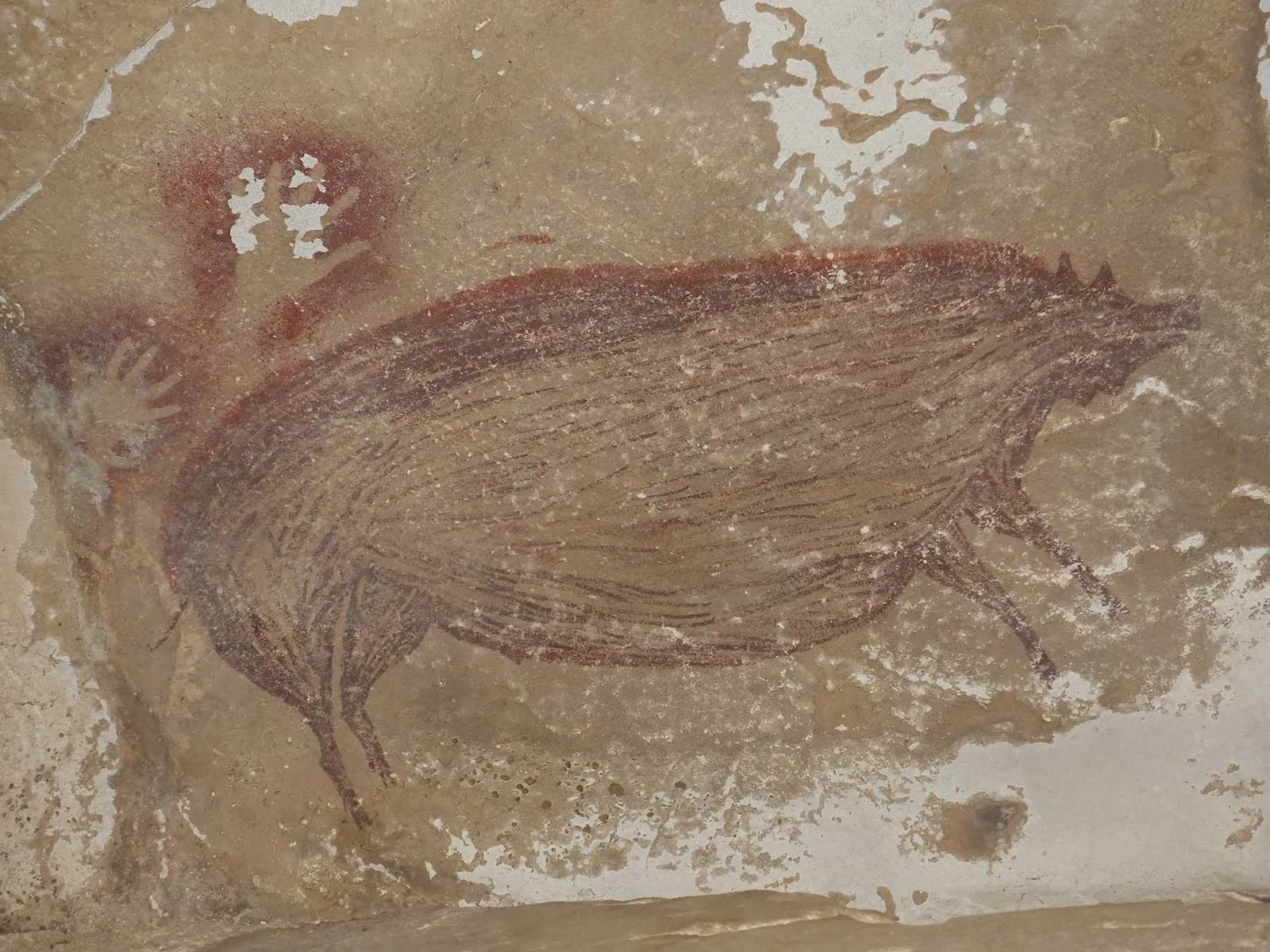
Warty Pig Paintings
found in Marcos Pangkep Caves, South Sulawesi Indonesia, 44,000 BCE
people are beginning to paint what they see around them like animals
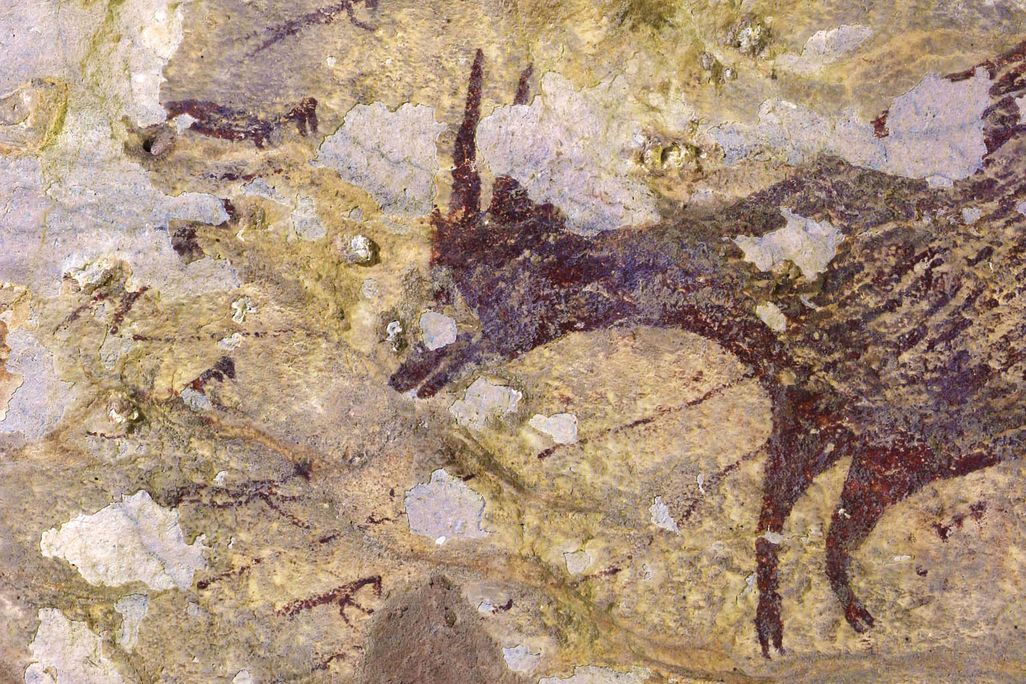
Hunting Scene with Therianthropes
found in Maros- Pankep Cave, Indonesia, 48,000 BCE
said to be the oldest figurative art in the world
might be a depiction of shaminsim- where a person crosses over into a spiritual world in order to stop suffering in the real world

Rock Art at Nwarla Gabarnmang
found at Nwarla Gabarnmang (“hole in stone”), Jawon Country, in Arnhemland, Australia, 28,000 BCE- 20th Century AD
Superimposed Paintings- multiple images painted on top of each other over the course of time
x-ray paintings- used red to contrast with color to depict a skeleton
most of the art depcts the Myth of the Dreaming

Hunter and Kangaroo
found in Arnhem Land, Australia in Oenpelli Caves, 1912 AD
depiction of bridging the gap between the spiritual and real world, manifestation of the Dreaming
Rock Art: Eland Antelops, Human Figures, and Therianthropes
found in Game Pass Namibia, Africa, 2700 BCE-19th Century CE
related to Shaminism and the Dreaming
Rock Art: Man Dying and Becoming an Eland- believed not to be a hunting scene, as it shows a human becoming an eland to tap into the spiritual world and be healed (humans having a “half-death” when entering a trance going into the spiritual world)
worlds are connected by a ray of light as seen coming off of the therianthrope
Palm Prints
found in Chauvet Cave, France in 30,000 BCE,
tells us that the same person was working all over the cave
crooked finger shows that there was one person moving all throughout the cave
Cave Lions
found in Chauvet Cave, 30,000 BCE, but revisited for 10,000 years in the future, made using charcoal, ochre, chalk, and stone
symbolic value as it shows more predators (lions, bears, etc.) more than other paintings at the time
used parts of the wall to add to the design and included it into their work
Woman and man with Bison Head on Stalactitite
found in Chauvet Cave, France , 30,000 BCE France
significant as humans are not normally depicted in cave art but the fact one of the is a therianthrope and only the woman’s genitals are pictured, shows that it could be religous and a symbol of fetility
the fact that they are pictured on stalactite is significant as it is deep in the cave which means it held importance to people, as they were willing to make the journey to see it
Aurrochs, Horse, and Fighting Rhinocerus
found in Chauvet Cave, France, 30,000 BCE, made of charcoal (shading adds to the depth of the drawing)
shows incredible craftmanship as it could show the horse in motion
Hall of the Bulls
found in Lascaux Caves in France, 15,000 BCE-13,000 BCE, largest bull 11” 6” long
large paintings high up on the cave wall as- show that they could be superimposed
unatural wall to climb, so they had to dig out holes in the wall to climb it
could be a depiction of animal fertility, for the purpose of being hunted and eaten by the people- however no theory is perfect so there is likely more depth to this idea
Shaft of the Dead Man: Rhino, Bird-Headed Man, and Disemboweled Bison
found in Lascaux Cave 15,000-30,000 BCE
bird-headed man: human figure is unusual- defined gender, simple body drawing (stick hands and legs), laying in an unnatural position, staff of bird next to him (could be representative of shaminism), — could be flying or moving toward the spiritual world
bison- head looking behind himself, unusually furry, is shown as has been hunted (spear going through his body)- could be a visual of a successful hunt
rhino- running away from scene- the outline of the rhino is different so there is a chance it is unrelated to the scene
dots by the rhino might be representative of a calender year (a notation of some sort or could represent migrating heards)- keeping track of numbers