Self Care II IE1 Material SHARMA
 Call Kai
 Learn
Learn Practice Test
 Spaced Repetition
 Match
Match Flashcards
 Knowt Play
1/30

There's no tags or description
Looks like no tags are added yet.
Name | Mastery | Learn | Test | Matching | Spaced | Call with Kai | Chat |
|---|
No analytics yet
Send a link to your students to track their progress
31 Terms
3 layers of tear film
lipid layer (outermost)
oily layer prevents evaporation of tears
aqueous layer (middle)
thickest watery layer provides hydration, O2, nutrients to cornea
mucous layer (innermost)
helps aqueous later spread evenly over surface and adhere to cornea
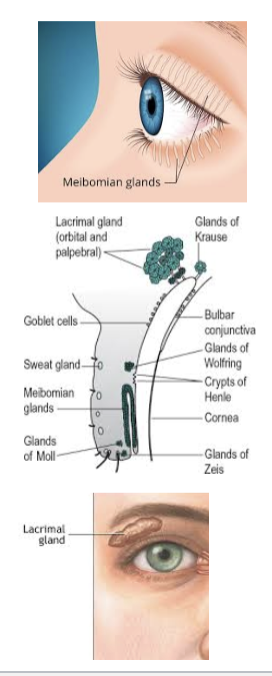
lipid layer secreted by (glands)
meibomian glands
inside eyelid
glands of zeiss and moll
at base of each eyelash
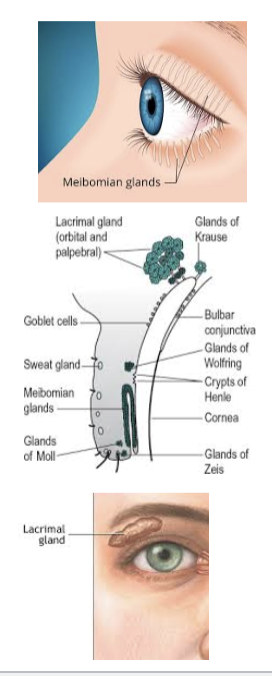
aqeuous layer secreted by (glands)
lacrimal glands
above each eyeball
glands of Krause and wolfring
under eyelids
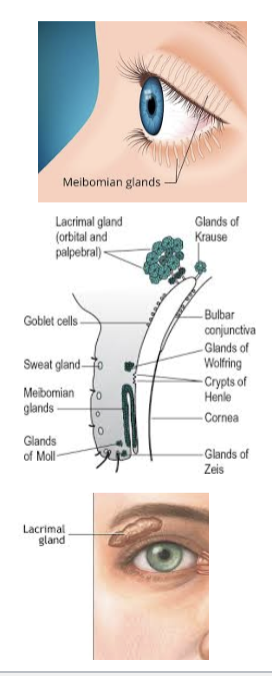
mucous layer secreted by (cells)
goblet cells
in conjunctiva
corneal and conjunctival epithelial cells
symptoms of dry eye
what happens untreated
itching, burning, scratchy
foreign body sensation
redness
difficulty wearing contact lenses
excessive tearing (inital stage)
stringy mucous
untreated → corneal ulceration, scarring, vision loss
non-pharm approaches in dry eye
adequate water intake
frequent blinking
position screens below eye level → minimize tear evaporation
consider warp around glasses → protect from wind and dust
hairdryers and car ac away from eyes
use humidifier
stop smoking and dusty environments
do not sleep under fan
active ingredients in artificial tears
demulcents
cellulose derivatives
polyols
alcohols
water-soluble polymers that lubricate and protect eye surface
CMC, HPMC
propylene glycol, PEG, glycerinPVA, Povidone
Inactive ingredients in artificial tears
NaCl, KCl, MgCl2, CaCl2, Phosphate/Bicarbonate based buffer
osmoprotectants
protect from damage
Trehalose, Carnitine
humectants
absorb + retain water
sodium hyaluronate
oils
prevent water reabsorption
castor, mineral oil
Preservatives in artificial tears
vanishing preservatives
break down components upon contact w/ light/eye
gentle
Purite, Sodium peroborate
quaternary ammonium compounds
polyquaternium-1: safe + effective w/ low toxicity
BAK: toxic to corneal epithelial cells
mild case selection
single active ingredient tear
CMC or HPMC
lifestyle modifications
increased frequency selection
if using preservative-containing drop more than 4- 6x day → switch to preservative free formula
multiple ingredient selection
contains a lipid component (oils) to prevent evaporation
for more relief
gel based tears selection
for severe symptoms
longer lasting relief
consider referral
supplement w/ nighttime ointments
used at night because they interfere w/ vision
consider referral
what is prescription required artifical tear insert?
Lacrisert
what is not recommended
vasoconstrictor containing eye drops
“zoline” and phenylephrine
Perfluorohexyl octane (Meibo)
MOA
counseling
form non-aqueous barrier on top of tears to prevent evaporation
1drop 4x daily, remove contact lens, reinsert after 30mins
non-aqueous non-preservative multi-dose vial
Cyclosporine 3 meds
MOA
SE
Counseling
storage
restasis
cequa
veyve
MOA
calcineurin inhibitor that inhibits T lymphocyte activation → decrease inflammation and increase tears
SE
burning sensation, eye pain, discharge, foreign body sensation
Counseling
invert, wait 15 mins, remove contact lenses
room temp 15 - 25 C
Restasis 0.05%
cyclosporine emulsion in single dose unit or multidose vial
Cequa 0.09%
cyclosporine nanosphere solution in single unit dose
Veyve 0.1%
semi-fluorinated alkane solvent in multi dose vial
non-aqueous and preservative free
Lifitegrast (Xiidra)
percentage and vial type
MOA
SE
Counseling
storage
5% single unit vial
LFA-1antagonist that blocks T cell adhesion and activation → decrease inflammation
blurred vision, eye discomfort, increased tearing
wait 15 mins, remove contact lenses , 1 drop 2x daily
room temp 20 - 25C
drugs that stimuate tear secretion
Acoltremon (Trpytyr)
0.003% single unit preservative free
1 drop 2x daily
fridge
stimulate TRMP8 receptors
Varenicline (Tyrvaya)
nasal spray 0.03mg
stimulate nicotinic cholinergic receptors
sneezing, coughing, nose throat irritation
prime pump 7 sprays
room temp
do not shake or freeze
anterior blepharitis
caused by lid colonization w/ staph bacteria and/or infestation w/ demodex mites
posterior blepharitis (MGD)
dyfunction of meibomian gland related to staph infection
bacterial lipase digests meibum, form fatty acids, clog glands, prevent release of oily tear layer → cause dry eye
anterior blepharitis symptoms
staph
seborrheic
hard scales and crusting around eyelashes called collarettes
greasy lid margins w/ soft scales causing lashes to stick
posterior blepharitis symptoms
swollen eye lids, capping of meibomian glands w/ oil causing dry eye
self care approaches of blepharitis
good eyelid hygiene
remove crusts 1-2x day w/ cotton tip dipped in baby shampoo
facilitate meibomian gland secretions
warm compress for 10 mins 2x day
massage
eliminate demodex
tea tree oil scrubs - active 4-terpineol
Lotilaner (Xdemvy)
1 drop 2x daily for 6 weeks
GABA channel inhibitor
pharm management of blepharitis
topical antibiotics
“mycin”
oral antibiotics for MGD
“cycline”
inhibition of microbial lipase
alternative for children and pregnant women
azitrhtomycin, erythromycin
hordelolum (sty)
acute staph infection of glands in eyelin
external
zeiss or moll
warm compress, epilation of eye lash, incision, bacitracin, tobramycin
internal
meibomian gland
warm compress
oral antibiotics (large) - dicloxacillin 1 - 2 weeks
symptoms
painful, tender, red swelling
Chalazion
chronic sterile lipogranulomatous inflammation
hard, painless, non-red growth
management
warm compress and massage 2 - 4 weeks
injection of triamcinolone acetonide max 2 injections; 1- 2 weeks resolved
surgical intervention