Surgical Removal of Impacted Teeth I & II
 Call Kai
 Learn
Learn Practice Test
 Spaced Repetition
 Match
Match Flashcards
 Knowt Play
1/85

Earn XP
Description and Tags
Lecture given 8/18/2026
Name | Mastery | Learn | Test | Matching | Spaced | Call with Kai | Chat |
|---|
No analytics yet
Send a link to your students to track their progress
86 Terms
impacted teeth
a tooth that fails to erupt into the dental arch within the expected time
the eruption has been impeded by adjacent teeth, dense bone, excessive soft tissue, or genetics
which teeth are most commonly impacted?
max and mand 3rd molars
max canines
mand premolars
when does the maxillary canine usually erupt?
after the max lateral incisor and after the max first premolar
when does the mand premolar usually erupt?
after the mand 1st molar
after the mand canine
what is the guidance around impacted teeth removal?
all impacted teeth should be removed unless their removal is contraindicated
if indicated for extraction, they should be extracted as soon as it is determined the tooth is impacted
it should not be recommended that the teeth be left in place until they cause problems
what did the AAOMS task force for 3rd molars find/suggest?
all impacted teeth should be considered for removal
the average age for completion of the eruption of the 3rd molar is 20 yo although eruption may continue in some pts to age 25
the normal development for the lower 3rd molars begins in a horizontal angulation that changes to mesioangular and then to vertical
when is the ideal time for 3rd molar removal?
when the roots are 1/3 formed but before they are 2/3 formed
usually between the ages of 17 and 20
what are the indications for removal of impacted teeth?
prevention of periodontal disease
prevention of dental caries
prevention of pericoronitis
prevention of root resorption
impacted teeth under a dental prosthesis
prevention of odontogenic cysts and tumors
tx of pain of unexplained origin
prevention of jaw fracture
facilitation of orthodontic treatment
optimal periodontal healing
what did the VA longitudinal study over 25yrs and 416 adult men find?
the lowest prevalence and incidence of 2nd molar pathology (caries and/or periodontitis) occurred when the adjacent 3rd molar was absent
a 3rd molar that was soft tissue impacted increased the risk of pathology 4.88 fold
an erupted or bony 3rd molar impaction increased the risk 1.74 fold and 2.16 respectively
TLDR: the retention of 3rd molars is associated with increased risk of second molar pathology in middle aged and older adult men
pericoronitis
seen in partially erupted teeth with large amount of soft tissue over the occlusal surface
it is an infection of the soft tissue around the crown
it is caused by normal oral flora- streptococci and anaerobic bacteria
host defense maintain balance
it can arise secondary to minor trauma from the max 3rd molar- traumatizes the operculum over the partially erupted mand 3rd molar
can be mild to severe
treatment for mild pericoronitis
irrigation
treatment for moderate pericoronitis
antibiotics
symptoms and treatment for severe pericoronitis
facial space infections- trismus, temp greater than 101F, malaise, facial swelling, pain
need referral and possible hospital admit
operculectomy
usually does not work, it tends to recur
Which of the following is true regarding impacted third molars?
A) If they are to be extracted, they should be extracted when the roots are three quarters
developed but before they are fully developed
B) If pericoronitis develops with an erupting tooth, it is usually caused by normal oral flora
C) The average age for completion of the eruption of the third molar is 10 years of age
D) The normal development for the lower 3rd molar begins in a Vertical Position
B) If pericoronitis develops with an erupting tooth, it is usually caused by normal oral flora
_____ and _____ inclinations and impacted mand 3rd molars posed a greater risk of ERR (external root resorption) lesions in adjacent second molars than other inclinations (_______ and ______) and max 3rd molars
mesioangular, horizontal
distoangular, vertical
why should impacted teeth be removed before a prosthesis is constructed?
if the impacted tooth must be removed after construction, the alveolar ridge may be altered by the extraction that the prosthesis becomes unattractive and less functional
if the follicular space around the crown of the unerupted tooth is greater than 3mm the diagnosis of _____ is reasonable
dentigerous cyst
the most common odontogenic tumor in the 3rd molar region is ______
ameloblastoma
how can removing the 3rd molars help to prevent jaw fracture?
impacted mand 3rd molar occupies space that is usually filled with bone- this may weaken the jaw and make it more susceptible to fracture
if a fracture of the mandible occurs through the area of the impacted tooth, the tooth is frequently removed
how can removing impacted 3rd molars facilitate orthodontic treatment?
prevent crowding of mand anterior teeth after ortho treatment has been complete
what are relative contraindications for extracting impacted teeth?
age > 40
medical status
probable damage to adjacent structures like nerves, major blood vessels, teeth, prostheses
a long standing asymptomatic impacted tooth
why are extractions of impacted teeth on people age 40 and up relatively contraindicated?
highly calcified, brittle bone
prolonged healing time
anesthesia considerations
what are the angulation classifications (winter’s classifications) for impacted teeth?
mesioangular
horizonal
vertical
distoangular
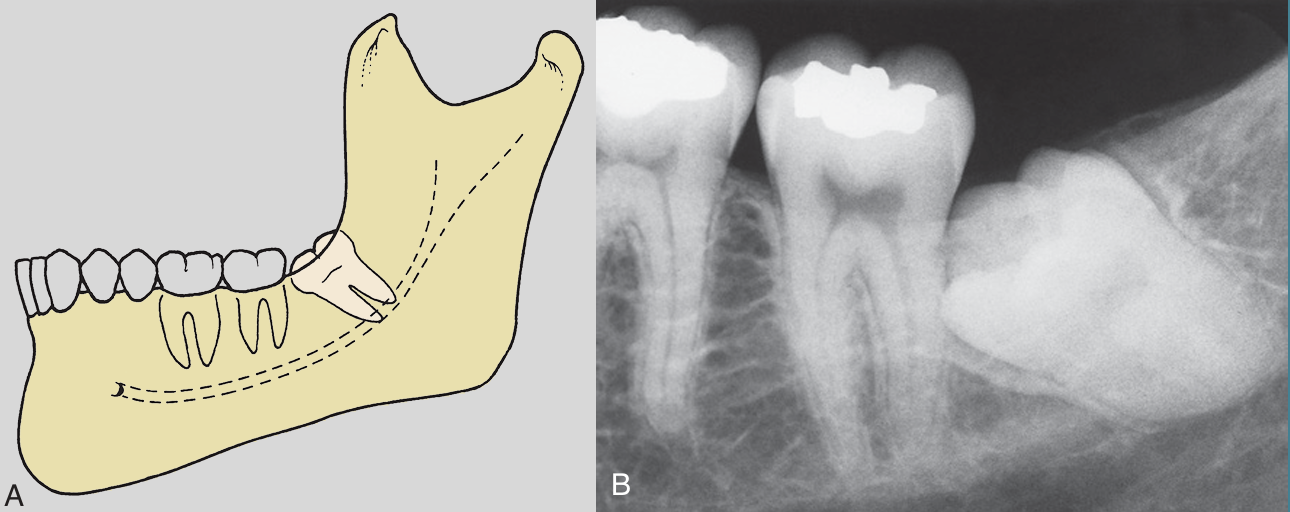
what angle is this?
mesioangular
mesioangular impaction
generally acknowledged as the least difficult to remove in the mandible
it is tilted toward the second molar in a mesial direction
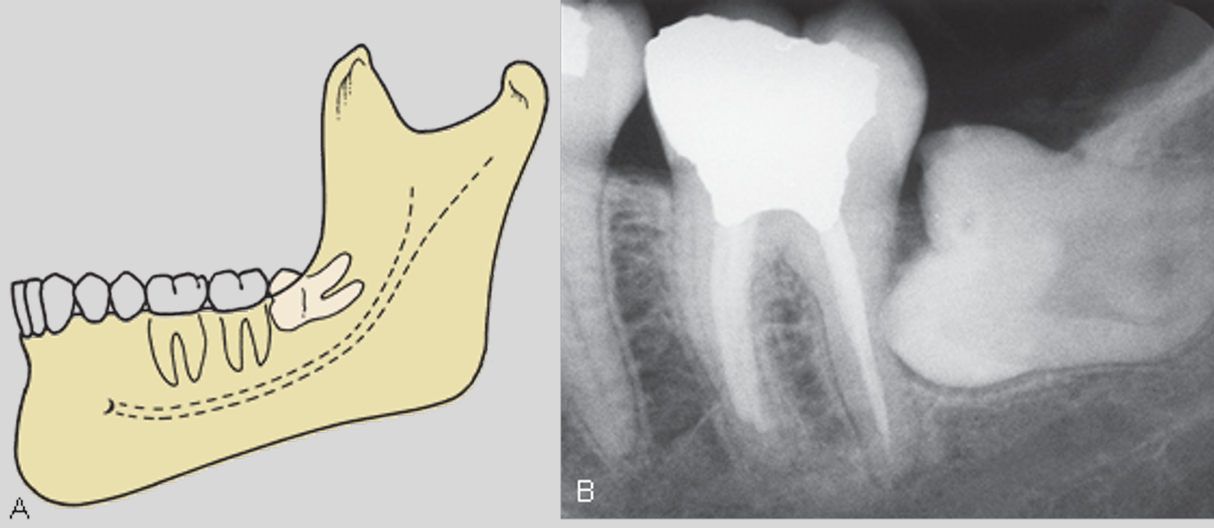
what angle is this?
horizontal
horizontal impaction
second most easy mand impaction to remove
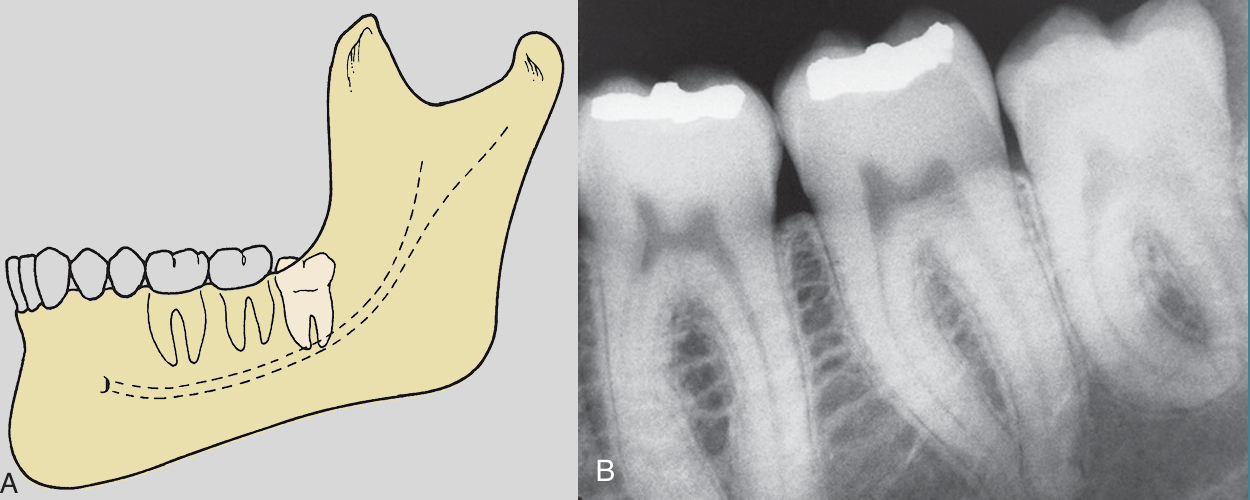
what angle is this?
vertical
vertical impaction
long axis of the impacted tooth runs in the same direction as the long axis of the second molar
the 3rd most difficult mand impaction to remove

what angle is this?
distoangular
distoangular impaction
the most difficult angulation for removal of mandibular impacted tooth
the long axis of the 3rd molar is distally or posteriorly angled away from the second molar
its path of withdrawal runs into the mandibular ramus
PG class 1
the mesiodistal diameter of the crown is completely anterior to the anterior border of the ramus
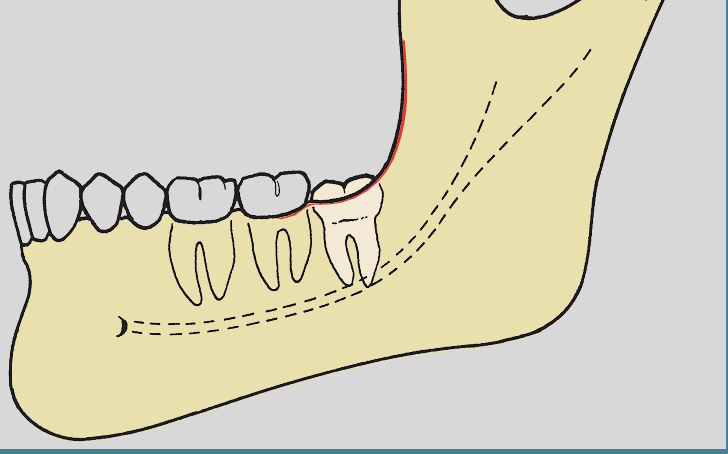
PG class 2
approx ½ of the crown is covered by the border of the ramus
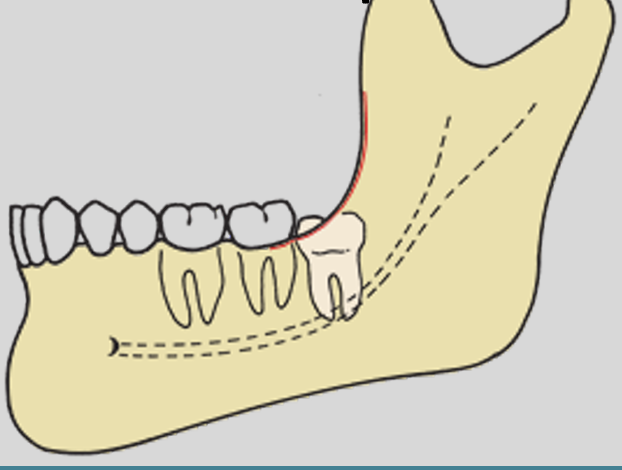
PG class 3
the crown is covered entirely by the anterior border of the ramus
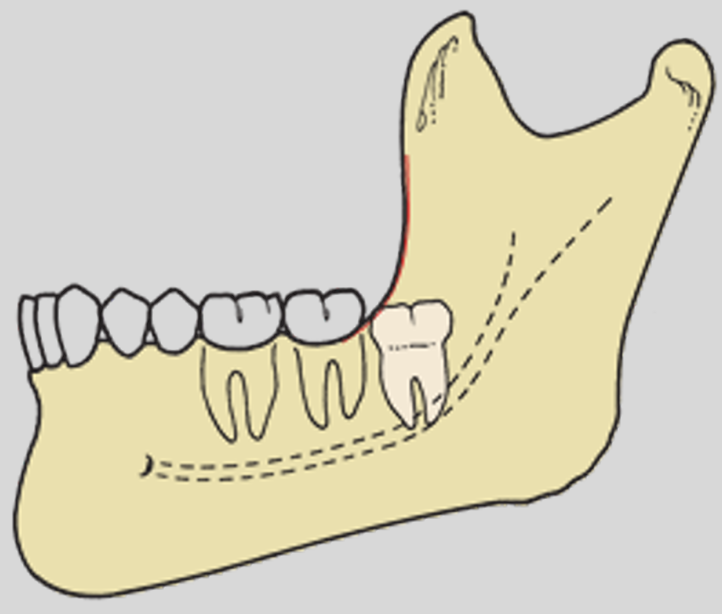
PG class A
the occlusal plane of the impacted tooth is at the same level as the occlusal plane of the second molar
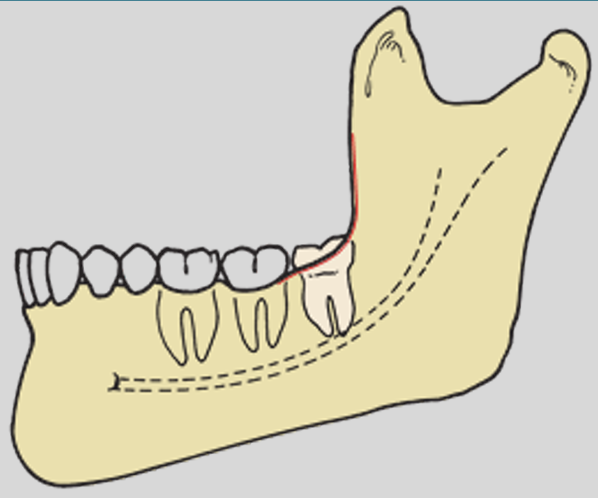
PG class B
the occlusal plane of the impacted tooth is between the occlusal plane and the cervical line of the second molar

PG class C
the occlusal plane of the impacted tooth is below the cervical line of the second molar
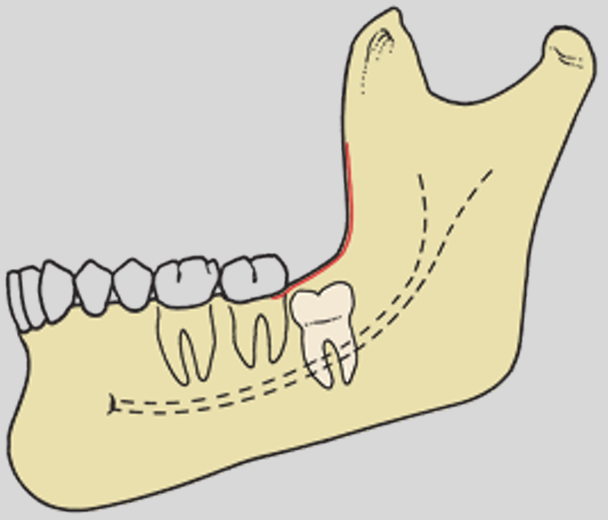
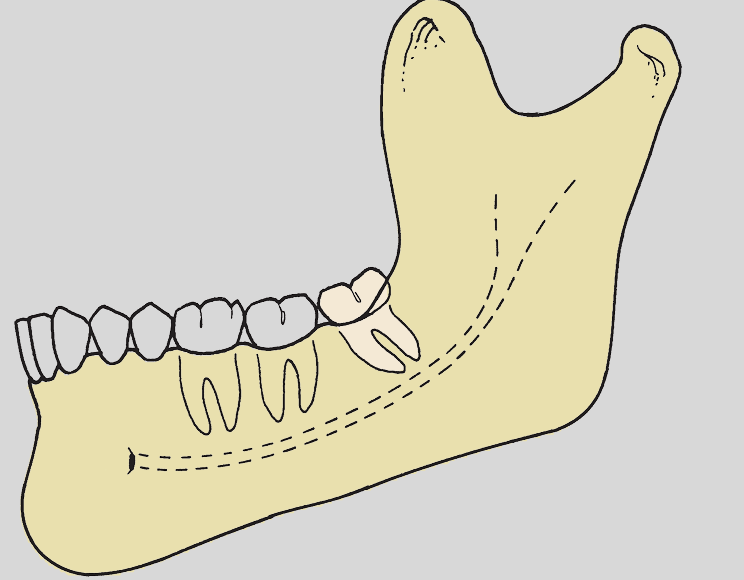
what is the PG classification?
mesioangular, 1, A
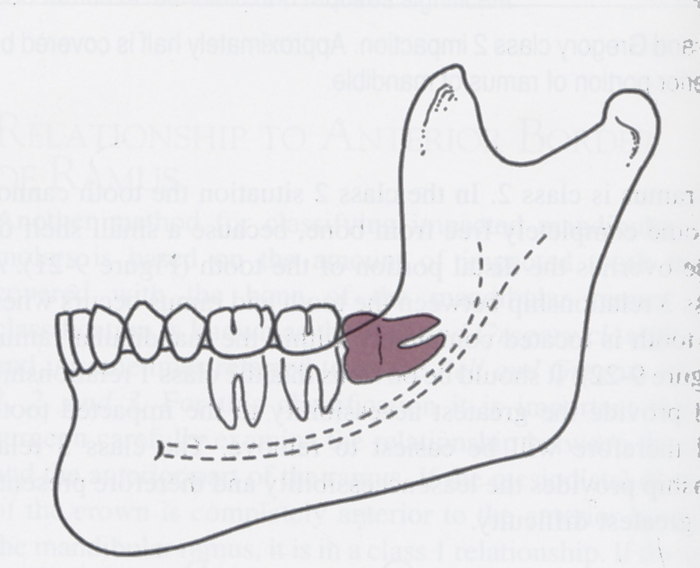
what is the PG classification?
horizontal, 2, B
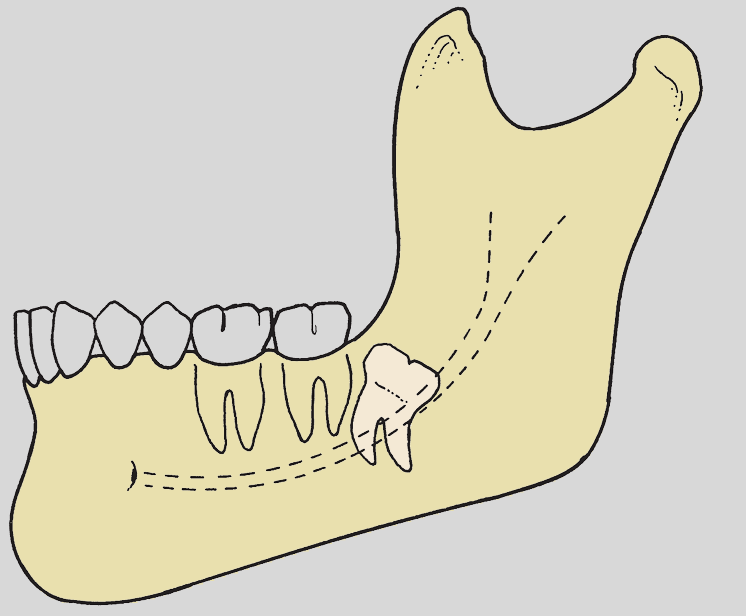
what is the PG classification?
distoangular, 3, C
what is the classification for nature of overlying tissue?
soft tissue- full or partial
bone- full or partial
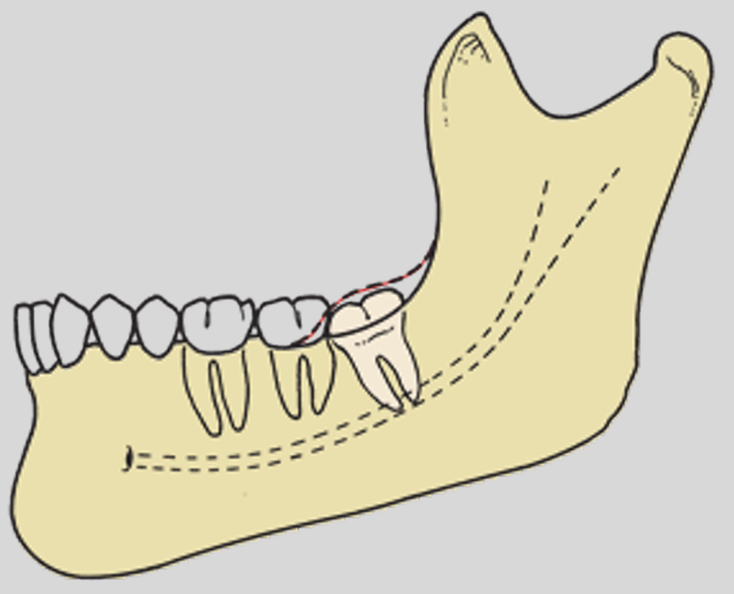
what is the classification of overlying tissue?
full soft tissue
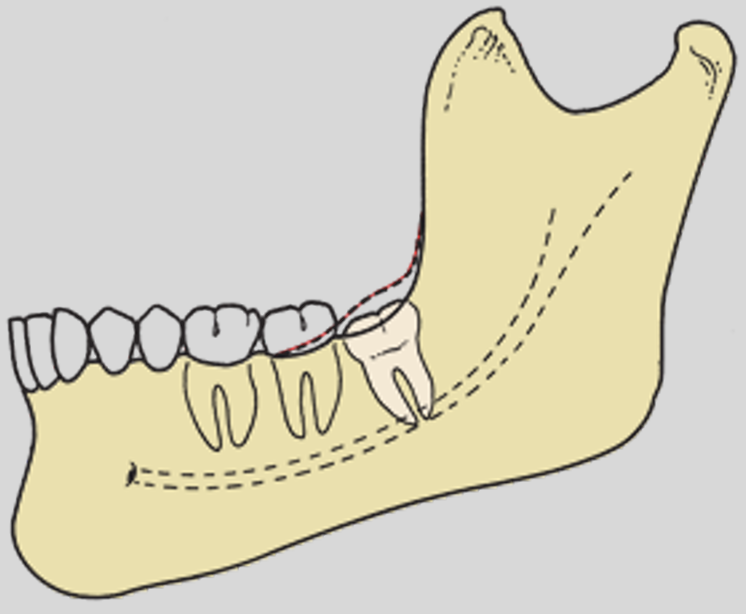
what is the classification of overlying tissue?
partial bone
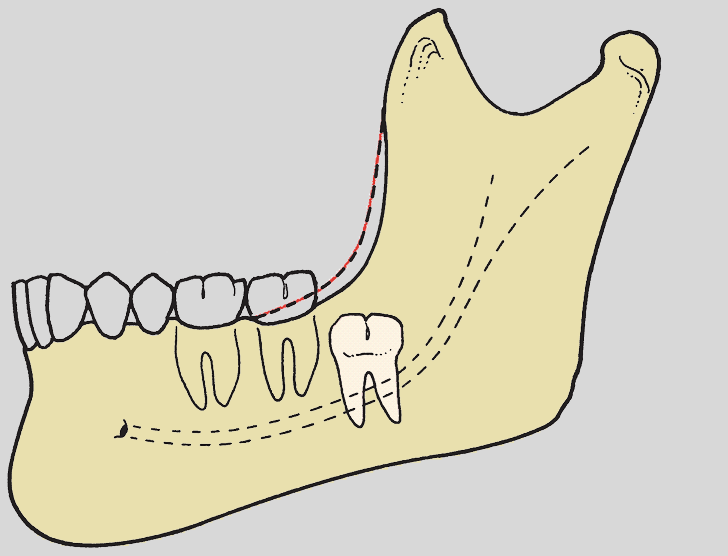
what is the classification of overlying tissue?
full bone
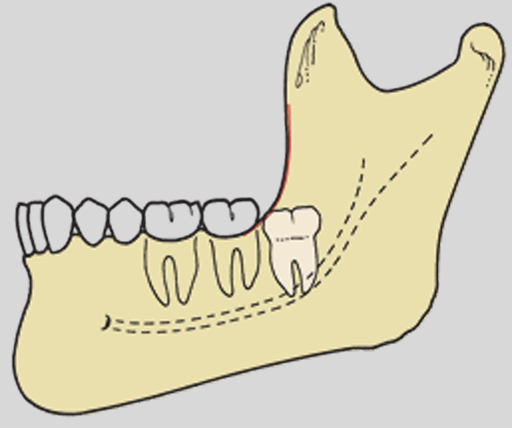
How would you classify this impacted mandibular third molar?
A) Horizontal, Class 2, B
B) Mesial angular, Class 1, C
C) Vertical, Class 3, B
D) Vertical, Class 1, C
C) Vertical, Class 3, B
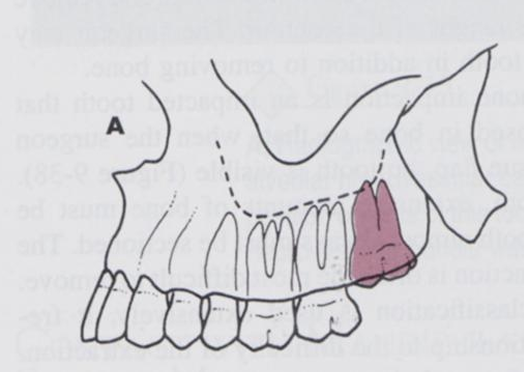
what angle is this?
vertical
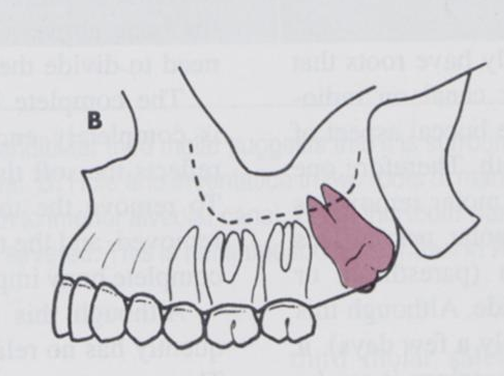
what angle is this?
distoangular

what angle is this?
mesioangular

what classification is this?
PG A
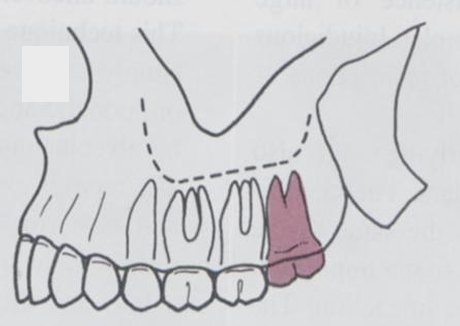
what classification is this?
PG B
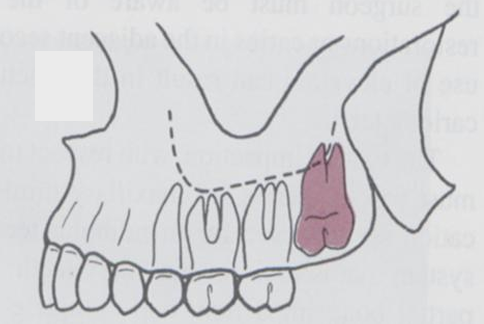
what classification is this?
PG C
how does root length impact extraction of impacted teeth?
longer, thin root makes extraction harder
how does single or fused root impact extraction of impacted teeth?
single/fused makes it easier to extract compared to multiple, splayed roots
how does root curvature impact extraction of impacted teeth?
less curvature is easier to extract
how does age and bone density affect extraction of impacted teeth?
younger pts have less dense bone, which makes for easier extractions
how does the size of follicular sac impact extraction of impacted teeth?
the bigger follicle makes extraction easier
factors that make impaction surgery LESS difficult
mesioangular postion in the mandible
class I ramus
class A depth
roots 1/3 to 2/3 formed
fused conical roots
wide PDL
large follicle
elastic bone
separated from the second molar
separated from IAN
soft tissue impaction
factors that make impaction surgery MORE difficult
distoangular in mandible
class III ramus
class C depth
long, thin roots
divergent curved roots
narrow PDL
thin follicle
dense, inelastic bone
contact with the second molar
close to the IAN
complete bony impaction
Which of the following make the extraction of an impacted tooth more difficult?
A) A tooth with a large follicle
B) Roots one third to two thirds formed
C) Fused conical roots
D) Narrow periodontal ligament
D) Narrow periodontal ligament
t/f increased age (>25 yrs) appears to be associated with a higher complication rate for M3 extractions
true
what is a basic outline of the surgical procedure for impacted teeth?
adequate exposure
bone removal
section tooth
deliver tooth from alveolar process
wound debrided, irrigated, and closed
are maxillary teeth commonly sectioned?
no, mostly just bone removal because of concerns with the maxillary sinus
DO NOT use chisel to section a maxillary tooth
as compared to removal of impacted 3rd molars, there is _____ luxation of other impacted teeth for the purpose of expansion of the buccal or linguocortical plate
almost NO
bone is removed and tooth is section
what is the perioperative pt management needed?
anxiety control- IV sedation or GA
long acting local anesthetics
IV steroids to prevent/decrease swelling
post-op instructions
potent oral analgesics
ice packs on the face
possible use of antibiotics
does cold therapy work to reduce pain, trismus, and swelling after dentoalveolar surgery?
no
should a pt be prescribed perioperative oral antibiotics?
no- no measured benefit or reduction in postoperative complications
what is a normal postoperative experience for a pt?
swelling, up to ~3 days
discomfort
mild to moderate trismus
all of the sequelae of the removal of impacted teeth are of less intensity in the young, healthy pt
pt evaluation prior to surgery
CC, HPI, PMH, PSH, SH, meds, allergies
physical exam, radiographic evaluation
are CT before 3rd molar extraction necessary?
no, most of the time it did not effect surgical outcome, HOWEVER CBCT can improve localization of 3rd molar for presurgical planning
what are some complications of impacted mandibular 3rd molars?
injury to IAN or lingual nerve
hemorrhage
jaw fracture
retained roots
root displaced into the submandibular space
dry socket
alveolar osteitis
a clinical diagnosis that is characterized by the development of moderate to severe throbbing pain usually occuring around the 3rd to 5th day after surgery and is often confused with an earache, headache, or pain from another tooth with no evidence of pathologic condition
halitosis is usually present
extraction socket is partially or completely devoid of a clot or is often filled with debris and shows evidence of poor healing
the exposed bone is the source of pain, which may radiate
the area of the socket has a bad odor
no usual signs or symptoms of infection (fever, swelling, and erythema) are present
0.3-26% prevelance
occurs more frequently in the mandible
what causes alveolar osteitis?
poorly understood
result of release of tissue factors leading to the activation of plasminogen and the subsequent fibrinolysis of the blood clot
result of a localized bacterial infection
what factors may contribute to alveolar osteitis?
increasing age, female, oral contraceptives, smoking, surgical trauma, pericoronitis, experience of the surgeon, poor oral hygiene
sighting an exposed intact IAN bundle during 3rd molar surgery indicates its intimate relationship with the 3rd molar and carries a ____ risk of paresthesia, with a ___ chance of recovery by 1 year from surgery
20%
70%
what are complications of impacted maxillary 3rd molars?
hemorrhage
fractured tuberosity
sinus exposure
retained root tips
displacement of root tip or tooth into maxillary sinus
displacement of tooth into infratemporal fossa
Which of the following is not considered to be complication associated with the extraction of a mandibular impacted third molar?
A) Injury to IAN or Lingual Nerve
B) Jaw fracture
C) Root/tooth displaced into the infratemporal fossae
D) Dry socket
C) Root/tooth displaced into the infratemporal fossae
t/f a majority of complications requiring hospitalization resulted from healthy 3rd molars and their removal
false- diseased
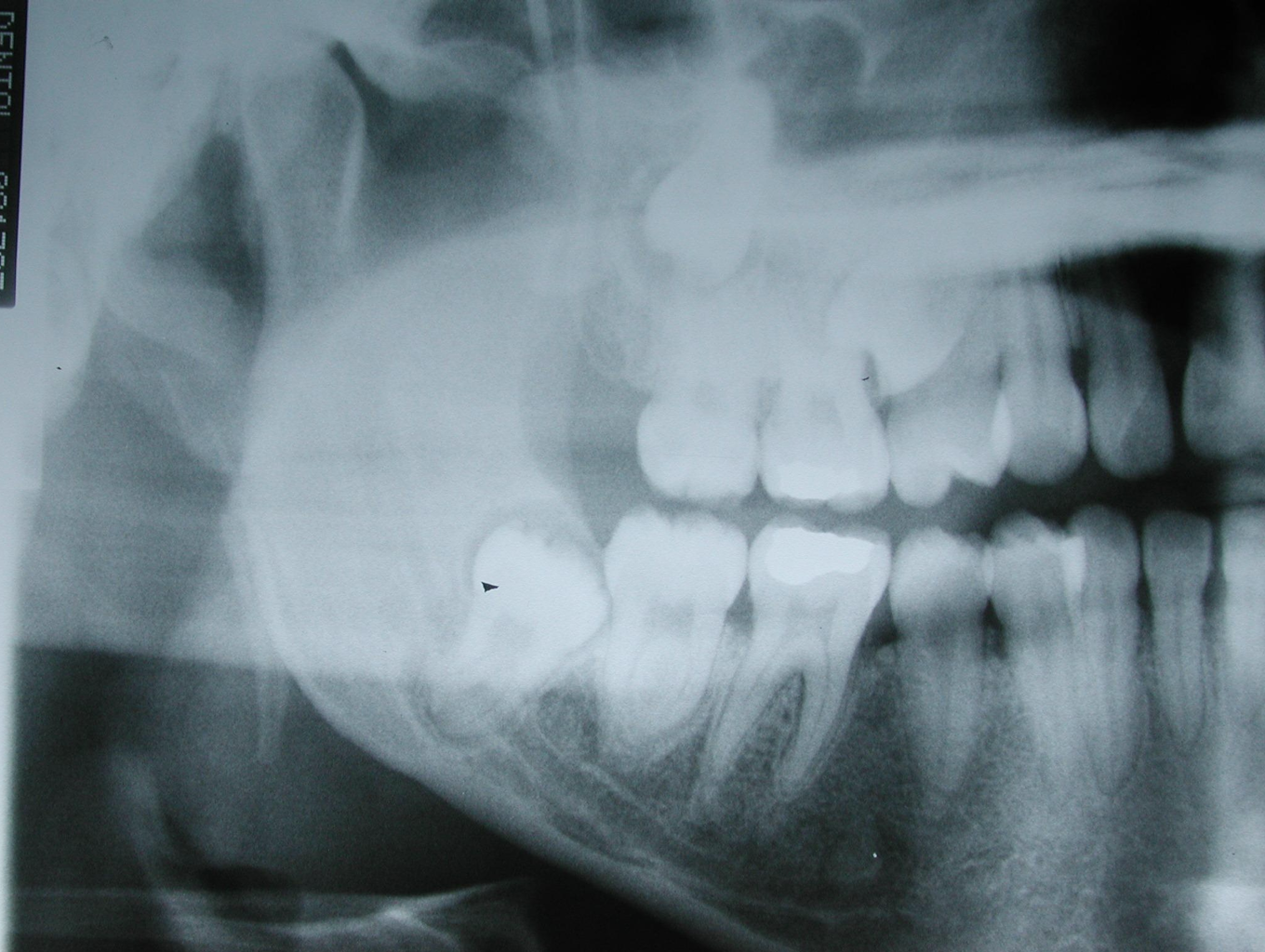
mesioangular, class 2, C
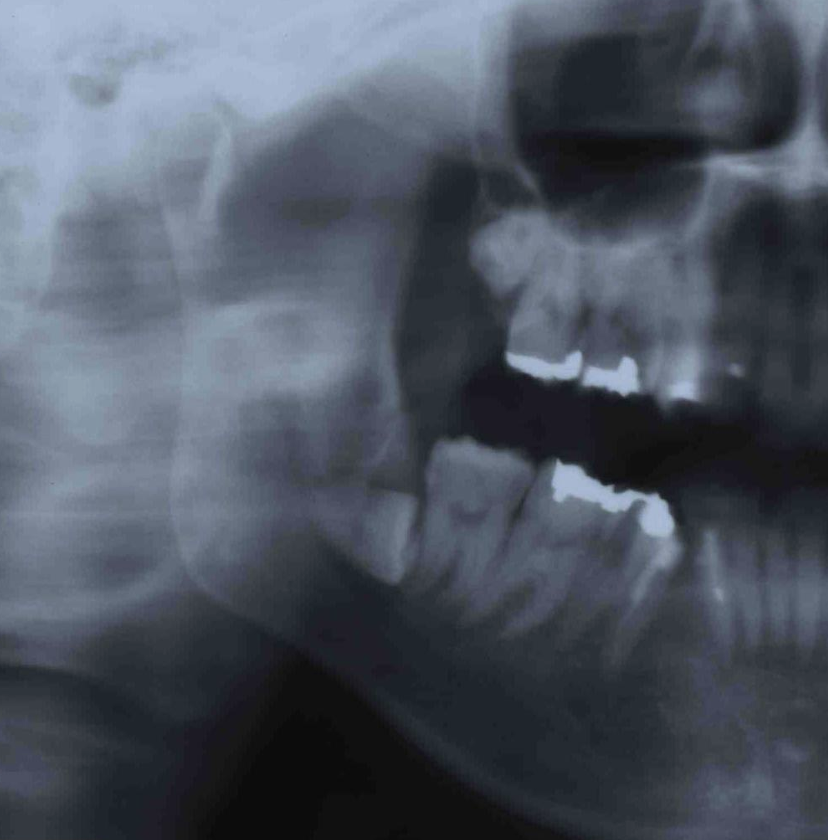
horizontal, class 2, B or C
what are some radiographic predictors of potentional tooth proximity to the IAN?
darkening of the tooth
deflection of the rot
narrowing of the root
dark and bifid root apex
interruption of the white line of the canal
diversion of the canal
narrowing of the canal
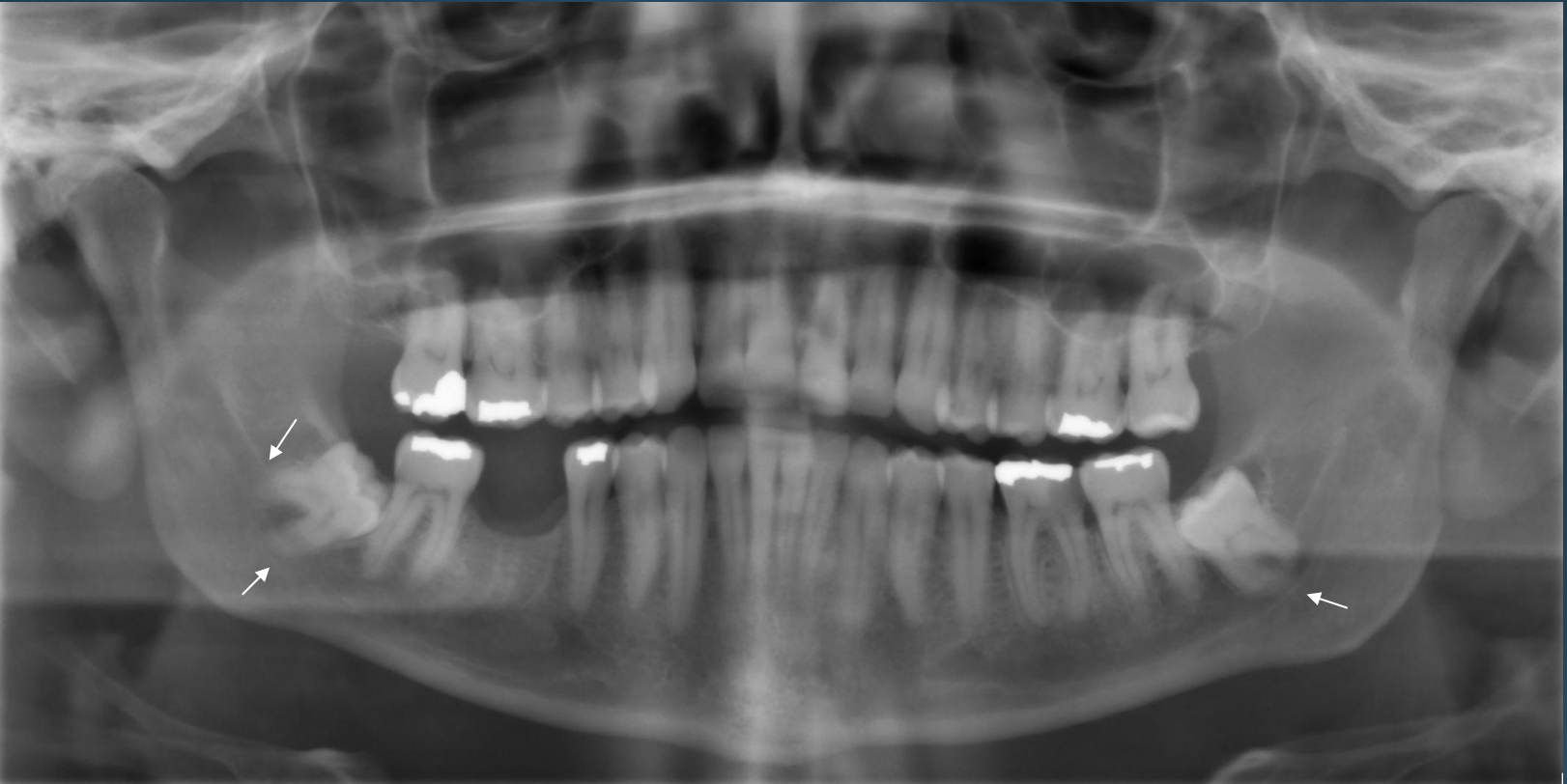
what are the arrows pointing at?
shadowing on the roots of the mandibular 3rd molars, indicated proximity to IAN
coronectomy
removing the crown of the tooth, leaving the roots in place
must remove the crown at the CEJ, no more enamel can remain!
what are some myths associated with wisdom tooth extraction?
3rd molars have the higest incidence of pathology
early removal of 3rd molars is less traumatic (not extracting the tooth is the least traumatic)
pressure of erupting 3rd molars causes crowding of anterior teeth
the risk of pathology in impacted 3rd molars increases with age
there is little risk of harm in the removal of 3rd molars
should we follow NICE guidelines?
not really- people still end up extracting 3rd molars, just happens at an older age which isn’t great
what are common reasons for retaining 3rd molars?
risk of damaging adjacent structures
compromised health status
adequate space for eruption
third molar serves as an abutment tooth
orthodontic reasons
eruption into proper occlusion
symptomless 3rds in pts over 30 yrs
pt preference
bold are most common