BI108 Test02
 Call Kai
 Learn
Learn Practice Test
 Spaced Repetition
 Match
Match Flashcards
 Knowt Play
1/103

There's no tags or description
Looks like no tags are added yet.
Name | Mastery | Learn | Test | Matching | Spaced | Call with Kai | Chat |
|---|
No analytics yet
Send a link to your students to track their progress
104 Terms
Structural Sequence
codes for the actual physical gene product; the codons that specify the primary sequence of a protein via an mRNA, or the string of ribonucleotides in an rRNA, tRNA, or other RNA
Regulatory Sequence
controls when, where, and how much a gene is expressed
Allele
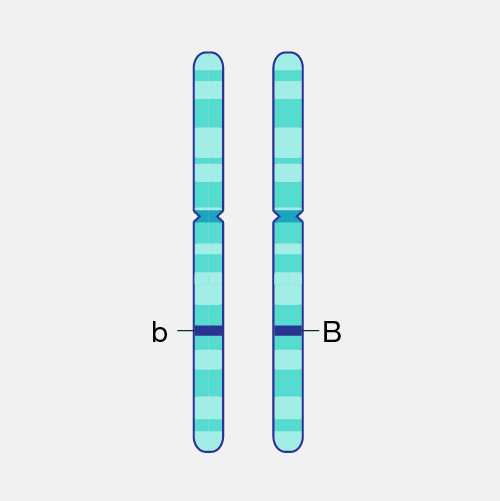
a stretch of DNA that codes for a particular protein or RNA product, but portions of its base sequence differ from the sequences found in other alleles of the same gene
Haploid Number
the number of different types of chromosomes found in each cell and organism, and is symbolized with an n
Ploidy
the number of copies of each type of chromosome present, and is symbolized with a number before the n
Haploid
having one of each type of chromosome
Diploid
having two of each type of chromosome
Homologous Chromosomes (homologs)
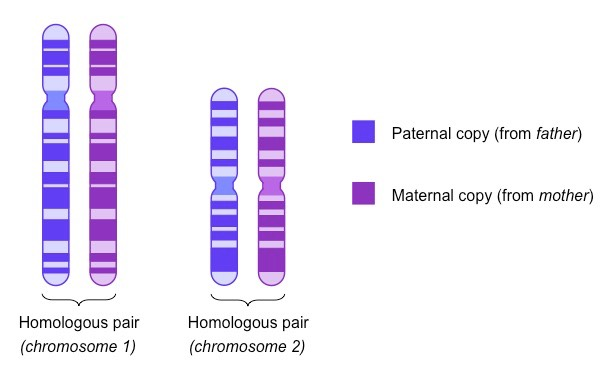
paired chromosome sets, one inherited from each parent, that possess the same genes in the same order
Replicated Chromosome
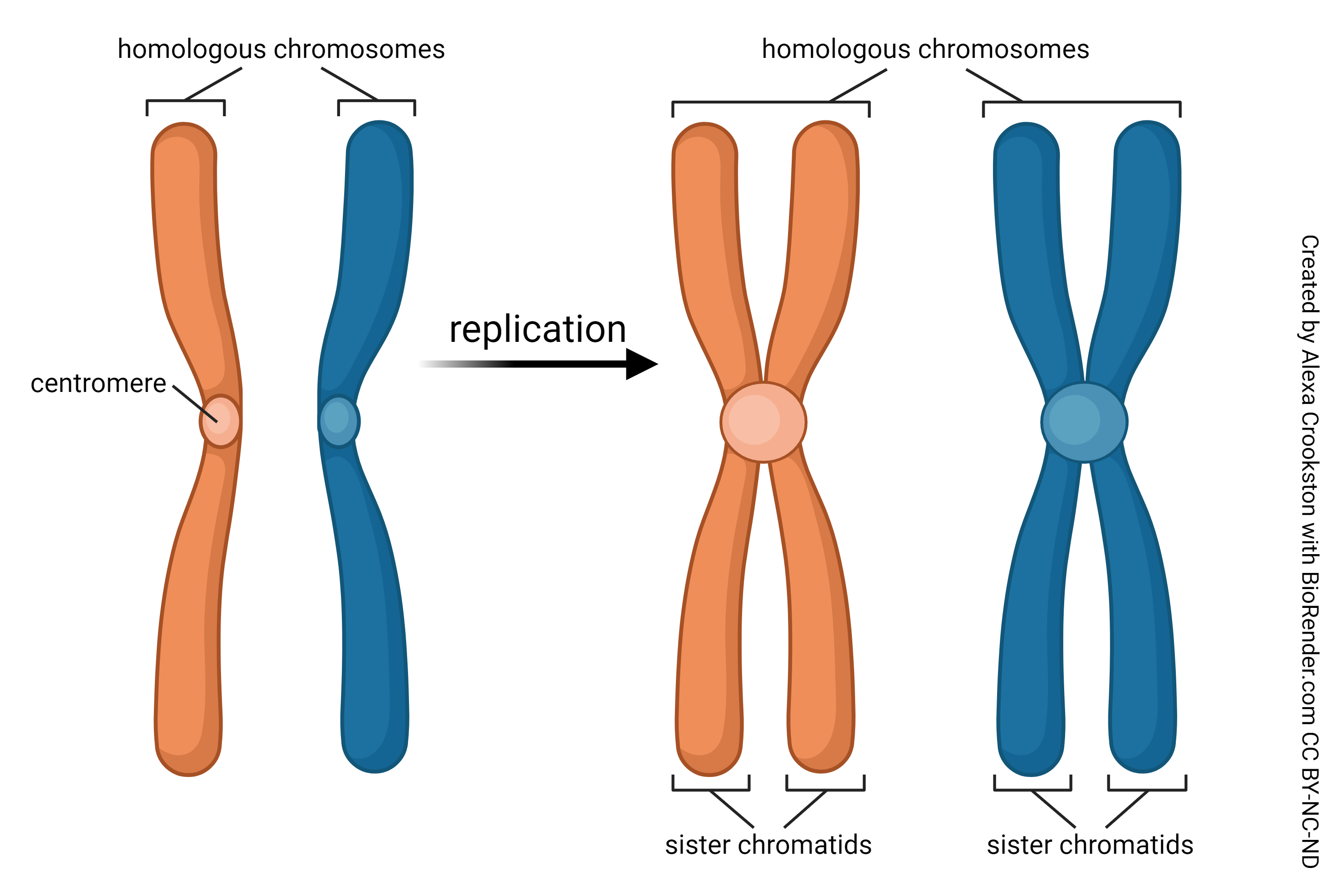
a chromosome comprised of two identical DNA molecules, joined together
Can mutations in somatic cells be passed on?
no
Can mutations in germ cells be passed on?
yes
Transcription
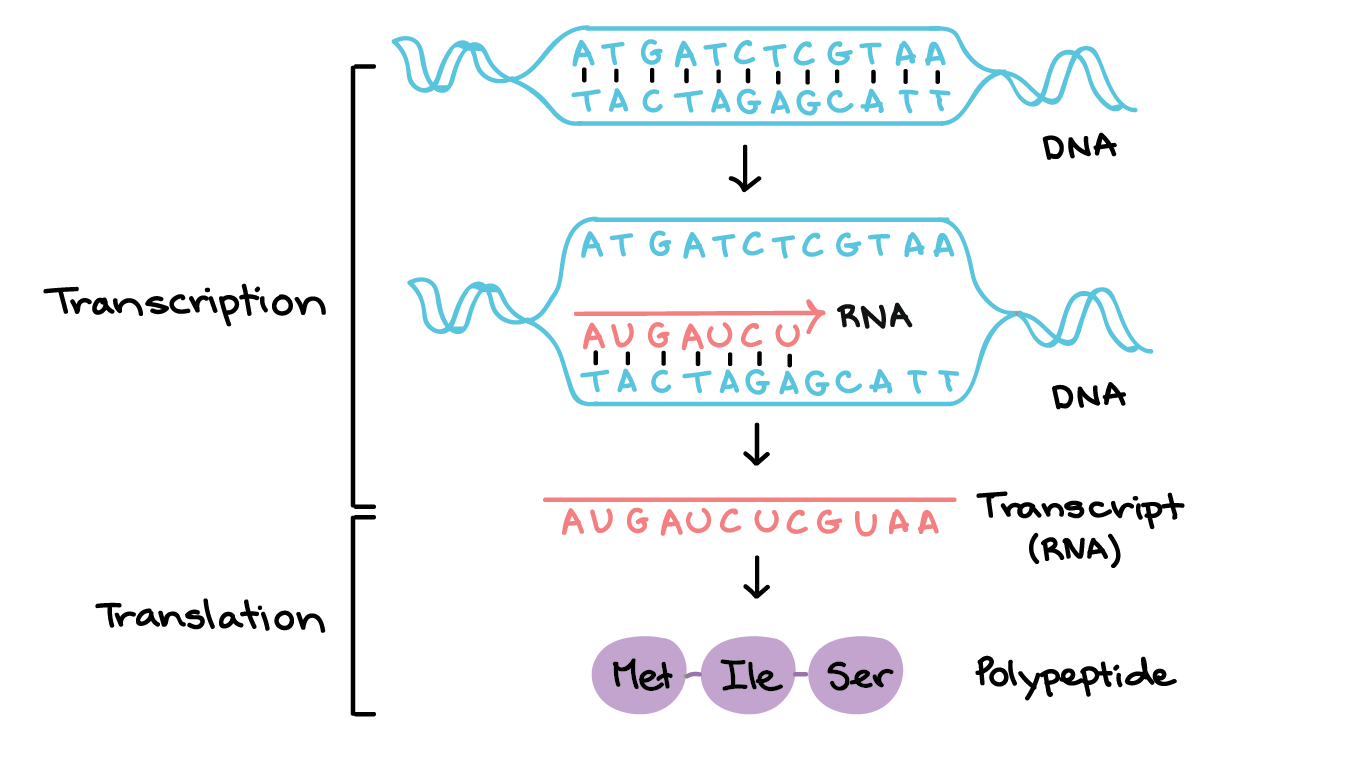
the genetic information from a specific segment of DNA is copied into a complementary RNA molecule, primarily messenger RNA (mRNA)
Where do activators bind?
enchancers
Enhancers
releases the RNA polymerase down the chain
Promoter
The regulatory sequence in a gene or operon where RNA polymerase initiates transcription
Repressors
bind to enhancers and prevent activators from binding unless they are displaced
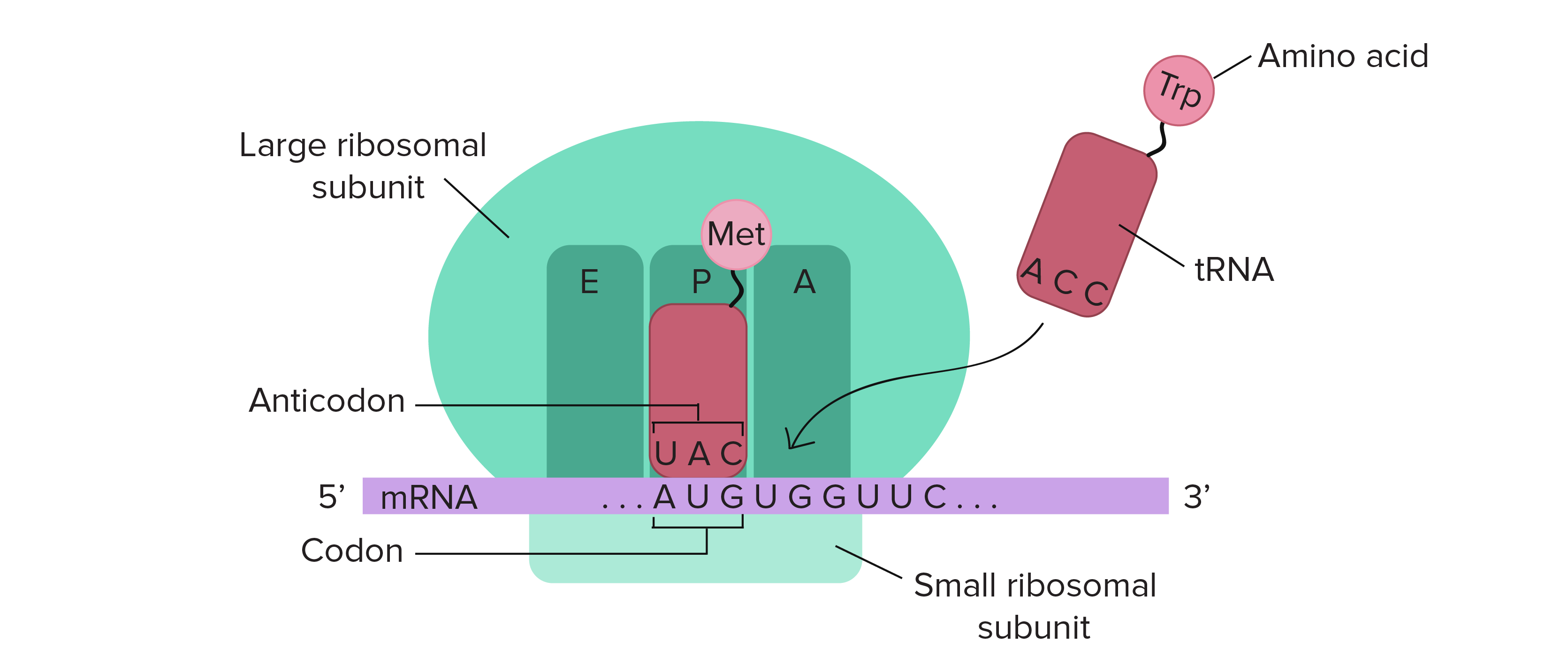
Translation
the process where cells use the genetic instructions in messenger RNA (mRNA) to build proteins
Where does transcription take place?
cytoplasm and rough ER
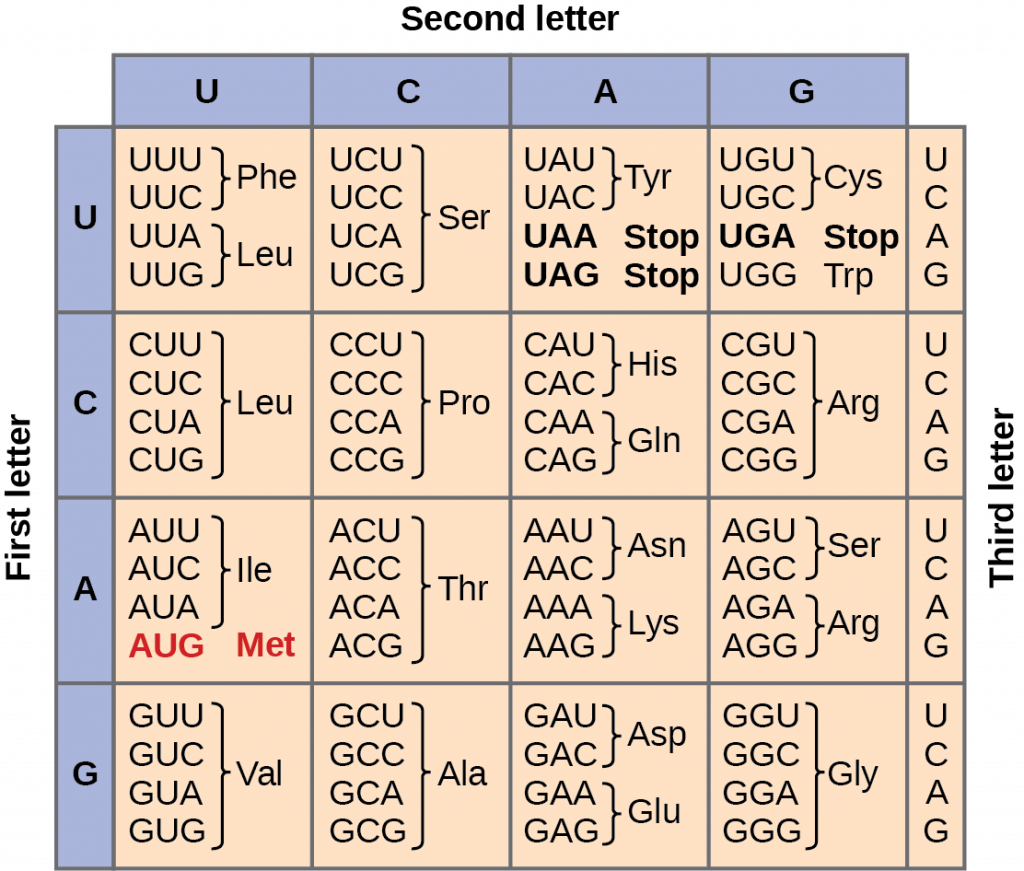
Genetic code
The set of relationships between the 64 possible codons in mRNA and the amino acids that are added to a newly synthesized protein
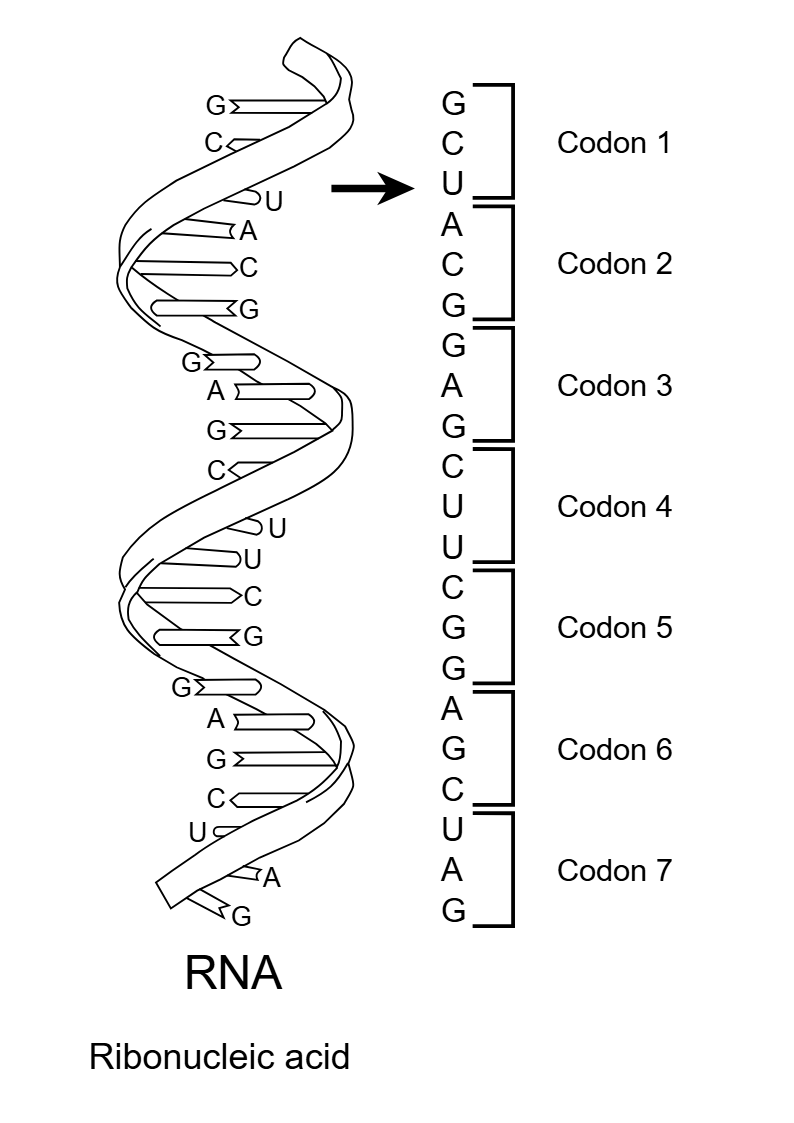
Codon
A group of three bases in an mRNA that codes for an amino acid.
Start Codon
The codon that signals where translation and, thus, protein synthesis begins. Usually, AUG also codes for the amino acid methionine (Met).
Stop Codon
A codon that signals where translation and thus protein synthesis ends. Usually UAA, UAG, and UGA.
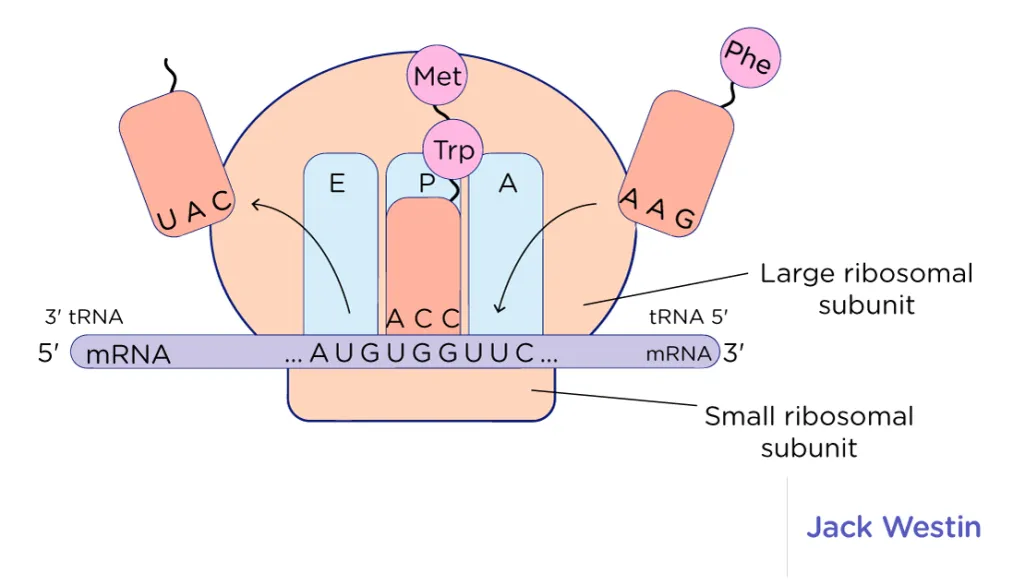
Anticodon
A sequence of three bases found at one end of a tRNA that binds to a codon in mRNA during translation via complementary base pairing.
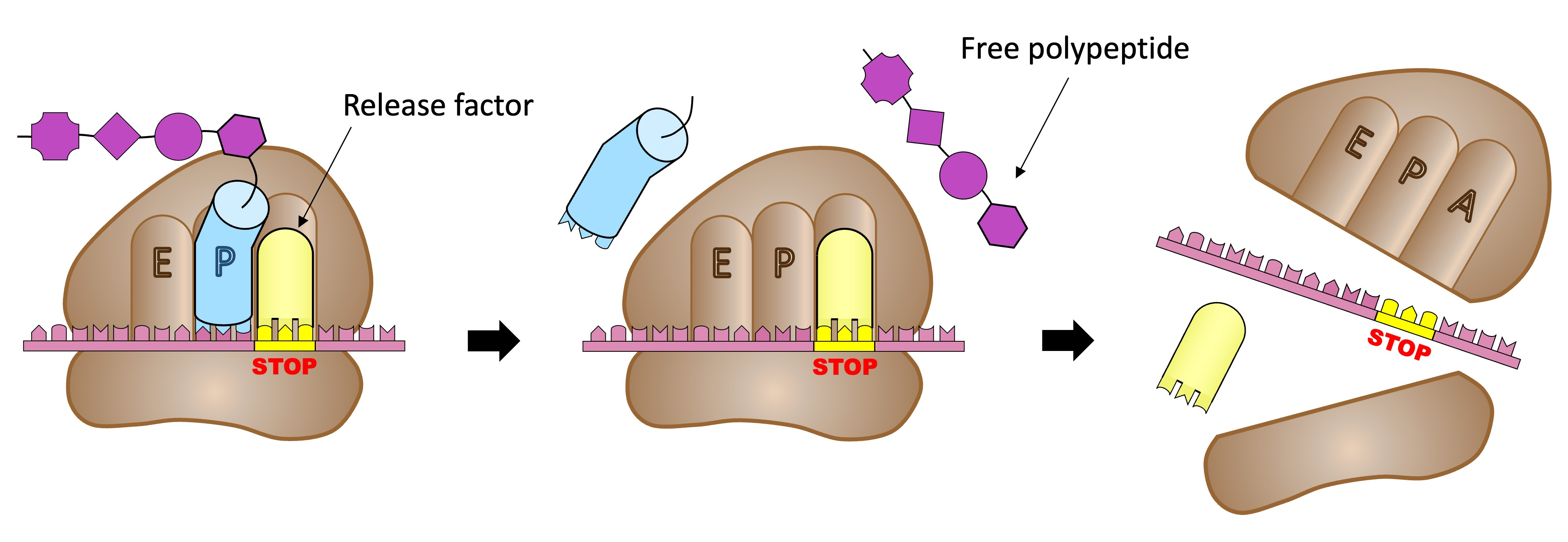
Release Factor
A protein that fits into the A site of a ribosome, binds to a stop codon, and interacts with the ribosome to terminate translation.
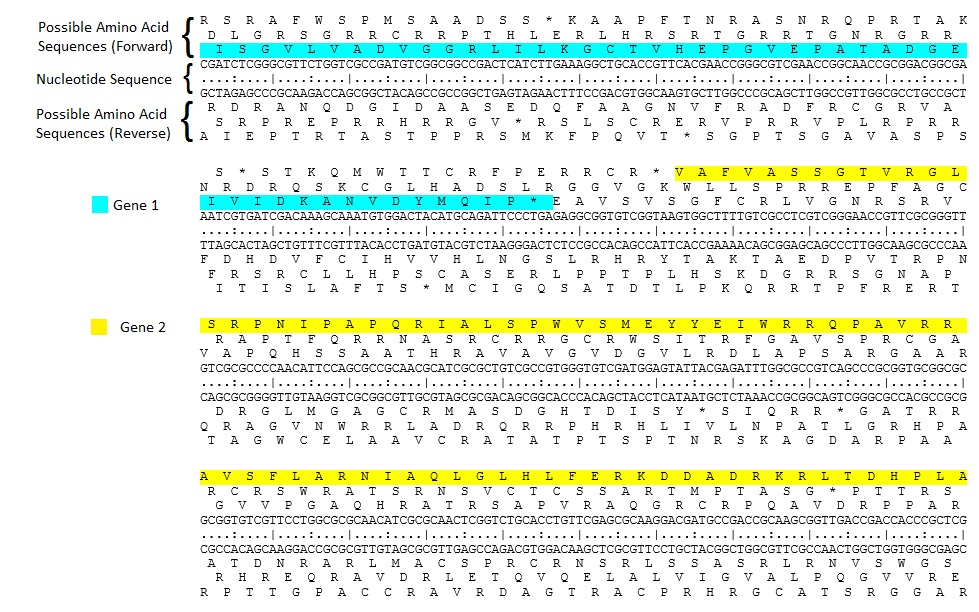
Reading Frame
The sets of three-base codons in RNA or DNA that specify the primary sequence of amino acids in a protein; it is set by the start codon, and identifies the subsequent sequence of codons.
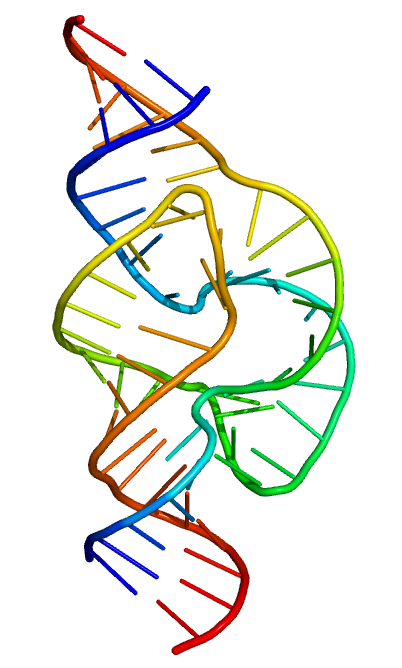
Ribozyme
An RNA molecule that catalyzes a chemical reaction, analogous to enzymes, which are protein catalysts.
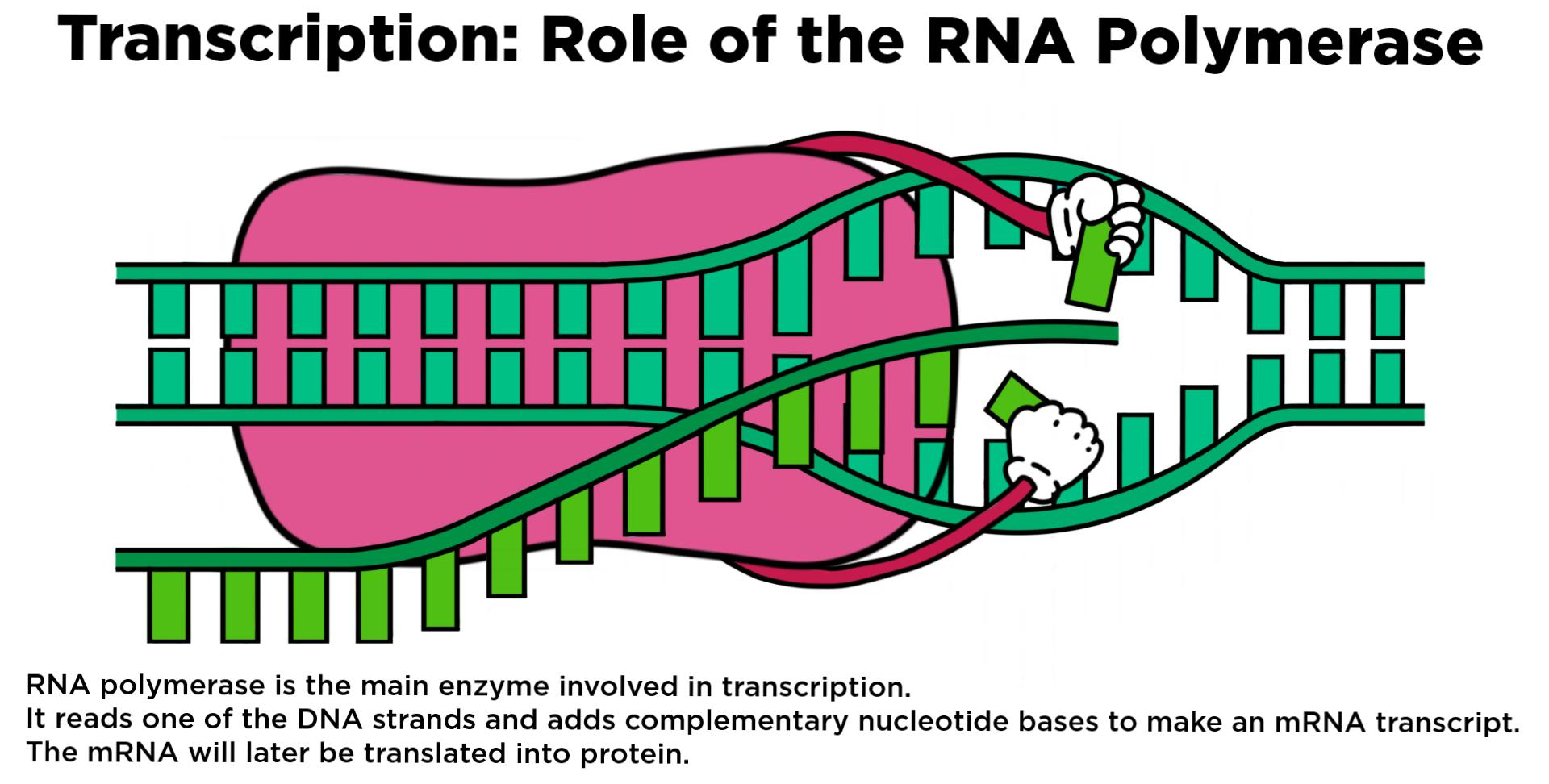
RNA Polymerase
An enzyme that catalyzes the formation of phosphodiester linkages between ribonucleotides, forming an RNA product that is complementary to the sequences of bases in a DNA template.
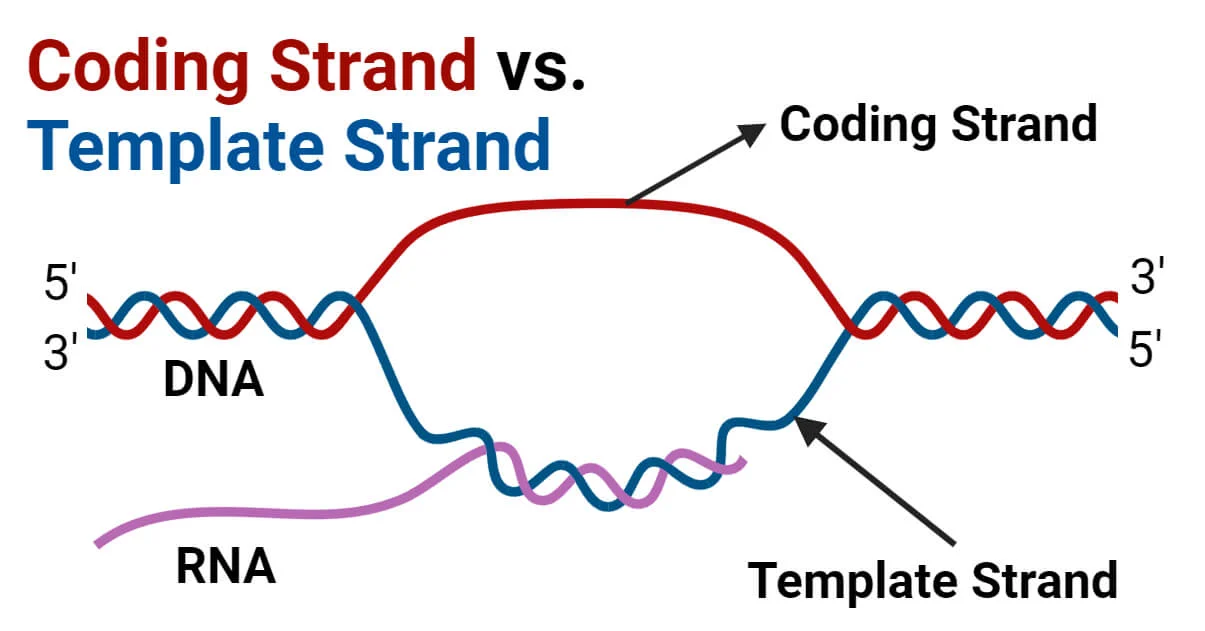
Template Strand
The strand in a DNA double helix that is “read” by RNA polymerase during transcription.
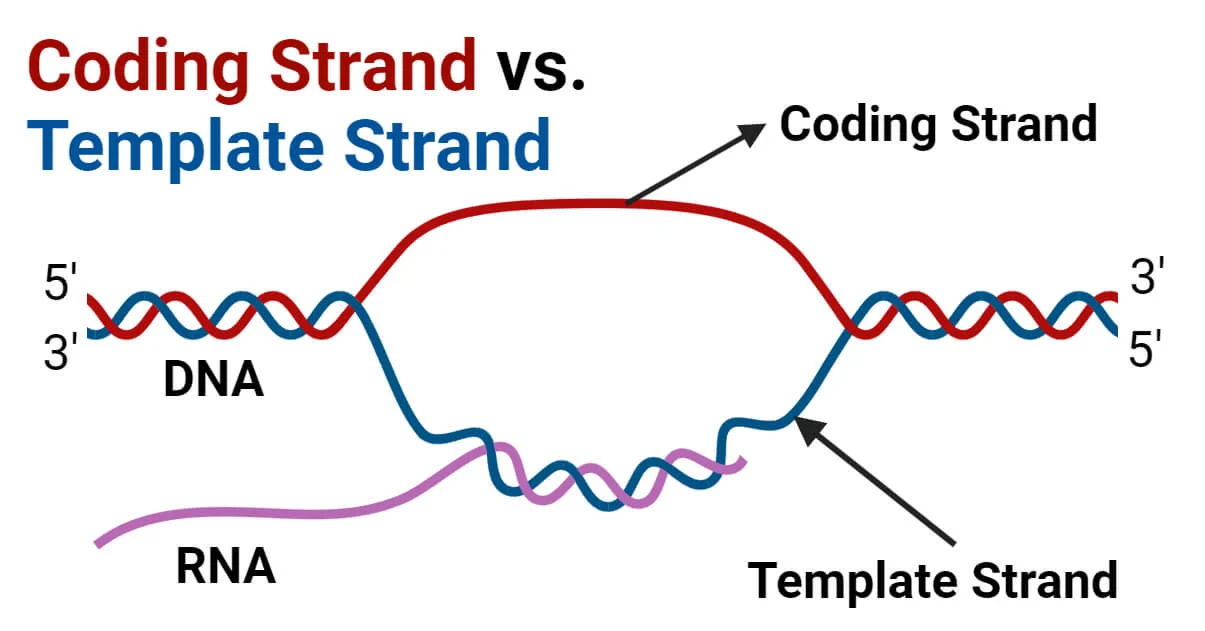
Non-Template Strand (Coding Strand)
The strand in a DNA double helix that matches the sequence of bases in the RNA product of transcription, except that the DNA contains thymine (T) and the RNA contains uracil (U).
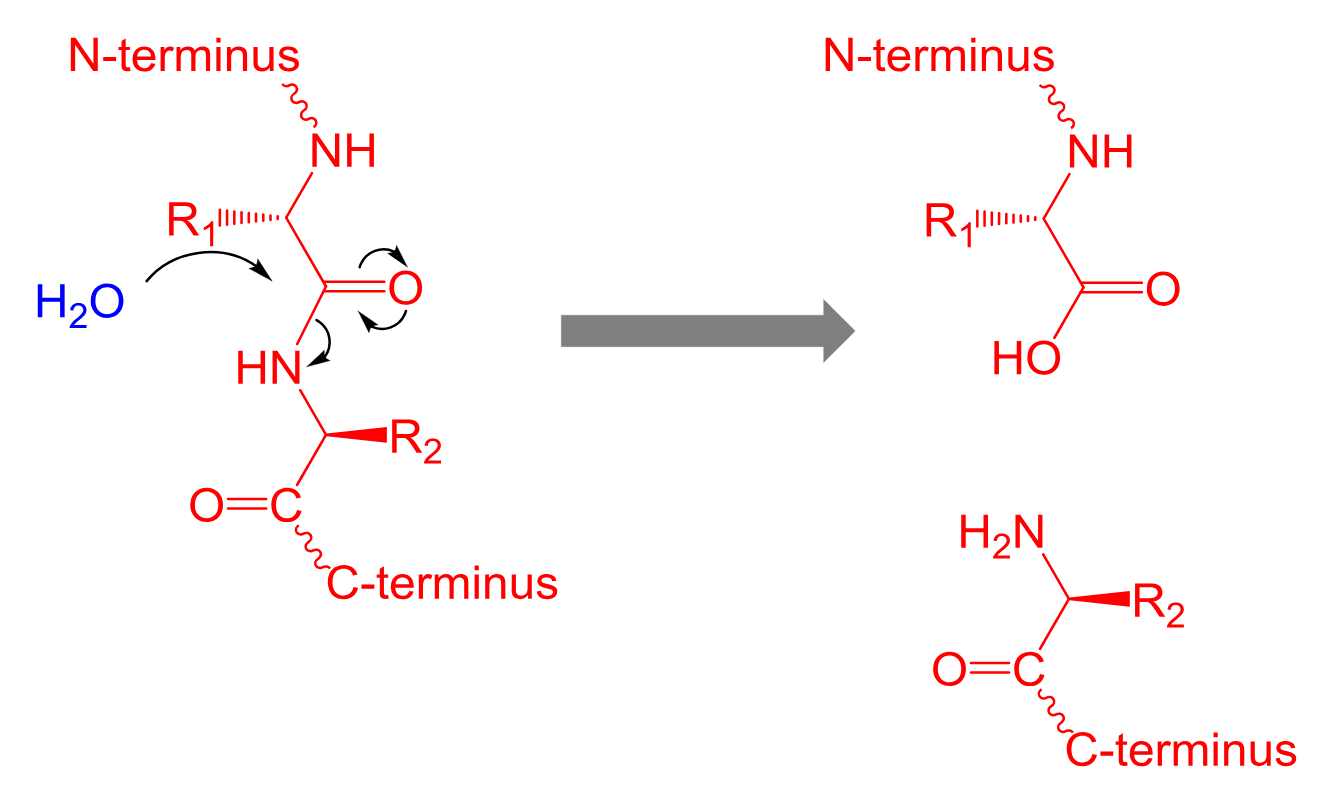
Proteolysis
cleaving off part of the protein, usually to make it functional
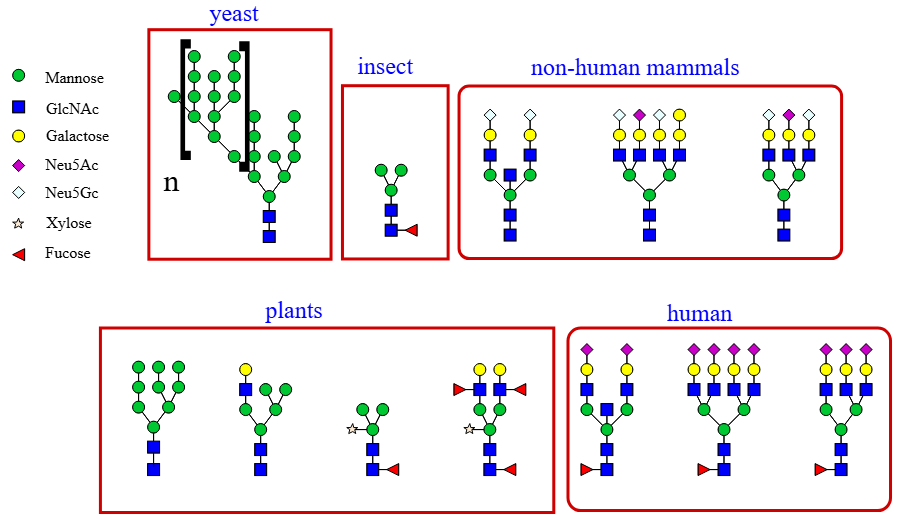
Glycosylation
adding sugar tags for recognition by other molecules
Phosphorylation
activates or represses protein function
Acetylation
introduces an acetyl group usually on histones
How do single celled organisms divide?
by dividing once
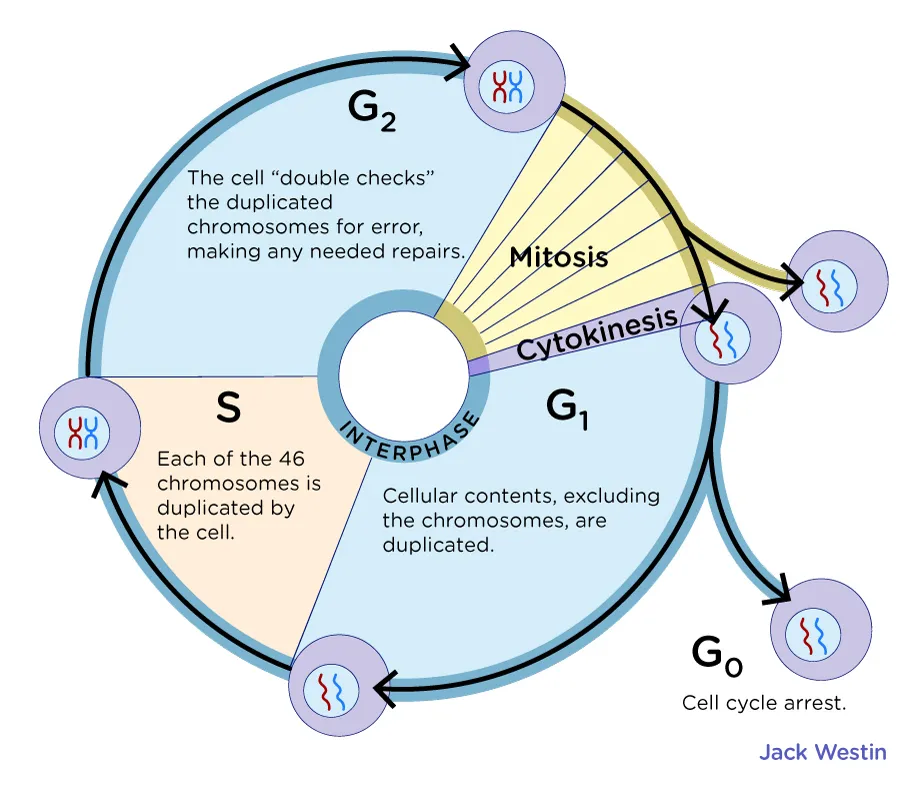
S Phase
DNA replication phase; duplicates each chromosome
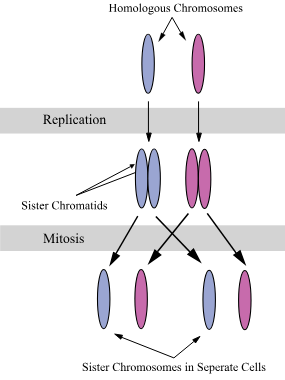
Sister Chromatids
chromosomes with the same exact DNA sequence
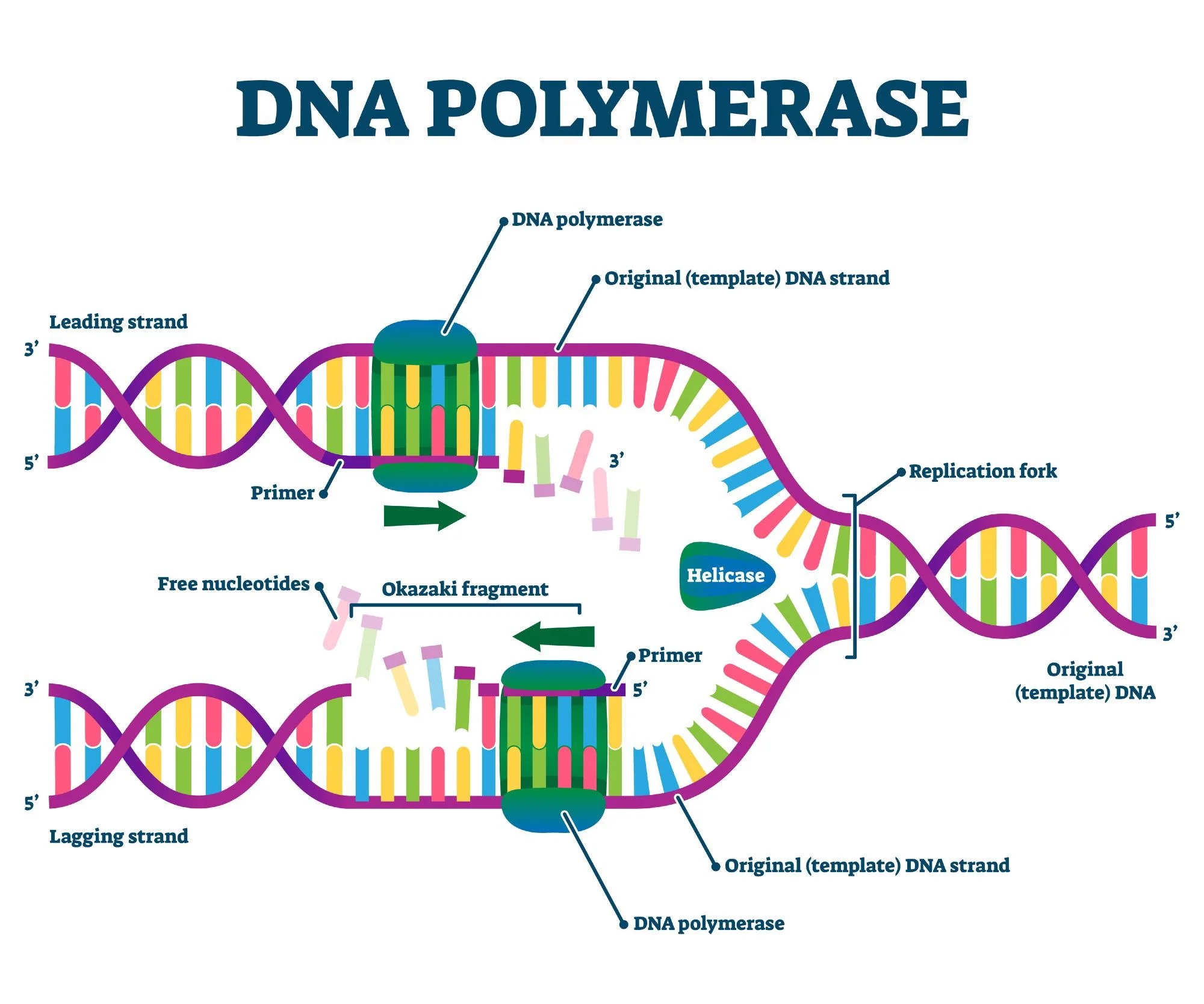
DNA Polymerase
An enzyme that catalyzes the formation of phosphodiester linkages between deoxyribonucleotides, forming the primary structure of DNA.
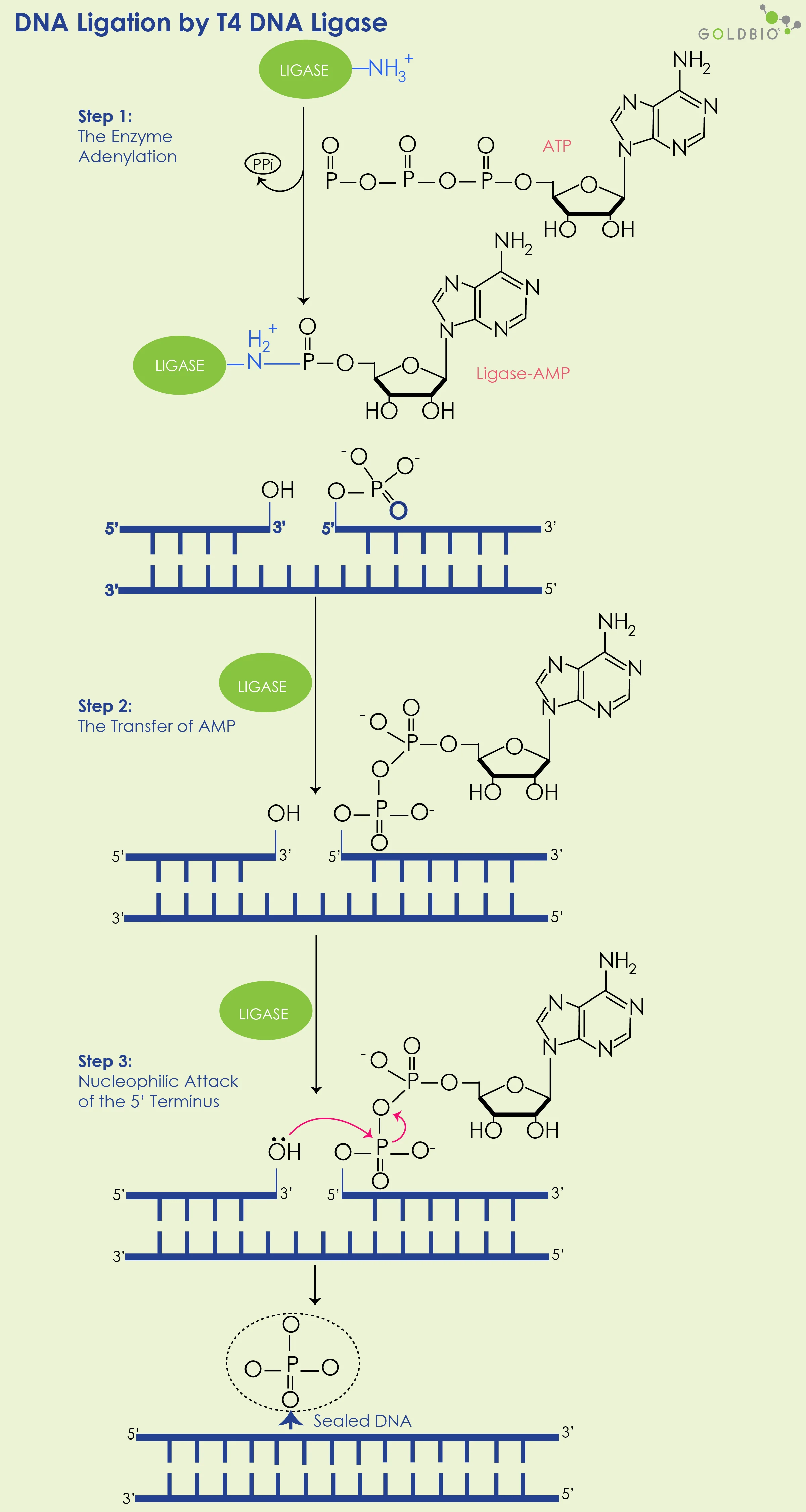
DNA Ligase
An enzyme that catalyzes the formation of phosphodiester linkages in gaps between two existing nucleotides in double-stranded DNA. Connects Okazaki fragments together at the end
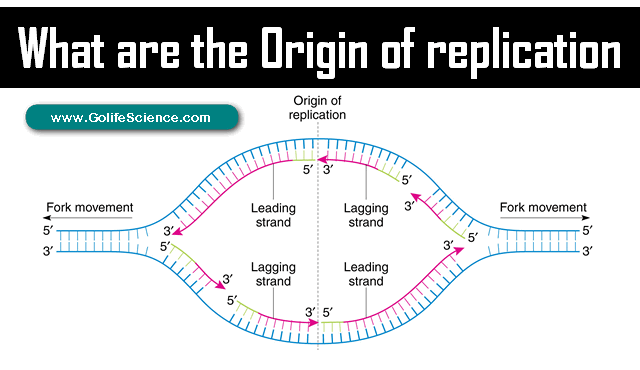
Origin of Replication
A location (a point) where enzymes open the DNA double helix so replication can begin; has a lot of A and T bases, meaning they are weaker and easier to split
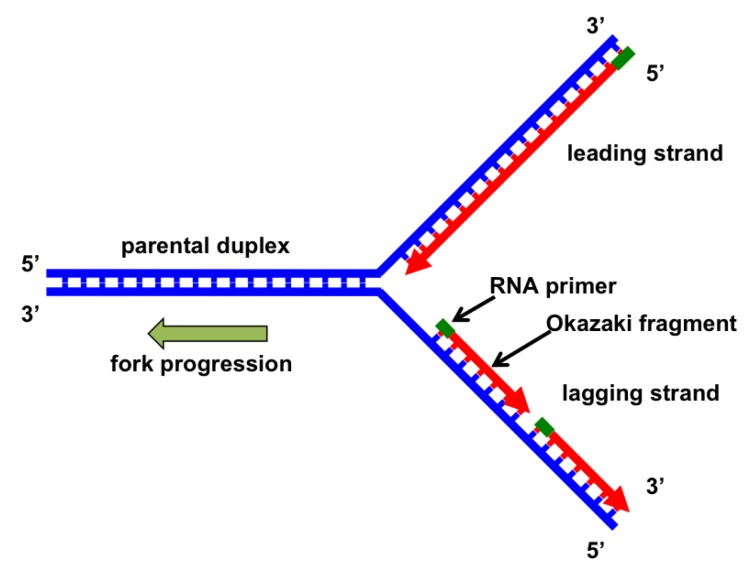
Replication Fork
The y-shaped structure visible in micrographs of DNA during replication. This is the site where the replisome works, synthesizing the leading and lagging strands.
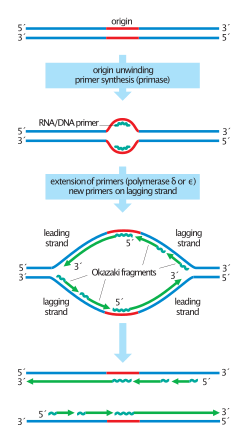
Primase
An enzyme that adds a short RNA primer to single-stranded DNA, so DNA polymerase can start adding complementary bases.
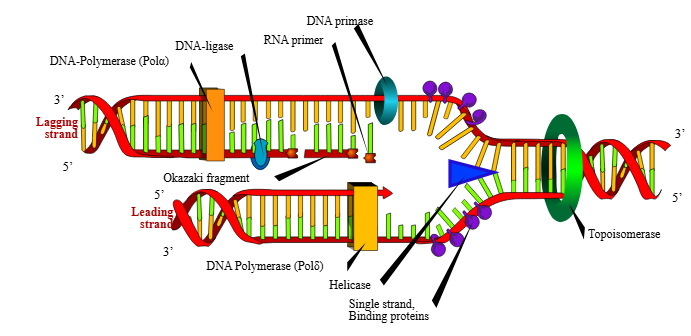
Replisome
The multi-molecular machine that works at the replication fork, copying DNA; moves in opposite directions to each other
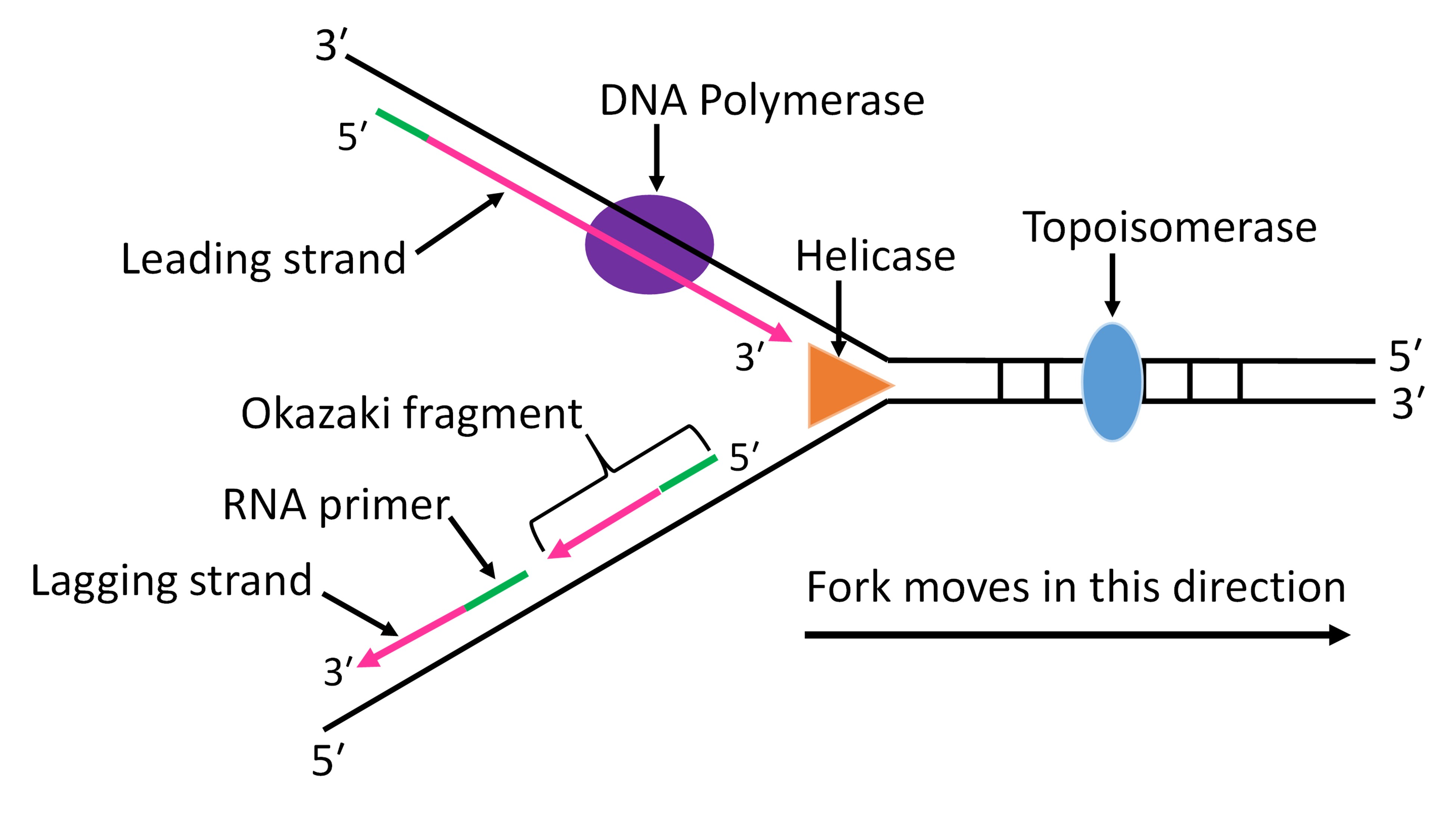
Leading Strand
one continuous strand of DNA following the first primer
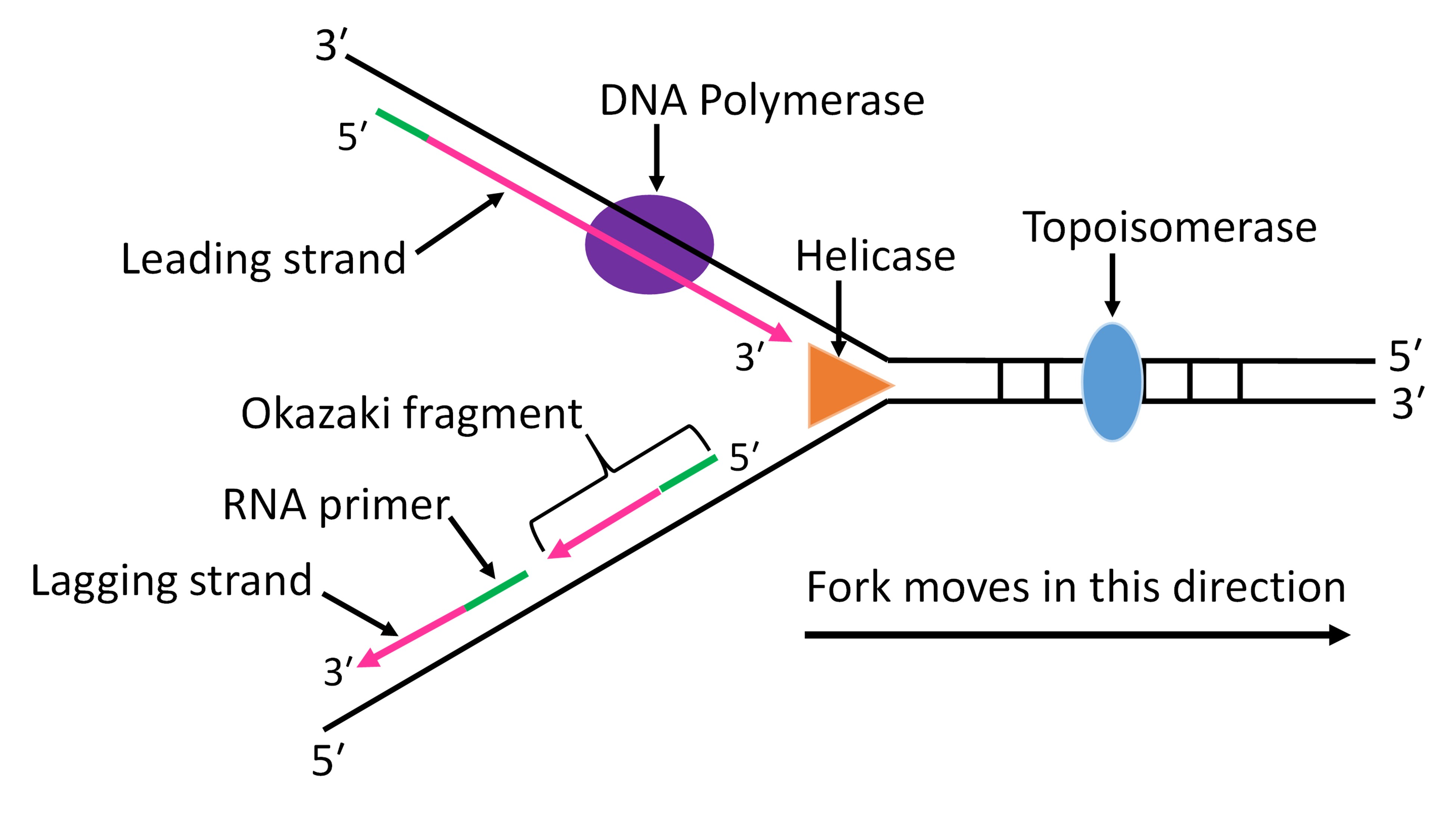
Okazaki Fragments
a series of small RNA-primed DNA strands in the lagging strand
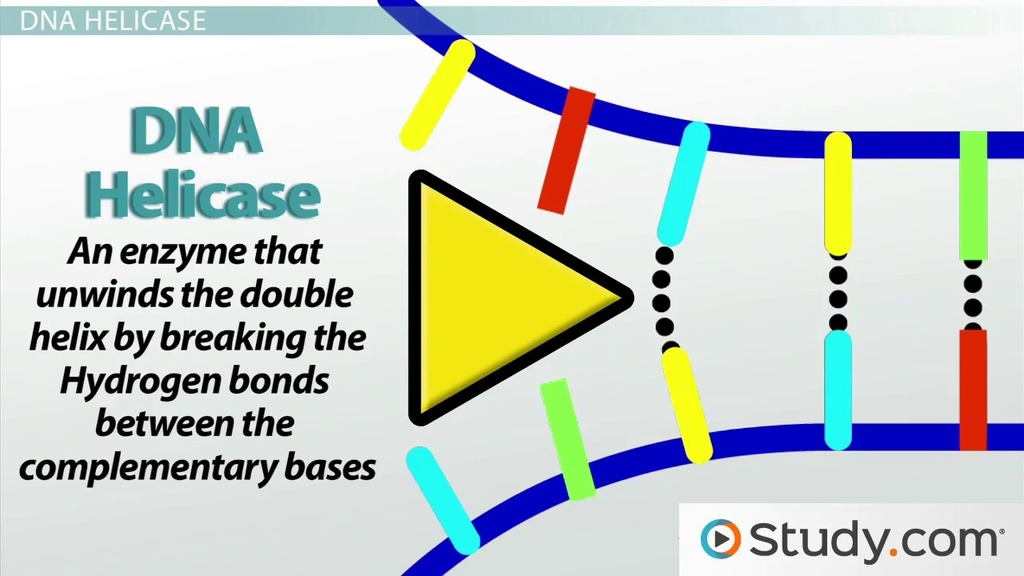
Helicase
An enzyme in the replisome that opens the DNA double helix, creating single-stranded template DNA for leading and lagging strand synthesis.
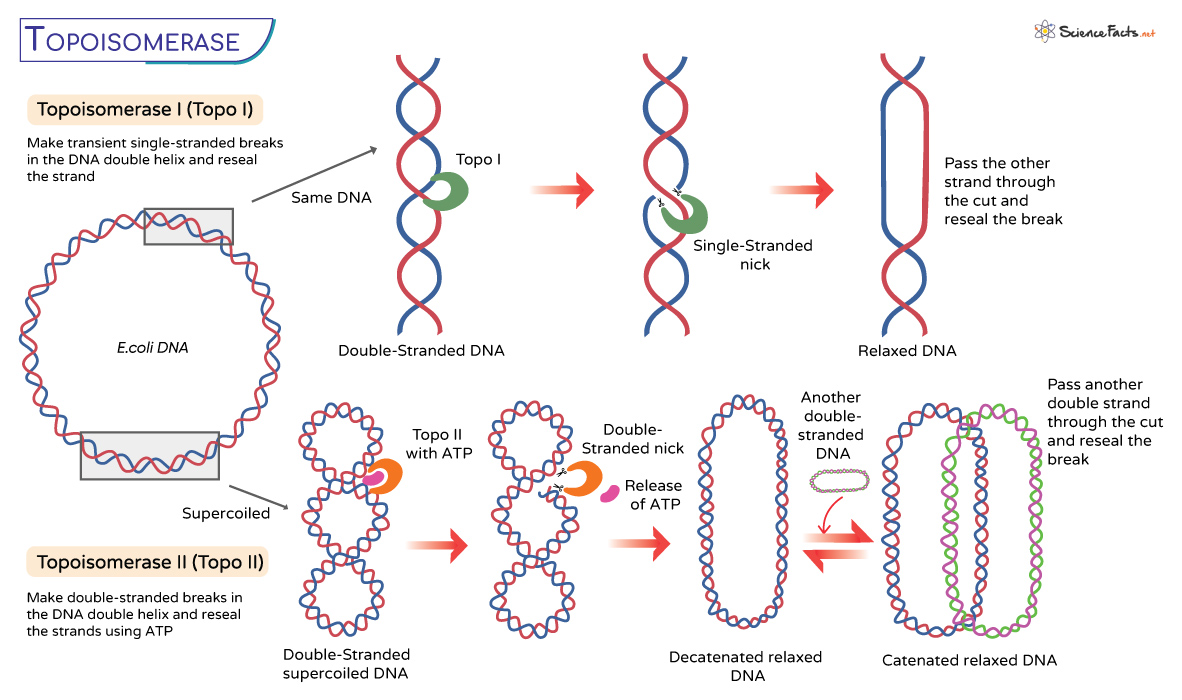
Topoisomerase
An enzyme that is important in DNA replication. It breaks and rejoins DNA to relieve the tension created when helicase continuously opens the double helix.
Gene Expression
The entire set of processes that results in using the information stored in a gene.
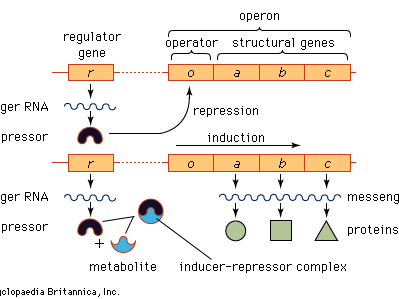
Operon
A sequence of structural gene sequences whose products have related functions and that are under the control of the same promoter and other regulatory sequences, meaning that they are transcribed as a unit.
Transcription Factors
Proteins that regulate transcription, often by binding to regulatory sequences in DNA.
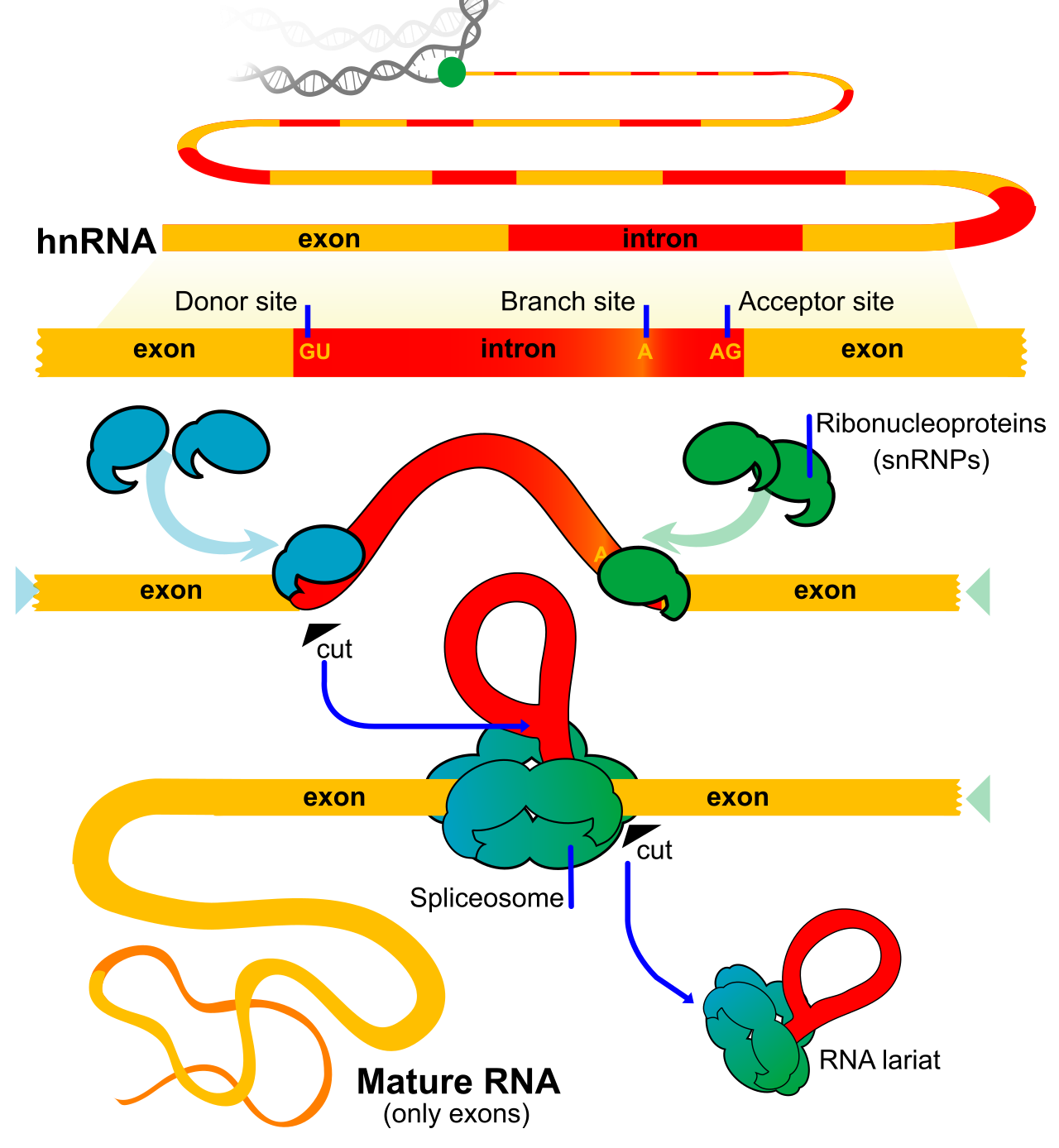
Exons
In eukaryotic genes, sections of the coding sequence code for amino acids found in a protein product.
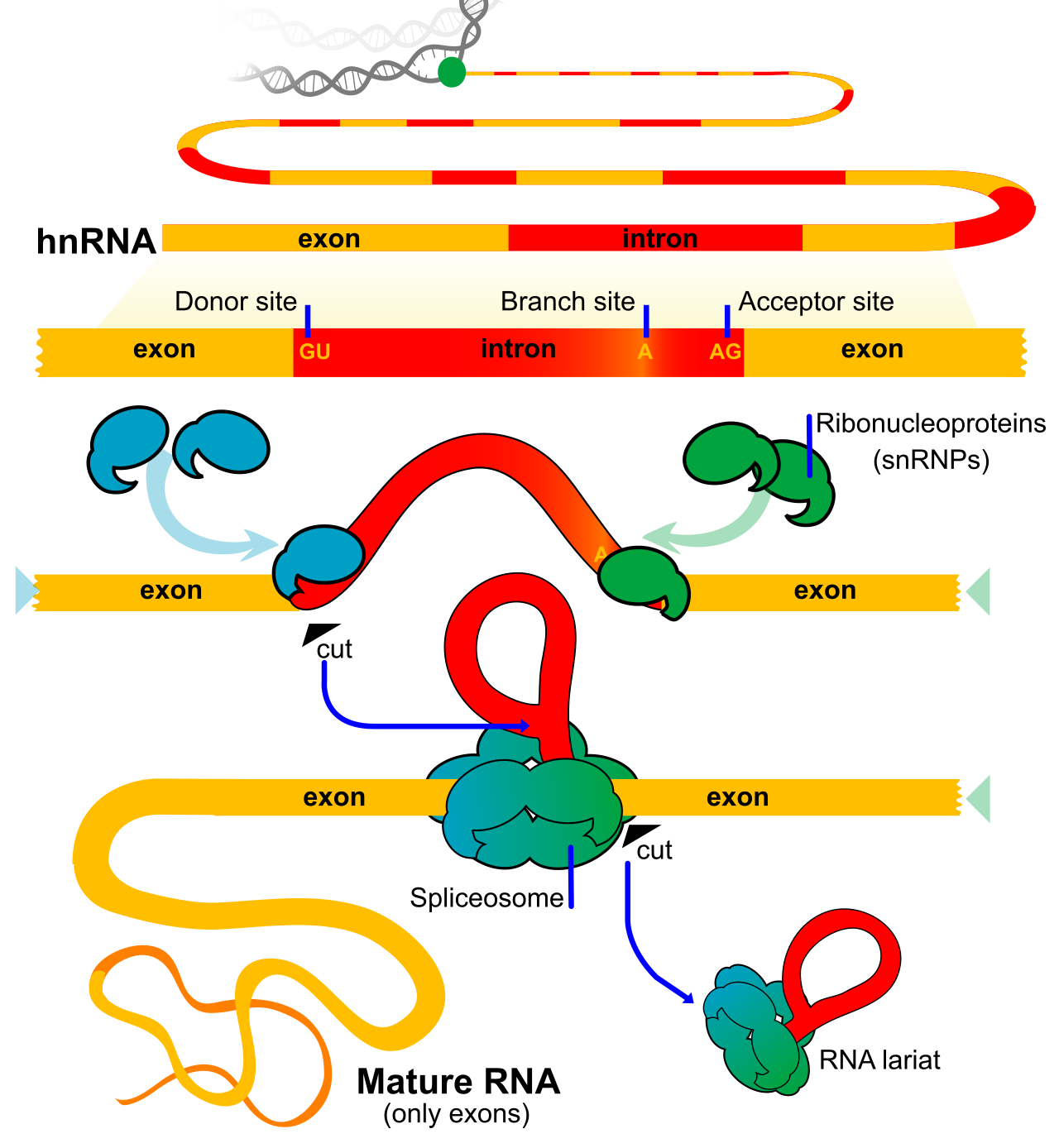
Introns
In eukaryotic genes, sections of the coding sequence that are transcribed but later removed before an mRNA is translated into a protein product.
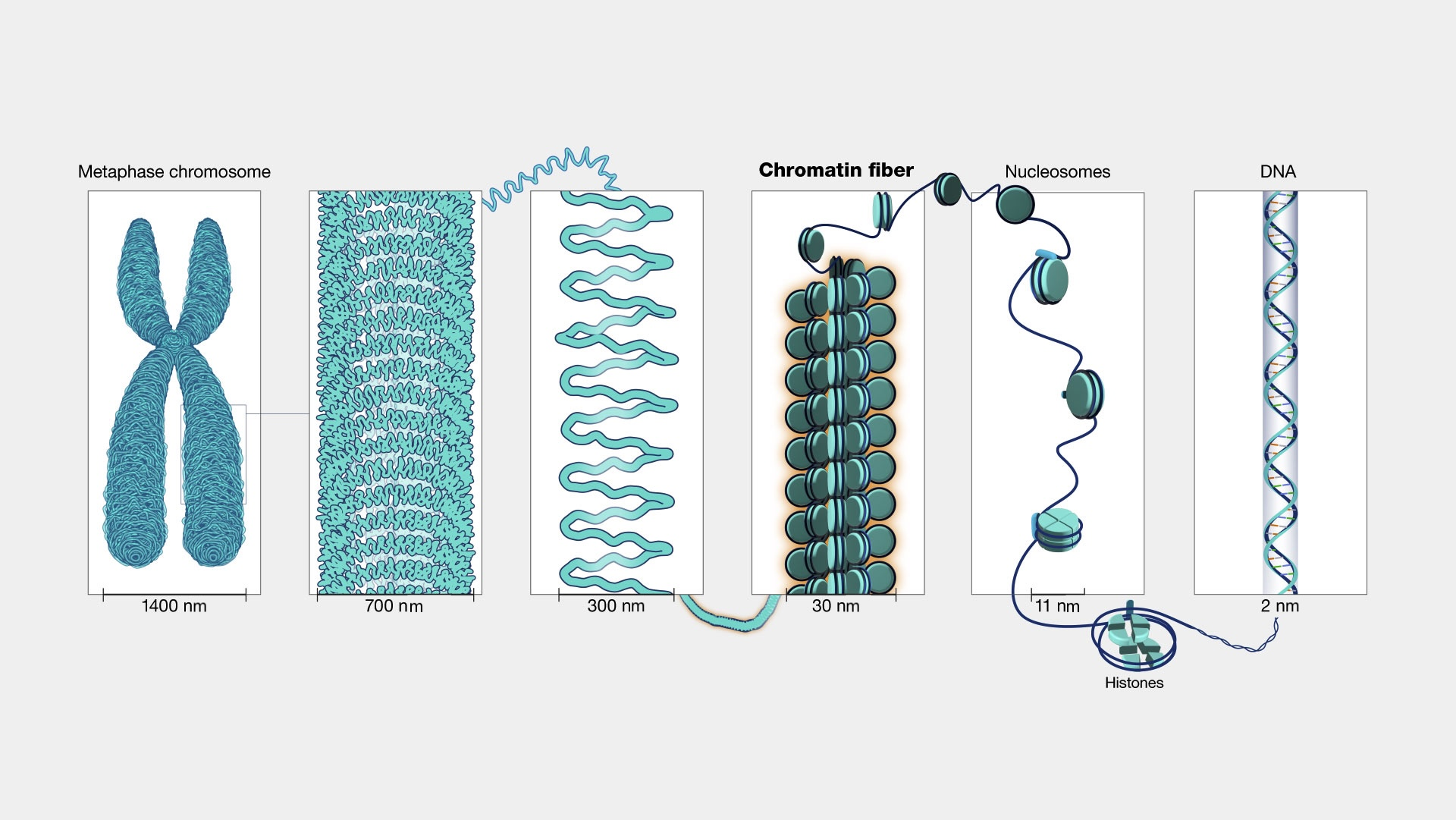
Chromatin
The complex of DNA and histones that makes up a chromosome.
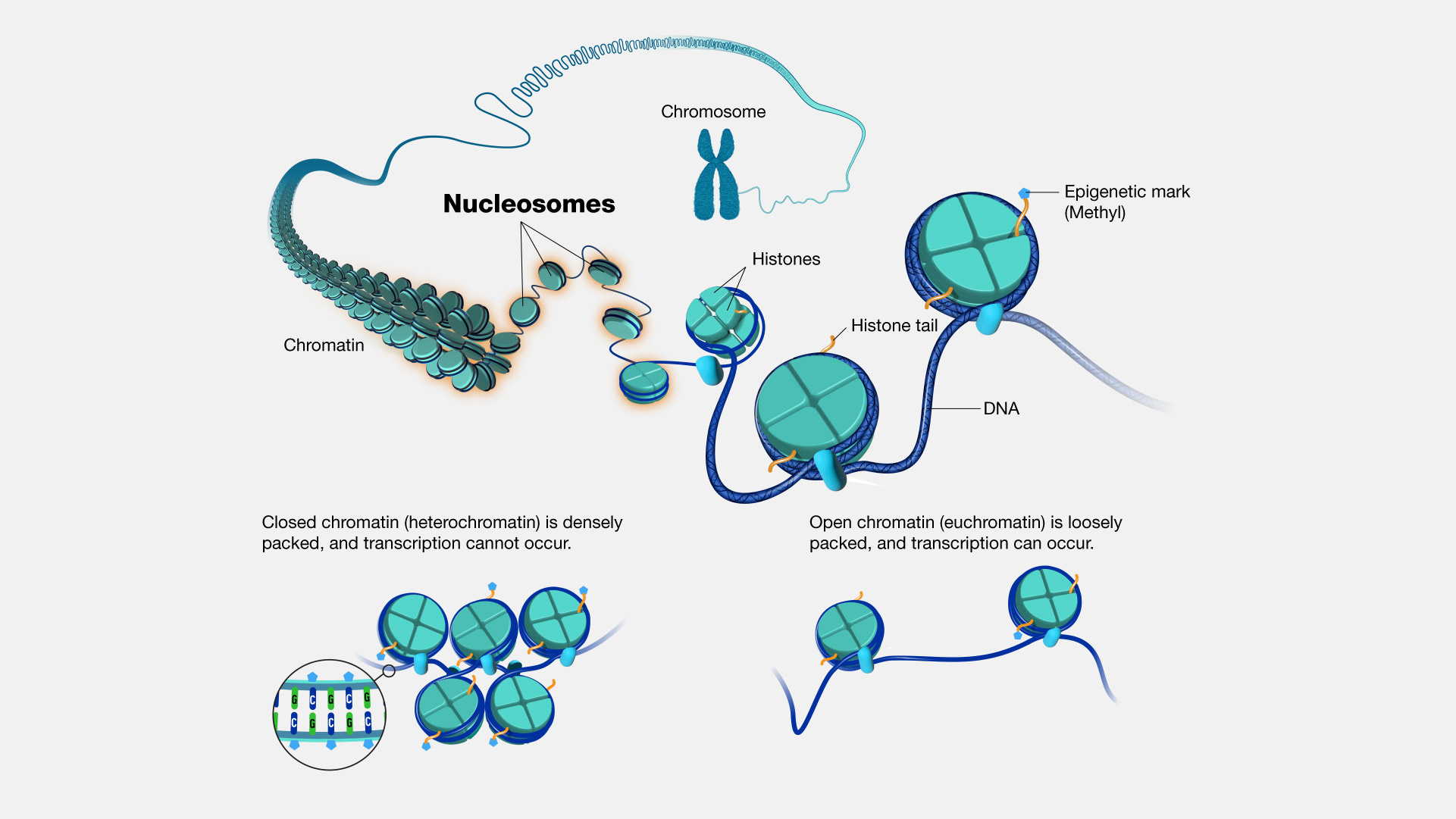
Nucleosome
A group of four histone proteins that has DNA wrapped around it.
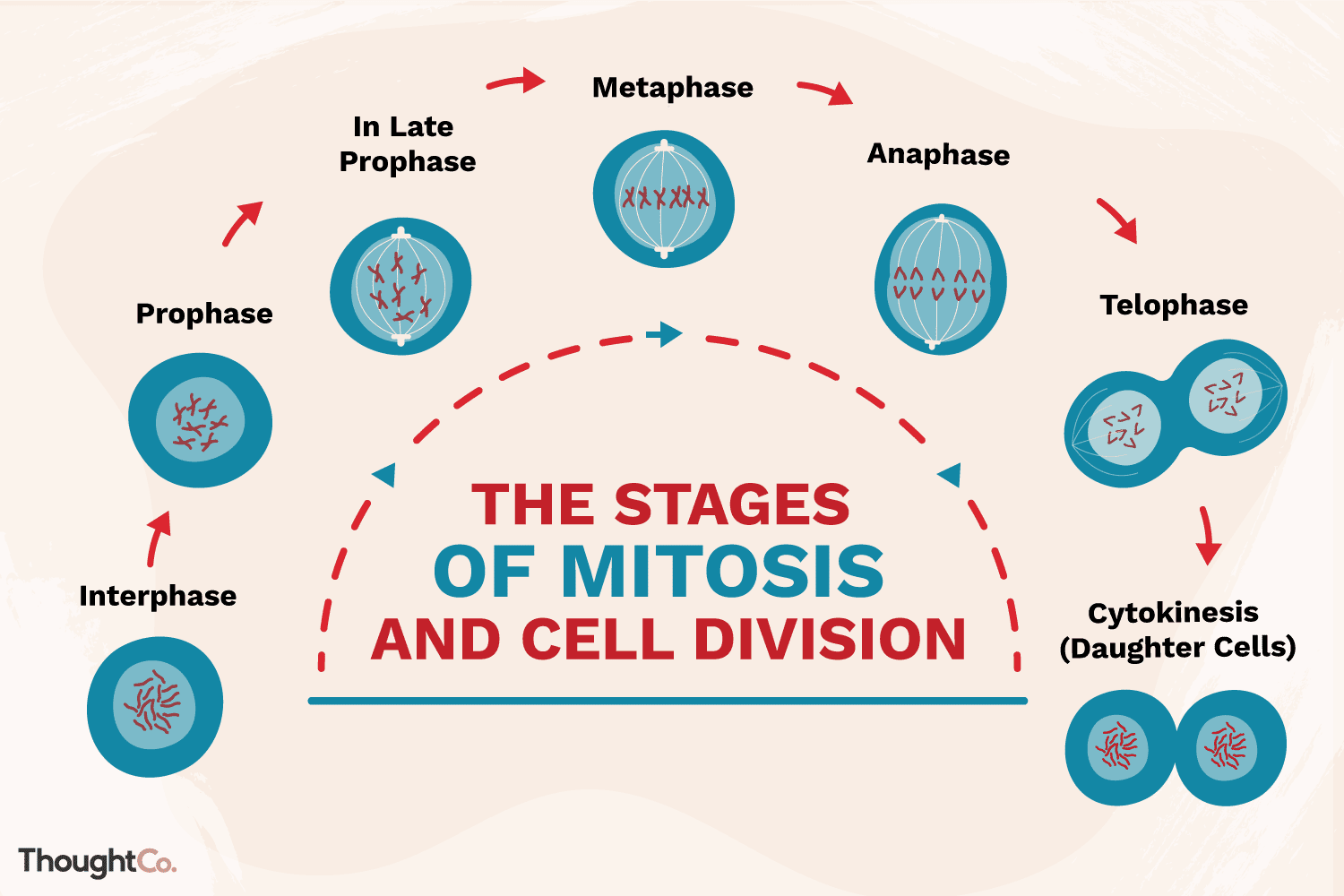
Mitosis
A process in eukaryotes that is responsible for distributing a copy of each chromosome to each daughter cell. It occurs after chromosomes have been replicated and prior to the physical division of the parent cell into two daughter cells.
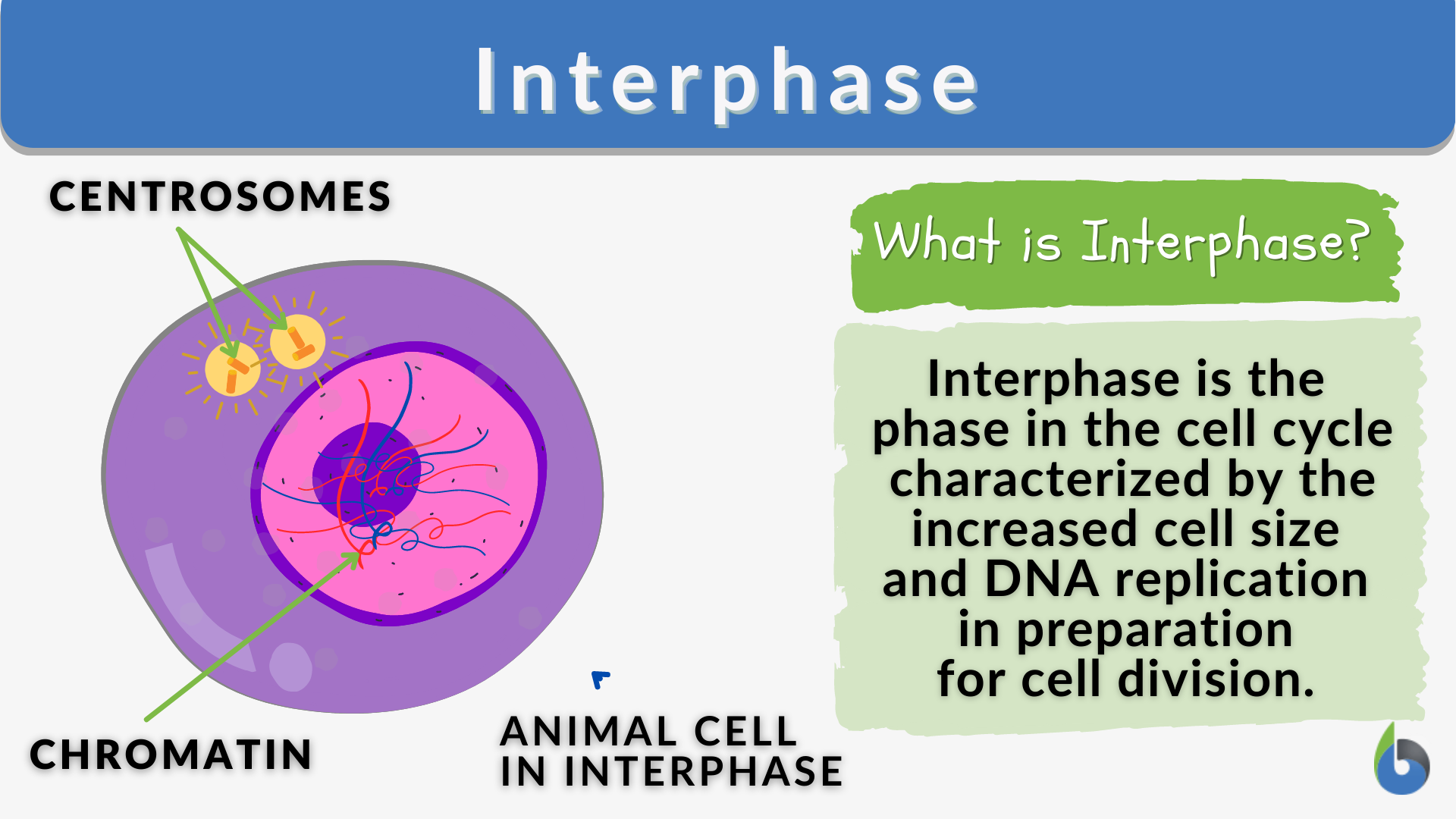
Interphase
The portion of the cell cycle when growth and DNA replication occur.
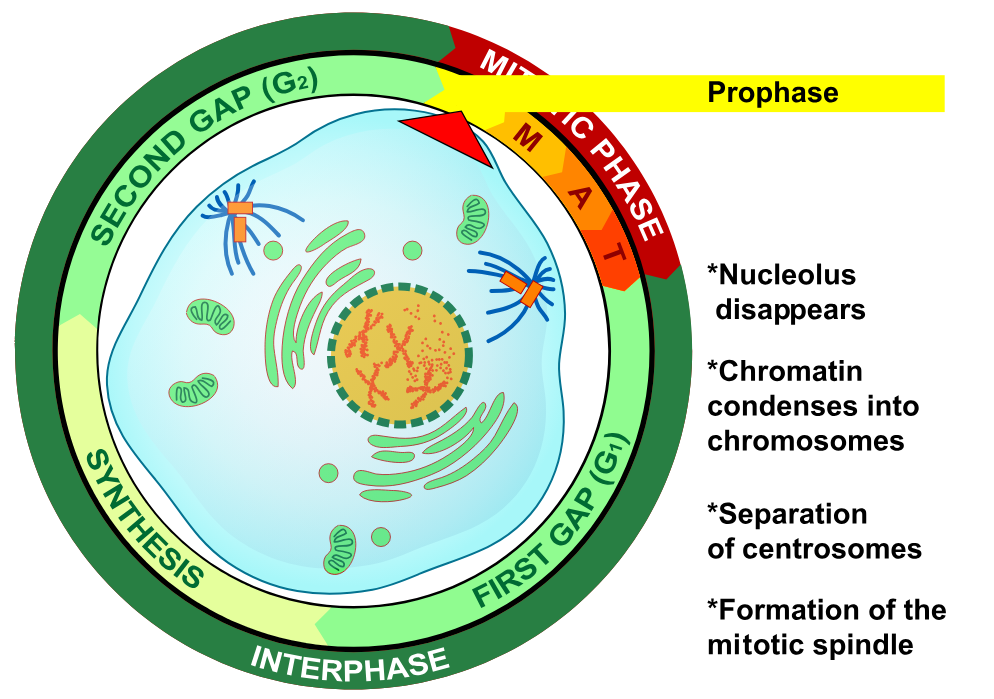
Prophase
The initial phase of mitosis, when replicated chromosomes condense and the nuclear envelope breaks down.
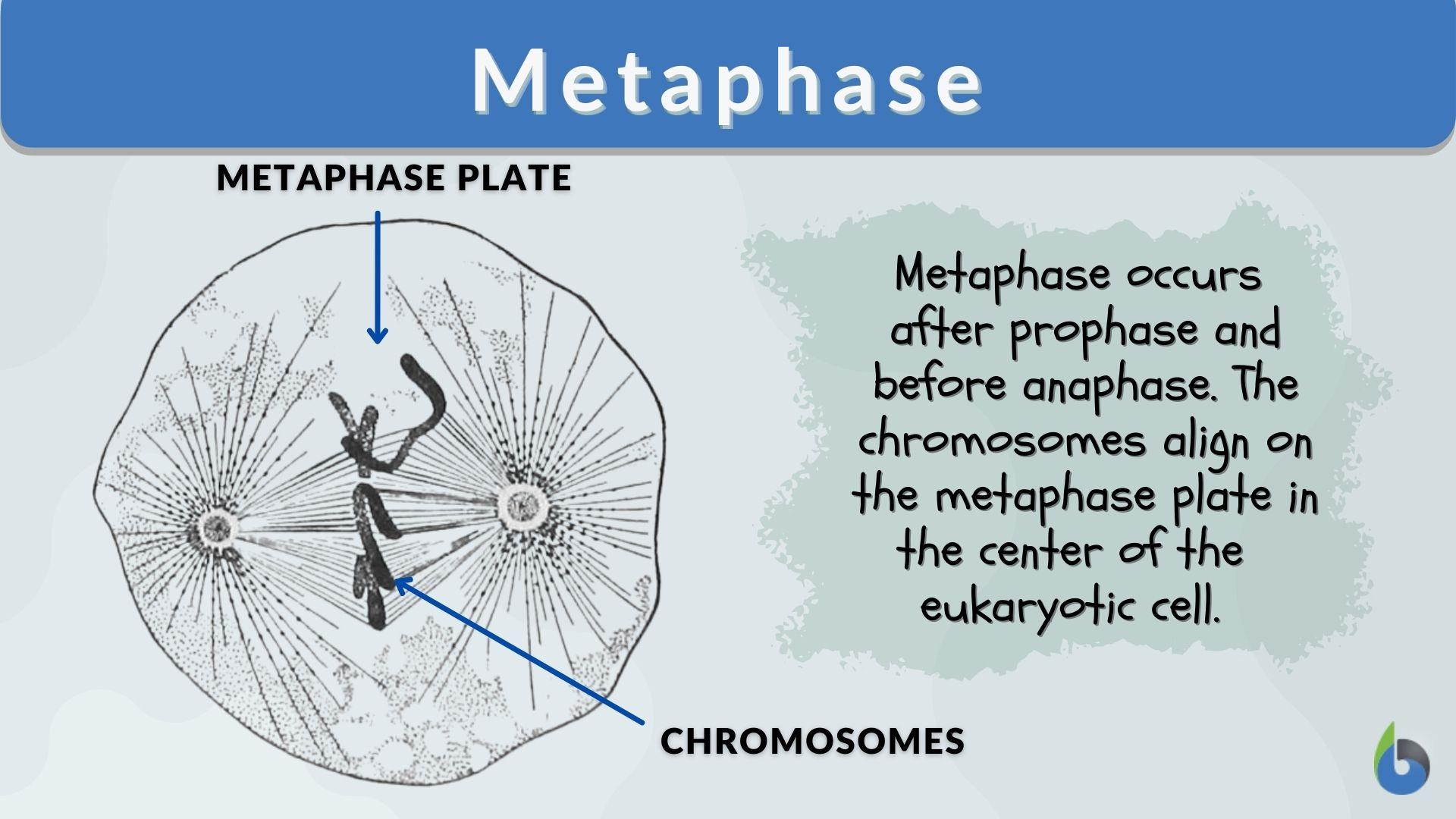
Metaphase
The middle phase of mitosis, when replicated chromosomes move to the middle of the cell.
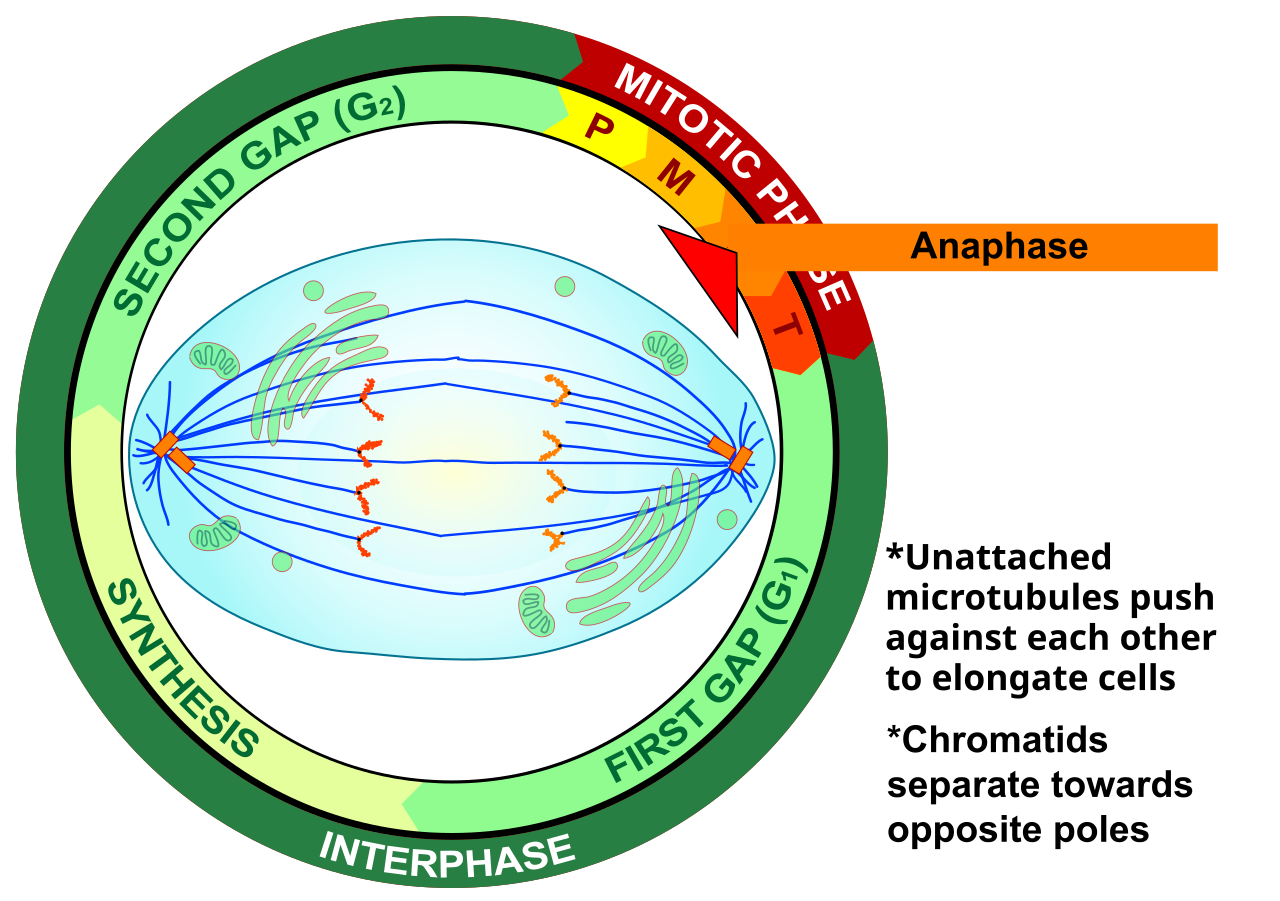
Anaphase
sister chromatids separate and one of each type of chromosome ends up at either end of the parent cell
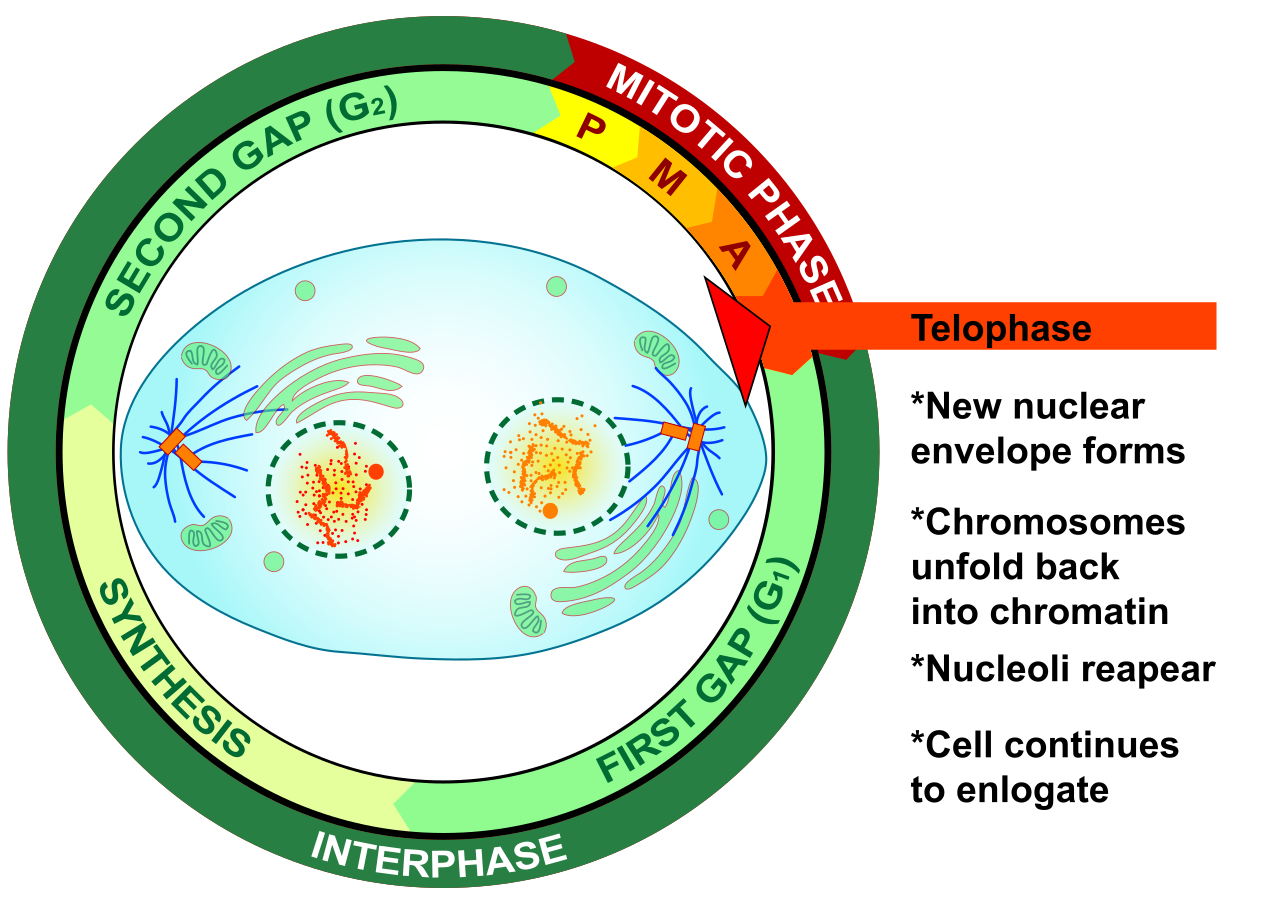
Telophase
nuclear envelopes re-form around each set of chromosomes as the last step of mitosis
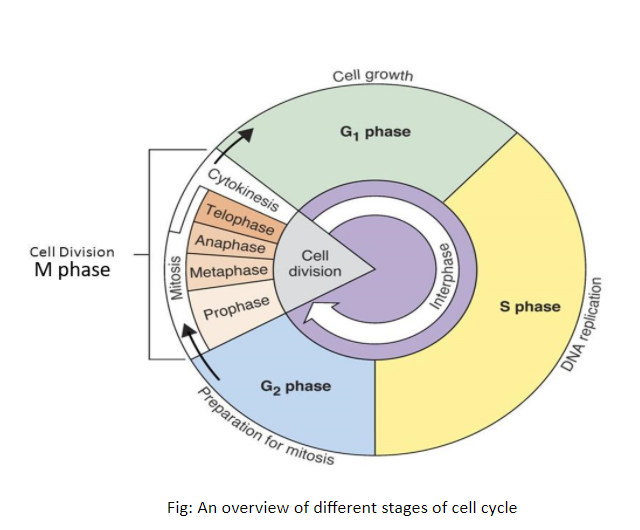
M Phase
The portion of the cell cycle when mitosis and cell division occur.
Positive Control (over gene expression)
Mechanisms that increase the amount of active gene product available.
Negative Control (over gene expression)
Mechanisms that decrease the amount of active gene product available.
Germ Cells
Cells that directly give rise to sperm or eggs, or are sperm or eggs themselves. Germ cells undergo meiosis to produce haploid daughter cells.
Somatic Cells
Cells that form the body, and that only undergo mitosis.
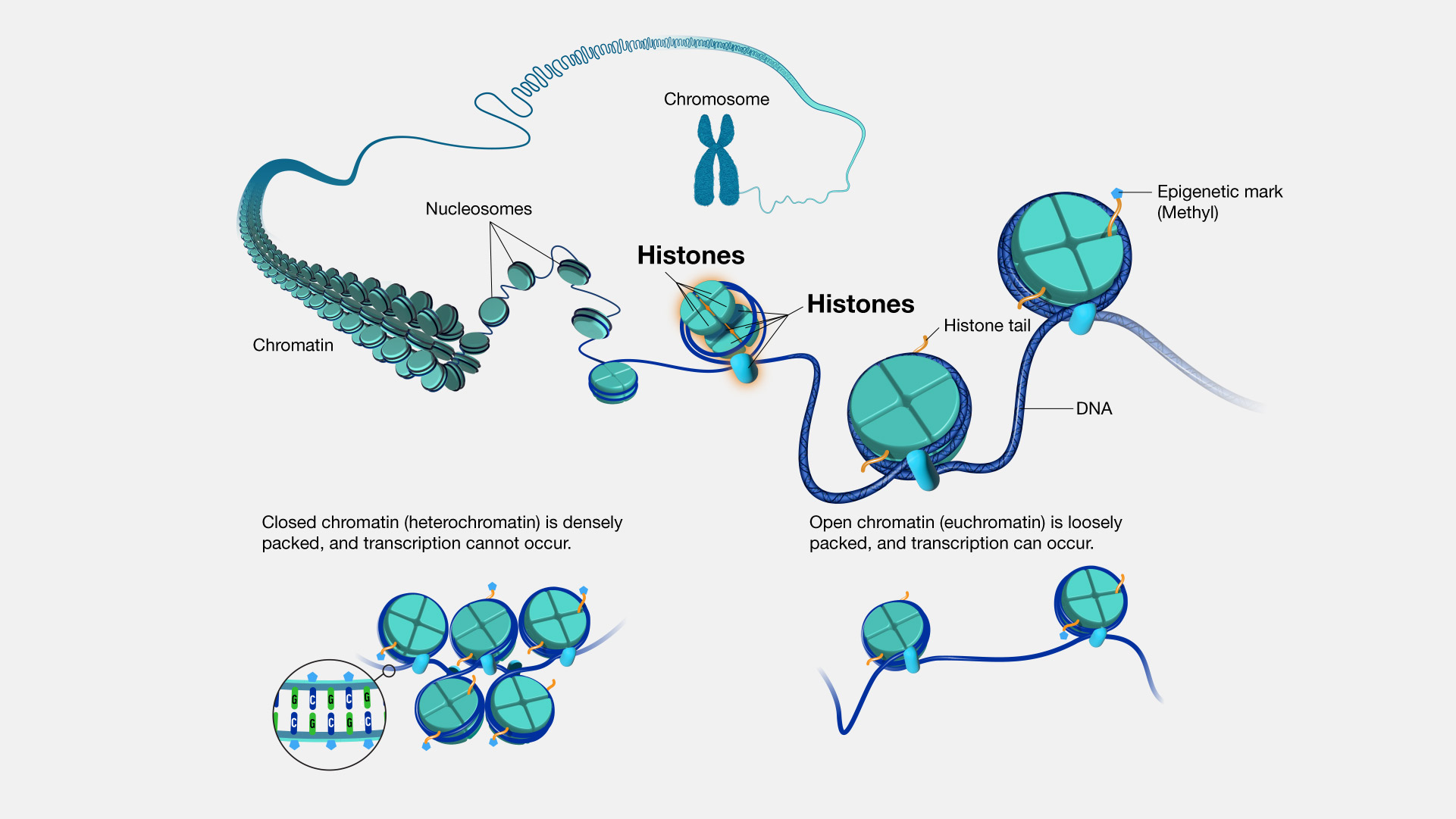
Histone Proteins
Proteins that have an abundance of positively charged lysines and arginines in their primary structure, which interact with negative charges on the sugar-phosphate backbone of DNA to form nucleosomes.
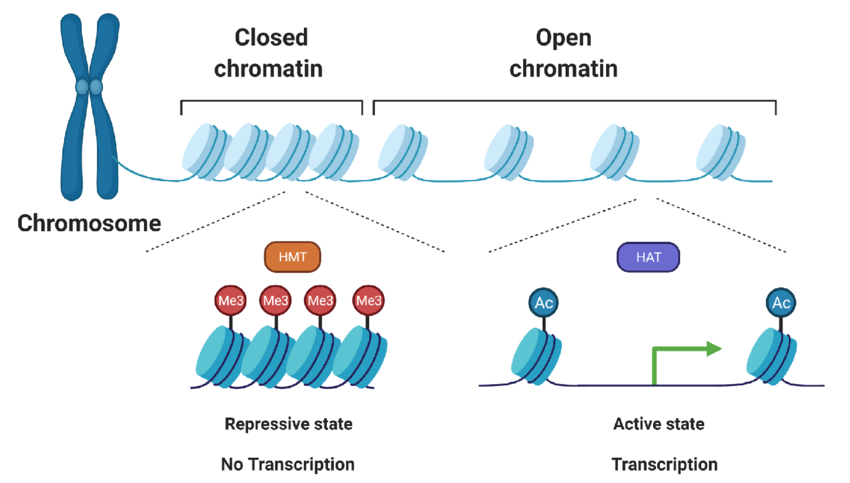
Histone Remodeling
alters how tightly packed DNA is; can tighten or loosen the chromatin by catalyzing the covalent bonding of different chemical groups onto the lysine positive tails which prevents them from bonding to the negative DNA
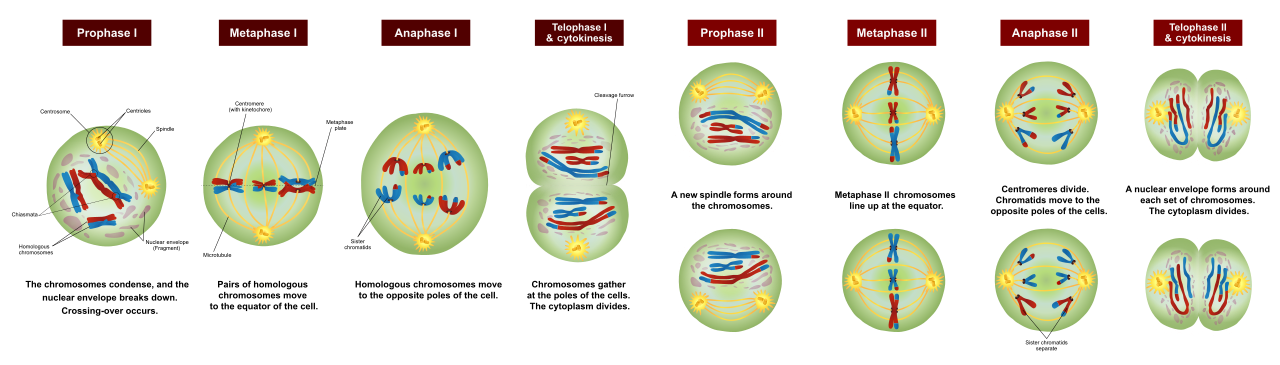
Meiosis
A process in eukaryotes that distributes one of each homologous chromosome pair to daughter cells, resulting in a halving of chromosome number.
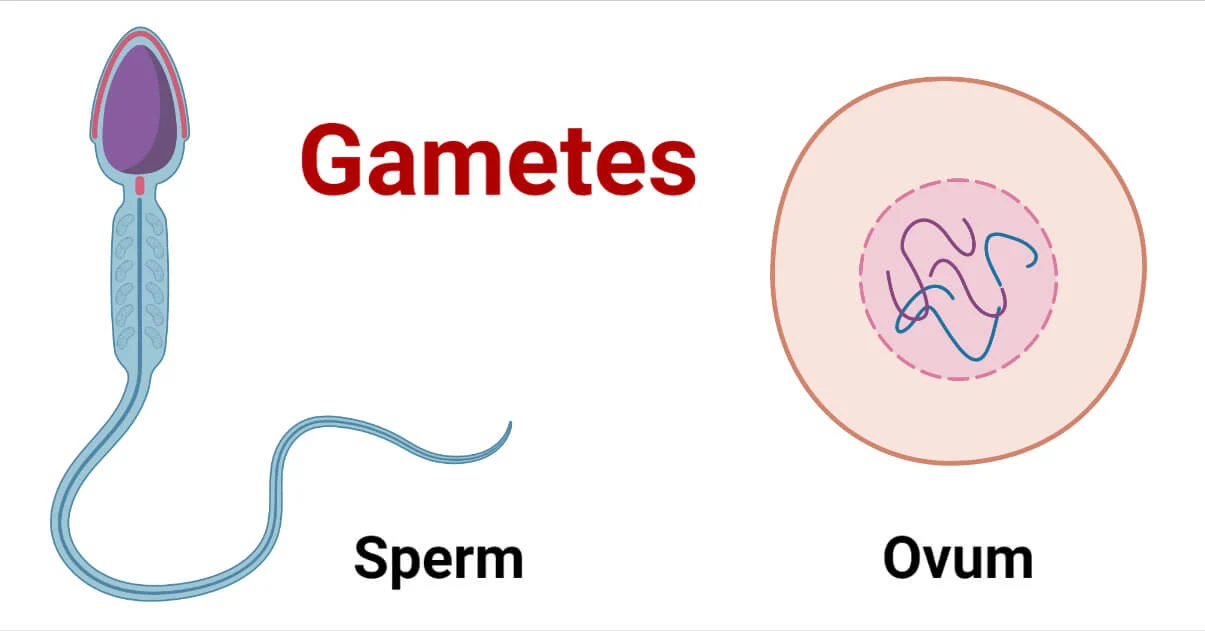
Gamete
Cells that fuse to form a zygote. In many species, these are sperm and egg.
Zygote
A fertilized egg.
Maternal Chromosome
Any chromosome inherited from the mother.
Paternal Chromosome
Any chromosome inherited from the father.
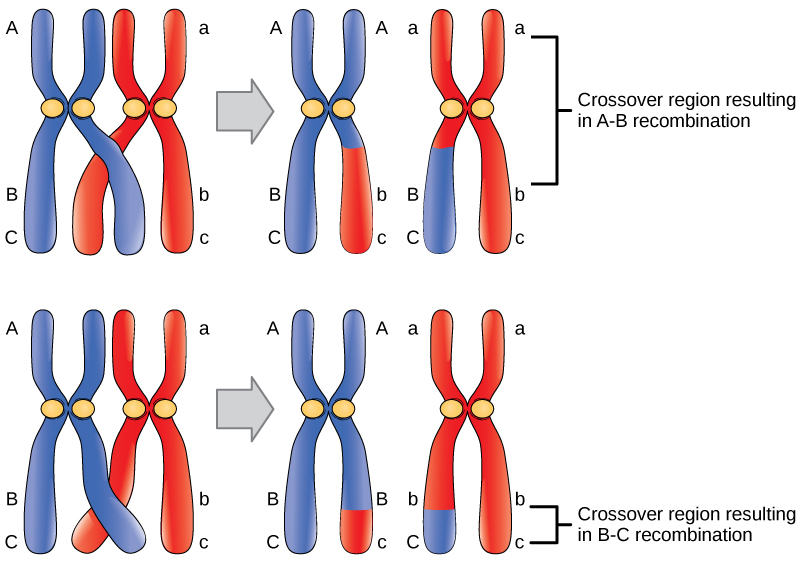
Crossing Over and Recombination
Physical exchange of DNA strands between non-sister chromatids during Meiosis I. Leads to recombinant chromosomes containing alleles from both maternal and paternal chromosomes.
Sexual Reproduction
Production of offspring that is based on meiosis and fusion of gametes.
Asexual Reproduction
Production of offspring that is based on mitosis.
Independent Assortment
The observation that maternal and paternal homologs line up at random before separating at the end of Meiosis I, producing a wide array of possible combinations in daughter cells.
DNA Proofreading
The ability of DNA polymerase to respond when it adds the wrong base by mistake by 1) pausing synthesis of the new strand, 2) removing the mismatched base with an exonuclease activity, and 3) adding the correct base.
DNA Mismatch Repair
Proteins and enzymes work on newly synthesized DNA molecules to recognize and repair mismatched bases.
DNA Excision Repair
Proteins and enzymes work on DNA molecules long after replication is complete to recognize and repair damaged areas as they arise.
Mutation
Any change in the genetic information in DNA.
Missense Mutation
A change in a single base that alters the mRNA codon and changes the amino acid at that position in the protein product.
Nonsense Mutation
A change in a single base that alters the mRNA codon to a new and premature stop codon in the mRNA, shortening the protein product.
Silent Mutation
A change in a single base that alters the mRNA codon but does not change the amino acid at that position in the protein product. (Also called a synonymous substitution.)
Frameshift Mutation
A change in DNA that alters the reading frame of codons in an mRNA, resulting in altered codons in mRNA and altered amino acids in the protein product.
Deleterious Mutation
Any mutation that decreases fitness; deleterious mutations that lead to early death are termed lethal.
Hormone
A molecule that acts as a long-distance signal between cells in the same multicellular individual.
Ligand
Any molecule that binds to a receptor and triggers a response. Includes both long-distance and short-distance cell-to-cell signals as well as intracellular signals.
Signal Transduction
A change in the form of a signal, for example from a hormone that binds to a receptor on the surface of a cell to a second messenger or phosphorylation cascade inside the cell.
Kinase
An enzyme that catalyzes the addition of a phosphate group from ATP to a recipient molecule.
Phosphorylation Cascade
A chain reaction that amplifies the signal from a chemical messenger. It occurs when each kinase in a signaling network phosphorylates multiple target proteins, which each then go on to phosphorylate multiple target proteins, and so on.
Second Messenger
An ion or small molecule that is released in response to a chemical messenger binding to a cell-surface receptor and acts as an intracellular signal
Cancer
A family of diseases all characterized by uncontrolled cell division as the underlying cause.
Metastasis
The process of tumor cells breaking away from a tumor, traveling to new locations, and starting new tumors.
Cell Cycle
An orderly, highly regulated, and precisely controlled sequence of events that occurs as cells grow and divide.
Cell Cycle Checkpoints
Intervals in the cell cycle when regulatory proteins check specific aspects of the cell for damage, especially DNA, and allow or prevent continued progress through the cycle.
Tumor Suppressors
Genes whose protein products function as regulatory molecules at cell cycle checkpoints, preventing uncontrolled division of damaged cells.
Messenger RNA (mRNA)
delivers a copy of the DNA code from the nucleus to the ribosome, and then translation can begin
Transfer RNA (tRNA)
transfers amino acids from the cytoplasm to the ribosome during translation
Ribosomal RNA (rRNA)
bonds with special proteins to form ribosomes which builds proteins
Non-Bulky Damage
small chemical modifications to a DNA base, such as an alteration to a single DNA base caused by oxidation
Bulky Damage
large chemical modifications to a DNA base, such as UV light distorting the DNA helix