ENST200 Rocks and Minerals quiz
 Studied by 0 people
 Call Kai
 Learn
Learn Practice Test
 Spaced Repetition
 Match
Match Flashcards
 Knowt Play
1/32

There's no tags or description
Looks like no tags are added yet.
Name | Mastery | Learn | Test | Matching | Spaced |
|---|
No study sessions yet.
33 Terms
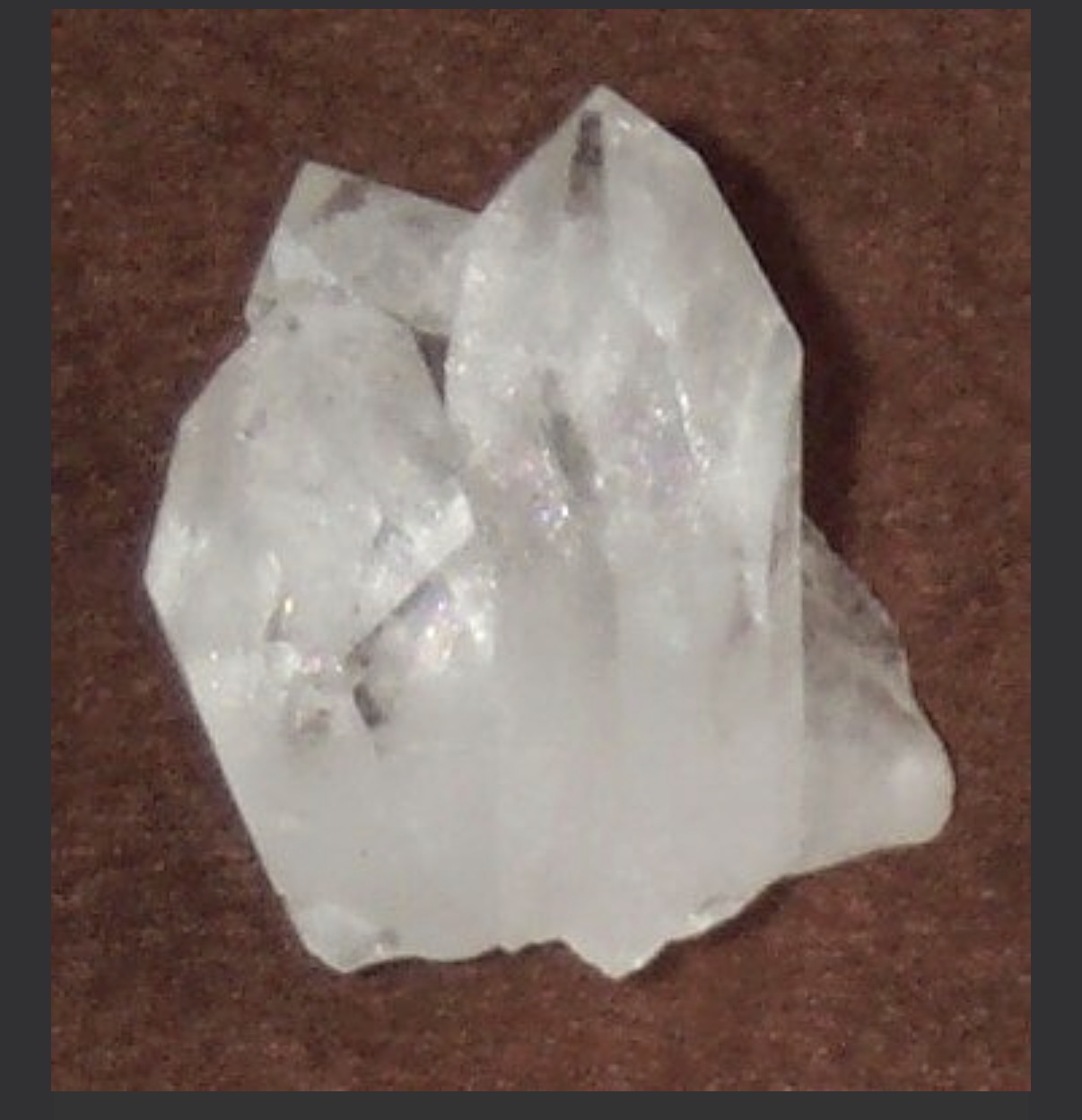
Quartz
Conchoidal fracture, vitreous luster, colorless, white. Very resistant to weathering, not scratched by steel nail or porcelain. fractures and often forms prismatic crystals with hexagonal pyramid tips.
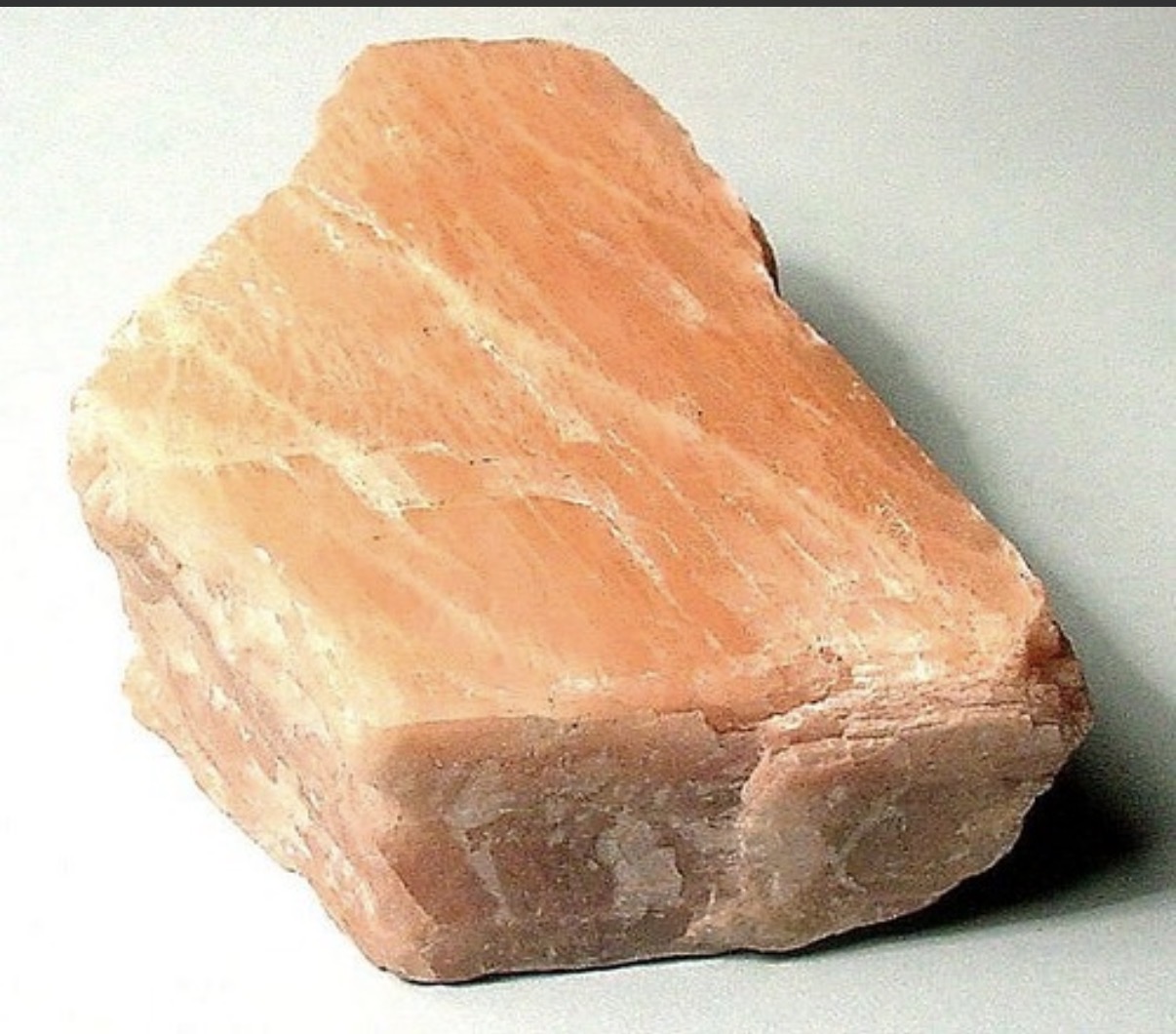
Orthoclase and microcline
Feldspar, white streak, good cleavage/fraction in two directions at ~90°, vitreous luster, flesh pink/gray colors. It’s a micro-cline if deep green color. Very common in soils and acidic igneous rock. Mostly sand and silt sized in soils. Important potassium (K) source for plants.
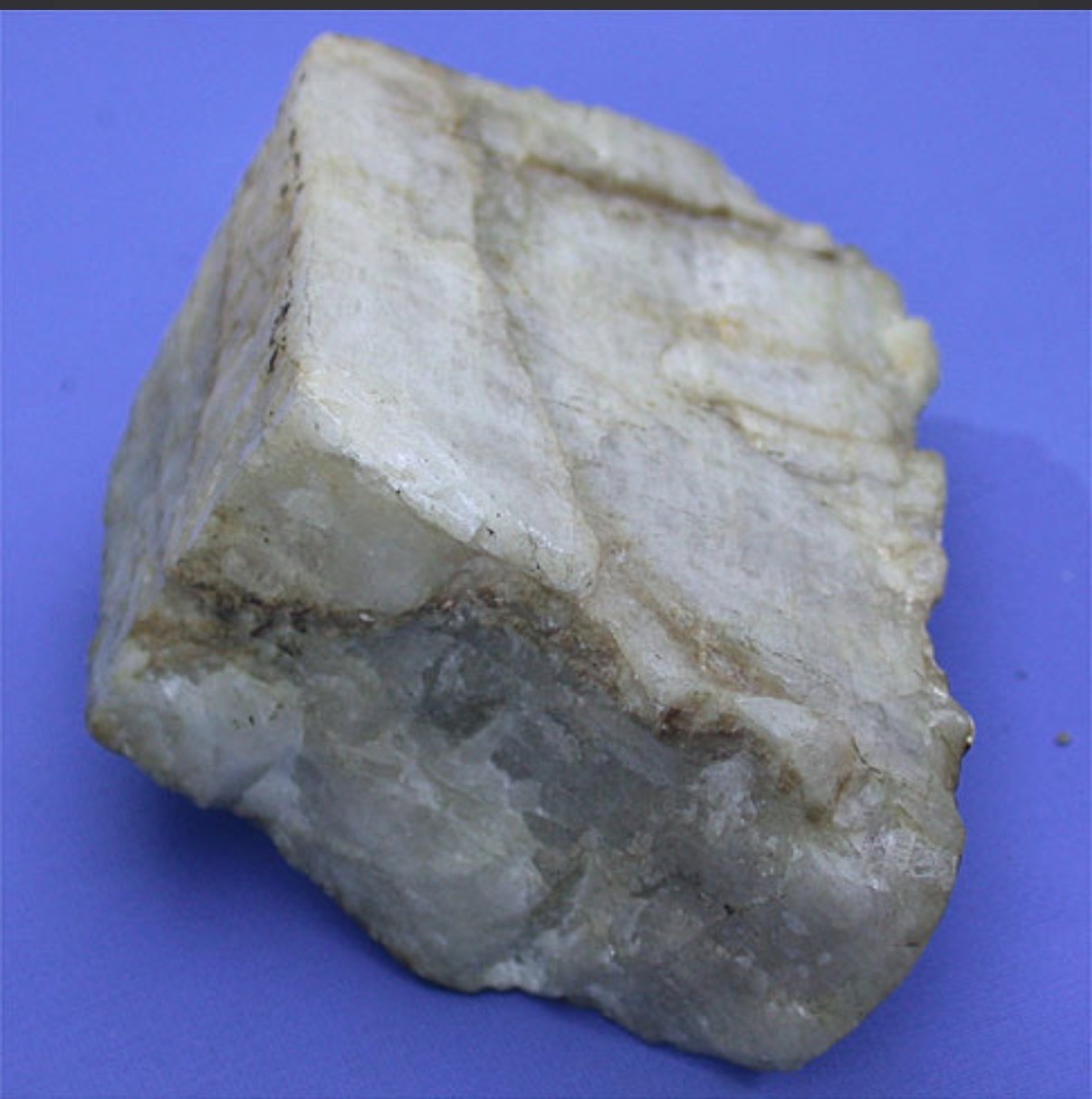
Plagioclase
Feldspar, colorless streak, good cleavage/fracture in 2 directions at 94°, vitreous to pearly luster, colorless/white/red/gray color. Forms a series from the Na type (albite) to the Ca type (anorthite). All have striations on the basal cleavage plane.
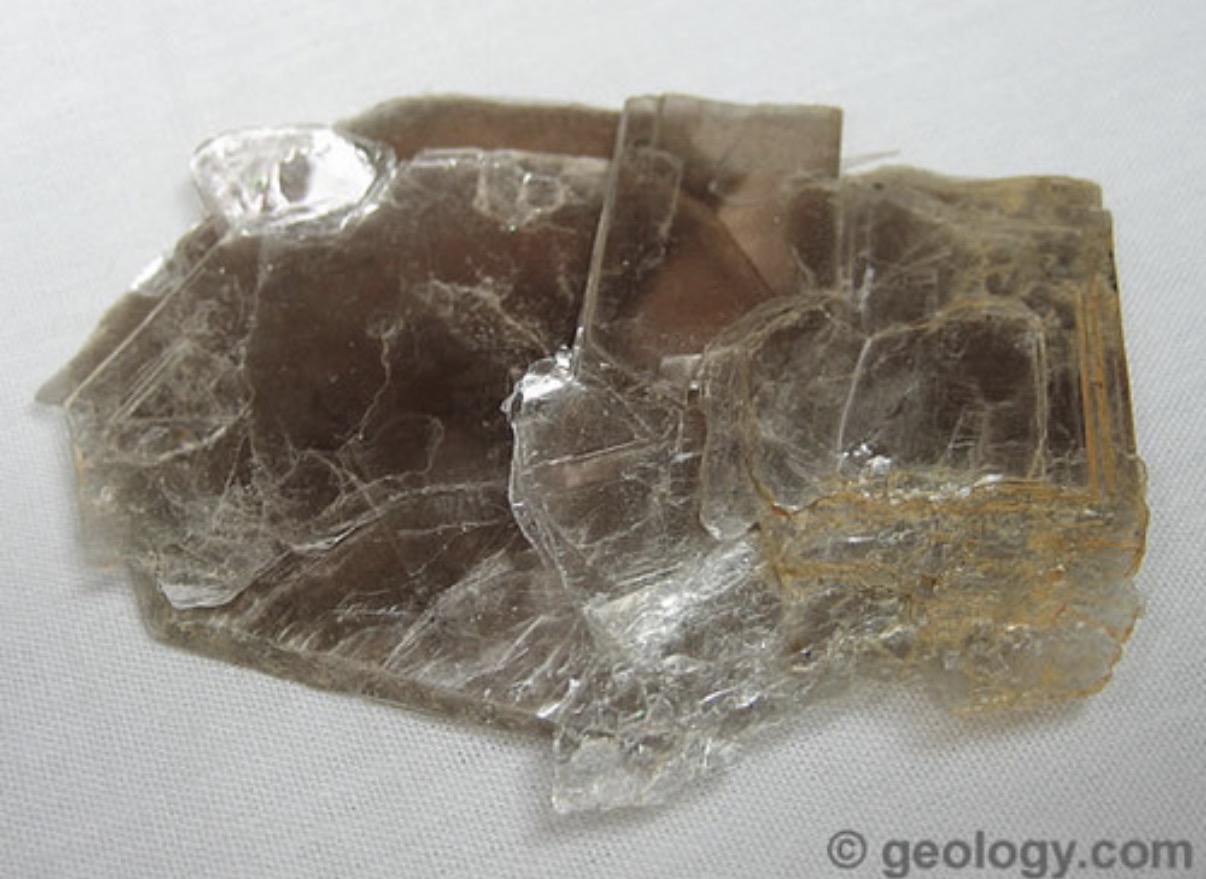
Muscovite
Mica group, colorless streak, thin/flexible sheets, vitreous to pearly luster. Colorless/light yellow. Common in granites, gneiss, and schists. Very resistant to weathering. Common in sand fractions and clay.
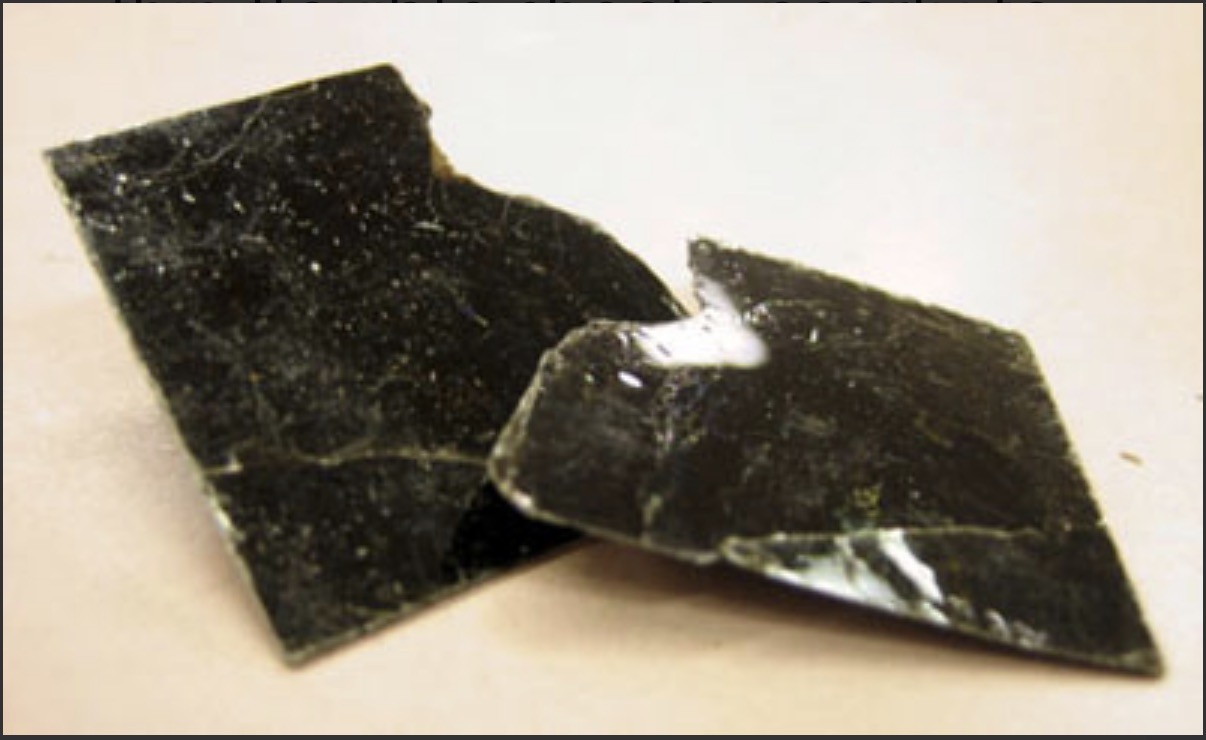
Biotite
Mica group, colorless streak, thin/flexible sheets, pearly to vitreous luster. Black, brown, or dark green color. Common in granites, gneiss, and schist.
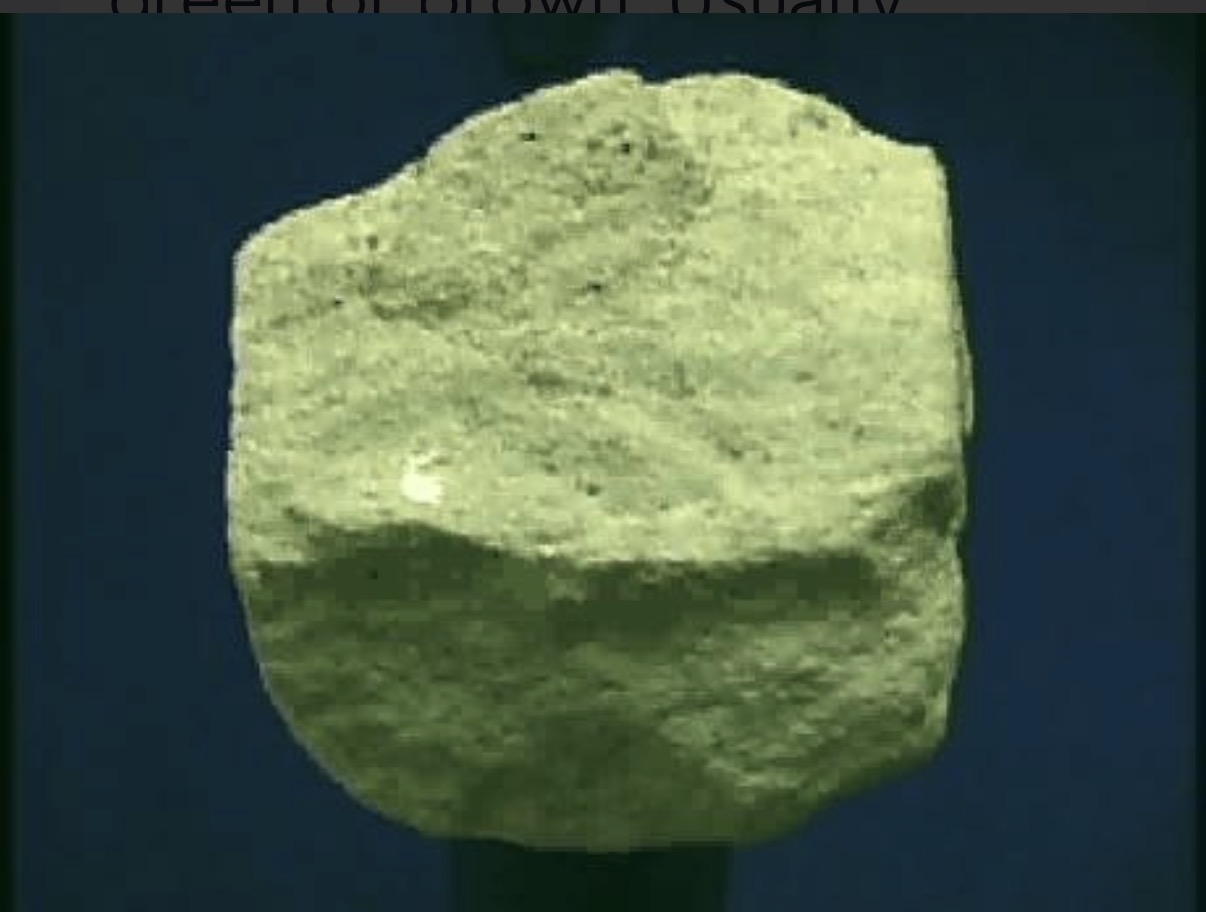
Olivine
Pale green to white if any streak. Conchoidal fracture, vitreous. Olive to grayish green or brown color. Usually found as granular masses. Common mainly in basic rocks like gabbro basalt. Weathered pretty easily.
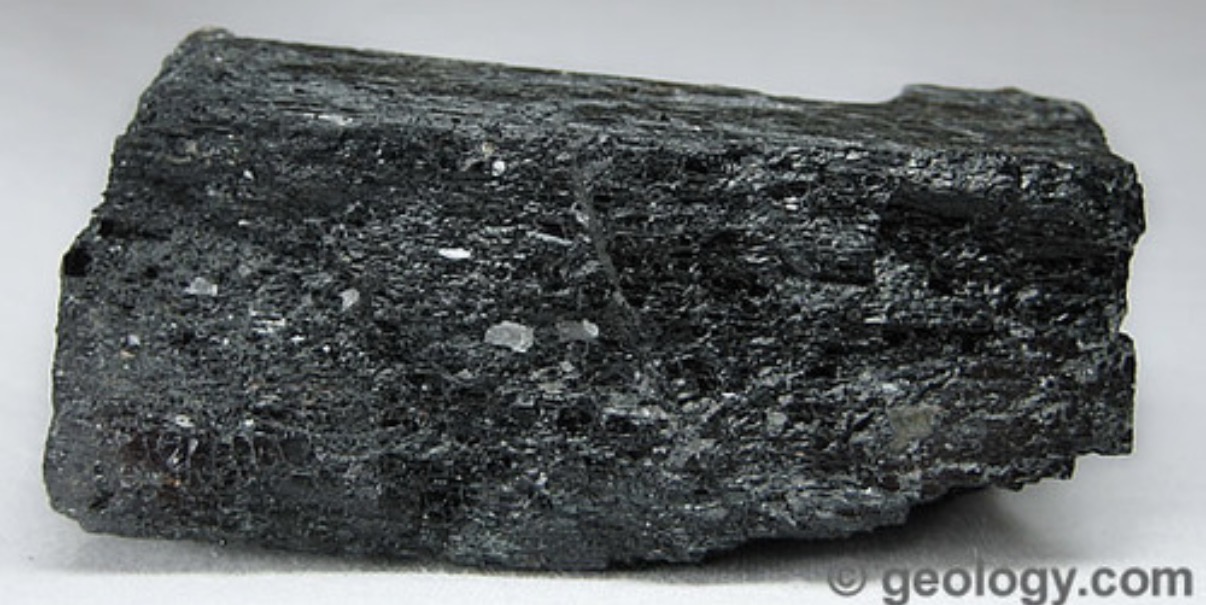
Hornblende
Colorless streak, prismatic fracture, vitreous or silky. Black or dark green color. Common in igneous and metamorphic rocks. Crystals are like long prisms.
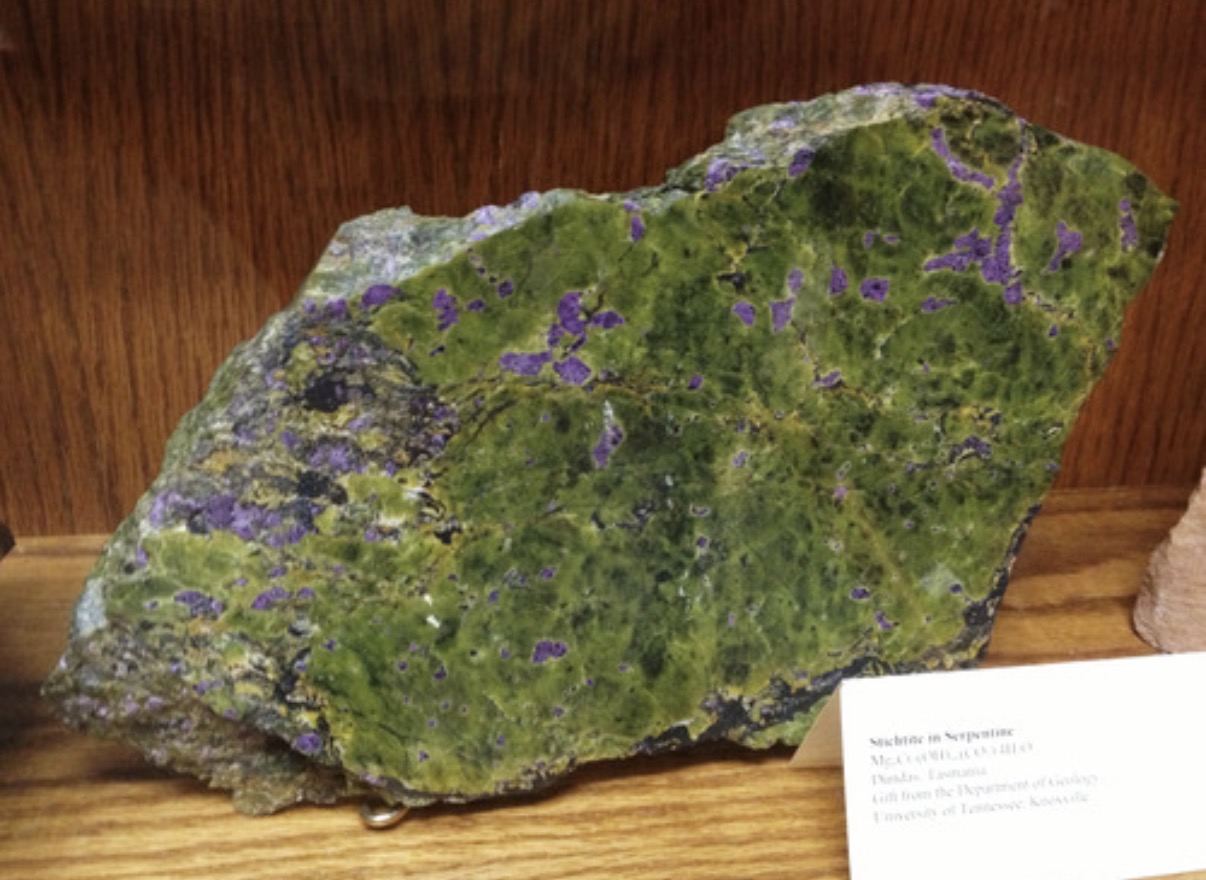
Serpentine
Colorless streak, conchoidal fracture, greasy. Variegated green colors. Common mineral often occurring as a weathering product of olivine, hornblende, or augite. Rich source of Mg for plants. Soils formed from these rocks may even have harmful levels of Mg.
Hematite
Dusty red streak, uneven fracture, metallic luster. Black to reddish brown color. Important as iron ore. In soils, iron oxidizes primarily as amorphous coatings on other soil particles, but sometimes this mineral can occur in sand and silt fractions as crystals. Partially responsible for bright red and brown soil colors.
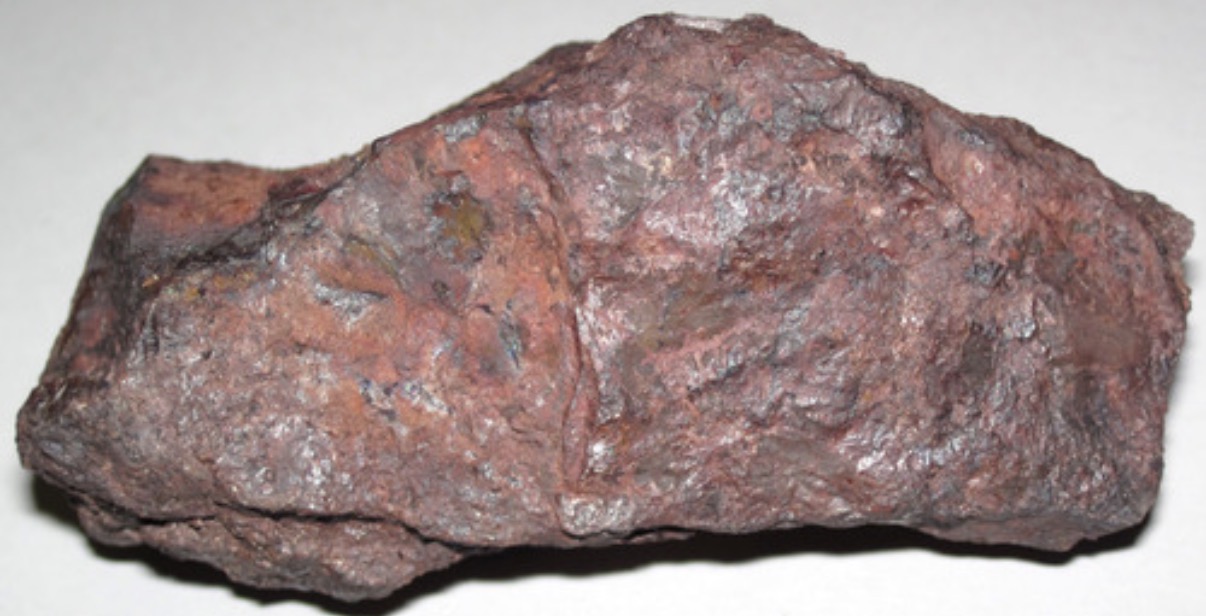
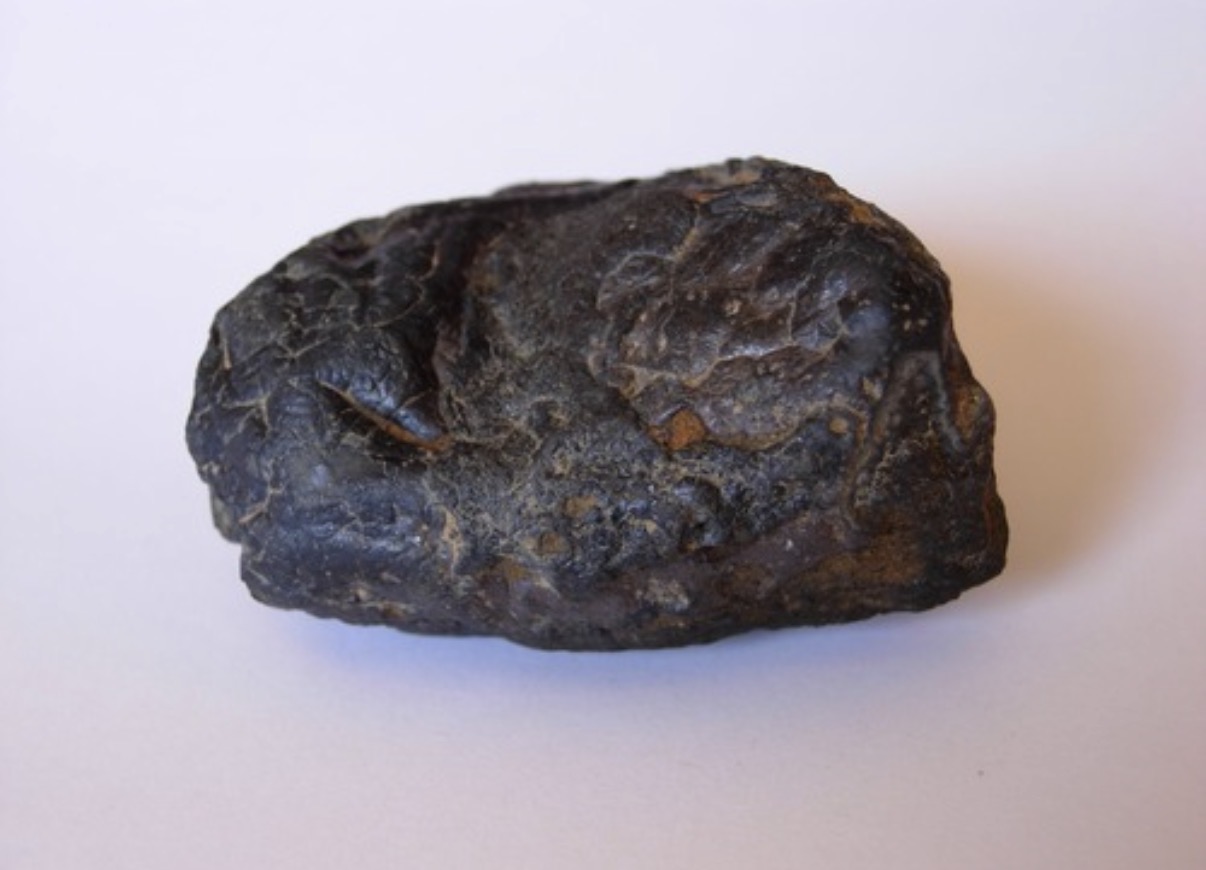
Limonite
Yellow brown streak, no cleavage, no luster. Dark brown to black color. Principal limonite mineral in soils being abundant in oxisols, ironstone, and Bs horizons.
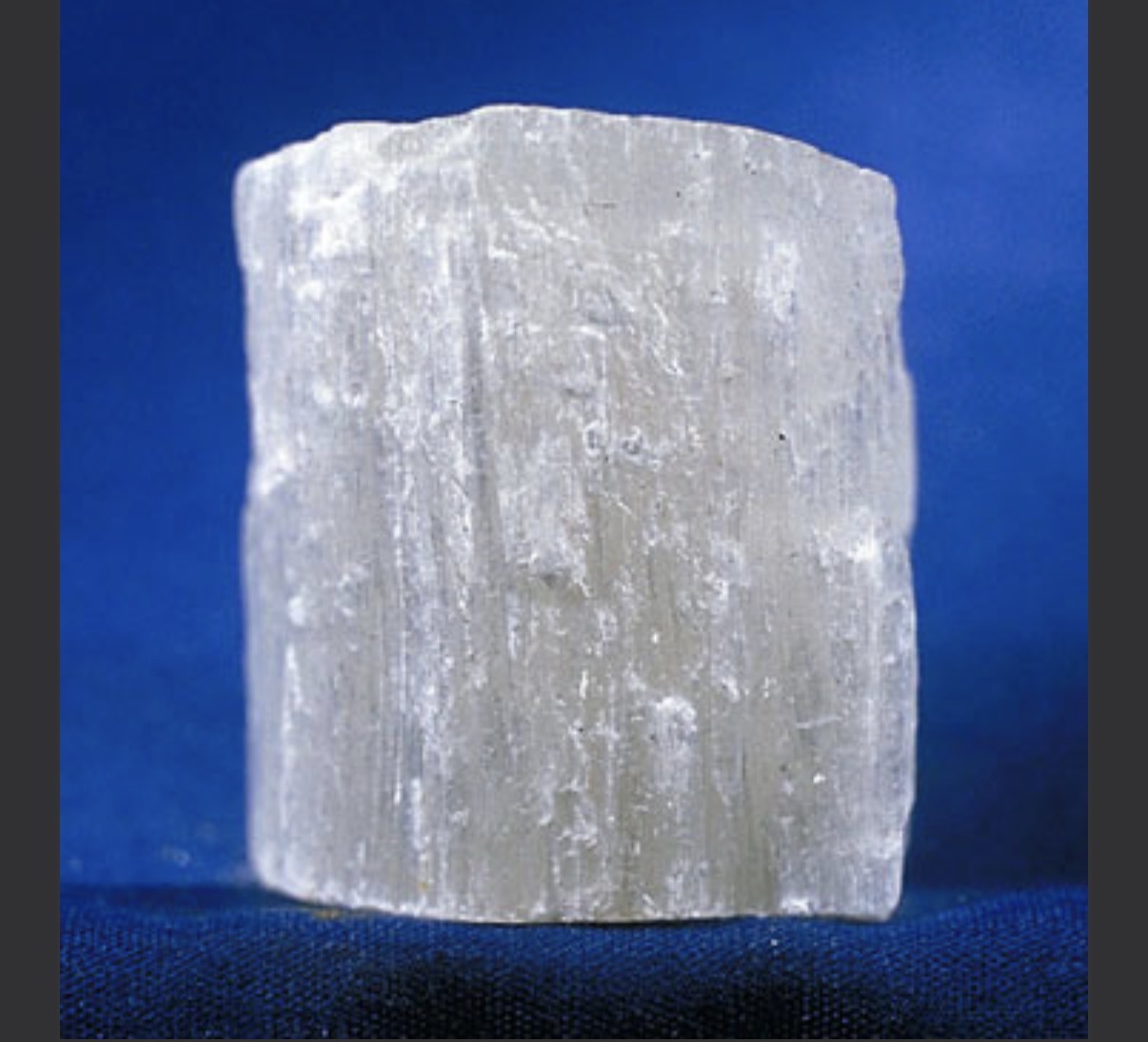
Gypsum
Colorless streak, good cleavage in one direction, vitreous, pearly, or silky. Colorless, white or gray color. Common in soils of arid regions, both as crystals and as a cementing agent in indurated soil horizons. Has been weathered out of humid region soils because it’s soft and pretty soluble. Occurs in sedimentary rocks. Used as soil amendment to reclaim spodic soils and as a calcium fertilizer.
rock
an aggregate of one or more minerals (ex. granite, basalt, limestone, sandstone)
mineral
a naturally occurring inorganic compound/element with a characteristic chemical and crystalline composition (ex. quartz, calcite, feldspar)
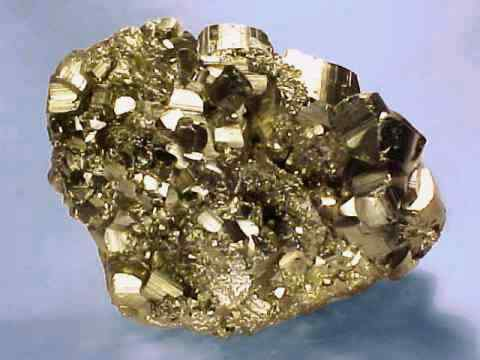
pyrite
green to brownish black streak, uneven fracture, metallic luster, brass yellow color. “fool’s gold,” occurs in all three types of rocks. is most significant to soils when in sedimentary rocks, clays associated with coal seams. responsible for lots of acid mine drainage when exposed to air by excavation.
calcite
colorless streak, perfect fracture in 3 directions, vitreous luster, white/colorless color. occurs in many rocks like limestone, marble, and cave formations. accumulates in soil Ck horizons in arid regions. known as lime in finely powdered form and used to correct soil acidity. effervesces (bubbles) freely with cold HCl dilution.
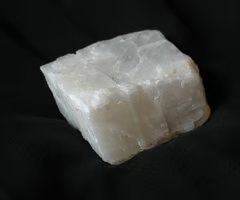
dolomite
colorless streak, perfect fracture in 3 directions, vitreous luster, pink/flesh/white color. occurs mainly in dolomitic limestone and marble. effervesces (bubbles) slightly with cold HCl dilution, but powder effervesces freely. may occur as rhombohedral crystals with curved crystal faces.
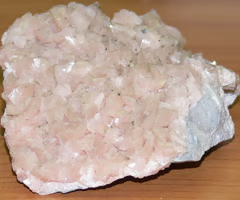
apatite
white streak, conchoidal fracture, vitreous luster. usually green, but sometimes brown/red color. the only common soil mineral containing phosphorus, and occurs in all types of rocks. in rich deposits, it’s the rock phosphate used to manufacture P-fertilizers.
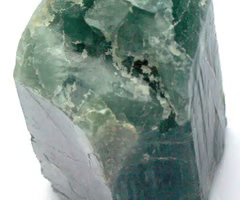
gneiss
coarse/medium/fine texture, light and dark banding, does not split (only irregular fractures)
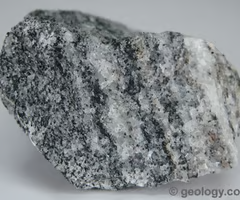
schist
micas are the dominant minerals. finely foliated (layered), cleaves easily along foliation to form rough surface with visible mica flakes.
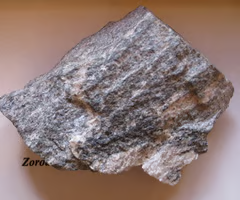
phyllite
micas are dominant minerals, finely foliated, splits easily, silky sheen.
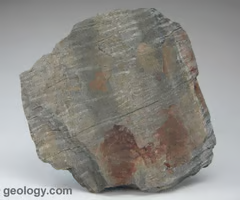
slate
metamorphic, fine foliated, splits into thin plates, dark red/gray color, smooth surface. harder/denser than shale and makes a high pitched sound when tapped against a surface.
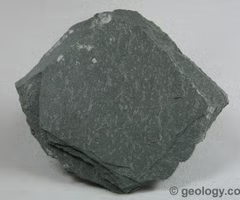
marble
metamorphic, dominant minerals are calcite, dolomite, and serpentine. coarse/fine texture, effervesces with cold diluted HCl.
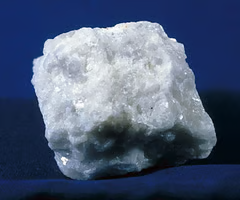
syenite
igneous, dominant minerals are orthoclase, quartz, biotite, and hornblende. coarse-grained texture, light color, visible crystals.
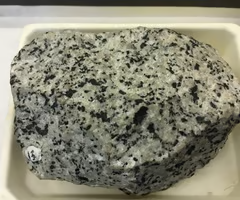
granite
igneous, dominant minerals are orthoclase, quartz, plagioclase, biotite, and hornblende. coarse-grained texture, light colored, visible crystals.
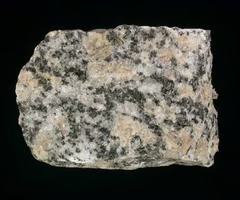
rhyolite
igneous, dominant minerals are orthoclase, quartz, plagioclase, biotite, and hornblende. fine-grained texture, light color, crystals not visible.
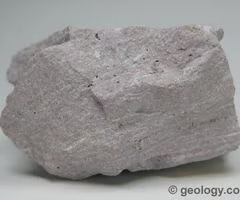
gabbro
igneous, dominant minerals are plagioclase, pyroxenes, hornblende, and olivine. coarse-grained texture, dark color, visible crystals.
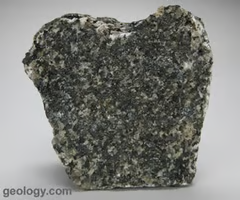
basalt
igneous, dominant minerals are plagioclase, pyroxenes, hornblende, olivine. fine-grained texture, dark color, crystals not visible.
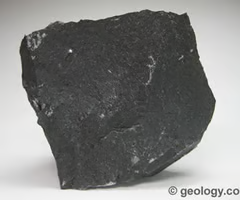
obsidian
igneous, dominant minerals are orthoclase, quartz, plagioclase, biotite, hornblende, pyroxenes. glassy texture. black, glassy color with conchoidal fracture.
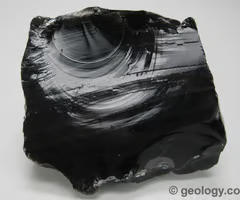
shale
sedimentary, fine-grained texture. thinly laminated, typically gray color, smooth surface, softer/lighter than slate. makes a low-pitched, dull sound when tapped on a surface.
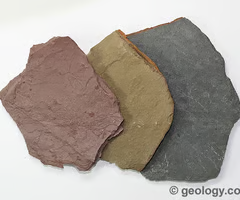
sandstone
sedimentary, dominant mineral is quartz. coarse-grained texture, sandy/rough surface, usually light color.
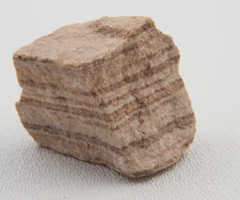
calcitic limestone
sedimentary, dominant mineral is calcite, fine texture, fizzes with cold diluted HCl.
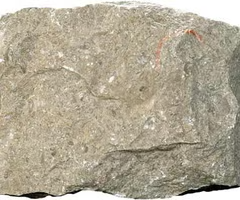
dolomitic limestone
sedimentary, dominant mineral is dolomite. fine texture, fizzes with diluted HCl only as a powder or when heated.
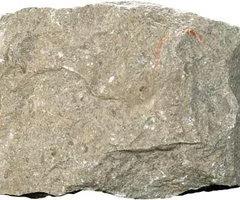
conglomerate
sedimentary rock, dominant minerals vary. very coarse texture, different gravel-sized rocks/minerals cemented together.