Plant Biology Lecture 3- Plant Morphology I
 Call Kai
 Learn
Learn Practice Test
 Spaced Repetition
 Match
Match Flashcards
 Knowt Play
1/25

There's no tags or description
Looks like no tags are added yet.
Name | Mastery | Learn | Test | Matching | Spaced | Call with Kai | Chat |
|---|
No analytics yet
Send a link to your students to track their progress
26 Terms
what is morphology
the external shapes and arrangement of the parts of an organism
what is the largest group of plants that covers 90% of all land plants
angiosperms
what do angiosperms do
underpins almost all terrestrial habitats on earth
helps to shape ecosystems and build global climates
comprises a majority of plant-based food we consume
what are cotyledons
seed leaves that act as an initial source of energy for plant seeds
what are cotyledon scars
scars on angiosperm stems that occur when cotyledons are used up and wither away
what are simple leaves
leaves that are not subdivided. They come off the stem directly across from one another and exhibit opposite phyllotaxy
what are compound leaves
leaves divided into several leaflets. Multiple leaflets come from one petiole and exhibit alternate phyllotaxy
what are nodes
any place where a leaf comes off a stem
what are internodes
the area of stem in between the nodes
what is a leaf axil
angled area where the petiole meets the stem
the axil of every leaf will have an axillary bud
what are the apices
roto and shoot apex. The primary growing points for plants, where new tissue and organs develop
What is Meristem
exists in root + shoot apex. the primary growth points in plants
produced new organs/tissues through phytomers
what is a phytomer
consists of a node, a leaf, the axillary bud, and an internode
As internode extends, shoot apex produces a new phytomer that gets pushed up
what are root hairs
small fuzzy bits that branch off from roots. increases the surface area of roots to help with absorption of water and mineral uptake
what are the reproductive structures of flowers
carpels and stamens
what are carpels
female reproductive structure
where egg cells are produced
what are stamens
male reproductive structure
creates polled that carried male gamete
what makes up the perianth
sepals and petals
what are sepals
outer layer of the flower tat protects the developing flower bud
what is a receptable
where the four whorls of a flower develop and emerge from
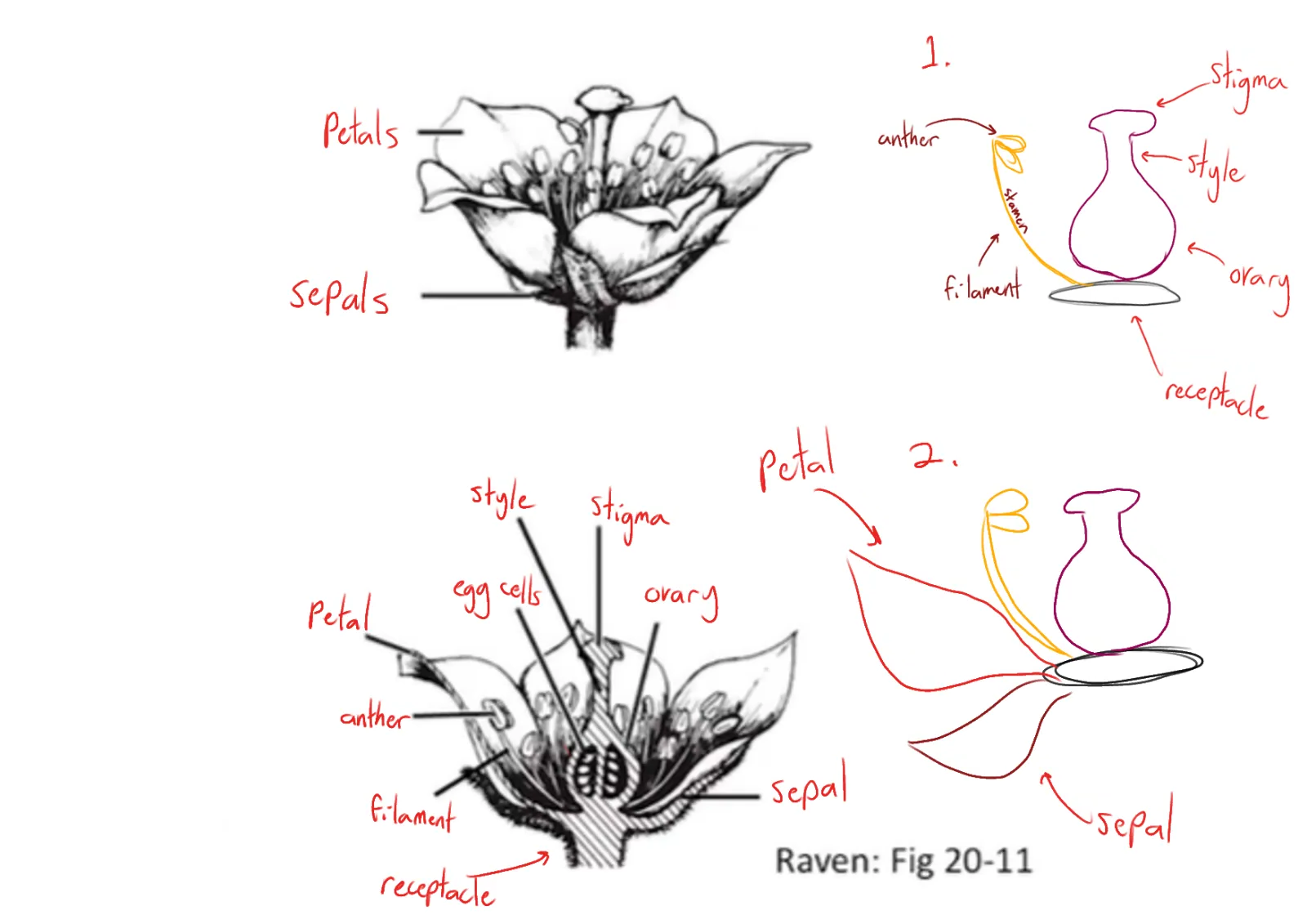
what is the filament
where the anthers sit on. can be different lengths depending on the plant adaptations and lifestyle
what are anthers
Structure where pollen is produced (that carries male gametes)
if a plant self-pollinates, anthers will be closer to stigma so the pollen moves to the ovary easier
if a plant doesn’t self-pollinate, anthers may be higher so the pollen can be easily picked up by pollinators
why are the four plant whorls heavily modified depending on plant
to create floral diversity and help maximisereproductive success
how many floral organs do dicot species have
multiple of 4 or 5
how many floral organs do monocot species have
often multiples of 3
monocot flowers often appear to not have sepals because the sepals and petals are not differentiated, and look identical
there are in fact three petals and three sepals
what is it called when the perianth (sepals and petals) are not differentiated
tepals