Biochem
 Call Kai
 Learn
Learn Practice Test
 Spaced Repetition
 Match
Match Flashcards
 Knowt Play
1/34

There's no tags or description
Looks like no tags are added yet.
Name | Mastery | Learn | Test | Matching | Spaced | Call with Kai | Chat |
|---|
No analytics yet
Send a link to your students to track their progress
35 Terms
Animal Cell Diameter
10-100 micrometers
Human Body Composition (elements)
C: 61.7% (~60%)
N: 11.0% (~10%)
O: 9.3% (~10%)
H: 5.7% (~5%)
Ca: 5.0%
P: 3.3% (~3%)
K: 1.3% (~1%)
S: 1.0% (~1%)
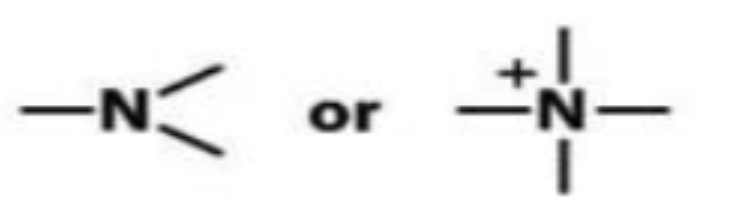
Amine

Alcohol (Hydroxyl Group)

Thiol (sulfhydryl group)

Aldehyde (Carbonyl Group)

Ketone (Carbonyl Group)

Carboxylic Acid (Carboxyl or Carboxylate Group)

Ester (Acyl Group)

Thioester (Acyl group)
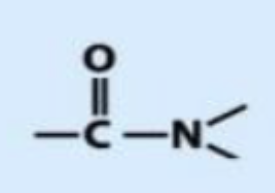
Amide (amido or Acyl group)

Imine, Schiff Base (imino group)

Imine, Schiff Base (imino group)

Phosphate ester (phosphoryl group)
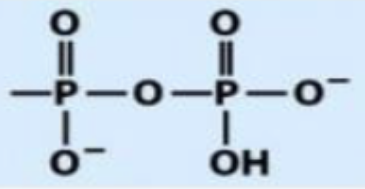
Diphosphate ester (phosphoanhydride group)
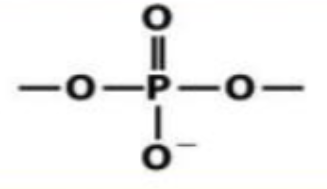
Phosphate diester (phosphodiester linkage/bond)
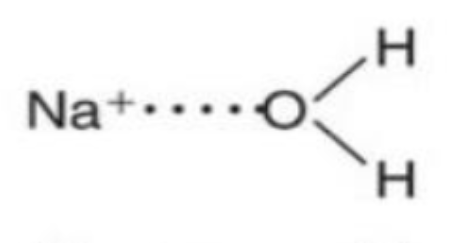
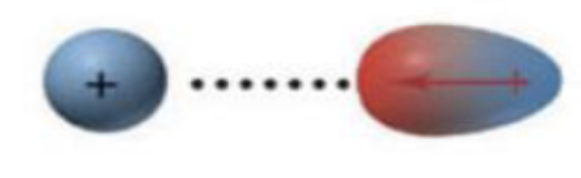
Ion-charge- (Dipole-Charge)
Strength: 40-600
Hydrogen Bond
Strength: 10-40

Dipole-Dipole Charge
Strength: 5-25

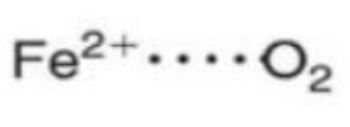
Ion Charge (Polarizable e- cloud)
Strength: 3-15


Dipole Charge (polarizable e- cloud)
Strength: 2-10

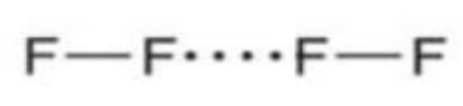
London/Dispersion Forces (2 polarizable e- clouds)
Strength: 0.05-40

O-H Bond Dissociation Energy
470 kJ/mol
H bond length
Strong: 2.6-3.0 A
Moderate: 3.0-3.2 A
Weak: 3.2-3.5 A
Van Der Waals: 3.5+
H Bond Angles
Strong: 170-180 degrees
Moderate: 150-170 degrees
Weak: 120-170 degrees
G - H - T*S
G = Gibbs Energy, Positive if Spontaneous
H = Enthalpy, Total Heat Content
T = Absolute Temperature
S = Entropy
Ka definition
How easily a molecule gives up protons in water, acid dissociation constant
4 main weak interactions in water
Hydrogen Bonding
Ionic Interactions
Hydrophobic Interactions
Van Der Waals Interactions
Isomer forms of Amin. Acids
D, L. L is most common biologically.
Nonpolar Aliphatic Amin. Acid Properties
Hydrophobic, stabilize proteins
Aromatic Amin. Acid Properties
Nonpolar, Hydrophobic.
Tyrosine’s hydroxyl group can hydrogen bond
Absorb Ultraviolet light
Polar (Uncharged) Amin Acid Properties
Soluble in water
Cyestine is outlier, hydrogen bonding with oxy/nitrogen
Positive Amin Acid Properties
Most Hydrophilic
Histidine is near-neutral pH, acts as buffer.
Zwitterion Appearence
Acidic: Excess of H+ ions
Basic: Scarcity of H+ ions
COOH lost before NH3+

Aminos with RpKa:
Cyestine (intermediate), Tyrosine (final)
All positive/negative aminos