chp. 15: intracellular compartments + protein transport
 Call Kai
 Learn
Learn Practice Test
 Spaced Repetition
 Match
Match Flashcards
 Knowt Play
1/118

There's no tags or description
Looks like no tags are added yet.
Name | Mastery | Learn | Test | Matching | Spaced | Call with Kai | Chat |
|---|
No analytics yet
Send a link to your students to track their progress
119 Terms
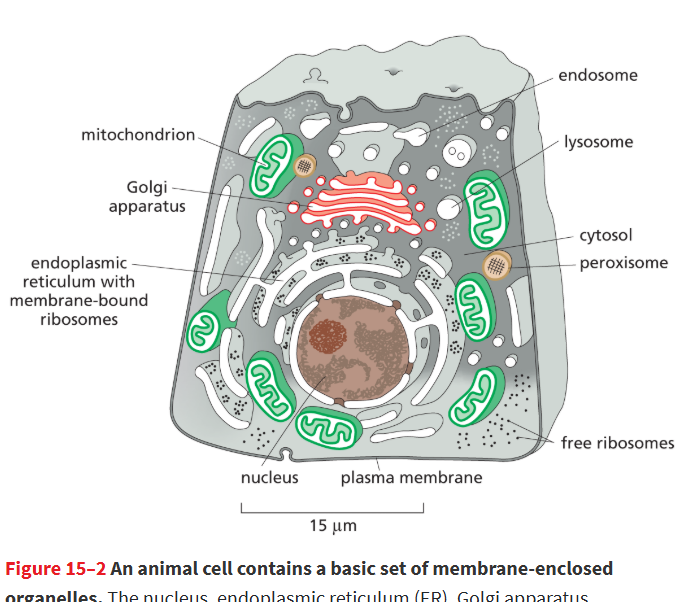
membrane-enclosed organelle
Any organelle in a eukaryotic cell that is surrounded by a lipid bilayer—for example, the endoplasmic reticulum, Golgi apparatus, and lysosome.
prokaryotes dont have membrane-bound organelles
create enclosed compartments that segregate different metabolic processes
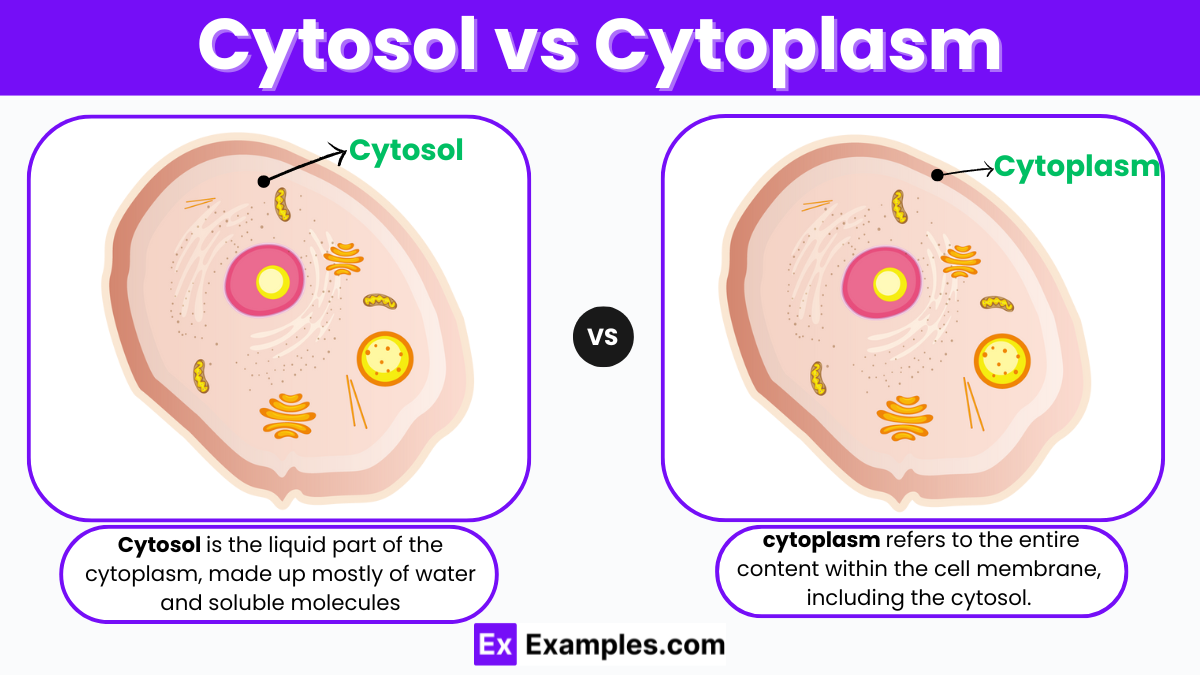
cytosol
the gel-like, water-based fluid within cells—surrounding organelles
cytoskeleton is here to keep organelles in place
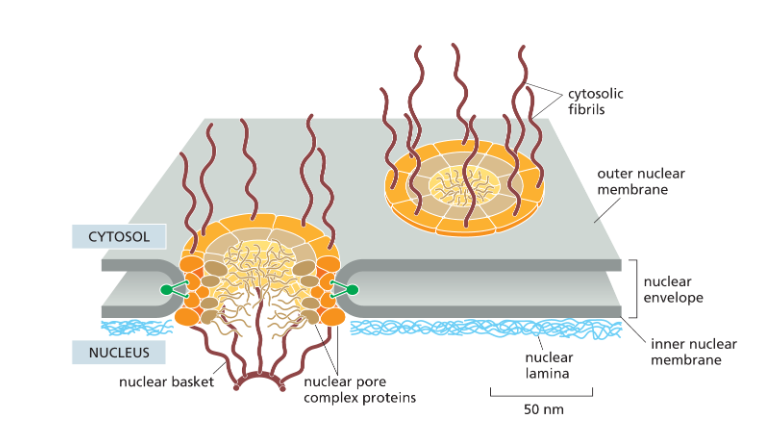
nuclear envelope
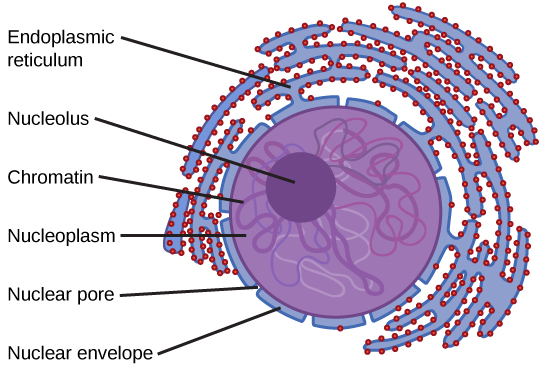
the double membrane surrounding the nucleus, encloses the DNA and defines nuclear compartment
Consists of outer and inner membranes, perforated by nuclear pores.
nuclear pores
penetrates the nuclear envelope of eukaryotic cells, acting as the sole, highly selective channel for transport between the nucleus and cytoplasm
a large elaborate structure composed of 30 diff proteins, each present in multiple copies.
what is the outer nuclear membrane continuous with?
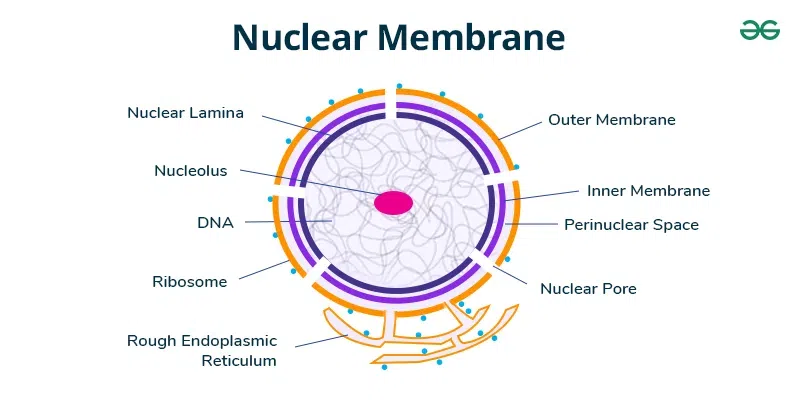
the endoplasmic reticulum
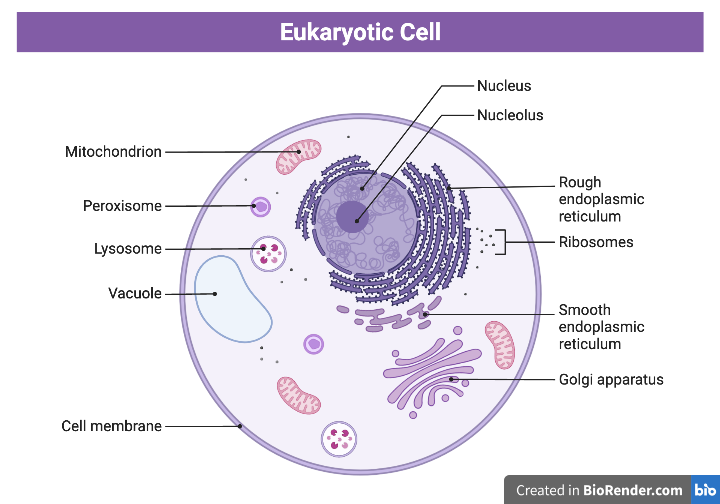
endoplasmic reticulum
is major site of synthesis of new membranes in the cell
has rough and smooth ER
continuous with nuclear envelope
has a phospholipid bilayer membrane
ER interior = lumen
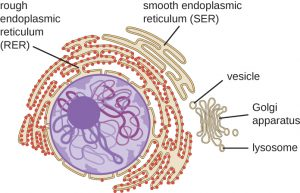
rough ER
ER with ribosomes attached to cystolic surface
site of protein synthesis for secretion and membranes.
(remember: ribosomes make proteins)
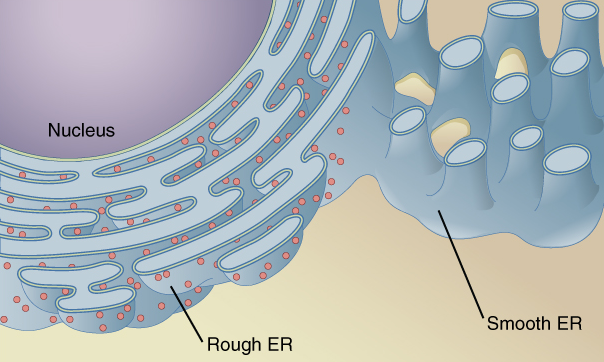
smooth ER
ER without ribosomes
involved in lipid synthesis, detoxification, and Ca²⁺ storage.
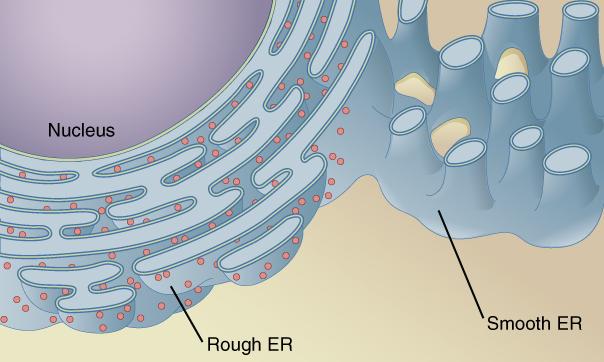
golgi apparatus
Modifies, sorts, and packages proteins and lipids for transport to other parts of the cell
near the nucleus and receives the proteins + lipids from the ER
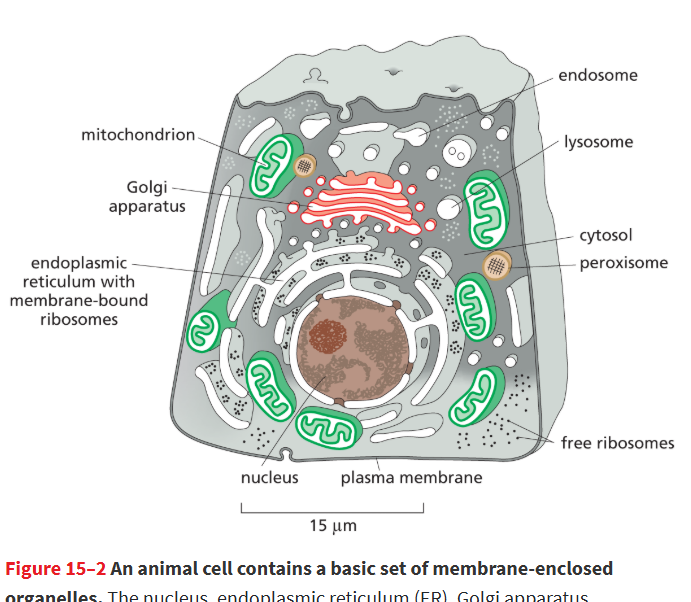
lysosomes
Digest and break down damaged organelles, cellular waste, and engulfed materials from endocytosis.
before endocytosed materials go to lysosomes, they must pass the endosomes.
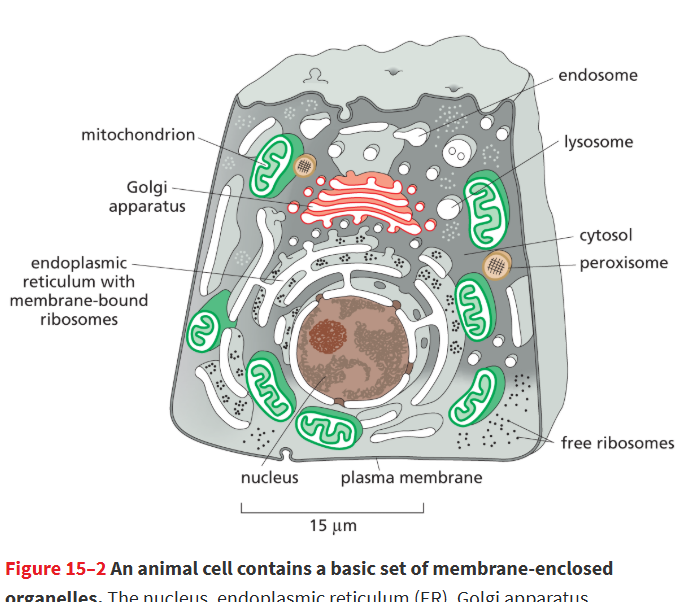
endosomes
Sort endocytosed material and recycle components back to plasma membrane
they then send material to lysosomes for degradation
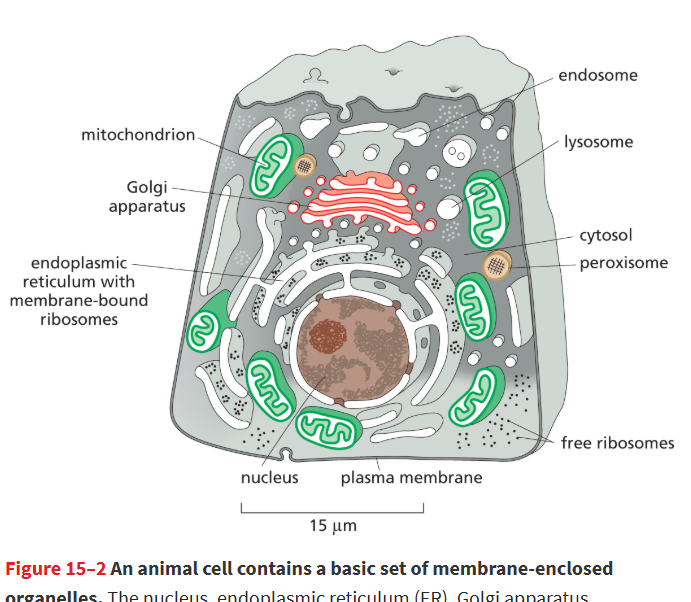
peroxisomes
small organelle that contains enzymes which break down lipids and destroy toxic molecules, producing H₂O₂ (hydrogen peroxide)
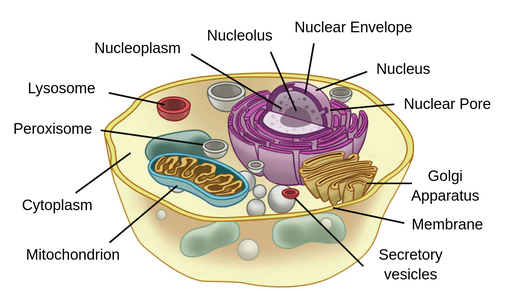
mitochondria
Produce ATP through oxidative phosphorylation.
chloroplast
Carry out photosynthesis (ATP production and carbon fixation).
Why do eukaryotic cells need internal membranes?
Large cell size requires compartmentalization to maintain efficiency and surface area-to-volume balance.
how are organelles positioned in the cell?
by attachment to the cytoskeleton, specifically microtubules
they move organelles around to direct traffic
movement is driven by motor proteins that use energy from ATP hydrolysis to propel organelles/vesicles along filaments
How did membrane-bound organelles likely evolve?
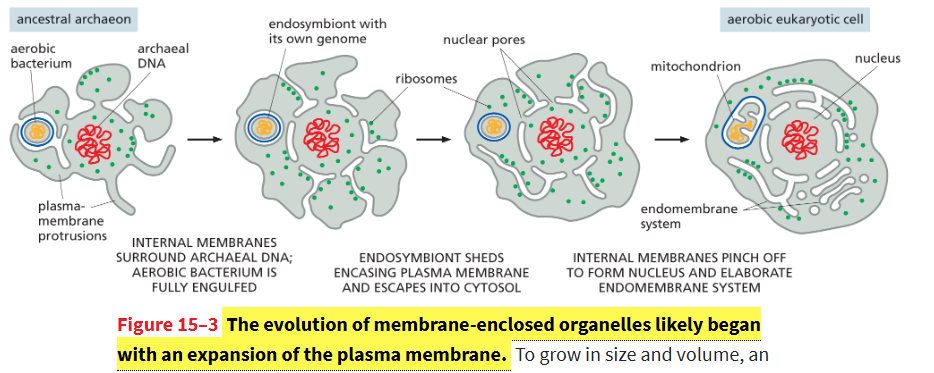
From the expansion and infoldings (invaginations) of the plasma membrane.
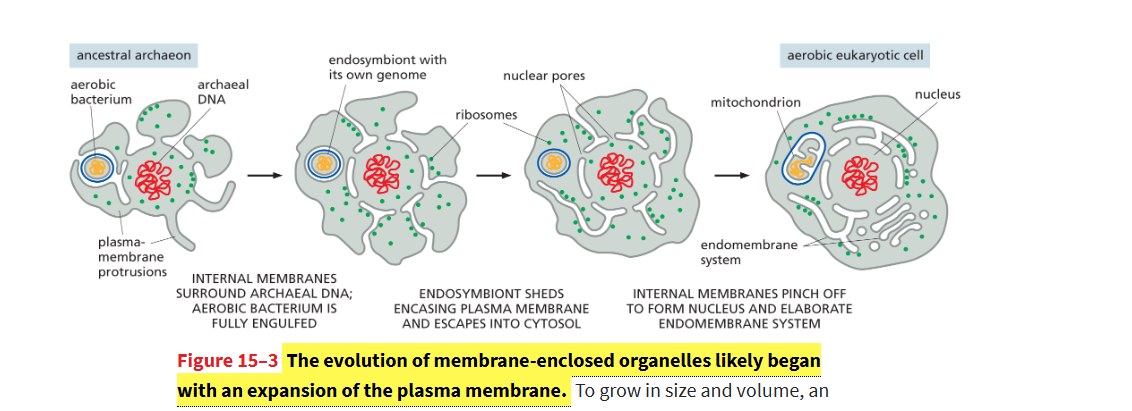
How did early cells before eukaryotes organize membranes and how did internal membranes evolve?
Early cells (like ancient archaea and prokaryotes) only had a plasma membrane and it could carry out all membrane-dependent functions like ATP synthesis + lipid synthesis.
this was fine cuz their small size gave them high SA:V ratio
how plasma membrane expansion made organelles
As cells grew larger, the plasma membrane expanded by having membrane protrustions, forming inward folds (invaginations) btwn these protrustions. These folds eventually pinched off and formed internal membrane-bound organelles like the ER, Golgi, and nuclear envelope.
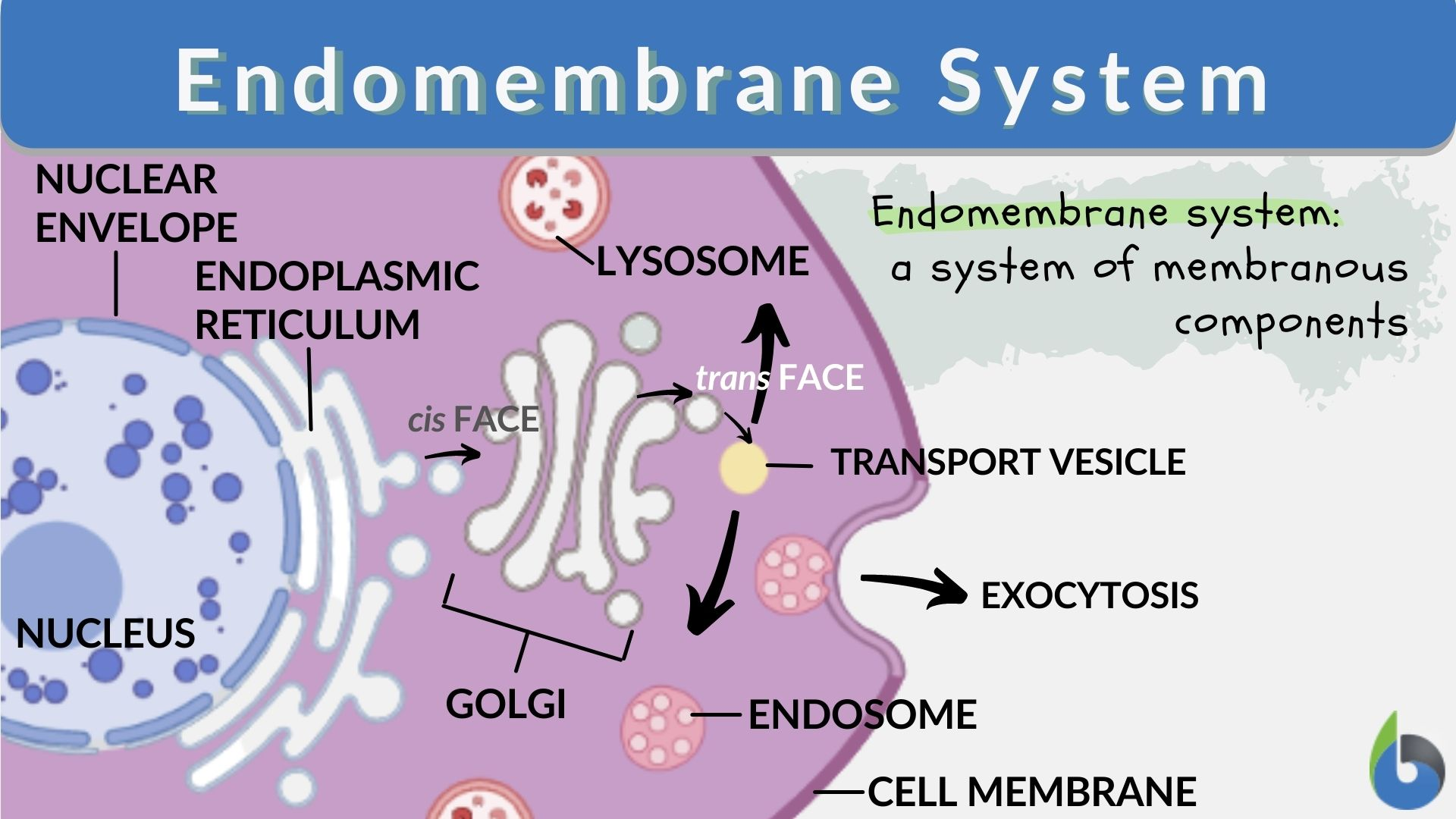
endomembrane system
Interconnected network of membrane-enclosed organelles in a eukaryotic cell
includes the endoplasmic reticulum, Golgi apparatus, lysosomes, peroxisomes, and endosomes.
How did the nuclear envelope likely form?
From membrane invaginations surrounding DNA that pinched off
What is the origin of mitochondria and chloroplasts?
Endosymbiosis—engulfed bacteria that evolved into organelles.
they have their own DNA cuz they originated from bacteria that retained parts of their genomes.
theyre NOT part of endomembrane system cuz they evolved from engulfed bacteria, not from membrane infoldings!!
How do organelles communicate in the endomembrane system?
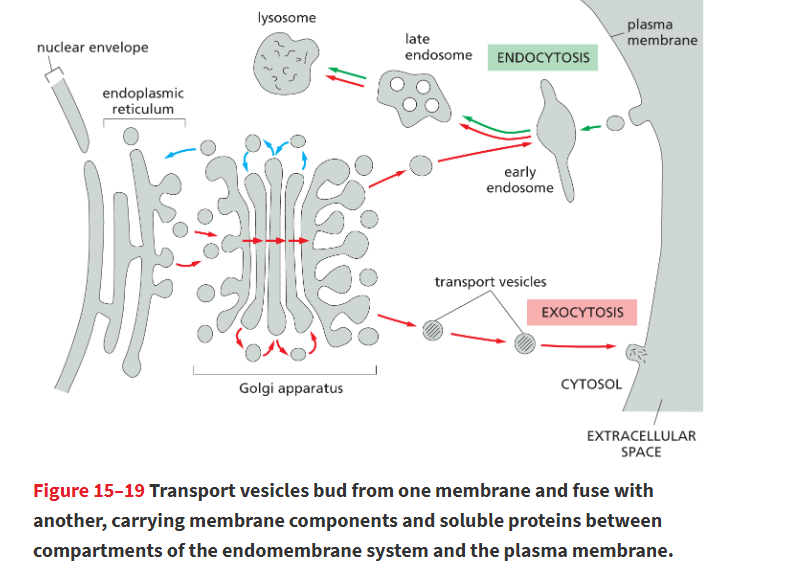
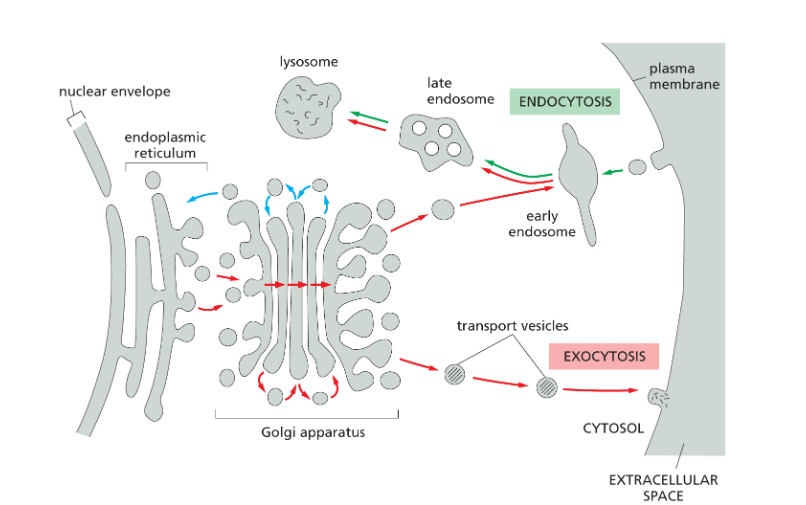
by small vesicles that bud off of one organelle and fuse w/ another
transport vesicles carry soluble cargo proteins, as well as the proteins and lipids that are part of the vesicle membrane, from one organelle to another.
In a typical human secretory cell, which of the following membranes has the largest surface area?
rough ER
its folded up to form extensive maze
Where are most proteins synthesized?
On ribosomes in the cytosol.
What happens to proteins without a signal sequence?
They remain in the cytosol.
signal sequences
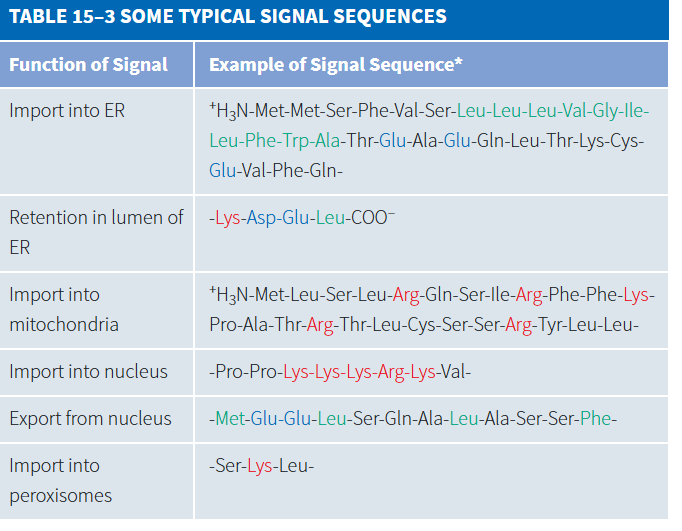
Amino acid sequence that directs a protein to a specific location in the cell, such as the nucleus or mitochondria.
signal sequences are often removed from finished protein once it arrives at destination
exception is nuclear proteins that need it to re-enter the nucleus after nuclear envelope breakdown during cell division.
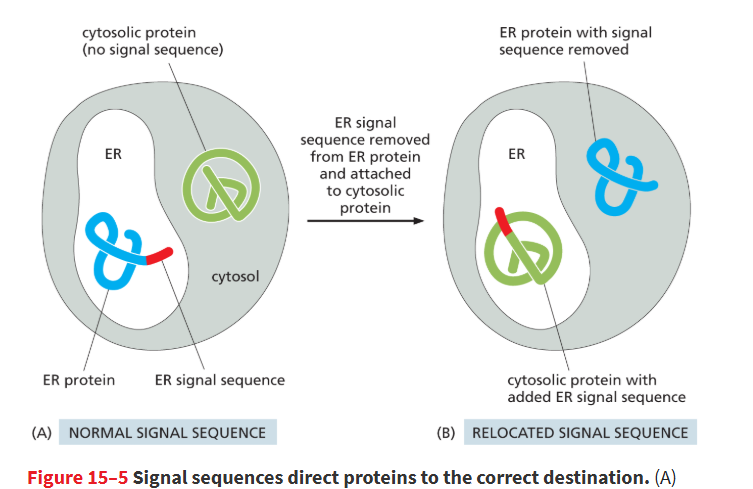
genetic engineering can change signal sequence
they can delete or transfer the signal sequence from one protein to another and it will change the destination of the protein
ex: they removed signal from ER protein and moved it to cystolic protein, and both proteins switched places
Why is protein sorting necessary in eukaryotic cells?
Proteins must be delivered to the correct organelle for cell growth, division, and function.
especially during division when organelles have to be duplicated, or growth requires new lipids for membrane
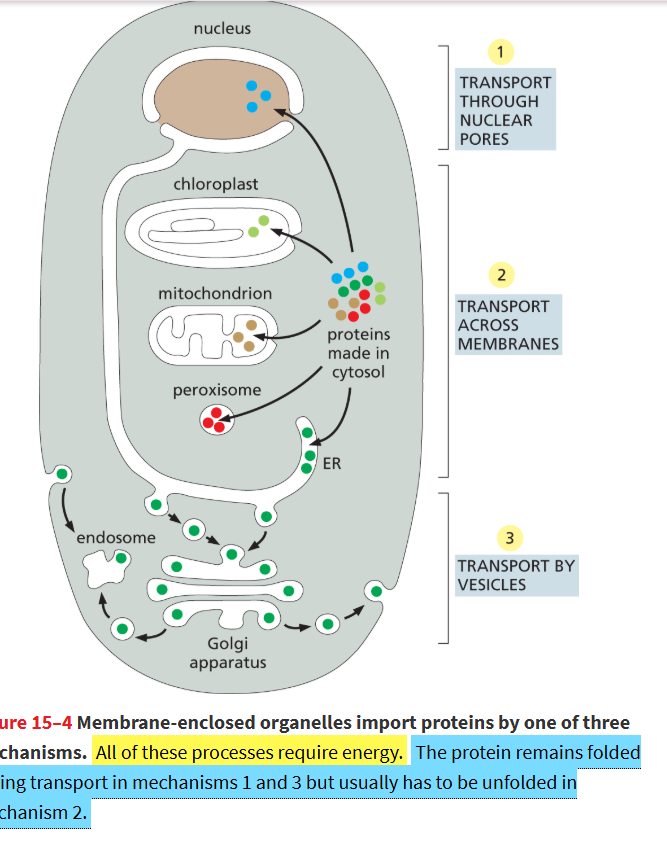
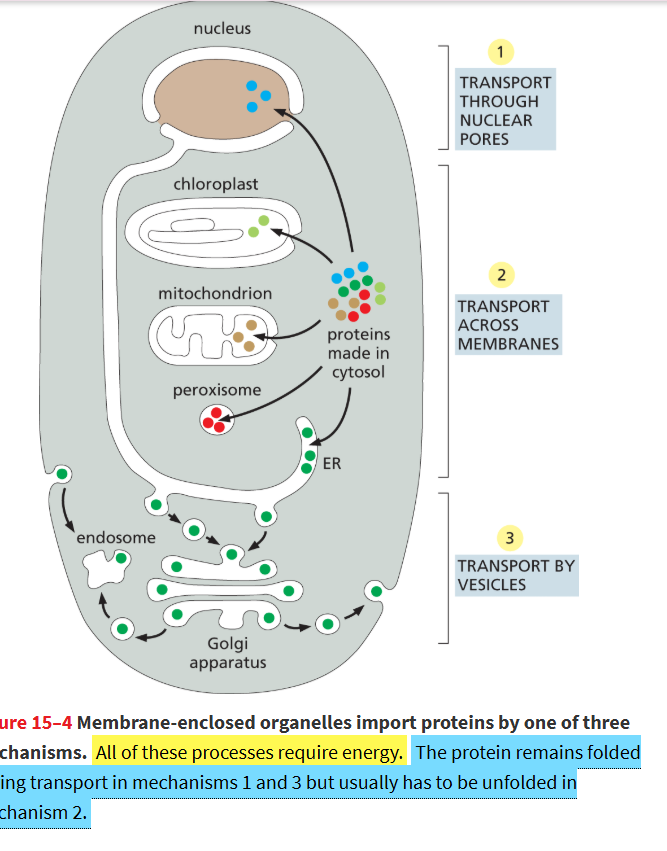
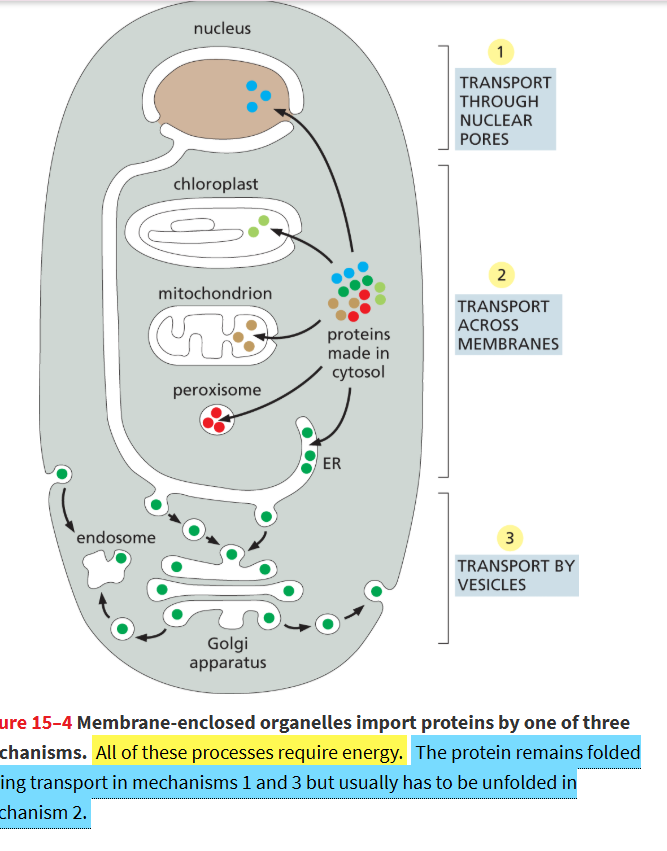
the 3 main protein transport mechanisms
1) nuclear pore complexes
go into nucleus
2) transmembrane transport (protein translocators)
enter mitochondria, chloroplast, ER
3) vesicle transport
transport btwn ER and other endomembrane organelles
ALL REQUIRE ENERGY! protein remains folded for mechanism 1 and 3 but has to unfold for 2
Protein transport via nuclear pores
proteins enter cytosol → nucleus through nuclear pores
nuclear pores penetrate both inner and outer nuclear envelope, and function like selective gates that actively transport specific macromolecules and allow free diffusion of smaller molecules.
protein transport across membranes (transmembrane transport)
these r proteins moving from the cytosol → ER, mitochondria, or chloroplasts
they are transported across the organelle membrane by protein translocators located in the membrane
protein translocators require protein to unfold before it guides it across hydrophobic interior of membrane
vesicular protein transport
proteins moving on from ER → other part of endomembrane system are transported by vesicles
they will pinch off from membrane of one compartment then fuse with the membrane of a second compartment.
deliver soluble cargo proteins, and proteins/lipids that r part of vesicle membrane
protein translocators
proteins moving from cytosol to ER, mitochondria, or chloroplast must be transported by this protein translocator
located in the membrane
requires protein to unfold before it guides it across hydrophobic interior of membrane
transport vesicles
the vesicles that transport proteins moving on from ER → other pt. of endomembrane system (golgi, ER, nuclear envelope, lysosomes, plasma membrane)
they will pinch off from membrane of one compartment then fuse with the membrane of a second compartment.
deliver soluble cargo proteins, and proteins/lipids that r part of vesicle membrane
What is the key feature of signal sequences?
They are based on chemical properties (like hydrophobicity), not exact amino acid order.
can be primary a.a sequence, or 3-dimensional structure formed by a.a. of the protein
inner nuclear membrane
inner part of nuclear envelope that contains proteins which act as binding sites for chromosomes, and provide anchorage for nuclear lamina.
outer nuclear membrane
is continuous with the rough endoplasmic reticulum and contains ribosomes
resembles ER membrane
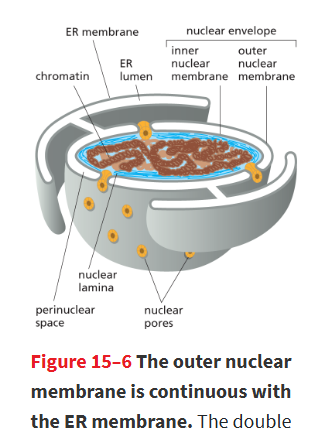
nuclear lamina
a finely woven meshwork of protein filaments that lines the inner surface of the inner nuclear membrane
provides structural support for nuclear envelope
shape is determined by nuclear lamina proteins!
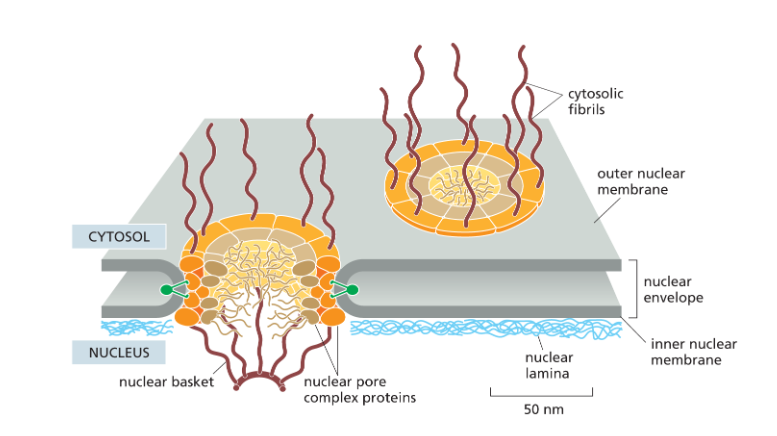
disordered nuclear pore proteins
alot of the proteins lining the nuclear pore has large unstructured regions where the polypeptide chains r v disordered.
these disordered segments form a soft, tangled meshwork that fills the center of the channel, preventing the passage of large molecules but allowing small, water-soluble molecules to pass freely and nonselectively between the nucleus and the cytosol.
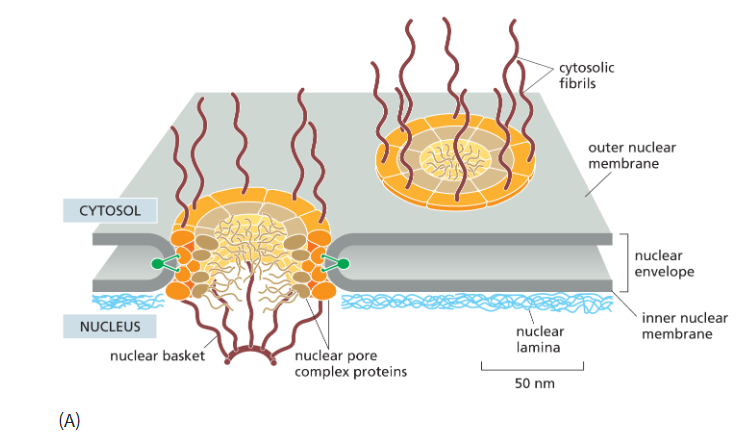
perinuclear space
cavity btwn the nuclear inner and outer membrane
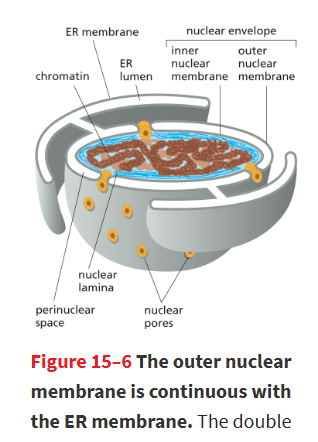
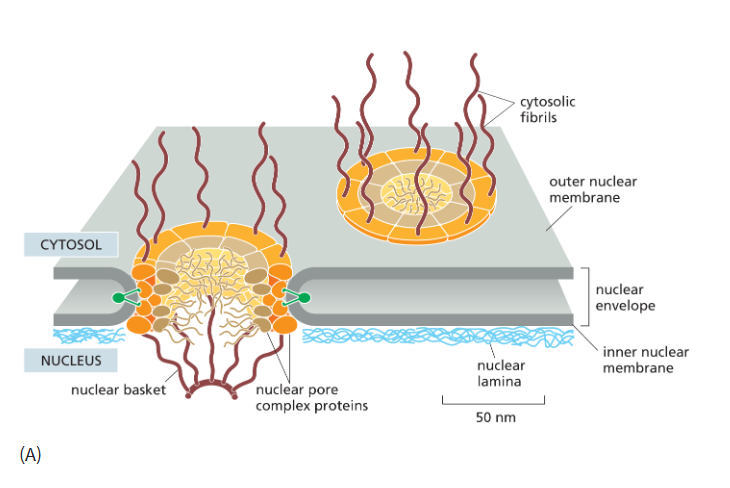
nuclear pore complex
giant complex (50-100 polypeptides)
diameter of complex: 120 nm
diameter of opening: 25 nm
where all protein import/export into nucleus happens
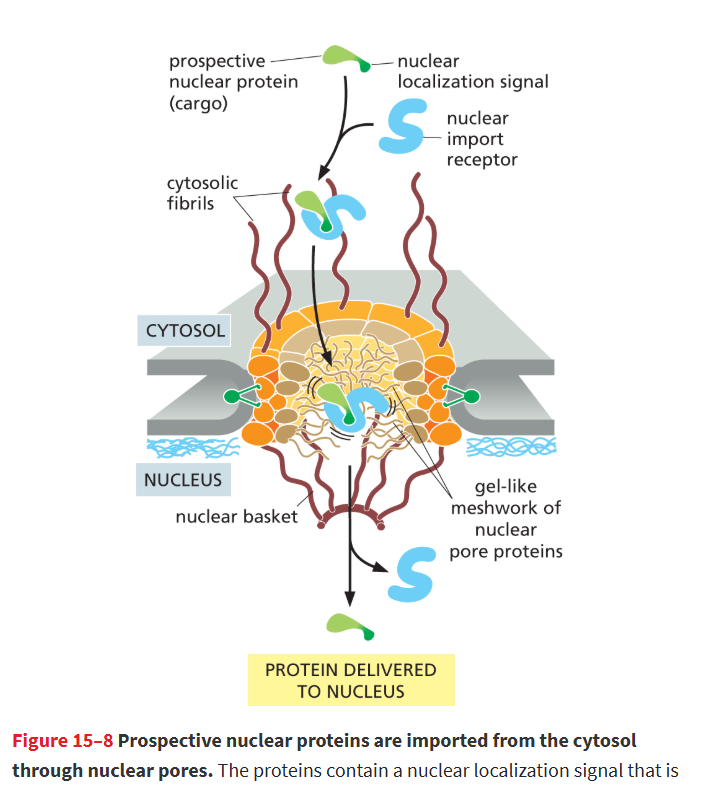
nuclear pore active transport
larger proteins and RNAs require a nuclear localization signal (NLS) in order to enter nucleus from cytosol
requires energy
NLS must be recognized by nuclear import receptors (importins)
nuclear localization signal (NLS)
larger proteins and RNAs must contain a nuclear localization signal (NLS) in order to enter nucleus from cytosol
this is a 7 amino acid stretch of (+) charged a.a in the middle of the polypeptide
`lysines and arginines
NLS will be recognized by nuclear import receptor protein!
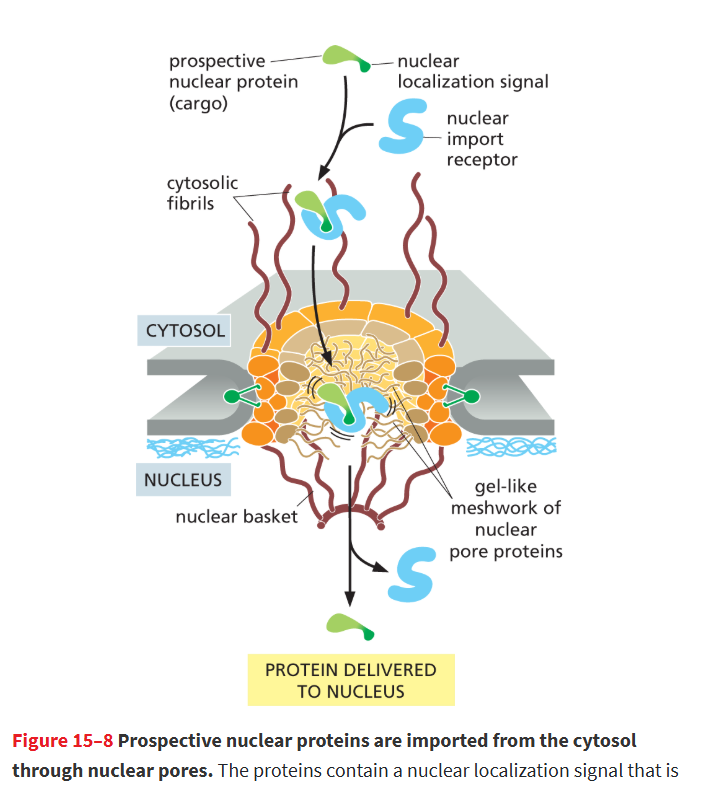
nuclear import receptor protein (importins)
a cystolic protein receptor that recognize nuclear localization signal on proteins destined for nucleus.
import/export is regulated by GTP
guide the protein to a nuclear pore by interacting w nuclear pore fibrils
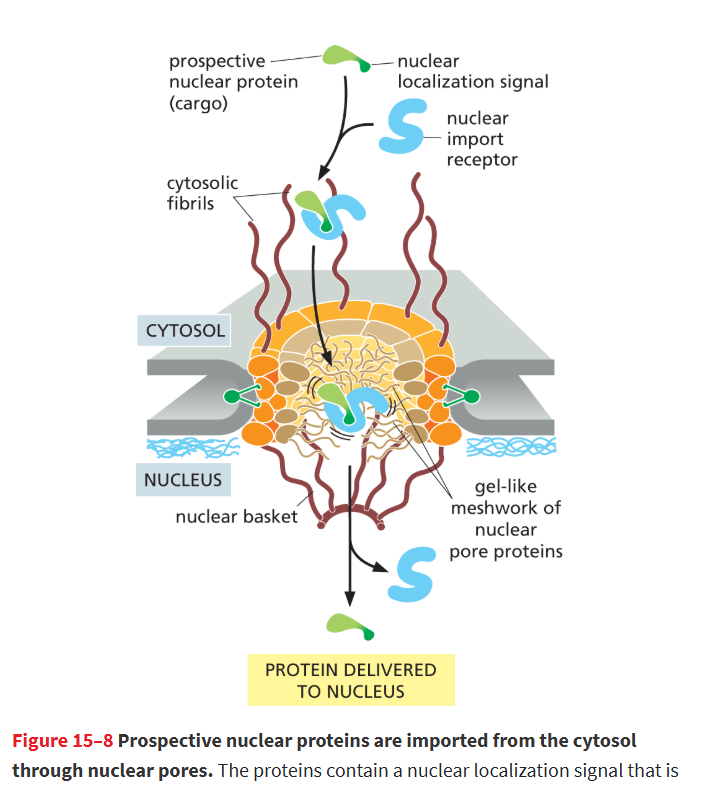
how does a nuclear import receptor (importin) enter nuclear pore with new protein?
Importin binds the protein’s NLS → moves to nuclear pore → passes through by interacting with pore proteins → releases protein when Ran-GTP binds in the nucleus.
it interacts w fibrils extending from rim of pore in cytosol and grabs onto short repeated a.a sequences within the tangle of nuclear pore proteins that fill the center of the channel. Passes through by disrupting their interactions.
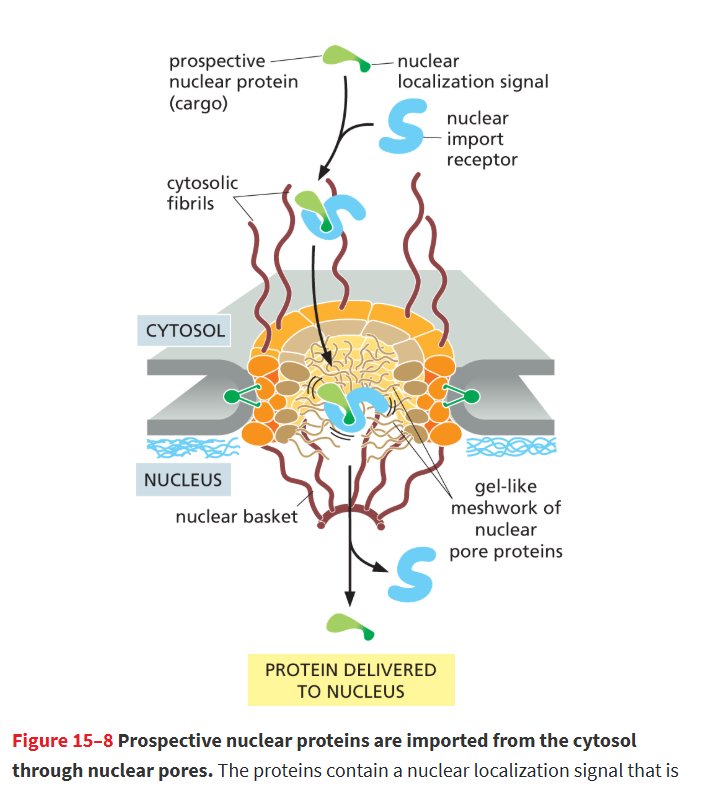
what happens when a nuclear pore is empty
short repeated a.a sequences that importin would normally bind to will instead bind to one another, forming a loosely packed gel.
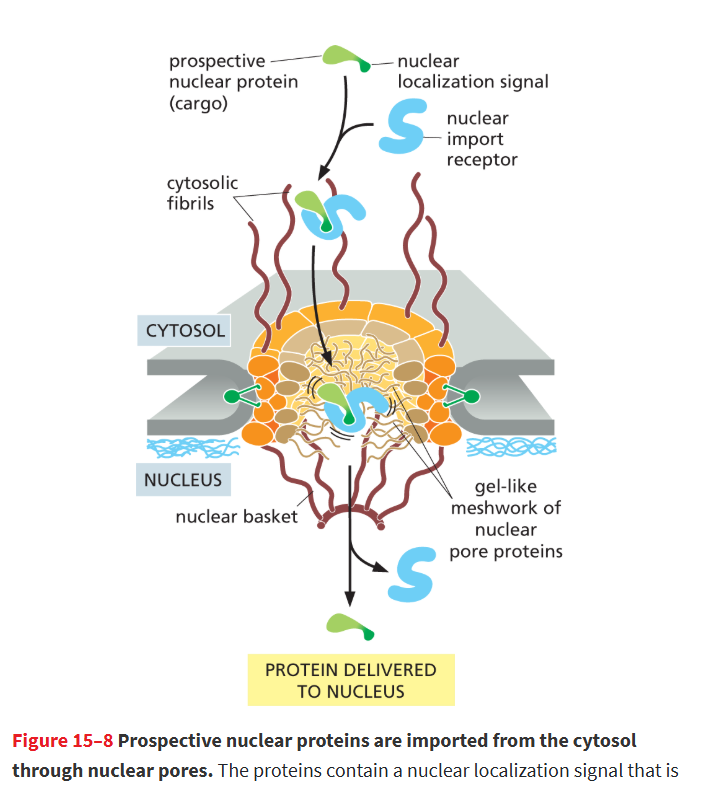
What protein regulates nuclear transport direction?
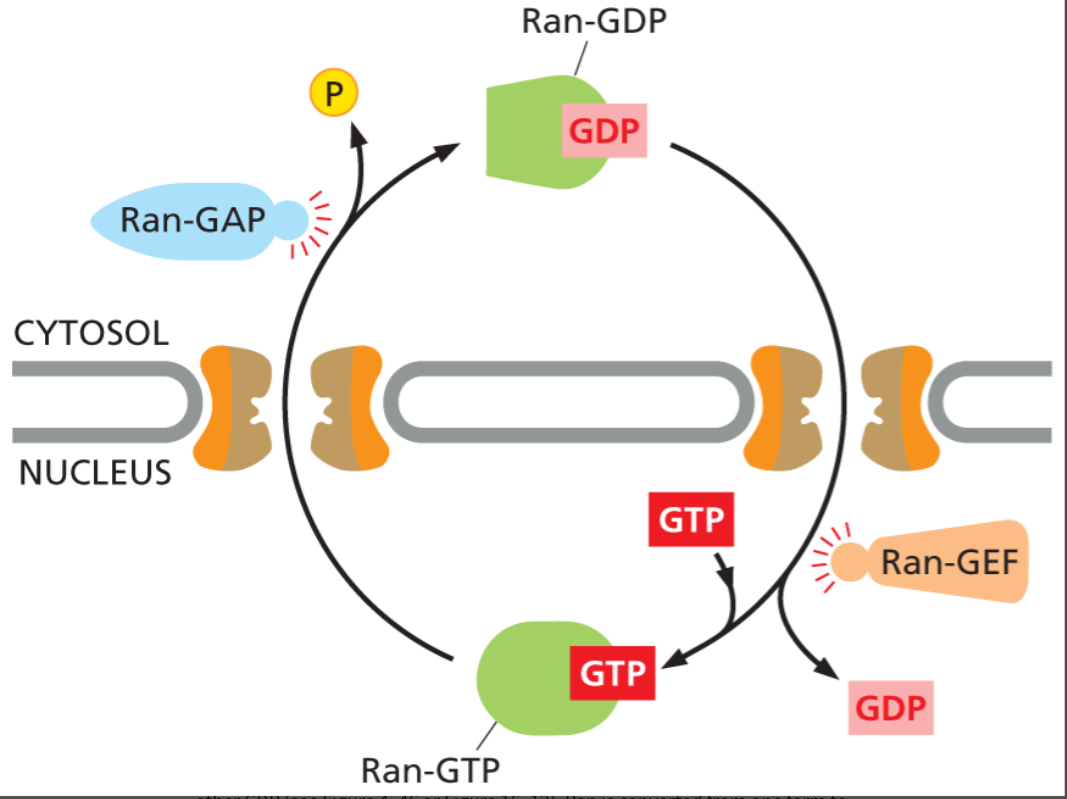
Ran (a GTPase)
2 forms:
Ran-GTP
high conc’n in nucleus
causes release of the cargo protein
Ran-GDP
high conc’n in cytosol
GTP gone and GDP dissociates leaving importin free to pu another protein
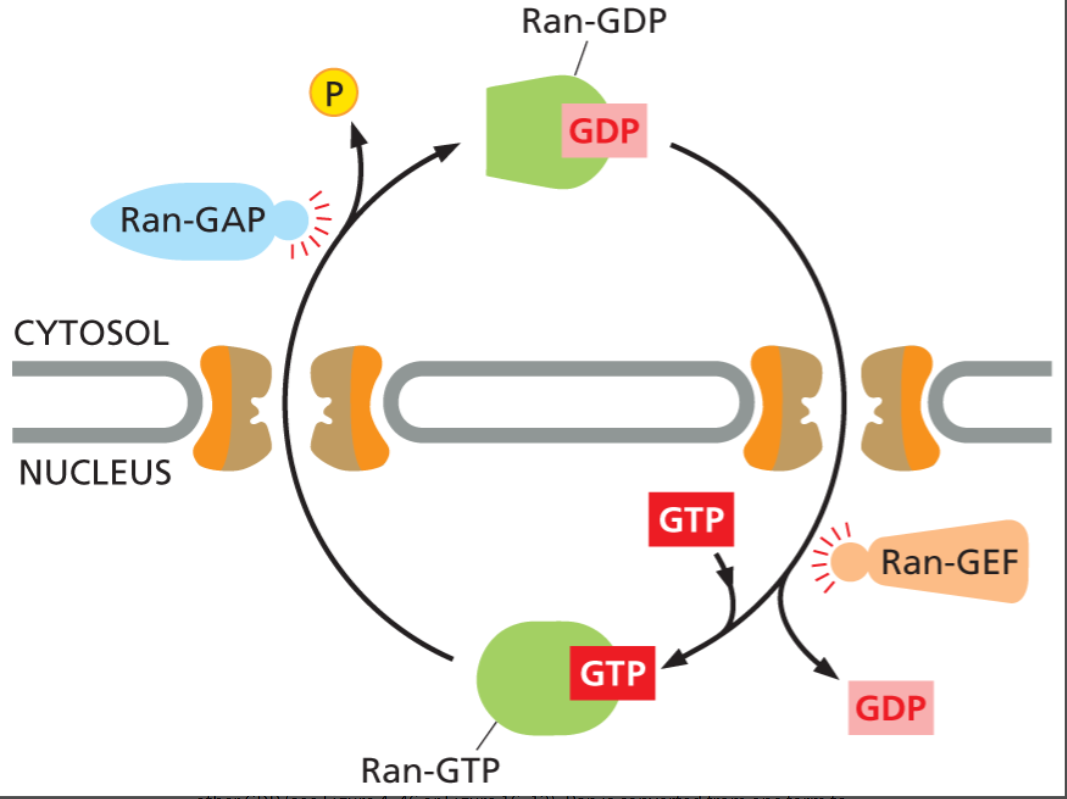
Ran-GTP
a protein that regulates nuclear transport by binding GTP to the import receptor in nucleus → causes release of cargo protein in nucleus
IN HIGH CONC’N IN NUCLEUS
Ran-GEF → converts Ran-GDP → Ran-GTP (in nucleus)
after releasing cargo, will go back to cytosol
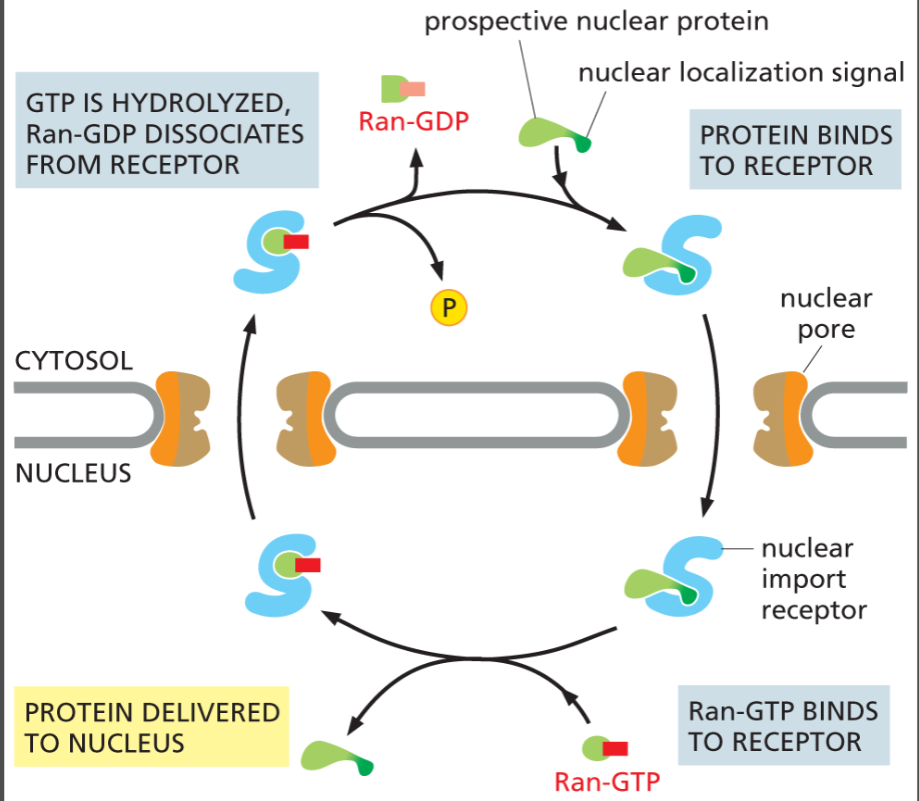
Ran-GDP
a protein that regulates nuclear transport by binding GDP to the import receptor in cytosol → importin now back in cytosol will hydrolyze GTP into GDP. GDP will dissociate easily, so now receptor protein (importin) is free to pick up another protein destined for the nucleus.
IN HIGH CONC’N IN CYTOSOL
Ran-GAP → converts Ran-GTP → Ran-GDP (in cytosol)
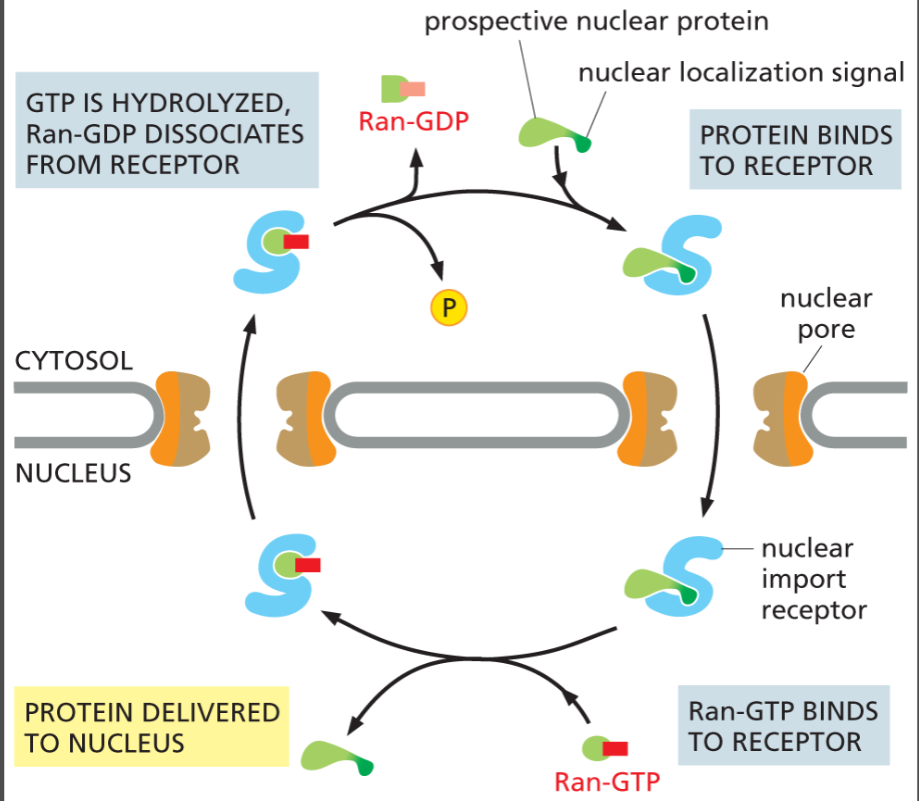
What is the difference between Ran-GTP/Ran-GDP and Ran-GEF/Ran-GAP?
Ran-GTP and Ran-GDP are the two forms of the Ran protein (active vs inactive), while Ran-GEF and Ran-GAP are regulatory proteins that convert Ran between these forms (GEF adds GTP, GAP removes GTP).
They are helper proteins that control Ran, NOT Ran
The localization of these accessory proteins guarantees that the concentration of Ran-GTP is higher in the nucleus, thus driving the nuclear import cycle in the desired direction
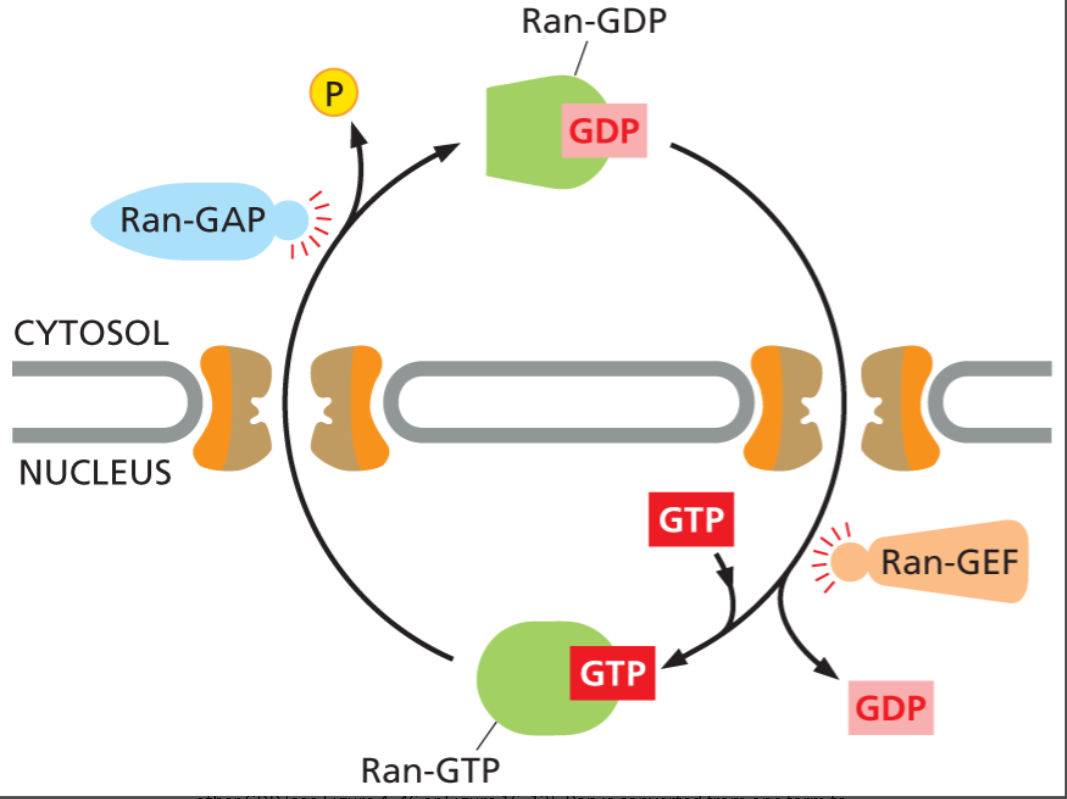
Ran-GEF
Ran-GEF → converts Ran-GDP → Ran-GTP (in nucleus)
accessory protein that helps Ran convert btwn GTP and GDP
Ran-GAP
Ran-GAP → converts Ran-GTP → Ran-GDP (in cytosol)
accessory protein that helps Ran convert btwn GTP and GDP
What makes nuclear transport unique compared to other organelles?
Proteins enter fully folded through pores instead of being unfolded and threaded across membranes
Where are most mitochondrial and chloroplast proteins made?
even tho they have their own genomes, most of the proteins r made in the cytosol, then imported into organelle.
What directs proteins to mitochondria or chloroplasts?
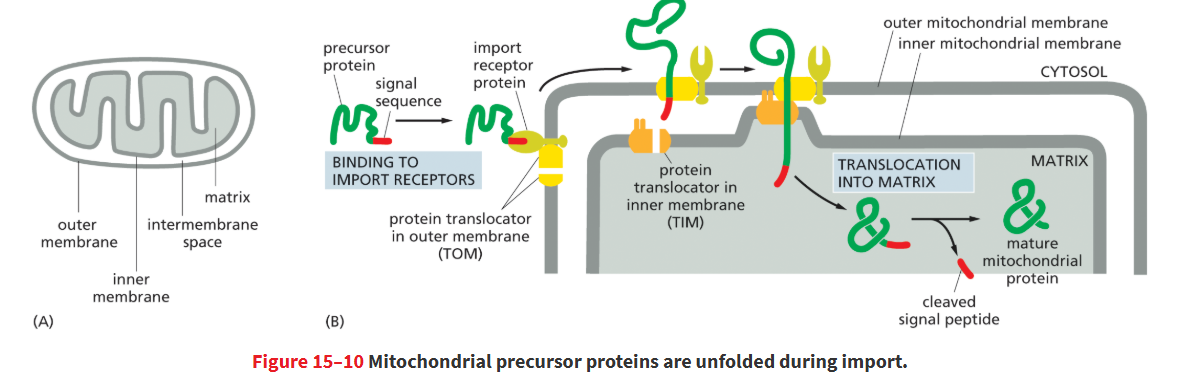
An N-terminal signal sequence thats recognized by a receptor associated w/ translocator (TOM or TIM)
signal sequence will be cleaved off by signal peptidase once it gets inside mitochondrial matrix
How many membranes must proteins cross to enter mitochondria/chloroplasts?
Two membranes (outer + inner).
will happen at site where 2 membranes r close together so protein can cross both simultaneously
In what state are proteins transported into these chloroplast/mitochondria?
must be unfolded protein!!!
TIM/TOM unfold protein in process of pulling it into mitochondria matrix
translocator of the outer membrane (TOM)
a protein complex that moves an unfolded protein across the outer membrane of a mitochondria into intermembrane space from cytosol
binds to n-terminus of cytosol protein.
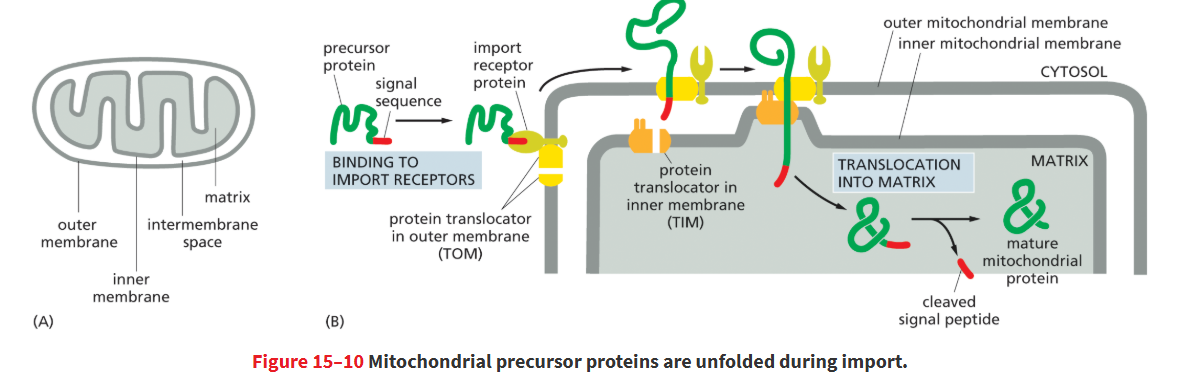
translocator of the inner membrane (TIM)
a protein complex that moves an unfolded protein across the intermembrane space into matrix of mitochondria
binds to n-terminus of cytosol protein
What helps pull proteins into the mitochondria and refold them?
chaperone proteins which use ATP hydrolysis for energy
Where do peroxisomal proteins come from?
Mostly from the cytosol, some from the ER (via vesicles).
What signal directs proteins to peroxisomes and how r they transported in?
A short 3–amino acid signal sequence serves as an import signal
Then a cytosolic receptor binds the protein and escorts it inside.
What helps proteins cross the peroxisomal membrane?
a membrane translocator which is diff than the receptor cuz the receptor binds the protein and brings it to the organelle, while the membrane translocator helps move the protein across the membrane.
translocator doesnt require protein to unfold like it does when its in mitochondria/chloroplast!
How can new peroxisomes form?
Vesicles from the ER can fuse with existing peroxisomes or mature into new ones.
What are the two types of proteins that enter the ER?
Soluble proteins → enter ER lumen and can stay in lumen or r sent via vesicles to Golgi, lysosomes, or plasma membrane.
Transmembrane proteins → embed in ER membrane
both of these will have an ER signal sequence (hydrophobic amino acids).
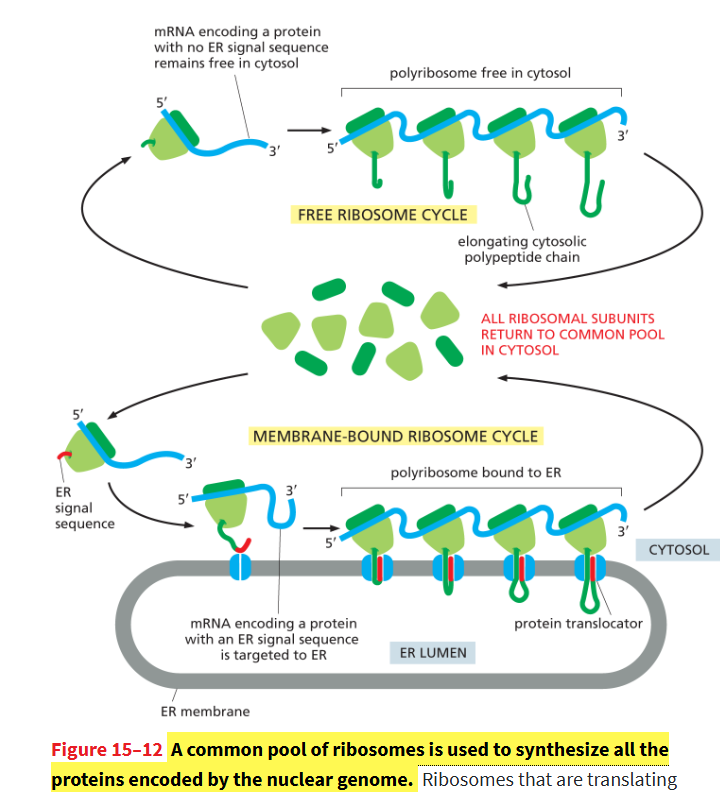
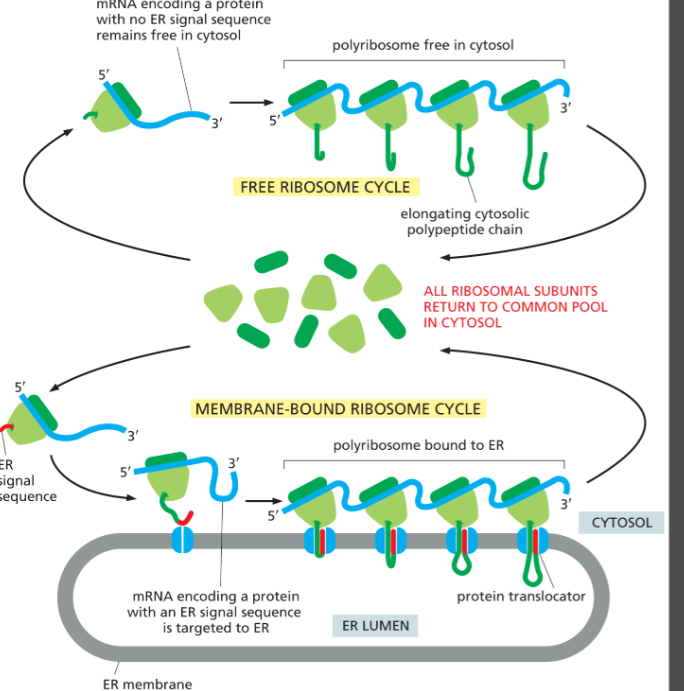
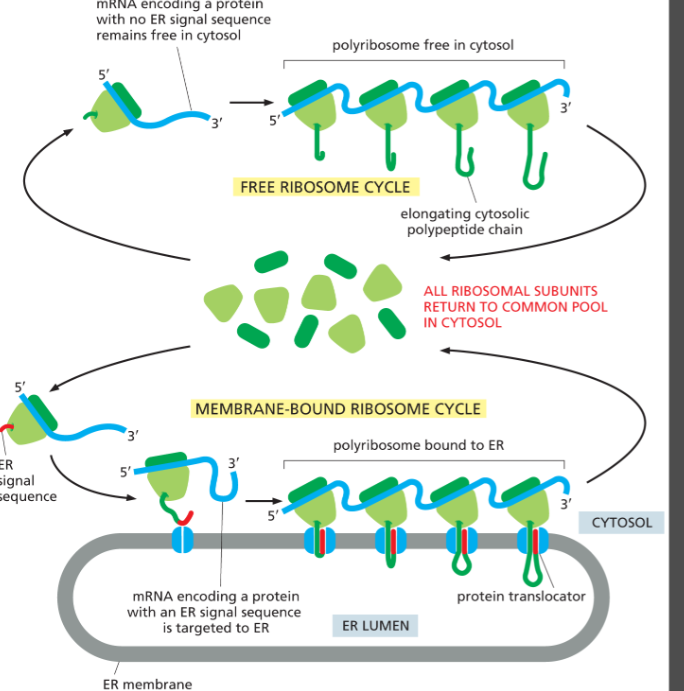
where does protein translation start?
all begins in cytoplasm
then can be destined to stay in cytosol as free ribosome or sent to ER/Golgi
if sent to ER then translation occurs in rough ER
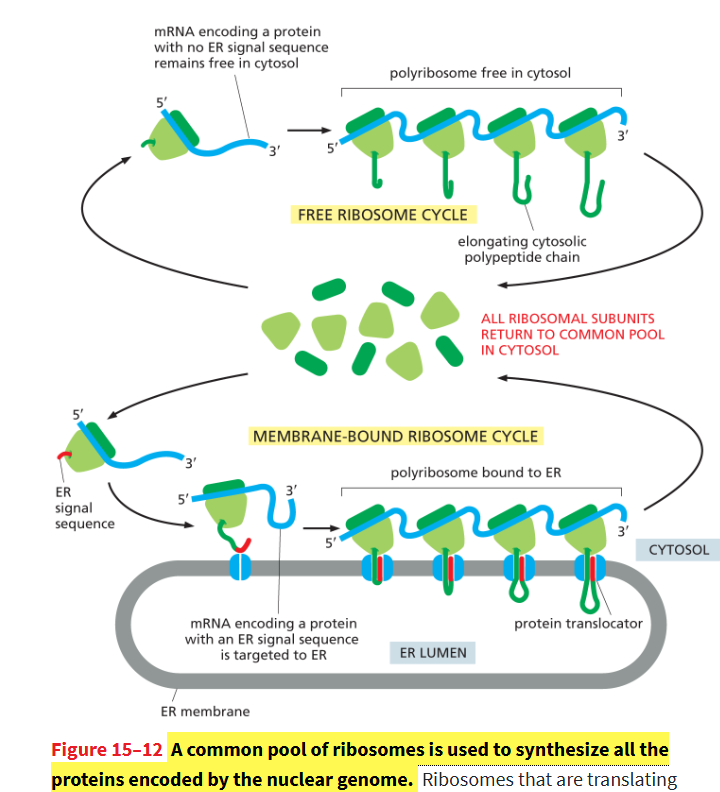
free ribosome
make proteins that stay in the cytosol, nucleus, chloroplast, mitochondria
what happens if ribosome is making protein with ER signal sequence?
Proteins with an ER signal sequence enter the ER and stay in the endomembrane system (ER → Golgi → lysosome/membrane/secretion), not the nucleus or mitochondria.
translation will occur in the ribosomes on rough ER, and newly synthesized protein is translocated into lumen of ER (or transmembrane)
ER signal sequence
signal made up of 8+ hydrophobic amino acids that directs proteins to ER
this signal sequence will be on amino terminus (N)
holds open protein translocator
Do proteins leave the ER and go back to the cytosol?
No, they stay within the endomembrane system.
They are sent via vesicles to Golgi, lysosomes, or plasma membrane.
soluble ER protein→ go into ER lumen → secreted or sent to endomembrane organelles
Transmembrane proteins → get embedded in ER membrane → stay in membranes as they move
how are membrane bound ribosomes and free ribosomes different?
they are structurally and functionally identical; they differ only in the proteins they are making at a particular time.
are all part of a common pool
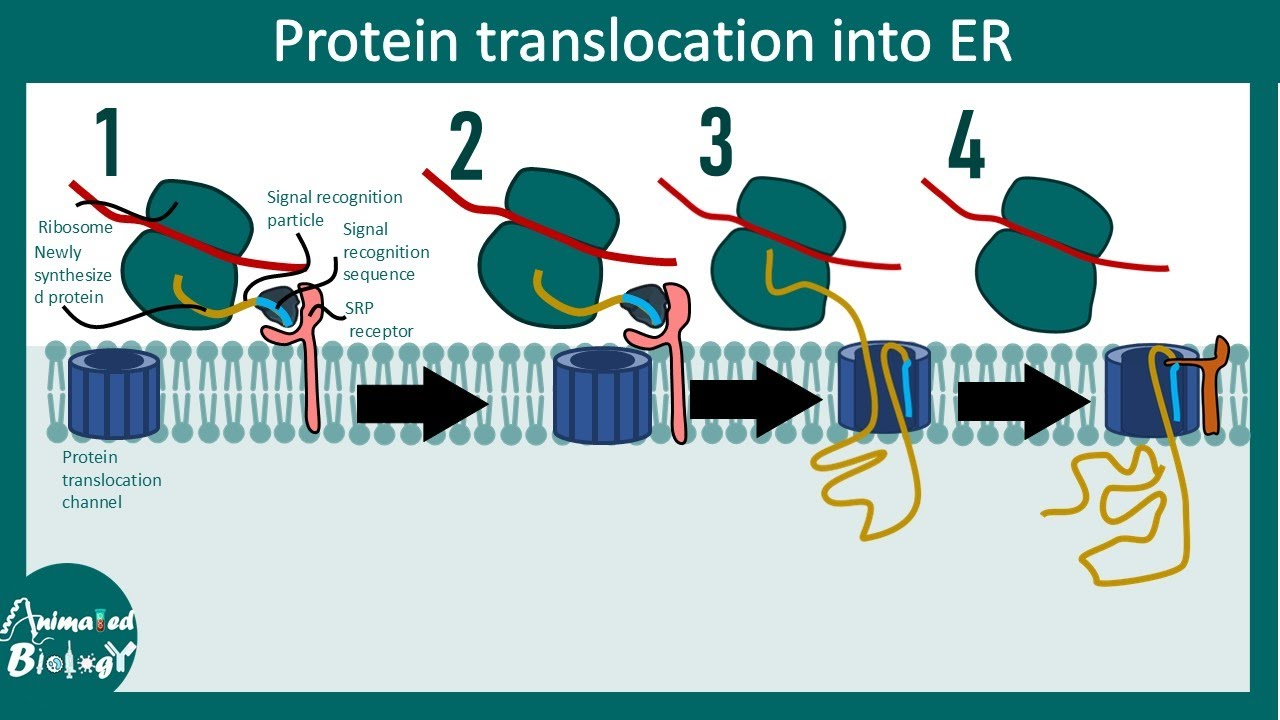
what r the 2 components that help guide ER signal sequences to ER membrane?
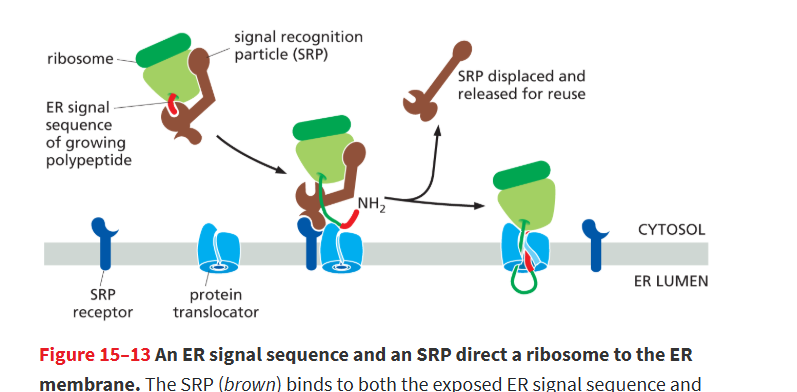
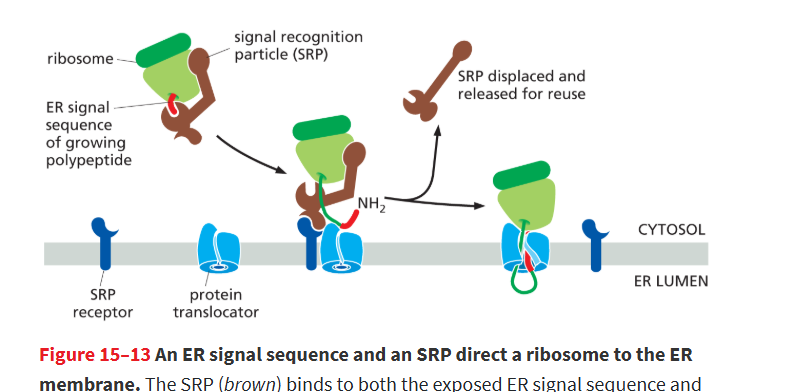
signal recognition particle (SRP)
binds to ribosome and ER signal seq. to pause protein synthesis
SRP Receptor
Binds SRP and brings the ribosome to the ER membrane.
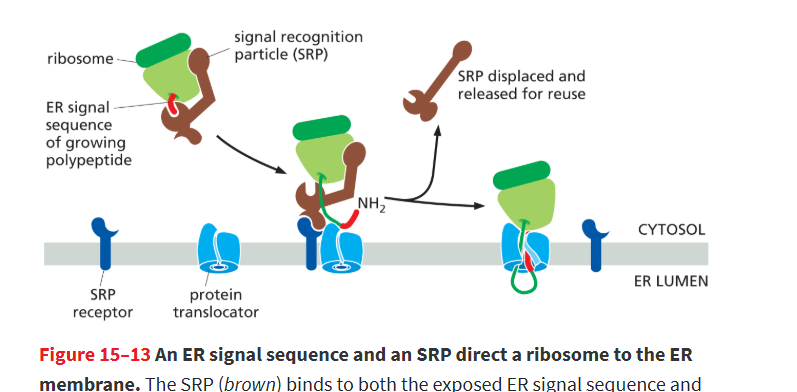
Signal recognition particle (SRP)
protein that helps guide ER signal sequence into ER membrane by binding to the ER signal sequence + ribosome and slows synthesis of ribosome.
when SRP binds to SRP receptor, it will be released for reuse while ribosome attaches to a protein translocator
present in cytosol!
SRP Receptor
a protein that binds SRP and brings the ribosome to the ER membrane.
found embedded in ER membrane
when SRP binds to this receptor, SRP is released and the receptor will pass the ribosome to the protein translocator and protein synthesis starts again as it enters ER membrane
where is ER signal seq. located in most proteins?
at amino (N) terminus!
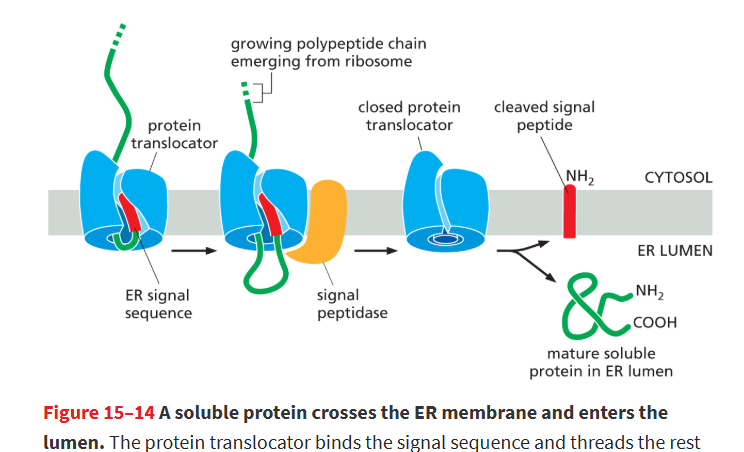
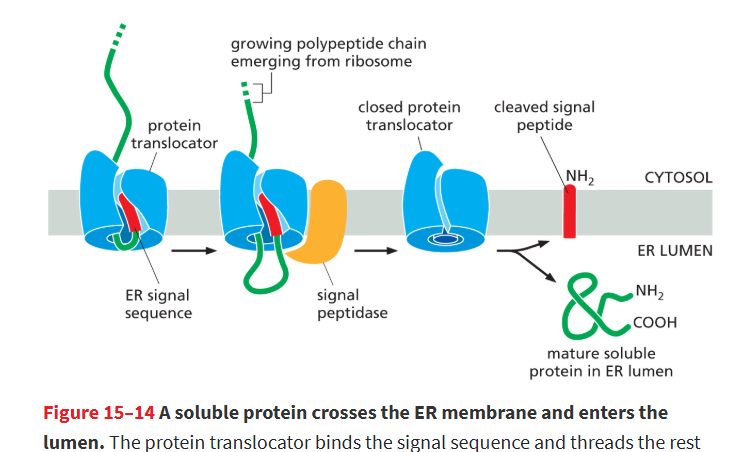
signal peptidase
a transmembrane enzyme in ER that cleaves off ER signal sequence
signal sequence gets ejected and degraded after signal is done holding open the protein translocator so full protein passes into ER lumen
how does soluble protein cross ER membrane?
SRP receptor passes ribosome to protein translocator which binds the signal sequence and its threaded through this channel during translation.
signal seq. holds open protein translocator
signal peptidase then cuts off signal seq. and it gets degraded
once C-terminus of soluble protein has passed through, protein is released into ER lumen
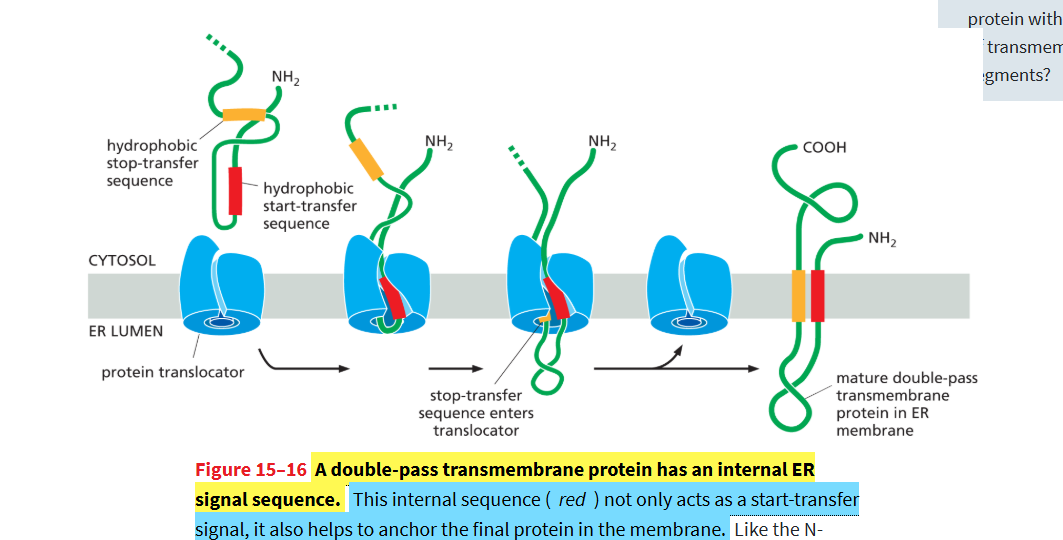
single pass transmembrane proteins
they use their N-terminal signal sequence to intitiate translocation into ER membrane
this N-terminal signal will then be cleaved off
transfer is then stopped by a hydrophobic stop-transfer sequence
stop-transfer seq. will STAY in bilayer and form alpha helical membrane
WILL HAVE: N-terminus on lumenal side of lipid bilayer and C-terminus on cystolic side
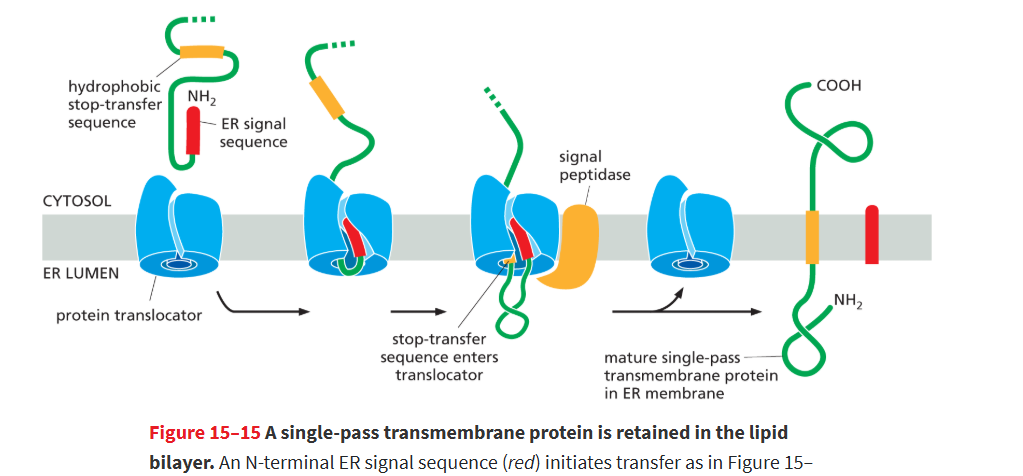
stop-transfer sequence
this is a seq. made of hydrophobic a.a on ER transmembrane proteins
they will REMAIN in the bilayer in single and multipass proteins
they will form an alpha helical membrane spanning segment that anchors protein in membrane
multipass transmembrane proteins
an ER transmembrane protein that uses a start-transfer sequence (instead of an N-terminal signal like single pass)
still uses same stop- transfer sequence
NEITHER WILL BE REMOVED!
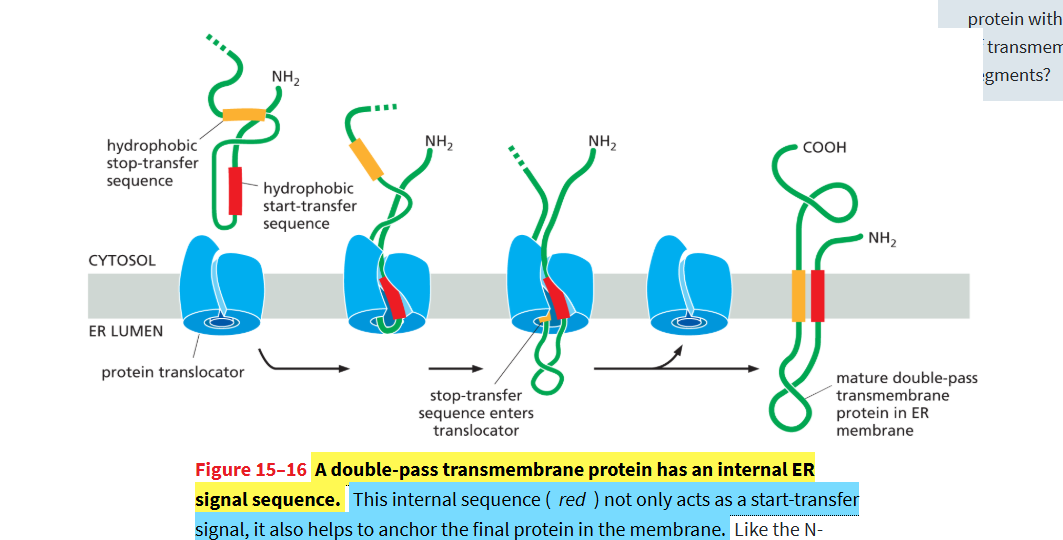
start-transfer sequence
this is a seq. made of hydrophobic a.a on ER transmembrane proteins
it will NEVER be removed from polypeptide
ONLY in multipass transmembrane proteins
What determines whether a protein is soluble or membrane-bound in the ER?
The presence of additional hydrophobic sequences (stop/start-transfer).
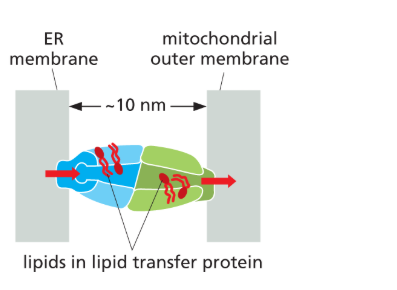
How do lipids reach other organelles?
can be delivered either by:
vesicles (mainly within the endomembrane system like Golgi, lysosomes, plasma membrane) '
by lipid-transfer proteins at membrane contact sites (especially for mitochondria and some other non-vesicular pathways).
remember lipids r made by smooth ER!
which organelle cannot receive proteins directly from cytosol?
Golgi!
Proteins are delivered to the Golgi apparatus from the ER or from other components of the endomembrane system.
vesicular transport
Movement of material between organelles in the eukaryotic cell via membrane-enclosed vesicles
typically goes ER → Golgi → other endomembrane organelle
allows for exocytosis/endocytosis!
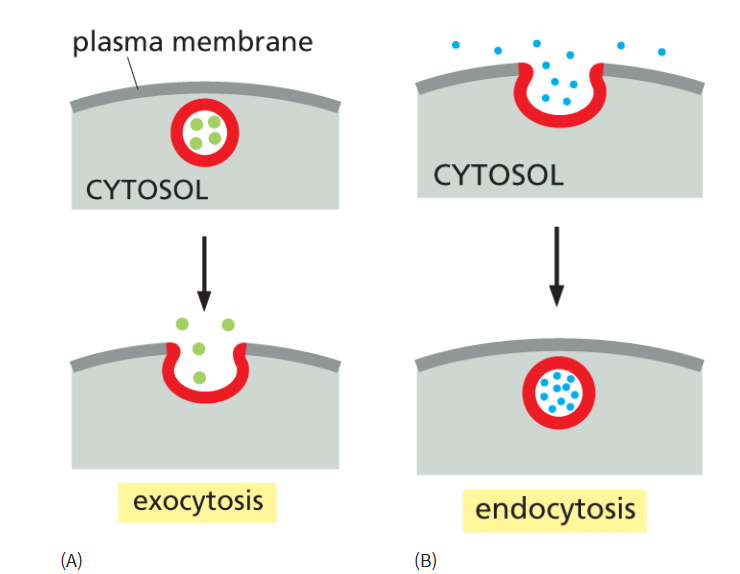
transport vesicles
membrane vesicles that bud from one membrane and fuse with another, carrying membrane components and soluble proteins between compartments of the endomembrane system and the plasma membrane.
maintains orientation so cystolic side always faces cytosol and noncystolic side always faces lumen
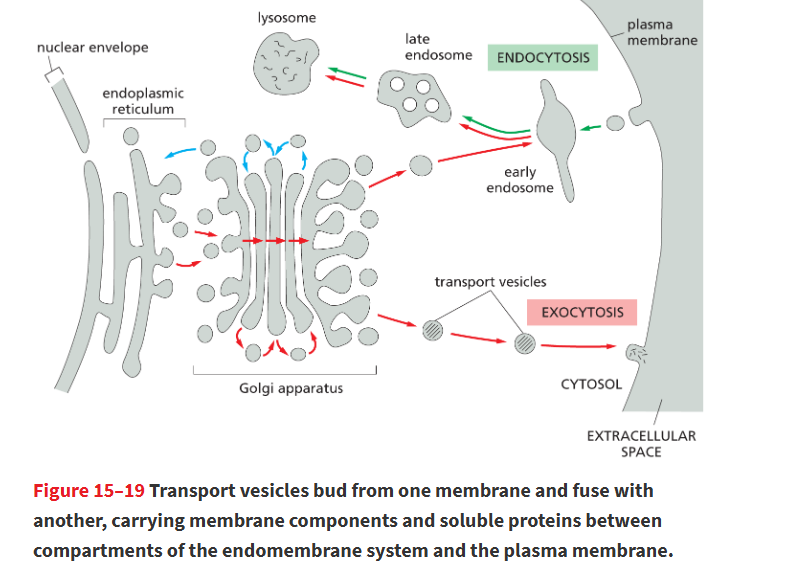
endocytic vesicle pathway
Extracellular molecules are taken into vesicles from the plasma membrane → early endosome → late endosome → lysosome
- ingestion and degradation of extracellular molec.
vesicle budding is driven by assembly of protein coat
vesicles that bud from membranes have a distinctive protein coat on cystolic surface
after budding off parent organelle, vesicle will shed its coat to allow its membrane to directly interact w/ membrane to which it will fuse
2 functions of coat:
helps shape membrane into a bud
it captures molecules for onward transport
clathrin-coated vesicles
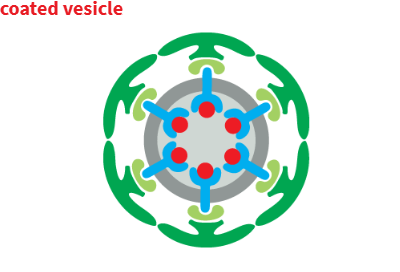
clathrin is a protein making up coat of transport vesicle that buds from either the Golgi or plasma membrane!
requires adaptor molecules that recognize cargo-specific proteins
cargo is specific!
vesicle secretory pathway
rough ER → transport vesicle → cis Golgi → medial Golgi → trans Golgi → transport vesicle → plasma membrane (some stay here) → outside of cell.
can also send to endosomes then to lysosomes
at trans Golgi it can split up into either
constitutive secretion
regulated secretion (special secretory cells that only release products when stimulated by external signal)
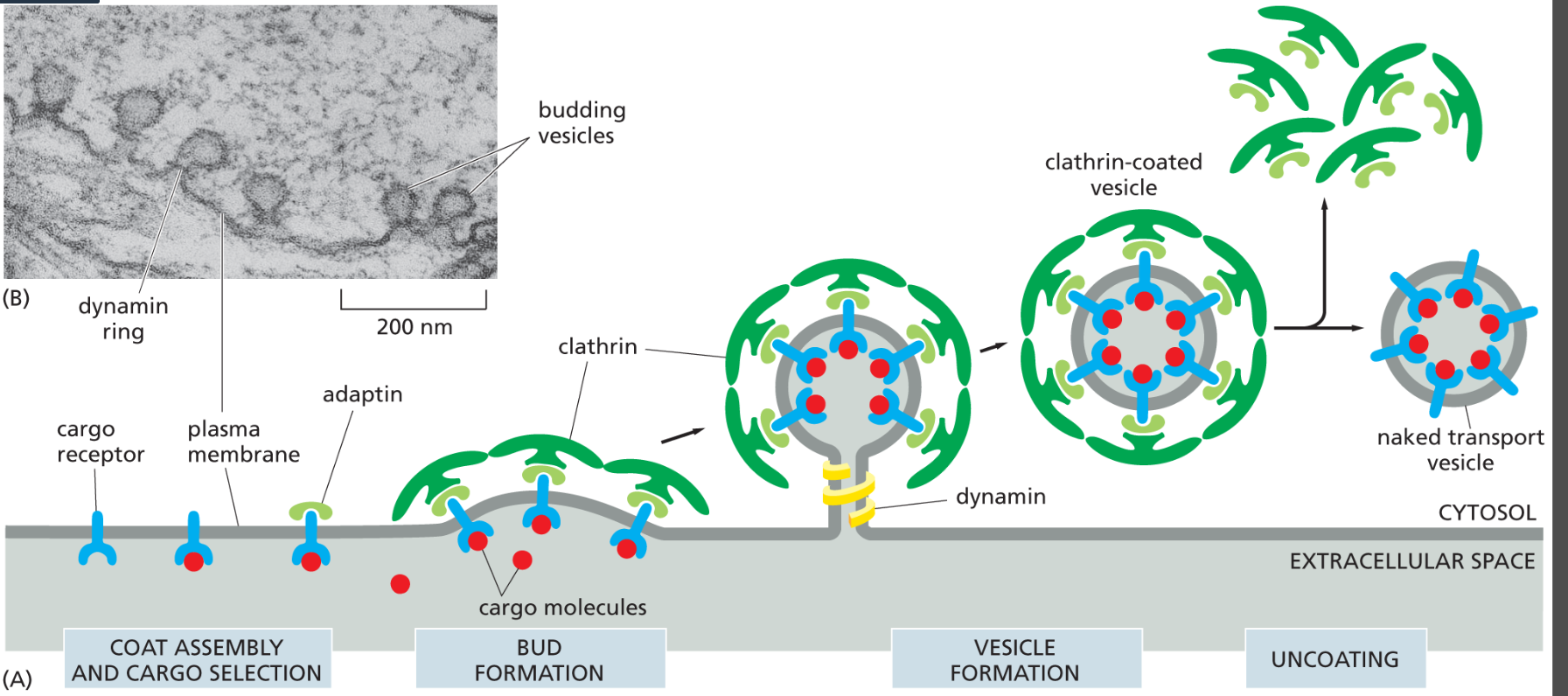
How does a clathrin-coated vesicle form ?
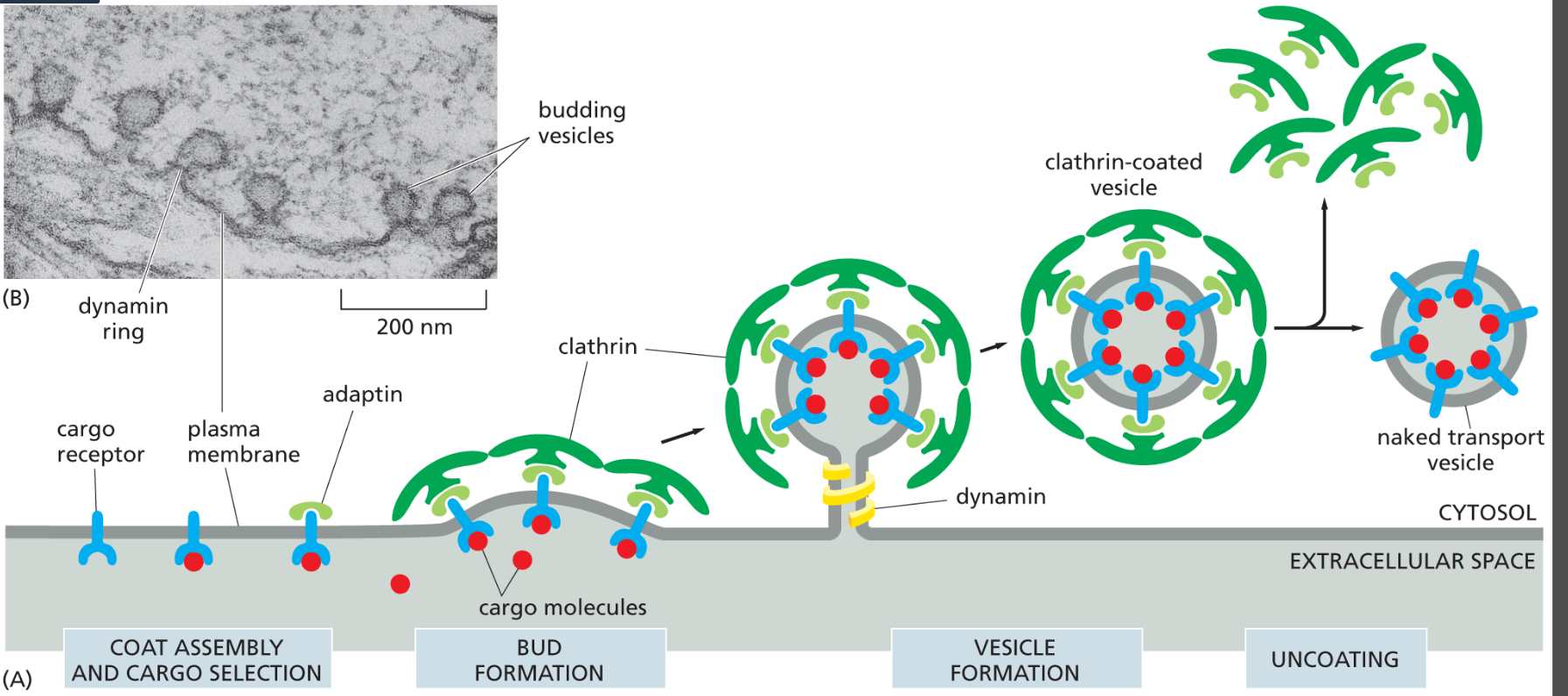
Cargo binds receptors → adaptins link receptors to clathrin → clathrin assembles into a coat that bends membrane into a pit → dynamin uses GTP to pinch off the vesicle → vesicle sheds coat → vesicle fuses with target membrane.
clathrin
A coat protein that forms a basket-like cage around budding vesicles in endocytosis and transport from the Golgi or plasma membrane
adaptin attaches clathrin to vesicle membrane
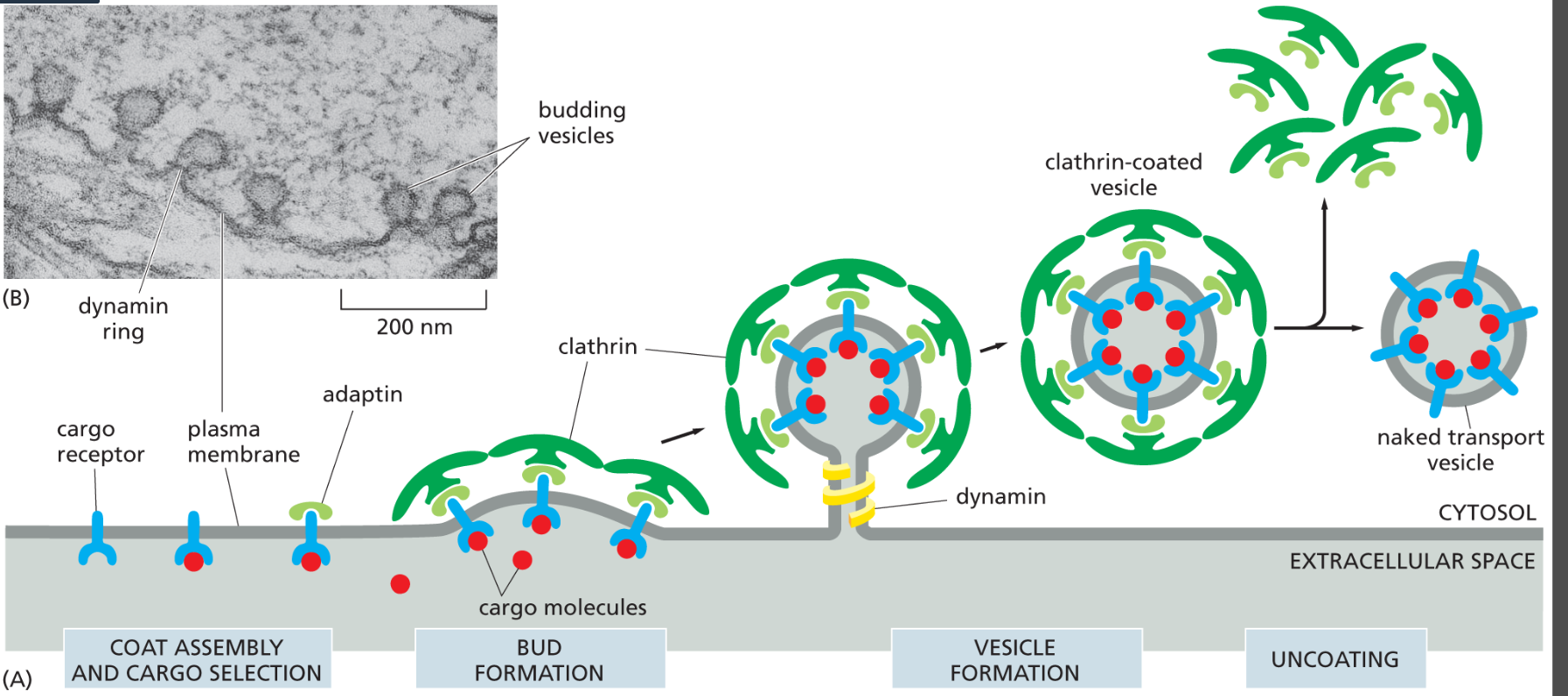
What does dynamin do in vesicle formation?
A GTP-binding protein that forms a ring around the clathrin vesicle neck and pinches it off from the membrane using GTP hydrolysis.
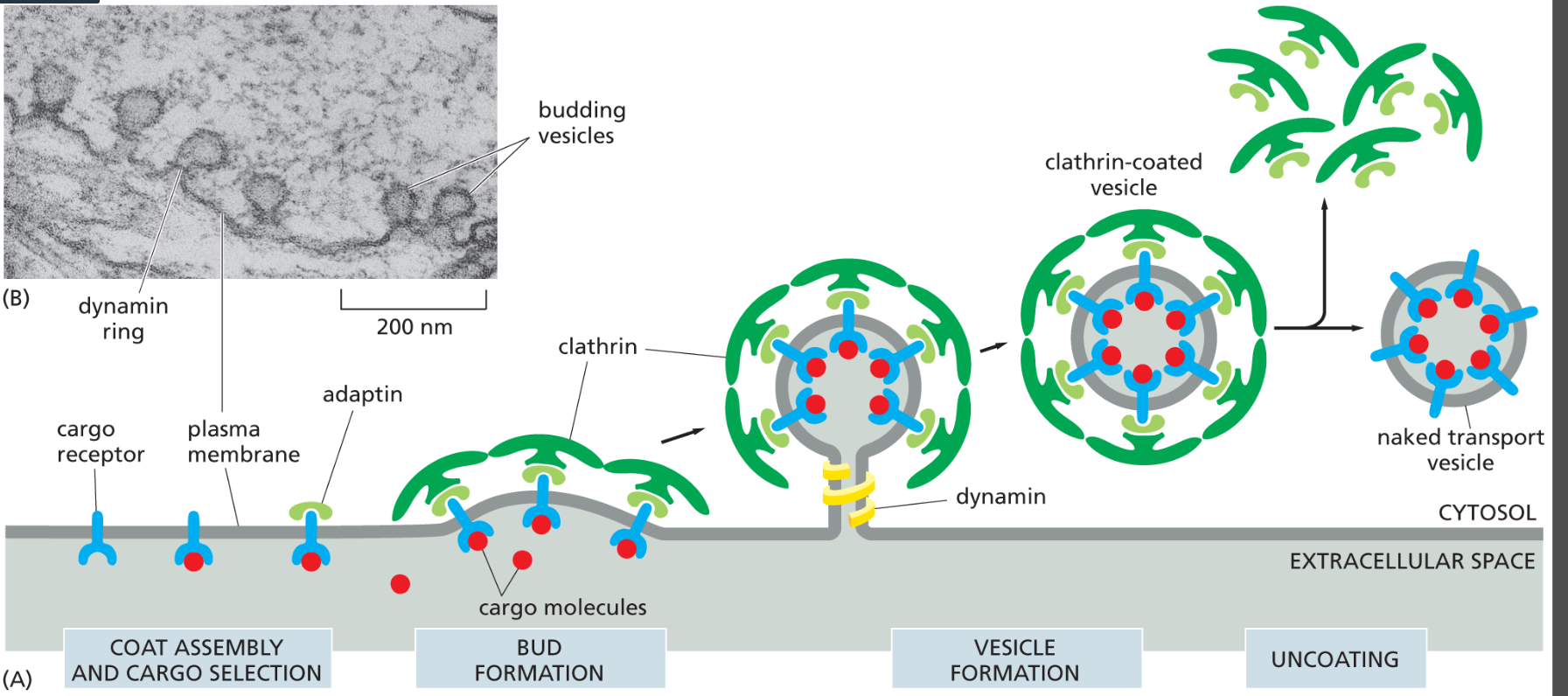
What is the role of adaptins in clathrin-coated vesicles?
secure clathrin coat to vesicle membrane and help select specific cargo molecules for packaging into vesicles.
a second class of coat protein
secure specific cargo molec. by trapping the cargo receptors that bind them
What is vesicle docking and what does it depend on?
it is the specific attachment of a transport vesicle to its correct target membrane before fusion.
requires SNAREs and tethers/Rab
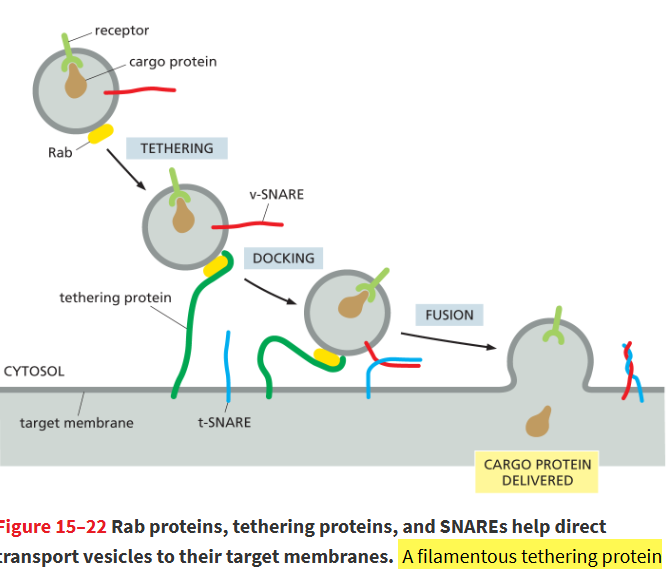
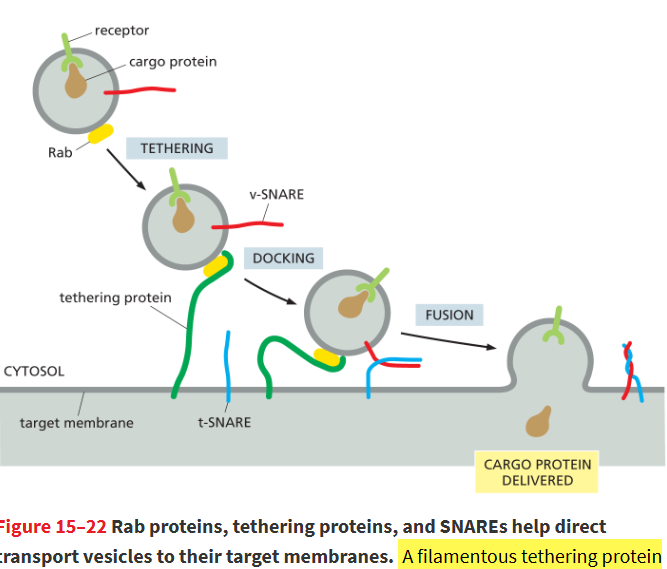
Rab recognition → tethering → SNARE docking → membrane fusion.
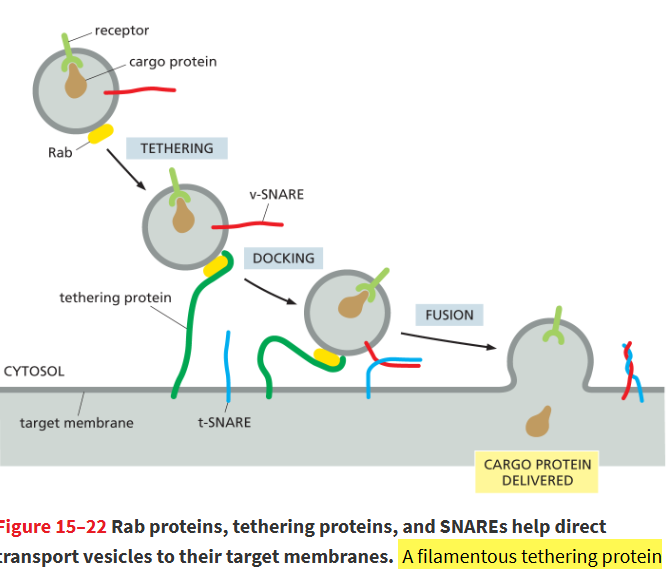
What do Rab proteins do in vesicle targeting?
they’re monomeric GTPases that act as identity markers on vesicles that are recognized by tethering proteins on the target membrane.
ensures vesicles fuse w/ correct membrane
tethering proteins
Proteins on the cystolic target membranes that bind Rab proteins on vesicles to capture and hold them near the correct destination.
Rab and tethering proteins provide intial recognition btwn vesicle and target membrane
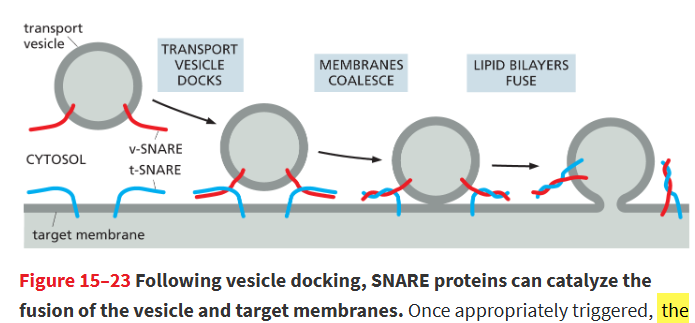
SNARE proteins
transmembrane proteins that mediate tight docking and fusion between vesicle and target membranes after tethering protein grabs Rab
2 types:
v-snares = on vesicles
t-snares = on target membranes
they also catalyze final fusion of 2 membranes
How do SNAREs cause membrane fusion?
membrane fusion is unfavorable cuz water must be displaced and lipid bilayers must come extremely close (~1.5 nm) before merging.
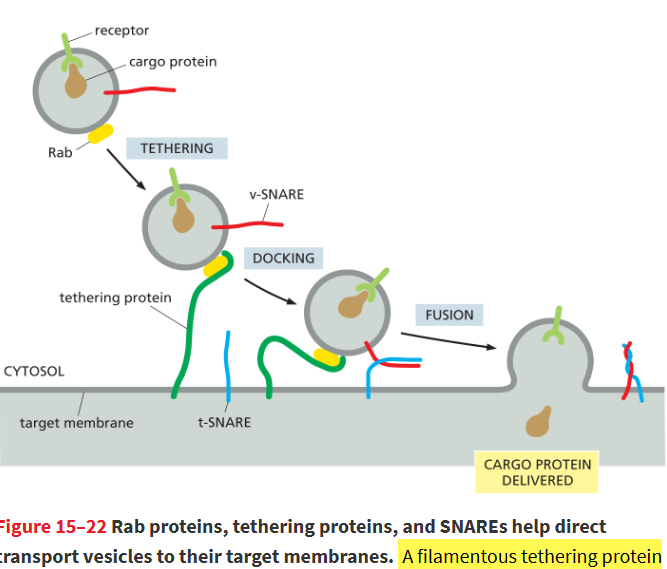
However, the v-SNARE and t-SNARE wrap around each other rlly tightly which draws the lipid bilayers super close together and the winding together squeezes out any water trapped btwn the 2 membranes
allows fusion and contents r delivered