Chapter 13: Shock, Emergency Care and Transportation of the Sick and Injured, 12th Edition
 Call Kai
 Learn
Learn Practice Test
 Spaced Repetition
 Match
Match Flashcards
 Knowt Play
1/36

There's no tags or description
Looks like no tags are added yet.
Name | Mastery | Learn | Test | Matching | Spaced | Call with Kai | Chat |
|---|
No analytics yet
Send a link to your students to track their progress
37 Terms
Hypoperfusion
Inability of the body to adequately circulate blood to the body's cells to supply them with oxygen and nutrients. A life-threatening condition. Also called shock.
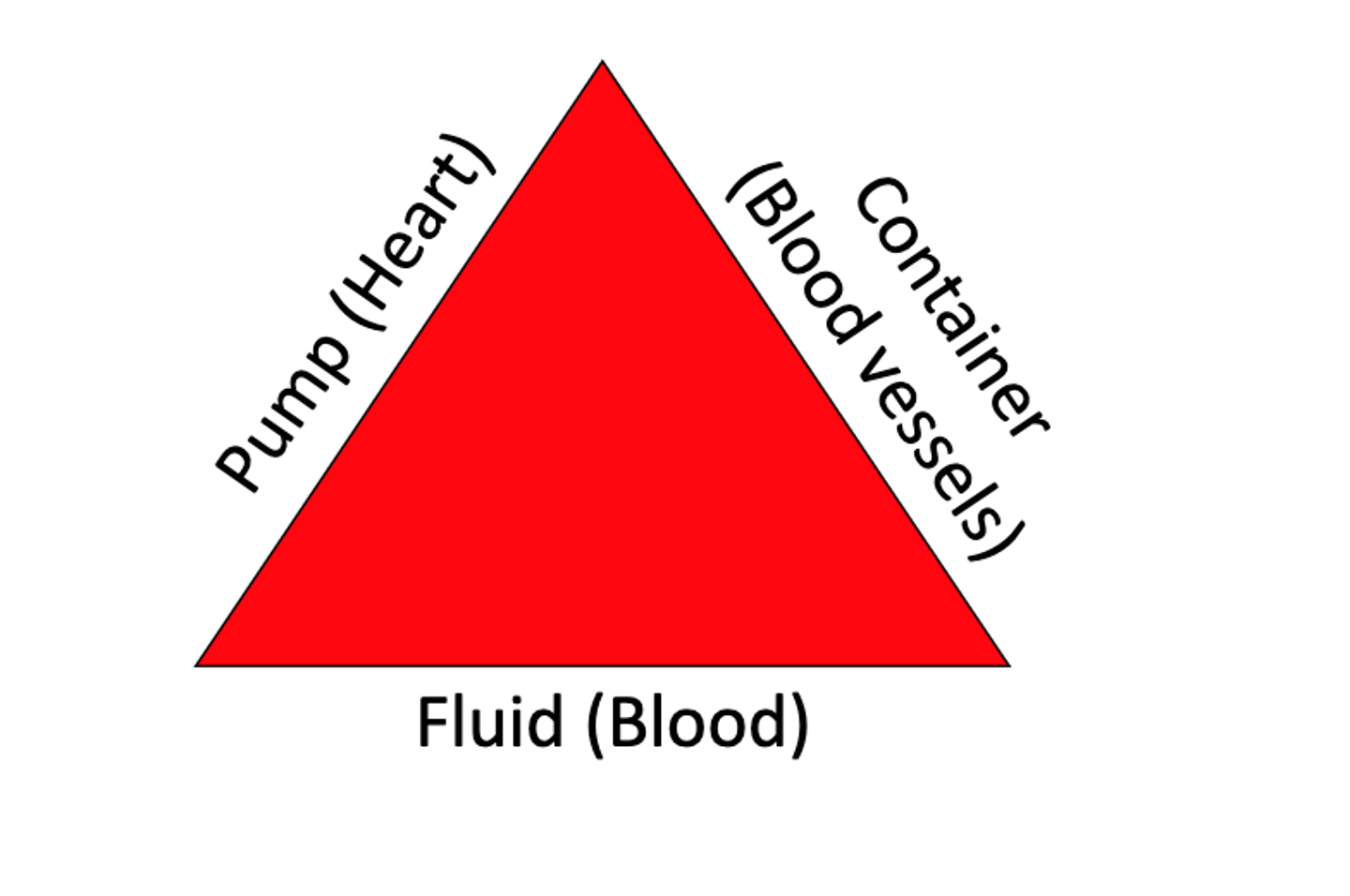
Perfusion Triangle
The heart (the pump)
The pipes (blood vessels or arteries)
The contents of container (blood)
When a person is in shock one or more of these will not work properly.
Pulse Pressure
Systolic pressure - diastolic pressure; signifies the amount of force the heart generates with each contraction. Pressure less than 25 may be seen in patients with shock.
Cardiogenic Shock
Caused by inadequate function of the heart, or pump failure.
Preload
Volume of blood in ventricles at end of diastole.
Afterload
The force or resistance against which the heart pumps. How much resistance in the vascular system the heart has to pump against.
Edema
The presence of abnormally large amounts of fluid between cells in body tissues, causing swelling of the affected area.
Pump Failure
Cardiogenic, Obstructive.
Poor Vessel Function
Distributive shock (septic shock, neurogenic shock, anaphylactic shock, psychogenic shock)
Low Fluid Volume
Hypovolemic shock (hemorrhagic shock, non-hemorrhagic shock)
Embolism
Obstruction of a blood vessel by a clot of blood or foreign substance.
Obstructive Shock
Caused by a mechanical obstruction which prevents an adequate volume of blood to fill the heart chambers.
Pulmonary Embolism
A blood clot that occurs in the pulmonary circulation and blocks the flow of blood through the pulmonary vessels.
Tension Pneumothorax
A pneumothorax with rapid accumulation of air in the pleural space causing severely high intrapleural pressures with resultant tension on the heart and great vessels.
Cardiac Tamponade
Compression of the heart as the result of buildup of blood or other fluid in the pericardial sac, leading to decreased cardiac output.
Becks Triad
Hypotension, JVD, muffled heart sounds; cardiac tamponade.
Distributive Shock
Results when there is widespread dilation of the small arterioles, small venules, or both.
Septic Shock
Shock caused by severe infection, usually a bacterial infection.
Neurogenic Shock
Circulatory failure caused by paralysis of the nerves that control the size of the blood vessels, leading to widespread dilation; seen in patients with spinal cord injuries.
Anaphylactic Shock
A severe reaction that occurs when an allergen is introduced to the bloodstream of an allergic individual. Characterized by bronchoconstriction, labored breathing, widespread vasodilation, circulatory shock, and sometimes sudden death.
Psychogenic Shock
Shock caused by a sudden, temporary reduction in blood supply to the brain that causes fainting (syncope).
Hypovolemic Shock
Result of an inadequate amount of fluid or volume in the circulatory system.
Deep Vein Thrombosis (DVT)
Blood clot (thrombus) forms in a large vein, usually in a lower limb.
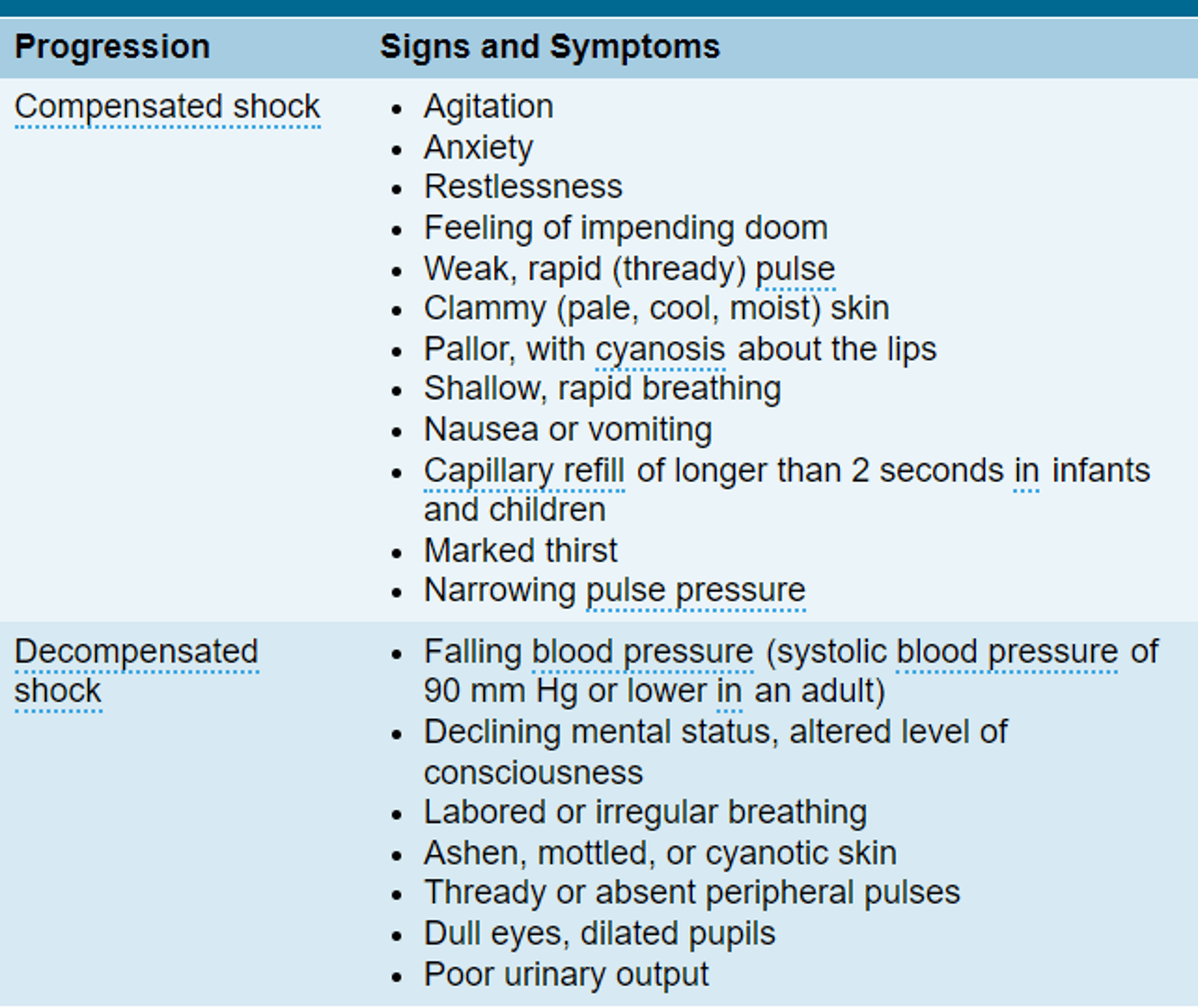
Compensated Shock
Early stage of shock, while the body can still compensate for blood loss.
Decompensated Shock
The late stage of shock when blood pressure is falling.
Erticaria
Hives
<90 systolic
A measure of decompensate shock.
Progression of Shock
Any PT showing signs and symptoms of shock gets 15ml of oxygen via non-rebreather at a minimum, and should be laying supine. Elevate feet if no injury and cover with a blanket.
TRUE
1 multiple choice option
Cariogenic Shock Signs
Low blood pressure
A weak, irregular pulse
Cyanosis around the lips and underneath the fingernails
Anxiety
Nausea
Cardiac Tamponade Treatment
Increasing cardiac output should be the priority.
Apply high-flow oxygen.
The only definitive treatment for cardiac tamponade is surgery.
Tension Pneumothorax Treatment
Administer high-flow oxygen via nonrebreathing mask early.
The only action that can prevent death from a tension pneumothorax is decompression, an ALS skill.
Septic Shock Treatment
Standard precautions. Requires complex hospital management. Transport promptly. High flow O2 and/or ventilation support. Use blanket to conserve heat.
Neurogenic Shock Treatment
Obtaining and maintaining a proper airway
Providing spinal stabilization
Assisting inadequate breathing as needed
Conserving body heat
Ensuring the most effective circulation possible.
Anaphylactic Shock Treatment
Administer epi.
Prompt transport.
High flow O2.
Consider ALS backup.
Psychogenic Shock Treatment
Transport patient promptly. Check for injuries.
Hypovolemic Shock Treatment
Control obvious bleeding.
Keep warm.
Maintain airway.
High flow O2
Watch for aspiration.
Transport ASAP.