lab quiz
 Call Kai
 Learn
Learn Practice Test
 Spaced Repetition
 Match
Match Flashcards
 Knowt Play
1/116

There's no tags or description
Looks like no tags are added yet.
Name | Mastery | Learn | Test | Matching | Spaced | Call with Kai | Chat |
|---|
No analytics yet
Send a link to your students to track their progress
117 Terms
this is the name of the fluid that fills the brain ventricles
cerebralspinalfluid
specific cells that generate cerebrospinal fluid
ependymal cells
leaky blood vessels in the brain that provides the fluid for CSF
chlorid plexus
2 ventricles found in the cerebral hemisphere
lateral ventricles
ventricle found in the diencephalon (inside the thalamus)
3rd ventricle
ventricle found in the brainstem, anterior to cerebellum
4th ventricle
tubes that move CSF from the lateral ventricles to the 3rd ventricle
intraventricular foramen
tube that moves CSF from the 3rd ventricle to the 4th ventricle
cerebral aqueduct
tube that drains CSF from the 4th ventricle into the spinal cord
central canal
CSF-filled space between the pia mater and arachnoid mater
subarachnoid space
small openings in the arachnoid mater that allows CSF to drain into the dural venous sinus
arachnoid villi
blood filled space where the extra CSF returns to the bloodstream
dural venous sinus
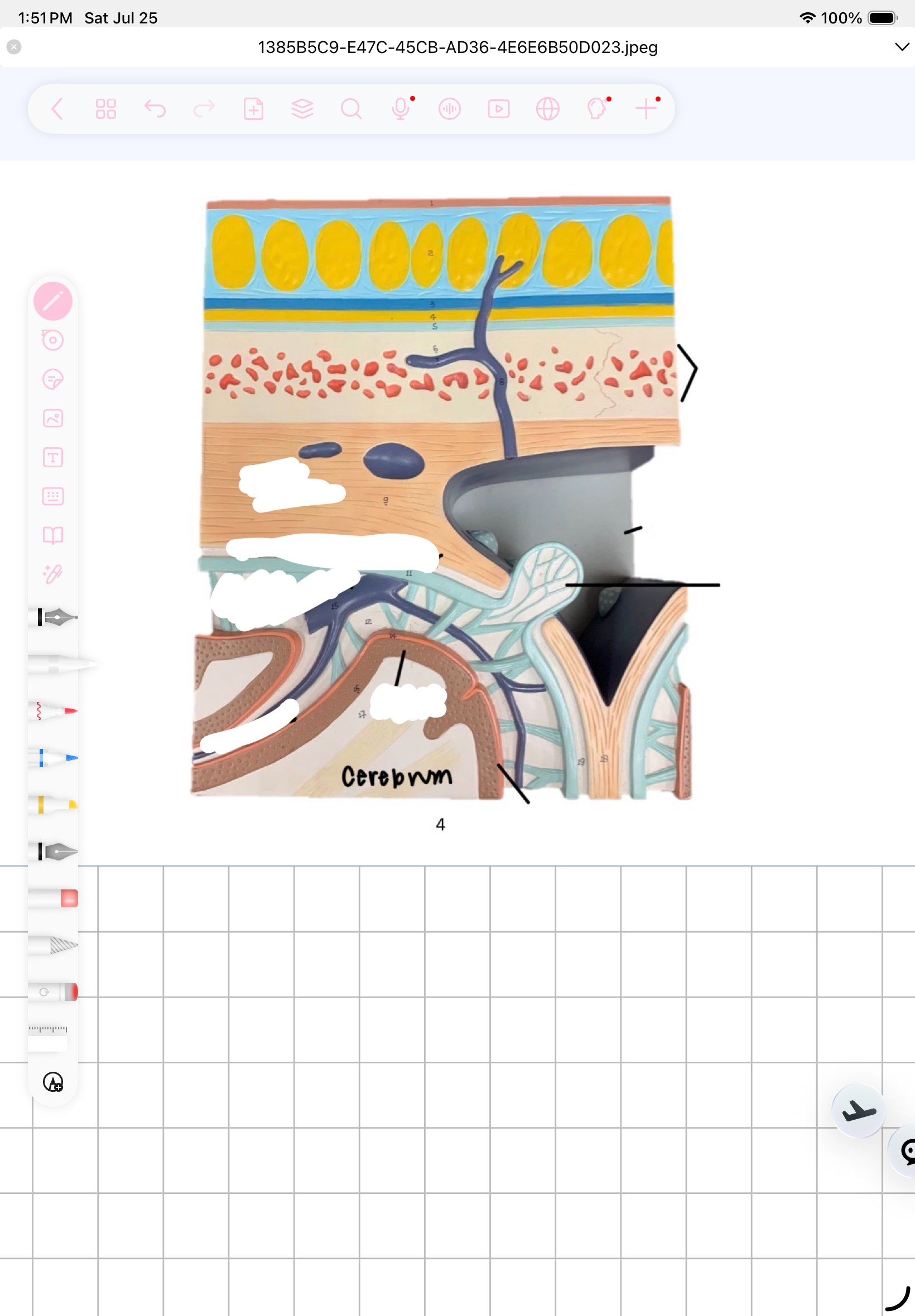
Cerebrum
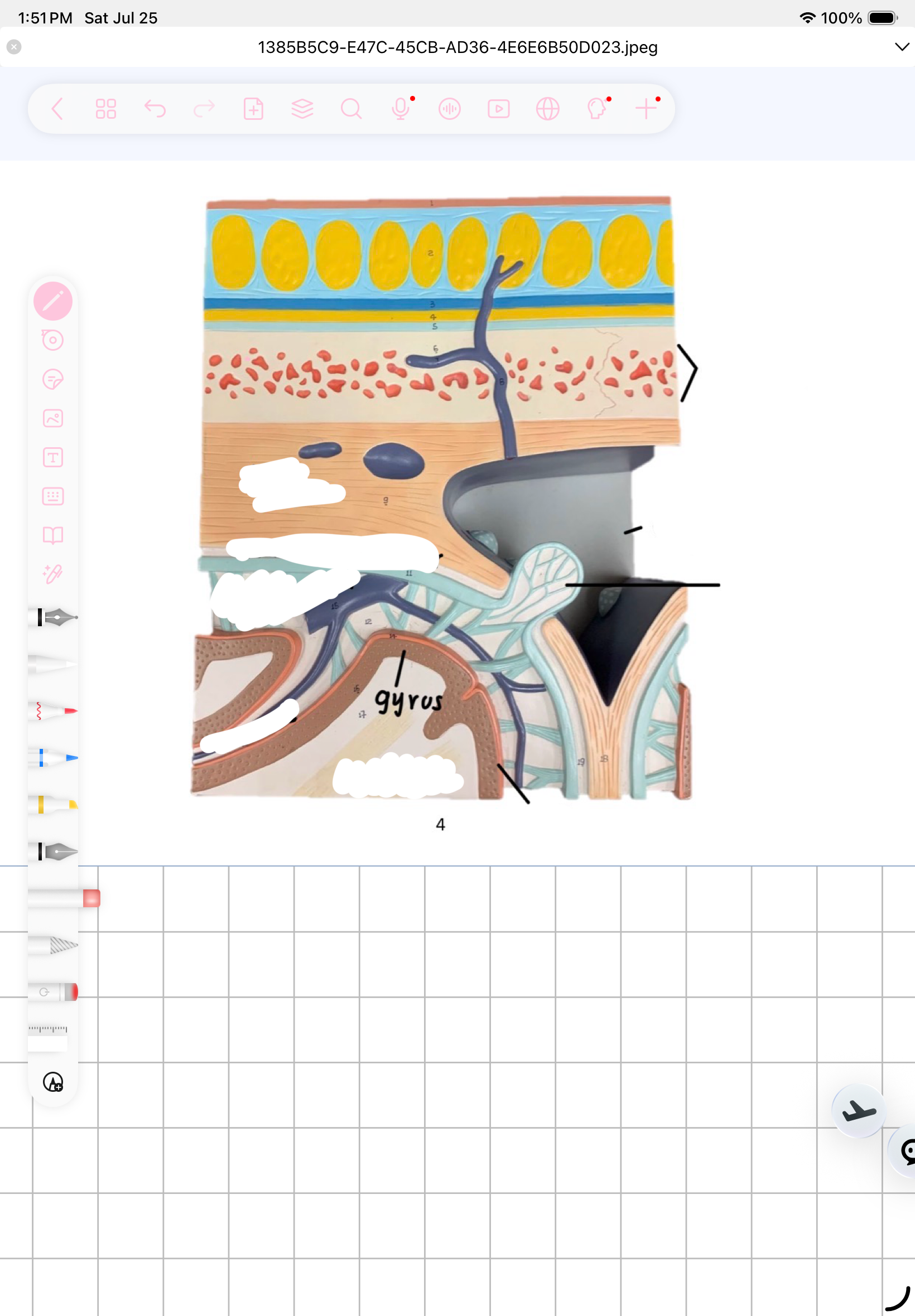
Gyrus
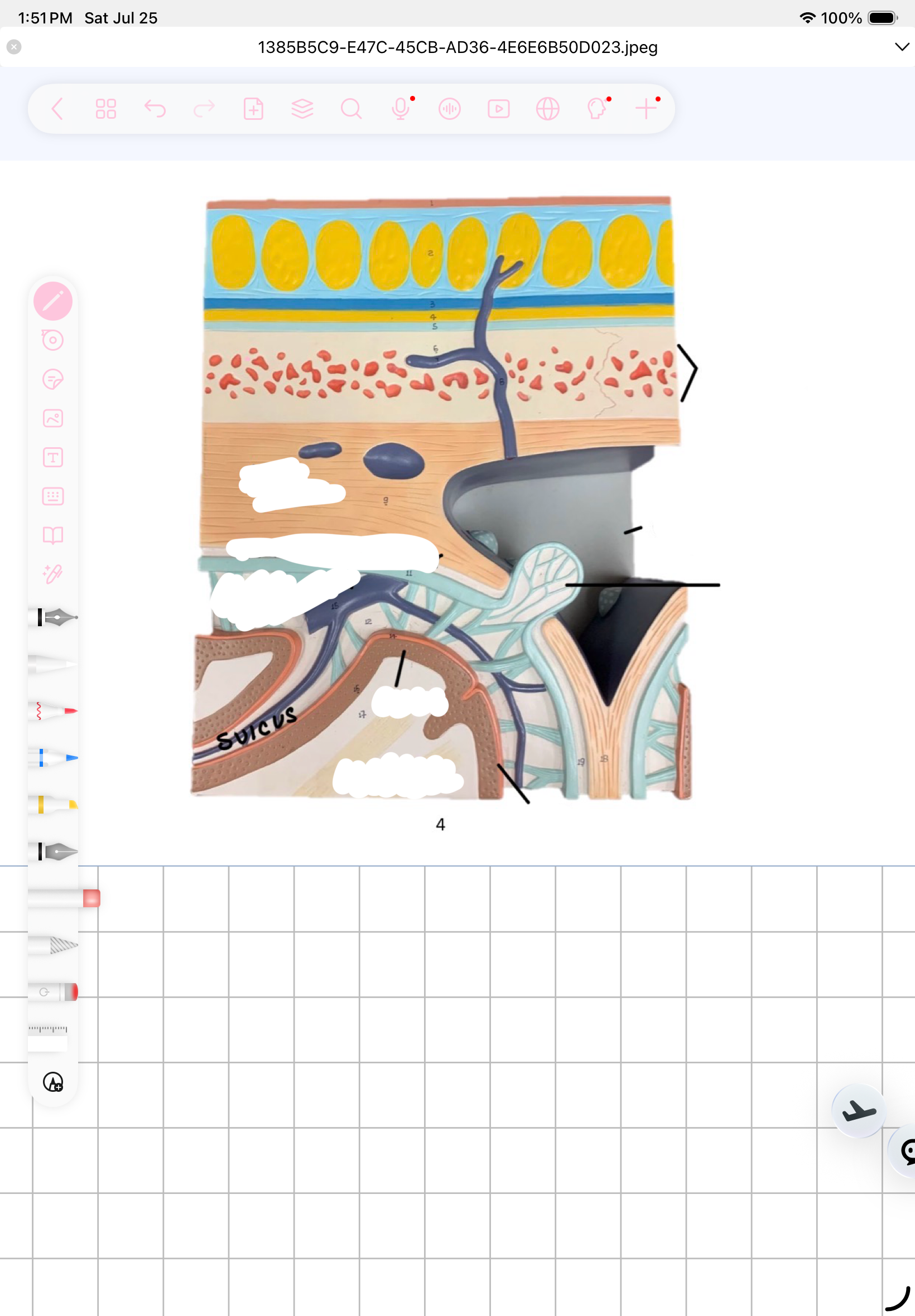
Sulcus
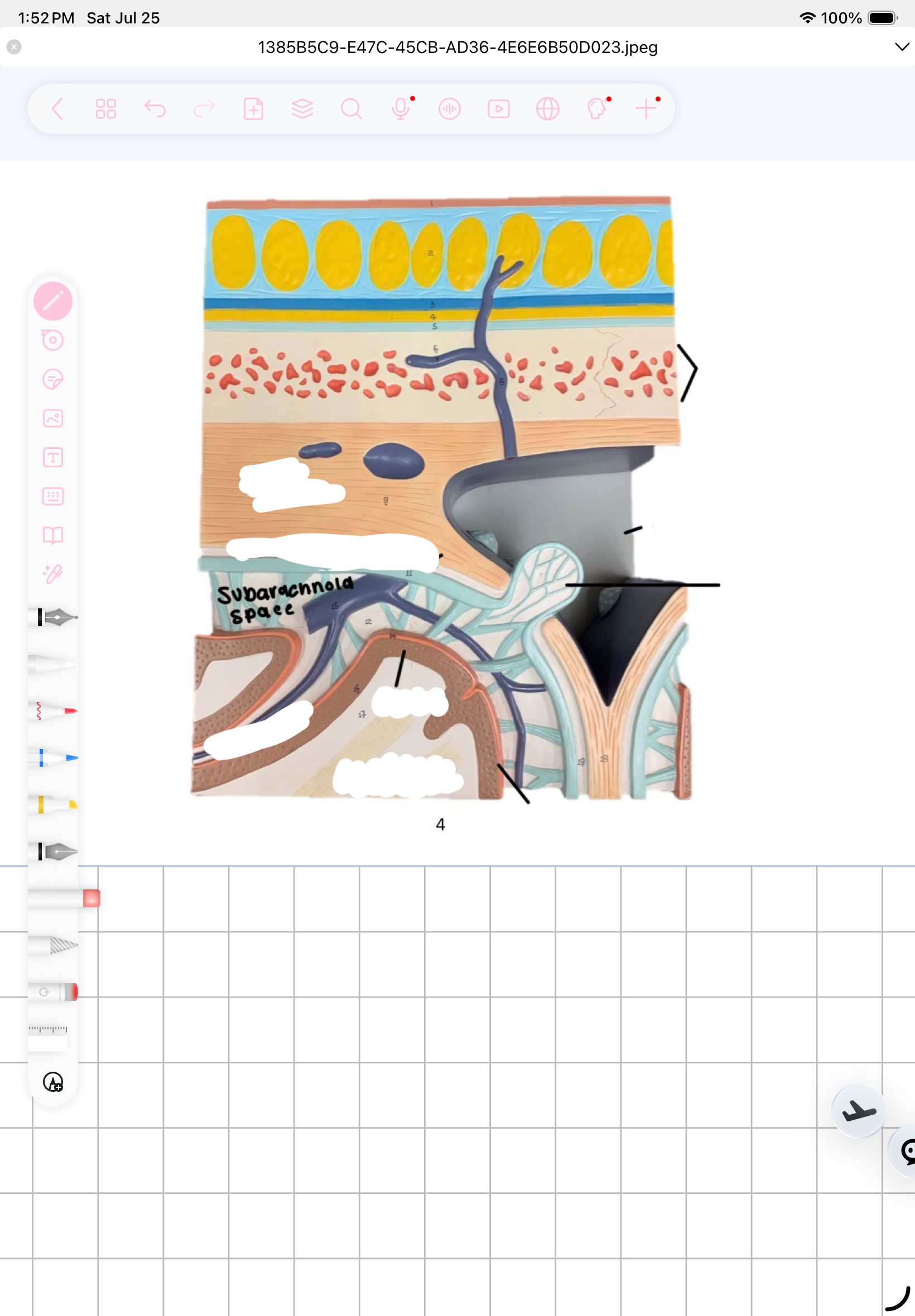
Subarachnoid space
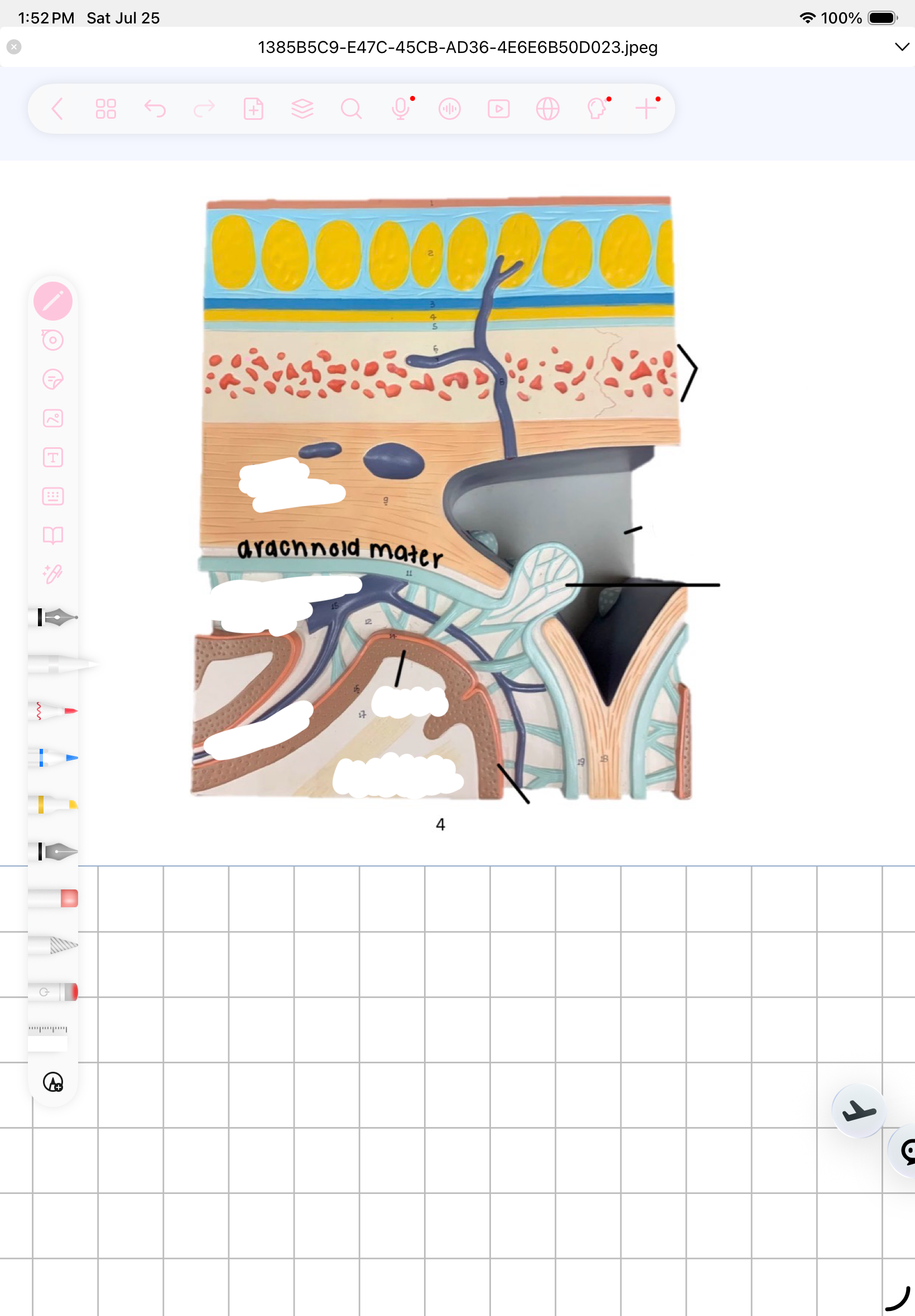
Arachnoid mater
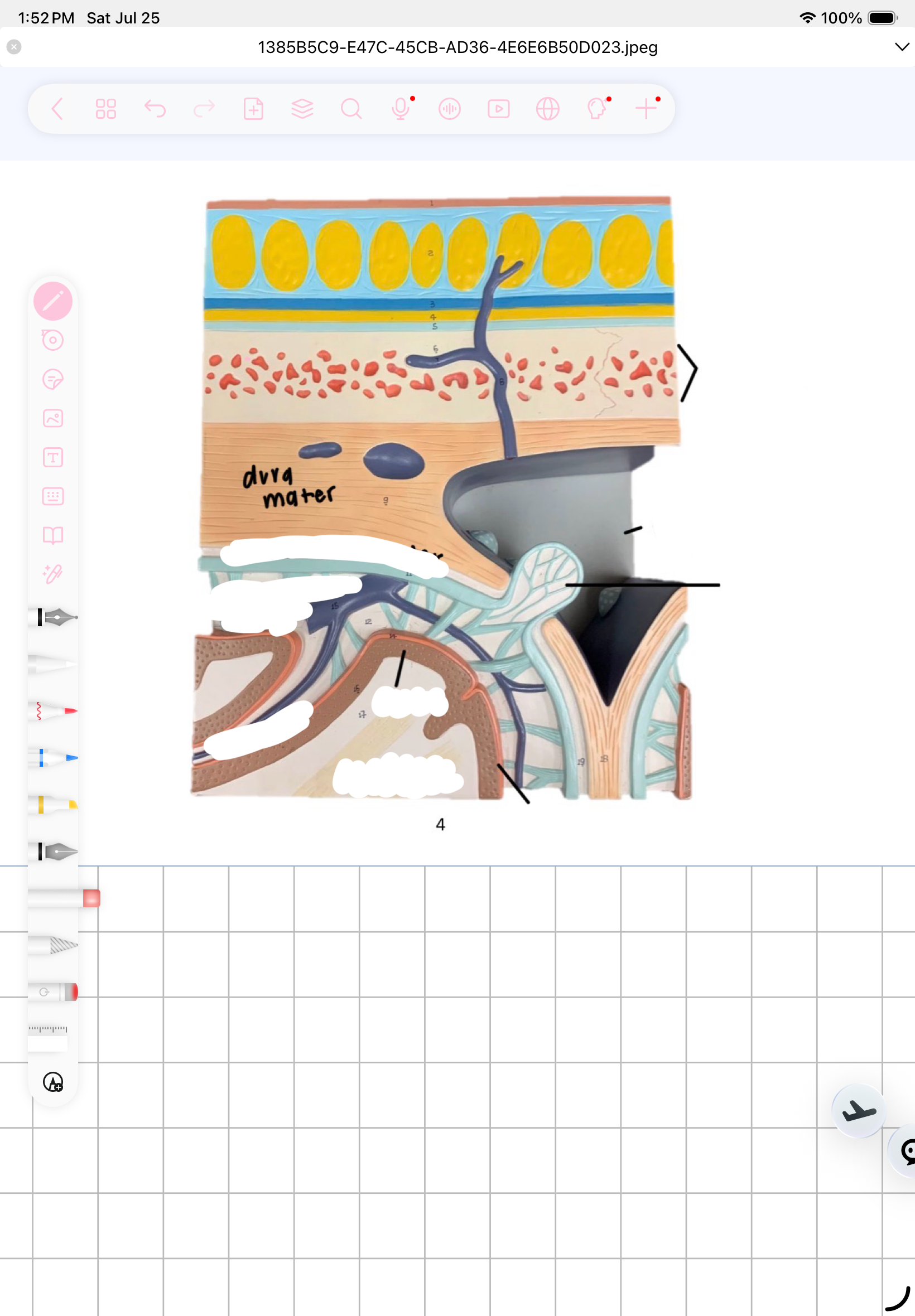
Dura mater
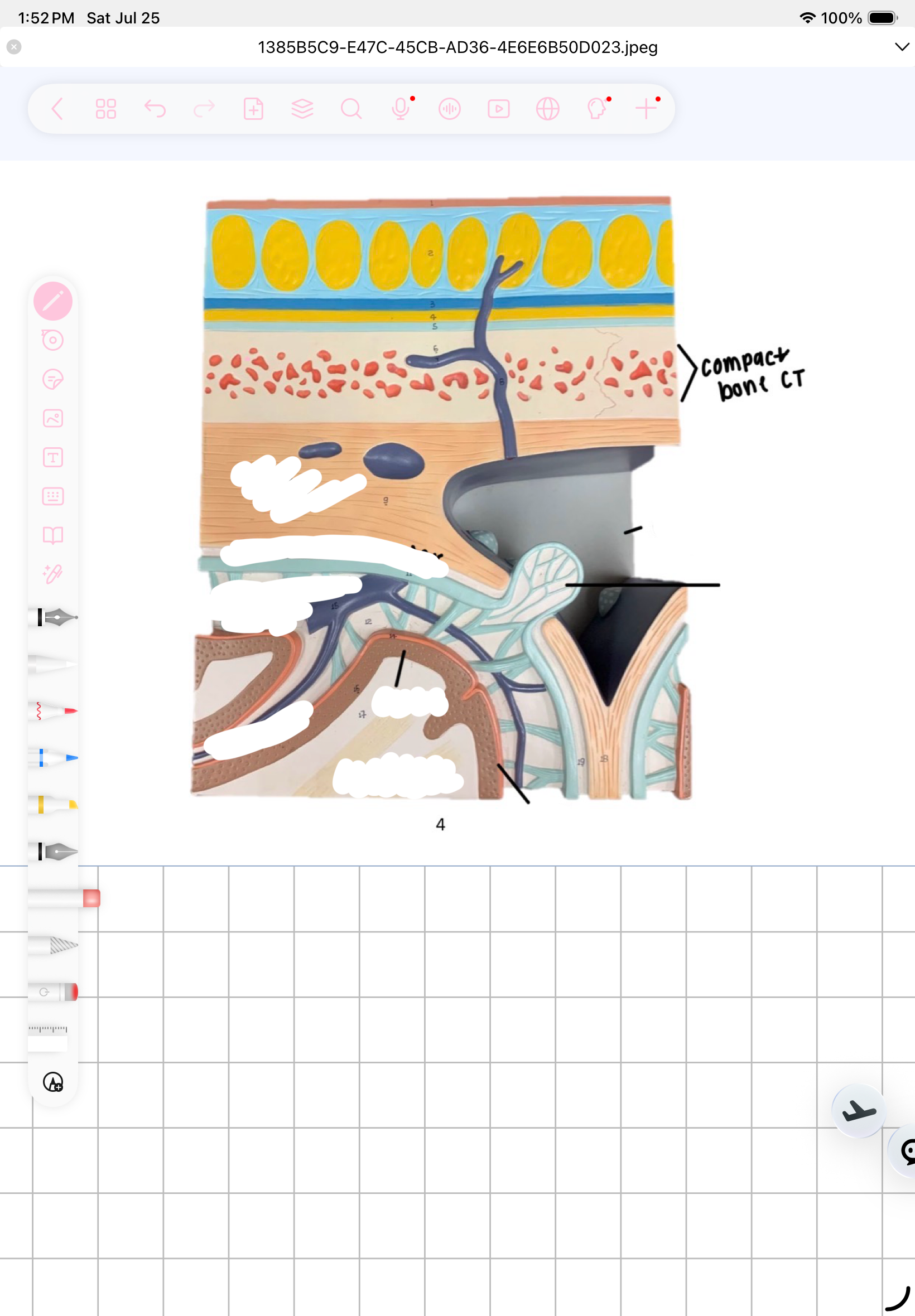
Compact bone CT
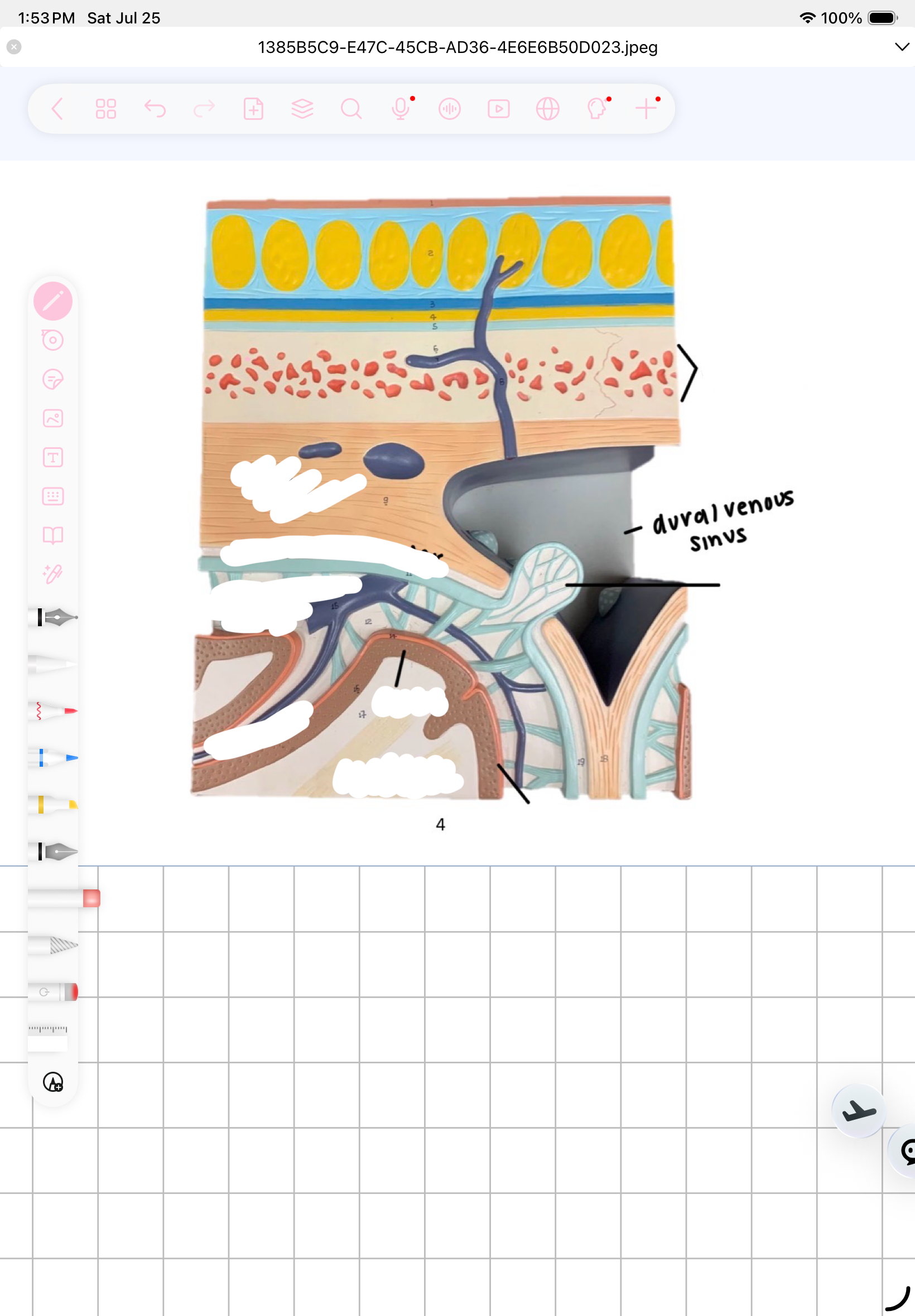
Dural venous space
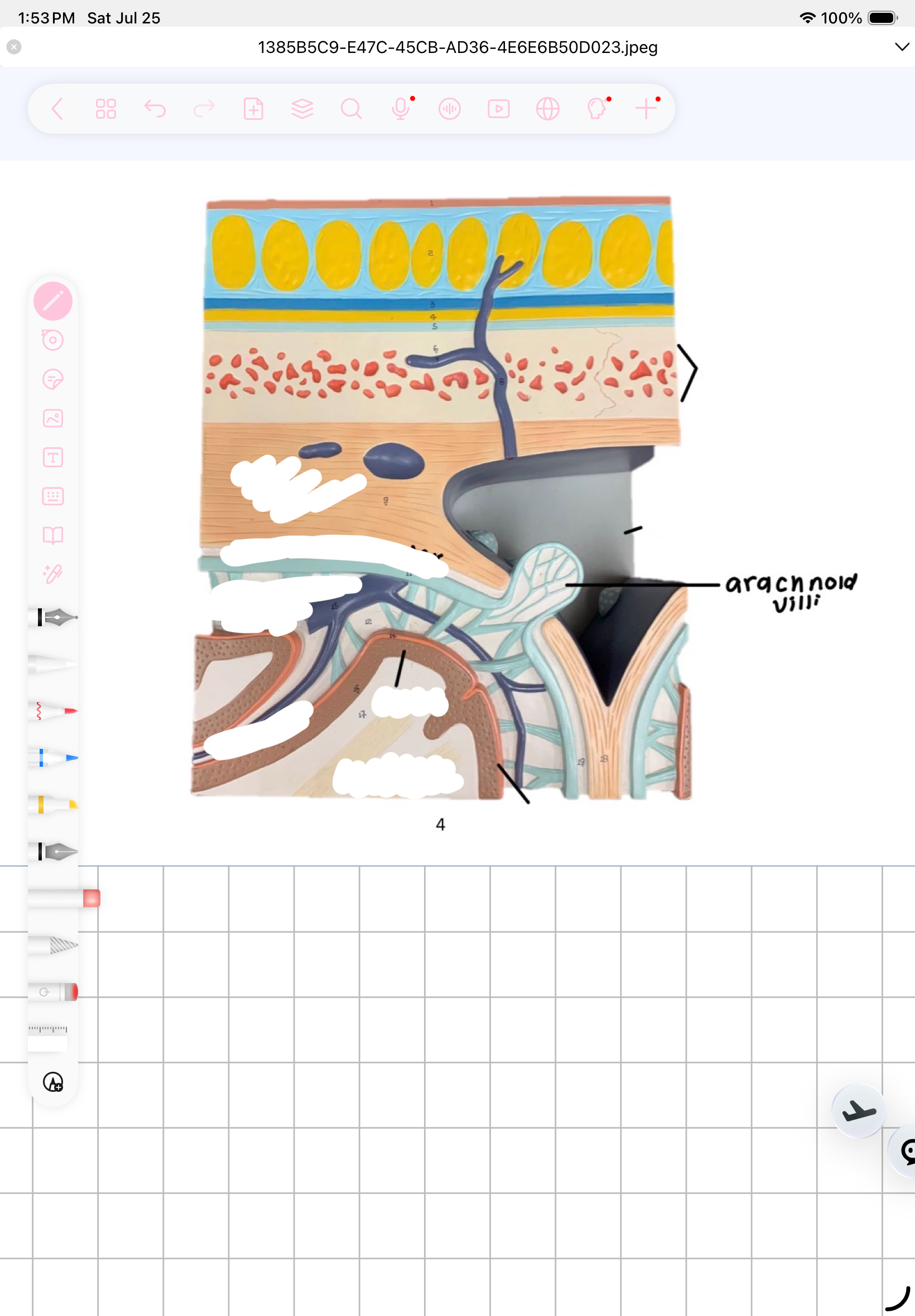
Arachnoid villi
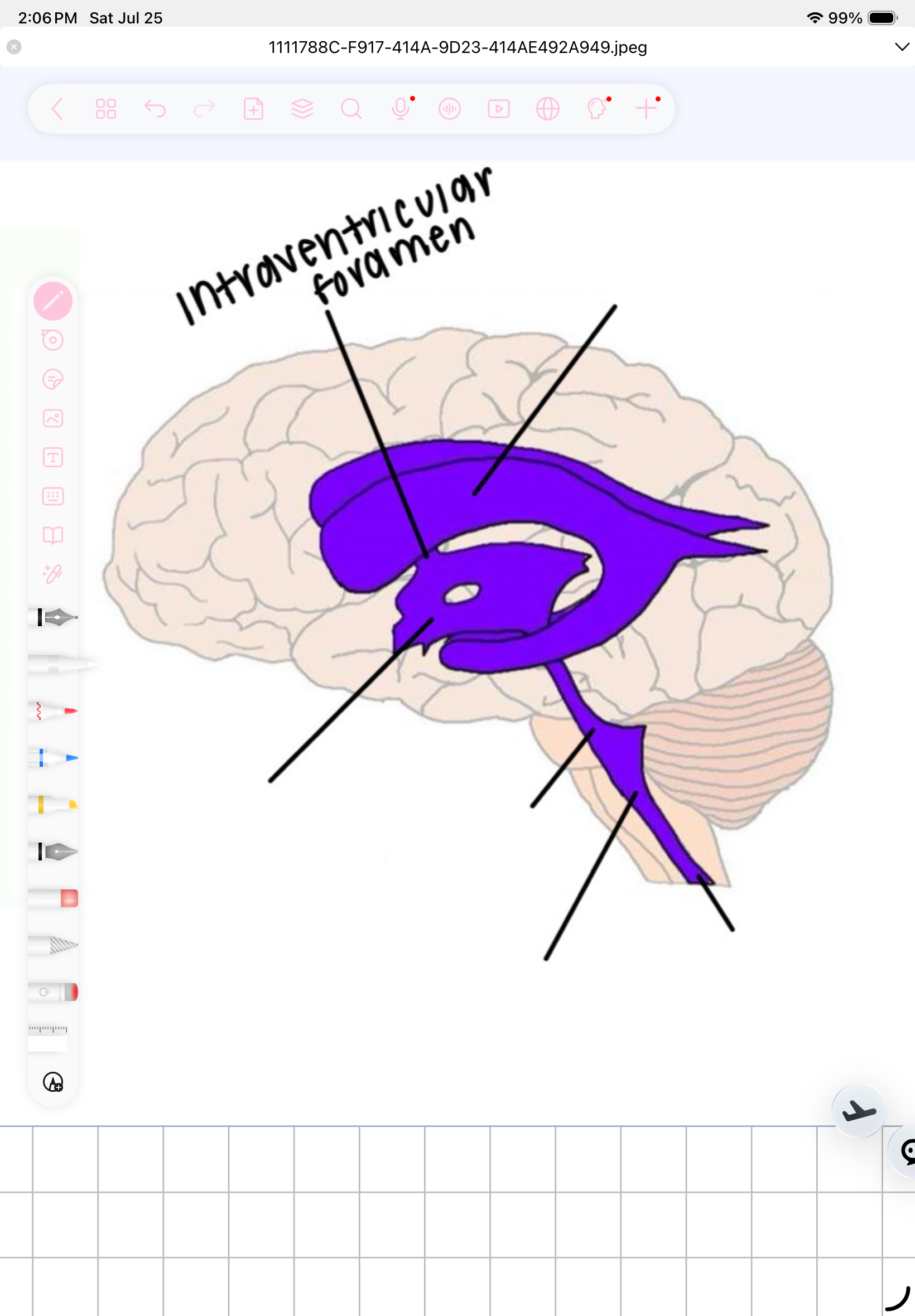
Intraventricular foramen
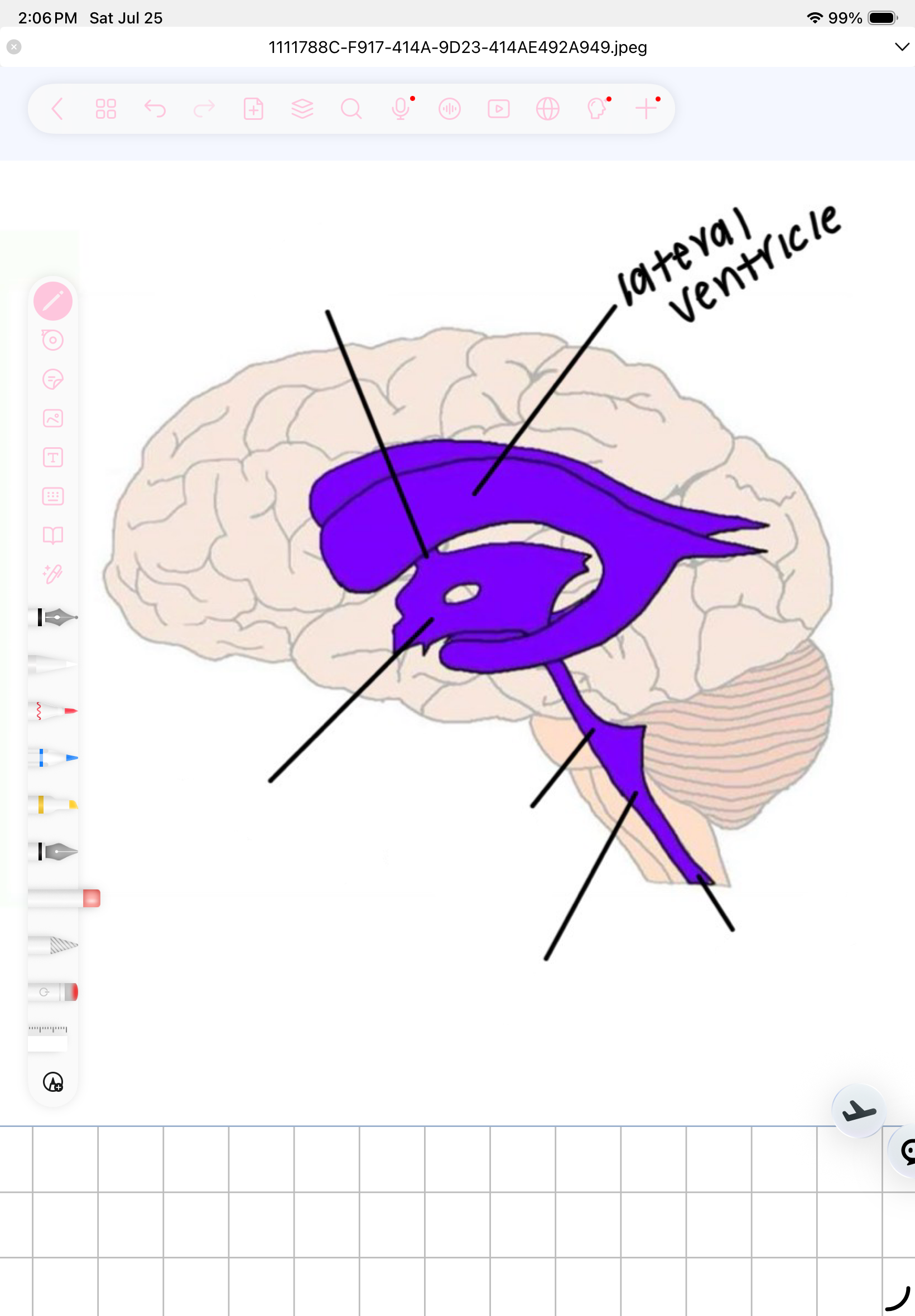
Lateral ventricular
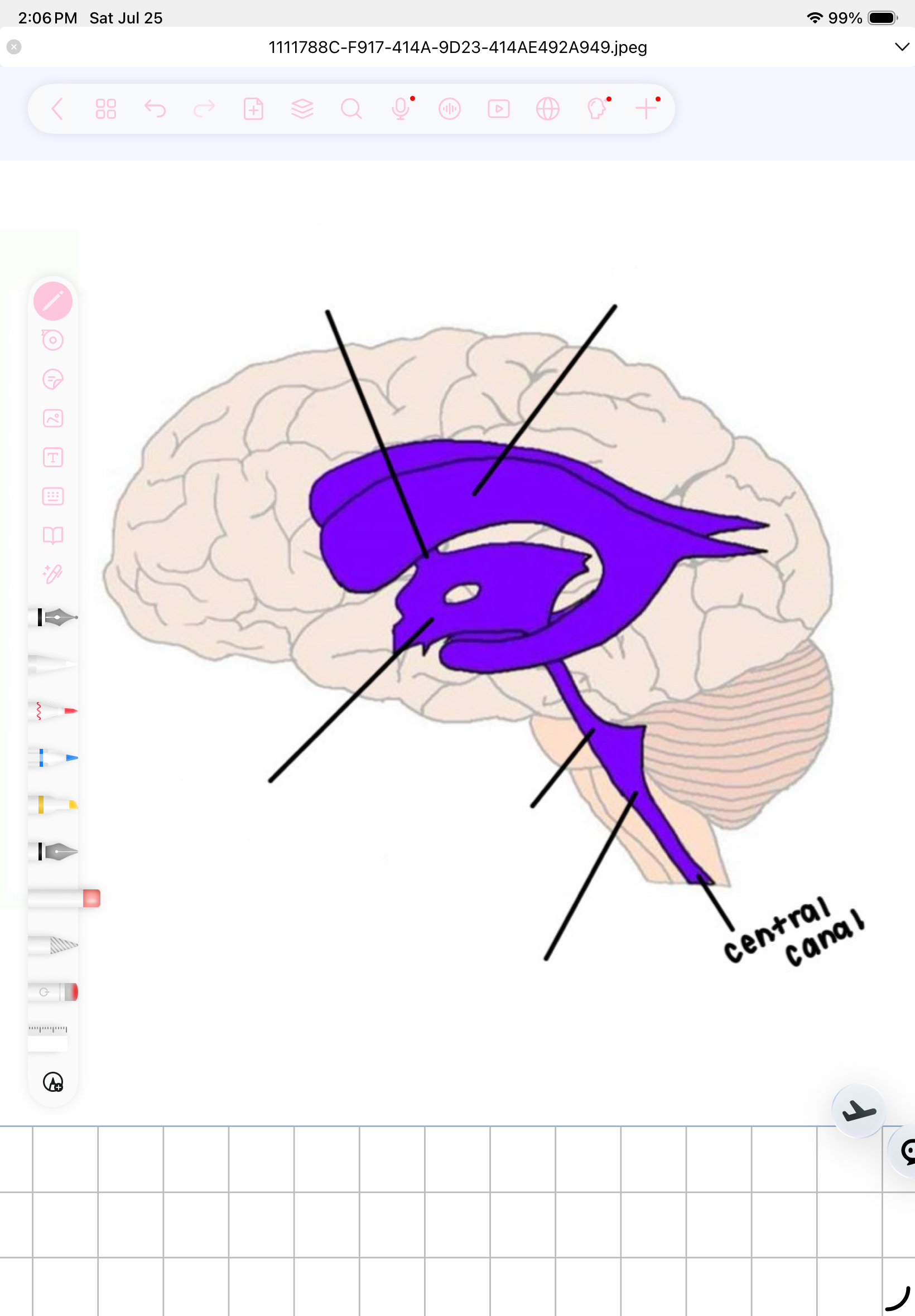
Central canal
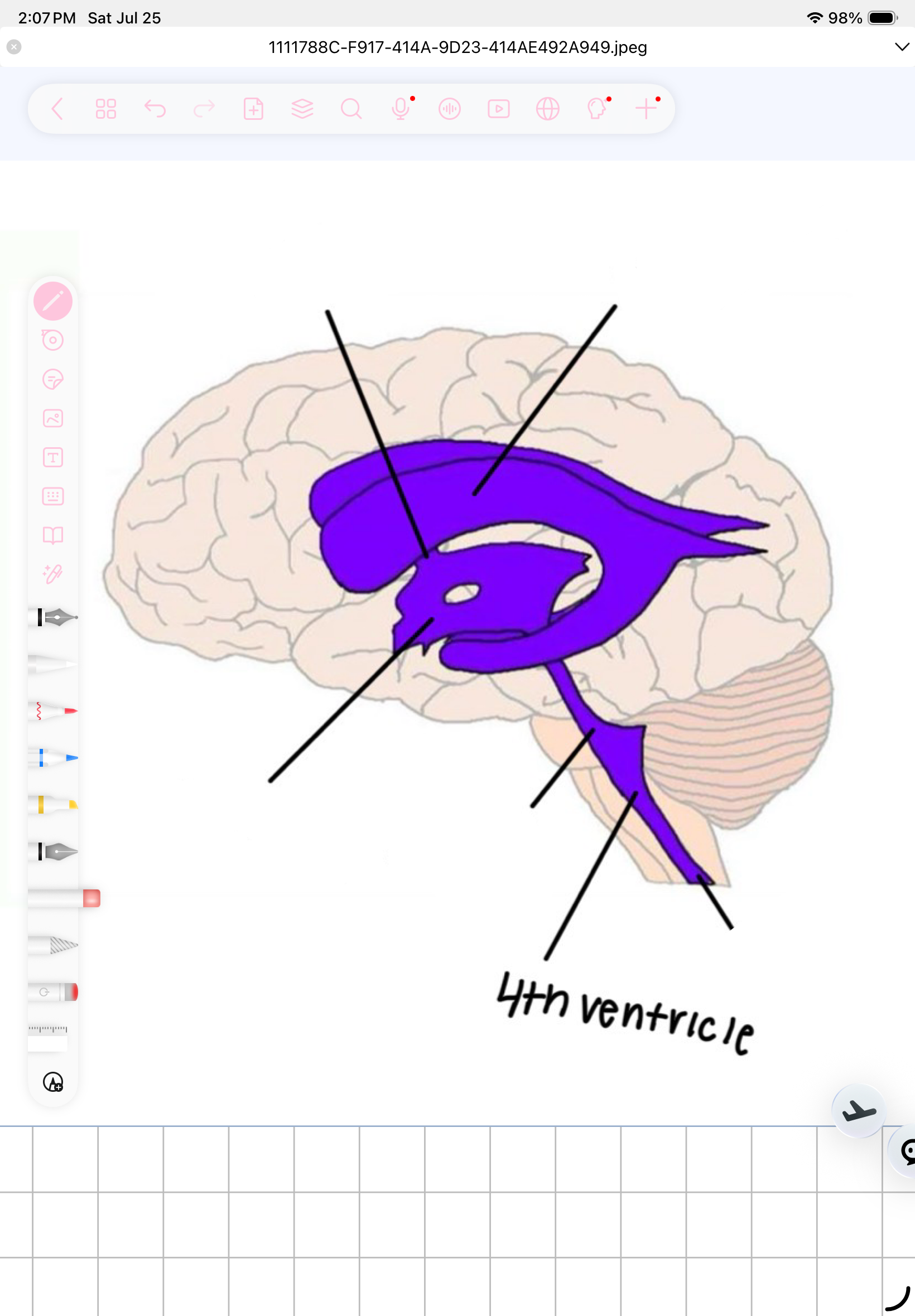
4th ventricle
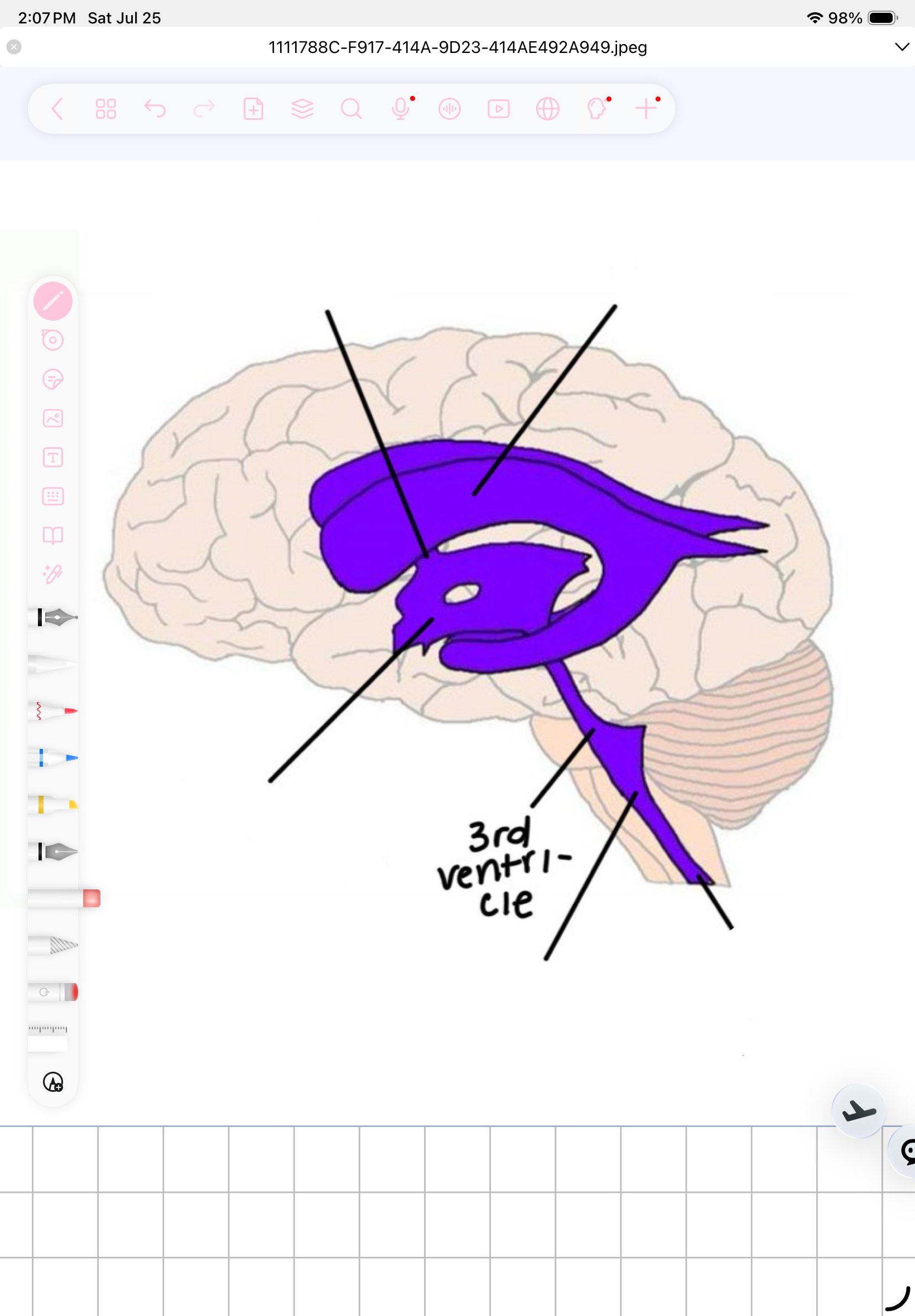
3rd ventricle
sense of smell
olfactory
sense of vision
optic
movement of the eyeball, regulates pupil size and lens shape
oculormotor
movement of the eyeball
trochlear
3 branches that collect sensory information from the face, anterior scalp, and teeth (regulates contraction of chewing gum)
trigeminal
movement of the eyeball
abducens
movement of facial muscles, regulates lacrimal glands and salivary glands, the sense of taste (anterior 2/3 of tongue)
facials
the sense of hearing and equilibrium
vestibulocochlear
regulates muscles of tongue and pharynx, the sense of taste (posterior 1/3 of tongue)
glossopharyngeal
collects sensory information from thoracic and abdominal viscera (organs)
parasympathetic regulation of heart, lungs, and abdominal organs
vagus
regulates contraction of head and neck muscles (trapezius and sternocleidomastoid)
accessory
regulates contraction of tongue muscles
hypoglossal
I
olfactory
ii
optic
iii
oculomotor
iv
trochlear
v
trigeminal
vi
abducens
vii
facials
viii
vestibulocochlear
ix
glossopharyngeal
x
vagus
xi
accessory
xii
hypoglossal
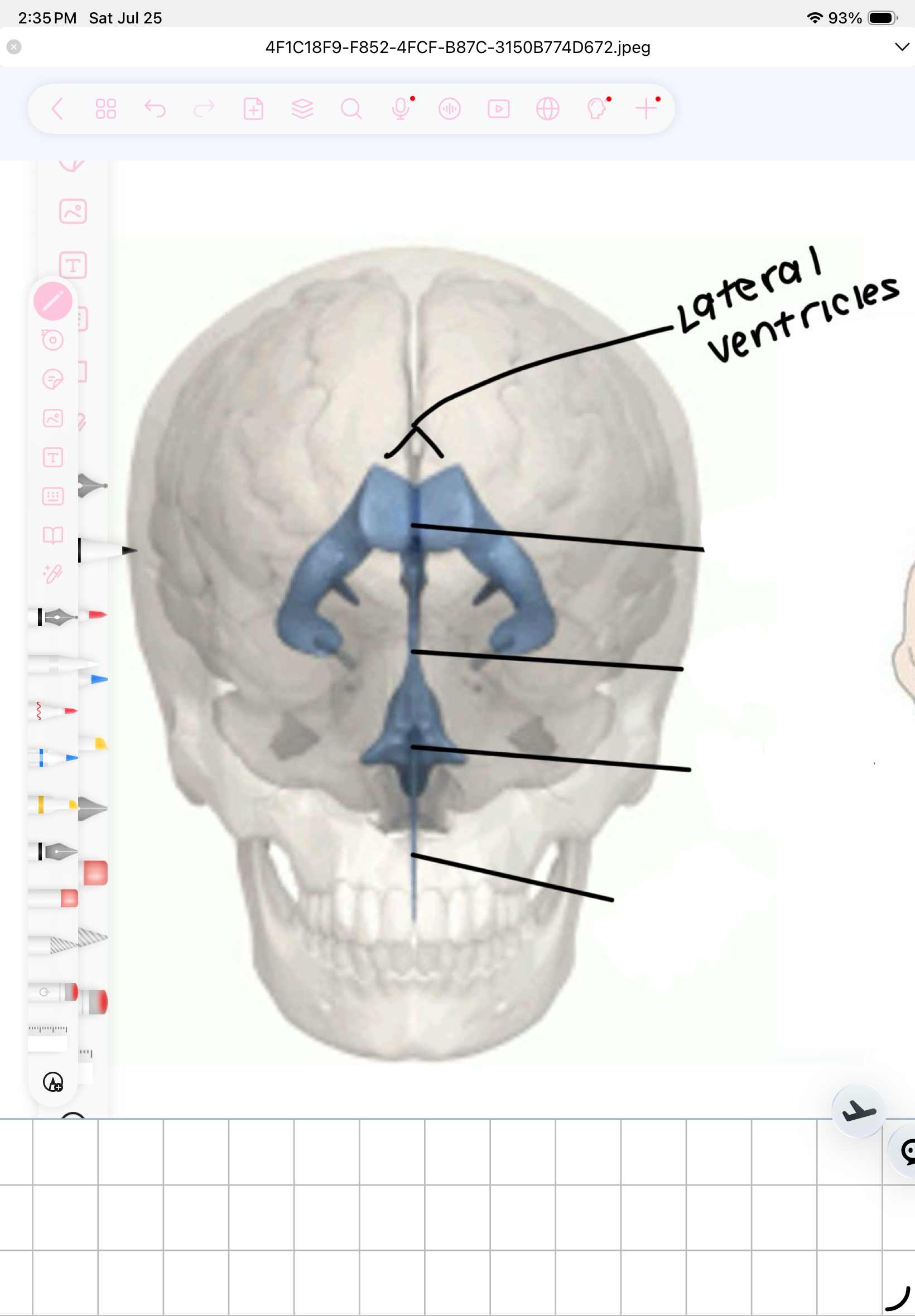
Lateral ventricle
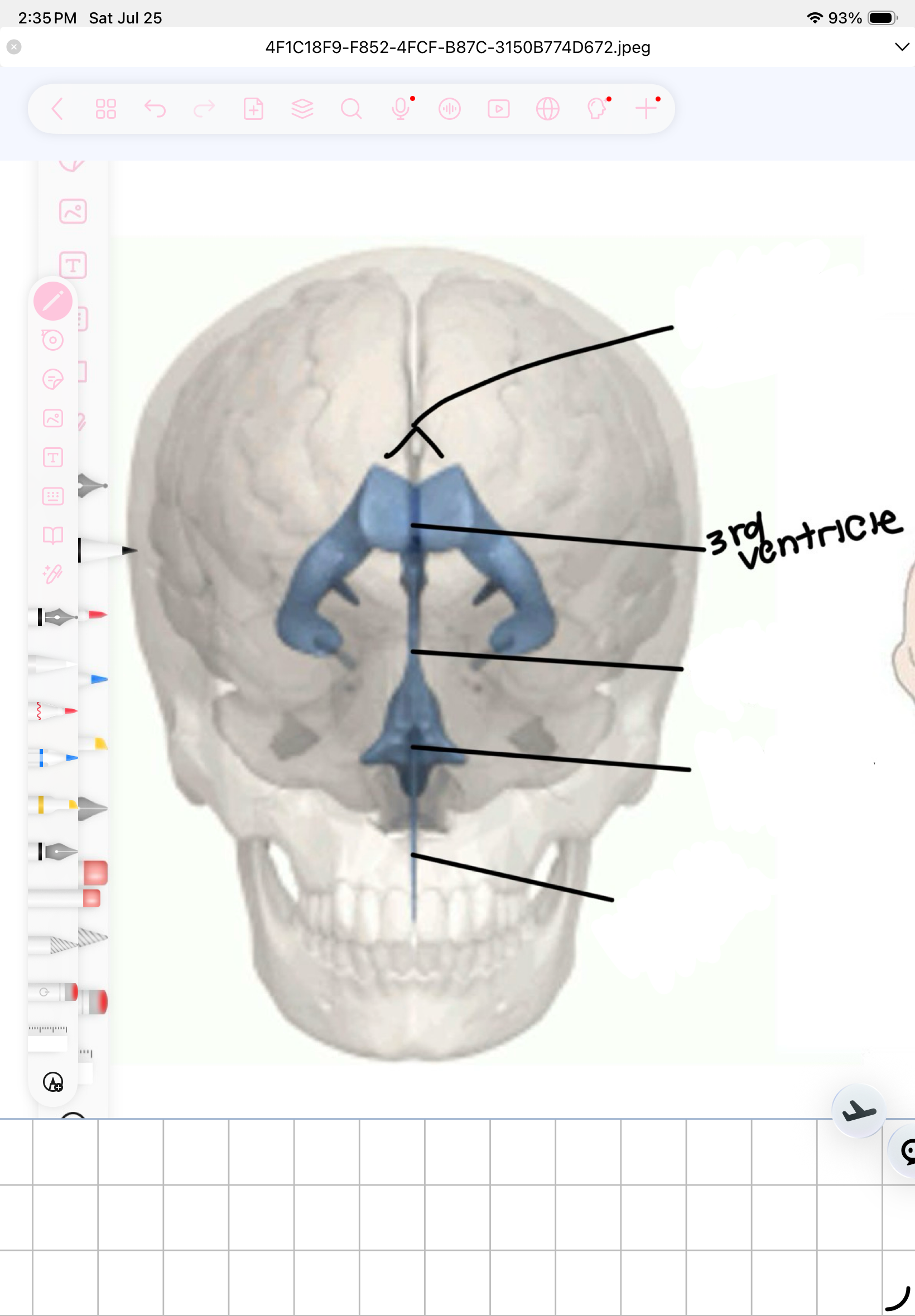
3rd ventricle
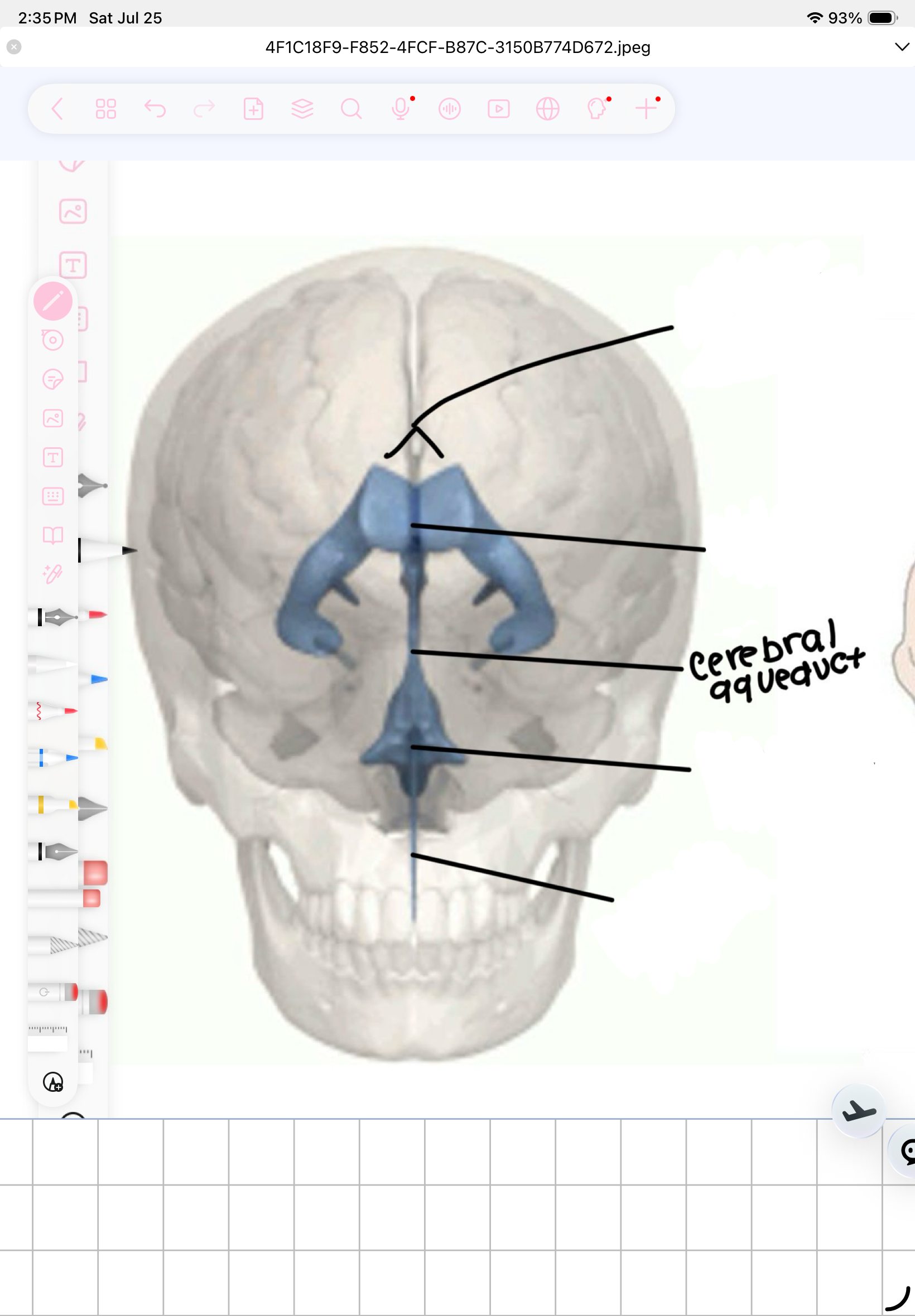
Cerebral aqueduct
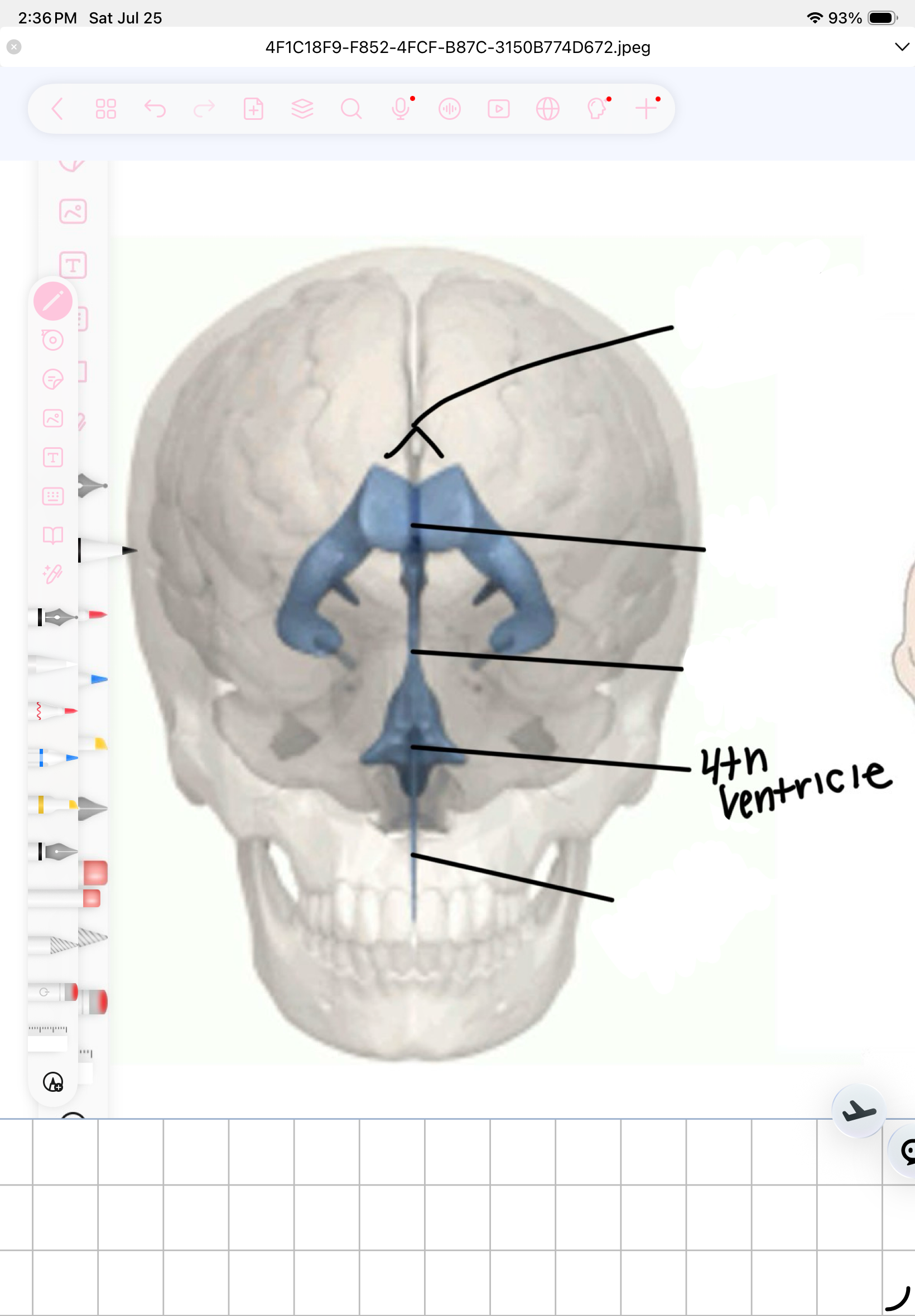
4th ventricle
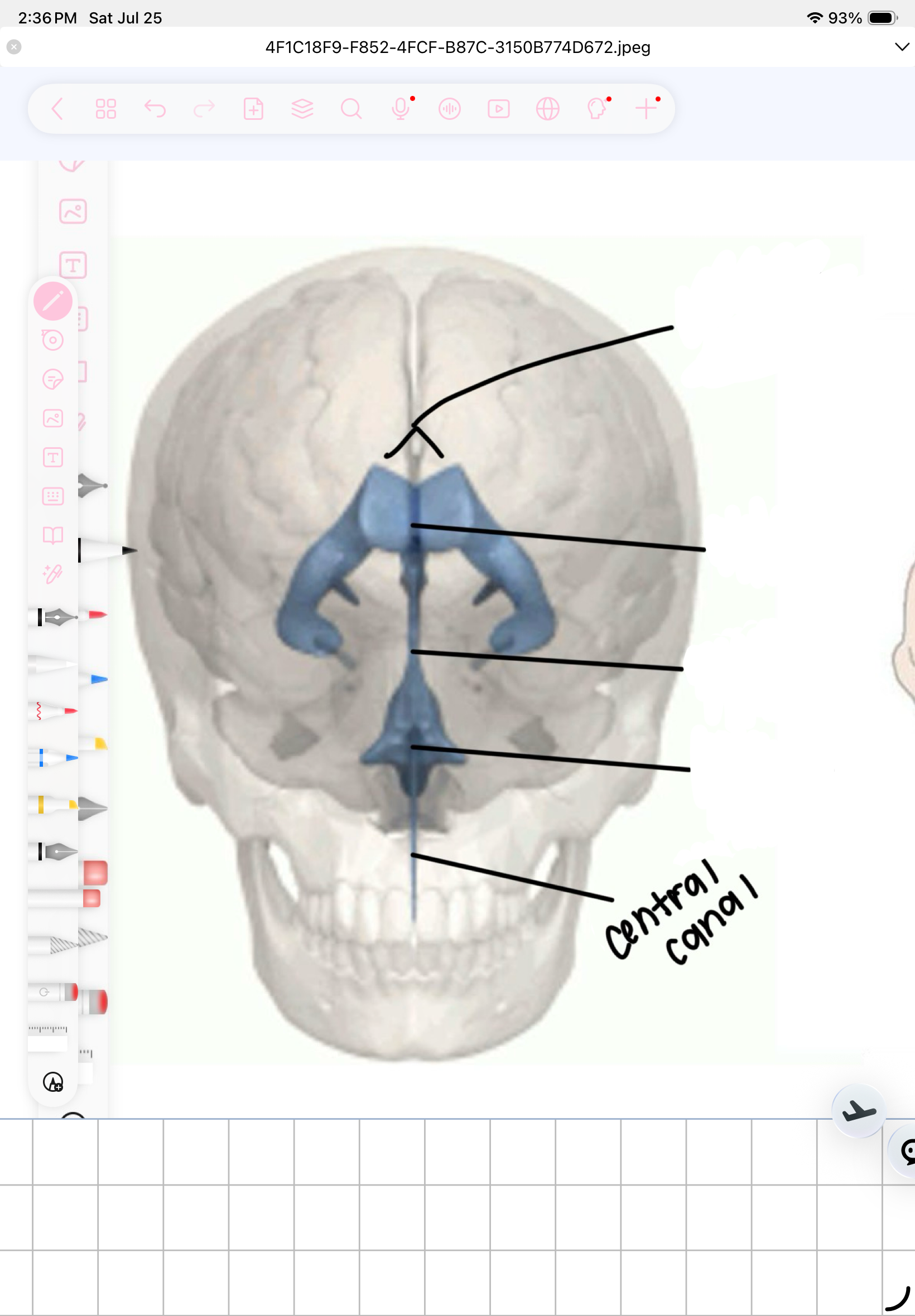
Central canal
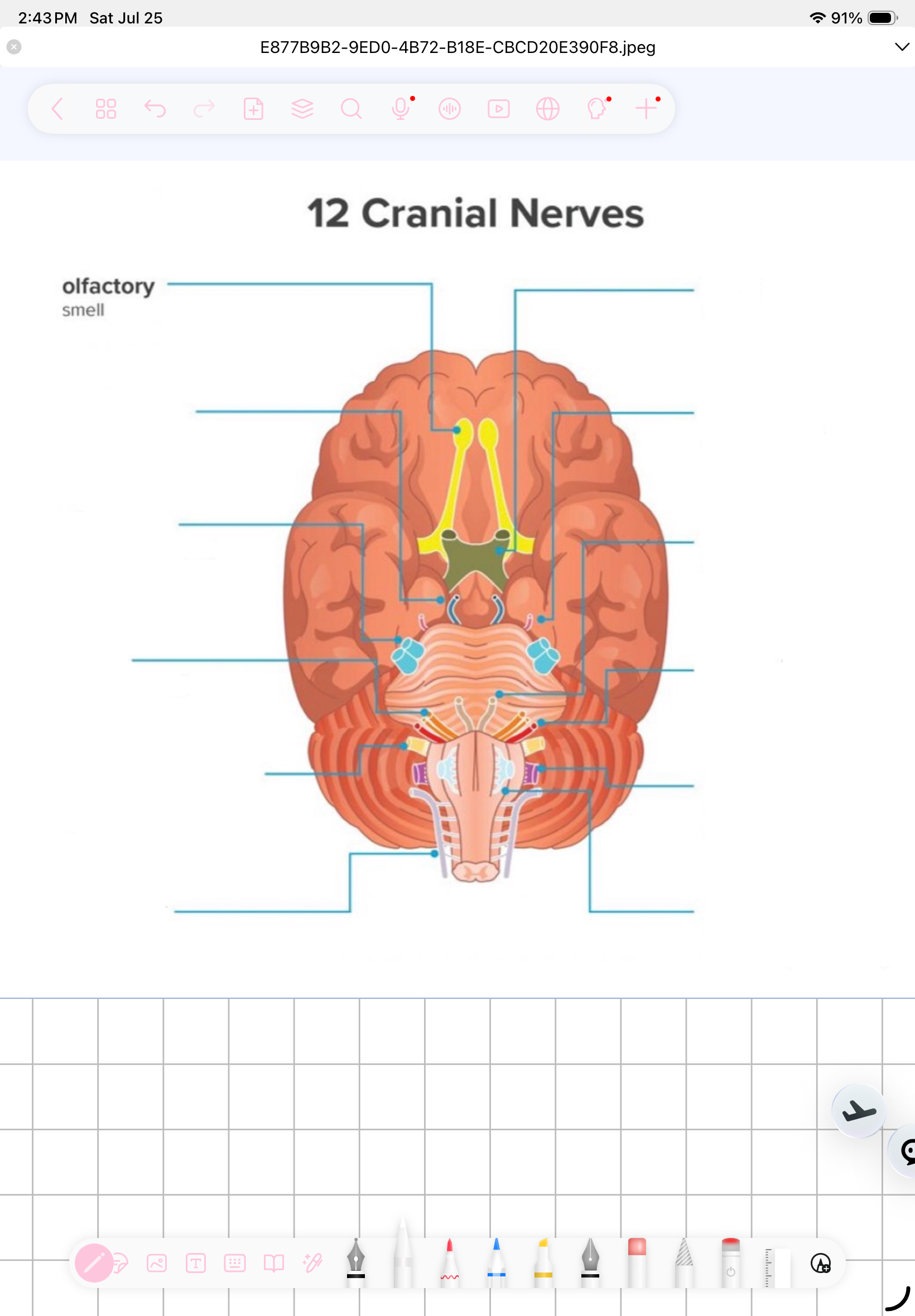
Olfactory
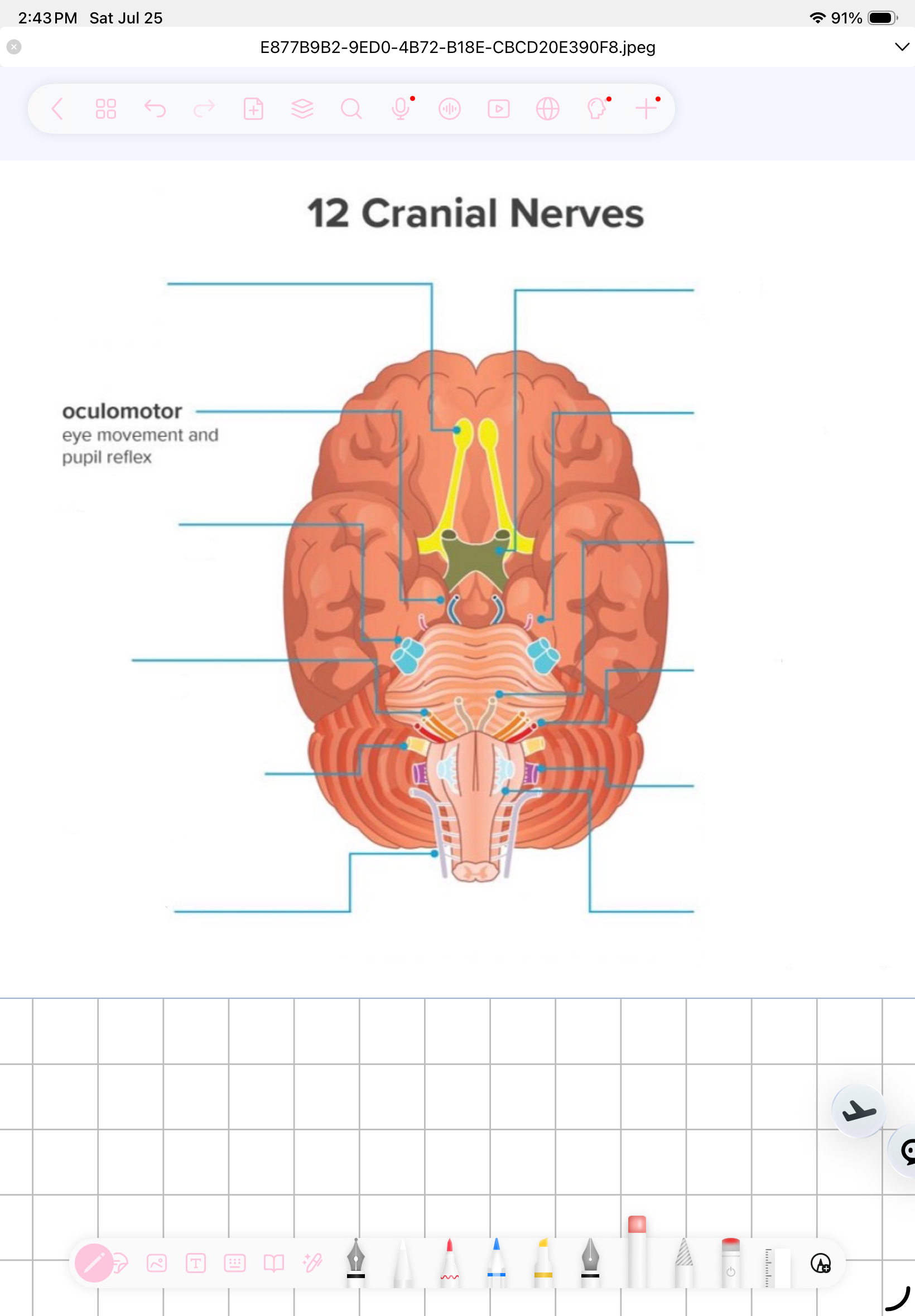
Oculomotor
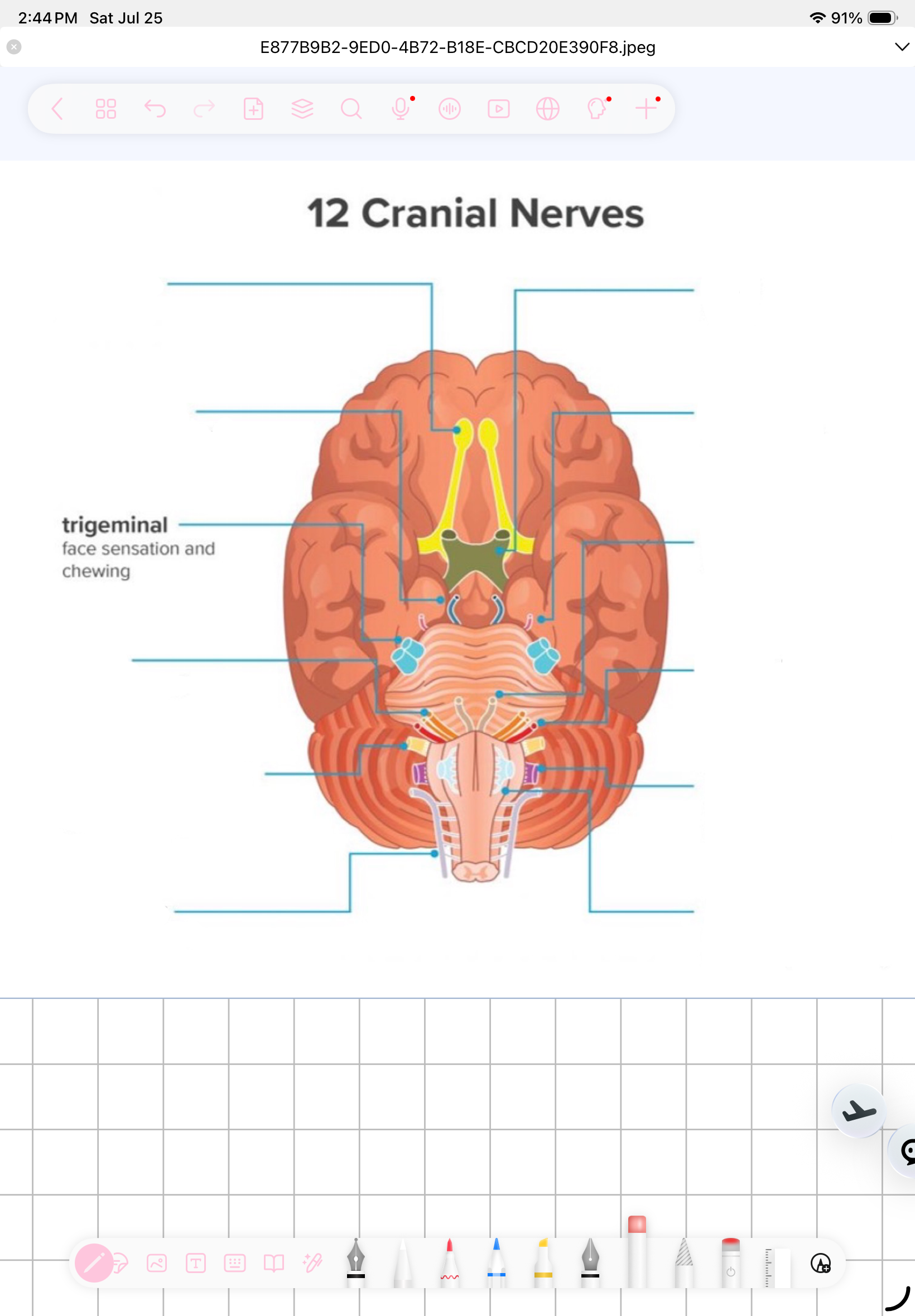
Trigeminal
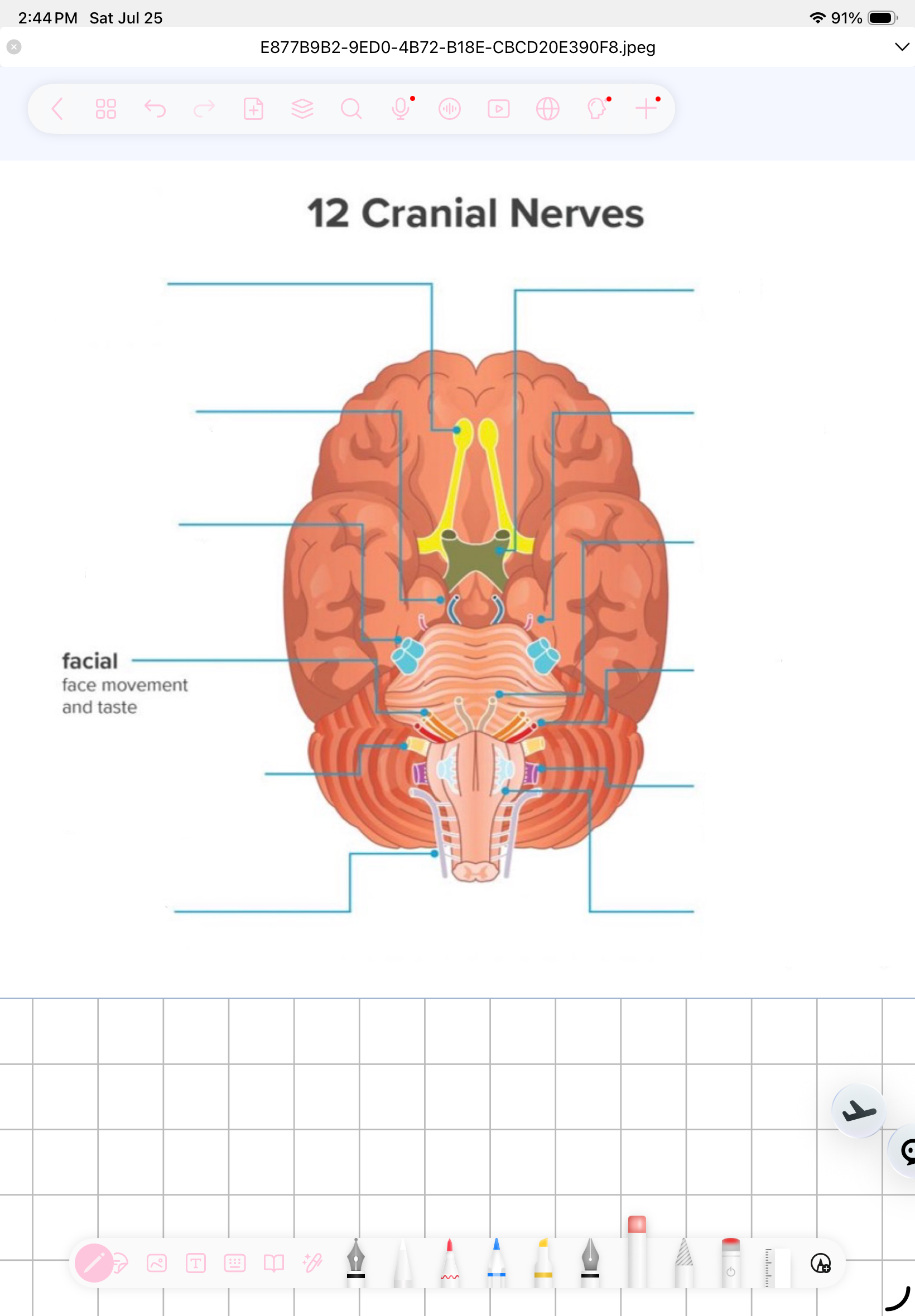
Facial
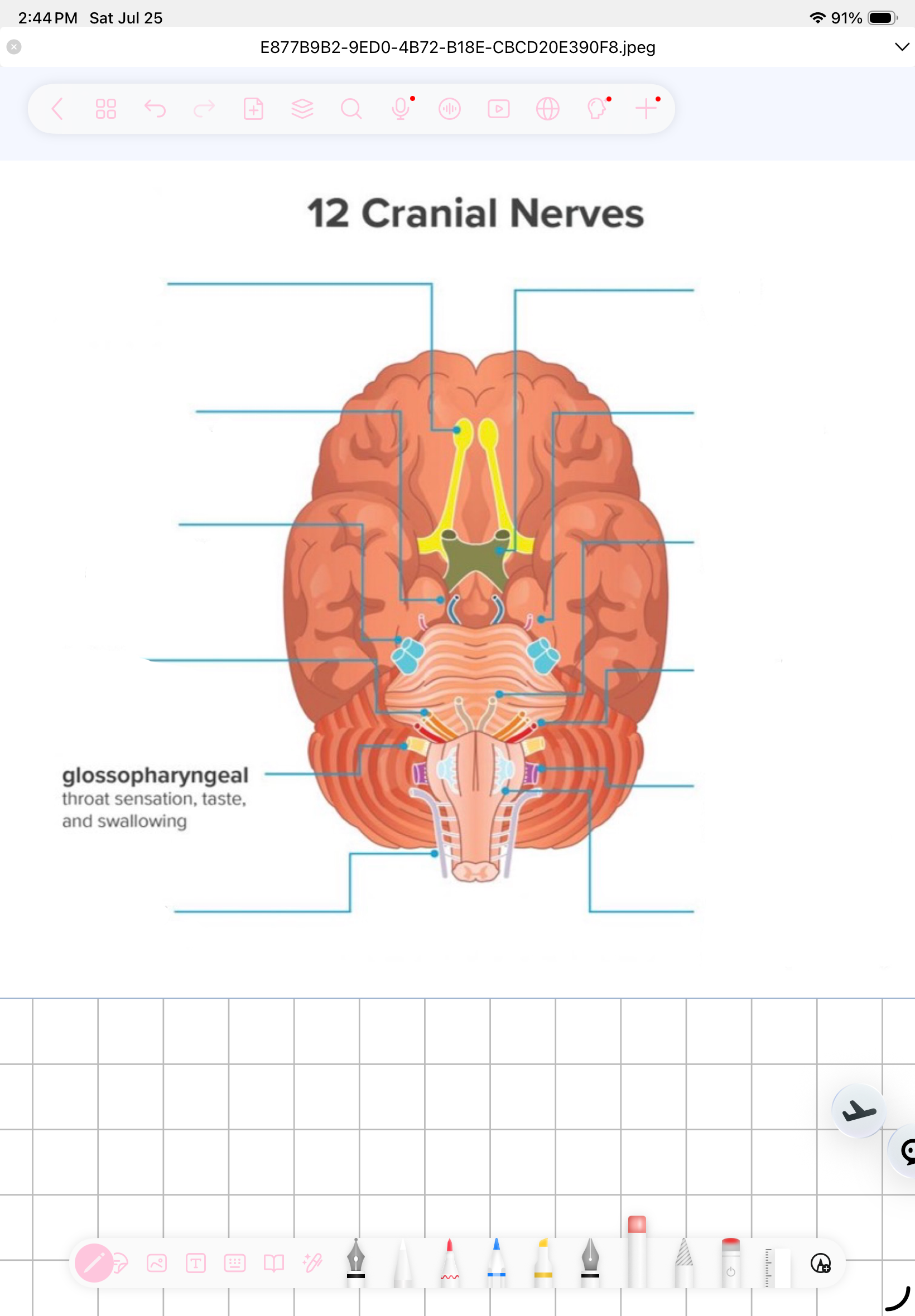
Glossopharyngeal
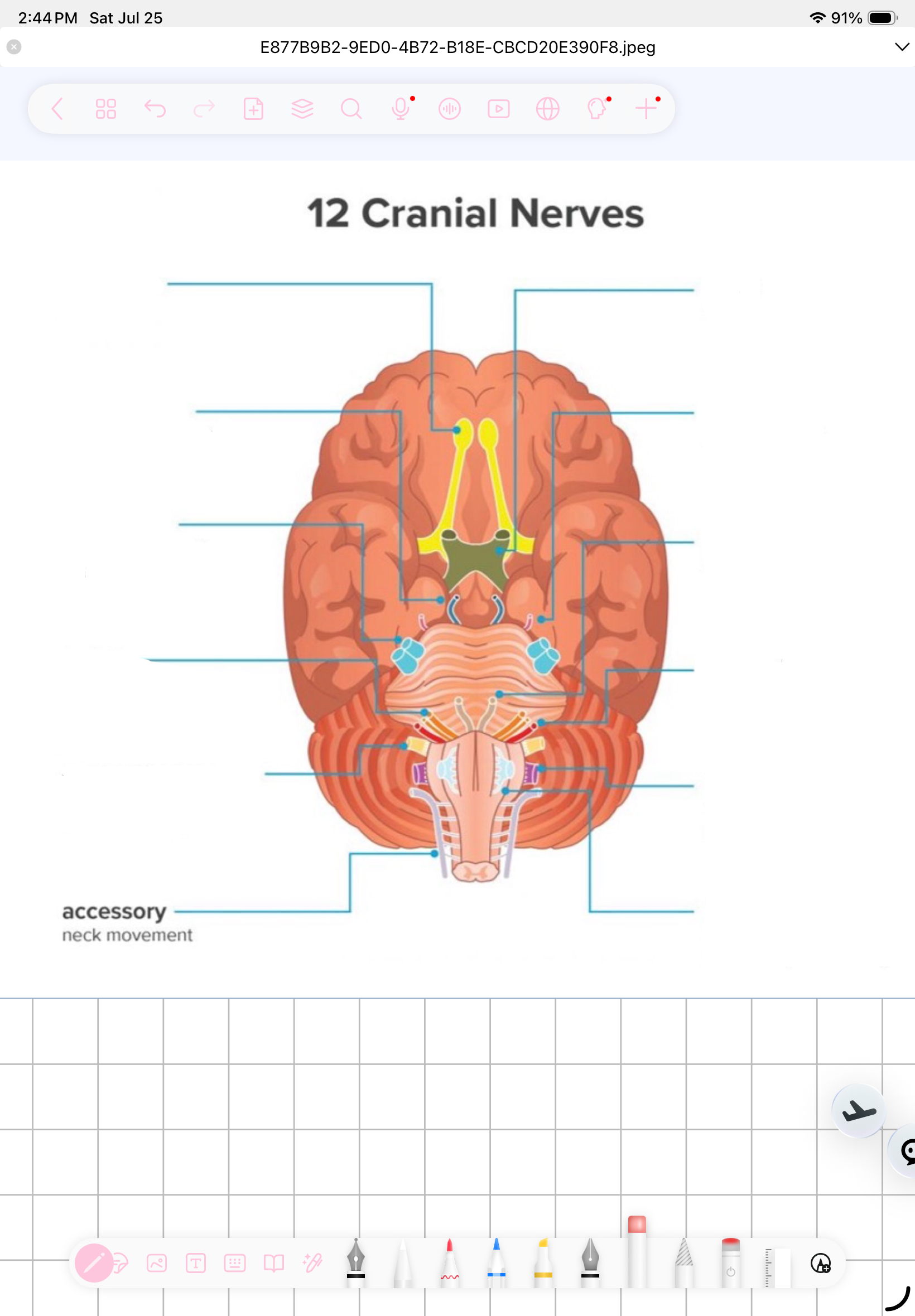
Accessory
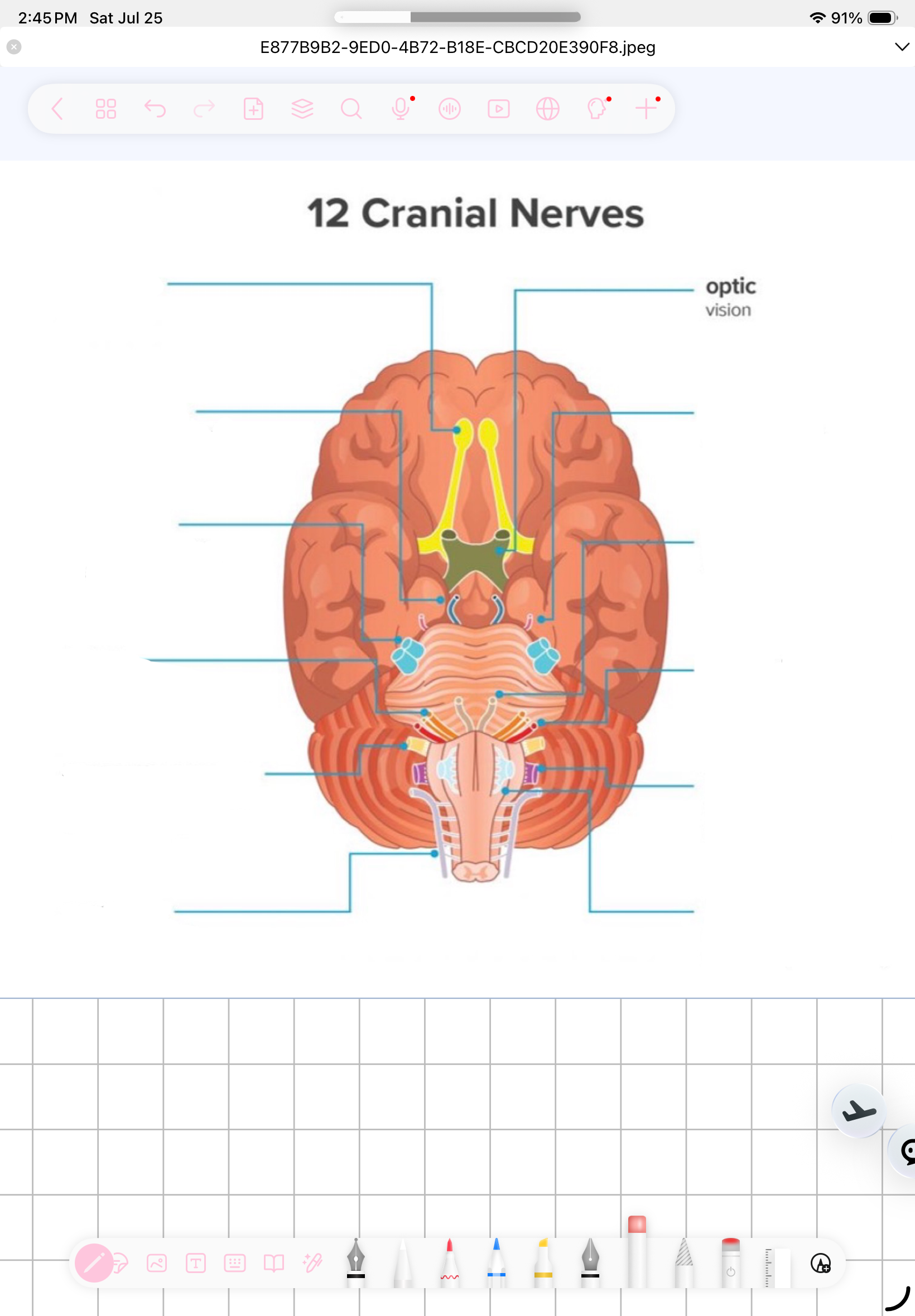
Optic
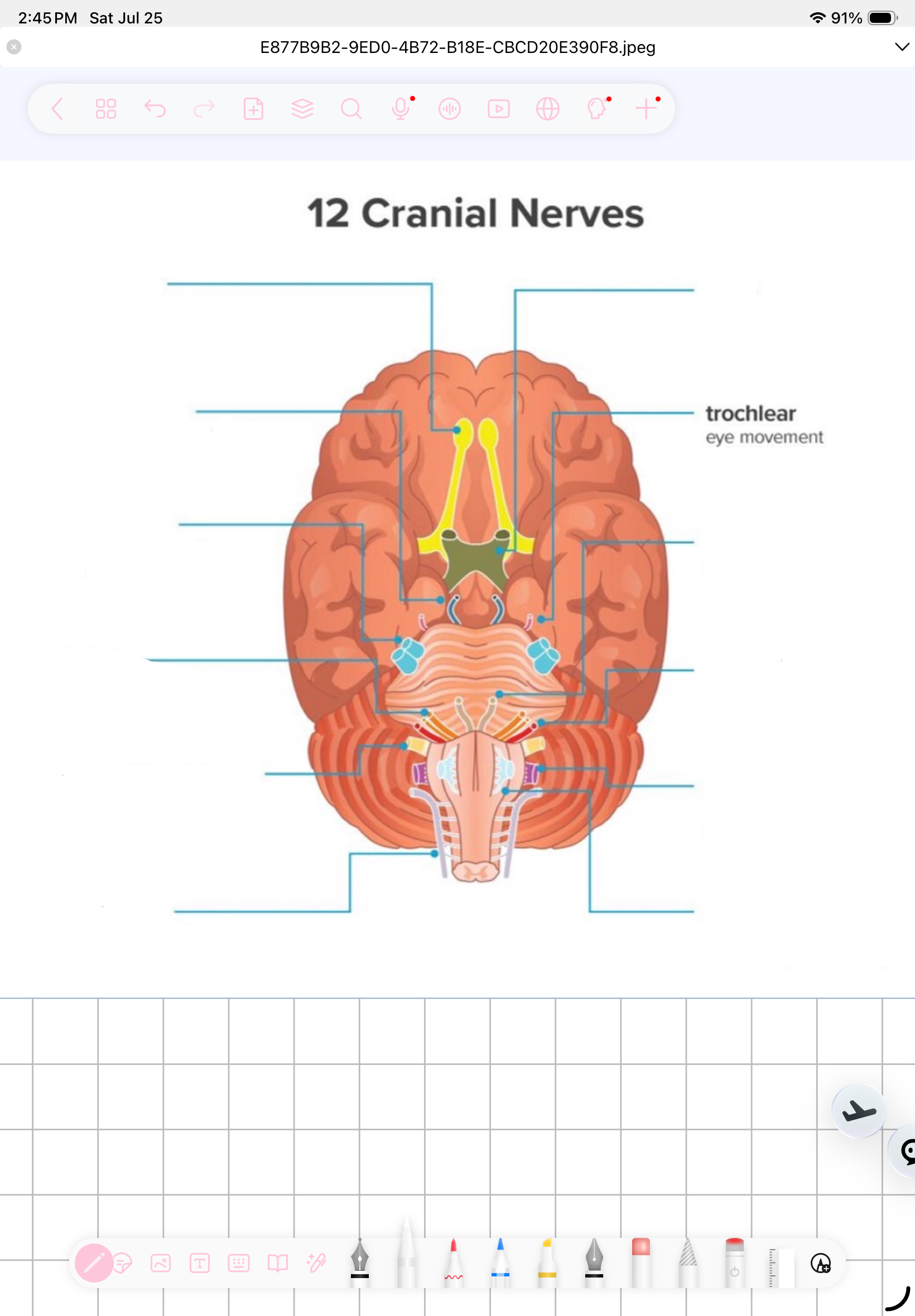
Trochlear
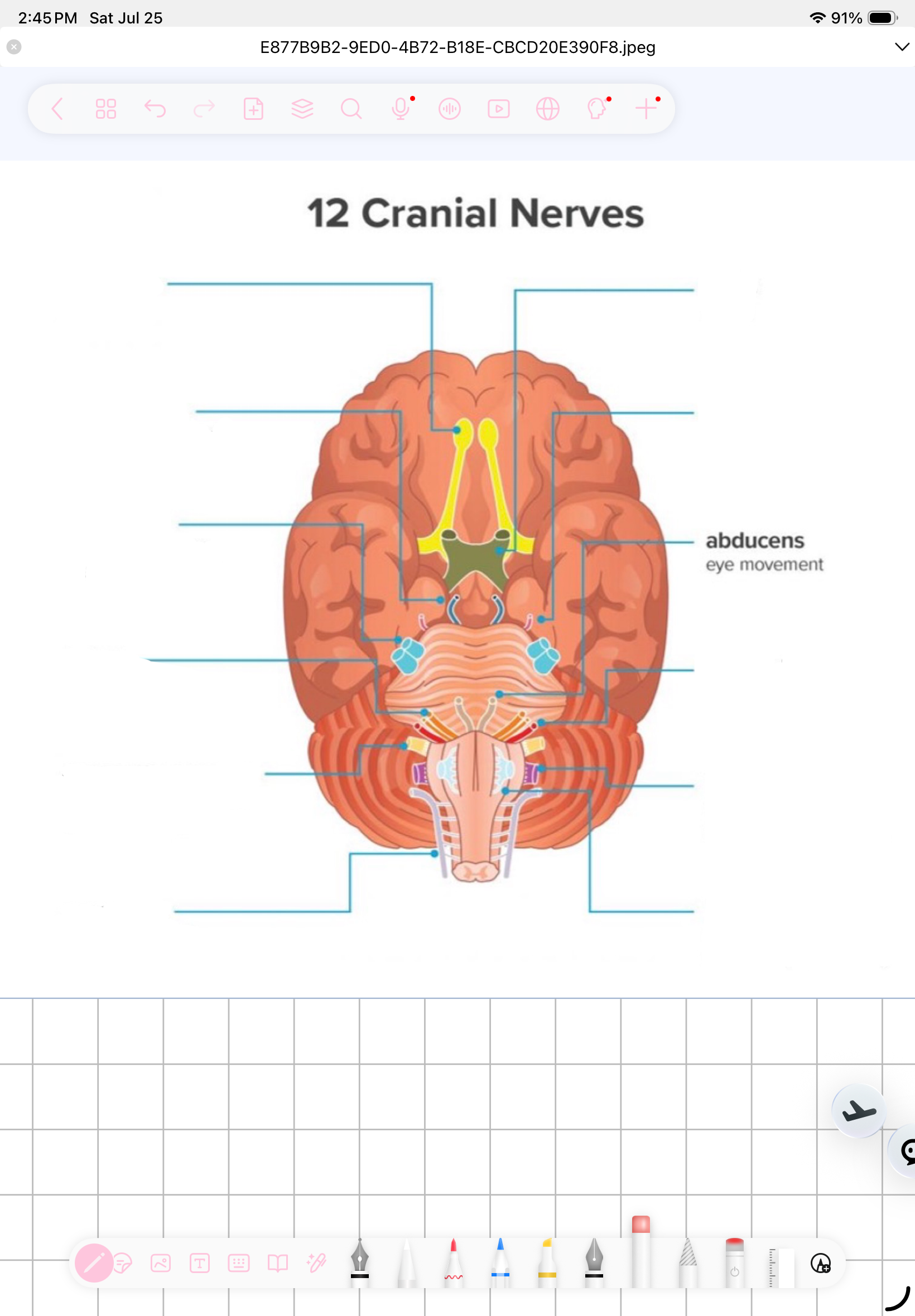
abducens
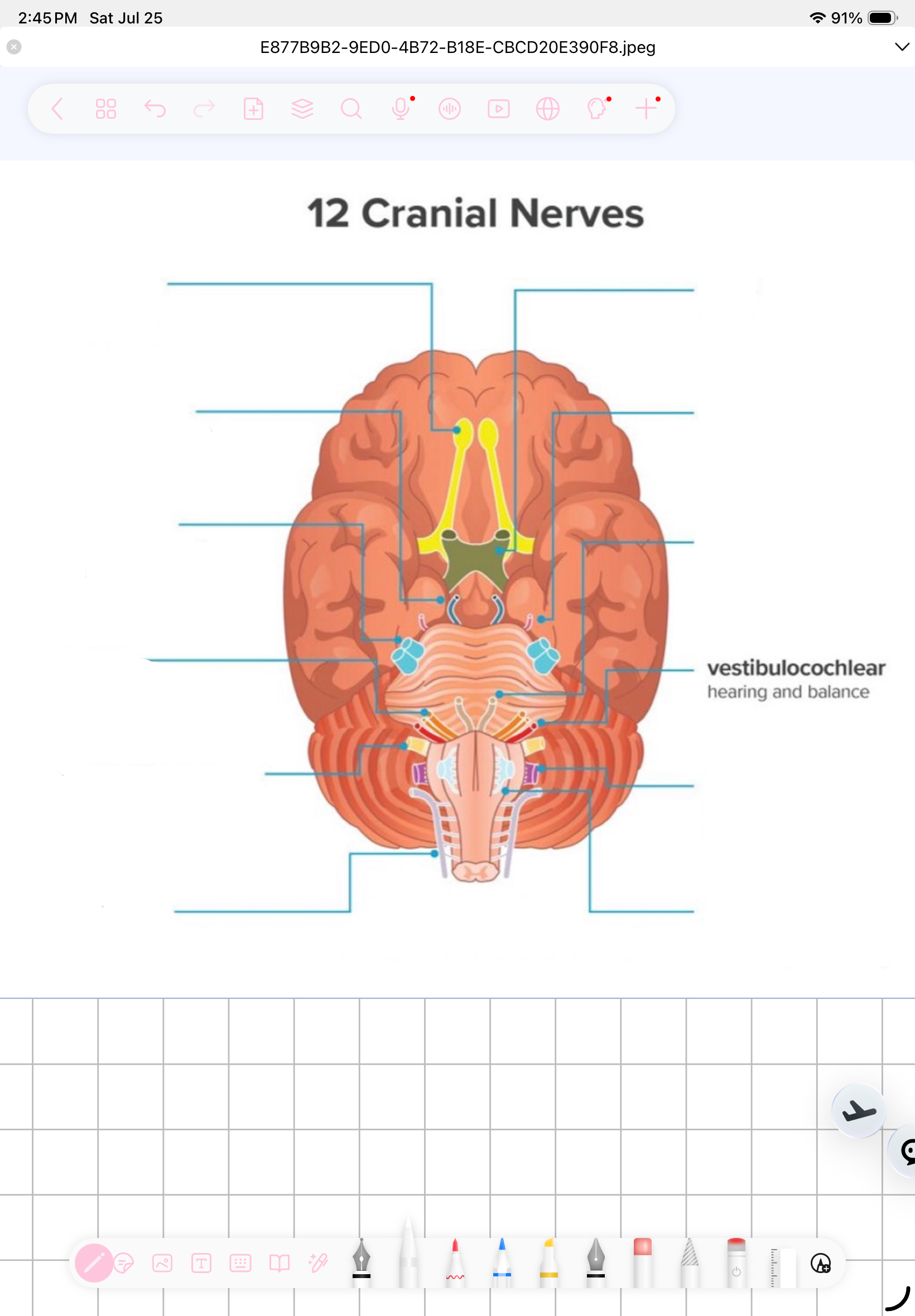
Vestibulocochlear
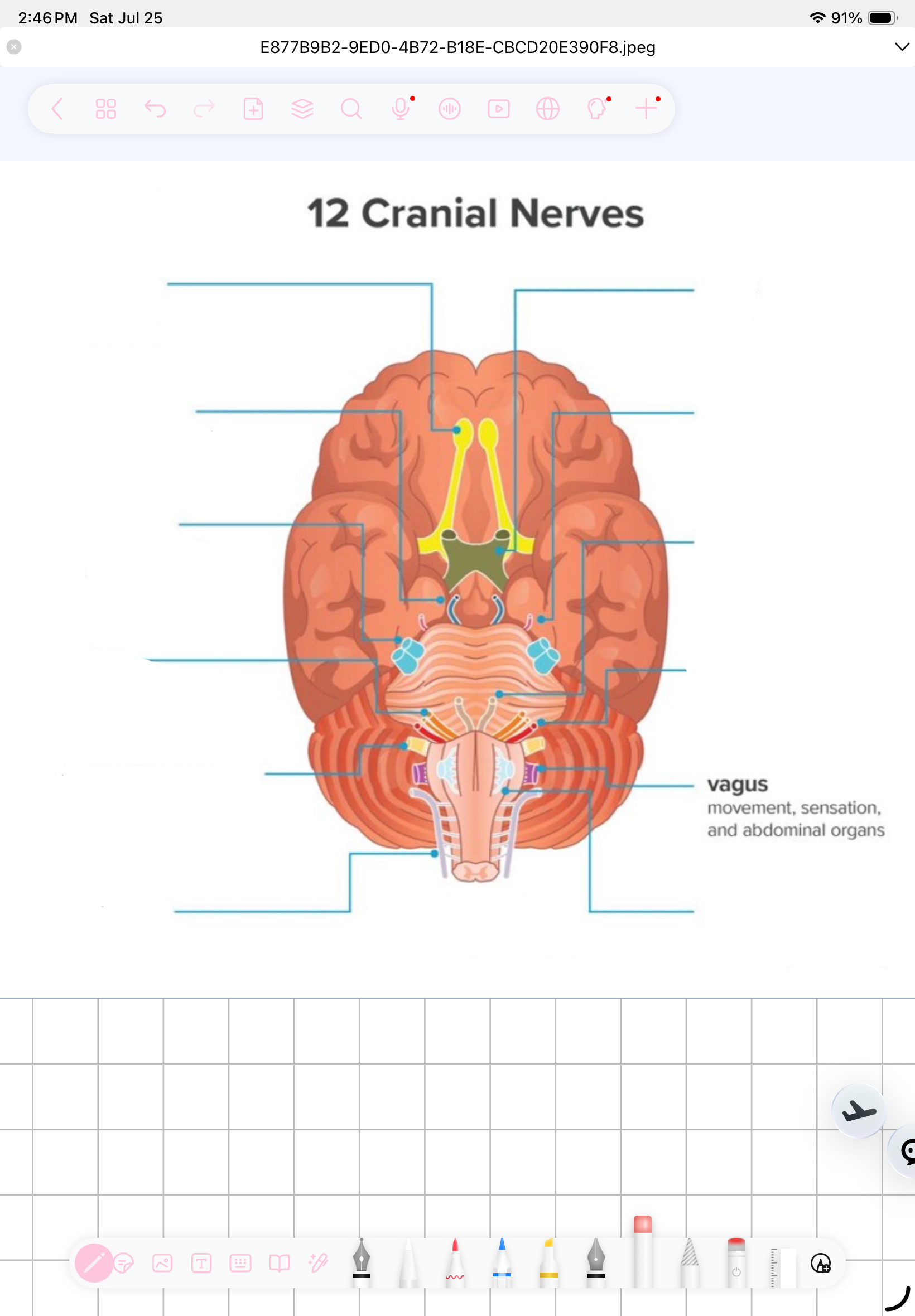
Vagus
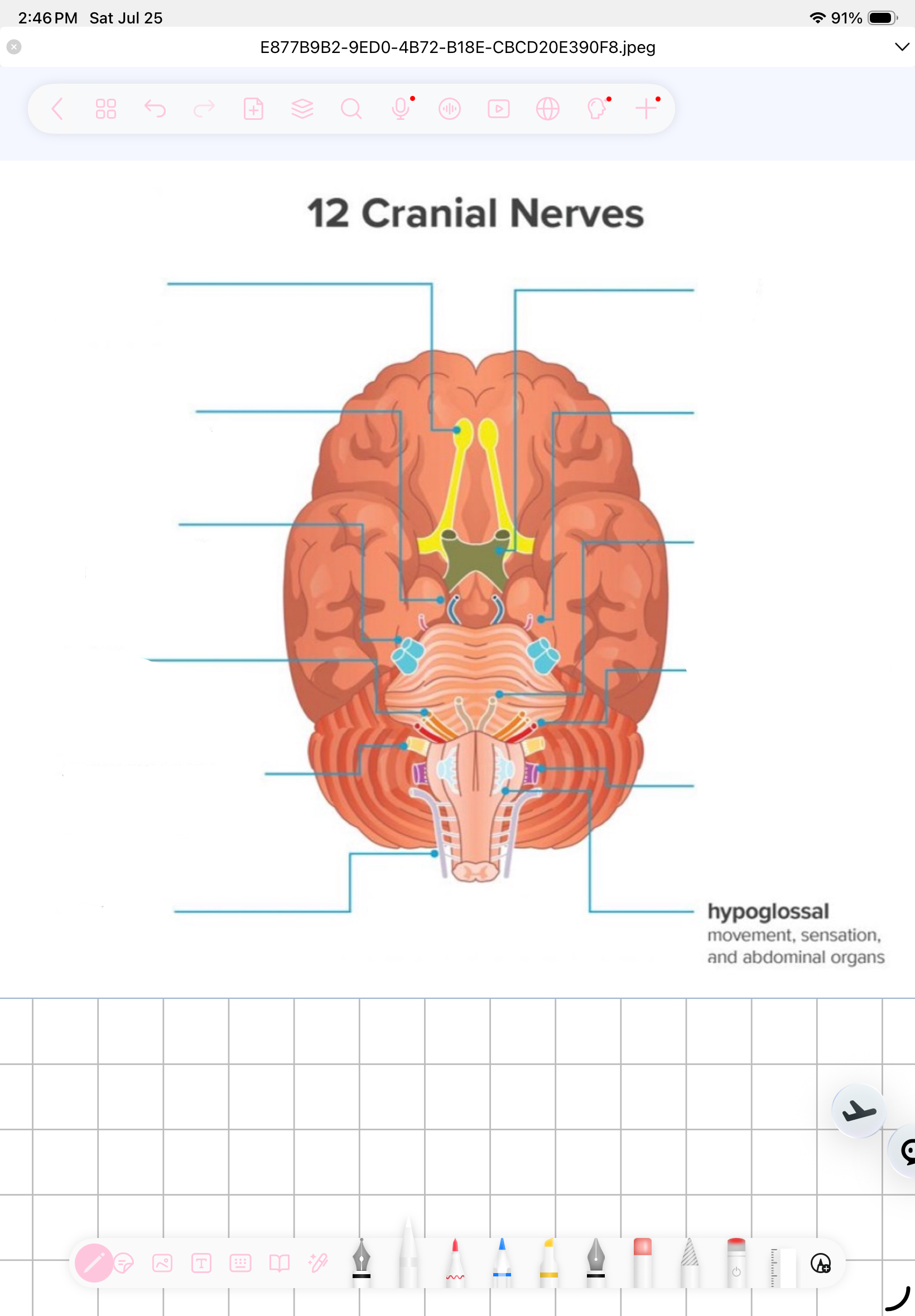
Hypoglossal