D4.2 Stability & Change
 Call Kai
 Learn
Learn Practice Test
 Spaced Repetition
 Match
Match Flashcards
 Knowt Play
1/36

There's no tags or description
Looks like no tags are added yet.
Name | Mastery | Learn | Test | Matching | Spaced | Call with Kai | Chat |
|---|
No analytics yet
Send a link to your students to track their progress
37 Terms
Define ecosystem stability
An ecosystem’s ability to maintain structure and function over time, despite environmental changes
Define resistance (in context of ecology)
The ability of an ecosystem to withstand a disturbance without significant change
Define resilience (in context of ecology)
The ability of an ecosystem to recover and return to its original state after a disturbance
Describe how different ecosystems show stability [3]
Ecosystem | Evidence of stability |
Tropical rainforests | Fossil records show rainforests in similar form for over 100 million years |
Deserts | Exist in some form for millions of years, w/ specialised plants & animals adapted to arid conditions |
Coral reefs | Persisted for millions of years, showing resilience & recovery after storms/bleaching events |
Describe the significance of requirements to ecosystem stability [4]
Requirement | Significance to stability |
Energy supply |
|
Recycling of nutrients |
|
Genetic diversity |
|
Climatic variables maintained within tolerance levels |
|
Describe the natural conditions of the Amazon rainforest [2]
The Amazon rainforest generates huge amounts of atmospheric water vapour via transpiration
Water vapour helps cool the air, drive airflows, & sustain rainfall levels
Explain how deforestation drives the Amazon rainforest to a tipping point [4]
Deforestation creates disturbance which may cause the rainforest to reach a tipping point:
Cutting down trees reduces transpiration
This lowers rainfall & raise temperatures → eventually undergoing irreversible changes (e.g. land drying out)
As a result, parts of the rainforest would convert to another ecosystem type, especially grassland
What is the formula of percentage change?
Percentage change =
(Final area - Current area) / Original area x 100
What is a mesocosm, and its most successful forms?
A mesocosm is a controlled experimental ecosystem model used to study ecological processes in a natural environment
Aquatic or microbial ecosystems are often more successful than terrestrial because ease of maintaining balance, faster life cycle for quick observations, ease of replication
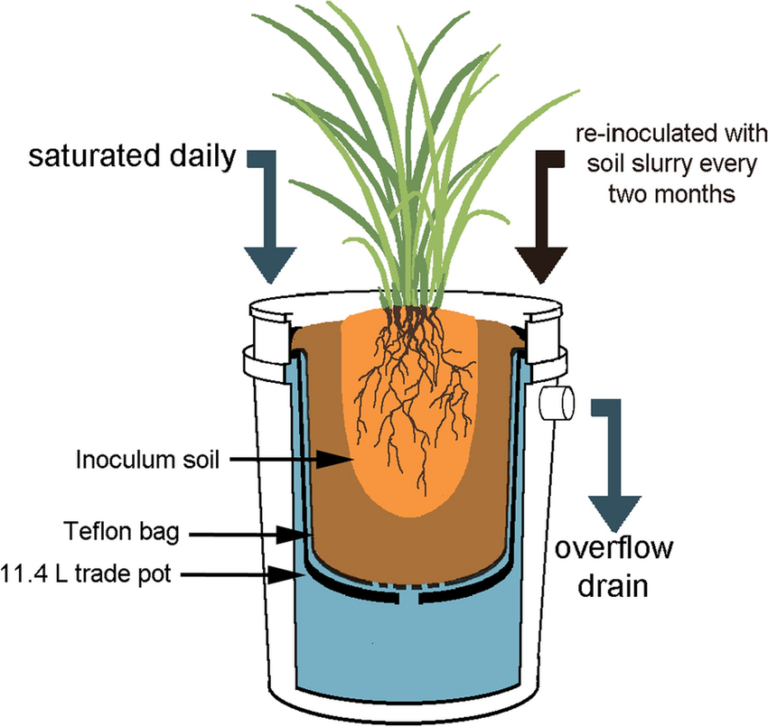
Describe components required for a mesocosm
Autotrophs (producers) - Plants or algae capture light, produce oxygen & organic matter
Consumers - Herbivores & carnivores feed through the food web
Decomposers - Bacteria & fungi break down waste & recycle nutrients
Abiotic factors - Soil, water, light, & temperature dictate the physical conditions organisms live in
Compare the types of mesocosms [4]
1) Open mesocosm -
They exchange matter with surroundings
Suits testing a specific variable, e.g. pollution
2) Sealed mesocosm -
They allow energy such as sunlight pass in but stop matter from transferring
Suits longitudinal closed-system studies
Define keystone species
Species that have a disproportionate impact on their ecosystem relative to their abundance
Describe the roles of keystone species, and consequence if removed [4]
1) Regulates populations of other species
2) Maintains balance by controlling dominant species (that would otherwise outcompete everything else)
3) Support ecosystem functions (inc. nutrient cycling, habitat formation, & energy flow)
→ Hence, if keystone species are removed, ecosystems risk drastic changes in community structure (e.g. overpopulation, extinction) & even collapse
What is sustainability in resource harvesting? [3]
Sustainability means harvesting resources at a rate lower than their natural replacement
This ensures resources are available for future generations
Hence, preventing ecosystem degradation & species decline
[Example] Brazil nuts (Bertholletia exclesa) & their sustainable harvesting [2]
Bertholletia excelsa trees in the Amazon rainforest are lost to logging
Sustainable harvesting practice: Control logging by leaving some nuts to germinate & grow into trees → protecting Agoutis (large rodent) populations which feed on nuts
[Example] Atlantic cod (Gadus morhua) and their sustainable harvesting [3]
Atlantic cod populations collapsed due to overfishing
Sustainable harvesting practices:
Use surveys to estimate population sizes & reproductive rates
Fishing quotas limit catch so it aligns with recovery rates
Create exclusion zones to allow undisturbed breeding
What is sustainability in agriculture?
It refers to producing food without damaging the environment or depleting resources, enabling long-term farming
Describe how different factors affect sustainability [9]
Factor affecting sustainability | Explanation |
Soil erosion |
|
Leaching of nutrients |
|
Supply of fertilisers |
|
Pollution due to agrochemicals |
|
Carbon footprint |
|
Define eutrophication
The excessive growth of algae & aquatic plants caused by high nutrient levels
Describe the process of eutrophication [2]
Fertilisers applied to farmland can wash away (leach) into rivers, lakes, & oceans
Increased nutrients, especially nitrates & phosphates stimulate rapid algae grow
Describe the process in which eutrophication affects marine ecosystems [4]
Algal blooms block sunlight, killing underwater photosynthetic plants
When plants/algae die, decomposers consume oxygen to break them down, increasing Biochemical Oxygen Demand (BOD)
High BOD = less oxygen is available for fish & other aquatic animals
This creates a hypoxic (low oxygen) environment which suffocates & kills fish → loss of biodiversity
Define biomagnification
The increase in toxin concentration in the tissues of organisms at higher trophic levels
Define bioaccumulation
The increase in toxin concentration within a single organism over its lifetime
Describe the process of biomagnification [4]
Pollutants like DDT and mercury, enter the ecosystem at low levels (e.g. in water or soil)
Producers (plants & algae) absorb or accumulate toxins
Primary consumers eat producers & toxin concentration increases in their tissues
Predators have the highest toxin levels as they consume numerous contaminated prey, risking health effects (e.g. developmental & reproductive issues)
What are the different plastic types that pollute oceans?
Microplastics are tiny plastic particles formed from breakdown of larger plastic or microbeads in products
Macroplastics are large plastic debris (e.g. bags, bottles, fishing nets)
Explain the effect of plastic pollution, and give examples [2×3]
Type of plastic | Effect on marine life | Examples |
Macroplastics |
| Turtles trapped in plastic bags |
Microplastics |
| Fish & plankton consuming microplastics |
Describe different methods of rewilding [5]
1) Reintroduction of apex predators & keystone species
Apex predators control prey populations, while keystone species support ecological balance
2) Re-establishment of habitat connectivity
Connecting isolated habitats across large areas help species migrate, breed, & survive
This prevents genetic isolation & support ecosystem resilience
3) Minimising human impact
Ecological management reduces human disturbances like farming, logging, & pollution
This encourages natural regeneration & species recovery
[CS] Rewilding effort - Hinewai Reserve, New Zealand
A nature reserve where farming was stopped to allow natural regeneration
1250 hectares of farmland allowed to be returned to native forest
Result: Native forests & wildlife have recovered w/o active planting or predator control
Define ecological succession
The gradual, natural change in the species composition of an ecosystem over time
State abiotic and biotic causes of succession [6]
1) Abiotic changes -
Soil formation/erosion
Light availability
Water availability
Temperature
2) Biotic changes -
Arrival or removal of species (e.g. invasive species)
Competition between species
Describe what is primary ecological succession [2]
A type of ecological succession (change in species composition) that begins on bare, lifeless land
Over time, the ecosystem will develop from simple to complex
Describe the changes during primary succession [5]
Aspect | Change |
Plant size | Small pioneer species (mosses, lichens) grow first, gradually replaced by larger plants (shrubs & trees) |
Primary production | Amount of energy captured by plants increases as biomass builds up |
Species diversity | Starts low, increases as more species colonise & survive |
Food web complexity | Simple food chains develop into complex food webs w/ multiple trophic levels |
Nutrient cycling | Initially limited, improves as plants & decomposers add organic matter to soil |
[Example] Primary succession - Volcanic Island formation [4]
Bare rock is colonised by lichens & mosses, which break down rock into soil
Soil builds up, allowing grasses & herbs to grow
Over decades, shrubs & trees establish, which support animals
Nutrient cycling improves as dead organic matter decomposes
Describe features of cyclical succession, and their causes? [3]
Cyclical succession refers to ecosystems where communities cycle repeatedly through different stages
The ecosystem does not settle into one climax community but experiences regular, predictable changes over time
This is caused by periodic disturbances or natural cycles → resetting ecosystems to an earlier stage
[Example] Cyclical succession - Heathland ecosystem
Heathlands cycle between the following stages:
Grass-dominated
Shrub-dominated
Tree-dominated
Natural fires or grazing can reset succession to earlier stages → maintaining biodiversity & ecosystem functions
What is a climax community?
A climax community is the final, stable stage of ecological succession
It depends on local environment conditions (e.g. climate, soil) → remaining relatively unchanged unless disturbed
Define arrested succession, and give examples [3]
Definition: When human activities prevent an ecosystem from reaching its climax community, keeping it in an earlier stage
Human influence | Effect on succession |
Grazing by farm livestock | Continuous grazing prevents growth of shrubs & trees → maintaining early succession stages (e.g. grassland) instead of forest climax communities |
Drainage of wetlands | Draining wet areas stop wetland plants from establishing → preventing natural succession to wetland climax communities |