entity-relationship model
 Call Kai
 Learn
Learn Practice Test
 Spaced Repetition
 Match
Match Flashcards
 Knowt Play
1/23

There's no tags or description
Looks like no tags are added yet.
Name | Mastery | Learn | Test | Matching | Spaced | Call with Kai | Chat |
|---|
No analytics yet
Send a link to your students to track their progress
24 Terms
what are the steps/phases to design a database
1st phase → understand the data usage/needs for its users
2nd phase → create the ER model for database
3rd phase → create the actual table schema (logic) and write SQL to make the table and other related features (physical, like functions, transactions, indices, etc..)
SEC
what is the 1st phase in database design
SUMMARIZE THE DATA USE CASES
what is the 2nd phase in database design
entity-relation model for the database
what is the 3rd phase in database design
create the table schema (logic) and actually write SQL to create the table and other related features (physical, like indices and transactions)
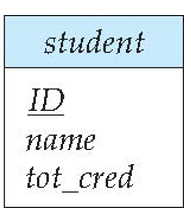
what is an entity set
a collection of similar individual objects or concepts that share the same attributes
LIKE ALL STUDENTS IN THE “student” TABLE
what is an entity
a unique object with attributes (columns)
what is an attribute domain
a set of allowed values for an attribute (column)
what are the attribute types
simple and composite
single or multi-valued
derived (like calculated from other columns)
what are composite attributes
like an attribute you get after combining multiple columns

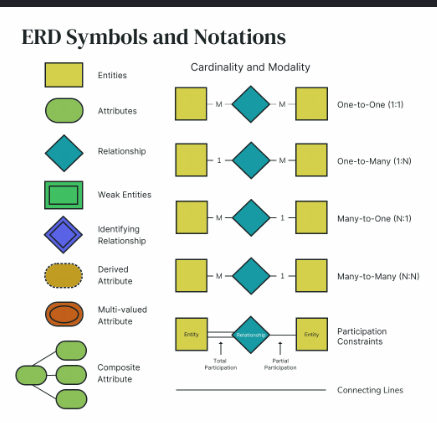
what are the notations for ER diagrams
expanded (graph) and compact (schema text)
{var} means multi-value, var () means derived

how to choose shape for ER diagrams
rectangle = entity set (like “student”)
diamond = relationship set
double oval = multi-value attribute
dashed oval = derived attribute
underlined = primary key
what is a relationship set
basically just an entity relationship entity

what is the degree of a relationship set
the # of entities in that relationship set
what are the 4 mapping cardinalities
one-to-one (1 1)
one-to-many (1 *)
many-to-one
many-to-many
how to visualize the mapping cardinalities
line = many
arrow = 1

can relationships have attributes
yes

what are roles
specific purposes for entities
labels to lines that connect diamond to rectangle in ER diagram

what is total participation in a relationship set
every entity is in the relationship
showed by the double line
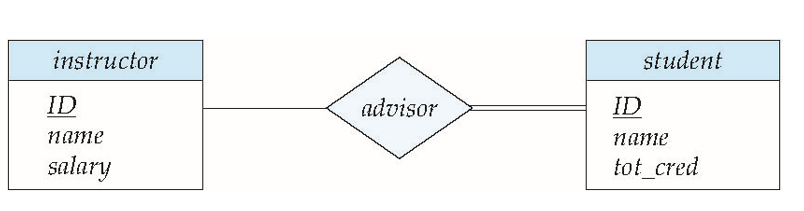
what is partial participation in a relationship set
when not every entity is in the relationship
showed by a single line
