Lab 1 — Anatomical Terminology
 Call Kai
 Learn
Learn Practice Test
 Spaced Repetition
 Match
Match Flashcards
 Knowt Play
1/38

There's no tags or description
Looks like no tags are added yet.
Name | Mastery | Learn | Test | Matching | Spaced | Call with Kai | Chat |
|---|
No analytics yet
Send a link to your students to track their progress
39 Terms
What do anatomical directional terms describe?
Where structures are located and how the body is being viewed. Page 3
What position are all anatomical directional terms based on?
Anatomical position. Page 3

What is anatomical position?
Standing with feet together, arms at the sides, palms facing forward, and eyes looking straight ahead. Page 3
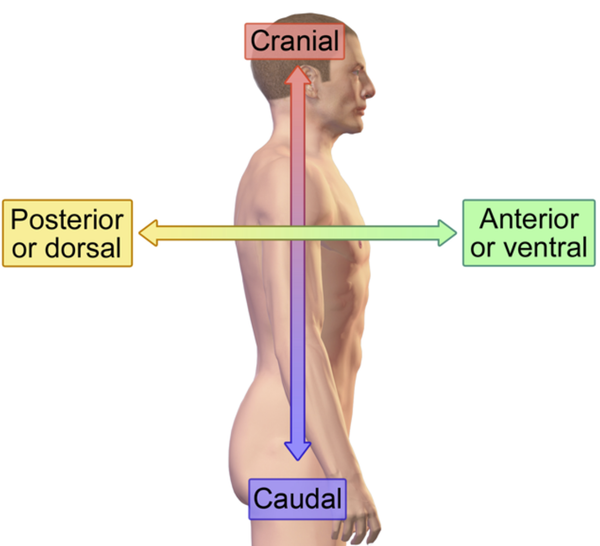
What do anterior and posterior mean?
Anterior = in front of;
posterior = behind. Page 3
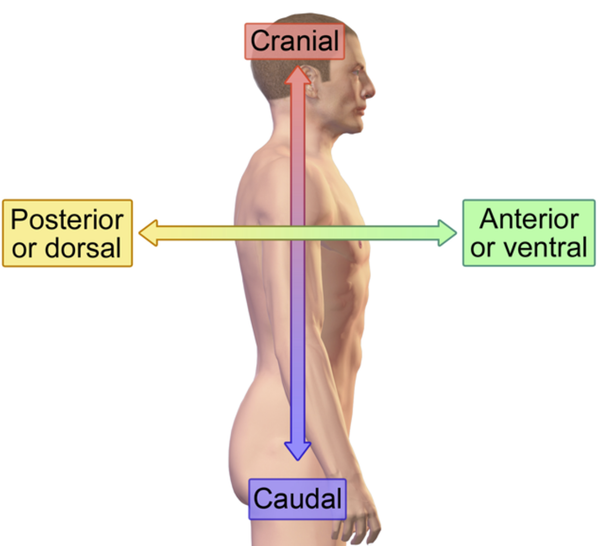
What do dorsal and ventral mean?
Dorsal = toward the back; ventral = toward the belly. Page 3

What do superior and inferior mean?
Superior = higher up; inferior = lower down. Page 3

What do cranial and caudal mean?
Cranial = toward the head; caudal = toward the tail. Page 3
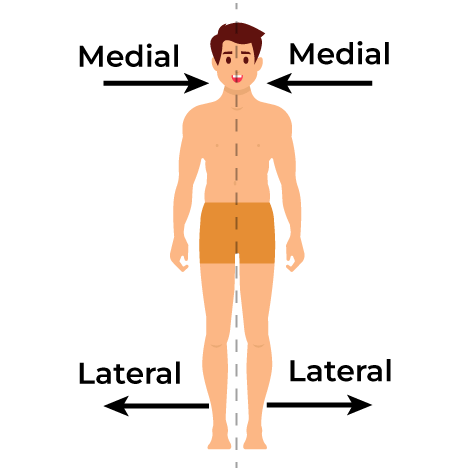
What do medial and lateral mean?
Medial = toward the midline; lateral = toward the side. Page 3
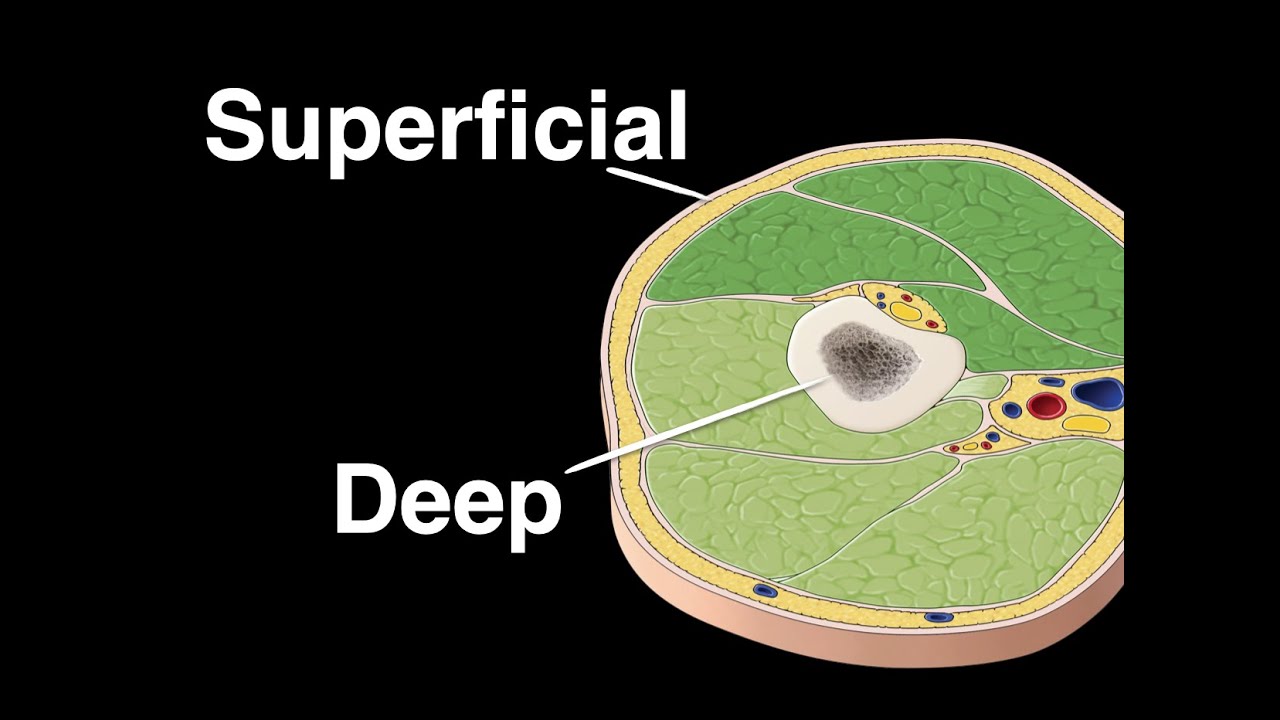
What do deep and superficial mean?
Deep = toward the inside; superficial = toward the surface. Page 3
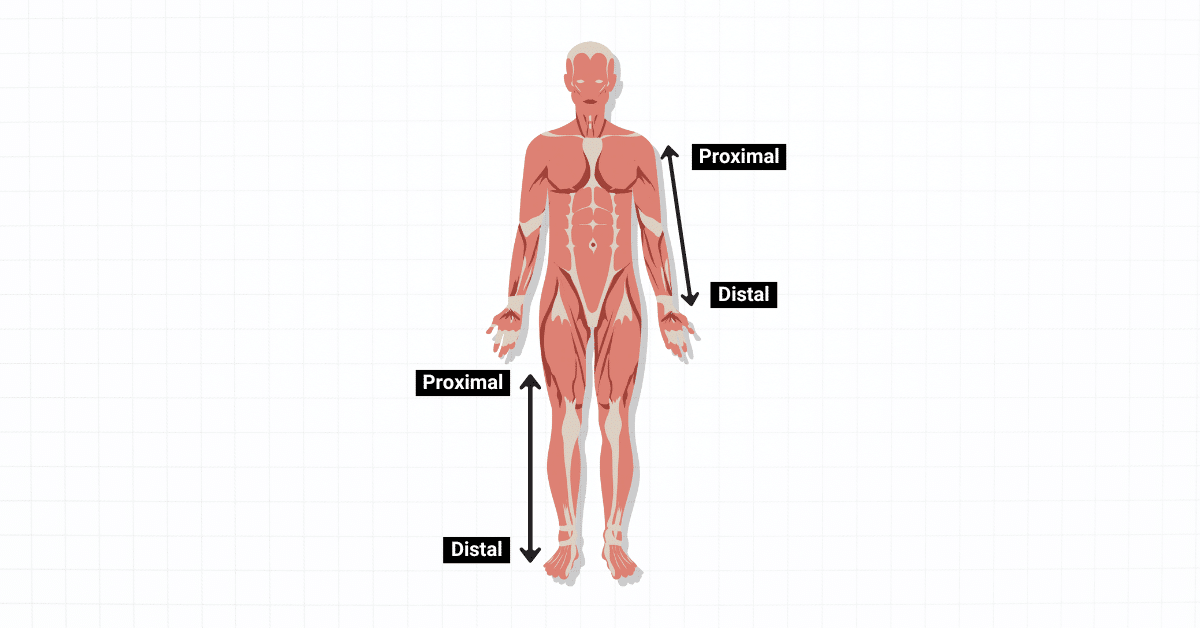
What do proximal and distal mean?
Proximal = closer in; distal = further out. Page 3
Why are directional terms considered relative?
Their meaning depends on the structures being compared. For example, the elbow is proximal to the wrist but distal to the shoulder. Page 3
How are directional terms used to describe a view of the body?
An anterior view, for example, is a view of the anterior surface of a structure or region. Page 3
What five planes of section must you recognize?
Sagittal, midsagittal (median), frontal (coronal), transverse, and oblique. Page 3
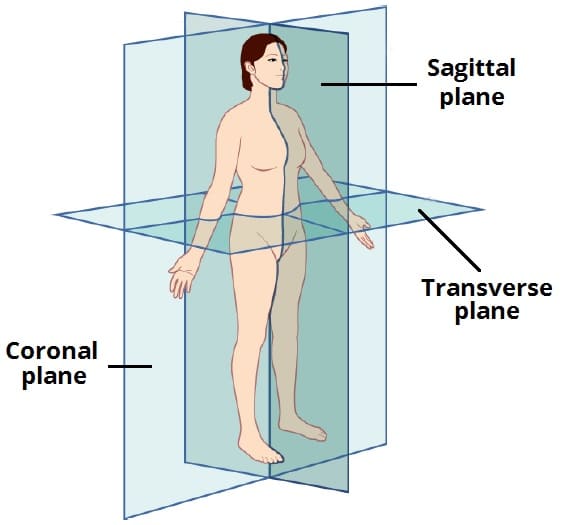
What is a sagittal plane?
A plane that divides the body into left and right portions. Page 3

What is a midsagittal (median) plane?
A sagittal plane through the midline. Page 3

What is a frontal (coronal) plane?
A plane that divides the body into anterior and posterior portions. Page 3
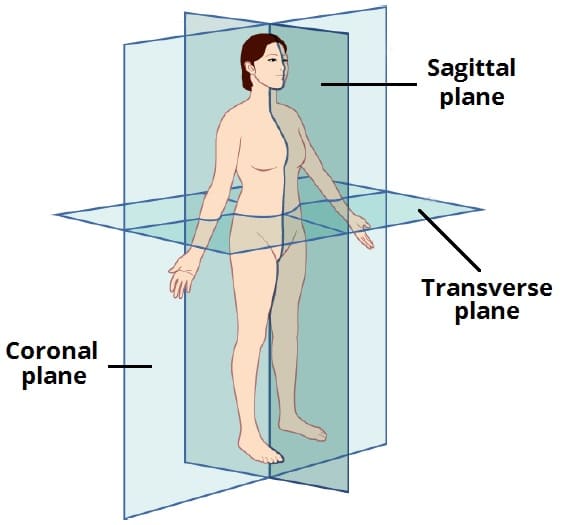
What is a transverse plane?
A plane of section that divides the body into superior and inferior portions. Page 3

What is an oblique plane?
One of the planes of section used to describe a slice through the body at an angle. Page 3
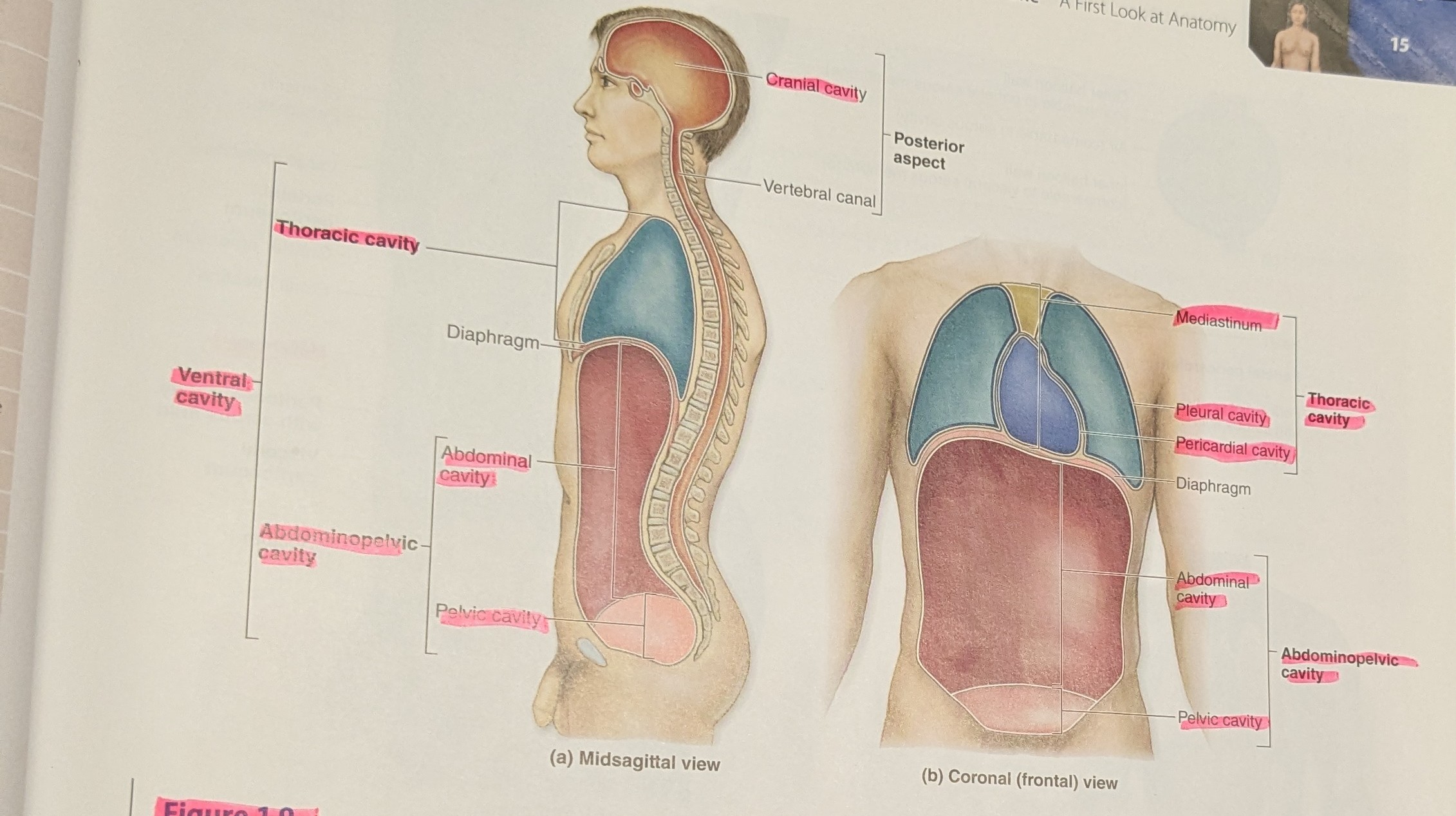
Which major body cavities lie dorsally?
The cranial and vertebral cavities. Page 4

Which major body cavities lie ventrally?
The thoracic and abdominopelvic cavities.

What are the subdivisions of the thoracic cavity?
The mediastinum, pleural cavities, and pericardial cavity. Page 4
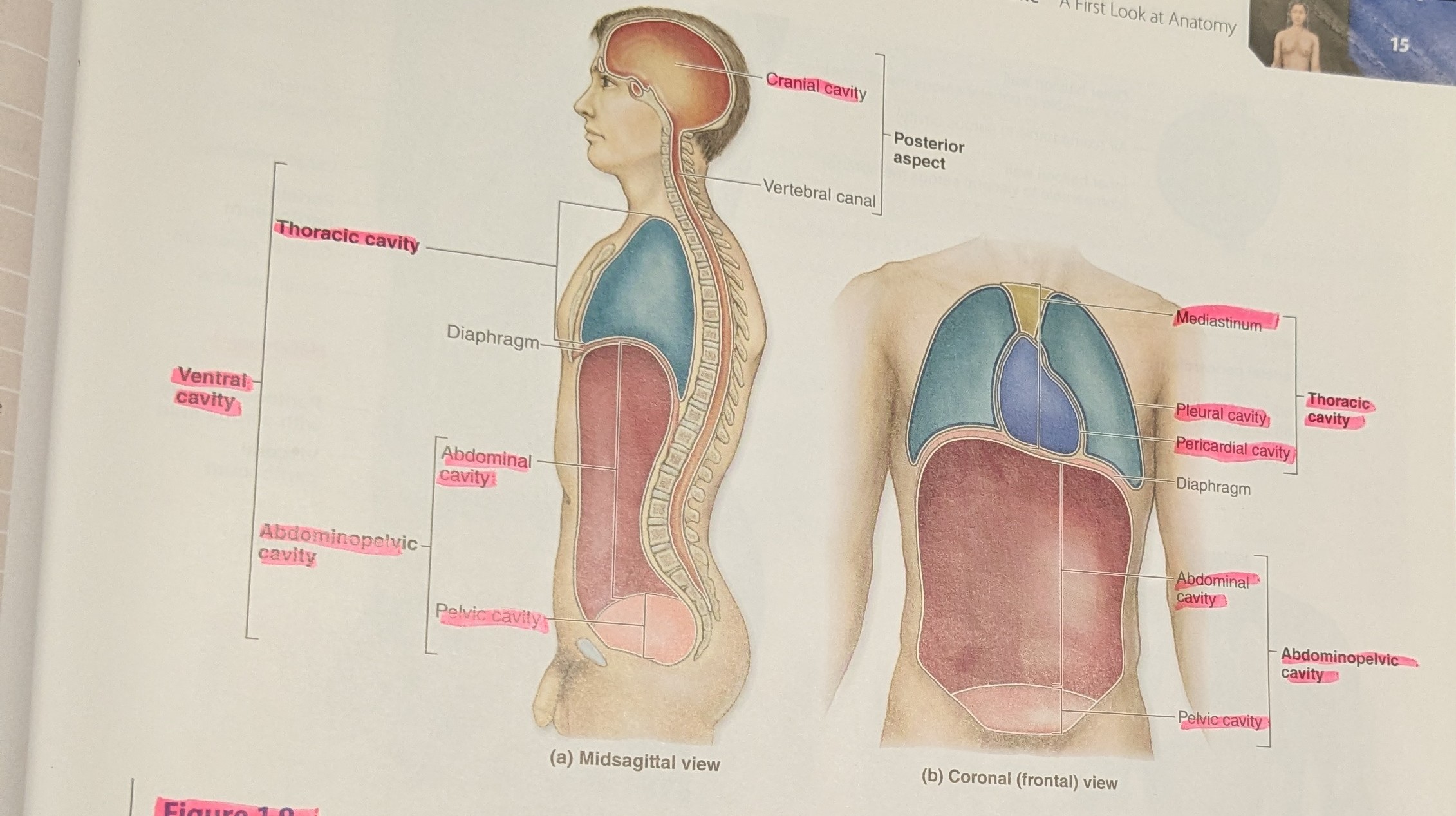
What are the subdivisions of the abdominopelvic cavity?
The abdominal (peritoneal) cavity and pelvic cavity. Page 4
What are the regional terms for the head, forehead, nose, and mouth?
Head = cephalic;
forehead = frontal;
nose = nasal;
mouth = oral.
What are the regional terms for the inferior back of the head, chin, and neck?
Occipital,
mental,
cervical.
What are the regional terms for the chest, navel, and loin?
Thoracic,
umbilical, and
lumbar. Page 4
What are the regional terms for the buttock, groin, and genital region?
Gluteal,
inguinal,
and pubic. Page 4
What are the regional terms for the perineum, point of shoulder, and armpit?
Perineal,
acromial,
axillary. Page 4
What are the regional terms for the upper arm, elbow, and anterior elbow?
Brachial,
olecranal/cubital,
antecubital. Page 4
What are the regional terms for the forearm, wrist, hand, and palm?
Antebrachial,
carpal,
manual, and
palmar. Page 4
What are the regional terms for the finger and thumb?
Finger = digital;
thumb = pollical. Page 4
what organ/ structure is in cranial cavity
brain
what organ/ structure is in vertebral cavities
spinal cord
what organ/ structure is in thoracic cavity
lungs + heart
what organ/ structure is in abdominopelvic cavity
Stomach
Liver
what organ/ structure is in mediastinum
Heart
Trachea
what organ/ structure is in pleureal cavity
lungs
what organ/ structure is in pericardial cavity
Heart
what organ/ structure is in abdominal/ peritoneal cavity
Liver
Stomach
Intestines
what organ/ structure is in pelvic cavity
urinary bladder, internal reproductive organs, and rectum.