Introduction to vector and pest
 Call Kai
 Learn
Learn Practice Test
 Spaced Repetition
 Match
Match Flashcards
 Knowt Play
1/29

Earn XP
Description and Tags
Name | Mastery | Learn | Test | Matching | Spaced | Call with Kai | Chat |
|---|
No analytics yet
Send a link to your students to track their progress
30 Terms
The Pest Problem reasons
High densities with relatively short life spans
Rapid multiplication with relatively high reproduction
Competition on limited resources
Survival in harsh environments
The ability to damage crops and plants as well as affect humans and animals
The Syn-anthropy
Syn-anthropy
the close association with humans
Whats considered as a pest
any organism causing damage to the crops or causing annoyance to human or animals
Whats considered as vector
any arthropod capable to transmit pathogens to humans or animal
Natural Control
The balance between birth and deaths neither of which reamins constant, determines the rate of population change
What influences Mortality
Population density in the form of increased competition between individuals specifically for the remaining food resources
Resource ceiling
to population growth, giving any area of habitat a constrained carrying capacity
Carrying capacity
is the key factor controls the population size
Factors affecting the abundance of insects pests and vectors
Natural Control
Mortality
Resource ceiling
Carrying capacity
Natural pest control
type of control that occurs in nature without human control and leads to a reduction in the number of pests in the long term by all living and non-living surrounding environmental factor
Factors of the natural control
Biotic factors
Abiotic factors
Biotic factors which may includes
Competition on the limited resource
Predators
Parasites
Pathogens
Abiotic factors include
Climate factors (temp, humidity, etc.)
Geographical isolation
Natural disasters
Population balance
Interaction between biotic, abiotic factors, and carrying capacity
Biological Competence
Survival and Reproduction
Survival Competence
Includes anything that help the species to survive
Reproductive Competence
Includes anything that help the species to improve their reproduction power and quality of the offspring
Milne theory to control densities of population
Factor Completely associated with population density
Factors Partially associated with population density
Factor Unassociated with population density
Factors Completely associated with population density
This factors works when the population density approaches the threshold of the carrying capacity . When the population density tends to approach the minimum level ; effect of this factor tends to stop . Depends on competition and never fails to control the population density in natural and regular conditions.
Factors partially associated with population density
Mode of action of this factor is similar to the first but it may fail in certain conditions to control the density of the population. This factor depends on certain elements to control the density of the population,and the absence of one of these elements may leads this factor to fail in controlling population density.
Factor unassociated with population density
This factor never depends on the population density. Main element of this factor is the climatic factors which are closely associated with the survival of the population hence the population density
Applied vector and pest control
this type is controlled by humans and applied on wild pests and vectors populations
What is the difference between pest control and pest eradication ( the outbreak threshold)
Control means decrease the pest population to the level that it doesnt cause damage to crops or causes disease to humans or animals
Advantages of Control
can be applied in any environment when the density approaching the outbreak threshold
Effect of intervention on the containment of pest and vectors damage
outbreak then epidemic then pandemic
Integrated Vector and Pest Managment (IVM / IPM)
Mechanical methods
Physical methods
Agricultural management methods
Genetical methods
Legislation methods
Chemical methods
Biological methods
IVM / IPM is
the utilization of all appropriate technological and management techniques to bring out an effective degree of vector or pest in a cost effectiveness manner and also to avoid the overuse of one of the methods

Sigmoid curve of population growth against time
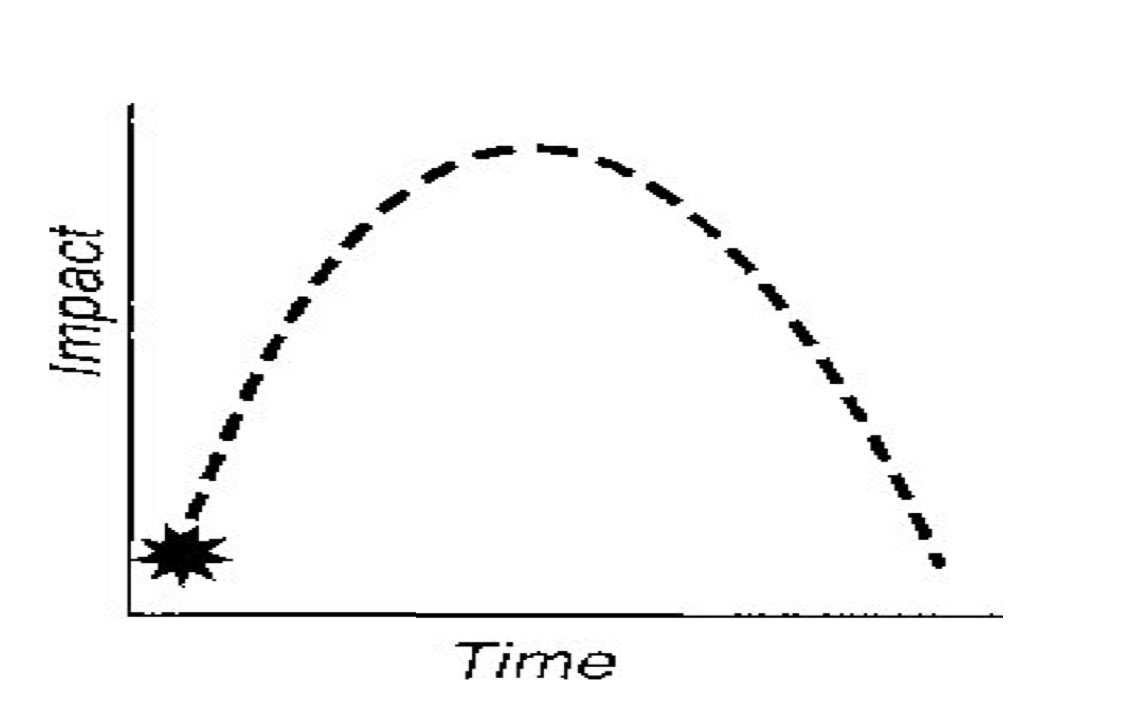
Impact of intervention (VS) time
Impact of intervention (VS) time
The impact of intervention increases when it starts as early as possible