1 ♡ Introduction to Communication, Culture, & Society
 Call Kai
 Learn
Learn Practice Test
 Spaced Repetition
 Match
Match Flashcards
 Knowt Play
1/21

There's no tags or description
Looks like no tags are added yet.
Name | Mastery | Learn | Test | Matching | Spaced | Call with Kai | Chat |
|---|
No analytics yet
Send a link to your students to track their progress
22 Terms
“Culture is Communication and Communication is Culture”
Edward T. Hall
Edward T. Hall
cultural anthropologist
cross-cultural researcher
developed
concept of proxemics
exploring cultural and social cohesion
how people behave and react
in different types of culturally defined personal space
influential colleague of Marshall McLuhan and Buckminster Fuller
communication
exchange of information and meaning
constant communicating in a wide range of different contexts
with each other (interpersonal communication)
with different cultural groups or subgroups (intercultural communication)
to large audiences (mass communication)
“Communication is the transmission and interchange of facts, ideas, feelings or course of action”
Leland Brown
“One mind affecting another”
Claude Shannon
functions of communication
education
to transfer knowledge for the progress of society
information
to find and explain something new
cultural promotion
to help foster social values
pass them from one generation to generation
social contact
to help make enjoyable companionship
integration
to create harmonious relationships among various social groups
entertainment
to help pass time and enjoy life
stimulation
to create interest and develop positive thinking
3 Ways to Relate to Culture
confront
questions existing norms and traditions
complain
identifies problems but may not offer solutions
conform
people accept and follow the norms, values, and expectations of their culture
culture
covers a wide range of perspectives
represents the things we see, the tangible, as well as the intangible things
how people think and behave
“Culture refers to that complex whole which includes knowledge, beliefs, art, morals, law, customs, and any other capabilities and habits acquired by man as a member of society”
Edward Tylor
elements of culture
learned
symbolic
shared
dynamic
systemic
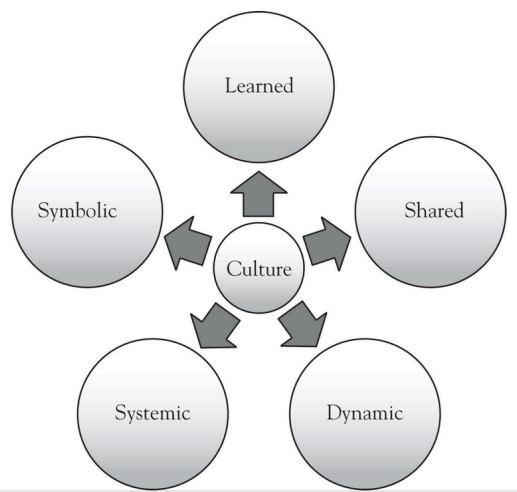
culture is learned
we learn our culture as we grow up
process is called enculturation
in school, by our parents, by the media
ex. everyone needs to eat. but what we eat and how we eat? it is something learned from culture
culture is symbolic
culture involves symbols
symbols
stands for something else
ex. national flag - stands for country
shaking your head
in some cultures = YES
in some cultures = NO
in some cultures = NOTHING
culture is shared
if…
a person thinks of acts a certain way: personal habit not a culture
most people in society do something, then it’s culture
shared between members of a group.
all think and behave the same way because they grew up in the same culture
culture is dynamic
fluid rather than static
changes all the time, every day, in subtle and tangible ways
humans communicate and express their cultural systems in a variety of ways
Albert Meharbian (1971)
7% words, 38% tone (paralinguistic), and 55% body language (visual)
culture is systemic
systems theory
systems are interrelated, interconnected parts that create a whole
patterns of behavior, deeply rooted structural systems, which are beneath the waterline
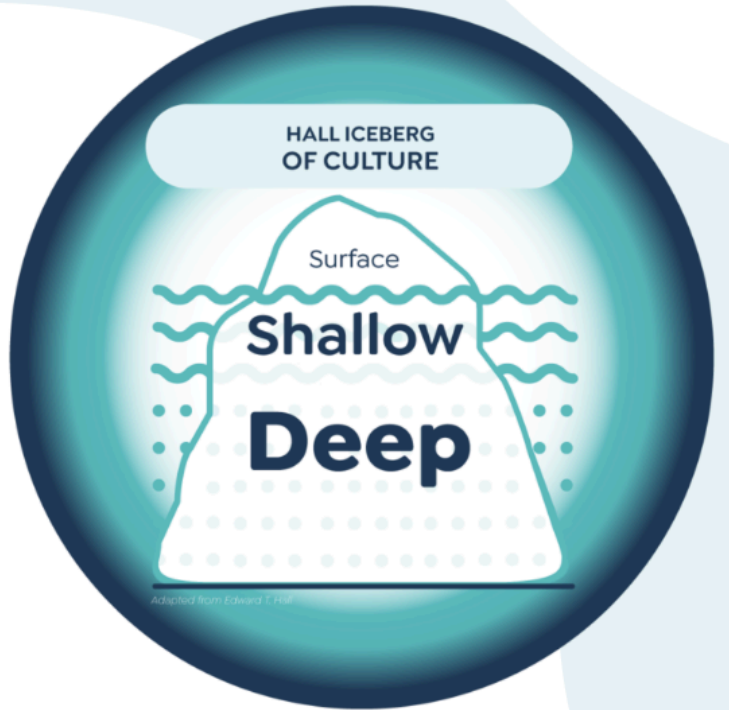
iceberg model of culture
conceptual framework developed by anthropologist Edward T. Hall
commonly used metaphor to describe culture
great example for illustrating the tangible and the intangible
tip of the iceberg
making up 10% of the object
language and customs
rest of the iceberg
90% of it, is below the waterline
beliefs, values, and thought patterns
narratives that emerge from this cultural iceberg are
not merely stories
the lifeblood of our identities
shaping our perceptions, interactions, and collective consciousness
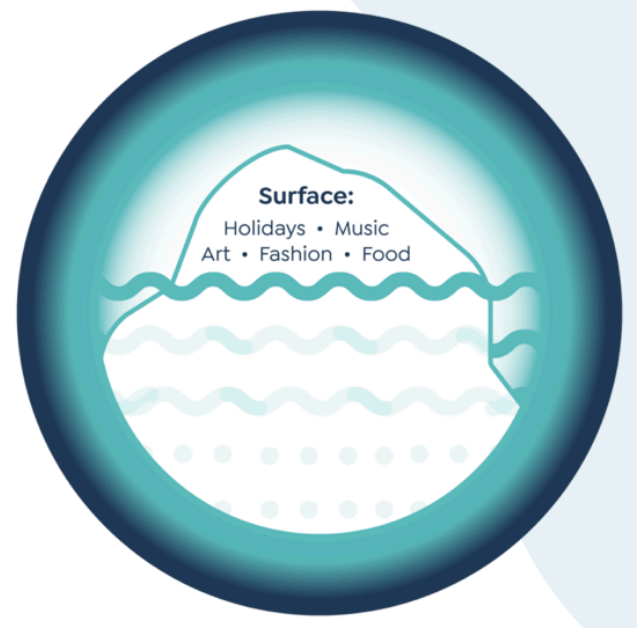
surface culture
visible and tangible aspects of culture
are easily observed and identified
ex. language, dress, & food
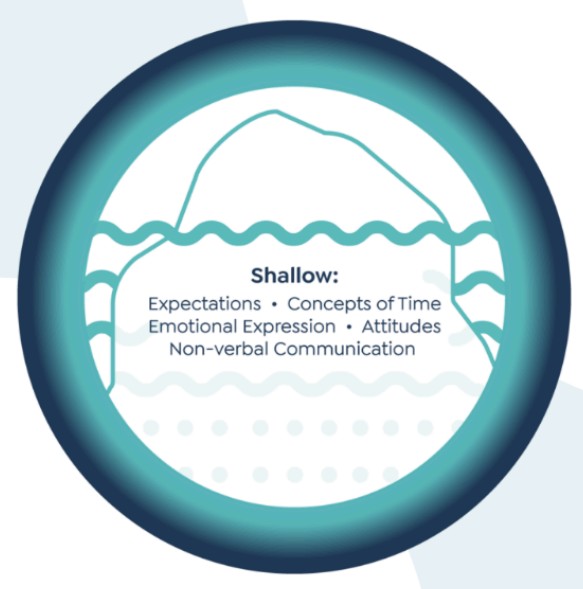
shallow culture
norms and rules
not immediately visible but still generally known
ex. concepts of personal space, etiquette, & social rituals
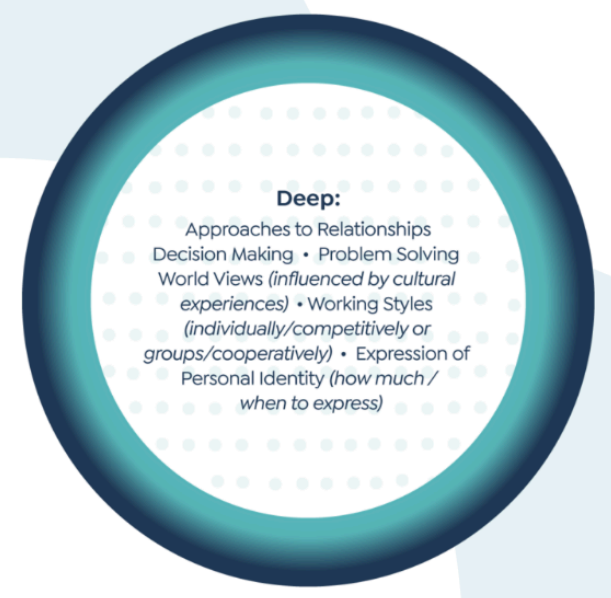
deep culture
implicit beliefs and worldviews
values, thought, and patterns
ex. core values, religious beliefs, attitudes toward authorities, and relationships
stereotypes and generalizations
things that can happen
in the context of discussing culture
stereotypes
negative statements and interpretations
made about a group of people
whether deemed positive or negative
place people into boxes and categories and limit them to those specific perspectives
generalizations
broad statements based on facts, experiences, examples, or logic.
two kinds: valid and faulty
your role to determine which have validity behind them
broad characterization of cultural groups can serve as a framework for cultural interactions