IPFC 1 - Pregnancy: Nausea and Vomiting
 Call Kai
 Learn
Learn Practice Test
 Spaced Repetition
 Match
Match Flashcards
 Knowt Play
1/40

There's no tags or description
Looks like no tags are added yet.
Name | Mastery | Learn | Test | Matching | Spaced | Call with Kai | Chat |
|---|
No analytics yet
Send a link to your students to track their progress
41 Terms
Nausea and vomitting in pregnancy onset and peak
Most common medical condition of pregnancy:
- affects 70% of pregnant women
- onset 4-6 weeks
- peaks 9-12 weeks
When does n/v typically subside
20th week
- 80% stop by 12 weeks
- 20% continue into 3rd trimester
Severe NVP is called...
hyperemesis gravidarum
- debilitating, hospitalization, dehydration, parenteral nutrition
- affects 1.5% of women
Etiology of pregnancy N/V
Various theories:
- Psychological predisposition
- Impaired gut mobility
- Hormonal stimulis (hCGlevels, rising estrogen levels)
Risk Factors of n/v
- Increased placental mass:
- Multiple gestation
- advanced molar gestation
- Family history
- Previous NVP pregnancy
- History of motion sickness
- Migraines
- History of nausea from estrogen based meds
- Heartburn or GERD
- Supertasters
- Lack of multivitamin pre- conception/early pregnancy
Hyperemesis Gravidarum Presentation:
- persistent vomiting not related to other causes
- measure of acute starvation (ketosis can occur); risk of hypovolemia
- some discreet measure of weight loss, most often >5% of pre-pregnancy weight
- electrolyte, thyroid, and liver abnormalities sometimes
What is the most common Indication for admission to the hospital in early pregnancy
Hyperemesis Gravidarum (HG)
- Second only to preterm labour
Until the 1930s, severe HG symptoms were a cause of maternal death due to:
• Wernicke’s encephalopathy
• Splenic avulsion
• Esophageal rupture
• Pneumothorax
• Acute tubular necrosis
• Other concerns: Psychological symptoms (depression), LBW infants
What is essential in the management of HG
Early Management
• 35% experience clinically significant symptoms and 10% require medication
• Management more difficult once symptoms NVP progress
What are the biggest factors to influence clinical decision making
Woman's perception of the severity of symptoms and desire for treatment
Goals of treatment of NVP
Avoid
• Hospitalization
• time off from work (QoL)
• difficulty caring for other children (QoL)
• psychological effects
• prevent progression to severe form of NVP
What to assess in a patient's history?
• nature of symptoms (nausea alone), severity, frequency (time of day, number of times)
• triggers (foods, odours,stress)
• Rule out underlying causes: PMH (infection, migraines, malignancy), bowel movements (constipation), changes in drug/supplement use
• What they have tried and willingness to try pharmacological treatment
What to check in a patient's physical assessment?
• Vitals, assess for dehydration, abdominal palpitation
• Labs (CBCs, T4/TSH, LFTs, SrCr, serum electrolytes)
• Imaging if required
Assessment tool for NVP
Norwegian PUQE score for assessing symptoms including quality of life question
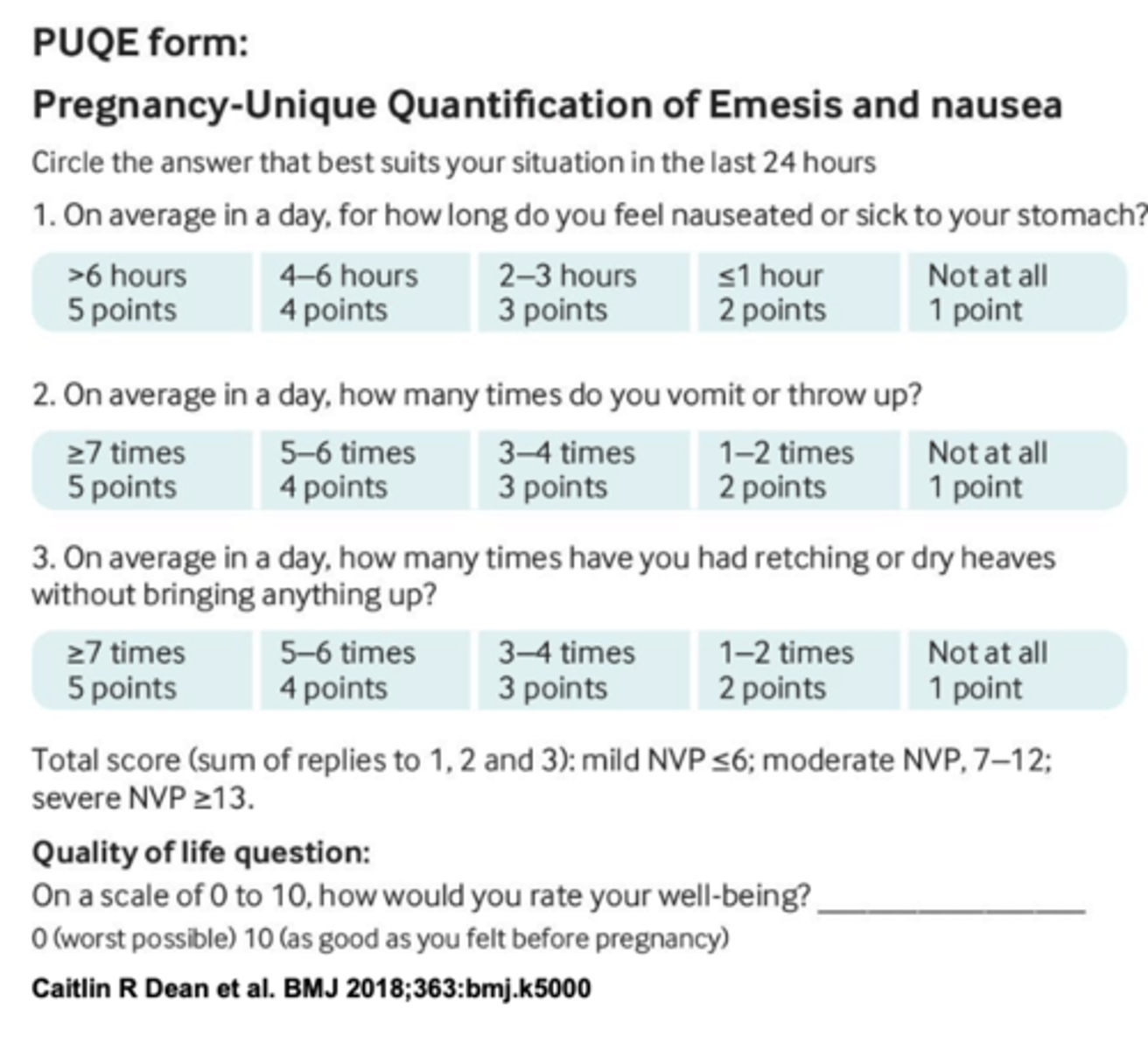
Non-pharm strategies for NVP
1) Diet
2) Fluids
3) Acupressure and acupuncture (i.e. seabands) --> limited evidence
4) Ginger capsules may be helpful (up to 250mg QID)
5) Rest/sleep
Diet recommendations NVP
• Avoid mixing solids and liquids
• Eat whatever/whenever they can tolerate eating (in bed in morning)
• Smaller more frequent meals, avoid getting hungry
Fluids recommendation NVP
• 2 litres per day
• Small amounts frequently
• Cold fluids, popsicles
Iron recommendation NVP
Women experiencing nausea and vomiting of pregnancy may discontinue iron-containing prenatal vitamins during the first trimester and substitute them with folic acid or adult or children's vitamins low in iron
Step 1 Therapy NVP
Pyridoxine or Doxylamine/pyridoxine combination
Pyridoxine or Doxylamine/pyridoxine combination product
AKA Diclectin
• For mild-moderate nausea (NOT vomiting)
• available without Rx; good safety
• delayed release product
• sedation/dizziness
• take on empty stomach
Pyridoxine or Doxylamine/pyridoxine combination dosing and indication
Doxylamine 10mg/ pyridoxine 10mg = H1 receptor blocker + Vitamin B6
• 10-25mg q6-8 hours
1 tab AM, 1 tab noon, 2 tabs at night
MDD = 200 mg/day
Pyridoxine or Doxylamine/pyridoxine combination onset with vs without food
empty stomach (onset 4-6 hrs),with meal (onset 9-11 hours)
Bendectin
marketed in the USA, but removed because it was alleged to cause birth defects (not true), reintroduced as Diclegis
SOGC recommendation for Diclectin use
women with high risk for nausea and vomiting of pregnancy may benefit from preemptive doxylamine/pyridoxine treatment at the onset of pregnancy
T/F H1 receptor antagonists should be considered in the management of acute or chronic episodes of nausea and vomiting of pregnancy
True!
- Safety is well-studied in pregnancy and evidence suggests they
significantly reduce NVP
I.e. Dimenhydrinate (Gravol), diphenhydramine, promethazine
Step 2 when treating NVP
Add Dimenhydrinate
Dimenhydrinate
- Anticholinergic side effects (sedation, constipation)
- routes: IM, PO, PR
MDD = 200 mg/day of Dimenhydrinate when taking 4 Diclectin tabs
Step 3 when treating NVP
Add dopamine antagonist
Dopamine antagonists
Prochlorperazine (PO/PR),
Chlorpromazine (PO):
drowsiness, anticholinergic
Metoclopramide (PO/IV):
Limit to 5 day use due to risk of oculogyric crisis, diarrhea, cramping, sedation
Step 4 when treating NVP
Add Ondansetron + IV fluids
Ondansetron
• Serotonin 5-HT3 Receptor Antagonist
• for treatment of chemotherapy -induced N/V; not approved for use in pregnancy
• Has been used as last resort with anecdotal or small study data showing effectiveness.
Less sedating than other options
Step 5 when treating NVP
Methylprednisolone (IV)
Methylprednisolone (IV) and dosing
15–20 mg Q8H IV x 24H
- Corticosteroids in the first trimester has increased risk for cleft palate
- Additional BG monitoring in diabetics
5 steps of treating NVP (increasing severity)
1. Diclectin: Pyridoxine or Doxylamine/pyridoxine combination
2. Add H1 receptor antagonists (Dimenhydrinate)
3. Add dopamine antagonist
4. Odansetron + IV fluids
5. Methylprednisolone (IV)
Pharmacist Role in treating NVP
- find safest, most effective drug at lowest dose for shortest duration
- avoid duplicating drug classes when adding therapy (exception with doxylamine and dimenhydrinate)
- lowest ADR profile
- antihistamines generally bet tolerated
- tolerability of oral vs parenteral
NVP other measures that may help with therapy
1) Treat dyspepsia/GERD
• Calcium carbonate (TUMS®)
• H2 Blockers
• Proton Pump Inhibitors
2) Treat gas and bloating (i.e. simethicone, lactase)
3) Treat constipation (e.g. psyllium fibre, stool softeners)
Summary NVP
- generally starts 4-6 weeks and resolves by 12-16 weeks
- very common but severity varies
- impact on daily activities can be significant
- stepwise approach to medication (add-on if ineffective)
Which vaccinations are recommended in pregnancy?
Influenza, Pertussis (weeks 27-36)
Hep A/B if high-risk
COVID vaccine recommended
Which vaccinations to avoid in pregnancy?
live-attenuated vaccines (risk to fetus)
Non-pregnant women should be counseled to wait 4 weeks if given a live vaccine (i.e. MMR, varicella)
Can women who breastfeed can be immunized without restriction?
Yes
Zika virus
- Pregnant females can pass the virus to fetus which is transmitted by Aedes mosquitoes
- Fetal exposure to Zika can lead to neurological problems and severe birth defects, such as microcephaly.
- Can lead to increased risk of preterm labour and miscarriage
- Advise those looking to conceive and those pregnant to check travel advisories prior to travel