ISE 402 Exam 1 Study Guide
 Call Kai
 Learn
Learn Practice Test
 Spaced Repetition
 Match
Match Flashcards
 Knowt Play
1/113

There's no tags or description
Looks like no tags are added yet.
Name | Mastery | Learn | Test | Matching | Spaced | Call with Kai | Chat |
|---|
No analytics yet
Send a link to your students to track their progress
114 Terms
Ch 1
.
Employee Motivation
Which topic would traditionally be considered organizational psychology?
A field that focuses on how psychological principles apply in the workplace
Which statement best represents the definition of the field of I/O Psychology?
Efficiency
Early I/O researchers focused on which of the following?
Beginning of I/O neuroscience research
Which trend in I/O psychology has been the most recent?
Industrial Psychology
Which came first: Industrial or Organizational Psychology?
Psychology
the science of human behavior and mental processes
I/O psychology
the science of human behavior and mental processes at work
I/O psychology application
Application of psychological principles to the workplace
Helping people do their jobs
make jobs more interesting and satisfying
helping workers be more productive
helping employers treat employees fairly
Two Branches of I-O Psychology
Industrial (I)
Organizational (O)
Industrial (I) Psychology
Focuses on helping employees work more efficiently, be more productive, and perform better.
Ex. Job analysis, hiring ,training
Organizational (O) Psychology
Focuses on employees’ well-being,
Subjective-state and team focus
Theories Used In I/O
Quantitative Psychology-
Social Psychology-
Cognitive Psychology-
Health Psychology-
Engineering Psychology and Human Factors-
Sport Psychology-
Scientist Practitioner Model
science Guides Practice, Practice Guides Science
Scientists Ask Applicable Questions (stat data)
Practitioners Conduct Applied Science
Pre History
W. L. Bryan- Early study on work skill development
Walter Dill Scott- One of the first to study human efficiency systematically
Frederick Taylor- early researcher in human factors; timing studies
Lillian Gilbreth— Time management research
Mid History
1940’s and 1950’s
Rapid expansion of I/O
New areas of research begin including Occupational Health Psychology and motivational theory
1960’s and early 1970’s
Discrimination and Bias Research
Civil Rights Movements
Cognitive Revolution
Now History
1970’s to present: Substantial growth in organizational psychology
1980’s:discrimination research👉 Diversity research
1990’s: Multi-level and group dynamic research begins
2000’s: studying judgment and decision making
⭐2010’s: I/O begins looking in neuroscience
Three major people that apply i/o
Academic
Internal consult
external consult

Ch 2
.
2 types of research
academic research
applied research ⭐
Accumulated Common Wisdom
How Do I/O Psychologists
Answer Their Own Questions?
Scientific Method
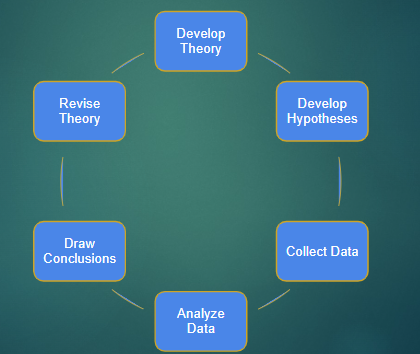
Theory⭐
Explains many of the relationships between variables within a specific domain of inquiry.
Derived from previous research
Theories are falsifiable (is it testable)!
A theory is never proven
Hypothesis
Prediction of Expected Findings
Data- 2 types of experimental methods
Non experimental- observation
experimental- manipulate something in experiment
⭐Data-Non experimental observational techniques
Naturalistic Observation-
Observation
Interviews and Focus Groups
-Non experimental observational -Naturalistic Observation
recording people's behavior without their knowledge
-Non experimental observational -Observation
recording people's behavior with their knowledge
-Non experimental observational -Interviews and Focus Groups
asking questions one-on-one or in a group
⭐Data-Non experimental correlation techniques
Correlation- statistic, survey
Stats
Survey
Correlation-Stats
strength of correlation is how far it is from 0 (r=+/- 1)
Weakness – does not prove causation

Correlation- Survey
Asking people questions in a digital or paper form
Psychometrics test-
Database
Longitudinal Research-
Longitudinal Research-
uses multiple survey time periods
Psychometrics test-
measuring psychological traits
Problems with Survey Research
Correlation-Causation Fallacy- Assuming that because two things are related, one must have caused the other.
Response Distortion
Insufficient Effort- lazy
Socially Desirable Responding
Low Response Rates
Psychometrics test
Measuring abstract psychological things
Classical Test Theory (T.T)-
Item Response Theory (I.R.T)-
Classical Test Theory (T.T)-
reliability & validity; confirm constancy of measurement w/in set of questions
ex. test that dont require knowledge
Item Response Theory (I.R.T)-
question focus,
measure for true/false question;
Psychometrics Principles
Standardization
Normal Curve
Reliability
Validity

Standardization
Giving the test to a representative group to create a standard for comparing future test takers.
Normal Curve
normal distribution that forms a bell-shaped curve
Reliability
A test is reliable when it yields consistent results.
Test-Retest Reliability: are the results the similar if re-tested?
Internal Consistency Reliability: Do all of the items on the test or measure correlate highly?
Validity
are we measuring what we think we are measuring
using all 3 increases you validity
Content Validity
Construct Validity
Criterion-Related Validity
Criterion-Related Validity
- Is the test predicting what it should be predicting?
Content Validity
- Is the test logical? most subjective approach
Construct Validity
- Is the test statistically related to what it should be?
⭐Data-experimental techniques
Experiment
Quasi-experiment
Independent - thing the researcher changes or controls.
Dependent - the thing that changes
Quasi-experiment
No random assignment
Experiment
Researcher controls procedures
Participants are randomly assigned
Allows for statements of cause and effect
Meta-analysis
finding a study fits the question
Study Validity
are studying what you say your studying
Internal Validity
External Validity
Ecological Validity-
Ecological Validity-
How realistic the study is
Internal Validity
- confidence in accuracy
Kind of Data
Nominal
Ordinal
Ratio
Ratio
- absolute zero
Interval
- same as ordinal but quantitative; differences between numbers are meaningful and equal,
Ordinal
- order, ranking things
Nominal
- category data ex. gender ,
Data Design
Simple Relationship- one affects this
X 🡪 Y
Moderation- XY🡪 Z
Mediation- one variable affects another variable
X 🡪 Y 🡪 Z
Complex
WX 🡪 Y 🡪 Z
Types of Analyses
Descriptive
Inferential
Qualitative
Descriptive Analyses
Understand one variable
Measures of Central Tendency
Mean
Median
Mode
Measures of Dispersion
Range
Variance
Standard Deviation
Analyses- Inferential Stats
Understand multiple variable
Chi-Squared
T-Test
Analyses- Qualitative
Used for open-ended surveys
create a structure and objective to eliminate mental bias
Multiple people analyze the data
Conclusion Errors
Type 1 Error
Type 2 Error
Type 1 Error
False Positive
You believe something is going on when it really isn’t
Type 2 Error
False Negative
You believe nothing is going on when something is
P- Value
p < 0.5 👉 statistically significant
p >= 0.5 👉 NOT statistically significant
Internal Consistency Reliability
If all items in a psychometric measure correlate highly, the measure is said to have:
Nominal
Race data (e.g., Caucasian, African American, etc.) is considered what kind of data?
Standard Deviation
Which of the following is a measure of dispersion?
Regression
Which of the following is an inferential statistic?
Type 1 Error
Whoops! I accdiently drew the wrong conclusion from a study. I assumed that a relationship existed where there really wasn't one. What kind of error have I committed?
ch4
.
Emotions
Not stable
Situation dependent
Immediate
Mood
Moderately stable state
Not a direct or immediate reaction to a clearly defined event
affective Disposition
habit of feeling a certain way
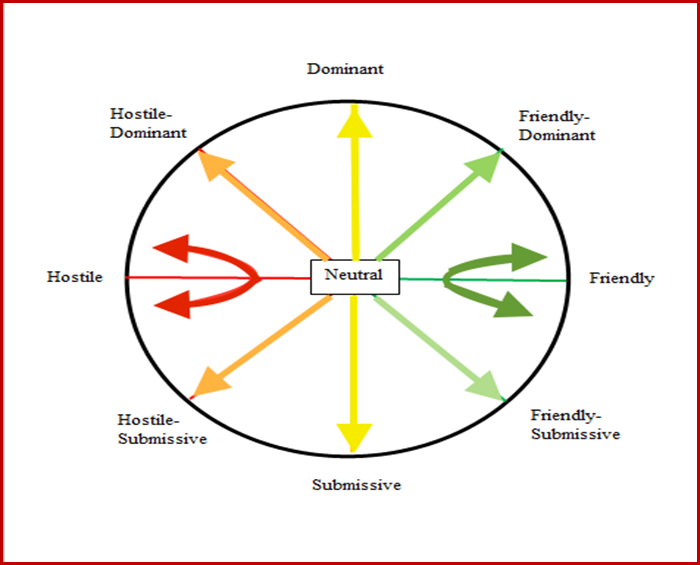
Circumplex Model
Surface Acting
Hiding observable expressions
Disguise of true feelings
Deep Acting
Managing internal feelings
Attempting to actively modify natural response or emotional state
Heuristics
judging, without knowledge
Representativeness Heuristic
mental stereotype ex. big scary guy actually likes pretty pink princess stuff sterotype
Availability Heuristic
a mental shortcut that relies on immediate examples that come to a person's mind when evaluating a topic, concept, or decision
Makes us overestimate frequency
ex. people’s fear of flying
Illusory Correlation
overestimate link between variables that are related only slightly or not at all
False Uniqueness Effect
endency to underestimate the number of other people who share one’s prized characteristics or abilities
Self-Efficacy
The belief in one’s abilities to complete or do certain things.
affects preformance
False Consensus Effect
Tendency to overestimate the number of other people who share one’s opinions
Confirmation Bias
Tendency to notice and search for information that confirms one’s beliefs and ignore information that disconfirms it
Implicit attitude
Automatic evaluative response
natural response; hidden
Explicit attitude
Conscious evaluative response
Mere-exposure effect
tendency to develop a preference for something simply because you have been exposed to it repeatedly.
Automatic vs. Deliberate Processes
Automatic
Low Effort
Snap Judgment
Yields lower quality decision
Relies on emotions, heuristics, and social influence
peripheral route
ex. auto pilot
Deliberate
High Effort
Cautious Decision Making
Yields higher quality decision
Relies on facts, data, evidence, etc
central route
ex. thinkng.
Motivation
a need or desire that energizes behavior and directs it towards a goal
Drives & Incentives
need creates an aroused tension state (a drive) that motivates an organism to satisfy the need.
ex. need for water 👉drive is thrist👉drive reduce: drinking water
Hierarchy of Motives

VIE Theory
maximizes the benefits of incentive
Expectancy: received relationship between effort and performance; “If I try, can I do it?”
Instrumentality: the trust in getting the reward; “Will working harder get me a raise?”
Valence: “Do I actually care about that outcome?”
If one is missing motivation will be lost
Work Design Theory
characteristics of a job influence a workers motivation
Job Characteristics Model
Skill Variety- requires different skills
Task Identity- where their role stands in the final product
Task Significance- task affect other people
Autonomy- freedom over job; flexibility
Feedback
Self-Determination Theory
Motivation falls along an intrinsic-extrinsic spectrum
intrinsic- internal movtivation ex. you enjoy doing
extrinsic -external motivation ex a “reason “ to do it
its a scale amovtination (lack of motivation) to intrinsic (enjoy it)

Goal Setting Theory
motivation by goal
SMART
Equity Theory-
concept of fairness
Flow Theory-
locking in