Physics - Atomic structure
 Call Kai
 Learn
Learn Practice Test
 Spaced Repetition
 Match
Match Flashcards
 Knowt Play
1/23

Earn XP
Description and Tags
Gcse AQA
Name | Mastery | Learn | Test | Matching | Spaced | Call with Kai | Chat |
|---|
No analytics yet
Send a link to your students to track their progress
24 Terms
Isotope
An isotope is an atom of the same element that has the same amount of protons and electrons, but different amount of neutrons
Emission of EM radiation
When an electron has moved up an energy level, it is unstable.
Eventually it will move back down
When it moved back down, it emits EM radiation
Absorption of EM radiation
Electrons are arranged in energy levels:
the further away from the nucleus = higher energy level
the closer to the nucleus = lower energy level
These electrons absorb energy
As it moved up an energy level, it will absorb EM radiation
Why are ions often more chemically reactive than neutral atoms
It is because of their positive charge which neutral atoms do not have, however generally reactivity depends on the reaction taking place.
Mass number
Total number of neutrons and protons in the nucleus of an atom
Ion
A particle or atom with non zero charge
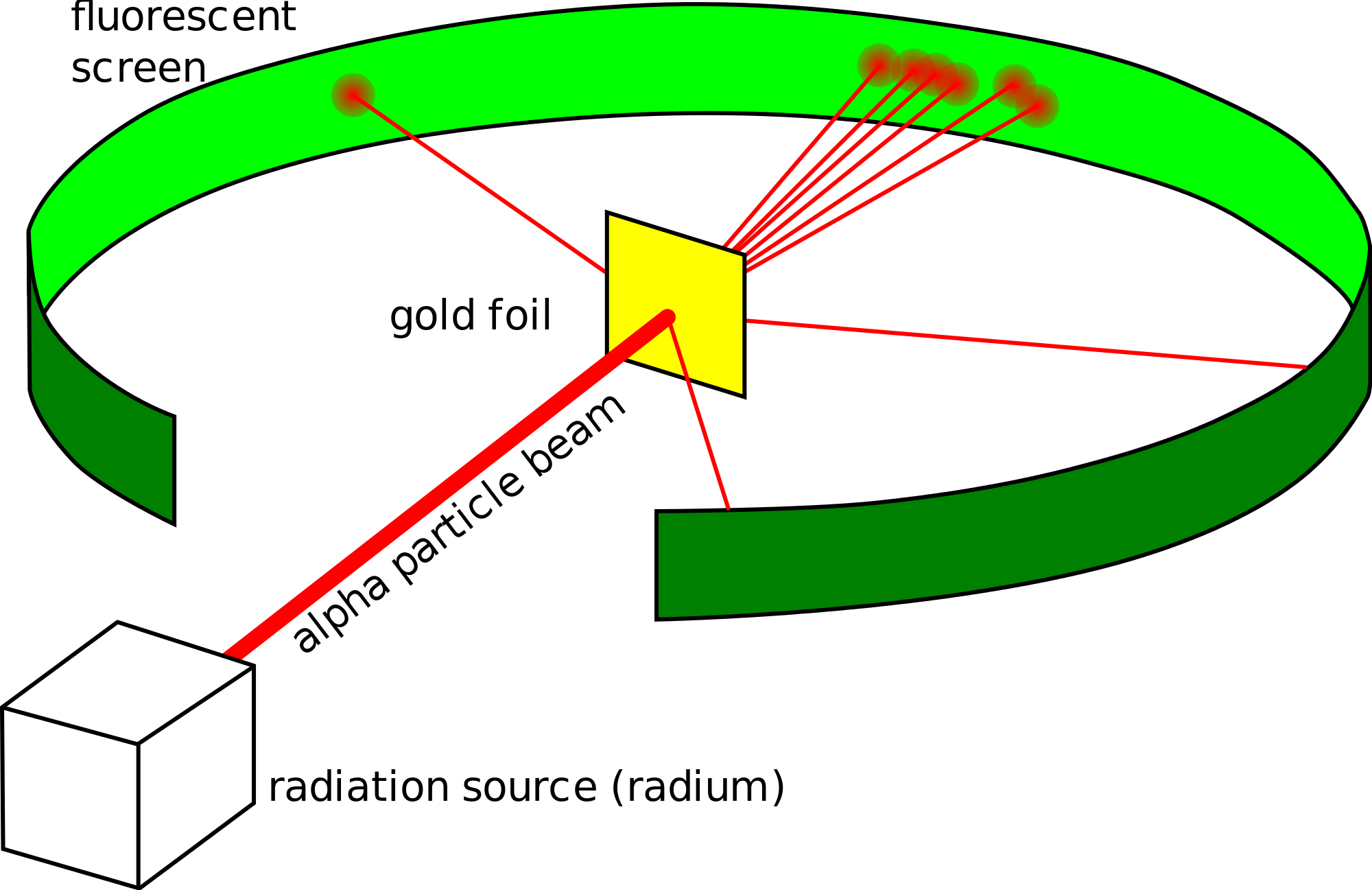
Gold foil experiment
1909, Ernest Rutherford directed alpha beam particles at gold foil
Most bounced back = the atom is mostly empty
Some deflected but still went through = the atom’s nucleus has a strong, positive charge
Some went through = the atom has a positively charged nucleus
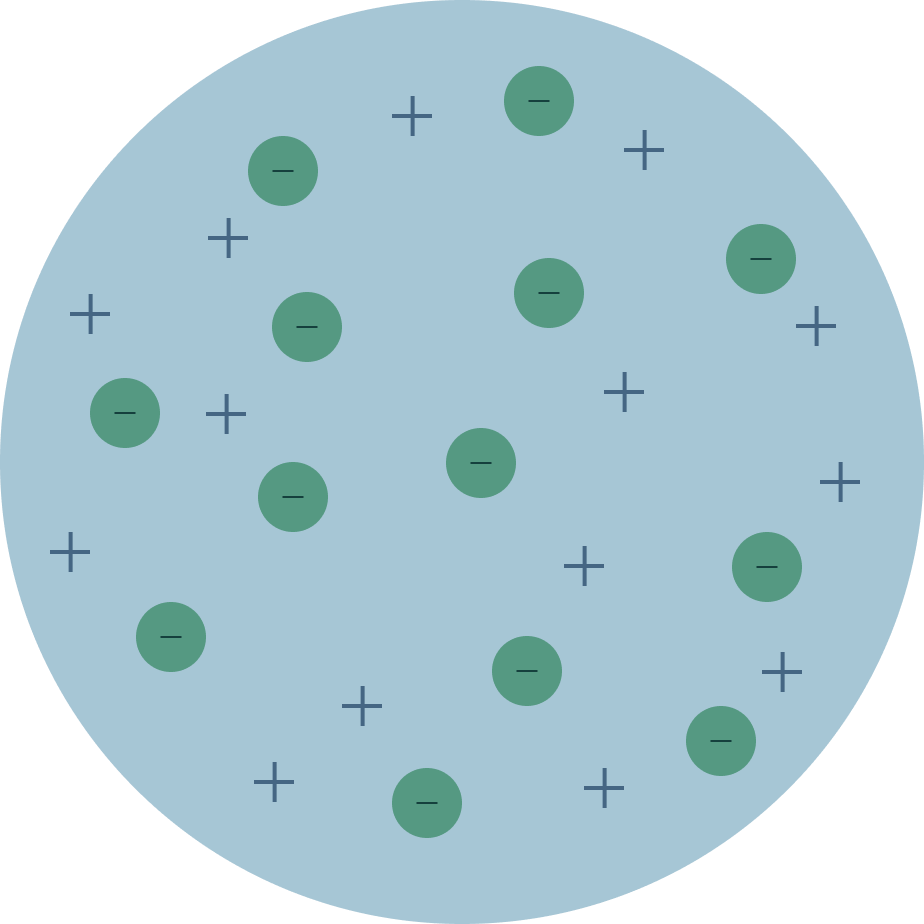
Plum pudding model
JJ Thomson discovered the electron toward end of 19th century and created the plum pudding model
The model= positively charged “dough” with negatively charged electrons
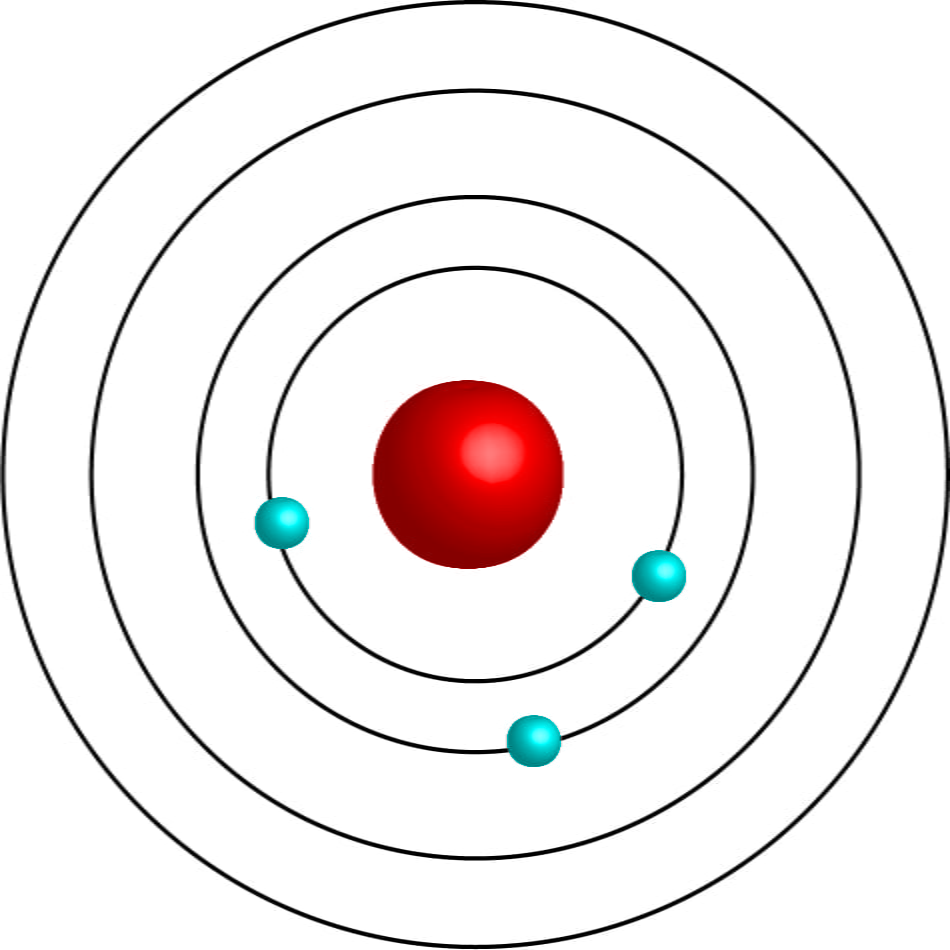
The bohr model
proposed in 1913 by Niels Bohr
There is a small concentrated nucleus
The nucleus has a postive charge
Electrons orbit the nucleus at fixed distances in shells
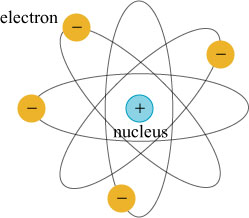
The nuclear model
Proposed in 1911
Positive nucleus in centre
Electrons exist in cloud around nucleus
How can electrons be knocked out of the outer energy levels of an atom?
friction
When they gain enough EM radiation to leave the atom
From chemical reactions
What happens when one or more electrons are removed from an atom?
It becomes a positive ion because there is a resultant positive charge due to negatively charged electrons being lost
Discovery of the proton
Ernest Rutherford discovered that the positively charged nucleus in all material can be broken down into smaller positively charged particles. He called them protons
Discovery of the neutron
discovered by James Chadwick
Atom
Building block of all matter
Atom radius
1× 10 to the power of -10
Proton
Positively charged particles with a relative atomic mass of one unit
Neutron
No charge but with relative atomic mass of one unit
Electron
Negatively charged particle with almost no mass (1/2000 the mass of a proton or neutron)
How many protons, electrons and what is overall charge of alpha particle?
2x protons
No electrons
Overall charge of +2
Atomic number
The number of protons found in the atom of a specific element.
Each element has a different atomic number.
Elements in periodic table ordered by atomic number therefore the number of protons determines which element an atom is
Unstable nuclei
Some nuclei are unstable - that is because of an imbalance in forces within the nucleus
Forces exist between particles in the nucleus
Some nuclei are unstable because of too few or too much neutrons or their large size
Radiation
Unstable nuclei can emit radiation to become stable
It is usually in the form of a wave or high energy particle
As radiation moves away, it takes some energy with it, which reduces the overall energy of the nucleus - this makes it stable
Process of emitting radiation is called radioactive decay and is a radom process