ECON 2200
 Call Kai
 Learn
Learn Practice Test
 Spaced Repetition
 Match
Match Flashcards
 Knowt Play
1/24

There's no tags or description
Looks like no tags are added yet.
Name | Mastery | Learn | Test | Matching | Spaced | Call with Kai | Chat |
|---|
No analytics yet
Send a link to your students to track their progress
25 Terms
A demand curve illustrates the
A demand curve illustrates the marginal benefit for consuming one more unit
Cotton is a normal good. All else equal, when the economy went into recessionary periods during the early 1800s, the demand for cotton
Decreased, decreasing producer surplus in the market for cotton
During the American Revolutionary War, the British counterfeited large numbers of Continentals. All else equal, this caused the equilibrium price-level for Continentals to
Increase, and the equilibrium quantity of Continentals to increase
During the first period of colonization into America, most indentured servants were
a. male slaves
b. female slaves
c. children slaves
d. None of the above
None of the above

Consumer surplus in the market above, with no tax, equals
area “a + b + c”
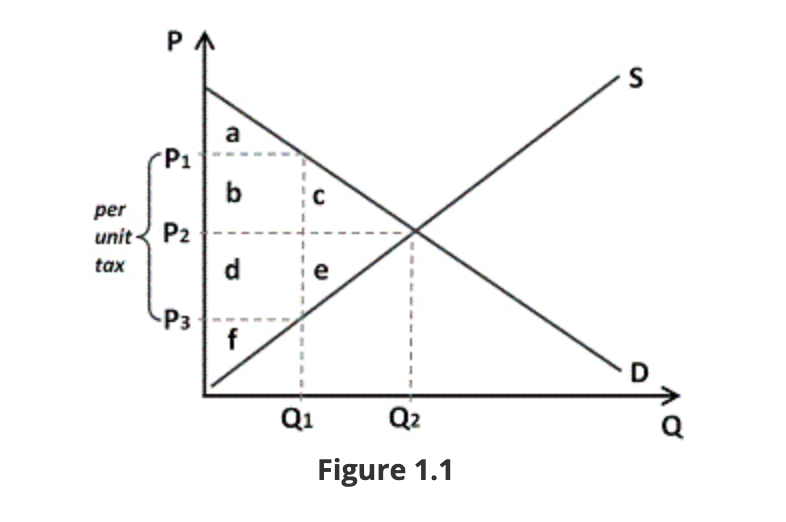
Producer surplus in the market above, with a per unit tax of P1 minus P3, equals
Area f
Given upward sloping supply and downward sloping demand, a $1 excise tax on any good or service causes the price buyers pay to increase by
less than $1
In a competitive labor market, if the wage is lower than the equilibrium wage,
a shortage of workers exists, and the wage must rise
Suppose that new discoveries of valuable resources in America increased the demand for indentured servants. Holding cost of the voyage and other things the same, newly immigrating indentured servants' labor terms (years of service)
decrease
The Sugar Act of 1764 placed new excise taxes on wine in the colonies. In the market for wine, this act caused consumer surplus to
decrease, and producer surplus to decrease
During the early 1800s, Federalist views
supported a strong, centralized government
During the early 1800s, the construction of canals caused the price that sellers received for goods to
increase, and total surplus in these markets to increase
Early during the Industrial Revolution, unskilled and skilled labor were complements of production. All else equal, a decrease in the wages paid to unskilled labor caused the equilibrium wage for skilled labor to
increase
From 1818 to 1819, the Second Bank of the United States
pursued contractionary monetary policy, which led to the Panic of 1819
In the market for textiles, increased specialization from the Industrial Revolution caused consumer surplus to
Increase, and producer surplus to change uncertaintly
Before the Civil War, plantations were perfectly price discriminating monopsonies. After the Civil War, they became one-wage monopsonies. Total surplus in the market for labor
Decreased
Eli Whitney’s invention of the cotton gin, in the short run, caused consumer surplus in the market for slave labor to
Increase

Plantations' breeding of slaves increased the supply of labor. Given perfect price discrimination by plantations, this increase in supply caused producer surplus to increase by
$0

Before the Civil War, plantation owners earned what area in economic welfare?
are a + b + c + d + e + f + g + h + i

Suppose the graph above depicts a one-wage monopsony after the Civil War, such as a textile mill in the South. The firm pays a wage equal to
h + i
In the long run, technological advances that increase worker productivity cause the demand for labor to
change uncertaintly

Suppose a one-wage monopsony may sell its output for $2 each. The profit maximizing quantity of labor that a one-wage monopsony hires equals
6

What consumer surplus does a perfectly price discriminating monopsony gain from only its 4th worker?
18
The invention of the steam boat caused the price that plantations received for cotton to
increase, causing the demand for slaves to increase
Which of the following temporarily resolved the issue of whether states joined the Union as free or slave?
The Compromise of 1820