International Trade Institutions: GATT, WTO, and RTAs
 Call Kai
 Learn
Learn Practice Test
 Spaced Repetition
 Match
Match Flashcards
 Knowt Play
1/20

There's no tags or description
Looks like no tags are added yet.
Name | Mastery | Learn | Test | Matching | Spaced | Call with Kai | Chat |
|---|
No analytics yet
Send a link to your students to track their progress
21 Terms
What is the main purpose of international institutions in trade?
To provide a setting that facilitates cooperation among countries.
What is absolute advantage in trade?
When a country can produce a good more efficiently than another country.
What is comparative advantage?
When a country can produce a good at a lower opportunity cost than another country.
What does the Heckscher-Ohlin trade theory suggest?
A country will export goods that use its abundant resources and import goods that use its scarce resources.
What are trade barriers?
Measures such as tariffs that countries use to protect their domestic industries from foreign competition.
What is the General Agreement on Tariffs and Trade (GATT)?
A multilateral treaty created in 1947 that served as the basis for the international trading system until 1995.
What is the Most-Favored-Nation (MFN) principle?
A principle stating that a country cannot discriminate between its trading partners; any concession granted to one must be extended to all.
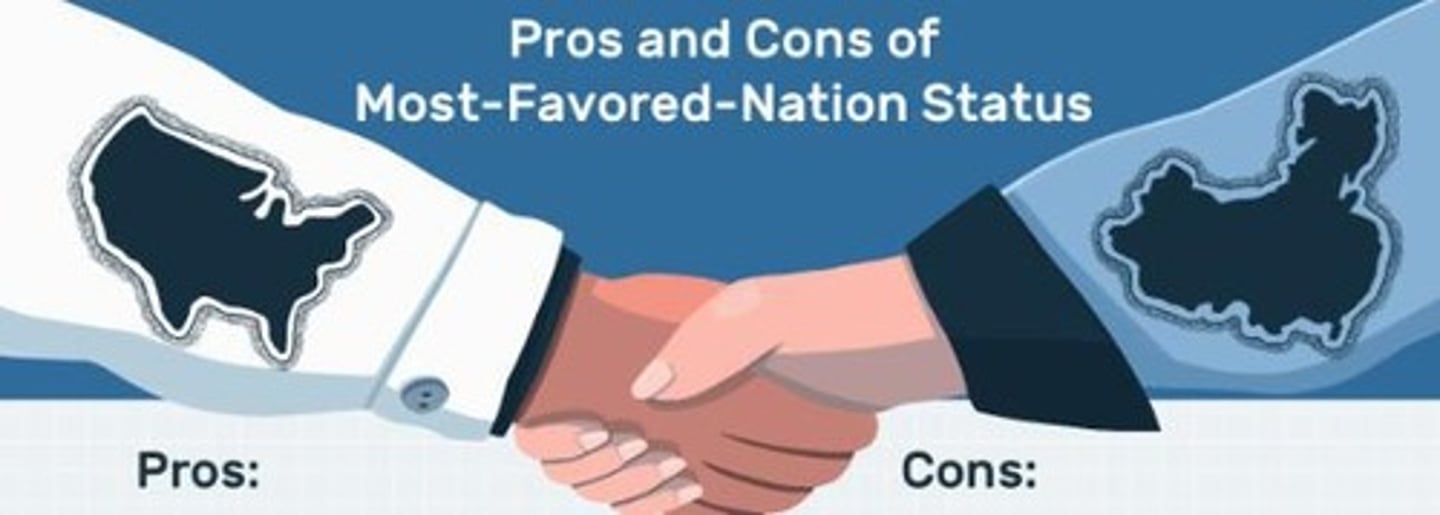
What is the World Trade Organization (WTO)?
An organization established in 1995 to replace GATT, with a focus on adjudicating disputes and covering a wider range of trade issues.
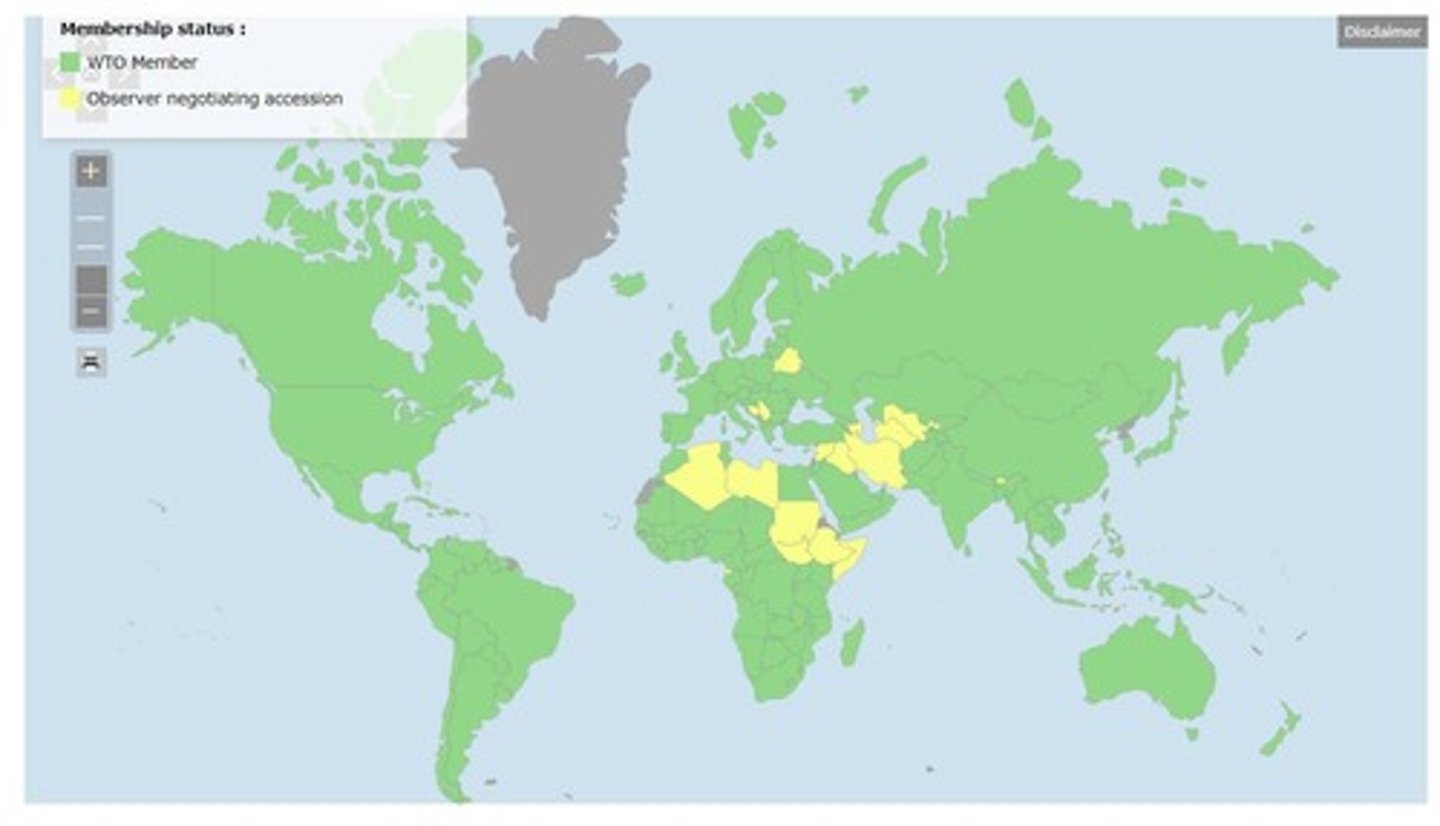
How does the WTO differ from GATT?
WTO has larger membership, covers 98% of world trade, and is better at adjudicating disputes.
What is the role of reciprocity in international trade?
It is the practice of countries granting each other similar trade rights or concessions.
What is a Free Trade Agreement (FTA)?
A treaty between two or more countries that removes or reduces tariffs and trade barriers to promote freer trade.
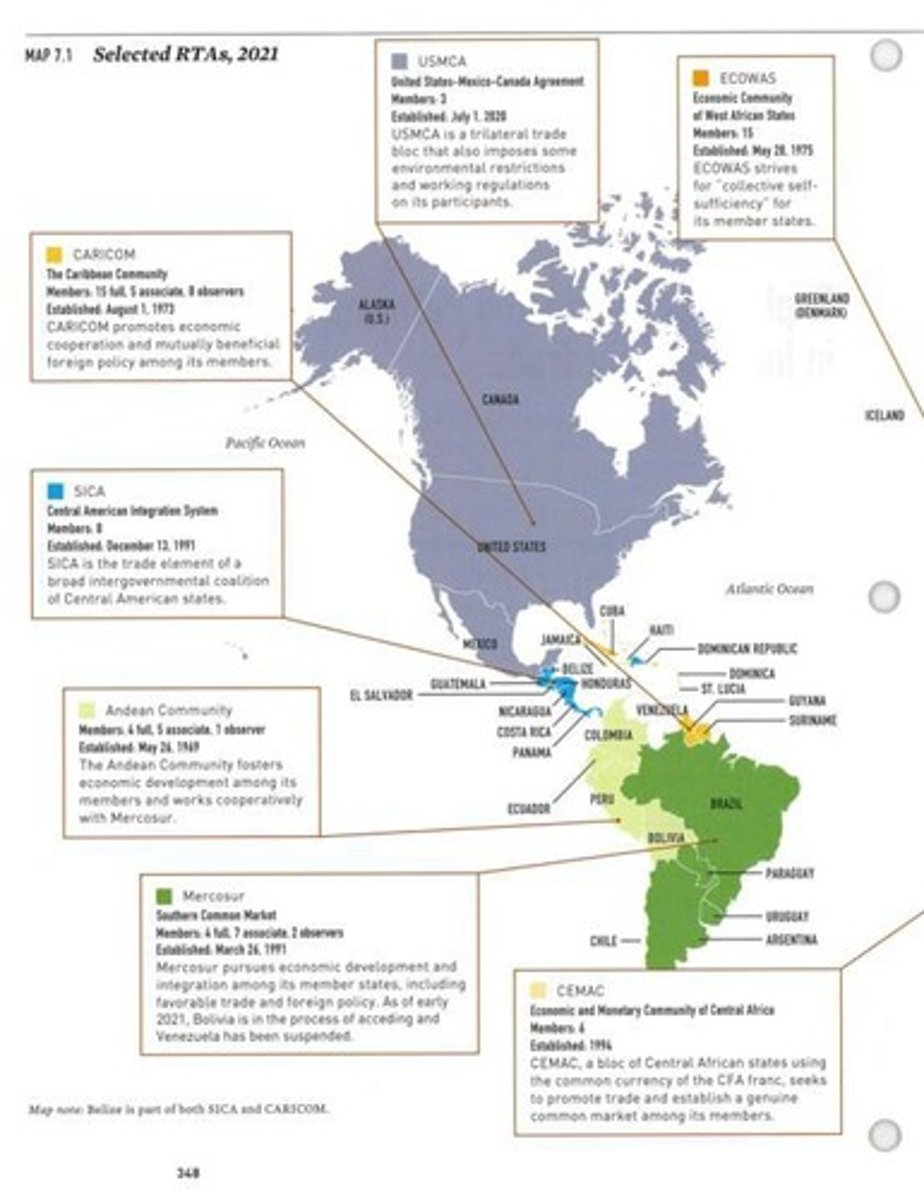
What is a Regional Trade Agreement (RTA)?
A treaty between countries within a specific region that reduces or eliminates trade barriers to encourage economic integration.
What conditions allow for temporary exemptions from tariffs under WTO rules?
If imports threaten serious injury to a domestic industry or for national security reasons.
What is the Aid for Trade program?
A program by the WTO that provides technical assistance to developing countries to build trade capacity.
What is the significance of transparency in trade policies according to the WTO?
It promotes accountability and compliance with trade agreements among member countries.
What happens if a country grants a special concession under the MFN principle?
That concession must be extended to all other WTO members.
What is the goal of the GATT?
To expand economic activity by encouraging the free flow of goods across borders.
What is the importance of monitoring state compliance in the WTO?
It ensures that countries adhere to trade agreements and commitments.
What is the relationship between FTAs and the MFN principle?
FTAs reduce tariffs among member countries but do not automatically extend reductions to non-member WTO countries.
What are the take-home points regarding international institutions and trade?
Reciprocity, GATT, WTO, MFN, and Regional Trade Agreements (RTAs) are key concepts.
Still learning (20)
You've started learning these terms. Keep it up!