CMNS 110 Final
 Call Kai
 Learn
Learn Practice Test
 Spaced Repetition
 Match
Match Flashcards
 Knowt Play
1/120

There's no tags or description
Looks like no tags are added yet.
Name | Mastery | Learn | Test | Matching | Spaced | Call with Kai | Chat |
|---|
No analytics yet
Send a link to your students to track their progress
121 Terms
What is the medium is the message (1)
Not entirely clear… but basically
The form of media is far more influential on society than its content
It is the screen that is influential opposed to what appears on it
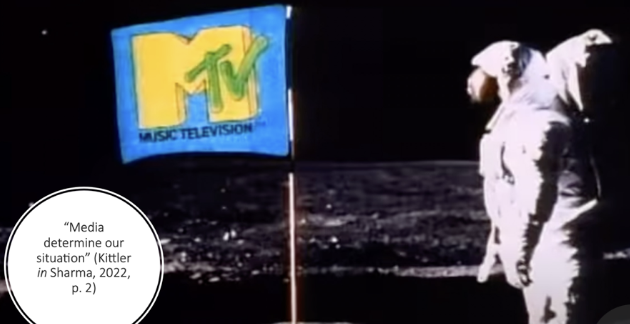
Media determine our situation
Media shapes EVERYTHING
What is media? (1)
Media is any extension of ourselves
A technology is not merely a tool, something you use, but entirely shape and control. Rather, for McLuhan, THE TOOL ALSO USES YOU, it shapes you, you are not entirely in control at all, it controls the entire context in which you use it as well.
Focus on how media forms and entirely shapes society’s values, roles, and meanings
why are lightbulbs significant? (1)
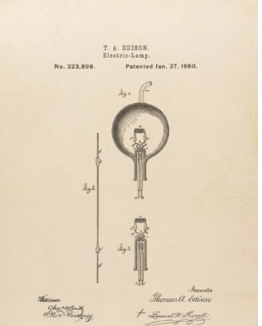
most important because it “changes time” - our light when the sun goes down
Transformed the world
It is the medium that shapes and controls the scale and form of human association and action”
Before the electronic age, it was much more difficult to distinguish the medium from the message, but now, with electronic media, we can see it much more clearly
Critiques and reckonings of McLuhan (main points) (1)
interpret his notion that media determine culture as a singular effect upon the same singular universal human subject
take his analysis without taking his attitude
rejects the focus on the message as a singular change upon a singular subject and instead locates the multiplicity of unaccounted changes
Light as medium (1)
It is the medium that shapes and controls the scale and form of human association and action”
A house as medium (1)
More abstract
For McLuhan, there's an artificial distinction between how we think about music or a book vs how we think of an article of clothing or a house or a car
“Before the electric speed and total field, it was not obvious that the medium is the message. The message, it seemed, was the “content,” as people used to ask what a painting was about. Yet they never thought to ask what a melody was about, nor what a house or a dress was about. In such matters, people retained some sense of the whole pattern, of form and function as a unity”

why is language is magical?? (2)
We can create something out of nothing
We can say something and it “becomes real”
If someone says "don't think about the pink elephant” you’ll have a picture of a pink elephant in your head
By the use of language, a set of symbols that we share in common, now exist within our symbolic world
Pink elephant is a function of language
whats Involuntary communication? (2)
How a lie detector works
Measures communication from our bodies that we can't control with our minds - skin elasticity, sweat, or blood flow to our face
Everything that others know about you and that you know about others is through some form of communication
To live is to communicate
why can communicaiton be stressful? (2)
Communication can be stressful because we know that what we are communicating shapes how we're seen
why is 4:33 - John Cage significant? (2)
Silence is a type of language
It communicates
Content versus Relationship (2)
The relationship defines the content
The relationship level is always the ‘truth’ – For example, when you say “what I meant was” what you are really saying is the content has been confused by a misreading of the relationship.
The relationship tells you how to understand the words
Can be difficult to recognize humor/sarcasm

Prevarication (2)
“The fact of avoiding telling the truth or saying exactly what you think” (not necessarily lying)
Someone asks how r u and even though ur having a bad say you say your fine
”To speak or act in an evasive way”
Often done to preserve relationships, not to harm them
Avoid hurting others feelings
We prevaricate to not jeopardize our job
Tell the manager his plan is great even it’ll probably fail

Language is: (2)
Representative: This is my partner. This is my car. This is my house. You dropped your keys.
A tool: Instructions.
Ideological: Certain forms of speech carry certain kinds of ideas. For example: conservative, liberal, progressive, regressive, taxation, sharing, etc.
Magical: Certain words can create possibilities. For “Please” and “thank you”. They can communicate politeness, character, kindness, love etc.
Negotiated: meanings change, for example “literally” now means “figuratively”. Or something can be called “sick”, which means “cool”.
“Human beings create language, then language creates us” (Rodriquez, 2020, p. 11).

FIVE TYPES OF COMMUNICATION (2)
NON-VERBAL (symbols, signs, and gestures)
PUBLIC (formal or goal-oriented)
MASS (widely disseminated)
INTRAPERSONAL (communication with ourselves, talking to yourself, thoughts)
INTERPERSONAL (communication with a small group of others)
What is Media Ecology? (2)
Thinking about ecology as what describes the relationship between organisms within an environment (or a context)
The relationship that organisms have within their environment and that when you change some aspect of that environment, in this case media, you completely change the relationships that all those organisms have with one another
what makes the The Aspendos Theatre special? (2)
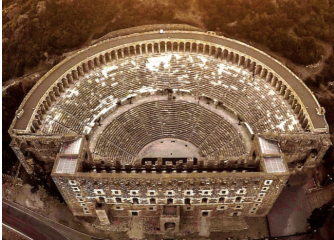
No microphones, no amplifiers, no speakers and no mixing boards, yet every word spoken or note produced by a performer on the stage could be heard by the audience
Represents the peak of a type of acoustic and listening technology that went virtually unchanged for over 2000 years
Until the invention of the radio and amplification
In the 1900 somethings, you could actually see the person playing the music/talking
who created the Phonograph (soon to be gramophone) and why was it useful? (2)
Thomas edison - phonograph - most popular
Sound recording technologies developed rapidly in the late 19th century
Radically disrupted how European and North American cultures consumed music and the music industry itself
Until the invention of the Phonograph and gramophone, for someone to hear music they were either playing it themselves or in the same room as the person playing it
Music recording artists
Before this the music industry was sheet music (used to be print outs that people could play at home)
what is Media (mediums)? (2)
Space and time binding technologies.
refers to an intervening substance through which signals can travel as a means for communication
mass media constitute powerful one-way systems for communication from the few to the many
“The issue then is how to distinguish the ways in which different media, or different modes of communication – such as spoken language, writing, print, or electronic visual media – will tend to privilege particular modes of understanding and interaction in human communication” (Morely, 2005, p. 213).
Medium: in between
Mediterranean sea - between central europe and north of africa, sits between 2 giant land masses (means in the middle of land, or the space between)
Media is something that is in between
Can think of media as things that bind together or collapse space and time
Socreates (2)
first skeptic of new communications technology
Harold Innis – The Bias of Communication (1951): what was his argument, and what were his distinctions?(2)
Different types of media promote different types of social and political formations
Argued there's a unique distinction between time biased media and space biased media
Looked at 2 significant and powerful civilizations as examples
Time biased media - Egypt
Stone + clay / durable + heavy
Duration + permanence + difficult to move
Written in stone → culture of permanence that could extent and endure across significant quantities of time
Encourages a higher archile and sacred based society bc of the permanence of the medium of communication and organization - stone
Space biased media - rome
Papyrus + paper / light + portable
Speed + space + easily transportable
Encourage territorial expansion
Highly mobile
what is Meta communication? (3)
meta is a statement that is self referential
In this case: communication that refers to communication/an ad that refers to an ad
what are Direct effects? (3)
Media causes behavior. For example, people who play violent video games become violent people.
what are Indirect effects/ Limited effects? (3)
Media affirm pre-existing behavior. Due to a host of sociological/psychological factors, specific audiences are more likely to believe some messages over others. If there are effects, they are more cumulative than immediate.
when talking about media, what are No effects? (3)
people use media for their own purposes. Humans are autonomous/rational beings that make their choices independently of social influence.
Theories of ‘direct’ effects (3)
Influenced by the psychological/behavioral theories of behaviorism and the use of propaganda in WW1.
Concerned primarily with commercial and government uses for mass media, as well as emerging fears around social/cultural impacts of media.
Media has the power to significantly direct human behavior and negatively impact human psychology
Key thinkers: Laswell, Wertham, Shannon & Weaver.
Claude Shannon & Warren Weaver - Transmission model/one step model (3)
Focus on the process of communication
Theorize communication as a one way activity
Good communication is about developing ways to make the process more efficient, limiting the noise
1949 model
Imagines communication is a very instrumental/efficient set of terms and parameters
Purpose of communication in this context is to convey a message from one entity to another and researchers should focus on how best to do that
Importantly, shannon and weaver were motivated by ideas of communicative efficiency, and as such they asked questions about how can communicators do things to ensure messages are received as intended
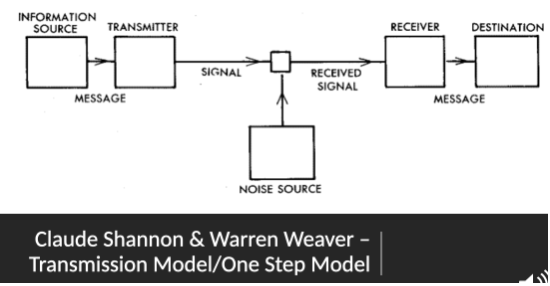
what are the 2 types of noise? (3)
Noise on the channel is generally called technical. Technical noise refers to things like static, volume, dropped calls, and so on (science).
Semantic [meaning] noise refers to those things (humanism) that interfere with a message having to do with ambiguity, meanings, cultural facts, and so on.
what is the Transmission model? (3)
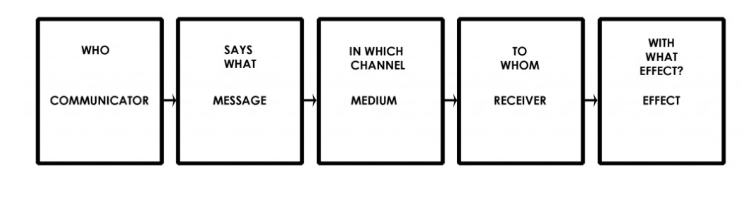
“Who says what to whom, through what channel and with what effect?” (Laswell in McQuail, 2011, p. 33).
Focussed on process, not content
One-way flow/Sender-receiver model
Scientific and technologically focussed
How to ensure the message is received as intended
Concerned with efficiency, fidelity, and ‘successful’ communication
Goal: how to send a message with the least amount of errors. Great for aeronautics or satellite communication, but critiqued as not a sufficient model for human-to-human communication.
Laswell’s chain of communication: (3)
Bases theory of propaganda
Also portrays the ubiquitous phrase in that communication studies as it relates to direct effects research or one way communication ideas
The study of communications is who says what in which channel to whom with what effect
what does propaganda tell us about media? (3)
Can think of propaganda in its dictionary definition
Propaganda during WW1 referred to Germany as a monster, masculine popularity and revenge and others still appeared to shame
Just because you post something doesn’t mean it’ll be popular
SEO - search engine optimization
Various companies and influencers try to teach aspiring influencers and companies how to get their messages heard on social media
Old propaganda shows us there is no guarantee of how an audience will receive a message even after 100 years of communications study and that there is a high degree of uncertainty about what will work and what won’t
elements of Behaviorism and how does it relate to media? (3)
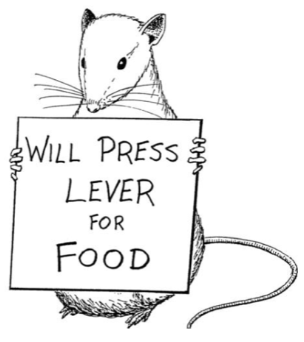
Rat pressing lever for food
Positive reinforcement and negative reinforcement
Classical conditioning
Stimulus/response theory of human behavior
B.F. Skinner: “Give me a child and I will shape him into anything”
Many of the early theorizations of how communication worked was in behaviorist lines
External inputs to the mind or body can be directed in such ways as to produce any type of desired behaviour
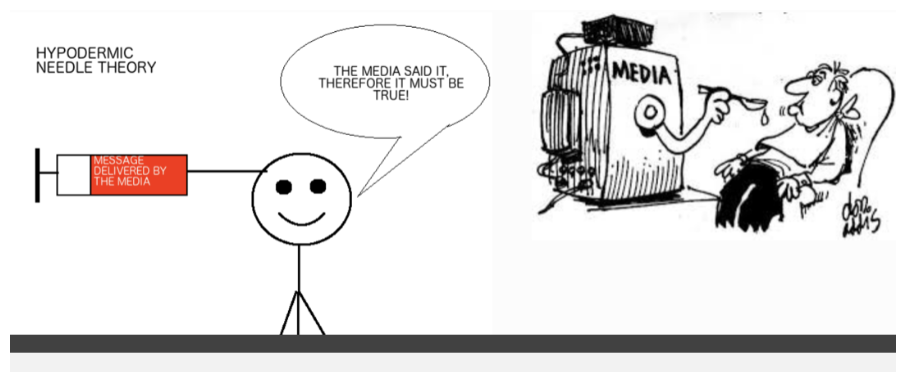
Magic bullet theory/hypodermic needle (3)
Imagines the audience as passive and homogenous, who are essentially blank slates of the mind, upon which media and yield a massive effect
In this line of thinking, the medium, television, radio, or even the internet is the needle or syringe, and the message or the thing within the syringe (propaganda or tiktok video) is the dose
The medium (needle) does into your head and the dose (message) is injected
Like all behaviorist models, presumption is that the audience/subject doesn't get the message or if your behaviour doesn't change as was intended, then you just up the dose of the message
Very few humans if any, respond to media this way
Wertham assumptions about media effects on the young: (3)
Passivity (encourages passivity)
Misconceptions (fosters bad values about the world)
Imitation (children imitate what they see)
Identification (children primarily identify with the villain)
Desensitization (more exposure leads to greater acceptance)
Critiques of Wertham (3)
Wertham assumes that children cannot tell the difference between real and fake.
Wertham assumes that children see “television and comics as mirrors of the real world” (Laughey, 2008, p. 16) as opposed to television as messages about the world.
Media are held up as “scapegoats” societies will without any consideration for questions of family, class, education, culture, poverty etc (Laughey, 2008, p. 16).
The research misses the “bigger picture”, society as a whole (Laughey, 2008, p. 16).
Dubious research methods: a conclusion in search of evidence.
Theories of ‘indirect’ effects and ‘limited’ effects (3)
Concerned with long-term impacts of media consumption.
Emphasis on the ways in which media inform and affirm existing patterns of believe and social practices.
Media have more cumulative than direct effects.
Audiences use media (and media messages) in unique, unexpected, and, at times, oppositional ways.
Response to direct effect traditions but also our perspectives that take into account much more seriously the role of the audience as well as the role of culture and broader context in which media is situated
Five reasons for panic according to Cantril (war of the worlds) (3)
1. Radio was – and still is – an accepted medium for important announcements.
2. The named speakers during the broadcast had prestige (including four Professors of Autonomy, Captains, Generals and the Secretary of the Interior).
3. All the speakers were baffled about events, despite their expertise.
4. Specific incidents were reported in specific places (e.g. smoke in Times Square).
5. The total experience (or context) of listening to the broadcast added to the tension caused by the content of the play.
Indirect effects model - two step flow (3)
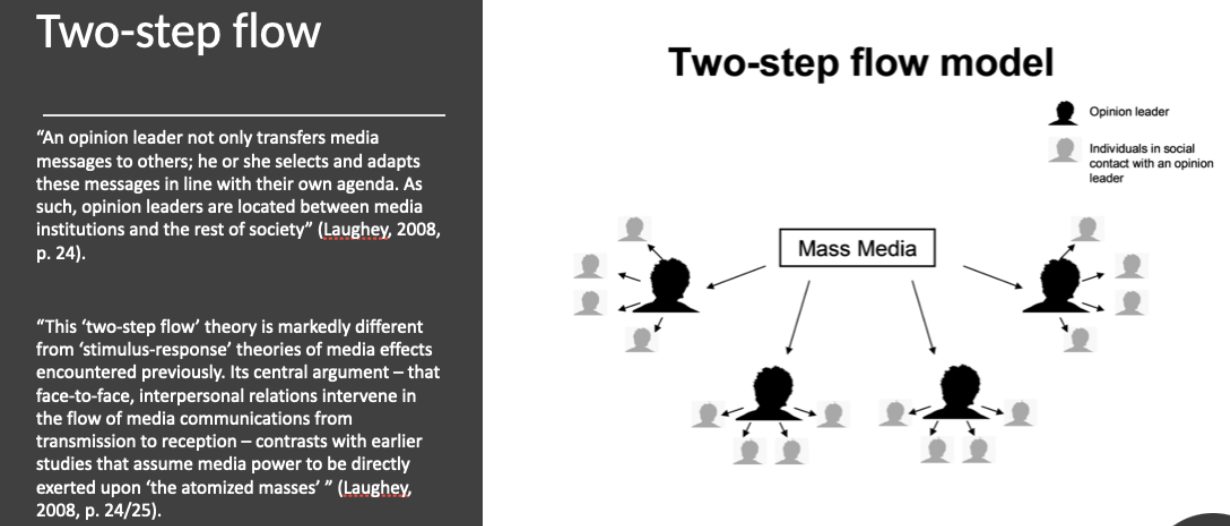
As opposed to the one way flow of communication described by shannon and weaver, this model suggests that impact or reception of a message is uniquely shaped by public opinion leaders
Opinion leaders not only transfer messages to others they select and adapts these messages in line with their own agendum, as such, opinion leaders are located between media institutions and the rest of society
what type of flow do Influencers use? (3)
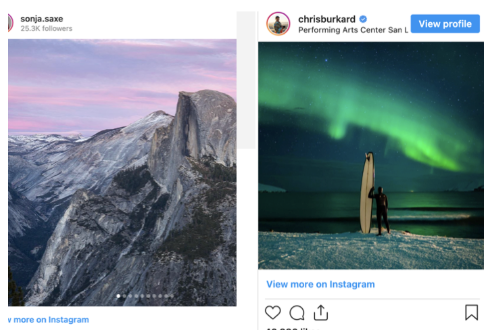
The two step flow model suggests that how we as individuals assess messages is significantly based upon how those that we trust assess them
As such, if a person that you admire or believe in either they be a popstar or friend or family member if someone that you trust or admire suggests to you that you ought to adhere to a particular perspective on an issue or buy a particular product you are much more likely to accept this message than if it were to come from a stranger or someone you don’t like/distrust
Cultivation Theory/analysis – George Gerbner (3)
Media effects build up over time (Laughey, 2008, p. 20).
Not a one hit wonder, but rather the cumulative effect of one particular set of stories over a long period of time that begins to permeate throughout society in a way that mass audiences, both individuals and groups begin to accept some cultural ideas or political ideas as normal
Ex. celebration of american militarism seen in films like top gun (1980s) and sequel released in 2020s - top gun maverick
Mean World Syndrome (3)
The more crime and violence that one sees represented on television or social media, the more one is likely to believe that they live in a mean and dangerous world
what are Uses and gratifications? (3)
“People use media actively for their own purposes. People know what those purposes are can articulate them. Despite individual differences in media use, basic common patterns exist among people” (Pavlik & McIntosh, 2018, p. 367).
From ‘effects’ to ‘needs’ (Laughey, 2008, p. 26).
“According to this set of theoretical concerns, audiences go looking for certain types of media messages in order to fulfil existing needs” (Laughey, 2008, p. 26).
Less a theory and more a reaction in a sense to the limits of behaviourism to explain the effects of media in a meaningful way
Critiques of uses and gratifications (3)
“It has been criticized for being hard to test empirically and for circular reasoning. In other words, it’s hard to know which came first – the social/psychological need or the media use” (Pavlik & McIntosh, 2018, p. 367).
One of the weaknesses of this perspective is that it wants to throw away the entire realm of social context in its entirety, no explanation for how our media desires are formed in the first place
*The Uses and Gratifications theory represents more the decline of behaviorism in media studies than an ‘accurate’ reflection to media ‘effects’ (Laughey, 2008, p. 27).
Stuart Hall 1932 -2014 (one of the most significant and influential study scholars in 20th century): what are his main concepts? (3)
Encoding/Decoding
Meaning is never guaranteed.
Encoding happens at the place or level of production
Decoding happens at the level of the individual
Dominant Code
Negotiated Code
Oppositional Code
what are the 3 elements of Convergence? (4)
“The coming together of computing, telecommunications, and media in a digital environment” (Pavlik and McIntosh, 2018, p. 7).
Technological (smartphone - music, phone, camera, internet computer device)
Economic (economic consolidation - facebook buying instagram)
Cultural (globalization of particular cultural forms and popular culture as well as the centralization of certain platforms for the dissemination of culture)
what’s the main idea of convergence? (4)
Idea and phenomenon that’s been a consistent topic in media and communications
Multiple things are converging into one
Three types of convergence that are converging that are into one in the present moment
Hegemony (4)
Idea of hegemony or manufacturing of consent, informs a significant array of communication theories and approaches
First conceived by Antonio Gramsci in the 1930s
Critical media studies - significantly invested (at least historically) in Gramsci’s ideas about how capitalism prevails against critique and how media systems are themselves a site of ongoing social struggle
In Gramsci’s view, oppression is never total, and dominant forces never have complete control which is why Gramsci sees the media as so important as a site of social struggle
Notion of promise
For Gramsci, dominance works in two ways: (4)
Coercion: State sanctioned violence, prisons, police, security forces, armed forces, legal system, fines etc.
Consent (hegemony): Uses the mechanisms of civil society to encourage compliance – mass media, family, trade unions, education systems, religious organizations, social clubs to persuade the subordinate classes that the rule of elites is legitimate.
What Is Culture? (4)
An on-going, dynamic, social process
A set of practices for sharing meanings that form the basis of how we live
A set of codes we use to communicate about and interpret our world
Shared culture enables people to communicate (using the codes of that particular culture)
WHAT IS POPULAR CULTURE? (4)
Form of culture, characteristic of 20th-century technological societies, that emphasizes the trivial and the routine in its artistic and various other forms of representation.
Pop culture includes television programs, sports, reality television, advertising, comic books, popular music (rock n’ roll, hip hop, etc.), and the like.
Broadly consumed and most often commercial in origin and intention.
The History of Popular Culture – Susie O’Brien (4)
Uses a book about playing street hockey in canada
What we understand as popular today, is fundamentally connected to the historical relationship to public space and the breakdown of traditional society
Importantly, O’Brian emphasizes the emergence of new media technologies, in particular those that enable the mass dissemination of cultural goods to large urban audiences as essential to the creation of the popular, along side privatization of what was communally used spaces
HIGH/ELITE CULTURE (4)
Culture defined as the greatest works of civilization; a means to perfection and exposure to great human works, attainable by an elite freed from labour.
Public spaces and institutions of high culture: museums, art galleries, libraries, concert halls, gentlemen’s clubs.
Involves certain rituals (i.e. dressing up to attend something, paying a lot of money for access, insuring a piece of art)
Claims to be more ‘authentic’, original, meaningful.
Saw amusement and other working-class behaviours as inferior, or dangerous.
LOW/MASS CULTURE (4)
Commercial attractions and novelties
Movies, tabloids, public sports, street fairs, music halls and pubs, as part of a separate culture for the working masses.
Can also include “knock offs” of high culture.
Accessible to a broad audience and commercially popular.
Saw amusement as restorative, potentially enlightening, and liberating
how is high/low culture historical and political? (4)
Historical - they emerge during a specific historical frame of time and they are informed by intersecting historical forces
Political - popular culture finds its origins in working class culture and politics. Which during the late industrial revolution period begins to threaten both sensibilities, political comfort, and political cultural power of upper middle class and elite classes in Britain
What does O’Brian suggest about how we think about high/low culture? (4)
how we think about popular or the popular is deeply shaped by historical distinctions between communal, non commercial enjoyment, and commercial entertainment which emerges during the industrial era and a development of mass media technologies like radio, film and television
what does Susie O’Brien say about stigmas about pop culture? (4)
Stigmas about popular culture are rooted in working class histories and attempts by elite social reformers to control and shape the lives of the poor and the working class
The motivations for this control are complex and interwoven and as O’Brian notes they’re deeply rooted in fears of working class and their revolutionary potential
But also out of compassionate reformers, however misguided, who desire to enrich the lives and cultural experiences of the Urban poor in the early 20th C who are not able to attend things like libraries, or museums.
1835 British Highways Act – Outlawed the playing of games on public roads, whats the Summation of the argument? (4)
Summation of argument - industrial revolution as social landscape in which traditional culture is sublimated or subsumed or disappeared through a series of economic, technologic and political transformations in Britain
Impacts so significant that much of what we know as popular culture today and the various ideas, tensions, and debates around them find their origins and definitions within this time period
Specifically, she identifies several important shifts in the late 19th C related to the restriction of public places in exchange for private property
Enclosure of formally public space
Public space is essential to public pop culture
Argues that you can’t have a traditional culture without the communal space or non commercial space in which that culture can emerge
Consequence of this division - separation between sites of work and sites of recreation, play and culture
Elements of Traditional culture (4)
Shared property
Non-commercial
Agricultural and rural
Organic
Work, creativity, & leisure connected and situated in place
Upper middle class & elite class
Often romanticized
Elements of Popular culture (4)
Private property
Commercial
Industrialized and urban
Manufactured
Work, creativity, & leisure separated and alienated
Working class
Often critiqued
Key takeaway from pop culture material (pop culture as a contested space) (4)
the idea that the popular and what is considered popular is NOT inevitable. Rather, the popular is political.
Popular culture, like traditional culture, is the result of complex interwoven relationships of cultural forces, histories, and practices. As well, the popular is also associated with the idea of the democratic and the mass
And here, the ideas of media studies of Hall, are deeply informative
Between the lines, Hall here is also talking about hegemony and the struggle over ideas in culture through popular forms
Dominant understandings of the ‘popular’ – Stuart Hall (4)
Cultural content that is widely circulated and commercial in orientation (ex: Dancing with the Stars). Popular films, books, movies, music, sports etc. This type of culture is often derided as unoriginal, inauthentic, or generic. In doing so it is positioned against ‘higher’ forms such as ballet or that which arises independently (a local ‘indy’ band versus mainstream music, or a limited-edition pop-up coffee shop versus Tim Horton’s).
The cultural forms consumed by the ‘people’ or the ‘masses.’
Saw both definitions as inadequate
Argued that the popular is always contested
CRITIQUE(S) OF POP CULTURE (4)
Mass culture as a means of social control
Hyper-consumption and preoccupations with celebrity culture detracts masses from “real” issues (such as social justice issues)
Commercialization of our social/cultural spaces
Commodification of audiences
Consumption as liberating, therapeutic, and key to happiness/escape from the difficulties of contemporary life.
“Popular” can mean something negative:
Lacking in artistic integrity on account of having become widely appreciated.
Losing original authenticity on account of having become widely appreciated.
Social media “likes” as currency.
For Hall, at the root of popular culture is a very deep tension.
what does Dallas Smythe mean by ‘free lunch’? (6)
Using free media platforms such as facebook, is not merely a consumptive act
Rather, Smythe argues that there’s a significant productive component to our viewing/using of social media
The commodity produced by viewers or social media users is the audience - that audience is then sold to advertisers
For Smythe, audiences are offered a free lunch by media producers via free tv shows, news, cartoons, or free access to social media platforms like twitter, facebook, and tiktok, and in return, audiences offer their attention which is then sold to advertisers
Importantly, for Smythe, this means that the commercial business imperative of media will always supersede or take president over its content
Stuart Ewen – All Consuming Images (1988) - what did he spend most time talking about? (6)
Process where meaning can be taken from the surface on one thing and attached to another is what Ewen spends the majority of his chapter writing about, the process and history of this
For Ewen, the profound difference between the age of photography (commercial photography) and the which preceded it is that in the age of commercial photography, meaning can now exist on the surface of things at the level of mass scale
Literally, an image can be taken of one thing, and then used to give a completely different set of meanings to another - which we see in the apple ad
A set of images is taken of nature or the environment and then used to give meaning to this mass produced commodity
This process can be infinitely repeated in the world of commodities
For Ewen, this process has particular implications when it comes to politics
what does Susan Sontag argue? (6)
Argues that images are essential to contemporary governance and consumer culture
Social change is replaced by a change in images
why is Lunar Orbiter 1 significant with respect to Earth Rise? (6)
Earth rise isn’t the first image from the earth rise perspective from space, this is
Pic in black and white, therefore cannot be the earth as it is

what does Fredric Jameson say about postmodernism? (6)
Used to understand Contag’s claim
Post modernity, or postmodernism
Mid 20th C art aesthetic, architectural, and cultural form that rejects many of the claims of modernity itself - the end of fixed meaning, end of grand narratives, and the end of grand truths
A world where replicas circulate with easy meaning as “the real thing”
Fredric Jameson - it's easier to imagine the end of the world than end of capitalism
what does Stuart Ewen say about things with no fixed meaning? (6)
In the political realm, the post modern fluidity of meaning, where meaning is no longer fixed, where signifiers and signifies can be attached and reattached, this is cause for concern
With no fixed meaning, anything can mean anything, and this applies to the political sphere as well which is where Ewen is drawing his concern from, for, and about
In a highly mediated world, Ewen argues that image becomes supreme over substance. We care more about the aesthetic appeal of a person than their policies or politics
The origin of the classic statement ‘style over substance’
Argues that audiences and voters become seduced by the language and visual culture style and this is all enabled through the image within the post-modern context. You can appear as one thing, because meaning is on the surface and yet you can be another
what are the 3 words for consumer culture in the coke ad? (7)
Freedom, individuality, self-actualization
what are advertising’s two characteristics? (7)
marketing and social meaning
what does advertising do? (7)
Advertising than seeks to give meaning to things that do not have and inherent meaning
Commodities are empty vessels - don't have an inherent meaning, their meaning is socially produced
with the Gucci example, ads have 2 messages, what are they? (7)
1. If u look and the bag u might want it, 2. Human happiness and the broader social happiness is best achieved through the consumption and productions and goods and the marketplace and connecting our deepest desires or meaning to products
Use value (7)
the utility of an object, intrinsic to the object, independent of the labour used to create it, realized only in consumption.
Exchange value (7)
specific only to commodities, not intrinsic to the object but rather its relation to other commodities (1 Vancouver house = 100 Honda Civics), results in equivalence or equality between all objects, value is determined by the amount of generalized (socially necessary) labour embedded within the commodity (*what makes markets possible, what is ‘traded’ when you exchange cash for goods is the socially necessary labour embedded in that commodity … not the ‘invisible hand’).
What is the signification process? (7)
The term signification comes from the study Semiotics
Not smth advertisers do, but it's a way of decoding and understanding human communication
Painting done by Renie Megrete in 1929
The treachery of images
Writing says pipe but what you see isn’t a pipe at all, but a depiction of one, a representation
All of our reality is representation
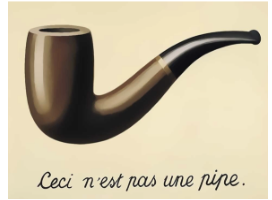
What is Semiotics? (7)
“The study of signs and symbols” (Pavlik & McIntosh, 2018, p. 36).
Ferdinand de Saussure, 1857-1913
A way to think of signs is as the basic unit of meaning within human societies
What is a sign? (7)
Anything that communicates a meaning can be a sign. Anything can be a sign depending upon what code (or referent) system the sign is a part of, for example, an image, a word, a sound, or a rock.
What are the elements of a sign? (7)
Sign = Signifier + Signified
Signifier: The form
Signified: What the form represents (the concept/idea it refers to).
Signifier: Red Octagon. The word ‘stop’.
Signified: Bring your vehicle or bicycle to a stop.
what is the denotative meaning of a sign? (7)
the literal meaning
what is the connotative meaning of a sign? (7)
the social, emotional, cultural, and psychological meanings associated with the word.
how are brands differentiated? (7)
Differentiation refers to the process of distinguishing one similar commodity (product) from another by way of meaning. This is primarily done by attaching meanings (signifiers + signified’s such images, words, colors, and sounds etc) to products.
Commodities (products) do not primarily compete at the level of use value (what the product does), but rather they compete in the marketplace at the level of meaning.
what is Branded Nationalism? (7)
Use certain signifiers to get signified a certain way
Tim hortons canada day
Robert Cialdini – The Science of Persuasion: Six Tendencies (7)
Reciprocation
Commitment and Consistency
Social Proof
Liking
Authority
Scarcity
what is ‘the gaze’? (8)
Refers to the positionality of a subject that the viewer is put in when they view something
It's the imaginary person or the viewpoint that for ex. A film is created from
Things viewed from a particular gaze then become objects of that gaze
Laura Mulvey who first claimed the terms in the 1970s referred to at the time what she described as the male gaze in hollywood film or more accurately described as heterosexual, masculine gaze which positions different audiences differently
what did Brooks and Hebert talk about? (8)
Describe how a major emptied for a feminine scholarship and black feminist scholarship in the US is to challenge the ways in which how female bodies and other rationalized groups and genders are represented in media
In making their argument they draw attention to historical racialized stereotypes such as mamis, magic malatos or isabelles among other construction
Goal is to create new cultural space for identities
What is Said’s main argument about Orientalism? (8)
The West didn’t simply describe the East—it constructed an image of the East, and that image helped reinforce Western colonial power.
what is the Critical Race Theory? (8)
“A central premise of CRT is that racism is an ordinary fact of American life”
An approach to both seeing and analyzing cultures and the various structures that are said to reinforce and reproduce racial inequality
what was the 1619 Project? (8)
It aims to reframe the country’s history by placing the consequences of slavery and the contributions of black Americans at the very center of our national narrative
Makes the argument that the fundamental event or defining element of American culture and history isn't the revolution in 1776 which is said to have birthed America appeals to freedom and liberty, but rather, the defining element of American culture is an event ~150 years earlier on the coast of Virginia in 1619
what is ideology? (10)
“A system of ideas and ideals, especially one which forms the basis of economic or political theory and policy” (dictionary definition)
What are Karl Marx’s Theories of ideology (in short)? (10)
False consciousness.
Ideology is rooted in material experience.
For Gramsci, dominance works in two ways (10)
Coercion: State sanctioned violence, prisons, police, security forces, armed forces, legal systems, fines etc.
Consent (hegemony/the manufacture of consent): Uses the mechanisms of civil society to encourage compliance – mass media, family, trade unions, education systems, religious organizations, social clubs to persuade subordinate classes that the rule of elites is legitimate.
Competition for ideological consensus – Antonio Gramsci (10)
For Gramsci, any claims to common sense or an objective reality are necessarily ideological. In his view, there is a permanent forever war of ideas about who and what interest get to define common sense and common experience within any society
Theories of ideology – Louis Althusser & Slavoj Žižek (10)
“The imaginary relationship of individuals to their real conditions of existence” (Purdue, n.d., para. 2).
There are no ‘real’ conditions of existence, there is only that which we construct around us using the images, language, and cultural material available to us. The world is inherently constructed by symbols and therefore inherently ideological. There is no ‘real’ or actual world.
Both an ideological process and a social one
Ex. the same working class person could come up with several different conclusions about their class position
What is the “Culture Industry”? (Fast and Furious 9) (10)
“The systematic application of the principles, procedures, and values of industrial capitalism to the creating and marketing of mass culture” (Gunster, 2012, p. 290)
The culture industry critique is part of the larger critical theory tradition which seeks to explore and expand the contradictions that define and reveal the working of capitalism
The Culture Industry ‘thesis’ (10)
“Capitalist mass media turn[s] people into obedient consumers, making them willing victims of exploitation, and thereby ensuring the survival of capitalism itself” (Poe, 2011, p. 4-5).
Culture industry critique
The culture industry thesis originates with a set of scholars who are most often collectively referred to as The Frankfurt School
The Culture Industry: Enlightenment as Mass Deception (1944): what world view does this describe? (10)
Describes a world view in which capitalism, mass production, and advertising have produced a world in which real freedom isn't possible and that the masses as they would’ve thought as audiences were essentially trained by the culture industry to desire the products that the culture industry itself produced
For them, this desire came at the expense of true meaning, freedom, and existence
Critiques of the culture industry thesis (10)
1) It is too totalizing of a critique. The approach does not see the various ways that news media and culture can be used to challenge dominant ideas and power relations.
2) It negatively (and incorrectly) assumes that audiences are irrational, passive, and to make sense of the media and the culture they see.
Why consider the public sphere? (10)
It is one of the fundamental premises from which journalism draws its legitimacy/social licence/meaning/justification within the Western liberal democratic tradition.
As theorized by scholar Jurgen Habermas, the public sphere originally arises because of a new media technology – Newspapers. So when we think about communication and social change, the public sphere and democracy are directly tied to new media technologies.
It speaks to the important role that media and communication plays (and is said to play) within democratic governance and the relationship between individuals and the state.
what is the Public Sphere? (10)
The public sphere is a place where public opinion is formed
Principles of the public sphere (10)
Equality, autonomy, and reason.
Universally accessible.
Free from coercion.
Public interest as opposed to private gain (i.e. one enters into public with an ideal of what is best for the ‘public’, not themselves).
The bracketing of inequality/identity.
A space between society and the state.
Descriptive and prescriptive.
The public sphere and newspapers/journals (important quote) (10)
“The press remained an institution of the public itself, effective in the manner of a mediator and intensifier of public discussion, no longer a mere organ for the spreading of news but not yet the medium of a consumer culture” (Habermas et al, 1974, p. 53).