Comprehensive Guide to Engineered Wood and Structural Steel Systems
 Call Kai
 Learn
Learn Practice Test
 Spaced Repetition
 Match
Match Flashcards
 Knowt Play
1/130

There's no tags or description
Looks like no tags are added yet.
Name | Mastery | Learn | Test | Matching | Spaced | Call with Kai | Chat |
|---|
No analytics yet
Send a link to your students to track their progress
131 Terms
What is engineered wood?
A high-performance material created by bonding natural wood fibers, particles, veneers, or strands with adhesives under heat and pressure.
What are the benefits of engineered wood to the industry?
Maximizes usable product from each tree, conserves forest resources, and provides a cost-effective alternative to traditional timber and energy-intensive materials.
What is Glue Laminated Timber (Glulam)?
Two or more layers of graded lumber glued together with their grain running parallel to the longitudinal axis.
What is Cross Laminated Timber (CLT)?
Large panels consisting of at least three layers of timber glued flat, with adjacent layers oriented perpendicular to each other for multidirectional strength.
What is Laminated Veneer Lumber (LVL)?
High-strength members constructed by bonding thin vertical softwood veneers with parallel grain alignments under heat and pressure.
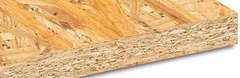
What is Oriented Strand Board (OSB)?
Multilayer structural panels made from compressed wood strands aligned in specific directions and bound with exterior-grade adhesive.
What is Particleboard (Chipboard)?
A cost-effective board manufactured from compressed wood chips, sawdust, and synthetic binders.
What are Fiberboards (MDF and HDF)?
Panels made by compressing wood fibers with resin, with MDF being highly versatile and HDF featuring smaller, more homogeneous chips.
What is the first step in the manufacturing process of engineered wood?
Log Processing: Breakdown into smaller, usable wood elements such as boards, veneers, or strands.
What happens during the drying and grading step of wood manufacturing?
The lumber is kiln-dried and graded to ensure only suitable structural pieces are used.
What is the purpose of adhesive application in engineered wood manufacturing?
A structural adhesive is evenly applied between wood elements to withstand long-term loads, moisture, and temperature changes.
Why is layering and orientation important in engineered wood manufacturing?
The wood pieces are arranged in specific orientations to achieve different structural behaviors before pressing.
What occurs during the pressing and curing step of engineered wood manufacturing?
The layered assembly is compressed using controlled pressure, allowing the adhesive to cure and permanently bond the wood.
What is the final step in the engineered wood manufacturing process?
Machining & Quality Control: The finished member is trimmed, CNC-machined, and inspected to ensure it meets structural standards.
What are the performance characteristics of engineered wood compared to solid wood?
Engineered wood has controlled orientation, standardized strength, and more predictable performance, while solid wood has natural defects concentrated in one member.
How does engineered wood perform in fire conditions?
Thick Glulam or CLT elements form a char layer when exposed to fire, which slows heat penetration into the remaining section.

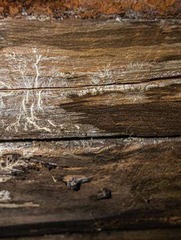
What are some durability limitations of engineered wood?
Potential issues include swelling, shrinkage, checking, cracking, fungal growth, decay, and delamination under moisture exposure.
What is the best product category for beams in engineered wood applications?
Glulam is best for high strength-to-weight ratio and long span uses.
What engineered wood product is best for columns?
Glulam and Structural Composite Lumber (SCL) are best for high load capacity and large-opening supports.
What engineered wood product is suitable for complex architectural forms?
Glulam is best for efficient architectural flexibility of arches, canopies, and vaulted roofs.
What is the application of engineered wood in floor and roof systems?
Glulam is used for framing of floor beams and structural systems, allowing efficiency and reducing dead loads.
How does engineered wood contribute to reducing greenhouse gas emissions?
Engineered wood can reduce emissions by 1.1 to 1.5 tons per cubic meter compared to traditional materials like steel and concrete.
What industries utilize engineered wood?
Furniture manufacturing, interior decoration, automotive components, and packaging.
What is the significance of good timber design in engineered wood?
Good timber design ensures effective water management, which is crucial for the durability of engineered wood.
What percentage of global carbon emissions come from steel and concrete?
More than 10%
How much can engineered wood reduce greenhouse gas emissions per cubic meter?
1.1 to 1.5 tons
What is a major environmental benefit of engineered wood?
It lowers environmental impact.
What products made from wood scraps can help reduce waste?
MDF, particleboard, etc.
What health hazard is associated with the production of engineered wood?
Formaldehyde in adhesives and sawdust.
What is the recommended humidity level for maintaining engineered wood flooring?
35%-55% year-round.
What should you avoid using on engineered wood flooring to prevent damage?
Vinegar, ammonia, abrasive cleaners, or oil-based soaps.
What is a key maintenance tip for engineered wood furniture?
Use coasters and placemats to prevent water rings and heat marks.
What should you do immediately after a liquid spill on engineered wood furniture?
Blot it up instead of wiping it.
What type of window coverings can protect engineered wood from sunlight?
Blinds, curtains, or UV-filtering window films.
What is one type of protective coating for engineered wood?
UV-Cured Polyurethane.
What is the benefit of using Aluminum Oxide in coatings?
It creates the hardest, most wear-resistant industrial topcoat.
What is a characteristic of Waterborne Industrial Coatings?
They are eco-friendly and low-VOC.
What is a benefit of using glulam in large-scale infrastructure?
It has an excellent strength-to-weight ratio and fire resistance.
What is a significant feature of the Mactan-Cebu International Airport's design?
Distinct undulating wooden roof formed by glulam timber arches.
What is the environmental performance of bamboo as a construction material dependent on?
How it is sourced, processed, transported, and manufactured.
What is one advantage of using cross-laminated timber (CLT) in construction?
It minimizes the need for concrete and steel.
What is the design concept of the Swatch Headquarters?
To demonstrate the potential of wood in modern architecture.
What is a key feature of the Sara Kulturhus building?
It is one of the world's tallest timber buildings.
What construction method is used for the walls and floor slabs in Sara Kulturhus?
Glue Laminated Timber (Glulam).
What is the area of the Project BEAM developed by Arthaland Corporation?
600 sqm.
What material does Project BEAM use as a structural component?
Cross-laminated engineered bamboo.
What is the primary benefit of engineered bamboo in construction?
It is a more environmentally responsible alternative to conventional materials.
What is the maximum span that glulam can cover in construction?
30 meters.
What is the significance of moisture-cured polyurethane?
It cures into a highly water-resistant surface.
What is a key benefit of using hard wax oils in engineered wood finishes?
They penetrate deep into the wood grain for a matte, repairable finish.
What should be used when moving heavy items across engineered wood floors?
Plywood sheets or hardboard runways.
What is the purpose of attaching felt pads to furniture legs?
To prevent scratches on the flooring.
What is a common issue that can occur with engineered wood flooring if humidity is not maintained?
Excessive gapping, cupping, or warping.
What is a construction system?
An engineered assembly of interconnected structural elements designed to collect, support, and safely route all building loads down to the foundation.
What are lateral forces in structural systems?
Horizontal loads caused by wind pressure and seismic ground acceleration, collected by floor slabs and transferred into specialized lateral force-resisting frames.
What are gravity loads?
Vertical forces resulting from the building's self-weight (dead load) and variable occupancy loads (live load) that travel horizontally across floor decking into secondary beams.
What significant steel production process was developed in 1855?
The Bessemer process, which made steel production more efficient by removing impurities from iron through oxidation.
When did the era of construction based on reliable mild steel begin?
In 1880, when the quality of steels being produced improved significantly.
What was the first steel-framed building in Chicago?
The Rand McNally Building, erected in 1890 by Burnham and Root.
What are the properties of structural steel that make it favorable in architectural design?
Exceptional strength-to-weight ratio, high ductility, and non-combustible material properties.
What is hot-rolled steel?
Steel formed when raw steel is rolled through a compressive force at temperatures above 926°C to create new shapes.
What is cold-formed steel?
Sheet steel formed into shapes and sizes similar to dimensional lumber through a process called roll forming.
What is carbon steel?
Steel containing varying amounts of carbon, categorized as mild, medium, or hard steel based on carbon content.
What is alloy steel?
Steel that includes various elements such as chromium, manganese, and molybdenum to enhance strength and corrosion resistance.
What is ASTM A36?
The primary steel grade used for wide-flange beams and columns, providing a minimum yield strength of 50 ksi.
What is the purpose of simple/braced frame construction?
To transfer vertical gravity shear forces through nominally pinned connections while providing lateral stability through diagonal bracing.
What distinguishes rigid/moment-resisting frame construction?
Beam-to-column joints designed as rigid connections that transfer full bending moments and shear forces, providing lateral stability without diagonal braces.
What is structural steel?
Steel manufactured into shapes and sections used to support and stabilize buildings and other structures.
What is welding in the context of structural steel connections?
A fabrication process that joins materials by melting parts together using high heat, allowing them to cool and fuse.
What is a tack weld?
A temporary weld used to hold parts in place while more extensive, final welds are made.
What is a continuous weld?
A weld that extends continuously from one end of a joint to the other.
What is a stitch weld?
A series of welds of a specified length that are spaced a specified distance from each other.
What are structural bolts?
Specialized, heavy-type hex bolts intended for use in large structures like buildings and bridges.
What is the significance of the Bessemer process in steel production?
It allowed for the efficient production of steel with high tensile and compressive strengths, making steel more accessible for construction.
What role do floor slabs play in structural systems?
They act as horizontal diaphragms that collect lateral forces and transfer them into lateral force-resisting frames.
What is the yield strength of ASTM A992?
A minimum yield strength of 36 ksi, primarily used for secondary structural elements.
What is weathering steel?
Steel that contains a minimum of 12% chromium and is designed to develop a protective oxide coating when exposed to moisture.
What is the difference between mild steel and high-carbon steel?
Mild steel contains 0.15% to 0.25% carbon, while high-carbon steel contains 0.45% to 0.85% carbon, increasing strength but reducing ductility.
What is the architectural advantage of rigid frame construction?
It eliminates the need for structural bracing within walls, allowing for open floor plans and flexible interior partitions.
What is the purpose of hardened steel washers in structural connections?
To distribute the pressure from bolt tightening over a larger area.
What are steel sections?
Pre-formed metal profiles engineered to efficiently handle and distribute structural loads within a building framing system.
What is the significance of the letters and numbers in steel section names like W12x26?
The letter indicates the shape class (e.g., W-shape), the first number represents the nominal depth in inches, and the second number represents the weight per foot.
What is a steel column?
A vertical structural member designed primarily to resist axial compressive loads and transfer weight from upper levels to the foundation.
What properties make steel columns effective?
High compressive load capacity, high resistance to buckling, and a space-saving compact footprint.
What are some types of steel columns?
I-Beam, Built-Up Box Column, Pipe Column, H-Beam.
How can you prevent steel columns from rusting?
By applying primers, using multi-layer systems, galvanizing, sealing column bases, and constructing grout chamfers.
What is a steel framing system?
A structural network of cold-formed or hot-rolled steel members assembled to form the stable skeleton of a building or roof.
What are the types of steel framing?
Skeleton Framing, Wall-Bearing Framing, Long-Span Framing.
What are the properties of steel beams?
High strength, high stiffness, ductility, and long-span capability.
What is the difference between a beam and a girder?
A girder is the main structural support spanning between major vertical columns, while a beam spans from girder to girder and supports the immediate floor or roof deck.
What is a steel roof system?
A system that uses steel members to support the roof covering and transfer roof loads to the building's structural frame.
What types of steel roofs exist?
Galvanized Steel Roof, Galvalume Steel Roof, Weathering Steel Roof.
What is a steel truss?
A structural framework made of interconnected steel members arranged primarily in triangular patterns.
What are the main components of a steel truss?
Top Chord, Bottom Chord, Web Members, Gusset Plates/Nodes.
What is a metal decking system?
A construction system that uses thin, profiled sheets of steel as part of a floor or roof assembly.
What is the role of reinforcement in a metal decking system?
It is poured directly over the metal decking to create the solid floor surface.
What is the advantage of using metal decking over conventional concrete construction?
The metal deck can remain permanently in the building, eliminating the need for temporary formwork.
What is the primary benefit of using steel in construction?
Steel is significantly stronger, allowing for longer spans and reduced material usage.
What is a castellated beam?
A standard I-beam whose web is cut in a zigzag or hexagonal pattern, increasing its depth and bending strength without adding weight.
What is the significance of dimensional uniformity in steel sections?
It ensures consistent performance and compatibility in structural applications.